The Texture of Reality
We like to believe that we live in reality. We do not. We live in a construction, a reality each of us assembles, moment by moment, from the fragments our senses are permitted to deliver. The world arrives at our doorstep already processed, already simplified, already rendered at a resolution we can survive. And the rendering has a limit: it is simply not possible for us humans to see beyond the grain of space and time’s texture. Below the smooth surface of our experienced world, below the continuous flow of moments, the solid persistence of objects. Physics insists there is a structure: a quantum fabric, granular, probabilistic, seething with possibility, of which we perceive precisely nothing. We walk on a floor whose boards we cannot count, and we call the floor reality.
Here is the thought that has been keeping me company through the long listening nights of this review: if we could ever truly see and measure the quantum structure of space itself, every preconception of reality we have built exclusively on the measurements we can make would evaporate in an instant. Our entire scientific edifice rests not on the world as it is, but on the world as our instruments can interrogate it. And our instruments share one humbling limitation with our textbooks: they capture only the outcome. In quantum terms, observation collapses an ocean of superposed possibilities into one definite, frozen fact; it is only that fact, the collapsed state of matter, the event itself, that we can measure. Nothing more. The vast, shimmering structure of possibility from which the event condensed remains forever on the far side of the apparatus. We measure the splash; the sea is off limits.
And yet, and this is the heresy I have come to embrace, there is so much more capability ingrained into our senses than this accounting admits. Every act of perception is itself an act of staggering compression: we collapse the entire space-time continuum into a single point, a single observable event: this note, this voice, this now. Our senses are collapse engines of unfathomable sophistication, and I have come to suspect that in building the reality (collapsed), they register something of what lies behind it. Not consciously; not measurably; but audibly, as that uncanny rightness or wrongness we feel before we can name it. Our instruments stop at the event. Our senses somehow “see” behind the collapsed event, even as we remain prisoners of the result, living out our days inside a fixed reality we did not choose and cannot exit.
If this sounds like an extravagant way to open a cable review, consider what our hobby’s oldest war has always actually been about. The skeptics of the ’80s decreed that a cable is its measurements: resistance, inductance, capacitance, and that whatever the ear reports beyond the measured event is delusion. But that is precisely the error of mistaking the collapsed state for the whole of reality: the conviction that what our current instruments can interrogate exhausts what exists. The company whose cables I have been living with for the past months, Authentic Audio Image of Považská Bystrica, Slovakia, has built its entire identity on the opposite wager. Their proprietary IST (Interference Suppression Technology) is founded on the claim that beneath the macroscopic numbers, in the quantum-scale texture of matter itself, there is so much more: its anisotropy, its polarization, its resonant memory, a structure that shapes the music and that no conventional instrument can collapse into a reading. Whether you find that idea seductive or suspicious probably says a lot about which decade of audio thinking you grew up in. I only know which instrument I trust to look behind the event. And so, with my senses open to what the meters cannot reach, I sat down to listen.
Authentic Audio Image — A Quiet Company from Považská Bystrica
Authentic Audio Image (AAI for short) is not a company that shouts. Based in Považská Bystrica, a town folded into the valleys of northwestern Slovakia, AAI specializes in signal, digital, and power cables, complemented by anti-vibration pads and even audio fuses. The people behind the brand describe themselves as enthusiasts of music, art, and modern audio technology, and crucially, as active musicians, players of acoustic instruments, not merely listeners. Their declared benchmark for sound quality is live, unamplified music: no microphones, no amplifiers, no excuses, and their declared mission is to bring that truth into the home. Technology, in AAI’s own words, is a tool, not an end in itself.
If that sounds familiar, it should. It is the same creed I found at the heart of Crystal Cable, where Gabi Rynveld told the world that her mission was “music first and cables as an equal system component.” It seems the most serious cable manufacturers of our time, whatever their geography and whatever their technology, keep arriving independently at the same summit from different faces of the mountain. AAI climbs it from the Slovak side, with a distinctly Central European temperament: methodical, unglamorous, allergic to theatrics. The company works with musicians and sound engineers during development, and their product range is organized into four lines of ascending ambition: Vittorioso+, Maestoso 2+, Assoluto+, and, at the very top, Estremo, each line corresponding to a progressively more advanced generation of their IST treatment, from IST 1 in the Vittorioso+ up to IST 5 in the Estremo.
The brand has been quietly collecting serious attention. Wojciech Pacuła of High Fidelity tested the Estremo power cable in 2025 against nothing less than his reference Siltech Triple Crown, a comparison most manufacturers would politely decline, and came away describing a sound so internally harmonious that he had to actively concentrate to find what was missing relative to a cable several times the price. The Czech magazine Audiodrom has chronicled the brand’s evolution across several reviews, including the memorable image of AAI’s anti-vibration pads deployed under a concert grand piano. This is not a company manufacturing mystique. It is a company that manufactures cables and lets other people manufacture the mystique for them.
I received for evaluation a nearly complete Estremo loom: LAN, power, loudspeaker, and XLR interconnects, plus one power cable from the Assoluto+ range, the line one step below. As with the Crystal Cable Art Series story, this rare opportunity to build a full system of cables from a single manufacturer, one link at a time, turned out to be the key that unlocked the most important discovery of this entire review. But I am getting ahead of myself.

IST — Interference Suppression Technology
Before the listening, the theory, because with AAI, the theory is the product. Every conventional cable company will tell you about its conductor purity, its geometry, and its dielectric. AAI will tell you about all of that, too, eventually, and rather laconically. What it really wants to talk about is what happens to those materials before and after they become a cable.
The argument, compressed from the company’s own technical description, runs as follows. Classical electrical engineering describes a cable using macroscopic approximations: resistance, capacitance, inductance, the same RLC triad that the skeptics of the ’80s wielded like a holy text. But these models deliberately ignore the microscopic reality of matter: the internal orientation of structures within the material, the local polarization of the dielectric, and the directional dependence of the interaction between the conductor and the field. According to Maxwell’s equations, electric and magnetic fields are inseparable aspects of a single electromagnetic interaction; treating them separately, AAI argues, is merely an engineering simplification. Likewise, mechanical resonance, the way a material or structure responds to vibration, remains intertwined with its electromagnetic behavior. Changes in one induce changes in the other.
Now add time. Polarization occurs when the internal electric dipoles of a material align themselves under an external field, and this alignment creates anisotropy, direction-dependent behavior. In audio components, this manifests as subtle directionality in cables, chassis, connectors, and even signal carriers. And this directionality is not only electromagnetic but resonant: structural deformations caused by years of vibration and asymmetrical loads leave a permanent “memory” in the material. An audio signal, physically an alternating current, generates a spatially and temporally varying electromagnetic field, which must then propagate through this imperfect, directional, slightly haunted environment. The consequences, per AAI: inconsistent phases and amplitudes, interference between polarized domains, localized resonances dependent on geometry and direction, micropotentials forming between components. Individually negligible; cumulatively, the company argues, significant, precisely because human hearing is extraordinarily sensitive to phase and timing errors that conventional instruments are not designed to capture.
IST is AAI’s answer: a proprietary treatment applied to every element of the cable: conductors, insulators, shielding, and connectors alike, combining resonantly tuned materials, electromagnetic balancing, and a precise arrangement of components, with the stated aim of neutralizing micropoles, parasitic fields, and frequency instabilities. The treatment, the company says, erases the polarization distortions and accumulated anisotropies, restoring the material’s ability to behave neutrally, without preference for direction, frequency, voltage, or vibration level. The claimed audible results read like an audiophile wish list: greater clarity, more stable soundstaging, improved micro and macrodynamics, truer timbre, more low-level information, a lower noise floor, better temporal coherence, a more balanced frequency response, and reduced listening fatigue. AAI even reports consistent listener preferences for IST-treated configurations in blind ABX tests.
I will be honest with you, as I always try to be: I cannot verify a word of this in my listening room, and neither can you. I have no instruments capable of measuring the polarization memory of a dielectric, and I suspect very few laboratories do. What I can tell you is that the philosophical posture is the opposite of snake oil’s usual swagger. There is no talk of quantum tunneling miracles or pseudo-mystical energies; there is a coherent, internally consistent physical narrative about anisotropy, resonance, and material memory, a narrative that respected manufacturers like Siltech have approached from their own directions, and that Pacuła explicitly compared to the approaches of Verictumand Thunder Melody. The conventional wisdom of the ’80s tried to define a cable’s character by its RLC parameters alone, which (as I wrote in the Crystal Cable story) is as absurd as defining a person’s character by weight, height, and body temperature. AAI’s bet is that character lives in the texture our instruments cannot collapse into a reading, behind the measured event. The only apparatus capable of testing that claim is the one we were born with. The rest of us will have to listen.
Build, Look, and Feel
Let me describe what actually arrives in your hands, because it is not what you might expect from a small Slovak manufacturer, and the surprise is a pleasant one.
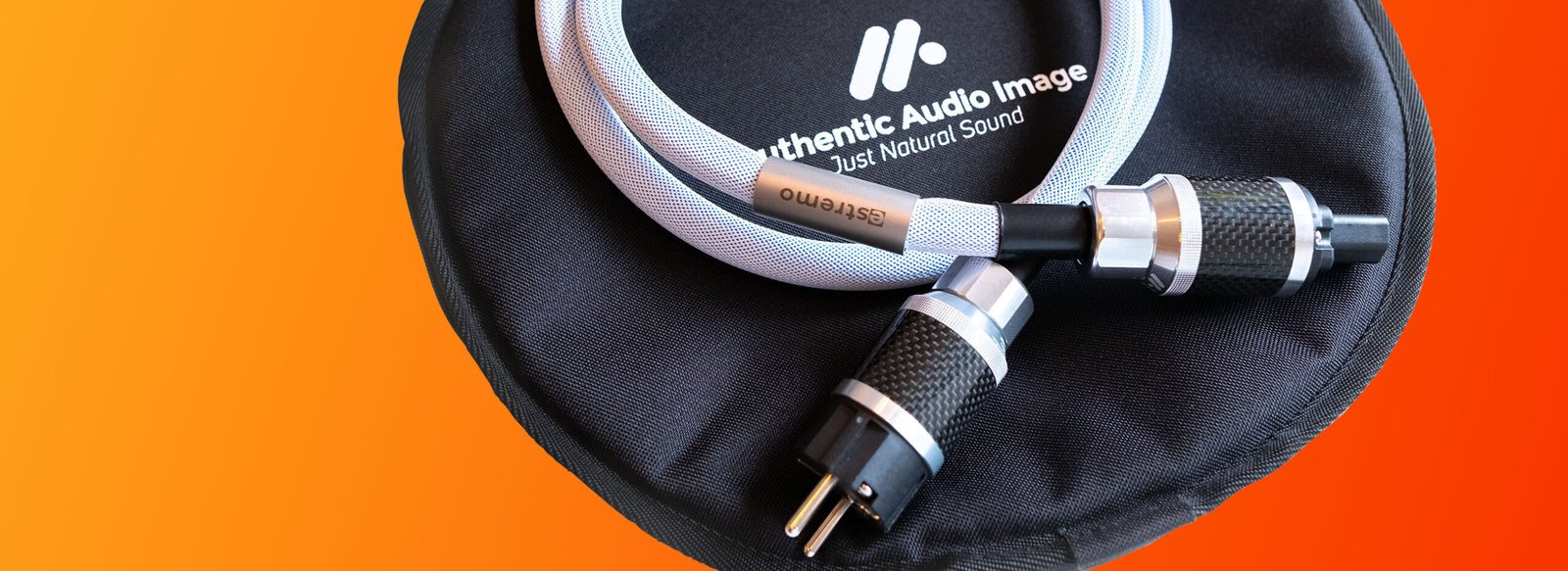
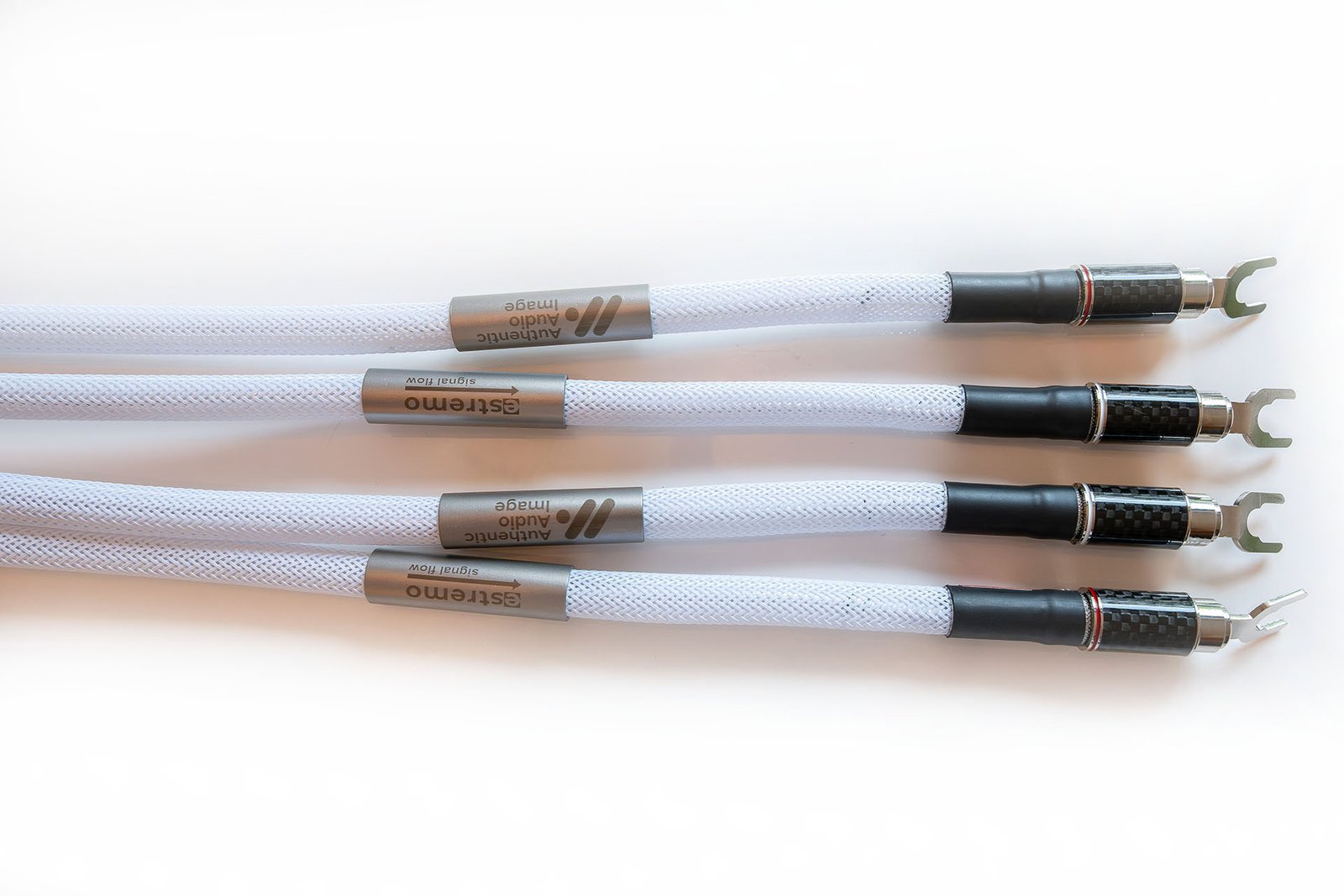
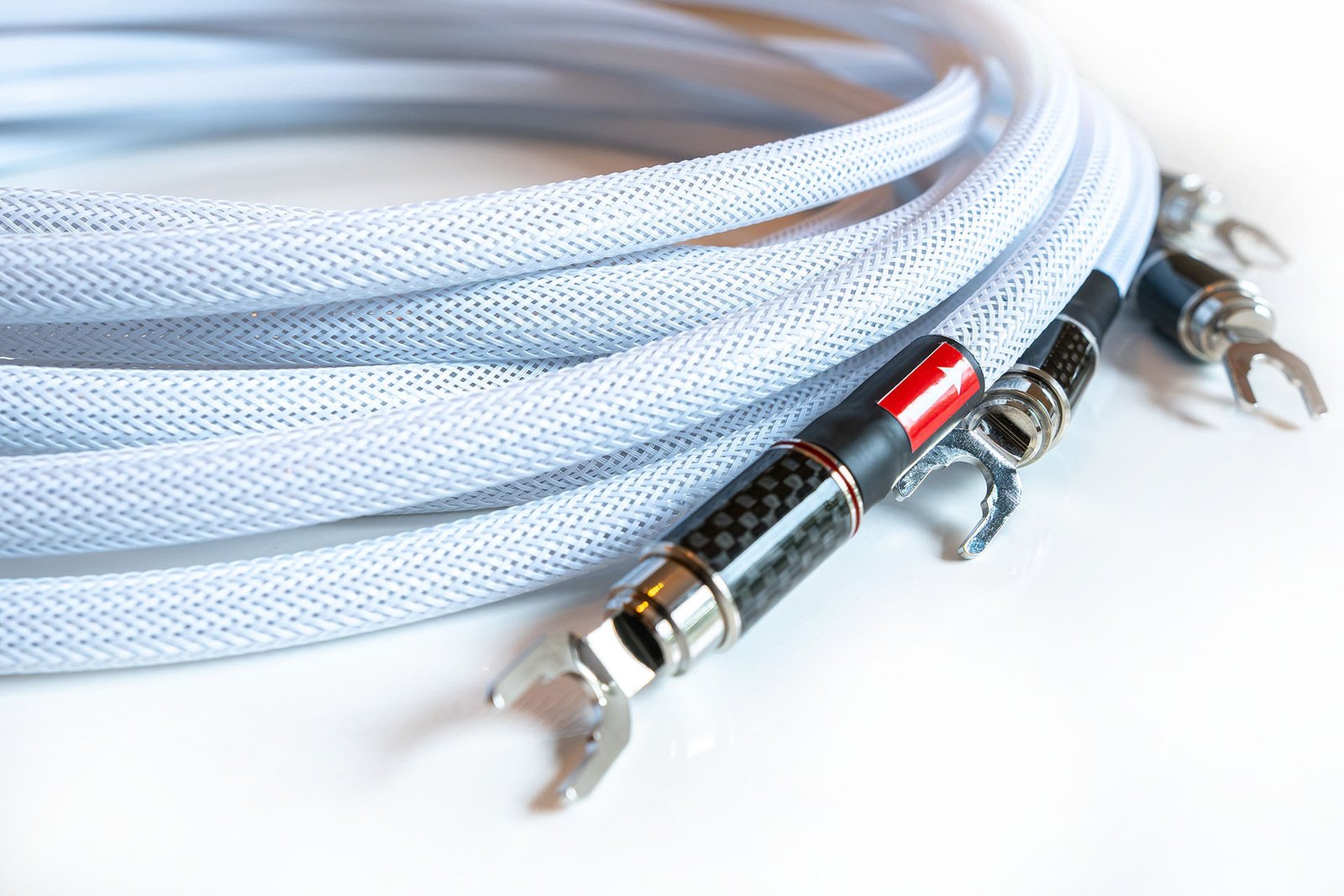
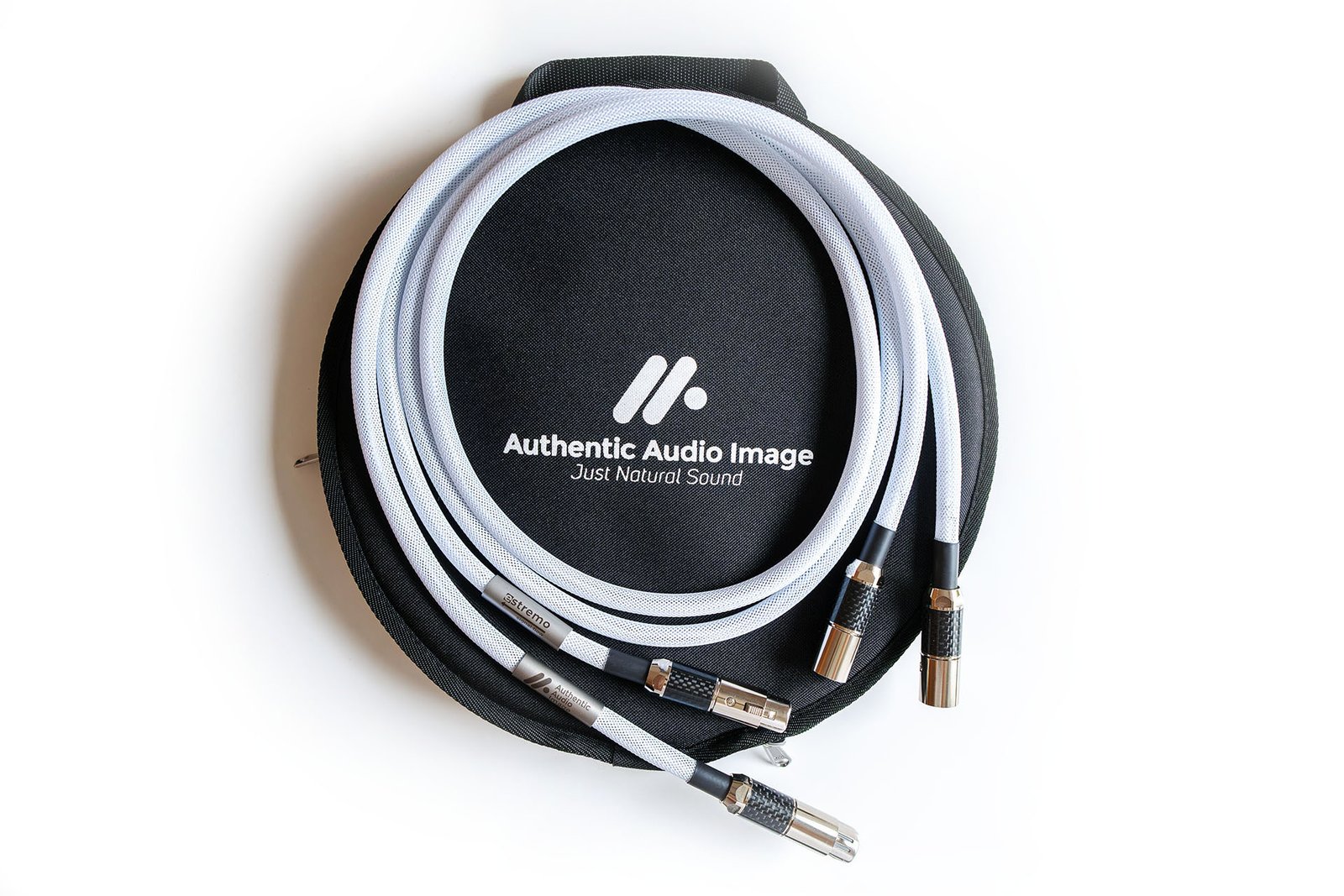
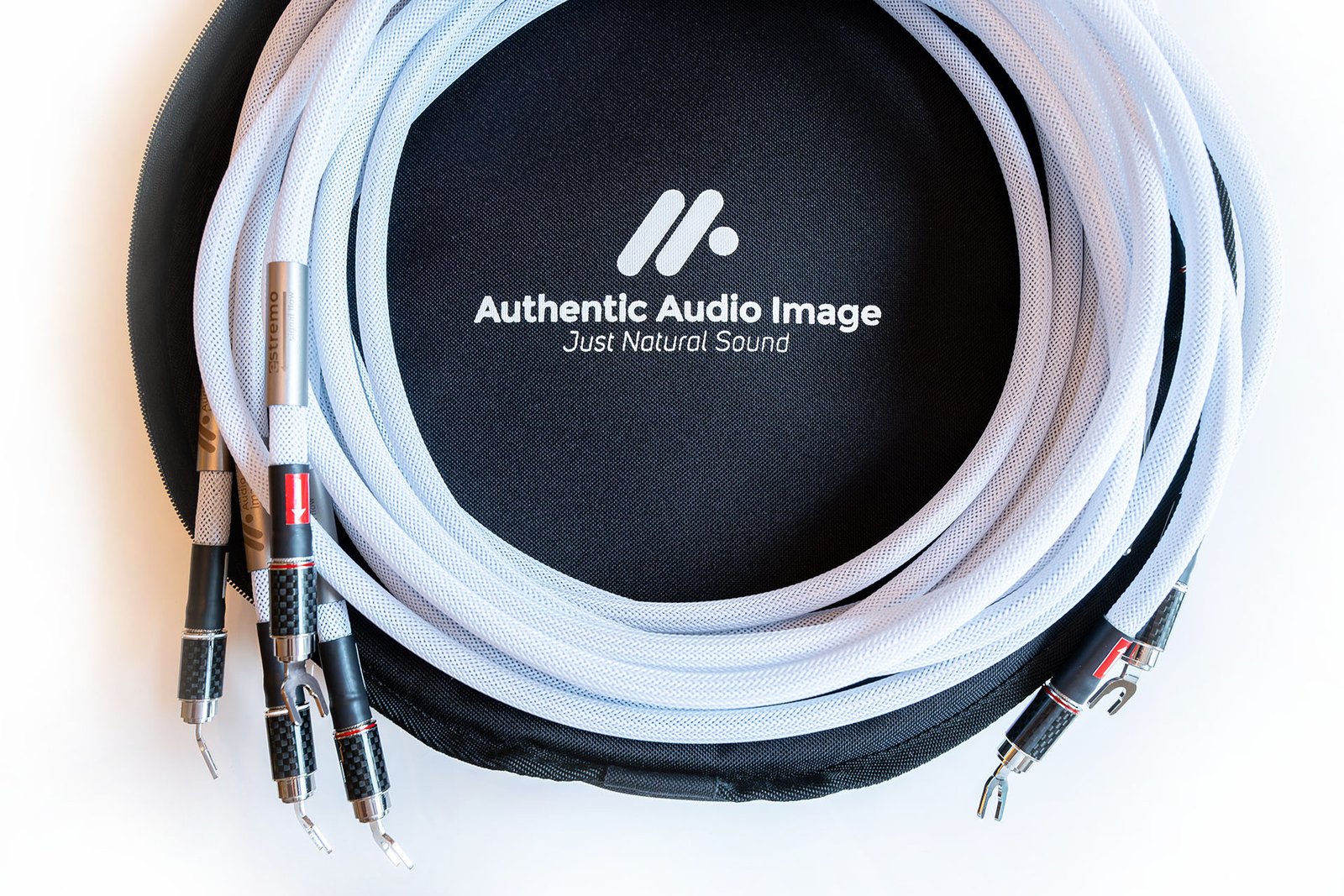
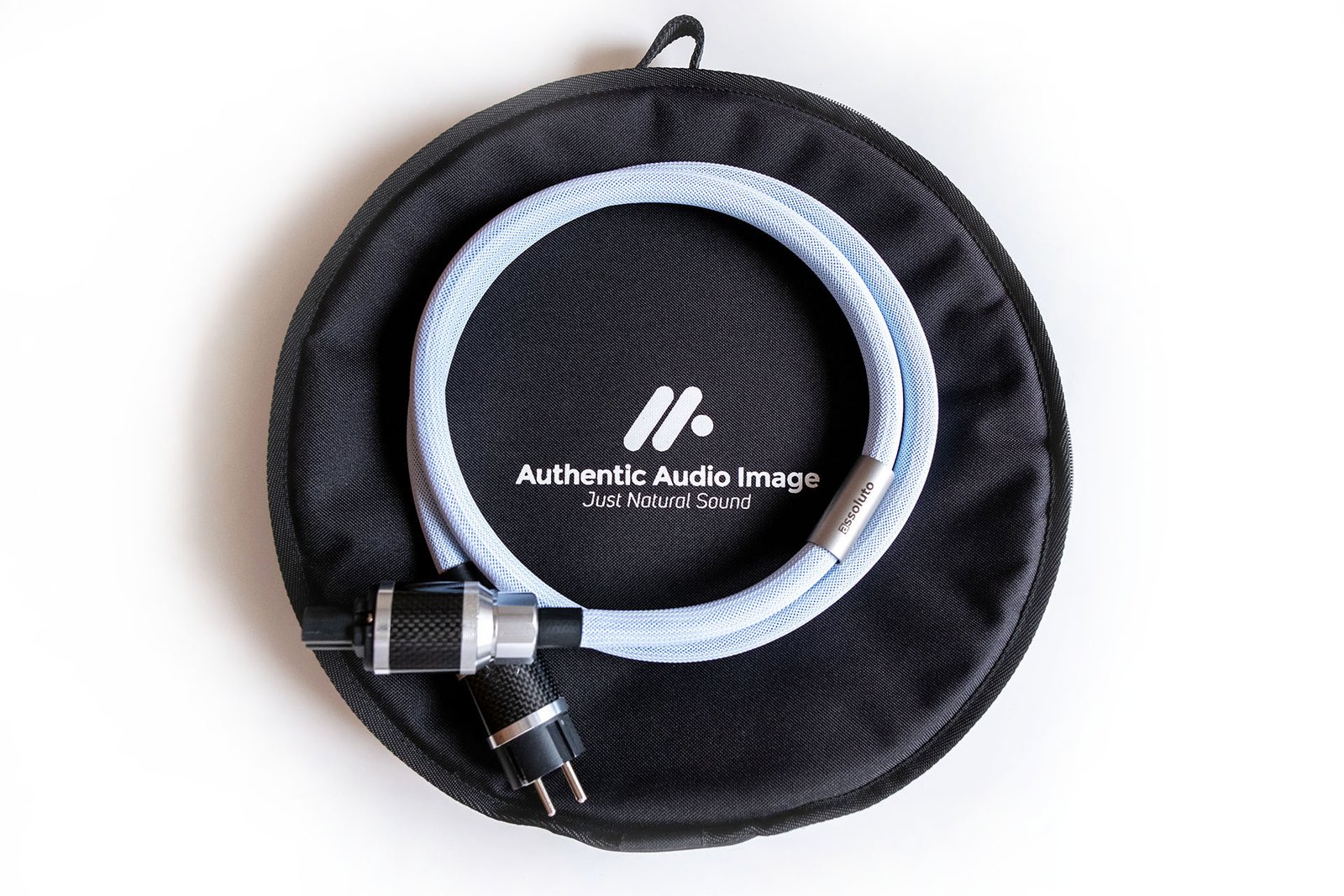
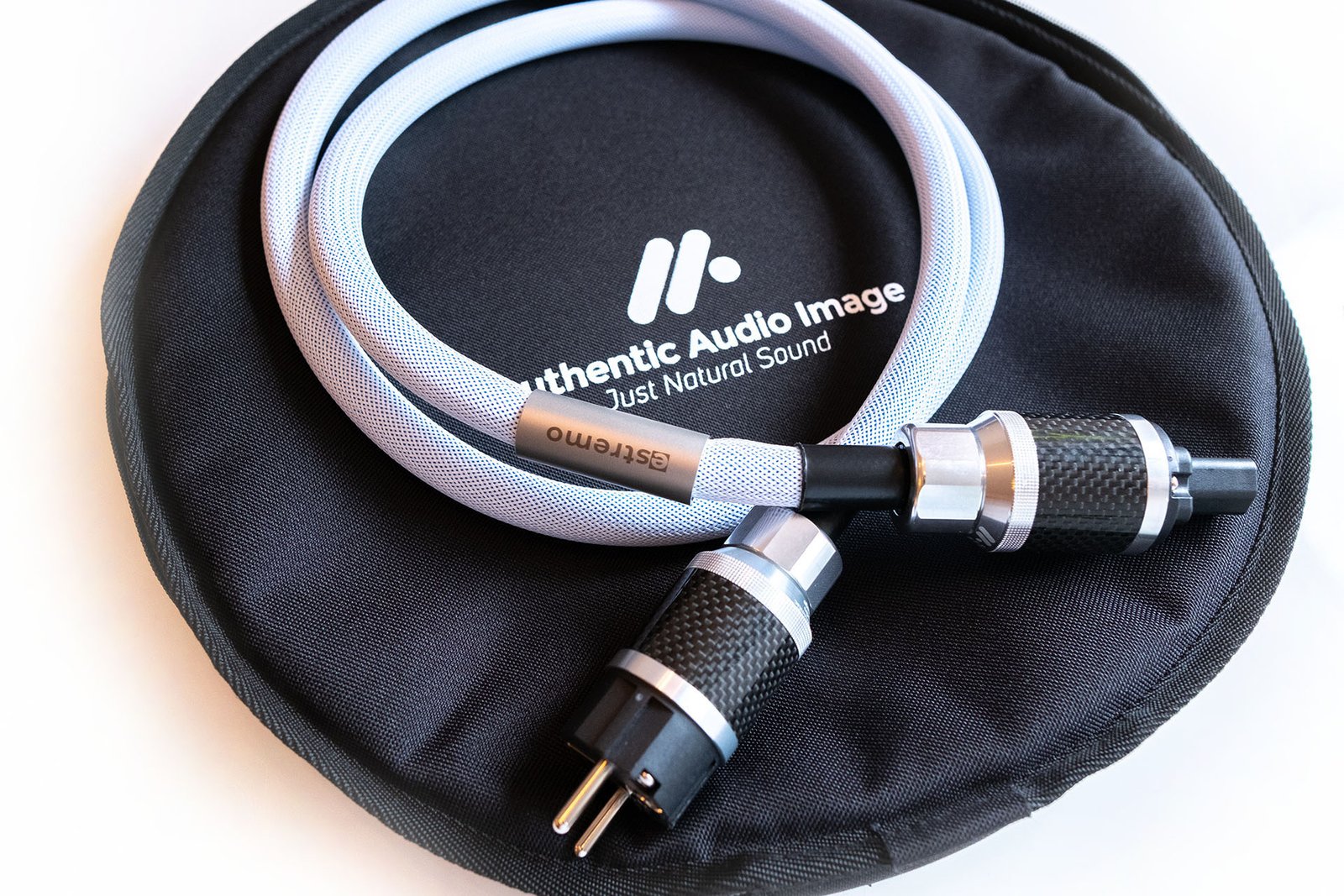
The first impression is of complete professionalism. These cables do not have the artisanal, slightly homemade vibe that so many boutique products carry like a badge of honor, the visible heat-shrink, the hand-whipped sleeving, the charming asymmetries. Despite being assembled by hand, the AAI cables look like the output of a serious industrial process: uniform, precise, immaculately finished from connector to connector. The outer braid is white, and I must say, the white looks genuinely beautiful in a system. We are so accustomed to cables in funereal blacks and aggressive reds that a clean, luminous white loom feels almost Scandinavian in its calm. It photographs nicely; more importantly, it lives nicely. My better half, the most ruthless aesthetic critic any reviewer could employ, registered no objections, and after the Crystal Cable episode, readers of this publication know exactly how high that bar sits in our living room.
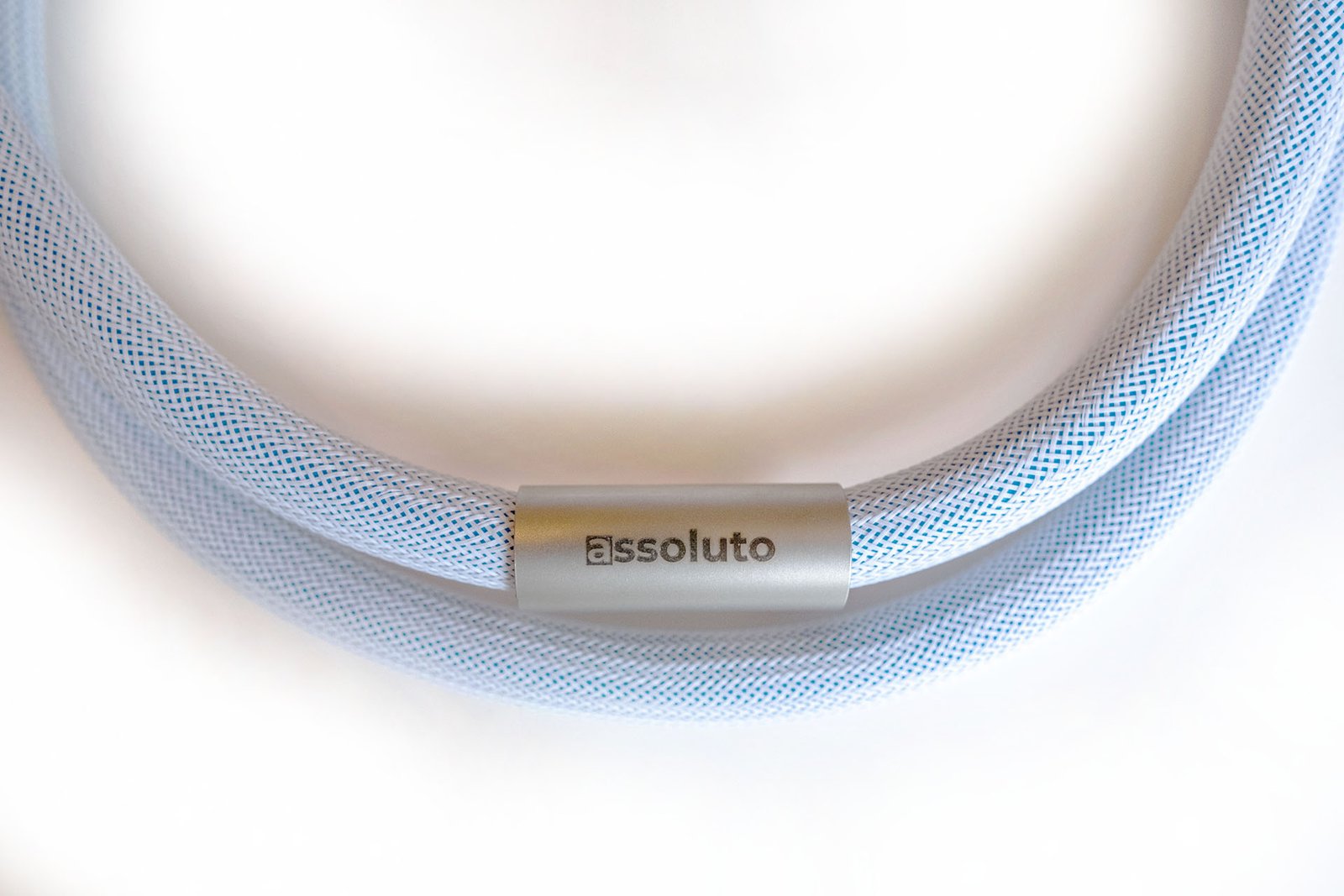
The second impression comes the moment you route them. The cables are not particularly thick; the signal and speaker cables run a civilized diameter, with only the power cables growing to a more substantial 17 mm, and they are very easy to work with. They handle in a distinctive way I have rarely encountered: they are less elastic than most high-end designs and, instead of springing back, hold the form you give them. Bend an AAI cable into the shape your rack requires, and it stays there, obediently, like a well-trained bonsai. Where the ZenSati Zorro flowed around obstacles like water, the Estremo is sculpted into place. Neither approach is superior, but for tight racks, crowded power distributors, and components with closely spaced terminals, the AAI’s form-holding discipline is a genuine practical blessing. Routing the full loom took me a fraction of the time I usually budget for such operations.
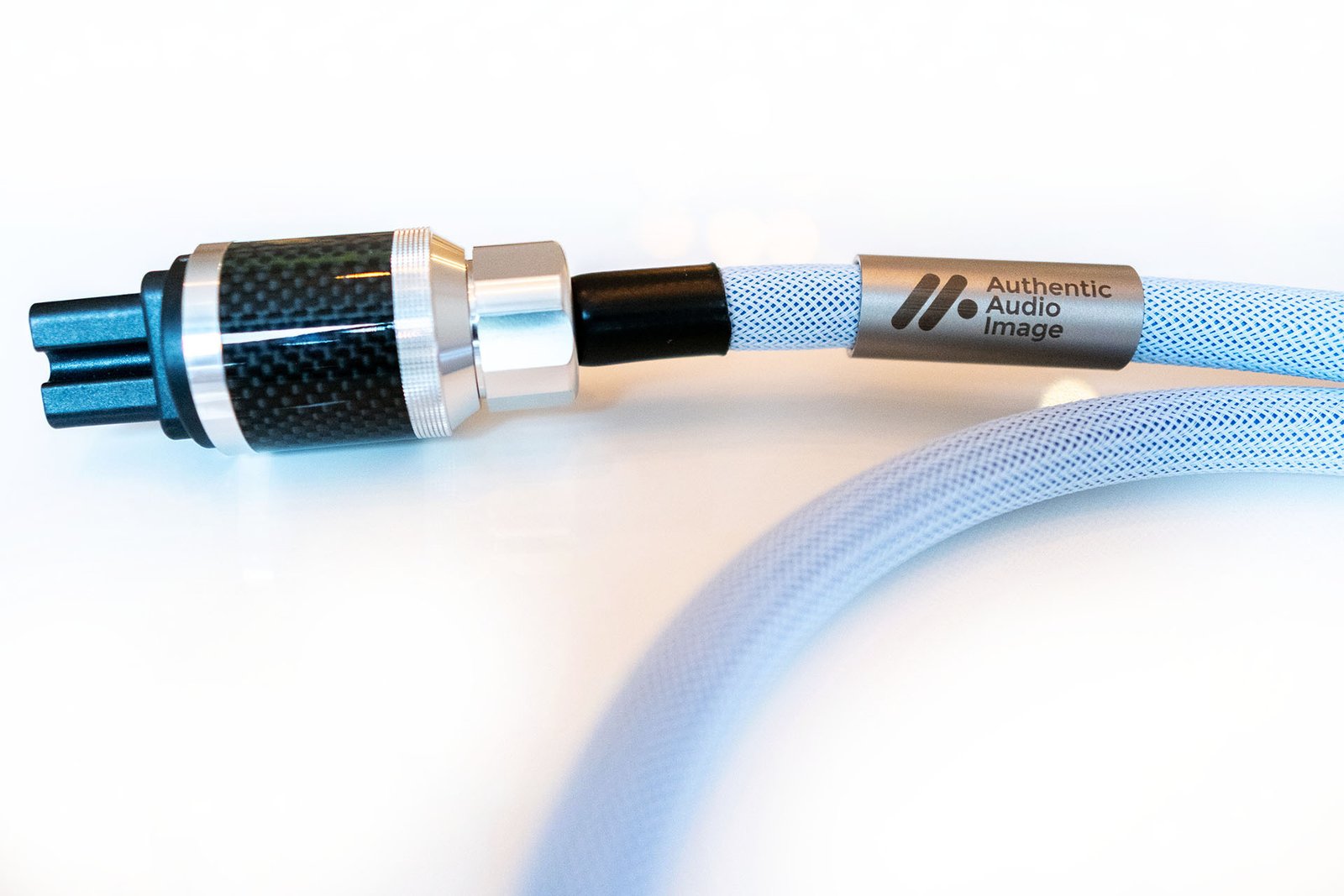
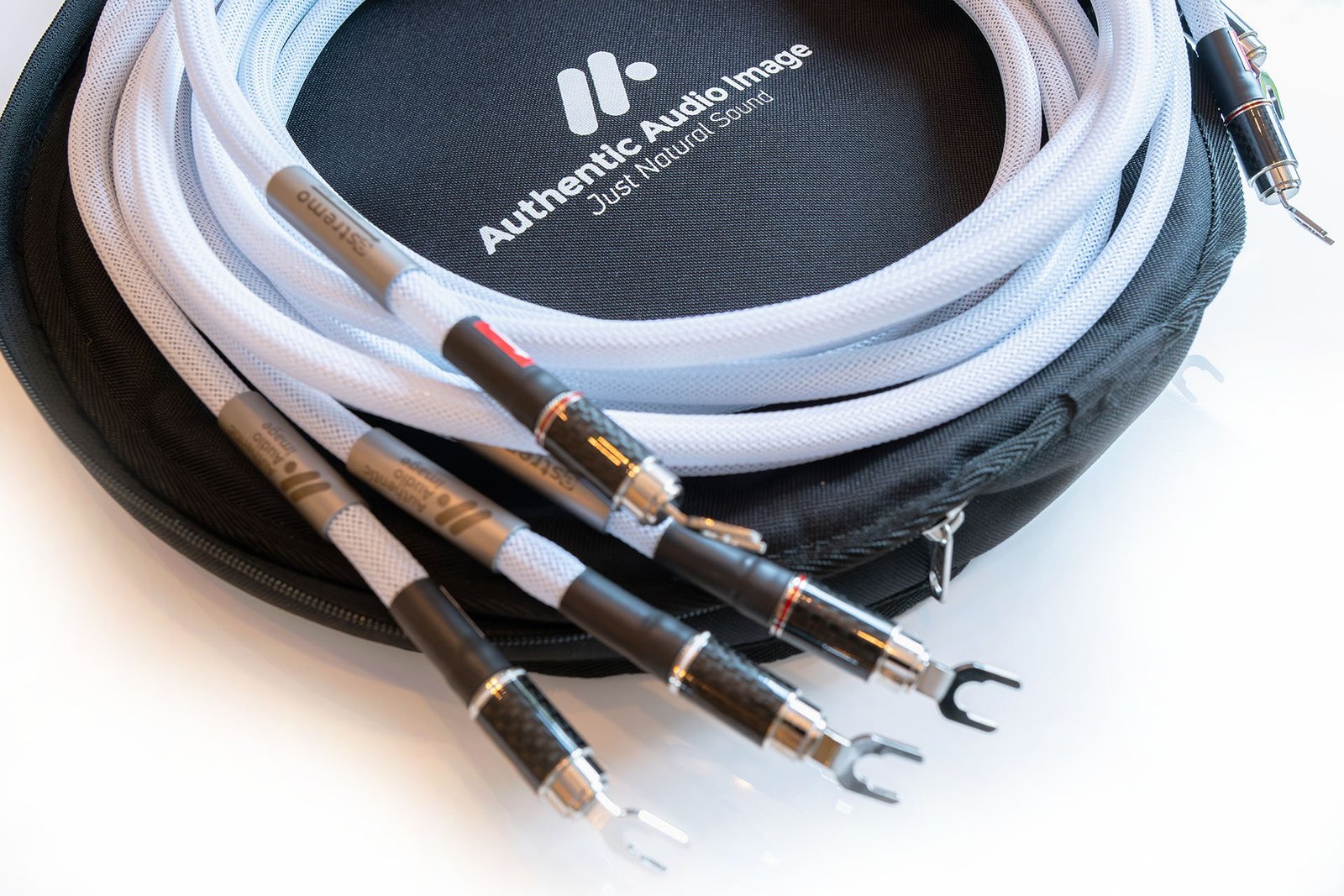
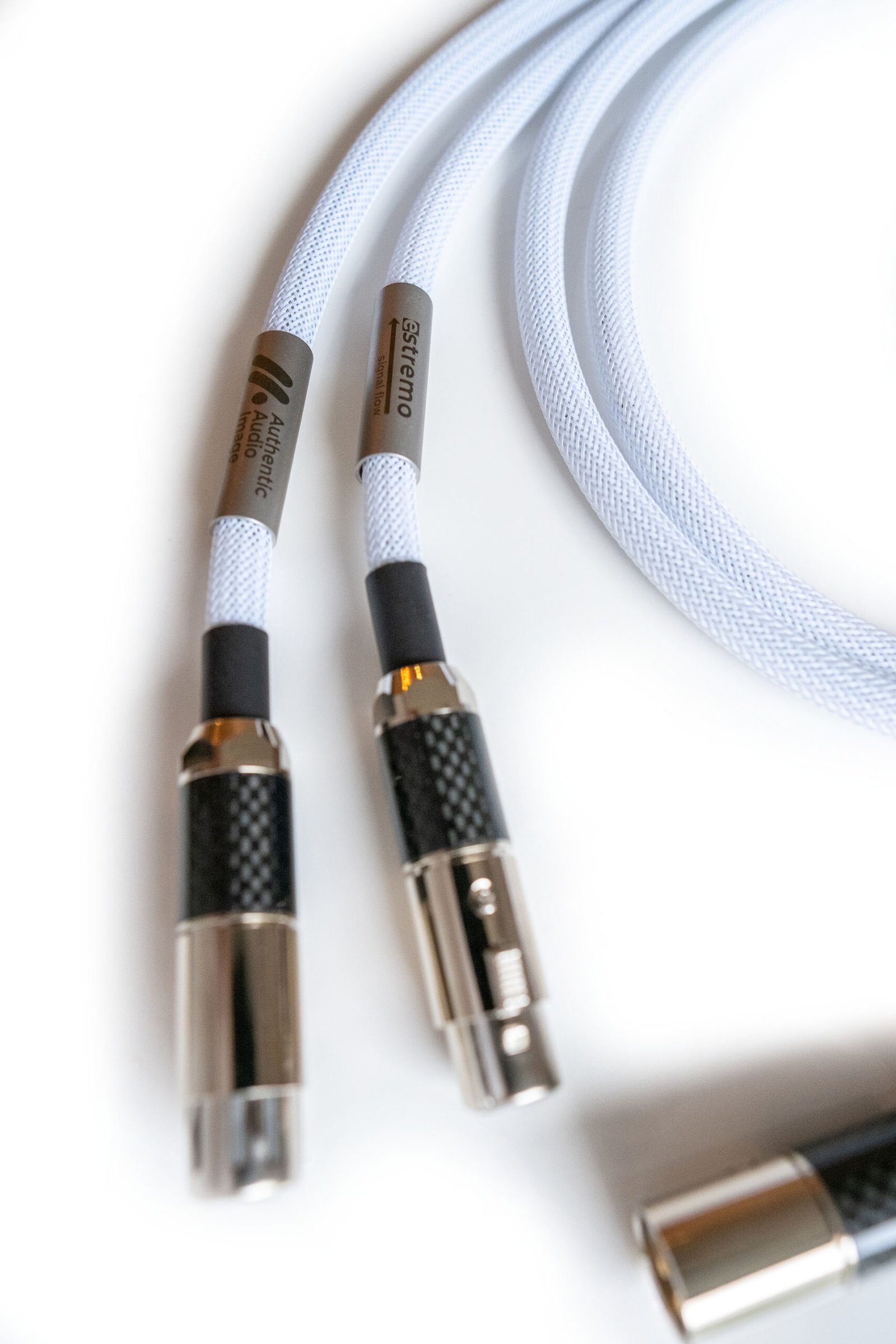
Then there are the connectors, and here AAI deserves particular applause. The plugs are proprietary and very good: metal bodies with carbon-fiber-style barrels, substantial securing nuts, rhodium-plated contacts on the power plugs, all visibly inspired by the best Furutech school of connector design and, in the hand, fully worthy of that comparison. The grip in the socket is firm and confident, the machining is precise, and the company logo on the body removes any suspicion of generic off-the-shelf hardware. Finally, a small signature touch: each cable wears a metal sleeve engraved with the AAI logo, which can be slid freely along its entire length. Position it where it pleases your eye, or where it identifies the cable in a crowded rack. It is a minor thing, but minor things done with care are usually the fingerprint of a company that does major things with care too. Each cable arrives in a soft protective case, manufactured locally in Slovakia, with modest, sensible packaging that protects the product without pretending to be the product.
The Cables Under Review
We received five products, four from the flagship Estremo line (all built on the latest IST 5 treatment) and one from the Assoluto+ line directly beneath it (IST 3, designated ASL). A short portrait of each before the music begins.
Estremo LAN (2 m)
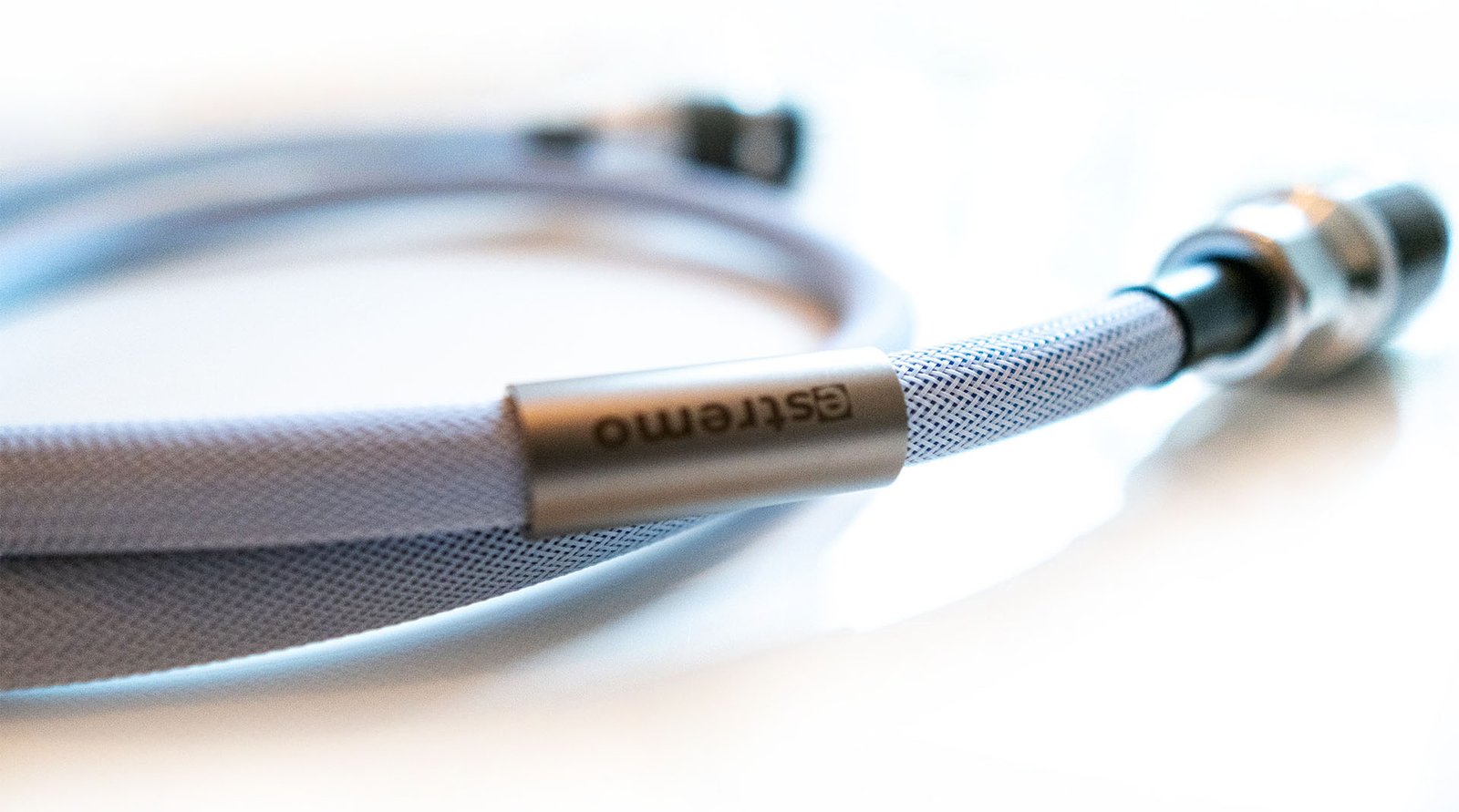
(3.206 €, 2.0 m). The humblest-looking member of the family and, as you will read below, the one who fired the first shot. The Estremo LAN is built on pure copper conductors; interestingly, the only cable in the loom not to use silver plating, treated with the full IST 5 process, dressed in the white braid at a slim 10.5 mm diameter, and terminated with high-quality shielded RJ-45 connectors. Standard lengths run from 1 to 2.5 m. An Ethernet cable carries a digital signal and, in the strict orthodoxy of network engineering, should be sonically invisible as long as the packets arrive intact. AAI clearly believes that the orthodoxy is incomplete, that the cable’s electromagnetic and resonant behavior, and the noise it carries or refuses to carry into the streamer’s sensitive digital conversion neighborhood, matter audibly. So do I, for a long time now.
Estremo Power (2 m)
(6.461 €, 2.0 m). The most imposing cable in the loom is 17 mm in diameter and is the most expensive power cable in AAI’s entire catalog. Silver-plated high-purity copper conductors, comprehensive shielding against external interference, the full IST 5 treatment applied to conductors, insulation, shielding, and connectors alike. The proprietary plugs are the stars here: metal-bodied, carbon-barreled, rhodium-plated, with those distinctive oversized securing nuts, available with C15 or C19 equipment ends (our samples came with C15). This is the very cable Wojciech Pacuła tested against his Siltech Triple Crown reference; it arrives with a reputation already attached.
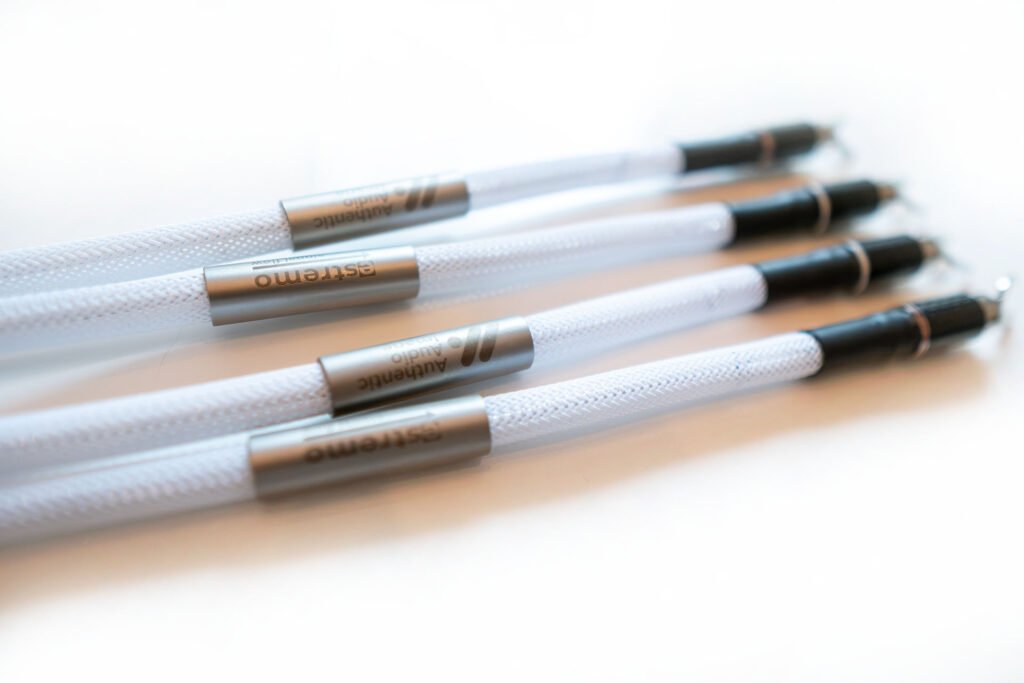
Estremo Speaker (2.5 m, spades)
(7.968 €, 2.5 m set). Silver-plated copper conductors under the white braid, the same surprisingly slim 10.5 mm profile, a relief for anyone who has wrestled anaconda-class speaker cables behind a rack, IST 5 throughout, and superb proprietary spade connectors on our review set, machined and finished to the same standard as the power plugs. Available in lengths from 1.5 to 4 m. These replaced my Albedo Monolith Reference MKIII, the pure-silver flagship that has long held the reference position in my system, and therefore had the hardest job in this entire test.
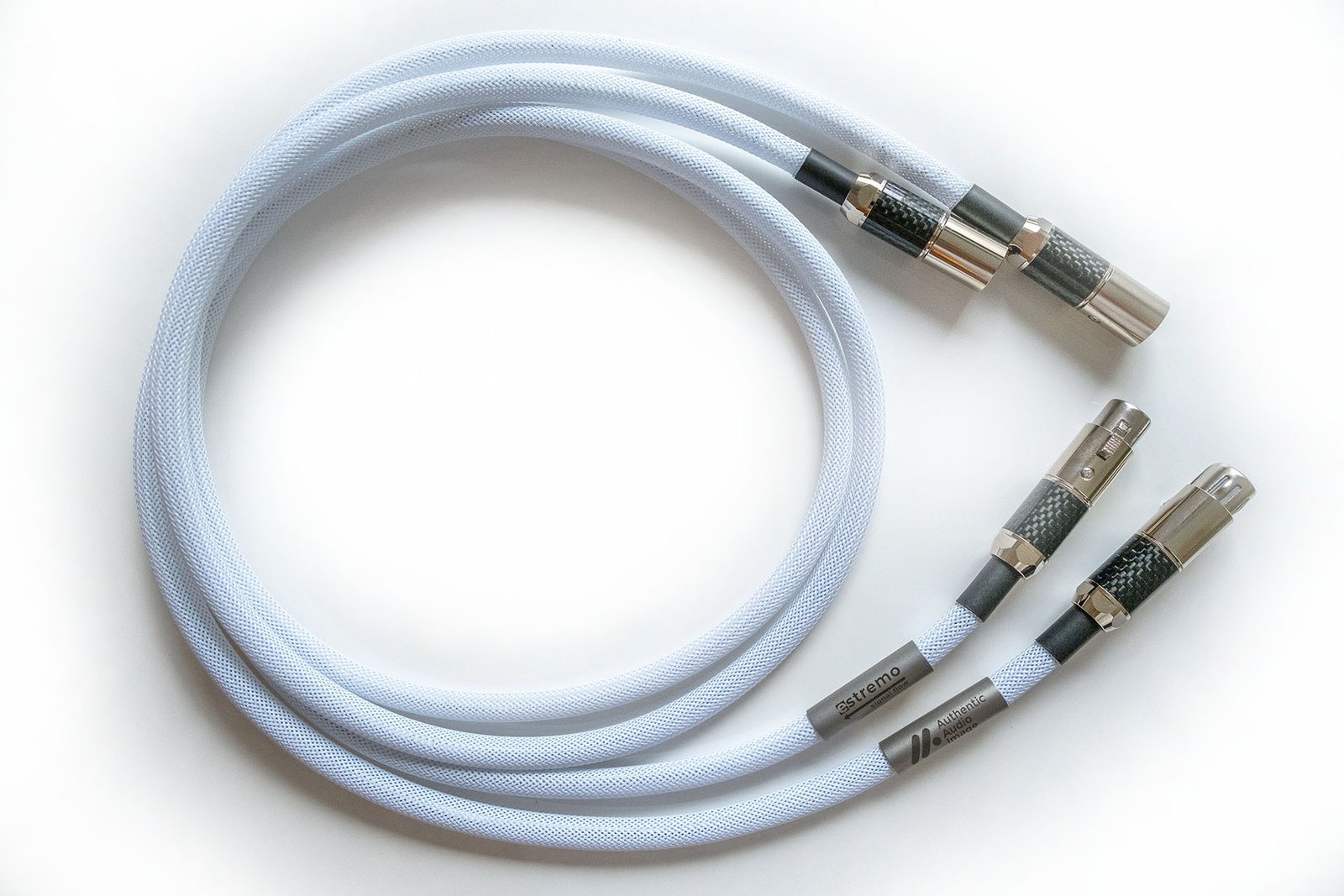
Estremo XLR (2 pairs, 1.5 m)
(5.954 € per 1.5 m pair; 11.908 € for the two pairs as tested); we used two pairs, DAC-to-preamplifier and preamplifier-to-power amplifier. Silver-plated copper, 10.5 mm diameter, full IST 5 treatment, balanced topology with excellent proprietary XLR connectors whose locking action is smooth and reassuringly positive. Available from 0.5 m up to 2.5 m. These completed the analog signal path and, as you will read, delivered the dramatic final act of the system-building story.
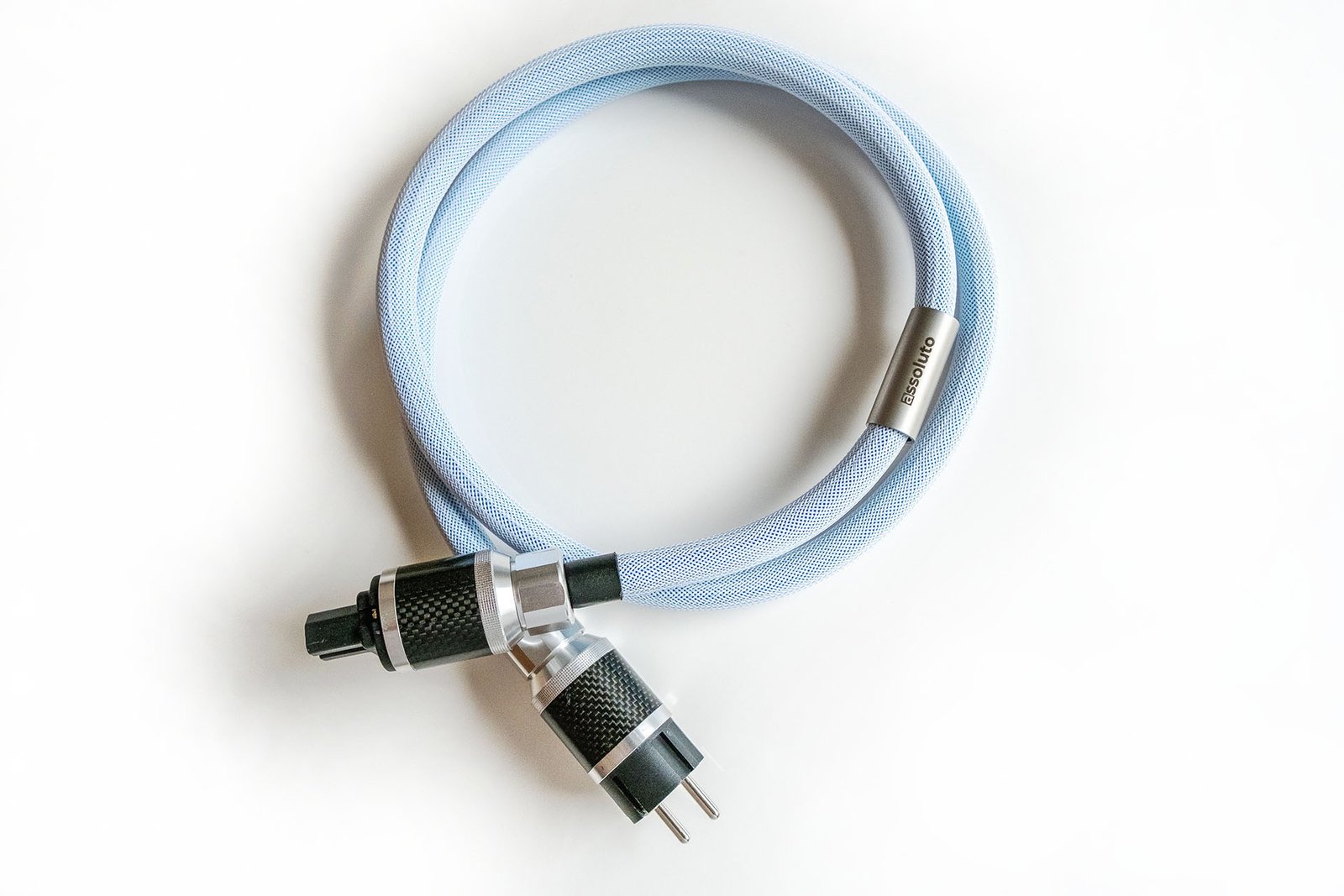
Assoluto+ Power (2 m)
(4.970 €, 2.0 m). The guest from one floor below: the Assoluto+ line uses the IST 3 (ASL) generation of the treatment, with silver-plated copper conductors, the same 17 mm build, the same white braid, the same family of proprietary connectors. On paper, the recipe differs from the Estremo Power chiefly in the IST generation applied. I deployed it in a place the Estremo loom did not reach, the analog phono preamplifier, and it produced one of the most dramatic single moments of the whole evaluation. More on that below.
System and Methodology
For this evaluation, I used my reference system, which I know with the intimacy of long acquaintance. The digital front end was the Antipodes OLADRA server/streamer/reclocker (reviewed in depth here), feeding the LampizatOr Poseidon DAC (KR Audio 5U4G, 6N30P-DR Super Tube, and L63 CV1067 GEC NOS), one of the most musically complete converters I have encountered. Amplification was handled by the Aesthetix Calypso line preamplifier and Aesthetix Atlas power amplifier, both in Eclipse versions, driving the Raidho TD 2.2 loudspeakers. The analog front end, which plays an unexpected supporting role in this story, comprises my turntable, the Acoustic Signature Montana NEO with the Acoustic Signature TA-5000 NEO tonearm, and a phono stage I truly love: the Aesthetix Rhea in Eclipse flavor. Power conditioning came from the Tsakiridis Super Athena.
My reference cabling, against which the AAI loom was judged, comes from Albedo: the Monolith Reference MKIII speaker cables and Albedo silver interconnects, pure silver designs, refined, fast, and resolving. One honest caveat must be stated immediately, and I will repeat it later because it matters: the comparison was not entirely fair, because I do not own a full Albedo loom. My references cover only the speaker and interconnect positions; there is no Albedopower, network, or digital cabling in my chain. The AAI, by contrast, arrived as a complete, coherent family. As you will see, this asymmetry turned out to be not a footnote but the central lesson of the entire review.
The methodology followed the same incremental approach I used with the Crystal Cable Art Series, because it is the only honest way to evaluate a loom: add one link at a time, listen long, and only then add the next. I deliberately started from the most distant, most “innocent” point in the chain, the network cable, and advanced toward the speakers: first the Estremo LAN, then the power cables, then the XLR interconnects, and finally the Estremo Speaker cable, completing the set, with the Assoluto+ Power making its detour to the analog front end. Each stage was lived with for days, not minutes, across a wide range of musical material.
Sound
First Move — Estremo LAN, or the Ambush
I confess I began with the network cable partly out of mischief. It is the cheapest cable in the loom, it carries no music in any analog sense, and the rationalist in me expected to write a paragraph of polite nothing, “perhaps a touch more calm, possibly imagination”, before moving on to the serious artillery. The Estremo LAN replaced my highly competent audiophile Ethernet cable between the switch and the OLADRA, and I pressed play with the smug serenity of a man who knows what he is about to not hear.
I was ambushed. The difference was not subtle, and it was not imaginary; it arrived within the first minute of Dominique Fils-Aimé’s “My World Is the Sun” (Qobuz | Tidal). Her music is built almost entirely from layered voice: harmonies, finger snaps, minimal percussion, and enormous amounts of empty space, and it is precisely in that empty space that the Estremo LAN announced itself. The soundstage opened as a window swung wide on a spring morning: more air, more openness, a clarity that made each vocal layer hang separately in space with its own breath and its own micro-texture. Details I knew were there became details I could walk around. And above all — flow. The music moved with an unforced, liquid continuity, an immersive pull that kept me pinned to the chair through the entire album, even though I had planned to sample two tracks.
I reached next for Gabrielle Cavassa’s “Diavola” (Qobuz | Tidal), because her voice, intimate, smoky, half-whispered, recorded close enough to hear the air change shape around it, is exactly the kind of fragile material that exposes false detail instantly. Nothing false here. The voice gained presence and immediacy without gaining a single degree of artificial edge; the space around her deepened; the quiet accompaniment behind her organized itself into a real acoustic place rather than a vague backdrop. From a network cable. I sat there, genuinely unsettled, recalibrating my expectations for everything still in the boxes. If the most distant link in the chain could do this, what would happen when the loom reached the analog domain? I now had my answer to whether IST was marketing poetry. The ambush was complete, and I surrendered with enthusiasm.
The Foundation — Estremo Power Cables
The two Estremo Power cables went to the sources, where low-level signal integrity matters most: one to the Antipodes OLADRA, one to the LampizatOr Poseidon. And here the sound acquired what I can only call gravity.
Everything the LAN cable had opened, the power cables now anchored. The first and most immediate change was in clarity and texture: instrument surfaces became more tactile, more grained, more touchable, but the profound change was lower down and closer in. The sound gained weight in the lower registers and a beautiful, grounded solidity in the lower midrange; images acquired body, density, and a third dimension that pushed the presentation from an excellent flat-screen toward genuine sculpture. And the perspective changed: the music stepped toward me. Closer, more intimate, more present, the foreground promoted, the listener moved from row fifteen to row five, without any aggression and without a single contour drawn where only rounded, strong shapes belong.
I must pause here to acknowledge a delicious convergence. When I later reread Pacuła‘s High Fidelity review of this very cable, I found him describing Estremo‘s sound as based strongly in the lower midrange, not warm in the literal sense, but promoting the foreground, producing a close, intimate sound, with voices more tangible and “touchable” than with cables in its price range and even than with his reference. I had written my own notes before rereading his. They could have been carbon copies. When two listeners on opposite sides of the Carpathians, in entirely different systems, independently reach for the same words: intimate, close, lower-midrange foundation, tangible, you may reasonably conclude that the cable, not the imagination, is the author of the character.

Lhasa de Sela’s “The Living Road” became the soundtrack of this stage. Her voice, that impossible, grief-soaked instrument hovering between Spanish, French, and English, sits low and close in the mix, wrapped in deep, slow-breathing arrangements, and, through the Estremo-powered sources, it acquires a corporeal presence that is frankly haunting. The low end beneath “Con Toda Palabra” was deep, dark, and completely free of bloat; the space around her was black and stable; the intimacy was almost uncomfortable, in the way only the truest reproduction can be. Then Tsuyoshi Yamamoto Trio’s “Misty” (Qobuz | Tidal), the Three Blind Mice classic, that gloriously direct piano-trio recording, where the piano’s left hand finally carried the full weight of the instrument’s frame, the double bass stood at its true height, and the brushed cymbals shimmered with texture instead of glare. The piano was dense, low, powerful, and precise all at once.
And because foundations must be stress-tested, I unleashed Marilyn Manson’s “The Pale Emperor”, yes, in this company, and entirely deliberately. That album’s blues-soaked industrial low end, all crawling bass riffs and floor-tom menace on tracks like “Killing Strangers,” is a merciless test of bass control: get it slightly wrong and the whole thing collapses into a swamp. The Estremo combination delivered it tight, articulate, and physical, bass with muscle and definition, completely without bloom, every dirty texture preserved, the menace intact precisely because nothing smeared. Power, dynamics, and control: the picture had stabilized, and the artist was not yet finished.
The Completion — Estremo XLR Interconnects
Then came the two pairs of Estremo XLR (Poseidon to Calypso, Calypso to Atlas), and the picture was completed in a genuinely dramatic way. If the LAN cable opened the window and the power cables built the foundation, the interconnects walked me through the door and into the building.
The presentation advanced into the soundstage, not forward in the sense of aggression, but inward in the sense of depth. The stage gained layer upon layer behind the plane of the speakers, each layer textured, populated, and distinct, against a background that was no longer merely black but richly, finely textured, that rare quality where silence itself seems to carry the acoustic signature of the venue. Coherence took another decisive step: the entire frequency spectrum now spoke with one voice, one timing, one intention. The flow became completely natural, details multiplied without a single one of them shouting, and the whole presentation acquired that unforced rightness that ends analytical listening and begins music.
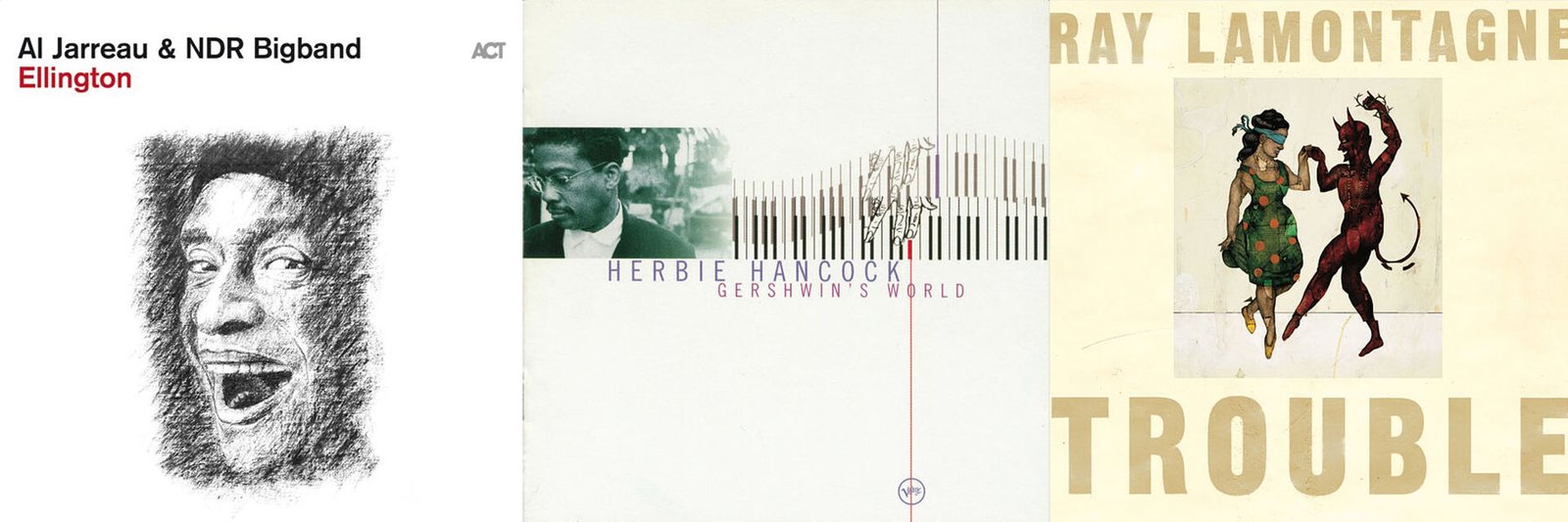
Al Jarreau’s “Ellington” live recording was the revelation of this stage. A live big-band vocal record is a brutal coherence test: one voice of infinite agility against massed brass, rhythm section, hall reverberation, and audience, all of it captured in real time. Through the full Estremo signal path, the layering was simply magnificent, Jarreau’s voice dancing in front, every section of the band occupying its own illuminated depth plane, the hall breathing around all of it, the audience present as a living texture rather than noise. I could follow any single thread or surrender to the whole, at will. Then Herbie Hancock’s “Gershwin’s World”, that kaleidoscope of an album where jazz trio, orchestra, and extraordinary guests trade places track by track: the Estremo loom rendered each acoustic world distinctly, the woody intimacy of the small-group tracks, the cinematic spread of the orchestral ones, while binding them into one continuous musical argument. The piano once again displayed that fluency of infinite tonal nuance between adjacent notes that only the very finest signal cables can preserve, here delivered with a touch more earth under its feet.
I closed this stage with Ray LaMontagne’s “Trouble”, returning to the artist whose “Long Way Home” had marked my Crystal Cable journey, but this time to his raw debut. That voice, all gravel and ache, hung in the room with its full chest resonance intact, not a disembodied audiophile voice floating above the band, but a man, grounded, singing from somewhere just below the sternum. The acoustic guitars had wood and wire in correct proportion; the strings behind “Shelter” swelled from a genuinely deep stage. Nothing, and I want to underline this, because it became the defining observation of the entire test, nothing, on any album, at any stage of the loom-building, ever sounded bright, harsh, unnatural, or cruelly “recorded.” Not one track was ejected from the listening session for bad behavior. The Estremo loom has plenty of attack and genuine bite in the high frequencies, cymbals snap, trumpets blaze, transients land, but there is not a trace of brightness anywhere in its character. Bite without brightness: it sounds like a contradiction until you hear it done.
The Crown — Estremo Speaker Cable, and an Honest Comparison
The Estremo Speaker cable was the last to enter, replacing the Albedo Monolith Reference MKIII, the pure-silver flagship that has been my reference for some time, and the cable against which every visitor to my listening room has had to prove itself. This was, emotionally and technically, the most loaded substitution of the test, and I want to report it with complete honesty.
Let me state the caveat plainly first: this comparison was not entirely fair in either direction. The Albedo Monolith Reference MKIII performed as a lone ambassador within an otherwise AAI-cabled system, and the Albedo interconnects, when I cross-checked the XLR comparison, were in the same position. I do not own a full Albedo loom (only one power cable, no network or digital cables from the same family), while the AAI fielded a complete, coherent team. What follows is therefore an honest impression, not a verdict, and as you will see, the asymmetry itself turned out to be the most instructive finding of all.
With that said, against my silver references, the AAI character emerged with remarkable consistency. The Estremo is more extended in the lower registers; the bass reaches lower and arrives with more foundation, more grounded in the lower midrange, and altogether more solid in its presentation. Where the Albedo Monolith Reference MKIII paints with that luminous, crystalline silver light I prize so highly: speed, air, and transparency, the Estremo sculpts: mass, texture, and presence. Where my silver cables open the sound upward and outward, the AAI deepens it downward and inward, promoting the musical background into relevance and bringing the listener closer to center stage. The layering is impressive; the textures are extraordinary; the bass is very good, tight, highly detailed, without a gram of bloom. Voices and instruments through the AAI loom carry more body and more earth; through the silver references, more light and more sky. I will not insult either philosophy by ranking them. I will only say that I expected the Slovak newcomer to be embarrassed by this company, and it was not embarrassed for a single bar of music.
The Analog Detour — Assoluto+ Power on the Turntable
And then, the experiment I had been saving: the Assoluto+ Power cable (the IST 3 representative from one line below) went to the analog front end, powering the phono stage of my turntable rig. I expected a refinement. I got a small detonation.
The effect was the most immediately dramatic single-cable change of the entire test: dynamics and separation transformed, full stop. The Jimi Hendrix Experience’s “Axis: Bold as Love”, a 1967 four-track production that can sound congested and quaint through a careless chain, suddenly unfolded into separated, breathing, violently alive music: “Little Wing” with the glockenspiel floating clearly above the Stratocaster instead of buried inside it, Mitchell’s drums snapping with startling transient energy, the stereo theatrics of the title track rendered as deliberate art rather than period gimmick.
Then the “Zappa” Original Motion Picture Soundtrack, that sprawling archival mosaic leaping between decades, venues, and recording qualities, and the Assoluto+ kept every cut dynamically honest and texturally separated, from raw Garrick Theatre chaos to late-period orchestral grandeur. Phono stages amplify microvolts; they are the most vulnerable creatures in any system, and apparently the most grateful. If your analog front end has never received a serious power cable, the Assoluto+ is an argument that will end the discussion in one evening.

The Full Loom — Unity of Intention
Now I must gather the threads, because the deepest discovery of this review is not any single cable. With the Crystal Cable Art Series, I discovered that a loom’s synergistic effect makes 1 + 1 equal more than 2. The AAI experience confirmed the law and revealed its mechanism. Each addition did not merely improve the sound; each addition agreed with the previous ones. The LAN opened the soundstage and the clarity; the power cables added the lower-midrange foundation and bass impact to fill that opened space; the XLR interconnects then completed it, more clarity, more texture, more definition, the natural flow fully unlocked, and the speaker cable grounded everything with perfect tonality and timing. Four stages, one sentence. Nothing contradicted; nothing was undone; every cable advanced the same argument.
This is when I finally and completely understood why a full set of cables from the same manufacturer matters so much. It is neither brand loyalty nor aesthetics. A cable designer voices a product with an intention, a specific idea of how music should be founded, textured, and projected, and when every link in the chain carries the same intention, that intention becomes easily audible. The matching of the AAI loom is incredible, and through it, the designer’s sound intention becomes perfectly clear: gravity without darkness, intimacy without aggression, texture and musicality, coherence and flow, a beautiful, grounded midrange, powerful and controlled bass, and exactly enough attack in the upper registers. A mixed loom, however noble its individual members, speaks several languages at once. The AAI loom speaks one language fluently, and you gain so much more in texture, musicality, coherence, and flow when nothing in the chain is translating.
Market Value and Context
Value is inherently subjective, as I wrote in the Crystal Cable story, and never more so than in the high-end cable market, where the ceiling has long since disappeared into the clouds. So let us position the AAI offering honestly.
The Estremo is AAI’s flagship line, and it is priced as such; this is unambiguously high-end territory. For calibration, the Estremo Power cable tested by High Fidelity carried a Polish price of 24,287 PLN for 1.5 m at the time of that review (the manufacturer’s own list places it at 5.169 € for 1.5 m, excluding VAT), which places it in the serious leagues, eye to eye with the established names in the silver-plated and pure-silver upper class. The complete Estremo loom tested here — LAN at 3.206 €, Power at 6.461 €, Speaker at 7.968 €, and the two XLR pairs at 11.908 € — totals 29.543 € excluding VAT: a sum that demands reflection. And yet, three considerations reshape the calculation considerably.
First, the reference points. Pacuła compared the Estremo Power directly to the Siltech Triple Crown, a cable costing several times more, and his most telling observation was that he had to consciously hunt for the differences; the Estremo’s internal harmony was so complete that nothing felt absent until deliberately sought. My own experience against the Albedo Monolith Reference MKIII, a reference I treasure, rhymes perfectly: the AAI does not lose these comparisons; it simply argues a different and equally legitimate philosophy of sound, at a price point that, while substantial, sits below the most exalted competition. In the brutal economics of diminishing returns that govern this hobby’s summit, that is precisely where the intelligent money looks.
Second, the loom logic. Because the AAI lines are voiced as families, the value proposition of the complete set exceeds the sum of its parts in a way that piecemeal cable shopping never captures. My strongest practical recommendation flows from this: do not audition a single AAI cable in a mixed system and judge the brand by it. Audition the loom, or at minimum three links of it. The synergy is not a bonus; it is the product.
Third, the Assoluto+ escape hatch. One floor below the Estremo, with the IST 3 treatment, the Assoluto+ delivers, on the evidence of its power cable in my analog chain, a thrillingly large fraction of the family character at a significantly friendlier price, 4.970 € for the 2 m power cable against 6.461 € for its Estremo counterpart, a saving of roughly a quarter that holds across the entire catalog. For listeners building a complete loom on a defined budget, a full Assoluto+ set may well be the sweetest spot in the entire AAI catalog, with the Estremo as the destination for the system’s most sensitive links, sources first, in my experience. And for those who want to test the philosophy at minimum risk, the Estremo LAN is the most disproportionate price-to-astonishment ratio I have encountered in years.
Is it all worth it? I return to the only honest answer this hobby permits: listen. But I will add this: the AAI loom passes the test that matters most at these prices – at no point in weeks of listening did I feel I was paying for jewelry, mythology, or nationality. I felt I was paying for sound, and the sound kept paying me back.

Conclusion
Somewhere in the middle of this test, on an evening when Lhasa’s voice was hanging in my room with that impossible grounded sorrow, I returned to the thought that opened this story. We live inside a fixed reality, the collapsed event, the only state of matter our instruments can ever measure, and yet our senses keep insisting, quietly and stubbornly, that they perceive something from behind the collapse: a rightness, a wholeness, a truth that arrives before any explanation. I do not know, and I cannot prove, exactly what AAI’s IST treatment does within the lattice of a silver-plated conductor in Považská Bystrica; no instrument I own will ever reduce that question to a number. But on that evening, with that voice in the room, my senses reported from behind the event with absolute certainty: the music had stopped being a measurement of itself. The texture beneath the surface had been set in order; my small, constructed, listening-room reality was the richer for it.
Let me draw the portrait one final time. The Authentic Audio Image loom: Estremo LAN, Power, Speaker, and XLR, with the Assoluto+ Power guarding the analog front end, delivers a sound of remarkable gravity and remarkable intimacy: a grounded, solid foundation reaching deep into the lower registers; a beautiful, tangibly textured midrange that brings voices to the front of the stage and the listener toward the center of it; tight, powerful, highly detailed bass without a trace of bloom; and high frequencies with genuine attack and bite but not one molecule of brightness. Layering and textures are exceptional; the background is not merely black but finely woven; coherence and flow are of the highest order. Nothing ever sounded harsh, bright, thin, or artificially “hi-fi.” And binding all of it together is the quality I will remember longest: the unity of intention across the full loom, the audible signature of one design philosophy speaking through every link of the chain at once, the lesson confirmed beyond doubt, that in cabling, the family is the component.
For the completeness of its vision, the professionalism of its execution, the dramatic and verifiable synergy of the full loom, and a sound that brings rare gravity, texture, and humanity to recorded music, the Authentic Audio Image Estremo system, with honorable mention to the overachieving Assoluto+ Power, receives our Editor’s Choice Award here at SoundNews.

It remains only to express our gratitude: to Authentic Audio Image for entrusting us with a complete loom of their finest work and for their openness in discussing the technology behind it, and to our local distributor (Novalis Trade srl) for their professional and generous support throughout this evaluation. May the quiet company from Považská Bystrica be heard very loudly indeed. It is a rare opportunity when a distributor is willing to allow for such an expensive package to exist in the showroom in the first place and later to be landed on a reviewer. It was an eye-opening experience, and if I had the resources, I would definitely consider upgrading to a full AAI cable system. Praise God that I do not… for now. But I will keep in mind the lesson learned: 1 plus 1 equals a lot more than 2. Better to wait and consider carefully, because there will be a moment when we will all feel the reality. Music first, always.