TLDR
The MOON 491 network player/preamplifier (6.800 EUR) and the MOON 461 power amplifier (5.200 EUR) complete the Compass Collection and form the highest-performing system in their class. The 491 combines the MiND 2 streaming platform, a dual-mono DAC built on two ESS ES9039Q2M chips, a fully adjustable MM/MC phono stage, a headphone output, and a balanced analog preamplifier in a single chassis. The 461 delivers 150 watts per channel into 8 ohms and 300 watts into 4 ohms through the MDCA architecture, fed by two MHP power supply modules in a true dual-mono configuration.
After weeks of daily listening, the combo carries the sonic signature of the MOON 371 almost identically: the exceptional kick bass, the neutral and controlled presentation, the clean and organized delivery from top to bottom, all of it with a firmer grip and greater composure. The gains concentrate in microdynamics, low-volume listenability, and dynamic headroom. Subbass stays at the level of the 371, the soundstage remains very similar, and warmer cabling remains our recommendation for long sessions.
Our biggest disappointment sits on the back panel of the 491: there is no USB audio input, so a direct connection from a computer or a USB-based transport is impossible. For the digital control centre of a modern system, we consider this the single biggest drawback of the package.
If the budget allows it, the combo is the clear step up from the 371, with long-term flexibility through bridged mono operation, bi-amping, and modular boards.
Introduction
In February of this year, we published our review of the MOON 371, and it left a lasting impression on us. We called it a Compact Form, Large Authority, and we meant every word of it. Its kick bass performance became a point of reference in our listening room, its power delivery behaved far beyond what the specifications suggested, and its all-in-one architecture proved that serious sound and modern convenience can live together in a single chassis. Anyone curious about the history of Simaudio, the philosophy behind the Compass Collection, or the fascinating technical conversation we had with Dominique Poupart, the company’s Product Director, will find it all in that review. We warmly invite you to read it, because everything we write here builds on that foundation.
When Simaudio announced two new Compass models in May 2026, our curiosity peaked. A dedicated network player/preamplifier and a dedicated power amplifier, designed from the start to work together, carrying the same technologies we had already heard in the 371 and pushing them further, what could be more engaging? We firmly believe separate devices reveal the true intentions of a design team. When the constraints of a single enclosure disappear, the engineers show what they wanted to do all along. We wanted to experience exactly that.
The two units arrived at our door late June, and they spent the better part of the month in our reference system. This review documents everything we found, the expected and the unexpected, the delightful and the disappointing.
The Compass Points Toward North
The MOON 491 and MOON 461 are the second and third products in the Compass Collection, announced on May 19, 2026 and available in stores from July. Simaudio positions them together as the highest-performing system in the Compass range, sitting above the 371 and below the flagship North Collection separates.
The naming convention follows the exact logic we decoded in our 371 review.
The leading 4 places both units one performance tier above the entry-level 3 of the 371.
The middle digit indicates the degree of functional integration: the 6 of the power amplifier denotes a single-purpose amplification product, and the 9 of the network player/preamplifier denotes the highest level of integration in the range, combining streaming, digital conversion, preamplification, phono playback, and headphone amplification in one enclosure.
The final 1 marks the platform generation.
The Compass name was chosen because it points North, toward the flagship collection, and this pairing takes that idea a step further than the 371. Both units inherit the two defining North technologies, MDCA amplification and MHP power delivery, and both are designed, manufactured, and hand assembled in Boucherville, Canada. Both carry the same 10-year warranty that applies across the entire MOON lineup, a commitment we continue to consider exemplary in today’s market.
The 491 is priced at 6.800 EUR and the 461 at 5.200 EUR, bringing the complete system to 12.000 EUR. This positions the combo at nearly double the price of the 371, and that relationship between the integrated and the separates will follow us throughout this review.
MOON 491: The Control Centre
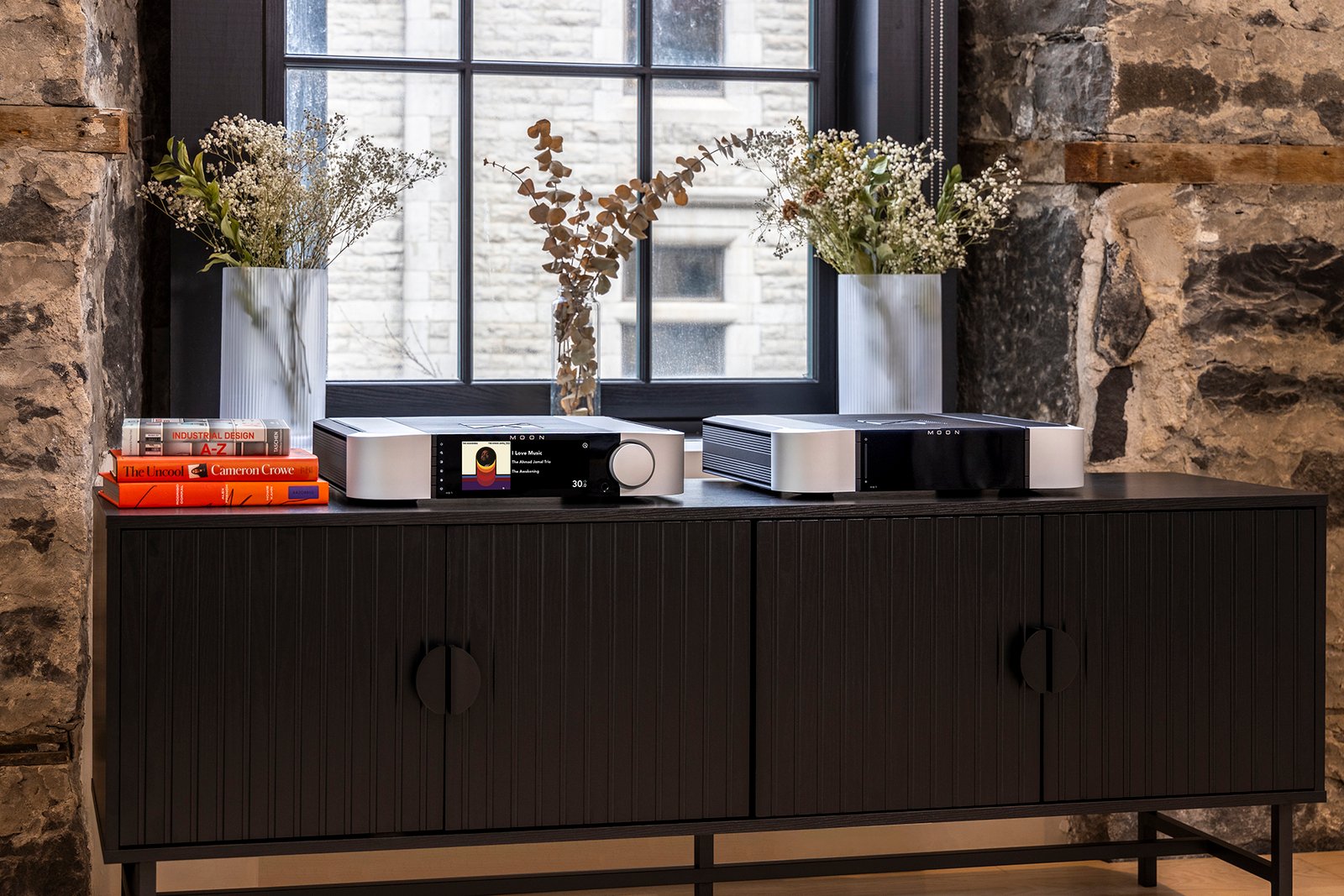
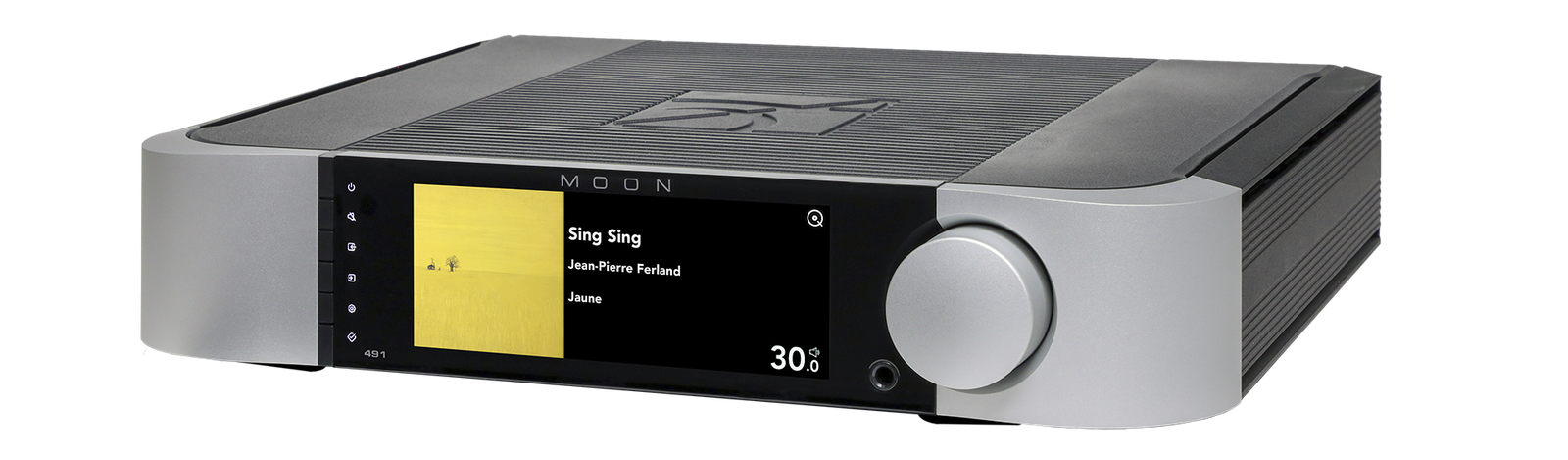
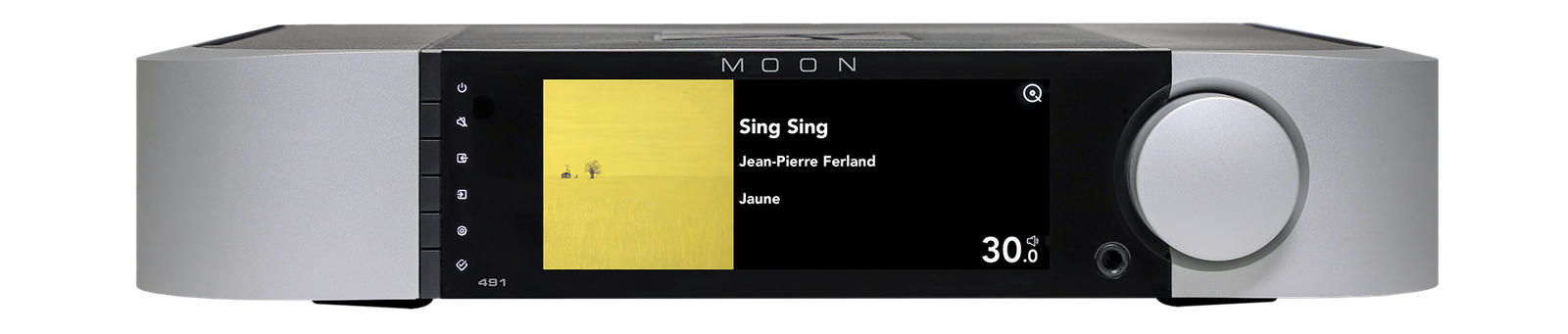
Simaudio describes the 491 as the control centre of a refined music system, and after weeks of daily use we find the description accurate. In a single chassis measuring 42.9 x 8.7 x 35.7 cm, it combines a network player, a dual-mono DAC, a balanced analog preamplifier, an adjustable MM/MC phono stage, and a headphone amplifier.
Connectivity and Networking
The rear panel of the 491 reflects its role as a system hub, and its layout follows the clean, logical organization we appreciated on the 371.
On the analog side, the 491 provides a dedicated RCA phono input with a grounding terminal, a line-level RCA input, and a balanced XLR input. The output section is more generous than what the 371 offered: a fixed-level RCA output allows the 491 to serve as a pure source component feeding an external integrated or preamplifier, a variable RCA output serves single-ended power amplifiers, subwoofers, or active loudspeakers, and a variable balanced XLR output handles balanced amplification. This is the output we used throughout our sessions, feeding the 461.
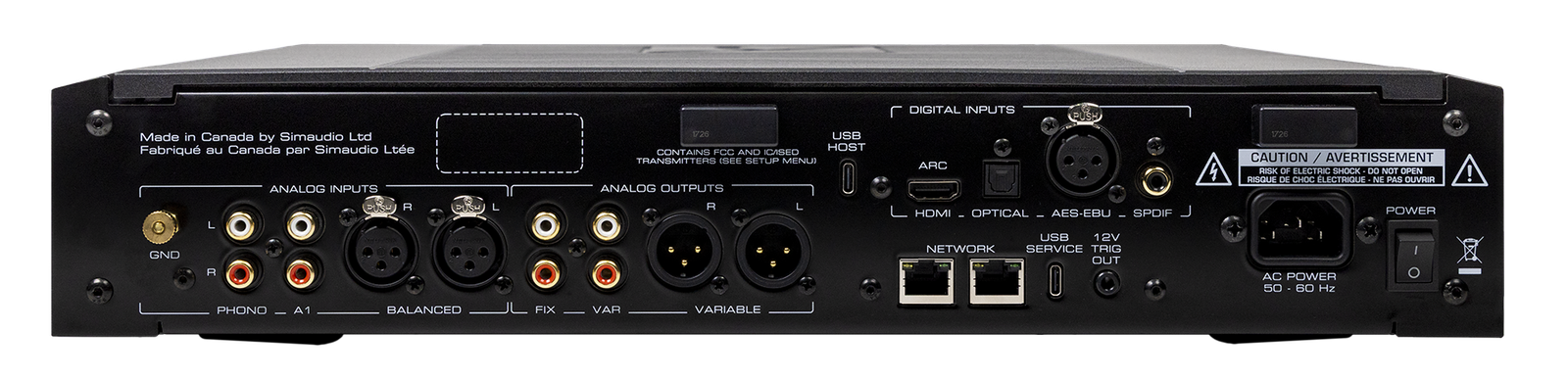
Digital connectivity brings a meaningful addition over the 371: alongside HDMI ARC (2.0b), optical, and coaxial S/PDIF inputs, the 491 adds a professional-grade AES/EBU input on XLR, a connection we always like to see on serious digital front ends. A USB-C host port supports playback from attached storage drives through the MiND Controller, and a separate USB service port handles firmware maintenance. Network connectivity is handled by dual Ethernet ports supporting the MOONLink protocol, and a 12V trigger output allows standby synchronization with a compatible power amplifier.
The missing USB audio input, is where we arrive at our biggest disappointment with this product, one we need to address openly and early. The MOON 491 does not include a USB Audio input. There is simply no way to connect a computer, laptop, music server or dedicated USB transport directly to its DAC section. The USB-C connector on the rear panel is reserved for external storage devices, while the second USB port is strictly for servicing the unit.
We noticed the same omission on the MOON 371 and accepted it there, largely because it positions itself as a compact all-in-one solution where the excellent MiND streaming platform covers the overwhelming majority of use cases. The 491, however, is a very different proposition. It is marketed as the digital heart of a reference-grade system, built around a fully balanced dual-mono DAC architecture and carrying a price tag of €6,800. At this level, we expect a USB Audio input to be present.
The omission is difficult to justify. Many enthusiasts maintain extensive local music libraries on computers or dedicated music servers, while others rely on software such as Roon, Audirvana or HQPlayer feeding an external DAC over USB. Those users are forced to fall back on AES/EBU or S/PDIF connections, sacrificing the flexibility and bandwidth offered by modern USB Audio implementations, along with support for the highest PCM and DSD formats available from dedicated playback software.
Fortunately, this limitation affects only one particular use case. If your listening revolves around network streaming through MiND, TIDAL Connect, AirPlay 2, Spotify Connect or other integrated streaming services, you will probably never notice its absence. Nevertheless, for a component intended to serve as the ultimate digital hub in a high-end system, we believe a USB Audio input should have been considered mandatory and not in any way, shape or form optional.
We sincerely hope Simaudio revisits this decision in a future revision of the digital platform, because in virtually every other respect, the MOON 491 is engineered to an exceptionally high standard.
On the network side, playback is handled by the MiND 2 platform, offering Qobuz, Tidal, Deezer, and Spotify access through the MOON MiND Controller app for iOS and Android, along with native Qobuz Connect, Tidal Connect, and Spotify Connect support. The 491 operates as a UPnP renderer, is fully Roon Ready, and supports Apple AirPlay and Bluetooth. Local content from network servers and attached storage plays back through the same interface.
During our weeks with the unit, the MiND 2 experience was flawless throughout. The app connected within seconds every single time, playback remained stable across very long sessions, standby control from the app executed promptly, and firmware updates arrived and installed without any drama or bugs. In our 371 review we praised the maturity of this platform, and the 491 again confirmed that impression. This is a streaming ecosystem that behaves like an established, polished product, and we believe this matters enormously in daily life with a component.
DAC Architecture
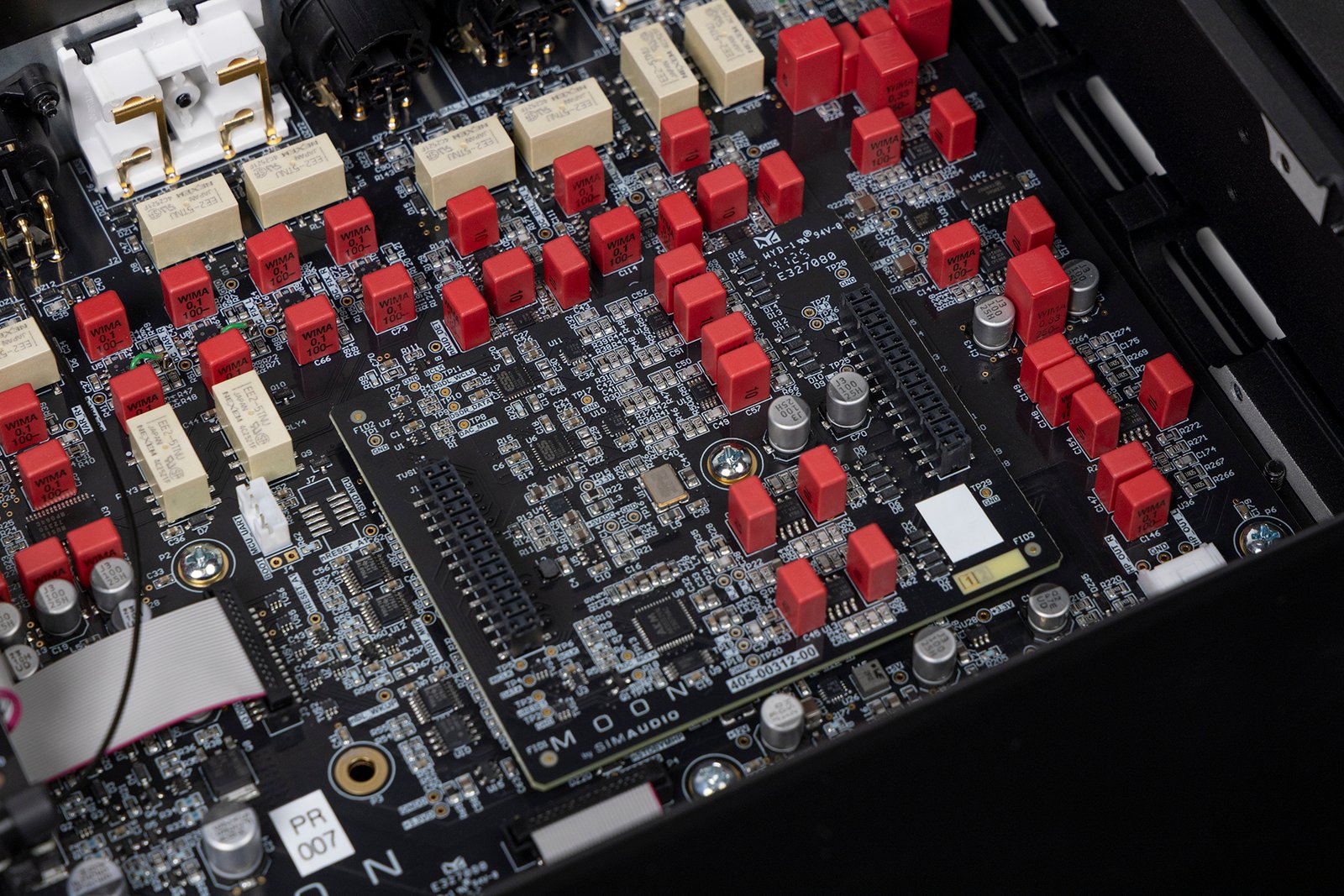
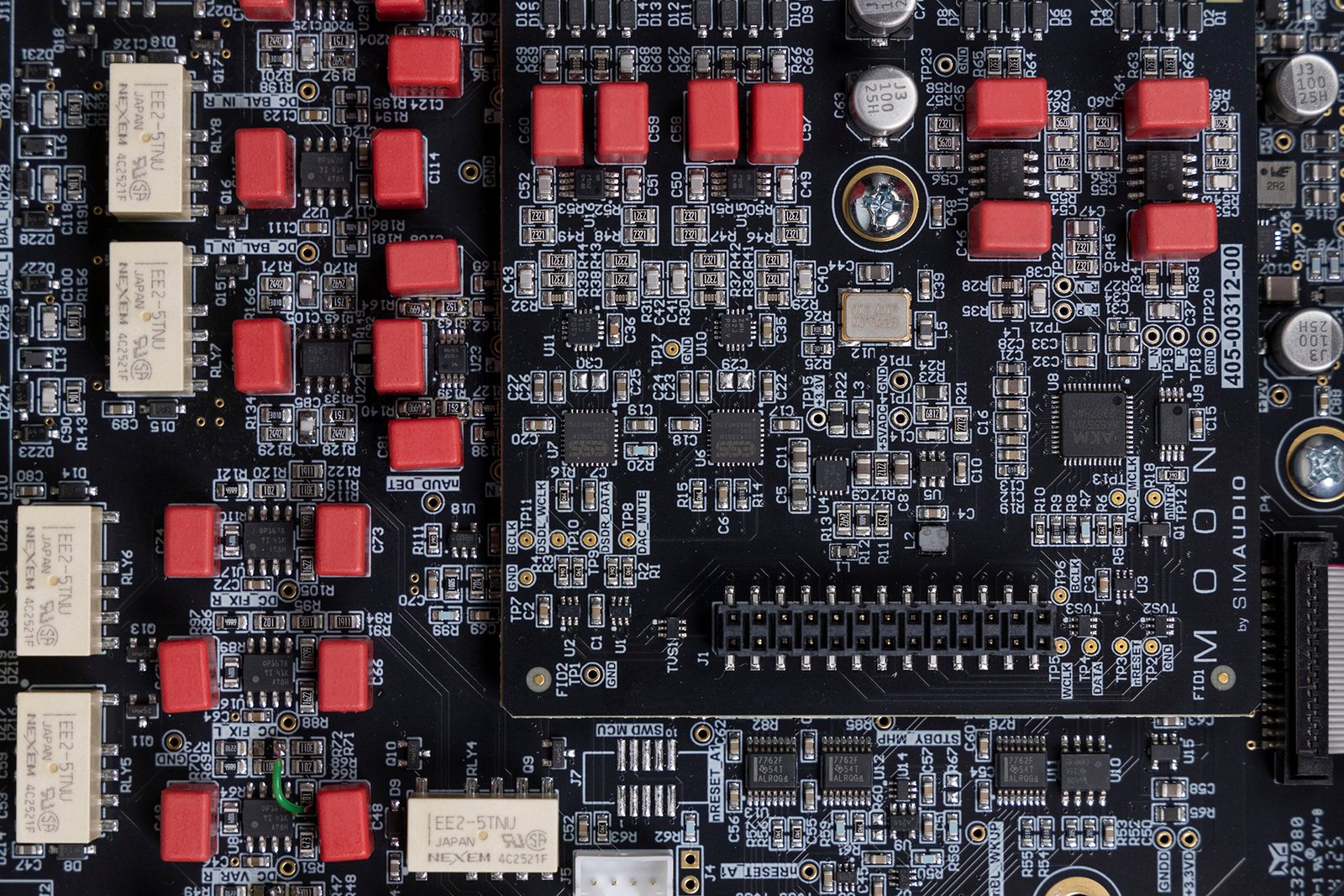
The digital conversion inside the 491 takes a clear step beyond the 371. Where the integrated used a single ESS ES9039Q2M chip, the 491 employs two ES9039Q2M converters in a dual-mono configuration, one per channel, paired with a precision clock system and a refined analog output stage. According to Simaudio, this architecture supports stable, precise, and detailed conversion, and the dual-mono approach improves channel separation at the source of the analog signal.
The DAC resides on a modular board, physically and electrically separated from the analog preamplifier stages, preserving the upgrade path philosophy that defines the entire Compass platform. Power for the conversion stage comes from the MHP power supply through dedicated, independently regulated rails. Supported formats reach 32-bit / 384 kHz PCM and DSD256 through the MiND network path, and the physical digital inputs support PCM at lower maximum rates, as detailed in the manufacturer’s documentation.
For readers interested in the deeper reasoning behind Simaudio’s ESS implementation, the minimum-phase filtering approach, and the company’s long relationship with the Canadian ESS design team, we point you again to the Q&A session with Dominique Poupart in our MOON 371 review. He shared a wealth of information there that applies directly to this platform, and we consider that conversation a treasure for anyone who wants to understand how these DACs are engineered. It remains, in our view, essential reading alongside this review.
Phono Stage
The phono section of the 491 is considerably more ambitious than the one in the 371, and it deserves a proper description even if our sessions this time were focused entirely on the digital side. We did not evaluate the phono input with a turntable during this review period, so what follows is a functional presentation based on the manufacturer’s documentation, with no sonic claims attached.
The 491 supports both MM and MC cartridges through two configuration modes. Basic mode offers preset configurations: 40 dB of gain with 47 kΩ loading and 100 pF of capacitance for moving magnet cartridges, and 60 dB of gain with 100 Ω loading for moving coil designs. Advanced mode opens the full parameter space: gain selectable at 40, 54, 60, or 66 dB, impedance loading at 47 kΩ, 1 kΩ, 470 Ω, 100 Ω, or 10 Ω, capacitance at 0, 100, or 470 pF, and a choice between the standard RIAA equalization curve and the IEC variant, which reduces extreme low frequency output for installations where that behavior helps. All of it is configurable through the on-screen menu system.
This level of adjustability is rare at this price point and signals that Simaudio treats vinyl playback as a first-class citizen on this platform. Owners of demanding low output moving coil cartridges receive the loading flexibility they need, and the grounding terminal and dedicated input topology follow the careful engineering practice we have come to expect from this company.
Headphone Output and HDMI ARC
The front panel comes with a 6.35 mm TRS headphone output, discreetly placed in the same manner as on the 371. Connecting headphones automatically mutes the loudspeaker path. We did not evaluate the headphone section during this review, so we limit ourselves to noting its presence and behavior.
The HDMI ARC input integrates the 491 into a living room environment, accepting PCM audio from an ARC-enabled television. The menu offers three CEC modes: audio only, audio with CEC volume control, and complete CEC command support, allowing the television remote to handle volume and standby. This is a thoughtful implementation for households where the system serves both music and film duties.
Preamplifier Section and Volume Control
The analog preamplifier at the heart of the 491 operates with 10 dB of gain, a 22 kΩ input impedance, and an input sensitivity range of 0.3 V to 5 V, as specified by Simaudio. The published figures speak for themselves: a frequency response of 10 Hz to 200 kHz (+0.5/-3.0 dB), THD+N of 0.0004%, intermodulation distortion of 0.0004%, a signal-to-noise ratio of 120 dB, and crosstalk of -120 dB.
The volume control adjusts in 1.0 dB increments between 0 and 30, switching to 0.5 dB increments between 30 and 80, the maximum setting. The knob itself has a smooth, precisely weighted feel that invites use, and the large colour display shows volume, active input, sample rate, and album artwork with excellent clarity. Each input can be renamed, gain-offset to match source levels, or hidden entirely, and the analog inputs offer a home theatre bypass mode that sets the preamplifier to unity gain for integration with a surround processor. These are the small conveniences that separate a mature platform from a rushed one, and the 491 has them all.
MOON 461: Power With Precision
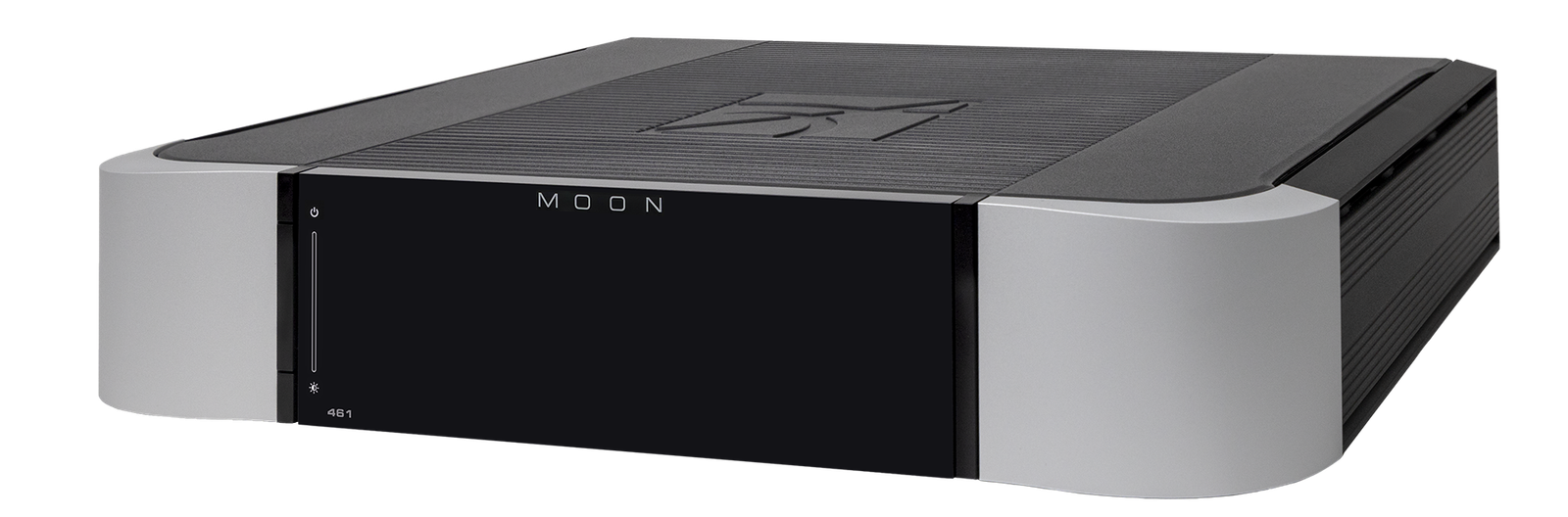
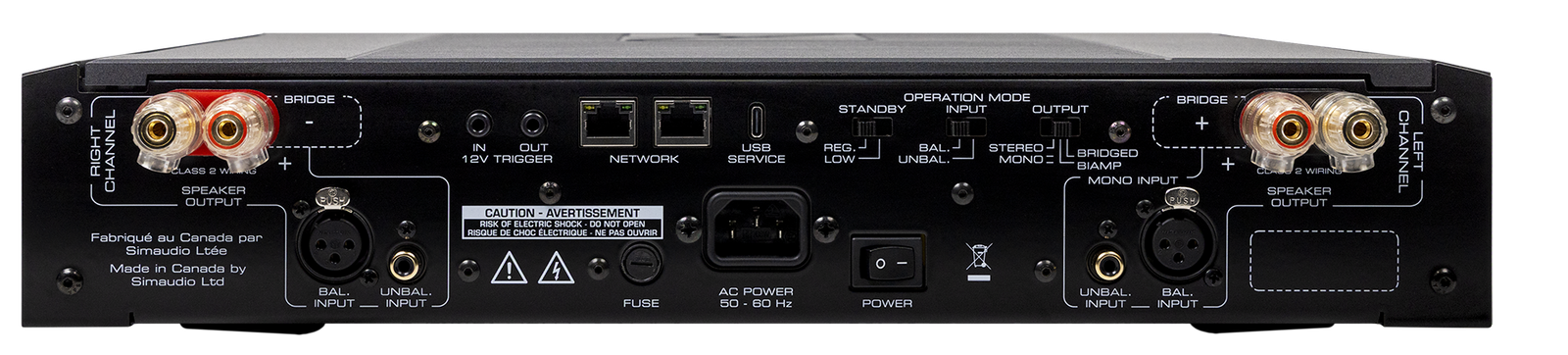
The 461 is the most powerful amplifier in the Compass Collection, rated at 150 watts per channel into 8 ohms, 300 watts per channel into 4 ohms, and 450 watts in bridged mono mode into 8 ohms. It is a pure analog power amplifier in the classic sense: two pairs of inputs, two pairs of binding posts, a mode switch, and everything else dedicated to the quality of amplification itself.
Amplifier Architecture and MDCA
At the heart of the 461, we have the MDCA (MOON Distortion-Cancelling Amplifier), the proprietary architecture pioneered in the flagship North Collection and already familiar to our readers from the 371. The class AB output stage operates as a zero global feedback design. A dedicated comparator circuit continuously compares the input signal with the amplified output signal, isolates the distortion component generated during amplification, inverts it, and injects the correction directly into the output stage in opposite phase. The correction path operates entirely outside the high-power signal domain, in a low-stress environment, which allows it to work with high precision and timing accuracy. According to Simaudio, this approach reduces distortion and noise, lowers output impedance, and improves the damping factor, translating directly into loudspeaker control and bass articulation.
The output devices used are custom MOON transistors developed in collaboration with OnSemi, manufactured specifically for Simaudio and manually matched at the factory. The story behind these devices, why off-the-shelf parts were considered insufficient, which parameters mattered most in their selection, and how they interact with the MDCA circuit, was explained to us directly by Dominique Poupart in the Q&A section of our 371 review. His answers on transistor linearity, matching tolerance, and the philosophy of building on excellent components even when MDCA relaxes the theoretical requirements remain some of the most valuable technical insight we have published, and we encourage every reader of this review to revisit that conversation. The same devices and the same design principles are at work inside the 461.
The published distortion figures, as specified by Simaudio, are remarkable for a class AB design of this price: THD+N of 0.005% at 1 watt and 0.003% at full rated power, intermodulation distortion of 0.005%, a signal-to-noise ratio of 114 dB, crosstalk of -114 dB, and a damping factor of 425. The gain is 31 dB with an input sensitivity of 1 V and an input impedance of 22 kΩ. The frequency response extends from 5 Hz to 100 kHz (+0/-3 dB).
Dual-Mono MHP Power Delivery
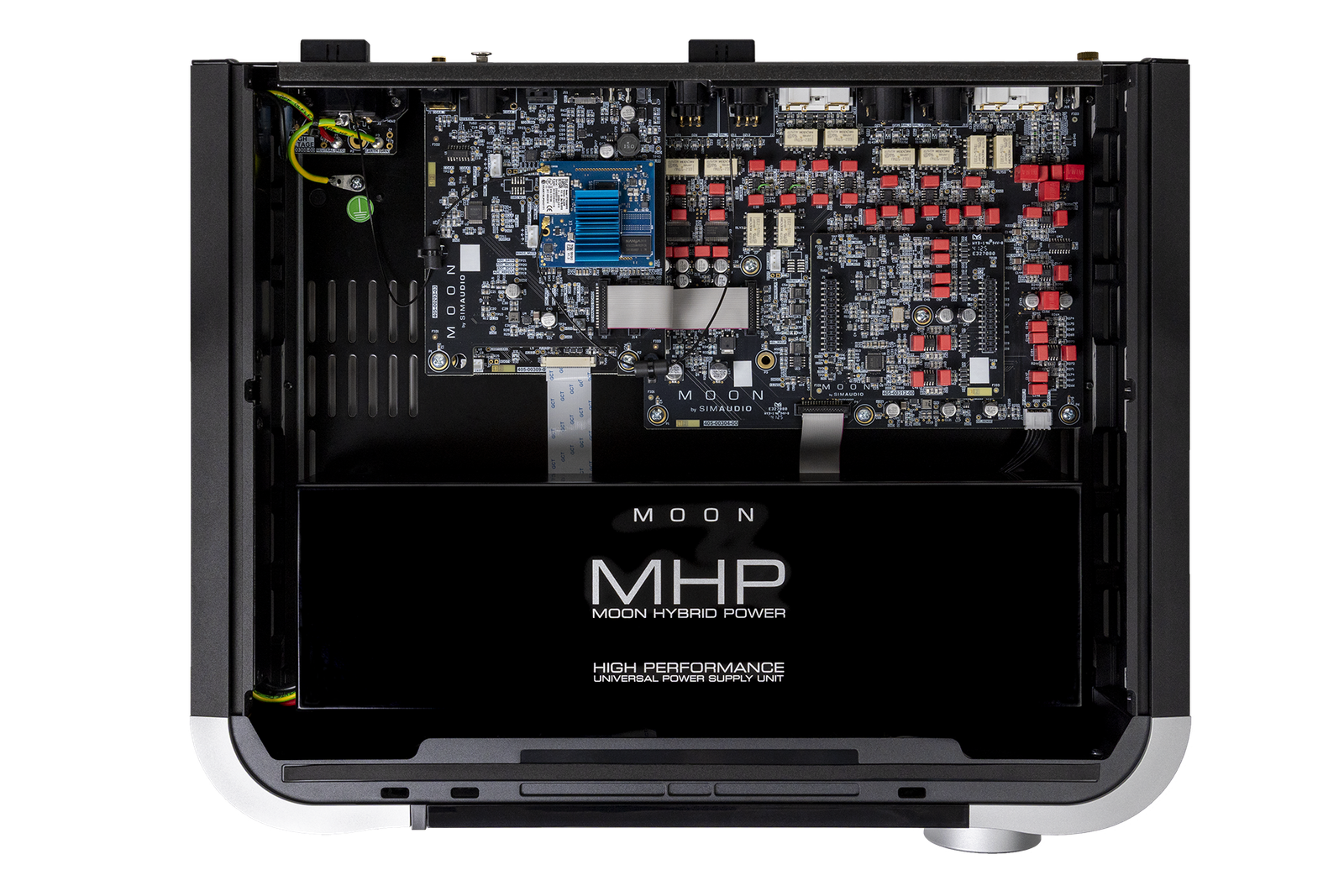
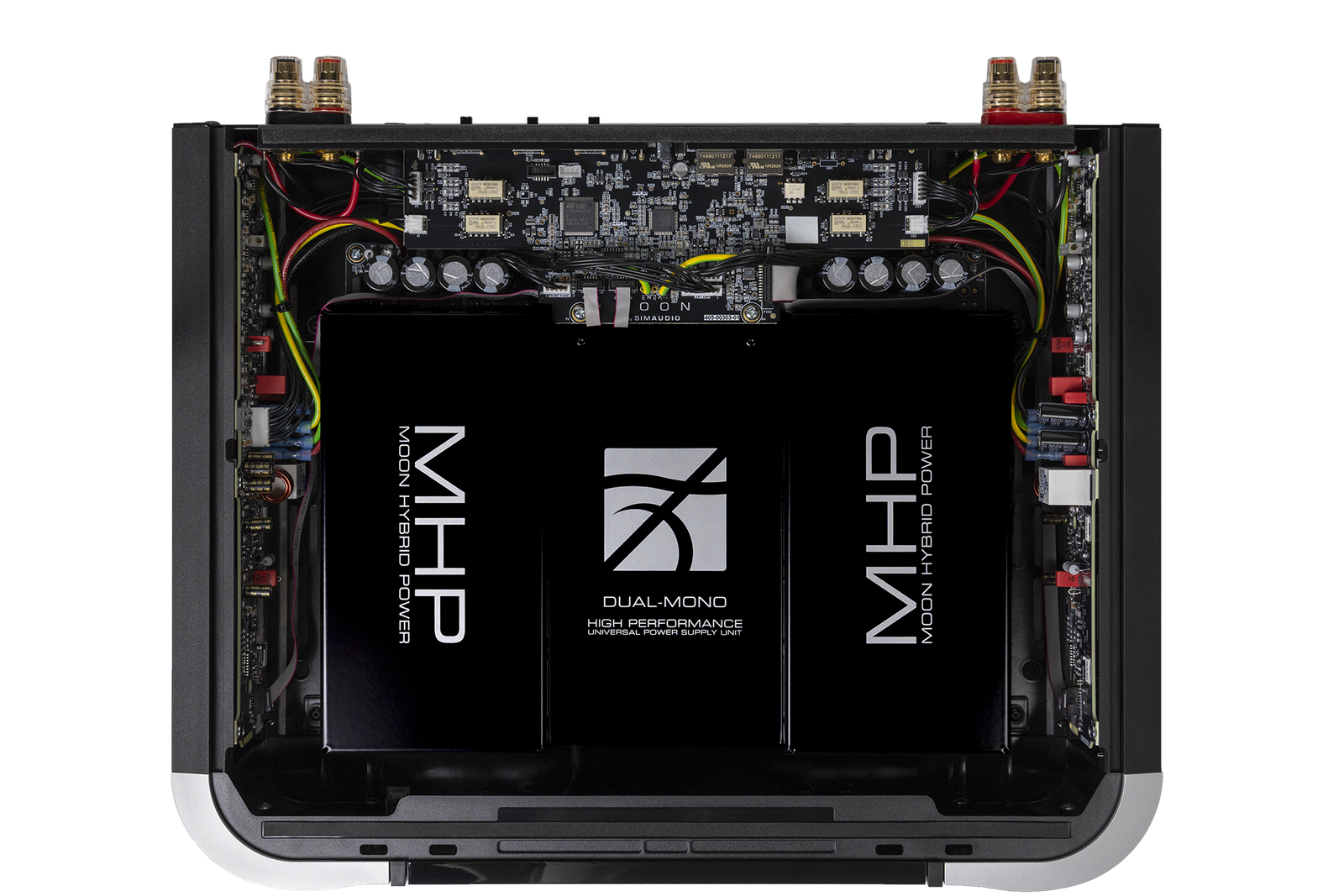
Where the 371 introduced a single MHP module capable of feeding a complete amplifier for the first time, the 461 takes the concept to its logical conclusion: two complete MOON Hybrid Power supply modules, one dedicated to each channel, in a true dual-mono internal architecture.
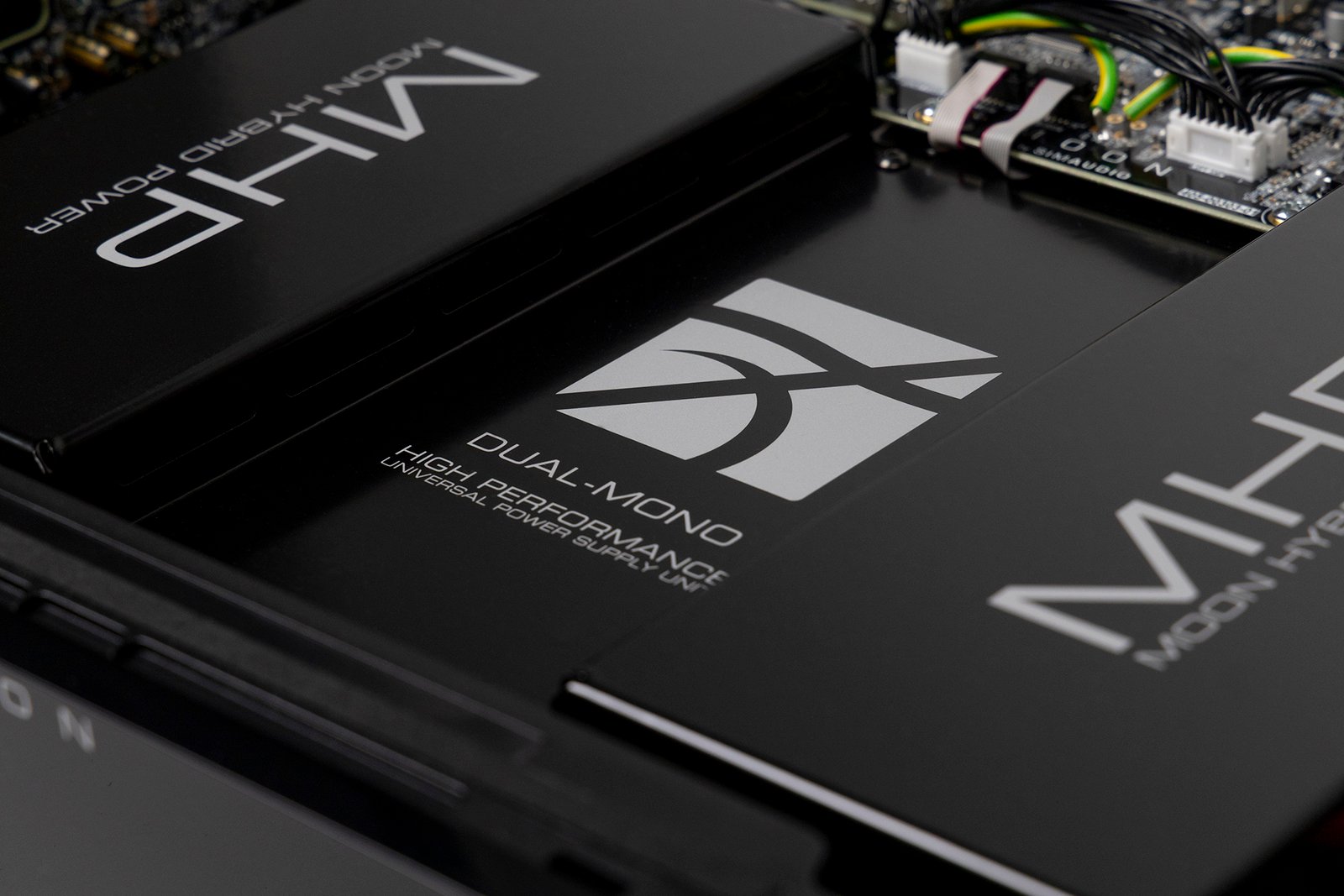
The three-stage MHP structure remains the one we described in depth in the 371 review. A power factor correction circuit keeps current and voltage in phase and converts the incoming AC to a stabilized 400-volt DC rail, largely immune to mains fluctuations. An LLC resonant stage provides galvanic isolation and soft, resonant power transfer, avoiding the hard-switching behavior that plagues conventional switch-mode designs. A linear regulation stage then delivers clean, independently regulated DC to the amplification circuits. Because the architecture eliminates the large mains-frequency transformer, it avoids the magnetic fields and the 50 Hz and 100 Hz noise components that traditional supplies inject into sensitive circuits, and any residual switching noise lives far above the audible band.
Doubling the MHP modules and dedicating one to each channel improves channel separation, reduces crosstalk, and ensures current delivery to low-impedance loudspeaker loads; the published crosstalk figure of -114 dB reflects that architecture. It is our feeling that this dual-mono power delivery, more than any single circuit refinement, defines what the 461 adds over the amplification section of the 371.
Operating Modes
A rear panel switch selects between three configurations. Stereo mode handles standard two-channel playback and is the mode we used throughout our evaluation. Bridged Mono mode turns the 461 into a single-channel amplifier delivering 450 watts into 8 ohms, opening the door to a future system built around two units, one per loudspeaker. Bi-Amping Mono mode allows one 461 to drive the low and high frequency sections of a single loudspeaker separately, for owners of speakers with split crossover terminals.
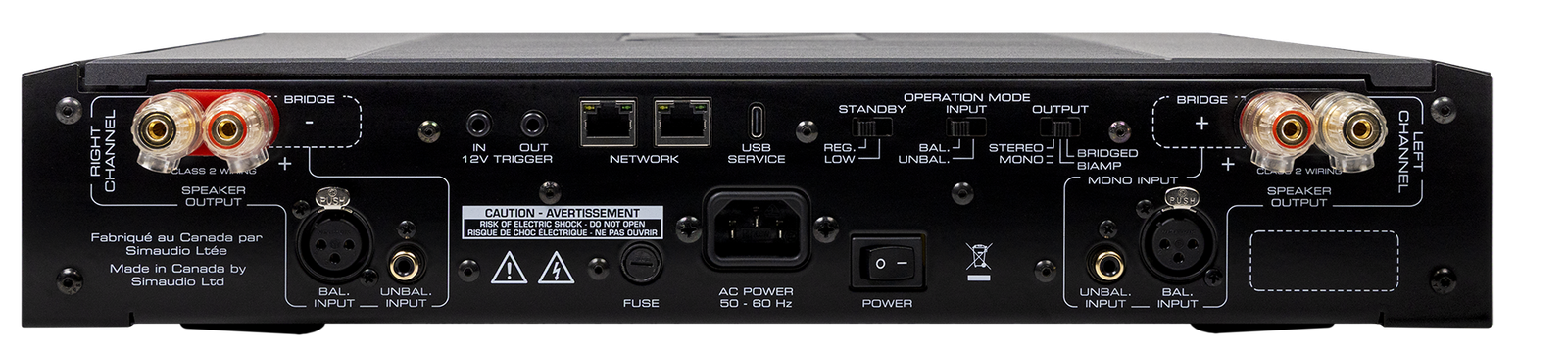
We find this flexibility important for the long-term story of the Compass system. An owner can start with one 461 in stereo, add a second one years later, and roughly triple the available power per channel, all within the same aesthetic and technological family. The 371 offered no such path. This one does, and it changes the ownership calculation considerably.
Build Quality
Both units follow the Compass design language established by the 371, and our review samples arrived in the two-tone finish with silver bead-blasted aluminum cheeks against the black chassis. In person, the pairing is beautiful. The cheeks blend smoothly from the front panel into the sides, the machining is precise, panel gaps are tight and uniform, and both units project the quiet, understated confidence that has defined MOON industrial design for years.
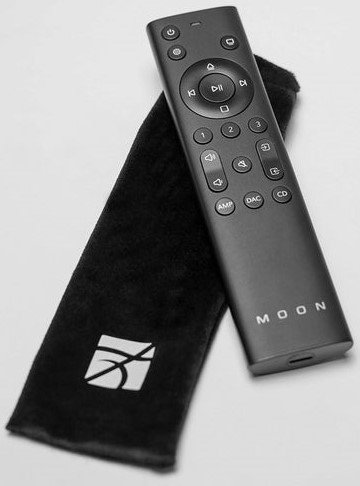
The CRM-4 remote control, machined from aluminum and included with the 491, feels substantial and responds precisely. Both units are also compatible with the BRM-1 intelligent remote from the North Collection, available separately. Physical dimensions are nearly identical between the two: 42.9 cm wide and 8.7 cm tall, with the 461 slightly deeper at 36.8 cm against the 491’s 35.7 cm. Shipping weights are 9 kg for the 491 and 11 kg for the 461, remarkably light figures for what these units deliver, a direct consequence of the MHP architecture removing the traditional power transformer.
Specifications
MOON 491 Network Player / Preamplifier, as specified by Simaudio:
| Parameter | Value |
| Input Sensitivity | 0.3 V to 5 V |
| Input Impedance | 22 kΩ |
| Gain | 10 dB |
| Frequency Response | 10 Hz to 200 kHz, +0.5/-3.0 dB |
| THD+N | 0.0004% |
| Intermodulation Distortion | 0.0004% |
| Signal-to-Noise Ratio | 120 dB |
| Crosstalk | -120 dB |
| DAC | 2 x ESS ES9039Q2M, dual-mono |
| PCM / DSD Support | up to 32-bit/384 kHz, DSD256 (network path) |
| Power Consumption (Idle) | 16 W |
| Dimensions (W x H x D) | 42.9 x 8.7 x 35.7 cm |
| Shipping Weight | 9 kg |
MOON 461 Power Amplifier, as specified by Simaudio:
| Parameter | Value |
| Output Power (Stereo, 8 Ω) | 150 W |
| Output Power (Stereo, 4 Ω) | 300 W |
| Output Power (Bridged Mono, 8 Ω) | 450 W |
| Input Sensitivity | 1 V |
| Input Impedance | 22 kΩ |
| Gain | 31 dB |
| Frequency Response | 5 Hz to 100 kHz, +0/-3 dB |
| THD+N (1 W / 150 W) | 0.005% / 0.003% |
| Intermodulation Distortion | 0.005% |
| Signal-to-Noise Ratio | 114 dB |
| Crosstalk | -114 dB |
| Damping Factor | 425 |
| Power Consumption (Idle) | 35 W |
| Dimensions (W x H x D) | 42.9 x 8.7 x 36.8 cm |
| Shipping Weight | 11 kg |
System Matching
All listening sessions were carried out with the 491 serving as the sole source and preamplifier, connected to the 461 through its variable balanced XLR outputs. To evaluate load handling and matching behavior, we used two loudspeakers with very different electrical and sonic profiles.
Loudspeakers used
1. Monitor Audio Platinum 300 3G
2. Dynaudio Contour 60i
Cabling used
1. Speaker cables: Roboli HP8000
2. XLR interconnects: Roboli XLR 2100
3. Power cables: Roboli Power 5200 on both units
All cables remained unchanged throughout the sessions to maintain consistency across loudspeaker swaps and comparisons.
The Monitor Audio Platinum 300 3G is the speaker we know most intimately, and it exposes bass control, texture, and physicality with merciless honesty. The Dynaudio Contour 60i brings the demanding electrical behavior we described in the 371 review, with impedance dipping to roughly 2.5 ohms around 100 Hz, a load that separates amplifiers with composure from amplifiers with just marketing talk. The gain structure of the combo, 10 dB in the preamplifier and 31 dB in the power amplifier, matched both speakers comfortably, with normal listening levels sitting in the middle of the volume range and generous headroom above.
One matching note we carry forward from the 371, because it applies here in full: the tight, neutral, fast character of this electronics family requires careful partnering. With brighter or leaner loudspeakers, and especially with poorly produced recordings, warmer-sounding cables help the system settle into long-term comfort. Our Roboli selection served that role well.
Setup and Room
The two units spent their time in the same listening room where the 371 sessions took place, which gave us a stable acoustic reference.
We placed the 491 and 461 side by side on the rack, an arrangement their identical heights and widths make visually satisfying, and one that keeps the power amplifier’s ventilation completely unobstructed. Heat was a non-issue throughout, with the 461 running warm at most, even after hours at spirited levels.
Linking the two units is a small pleasure in itself. We tested both methods Simaudio provides: the 12V trigger connection, which couples standby states over a simple mini-jack cable, and MOONLink, which runs over the Ethernet ports and synchronizes standby, volume, display brightness, and input behaviors across the system. Both worked exactly as advertised, every single time, and choosing between them comes down to preference. The trigger is simple and bulletproof, MOONLink is more capable and equally reliable. A long press on the standby button of either unit put the entire system to sleep, and the app woke everything within seconds. This is how a reference system integration should feel.
Simaudio recommends around 100 hours of playback before the circuits stabilize, and our evaluation period stretched well beyond that, filling the better part of the month with daily listening before we wrote a single word of the impressions that follow.
Listening Sessions
We began our journey within classical territory. We keep repeating this in our reviews because we believe it deeply: orchestral recordings remain the most demanding test for any amplification chain, exposing timing errors, tonal imbalance, dynamic compression, and spatial inaccuracy with complete ease. Alongside two recordings that anchored our 371 sessions, we brought two new discoveries into the room, both praised across the specialized press this year, and both fully deserving of their reputation.

We returned to the Firebird deliberately, because this recording produced some of the defining passages of our 371 review. From the first orchestral blooms on the Platinum 300 3G, the family resemblance was unmistakable. The combo demonstrated the same excellent control over macro dynamics, the same articulate weight in the timpani and double bass sections, the same firm and stable low-frequency foundation that let the rest of the orchestra breathe. Crescendos maintained composure and structural clarity through the densest passages, and the bass kept its physicality regardless of volume.
The refinements revealed themselves in the quiet spaces between the explosions. Small variations in bow pressure, the faint shifts in orchestral articulation, the low-level texture inside, sustained string chords. All of these carried a touch more life and definition than the integrated offered. The dark background that we have spoken about previously, one of the qualities we scored highest on the 371, felt even a shade darker here, and the inter-note silence gave decays more room to complete themselves. These were refinements, measured in small degrees, and we want our readers to understand them exactly as such.
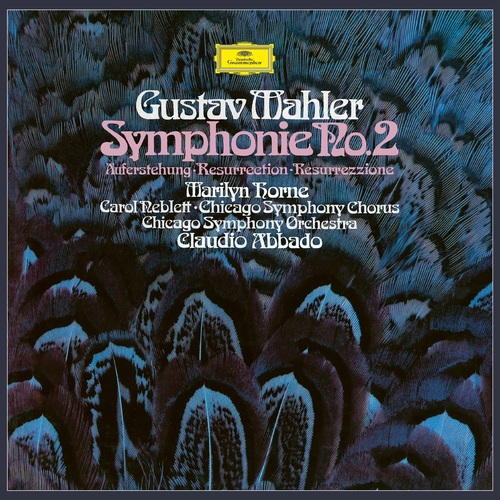
Mahler’s – Symphony No. 2 gave the 461 its first full workout on the Contour 60i, and this was where we first heard the added power reserves at work. Those massive climaxes in the first and fifth movements arrived with an ease and an authority that we felt through the floor. The 371 achieved its marvelous composure at the edges of a modest powerband. The combo delivered the same composure with visible reserves behind it. Dynamic swings from pianissimo to full orchestral impact scaled without any sense of gathering effort, and the demanding impedance behavior of the Dynaudio never disturbed the coherence of the presentation. We want to be fair here: the 371 already handled this load far better than its specifications suggested, and the audible gains of the 461 were subtler than the 50 percent power increase on paper implies. The gains showed up in headroom, in the relaxed confidence of the loudest passages, and in the way microdynamic detail survived inside them.

The first of our new discoveries, Lutoslawski – Concerto for Orchestra / Cello Concerto (Jean-Guihen Queyras, Luxembourg Philharmonic, Gustavo Gimeno, Harmonia Mundi). This recording offers copious orchestral color, excellent bass, and a deep soundstage, and the Cello Concerto in particular proved an exceptional test of a high-end system. Queyras plays with a smooth, warm eloquence that the combo reproduced with convincing body and texture. The frenetic orchestral explosions of the final movement of the Concerto for Orchestra gave the 461 every opportunity to demonstrate its grip, and it took every one of them. Percussive attacks started and stopped with precision, brass climaxes kept their structure, and the layering of the orchestra behind the solo cello was rendered with a depth that pulled us deep into the performance. It is our feeling that this recording will join our permanent test playlist, and we thank the combo for introducing us properly.

Our second new pick, and a sonic spectacle from the very first bars, Mahler – Symphony No. 5 (Sir Donald Runnicles, Grand Teton Music Festival Orchestra, Reference Recordings). The opening trumpet fanfare sat precisely placed in space, with a pillowy depth behind it, and the tutti that follows presented a unified, satisfying sonority in which individual instruments remained almost tangibly present. The 491 and 461 handled this seemingly contradictory demand, mass and detail at once, with the organized, controlled character that defines this family of electronics. The famous Adagietto flowed with delicacy, the string textures resolved beautifully, and the combo preserved the fine gradations of dynamics that make this performance special. Recordings of this caliber remind us why we do this at all. For long stretches of the evening, the system simply disappeared behind the music.

After discovering a rendition as close to the real drumworks as possible, we began using Loreena McKennitt’s – The Gates of Istanbul review after review, and we chose it here for exactly that same reason: it exposes amplifiers that lack bass discipline within seconds. With the Platinum 300 3G in the system, the verdict came fast. It always does on this track. That drum was played with the same exceptional tightness and control that made the 371 famous in our room, the same chest-neck thumping physical impact, the same rare combination of speed and definition. The added grip from the 461’s power reserves showed itself in the trailing edges of each drum strike, which stopped with even greater speed, leaving the space behind them cleaner.
Loreena’s voice was reproduced with fine harmonic detail and articulation, clean and neutral, in the exact register we know to be the best. Listeners hoping for added romance or bloom will find the same disciplined presentation the 371 offered, and we consider that consistency a virtue: this is a house sound, executed with conviction.

Chris Stapleton’s voice in Death Row came across as physical, present, and highly engaging, with the lively, springy delivery that makes this track a delight when rendered accordingly. On the Contour 60i, the macro dynamic swings of the arrangement were reproduced with power and complete control, and the presentation stayed coherent at every playback level we dared. What kept drawing our attention was the microdynamic layer: the small inflections in Stapleton’s phrasing, the grit and breath at the edges of his voice, the subtle dynamic shading inside the guitar work. This is where the combo pulled clearly ahead of the 371, and it is our firm belief that these small-scale dynamics, more than any headline specification, are what listeners will notice in daily life.

We returned AURORA – A Different Kind of Human to the passage starting at 1:38, where we find deep subbass rumble layers beneath repetitive percussive elements, demanding sustained pressure and precise transient control at the same time. The combo sustained the low-frequency energy and kept the machine-gun percussive hits fast, physical, and perfectly timed. And here we must be precise for our readers: subbass extension and pressure remained at the level of the 371. The added power translated into grip and control, and the kick region gained a firmer edge, and the deepest octave itself stayed where it was. We had quietly hoped the dual-mono power delivery would dig deeper into the foundation, and it delivered the same reach with better manners. The experience remained tactile and immersive.

A track we grew up alongside, The Race by Yello, and one that turns any listening room into a racetrack when the system cooperates. The combo locked onto the relentless rhythmic machinery of this recording with total authority. That synthetic kick had snap and body, the layered percussion elements occupied precise positions across a wide soundstage, and the famous panning effects swept across the room with clean, continuous motion. Timing is key on this material, and the combo’s was impeccable, each element starting and stopping exactly where intended.
What impressed us even more was how effortlessly the duo untangled this deceptively dense production. The Race is packed with dozens of short electronic bursts, sampled effects, vocal snippets, and rhythmic accents that lesser systems tend to blend into a single wall of excitement. The MOON pair peeled every layer apart without ever dissecting the music. Every transient arrived with military precision, yet the presentation remained fluid and cohesive, allowing Boris Blank’s meticulous studio craftsmanship to reveal itself naturally. It reminded us just how much information is buried beneath what initially appears to be a simple electronic groove.
We enjoyed the low frequencies that seemed to carry real physical authority. The opening pulses didn’t just hit hard; they pressurized the room in a way that made the track feel alive, while remaining perfectly controlled. There was no sense of bass bloom masking the midrange, nor did the amplifier soften the leading edges when we kept advancing the volume control. Every kick started and stopped instantly, creating that addictive sense of propulsion that makes this track impossible to hear sitting still.
Equally satisfying was the stereo imaging. The iconic effects darted from speaker to speaker with laser precision, extending well beyond the cabinets without ever sounding exaggerated. The soundstage remained remarkably stable even as the mix became increasingly chaotic, each effect following a perfectly traceable path through the room. Lesser electronics often smear these rapid transitions, but the 491 and 461 rendered them with almost digital precision while preserving an unmistakably analog sense of flow.
Then came the volume experiment. We played it more times than we remember, back to back, at increasingly irresponsible levels. The 461 simply refused to acknowledge that the SPL was climbing. Dynamics remained explosive, the tonal balance unchanged, and the amplifier never hinted at compression or fatigue. If anything, the music became even more convincing as the sound pressure increased, encouraging us to keep turning the knob a little further than common sense would normally allow.

Jarre’s synthesizers occupy a special place in our hearts, and this particular track, Oxygène, Pt. 4, has followed us across decades of systems. The combo rendered the iconic theme with an airy, open top end and a spacious, enveloping presentation. The analog synth textures carried convincing body, the sequenced bass line moved with drive and articulation, and the sense of space around each layer gave the recording its familiar cosmic character. The treble deserves a specific mention here: extension and openness were excellent, well integrated, and free of any etch on this well-produced material. On lesser recordings elsewhere in our sessions, that same honest top end leaned toward brightness, and this is the moment to repeat our standing advice: partner this electronics family with warmer cabling and well chosen speakers, and it rewards you with air and light.

Psy trance places strict demands on speed, timing accuracy, and low frequency behavior, and we have been adamant about these qualities on every system that passes through our room. The combo handled Phaxe & Morten Granau – Lost
superbly. Bass lines showed surgical precision and control, the kick carried its chest-thumping character with the extra grip we had by now come to expect, and rhythmic patterns locked into place without smearing. One thing kept its old habit: the subbass beneath it all, as with the 371, did not feel as weighty as we would have liked. As levels rose beyond normal listening, the sense of physical immersion grew, and the presentation remained stable and composed throughout. The improved dynamic headroom turned this track into a physical experience that continued scaling upward for longer.

The constant phase manipulation and layered three-dimensional trickery of Shpongle’s Divine Moments of Truth track give any system a spatial examination. The combo maintained a clearly organized soundstage through every twist, with well-defined imaging and precise placement of the countless moving elements. Width extended beyond the loudspeakers when the mix called for it, depth layering was convincing, and the overall spatial presentation matched the presentation of the 371 almost point for point. We looked hard for a larger, deeper soundstage from the separates, and we found a presentation of very similar scale with slightly better separation between elements. The gains were in the cleanliness of the space between images, in that darker background we mentioned earlier, and the dimensions of the soundstage itself stayed familiar. The deepest layers of this production also exposed the area where we kept wanting more: subbass presence and impact remained modest, and the physical pressure of the lowest octave sat a step behind the precision of everything above it.
Our love for retrowave is well documented, and readers of the 371 review know the personal history behind it. We kept this track in the sessions because it reveals low-frequency behavior, tonal balance, and long-term listening comfort all at once. The bass response was chesty and punchy, sustained and controlled, providing the same solid structural foundation we also found in the sound signature of Simaudio as a whole. The synth textures stayed smooth and inviting across a long evening, the vocals sat present and well articulated in the mix, and fatigue kept its distance on this well-mastered material. The track confirmed once more the family character of the combo: neutral, controlled, physical in the bass, airy on top, and deeply enjoyable when the recording quality holds up its end of the bargain.
Listening at low volumes
We paid deliberate, extended attention to behavior at reduced playback levels, because this was the one clear weakness we documented on the 371, where perceived dynamics and coherence dropped noticeably below roughly 60 dB. The combo improves here, and it improves significantly across both loudspeakers and across many late evening sessions. At the same low levels that flattened the 371’s sense of drive, the 491 and 461 combo preserved more of the microdynamic life, more of the rhythmic propulsion, and more of the dimensionality of the presentation. Quiet listening remained engaging in a way the integrated could not manage. Some reduction in energy at whisper levels is the nature of every amplifier we have tested, and the combo pushed that threshold meaningfully lower. For listeners who spend most of their hours at modest volumes, this may be the one of the most significant and most valuable gains of the entire package and must be taken into deep consideration!
The Internal DAC vs the Gustard R30
Strictly for comparison purposes, we connected the discrete R-2R DAC Gustard R30 to the balanced XLR input of the 491, repeating the exercise from our 371 review. The outcome, however, was entirely different. The dual-mono DAC implementation inside the 491 represents a substantial step forward over the already competent converter found in the 371, to the point where our conclusions surprised us.
Our readers know our affection for the Gustard R30. Its discrete ladder architecture has long been one of our favourite implementations thanks to its effortless presentation, rich harmonic structure and wonderfully organic musical flow. Until now, it has consistently reminded us why well-executed R-2R designs remain so attractive to music lovers.
In the 491, Simaudio employs a pair of ESS ES9039Q2M DAC chips in a true dual-mono configuration. Until now, the only implementation of this converter that impressed us was in Simaudio’s own flagship, the 891, where an uncompromising design and an equally uncompromising price tag demonstrated just how musical an ESS-based DAC could become. We came away from that experience believing that such a level of refinement was only achievable in a cost-no-object product. But the 491 completely changed our perspective. It proved that exceptional implementation does not have to be reserved for flagship budgets. With careful engineering, meticulous analogue circuitry, and thoughtful power supply design, Simaudio has extracted a level of musicality from the ES9039Q2M that we previously thought impossible at this price point. More than anything, it serves as a reminder that the DAC chip itself is only the starting point; what truly determines the final sound is everything built around it.
So rather than forcing us to choose between the technical strengths of a delta-sigma converter and the musical density of an R-2R design, Simaudio appears to have taken the best qualities of both approaches and merged them into a remarkably coherent whole. The harmonic richness, tonal saturation and inviting warmth that normally draw us toward ladder DACs were all present, yet they arrived accompanied by the virtues that a truly accomplished Sabre implementation can deliver: outstanding microdetail retrieval, razor-sharp timing, exceptional channel separation, expansive soundstage dimensions and precise image outlines that allow every performer to occupy a clearly defined position in space.
More importantly, and this is very important, these qualities never came across as analytical or sterile. Far too many Sabre-based converters chase resolution at the expense of musical engagement, producing an over-etched presentation that impresses during the first few minutes before gradually becoming fatiguing. The 491 belongs to a very small and exclusive club that avoids this trap entirely. Its treble was more extended, smoother, and more refined than the R30’s, uncovering very delicate ambient information and low-level textures that remained partially obscured through the ladder DAC. Instrument outlines became more sharply focused, transient definition improved, and complex recordings opened up with noticeably greater clarity, all without sacrificing the harmonic fullness that makes music emotionally satisfying.
Compared directly, we could still identify the family resemblance of each converter. The Gustard retained its unmistakable R-2R character, while the MOON projected a cleaner and more transparent window into the recording. Yet the surprise was how little was lost in the process. If anything, the 491 preserved nearly everything we admire about the R30’s musicality while adding another layer of refinement, precision, and openness on top of it. That is not something we expected to discover.
For us, this is one of the finest Sabre-based implementations we have encountered to date. It finally demonstrates what the architecture is capable of when engineering priorities extend beyond chasing benchmark numbers. Simaudio has managed to combine technical excellence with genuine musical involvement, producing a converter that not only surpasses the 371 by a considerable margin, but also convinced us to leave one of our favourite external R-2R DACs on the shelf. That deserves recognition, and it deserves applause.
Bluetooth and AirPlay
We rarely dedicate a section to casual streaming, and this time it is deserved. We tested both Bluetooth and AirPlay extensively during our time with the system, mostly in the relaxed hours when convenience wins over ceremony, and the quality surprised us. Playback approached a level we would describe as nearly audiophile, with a composed tonal balance, respectable detail, and none of the brittle, compressed character that casual inputs so often carry. For the average listener, and for the household members who simply want their playlist to appear in the room within seconds, this is a clear win and a definitive must-have feature. It is our belief that features like these decide whether a serious system gets used every day or admired from a distance, and the 491 gets used.
The Character of the Combo
Ask us to describe the 491 and 461 in a single sentence and we would borrow it, word for word, from our 371 review. Control, articulation, cleanliness, and dynamic confidence define this system, and the family resemblance is deliberate: Simaudio built the Compass Collection around one sound and executes it with conviction at every level of the range. The separates add their refinements quietly, through microdynamics, much improved quiet-hour listenability, headroom, and a darker background, and they leave the identity untouched. We admire a company that knows exactly who it is.
Conclusions
With the 461 and 491 in place, the Compass Collection becomes a complete range, and its meaning becomes clear. MHP and MDCA began life as flagship North technologies, and Simaudio has now demonstrated that they scale downward with their character intact. This is the deeper story of these two products: the trickle-down here consists of engineering substance, custom transistors and dual-mono power delivery arriving in a price segment where such things are rare, and the sonic consistency across the collection proves the point. Few companies manage a house sound this coherent across three products and two architectures.
One candid observation belongs here, because it concerns the bigger picture more than any single track. The 461 performs on par with its published specifications, driving the brutal impedance dips of the Contour 60i with the stability its numbers promise. The 371 spoiled us in this department, behaving in practice like a far more capable amplifier than its modest ratings suggested, but unfortunately that delightful surprise stayed away this time. This is neither a con nor a criticism; an amplifier that honors its specification sheet deserves respect. We simply have a soft spot for manufacturers who under-promise and over-deliver, and the 371 set that expectation higher within its own family.
The missing USB audio input remains our one standing grievance, and we trust the modular digital board leaves room for a future correction.
There is flexibility here worth spelling out, because it reaches beyond the combo we tested. The 491 earns consideration entirely on its own, as a streaming preamplifier and phono hub feeding any existing power amplifier through its variable outputs, or any integrated through its fixed ones. The 461 welcomes any preamplifier and doubles as the first half of a future monoblock system. Bought together, they form a system that can grow in ways no integrated ever will.
Our buying advice is direct: if the budget allows it, the combo is the clear step up from the 371, and the 371 remains the value champion of the collection for everyone else. The compass pointed North from the day this collection was announced. With the 461 and 491, it points closer than ever.
We would like to thank AVstore for the opportunity to spend extended time with the MOON 461 and 491. Evaluating a complete, technically ambitious system of this caliber in our own reference room, at our own pace and without any pressure, is a privilege we never take for granted.
Pros
- Exceptional kick bass tightness, speed, and physical impact, now backed by the extra grip of power reserves
- Audible refinements in microdynamics, instrument separation, and background silence over the integrated
- Meaningfully improved low-volume listenability, addressing the 371’s clear weakness
- Clean, coherent, resolving, and superbly organized presentation across the entire frequency range
- Extensive connectivity including AES/EBU, a fully adjustable MM/MC phono stage, HDMI ARC, and a flawless MiND 2 streaming experience
- Surprisingly capable Bluetooth and AirPlay playback for everyday convenience
Cons
- No USB audio input on the 491, the biggest drawback of the package for computer and server based listeners
- Subbass extension and pressure remain composed and modest in scale
- The tight, neutral balance can lean bright on poor recordings, and warmer cabling remains recommended
- No parametric EQ or room correction options
Associated Equipment
- Network Player / DAC / Preamplifier: Moon 491
- Power Amplifier: Moon 461
- Comparison DAC: Gustard R30
- Loudspeakers: Monitor Audio Platinum 300 3G, Dynaudio Contour 60i
- Interconnects: Roboli XLR 2100
- Speaker cables: Roboli HP8000 2.5m
- Power Cables: Roboli Power 5200 (x2)
Scoring
Before diving into the scores, we should make one thing clear: they reflect the exact system in which the 491 and 461 were evaluated. Every component in the chain contributes to the outcome, and while we strive for consistency across all our reviews, absolute numbers should always be interpreted within the context of the accompanying equipment.
Simaudio has demonstrated over the years that it possesses a remarkably consistent house sound. Whether listening to the compact 371, the flagship 891/861 combination, or now the 491 and 461, there is a common philosophy running through every product: tonal neutrality without sterility, outstanding timing, exceptional composure under dynamic stress, and an unwavering focus on preserving the musical message. The differences lie in the degree to which each model refines and expands upon that foundation.
The 491 represents one of the clearest expressions of that philosophy. It combines the precision, transparency, and transient speed we have come to expect from Simaudio with a level of harmonic richness and musical ease that, until recently, we associated primarily with carefully executed discrete R-2R designs. Combined with the 461, it is this balance between technical excellence and long-term listenability that ultimately shaped the scores below.
—
Tags: amplifier, compass, compass collection, DAC, moon, moon by simaudio, moon 461, moon461, moon 491, moon491, network player, north collection, power amplifier, Preamp, Preamplifier, separates, simaudio, streamer