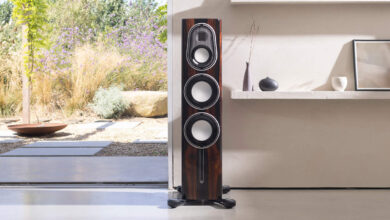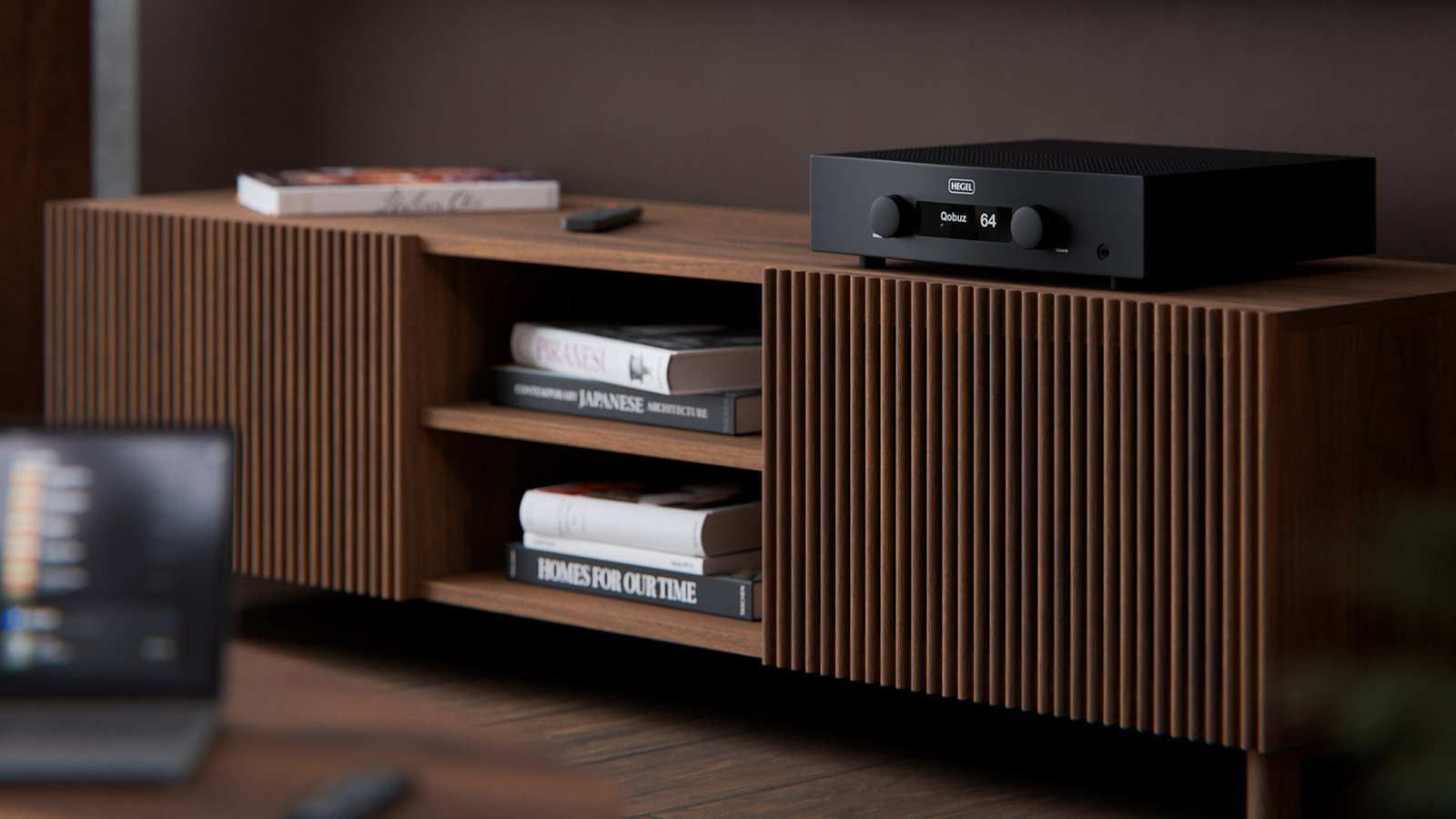
Listening room: the small living room, 4 m by 5.3 m with a 2.7 m ceiling and modest treatment • Loudspeakers used: Monitor Audio Platinum 300 3G
Sources: H200 network streaming, MacBook Pro 16″ M5 Max over USB into the H200 DAC • Cabling: Roboli HP8000 speaker cables, Roboli Power5200 power cable
Measured from the wall: around 40 W at idle, around 310 W maximum • Loaned by: AVstore
TLDR
The H200 is the Hegel sound signature scaled down and delivered within a single, connected box. Its character is neutral, clean, transparent, detailed, and articulate, closely resembling the same as Hegel’s flagship H30A combined with their preamplifier P30A. There is a little less of everything here: less detail, less sparkle, less depth, less soundstage and less power. For an amplifier that costs a fraction of the flagship, this is a very successful scaled-down version.
Three qualities define the H200 for us:
- Control and articulation. Bass stops are fast and tight, and the grip over our Monitor Audio Platinum 300 3G was firm and precise. Bass was easy to follow note by note. Kick drums also had a clean, well-defined outline, so overall the bass character felt balanced. Dense electronic passages remained articulate even when the song was dense and complex. The emphasis is on precision here, with physical weight a small step behind it.
- Great low volume engagement. Very little volume is enough for the H200 to sound alive. Microdynamics are present at low levels, macrodynamics are good within the available power. The tonal balance changes very little as the volume drops. Late evening listening is a very pleasant affair.
- One device, connected. Amplifier, DAC and streamer, all share one chassis, with the main streaming services and Roon Ready built in. Of the two sources we used, the network stream sounded a bit better to us than USB from a computer. Phono and headphone connections are there too, so a complete system needs only a pair of loudspeakers.
The main limitation is the power reserve. Near the top of its power range, the sound thinned out, with audible distortion. Subbass weight is also a bit modest. With our matching, the midrange was slightly lean and soundstage depth was moderate. Considering the price, these are small trade-offs. They are easy to forgive in a package this complete and especially for someone that is searching for the sound character that Hegel always delivers.
Introduction
Hegel presents the H200 and its twin, the A200, as two listening options: one connected and one fully analogue. Both are 150 W per channel integrated amplifiers with SoundEngine2 feedback topology, an MM phono stage and a headphone output. The H200 is the all-in-one option, with a DAC, network streaming, digital inputs, and USB drive playback inside its chassis. In Hegel’s own words, “it is built for listeners who want a connected amplifier with the power, control, and intelligence to bring the whole system together.”
We have heard almost all Hegel amplifiers on the same speakers, with the same cables and electronics, also reviewing Hegel’s top-of-the-range, the H30A and P30A, so the family sound characteristic is easily distinguished for us. The H200 is a far more accessible proposition, at €3,995, built on the same philosophy.
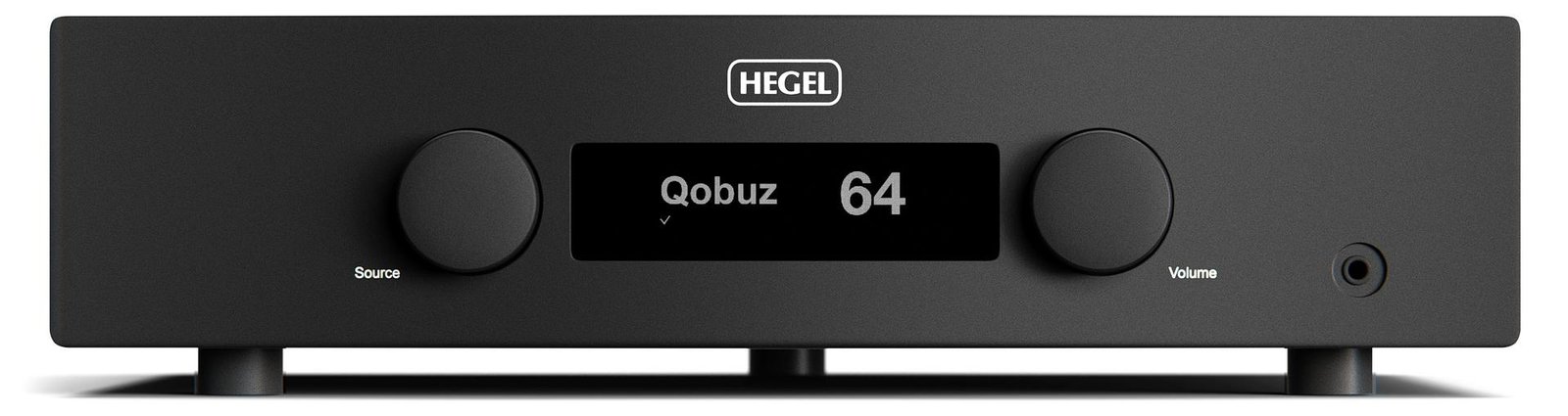
Transparency is a quality we value more and more with every system we construct. It is also the core of the Hegel identity, and one of the reasons we were curious to hear how much of it is present in an all-in-one device at this price range.
Hegel says the H200 is aimed at those looking for a complete system without giving up serious performance. That is a sentence a lot of manufacturers could write. For us, the interesting part is how close the H200 is to the brand’s own flagship sound.
We had the H200 for about a month, driving our reference Monitor Audio Platinum 300 3G in the small living room. Out of the box, it is unmistakably a Hegel. Burn-in time was more than 200 hours before the critical listening and notes started taking place.
A Brief Look at Hegel
Hegel’s story starts in 1988, in Norway. Bent Holter, a student at the Technical University in Trondheim (NTNU) at the time, wrote his thesis on a different approach to the transistor design used in amplifiers, with one goal in mind: eliminating distortion. That academic project became the foundation of SoundEngine, the patented technology inside all Hegel’s amplifiers today.
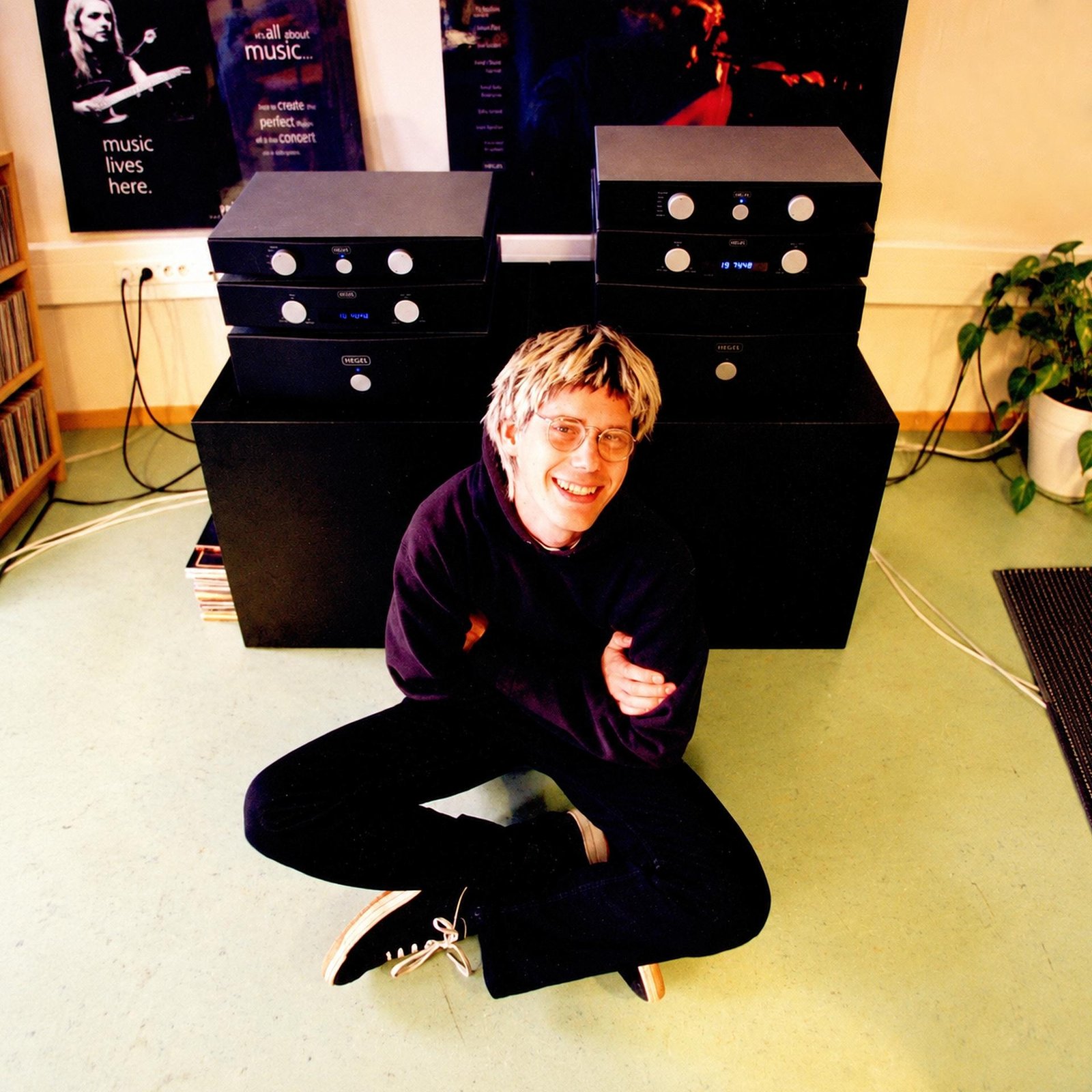
The name has a story of its own. In his spare time, Bent plays in a rock and metal band called The Hegel Band. The company takes its name from it. A company built around reducing distortion, named after a rock band. What’s not to love?
We will keep the history short, since our H30A and P30A review covers SoundEngine2 in depth.
The H200 and the A200 are among Hegel’s newest products. Both have a rated 150 W per channel, with the same SoundEngine2 technology we are accustomed to from Hegel. The A200 is the fully analogue path, with two balanced inputs, two unbalanced inputs and no digital section at all. On the H200, one of those balanced inputs is replaced by a complete digital and streaming platform. Hegel says every part of the H200 is made to work together, with the amplifier at the centre and music as the priority.
Design and Build
The H200 measures 43 cm wide, 41 cm deep and 12 cm high, and weighs 13.6 kg. The A200 is only 100 g lighter, at 13.5 kg, so the digital section adds very little mass.
The look is classic Hegel minimalism, a clean front panel with a display and very little else. It is a design we like a lot, discreet enough for a living room and recognisable at first sight. Hegel says the display dimming is automatic and fully customisable, so it can be bright when needed, dimmed during normal listening, or turned off completely. Very nice to have in the evening.
Now, one downside: the casing. It is pretty thin. When we tapped the top cover with our knuckles, it rang with a sound that reminded us of very cheap steel. For an amplifier at this price, a thicker, more solid and better damped enclosure would have been welcome.
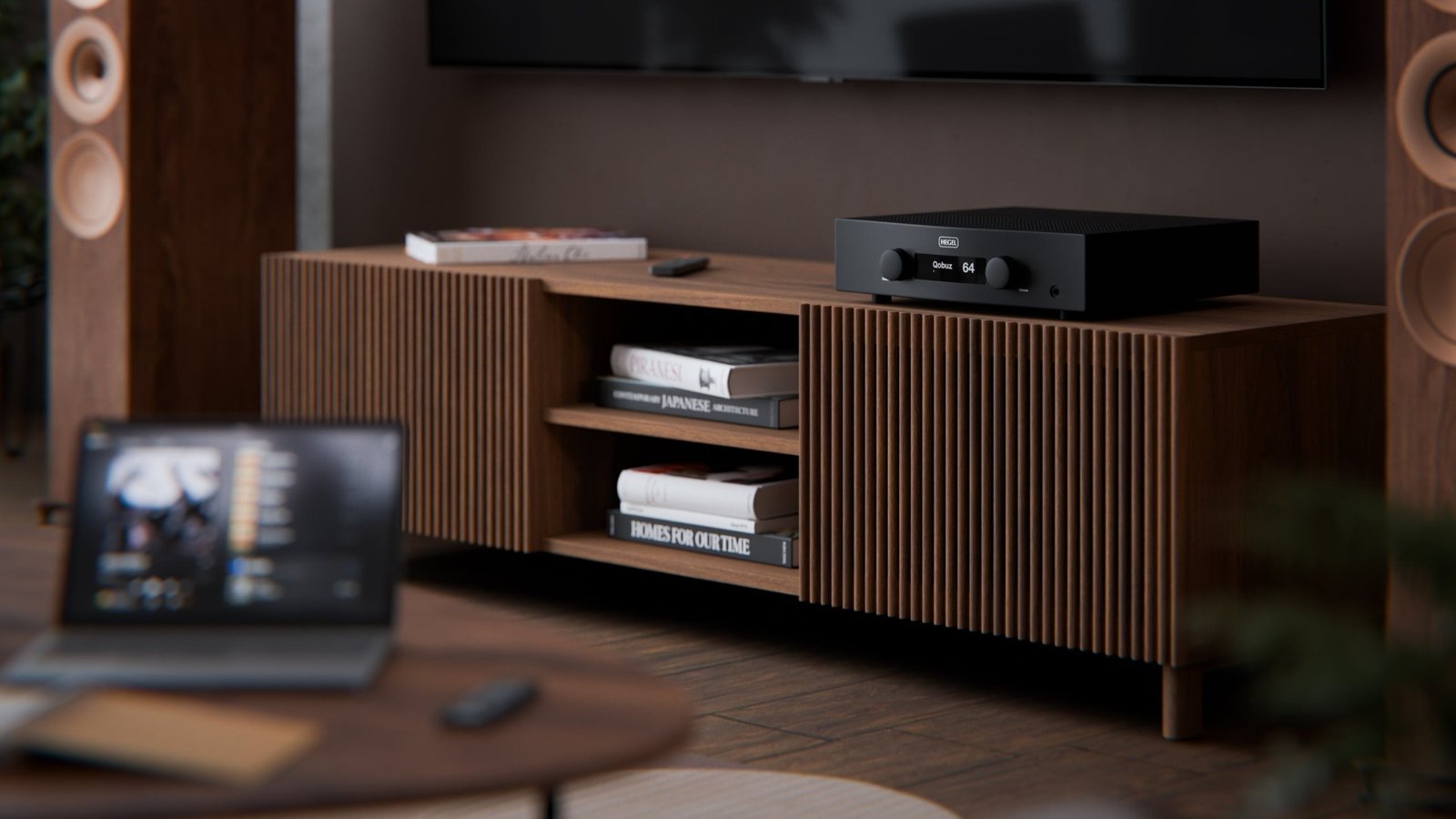
The H200 actually contains two toroidal transformers. The large transformer feeds the analog section, including the volume control and power amplifier, while a much smaller transformer separately powers the DAC and streaming circuitry.
The amplifier section: At the heart of the H200 is a Class A/B analogue amplifier rated at 150 W per channel into 8 ohms, at 1 kHz and 1% THD, with a minimum load of 2 ohms. In Class A/B, the output transistors are biased so that both halves of the push-pull output stage conduct around the zero crossing of the signal, which reduces crossover distortion at low output. As the output rises, the stage moves into Class B operation.
The output stage uses two complementary pairs per channel of Toshiba 2SA2121 and 2SC5949 bipolar power transistors. That means four output devices per channel, eight total for the stereo amplifier.
The main reservoir bank contains six Hegel custom audio capacitors, each 10,000 µF, for a total of 60,000 µF.
The H200 uses 35 µm copper PC2050A boards, one Hegel SE3090 SoundEngine2 correction module per channel, an AK4493SEQ DAC, NJW1159 analog volume control and NE5532 devices in the preamplifier section
SoundEngine2. The second generation of Hegel’s feed-forward distortion cancellation is developed from Bent Holter’s original work. In his own explanation, the gain stages of a conventional amplifier are connected in series, each stage amplifies the distortion of the one before it, and global negative feedback is then used to reduce the total. That feedback has problems of its own. The signal kicked back by the loudspeaker and the noise picked up by the speaker cables travel straight to the input stage, the correction is delayed by the time the signal needs to pass through the amplifier, and feedback is less effective at high frequencies.
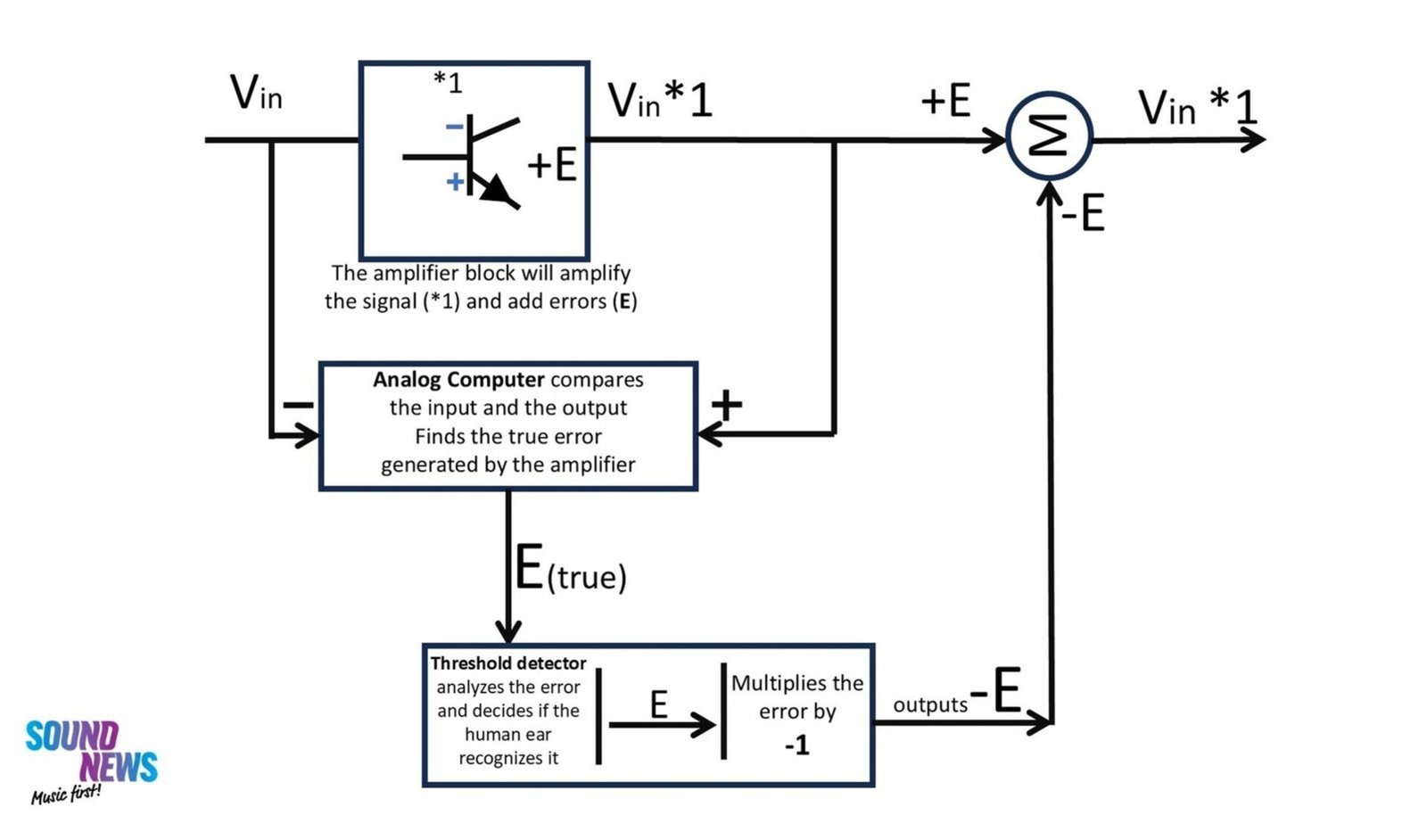
SoundEngine is a feed-forward system that uses an analogue circuit to compute the error introduced by an amplifier block, a threshold detector then determines whether that error is audible, and the inverted error is added to the output of the block. The distortion is cancelled without the time delay of a feedback loop. Hegel says transistor crossover distortion is removed as well.
Damping factor. Hegel specifies more than 4000. Damping factor is the ratio between the impedance of the loudspeaker and the output impedance of the amplifier, so a figure this high means a very low output impedance. With typical cable lengths, it is low enough that the resistance of the speaker cables becomes the larger part of the total source impedance at the loudspeaker terminals. Hegel links this figure to firm control over the loudspeaker drivers. In practice, short, good quality speaker cables make a lot of sense with this amplifier.
Specifications. Distortion is specified below 0.01% at 50 W into 8 ohms at 1 kHz, intermodulation distortion below 0.01% with a 19 kHz and 20 kHz signal, signal-to-noise ratio above 100 dB, channel crosstalk below -100 dB and frequency response from 5 Hz to 100 kHz.
The digital section: Hegel’s view is that digital performance depends on far more than the DAC chip itself, with power supplies, grounding, clocking, signal routing, analogue filtering and integration all playing a part. Each of these has a noticeable audible effect. Clock jitter turns into timing errors in the converted signal, noise on a power supply or a ground line can leak into the analogue output, and the analogue filter after the converter shapes the top octave. Inside the H200, the key digital components are on separate circuit boards, with careful layout, grounding and signal routing to isolate the sensitive analogue stages from digital noise, they say.
Digital inputs and outputs. One coaxial input up to 24/192, two optical inputs up to 24/96, a USB input up to 24/192 for a computer, a USB drive input for up to 10,000 songs, and the network connection up to 24/192. A coaxial digital output and a DAC Loop feature allow an external DAC to be added later, a sensible upgrade path for a one box system.
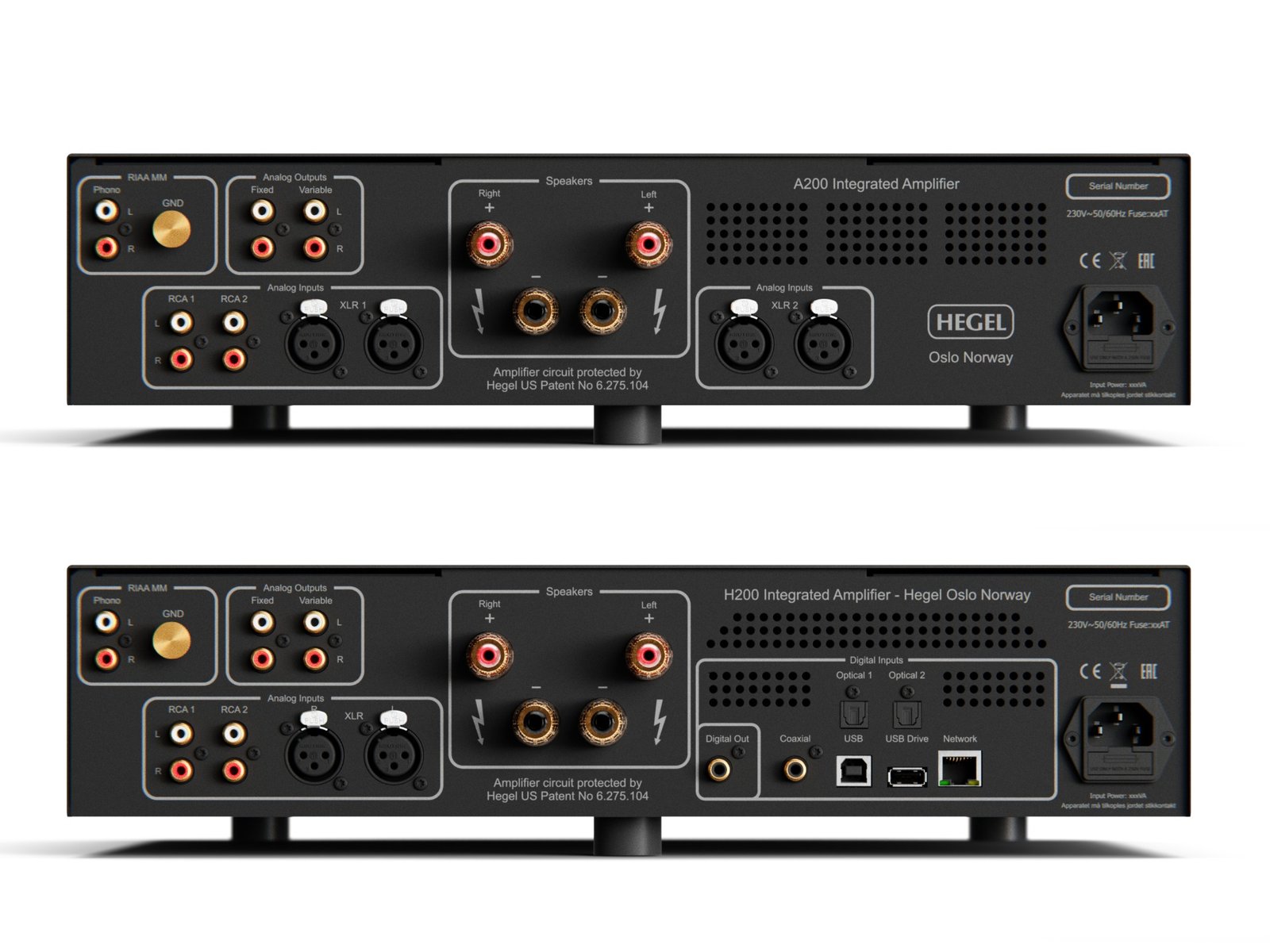
Top – Hegel A200 ; Bottom Hegel H200
Streaming and control. Spotify Connect Lossless, TIDAL Connect, Qobuz Connect, Apple AirPlay, Google Cast and Roon Ready are all supported. Firmware, app and feature updates install automatically. Digital Input Sense is designed to wake the amplifier and select the correct input when a signal is detected, and the H200 can be taught the volume commands of a TV remote. For more advanced homes, Control4, Crestron HOME and Crestron SIMPL are supported too.
Analogue inputs and outputs. One balanced XLR input, two unbalanced RCA inputs and a Moving Magnet phono input. Hegel says the phono input is based on the MM section of the V10, its standalone phono stage, with hand matched FET transistor gain stages. Fixed and variable line outputs complete the rear panel, and the headphone output is there for private listening. We did not get the chance to try the phono stage or the headphones this time.
System Setup
The small living room measures 4 m by 5.3 m, with a 2.7 m ceiling and modest acoustic treatment. We used it for all of our listening with the H200.
The Monitor Audio Platinum 300 3G are our reference loudspeakers. We know them extremely well. They are also highly revealing of any change upstream, a quality that makes them a great tool when evaluating an amplifier.
Our sources were the H200’s own network streaming TIDAL Connect and Qobuz Connect and our MacBook Pro 16″ with the M5 Max processor, connected over USB to the internal DAC. Between the two, we preferred the network. It sounded a bit cleaner to us. It is also more convenient for everyday use.
With the Connect services, the phone or tablet works as a remote control, and the H200 streams the music directly from the network. The phone’s own audio path is out of the chain.
Roboli HP8000 speaker cables and a Roboli Power5200 power cable complete the system. The Roboli cables are on the warm side, which suits a neutral amplifier like this one.
The Platinum 300 3G are detailed and open loudspeakers. With a neutral, transparent amplifier like the H200 in front of them, the whole system is tilted towards precision and clarity. A loudspeaker with a bit more warmth and body of its own would move the balance towards more harmonic density, something worth keeping in mind when matching. In the end, this is a matter of preference.
Bass, Physicality and Dynamics
Bass is where the Hegel character is easy to identify. Grip is firm, decays are short, and articulation is excellent. Every note starts and ends exactly where it does in the recording. There is no overhang and no bloom.
Control is the first priority. Physical weight is a step behind it, with the lowest frequencies being a bit modest on the Platinum 300 3G in our room.
Bass articulation is one of the first things we listen for in an amplifier, because it shows quickly how much control there is over the speakers. Here, that control was firm at every volume below the limit of the amplifier.

We started with Yello’s The Race. The track is from 1988, the same year Bent Holter started his thesis in Trondheim. A nice coincidence! Boris Blank’s synth pulses were fast and tight, each one easy to separate from the next, each one with a short, clean stop. The dynamic swings were clean, with good scale for our small room. The lowest octave was more modest in physical weight. Precision over substance, then.
On Pink Floyd’s Money, from The Dark Side of the Moon, with Roger Waters’ bass line in 7/4, we heard the same character. The cash register loop at the start of the track was precisely placed across the soundstage. The kick drum was tight, with a crisp outline. The bass guitar was very articulate, with each note and its texture clearly audible. Body was a bit lean, with less fullness in the lower frequencies.
This is the signature of the H200 in the low end. Notes are short, clean, and well separated. Weight is present, tightly controlled and somewhat modest in quantity, which is good news regarding the transparency in the lower midrange.
Timing also benefits a lot from it. Fast bass lines and electronic sequences have a tight, precise rhythm, something that we found very enjoyable and pleasant to listen to for hours.
The bass on Dire Straits’ Ride Across the River, from Brothers in Arms, had excellent pitch definition, with each note clearly distinct from the next. Percussion was fast and crisp, with quick attacks and clean decays. The lower frequencies were somewhat lighter in body. The soundstage was wide, with precise images and a moderate sense of depth.
With Infected Mushroom’s Deeply Disturbed, we pushed the H200 much harder. The Israeli duo builds their tracks from dense, fast layers of electronic sound, a demanding test for an amplifier. The crowded passages were articulate and well separated, fast and energetic, with no fatigue at all. Subbass was less physical, with less pressure felt in the body, at least, less than we would have wished for.
Next, we played AURORA’s Through the Eyes of a Child. The fast, machine-gun-like bass passage is a great test of articulation, since the bass notes can easily blend into one another. Through the H200, every bass event was clearly separated, and the kick had a sharp, distinct outline throughout the song. Impact was a bit lighter at the very bottom. Her voice was clean and detailed above the bass. The timbre was spot on with nothing sounding too thin or too thick.
With Johann Strauss II’s Explosions Polka, Op. 43, our attention moved to orchestral dynamics. At our usual listening volume, the sudden accents had good force, the orchestral layers were clear and tidy, and the brass was bright, clean, and fast. At loud volume, the big accents were a little below full scale. Dynamically, small changes are where the H200 is very strong. Microdynamics are very good, with subtle variations inside a phrase easy to hear. Large swings have clean edges and good force for a room our size, within the usable power range. Once that usable power range is exceeded, everything starts to collapse, so pay attention to the power needed and match accordingly.
With a power meter at the wall, we measured around 40 W at idle. Pushed to its limit, the H200 drew around 310 W. Past that point the sound became thin, and distortion was clearly audible. Up to that limit, the character of the amplifier was the same at every volume: clean, tight and articulate.
A little more power would have been very welcome.
In our room, driving the Platinum 300 3G, we reached it only at very high levels, above our normal listening volume. For a small or medium room at normal levels, 150 W is enough. For a large room, demanding loudspeakers or realistic concert levels, we would look further up the Hegel range.
Midrange, Voices and Treble
The midrange of the H200 is clear, clean, and detailed. Voices have very good texture, with breath, phrasing and small inflections easy enough to follow. With our matching, they were slightly lean, voices and instruments carried a little less body and warmth than a neutral reference. The outline, detail, and articulation stayed clear. What gets smaller is the weight behind each note: the chest in a male voice, the wood in a cello, the breathy fullness of a saxophone. Harmonic density was also on the modest side compared to a warm-sounding amplifier, like the Denon PMA-3000NE or the Aesthetix MIMAS.
Instrument separation is good. In dense arrangements, each voice and instrument keeps a clean, well-defined outline and a place of its own inside the soundstage. Separation is one of the clearest windows into transparency: when the edges between sources remain clean, the space and the small details around them come through as well. With the H200, following a single line through a crowded mix is easy, and that adds a lot to the overall enjoyment of music.
Recording quality is easy to hear through the H200. Good recordings sound open and clean. Lower-quality ones are presented as they are, with their flaws clearly audible, so the H200 is a very good tool for hearing all the details of a recording.

On Diana Krall’s Temptation, her cover of the Tom Waits song from The Girl in the Other Room, the voice was detailed, with fine textures, breath, and phrasing easy to hear, but the contrast and the sharpness were not the best we’ve ever heard. Sibilance was absolutely clean at every level we tried. The brushes and the piano were sharply defined and precisely placed. A little more body and intimacy in her voice would have been nice, a bit more of the warmth is what this song can benefit from.
The treble is smooth, extended, clean, and fast, with no trace of sibilance. The upper octaves are level with the rest of the frequency spectrum. Air and sparkle are present in a somewhat modest measure. Cymbals and hi-hats have a natural texture and decay. The treble stands out by not standing out.
The top end character makes long listening sessions easy and enjoyable. Bad recordings with hot treble are easily listenable, and good recordings keep all of their air and extension intact.
On Dire Straits’ Your Latest Trick, the trumpet at the opening was clean and smooth in the upper register. The saxophone had clear texture and a precise position in the soundstage. Its tonal colour was a little less saturated, and harmonic density was modest. The space around it had moderate depth.
Female voices in general had this same quality, detailed and clear, with a slightly lighter body.
Other acoustic material followed the same pattern. Strings had fine texture and precise bowing detail, piano notes had clean attacks and a little less weight, and wind instruments were well defined, with a little less tonal colour.
So the H200 is very precise with voices and instruments, but the richness some listeners look for is present in smaller measure.
Low Volume Listening, Soundstage and Emotional Connection
A great deal of everyday listening happens at low levels, so an amplifier that sounds complete no matter the SPL is worth a lot of praise. The H200 nails this aspect.
At low levels, the ear is less sensitive to very low and very high frequencies, an effect described by the equal loudness contours, so almost every system sounds a bit thinner as the volume goes down. What makes a system engaging at those levels is microdynamics and timing, both being strengths of the H200.
Imaging is precise, but depth is moderate. Width is good, extending just a little beyond the loudspeakers. Each source has a clear, well-defined position inside the soundstage. The centre image is very focused. Front-to-back layering is present, with the main performers in front and the reverb behind them, in a moderately deep space.
Yosi Horikawa’s In the Wind was our first check of the soundstage at low SPL. The Japanese sound artist builds his music from recorded everyday sounds, placed all around the listener. The dimensions of the soundstage changed very little as we turned the volume down. Each percussive sound had a precise position. The small spatial cues were audible even at whisper levels. Depth was moderate, though not the best, with the quieter sounds placed only slightly behind the loudspeakers.

With Vivaldi’s The Four Seasons, played by Janine Jansen and a small chamber ensemble, we listened for microdynamics also at low levels. Changes in bow pressure and in intensity were clear enough to stay transparent and obvious to a sensible ear. The violin was clean, slightly lean in tone. The layers of the ensemble were easy to separate. In the storm of Summer, the fast passages were clean, with no harshness.
Tonal balance changed very little between our usual levels and quiet playback. Voices were clear, bass was articulate, as for the lowest frequencies, as expected, they became a bit more modest.
E-Mantra’s Last Symphony of the Stars, in the Reasonandu version, was the track we played from our lowest listening level all the way up to it’s maximum potential. At low SPL, the presentation was already immersive, with good width and moderate depth. As the volume went up, the scale grew, with the spatial proportions unchanged, up to the point where the power reserve ran out. Good test to check out how the soundstage and presentation change with power.
Our connection with the H200 was about transparency. We heard deep into recordings we know very well, at any volume, with every instrument in its place. That is a pleasure of its own, and a very Hegel one.
Conclusion
After about a month with the H200, we are impressed by how much of the Hegel high-end sound we found hidden in this one box. It is a smaller, connected version of the family signature, and a very convincing one at this price point.
Bass control is excellent, low-volume listening is engaging, the top end is clean and calm, and streaming is built in. We believe a lot of listeners will value how consistent the H200 sounds, from a quiet late evening session up to the limit of its power.
Our main criticism is the limited headroom when the H200 is pushed hard, with the sub-bass and the midrange body a bit modest in our system. The steel on the casing is also thinner and too undamped for the suggested price.
For a listener looking for one box with streaming, a DAC and a serious analogue amplifier, for fans of Hegel’s house sound and for those who listen mostly at low and normal levels, the H200 is very easy to recommend. If streaming and digital inputs are of no interest, the A200 deserves a look, being the same amplifier but with two balanced inputs instead of the digital ones.
Pair the H200 with loudspeakers that have a bit of warmth of their own, in a room of modest size, and you have a complete system in a single chassis.
Acknowledgment
We would like to thank AVstore for lending us the Hegel H200, and for the month we spent with it in our small living room. Shout-out to all the dealers out there doing awesome work for all of us.
Pros
- The Hegel family sound signature for far less money than the flagship: neutral, clean, transparent, and detailed
- Excellent bass control and articulation, with fast, tight stops
- Very good low-volume engagement, with fine microdynamics
- Smooth, extended and fast treble, free of sibilance
- A complete connected system in one chassis, with streaming, DAC, phono input and headphone output
Cons
- Limited power reserve, with a thinner sound and audible distortion once the amplifier runs out of headroom
- Subbass weight, midrange body, and soundstage depth are somewhat modest
- A thin casing that rings when tapped, below what the price suggests
Scoring
The scoring is the absolute truth and the way we best quantify how the devices sound. Interpreting this score is the best thing you can do if you want to “read” into the device’s sound signature.