Ask Lorenzo Valè to explain three cable brands and, within five minutes, he will reach for the wine list. Siltech, he told me, tastes like a good old aged red. Crystal Cable is the champagne of cables. And HMS, the German copper specialist the group brought home in 2025, is something more romantic and vintage. Three bottles, one cellar, and the whole point is that they must never taste the same.
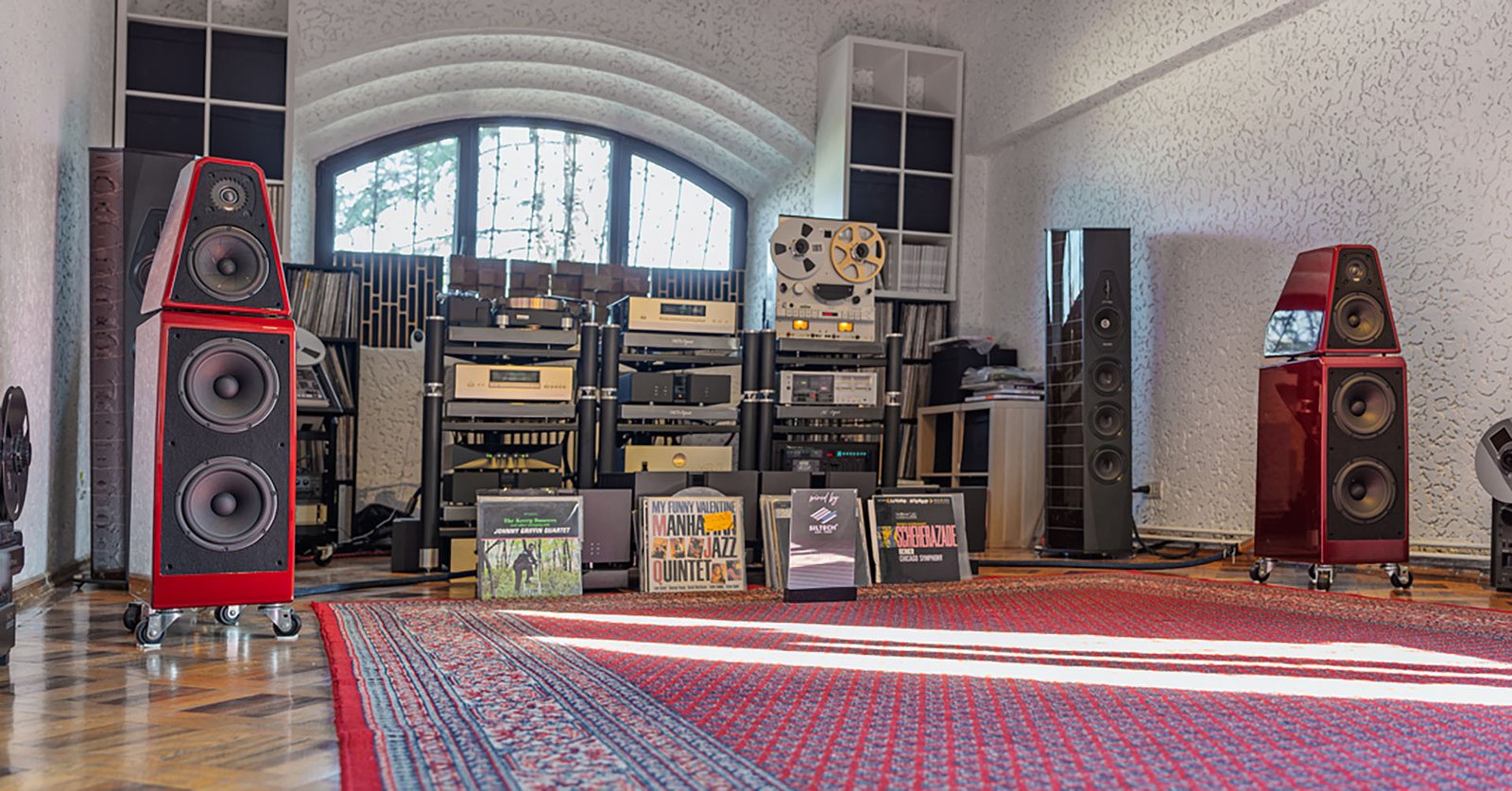
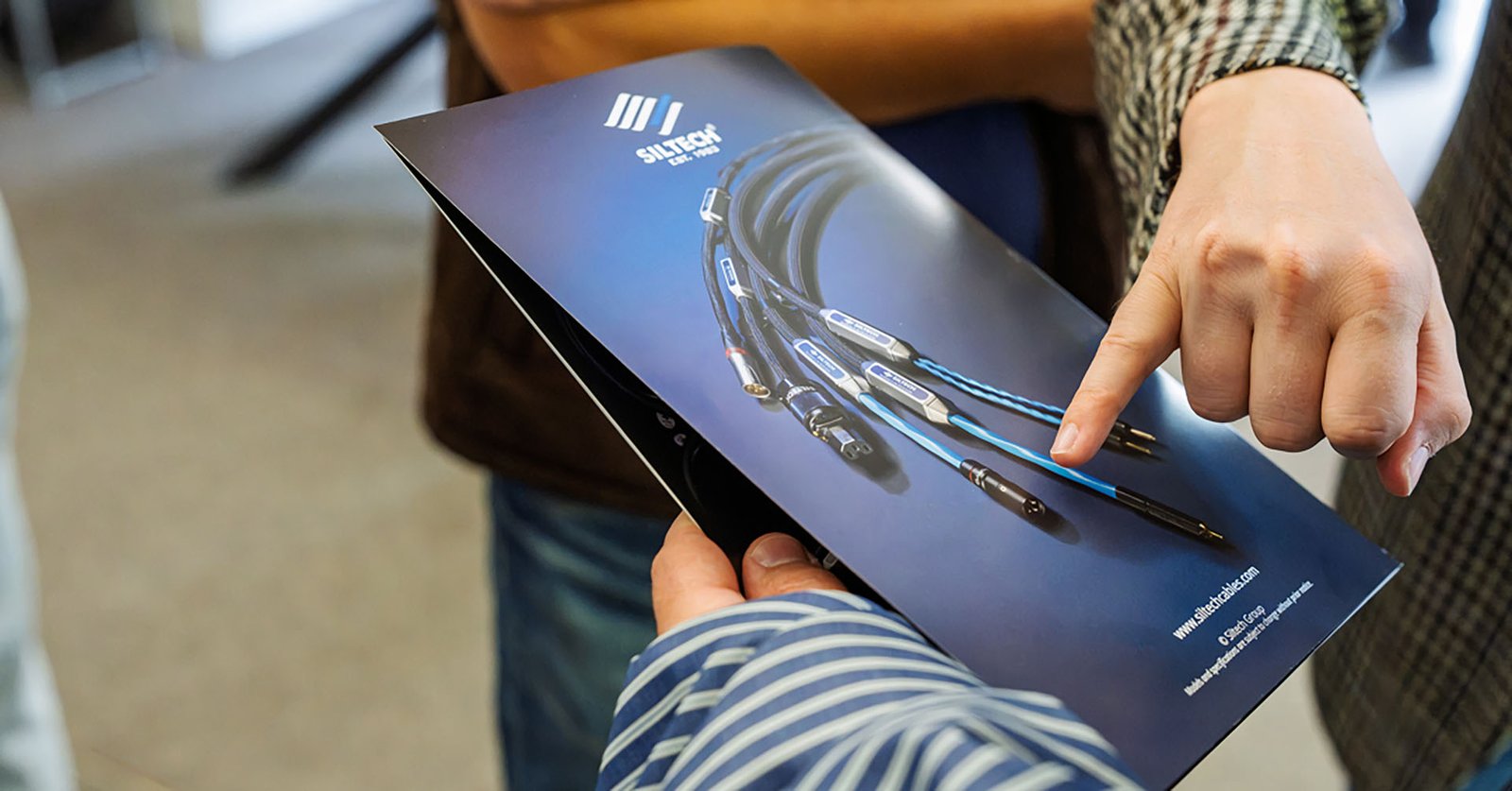
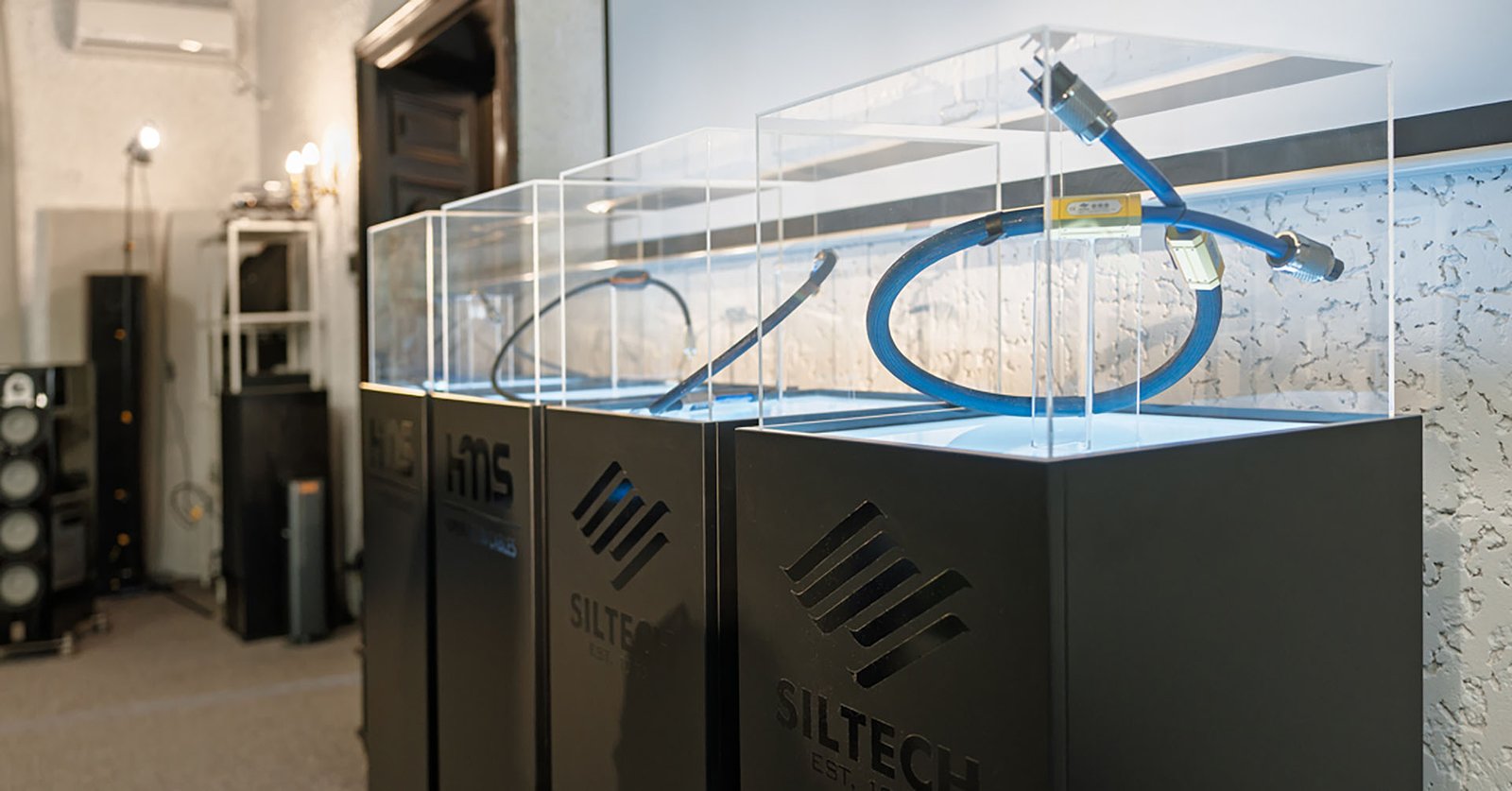
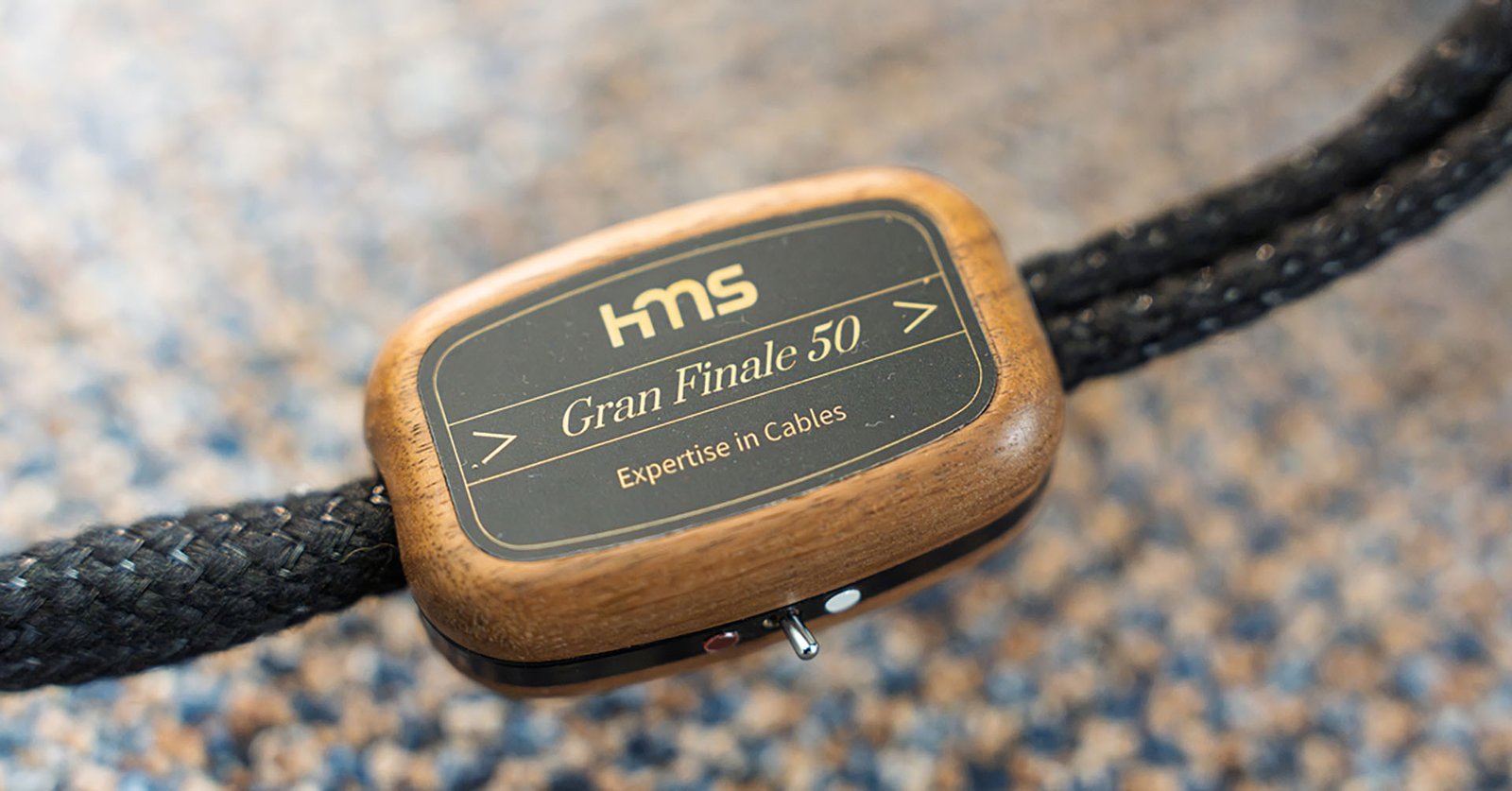
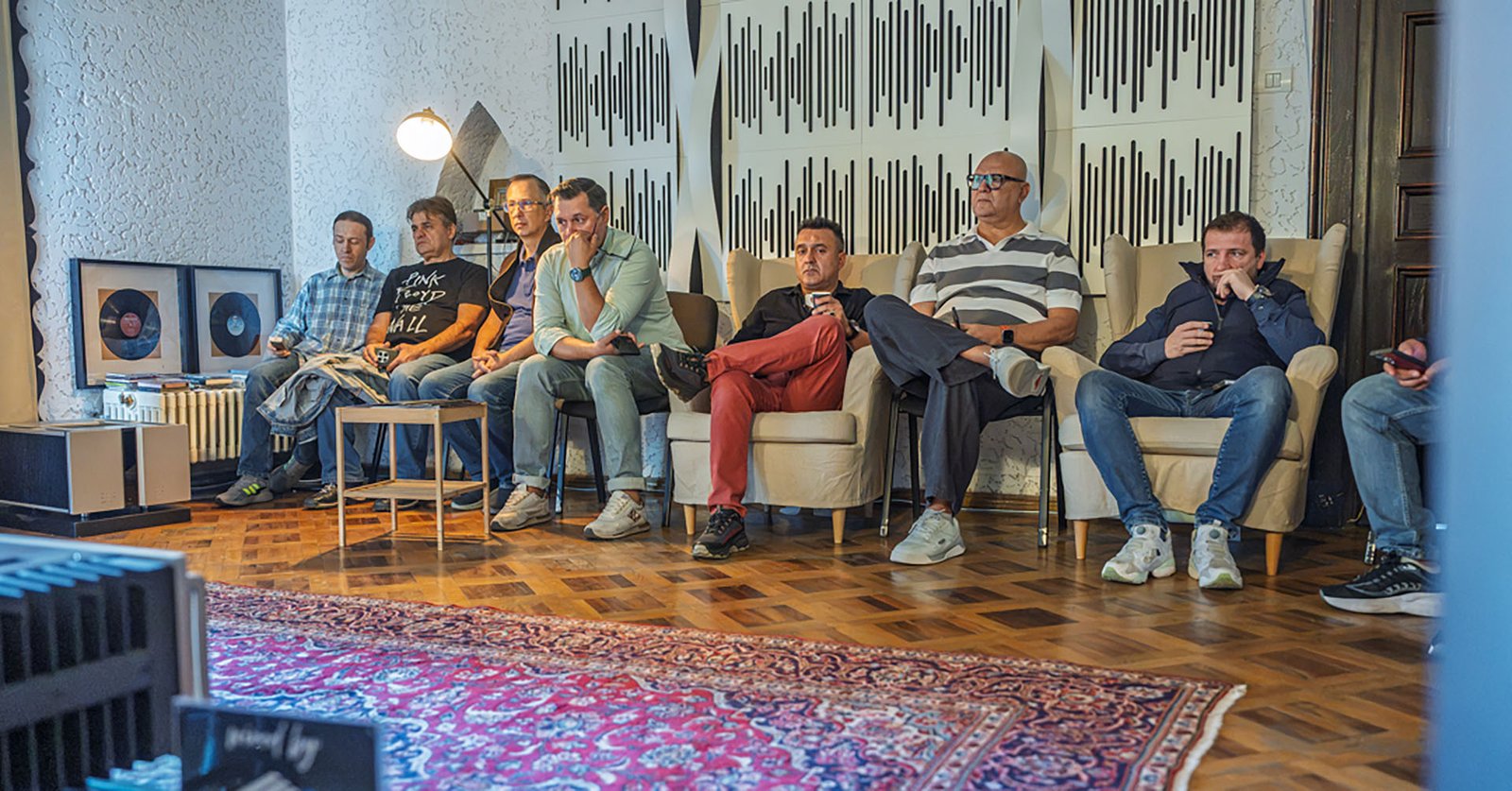
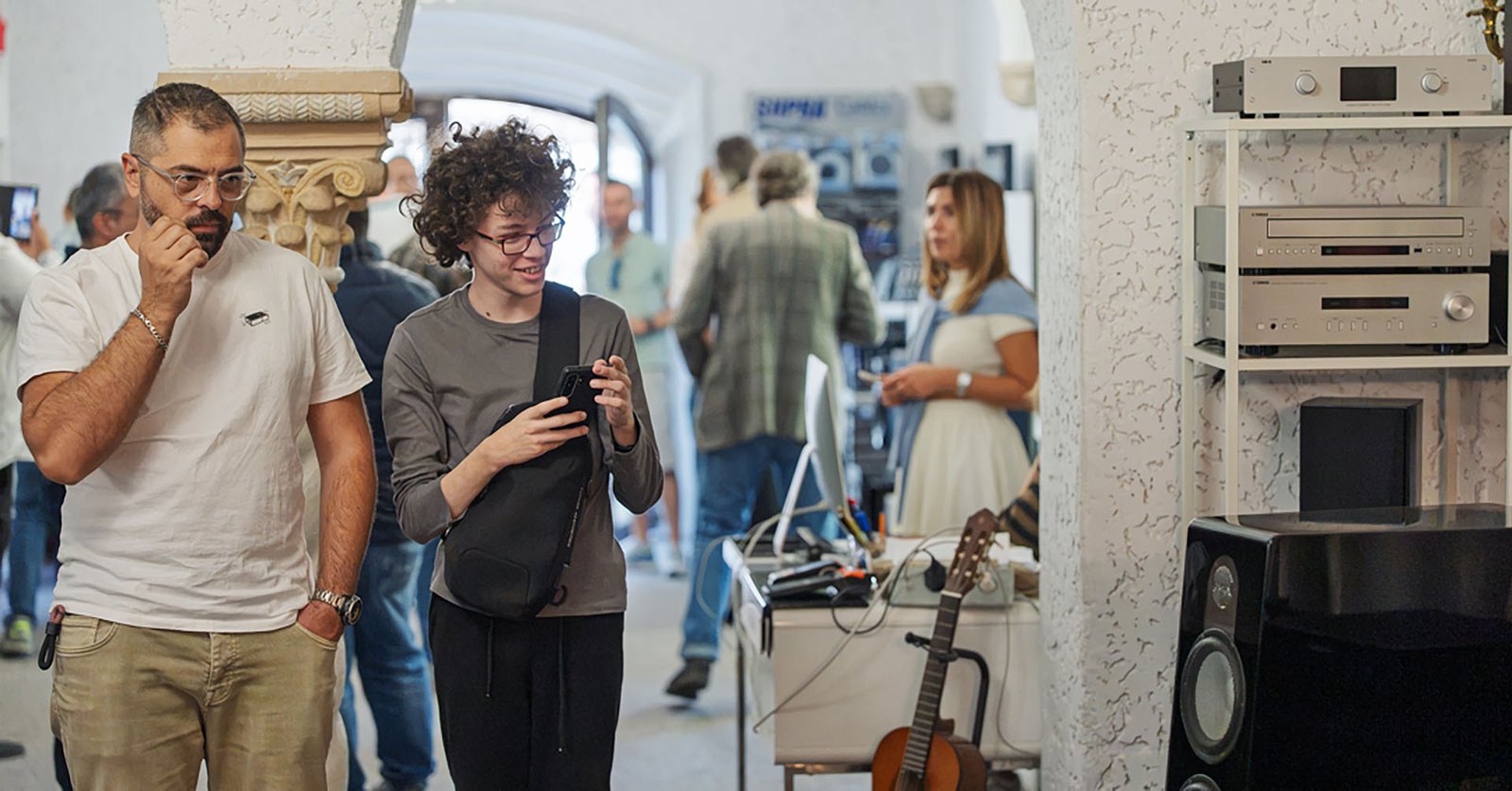
We met at the HiFi Expert event on 10 October, where Lorenzo, representing the Siltech Group, presented three very different products: the Siltech Classic Legend 880 MkII, the state-of-the-art Triple Crown, and the HMS Gran Finale 50, the fiftieth-anniversary revival of a German classic, now made in Elst, in the Netherlands, alongside Siltech and Crystal Cable.
Siltech has been making cables since 1983 and is, at heart, a silver company: monocrystal silver at the top of the range, and below it a silver-gold alloy in which the gold fills the microscopic cracks in the metal. HMS brings the other flavor: copper, and a carbon shielding the group liked so much that it now appears in Siltech’s own new Classic Legend MkII.We talked about why three brands under one roof should never sound alike, why gold belongs inside silver, what a cable can and cannot do for a system, and why, once your cables have burned in, you should leave them exactly where they are. From the first minute, Lorenzo was careful to separate what he knew from what his engineers should confirm, and the technical points below have been checked by the Siltech team.
The Interview
Soundnews: We know your group very well. We reviewed the full Crystal Cable Monet loom, and it was very impressive. We haven’t done Siltech or HMS yet, but there’s always time.
Lorenzo Valè: Sure.
Soundnews: First of all, thank you so much for this opportunity! I‘ll ask you a few questions, then I’ll transcribe the recording and send it to you so you can check the technical details.
Lorenzo Valè: That’s exactly what I wanted to mention before we start. I will not tell you something I’m not completely sure about. For everything that is more technical, we have a full team of engineers who will be happy to check it and make it right for you.
1 · Three brands, one roof
Soundnews: The first question is not an easy one. You now have Siltech, Crystal Cable, and HMS, all made in Elst. How do you keep these brands from slowly turning into one sound?
Lorenzo Valè: I love it. That’s very interesting, and I will take a little bit of time to answer to make sure we get it right. Let’s talk very quickly about the history behind all these brands.
Siltech started as a cable company in 1983, so quite a long time ago, and it set the standards for hi-fi cables a long time ago, through science, materials research, and research methodology, and through the actual purpose of trying to create the best cable possible in the hi-fi world. Then, more than 20 years ago, Crystal Cable entered the world to differentiate the market from Siltech. Not only from an aesthetic point of view, because it’s a very different product aesthetically, but also with a technological and design purpose: creating something that could approach different markets. Not just the high-technology, best-sounding products, which Crystal Cable still is, but something that pushes the boundaries on the dimensions of cables. We were studying how we could be reliable, from an insulation and shielding point of view, in a very elegant and thin cable.
And we’re talking about a different-sounding cable. It’s very dynamic- let’s say, very fresh and very harmonious – when we talk about pairing it with certain amplifiers and speakers. If we want to compare it to the taste someone can have, Siltech tastes more like a good old aged red wine. Crystal Cable is the champagne of cables.
Soundnews: Like the French, with their new wine every year.
Lorenzo Valè: Or the novello, in Italian. Yes, I think it’s a good comparison.
We benefit from the same technologies, the same research, the same purpose in what we do. But first of all, we don’t want to put our own brands in competition with each other. So we created something different: different from a sound point of view, different from a construction point of view, but not different from a philosophy point of view, in manufacturing quality, in research quality, and everything.
HMS: we acquired it; we finalized the acquisition in 2025, and we’re talking about something different, because we’re not talking about silver; we’re talking about copper in this case. It’s a very old company, founded in 1975 in Germany. When we acquired it, we discovered a lot of things that were very interesting to us, especially around the quality of the shielding and filtering technologies at HMS.
Soundnews: They already did it.
Lorenzo Valè: Yes, they already did lots of research and were firmly rooted in scientific principles, and we wanted to find a way to perfect their technologies, blend them with our knowledge, and use them in the best way possible for the benefit of the sound. That led to further developing HMS’s shielding technologies, where they mainly used ferrite for both power filtering and EMI/RFI shielding for audio cables. The research into these materials led us to use carbon-infused shielding instead of ferrite for the first time in the renewed HMS product line. HMS opened a completely new approach for us to use a different conductor, copper. At Siltech, we had a collection, the Explorer collection, the entry-level copper collection. But we thought: Siltech is silver technology, right? Does it really make sense to have a copper level in a silver technology brand, or should we concentrate a full brand around copper, and even grow our expertise around monocrystal copper?
So these are the three differentiations. We have the historic, classic sound of Siltech. We have the more dynamic and fresh sound of Crystal Cable. And then we have the romantic, vintage approach of HMS, with carbon shielding and very high-quality monocrystal copper. We try to apply the same philosophy of research and development across all three brands, but we are addressing three different needs. Sorry, I took my time with that, but I think it’s really important to have it clear.
2 · What the MkII brings
Soundnews: The 880 was already a very respected cable. What did you hear in it that made you want a MkII? What’s the advancement?
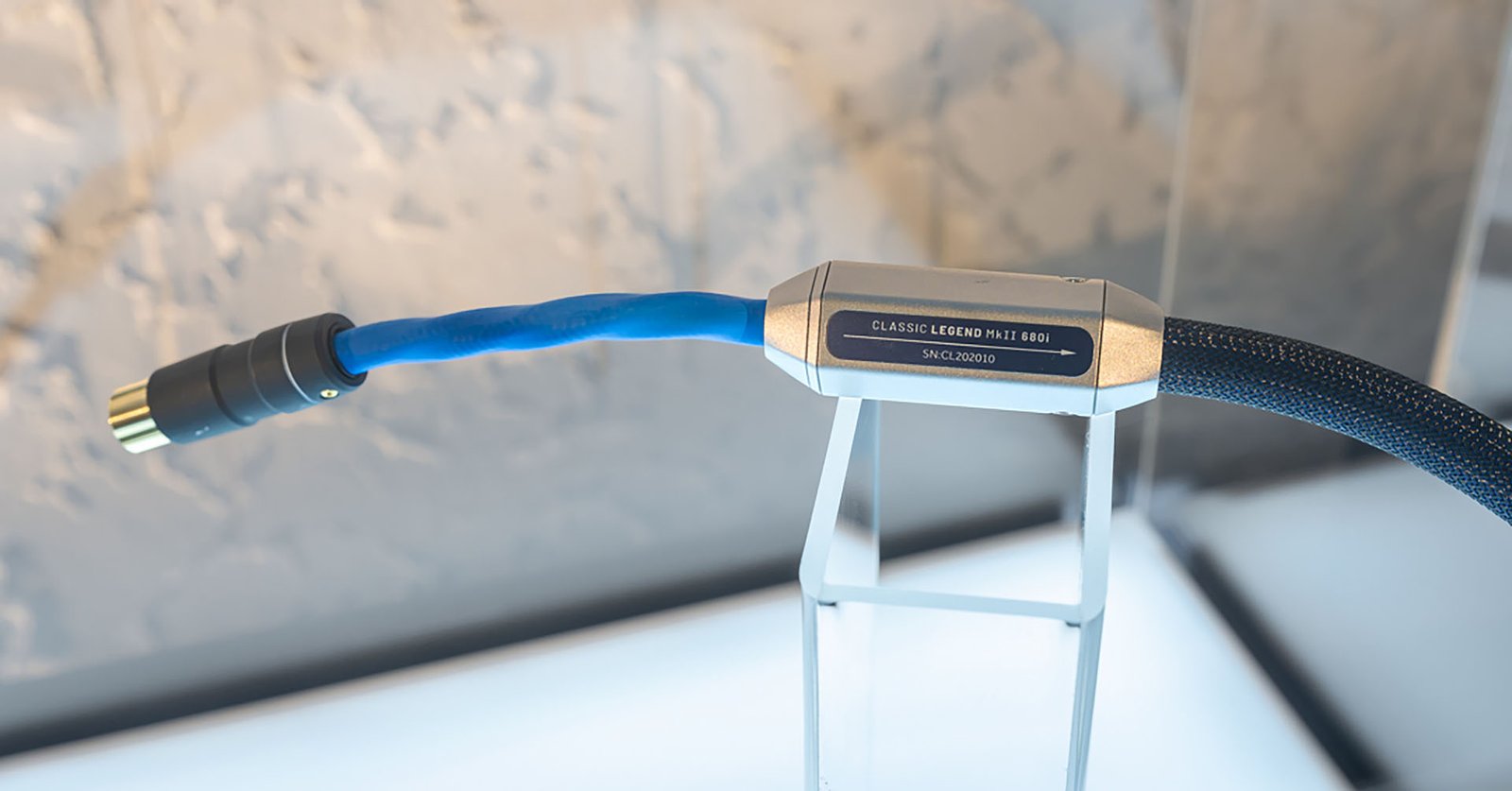
Lorenzo Valè: The advantage of the MkII is that we trickled down technologies from our reference products, like the Triple and Master Crown, and also the carbon shielding we have at HMS. And we are now creating an entry point to Siltech that is completely silver-based, and not copper anymore, as it was with the Explorer. Classic Legend has always been at that level, and we found a way to improve the quality of the insulation and the shielding, using carbon shielding as well. We wanted to give our entry-point category an even more reliable and better sound, to raise the level a little.
And I think we were able to do that with the whole Classic Legend MkII series: the 280, which is the new introduction, replacing the Explorer series and now the first silver-gold alloy introduction to the brand, and then the 380, 680, and 880. We are talking about a collection that is a groundbreaking sound experience for the price point.
3. Why carbon?
Soundnews: You mentioned carbon shielding. Do all your cables have it now?
Lorenzo Valè: Not all of them. Carbon-infused shielding is present in Classic Legend MkII 380, 680 and 880.
Soundnews: But it’s a technology shared across the group now.
Lorenzo Valè: Yes, it’s a technology shared across the group as it’s used in higher HMS models and in Siltech’s Classic Legend MkII. Just like our silver-gold and monocrystal silver metallurgies and some of the insulation materials are shared between Siltech and Crystal, adapted to the specific needs of that cable.
Soundnews: What does carbon shielding bring to the table?
Lorenzo Valè: For shielding, the introduction of carbon-infused material gives us more reliable protection against radio-frequency interference (RFI) and electromagnetic interference (EMI), keeping noise away from the signal. Just as importantly, carbon is only slightly conductive, so unlike ferrite or some traditional metal braided shields, it doesn’t “close up” or constrict the sound. The result is a very open and authentic sonic character.
For insulation, we also use Teflon: a stiff, stable material with outstanding dielectric properties. It holds the conductors precisely in place and keeps the cable’s geometry consistent over its whole life, so performance doesn’t drift with age.
Working with these materials raises the quality of everything we build. It also asks more of our hand-building skills, which is exactly what we’ve been refining for more than 40 years.
Long story short: the right material for each role, effective shielding against RFI and EMI without compromising the openness of the sound, and a cable that stays reliable for decades.

4 · Gold in the cracks
Soundnews: Can you explain, to someone who has never heard of it, why you put gold inside silver?
Lorenzo Valè: It’s a very good question. It’s not just because it’s precious and nice.
Soundnews: And it goes so nicely with the marketing.
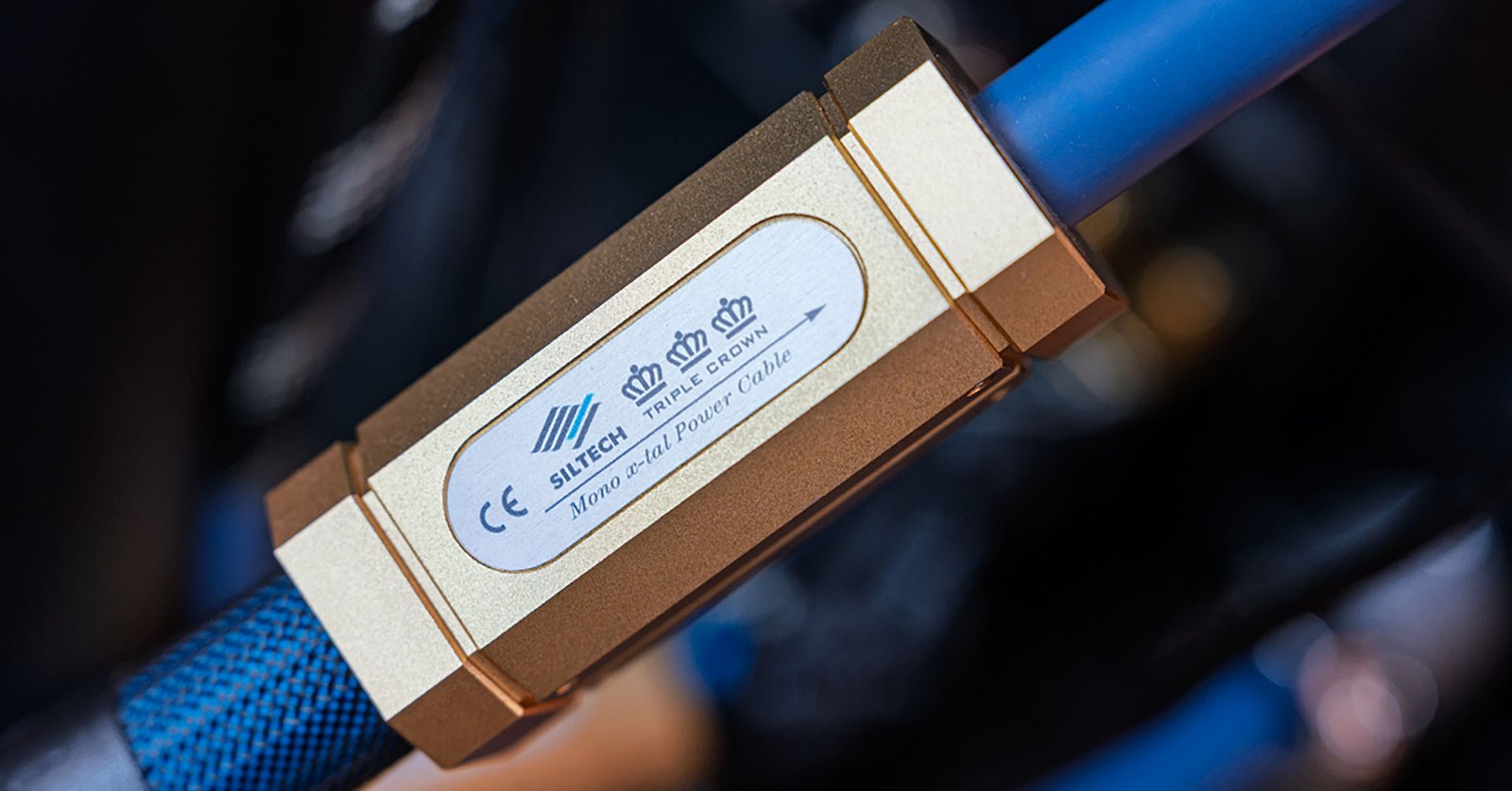
Lorenzo Valè: That would help a lot, like selling a ring or jewelry. For marketing, it isn’t always easy to explain why, for the highest ranges of Siltech products, we use monocrystal silver without the gold. Basically, in the Crown models, what we’re using is a single crystal, a monocrystal silver conductor that runs through the whole length of the cable from the same silver crystal structure, without errors or boundaries and therefore with the highest possible conductivity. The process is extremely advanced, and therefore this monocrystal silver is even more expensive than the silver-gold alloy, even though it doesn’t contain gold. For the Classic Legend MkII, we now use our 9th generation of silver-gold alloy because, without a monocrystal, silver is a very tender crystalline material and can contain micro-cracks. These contaminants or cracks cause disturbances in the signal and may distort the sound. We infuse a gold alloy into the silver crystal structure to cover those cracks and create a better, more fluent conductor. This was invented by Siltech in the 1990s and then perfected further and further to reach its 9th generation (G9) nowadays.
We always like to use this image. Think of the rocks on the bed of a river. The water runs and bumps on the rocks, so the stream isn’t easy to navigate because of all the rocks on the riverbed, and you get waves. Those rocks are the cracks in our crystal. The gold gets rid of those cracks, those rocks, and helps give a smoother stream of conduction. So it has a purpose: to fill the cracks we have in the silver crystal.
5 · The Triple Crown
Soundnews: The Triple Crown is your state-of-the-art. What does it do that the 880 MkII cannot, and what Triple Crown technology has already carried over to the new 880?
Lorenzo Valè: Okay. From a conductor’s standpoint, the Crown series, from the Single to the Triple Crown, and then the Master Crown series…
Soundnews: It’s a thicker conductor, right?
Lorenzo Valè: Exactly. It’s the thickest and largest-diameter silver conductor that we now think is possible in our industry. Maybe someday we’ll discover we can use an even larger diameter. We are talking about our proprietary S10 monocrystal technology, so no gold alloy infusion – a single monocrystal conductor. We’re talking about proprietary connectors, made to the highest standard possible from that same S10 monocrystal silver to ensure the best signal from start to end, which at the price point of the Classic Legend MkII 880 would be very difficult to provide. The rigid construction from the Triple Crown comes from an advanced honeycomb matrix of air insulation to reduce capacitance and distortions to an absolute minimum. And for the interconnects and speaker cables, we’re talking about the possibility of having the shielding grounded or floating to tune it to your system’s needs.
Of course, the price point is completely different; it’s a completely different world. But every time we create a reference, a flagship product, we use it as a playground to develop new technologies and then trickle them down.
Soundnews: And what did you bring down to the 880?
Lorenzo Valè: The integration of Special Multicell air insulation. This technology is used where the cable requires more elaborate control of conductor spacing, insulation, and the complete internal assembly. The technology is derived from Triple Crown (and some Master Crown) products. Siltech Multicell air insulation dramatically lowers capacitance, which is especially important for all interconnects and makes speaker cables even more universally applicable with any amplifier or speaker. In the MkII range, it appears in most products in the 380, 680, and 880 lines.
6 · After the crowns
Soundnews: So after the Triple Crown comes the Master Crown. Do you have a name for what comes next?
Lorenzo Valè: We have the Master Crown series now, which was introduced in 2025, last year. And what comes next, honestly, that’s what drives us every day. We need to create something more. It’s not that we make products because we need to launch new products on the market and invoice them to our clients. It’s because we always want to achieve the best. Master Crown took us about 9-10 years since Triple Crown was launched, and it was knowledge accumulated over all those years that, combined, led to the breakthrough of Master Crown. Because every step, every new cable, must sound significantly better than the previous version.
A cable can’t add anything that isn’t already there: it can’t make the music better than what comes from the source. But a poor cable can take a lot away, and that’s where the real difference lies. Replace it with a cable that loses as little as possible, and the change can be dramatic. Many customers tell us that switching to Siltech or Crystal Cable transformed their system as much as a new pair of speakers or a new amplifier would have.
So our aim is simple: to be as faithful as possible to the source and its reproduction, doing as little harm to the signal as we possibly can. I don’t know what the next one will be called, or how many crowns it will have. But I know what we’re working towards every day: the purest and most realistic transmission of music possible.
7 · Silver or copper
Soundnews: So we have the Gran Finale 50 from HMS and the Siltech 880 MkII. If you were talking to a listener, a customer, how should they choose? Is it about price, or a different sound?
Lorenzo Valè: Let’s say there are no prices.
Soundnews: Yes, please imagine. Take out the price.
Lorenzo Valè: Take the price out of the question. We’re talking about very different products in terms of conductors.
Soundnews: Copper and silver.
Lorenzo Valè: It changes your sound, for sure. It changes the philosophy of the reproduction of music that you want. They share the same philosophy behind them, for sure, but it’s also a matter of the feeling you have with that product and in your whole system. Silver’s purest representation is very different from copper’s romantic, more vintage approach. We cannot say that something is better in general, but we can say that something can be better for you.
Soundnews: A different flavor, for sure.
Lorenzo Valè: For your taste. If you have a very nice tube amplifier, or a very nice wooden-made speaker at home, maybe copper could be the most reasonable pairing. Or if you have a very fast, technological amplifier, a very sharp product, a sharp-purpose speaker, maybe silver could be the best match. But this is not a golden rule. It’s not something that can be applied every time. It’s a matter of taste, of what feels better to you. At the end of the day, we strongly believe the most important thing is that you listen and you love it.
There are some general theories about how copper sounds and how silver sounds.
Soundnews: Not always true.
Lorenzo Valè: Not always true. There’s a sort of magic around it, a lot of dreams people have at night, and they wake up, and suddenly their system sounds different. But I would say it’s a different flavor, a different taste. Sometimes you want to pair red wine with fish, who knows, because you like it better. It’s a different sound, and either you like it or not.
8 · Where to start
Soundnews: For someone who wants to start with your cables, where should they start? We all know a full loom is a different experience- the right experience- because everything clicks into place. But you have to start somewhere, and sometimes you don’t have the resources to try a full loom. So should we start with power, with interconnects, with speakers?
Lorenzo Valè: That’s a very tricky question. I will answer you first from a brand, sales, and marketing standpoint. With the new Classic Legend MkII series, we introduced the 280 series. The 280 is now the entry point, and we don’t have copper entry points anymore at Siltech; we have silver-gold entry points. A very affordable product with great sound and great technology in it. So as a starting point to get to know the brand, that’s the perfect one right now. You enter the world with an affordable product that has the technology of way more expensive products.
But I know your question was more: I need to pick one: a speaker cable, a power cable, an interconnect. I don’t think there’s a real, true answer to that. It depends too much on what you want to improve in your system, on your needs in terms of power, on the electronics and the speakers you’re using. So let’s say that in the Classic Legend MkII 280 series you can pick anything as a starting point, depending on the needs of your system. If you feel you need more power for your electronics, go with that. If you want to ease the work of the drivers in your speakers, start with the speaker cable. There’s no better; there’s what’s best for your needs.
Soundnews: That’s a fair answer. It’s system-dependent: what’s the weakest point in your system.
Lorenzo Valè: Exactly. I like the question, but I cannot do more. A cable will never transform your system.
Soundnews: But sometimes it can work wonders in a specific spot because that’s the weakest spot.
Lorenzo Valè: Exactly, every system is different. But there’s a general rule that follows from our philosophy: a cable can’t add anything to the signal; it can only lose less. And whatever is lost early in the chain can never be regained further down. So my first pick would always be at the start of the chain: the power cable for the source or the preamp, and the interconnect between source and preamp. Those are the most critical connections in the whole system, and that’s where a better cable will make the biggest difference.
9 · One standard in Elst
Soundnews: As we said, you moved HMS production to Elst. Is a Gran Finale 50 made the same way as a Siltech now?
Lorenzo Valè: Yes. The quality of manufacturing and the expertise of our artisans behind it are the same. There’s no difference in the building just because the price is different. It’s the same quality, the same quality-tracking processes, the same use of the highest possible quality materials. Even if the price point is different, there’s absolutely no shortcut in producing HMS compared with Siltech or Crystal Cable.
10 · 150 hours
Soundnews: HMS asks for 150 hours of burn-in.
Lorenzo Valè: It could be. It’s a fair amount of hours, yes.
Soundnews: What is actually changing during those hours? 150 isn’t the longest in the industry, but it isn’t short either.
Lorenzo Valè: It’s not the shortest, for sure. Burn-in is important because we’re talking about natural materials, like copper and silver; in this case, copper. We’re talking about a single crystal of copper that needs to settle in place and find its own shape. The more hours we run signal or electricity through our cables, the more the crystal, the insulation materials, and the soldering or crimping connection points to the connectors will find their own place. They will adapt to your system’s needs and placement; they will increase their stability, and they will lower the possibility of cracks, gaps, and interruptions in the sound. So it’s necessary to do a good burn-in, and 150 hours sounds like a reasonable amount to make sure the crystal is in place, with the right stability and reliability in its conductivity.
That’s also true for the placement of the cable. We strongly recommend deciding very wisely where your cable will go in your system, and if you like it, don’t move it. When you move it again, please allow more hours of burn-in, because the crystal will change its shape and will need more hours to find its own sound again. Move your cable as little as you can. That’s what we recommend.
Soundnews: That’s very interesting. Thank you so much.

Three Questions We Did Not Reach
We ran out of time on the day, so Lorenzo kindly answered this one afterward, in writing.
A · For the engineers: from the Crown to the 880
Soundnews: Which specific technologies have trickled down from the Triple Crown and Master Crown into the Classic Legend MkII 880?
Lorenzo Valè: The integration of Special Multicell air insulation. This technology is used where the cable requires more elaborate control of conductor spacing, insulation, and the complete internal assembly. The technology is derived from Triple Crown (and some Master Crown) products. Siltech Multicell air insulation dramatically lowers capacitance, which is especially important for all interconnects and makes speaker cables even more universally applicable with any amplifier or speaker. In the MkII range, it appears in most products in the 380, 680, and 880 lines.
B · For the engineers: carbon instead of ferrite
Soundnews: HMS used ferrite cores in earlier Gran Finale cables, and the Gran Finale 50 now uses carbon. What does carbon do better, and what does it sound like?
Lorenzo Valè: Apart from its high RFI and EMI shielding properties, the benefit of carbon-infused shielding is that it’s only a slightly conductive material, and therefore it doesn’t ‘close up’ or contract the sound as, for example, ferrite does, and some traditional metal braided shields do as well. So, it gives a very open and authentic character to the sound.
C · The cable you would keep
Soundnews: What is in your own system at home, and if you could keep only one cable from the group, which would it be?
Lorenzo Valè: For sure, the first one I built myself: a set of Classic Legend 680i XLRs. Customized with my football team’s logo on it.
One Last Glass
We started with a wine list, so it feels right to end with one. Throughout our conversation, Lorenzo kept coming back to the same idea: there is no universally better cable, only the one that suits your system and your taste, just as there is no universally better wine. Siltech’s aged red, Crystal Cable’s champagne and HMS’s vintage copper share a cellar in Elst, the same skilled hands and the same refusal to take shortcuts, but they are poured for different listeners. And when asked which cable he would keep, Lorenzo did not pick the Triple Crown or the Master Crown. He picked the first set he ever built himself, a set of Classic Legend 680i XLR, customized with his football team’s logo. That tells you a lot about the people behind these three brands.
My warm thanks to Lorenzo Valè for his time and his openness, and for the care he and his colleagues at the Siltech Group took to check every detail before publication. Few people insist, before the first question is even asked, on separating what they know from what their engineers should confirm, and this interview is better for it. A big thank-you as well to HiFi Expert for hosting the event, for their warm welcome, and for giving Romanian music lovers the chance to discover these cables and to put their questions directly to the people who make them.