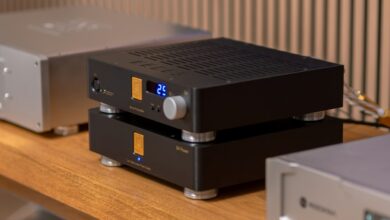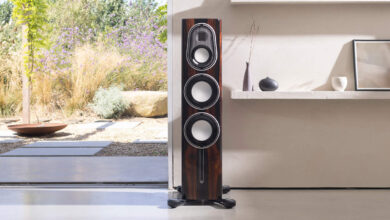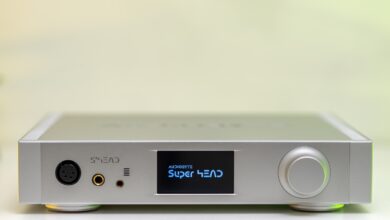
Listening room: the small living room, 4 m by 5.3 m with a 2.7 m ceiling and modest treatment • Loudspeakers used: Monitor Audio Platinum 300 3G
Sources: Moon 491 over XLR into the BAL LINE input, Line Straight on • Cabling: Roboli interconnect and speaker cables
Measured from the wall: around 100 W at idle, around 330 W maximum before audible distortion • Loaned by: HifiExpert
TLDR
The L505Z is a warm, dense and physical-sounding integrated amplifier. Everything we played through it sounded excellent and very pleasant. The tone is rich, and images are solid, with substance and physical presence in every register. The whole signature, sound flavour, or presentation has a weight to it that made long listening sessions a pleasure.
Three qualities define the L505Z for us:
- Weight and physicality. Bass is weighty and full, with good grip and a great kick. The edges of each note are somewhat soft, non-harsh so long sessions are totally free of fatigue. There is also enough sparkle and impact to impress on recordings made for that purpose. On our Monitor Audio Platinum 300 3G, kick drums had a very solid character, felt in the chest as much as heard.
- Rich, dense harmonics. The midrange is warm and full, with a thick harmonic texture. Voices were rich and present, with a beautiful sense of body. The treble is smooth and extended, free of sibilance, so the density of tone is the same from the lowest notes to the top octave.
- Great low-volume engagement. Very little volume is needed for the L505Z to sound full and alive. At late evening levels, bass had retained its weight, voices had also retained their body, and the soundstage did not alter.
The main limitation is, again, power reserve, measured against the most difficult loudspeakers on the market. With our matching, the L505Z sounded not that much stronger than its rated 100 W into 8 ohms suggests, but even so, the Platinum 300 3G were driven with ease up to very high levels. Loudspeakers with low impedance dips and low sensitivity, the kind found among some large flagship designs, will need a bigger amplifier, but for the vast majority of audiophile systems, the available power is more than sufficient.
Introduction
The L505Z is the most accessible integrated amplifier in Luxman’s Z series, placed below the L507Z and the flagship L509Z. It replaces the L505uXII, and its name goes back to the original L505, a model Luxman describes as possibly its most familiar one. With the L505Z, the Z series circle is complete, in the company’s own words.
Luxman’s newest amplification engine, LIFES, and its LECUA attenuator were developed for the most expensive models in the catalogue. In the L505Z, both technologies are combined with a full set of features, at a far lower price point: 385,000 yen in Japan, tax included. The middle of a range is where a manufacturer shows its hand, since the budget is tighter and every decision is visible. So we were very curious to hear how much of the Z series sound is present at this level.
Density of tone is a quality we value more and more, together with a sense of physical presence in the room. Music has mass. A recording of a double bass or a kick drum should feel like an object in the air, with weight and texture, and a voice should feel like a person standing between the loudspeakers. The amplifiers that reproduce this well are the ones we enjoy the most.
We had the L505Z for about a month, in our small living room, driving our reference Monitor Audio Platinum 300 3G, with the Moon 491 as the source. Burn-in time was around 200 hours before the critical listening and the notes started.
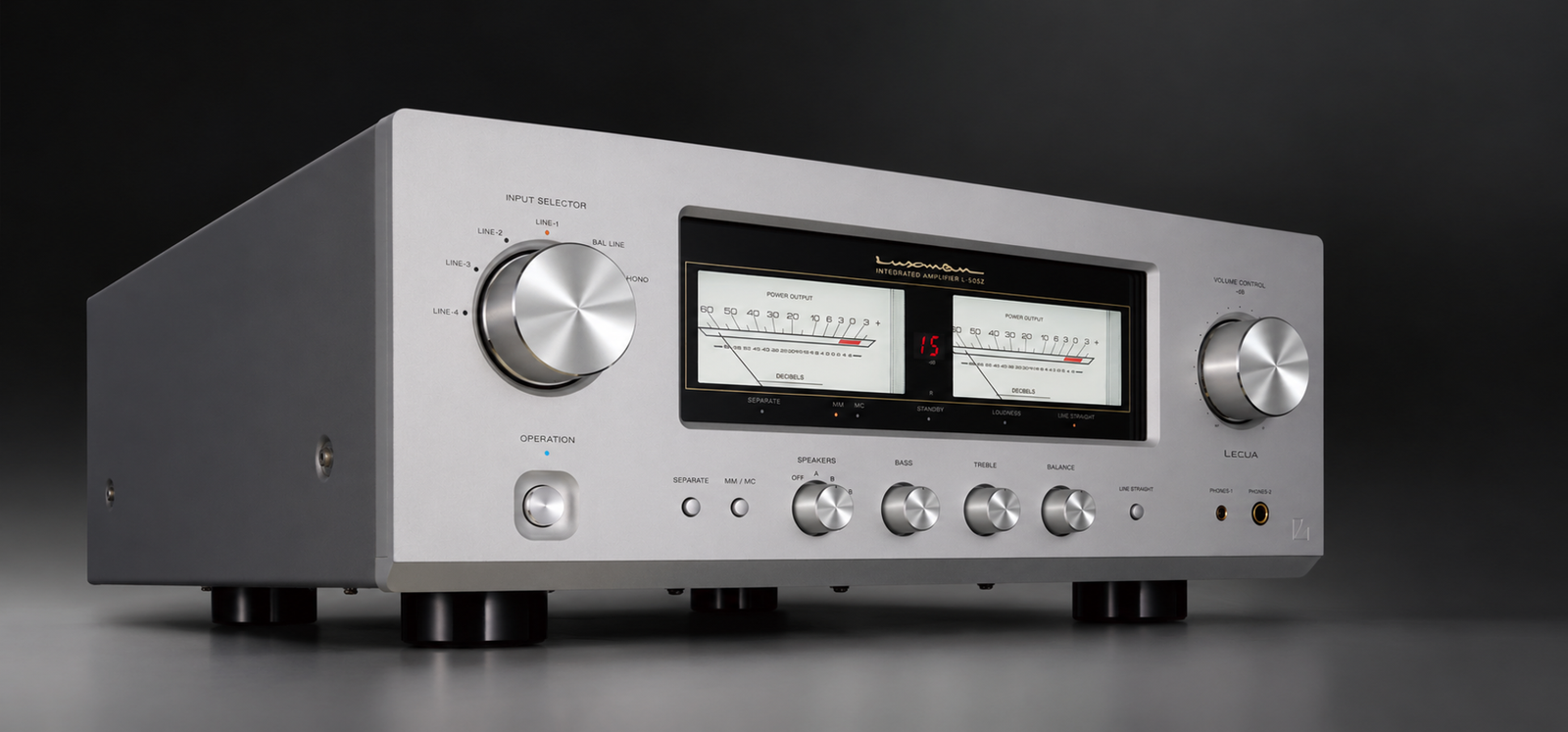
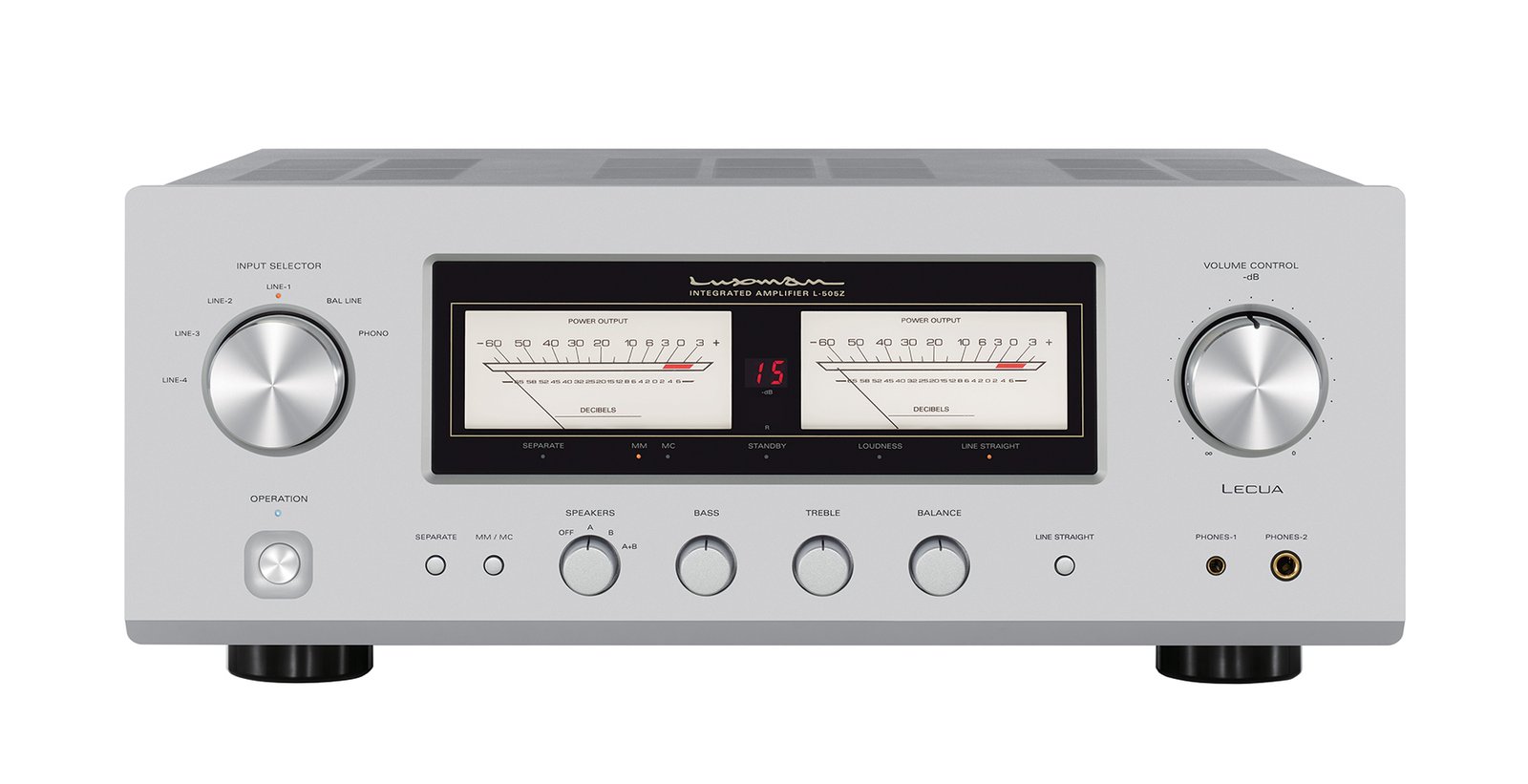
Out of the box, the L505Z is unmistakably a Luxman. Two large needle VU meters with white backlighting take up most of the front panel, with a small 7-segment display between them. The review unit is silver, with brushed aluminium panels, the classic Luxman finish. Luxman calls the meters the design symbol of its solid-state integrated amplifiers. We find them very pleasant to look at.
A Brief Look at Luxman
Luxman started in 1925, the year NHK began its regular radio broadcasts in Japan, as the radio department of Kinsuido. The company celebrated its centenary in 2025, a milestone very few audio companies have reached.
Three technologies define the modern Luxman amplifier, and all three are present in the L505Z.
The first is ODNF, Only Distortion Negative Feedback, developed in 1999 and refined through many versions for more than twenty years. The second is LECUA, the Luxman Electronically Controlled Ultimate Attenuator, which became the volume control of the brand’s top models with the C1000f control amplifier in 2006, the year of the company’s 80th anniversary. The third is LIFES, the Luxman Integrated Feedback Engine System, the successor of ODNF, completed during the development of the M10X flagship power amplifier in 2021.
The Z series is the generation of integrated amplifiers built around LIFES. The L507Z and the L509Z launched first. In the flagship L509Z, LIFES is used in both the preamplifier and the power amplifier sections, with the more elaborate LECUA EX attenuator. The L505Z is the third model and the smallest of the three, with LIFES in the power amplifier and a compact version of LECUA.
Topology and Technology: ODNF, LIFES and LECUA
The L505Z is a Class AB solid-state integrated amplifier, rated at 100 W per channel into 8 ohms and 150 W into 4 ohms. It is built around LIFES 1.0, its volume control is LECUA, and its preamplifier output is a discrete buffer. To understand LIFES, we first need to look at negative feedback, and at the problem Luxman set out to solve with ODNF more than twenty-five years ago.
Global negative feedback. In a conventional amplifier, a fraction of the output signal is returned to the input stage and subtracted from the incoming music. The input stage amplifies the difference between the two. Any error added by the amplifier appears in that difference, so it is corrected in proportion to how much spare gain the amplifier has, a quantity called loop gain. More loop gain means lower distortion on the measurement bench.
There are two costs. The first one is that the music itself is part of the loop. The output, with everything present at the loudspeaker terminals, is returned to the most sensitive point of the circuit, and every correction is applied with the small delay of a signal passing through all the stages. The second cost is stability. A loop with a lot of gain can oscillate, so designers add phase compensation, usually a small capacitor that rolls off the open-loop gain at high frequencies. With compensation, the amplifier is safe from oscillation. The same compensation also limits the slew rate, the maximum speed at which the output voltage can change, and leaves less loop gain, and so less correction, in the treble.
Many designers answer with zero feedback. The circuit is made as linear as possible on its own, and its distortion is accepted as part of the sound. Luxman’s solution is positioned between the two schools.
ODNF. (Only Distortion Negative Feedback.) Luxman’s work began in 1999 with an amplifying circuit of very wide bandwidth, high slew rate and low distortion, designed to need no phase compensation at all. The second step changed the nature of the feedback itself. In ODNF, only the distortion component of the output is fed back, to the final stage of the amplifying circuit. In Luxman’s words, the feedback mechanism is separated from the music signal being transmitted. The company credits this separation with a fast initial slew rate and a very wide bandwidth at once.
Luxman removed one more circuit along the way. Many feedback designs use a DC servo amplifier to remove DC offset from the output. Luxman says the servo added an unnatural colouration to the bass, so ODNF works without one, for the same tonal colour across the whole frequency range.
Luxman publishes the concept, but with no schematic. The principle, as we understand it, is a comparison between the input signal and a scaled copy of the output. The music is present in both, and it cancels out in that comparison. What remains is the error the amplifier has added. That error is amplified by a dedicated detection circuit and injected with opposite polarity, so it cancels in the output. The music signal itself takes the forward path only.
ODNF evolved through many versions. In the C1000f control amplifier of 2006, it had reached version 2.4, with a first stage of four parallel devices and a paralleled second stage, for lower noise and more drive for the power amplifier. With every version update the circuit was refined further, and with time it improved and grew to where it’s currently at.
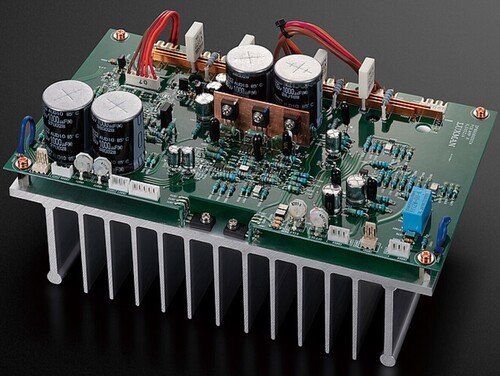
LIFES 1.0. (Luxman Integrated Feedback Engine System) During the development of the M10X flagship power amplifier in 2021, Luxman kept the technical philosophy of ODNF and rebuilt the circuit from zero. The new design was developed through multiple simulations, carefully selected components and repeated listening tests. In LIFES Version 1.0, the entire circuit is reconstructed and simplified, with fewer parallel elements. According to Luxman, distortion during amplification is reduced to less than half.
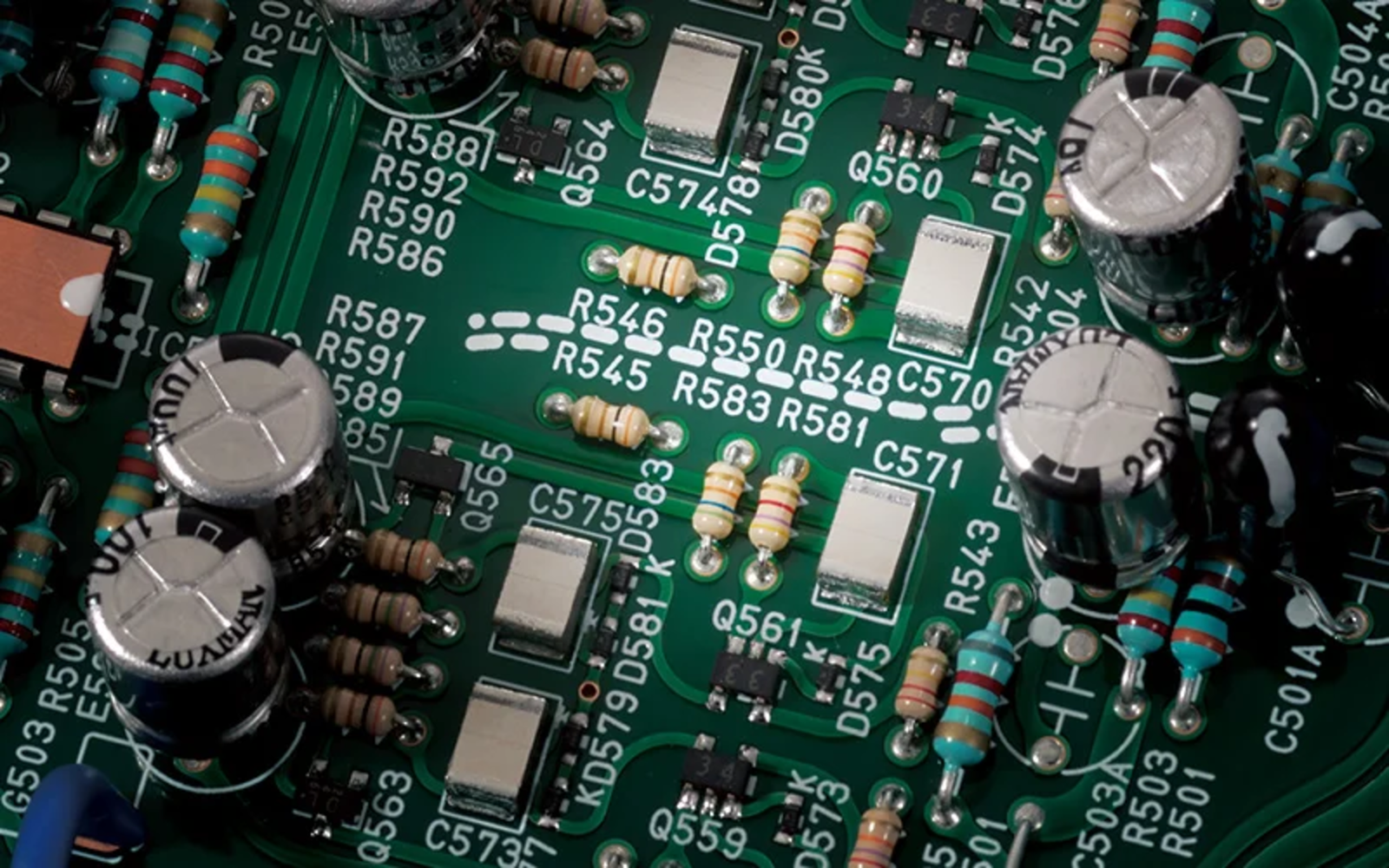
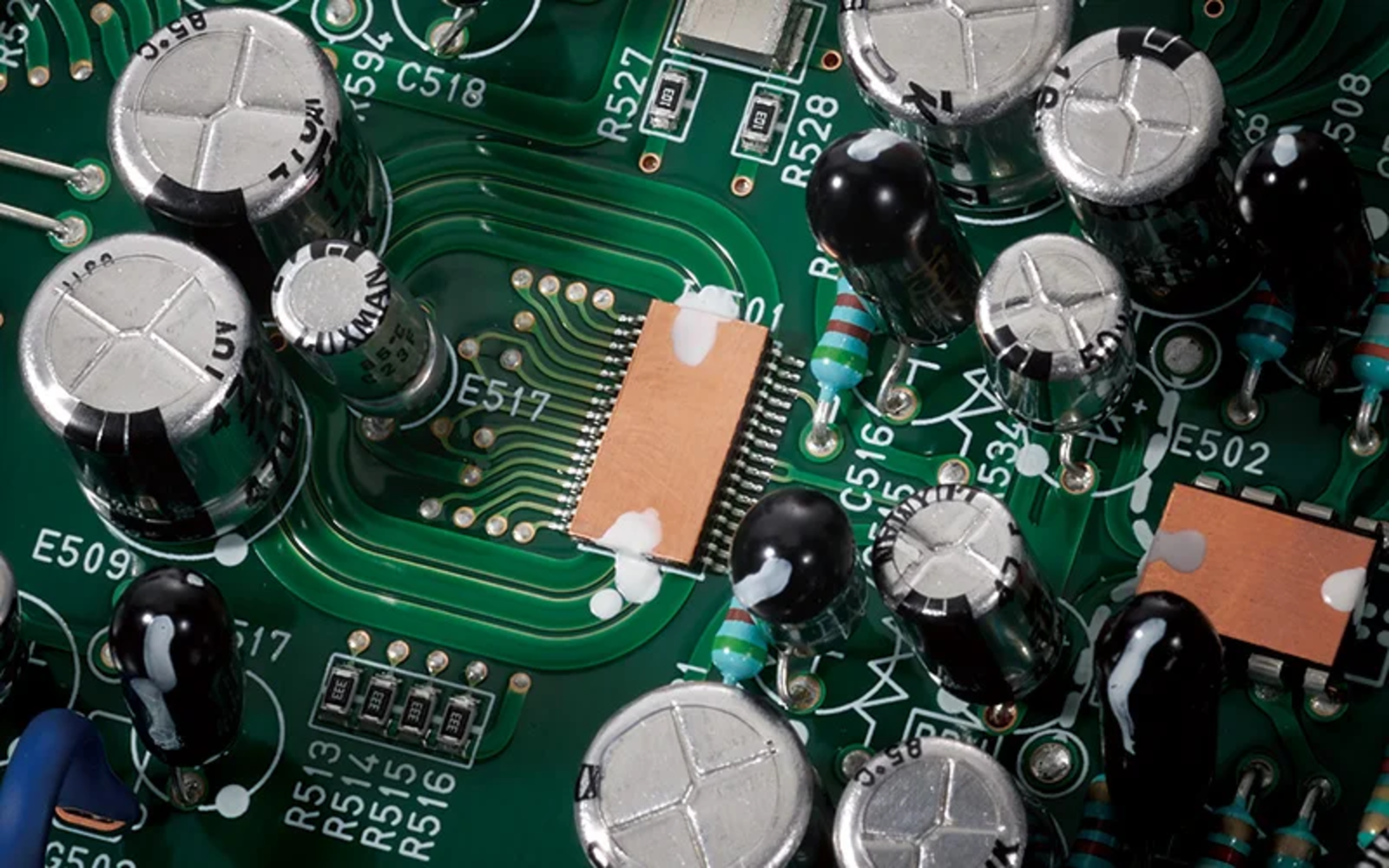
The owner’s manual of the L505Z has a little more detail on the part of LIFES that detects the distortion of the music signal, which Luxman calls the sub-amplifier. Its input uses dual FETs. Its cascode and current mirror circuits use dual transistors. Each of these choices is made with the purpose of matching two transistors in one package, sharing the same temperature. In a differential input stage, any mismatch between the two halves turns into offset and distortion, and any temperature difference makes them drift apart over a listening session. With a matched, thermally coupled pair, both effects are very small.
A cascode places a second transistor on top of the input device. The second transistor fixes the voltage across the input device at a nearly constant value, which reduces the Miller effect (the internal capacitance that slows a transistor down at high frequencies). In effect, linearity and bandwidth both improve.
A current mirror is an active load for the differential stage. It copies the current of one half of the pair to the other half, which raises the gain of the stage and balances its two halves.
Luxman’s stated goal for this circuit is the natural, unforced sound of a feedback-free amplifier together with the excellent high-frequency behaviour that negative feedback makes possible. In the L505Z, LIFES is the core of the power amplifier section.
The output stage. The output stage is a bipolar parallel push-pull configuration, operating in Class AB. In push-pull, one half of the stage handles the positive half of the waveform and the other half handles the negative one. In Class AB, a bias current flows through both halves around the zero crossing, where a pure Class B stage would produce crossover distortion. Paralleling the output transistors spreads the current between several devices, so each one works further from its limits and the output impedance drops.
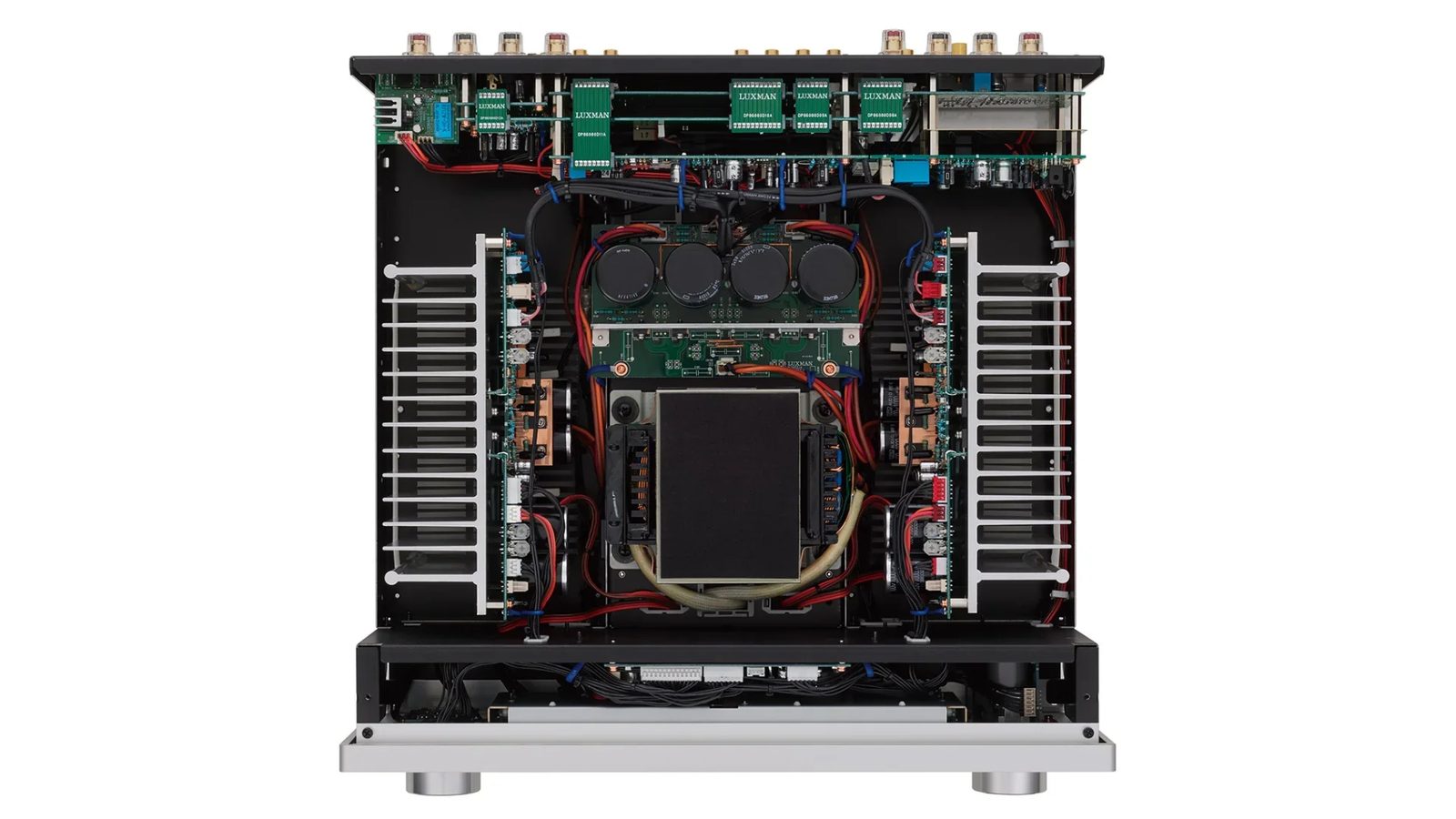
Luxman specifies a damping factor of 200, measured with the EIAJ current injection method. Into 8 ohms, that corresponds to an output impedance of about 0.04 ohms. Two large, low-resistance speaker relays are connected in parallel to lower the impedance of the speaker output line further.
Luxman specifies total harmonic distortion at 0.009% or less at 1 kHz into 8 ohms, and 0.09% or less from 20 Hz to 20 kHz. The protection circuits watch for overcurrent, abnormal temperature, and DC drift. When one of them trips, the output is disconnected and the standby indicator blinks. A time-muting circuit also mutes the speaker outputs for a short time after power-on.
LECUA.(Luxman Electronically Controlled Ultimate Attenuator) Volume control is a crucial part of an integrated amplifier, and Luxman treats it as a piece of signal processing of its own. A conventional potentiometer is a resistive track with a sliding contact. Its two channels are rarely perfectly matched, and the mismatch is largest at low settings, near the end of the track. The contacts also wear with time and can add noise. This all results in a broken soundstage and a huge change in dynamics at low listening levels.
LECUA replaces this track with fixed resistors. In the flagship versions, high-quality resistors, independent for each channel, are arranged on the circuit board and switched electronically according to the position of the volume knob. Since the C1000F, this attenuator has been known as LECUA1000, with an amplification circuit integrated into it. Luxman says it is very resistant to external vibration, its sound changes very little with the volume position, and it ages very well. The L509Z and the C10X use LECUA EX, the latest form, with a high-precision rotary encoder and a weighted rotating mechanism.
In the L505Z, LECUA is significantly downsized, with a solid-state integrated circuit configuration. The principle is the same, with attenuation being obtained from a combination of electrically controlled resistors. The volume runs from minus 87 dB to 0 dB, in 1 dB steps, plus a mute position, for 88 steps in total. The 7-segment display on the front panel shows the attenuation in dB. The left and right balance control also uses LECUA, by shifting the volume of one channel. The signal remains analogue at every step, with full resolution even at low volume.
The preamplifier and the discrete buffer. Luxman views the preamplifier as a driver for the power amplifier, so its ideal output is an energy-rich signal. At the output of the preamplifier stage, the L505Z uses a discrete buffer circuit with high current supply capability, the same one used in the L507Z. The input selector is a switching IC with high channel separation and low crosstalk, also used in the flagship C10X control amplifier.
Line Straight bypasses the balance control, the tone controls, and the loudness circuit, for the shortest signal path. With Line Straight off, the bass control acts below 300 Hz, with a maximum of plus or minus 8 dB at 100 Hz. The treble control acts above 3 kHz, with plus or minus 8 dB at 10 kHz. Loudness, available from the remote, adds 7 dB at 100 Hz and 5 dB at 10 kHz.
The balanced input has an input impedance of 55 kohms and a phase switch, so pin 2 or pin 3 can be set as hot, to match the source. A separate function splits the preamplifier from the power amplifier. The pre-out is always active, which makes bi-amping with a second power amplifier possible, and the main in accepts an external preamplifier or an AV processor.
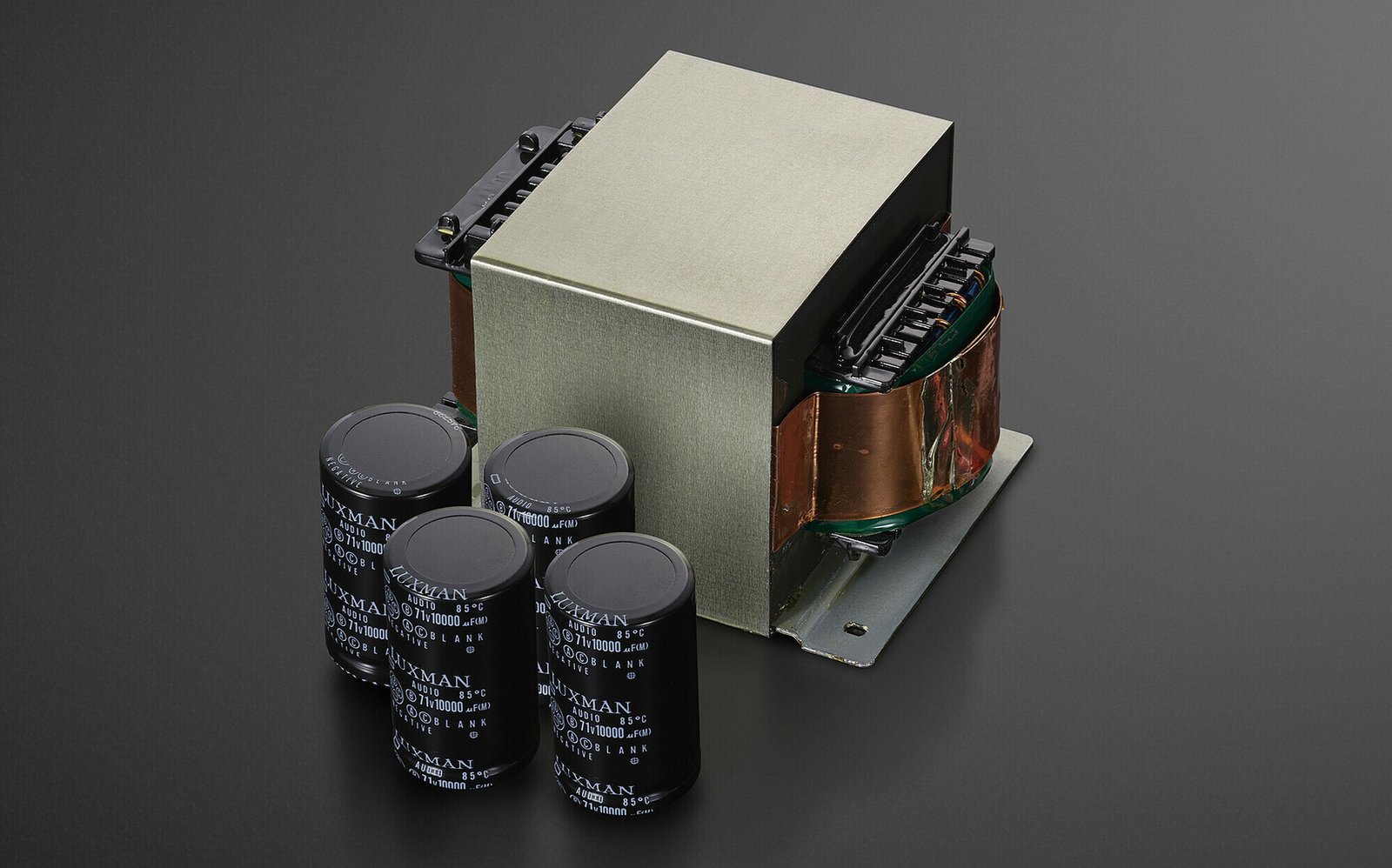
The power supply. Luxman calls it a high inertia supply. It is built around a 540 VA EI-type transformer, with a core made of stacked E and I shaped steel laminations, and four custom 10,000 µF filter capacitors, for a total of 40,000 µF. The rectifier uses Schottky barrier diodes made by Kyocera.

Construction. What Luxman calls Bee Line construction places the components along the shortest, most logical route from input to output. The circuit board traces are rounded, with no sharp angles. Internal wiring is Luxman’s own OFC cable, each core with a spiral wrap shield and no plating on the conductor. The chassis has a loopless structure, built to stop chassis currents from raising the ground impedance. All RCA connectors are placed at an 18 mm pitch, wide enough for cables with large plugs.
Phono and headphones. The MM/MC phono section uses two parallel FETs in its first stage, followed by an op amp, with a built-in subsonic filter. Input sensitivity is 2.5 mV for MM and 0.3 mV for MC. The headphone section has a standard 6.3 mm jack and a 4.4 mm jack with separate left and right ground connections, driven by separate unbalanced amplifiers.
Specifications. Line input sensitivity is 180 mV, at 47 kohms. Signal-to-noise ratio is 104 dB or more on the line inputs, IHF A weighted. Frequency response on the line inputs is 20 Hz to 100 kHz, within minus 3 dB. Maximum power consumption is 330 W, with around 109-112 watts while heating up and stabilising around 100-105 W at idle and 0.5 W in standby. The L505Z measures 440 by 178 by 454 mm and weighs 22.5 kg.
Luxman publishes no part-level detail for the L505Z beyond what is listed above, such as the exact output transistor series or op-amps used.
Design and Build
At 22.5 kg, the L505Z is a heavy amplifier for its size. Everything about it feels solid.
The knobs are a pleasure to use. The volume control turns with a smooth and precise feel.
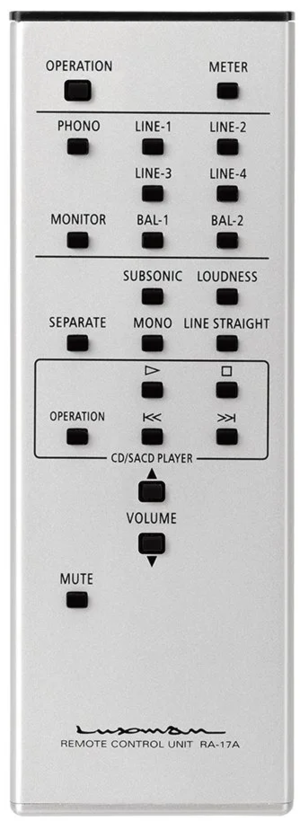
The rest of the front panel is classic Luxman: input selector, tone controls, balance, the speaker selector for the A and B outputs, the Line Straight button, the MM/MC switch and the two headphone jacks. The VU meters follow the music smoothly, and their white backlighting can be switched off from the remote, together with the volume display.
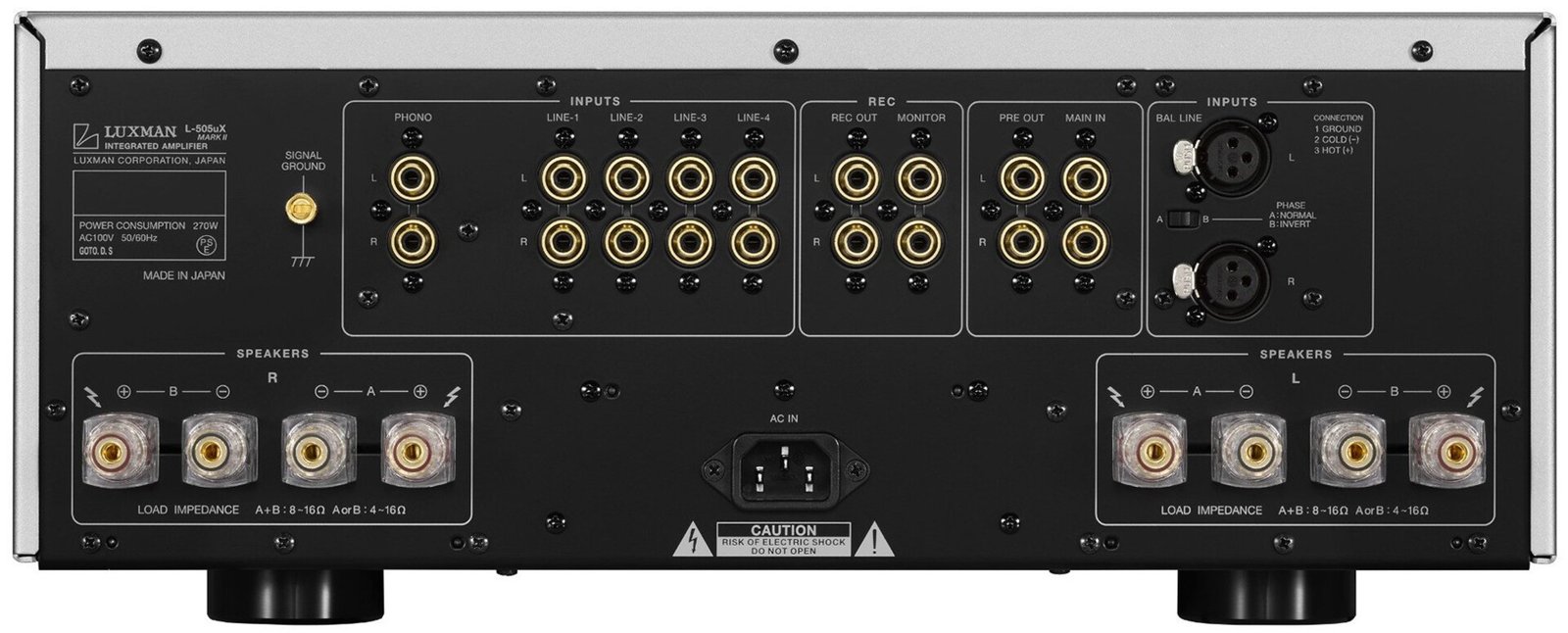
The rear panel is generous. Four unbalanced line inputs, one balanced input, the phono input, pre out and main in, two pairs of speaker terminals in an in line layout, 12 V trigger connections and control connections for other Luxman components. The speaker terminals accept Y lugs and banana plugs, with identical connections for the left and right channels thanks to the in line layout.
The remote is made of aluminium, substantial in the hand, and can also operate compatible Luxman CD players released after 1996.
Luxman recommends at least 10 cm of free space above the amplifier and 5 cm on each side, for ventilation. Keep that in mind when choosing a rack.
System Setup
The small living room measures 4 m by 5.3 m, with a 2.7 m ceiling and modest acoustic treatment. All of our listening with the L505Z happened there.
The Monitor Audio Platinum 300 3G are our reference loudspeakers in this room. They are detailed, open and very revealing of every change upstream, exactly what we look for when judging an amplifier.
The Moon 491 was our source, connected over XLR to the balanced input of the L505Z. Roboli interconnects and Roboli speaker cables complete the chain. We used Line Straight for all of our critical listening, so the balance, tone, and loudness circuits were out of the signal path.
The matching worked beautifully. The Platinum 300 3G are on the detailed and open side, and the L505Z is warm, dense and full. Together, the system retained the resolution of the loudspeakers and the body and harmonic richness of the amplifier, a balance we enjoyed a lot. With loudspeakers that are already warm and full, the L505Z could tilt the whole system a little too far towards richness. Of course, preferences decide in the end.
Power. On paper, the power rating looks moderate, and in our room, with the Platinum 300 3G, the L505Z sounded exactly as powerful as its rated figures, so that was a bit of a letdown. With a watt meter at the wall, we got around 104 W at idle and around 310-330 W before any distortion was audible. The Platinum 300 3G were driven with good control and precision, with the same character being kept at any volume we tried, be it lower than 1 watt or the maximum available power.
The L505Z is a good match for most audiophile loudspeakers in small and medium rooms. Loudspeakers with very low impedance dips and low sensitivity are a different story. A few large, difficult designs on the market will need more current than an amplifier of this size can supply. For those, look at the L509Z, rated at 240 W into 4 ohms, or at separate monoblock devices. As such, pay attention to the impedance curve and the sensitivity of your loudspeakers, and match accordingly.
Bass, Physicality and Dynamics
Bass is the first strength we noticed. It is heavy and generous, with great control and a kick that hits just right. Notes have a round, generous body, with edges soft enough to make long sessions free of fatigue. There is sparkle in the attack too. So when a recording is made to impress, with a big drum hit or a deep synth pulse, the impact is there.
Physicality is the word that describes it best. Bass through the L505Z is a physical event in the room: pressure in the air, a kick in the chest, a bass line with texture and mass. The grip over our Platinum 300 3G was firm, enough to separate one note from the next in fast, dense, difficult passages. The background is dark and quiet, so every low note starts from silence that helps a lot regarding the 3D part of the soundstage.

Yello’s The Race was one of the first tracks we tried. It is from 1988, from the album Flag, and it is built on driving electronic pulses and a busy, layered rhythm. Through the L505Z, the pulses had weight and a round body, each one with a firm start. The lowest octave was full, with a kind of pressure we could feel at the listening position. The sense of speed was intact, together with all the excitement Boris Blank and Dieter Meier put into it. What a great start!
This is the signature of the L505Z in the low end. Weight first, then grip, and a touch of softness on the edges to round everything off.

On Pink Floyd’s Money, from The Dark Side of the Moon, the bass line in 7/4 was thick and textured, with the grain of the strings easy to hear. The kick drum was solid and punchy. The cash register effects at the opening had a crisp, metallic bite and a precise position across the soundstage. The groove felt heavy and grounded, and the saxophone solo had a warm, full tone. Dense, heavy, and very satisfying.
With Infected Mushroom’s Deeply Disturbed, we pushed the L505Z much harder. The Israeli duo layers electronic sounds on top of each other, and as such, the density, or end result of the track, is a tough test for any amplifier. Subbass had physical pressure, the kicks hit with force, and the layers were packed together into one dense, powerful presentation. At very high levels, the feeling was clean and composed. In the most crowded passages, the separation between layers was a little behind the most analytical amplifiers we know, with density and impact taking a first seat at the stage.

Next, AURORA’s Through the Eyes of a Child. The rapid bass passage in this song is a demanding test of articulation, since fast low notes blur together very easily. Through the L505Z, each bass hit was weighty, with a clear start and slightly rounded edges. The kick had body and punch. Her voice above it was full and present, close to us, and the timbre was natural, with no touch of warmth and no embellishment, the feeling was that of transparency and refinement, distant from the one we often get when hearing this piece on tube amplifiers.
Dynamics are a strength of the L505Z at every scale. Small changes inside a phrase are easy to follow, and large swings have force and size, with a physical impact that matches the weight of the bass.
With Johann Strauss II’s Explosions Polka, Op. 43, our attention moved to orchestral dynamics. As we have been adamant about on the electronic tracks, weight is the core of this amplifier’s sound, and the orchestra benefited from it just as much. The bass drum explosions had impressive scale in our small room, with a thump felt across the whole space. The orchestral layers were dense and full, and the brass had a very pure, transparent feeling to it. At high volume, the big accents had retained their full size, reproduced with ease. This one was a joyful listen.
The Burson Timekeeper Voyager, a Class A design, has a very similar bass character, with the same warmth and roundness. The L505Z has more pressure, more density, and a firmer kick. It is more physical in every way.
Midrange, Harmonics and Voices
The midrange of the L505Z is rich, warm, dense, and pure, transparent. Harmonics are thick and full, and every instrument has a body with substance behind it. Voices are the clearest example. They have weight, warmth and presence, with the chest of a singer as audible as the lips.
Density is the right word for this region. Each note has a core, a texture around it and a long harmonic tail, all packed together. The result is a midrange with a lot of colour, more saturated than neutral, and very easy to fall in love with.
The dark background, which we spoke about in the bass chapter, plays a big role here too. Voices and instruments are drawn against a quiet, black space, so their outline is clear even with all that warmth around them. This speaks a great deal about the transparency, about the purity of the sound that the L505Z outputs.

Diana Krall’s Temptation was the first voice we played when looking for harshness or sibilance. Her voice was full, smoky, and intimate, with a beautiful chest tone and every breath easy to hear. The phrasing had a relaxed, natural flow. The piano also had weight and a warm, round attack, and the bass under it was thick and textured. The timbre was rich and true to her voice, with absolutely no harshness or sibilance being presented.
The treble is smooth and extended, also with no trace of sibilance and with a gentle, refined quality. Cymbals have shimmer and good natural decay. Air is also present, with no smearing or congestion. Listeners sensitive to bright, forward treble will find a lot of peace here. Harsh, brightly mastered recordings were listenable through the L505Z.
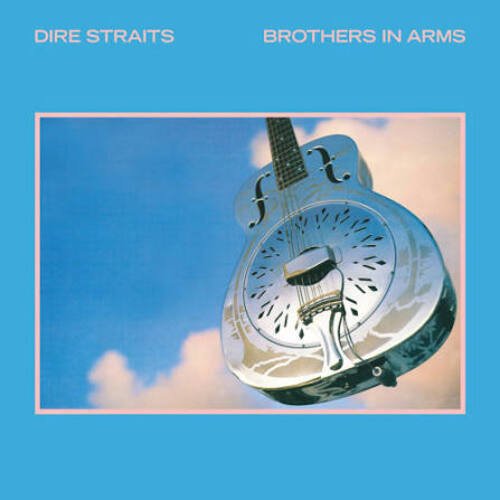
On Dire Straits’ Your Latest Trick, from Brothers in Arms, the trumpet at the opening was textured and smooth, with no glare in its higher register. The saxophone had a thick, reedy tone and a big body, with the texture of the breath clearly audible. Mark Knopfler’s voice was warm and close. The ambient sounds around the music also had a natural sense of space around them. Everything felt clean, articulate, and dense. It felt like the music was well-strung together, tightly packed like sardines waiting to be eaten straight from their natural environment: the can.
With another masterpiece from Dire Straits, Ride Across the River, from the same album, the focus moved to percussion and pitch. The bass notes were round and well-defined in pitch, and the percussion had a crisp attack with a warm, full decay. The synth melodies were placed above it, with a rich, colourful texture. Wide, layered, 3D, and very enjoyable.
Instrument separation is good. In dense arrangements, each voice has its own colour, and the overall sound is cohesive, with every part of the mix connected to the rest. Outlines are sharp, similar to the analytical amplifiers we know. We feel the overall character of the L505Z emphasizes harmonic substance and how music is presented as a whole.

With Vivaldi’s The Four Seasons, played by Janine Jansen and a small chamber ensemble, the violin had a sweet, rich tone, with the wood of the instrument easy to hear. The bow had a nice bite on the attack, with no harshness. The cello and the double bass at the bottom of the ensemble had a full, resonant body. In the fast passages of Summer, the energy was intact, with every player in the ensemble well defined and differentiated.
We believe a lot of listeners who love voices and acoustic music will feel at home with the L505Z. It has the kind of midrange presentation that makes us forget about the equipment and listen to the people making the music.
Soundstage, Low Volume Listening and Emotional Connection
The soundstage of the L505Z is wide and deep, and the images inside it are dense. That density is the special part. A voice or an instrument is presented as a solid, rounded object, with body and volume, placed at a precise spot in the room. Width extends beyond the outer edges of the loudspeakers. Depth is layered, with the main performers in front and the reverb tails far behind them.
Through the L505Z, images have mass, like objects in front of us. We found this effect to be one of the most attractive qualities of the amplifier.
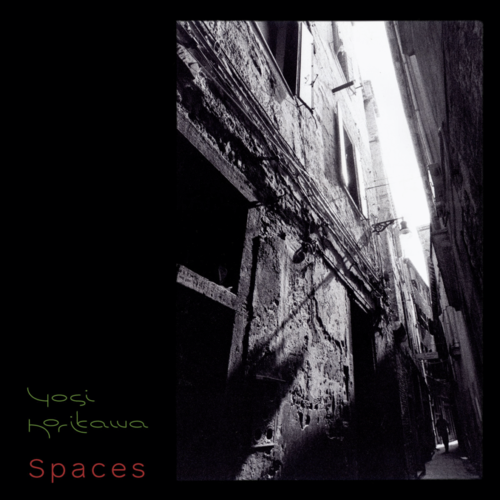
Yosi Horikawa’s In the Wind was our first test with regard to the soundstage. Horikawa, a Japanese sound artist, composes with field recordings of ordinary objects and places, spread around the listener. Each sound had a solid, three-dimensional shape and a precise position, with natural distances between them. Small objects had weight and texture. The space was wide and deep, with sounds placed well behind the loudspeakers and some of them far out to the sides. Quiet, immersive, and a little magical.
Low volume listening is also a big strength for the L505Z. At whisper levels, bass retains its weight, voices retain their body and presence, so the dense harmonic texture of the midrange is also intact. This is a hard test for any system and any ear out there, since the human ear loses sensitivity to the lowest and the highest frequencies first as the volume goes down.
Late evening listening at low levels was a pleasure. Microdynamics were easy to follow, and timing was natural, so a quiet session felt as complete as a loud one.

We used E-Mantra’s Last Symphony of the Stars, in the Reasonandu version, for a slow climb from our quietest level to our loudest. At low SPL, the presentation was already big and immersive, with deep bass pulses that were physical from the start. With every step up on the volume knob, the scale grew, together with the physical impact, and the shape of the soundstage was unchanged. At the top, the sound was huge for our small room, with the same density and warmth as at the bottom. A great track to hear how an amplifier scales with power.
Compared with the Burson Timekeeper Voyager, the soundstage of the L505Z has a similar width and depth. Images are more solid and more tightly packed withe the L505Z.
Then there is the emotional side, maybe the most important one. The warmth and weight of the L505Z combined with its transparency and purity made it very easy for us to get lost in the music. It is a sound we connected with on a deep level, with a feeling of closeness to the performers that is hard to describe in technical terms.
People who hear the L505Z in a good demo will want to take it home. Its sound is very easy to love.
Conclusion
After about a month with the L505Z, our verdict is simple. This is a rich, dense, pure, clean, transparent, deeply musical amplifier, with a refinement well above its position in the Luxman range.
Its character is very close to a good Class A amplifier, which has a habit of adding more substance to every note. Bass is weighty and physical, the midrange is rich and full of colour, the treble is smooth, calm, pure and very articulated, and images have mass inside a wide, deep soundstage. Low volume listening is a pleasure.
The technology behind it is serious too. Even though LIFES and LECUA were developed for Luxman’s flagship models, they are present here, in the L505Z as well, which adds great value overall
The main limit is power reserve for very demanding loads. With our Platinum 300 3G, the L505Z sounds stronger than its rating suggests, and its power is ample for most audiophile loudspeakers. For low-impedance, low-sensitivity designs, the L509Z or a pair of separates is the safer route.
Pair the L505Z with detailed, open loudspeakers, and the result is a system with resolution and body in equal measure. With loudspeakers that are already very warm, keep an eye on the balance.
Highly Recommended, especially for its density, purity, and richness.
Acknowledgment
We would like to thank HifiExpert for lending us the Luxman L505Z, and for the month we spent with it in our small living room. Shout-out to all the dealers out there doing awesome work for all of us.
Pros
- A deep, dense, and physical sound, close in character to a good Class A amplifier, with substance
- Purity and transparency are present throughout, with a clean, uncolored presentation
- Weighty, full bass with good grip and a great kick, free of fatigue over long sessions
- A rich, dense, articulated midrange, with beautiful, present voices
- Smooth, extended treble, free of sibilance and with excellent articulation
- Excellent low-volume engagement, with full bass and body at whisper levels
- Great build, a heavy chassis and controls with a beautiful feel, with tech like LIFES and LECUA taken directly from the flagship models
Cons
- A bigger amplifier is needed for the most difficult, low-impedance and low-sensitivity loudspeakers
- Power is in short reserve, headroom is almost non-existent
- In the most congested of mixes, instrument separation and air are a little behind the most analytical amplifiers out there
Score
The scoring is the absolute truth and the way we best quantify how the devices sound. Interpreting this score is the best thing you can do if you want to “read” into the device’s sound signature.