KECES S300+ Power Amp Review – Cleaner. Tighter. Better.

A couple of years ago, I had the privilege of trying a cost-effective power amplifier that not only offered a couple of juicy watts in full Class-A operation, pulling power from a custom toroidal transformer working in a fully discrete neighborhood, but it also forever changed my view of amplifier designs. Hitting a desired price-to-performance ratio wasn’t a goal; it was a requirement from the beginning on the KECES S125. It entered my system as an experiment, but ended up remaining as a daily driver for more than 12 full moons. Eons later, the KECES S300 raised the bar and proved that these guys aren’t playing in the entry-level sandbox anymore; they were now swinging at serious contenders. It wasn’t just a slightly upgraded S125. Oh no, it was a much beefier unit inside and out! The current delivery increased substantially; it had a much larger power reservoir, extended Class-A operation, and a power supply section that you could usually spot in much pricier amplifier designs. The power draw doubled as well, and on paper, it looked like Mr. Olympia, but in practice, it added a much nicer control over my speakers. It kept the KECES DNA but added grip and authority, allowing it to wrestle with far more demanding loudspeakers without losing composure or dynamics.
Fast forward a couple of years, and we arrive at the updated S300+ that added meaningful upgrades I’ll mention immediately. In a world obsessed with higher numbers and louder claims, the S300+ seems to prioritize refinement over intimidation. And refinement is harder to quantify, especially when looking at mere spec sheets. It lives in background blackness, in transient shifts, in how fast the bass notes start and stop on a dime, and how effortlessly complex passages unfold without tension.
S300 already moved dangerously close to the idea of a transparent sound without coloration. So, when the S300+ entered my HiFi system, it carried a heavier burden than its older brothers. The newest member of the KECES family no longer needs to prove that this Taiwanese brand can build powerful amplifiers working in either stereo or mono operation. It needs to prove that refinement matters a lot more in high-end audio than any other metric. Because in my book, sound’s transparency will always rank higher than brute strength alone.
Priced at $4000 in the USA and 4000 EUR here locally, it will exchange punches with serious contenders, designed by brands that have decades of reputation behind them, and as I see it, S300+ no longer competes on value shock alone. It competes on maturity, managing to move even closer to that invisible amplifier idea.
I’ve been living with it long enough to form a clear opinion, so let’s discuss what changed and, more importantly, what it does to the music.
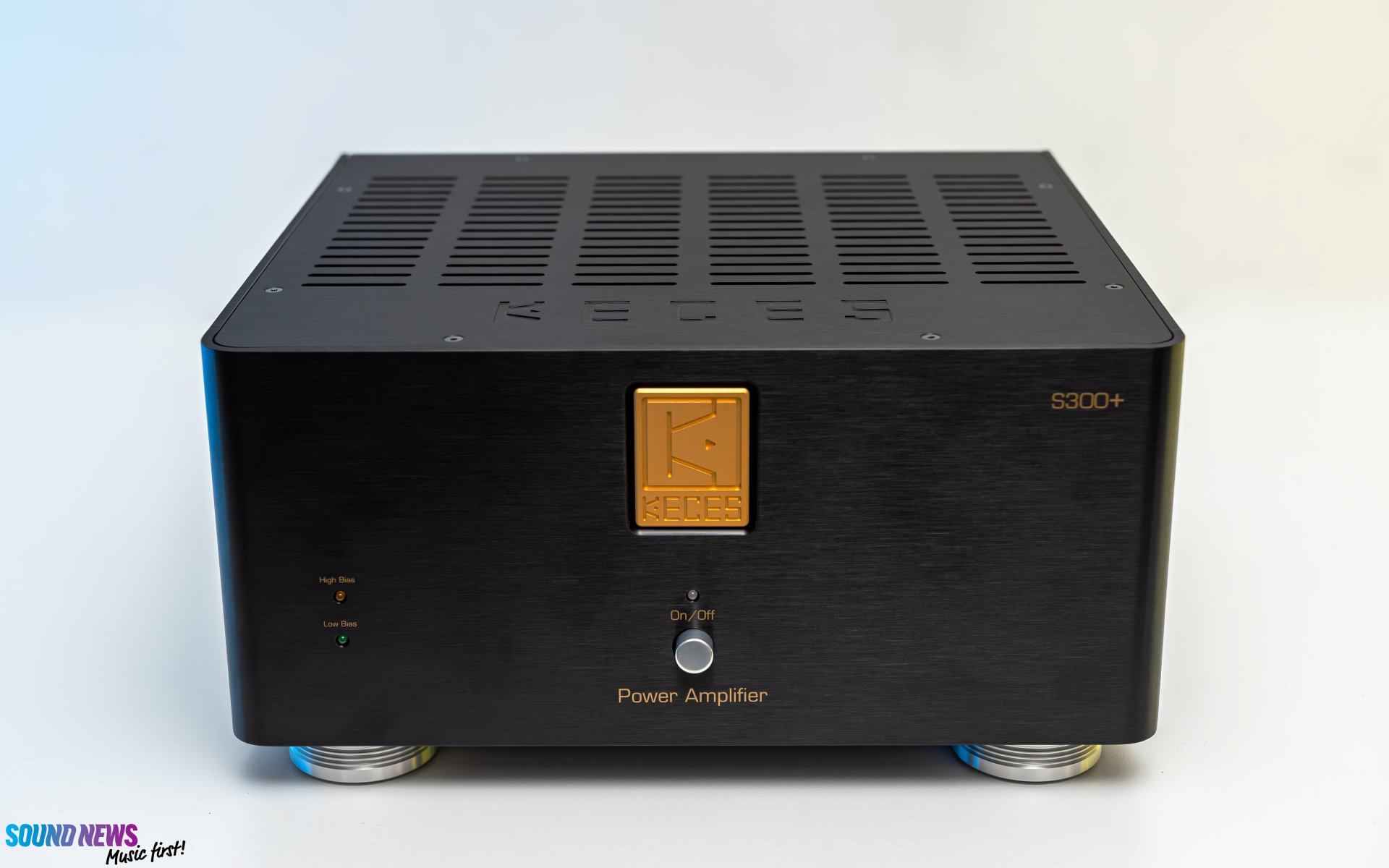
Before I begin, I should remind you that I already wrote a 13-page, ~6,400-word review of the KECES S300 five years ago (here it is), and I see no reason to repeat myself about its beautiful design choices and overall execution. Instead, I’ll focus strictly on what has changed — and what truly differentiates the S300+ from its predecessor.
Courtesy of KECES Audio, I received a complete list of improvements implemented in the S300+ versus the original S300. Let’s go through them one by one, and then assess what they might mean when paired with a top-flight loudspeaker.
1) The speaker terminals have been upgraded from basic acrylic binding posts, typically selling for around ~$10 per set of four, to significantly higher-quality WBT-0703Cu terminals, which retail for approximately €159 locally. Featuring gold-plated, pure copper conductors, they are designed to minimize Eddy Current losses. Thanks to the separation of the transmission path from the mechanical chassis, it became possible to use higher-grade materials for each element of the terminal assembly.
While copper and silver are among the best electrical conductors available, they come with certain mechanical limitations. WBT addressed these challenges by incorporating high-performance polymers. The core of each terminal is machined from a single piece, avoiding unnecessary contact points and additional resistance. The signal conductor is stabilized within a fiberglass matrix reinforced with mineral-filled plastic and enclosed in a non-magnetic stainless-steel housing. A complementary elastomer damping system significantly reduces vibration transmission to the conductor, minimizing microphonic effects and improving the precision of the transmitted signal.
2) Improved signal wiring and upgraded internal materials. There isn’t extensive public documentation on this change, but lower-resistance conductors and higher-purity materials can meaningfully influence performance. The S300+ has reportedly been optimized for better internal interference management, and I suspect this refinement may have reduced internal impedance, which in turn could contribute to the improved damping factor.
3) The damping factor has increased from 1500 on the S300 to 4000 on the S300+. The damping factor describes how effectively a power amplifier controls a loudspeaker’s motion, especially the woofers. A higher DF typically corresponds to lower amplifier output impedance, resulting in tighter electrical control over the drivers.
My Raidho TD 2.2 speakers use extremely low-mass, diamond-coated drivers that are already mechanically well-controlled. They are not large, floppy, high-Q woofers desperately in need of electrical braking. Still, a higher damping factor is always welcome, particularly if you enjoy listening at higher levels or favor bass-intensive material where maximum grip and composure truly matter.
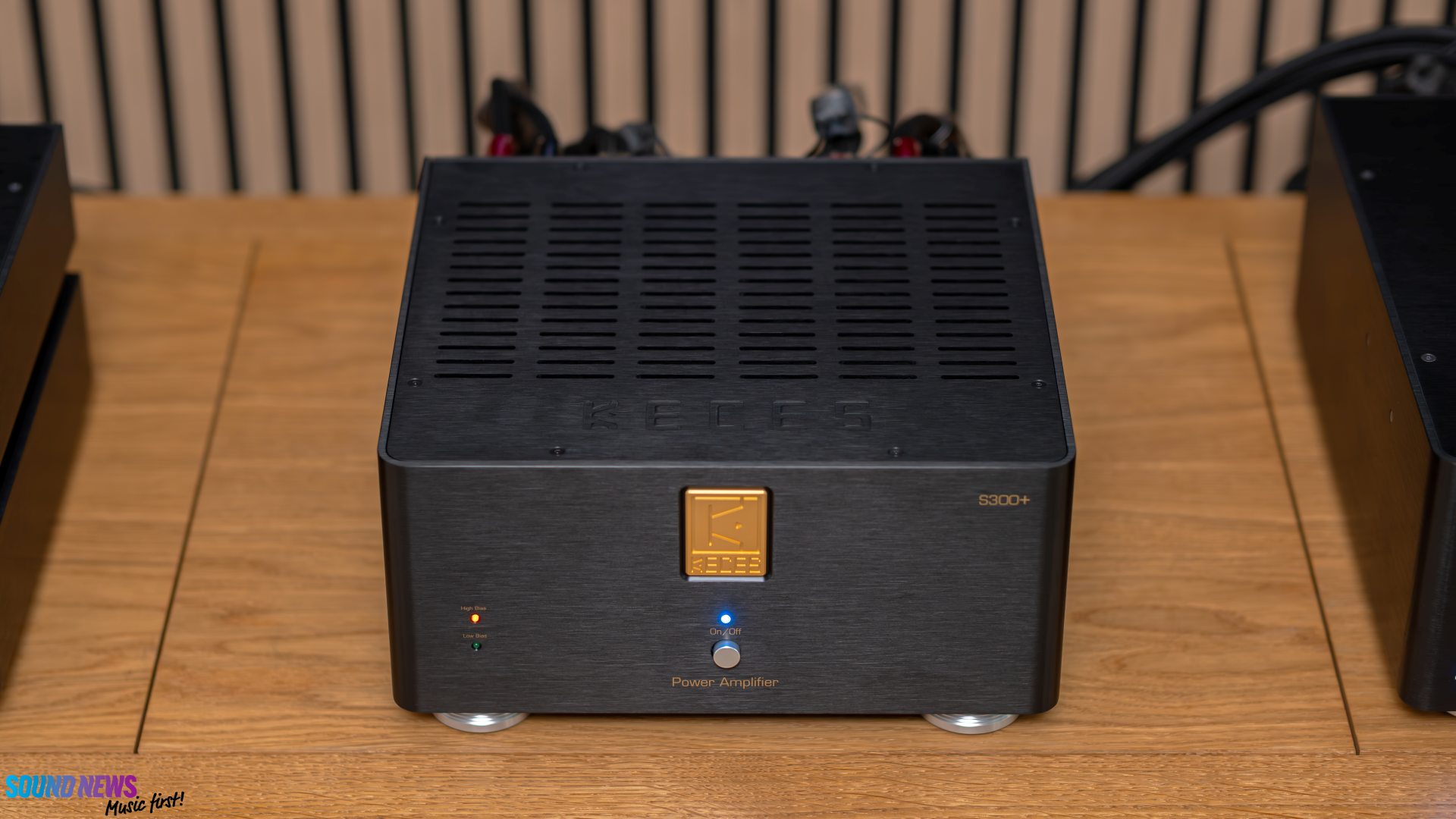
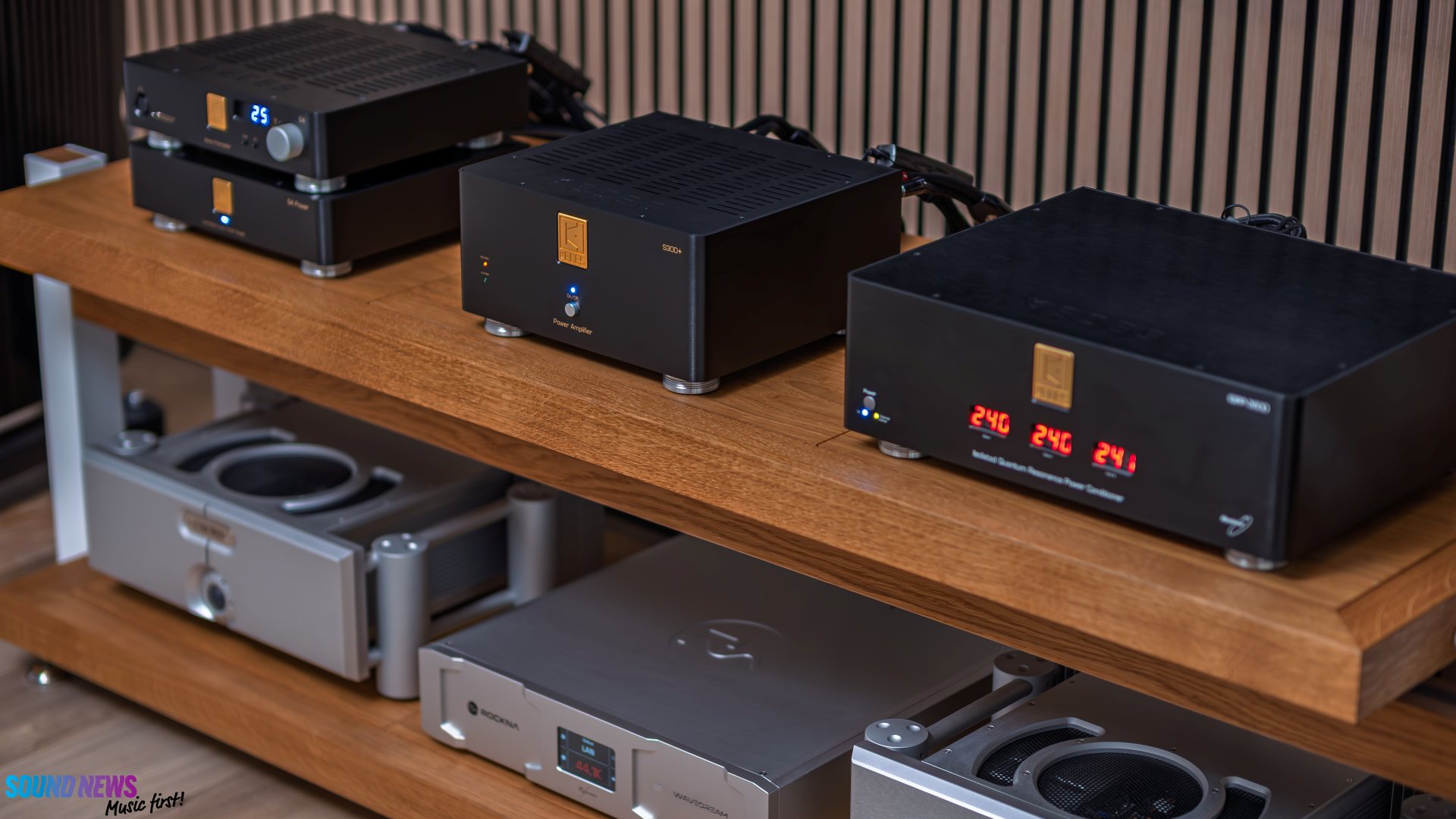
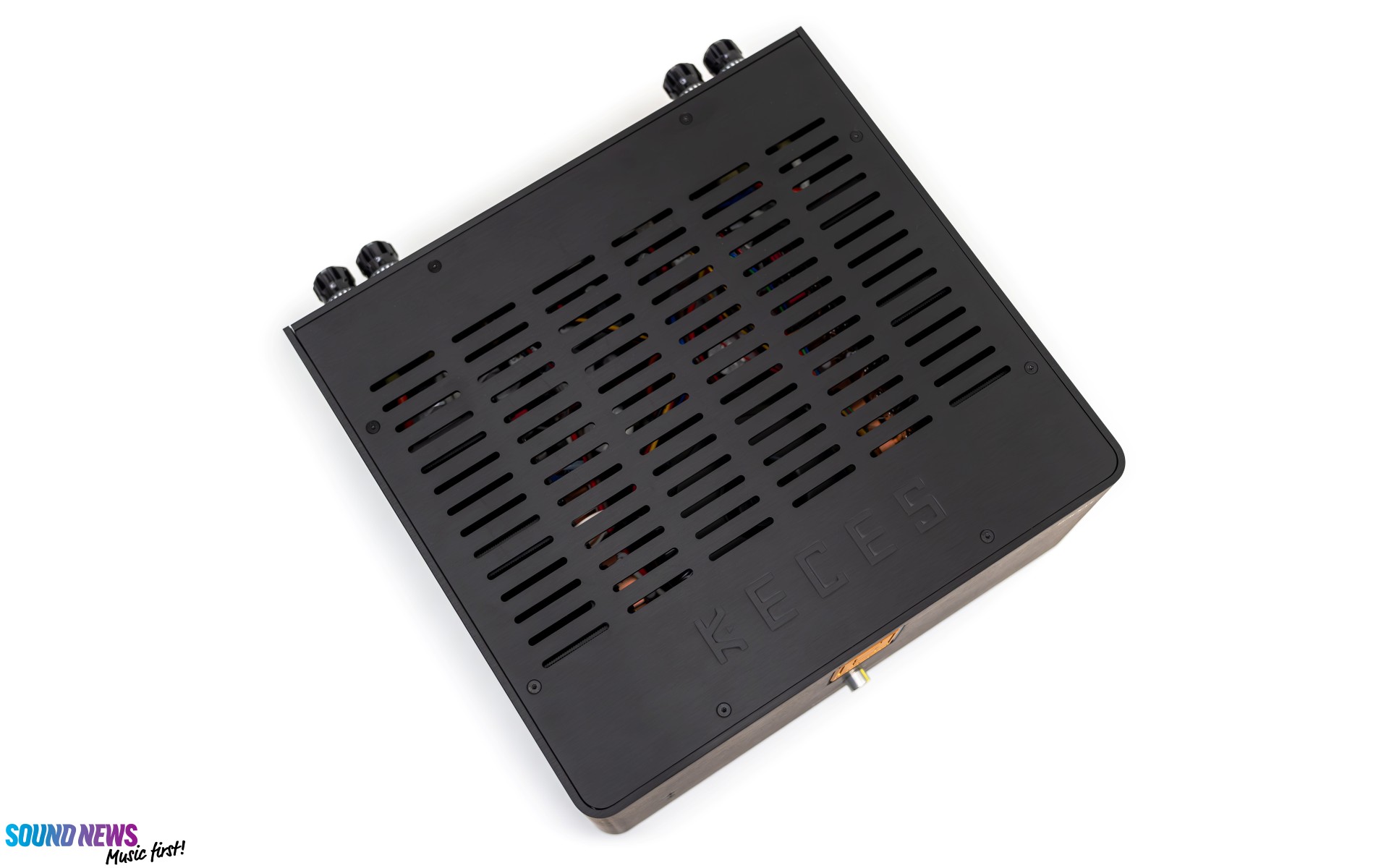
While on the outside, there’s only a small label indicating that I’m dealing with the S300+, and the KECES logo no longer carries that raw aluminum finish but instead adopts a more refined, gold-plated appearance, the real story unfolds inside.
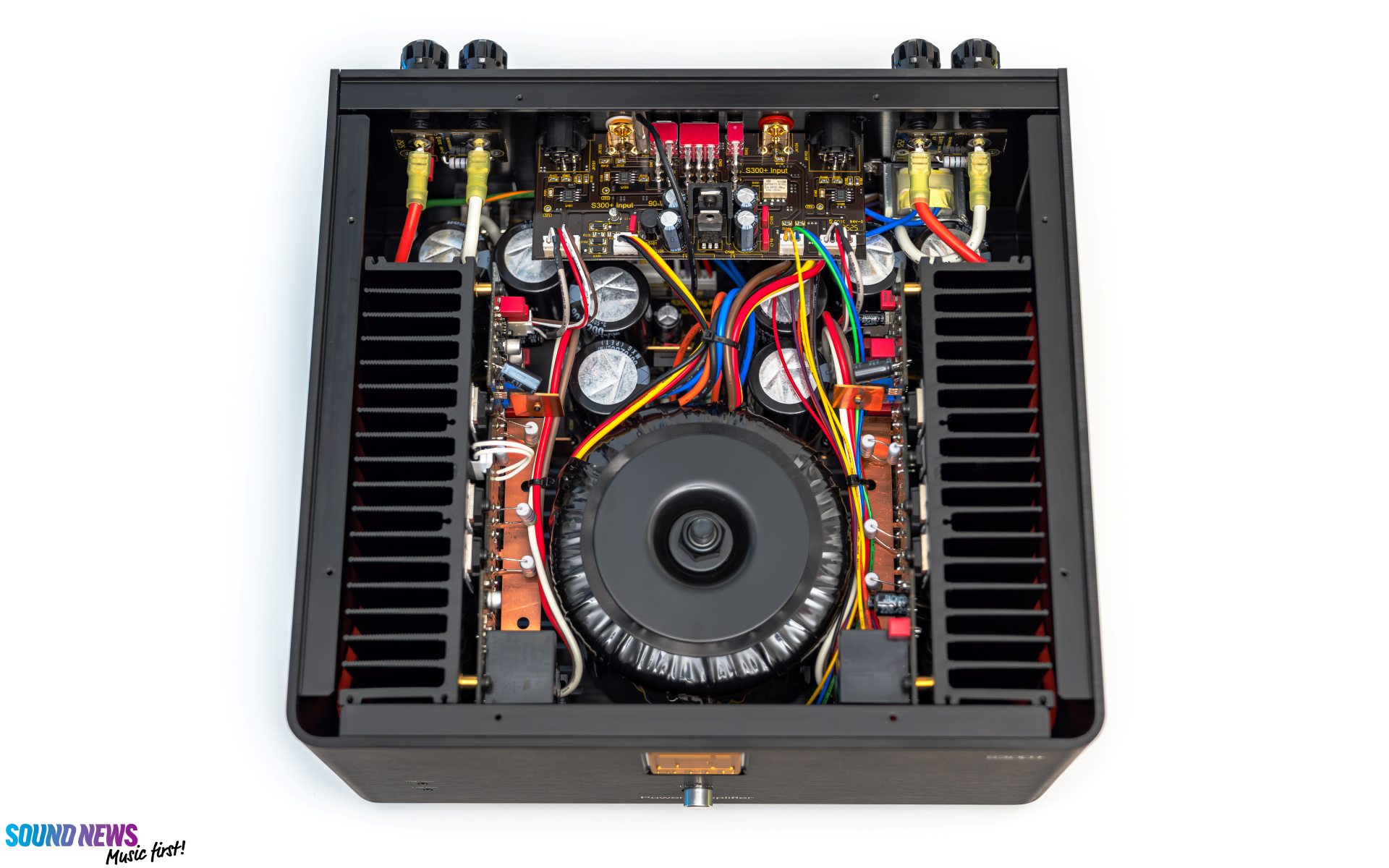
Tech Inside S300+
Over the years, I’ve tried most amplifier designs out there. Class-D amplifiers are undeniably impressive when it comes to efficiency. They sip power, don’t require a nuclear plant to operate at full potential, run cool, and usually come in compact, lightweight enclosures. They are practical, modern, and environmentally friendly, plus they carry a more affordable price tag.
However, their biggest drawback, at least to my ears, is that they rarely deliver the sweetest harmonic textures, the most explosive dynamic swings, or that larger-than-life soundstage that seems to expand beyond your listening space. In some ways, they don’t push your speakers to their absolute limits. Instead, they tend to make them sound calmer and smoother.
Class-A amplifiers, on the other hand, sit at the opposite end of the spectrum. They are bigger, heavier, significantly more expensive, and notoriously inefficient, true power-hungry beasts. And yet, they remain highly desirable in high-end audio circles. Why? Because of their immediacy, their effortless current delivery, their punchy dynamics, and some of the best driver control you can experience. When done right, Class-A simply feels alive.
With stricter global power regulations, many manufacturers were forced to rethink their designs. Some moved entirely to Class-D, while others developed hybrid Class A/AB amplifiers like the one I’m testing today.
The S300+ delivers the first 5 watts per channel in pure Class-A, with the rest operating in Class-AB. That means that regardless of whether you were using highly efficient speakers or more demanding loads, that Class-A sweetness and natural harmonic richness would always be present in your music.
More importantly, current delivery per channel sits at 45 Amperes. That fact alone is extremely significant if you’re planning to drive inefficient floor-standing speakers to their full potential.
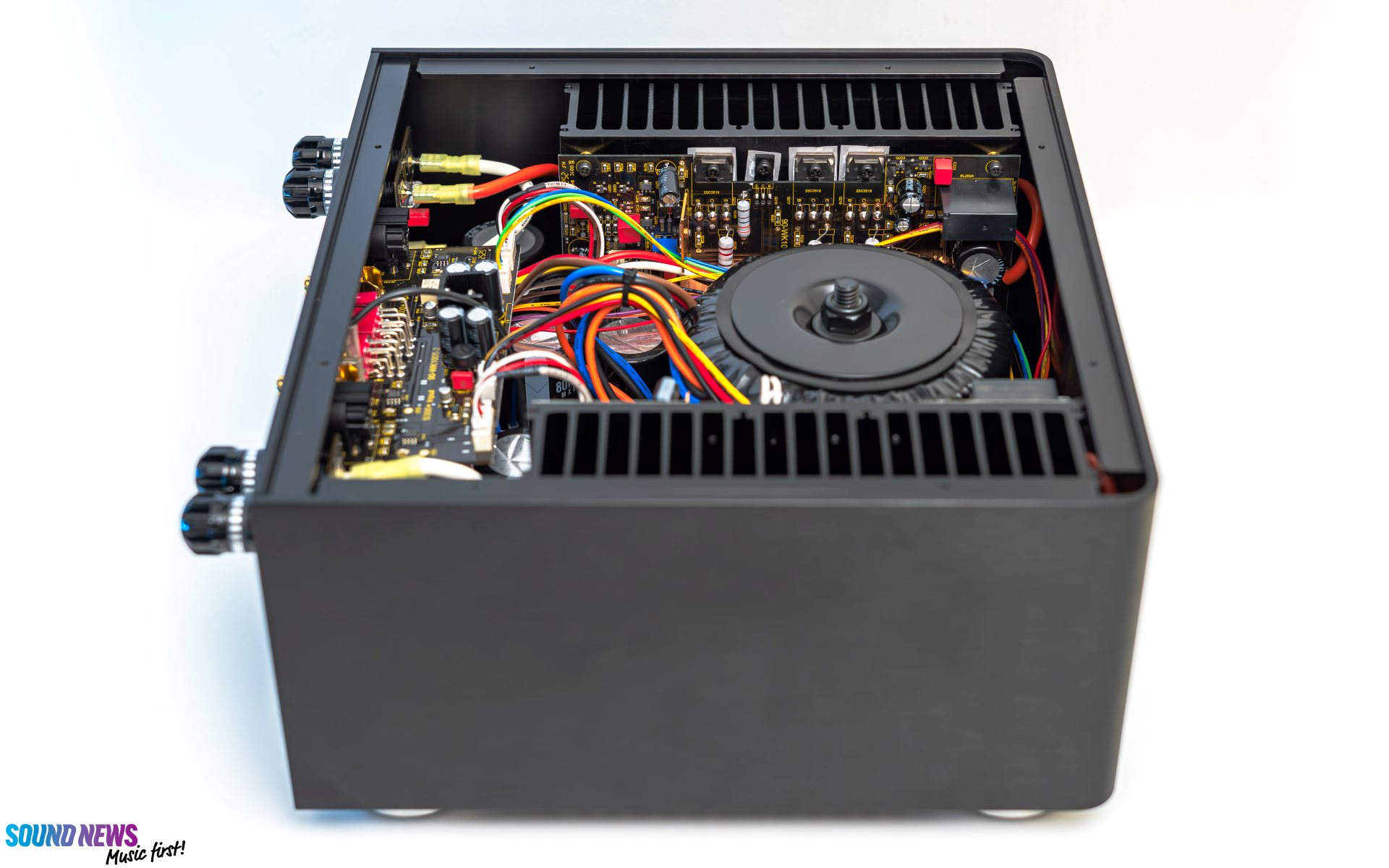
Technically speaking, the S300+ is a fully discrete design, featuring a JFET input stage feeding a MOSFET output stage. It is direct-coupled, with no capacitors, inductors, or op-amps in the signal path. The output stage uses a serious array of transistors, I counted fourteen, though there may be more, and most of them are mounted on massive heat sinks to ensure proper cooling and long-term reliability.
Power supply design is equally ambitious. KECES implemented a single but massive 1.2 kVA (1200 Watt) balanced toroidal transformer, backed by approximately 65,000 μF of filtering capacitance to store and deliver energy during demanding dynamic passages. DC servo circuits, working alongside carefully applied negative feedback, help suppress source noise, which is particularly useful if you’re pairing the amplifier with noisier analog or digital components.
As for power output, the S300 delivers a continuous 130 watts per channel into 8 ohms, 240 watts into 4 ohms, and an impressive 410 watts into 8 ohms when two units are bridged together in dual mono configuration.
On paper, the specifications look extremely promising. Now it’s time to find out whether all that engineering translates into musical magic.
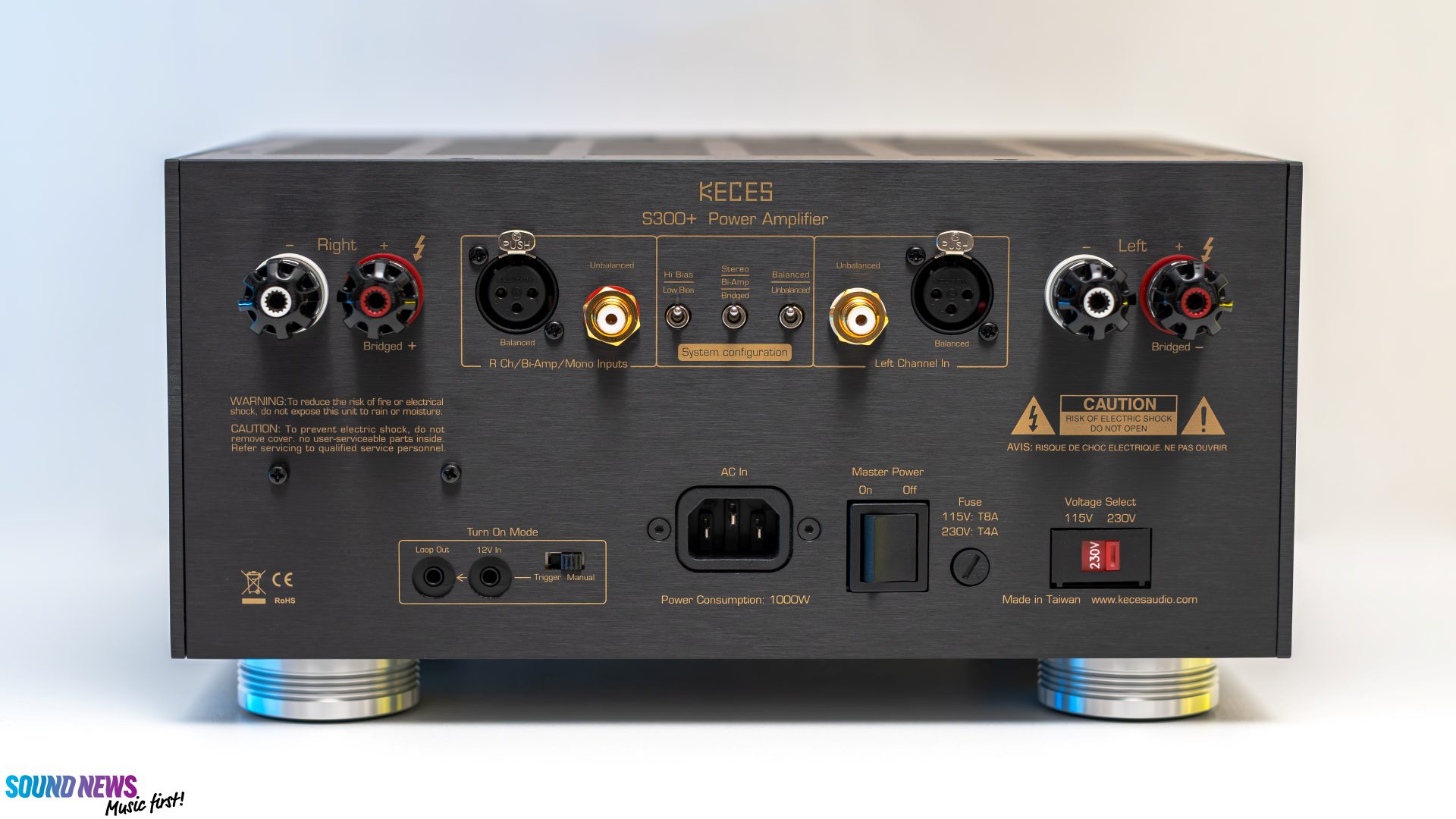
Controls & I/O
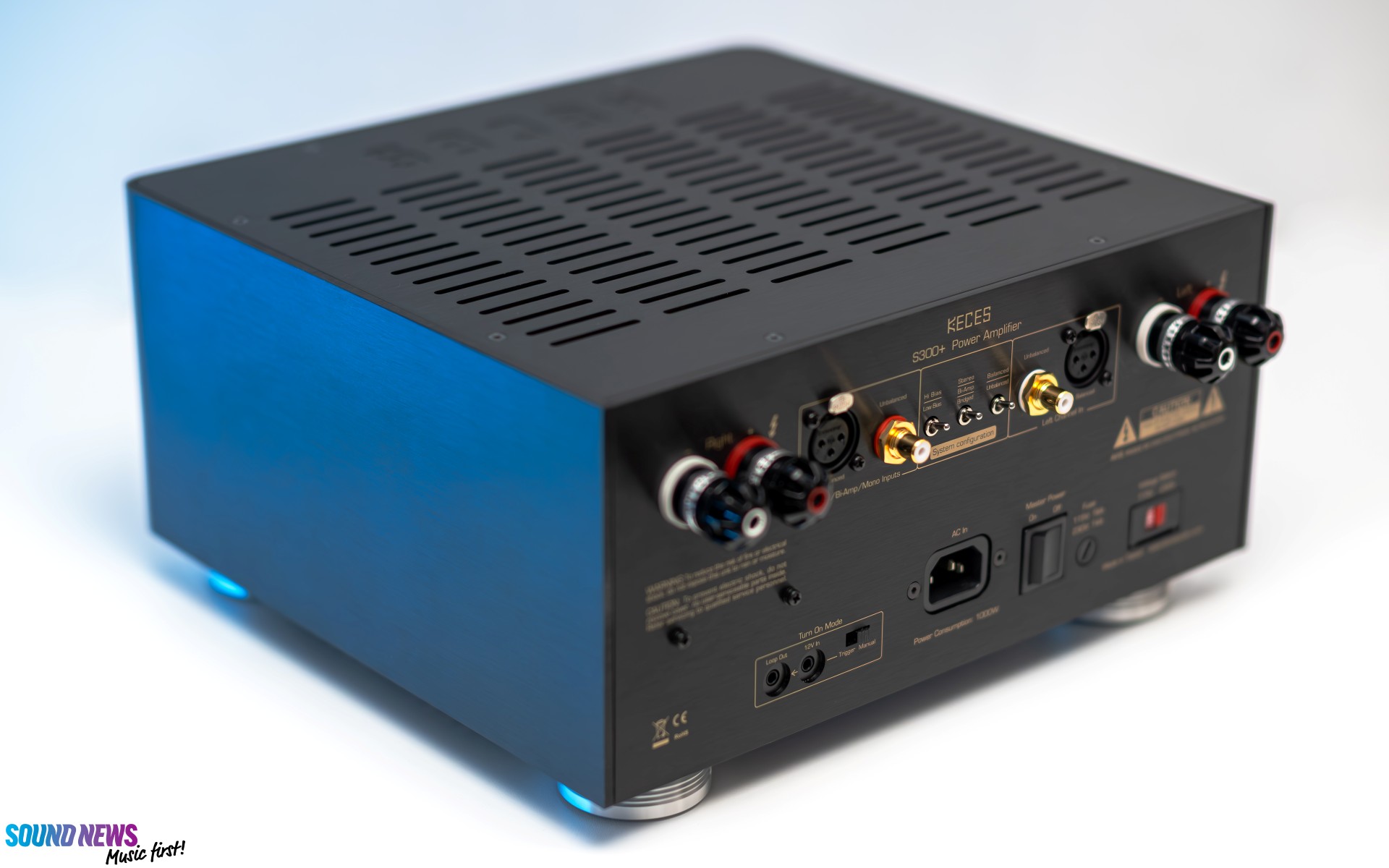
Being a dedicated power amplifier, you won’t find remote controls or volume knobs here. On the front panel, there’s only a Power On/Off button and three LEDs indicating operating status, as well as whether the amplifier is running in Low or High Bias mode. Everything else is located on the rear panel.
Around back, you’ll find the left and right speaker binding posts, a pair of unbalanced RCA and balanced XLR inputs, and several switches positioned in the center.
If you’re using a single S300, the only switch you’ll really need to worry about is the High/Low Bias selector. In High Bias mode, the amplifier delivers the first 5 watts in pure Class-A before transitioning into Class-AB. In Low Bias mode, it operates purely in Class-AB. Personally, I recommend keeping it in High Bias mode at all times. It will consume more power and dissipate more heat, but it will also sound noticeably more natural and fluid this way.
Another switch allows you to select between three operating modes: Stereo, Bi-Amp, or Bridged. The latter two configurations require two S300 units working together, either for bi-amplification duties or for bridged mono operation. You’ll also find a selector for choosing between balanced XLR and unbalanced RCA inputs.
For those who like powering up their entire Hi-Fi system at once, KECES included a 12V trigger input along with a loop output. This makes it easy to integrate additional components and control everything via a single remote control.
It’s also worth mentioning that KECES implemented lots of protection systems! We have DC Servo and relay protection circuits, AC turn-on inrush surge protection, and both overload and over-temperature protection circuits. No matter how hard you push the amplifier to its limits, it will automatically shut down, if necessary, either to cool itself down or to protect your speakers from potential damage.
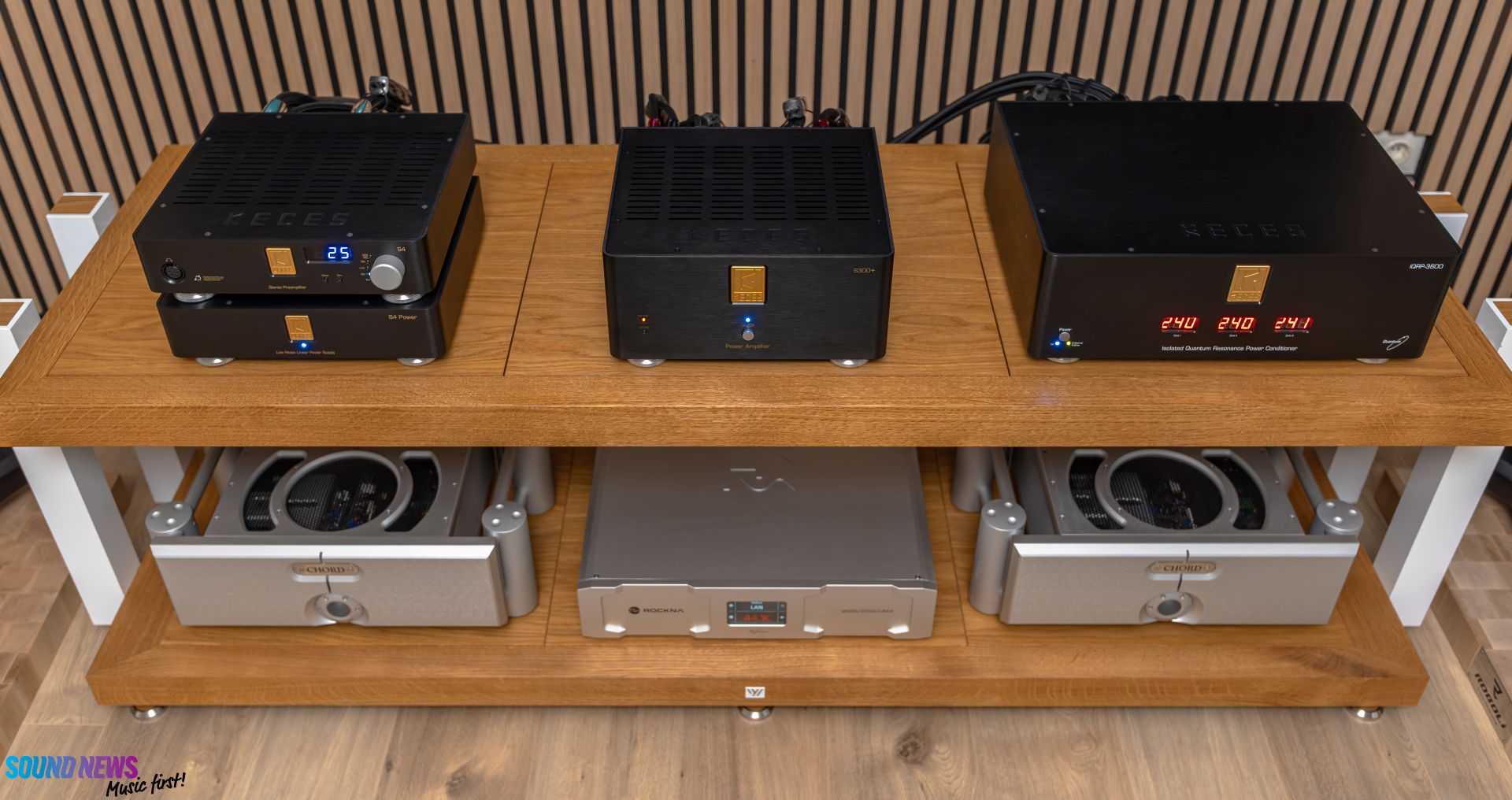
Test Equipment
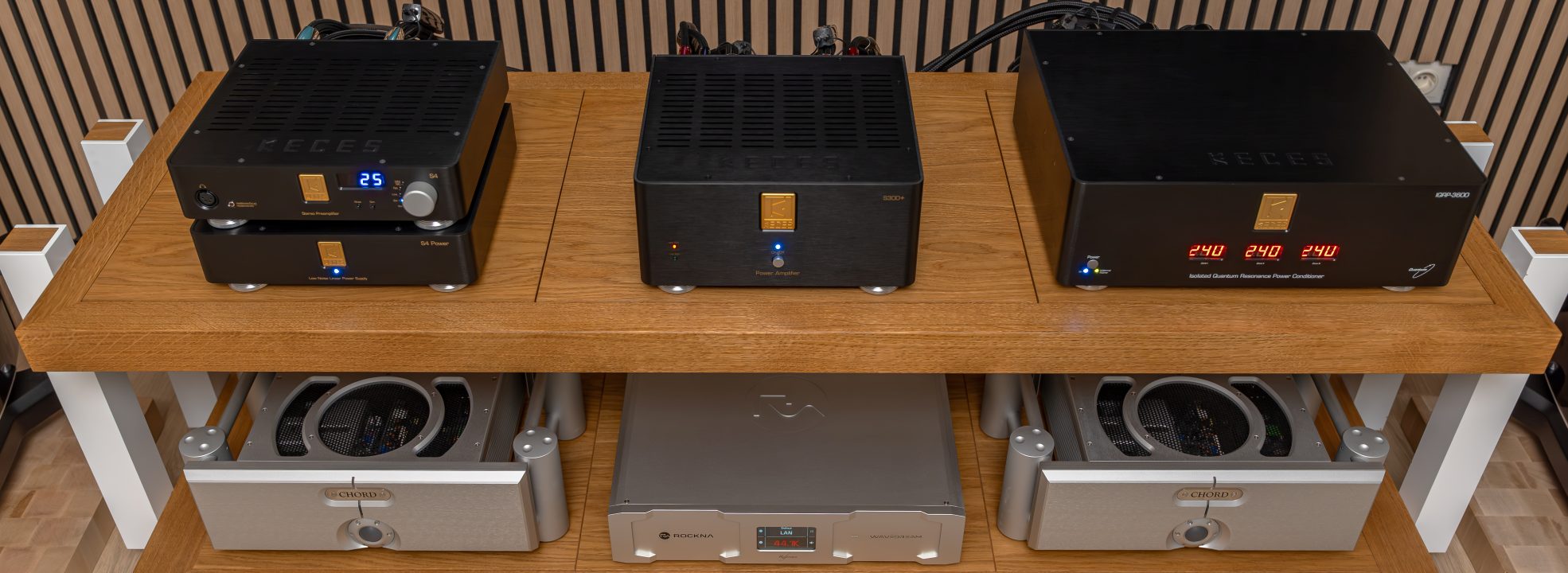
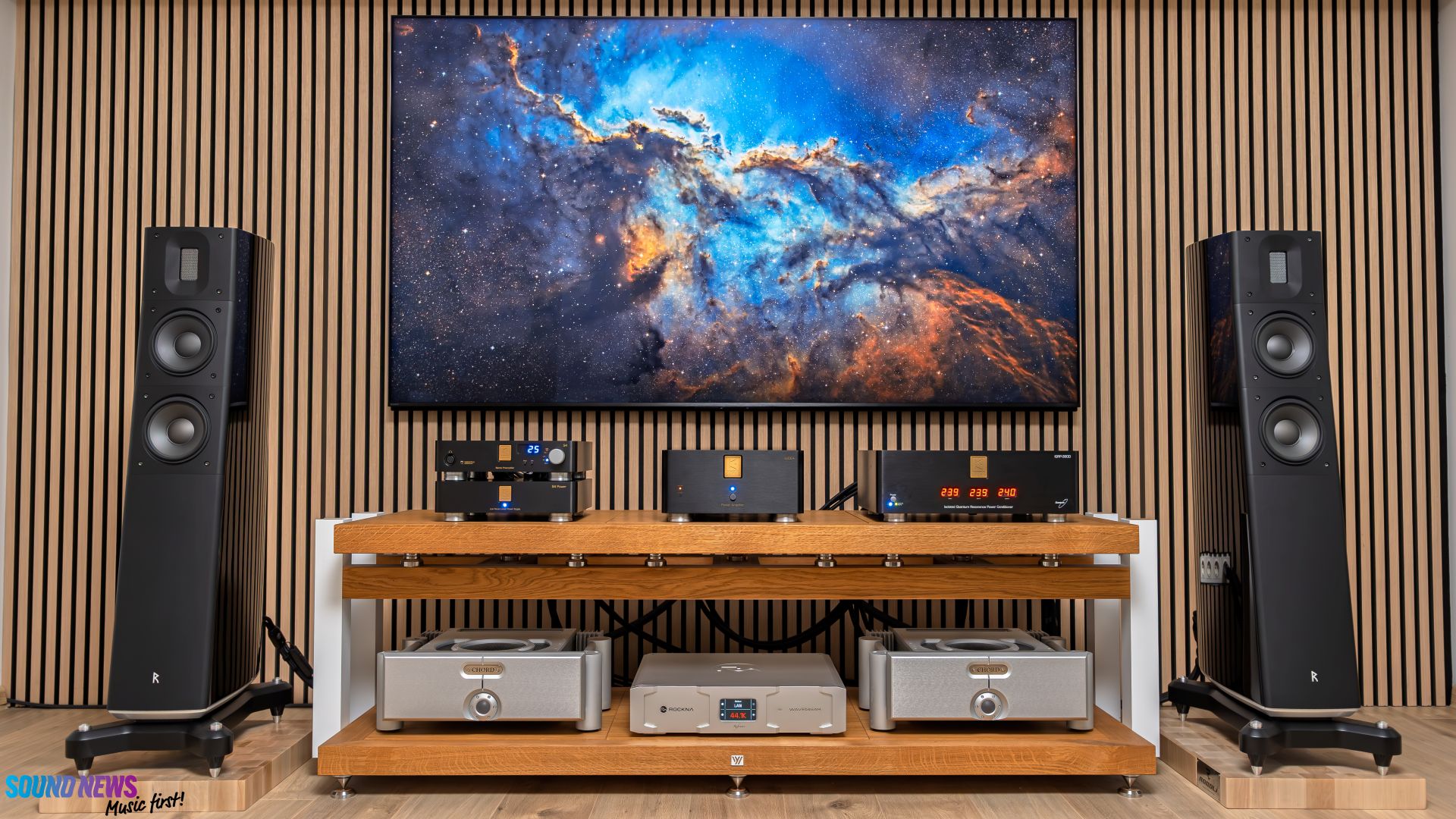
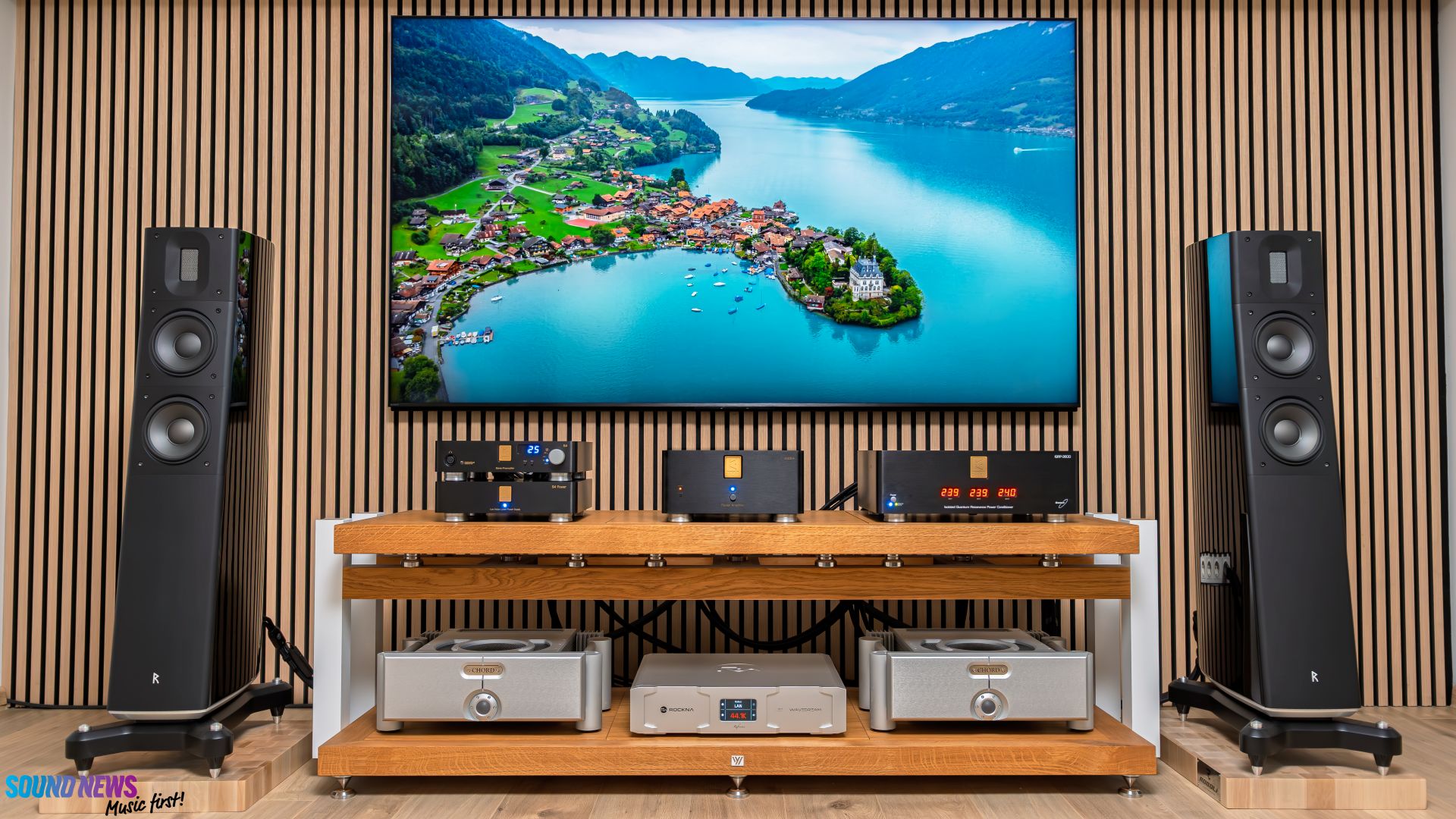
Most of you already know that I’ve been using a KECES IQRP-3600 balanced power conditioner for a while now, and I don’t intend to change it for anything else! The noise floor and dynamic range improvements were so BIG that I don’t picture my HiFi system without it on the HiFi rack. It so happens that I also own their S4 full Class-A preamplifier and headphone amplifier, and it seems that we have a family reunion, using three KECES components to write this review.
The KECES S300+ was used in my reference stereo rig, put in between the KECES S4 preamp and my Raidho TD2.2 loudspeakers. The Rockna Wavedream Reference Signature worked as a streaming DAC, and all of the cabling used was of AudioQuest Dragon breed (power, interconnect, HDMI, and speaker cables). As previously mentioned, a KECES IQRP-3600 balanced power conditioner powered everything.
All should be clear now, so what are we waiting for? Let’s hit some eardrums!
Sound Performance
I. Preliminary Impressions
Since publishing my KECES S125 and S300 reviews a couple of years ago, I’ve swapped no fewer than five pairs of speakers. While the S125 was more than enough for the sensitive Buchardt S400 and Natural Sound NS17, it was no longer able to control my next pair with an iron grip, the KEF Reference 3, which demanded higher current delivery for tighter control over their aluminum woofers.
A few years later, the Raidho TD2.2 entered the room and added layers of information that were completely absent with the Reference 3. My Hi-Fi journey is still evolving, and I have no idea where I’ll be five years from now, but at this moment I’m happy to be testing a more refined version of the S300, an amplifier I’ve appreciated for many years.
The TD2.2 uses lighter yet stiffer drivers compared to the Reference 3, and they seem to require even higher amperage to achieve true pistonic motion from their woofers. In a perfect world, I would use two S300+ units, replicating the operating principle of my Chord Ultima 3 mono amplifiers. Even so, I was genuinely surprised by how confidently a single S300+ energized my speakers, never showing signs of compressed dynamics or flabby bass delivery.
A close friend came over for a listening session, and for nearly two hours we pushed the amplifier toward its limits. But no matter how loud we went, it refused to introduce distortion in the lowest octaves or strain and glare in the upper treble. For those unfamiliar, the JFET transistors used in the input stage of the S300+ behave in ways similar to vacuum tubes. Unlike BJT transistors, which are current-controlled, JFETs are voltage-controlled, just like tubes. They exhibit soft clipping when overdriven, tend to produce dominant second-order harmonics, and follow a square-law transfer curve similar to triodes.
Interestingly, the MOSFET transistors used as current buffers are also voltage-controlled. They, too, predominantly generate even-order harmonics and clip more gracefully when pushed. Can you guess why Nelson Pass so often favors JFETs at the input stage and MOSFETs at the output stage? Because in traditional amplifier designs, this combination often yields a more organic, tube-like presentation. And you know what? That’s exactly what I’m hearing from the S300+.

When Runar by Danheim (available on Qobuz and Tidal) began playing, I made peace with myself, closed my eyes, and within seconds, my mind was transported elsewhere. The Nordic ritual chants echoed through the room, sending shivers down my spine. What begins as light-tempered and almost gentle gradually intensifies, the drums accelerate, and the voice descends into some of the lowest registers. Simple on the surface, yet astonishingly complex underneath, the track reveals the intricacies of vocal textures while the mastering subtly plays with spatial cues, throwing nuances from left to right.
By the final moments, the backing vocals were no longer emerging from my speakers, but from somewhere beyond the walls of the listening room, creating a kind of tunnel vision that lingered into silence. Perhaps the most striking aspect of this four-minute ritual is how real everything sounded. Not crystal-clear, not smooth, not punchy, not polite — just real, in the most direct sense of the word.
Feeling spiritually elevated, I naturally followed with Wardruna, Heilung, and Myrkur. Each band reinforced my initial impression: the S300+ is not only a clean, low-noise amplifier, but also an emotionally engaging one, the kind that makes you poetic the moment a keyboard is within reach.
I had just returned from a short trip through the Carpathian Mountains when, wandering the old town of Brașov, I stumbled upon a hidden music shop behind a discreet door. Inside, vinyl, CDs, and SACDs lined the shelves.
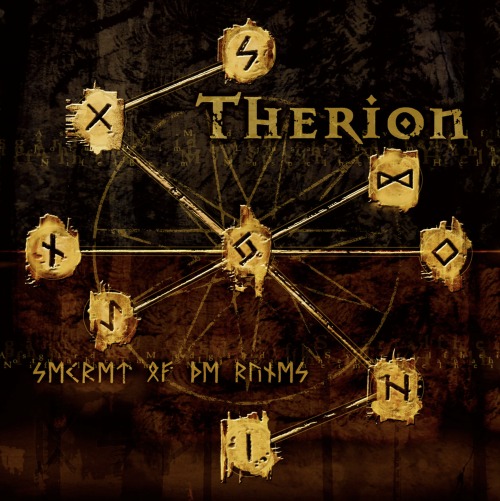
There, I found the remastered Therion – Secret of the Runes, which I immediately added to my collection. Therion is one of the few bands that taught me to appreciate grand orchestration, soaring soprano voices, and symphonic metal in its purest form. Perhaps their most complex album to date, it’s not for everyone, maybe not for the younger generation of listeners, but for me, it remains one of the finest symphonic creations ever recorded. If you’re open-minded, it’s impossible not to be carried away.
The album flows seamlessly from the opening track to the stellar final act, exploring each of the Nine Realms in vivid contrast. It concludes with the monumental title track, Secret of the Runes, a contender for Therion’s finest work. The riff is devastating, the choir reaches its peak, and the sense of ascension, the very motif of Norse mythology, becomes almost tangible.
Even with my far costlier Chord Ultima 3 monoblocks set aside, I was astonished by how naturally the S300+ preserved the music’s flow. Aggressiveness, brightness, and listening fatigue never showed their ugly faces. Instead, a dark and majestic tale unfolded for nearly an hour, conducted with such authority that it felt as if Sergiu Celibidache himself had returned to lead the big orchestra one last time.
II. Transient Response & Dynamics
Transitioning from the Kinki Studio’s EX-M7 (up to 18 Amperes output current) power amp to the KECES S125 (30 Amperes of output current) years ago, felt like the bass notes were tightening substantially, and the bass quality improved to almost unrecognizable. The sound gained additional weight and authority, and my speakers were finally no longer clipping at higher volumes. When I swapped the S125 with the S300 (45 Amperes output current), the bass went from great to fricking awesome, and once again, the sound properties improved little by little, and that time, the S300 was the undisputed champion in terms of dynamics and fun factor.
About a year later, I also tried a single and then two Benchmark AHB2 power amps, which had an amazing thump and impact down low, but there was too much residual energy coming from the treble region and sometimes too little from the midrange. AHB2s were extra-boomy to the point of shaking the walls of my listening room. I tried everything to lower the vibrations: I tried the highest-rated Artnovion bass traps (I still use them today), I tried diffusion and absorption panels of different shapes and sizes, and yet, they were still quite flabby-sounding in the bass. The interesting part is that a single S300 wasn’t flabby nor boomy sounding in a direct comparison, and the bass wasn’t touching the brakes a single bit. Its midrange bloomed with emotion, the contrast levels were going much higher, female vocals sounded sweet, seducing, and calm as they are on SET amplifiers, and for a moment, I realized it was a mistake purchasing two Benchmark AHB2.
I later realized that the much lower damping factor of the AHB2 (a DF of 350 at 20 Hz) and a lower output current of 29 Amperes (peak per channel) versus 1500 DF on the S300 with a peak current output of 45 Amperes, made it much more effortless sounding, much easier on the ear, with zero grain or listening fatigue.
In a direct comparison, the damping factor on the S300+ was raised from 1500 to 4000, and I won’t exaggerate, mentioning that the S300+ is even tighter and purer sounding. A much higher damping factor lowers the output impedance of the amplifier, and therefore, the signal becomes purer, with less resistance applied to the signal path. Audio engineers usually mention that a higher DF only tightens the sound, but in my experience, the story is more complex, as, for example, I find it ever so slightly clearer and a bit more impactful at lower volumes. Realistically speaking, upgrading from S300 to S300+ in an entry or mid-level setup, there shouldn’t be a significant different, but once you step up your game and use nicer electronics and better speakers, then you won’t need more than 5 minutes to realize that the S300+ edges its predecessor in driver control, signal purity, low level listening, noise floor and dynamics.
I hope you also checked my KECES S4 review, a 4-in-1 device that was specifically developed for the S300 and S300+. If you already started saving for a single S300+, may I suggest adding the S4 somewhere in the near future, as I feel that only with the S4 in place, I was able to hear the full potential of the S300+. Working exclusively in Class-A operation, using discrete components that draw power from a dedicated, filtered, and regulated power supply, S4 gives a massive helping hand, especially in regards to soundstage, 3D effects, and tonal density. I own quite an expensive preamplifier, but after swapping it with the KECES S4, it was obvious that besides being resolving and transparent to its core, the S4 also added some additional organic matter into the room, a bit more than the Chord Ultima PRE, while remaining as punchy and impactful in the lowest octaves. The S4, like the Ultima PRE before it, added a bit of soul and warmth to my tunes; a bit of sweetness could also be felt in the air, as if I had switched from a tiny Class-D amplifier to a fully discrete Class-A monster. With the KECES S4 in place, the music became weighty, the bass and midrange were now playful, more so than the treble, and it scared away all of the listening fatigue with its smooth and easy-going character.
III. Resolution & Transparency
Once you pop up its hood and take a look inside, you’ll quickly realize that the S300+ is incredibly simple on the inside, and that’s a good thing. In traditional amplifier design, the simplest and shortest signal path will always yield a cleaner and purer sound. And that’s certainly what I’m looking at right now. Just take a look at how neatly everything is arranged in such a cramped space. Two massive heatsinks, a couple of transistors bolted to them, a big 1200VA toroid sits in the middle surrounded by a substantial filtering stage…and that’s pretty much it! All of the protection systems are mounted on a tiny daughter board, and in truth, it does look pretty simplistic on the inside, which can only suggest a short signal path that won’t interfere that much.
Lacking op-amps, capacitors, and inductors in its signal path makes it transparent-sounding and as close as possible to the source material. There wasn’t a moment when I felt that something was missing from the music I knew for a lifetime. S300+ was able to push forward lots of micro details and tiny nuances, without forcing me to close my eyes for a better focus. In this regard, S300+ surpassed all of my former integrated and power amplifiers, except for the Chord Ultima lineup, which is considerably more expensive and undeniably cleaner-sounding as well.
Like its older sibling, the S300+ is a direct-coupled amplifier, so except for the JFETs sitting at the input stage and MOSFETs at its current buffer stage, nothing will alter its voicing and sound signature. If you care about sound’s transparency and detail retrieval, then direct coupled amplifiers should be on your shopping list. I’ve again compared several amplifiers I still had around just to arrive at a conclusion that S300+ sounded more revealing than the LAiV GaNM mono amplifiers I tested last year and more or less on the same level with the Burson Timekeeper Voyager, selling for $4,999 if you opt for the Standard Package or $5,999 if you go for the MAX Package.
If we have a look at the KECES S4, it also follows the same working principle: short signal path with few components laid bare on the signal path. The biggest fear I had while exchanging the Ultima PRE with the S4 was that the super-resolving sound of my system would be no more, and some tiny details would be lost in transit. A preamplifier improves several aspects, but it can also add noise and distortion into the mix, and that’s the last thing you want in your HiFi system. A few seconds later, my face brightened as everything appeared in a crystal-clear manner. A gin-tonic and a few albums later, the S4 still appeared open-sounding, but without becoming clinical or boring.
Knowing that the TD2.2 sounded as smooth and relaxing as they did with my own preamplifier made me realize how much more interesting the S4 becomes, especially considering the extra features it provides and its (MUCH) lower price point.

Soen just released a new album that has already climbed the charts across multiple streaming platforms. Reliance (available on Qobuz and Tidal) once again paints Soen as a gritty, emotionally charged rock band with enough raw energy to threaten your woofers and enough fine detail to carve out a distinct place in the hearts of rock and metal devotees. There’s muscle here, but also finesse. The band’s energy soars throughout most of the album, only to ease off the throttle and invite introspection on tracks like Indifferent and Vellichor. The latter feels slightly awkward in its nostalgic lean toward a more progressive assault, even as the guitar weeps against a sonorous, almost cinematic backdrop. And yet, that very contrast is what makes it memorable. Alongside slower, larger-than-life moments such as Huntress, it gives Reliance real replay value. These tracks breathe differently, offering emotional weight instead of sheer impact. The mixing and mastering are commendable. There’s clarity and separation, and while the lowest octaves don’t slam quite as brutally as I would have liked, the overall production leans warmer and more expressive this time around. It feels deliberate, controlled, perhaps even mature. The album doesn’t try to win you over with sheer loudness; instead, it unfolds with a kind of confident restraint. Yes, there are moments where things get slightly congested and dynamically compressed, but the sound never slips into monotony. Soen’s genius lies in their ability to take a mountain of musical complexity and compress it into something that feels deceptively simple, like shrinking Everest into a molehill without losing its gravity. That balance between density and accessibility is what keeps you coming back.
And naturally, the question had to be asked: can the little S300+ rock and roll and send those horns high into the sky? Abso-fricking-lutely!
IV. Soundstage & Stereo Imaging
When it comes to soundstage and imaging, the first word that comes to mind with the KECES S300+ is “honesty”. This isn’t one of those amplifiers that stretches the stage sideways just to wow you in the first five minutes. It doesn’t inflate the presentation like a wide-angle lens on a camera. Instead, it builds an acoustic space that feels correctly scaled, anchored firmly to the recording itself.
In terms of width, the S300+ allows the stage to expand naturally beyond the outer edges of the speakers, but only when the recording actually contains that information. There’s no artificial lateral stretching through phase trickery or upper-mid emphasis. The presentation feels open and unconstrained, yet grounded in reality. With well-recorded live albums, ambient cues drift outward effortlessly, giving you a convincing sense of venue size without sounding hyped or exaggerated.
Depth is where things become more interesting. The S300+ constructs a beautifully layered presentation, with clear front-to-back separation. Lead vocals and primary instruments stand confidently at the front, while supporting elements line up behind them in neat, organized tiers. On orchestral recordings, you can almost point at the different sections. Even complex, densely layered mixes retain their spatial structure when things get busy. Importantly, dynamic swings don’t cause the stage to flatten, even when you push the volume a little higher. The image remains stable, and the space stays intact.
Stereo imaging is another highlight. Center vocals lock into position with laser precision, no wandering, no smearing into the sides. Instruments feel placed, not vaguely suggested. They occupy specific coordinates rather than floating loosely between the speakers. This precision is helped by the amplifier’s very low noise floor. Silence between notes is genuinely silent, allowing micro-details and delicate decays to emerge more clearly.
Then there’s image density, something many amplifiers get wrong. The S300+ doesn’t draw thin outlines around instruments; it gives them body and mass. A guitar doesn’t appear as a flat cardboard cutout but as a three-dimensional object existing in space. Drum hits have both impact and air around them, and cymbals shimmer upward with a natural, unforced decay. Height information is reproduced convincingly, adding vertical dimension without spotlighting or artificial emphasis.
Composure might be the amplifier’s secret weapon. Even at higher playback levels, the soundstage refuses to collapse. Images don’t smear when more current is demanded. The center focus remains solid, edges stay defined, and the overall presentation keeps its structural integrity. Phase coherence appears well preserved, contributing to a continuous, cohesive sound field rather than a fragmented one.
I can’t help but imagine that the three-dimensional effect would grow even more impressive with two S300+ units running in bridged mono mode. If you’re after a grander, more authoritative scale, few things outperform a proper dual-mono setup.
Overall, the KECES S300+ delivers a wide, well-layered, and proportionally accurate soundstage with precise imaging and strong spatial definition. It doesn’t romanticize the presentation with added bloom, nor does it sharpen outlines for analytical drama. Instead, it lays down a clean, stable foundation and lets the recording and your loudspeakers define the space. The result is expansive yet controlled, spacious yet grounded, with instruments clearly separated, naturally scaled, and firmly anchored against a deep, black background.
V. Noise Floor
The S300+ is receiving a ton of help in repelling mains-borne noise in my system. The first layer of defense comes from the higher-grade power cables, which provide better shielding, lower contact resistance, and improved grounding integrity. The second line of support is the Rockna Wavedream Reference Signature, especially after switching to its internal streamer, which eliminates potential packet timing irregularities and minimizes interface-related jitter before the signal even reaches the DAC stage. That already removes one common entry point for high-frequency noise and ground contamination.
The final and most important line of defense, however, comes from none other than the S300+ itself. Its internal DC servo circuits continuously monitor and correct DC offset at the output stage, preventing low-frequency drift and keeping the signal centered without inserting coupling capacitors in the signal path. In conjunction with a carefully implemented global negative feedback network, the amplifier maintains low distortion figures and a very low residual noise floor across the audible band. After testing three different power amplifiers, the S300+ emerged dead silent with absolutely zero audible noise coming from my speaker’s woofers.
The S300+ also incorporates AC turn-on inrush current limiting, overload protection, and over-temperature protection. While these are primarily safety features, they also stabilize operating conditions and protect downstream components from voltage spikes or thermal stress. The oversized toroidal transformer, combined with substantial reservoir capacitance and proper rail regulation, ensures stable voltage delivery under load. All of that contributes to a quieter electrical environment, so in a way, it behaves like a well-disciplined power conditioner with its own built-in filtering and control mechanisms.
I compared the S300+, the LAiV GaNM, and Burson’s Timekeeper GT3 in identical conditions, and among them, the S300+ proved the most effective at suppressing noise. It was consistently dead silent in my listening room. I approached the speakers, pushed the volume close to maximum, and still nothing came out of them. No hiss, no hum, no transformer buzz. There is nothing I dislike more in my music than a muddy presentation caused by elevated distortion or a raised noise floor. Luckily, the S300+ is neither of those. As of right now, it remains among the cleanest-sounding power amplifiers I’ve tested in my own environment.
But this result doesn’t surprise me. After all, KECES is well known for building high-quality, well-shielded toroidal transformers with excellent isolation and low mechanical vibration. The transformer is the heart of any linear power supply, and its design directly influences ripple rejection, electromagnetic leakage, and overall system stability. A higher-grade transformer, paired with proper rectification and filtering stages, will inherently defend better against external interference and internal noise propagation. I’m glad to report that in this regard, the S300+ once again achieved a flawless victory.
My Conclusion
It becomes clear that the S300+ isn’t a revolution, but more like a natural evolution of things. Living with it for an extended period made one thing abundantly clear. It’s not an amplifier chasing headlines with exaggerated numbers; instead, it’s chasing refinement. And refinement, in high-end audio, is the hardest thing to achieve and the easiest thing to underestimate.
On paper, the S300+ looks like a serious machine. A 1200VA balanced toroidal transformer, 45 Amperes of peak current per channel, improved internal wiring, upgraded WBT terminals, and a damping factor raised to 4000. Those are not small updates. But none of these specs alone tells you what truly changed.
Compared to the original S300, the “+” version feels more disciplined, more controlled, and slightly more transparent. Bass notes start and stop with greater precision. Low-level listening becomes more articulate and engaging. Micro-details emerge from a darker background. The sound doesn’t just feel tighter, it feels purer as well. That higher damping factor is not only about grip over woofers; it’s about reducing output impedance to a point where the signal encounters less resistance on its way to the speakers. The result is clarity without edge and authority without aggression.
What impressed me most was how the S300+ balances control with musicality. The JFET input stage and MOSFET output stage combination gives it a subtle organic quality, reminiscent of well-designed tube amplifiers, yet it retains the speed, slam, and composure of a serious solid-state design. It never sounded sterile, mechanical, or emotionally detached. At the same time, it avoids romantic coloration. It doesn’t sweeten the truth; it simply presents it as it is.
In my system, driving the Raidho TD2.2, it never once felt underpowered. Even in stereo mode, a single unit energized my speakers with confidence, scale, and authority. Dynamics remained explosive when needed, yet perfectly controlled. The soundstage stayed intact at higher volumes, imaging remained locked in place, and the noise floor was practically non-existent. Silence truly meant silence with this one.
At $4000 / 4000 EUR, the S300+ is no longer a giant killer. It doesn’t need that story anymore. It competes in a serious league and does so on technical merit and sonic maturity. It stands comfortably next to amplifiers from brands with far longer histories, and in some areas, it genuinely surpasses them.
If you are upgrading from the S300 in a modest setup, the differences might seem subtle at first. But in a resolving system with capable loudspeakers and proper upstream components, the improvements become obvious within minutes. The S300+ is cleaner, tighter, purer, and slightly more engaging. It edges closer to that invisible amplifier ideal I keep talking about.
In the end, the KECES S300+ is not about brute force. It is about control, composure, and refinement. It is about letting the music breathe freely without interference. And for me, that is the true definition of high-end amplification.

Considering everything discussed above, awarding it our Highly Impressive Award feels not only justified but inevitable. The S300+ represents a meaningful step forward for KECES, and I’m genuinely excited to see where their engineering journey leads next.
Priced at €4000 in Europe and $4000 in the USA, the S300+ stands as a serious contender in its class. If it sounds like the right fit for your system, you can audition or purchase one or go all the way with a dual-mono pair through your local KECES distributor.
PROS:
- Minimalist aesthetics with a clean, industrial design that feels purposeful rather than flashy
- Compact footprint, integrates beautifully even on TV benches or tighter furniture spaces
- Comprehensive protection circuitry to safeguard both amplifier and speakers in case of overload or power spikes
- Massive current delivery with exceptional driver control
- Plenty of raw power on tap, easily capable of driving demanding speakers
- Among the most explosive and lifelike dynamics I’ve experienced in my own system
- Airy, expansive, and deeply layered presentation with the right recordings, impressive stage width, and depth
- Exceptionally clean performance, remaining dead silent even when pushed hard
- Highly detailed and transparent, capable of revealing the smallest nuances in familiar tracks
- Authoritative, impactful, and effortlessly powerful when the music calls for it
- Excellent pinpoint imaging and spatial precision, convincingly three-dimensional
- Extended and linear frequency response at both extremes
- Outstanding bass grip and midrange presence
- Beautiful tonal balance: organic and natural, yet technically precise
- If you’re chasing top-tier performance without drilling a hole in your pocket, this amplifier just might be the one.
CONS:
- Runs quite hot after extended use. Allow proper ventilation and avoid stacking components on or beneath it
- Works best with the dedicated KECES S4 preamplifier. If you’re saving for the S300+, consider doubling the budget and incorporating both units into your system.
ASSOCIATED EQUIPMENT:
- HiFi Racks: WoodYard Suspended Triple & Baby Modular
- CD/SACD Transport: Onix XST20
- Network Switch: Ansuz PowerSwitch D3
- DAC & Wired Streamer: Rockna Wavedream Reference Signature
- Preamplifiers: KECES S4, Chord Electronics Ultima PRE
- Power Amplifiers: KECES S300+, Chord Electronics Ultima 3 mono (X2)
- Headphone Amplifiers: Feliks ENVY Susvara Edition, Audiobyte SuperHEAD
- Loudspeakers: Raidho TD 2.2
- Headphones: HiFiMan Susvara OG, Susvara Unveiled, T+A Solitaire P, Bandoss Avija, Sennheiser HD800S & many more
- IEMs: FiiO FX17, HiBy Zeta 2
- Interconnects: AudioQuest Dragon XLR (X2)
- Speaker cables: AudioQuest Dragon 2.0m
- Power Cables: AudioQuest Dragon Source (X2), AudioQuest Dragon High Current (X2), Roboli Stars C19 (X2)
- Ethernet Cable: Crystal Cable Da Vinci
- HDMI Cable (I2S): AudioQuest Dragon
- Balanced Isolation Power Conditioner: KECES IQRP-3600