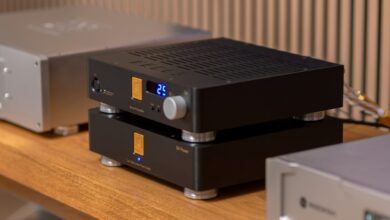
Aesthetix Calypso & Atlas Eclipse – let your mind create, and your soul breathe

What Duke Ellington Knew
There is a story — not a legend, not a myth — that Duke Ellington refused to have his piano tuned to perfection. Not out of negligence or indifference, and most certainly not for a lack of resources. He made this choice with the quiet, stubborn deliberateness of a man who knew something most technicians and theorists did not. The perfectly tuned piano, in his world, was a liability. His harmonics required friction. His improvisations needed tiny, almost invisible imperfections against which they could press, push, and respond. The perfectly calibrated instrument was, for Ellington, a sterile instrument, something manicured into submission, polished of all its character. He needed a small fault in the fabric, a hairline crack through which the music could breathe.
I have thought about this story many times when confronted with the central paradox of high-end audio reproduction. We spend enormous sums of money and countless hours in pursuit of perfection, lower distortion figures, flatter frequency response curves, tighter channel matching, and blacker noise floors. We chase measurably perfect amplification as if it were a holy grail. And yet the music that moves us most, that plants itself in our ribcage and refuses to leave, was made by flawed human beings playing imperfect instruments in rooms shaped by chance, recorded by microphones that color what they capture. Perfection is absent from every step of the creative process. Why should it suddenly become desirable at the final one?
There is a phenomenon known to almost anyone who has attended live concerts and also owns a serious home system. If you stand at the back of a concert hall, halfway to the exit, slightly angled away from the stage, the music can sound almost impossibly real. The blend of direct and reflected sound, the gentle decay of reverb, the slight softening of the uppermost frequencies, all of it conspires to create something organic and true and complete. As you walk closer, as you sit directly in front of the system and press your attention harder against it, the magic begins to dissolve. You hear more. More detail, more separation, more information. And paradoxically, the music sounds less like itself. Proximity to perfection has betrayed you. Please run an experiment: try listening to a violin from the other room with the door halfway open. There is a strong chance of hearing a real violin being played in the other room. A musical event, so inconspicuously real. Then, move closer to the real system playing, closer, closer, getting in front of the system. As you progress to the source of the sound, the magic will disappear in most cases. The lifelike feeling, the recreation of the recording, happened mostly in our brains, and getting closer to an immaculate system will only destroy the tapestry of reality created in our heads. It is very rare for the magic to persist or be enhanced. Because all those traits that we search so frantically, all those microdetails, and the immaculate perfection will not exist in reality, or they are not even close to being so obvious. In reality, all those details are just part of the background, mostly ruled out by our brains. Bringing all this to the fore will completely destroy the dream, tear apart the illusion, and rupture the fabric of imagination.
This is the argument for tubes. Not a sentimental argument, not an argument built on nostalgia or a refusal to engage with modern technology. A deeply practical argument about the nature of human perception and the character of musical truth. Tubes introduce even-order harmonic distortion, subtle, mathematically natural overtones that shadow the fundamental tones like a good reverb shadows a voice. These are not corruptions of the signal. They are the signal deepened, given a third dimension, turned from a two-dimensional image into something you can reach out and touch. They make the reproduction sound less like a measurement and more like a musical event. They are Ellington’s imperfect piano. They are what allows the magic to survive the journey from the concert hall to the living room.
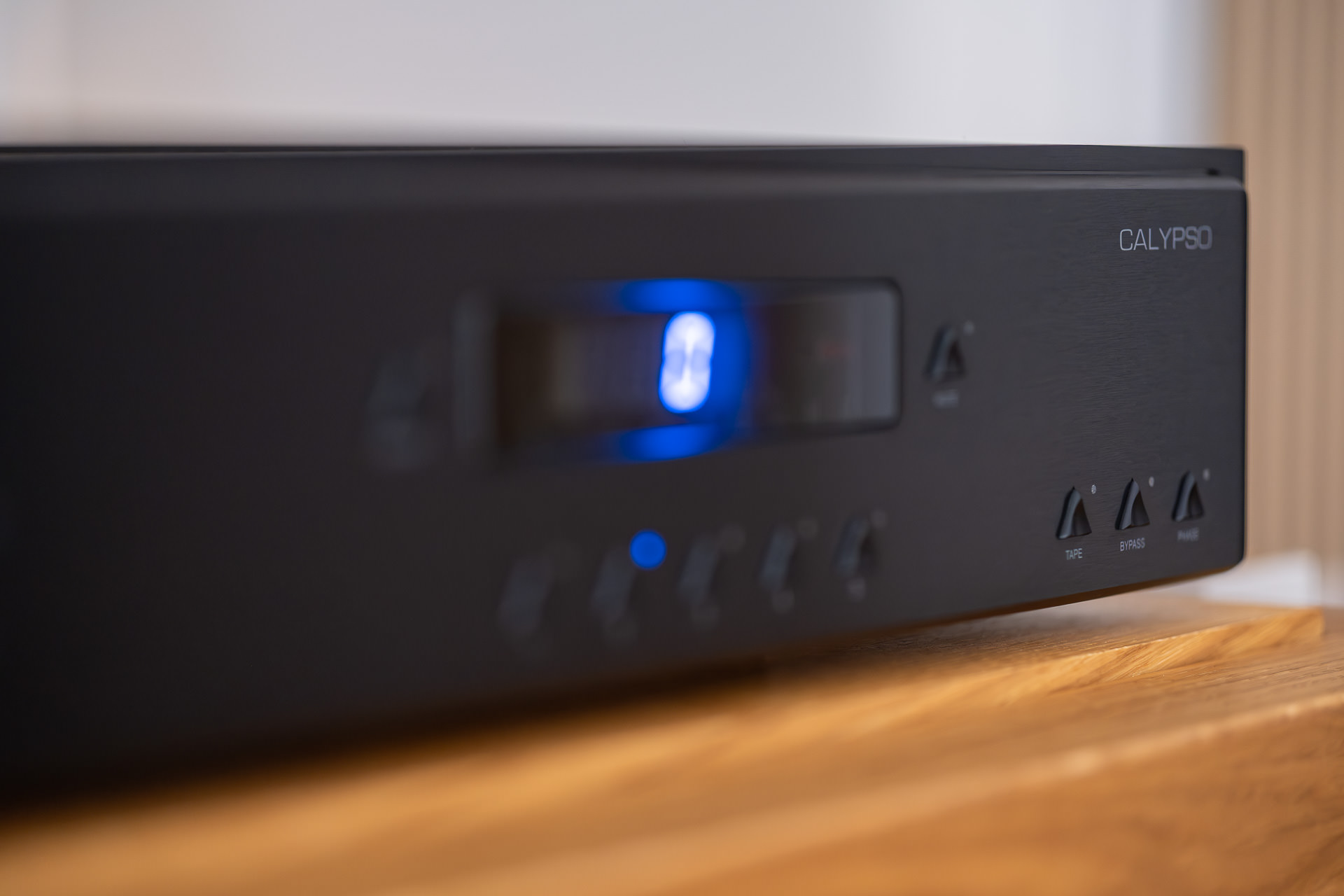
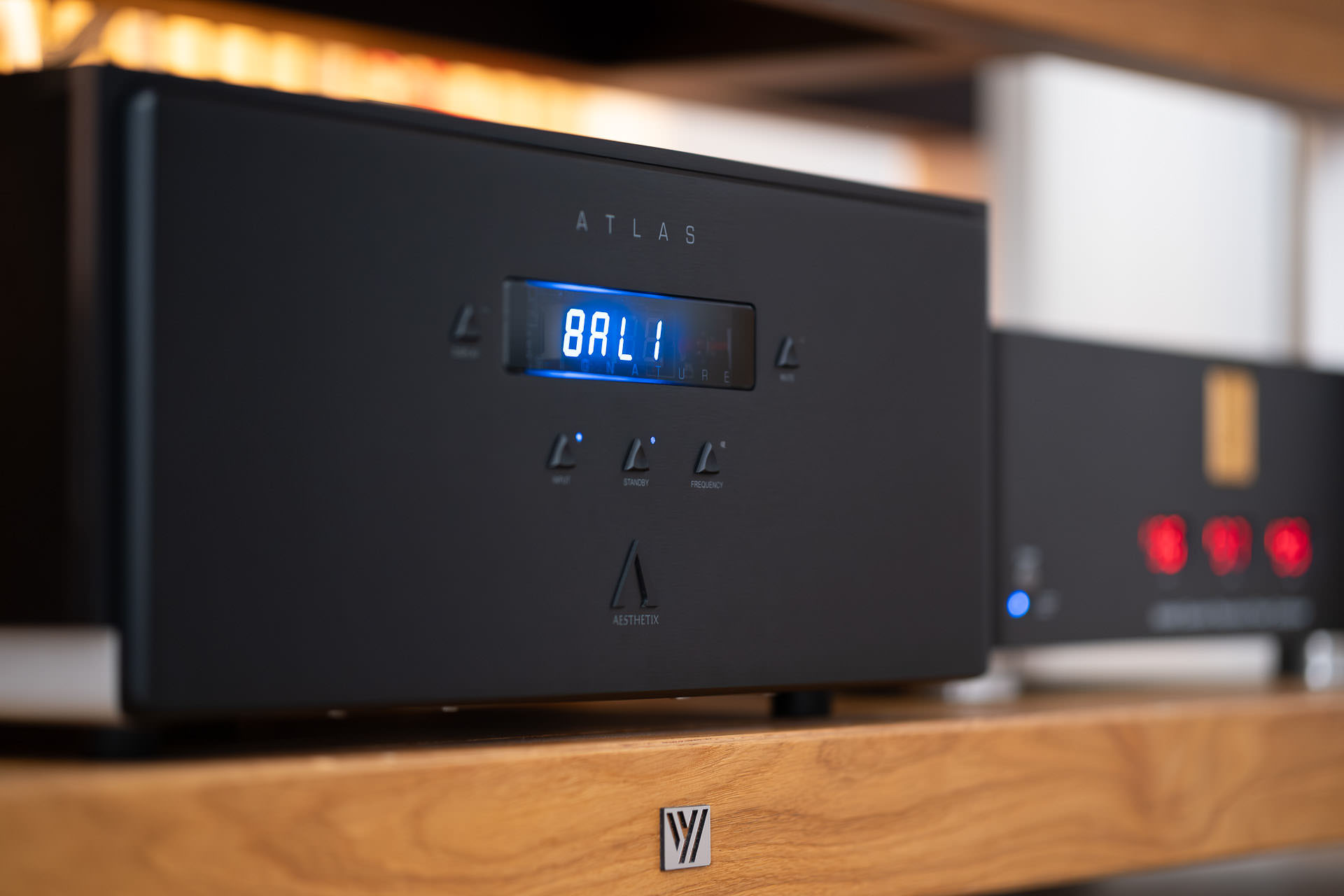
The Aesthetix Calypso preamplifier and Atlas power amplifier understand this deeply. They are not products that hide from the tube argument or hedge it with apologies. They embrace it, engineer around it, and then take it somewhere extraordinary. The Calypso is fully tube, with no silicon in the signal path from input to output. The Atlas is a brilliant hybrid, with a tube gain stage and a single 6SN7 octal triode per channel that governs all voltage amplification, while bipolar transistor stages handle current delivery. The result is a machine that carries the warmth, the harmonic bloom, and the luminous presence of the best tube amplification, anchored by the grip and authority of solid-state power. Ellington, one suspects, would have approved.
Jim White — Three Decades of Inspired Obsession
There are people who design audio equipment, and there are people for whom audio equipment is merely the language through which they communicate something deeper, a relationship with music so personal and so consuming that it demands physical expression. Jim White, founder, chief designer, and animating spirit of Aesthetix, belongs unambiguously to the second category.
Jim White grew up in a music-loving family. He was attending concerts by the age of ten and reading hi-fi magazines with the devotion of a young scholar by thirteen. He pursued advanced studies in physics, mathematics, and electrical engineering, and in 1990 joined Theta Digital, where his contributions to the Casablanca and Dreadnaught designs earned him a formidable reputation in the high-end community. But his true passion was analog, specifically, reproducing vinyl through vacuum tubes. In 1993, working in his garage with the patient intensity of a craftsman who cares little for reasonable hours or conventional ambition, White began building a massive tube phono stage. Audiophile friends who heard it urged him to build more. Aesthetix was born.
The company’s earliest products, the Io phono stage and Callisto linestage, forming what became known as the Jupiter Series, rapidly established Aesthetix as one of the most important names in high-end tube electronics. These were not timid products. They were large, elaborate, expensive, and they sounded extraordinary. Their design logic was rooted in the conviction that tubes, properly implemented with no compromises in the power supply, no corners cut in component selection, and no concessions to the pressure of shrinking a circuit beyond its optimal size, could offer a musical experience that no solid-state equivalent had yet equaled.
In 2002, in response to the desire to bring the Aesthetix philosophy to a wider audience without diluting it, Jim White introduced the Saturn Series, a range of components that share the same fundamental design principles as the Jupiter products but in more accessible packages. The Calypso linestage, Rhea phono stage, and Janus full-function preamplifier followed, and in 2007, the Atlas power amplifier, a hybrid design that remains unique in the marketplace, completed the lineup. Additional digital components, the Pandora DAC and Romulus DAC/CD player, have since further extended the Saturn range. More recently, the Aesthetix portfolio has grown with the Mimas integrated amplifier (our friends and glorious contributors, Hurba Brothers, here at Sound News, took Mimas integrated through a very deep evaluation here), which earned both Product of the Year and Golden Ear distinctions from The Absolute Sound, and the newer Dione and Pallene designs that represent the next step in the company’s evolution.
In December 2025, Jim White received one of the highest honors available in the world of high-end audio: induction into The Absolute Sound High End Audio Hall of Fame. The magazine, which inducts three outstanding individuals each year — those whose contributions have been so significant that today’s high-end audio industry would be unimaginable without them — recognized Jim White as bold, brilliant, and refreshingly original. It is a recognition that surprised no one who has spent time with Aesthetix products or, more revealingly, in conversation with the man himself.
I had the enormous privilege of getting very detailed answers from Jim White in a conversation that became one of the most memorable exchanges I have had in this pursuit. You can read the full interview at SoundNews — “Interview with Jim White, designer, engineer, and head of Aesthetix” — and I urge you to do so. What you will find there is a man of extraordinary intellectual curiosity and genuine modesty, who speaks about harmonic accuracy and the emotional purpose of music with the same fluency and passion, who has clearly never stopped listening or learning, and whose warmth and generosity of spirit are as evident as his engineering brilliance. These are the people who make this hobby worth pursuing. Meeting them is its own reward.
The Saturn Series — A Galaxy with Calypso at Its Heart
The Aesthetix product universe is organized around two constellations: the Jupiter Series at the summit — the flagship Io phono stage and Callisto linestage, cost-no-object expressions of what all-tube design can accomplish — and the Saturn Series below it, which is not a compromise but a translation. The Saturn components are designed to deliver the core of the Aesthetix philosophy in more practical, more accessible, and arguably more real-world-compatible packages. They share Jupiter’s DNA without trying to replicate its every extravagance. The Saturn name is perfectly chosen. Saturn is a planet of tremendous beauty and power, the second largest in our solar system, unquestionably spectacular — and yet it is not Jupiter.
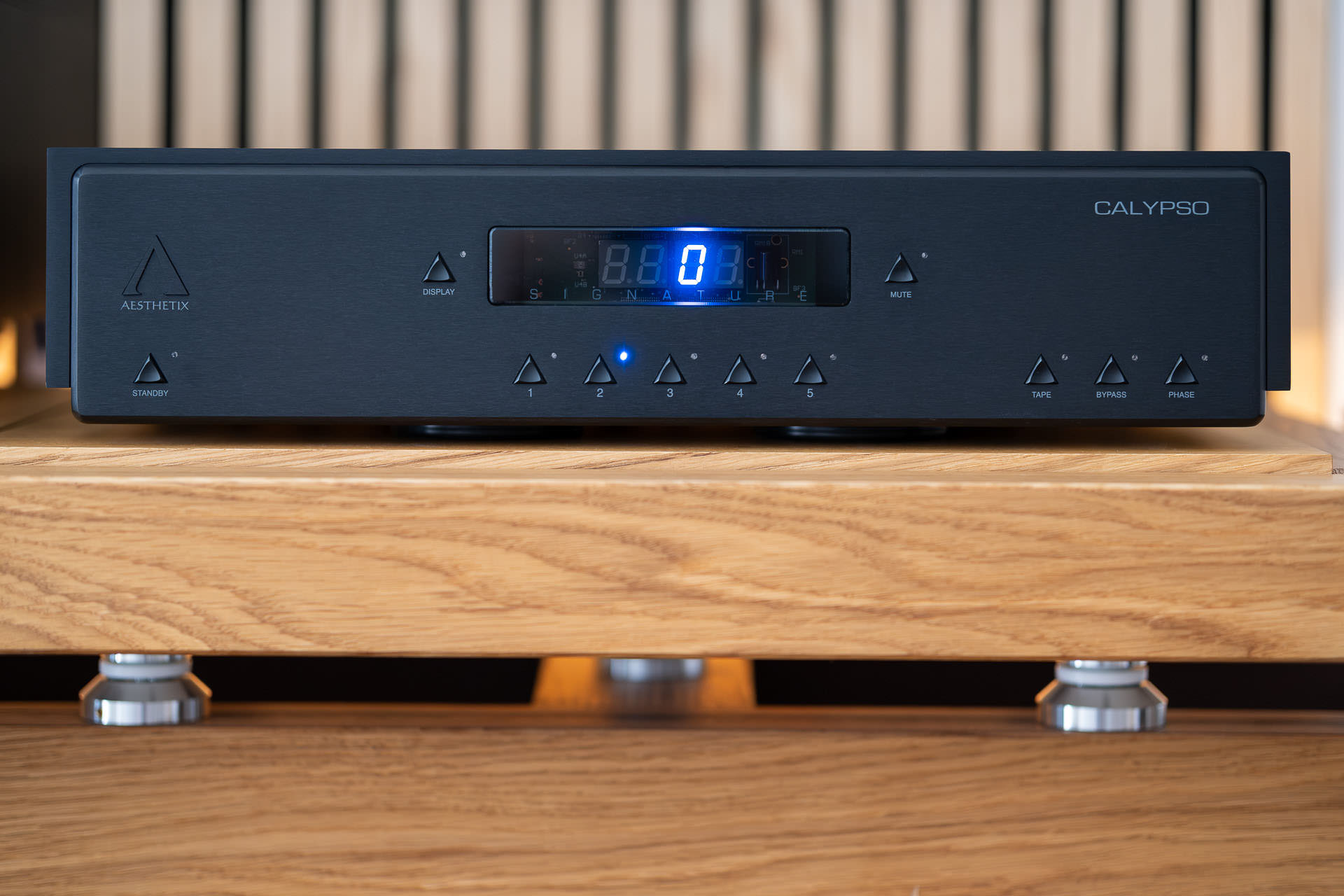
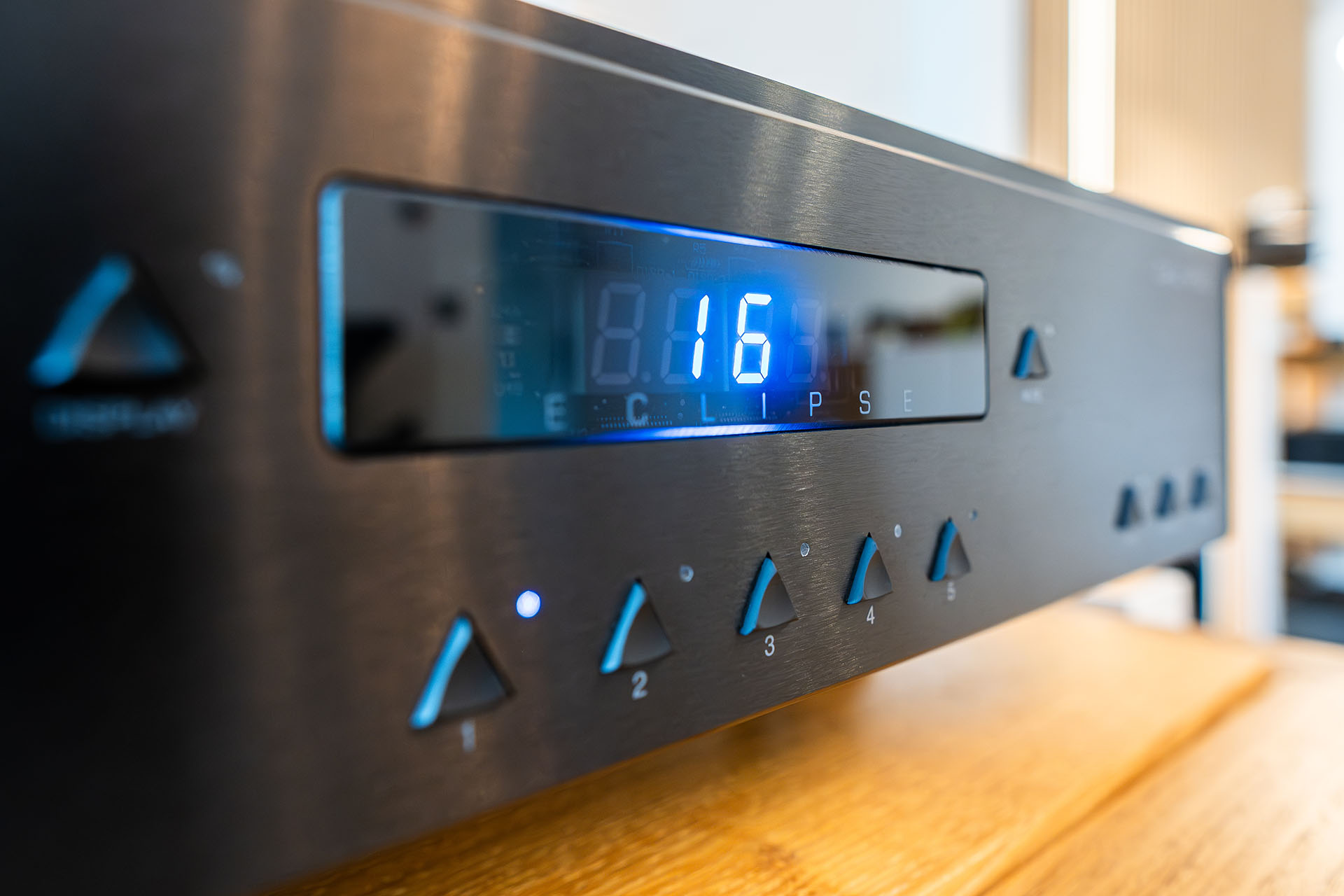
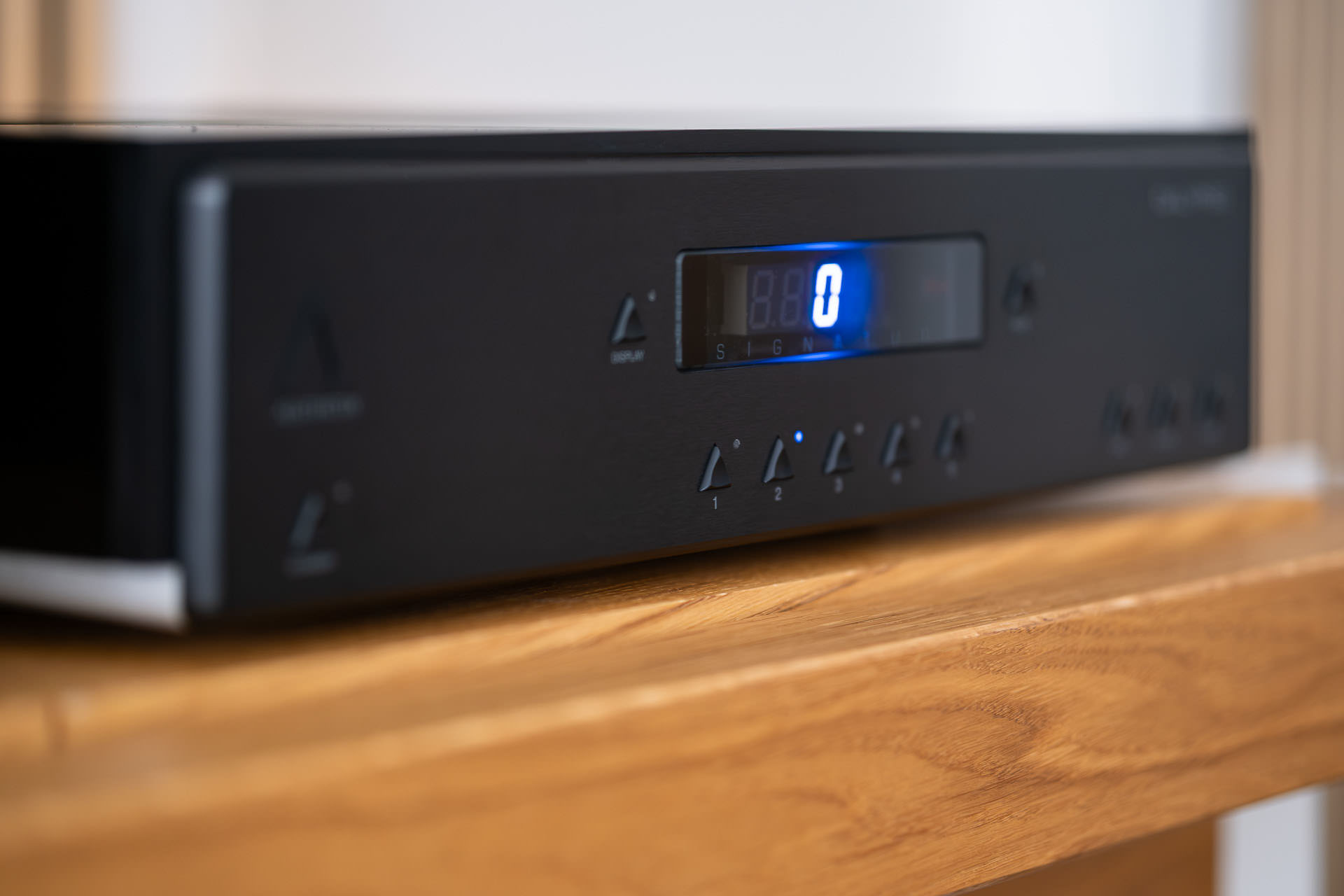
Within the Saturn range, the full lineup includes the Calypso all-tube linestage, the Rhea phono stage, the Janus full-function preamplifier, the Atlas power amplifier, the Romulus DAC and CD player, and the Pandora DAC. Each component is available in multiple configurations, and the design language across the range is unified: brushed anodized aluminum chassis, the same front-panel aesthetic, and the same full-function remote control capable of operating all Saturn components simultaneously. Blue LEDs and the display ensure the lowest possible noise from the front panel, and both single-ended and balanced connections are provided throughout for maximum flexibility.
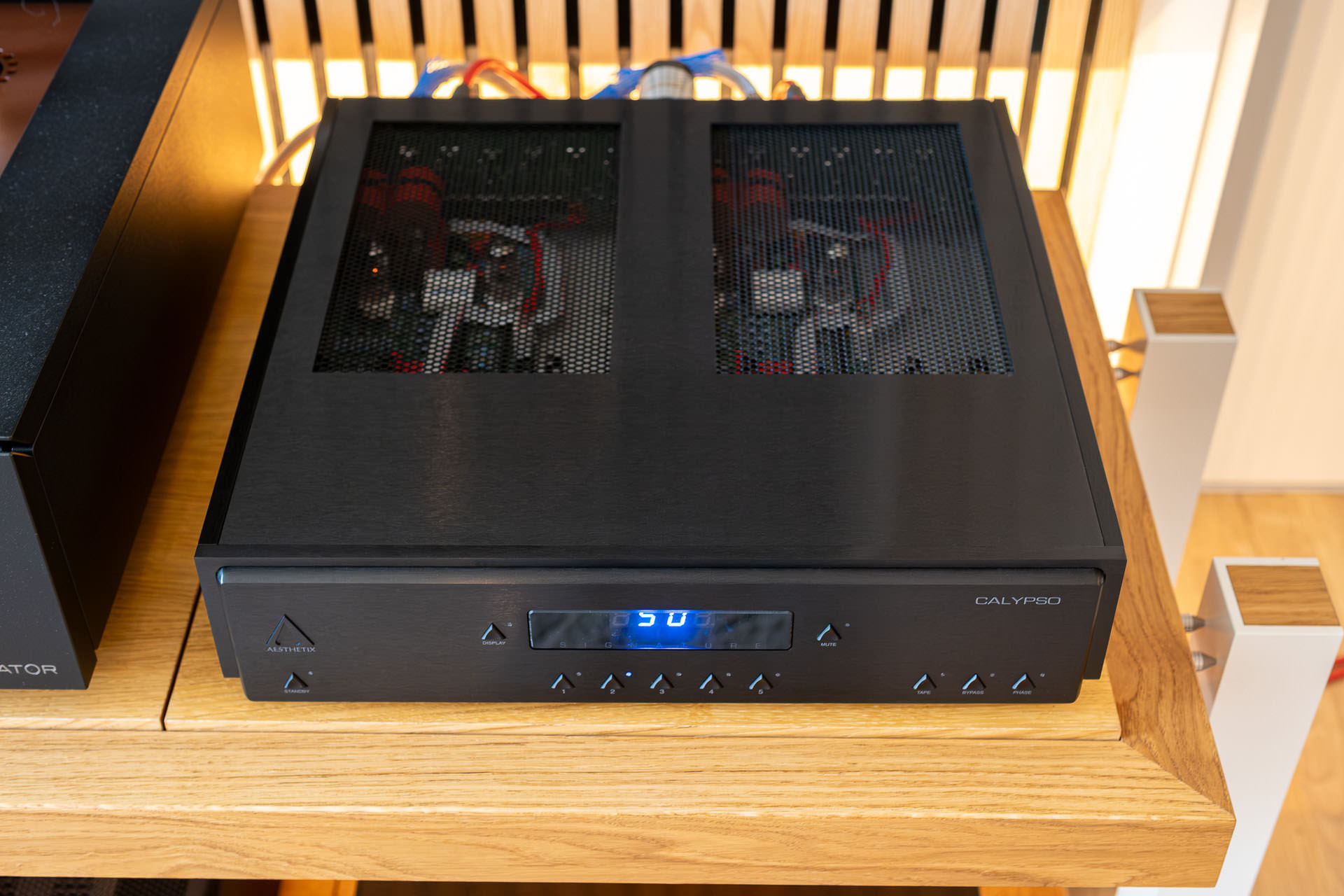
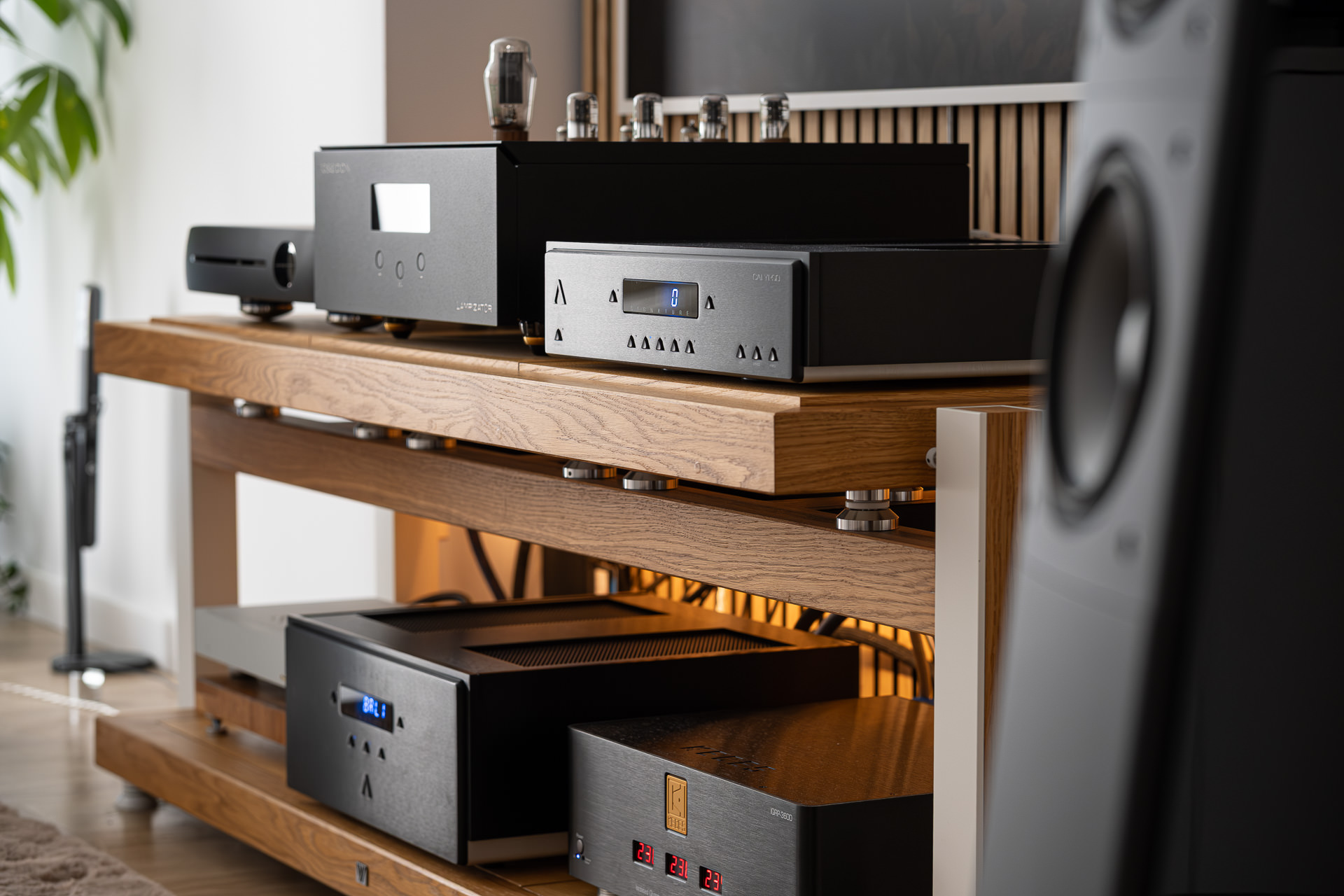
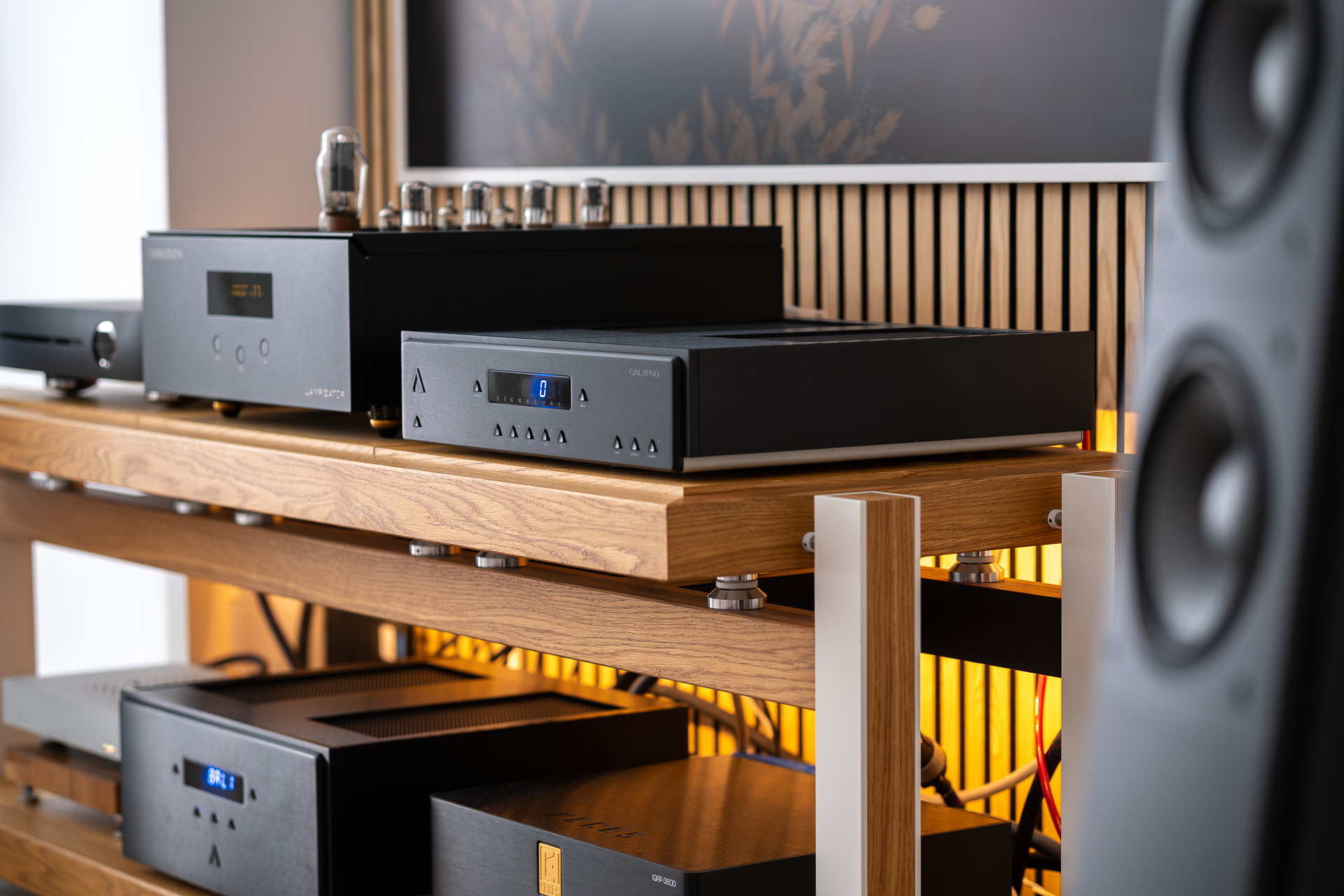
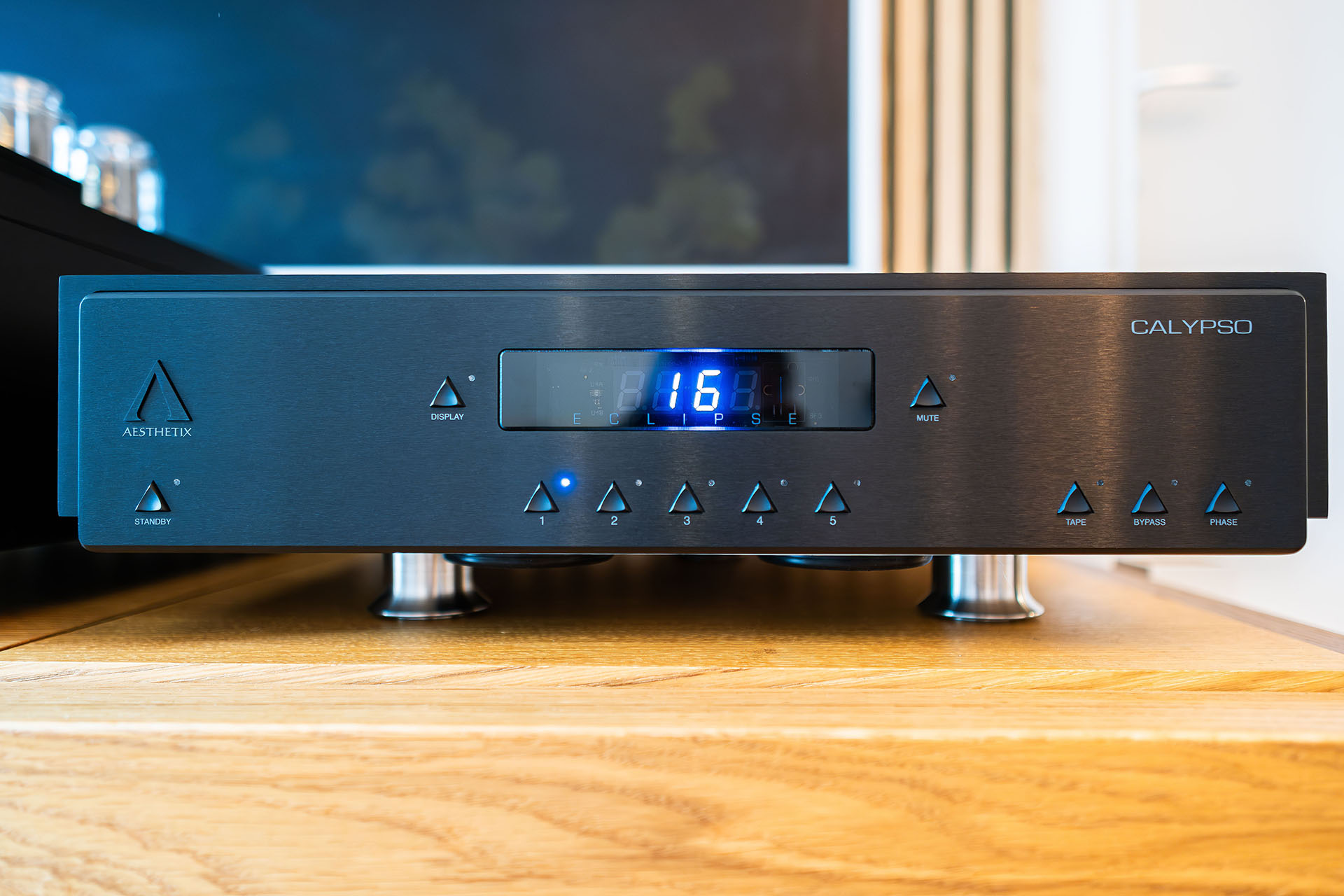
The Aesthetix Calypso is an all-tube linestage with no silicon in the signal path from input to output. It is fully balanced and fully differential from input to output, with single-ended inputs internally balanced to provide common-mode noise rejection and cleaner sound. The tube complement consists of four tubes: two 12AX7 and two 6922/6DJ8 dual triodes. The circuit employs zero feedback, a significant design choice with significant sonic consequences. Volume control is handled by an innovative discrete switched-resistor design that offers 88 one-decibel steps, maximizing resolution at every listening level without introducing the sonic penalties of potentiometer- or relay-based alternatives. Output impedance is a low 300 ohms single-ended (600 ohms balanced), and input impedance is a generous 40k ohms single-ended (80k balanced), making the Calypso exceptionally compatible with a wide range of source components and power amplifiers. Maximum voltage gain is 23dB unbalanced (29dB balanced). Inputs include five RCA and two XLR connections, and outputs include two sets of XLR and two sets of RCA per channel. The chassis measures 454mm wide by 111mm high by 457mm deep and weighs 17.7 kilograms. A home-theatre bypass mode, absolute phase control, and full-function remote are standard.
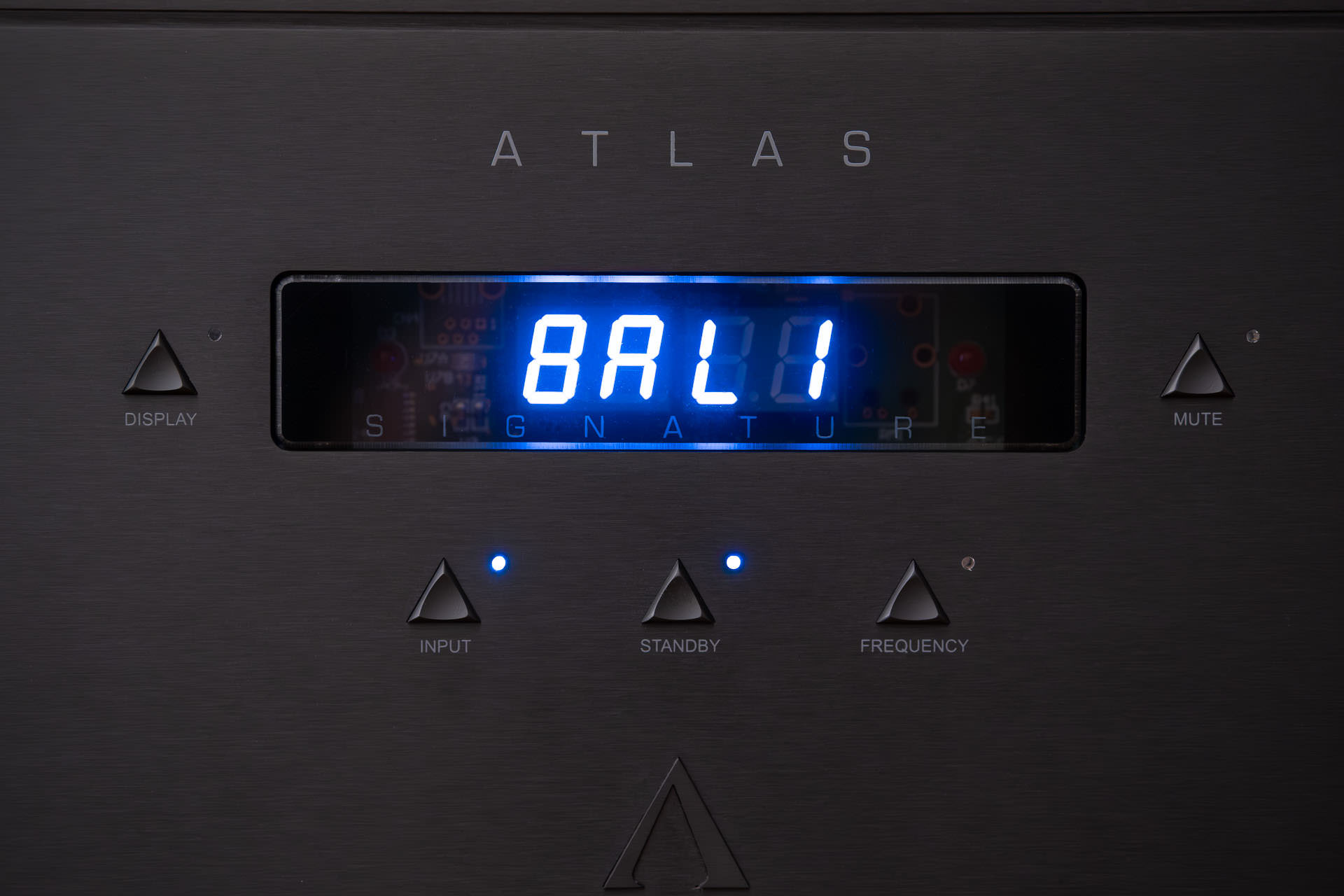
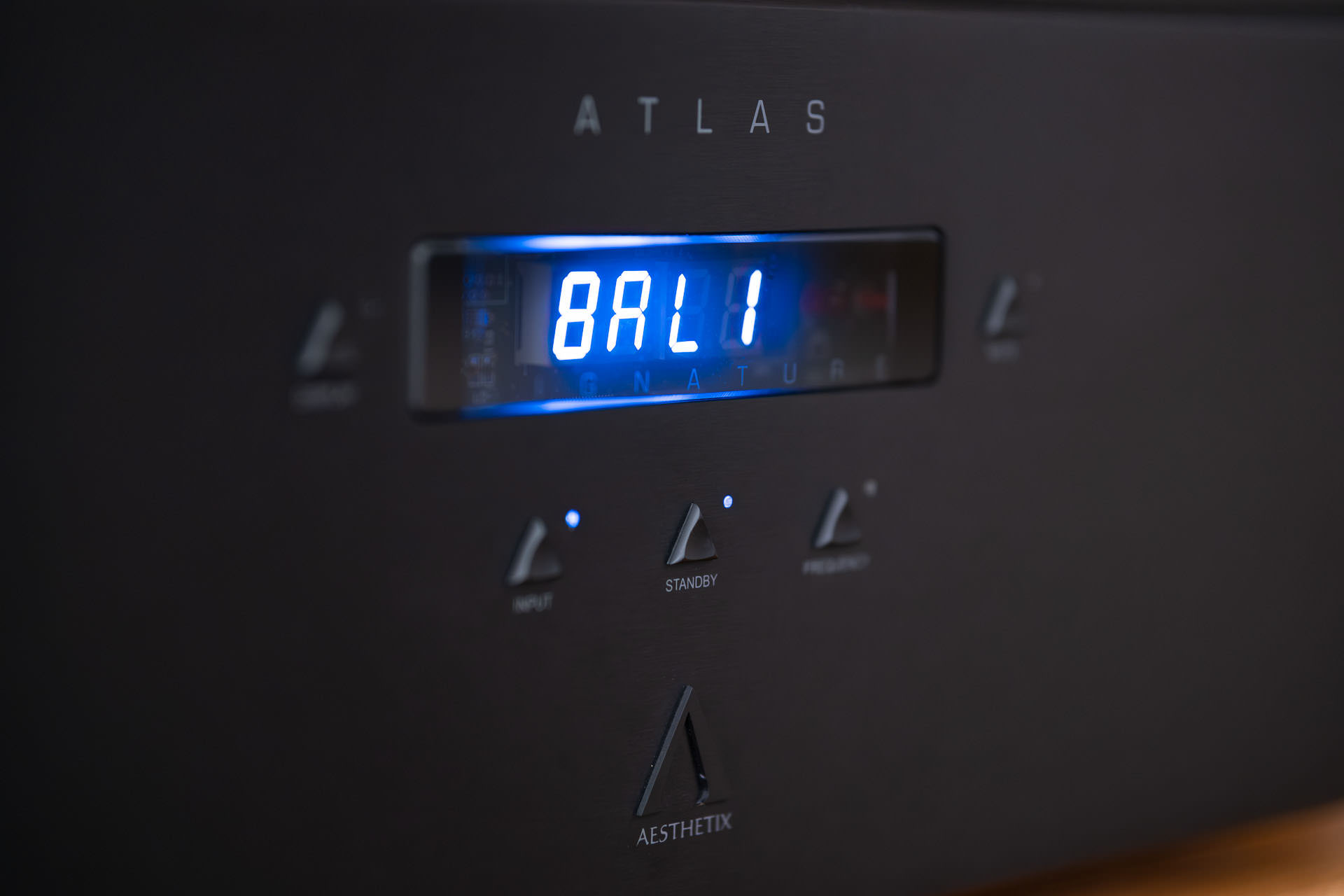
The Aesthetix Atlas is the only standalone power amplifier in the Aesthetix range, a point worth emphasizing. Jim White has not felt the need to produce multiple power amplifier designs because the Atlas, properly configured, is capable of partnering not only with the Saturn Series preamplifiers but with the far more demanding Jupiter Series as well. Its hybrid architecture is unique in the marketplace. A single 6SN7 octal dual-triode tube per channel handles all of the voltage gain, this is the only gain stage in the entire amplifier. Everything else, the driver stage and output stage, is implemented in bipolar transistor technology, arranged in a fully differential, complementary balanced-bridge configuration with zero global feedback. The stereo version delivers 200 watts per channel into 8 ohms, doubling to 400 watts into 4 ohms. The power supply is an elaborate dual-transformer design augmented by three chokes, with a dedicated transformer for the high-current output section and a separately regulated, choke-input supply for the tube B+ voltage. Copper bus-bar technology delivers power to each of the 16 bipolar output devices per channel, reducing supply impedance and maximizing on-demand current availability. The amplifier weighs 31.8 kilograms and measures 462mm wide by 205mm high by 487mm deep — a substantial and deliberately engineered piece of equipment that feels, from the moment you handle it, absolutely serious.
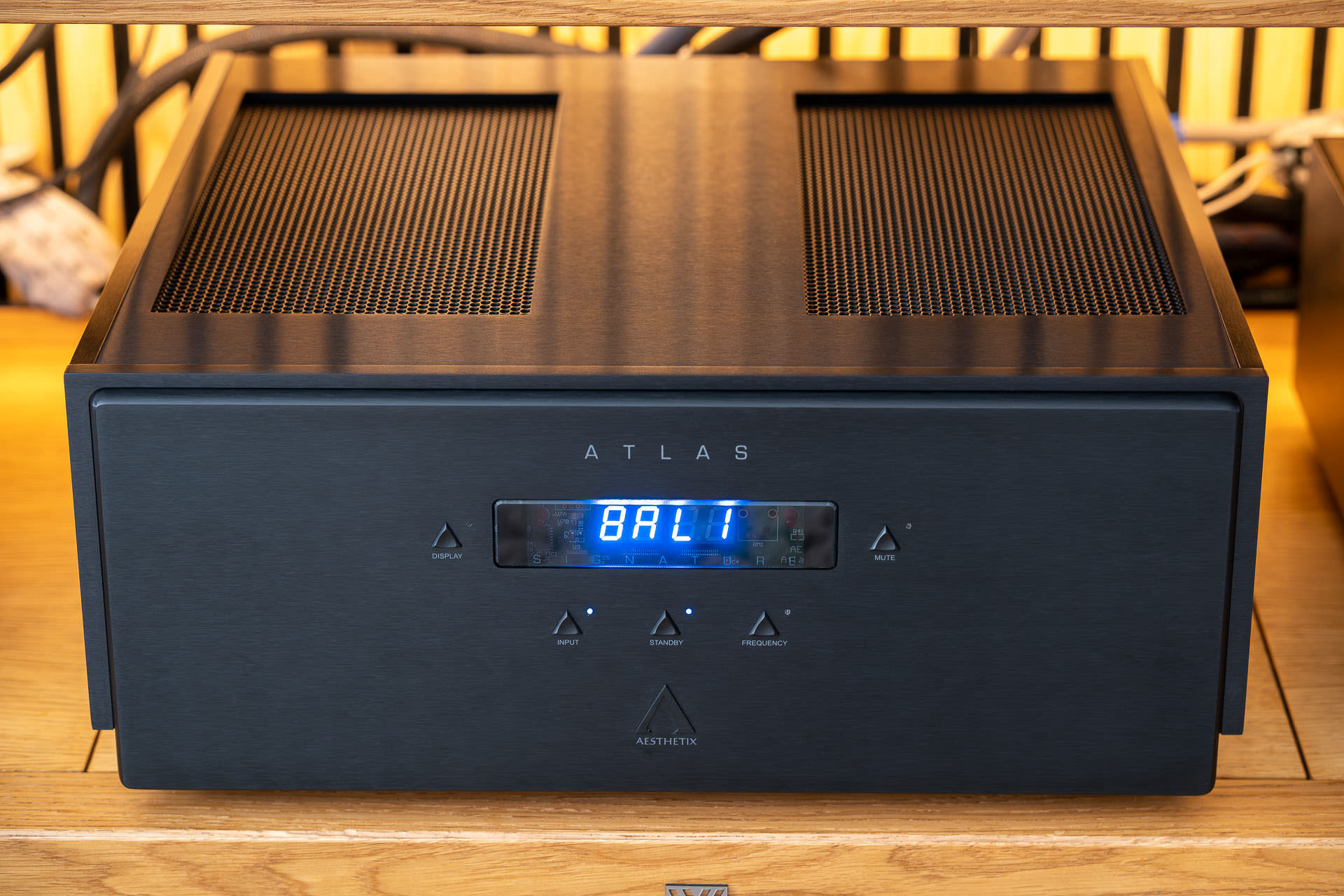
Standard, Signature, and Eclipse — The Three Faces of Saturn
Every component in the Saturn Series is available in three configurations: Standard, Signature, and Eclipse. The underlying circuit topology is identical across all three versions. What changes are the quality and specifications of the components used to populate that circuit and, in the Eclipse’s case, elements of the power supply design as well. This is not a minor distinction in practice. It is the difference between a fine instrument played well and that same instrument given to a master.
The Standard version uses high-quality Rel-Cap polypropylene coupling capacitors throughout. The Signature version replaces these with exotic Teflon-hybrid inter-stage coupling capacitors in the Calypso and with Peter Moncrief‘s legendary Stealth capacitors in the Atlas. The output coupling capacitors in the Calypso Signature are upgraded to 4uF Dynamicaps, providing more drive, deeper bass extension, greater resolution, and improved dynamics while reducing grain. The standard rubber feet are replaced with Harmonic Resolutions Systems Nimbus Couplers specially made for Aesthetix, resulting in a lower noise floor and more air and space around instruments. Any tubes that can be bettered by Aesthetix‘s graded and matched stock are replaced at the factory. The cost of these specialized parts alone represents approximately one-quarter of the manufacturing cost of a brand-new unit, which gives some sense of the seriousness of the upgrade.
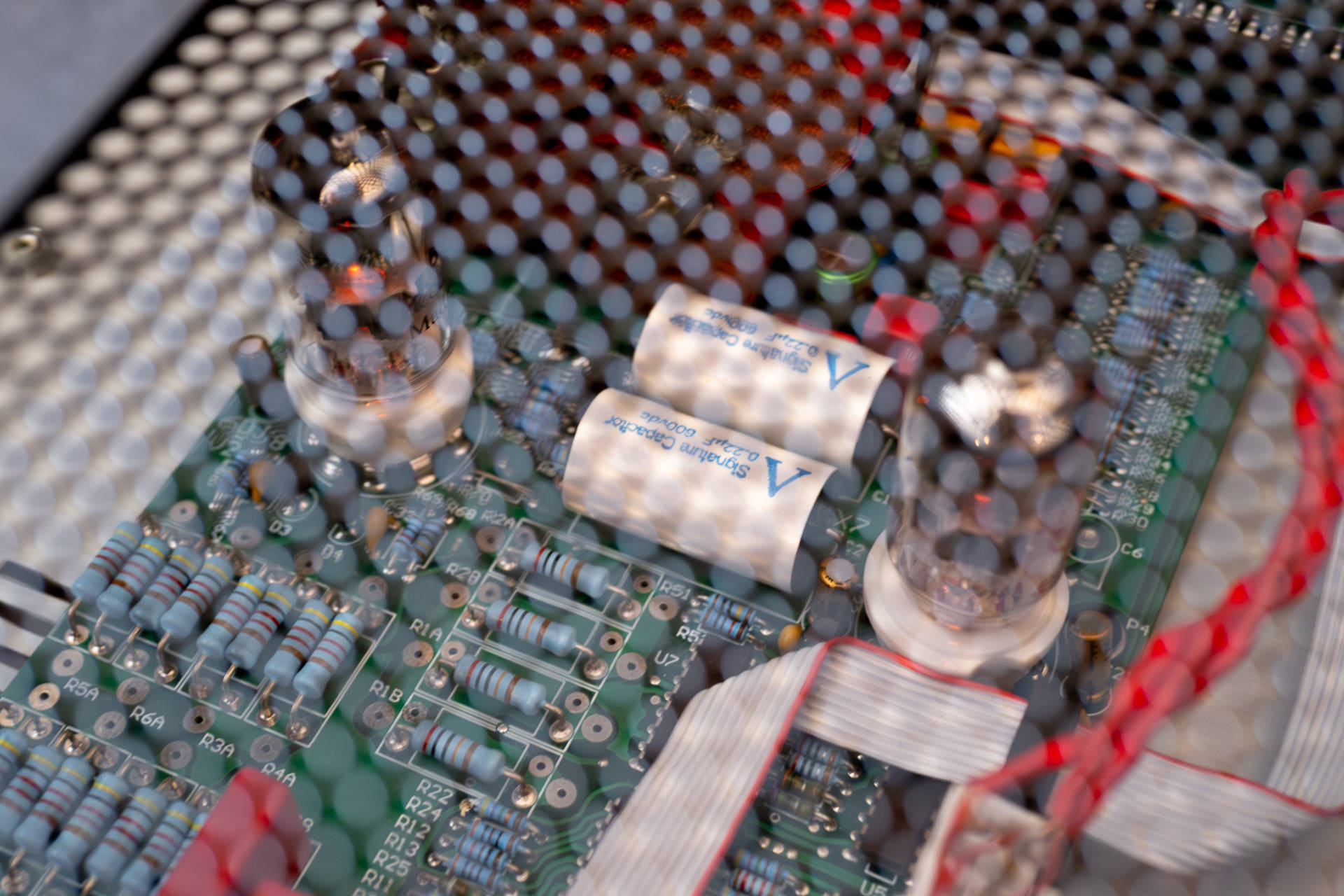
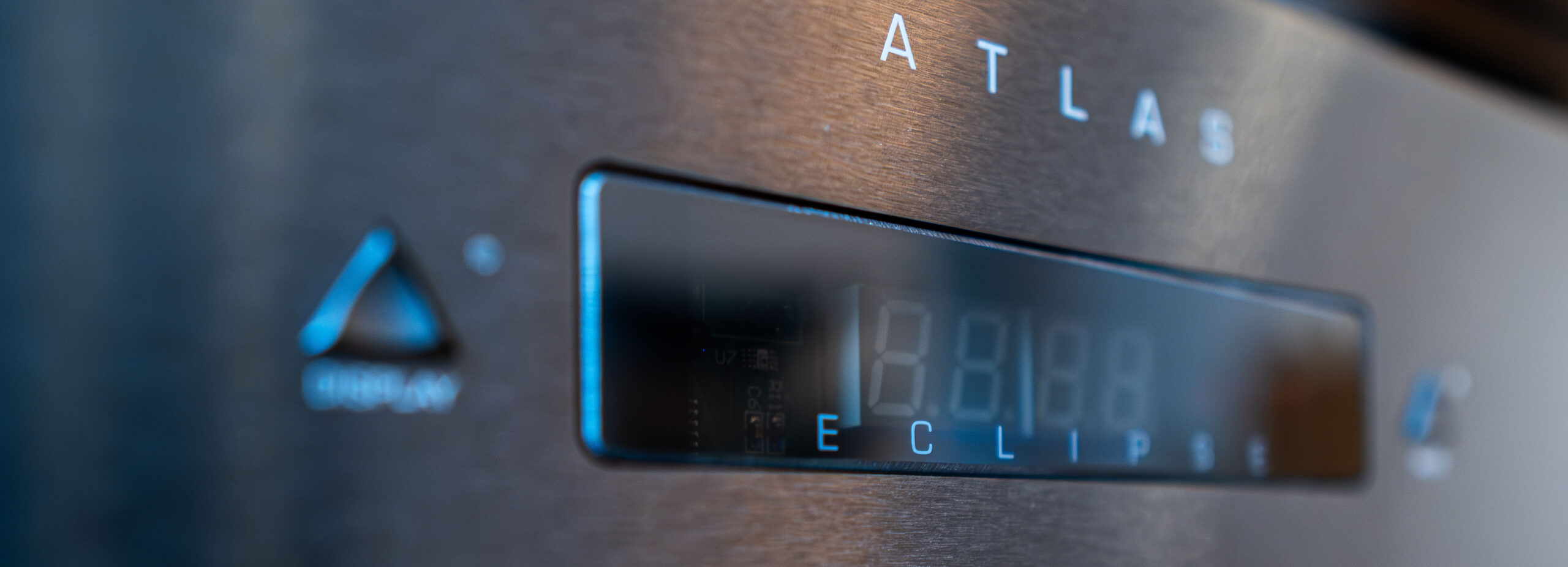
The Eclipse version takes this further in every dimension. In the Calypso Eclipse, inter-stage and output coupling capacitors are replaced with StealthCap units, hand-crafted, individually tailored capacitors using exotic conductor materials, dielectric compounds, and composite resins that dramatically reduce signal reflections within the capacitor plate itself. High-frequency tuning capacitors are installed and individually hand-adjusted on each Eclipse unit to bring the frequency response to within a tight 0.1dB standard. Eclipse editions receive an entirely new power supply with improved trace routing to further reduce extraneous noise, enhanced heat dissipation, and a sophisticated single-point grounding system for the transformers, which significantly reduces ground-induced noise. In the Atlas Eclipse, the output devices are individually matched to reduce specific aspects of output-stage distortion by up to 40dB. The Eclipse Atlas also features StealthCap capacitors at critical coupling positions, delivering blacker backgrounds and greater focus in the amplifier’s presentation. All Saturn Series products are factory upgradable — one can begin with the Standard, upgrade to Signature, and eventually arrive at Eclipse, each step preserving the investment already made.
The Reference System
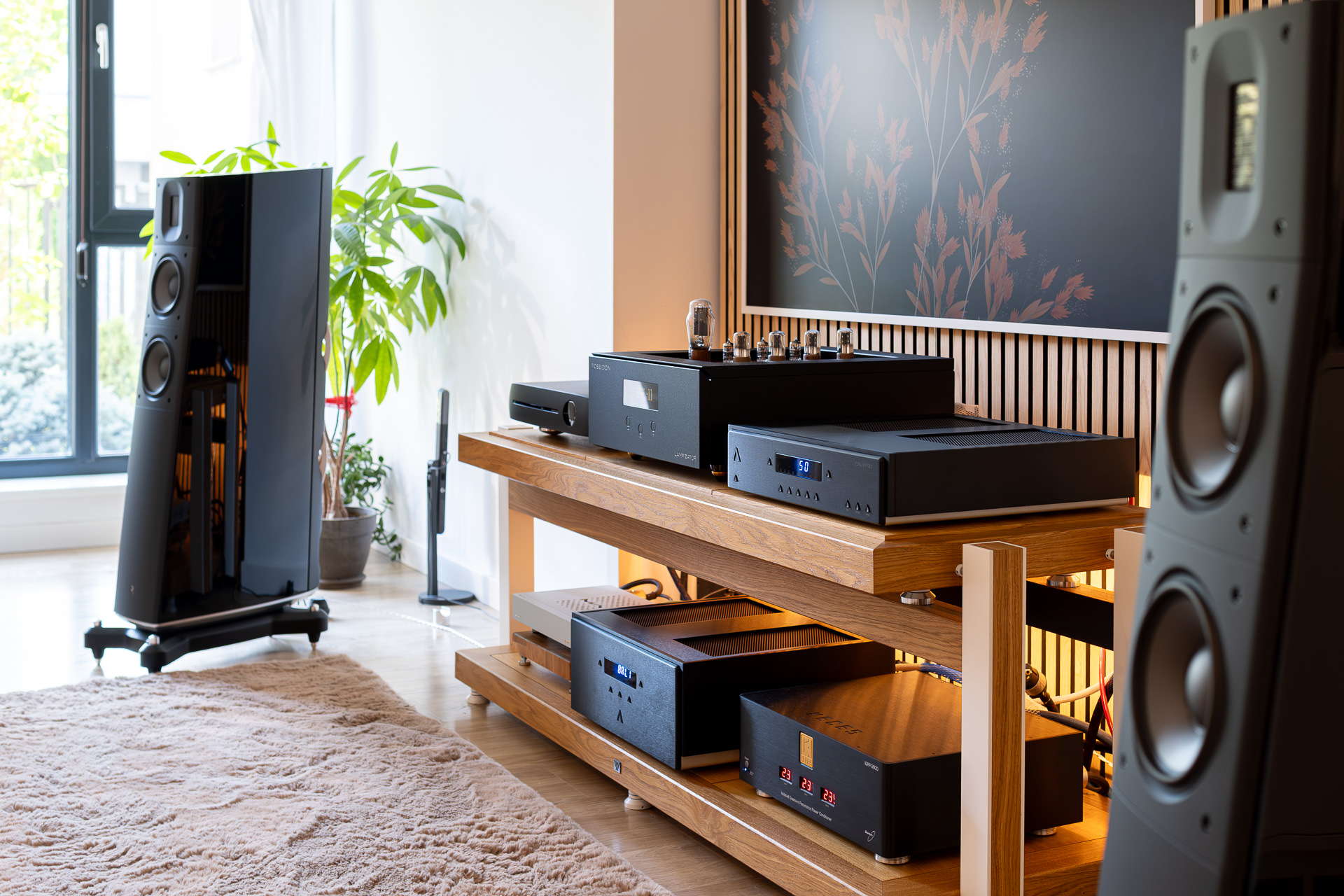
Before the first note is played in a review of this ambition, transparency about the system context is appropriate. A component of this quality shapes everything it touches, but it can only fully reveal itself when the surrounding chain can communicate what it receives without distortion, compression, or coloration of its own.
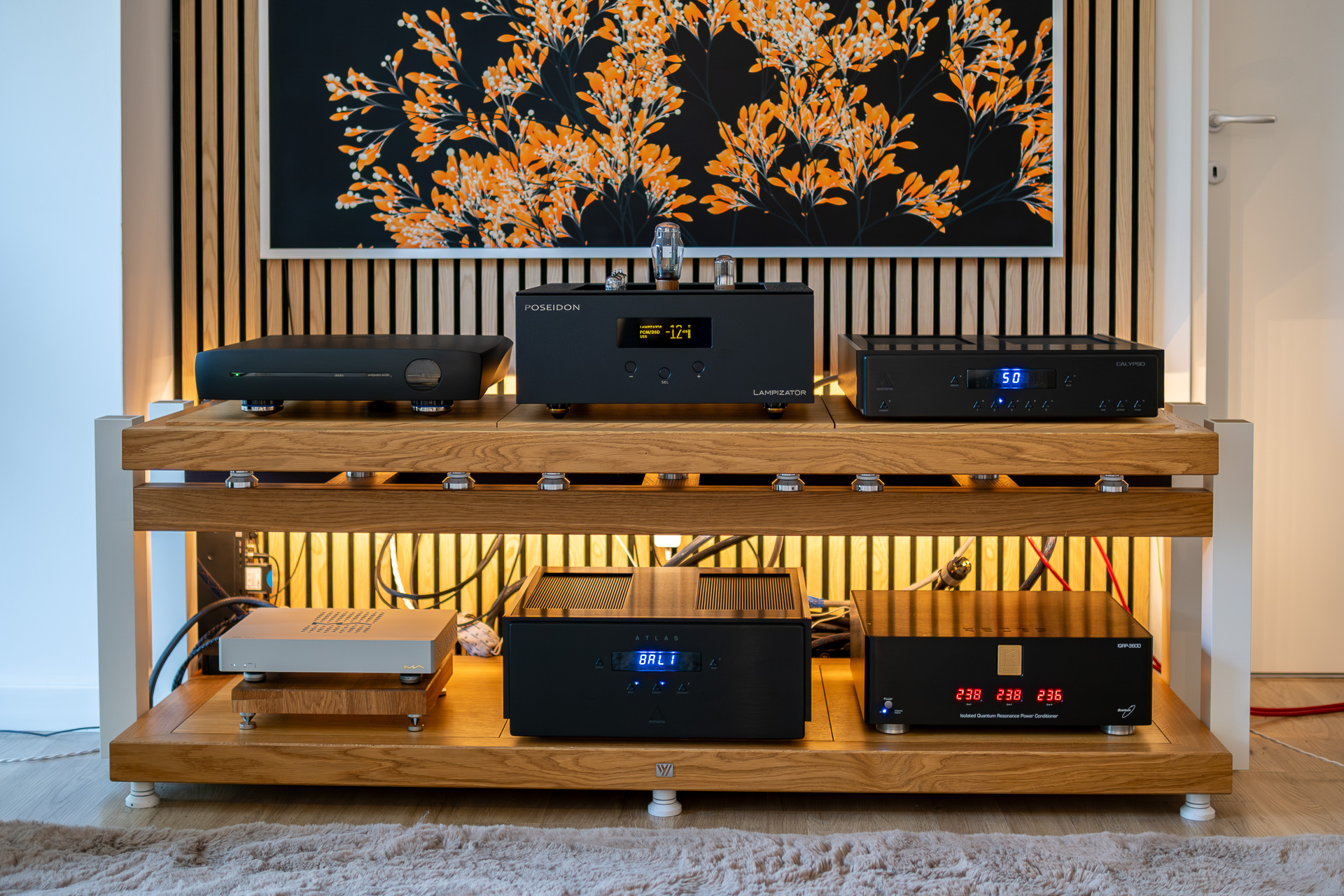
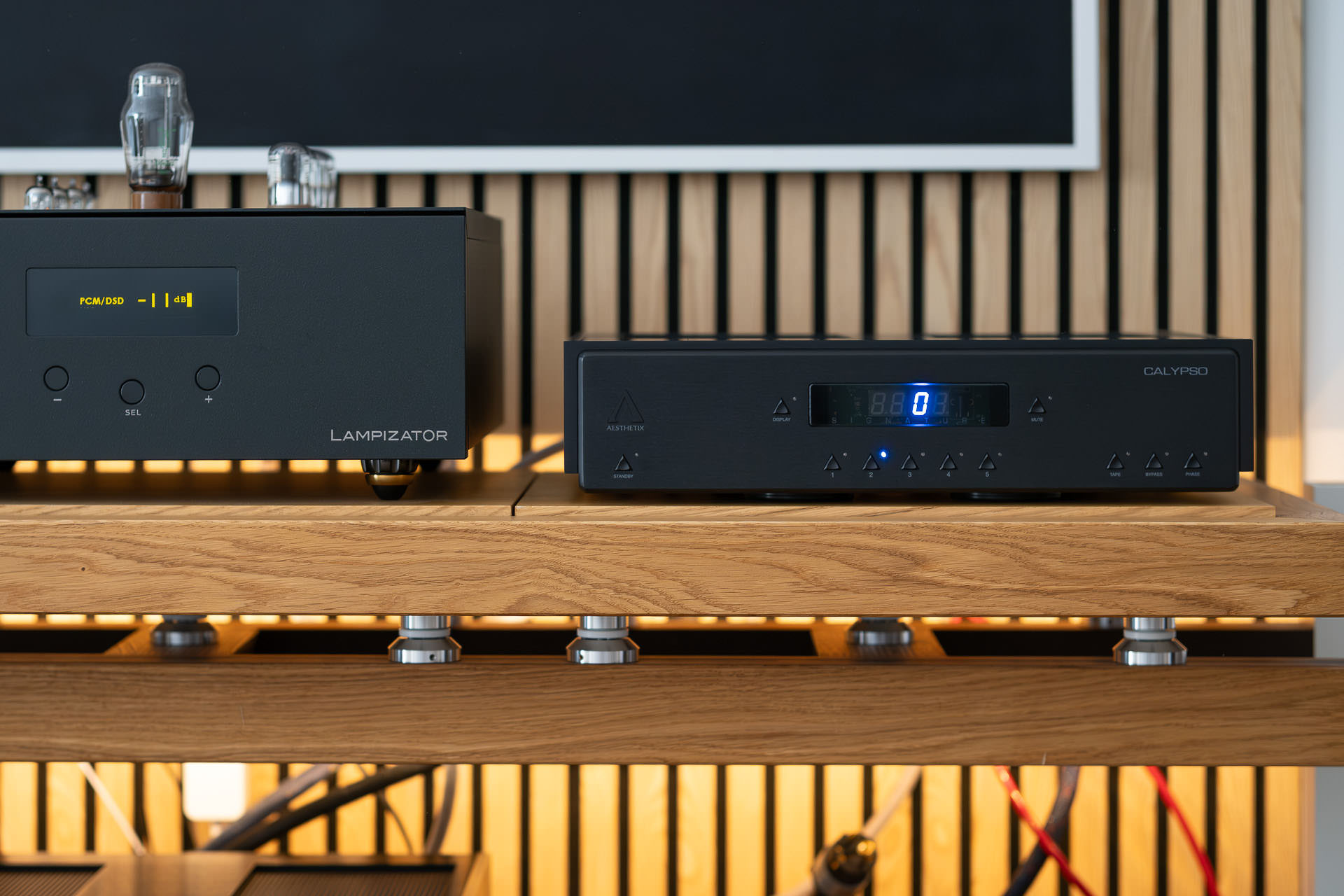
The digital source for this evaluation was the Antipodes Oladra — the finest server, streamer, and reclocking device I have encountered, and the subject of a full review on these pages. The Oladra’s dual-computer architecture, triple-cascade switch-mode power supply, and femtosecond reclocking represent the current state of the art in digital signal preparation. From the Oladra, the signal traveled to the LampizatOr Poseidon DAC and line preamplifier, itself a god among digital converters, as described at length in our separate full review. The Poseidon, depending on the stage of evaluation, served either as the sole preamplification source or in combination with the Calypso when direct bypass comparison was required.
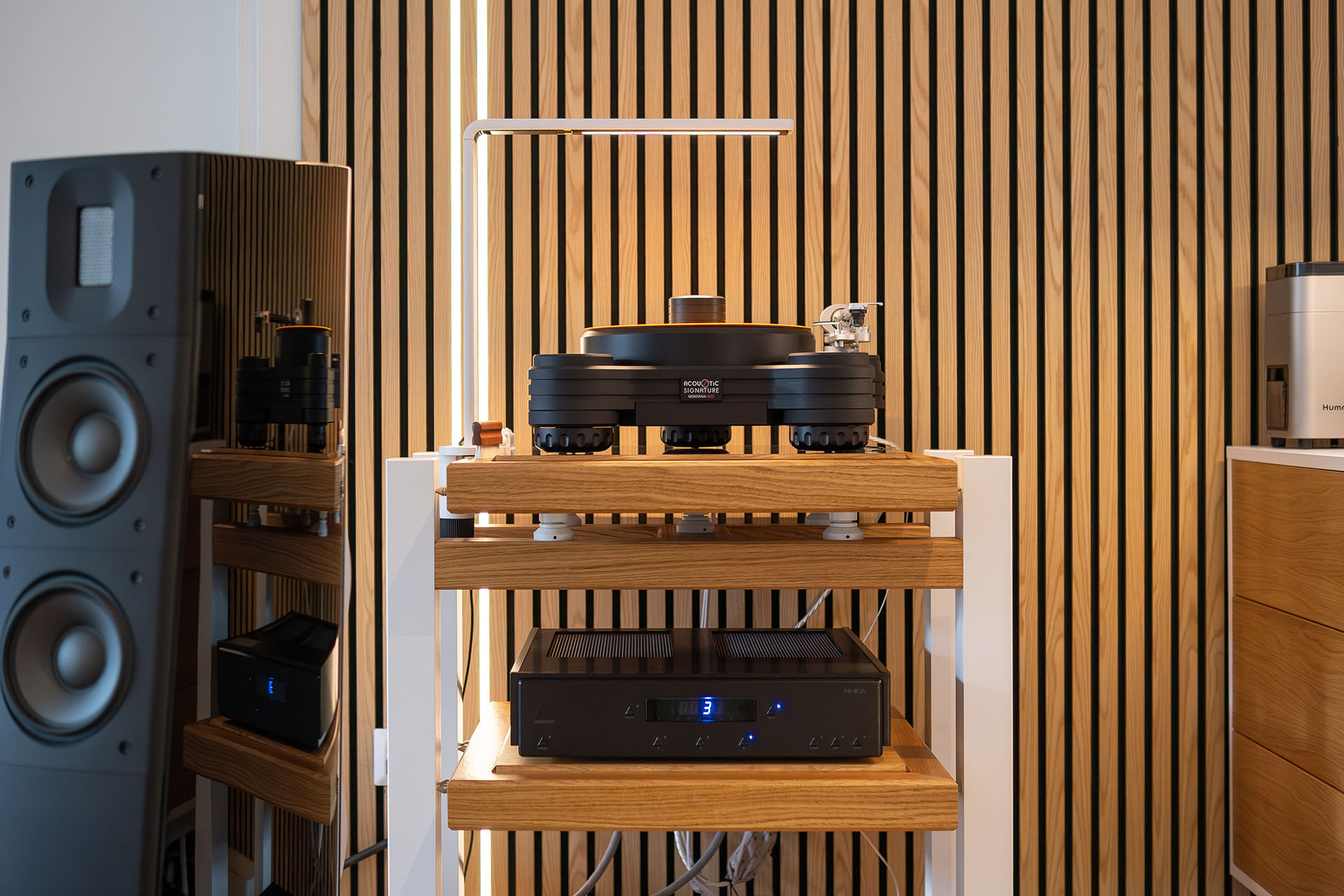
The Aesthetix Calypso Eclipse and Atlas Eclipse replaced all previous amplification in the chain. Loudspeakers were the Raidho TD 2.2 — ribbon-tweeter, two-way monitors of exceptional resolution and ruthless transparency, which reveal with equal clarity everything extraordinary and everything inadequate about what drives them. Speaker cables were the Crystal Monet (full review here), interconnects the Albedo Monolith Reference throughout, and power conditioning was provided by Keces IQRP 3600 dedicated circuits with careful attention to grounding and isolation. The entire chain rested on a proper vibration-control rack from Woodyard (find out more here), with attention to decoupling at every component level.
On the analog side, proudly sits the Acoustic Signature Monata NEO turntable with Acoustic Signature TA-500 NEO tonearm, equipped with Ortofon MC A95 (95th anniversary of Ortofon’s technical leadership), and Acoustic Signature MCX4. Aesthetix Rhea Eclipse (for which a separate review is required), a full-tube phono stage, and a Crystal Van Gogh interconnect phono cable (probably the best phono interconnect I have ever heard – upcoming review) complete my actual analog stereo setup.
This is a system that does not hide its sources. It does not smooth over roughness or flatter mediocrity. What arrives at the Raidho TD 2.2 is exactly what the Antipodes and Poseidon provided, shaped only by what the Calypso and Atlas chose to do with it. There is no mercy and no concealment. This made the experience of the Eclipse combination genuinely revelatory from the very first hours.
How Does It Sound? The Eclipse Configuration in Full Voice
Let me say immediately what this is not. This is not a review where I will work through frequency bands from the bottom up, ticking checkboxes as I go. That approach, adequate for describing a competent product, becomes very misleading when applied to something that operates as a unified musical intelligence rather than a collection of measurable parameters. The Aesthetix Calypso and Atlas Eclipse, used together as a pair, do not present bass here, midrange there, and treble somewhere further up. They present music. The whole thing, all at once, without the sensation of listening to a machine doing its best to simulate the event.
Presence, Weight, and the Sense of Body
The first thing one notices, even before any analytical impression forms, is weight. Not bass heaviness or bloat, something altogether different and more fundamental. Every instrument has mass in the Aesthetix‘s world. A piano has the wood-and-iron reality of a piano, not a representation of one. A double bass has a body; you sense the resonance of the cabinet, the tension of the string, and the way bow pressure changes the character of each note. These are qualities that many amplifiers, including excellent ones, approximate intellectually rather than truly convey. The Aesthetix pair delivers them with a naturalness and matter-of-factness that is initially somewhat startling in its ordinariness. There is no drama about it. This is simply how instruments sound. That it took this particular chain to make it so obvious is the measure of how rarely one hears it done this well.

Bill Evans Trio, “Waltz for Debby” (Riverside Records, 1961). The recording, made live at the Village Vanguard on June 25, 1961, is justly famous and justly notorious for the audience chatter and the clink of glasses that share the space with Evans, Scott LaFaro, and Paul Motian. Through the Aesthetix pair, the trio is in the room. Not projected into a virtual acoustic in front of the speakers, but actually present in the physical space of the listening room. Evans‘s piano has exactly the quality described above: the touch of his left hand in the lower registers has mass and resonance, while the right hand’s upper-register runs are luminous and crystalline without ever becoming brittle. LaFaro’s bass is heartbreakingly real. The gut strings, the vibrating air in the instrument’s body, the perfect musicality of his intonation: all of it is present and intact and specific. When the Atlas’s zero-feedback circuit delivers the low frequencies, it does so without the slight smearing that feedback tends to introduce. The timing is unerring. The silence between notes is a silence.

Duke Ellington Orchestra, “Diminuendo and Crescendo in Blue” (Ellington at Newport, Columbia Records, 1956). There is a moment in this recording, the extended Paul Gonsalves tenor saxophone solo, twenty-seven choruses played to a crowd that had begun to dance in the aisles of the Newport Jazz Festival, where everything the Aesthetix pair does right converges into a single, overwhelming experience. The orchestra behind Gonsalves is not a backdrop. It breathes and shifts and responds, each section — brass, reeds, rhythm — occupying its own physical space in the room with a specificity that makes the recording feel less like a historical document and more like a live event happening now, in your presence. Ellington himself is at the piano to the left of the stage, and through the Calypso and Atlas Eclipse one can hear him comping with that characteristic touch, the notes slightly behind the beat, the voicings slightly wide of conventional, the whole thing animated by the small, deliberate imperfections that are his signature. It is the imperfect piano, live, in 1956, in a room long since demolished. And it is entirely, impossibly present. When Gonsalves finally resolves the solo, and the orchestra surges back in full for the Crescendo, the Atlas does not merely get louder — it expands, opens, fills the room with a physical sense of mass and elation that bypasses analysis entirely and goes straight to the place where music is supposed to go. I sat still for a long time after it finished. The silence that followed was not the silence of a system at rest. It was the silence of a room that had just held something extraordinary.
Dynamics: Not only Power, but Intelligence
The Atlas delivers 200 watts per channel into 8 ohms, with a design that rejects global feedback. What that means, sonically, is that the amplifier’s dynamic behavior is neither linearized nor controlled by a feedback loop that corrects what has already happened. It is, in a sense, free. The consequences of this freedom are audible in a way that takes a little time to articulate, because one is accustomed to a certain kind of dynamic presentation from high-powered amplification, and the Aesthetix does not behave that way.
Most powerful solid-state amplifiers hit hard and hit consistently, every forte is equally forte, every pianissimo equally subdued, the dynamic range managed with even-handed authority. The Atlas does something more complex and more interesting. It seems to listen to the music and respond accordingly, varying its behavior not as a matter of electrical necessity but of musical judgment. A fortissimo passage arrives not with the controlled precision of a piston but with the spontaneity of something alive. And then, just as remarkably, it can drop to a whisper, not an attenuated whisper, but a genuine, intimate, close-to-the-chest quietness, and the transition from one to the other happens without mechanical effort or audible strain.

Patricia Barber, “Use Me” from “Companion” (Premonition Records, 2000). Barber’s voice is one of the more unforgiving tests of a system’s ability to handle the dynamics of human breath and projection. She moves from speaking-voice intimacy to full chest power within a single phrase. The Calypso Eclipse captures these transitions at the preamplifier level with a transparency that feels almost uncanny; you sense the change in her posture before the change in her volume arrives. The Atlas then delivers it with exactly the physical authority and preceding delicacy that Calypso prepared. This is what a well-matched preamplifier-amplifier pair accomplishes that no integrated amplifier, however excellent, can quite replicate: a conversation between two components that know each other intimately and play to each other’s strengths.
The Midrange: Luminous and Inexhaustibly Real
The midrange of the Aesthetix Calypso is where the all-tube design makes its most undeniable statement. This is, in the end, the range that contains everything we call a voice. And the Calypso, with its zero-feedback, fully differential tube circuit and the StealthCap capacitors of the Eclipse version forming the coupling between stages, presents the midrange with a quality that can only be described as luminous. Instruments glow from within. Voices have the sense of being animated by breath, intention, and feeling rather than reconstructed by circuitry.
There is also an absence here that is as important as any presence. Sibilance, that edge of sharpness on consonants that betrays a system’s struggle with phase coherence and upper-midrange grain, is entirely absent. Not reduced, not managed: absent. This means that vocal recordings that have always had an edge of aggressiveness in the system, digital masters, close-miked studio work, and certain types of female voice in the upper register sound not merely acceptable but genuinely enjoyable. The information is there; the unpleasantness is not. The Calypso does not soften the recording. It removes the artifact of the reproduction chain, which is fundamentally different.

Norah Jones, “Come Away with Me” (Blue Note Records, 2002). This album has served as a reference for years, partly because of its familiarity and partly because it sits precisely in the midrange frequency range that most clearly separates equipment. Through the Calypso and Atlas Eclipse, Jones’s voice arrives with warmth and three-dimensionality that the recording, well-made but occasionally over-processed, does not always readily yield. The piano’s resonance under the voice, the acoustic guitar’s body weight in the lower midrange, the way the double bass rounds and grounds the harmonic structure below everything else: all of it coheres into a musical whole that I have rarely heard from this recording. It does not sound analyzed. It sounds played.
Soundstage: Architecture of an Imaginary Space
The spatial presentation of the Aesthetix pair is not a matter of width measurements or depth calculations. It is, rather, a matter of believability. The three-dimensional space that the Calypso and Atlas construct between, behind, and slightly in front of the speakers is not a technically impressive effect; it is a credible acoustic environment. Instruments occupy positions in that space not as fixed points on a coordinate grid but as moving presences, with the front-to-back shifts of perspective that occur in real acoustic spaces when musicians lean forward into a phrase or step back into a less prominent role.

Oscar Peterson Trio, “We Get Requests” (Verve Records, 1964). Ray Brown’s bass is to the left, slightly behind the plane of the speakers. Ed Thigpen’s brushes on the snare are at the right rear of the stage, in a position so specific that one can almost see the room around him. Peterson himself is centered and slightly forward, his right hand in the upper register of the piano seemingly closer than his left in the lower registers. None of this is unfamiliar from other systems, but the Aesthetix pair makes these positions feel lived-in rather than assigned. The three musicians breathe together. The space between them is not a void but an acoustic reality. When Brown plucks a low note that sustains, the decay travels through that space naturally, arriving at the room’s imaginary walls and returning changed. These are the small revelations that accumulate over hours of listening and that, ultimately, constitute the difference between a fine system and an extraordinary one.
The Holographic Effect — Light in Every Bubble
The phenomenon that perhaps most distinguishes the Aesthetix pair from anything else heard at a comparable price point is what I have come to call dynamic illumination. In real acoustic spaces, instruments do not simply get louder or softer as the music demands. They become more or less present, more or less luminous, in a way that is not strictly tied to volume. A flute playing a sustained piano note in the background can suddenly leap to prominence, not because it has grown louder, but because the phrase has taken on emotional weight and the instrument’s inner light has increased. The Aesthetix pair reproduces this phenomenon with a fidelity that I have not encountered in solid-state amplification and have only rarely encountered in all-tube designs.

Each instrument lives in its own luminous bubble. That bubble expands and contracts as the music demands. A brass instrument entering a fortissimo line does not simply get louder; it gets brighter, closer, more insistent, and then recedes to its place in the texture. This quality makes the soundstage feel alive rather than static, and it makes long listening sessions feel less like an athletic exercise in critical attention and more like the natural, effortless absorption that good music in good acoustics produces in everyday life. I listened to “Sketches of Spain” by Miles Davis with Marcus Miller for the hundredth time, and it sounded new, because the luminous bubble of the trumpet moved and breathed and receded in a way I had never quite heard it do before, and the orchestral textures behind it had specific, individual weight and character rather than blending into a background wash.
Standard, Signature, Eclipse — What the Journey Reveals
We had the rare opportunity to compare the Calypso and Atlas across configurations during an extended evaluation period. This is not a comparison one typically gets to make, the differences between Standard, Signature, and Eclipse versions of the same product are usually experienced sequentially across years of ownership rather than side by side. What follows is an honest account of what we heard, without exaggeration in either direction.
The Standard version is not a disappointment. Let that be clear from the outset. It is a remarkably musical, fluid, and convincing preamplifier and amplifier that would stand comfortably alongside competitors at considerably higher price points. The circuit is the same; the topology is identical. What you hear in the Standard is the Aesthetix character in its essential form the zero-feedback clarity, the tube-derived harmonic richness, the dynamic intelligence. If this were the only version available, it would still merit serious consideration and substantial praise.
The Signature upgrade changes the character in ways that are immediately and unmistakably audible, and all of those changes are in the same direction. The lower noise floor of the Nimbus Couplers reveals the leading edges of notes more clearly, instruments appear against a darker background and are therefore more precisely defined in space and more easily heard in their individual character. The Stealth and Dynamicap capacitors improve bass extension and control, tighten the image focus without narrowing the soundstage, and reduce a very subtle grain in the upper midrange that one did not notice until it was gone. The Signature has more drive, more authority, and a more confident presentation. The fundamental warmth and musicality of the Standard version are not only preserved but deepened.
The Eclipse is something more again. The StealthCap capacitors in the Calypso Eclipse bring a transparency to the midrange that is genuinely startling in context. Voices become more specific, not more detailed in the microphone-in-the-face way that some digital processing produces, but more complete and more human. The precise frequency-response adjustment, hand-done on each unit, brings coherence across the spectrum that, in the listening room, manifests as a sense that the music is playing in a single acoustic space rather than being assembled from components. The matched output devices in the Atlas Eclipsereduce a very subtle textural roughness in the upper frequencies that, again, one did not consciously identify until its removal. The result is a presentation of extraordinary refinement that does not sacrifice one gram of the boldness and authority that make the Atlas special in the first place.
The transition from Signature to Eclipse is more dramatic than the transition from Standard to Signature. The Signature is a significant upgrade. The Eclipse is a transformation. Whether that transformation justifies the additional investment depends on the quality of the surrounding system and the listener’s sensitivity, but for those who have assembled a chain capable of conveying the difference, there is no question. The Eclipse is the definitive expression of what Jim White set out to create when he conceived the Saturn Series. It is the version one should own if circumstances permit.
What Aesthetix Does That Others Cannot
The Aesthetix Calypso and Atlas Eclipse, understood as a system, accomplish something I want to articulate precisely, because they go beyond the conventional vocabulary of audiophile description and touch on something more fundamental about the experience of reproduced music.
Most high-end amplification, however excellent, eventually reveals itself. There is a pattern in how it handles music, a characteristic way of attacking transients, a specific coloration of the upper midrange, and a particular approach to soundstage construction. These patterns become audible with familiarity. You begin to hear the machine behind the music. Not intrusively, often not unpleasantly — but it is there, and once you have perceived it, it never quite goes away. The music and the machine coexist, and they are always both present.
The Aesthetix pair does not do this. I have listened for many hours across many genres and recordings, searching for the machine. It is not audible. What is audible is the music. The boldness and power when power is called for. The extraordinary refinement when the music whispers. The organic naturalness of the midrange, where every voice and every instrument has its specific texture and character, rather than being homogenized by the electronics. The way complex orchestral textures remain individually legible without losing the sense of a unified ensemble. The way silence is silence rather than a low-level noise floor with musical content emerging from it.
The sound character of this combination is bold, powerful, and dynamic at its foundation, there is no weakness here, no soft edges or understated authority. The Atlas is a 200-watt amplifier, and it plays like one, but with a musical intelligence that most 200-watt amplifiers do not begin to approach. At the same time, there is a rare refinement in the upper frequencies, an exceptional extension without any trace of hardness, an airiness that opens the top of the spectrum without becoming analytical or fatiguing. The midrange, as described at length in the listening section, is irreplaceable. The tonality throughout is extraordinarily natural, with instruments sounding like themselves, not like impressions of themselves.
Above all, the Aesthetix pair preserves the magic. This is the word I keep returning to, and I want to use it carefully. In live music, in a concert hall, at the right distance, there is something that reproduction almost always destroys: a sense of the event being alive, of music being made rather than played back, of sound existing in space rather than emanating from equipment. Most amplification, by its very precision and authority, destroys this. The Aesthetix pair does not. It keeps the magic intact and allows the mind to inhabit the performance rather than observe it. It transforms the listening room into something between a theater and a dream, and does so consistently, night after night, regardless of genre, recording quality, or mood. That is the rarest achievement in this pursuit. That is what Ellington understood, and what Jim White, in his quiet and brilliant way, has encoded into every component bearing the Aesthetix name.
Price, Position, and Value
Let us speak frankly about money. The Aesthetix Calypso begins at approximately $5,000 in Standard form, a price at which it faces significant competition, though few match its fundamental circuit sophistication or the Aesthetix upgrade path. The Calypso Signature occupies the $7,000 to $8,000 region, where it becomes increasingly difficult to find anything with equivalent musicality and build quality. The Calypso Eclipse, with its hand-adjusted StealthCap components and upgraded power supply, represents the pinnacle of what the Saturn Series offers at the linestage level, and at its price, it is in serious conversation with all-tube preamplifiers costing considerably more.
The Atlas Stereo follows a parallel trajectory: Standard at approximately $8,000, Signature at a meaningfully higher point reflecting the Stealth capacitors and matched component pairs, and the Eclipse adding the matched output device arrays and StealthCap coupling capacitors. The Atlas Mono versions, which dedicate an entire power supply to a single channel, are available in Signature and Eclipse configurations for those whose speakers or rooms demand additional headroom and resource allocation.
The value proposition of the Eclipse combination has two components. The first is straightforward: for the price, one receives some of the finest tube preamplification and hybrid amplification available anywhere, at any price. The second is the upgrade path. An owner who begins with Standard and ascends to Eclipse over several years has not repeatedly invested in new products — they have invested in the same products, deepened and improved, carrying a serial number they know and a sound they understand. This is an unusual kind of loyalty on the manufacturer’s part. It is one of the things that distinguishes companies genuinely passionate about music and the people who love it from those that are merely conducting a business transaction.
In a market full of products that are replaced annually, that render last year’s purchase obsolete with the casual indifference of consumer electronics, Aesthetix builds things meant to stay. That is their explicitly stated philosophy, and having heard the Eclipse, one understands completely why. There is nothing in the sound of the Calypso and Atlas Eclipse that suggests a product straining toward the next iteration. It sounds finished. Complete. Like something that arrived at what it was meant to be and sees no reason to apologize for it.
Conclusion
I began this review with Duke Ellington and his imperfect piano. I want to end it in the same place, because the circle closes cleanly.
Ellington understood that music lives in the space between mathematical perfection and human expression. He knew that the small fault, the tiny breath of imperfection, was not a compromise; it was the crack through which the light entered. The Aesthetix Calypso and Atlas Eclipse understand this too, and they act on that understanding with three decades of engineering sophistication and an unfailing commitment to what music is actually for.
The Calypso Eclipse is the finest tube linestage preamplifier I have had in my system. The Atlas Eclipse is the finest hybrid amplifier — and one of the finest amplifiers of any type — that I have heard in any configuration. Together, as a pair, they accomplish something I did not fully expect: they make music feel inevitable. They remove the system from the experience. They leave only the music, in all its warmth and weight and wildness, filling the room with something that reaches beyond the speakers and the cables and the carefully matched components and simply exists as sound: real, human, and irreplaceable.
I am grateful to have heard them. I am reluctant to send them away. So, for some time now, they have been part of my dream, part of my reference system.
Thank You — AVStore Romania
Every experience of this quality begins with a person willing to trust and to share. In this case, that person, or rather, those people, are the wonderful team at AVStore Romania, our local dealer for Aesthetix products and one of the most genuine, knowledgeable, and passionate high-end audio dealers I have had the privilege to encounter on this journey.
AVStore made the Calypso and Atlas Eclipse available for this evaluation with a generosity and openness that goes well beyond the commercial transaction. Their enthusiasm for the products they represent is the kind that can only come from people who listen intently, care deeply, and believe in what they offer. It is a rare thing, and it is the foundation on which experiences like this one become possible. Our sincere thanks to the entire AVStore team. You can visit them at www.avstore.ro, and I strongly encourage you to do so.
Editors’ Choice Award — Aesthetix Calypso & Atlas Eclipse
There are moments in this pursuit when the evaluation process arrives at a conclusion so clear and so unambiguous that the only honest thing to do is to acknowledge it without qualification.
Based on everything documented in the pages above, the extraordinary musical coherence, the unique zero-feedback hybrid architecture, the irreplaceable midrange character, the dynamic intelligence, the absence of any listening fatigue, the preservation of the magic that music requires. I am proud and delighted to award the Aesthetix Calypso and Atlas Eclipse our highest distinction: the Editors’ Choice Award.

This award has been given before, and it will be given again. But it has never been given more easily, or more confidently, than it is given here. The Aesthetix Calypso and Atlas Eclipse are exceptional products in every sense of that word. They deserve to be heard. They deserve to be owned. And they deserve every note of music that passes through them.
Aesthetix is available through authorized dealers worldwide and distributed in Romania by AV Store. The full lineup is handmade and hand-assembled in the USA.
Associated Equipment
- Digital source: Antipodes OLADRA or a custom passive server with Euphony, Roon, JCAT NET XE powered by linear power supply – FARAD Super 10
- Transport: Antipodes OLADRA
- D/A converter (DAC): LampizatOr Poseidon
- Amplifier: Aesthetix Atlas Eclipse
- Preamplifier: Aesthetix Calypso Eclipse
- Loudspeakers: Raidho TD 1.2, Raidho TD 2.2
- Turntable: Acoustic Signature Montana NEO
- Tonearm: Acoustic Signature TA-5000 with Ortofon MC A-95 or Acoustic Signature MCX4
- Phonostage: Aesthetix Rhea Eclipse
- Headphones: Meze Elite
- Headphone amplifier: Trafomatic Primavera
- Speaker Cables: Marohei Statement SE, Crystal Art Series Monet Speak Diamond2, Albedo Monolith Reference
- Interconnects: Marohei Statement SE balanced, Crystal Reference2 Diamond XLR, Albedo Monolith Reference
- Phono interconnects: Crystal Van Gogh, Albedo phono
- Digital Cables: Marohei Statement SE AES/EBU, Crystal Monet USB Diamond2, Network Acoustics Muon2
- Network Cables: Crystal Da Vinci Network Cable
- Power cables: Marohei Statement SE, Crystal Ultra2 Diamond Power, Roboli Charlin
- Power: Tsakiridis Super Athena
- Network: Melco S100/2 switch powered by FARAD Super 3, Lumin L2 switch/music library
- Racks: Woodyard Suspended Triple, Woodyard Baby Modular
- Anti-vibration accessories: Arya Audio Labs RevOpod, Viablue UFO DOME Cable holders, Viablue UFO Vibration Absorbers