An interview at HIGH END Vienna 2026 on the brand-new wireless Hi-Fi active speaker, followed by a detailed look at its technology, its streaming connectivity, the products Yamaha teased for later in the year, and where to hear it in Romania.
For the first time in its history, HIGH END, Europe’s most important gathering for serious audio, left Munich and came to Vienna. From 4 to 7 June 2026, the Austria Center Vienna (ACV) on Bruno-Kreisky-Platz filled with the low murmur of half-open demo rooms, the warm glow of valve amplifiers, and the careful business of system matching. Close to 500 exhibitors and more than a thousand brands drew a reported 23,000-plus visitors from over a hundred countries, and the consensus in the airy, daylight-filled aisles was immediate: the new venue, with its higher rooms and calmer acoustics, suited the show. The first two days belonged to the trade; the weekend opened the doors to the public, under this year’s motto, “The Power of Music.”
Amid the towers of six-figure floorstanders and exotic turntables, the Yamaha stand struck a different, very deliberate note. Where much of the show whispered exclusivity, Yamaha’s booth spoke of music for the living room, bright, open, and welcoming, with the new NX-70A taking pride of place on its dedicated stands, finished in white and catching the light from its copper-bronze detailing. It is a fitting setting for a company that, perhaps uniquely in this hall, builds both the instruments that make music and the equipment that plays it back. We spoke with one of Yamaha’s Hi-Fi Product Specialists for Europe, Mark Wijmenga, the morning after the launch to talk through what the NX-70A is and why it matters.
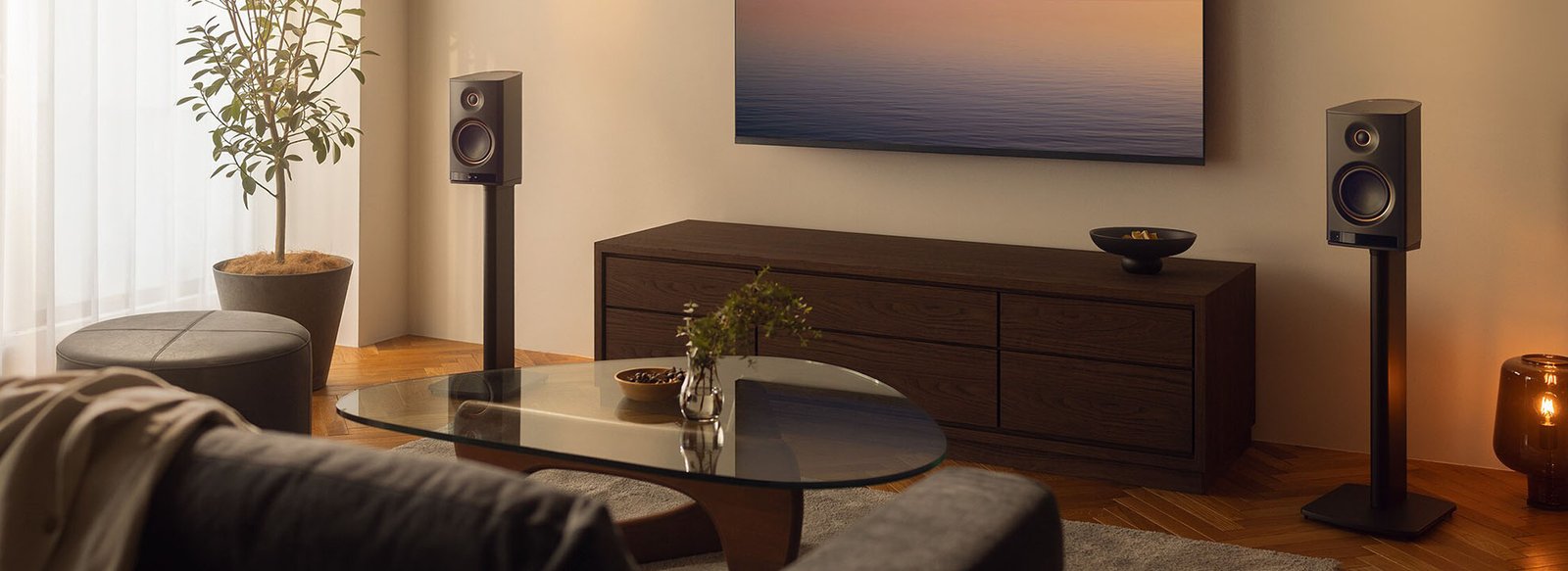
The contrast was instructive. Much of HIGH END is a celebration of the unattainable, systems that cost more than a car, in rooms arranged for a single listener in a single seat. The NX-70A answers a different, arguably harder question: how do you put a genuinely high-fidelity experience into a normal home, with a television, a sofa, and no appetite for a rack of separates and a tangle of cables? Yamaha’s booth was busy precisely because so many visitors recognized that question as their own. A pair of compact, self-contained speakers that stream from any service, tidy up the television’s sound, and tune themselves to the room is, in 2026, exactly the kind of product the broader market has been waiting for, and it is telling that it arrived from a company with the engineering depth to do it without cutting corners on the sound.
A short history of Yamaha: instrument and sound maker
Yamaha’s story begins not with electronics but with a single reed organ. In 1887, Torakusu Yamaha, a watch and medical-equipment repairman, was asked to fix a broken organ at a school in Hamamatsu, Japan. He not only repaired it but resolved to build one himself, and in doing so, founded what would become Nippon Gakki Co., Ltd. The company’s emblem, three interlocking tuning forks, still speaks to that origin: a symbol of the three pillars of technology, production, and sales, and a reminder that everything Yamaha makes is ultimately measured against the standard of pitch and tone.
From organs came pianos, and from pianos a craft tradition that remains central to the company to this day. Yamaha grew into the world’s largest musical instrument manufacturer, building everything from concert grands and orchestral brass to guitars, drums, and synthesizers. On its centenary in 1987, Nippon Gakki adopted the name the world already knew it by: the Yamaha Corporation. That instrument-making heritage matters for a loudspeaker, because the woodworking knowledge behind a grand piano’s spruce soundboard, how a material resonates, how a cabinet should be braced, how tone is shaped by structure, feeds directly into how Yamaha approaches audio.
Yamaha entered Hi-Fi in earnest in the 1960s and ’70s, and quickly earned a place among the most respected names of the era. Its “Natural Sound” philosophy, the pursuit of reproduction that adds nothing and takes nothing away, gave rise to genuine classics: the beryllium-domed NS-1000M studio monitor of 1974, the imposing GT-2000 turntable, and a line of amplifiers and receivers whose clean, symmetrical industrial design is still quoted by enthusiasts today. Few companies can claim to have built both the microphone in front of the orchestra and the speaker at the end of the chain; Yamaha is one of them.
That dual identity is the thread running through the NX-70A. It draws on materials borrowed from Yamaha’s flagship loudspeakers and grand pianos; it leans on decades of amplifier design; and it ties everything together with MusicCast, the multi-room platform that has become the connective tissue of Yamaha’s modern audio range. The NX-70A is, in other words, a very Yamaha product: an instrument, an amplifier, and a network player, conceived as a single, unified whole.
It is worth dwelling on that continuity, because it is what separates a thoughtful product from a fashionable one. The “Natural Sound” idea that drove the NS-1000M half a century ago, that the equipment should be a transparent window onto the recording, neither flattering nor editorializing, is the same principle Yamaha invokes when it describes the NX-70A’s goal of preserving the integrity of the original content. The tools have changed beyond recognition: where a 1970s engineer reached for beryllium domes and massive heatsinks, today’s engineer reaches for digital signal processing, room calibration, and a networked streaming module. But the destination is identical. A listener who once owned a Yamaha receiver and a pair of NS-series monitors would recognize the intent of the NX-70A immediately, even if every component inside is new.
The NX-70A: a wireless Hi-Fi speaker that fits your life
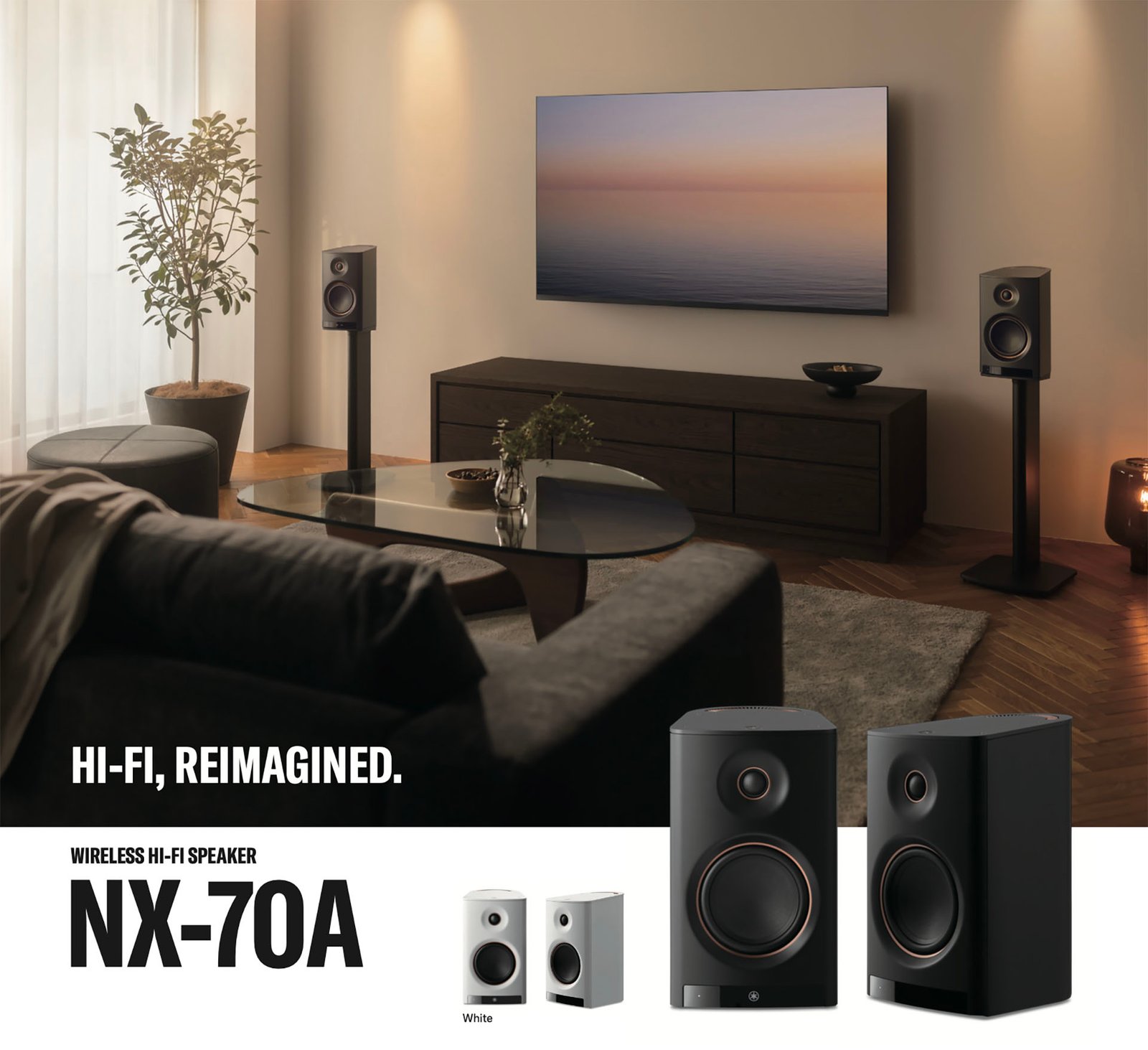
Launched on the opening day of the show, the NX-70A is a pair of active wireless Hi-Fi speakers: an amplifier and drivers integrated into each cabinet, the left and right channels communicating with or without a cable, and a built-in streaming platform. It is pitched not at the rack-and-separates obsessive but at the listener who wants serious sound to slip naturally into a real room, one HDMI cable to the television, an app on the phone, and music filling the space. Below is our conversation with Yamaha, lightly edited for clarity, followed by a closer look at the technology.
Our thanks to the Yamaha team in Vienna for their time and for letting us hear the NX-70A on the stands they consider an essential part of the design.
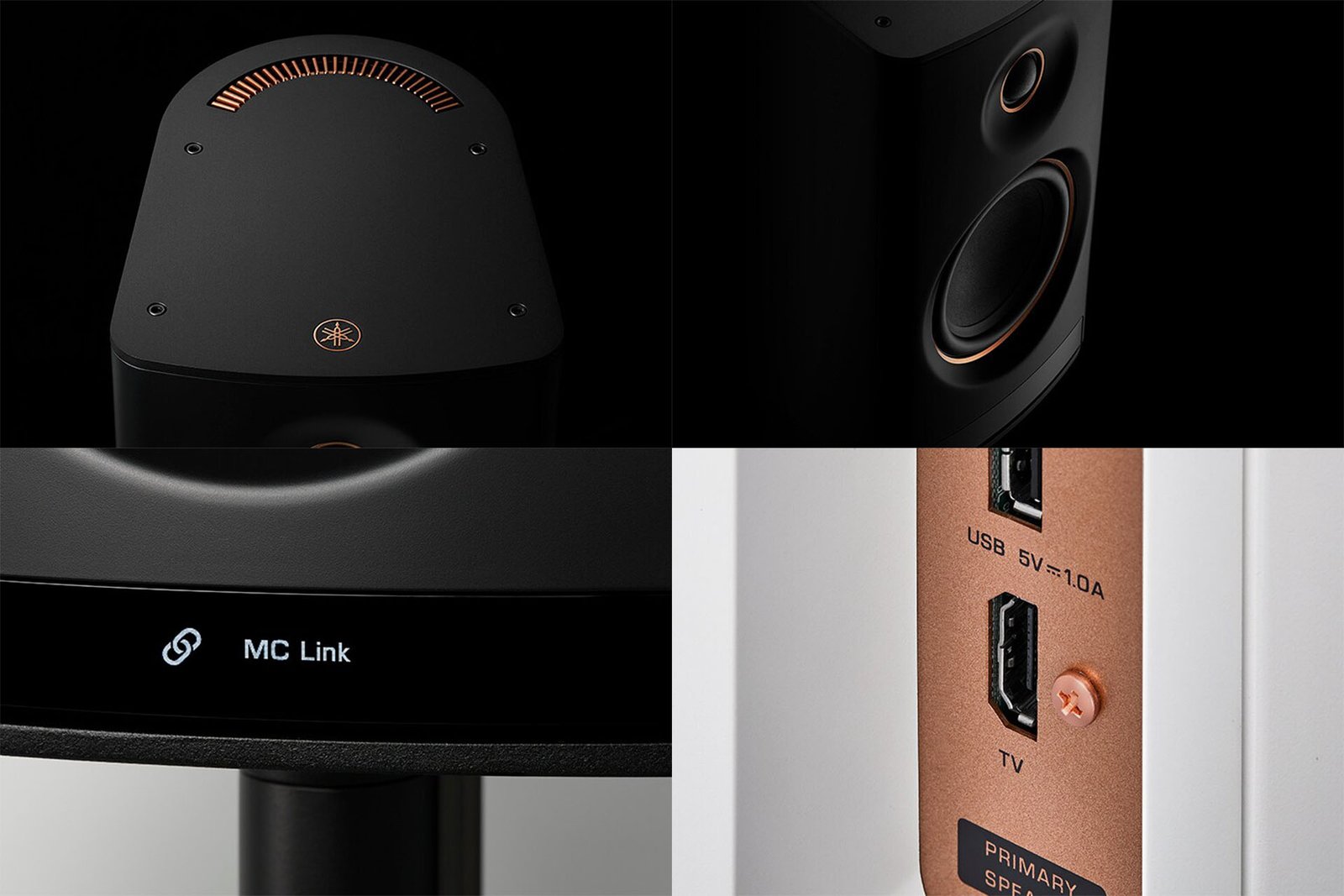
The interview: Mark Wijmenga – Product Specialist Europe
Let’s start at the beginning. What did you launch here in Vienna?
Mark Wijmenga: Yesterday, we launched a new product, the Yamaha NX-70A. It’s a new wireless Hi-Fi active speaker with built-in music-streaming technology. It carries our latest-generation network module, so it now supports Spotify Connect and TIDAL Connect. It’s Roon Ready, and alongside AirPlay 2, we also support Google Cast, so you can stream from essentially any source on any device you have straight to the speaker. There’s also an HDMI connection to your television, so it’s just one cable to the TV, and you instantly improve the sound of whatever you’re watching.
It also calibrates itself to the room, doesn’t it?
Mark Wijmenga: Yes. There’s YPAO acoustic room correction built in. A microphone comes with the product, so you place it at your listening position and run a measurement in your room, wherever you might have some bad acoustics, and the sound adjusts to suit. It creates a better soundstage and eliminates acoustic problems you might have at home.
And you only need to do that once?
Mark Wijmenga: You do it once, it’s very easy. You just place the mic where you prefer, at your listening seat, and it runs the automatic calibration and adjusts the sound. Easy to use, easy to set up.
Does it come with the stands?
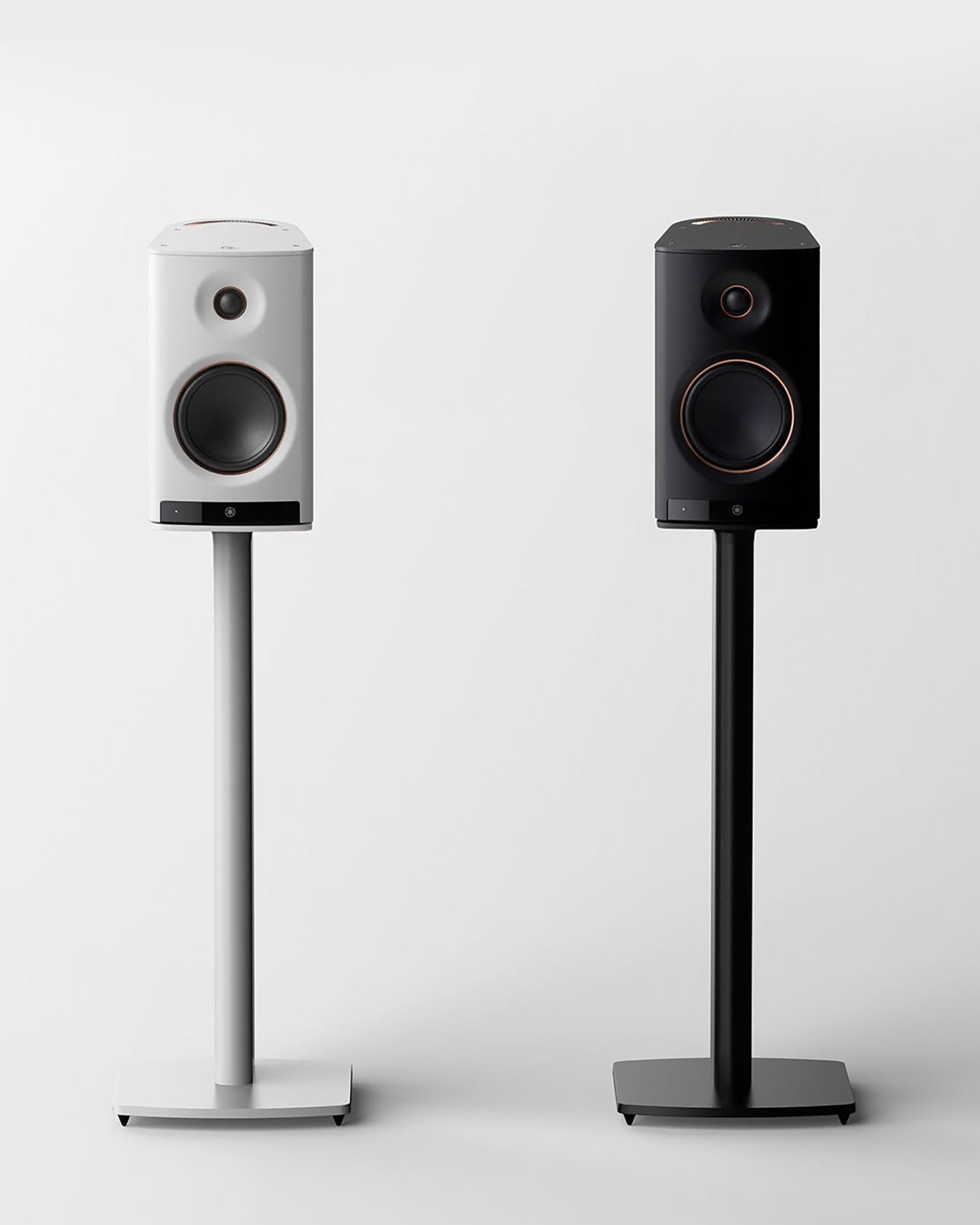
Mark Wijmenga: No, it doesn’t come with the stands. The sales price in Europe is 2,999 euros, and the stands cost 599 euros. But we really do think the stands are an essential part of the product. We carried out a sound-tuning session in Europe together with the engineers from Japan, and we did that tuning on the stands, so they’re genuinely part of how the speaker is voiced. We’d always advise people, if they can place it on stands, please do so.
What’s new on the inside, the technology itself?
Mark Wijmenga: There are a few specific things. We have the Harmonious Diaphragm, a blend of ZYLON and spruce, with the spruce being, in effect, waste from the grand pianos we produce in Japan. On top of that, it’s an active loudspeaker, so the amplifier and the drivers live inside one cabinet. We developed a new technology we’ve trademarked called Synergistic Drive. It eliminates a large portion of the third-harmonic distortion that typically occurs when current flows from an amplifier to a loudspeaker. We can analyze it and correct it in real time, so you get a much clearer, more transparent, and more powerful sound. This is genuinely new and can only be done with an active loudspeaker, because the amplifier and speakers are integrated into a single unit.
And the finishes?
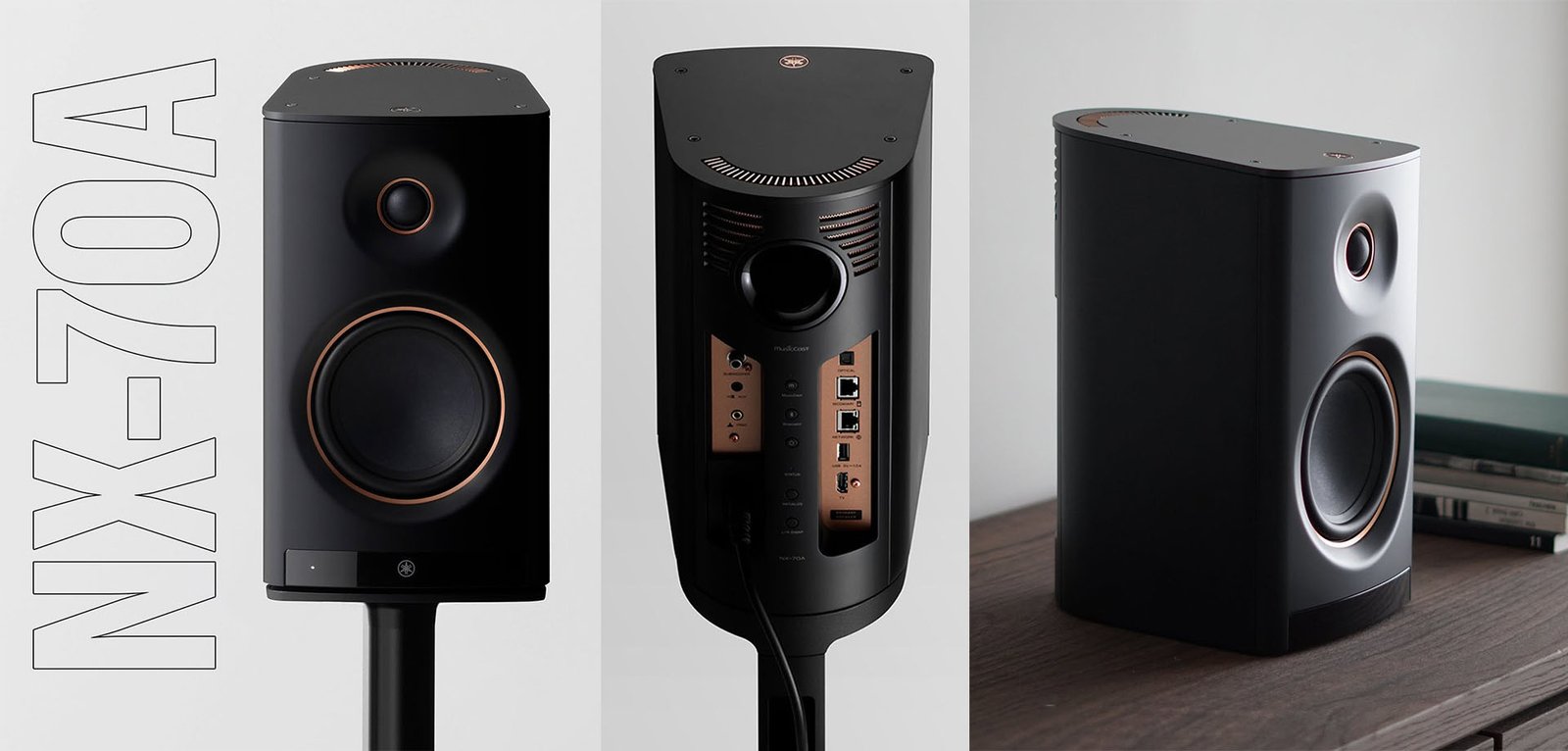
Mark Wijmenga: They’re available in white, as you can see here, and in black, both with copper-bronze design elements. We chose a different design direction from our usual loudspeakers, so it fits a little more naturally into the interior. White or black, it will suit almost any room.
You also have something under wraps on the stand. What can you tell us?
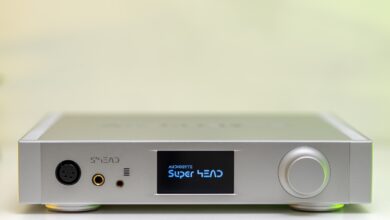
Mark Wijmenga: This is our highlight, a sneak peek of products coming later this year. I can’t disclose the model names yet. Essentially, it’s a new streaming amplifier and a new pre-amplifier DAC, and they’ll come to market in the fourth quarter of this year. They’re a small, compact, stackable form factor, well-suited to custom integration and system installers. They also have the MusicCast technology on board, so you can stream any source you have and share it throughout the home. They also come with an HDMI connection, so you can hook them up to your TV very easily. With the amplifier, you simply plug in your speakers, and you’re done. If you already own an analog amplifier, for example, you can use the pre-amp DAC to upgrade it to handle all the digital sources.
And the names and prices?
Mark Wijmenga: Not yet announced, I can’t disclose that yet, but we will in a couple of months. That’s what’s new from us this year.
Thank you very much.
Mark Wijmenga: You’re welcome.
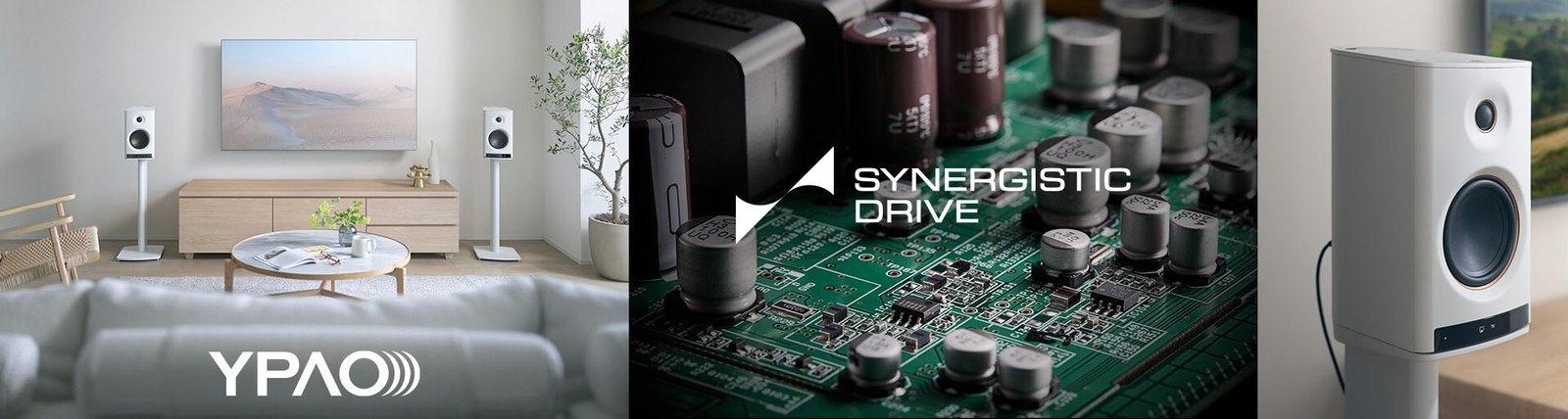
Inside the NX-70A: the technology in detail
If the interview gives the headline, the engineering is where the NX-70A earns its “Hi-Fi, reimagined” billing. Yamaha frames the speaker as the meeting point of three things it has spent decades refining: amplifier design, acoustic design, and craftsmanship. Four ideas do most of the work.
Before the four ideas, a word on why the speaker is active at all. In a traditional passive system, one amplifier drives a pair of speakers through a crossover that splits the signal after amplification, a compromise that wastes energy and lets the amplifier and the drivers, designed in isolation, interact in ways neither party fully controls. An active design flips that: each driver gets its own amplifier, the crossover happens before amplification in the digital domain, and the whole chain can be tuned as one. That architecture is what makes the NX-70A’s signature technologies possible in the first place, and it is why Yamaha, a company that designs both halves of the equation, has so much to gain from it. The trade-off the specialist acknowledged is real, too: an active speaker needs power at each cabinet, which is precisely why the wireless link between left and right, and the single HDMI cable to the television, matter so much for keeping a real room tidy.
Harmonious Diaphragm: one voice across the range
Musical realism, Yamaha argues, begins with consistency; the timbre of a voice should not change as it moves from chest to head. To achieve that, every driver in the NX-70A uses the same Harmonious Diaphragm material: a carefully balanced blend of PBO fiber ZYLON (ZYLON™ is a trademark of TOYOBO MC Corporation), the high-stiffness material used in Yamaha’s flagship speakers, and spruce, the very wood used for the soundboards of its grand pianos. The result is a unified tonal character from the lowest bass to the highest treble, so that instruments and voices are reproduced cohesively rather than as a patchwork of different-sounding drivers. The 13 cm woofer and 3 cm tweeter are both built around it.
Synergistic Drive: amplifier and driver as one
Synergistic Drive is the trademarked heart of the design and the clearest expression of Yamaha’s dual identity. In a conventional system, the amplifier and the passive speaker are designed by different people and only meet at the binding posts; their interaction introduces distortion. By contrast, the NX-70A connects each driver directly to a dedicated amplifier circuit designed for it, so the system can precisely manage the flow of electric current and suppress the third-harmonic distortion that, as Yamaha puts it, is fundamentally rooted in conventional amplifier-speaker interactions. The correction happens in real time, preserving the integrity of the original recording and delivering sound with what Yamaha calls remarkable realism. Crucially, this is only possible because the amplifier and speaker are designed as a dedicated pair, exactly the kind of thing a company that builds both can do.
YPAO: sound optimized for your room
No two rooms are the same: shape, wall materials, and speaker placement all change how sound reaches the ear. YPAO (Yamaha Parametric Room Acoustic Optimizer) is Yamaha’s proprietary auto-calibration system, here in a form that includes R.S.C. (Reflected Sound Control) to tame the early reflections that most affect stereo clarity, alongside high-precision EQ for tonal balance and YPAO Volume. The supplied microphone, Yamaha even includes a cardboard microphone stand in the box, takes a single measurement from the listening seat, and the speaker adapts itself to the space. It is the rare piece of genuine acoustic engineering that takes under a minute to use.
Designed for sound: the cabinet
Every physical detail serves the acoustics. The cabinet’s rounded form avoids the parallel internal surfaces that create standing waves, while rigid construction keeps unwanted vibration in check. A 5 mm aluminum plate is integrated into the top of the cabinet and bolted down, tying the whole enclosure together into a single solid structure. That added rigidity gives the drivers a stable foundation, so the sound stays clear, focused, and true. The copper-bronze accents the specialist mentioned are part of this same design language, a more interior-friendly look than Yamaha’s traditional loudspeakers, in white or black.
What none of this conveys on paper is the role of the human ear in the final result, and here Yamaha was candid. The European voicing of the NX-70A was carried out in dedicated sound-tuning sessions, on the SPS-70A stands, with engineers flown in from Japan, the same hands-on, listen-and-adjust process that has shaped Yamaha instruments for generations. That is why the company is so insistent that the stands are part of the design rather than an optional extra: the speaker was tuned to sound right at a specific height and in a specific physical relationship to the floor and the room, and placing it elsewhere changes the very thing the engineers spent their time perfecting. It is a small but revealing detail, measurement systems and DSP do an enormous amount, but the last decisions were made by people listening to music, which is, after all, how Yamaha has always worked.
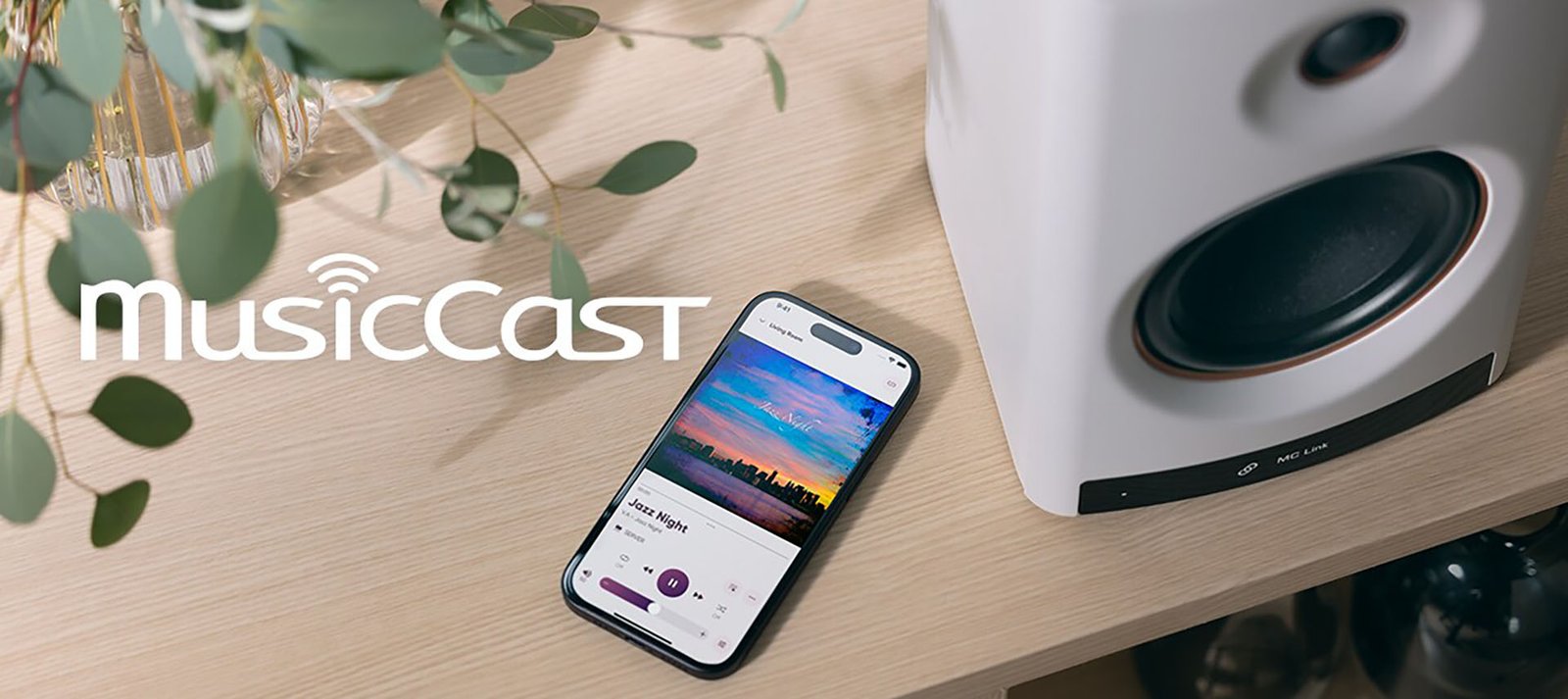
Connectivity and streaming: one app, every source
The NX-70A is, at heart, a network speaker, and its streaming credentials are deliberately broad. The system supports high-fidelity streaming through the major “Connect” ecosystems, Spotify Connect and TIDAL Connect, which stream directly from each service’s own app for the best possible quality, while AirPlay 2 covers Apple Music and the wider Apple ecosystem, and Google Cast lets you cast from a PC or Android device. It is Roon Ready, bringing local files from a PC or NAS, along with streaming services, into a single, richly cataloged library for listeners who want a more curated experience. Internet radio and DLNA server playback round out the network features, and Bluetooth (SBC/AAC) is on hand for quick, casual listening.
Tying it together is MusicCast, Yamaha’s multi-room platform. From a single app, you can control everything in the home, from streaming services to music on your smartphone and stored files, and you can send both music and TV sound to other MusicCast devices around the house. The supported network file formats are comprehensive, spanning MP3, WMA, MPEG-4 AAC, WAV, FLAC, ALAC, AIFF, and DSD, so high-resolution libraries are handled natively rather than down-converted.
Two further touches matter for everyday living. The first is the wireless L/R connection: the left and right speakers communicate without a cable strung between them, removing the single biggest placement headache of a stereo pair (a wired connection remains available and slightly extends the upper frequency response). The second is television sound: a single HDMI eARC/ARC cable carries high-quality audio from the TV, and CEC support means the TV remote controls power and volume, no extra remote, no extra clutter. A clear display and a simple app or remote control keep day-to-day use intuitive.
In practice, the breadth of streaming support is the point. Because the NX-70A speaks so many languages, no member of a household is forced to change theirs: the Apple user opens Music and sends it over AirPlay 2; the Android user casts via Google Cast; the Spotify or TIDAL subscriber hits play in the app they already use and the speaker simply appears as a destination; the listener with a hard drive full of FLAC and DSD files browses them through Roon or a DLNA server. Nothing has to be funneled through a single proprietary app or a particular phone. And because MusicCast sits underneath it all, whatever is playing on the NX-70A, including the television’s sound, can be pushed to other MusicCast devices elsewhere in the home, turning a single pair of speakers into the anchor of a whole-house system that can grow over time.
NX-70A: key specifications
| Type | 2-way Bass-Reflex, active wireless Hi-Fi speaker (pair) |
| Woofer | 13 cm (5-1/4″) Harmonious Diaphragm cone |
| Tweeter | 3 cm (1-1/4″) Harmonious Diaphragm dome |
| Output power | Woofer 100 W; Tweeter 60 W |
| Frequency response | 50 Hz – 35 kHz (-10 dB, wired); 50 Hz – 21 kHz (-10 dB, wireless) |
| Room calibration | YPAO with R.S.C. (Reflected Sound Control), PEQ, YPAO Volume |
| Network / streaming | AirPlay 2, Spotify Connect, TIDAL Connect, Google Cast, Roon Ready, Net Radio, DLNA server; MusicCast multi-room |
| Bluetooth | Yes (SBC / AAC) |
| File formats | MP3, WMA, MPEG-4 AAC, WAV, FLAC, ALAC, AIFF, DSD |
| Inputs (primary) | HDMI (eARC/ARC), Optical, Stereo mini-jack, LAN (Ethernet), USB Type-A, YPAO mic input |
| Outputs | RCA subwoofer output; LAN for wired L/R speaker connection |
| Dimensions (W×H×D) | 189 × 234 × 333 mm |
| Weight | 5.7 kg (primary) / 5.4 kg (secondary) |
| Standby power | 2.0 W |
| Finishes | White or Black, with copper-bronze accents |
| In the box | Remote, batteries, 2× power cable, HDMI cable, LAN cable, YPAO microphone, cardboard mic stand, guides |
| Price (Europe) | NX-70A: €2,999 · SPS-70A stands: €599 (sold separately) |
Specifications are subject to change without notice. Source: Yamaha (europe.yamaha.com).
Hear it in Romania: HiFi Expert
In Romania, the NX-70A and the wider Yamaha Hi-Fi range are handled by HiFi Expert, the official Yamaha audio-visual distributor for the country, the best place to arrange a demonstration of the NX-70A, ideally on its SPS-70A stands, and to be first in line when the new streaming amplifier and pre-amp DAC arrive in the fourth quarter.
On the Yamaha stand, the lights stayed up, the room stayed busy, and a phone tapped twice sent a familiar track straight to the white speakers on their stands; one HDMI cable away, the television sat silent, waiting its turn.