CLC.Audio CLC65 Review – My Loudspeaker Editor’s Choice for 2026!

After three weeks far away from home and my listening room, I feel revitalized with enough excess energy to restart a depleted nuclear reactor (Yay!), but as my hay fever ramped up quickly this past weekend (Nay!), I found myself back in my living room with tissues within reach, listening to quite possible the most interesting pair of speakers I’ve tested as of late. Interesting not because subjectively and objectively, they perform great, but because I don’t believe they have any meaningful competition at the moment.
I was pretty good at math back in university, and the more I play with high-end audio, the more I realize it has a peculiar relationship with mathematics. Sometimes, having a powerful marketing team is all that’s needed for a HiFi component to succeed and we have all seen relatively simple two-way loudspeakers crossing the €20,000-mark (my colleague’s Raidho TD1.2 is a very good example), compact monitors approaching the price of a new car (Dynaudio Confidence 20A is another good example), with statement designs that usually require a second mortgage before a single musical note leaves their cabinets. But all of this does not automatically make them overpriced. Developing great sounding loudspeakers that enter the history books can take you years of research, countless prototypes, expensive tooling, skilled labor, and an unhealthy obsession with measurements and listening tests. But every now and then, a product appears that makes you stop, inspect the internal components, check the price again, and then wonder if somebody in the accounting department forgot to add another zero to the price list. The Copenhagen Loudspeaker Company is certainly one of those companies and their CLC65 is one of those loudspeakers.
But before discussing sound in the most SoundNews (read: overkill) way, let zoom out a little and perform a small exercise. Imagine purchasing two 33 mm Purifi tweeters, two 6.5-inch Purifi midrange drivers, two long-excursion 10-inch Purifi woofers, and four matching 10-inch passive radiators also made by Purify. Add WBT Nextgen terminals, air-core inductors, Jantzen C-Core coils, ClarityCap capacitors, high-quality bypass capacitors, resistors, crossover boards, and all the smaller parts necessary to connect everything together and you’ll slowly arrive at a raw cost well beyond €6,500 (Yes! I counted all of the components individually) and you would still be standing in the middle of your room surrounded by woofers, tweeters, capacitors and coils, with no music playing. You would still need to add massive enclosures, extensive internal bracing, carefully selected damping materials, internal wiring, precision machining, surface finishing, assembly, packaging and transportation. More importantly, you would need a skilled engineering team capable of transforming all those ingredients into a coherent loudspeaker.
At this point, the obvious question arises: how can Copenhagen Loudspeaker Company sell the finished CLC65 for only €9,490 per pair with free worldwide shipping with all of the taxes and duties already baked in?!? Are they out of their mind, heading for immediate bankruptcy or maybe there’s something that makes them afloat? Good question, lads! A major part of the answer lies in their business model. CLC does not rely on traditional worldwide network of distributors and dealers. Instead, they’ll sell the CLC65 directly to you, feeding way less mouths in the process and allowing a considerably larger portion of the retail price to go into your order. That isn’t cool, that revolutionary as we get a lot more by paying less. However, this direct-sales approach naturally comes with a few trade-offs, particularly when it comes to arranging local auditions or when trying to remotely service them.
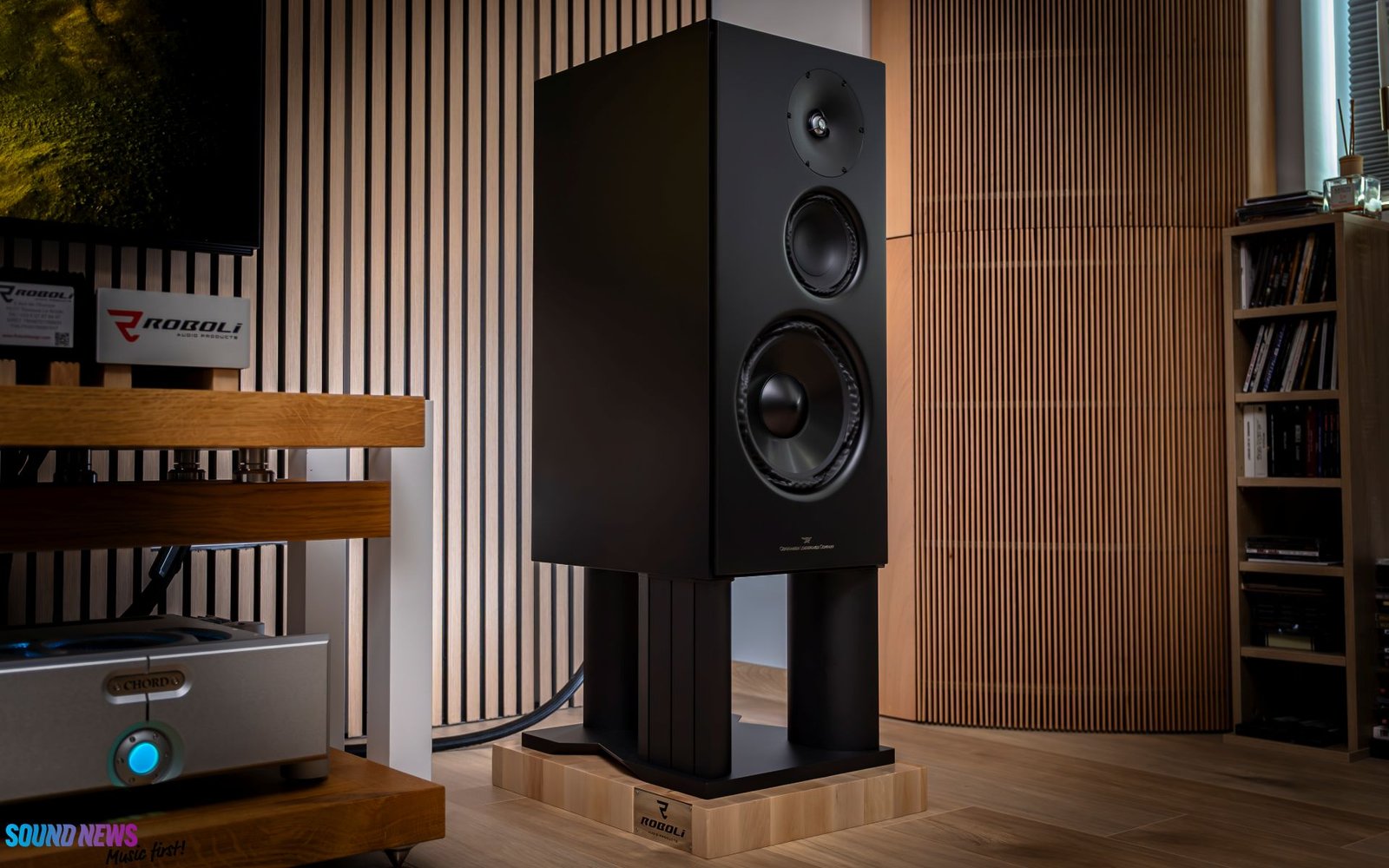
The CLC.Audio CLC65
Every great story has a sad begging and a happy ending, and while I cannot predict the future of these speakers, but for me, their story started in a much merrier fashion, more exactly at the Audio Video Show Warsaw last year (here’s our show report written by yours truly). I casually entered a relatively small room where Gato Audio were presenting the newly established Copenhagen Loudspeaker Company (or CLC for short), with the CLC65 being the only model in the room. I immediately became intrigued by the massive Purifi drivers. At that time, I had no idea how much these would end up costing, but I liked the idea of using Purifi-only drivers on the front baffle, and I was even happier to see those ginormous 10” passive radiators on their back, that won’t just fill in the low-end gaps, but would further improve the scale of the music on all axes, things that I already experienced many times by now. (Have you ever wondered why portable Bluetooth speakers also use passive radiators? I think you should). So, I sat down with my team, pressed play, and we let the music do its magic. A few tracks later and we already started whispering silently if these deserve out coveted Best of Show award. We ended up offering three awards for speakers at various price points and the most affordable from the list was the CLC65, still part of the winning Olympics team Their purity of tone and texture was mesmerizing to say the least, they had an unusual sound that didn’t rely on artificial brightness or exaggerated treble energy as many loudspeakers do nowadays. The background was pitch-black and the sounds were appearing out of nowhere, pushing a low-end that simply wiped the floor with us! Their presentation was never sterile or fake…quite the contrary! The longer we listened, the more difficult it became to leave the room, staying for more than half an hour even if hundreds of other rooms were still waiting for our arrival.
Months later, and a jacked courier casually asks me if I have the tools to move out a 120-kilo (~265 lbs) package into the house. You’re joking, right, I asked? A few hours and liters of sweat later and we finally moved the massive package into the house. The CLC branding on the cardboard boxes didn’t ruin my excitement, as I knew that at least a month of relentless HiFi bombardment for my neighbors would follow shortly. After examining the production version, researching the Purifi drivers and the crossover components and then calculating the approximate value of the parts inside, their asking price started NOT making sense to me. At €9,490 per pair, the CLC65 is certainly not an impulse purchase, but considering its extraordinary component quality, massive construction, and direct-to-customer business model, it might be one of the most honestly priced high-end loudspeakers available today…and that’s my genuine impression. Of course, hearing them in a controlled environment at a HiFi show is one thing, and living with the production version in my house is something else entirely. But don’t worry, I will leave no stone unturned, I’ll inlcude plenty of objective and subjective impressions, using electronics I know so very well, playing in an acoustically treated 35-square-meter listening room, and then casually comparing them with my Raidho TD2.2 reference loudspeakers costing four times as much. The production version needs to prove if the magic survived the journey from an exhibition room to the SoundNews HQ and as you can guess, my expectations are anything but modest.
Alright everyone, it’s time to hit some eardrums and find out whether the Copenhagen Loudspeaker Company CLC65 is merely an outstanding value proposition or one of the most important loudspeakers to emerge from Denmark in recent years.
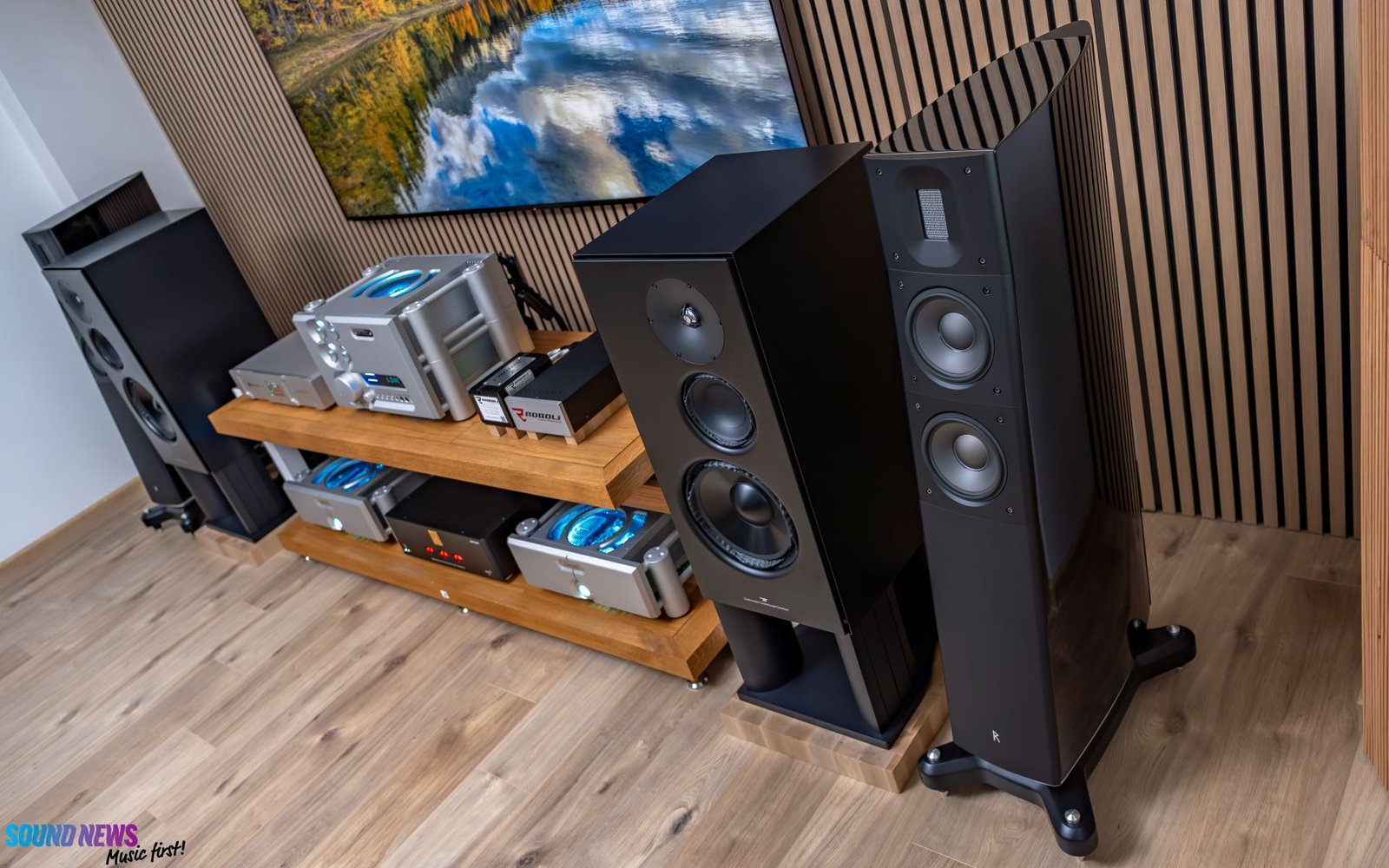
Design & Build Quality
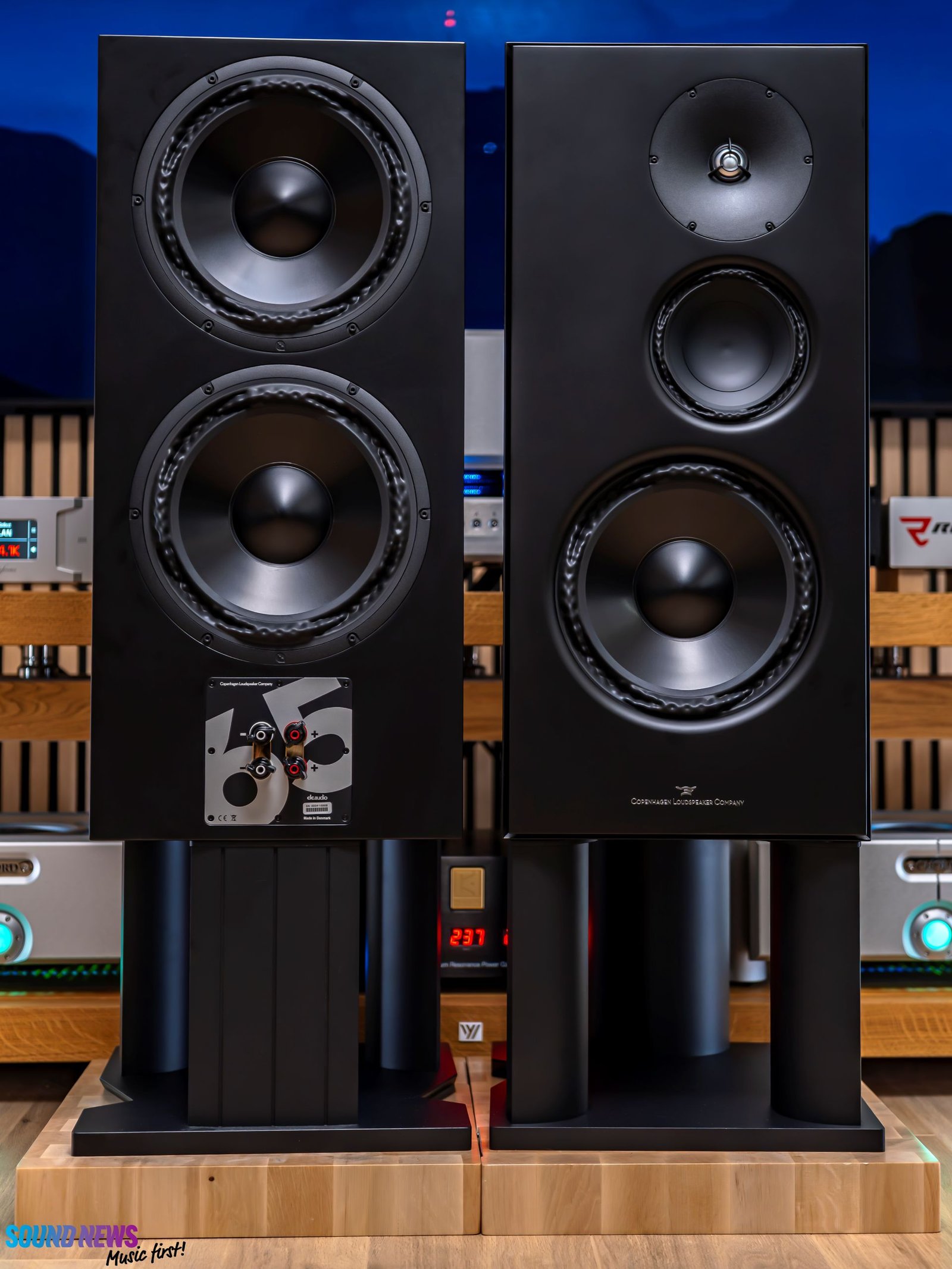
As CLC.Audio puts it, the CLC65 is the world’s first commercial 3-way loudspeaker built exclusively with Purifi drivers. Designed, developed and hand built in Copenhagen, Denmark. As for me, the more I look at them the more I see a muscular shape and a slightly industrial appearance. There’s a sense of Nordic strength throughout their design, you just look at them and you already know that Odin sons built them. The speakers feel grounded and purposeful built rather than decorative, which suits the entire philosophy behind the product. Beauty was always subjective, some listeners may prefer the sweeping curves of an Italian loudspeaker, the futuristic carbon-fiber shapes of modern French designs, or the jewelry-like construction of certain ultra-high-end speakers. Obviously, the CLC65 followed a different path.
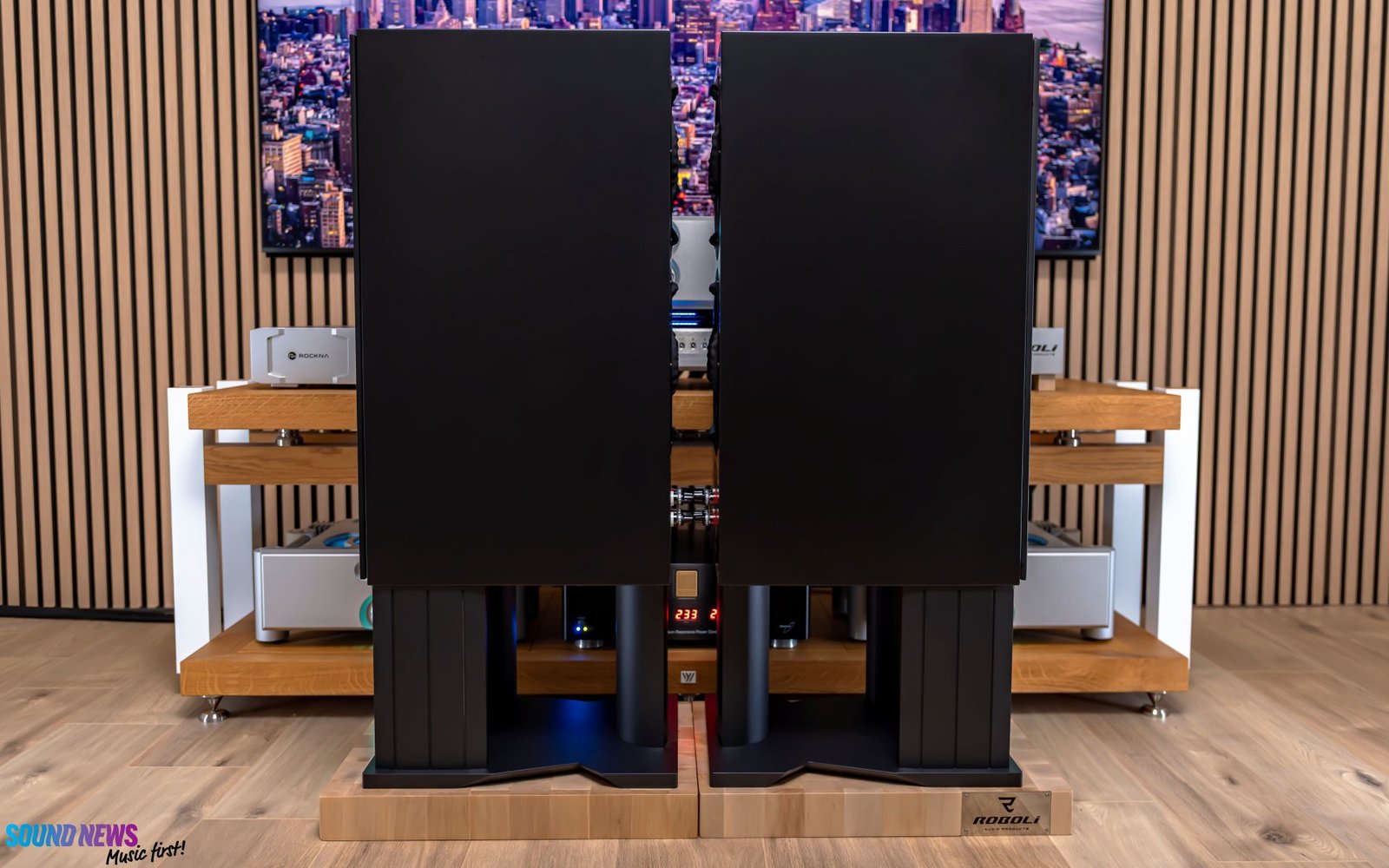
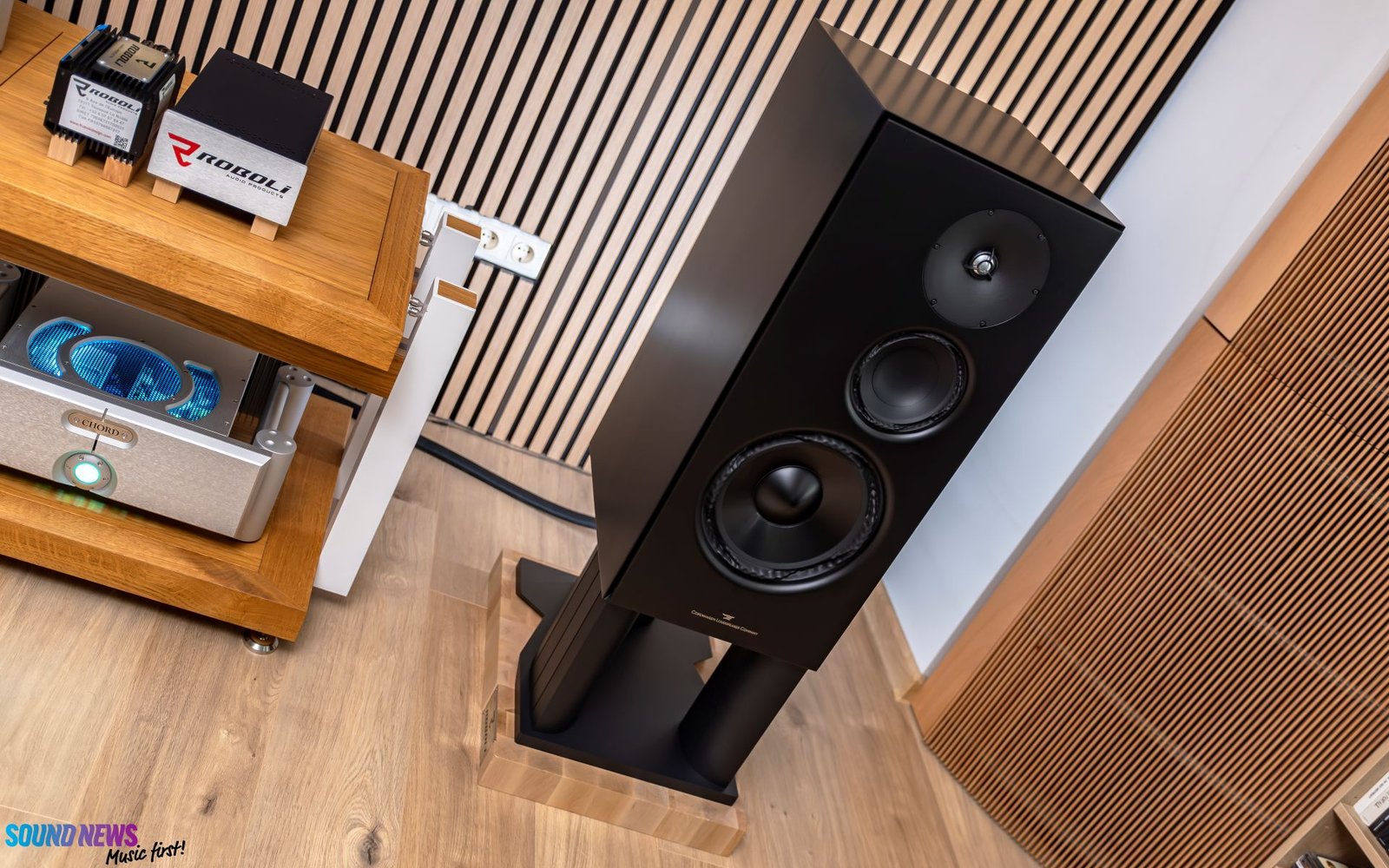
Calling the CLC65 a stand-mounted loudspeaker feels…technically correct, but visually? It does not compute. Yes, their cabinets sit on metal stands extending all the way down, but there is nothing petite, or bookshelf-friendly about them. Each enclosure measures 330 mm wide, 720 mm tall, and 408 mm deep, having a rather serious 40 kilos (~88 lbs) body weight per speaker and yes, I have reviewed floorstanders that weighed less than that (Ø Audio FRIGG 02 rings a bell).Once you include the massive metallic stands, the CLC65 behaves and looks much more like a compact floorstanding loudspeaker rather than a conventional bookshelf. Their overall appearance follows a distinctly Scandinavian recipe. The lines are clean, without unnecessary curves, or decorative pieces trying to justify the asking price.
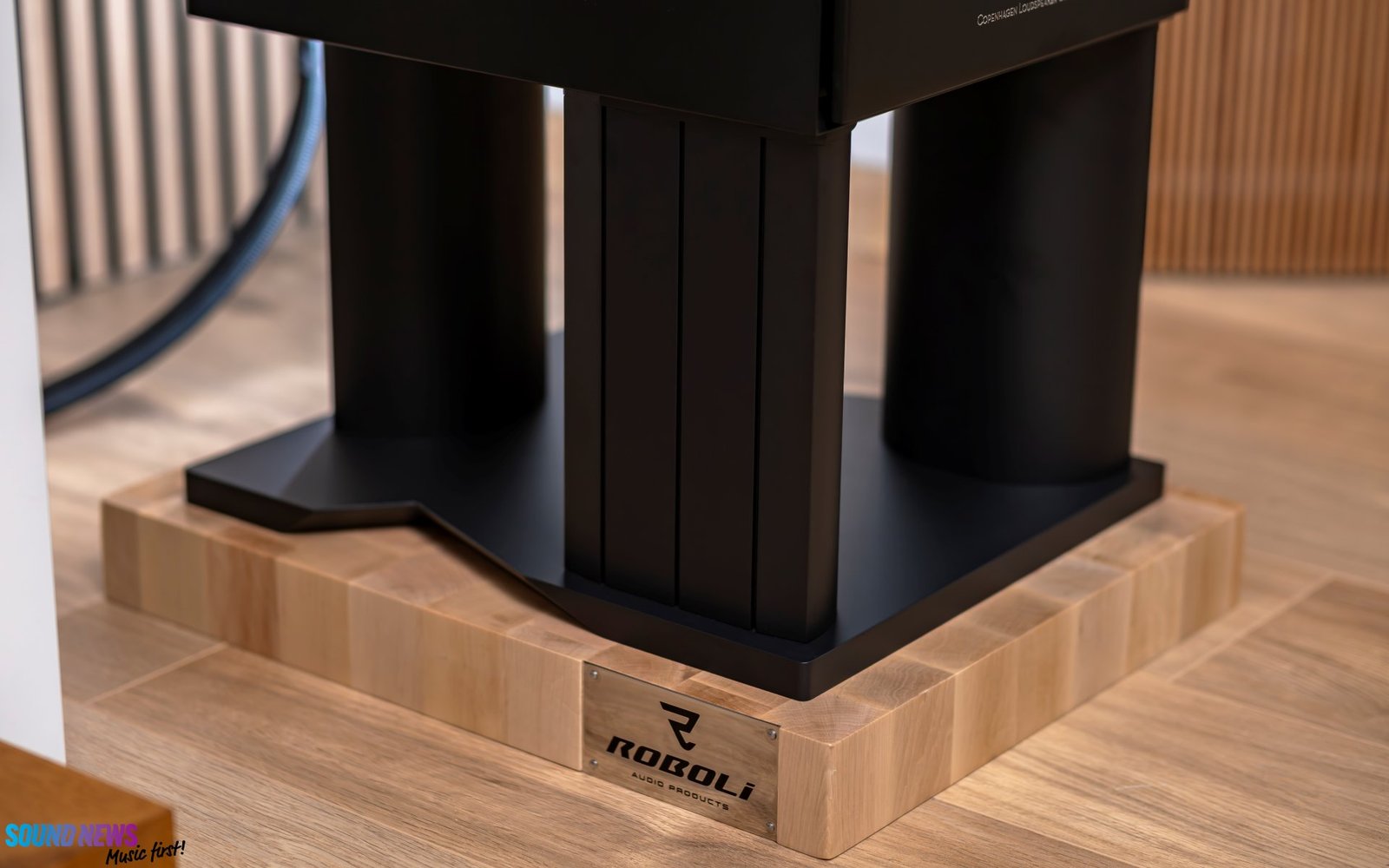
The cabinet is essentially a large rectangular enclosure with gently softened edges; we get a rectangle front baffle with three vertically aligned Purifi drivers doing most of the visual talking. Depending on your tolerance to fingerprints, you can choose between satin black, satin white, or a satin walnut real-wood veneer. The walnut version is probably the warmest and most welcoming of the three as it adds a natural texture that softens the otherwise technical personality of the speaker.
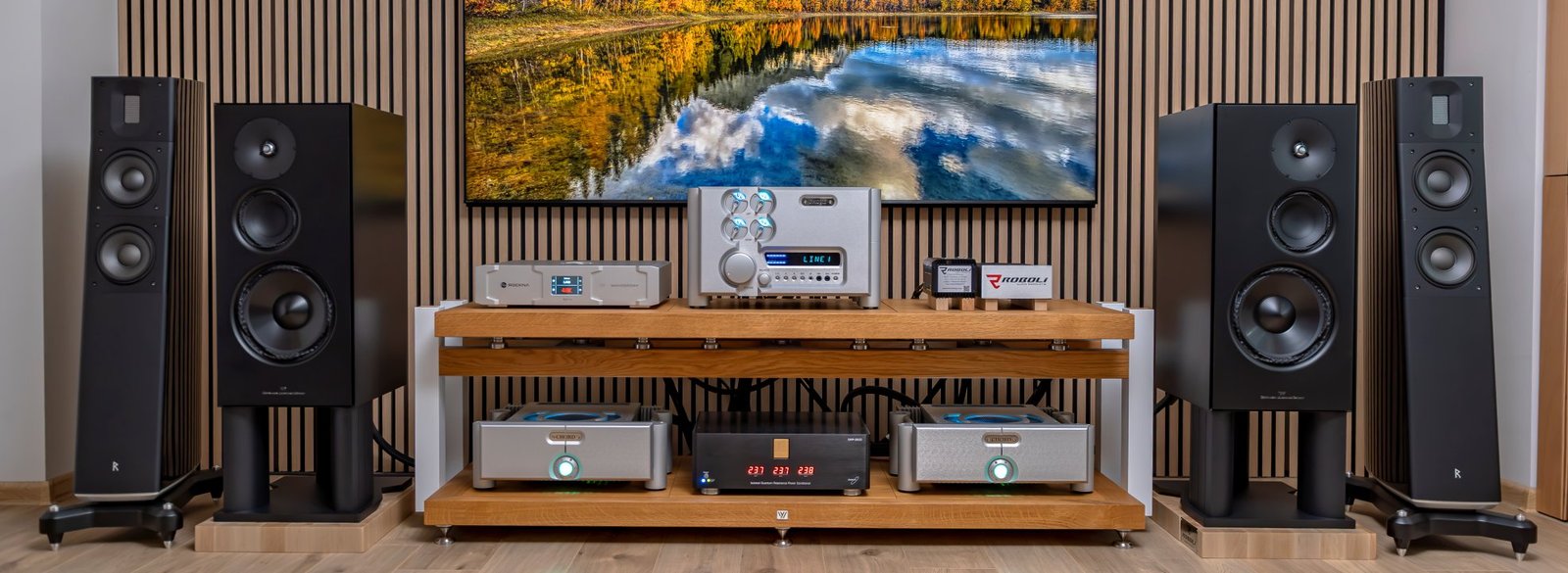
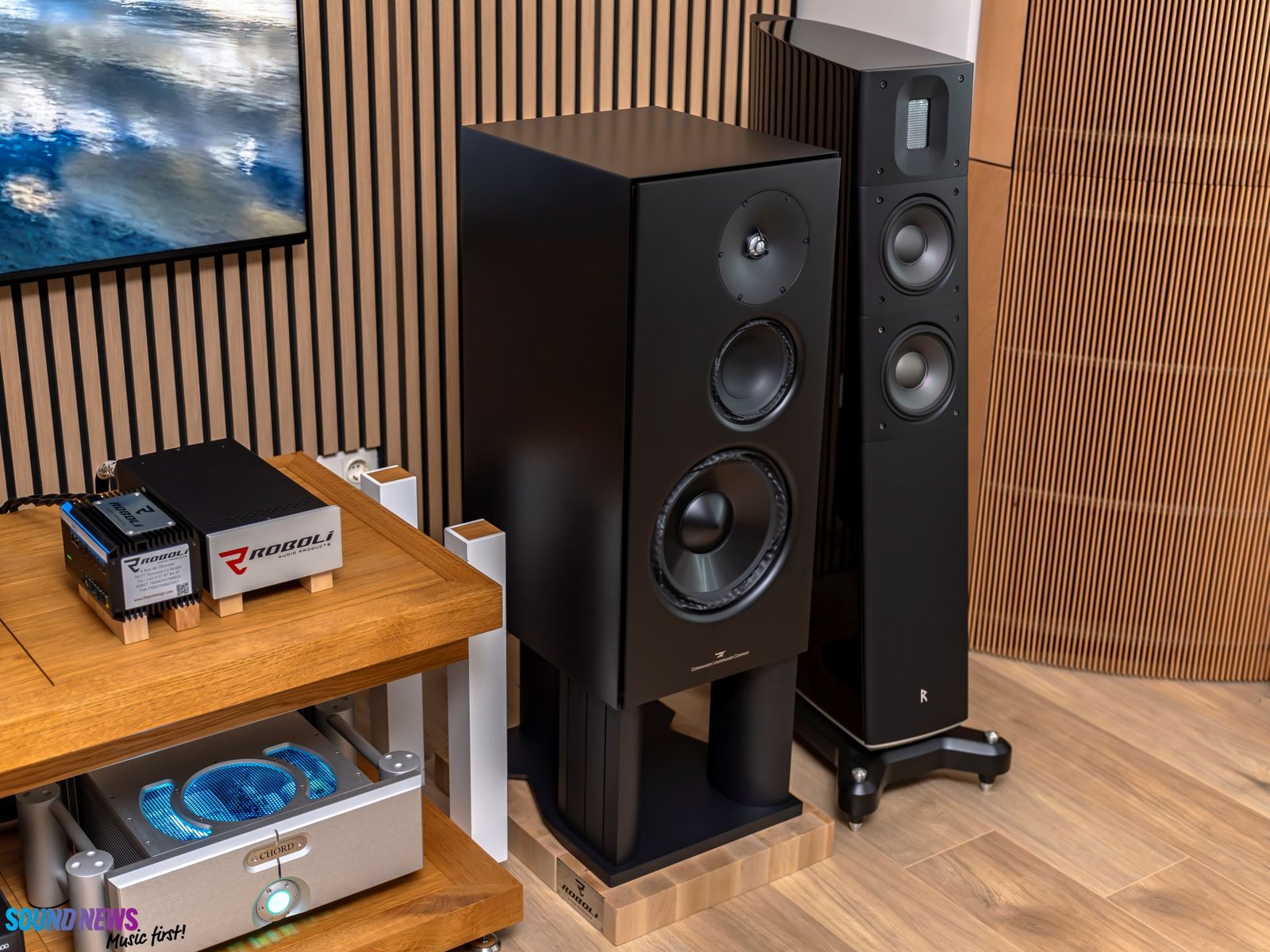
The dedicated metallic stands are selling separately for €990 and deserve their own paragraph because calling them “stands” does not quite capture what’s happening here. These aren’t mere hollow tubes filled with sand or lightweight platforms added as an optional accessory. These are massive structural assemblies designed specifically to carry the weight of the CLC65 cabinets and keep them stable, creating a support system that feels more like part of the loudspeaker than a separate product. And once everything is assembled, the cabinet and base form a single visual object. The result looks closer to a compact floorstander (here’s their stance near my Raidho TD2.2 standfloors) with an open lower section, looking A LOT LESS like a conventional bookshelf speaker sitting on a stand.
Technology Inside the CLC65
I. The Drivers
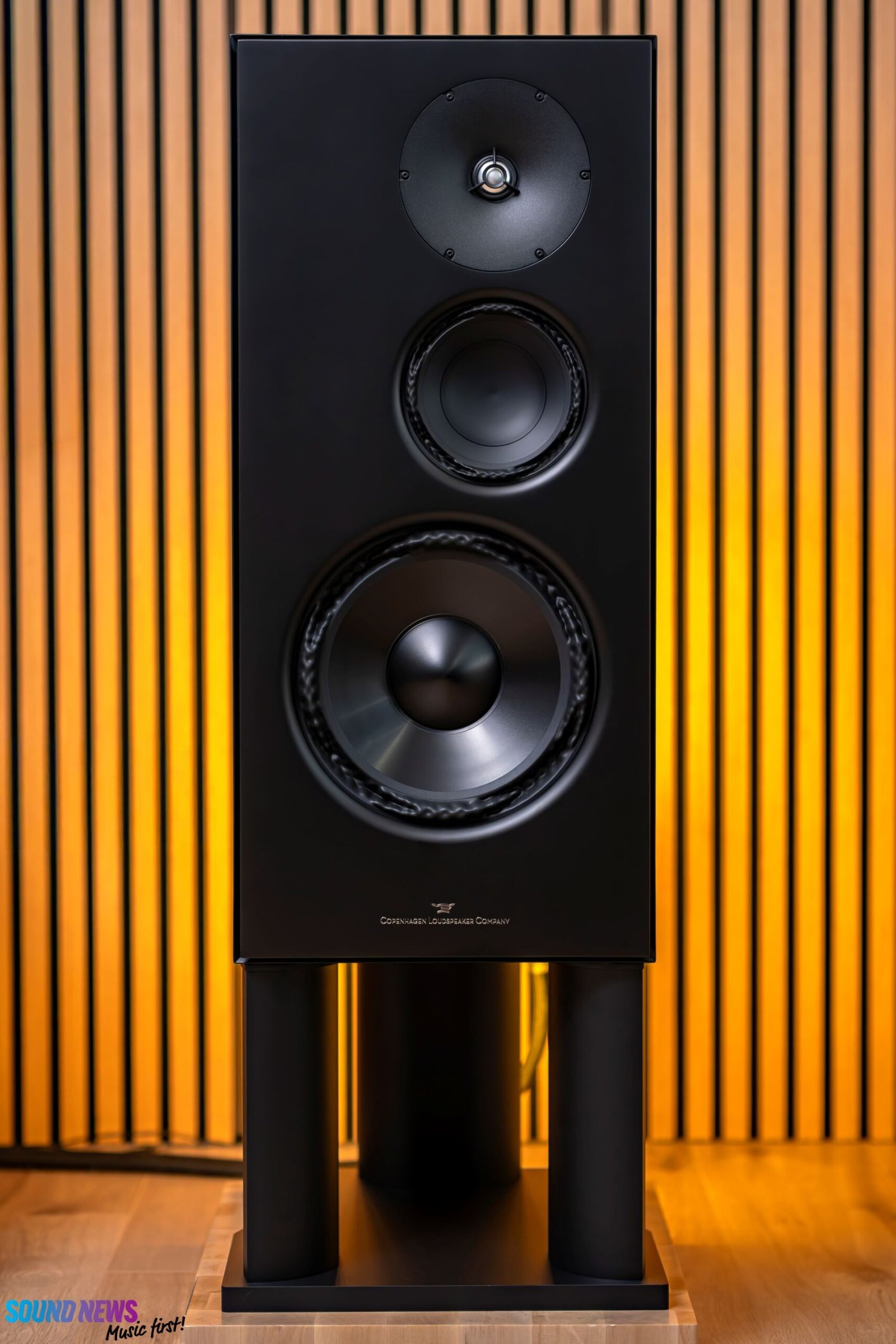
The CLC65 is a three-way design using Purifi transducers across the entire frequency range. According to CLC, this makes it the first commercially available three-way loudspeaker built entirely around Purifi drivers.
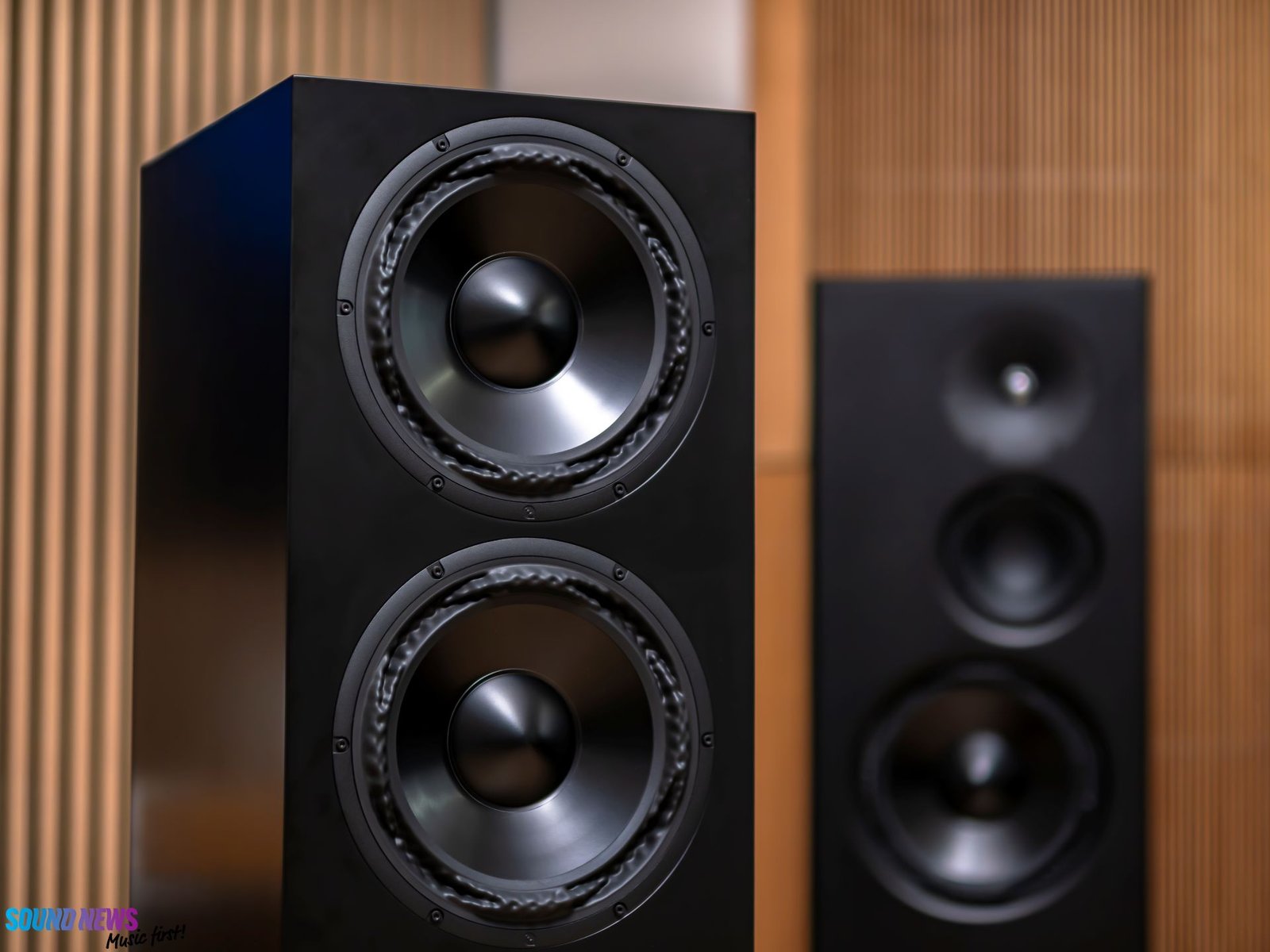
Each cabinet uses a 33 mm PTT1.3 aluminium-dome tweeter inside a massive 147 mm waveguide, a dedicated 6.5-inch PTT6.5M paper-cone midrange, a 10-inch PTT10.0X long-excursion aluminum woofer, and two rear-mounted 10-inch PTT10.0PR passive radiators. The result? Ten Purifi transducers for a stereo pair. These Purifi drivers are instantly recognizable by their wrinkled surrounds and that shape is intentional. Purifi calls this design NeutralSurround, created to keep the effective radiating area more consistent as the cone moves, reducing distortion during large excursions. Its PureDrive motor system also aims to keep the magnetic force acting on the voice coil stable throughout its travel. In simple terms, Purifi wants its cones to follow the signal faithfully, regardless if it’s a whispering vocal or thunderous bass line capable of rearranging your furniture in the room.
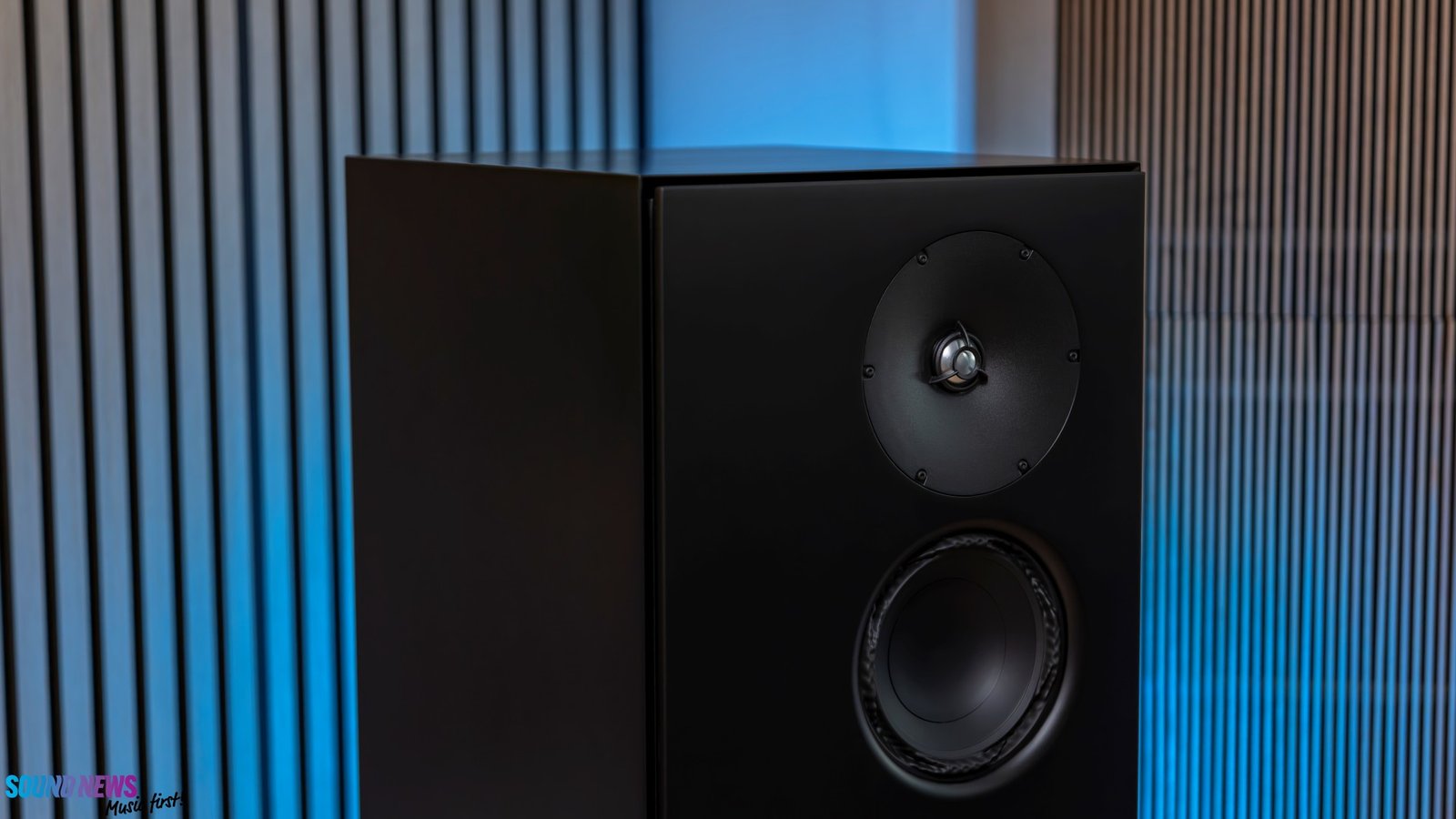
Your eyes will probably move first toward the large tweeter assembly. The 33 mm Purifi tweeter sits inside a substantial 147 mm waveguide, which occupies much more surface area than the tiny circular faceplates we normally associate with dome tweeters. It doesn’t sit exactly in the middle and CLC recommends playing with positions inside your listening room, first with tweeters sitting inward and then outward, experimenting which option sound’s best to you, trying to reach a sweet spot without a lot of toe-in applied. In my case, tweeters located outward sounded a bit more open and 3D, but in a smaller room with little to no acoustic treatment, they might sound better with tweeters located inward. The waveguide is not a visual trick, of course. It helps control dispersion (directly influencing the sound’s openness) and improves the integration between the tweeter and the midrange around the crossover region.

Below the tweeter sits the 6.5-inch Purifi midrange driver, but do not let its size fool you. Its beautifully finished cone makes it clear that this is no ordinary off-the-shelf driver…and well, its high asking price is a strong argument that we are dealing with a cost-no-object transducer. It operates between approximately 250 Hz and 2 kHz, covering the region where most musical information lives. Vocals, guitars, piano, brass instruments, and much of the percussion pass through this single driver. Since it does not reproduce deep bass, its moving system can be optimized for sensitivity, speed, and low distortion.
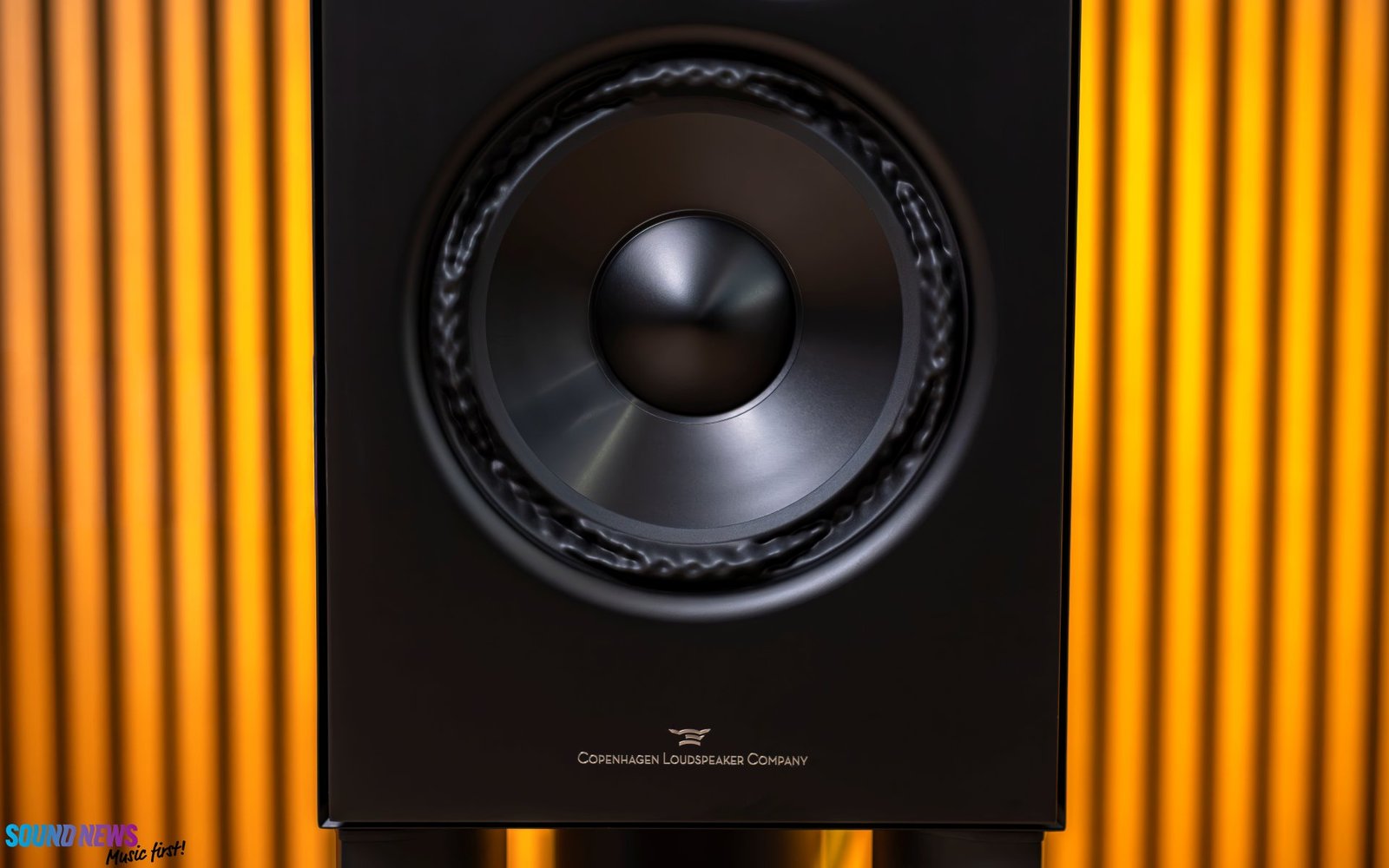
The same design language continues further down, where you’ll find the real Firestarter: Purifi’s 10-inch PTT10.0X long-excursion woofer. This aluminum-cone beast can move almost 15 mm in either direction while remaining inside its linear range, capable of moving serious quantities of air, but more about that in a jiffy. But the impressive part is not just how much air it can move, but how accurately it can stop. Producing lots of bass with a massive 10” driver is easy, but producing it without blur and distortion is way harder.
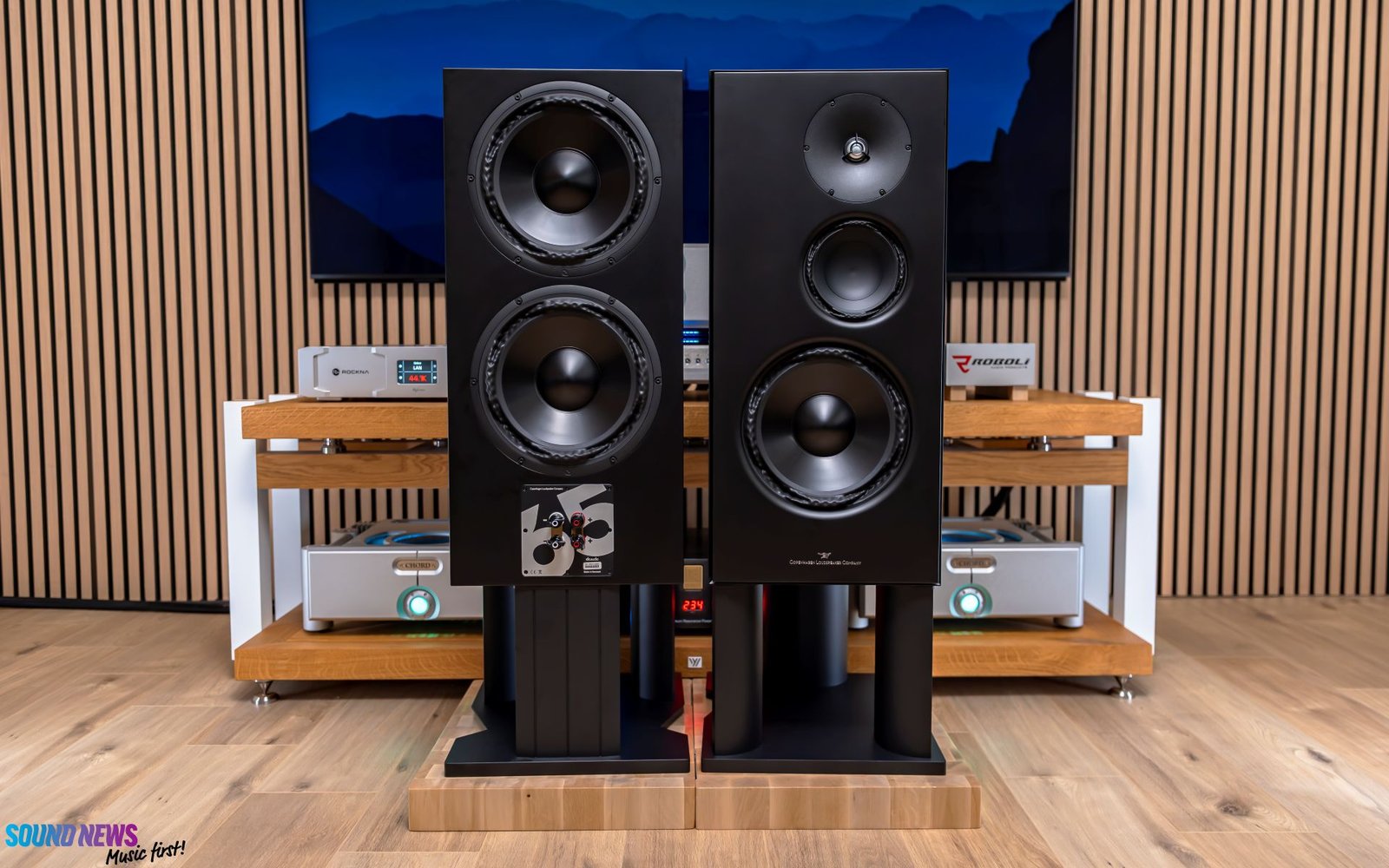
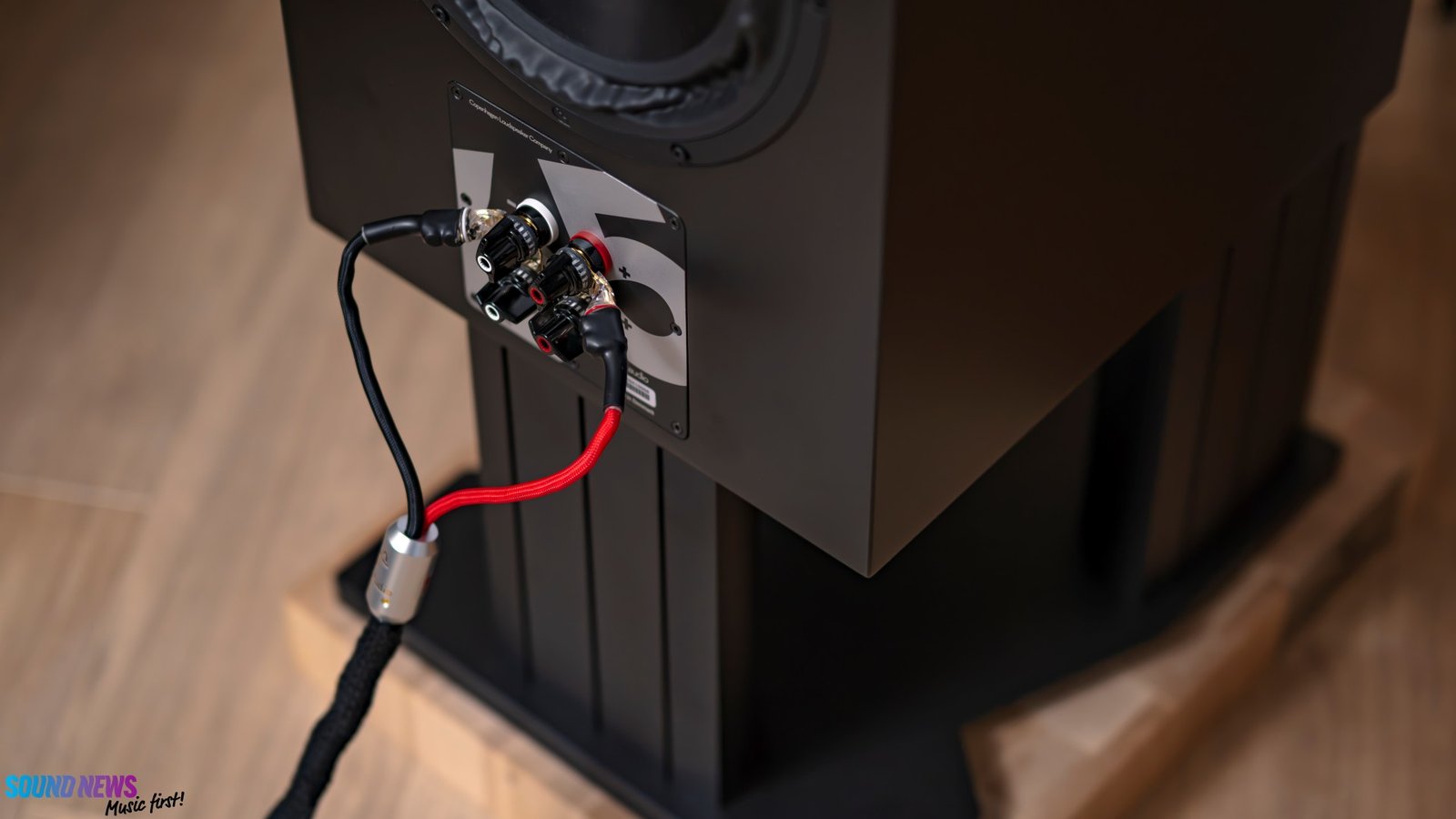
Casually walking around the back, you’ll quickly realize that the front baffle was only half of the story. Each speaker uses not one, but two rear-firing 10-inch Purifi passive radiators! That means four enormous drivers for a stereo pair. Instead of relying on a conventional bass-reflex ports that pushes air through a plastic or metal tube, CLC uses these passive radiators to extend the low frequencies while keeping unwanted port noise out of the picture. You can find miniature versions of them in portable Bluetooth speakers, helping those tiny boxes produce bass notes that seem physically impossible for their size. The same principle is applied here, but on a more terrifying scale. Their presence also means that I would not push the speakers directly against the rear wall. It’s true that passive radiators behave more gracefully than a traditional rear-facing port, but they still need room to breathe and I’d recommend leaving at least ~40cm from the wall, otherwise you’ll invite Big-Bada-Boom-Bass trouble in no time.
II. The Crossover
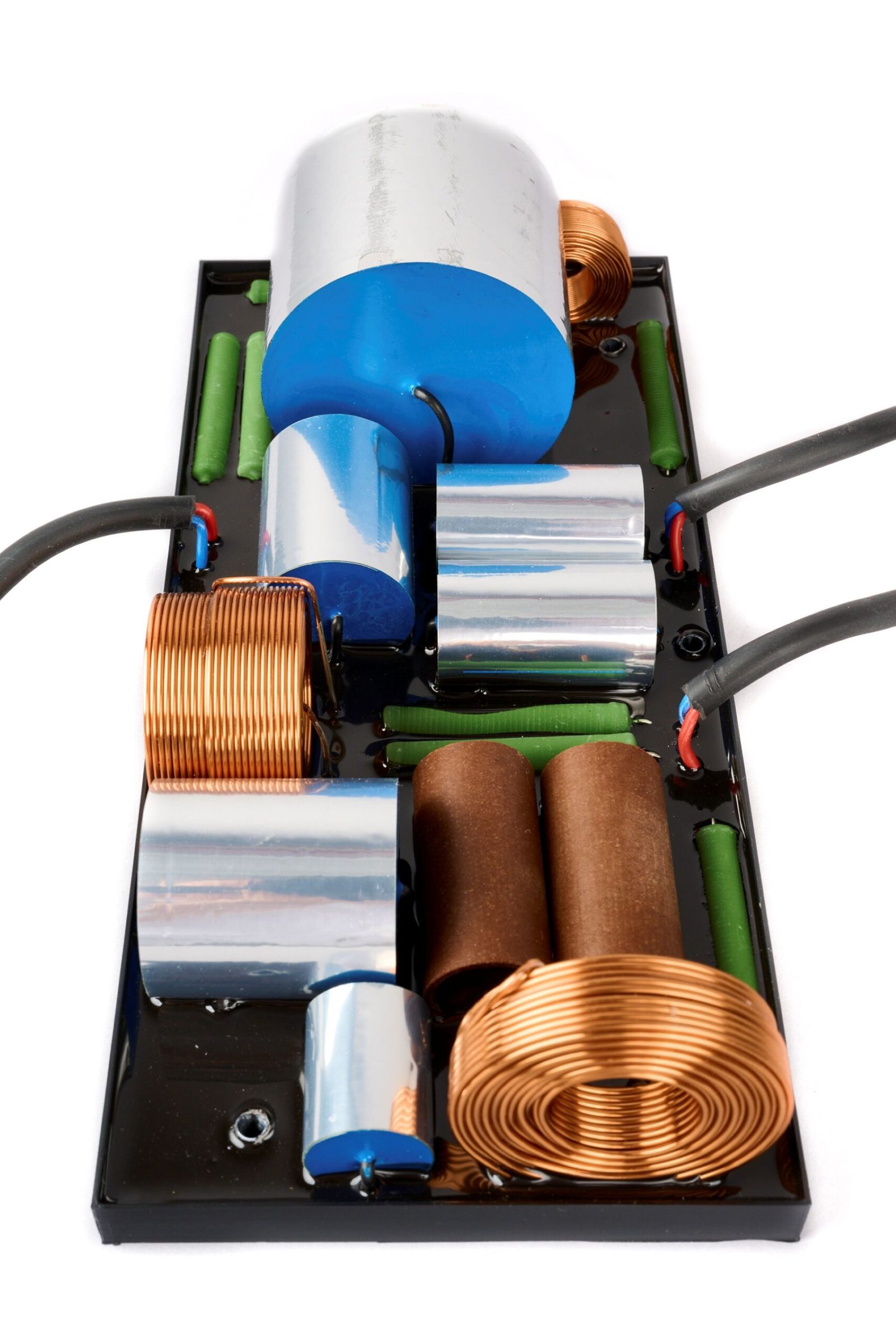
After spending all that money on ten Purifi transducers, it would have been tragic to connect them through crossover parts normally found inside a budget monitor speaker. Thankfully, CLC didn’t shoot themselves in the foot. The CLC65 uses a fundamentally second-order crossover with transition points at 250 Hz and 2 kHz. CLC used lots of air-core inductors, ClarityCap ESA film capacitors, pure-copper-foil bypass capacitors, and a low-resistance Jantzen C-Core inductor in the bass section.
The component quality is impressive, but expensive ingredients alone do not guarantee a delicious meal. The real magic lies in selecting the correct values, matching the acoustic slopes, controlling directivity, and ensuring that all three active drivers behave like one coherent source.
Test Equipment
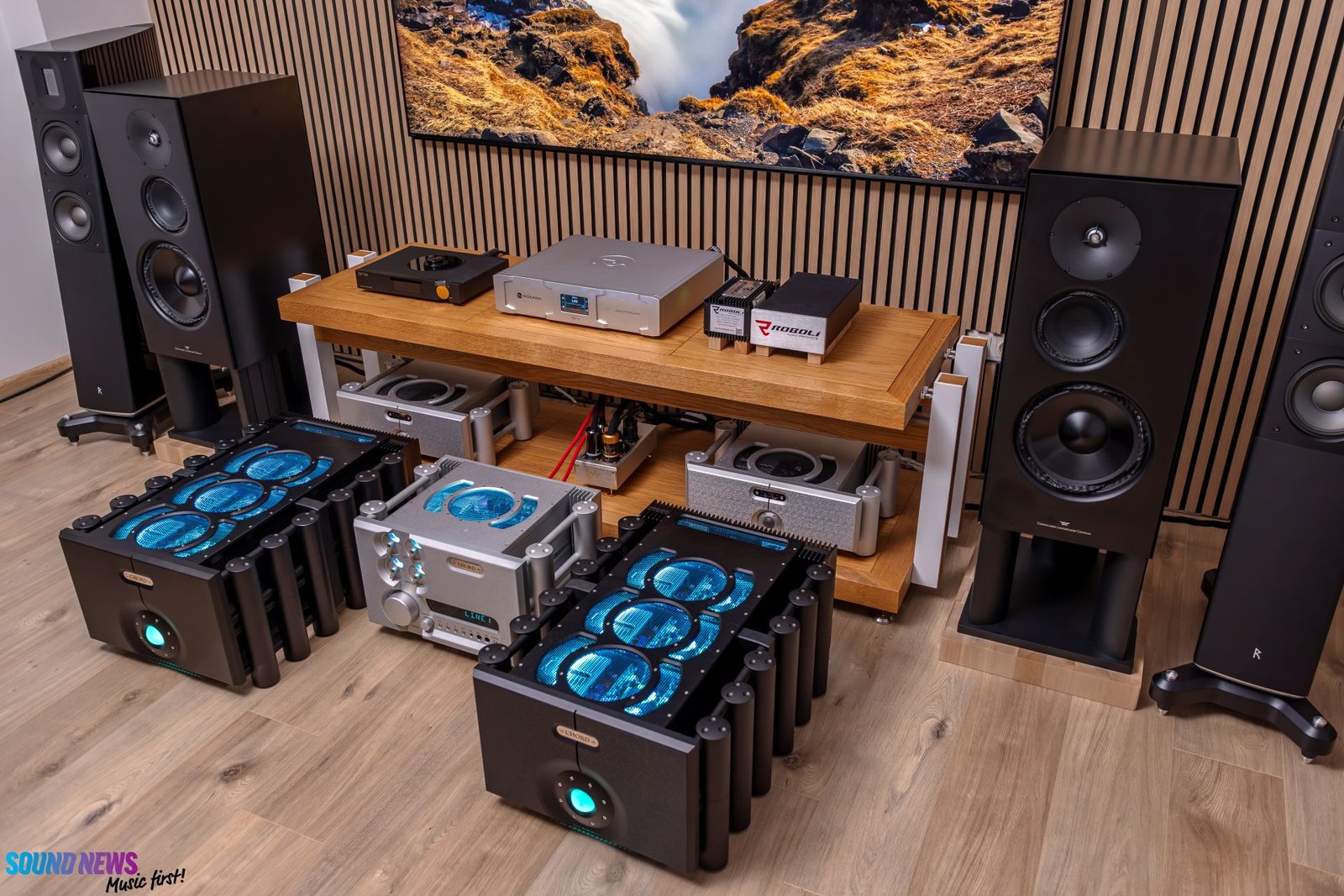
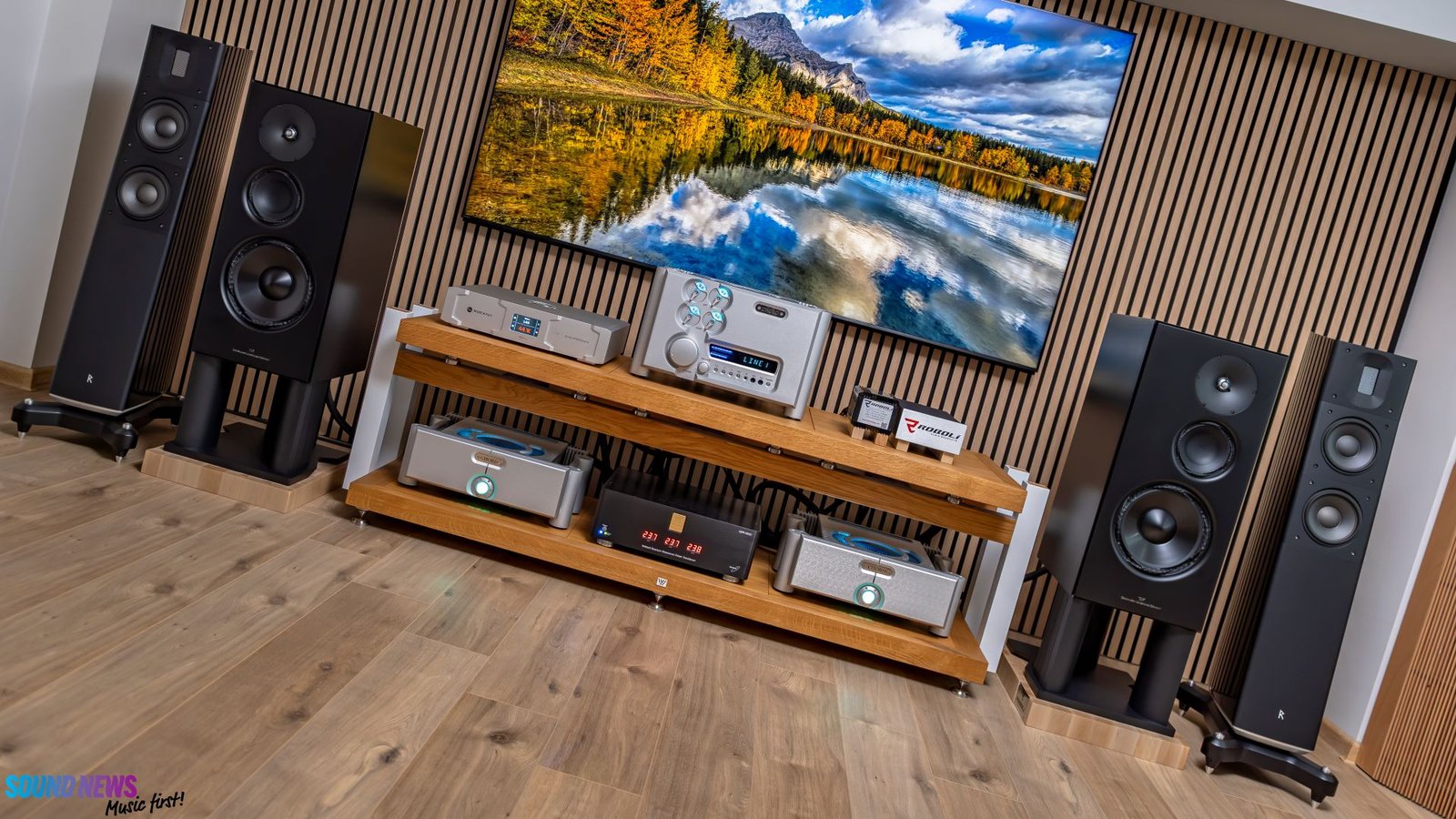
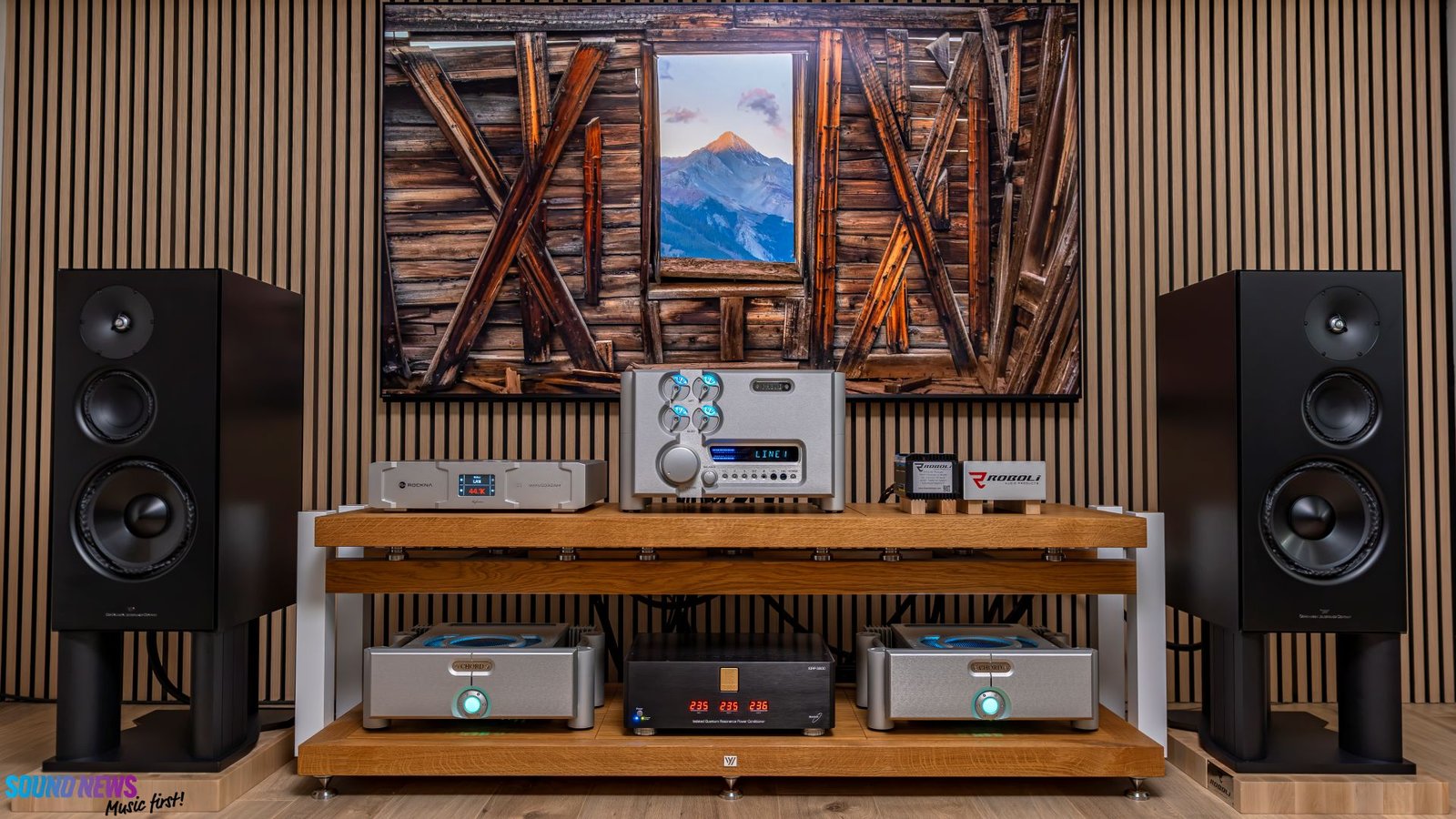
Besides the usual suspects that most of you already know, I had the pleasure of testing the absolute best power amplifiers Chord Electronics makes, the Ultima Mono behemoths producing some whopping 1405 Watts per channel in 4Ω and ~3000W in 2Ω with peak current exceeding 500 Amperes! And I’m not sure beastlier amplifiers exist today. For the best results, I used the matching Chord Ultima PRE purchased a few months ago. Streaming and digital to analog conversion duties were handled by the Rockna Wavedream Reference Signature DAC which in turn was receiving data via Ethernet from a Roboli UltraLine Switch 240. After the 3-week honeymoon ended, I went back to my Chord Ultima 3 Mono amplifiers, which still produce 1000 Watts per channel into 4Ω. Everything was powered by a KECES IQRP 3600 balanced power conditioner and all of the cabling used was of AudioQuest Dragon breed (power, interconnect, HDMI and speaker cables), including a Crystal Cables Da Vinci Ethernet cable.
Measurements
No loudspeaker review feels complete without a frequency response graph. Manufacturers tend to measure their speakers in an anechoic chamber and tune the sound toward the most linear response possible, but since real-life listening happens in normal living rooms, I strictly believe actual measurements in my listening environment are more meaningful. As you can expect, all of the furniture, speaker’s placement, acoustic treatment and listening distance will dramatically change the final tonal balance, which means the same speaker can sound completely different from one room to another. The speakers were measured in my listening room, at an actual listening position, giving you a practical reference that can be extrapolated to normal usage, even if your exact curve will differ, most likely in the lower frequencies.
And we come to a very important note before reading the graph. The bass region, roughly 0 to 150 Hz, is heavily dominated by room modes and boundary loading, so it deserves the least attention when judging the speaker itself. The more valuable part is what happens above that region, where the room influence becomes more manageable, and it is where, in this case, we see something genuinely impressive.
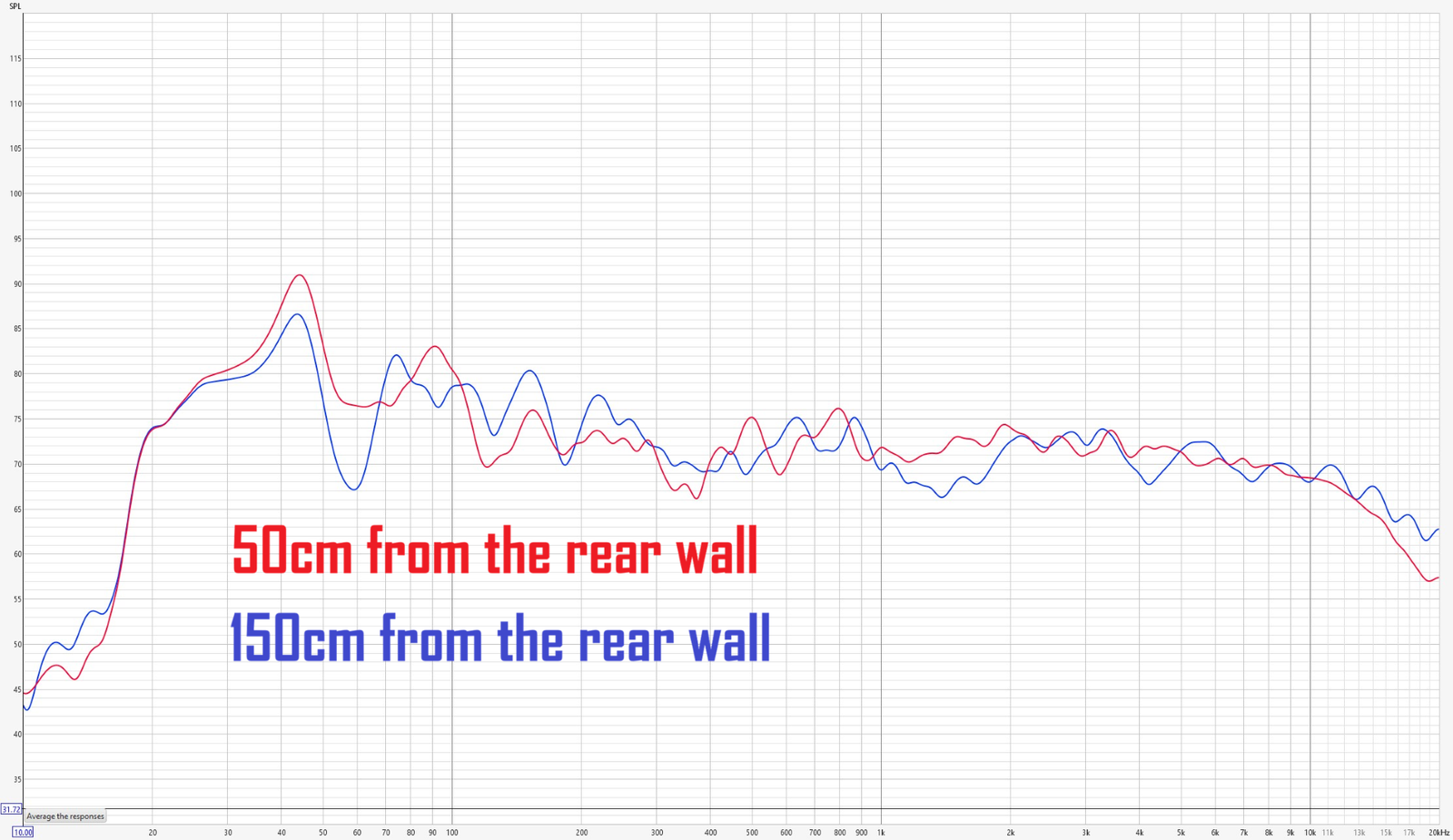
CLC65 off-axis in-room frequency response.
The graph shows two different measurements taken at the same listening position, with the speakers off-axis, with one major change: distance from the rear wall. The red trace shows a clear rise in bass energy, especially from roughly 30 to 60 Hz. Please ignore the big spike, as that’s usually caused by a room. You can clearly see more bass output compared to the blue trace and you can certainly hear that easily. This is exactly what room loading tends to do when a floor stander moves closer to a wall. In listening terms, this usually translates into more weight and additional bass rumble, with a higher chance of boominess, note thickening, and even lagging on certain bass notes.
The blue trace looks noticeably more restrained in the low end and the 50 to 70 Hz slope is where my bass traps are doing most of their job. Overall, the bass peaks are no longer dominant, making the bottom end easier to control. While you lose some impact from the lowest octaves, you also gain a slight midrange bloom that makes the music more natural to my ears, infusing richness and a higher note weight between 100 and 400 Hz. What’s truly interesting is the performance and overall tuning of their tweeters. Starting with 10 kHz there is a very gentle slope that is slowly removing treble energy excess. In real time listening tests I can hear lots of sparkle and bite up top, but without making me lower the volume and skip treble intensive tracks altogether. I’m not sure if this is how Purifi tuned tweeters or maybe it has to do with the crossover tuning by CLC, but I certainly like the way the upper treble integrates into the room, letting me enjoy even treble intensive tracks for a couple of hours without getting any traces of listening fatigue.
And with everything out of the way, let’s hit some eardrums and broadly discuss their sound signature.
Sound Performance
I. Preliminary Sound Impressions
We have already auditioned plenty of loudspeakers using Purifi drivers, and the most recent example was the Lyngdorf CUE-100, another Danish creation built around a single 6.5-inch Purifi aluminum-cone mid/bass driver and two matching 6.5-inch passive radiators. At €19,980 per pair, they retail for roughly twice the price of the CLC65. We liked them so much that we awarded them our Gold Award, and I still remember my colleague Catalin asking whether a pair could somehow be secured at a slight discount. He genuinely loved their sound and, above all, their purity of tone.
The CLC65, however, are considerably larger loudspeakers in every possible way. They are wider, taller, deeper, and much heavier, using significantly larger drivers arranged in a proper three-way configuration, with Purifi transducers handling everything throughout the cabinets. I have now been listening to them for more than a month, and during this period the entire SoundNews team came over for a proper audition, naturally accompanied by a glass of gin and tonic. Several close friends followed shortly afterward, specifically to hear the CLC65 because, sadly, there is no local showroom where you can casually walk in and audition them. And that brings us to people like me, who now have the rather difficult task of explaining with mere words how these speakers behave across every possible musical genre. I counted more than fifteen people visiting my den for a listen. Some had no idea how much the speakers cost, knew nothing about the Purifi drivers, and had absolutely no clue what was hiding inside those massive cabinets. What they all had in common was a genuine love for music. And within seconds, almost every single person noticed the same thing. Her Majesty, The Bass! I am talking about one of the most impressive low-end deliveries I have experienced in my listening room.
Speaking for myself, after testing dozens of loudspeakers, owning quite a few of them over the years, and auditioning hundreds more at HiFi shows around the world, I am not sure I have ever encountered such a powerful low-end presentation that remained this clean once the volume climbed at 100 dB and beyond. The first thing that announces itself is their chest-pounding impact. With the right amplifiers, the CLC65 can sound absolutely thunderous. Genuine 20 Hz information becomes clearly audible, yet even as the SPL rises, the low-end refuses to collapse into distortion, or uncontrolled rumble. At times, it genuinely feels as though they are bending the laws of physics and acoustics at the same time, but this is exactly the sort of behavior Bruno Putzeys and the Purifi engineering team wanted from these low-distortion drivers. I cannot provide laboratory distortion figures of my own, but subjectively, the behavior is remarkably clean. No matter how hard I pushed the CLC65 with those colossal Chord ULTIMA MONO amplifiers, I never noticed individual notes stepping out of line, smearing into one another, or generating obvious pre- or post-ringing artifacts. And this might be the single biggest achievement of the CLC65.
You keep raising the volume. You can no longer hear the person sitting next to you on the sofa. You start shouting at each other just to ask who is choosing the next track, yet the presentation still refuses to fall apart. Everything remains pure, composed, properly aligned in time, and impressively clean, without ever becoming clinical or thin sounding. I would not call them colored loudspeakers, nor would I describe them as obviously dark or bright. The bass region is unquestionably the star of the show, and there might be a very gentle tilt toward the darker side thanks to a small uplift in bass energy, a touch more weight through the lower midrange, and a slow treble roll-off toward the highest octaves. Still, I would not call that coloration in the traditional sense. The overall presentation remains faithful to the source, only with a considerably higher fun factor thrown into the equation. And that fun factor is precisely why I’m returning to them day after day.
There is also a strong social aspect to these speakers. Their physical bass impact immediately puts smiles on familiar faces and turns the listening session into a conversation starter. I mean, how many times have you genuinely experienced 20 Hz notes in your own room? Out of curiosity, I sent a 20 Hz sine wave at 75 dB into the system and watched the meter settle at exactly 74 dB. My jaw hit the floor. Seventy-four decibels at 20 Hz, without losing more than a single dB relative to the test signal. And that, my friends, is what makes the CLC65 feel genuinely complete from top to bottom. The entire audible frequency range is covered with confidence, and since we are dealing with top-tier Purifi transducers throughout, you can already expect a TON of information to come your way. And that is exactly what we need to talk about next.
II. Resolution / Detail Retrieval
I can be pretty mad about resolution. In fact, it is usually the first thing I hunt for when reviewing new loudspeakers, headphones, or D/A converters. For me, detail retrieval is one of the main qualities that separates truly legendary products from ordinary ones. I am sure most of you have heard plenty of mediocre speakers and headphones by now. They are literally everywhere, and once you have experienced what a genuinely transparent, revolutionary-sounding system can do, it becomes surprisingly difficult to go back and toe-tap enthusiastically to something that hides information, smears textures, or simply places a veil between you and the recording.
Now, I am not going to bend reality or play games with words, because I live in the real world and I want to be very clear about what I am going to say next. The CLC65 are not the most resolving or detailed loudspeakers I have heard in my life. They are still not on the same level as Børresen’s M-Series, Raidho’s TD Series, or Magico’s M-Series, which I personally consider to be among the cleanest and most resolving loudspeakers I have experienced so far. But let us also inject a healthy dose of reality into the discussion: those speakers are vastly more expensive, in some cases costing several times and occasionally tens of times more than the CLC65. However, I would comfortably place the CLC65 alongside some of the finest loudspeakers I have heard from Bowers & Wilkins, Focal, KEF, Dynaudio, and several other established manufacturers when it comes to pure detail retrieval. The all-Purifi extravaganza, combined with that wonderfully over-the-top crossover, results in a presentation that does very little to stand between you and the recording.
My Raidho TD2.2, which cost around €40,000, are still slightly clearer sounding to my ears, especially at the very top of the frequency range, where their ribbon tweeter remains an extremely difficult act to follow. Leading edges are a touch sharper, micro-information feels more exposed, and the smallest spatial clues can appear with slightly stronger outlines. But I also need to be realistic about the size of that difference. The advantage I hear through my roughly ~€180,000 reference system is small. Very small. Move the CLC65 into a simpler setup with less revealing electronics, more conventional cabling, and perhaps a room with less acoustic treatment, and that difference could shrink dangerously close to zero or disappear altogether. A few melomaniacs who came over for a listen certainly did not identify that gap as easily as I did. Most of them were far too busy being stunned by the airy treble, the exceptionally clean leading edges, and the way tiny musical intricacies were being uncovered as if somebody had placed the recording underneath a magnifying glass.
Several people even described the CLC65 as having an almost monitor-like clarity, and I completely understand what they meant. What makes them more interesting to me, however, is that they do not turn this resolution into an aggressive presentation. The CLC65 never throw micro-details directly into your face just to prove that they are resolving. I also never heard an obvious metallic tint accompanying the upper treble, which is important considering the aluminum tweeter. The sound remains clean and explicit, but never artificially sharpened. If anything, I would say the CLC65 sit slightly on the mellower, easier-to-digest side of neutrality. They let you enjoy all that information for much longer periods of time without adding bits of listening fatigue.
And the longer I lived with them, the more I realized something else. Sometimes I value a complete frequency range top to bottom, a greater physicality, and a stronger scale more than another tiny step in resolution. The CLC65 simply involve more of your senses. Music is not only becoming clearer; it also feels larger, heavier, and more physical. The same applies to movies, where deeper bass notes, wider spatial cues, and a room-filling presentation can create a much stronger emotional response than microscopic detail retrieval alone. In other words, more resolution is not always more fun. Yet fun matters, a lot. The 33 mm Purifi tweeter plays another role here. Thanks to its unusually wide dispersion and oversized waveguide, high-frequency information spreads evenly across the room. Even with little or no toe-in applied, I could still get a beautifully defined center image, with plenty of air between the notes and let’s talk about that.
III. Soundstage & Stereo Imaging
If you check the CLC65 user manual, then on page five you’ll find the recommended speaker placement and initial setup instructions. CLC recommends a toe-in between 10 and a maximum of 15 degrees, or even no toe-in at all in well-treated rooms. They also encourage experimenting with the tweeter and midrange drivers facing inward first and then outward, simply checking which configuration sounds best in your particular environment. Obviously, getting the official stands is pretty much mandatory in my book, as they are the single must-have accessory that will propel their sonics considerably higher. You get metallic spikes in the package, but I decided to use my Roboli wooden decouplers instead, mostly because I can slide the speakers much more easily across my hard wooden floor and play endlessly with their positioning without scratching anything in the process. To my surprise, the tweeter waveguides do a terrific job of spreading minute, low-level information throughout the room, even without any toe-in applied. What’s even more interesting is that with the tweeters and midrange drivers facing outward, I wasn’t losing center focus, and the speakers were still slowly disappearing from the room. Of course, what works best in my listening space might not be ideal in yours, but the biggest sonic changes happened when I altered their distance from the rear wall. Moving them closer immediately changed the low-end delivery and overall bass extension, while pulling them farther into the room tightened things up considerably. If you need some funky times, move them closer to the wall and watch your sofa slowly migrate across the room on bass-intensive tracks. Want cleaner bass and sharper center focus? Pull them closer to your listening position, and the leading edges will gain extra definition and stronger outlines.
As for the soundstage? In my case, it was always Biggity Big, with music completely wrapping around my body like a blanket of sounds. When you have three front-firing drivers and another two massive passive radiators working behind each enclosure, it’s only natural that the room pressurizes in no time, with sounds seemingly arriving from every direction imaginable. But seriously now, what would you expect from three 10-inch drivers per cabinet with long-excursion travel of roughly ±15 mm, accompanied by a few smaller drivers firing music at high SPL? It’s only natural that the scale of the sound becomes directly proportional to the size of the drivers and cabinets. Generally speaking, the larger the radiating surfaces and enclosures become, the easier it is to generate a genuinely large sonic picture. Small speakers and tiny headphone drivers will always impose certain limits on scale, while properly sized loudspeakers can unleash a wall of sound that slowly starts playing tricks with your imagination.
I remember hearing the Lyngdorf CUE-100 and being impressed by the scale they could produce, and the same applied to the Buchardt S400 speakers I had many years ago. Passive radiators aren’t there only to improve bottom-end extension and partially bypass the physical limitations of compact enclosures. They also provide additional moving surface area, which contributes to the overall sense of scale, room pressurization, and that feeling of a bigger, more effortless sound filling the space. I could go on and on about how effortlessly the CLC65 bring music into the room, and it still wouldn’t fully explain the sensation. There wasn’t a single listening session when I didn’t instinctively turn my head toward some corner of the room, wondering where a particular sound had come from. You are constantly surrounded by sonic information, and this is one of those qualities that allows you to simply relax, stop analyzing, and quietly enjoy music while being completely enveloped by it.

Slow Train by Hans Theessink, isn’t an overly complex track, and on most systems everything tends to remain within my arm’s reach. On the CLC65, however, the stereo image expanded considerably, even more so than with my speakers costing roughly four times as much. Hans’ voice moved one step closer to me, while the backing vocals took one step backward, creating convincing depth and giving me the impression that I was no longer listening to a conventional stereo recording, but almost to a multichannel setup. My eyes and pricked-up ears weren’t impressed only by the left-to-right and top-to-bottom sonic canvas, but also by the actual spatial information hidden inside the recording. Individual notes were incredibly easy to locate, thanks to their clean outlines and the amount of air separating one sound from another.

Music by Ry Cooder, yes, that is indeed the title of the album, also available on Qobuz and Tidal followed shortly afterward, and once again I was impressed by how many sounds were scattered around the room. Yet, there I was, picking them out one by one and examining them individually, as if the CLC65 were splitting the music into millions of tiny sonic particles and placing each one at precise coordinates around me. The more acoustic music I played, especially live recordings, the more I appreciated the CLC65’s ability to alter their sense of scale depending on the recording itself. Moving from a small studio session to a large live venue genuinely changed the dimensions of the sonic picture. Smaller spaces felt intimate, while larger venues expanded far beyond the physical boundaries of the speakers. The air travel, and more precisely the long decay trails of individual notes, continuously helped me understand how large the recording room, studio, or concert venue actually was. Our brains perform this kind of spatial reconstruction naturally in real life, and the CLC65 did an excellent job of feeding mine enough information to recreate that illusion as the sound never felt pushed forward, flattened, or artificially limited in scale.
The bottom line is simple: if you enjoy tingling your senses with music appearing from every angle imaginable, then the CLC65 will not disappoint. Speaking of which, there is one little thing I feel I need to confess to our readers…
IV. Dynamics & Transient Response
As I have already mentioned, bass thunder tends to follow you around with the CLC65, even in tracks where you are not necessarily expecting it, including large orchestral works and classical recordings. A big drum needs to sound like a Big Drum, and that is exactly what these speakers bring into the room with almost ridiculous ease. The sub-bass reaches the lowest octaves without sounding forced, and tracks such as Limit to Your Love by James Blake or Invisible Sun by The Prodigy will seriously test the foundation of your building. And no, I am not joking right now. This kind of bass makes you question whether you have ever truly experienced sub-bass notes before. Speaking for myself, I certainly had not experienced this kind of extension in my own room and listening environment, although I have heard similar results from much larger and significantly more expensive systems at various HiFi shows around the world. As you can imagine, dynamics are nothing short of spectacular on the CLC65. The bass is not merely something you hear; you also feel it through the largest organ of your body, your skin. Dynamics therefore become much more physical this time around. It is not only about hearing the speakers descend into the lowest octaves, but also feeling pressure building around you, your sofa reacting, and perhaps even your teeth gently reminding you that the volume knob has moved a little too far clockwise. And I have said it before, this is an incredibly fun experience. You do not simply sit there analyzing attack, decay, and macro-dynamic swings while your sofa slowly migrates across the room. You smile and call somebody over for a listen. It becomes an immediate conversation starter, and that social aspect is one of the things I genuinely love about the CLC65. The massive passive radiators further expand the low-end delivery, but there is a small trade-off attached, and this is probably the only meaningful criticism I can make about their dynamic behavior. Their transient response is not quite as lightning-fast as what I hear from my Raidho TD2.2.
After experimenting with a high-frame-rate camera, I noticed that once the music stops, the passive radiators need a tiny fraction of a second to return completely to their resting position. Since they do not have an active motor system of their own and rely instead on the pressure changes created inside the cabinet, they cannot react with exactly the same piston-like precision as the front-firing active woofers. That does not make them slow in absolute terms, but it does mean that attack and decay are not the fastest I have experienced. And this is not something unique to the CLC65. I have heard a similar behavior from other passive-radiator designs. The Buchardt S400 did something comparable, the Lyngdorf CUE-100 had a similar sense of pace and timing, and you could probably include here most other loudspeakers using passive radiators in the same discussion, including every Bluetooth speaker known to mankind. Of course, I am exaggerating slightly to make the point clear. You should not expect the absolute fastest transient response on Earth from the CLC65, but please do not interpret this as a major warning or a serious drawback. I listened to a ridiculous amount of electronica through these speakers, and I still toe-tapped, still head-banged, and still smiled like a madman, and the fun factor is very much alive.

And here are some examples that my will make myself clear. Breathe by Circumference is one of the tracks I keep playing on repeat these days because it pushes both loudspeakers and electronics extremely hard. First, you are dealing with enormous low-end energy. Then the system needs to control all that energy without allowing it to spill into the rest of the frequency range. Finally, because we are dealing with a high-BPM track, excellent pace and timing are required to keep smearing and muddying artifacts under control. Luckily, the track did not expose any meaningful weakness in the CLC65. Quite the opposite, it highlighted their impressive grip, low-end authority, and ability to remain composed from start to finish.

Backstabba by blurrd vzn, might not qualify as traditional audiophile material, but it is brutally effective at exposing the limits of both your HiFi system and your room. Around the 00:40 mark, a sub-bass sweep enters with enough force to flood the room, and at that point there is only one sensible response: Smile…and add another 5 dB on the dial! If it’s funky, then I usually push it to eleven. The track becomes increasingly busy and demanding as it progresses, and while the bass is not the fastest I have ever experienced, it is certainly among the fattest, most physical, and most room-filling. It slowly rolls across the space, conquering every corner and exciting every neuron in your cortex. There is, however, another important factor you need to keep in mind and that is…drum roll… amplification!
I used a pair of 1000-Watt-per-channel monoblocks and later a pair of 1405-Watt-per-channel titans, and the results I am describing here were achieved with those amplifiers in the chain. Mind you, the CLC65 are not particularly easy to drive, so their behavior will naturally change from one system to another. In my setup, I never heard obvious pre or post-ringing, added distortion, or meaningful timing issues. They certainly never lacked control or definition, but I cannot promise the same results with every amplifier on the market. One thing is certain: low-powered SET amplifiers are not where I would start. The more high-quality power and current you feed these speakers, the tighter their grip becomes. That directly influences pace, rhythm, timing, spaciousness, stereo imaging, bass definition, and even perceived resolution.
All things considered, the “Transient Response Guy” in me would happily give the CLC65 a 10 out of 10 for dynamics and bass extension, and a very solid 8.5 out of 10 for transient attack and decay. Still excellent in absolute terms, just not quite as lightning-fast as the very best designs that avoid passive radiators altogether.
Frequency Response
V. Bass
With a 10-inch active Purifi woofer and two equally massive passive radiators you can already expect the CLC65 to produce serious bass. What wasn’t expected is how effortlessly they combine scale, and control without favoring one quality at the expense of the other. The first thing you notice is low-end physicality, as kick drums arrive with enough force to remind that your rib cage has a purpose. Electronic bass lines pressurize the room with confidence, and when a recording contains genuine sub-bass information, the CLC65 happily pushes it forward instead of pretending that nothing exists below 40 Hz, as most bookshelves do. Yet, these are not bass-heavy loudspeakers in the traditional sense. The low end never feels artificially elevated, or detached from the rest of the spectrum. There isn’t a slow-moving mass of air hanging around after the music stopped. Notes start swiftly, hit hard, and then stop without leaving a trail.
Large woofers can sometimes sound impressive on slow music but lose definition once double-bass drums, fast electronic beats, or tightly played bass guitars enter the chat. The CLC65 remained composed and articulate, separating individual kicks rather than merging them into one continuous rumble. Even when things became crowded, the lower midrange stayed clean and untouched by excessive bass energy and this kind of separation adds a sense of order, rarely heard on traditional loudspeakers. Those dual passive radiators also contribute to a sense of scale that extends beyond the physical boundaries of their cabinets. The bass does not feel trapped inside two boxes; it spreads naturally across the room, adding weight and dimension to the entire performance.
Do they move quite as quickly as the smaller diamond-coated drivers of my Raidho TD2.2? Not really. Physics still occasionally send a kind reminder where we live. However, the CLC65 responds with significantly greater physical authority, having a deeper extension, and a more muscular foundation. And in the end, I’m dealing with a high quality bass that’s deep, textured, tight in crowded passages and powerful enough to change your facial expression.
VI. Midrange
The CLC65 might tempt you with its enormous woofers and four rear-mounted passive radiators, but in the end, I found myself returning again and again to their midrange purity. My speakers are two and a half way, sharing a driver that deals with both the upper bass and the whole midrange region. The CLC65 are true three-way speakers, having a dedicated 6.5-inch Purifi paper-cone driver that delivery a beautifully balanced mixture of clarity, texture, and natural warmth. And between you and me, beating a paper-cone driver in the naturalness departments is almost like having a mission impossible, as these woofers were specifically designed to infuse a bit of oomph, a higher density and a somewhat thicker tone than usual.
The vocals have enough body and presence attached to them, to a point that you start putting a face to those vocals. There’s enough flesh on the bones with both female and male vocals and you’ll easily feel the texture from which all of the musical instruments were carved. There’s not a lot of that to call them overly sweet or creamy sounding, but portions of that, naturally creeped in without tilting the tonal balance. On Big Bad John by Geoff Castellucci you can literally feel Geoff’s vocal cords vibrating, showing off a substantial tonal density, while female vocals retained their delicacy without becoming thin. You can hear lips opening, breaths being taken, and subtle changes in vocal pressure, but these details never feel overdone. Perhaps what’s more impressive is how naturally these speakers connected emotional engagement with technical precision. The CLC65 reveals plenty of information, but it never forgets that music is supposed to trigger an emotional response. I previously mentioned that, the paper cone contributes to this fluid and organic character, although I will resist claiming that cellulose fibers are blessed with fairy dust, it’s only Mother Nature doing its job. The crossover deserves equal credit, as the handovers at 250 Hz and 2 kHz are nearly impossible to identify by ear. The midrange does not sound like a separate entity sitting between a woofer and tweeter. It behaves as the natural center of a single, coherent voice. Congested rock and metal recordings remained impressively tight and I must confess that I listen to a lot of that, while well-recorded jazz and blues gained a level of texture and a higher density that encouraged longer listening sessions. In the end, there was enough honesty to expose poor mastering, but not too much to a point of becoming unbearable to listen to. It’s a thin line, one that the CLC65 walks confidently.
VII. Treble
We’re dealing with metal-dome tweeters, and these are sometimes ignored at audiophile gatherings, because frankly, there aren’t that many metal-dome tweeters in the wild to begin with. And as you can expect, I was curious to know how Bruno tuned his creation and why these tweeters cost so fricking much. And there’s the other part of the story, mention aluminum when discussing a speaker driver regardless of its purpose and you’ll almost immediately expect people discussing sharper edges, maybe even unnatural ringing or excessive brightness. Thankfully, the Purifi tweeters fitted into the CLC65 are nicely balancing out the clarity of the treble with textural information still lingering in there somewhere. The treble is once again extended, airy and pure, not relying on overly sharp leading edges, without faking detail by artificially boosting extension, to create the illusion of a higher resolution. That’s not what I hear on the CLC65. There is plenty of sparkle when a recording calls for it, yet cymbals retain their metallic shimmer without pushing me to lower the volume, or worse, swipe to the next track. Their initial kick is defined, followed by a gradual decay rather than by an endless trail or by an extra-short decay…It’s somewhat in the middle and that’s what I hear on my own loudspeakers and I presume that’s how music is supposed to sound.
The CLC65 also reveals minute details in the upper registers with impressive ease and while there is a little roll off once you go past 12 kHz, you can still hear the delicate movements of brushes across cymbals, or faint reflections and reverberation extending behind instruments, including subtle harmonic shifts floating around string-based instruments and vocals. However, none of these elements jump aggressively toward the listener, but at the same time don’t expect the smoothest, or the roundest treble output. After all, these are called Purifi for a reason.
The oversized waveguide and Purifi Coherer also provide a broader and more consistent listening window than I normally associate with dome tweeters, meaning you don’t get a narrow sweet spot but a much wider one, so that you can enjoy the music with a couple of pals sharing the same sofa. Moving away from the central seat did not collapse the stereo imaging and I didn’t hear major changes to their tonality. Most importantly, it never sounds like a separate entity. The treble simply fills in the gaps and completes the musical picture, adding fine textures without shining a spotlight directly into your eyes.
Wrapping Up
Yes, their bass made itself known within seconds of hitting play, but the longer I lived with the CLC65, the less they felt like bass cannons and the more I started appreciating them as complete, carefully balanced loudspeakers. Their low end is unquestionably the star of the show. It reaches into genuine 20 Hz sub-bass territory, and remains remarkably clean even at “antisocial” listening volumes. And these do not merely hint at 20 Hz notes, as many loudspeakers do while already being down by -3, -10, or even -20 dB. In my room, they reproduced those frequencies while dropping by barely a single dB, indirectly inviting my neighbors to participate in the listening session whether they wanted to or not.
The only meaningful compromise I encountered is that the passive radiators are not quite as lightning-fast as the active drivers mounted on the front baffle. They need a tiny fraction of a second to stop, settle, and get moving again. Still, that never prevented me from toe-tapping, head-banging, or smiling like a madman while blasting wild electronic beats. Moving upward, vocals carried enough body to sound human and convincing, while musical instruments possessed believable texture and tonal density. The presentation felt natural without becoming overly sweet, thick, or artificially romantic. The treble followed the same recipe, getting extended, and resolving enough to uncover plenty of detail, but never artificially sharpened just to impress during a five-minute demonstration. That massive tweeter waveguide also creates a wonderfully generous listening window, meaning several people can share the same sofa without starting a conflict over the center position. And that social side of the CLC65 became an important part of this review. More than fifteen friends, colleagues, and music lovers heard them at SoundNews HQ. Some knew their asking price and internal construction; others knew absolutely nothing about Purifi, crossover parts, or what was hiding inside those enormous cabinets. Yet, their reactions were remarkably similar with raised eyebrows and huge smiles.
At €9,490 per pair, the CLC65 is certainly not inexpensive. But when the retail value of the Purifi drivers, terminals, capacitors, and inductors alone already approaches 70% of the finished speaker’s asking price (before accounting for R&D, massive cabinets, internal bracing, damping materials, finishing, hand assembly, transport, warranty, and of course, profit), then the final price starts looking shockingly low. CLC achieved this by removing the traditional chain of distributors and selling directly to the customer. That approach naturally comes with a few compromises, especially when it comes to local auditions, but it also creates one of the strongest value propositions I have encountered in high-end audio.

Once per year, every SoundNews editor is allowed to offer a single Editor’s Choice award in each category, in this case, loudspeakers. There are no second chances, and nothing sits above Editor’s Choice in our hierarchy. Long story short, my only Editor’s Choice award for loudspeakers in 2026 goes to the CLC65 and frankly, this was not a difficult decision because they genuinely perform above their asking price.
CLC.Audio graciously loaned the CLC65 for this review. They are priced at €9,490 per pair, with free worldwide shipping and with all taxes and duties already baked in. If you decide to get a pair and still have some burning questions, please fire away in the comments section below. That’s all for now, folks. Sandu signing off!
PROS
- Outstanding value considering the Purifi’s driver array, premium crossover parts, massive cabinets and direct-to-customer pricing
- The world’s first commercial three-way loudspeaker using Purifi transducers across the entire frequency range
- Genuine full-range performance, with clean and clearly audible energy reaching into the 20 Hz region
- Monumental bass extension and physical impact that can be felt through your entire body, and occasionally your neighbors’ ceiling
- Excellent low-end control, remaining clean and composed even at very high SPL levels
- Exceptionally low distortion, allowing the volume to rise without the sound becoming congested, or unstable
- Dedicated paper-cone midrange delivers natural tone, believable textures, and plenty of flesh on the bones
- Clean, airy, and highly resolving treble without artificially inflating detail
- Wide listening window thanks to the large Purifi waveguide and Coherer
- Strong center focus and stereo imaging even with little or no toe-in
- Huge soundstage with excellent depth, scale, and room-filling spatial information
- Impressive resolution that competes with established loudspeakers costing considerably more
- Neutral and honest overall tuning, but with enough tonal density and bass energy to keep the fun factor high
- Works equally well with acoustic music, jazz, rock, metal, electronica, orchestral recordings, and movies
- Rock-solid construction, 40-kilo cabinets, premium WBT terminals, and massive dedicated metallic stands
- Comes with worldwide shipping, taxes, and duties included in the price
CONS
- The passive radiators are not quite as lightning-fast in attack and decay as the rest of their drivers
- Their 86 dB sensitivity and 3-ohm minimum impedance demand a powerful, stable, high-current amplifier or…amplifiers (that’s my case); low-powered SET amplifiers won’t suffice
- Bass quantity and control are strongly influenced by distance from the rear wall, so placement experimentation is mandatory
- At 40 kilos per cabinet, plus the substantial stands, installation and repeated repositioning are activities best shared with a friend, ideally with proper hydration
- The dedicated metallic stands cost extra, yet they should be considered essential for extracting their full performance
- The direct-sales model means local auditions and servicing may be less convenient than with brands supported by traditional dealer networks
ASSOCIATED EQUIPMENT:
- HiFi Racks: WoodYard Suspended Triple & Baby Modular
- CD/SACD Transport: Onix XST20
- Network Switch: ROBOLI UltraLine Switch S240
- DAC & Wired Streamer: Rockna Wavedream Reference Signature, Audiobyte SuperVOX
- Preamplifiers: Chord Electronics ULTIMA PRE
- Power Amplifiers: Chord Electronics ULTIMA MONO (X2), ULTIMA 3 MONO (X2)
- Loudspeakers: CLC.Audio CLC65, Raidho TD 2.2
- Interconnect Cables: AudioQuest Dragon XLR (X2)
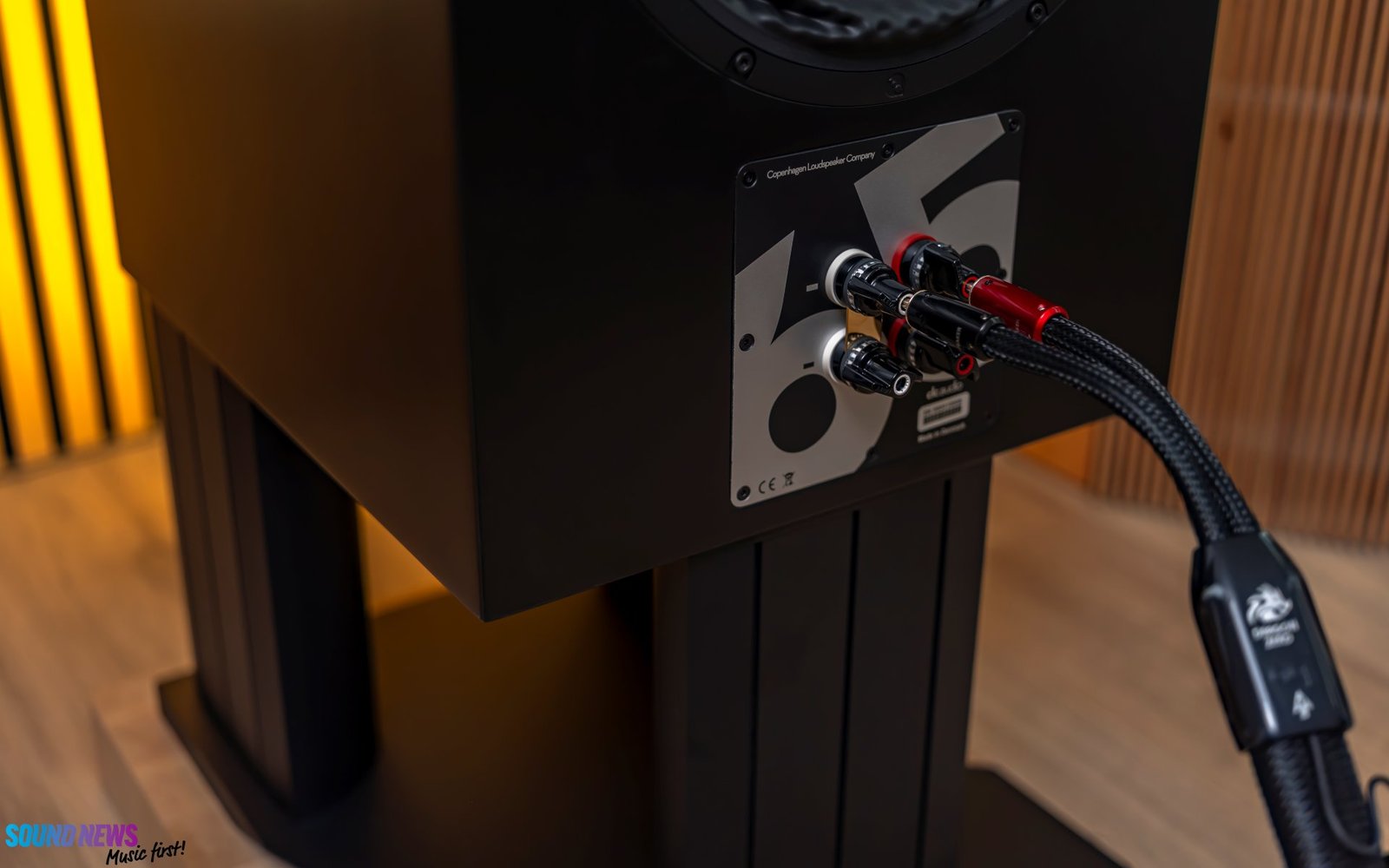
- Speaker Cables: AudioQuest Dragon ZERO 2.0m
- Power Cables: AudioQuest Dragon Source (X2), AudioQuest Dragon High Current (X4), Roboli Stars (X2)
- Ethernet Cable: Crystal Cables Da Vinci
- HDMI Cable (I2S): AudioQuest Dragon
- Balanced Isolation Power Conditioner: KECES IQRP-3600