Listening room: the bigger room, 5 m by 6 m with a 4 m ceiling, treated • Placement: about 3 m apart and about 1 m from the wall behind them, listening position at 3.5 m, firing straight ahead, no toe-in, grilles off
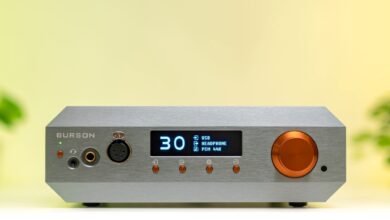
Source: MOON 491, streaming Qobuz and TIDAL • Amplification: Luxman L505Z integrated amplifier • Cabling: ZenSati Zorro XLR interconnects, Realcable CHEVERNY speaker cables (bi-wired), ZenSati Zorro power cables
Loaned by: HifiExpert
TLDR
We recommend the Solstice 8 to someone who’s seeking a natural, clean, and smooth sound, who likes to listen at low and normal levels, and whose room measures up to about 20 to 25 m². Played this way, these speakers are a pleasure from the first track of the evening to the last, with lifelike voices and a top end free of any trace of sibilance or harshness. For high-volume listening in a large room, a floorstander with more power and more punch is maybe the better choice.
Three qualities define the Triangle Solstice 8:
- A midrange that sounds almost like a full-range driver. The 16 cm cellulose midrange plays everything between 250 Hz and 3.7 kHz, so most of the music we listen to is reproduced by this one cone. The symbiosis between the midrange and the tweeter is very good. The sound had a strong sense of unity. Male and female voices were both excellent, natural, and lifelike.
- Clean, smooth, and absolutely free of sibilance. We heard no harshness and no sibilance on any recording we played. Long sessions were fatigue-free. At low volume, the music was lively and engaging. Listening to music on the Solstice 8 is simply a pleasure. For us, this is one of their main highlights.
- Deep bass extension. In our bigger room, the bass dropped easily to an audible 30 Hz. For a floorstander with two 16 cm woofers, this is a highlight. The lowest notes of electronic music and ritual drums were clearly audible, with a solid foundation under the music.
The main limitation is power. In a room of our size (the big one), kick drums and the chest thump of a bass line were modest. As the volume went up, the Solstice 8 ran out of power quickly, so high-volume listening was also off the table. This is a very room-dependent speaker. In a smaller room, we expect a lot more kick out of them. Treble refinement is average, with our matching, the overall tonal balance was tilted slightly towards the bright side. Soundstage, imaging, and fine detail are moderate, good for the price, with the presentation leaning towards musicality.
In a room of the right size, at the levels most of us use every evening, these limits weigh pretty little against the pleasure of listening to them.
Introduction to Triangle’s History
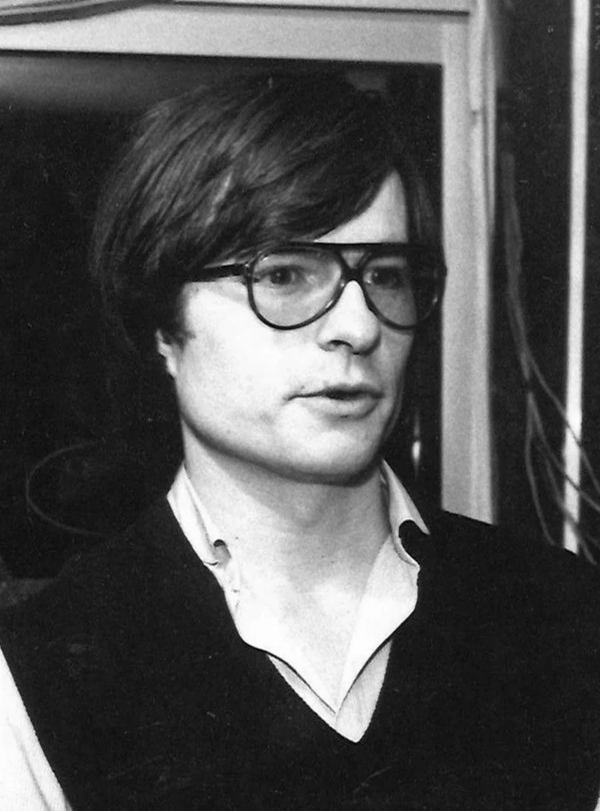
Triangle was founded in Paris in 1980. At the time, Renaud de Vergnettes was 22 years old and worked in interior design and decoration, but he wanted to make his name as a designer of high-fidelity loudspeakers. He favoured Audax drivers with paper membranes because of their natural timbre. In November 1980, he launched his very first loudspeaker, the 1180.
The Solstice series launched in June 2026 and replaced the Esprit series in Triangle’s catalogue. The range consists of three models: the Solstice 3, a compact two-way bookshelf speaker; the Solstice C3, a centre-channel speaker; and the Solstice 8, the three-way floorstander we have here, priced at €1,999 per pair.
After a few years in the family farmhouse, Triangle moved into a new building on Boulevard Jules Ferry in Soissons and increased production. Its first loudspeakers sold well. During the 1990s, the company continued to grow, introducing models such as the Minimum, a two-way bookshelf speaker. In 2004, Triangle completed a new, purpose-built factory. Renaud de Vergnettes retired in 2006, and in 2011, a new generation of managers took over, aiming to modernise the company while preserving its founding values. Soissons continues to be Triangle’s home to this day.
We have heard Triangle loudspeakers at audio shows over the years. A month with a pair in our listening room, on our electronics and with our music, is a very different experience, one we were very curious about.
Keep in mind that every audiophile listens with different music, different electronics, and in a different room. We heard the Solstice 8 with our ears, in our room and on our chain, and we felt the music in our own way. As always, the final word is yours, after a demo in your own space.
Design, Build and Technology
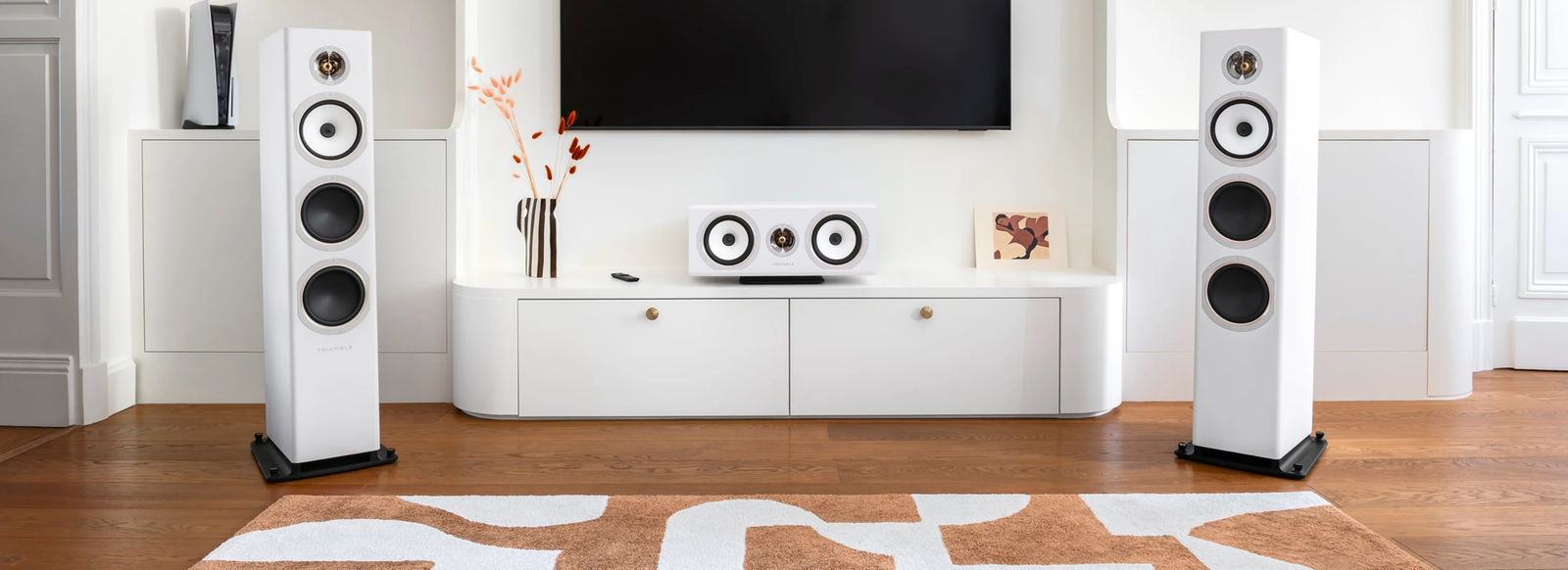
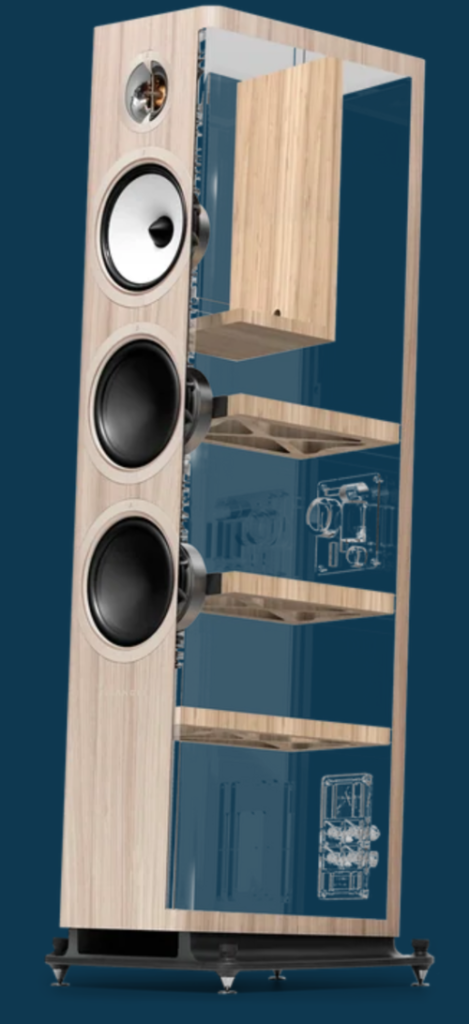
The Solstice 8 is a three-way, four-driver floorstander. With its base, each speaker is 308 mm wide, 1075 mm tall and 394 mm deep, and weighs 30.4 kg. Our review pair is Teak, a wood veneer with a vertical grain. Triangle also offers Birch, Black Ash, and White. The magnetic grilles are colour matched to the finish. We listened with the grilles off for the whole review.
Cabinet. Triangle describes the cabinet as high inertia. Its external edges are rounded. The reasoning, Triangle says, is that rounded edges minimise diffraction from the sides of the cabinet and make the dispersion more uniform, for a more precise sound image.
DVAS. Inside, Triangle uses what it calls DVAS, the Driver Vibration Absorption System. A high-density perforated brace is fitted against each driver, with a damping material in between. At the end of each internal brace is a high-density EVA foam gasket, which, according to the company, greatly damps the vibrations of the driver. The bracing also stiffens the whole assembly of driver and cabinet.
Bass and port. The Solstice 8 is a bass reflex design, with a hidden laminar port integrated into the base, a first for Triangle. The base itself is a cast iron honeycomb structure covered in a thick layer of silicone, designed to absorb vibration and decouple the speaker from the floor. It has a 2-degree rearward tilt. Adjustable metal spikes and counter spikes are included.
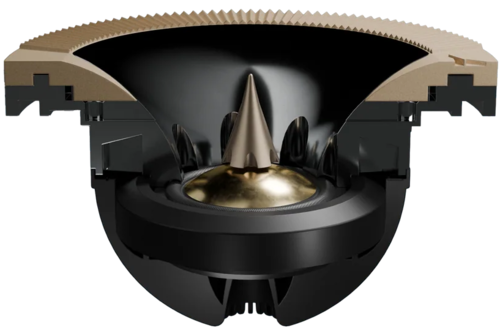
TZ2540MG tweeter. The tweeter is new, developed for the Solstice range. Its 25 mm dome is made from an aluminium and magnesium alloy, the same one Triangle uses in the Esprit 40th and Magellan 40th models, for its lightness and rigidity. Behind the dome is a high-power magnet system built with a neodymium ring with an open centre. A rear absorption chamber limits internal reflections and reduces distortion. The phase plug is redesigned and moulded as a single piece.
Horn and barrel. The dome is horn-loaded. The horn profile is based on the OS SEW principle, short for Oblate Spheroid Super Elliptical Waveguide. Triangle says this shape spreads the high frequencies more uniformly and widens the soundstage. At the entrance to the horn is a barrel-shaped cutout, which causes a volumetric compression at the suspension. In the company’s words, this optimises the frequency response and the integration with the midrange driver.
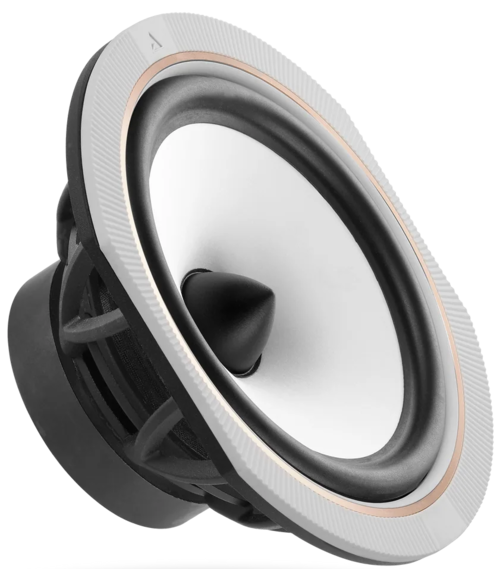
Midrange. The midrange driver has a 16 cm cone made from natural cellulose pulp. A new rear glueing system increases the radiating surface of the cone, which improves linearity, according to Triangle. The driver is mounted in a new die-cast aluminium basket with an arch-shaped structure, for mechanical rigidity and optimised airflow at high listening levels.
Woofers. Two 16 cm woofers reproduce the bass. Their paper cones are concave, with no dust cap. Triangle says this makes a particularly rigid cone, one that minimises distortion under heavy load.
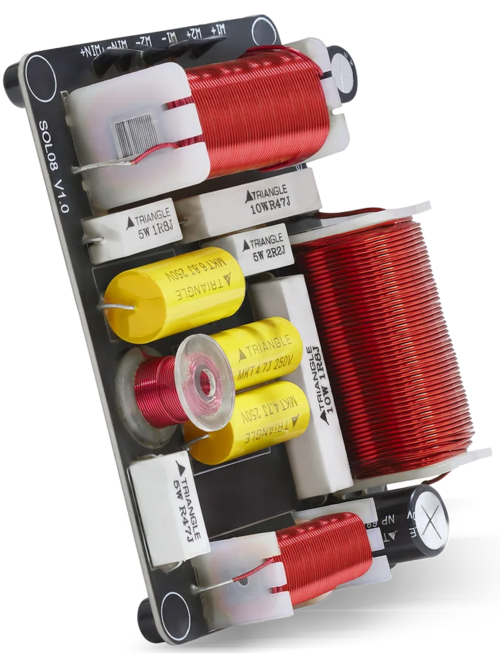
Crossover. The crossover points are interesting. The points are at 250 Hz and 3.7 kHz. The woofers use a second-order low-pass filter, the midrange a second-order band-pass filter, and the tweeter a third-order high-pass filter. The network is built with air-core inductors, MKT capacitors, and cement-coated resistors. Internal wiring is oxygen-free copper (OFC).
Between these two points, the sound is reproduced almost entirely by the midrange driver. That is close to four octaves, the region of the spectrum where a large part of the information in voices, guitars, pianos, and strings is. With the woofer crossed this low and the tweeter that high, one cone and one material cover most of the midrange.
Sensitivity, impedance and power. Sensitivity is 91 dB. Nominal impedance is 8 ohms, with a minimum of 3.6 ohms at low frequencies. Triangle rates the Solstice 8 at 130 W and recommends an amplifier of 60 to 200 W RMS per channel into 8 ohms. The specified frequency response is 38 Hz to 22 kHz, within ±3 dB. Triangle recommends a room of 15 to 50 m².
Terminals. At the back is a dual terminal block with a champagne finish, for bi-wiring or bi-amping. The posts accept banana plugs and spades.
Setup, Room and Placement
We used the Solstice 8 in our bigger listening room, 5 m by 6 m with a 4 m ceiling, treated. That is 30 m² of floor and a volume of 120 cubic metres. The speakers were about 3 m apart and about 1 m from the wall behind them, with the listening position at 3.5 m. This is the placement we use for most floorstanders in this room.
The pair was used, so we did not need to do the break-in.
Toe-in has a big effect on these speakers. With the cabinets aimed at the listening position, the top end was too bright for our tastes. Firing straight ahead, with our listening position slightly off axis, the tonal balance was a lot more comfortable, so we left them that way.
So toe-in works as a pretty effective tonal control on the Solstice 8. Take the time to find the angle you like in your own room.
System Matching
Our source was the MOON 491, streaming Qobuz and TIDAL, connected to a Luxman L505Z integrated amplifier with ZenSati Zorro XLR interconnects. We used Realcable CHEVERNY speaker cables, bi-wired, and ZenSati Zorro power cables.
The L505Z is rated at 100 W into 8 ohms and 150 W into 4 ohms, so within the range Triangle recommends. With its high sensitivity and an 8-ohm nominal impedance, the Solstice 8 is an easy load for most amplifiers. The dip at low frequencies is a good reason to choose an amplifier with solid current delivery, for a firm grip on the two woofers.
With the slight bright character we heard on our chain, we would avoid bright sources and bright cables. A warmer amplifier or source is a good place to start, and so is a careful choice of cables. Taste decides in the end, of course.
Listening Sessions
Natural, clean, coherent, smooth, slightly bright, relaxed in the bass impact, and very easy to listen to for hours. That is how we would describe the Solstice 8 in a few words.
Midrange, Voices and Coherence
Coherence is a quality we value more with each year that passes. A voice or an instrument split between two drivers loses a lot of its believability.
On the Solstice 8, the midrange driver plays most of the music. With crossover points this far apart, the cellulose cone covers a very wide part of the frequency spectrum. The crossover points are pretty extreme. As a result, we heard the midrange almost as a full-range driver. The integration between the cellulose cone and the horn tweeter is very smooth, with the handover at the upper crossover point very hard to hear. The bass has the same tonal character, so the sound is consistent throughout the frequency range, from the lowest notes to the top of the treble.
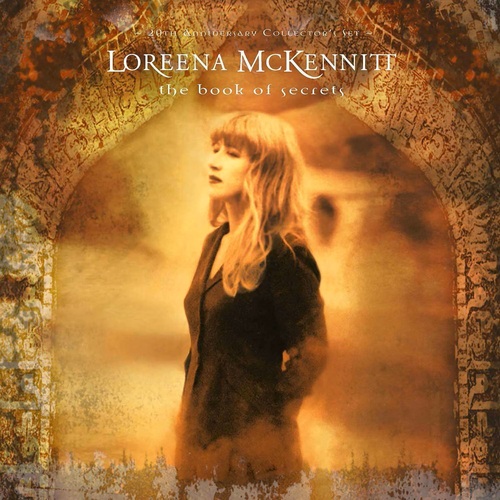
Loreena McKennitt’s Dante’s Prayer closes The Book of Secrets, her 1997 album. It is one of our reference tracks for female voices. Her voice presented a very natural timbre, with the breath and the small inflections in her phrasing all there. The S sounds were smooth, a natural part of her voice. The piano and the choir behind her each had their own space. The hall around them had a good sense of air, a little shorter in its decay than on the most open loudspeakers we have heard. Her timbre was just right, with the right amount of body and air.
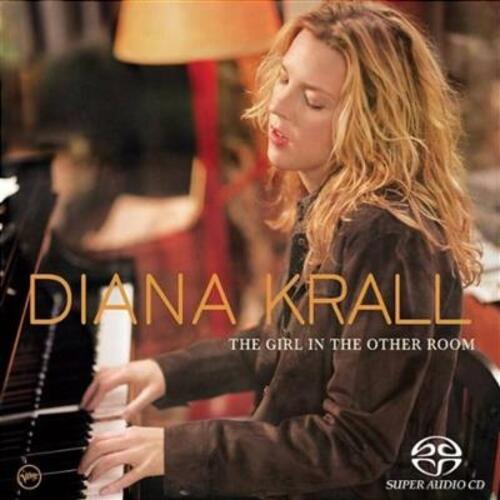
Diana Krall’s Temptation, the Tom Waits song from The Girl in the Other Room, is close-miked and pretty intimate. Her lower register had rich harmonic details and good chest weight, with the smoky texture of her voice very present. The piano and the double bass were well separated from her, each in its own place. The brushes behind her were present, a bit softer than on more resolving designs. The voice itself was excellent, warm, close, and lifelike.
The Power of Love, in Céline Dion’s version, has huge, sustained notes near the end. At normal levels, those notes were clean, with no harshness at the top of her range. Her voice had body and a natural timbre, from the soft opening verses to the climax. As the arrangement became more intense, the drums were on the light side. A beautiful performance, at a sensible volume.
Chris Stapleton’s Death Row is a slow, heavy blues, with a deep bass line under a rough, powerful voice. His voice had texture, grit, and very good body, with the grain in his phrasing easy to hear. From the chest of his voice to the rasp at the top, the timbre had one consistent character, a good sign for coherence in the lower midrange. The bass line had good depth and enough articulation. A bit more impact from the kick would have been welcome.
You Want It Darker is the title track of the last album Leonard Cohen released in his lifetime, in October 2016. His deep voice was presented in front of the choir, with authority and a lot of chest. Against a very dark background, every breath and every low syllable was easy to hear. The choir behind him had good separation, in a soundstage of moderate depth. Very moving, with a timbre we found very accurate.
Avi Kaplan, the former bass voice of Pentatonix, has one of the deepest voices in our playlist. On Aberdeen, his low notes had plenty of weight in the chest, with the grain of his voice clearly audible. The transition from his lowest register to the higher notes of the melody was seamless, one voice from one source, which tells us a lot about the integration between the woofers and the midrange. Excellent.
Geoff Castellucci’s cover of The Sound of Silence has some of the lowest sung notes in our playlist. Those notes were audible and articulate, with good chest resonance. The stacked harmonies behind him were layered one behind the other, each voice easy to pick out. The very lowest notes had a little less weight than the recording has, an expected limit for woofers this size in a room this big.

Brendan Perry sings Opium on Anastasis, the 2012 Dead Can Dance album. His voice was deep, natural, and tonally accurate, with a lot of body in the lower register. The bass layers under him were clearly separated, with deep extension. The dynamic contrasts were somewhat gentle, with the drama of the song present at normal levels.
Allan Taylor records Colour to the Moon for Stockfisch, the German audiophile label. His voice was warm and natural, with a pleasant lower register. The guitar strings had a clean attack and a natural decay, easy enough to follow from one note to the next. The smallest details, the fingers on the strings and the smallest resonances of the guitar body, were present, a little less explicit than on more analytical speakers. The emotion was all there.
The Prelude from Bach’s Cello Suite No. 1, in Mischa Maisky’s recording for Deutsche Grammophon, is a test for the body and the texture of a string instrument. The cello had a warm, woody tone, with the resonance of its body presented in a natural way. The bow and the rosin on the strings were audible, in fair detail. The tone was very even from the lowest string to the highest. The flow of the piece was beautiful.
Male voices are just as convincing as female ones on the Solstice 8. Maybe this is one of the benefits of a midrange that covers this much of the spectrum.
Treble, Sibilance and Air
The treble on the Solstice 8 is average in refinement, with a moderate amount of air and sparkle. Firing straight ahead, without any toe-in, the slight bright tilt of our chain was easy to live with.
Sibilance is one of the first things we listen for in a loudspeaker, because with a sibilant tweeter, long evenings of music are impossible for us. And this tweeter is very clean.
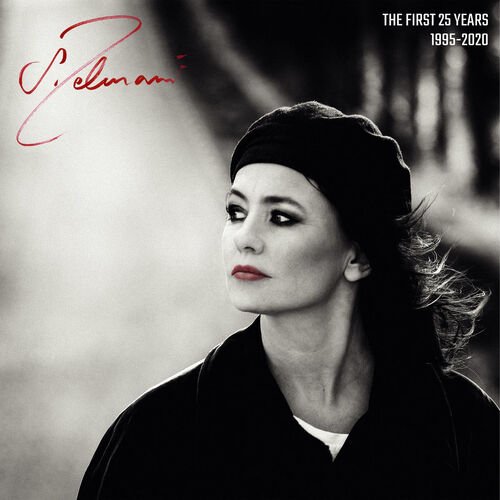
Sophie Zelmani’s All I See Is You and My Soul Remembers are two of our sibilance tests, with her soft voice recorded very close to the microphone and full of S sounds. On the Solstice 8, the S sounds were small, smooth, and well integrated into her voice. Absolutely clean. The breath around her words had a fine texture, a little less delicate and airy than on the most refined tweeters we have heard.
Affection, by Cigarettes After Sex, is sung almost in a whisper, surrounded by reverb and guitars full of high-frequency content. A hard test for any tweeter. As with Sophie’s tracks, Greg Gonzalez’s consonants were soft and clean at every level we tried. The reverb behind him was wide enough, with a fair amount of detail in its tail. The guitars had a pleasant shimmer, a touch bright with our matching, with no edge at all.
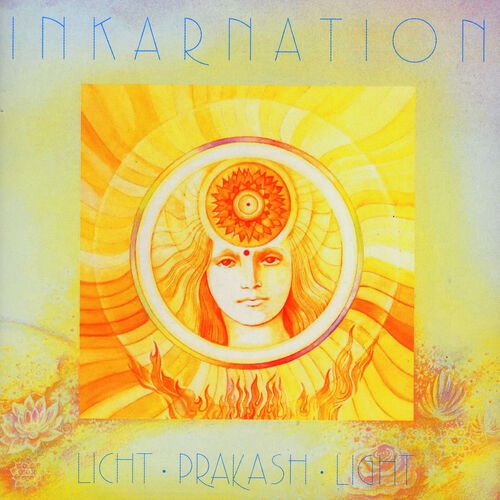
Oliver Shanti’s Licht Prakash Light is full of bells, chimes, and soft high-frequency textures, a track for air and extension. The bells were clean, with a pleasant shimmer. Their decay was a bit short. The space around them was somewhat small. The overall presentation was pleasant and very easy on the ear.
Janine Jansen’s recording of Vivaldi’s The Four Seasons, with a small chamber ensemble, is a nice check for strings in the upper registers. Her violin had a sweet tone, slightly bright on her top notes, with the rosin and the bow clear enough to hear. In the fast passages of Summer, the violin was clean and free of harshness. The players behind her were well separated.
On Chris Botti’s Italia, with Andrea Bocelli, the trumpet was sweet and smooth, with a bright, pleasant sheen on the long notes and no harshness. Andrea’s voice was full-bodied and very natural, right in the middle between the speakers. The orchestra behind them was a bit smaller in scale than the recording. A beautiful, emotional track on these speakers.
Bass, Dynamics and Room Size
Below roughly 200 Hz, what we heard is the result of the speakers and our room together, so take the bass impressions below as a description of these speakers in our bigger room, at our listening position.
Bass extension is a highlight here. In room, audible bass reached 30 Hz with ease, lower than Triangle’s ±3 dB figure, with our room adding its reinforcement in the lowest octaves. From two woofers this size, that is an excellent result!
Kick drums are a different story. In this room, the kick was a bit lacklustre, with less physical impact in the body than we prefer. Physical impact is something we care about a lot, especially with electronic music.
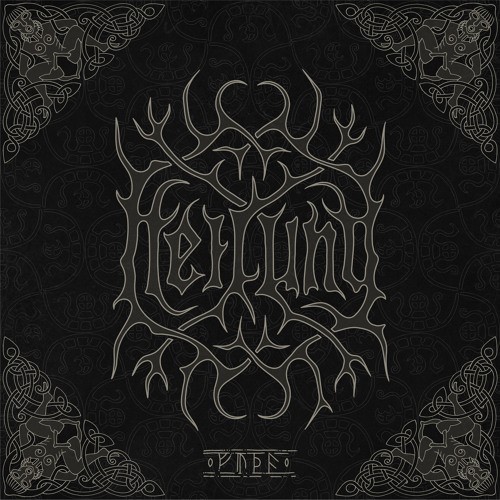
Heilung’s Traust is like a deep ritual complete with drums and layered voices. The lowest drum strokes had excellent depth in our room. The physical impact of each strike was somewhat modest, a step below what we would have wished for. The voices above the drums were clear and well separated.
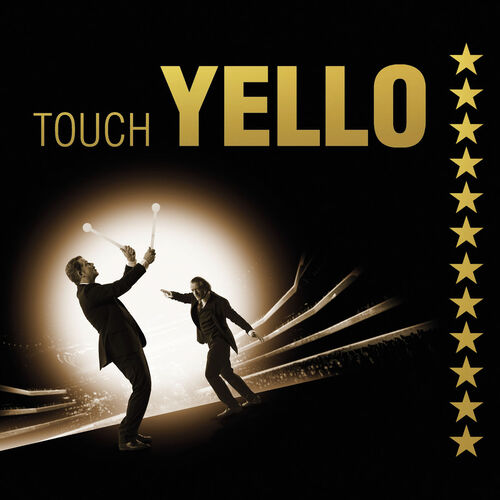
Yello’s Till Tomorrow has deep, layered electronic bass lines. The lowest layers had excellent extension, a very good showing for these woofers. The layers were easy enough to separate, with a slightly soft outline on the fastest ones. Very enjoyable, at normal levels.
Angel opens on Mezzanine, the 1998 album by Massive Attack, with Horace Andy singing over a slow bass line. It was deep and articulate, with a clear pitch on every note. We would have liked more physical pressure from the lowest notes in the room. Horace’s voice was natural and present, with good texture.
Marcus Miller’s Cousin John is all about slaps and pops on the bass guitar. Each pluck had a clear start and a clean stop, clear enough in the fast passages. The body behind each note was a bit mellow, with the slaps a little soft in punch. The groove was all there, and so was the fun.
The opening drum hits of Bird on a Wire, from Famous Blue Raincoat, Jennifer Warnes’s album of Leonard Cohen songs, are a bass test many audiophiles know well. Each hit had depth and a clean, quick decay. The slam behind the hits was modest, less physical in the chest than this recording can sound. Jennifer’s voice was intimate, with very good texture.
Feet on the Ground, by Danish singer Pernille Rosendahl, has a deep, driving low end. The bass was deep, with good extension. The kick was what we missed here, a bit light in the chest, with a soft contour. Pernille’s voice was full and natural. A track that shows both sides of this bass: deep extension and modest punch.

On AURORA’s A Different Kind of Human, the rapid bass sequence starting around 1:38 is a quick test of speed. Every pulse was distinct, with good depth. The weight behind each pulse was a bit light, and the punch was on the soft side. Her voice was clear and natural above the bass.
We would have loved more power.
In our 30 m² room, the Solstice 8 reached its limits early at higher volume. Macrodynamic swings had less force than the recordings. High volume listening was simply out of reach in that room.
So how big should your room be? Two 16 cm woofers per speaker have a moderate radiating area for 120 cubic metres of air. In a smaller room, the same cone movement produces a higher sound pressure at the listening position. Triangle recommends rooms of up to 50 m². We believe a room of 20 to 25 m² at most is the right size for these speakers, for the kick and the chest impact we look for. Pay attention to the size of your room and to the levels you like to listen at, and plan accordingly.
Within these limits, the dynamics were lively and natural, with microdynamics present at a good level.
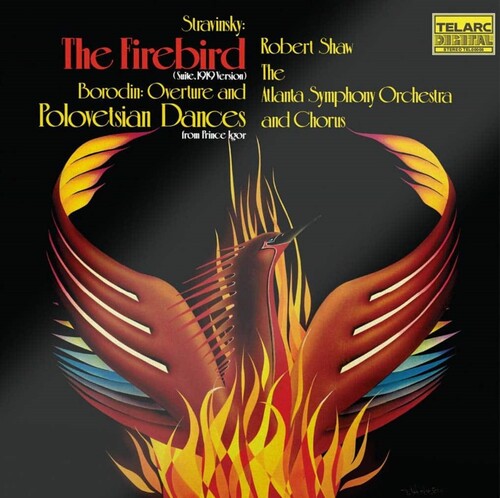
Stravinsky’s The Firebird Suite, with Eiji Oue and the Minnesota Orchestra on Reference Recordings, is a test of both ends of the dynamic range. In the quiet passages, the woodwinds and the harp were delicate and very clear. At normal levels, the big crescendos had good speed and a natural tonal balance. As we turned the volume up, the peaks stopped short of the scale in the recording, with the bass drum lighter than it should have been. A useful test of the dynamic limits of any loudspeaker in a large room.
Stimela, The Coal Train, is Hugh Masekela’s song about the train that takes migrant workers to the mines of South Africa. His voice had a lot of texture, with the rasp and the breath vivid, and a very lifelike timbre. The percussion was fast and clean. The big swells in intensity were smaller than on the recording, with the trumpet clean and smooth even at the loudest moment.
Soundstage, Imaging and Detail
Width and depth are moderate. Imaging is precise enough.
Resolution is balanced between detail and musicality, with a slight lean towards musicality. Fine details are present at a moderate level, presented as part of the music, without emphasis.
Yosi Horikawa’s In the Wind is built from small percussive sounds and field recordings placed all around the listening position, a track we use for spatial precision. Each sound had its own position, with a good spread from left to right. Depth was moderate, with the quieter sounds placed a little behind the speakers. The smallest sounds at the edges were a bit soft in outline, a step behind more precise, more expensive designs.
Jean-Michel Jarre’s Oxygène Part 7, from the 1997 sequel to the original album, is full of synthesizer layers panned across the room. The movement from one speaker to the other was precise. The layers further back had moderate depth, with a little less space around each sound than we would like. A very enjoyable track on the Solstice 8, with precision and transparency at a fair level.
The acoustic version of Hotel California, from the Eagles‘ 1994 reunion album Hell Freezes Over, starts with a long guitar introduction in front of a live audience. The audience around the band had a pleasant sense of space, with moderate width and depth. Each guitar was placed clearly, left, right, and centre. The hand percussion was crisp. The kick drum was soft in outline, with modest punch.
On The Desert, from Armand Amar’s score for HOME, the duduk and the flutes were presented in front, with a beautiful, woody body. The acoustic space around the players was believable, with good enough depth. The reverb tail was somewhat short, with some of the finer microdetail of the recording less obvious.
Jump is the Van Halen song, arranged by Mike Dawes for one acoustic guitar, with slaps, tapping and harmonics. Each technique was easy enough to tell apart, and the harmonics had a gentle shimmer. The smallest differences in how hard a string was plucked were audible, a little softer in focus than on loudspeakers with a more detail-oriented character. The body of the guitar had a natural resonance. Very enjoyable!
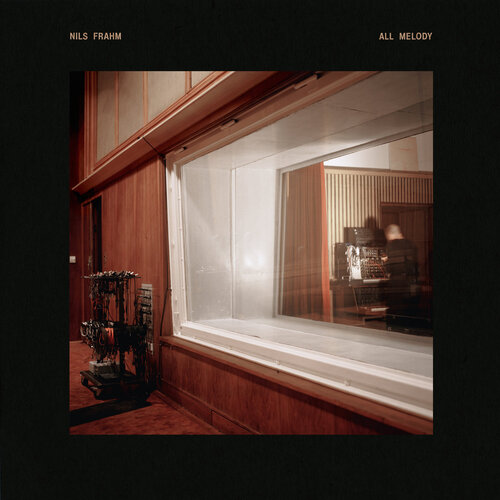
Nils Frahm recorded All Melody, his 2018 album, in his own studio in the Funkhaus, in Berlin. The piano had a natural tone and good body, with a crisp start on every note. In the softer moments, the hammers and the pedals were audible, together with some of the ambience around the instrument. The air of the room around the piano was present, a bit less obvious than on more transparent designs.
Govi’s Euphrates plays on a nylon-string guitar. Each plucked note had a precise attack and a long, warm decay. The dark background, which we spoke about on Leonard Cohen’s track, was there between the notes. The smallest changes in intensity between notes were audible enough, with the finest shadings in the background. Very relaxing, very musical.
Low Volume Listening and Listening Pleasure
The Solstice 8 is very good at low volume. At low levels, the tonal balance remains natural, voices have body and presence, and the bass extension is audible. Microdynamics are present at very low volume. The music is lively and engaging.
Don’t Know Why, written by Jesse Harris, opens Norah Jones’s 2002 debut, Come Away with Me. At low volume, it was a pure delight. Her voice was smooth and present, with the breath between the lines audible. The piano notes started cleanly and faded naturally. The brushes had a soft, gentle texture. Lovely.
Patricia Barber’s Company, from Modern Cool, recorded in Chicago in 1998, sounded intimate at low levels. Her voice had good texture, close and natural. The double bass was articulate, with a surprising amount of depth at this volume. The brushes and the piano were clear, with the finest details placed a little more in the background.
Anette Askvik’s Liberty, from her 2011 debut album of the same name, is a quiet, spacious recording. At low volume, her voice was presented in the centre, natural and close, with air around it. The instruments around her were spread over a moderate width. The emotion of the song was intact.
Los Angeles, by The Midnight, is full of bright synths, retro drums, and saxophone. At normal levels, the track was great fun on these speakers. The synths had a clean sparkle, although a little bright. The saxophone had a full body, and the drums had a soft punch. A lovely track for a relaxed evening!
Adrift, by Jesse Marchant, is a slow and dark song, with a close-up of the human male voice. His voice was present and very natural, with every change in intensity in his phrasing audible even at low volume. The bass line was full and easy to follow. A very emotional listen.
For us, listening pleasure is what defines the Solstice 8.
Hours of music are easy on these speakers, with voices that sound like people in the room and a presentation that is very gentle on the ears. Some listeners simply want to sit down after a long day, play the voices and the acoustic music they love, and forget about analysing anything. For that audiophile, in a room of normal size, the Solstice 8 is a very nice match. For the price, that is a lot of pleasure!
Final Thoughts
The Triangle Solstice 8 represents a clear step forward for the French manufacturer. Compared to previous generations, Triangle has managed to preserve the openness, energy, and lively character that made its loudspeakers popular, while improving the tonal balance and refinement. The treble is smoother and much better integrated with the midrange, and the overall presentation is more natural and coherent. Coherence is something Triangle has struggled with in the past, but it seems they have learned and adapted. Congratulations to them!
What we also appreciated about the Solstice 8 was that they don’t need impressive volume levels or spectacular recordings to deliver an enjoyable listening experience. Voices and acoustic instruments have a natural tone, the bass provides a satisfying foundation, and even less-than-perfect recordings remain enjoyable. There is a welcome sense of warmth and fullness, without sacrificing the clarity and detail we expect from Triangle. They do not compete with considerably more expensive designs in ultimate resolution, soundstage precision, or large-scale dynamics, but at €1,999 per pair, we believe Triangle has achieved an excellent balance between sound quality, build quality, and price.
These speakers are made for listeners who value natural, clean, and coherent sound, particularly at low and normal listening levels in smaller rooms. We strongly recommend booking a demonstration in a room similar in size to your own, using familiar music and listening at the levels you normally enjoy in the evening. This will help you recreate the conditions of your own listening space as closely as possible and understand what these loudspeakers can offer in everyday use.
For our final words, we would like to thank HifiExpert for their trust, and for the month we spent with the Solstice 8 in our bigger room, with the MOON 491 and the Luxman L505Z. Shout-out to all the dealers out there doing awesome work for all of us.
Pros
- A wide-range midrange driver acting almost as a full-range in character, with unity and coherence across the range
- Excellent male and female voices, with a natural, lifelike timbre
- Clean and smooth, with no trace of sibilance or harshness, fatigue-free over long sessions
- Deep bass extension, down to an audible 30 Hz in room
- Very engaging at low and normal listening levels
Cons
- Modest kick, punch and chest impact, with power running out quickly at high volume in a large room
- Average treble refinement, and a slightly bright tonal character requiring a more thoughtful matching
- Moderate soundstage, imaging and fine detail