Introduction
The most important material in an in-akustik Referenz AIR cable is the one that isn’t there. Around the conductors there is mostly air, about 97% of it by Sven Schulz’s estimate, held in place clip by clip, by hand, in a small village south of Freiburg. If the best dielectric is nothing at all, the reasoning goes, build the cable around nothing, and then measure the result.
in-akustik has been making cables since 1977. It has its own cable factory inside the group, Braun Kabel, runs a record label that released its first album at the end of 1980, and builds everything from the entry-level Star range to the handmade Referenz cables.
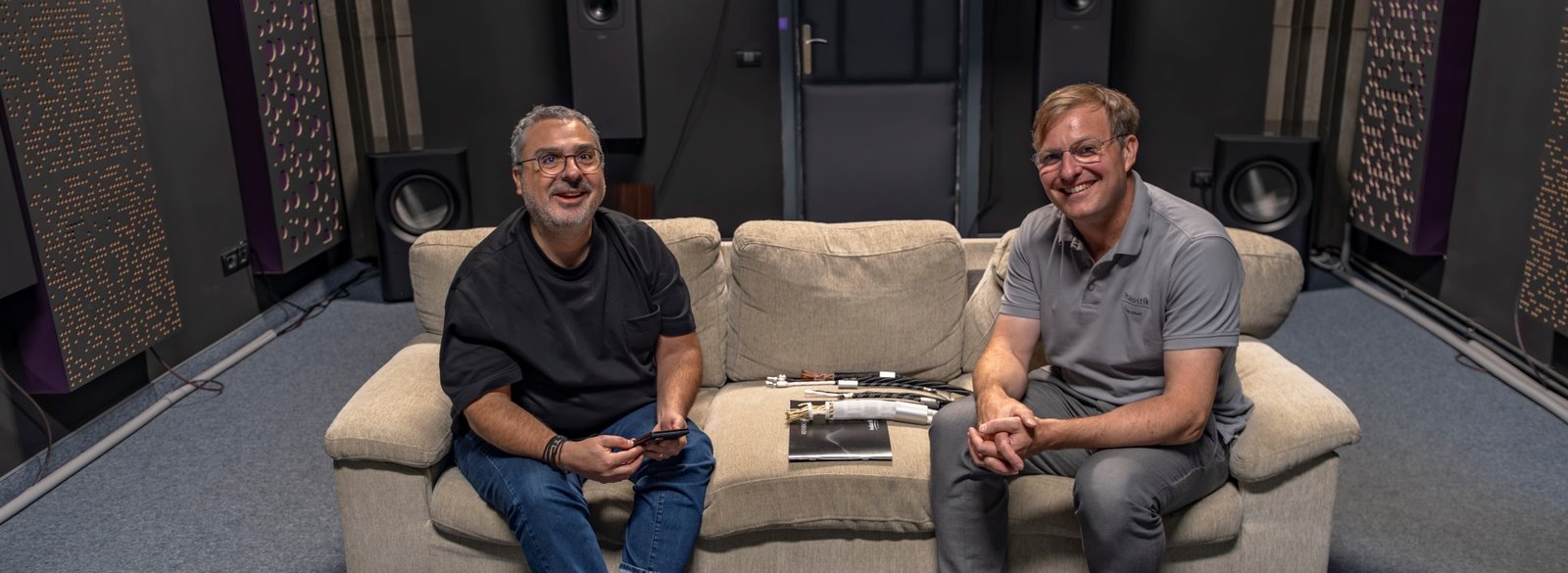
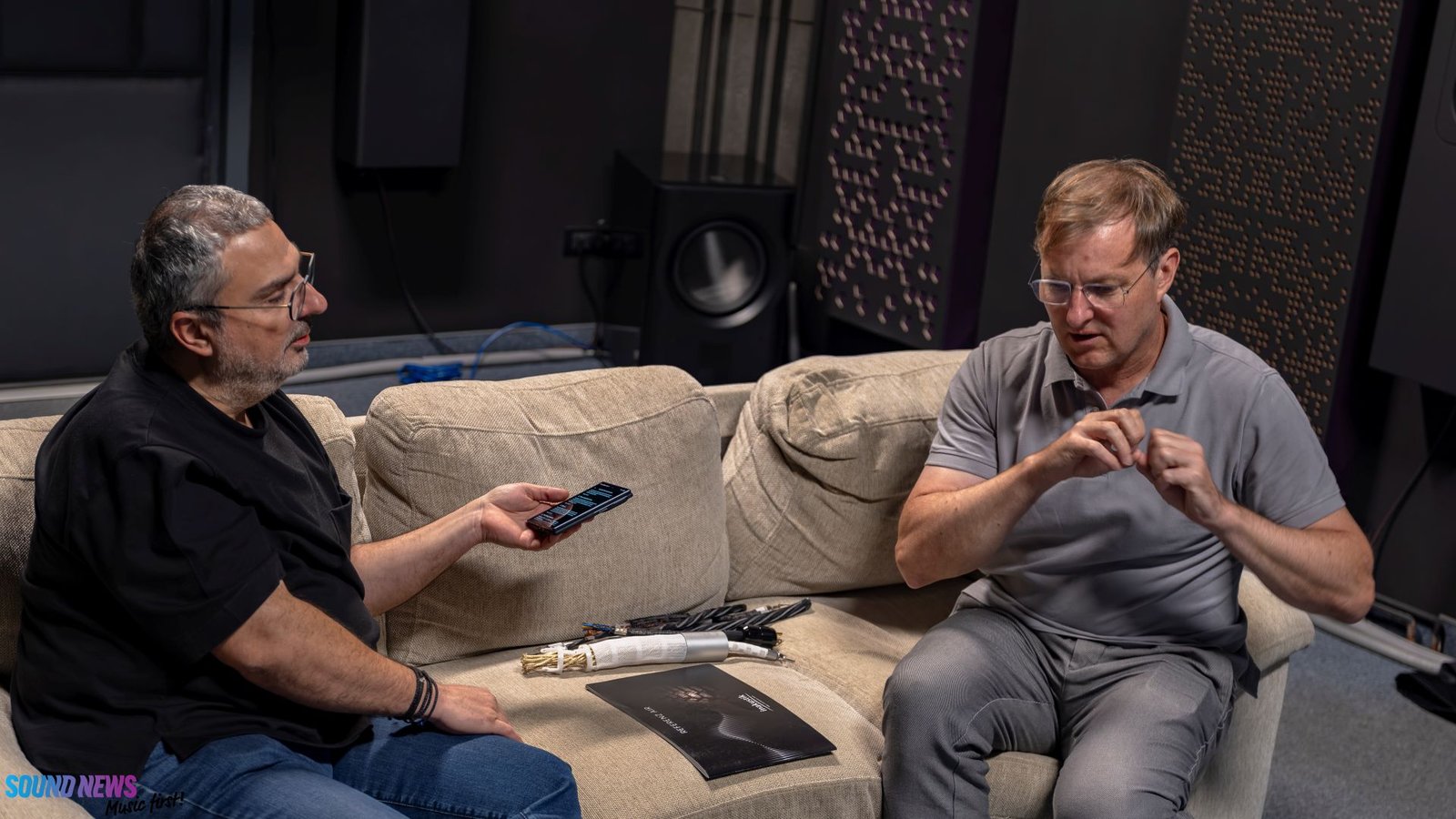
On 15 October, Tehnicavizuala, in-akustik’s partner in Romania, hosted an in-akustik event in its showroom in Arad, and I sat down with Sven Schulz, sales manager at in-akustik. We talked about air and 1.5 tonnes of crimping force, connectors that turn and terminals that move like a hip joint, why the ears always have the final word over the measurements, and how he would change a skeptic’s mind in one hour. Holger Wachsmann, in-akustik’s technical designer, answered three more questions in writing afterward.My warm thanks to Tehnicavizuala (tehnicavizuala.ro) for hosting the event and for their hospitality, to Sven for his time and good humor, and to Holger for his answers.
The Interview
1 · From groceries to hi-fi
SoundNews: Let’s begin with your role at in-akustik. How did your path lead you to a cable company in a small village south of Freiburg? It’s a very small village, I think less than 2,000 people.
Sven Schulz: I’m Sven Schulz, I’m a sales manager for in-akustik. It’s not like I have been an audiophile all my life, and that’s how I joined hi-fi. I always loved music. I played guitar myself when I was younger; we had a band, and I love to go to live concerts. I worked in something completely different, in the grocery business, and then I saw the advertisement: international business, music, hi-fi. And hey, that’s exactly what I studied: international business, different cultures. That’s how I applied, and basically the music attracted me. And now I can tell a good system from a not-so-good system.
2 · The company that bought its customer
SoundNews: Tell us a little about the history of the company.
Sven Schulz: in-akustik was founded in ’77 by Günther and Ilse Sumser.
SoundNews: Are they still on board?
Sven Schulz: No, they sold the company in ’95. It’s an interesting story. He was working very hard and built up the company, but then he had some health issues, and he sold it. Back then, in-akustik bought 90% of all the sales of the cable factory Braun Kabel. And when your biggest customer sells the company, what do you do? You buy that company. So Braun Kabel bought their customer, in-akustik, with the fantastic result that we have our own cable factory inside the group. I don’t think even the big ones like AudioQuest have their own cable factory. in-akustik has its own cable factory and assembly, and that’s interesting.
Günther Sumser still lives in the area, but he’s no longer involved in the company. Günter Braun has been the majority owner all along, and Dieter Amann is a part owner. Unfortunately, Günter Braun died a couple of months ago, but his son and his daughter are taking over.
SoundNews: That’s good, so they can carry it on.
3 · Cables, music and two loudspeaker brands
SoundNews: You build cables, you run a record label, and you distribute brands like Primare and Audiovector. From the outside, that looks like three different businesses. How do they feed each other?
Sven Schulz: Music and cables are very close, because music is always the basis for everything. We know how the music sounds when the artist records or plays, and that’s very important. That’s also our philosophy: to bring it to the hi-fi system. We don’t want to change anything. Maybe that’s why in-akustik cables always sound very natural, because we know how the artists sound, and that should be the sound of the hi-fi system.
And when we come to the dealers in the domestic market- Austria, Germany, Switzerland- with just cables and music, we are maybe not so important to them, even if they earn good money with cables. So that’s why, for those markets, we want to offer a whole hi-fi system. That’s why we chose Primare and Audiovector. We’ve been doing Primare since 2015, and Audiovector since 2020, and I think it’s a good combination. Also, when we do hi-fi shows in those markets, we can offer our own whole system. But the overall goal is always to sell the cables we produce worldwide.
4 · The material that isn’t there
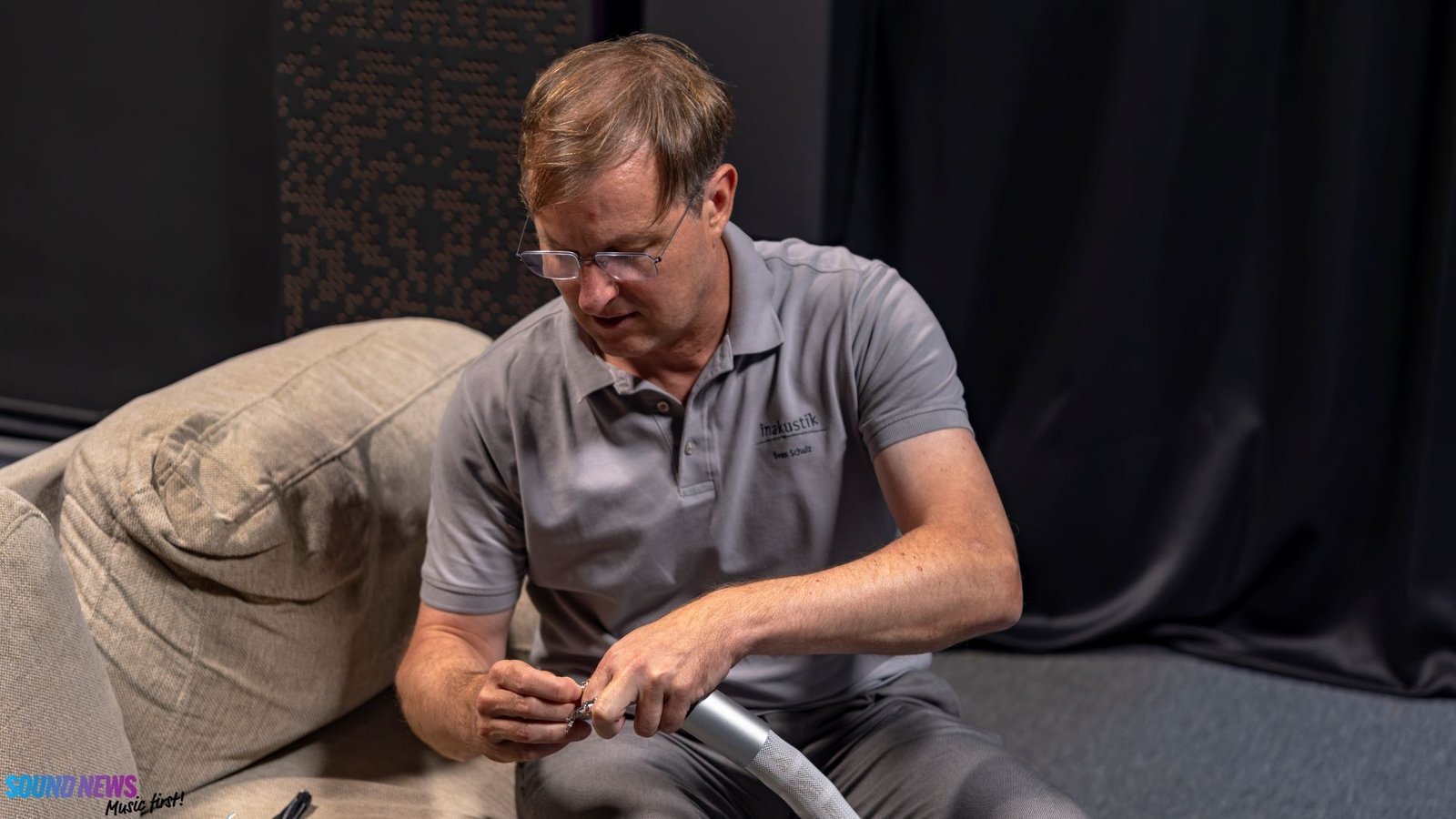
SoundNews: Most cable makers argue about copper, silver, and geometry. You decided that the most important material is the one that isn’t there: air. What problem were you trying to solve when the first AIR cable was born?
Sven Schulz: The idea started 20 years ago. Back then we changed from PVC to polyethylene, to PE, and then we started adding air, foam, more air into the polyethylene. It has the best dielectric. So the process started 20 years ago, and when we had this foam, these empty PE tubes, we said, hey, what could be the next step? The next step was building those clips and really leaving the wires in the air. And you can really measure it. Air is the best dielectric; it has low capacitance, and you can measure it when you take away the PVC. That’s what our technician sometimes does. He has a device that measures the capacitance in picofarads, and when he takes out the PVC, the capacitance drops dramatically. So it’s physics. And now, with these clips, I think it’s 97% air. But it’s not only air; we also develop our own connectors.
SoundNews: Sure, we’ll talk about the connectors as well.
5 · The last few centimeters
SoundNews: You’re on the fifth AIR generation, carrying the air helix from plug to plug, not just between the splitters. Why do those last few centimeters inside the connector matter so much?
Sven Schulz: We asked ourselves the same question, and we couldn’t believe it until we did the final listening test. We thought, okay, if the difference is not so much, then it’s just marketing. But it’s not. Those small parts really matter. If you listen to the former generation, where the air was only from splitter to splitter…
SoundNews: You don’t have it here, right?
Sven Schulz: Exactly. We put it together here, and it was just in a shrink sleeve. And it really makes a difference. We couldn’t believe it with interconnects. And with speaker cables, it’s another world; it’s so much more. It’s not just marketing; it’s a really big difference. So now it’s really from connector to connector.
6 · 1.5 tonnes instead of solder
SoundNews: Soldering is the technique everyone learned and trusts, but on the Referenz AIR cables you now press the connector onto the conductor with 1.5 tonnes. Why move away from solder, and how did you convince yourself it was worth it?
Sven Schulz: With soldering, you add another material, the solder, and the best thing is to press it directly.
SoundNews: To fuse them, actually. At this pressure, you may actually fuse the two.
Sven Schulz: Exactly. We have a pressing machine, operated by hand, and then the connection is done. We do this with all the speaker cables, the bananas and also the spades, and the RCA is pressed too. The only thing we haven’t managed yet, what is still soldered, is the XLR. But we’re also looking for a solution there, to get rid of the extra material you need for soldering.
7 · Rotating XLR connectors
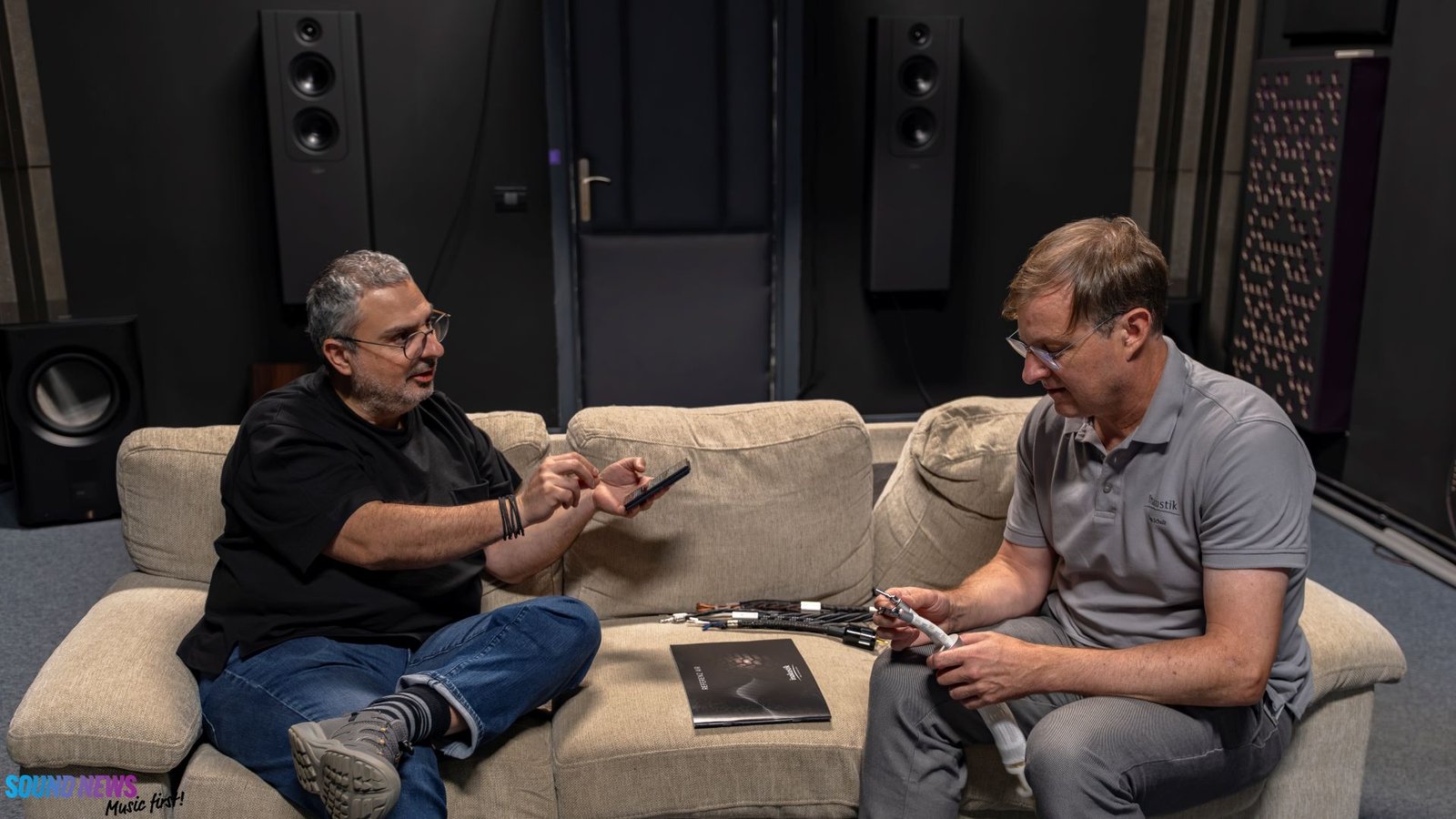
SoundNews: But with the XLR you managed something spectacular: the rotation. I haven’t seen it in any cable I’ve tested. The swapping of spades and bananas is also very nice, but the rotating XLR was mind-blowing.
Sven Schulz: We have it on the XLR and also on the USB, because those cables are rather short, and sometimes, depending on where the socket sits, you have a lot of pressure.
SoundNews: Yes, you have to twist the cable and force it.
Sven Schulz: And at the end of the day, it will break sometime.
SoundNews: Maybe it will break, but mostly it stays under tension all the time, and that’s not good for the sound either.
Sven Schulz: The connection is interrupted. Here you can turn it 45 degrees on each side of the connector, so in the end you can adjust it by 90 degrees, and if you turn the cable as well, you end up with 180 degrees. That really releases the pressure!
SoundNews: How do you manage that?
Sven Schulz: That’s a good question. You’d have to ask Holger, our technician. I don’t know if he wants to reveal everything, but we’ll ask him and put his answer in as well.
SoundNews: And where did the idea come from? Did you test it first for the sound, or was it simply because a stiff cable has to be twisted?
Sven Schulz: It came from the idea, as you mentioned, that it can’t be the best connection when there’s so much pressure on it. The step before was this: the sockets on some amplifiers face one way, and on others the other way; it’s not always the same. So we did special productions. When the guys knew the customer: “Oh, I want this XLR connector upside down, I want it on the top, on the bottom, the other way.” We did it. And from this idea the development came: hey, it’s always a very special production. Can we find a solution that will fit everybody?
SoundNews: That was brilliant, really.
Sven Schulz: Unfortunately, I have to say Holger Wachsmann, our technical designer, is a brilliant person. I would never repeat it when I’m in the same room with him.
SoundNews: Why is that?
Sven Schulz: No, I’m just kidding. But when he’s not there, I can praise him.
8 · A hip joint for loudspeaker terminals
SoundNews: With most speaker cables, you choose bananas or spades when you buy them, and you live with that choice. With yours, the termination can be swapped in seconds. Why build in that flexibility, and how did you make the connection reliable? To be fair, I didn’t believe it at first. In pictures, it looked like a gimmick that couldn’t make a very good connection. But when I tested it and saw it in real life, I understood that it really works.
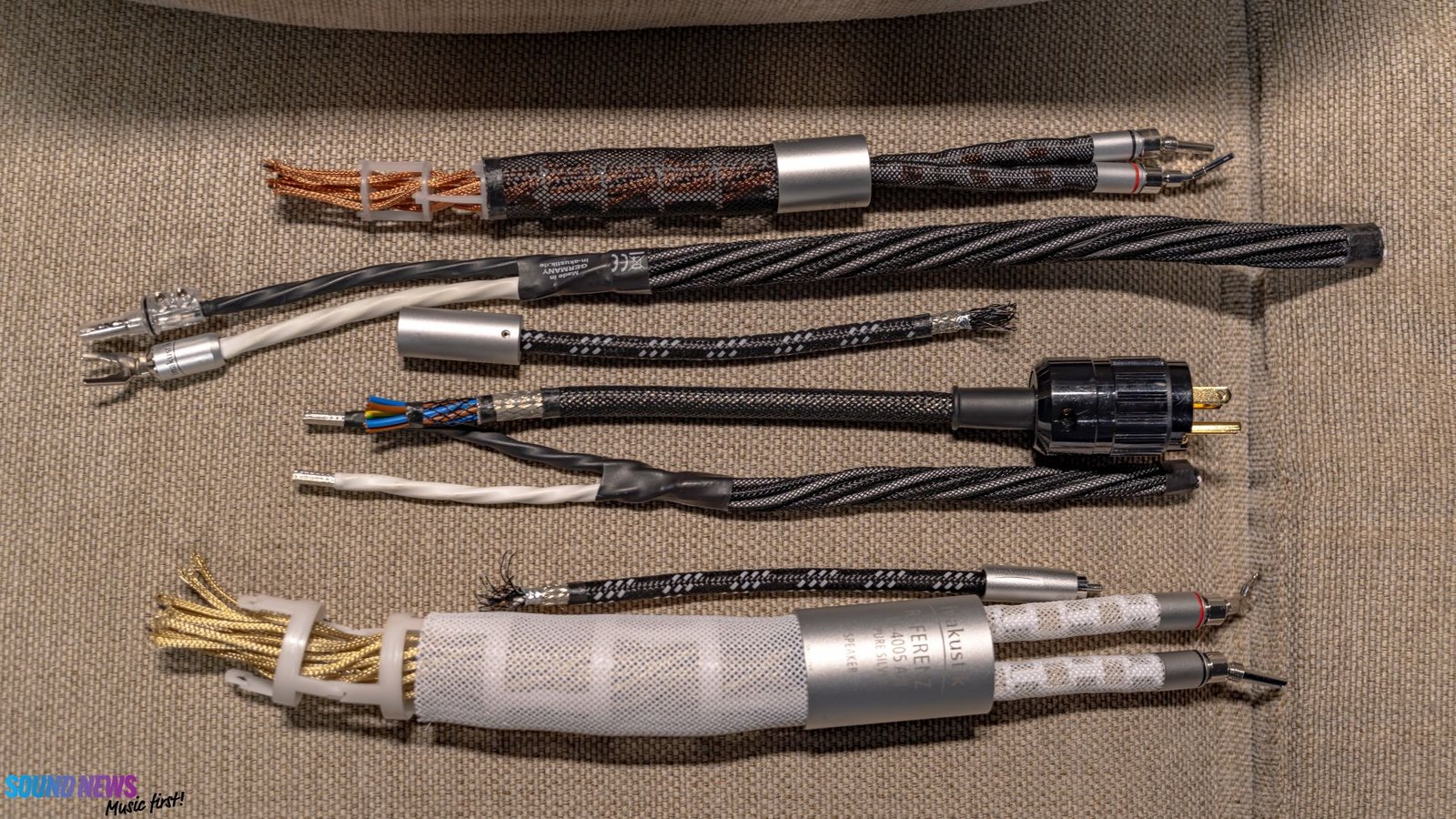
Sven Schulz: We need to explain where we come from. Normally you have a fixed termination, and some speaker cables are quite heavy. So all the pressure, if it’s fixed, is on the banana, and the banana inside the terminal deforms, so it’s not connecting everywhere. So the first idea for us was: hey, how can we release the pressure and adjust the angle? We came up with a former model with screws to be more flexible and then fix it. But of course you need to make sure the connection outside the banana isn’t lacking. So the full connectivity is here, and we managed this with the idea of a hip joint.
SoundNews: Like a human hip.
Sven Schulz: Exactly. At that point, it’s like a hip; you have contact inside here, and it’s fully connected. So the total connectivity is much better, because the banana is in full contact.
SoundNews: And you don’t put pressure on the terminals, so there are a lot of benefits. But as I said, in pictures it looks like a weak point, until you see it in reality, that you can squeeze it, and that it works like a joint.
Sven Schulz: So you see, we go from connector to connector. In the last years we maybe put too much emphasis on the air, so we said, hey, let’s speak about the connectors as well. Also, the material we use: tellurium copper, rhodium-plated. It took a long time to convince the guys. Why aren’t you using gold? Gold is very common. Yes, gold is common, but we’re selling to audiophiles, and a lot of audiophiles take the cables out and plug them in again; they lend them to a friend.
SoundNews: That’s the advantage of rhodium?
Sven Schulz: Yes. Rhodium is very stiff.
SoundNews: More resistant. Gold will scratch.
Sven Schulz: Exactly. With rhodium, this barely happens, because rhodium is much more stable.
9 · Designing your own connectors
SoundNews: Many cable brands buy their connectors from specialist suppliers, but you design your own. Where does the cable end and the connector begin? And what have you learned about connectors that you wish every audiophile knew?
Sven Schulz: That’s a good question. Of course, we also started by buying our connectors from connector specialists. But over the years, like with the XLR we talked about earlier, we found some problems, and our guys started to design them. We design them, then we take these ideas to the connector specialist, and they produce them for us. But we develop those connectors.
What every audiophile needs to know about connectors, I don’t know how to answer. Maybe attention to detail. And not only fall for the price of a cable. Maybe ask the manufacturers: hey, what’s the technology behind it? We’re very open with our technology. We don’t show everything, but we show most of it.
SoundNews: And what do you hide?
Sven Schulz: I don’t know exactly how we connect within the splitter. You can buy it, and if you destroyed it, you would see it, but it would be a pity. Ask the others what the technology is. If they tell you, “Oh, I can’t tell you; it’s a company secret,” then I would be skeptical. And it’s not only us who think about connectors and start from the little things to improve the products. I think those are the most serious companies. And in the end, always test it. If it improves the sound, if you like it, it’s good. Don’t always believe what the manufacturers tell you. Always test. Maybe that’s the most important advice.
10 · The ears have the final word
SoundNews: Walk us through the birth of a new in-akustik cable, from the first idea to the last listening session. How many prototypes does a Referenz model go through, and who has the final word, the measurements or the ears?
Sven Schulz: The measurements never win. It’s always the ears. A cable always starts the same way, with a white paper and some crazy ideas from our product developer, Holger Wachsmann. He builds some prototype samples, and then they do the listening test. Sometimes they invite me; sometimes he does it with Dieter Amann, our managing director. And when there’s an improvement in sound, they decide, hey, let’s continue the idea. Of course, nowadays we have to think about the cost, the material involved, where we would land. At the beginning, maybe the price scared us. Nowadays we think, hey, if it’s really worth it as an improvement, the sky’s the limit. But at the end of the day, measurement is only the beginning. It needs to be the ear that decides whether it makes sense or not. And we’ve also stopped some ideas where the sound difference wasn’t so impressive. We said, let’s focus on something else. That happens sometimes too.
SoundNews: When the pure technical idea didn’t deliver.
Sven Schulz: Yes. I don’t have an example, but it happens.
11 · Where the numbers stop
SoundNews: Capacitance, inductance, resistance: on paper, a cable is a simple thing to measure. Yet two cables with similar numbers can sound different. Where do measurements stop explaining what we hear?
Sven Schulz: I think measurement is quite important, as I said. You can really measure the capacitance, you can measure the inductance, and if both are in the optimum range, it has a direct influence on the sound. If those measurements were bad, I doubt you would have a good-sounding cable. So I think it goes very close together. I hear from engineers who aren’t from audio, who measure different things in industry or in computer cables, that they think the audio guys are a little bit crazy, because we measure tiny differences, and for them it’s all big numbers. They don’t understand what we’re doing. But at this small scale, I think these measurements are very, very important. And at the end of the day, when you listen to it, it results in the difference you hear.
I can tell you a funny story about marketing. We approach everything based on physics, and you cannot beat physics. I think there was never a proper cable developed where the physical measurements were wrong. I met a guy in North America; I don’t know the company name, a guy from Hawaii. Hawaii is a volcanic island, we all know, and his idea was to use lava rock as insulation. He sent it to our North American distributor. Lava rock is a terrible insulator. But the story is fantastic: hey, I’m from Hawaii, I use lava, it’s very authentic. It’s a great story, but I’m sure if you measured it, the measurements would be terrible.
12 · Made by hand in Germany
SoundNews: You call manufacturing the beating heart of the company. Which steps are still done by hand, and why keep production in Germany when it would be cheaper almost anywhere else?
Sven Schulz: Good question. We still make all the speaker cables in Germany. Even the Star and Premium entry-level speaker cables on spools are produced in Germany, in our own Braun Kabel factory. The mass production of the Micro AIR range comes from machines, of course, but the final work, cutting, insulation, putting the protectors on, is done by hand. So maybe 30 to 40% is done by hand and the rest by machine, in Germany. But the AIR cables are really 100% handmade. It starts with nothing. You should come and visit us. We invite you to our factory to show you how it’s produced, and you can do a video and photos about it.
We do it clip by clip, then they put all the wires through, and I doubt you could do this anywhere else, because it’s quite complicated. And “Made in Germany” makes sense in this price range. For HDMI cables, for example, or the entry-level RCA cables in the Star range with connectors, it doesn’t really make sense to produce in Germany. But for audio cables in the AIR, Micro AIR and S25 ranges, it’s still doable.
SoundNews: And the power cables? They’re AIR as well, with that geometry, so you have to do them by hand.
Sven Schulz: Exactly, those are 100% handmade. For some others we use machines, of course, like the Micro AIR range or the ranges below Exzellenz, to cut down the labor cost, because at the end of the day it needs to meet a price point people are still willing to pay. And for the Star range and the Premium range, the orange and the blue, everything with a connector we don’t do in Germany. From Exzellenz and Referenz, we do everything.
in-akustik works on four quality levels, each with its own packaging color: Star (orange), Premium (blue), Exzellenz (grey), which includes the S25 range, and Referenz (black), which includes the AIR and Micro AIR cables.
13 · Hidden inside other people’s loudspeakers
SoundNews: Several well-known loudspeaker brands use internal wiring developed and built by in-akustik, and their customers never know. What has that hidden work taught you that ends up in your own products?
Sven Schulz: It’s a good question. Sometimes we don’t even know who uses our cable. We know, for example, that Canton uses our cables. I met a guy at a Swedish show; he was from Lithuania. I don’t know the brand name of the speaker, and he said, by the way, I use your cables for the internal wiring. You don’t need a lot of cable. If they buy a 200-meter spool of 2.5 mm² cable, they can use it for many, many speakers, because it’s just 20 cm each. We know of another brand from Austria, Brodmann speakers from Vienna. For the North American market, they use our AIR cables. We produce them without the jacket, of course, and they’re used as internal wiring, only in the Brodmann speakers for the North American market. So this is what we know.
SoundNews: Because you also sell cable by the meter, on spools.
Sven Schulz: Yes, everyone can combine. But there’s no real exchange. The philosophy is also different. The engineer of a speaker knows the speaker sounds fantastic because he’s a very good engineer. There’s no reason it sounds good because of the cables. So there’s no real communication, because it’s a different point of view. At the end of the day, I’m sure you can improve a speaker’s sound with the right cable, and if you use a very bad cable, the sound might not be as good. But the approach is different. The speaker engineer thinks it’s so good because he designed it, and the cables aren’t really important. That’s why companies don’t talk about it. Brodmann and Canton, I know they use our cables.
14 · From Star to Referenz, and 800 item numbers
SoundNews: Your range goes from Star to Premium to Exzellenz and Referenz. How do you decide what trickles down from the top, and where’s the sweet spot for most real-world systems?
Sven Schulz: It depends where you start. We started almost 50 years ago with very standard speaker cables, and the big invention was transparent insulation. That started from a very low price point, and then we developed from Star, back then it wasn’t called Star, upwards to the higher end. And then we decided, hey, we want to do four price levels; it’s easier for the customer to understand. In the last five or eight years, there were almost no new products in the Star and Premium ranges. I think only the HDMI cables changed, because they went from 2.0 to 2.1. The focus was always on the “Made in Germany” products in the Exzellenz and then the Referenz range. And I think we’ve now reached a level where we need to reduce the total number of products and keep the price levels and the quality levels. In total, we have more than 800 item numbers, which is way too much.
Every time I meet a new dealer or a new distributor, they’re overwhelmed, and I have to tell them: concentrate on the Referenz range; it’s AIR and Micro AIR. In the Exzellenz range, it’s the “Made in Germany” S25 series. And then everything you can use for some price points, like Premium or Star. But never go for the 800 items.
SoundNews: I can’t imagine managing so many types of products in production. It must be quite complex.
Sven Schulz: It’s complex. On the other hand, when you have 10 different lengths, it’s 10 item numbers, so it’s 10 products within the same model. It’s not like we have 800 models. But still, an electronics brand may have 25 item numbers. With an accessory brand, I don’t know how many item numbers AudioQuest has; maybe a similar range. It may overwhelm people, so we need to look at the price points, what still makes sense, and then decide to take some products end-of-life, to make it easier for customers to understand.
15 · Power, and where to start
SoundNews: Something I found really interesting, because I’ve never had the chance to see it, let alone test it: products like the AC-4500 power station and your vibration absorbers. With these, you moved into mains power and mechanical isolation. Why go there, and in what order should a listener introduce them into a system?
Sven Schulz: We always knew that power plays a big role, and power products like cables, power stations, and power filters sell. The approach we always had is that if we produce something like this, we need to stick to all the rules and regulations of the European Union. When you produce something in Germany, you need to do the CE conformity. And when we found a way to make it CE-conformant, in 2016, we put a lot of energy into bringing out power products.
Where do you start? It depends. I would not start with a power station, because it’s an investment of €5,000. If a customer wants to start there because he has the money, or he has never done anything with power, he can. But maybe I would start with one power cable, in the Micro AIR or the AIR range, connect it, and listen. What’s the result? Does it have a result? And then maybe do the next step. We have a power bar that we introduced this year. Start from there. Does it make a difference? And when you come to the big one, the AC-4500 power station, there’s also a big difference in how people live. Do I listen during the day, when maybe all the neighbors are charging their cars, industry is running, the washing machine is going? Or do I listen late at night, when people sleep, and there’s less electricity use? It all makes a difference. In a realistic sense, go bit by bit, maybe a power cable first, and then take the next step.
The AC-4500 power station starts at €4,450 with one filter board, up to €5,850 for the full version with six filter boards.
SoundNews: And the power stations are passive conditioners, right?
Sven Schulz: It’s passive. Most people buy the full version. If you look at the website and the pictures, we use big power bars to transmit the power. We have two different types of sockets, analog and digital, depending on the devices, with an analog filter and a digital filter. Normally, yes, the digital ones should be used for digital, but it all depends on the ear. We also had customers saying, I connected the turntable to the digital one, and I like the sound better. And I say, yes, you don’t destroy anything. At the end of the day, it’s your ear.
It’s mainly custom-built. Most of the time dealers buy three analog and three digital, or four and two, and the end customer can really decide, hey, I need five and one, whatever, and it’s built.
SoundNews: Where should you plug in the most power-hungry amplifiers?
Sven Schulz: What takes the most power should go in first, right next to the main entrance, and then what takes the least, maybe the turntable, at number six. Our technician says what consumes the most power should go in first.
SoundNews: Because it’s the shortest path?
Sven Schulz: Yes, exactly.
SoundNews: So it’s not about filtration; it’s the shortest connection to the mains.
Sven Schulz: We listen to hi-fi, and it all depends on very small influences. With the power bar too, he always recommends putting in first the one that uses the most, like the monoblocks or the biggest amplifier, and then the ones that use a little less power.
16 · Between the skeptics and the boutiques
SoundNews: The cable world is polarised, to put it lightly. On one side are the skeptics who say a cable is a cable, on the other boutique brands asking the price of a car. Where does in-akustik stand, and what do you tell both camps? I presume you stay somewhere in the middle, in the realistic zone.
Sven Schulz: In the middle, exactly. I understand 100% if people are skeptical. I think we’re the only brand with good-quality entry-level products up to very expensive, high-end ones, so everyone will find the right product in our range. That also distinguishes us from others. There are many who only do entry-level, and many who only do very expensive products. We base everything on physics, and I can only speak to us. We never say we’re the best. We say, hey, it sounds different. At the end of the day, the end customer needs to test it and decide for themselves: do I like it or don’t I like it?
Every time I travel to a trade show, I see new cable brands I’ve never heard of before. When I ask them, “Hey, what’s the technology inside?” and they say, “I can’t tell you; it’s a company secret”, that might also be a sign. Is it really worth it? Then maybe I’d concentrate on some other, very serious brands that have been on the market for a while, that show or speak about their technology, and then try it out. And at the end of the day, decide for yourself. Don’t always trust the person who wants to sell you something, because maybe they earn more money with a particular brand. If they give you a discount on the amplifier, maybe they try to get some money back with other products. So always make your own decision. Borrow the product, test it at home, and then decide. Especially with accessories.
17 · Export, Asia and Romania
SoundNews: Most of your cables are exported, and being made in Germany seems to open doors, especially in Asia. How different are these markets, and how do you see Eastern Europe and Romania?
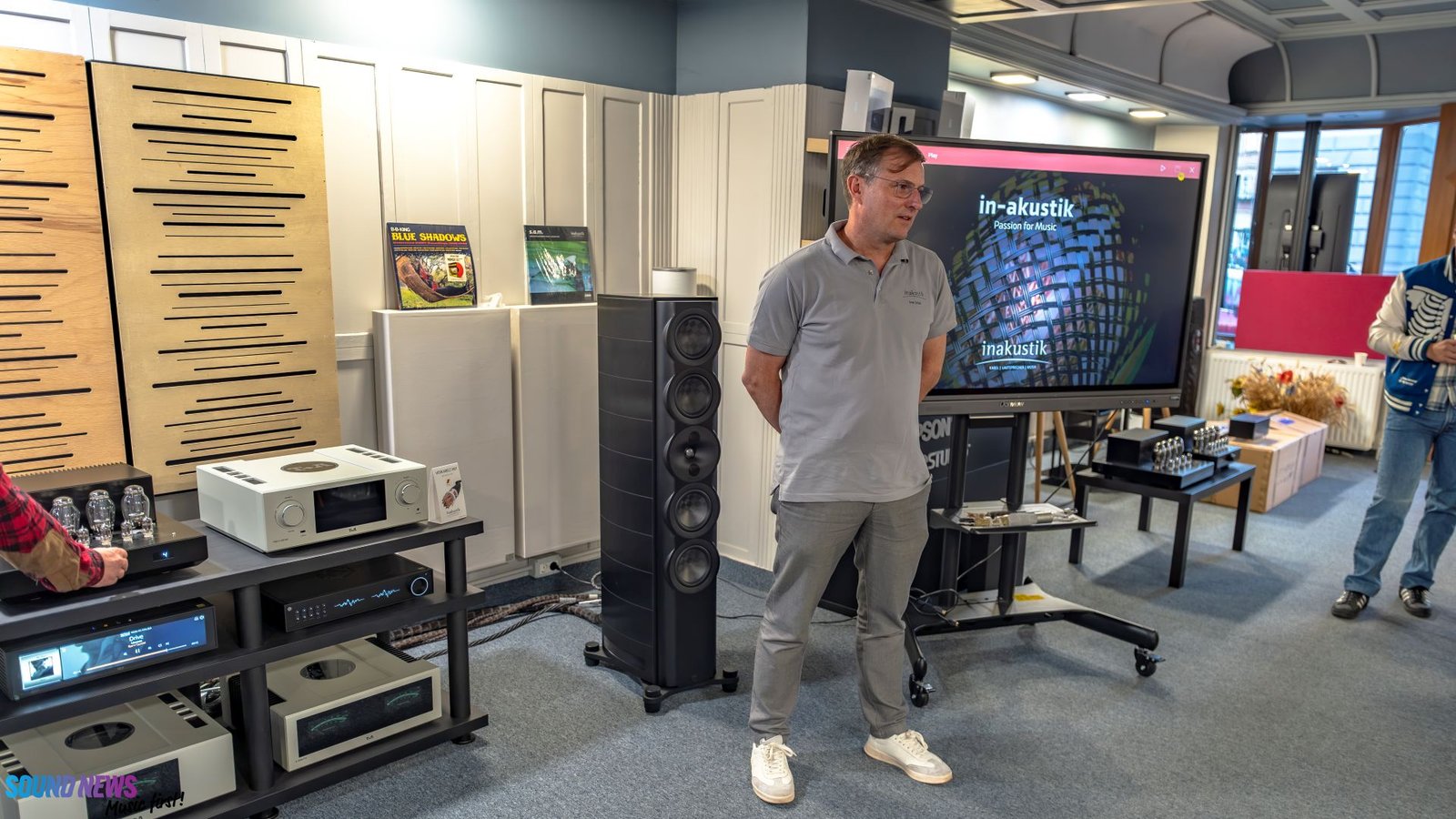
Sven Schulz: I see Romania very positively, because a few years ago we changed to our new partner, Tehnicavizuala. They really have a passion for the products. They’re active; they demonstrate; they sell to dealers; they do press, so it really helps. It all depends on the people. In Asia, we’re traditionally quite strong in Hong Kong, China, and Taiwan. In Thailand, we’ve had a distribution partner for more than 20 years. But at the end of the day, it all depends on the people and whether they’re really into it. Made in Germany helps in many areas. It has a good reputation, and handmade especially is trusted very well. And we need the export market to grow, because right now the domestic market and some European markets are struggling a bit. Romania, for example, is one of the few countries where we’re growing, and I don’t think it’s because the Romanian economy is skyrocketing.
SoundNews: It’s not skyrocketing, but it’s a little better year after year. And you found the right partner, so I think it’s a mix of things.
Sven Schulz: We do around 70% of our cable sales in export, and the goal is to go to 75 or 80%.
18 · What comes next
SoundNews: Can you share something about future lines? Network and streaming cables, I2S, maybe even a sixth AIR generation?
Sven Schulz: There are always products in the pipeline, and we’ve brought out a lot of products recently. The next step for us is to make our total range a little more understandable, maybe get rid of some products that have been there for a long, long time but don’t really make sense anymore, because there’s something at a similar price point. And then I’m sure we’ll find the right new products, be it in the digital range, be it maybe in headphones. We were looking at headphone cables for many years, but never really found the right approach. We talked about this earlier.
SoundNews: Yes, because maybe the AIR topology doesn’t make sense for a cheap or medium headphone, only for the summit-fi ones.
Sven Schulz: And sometimes we also have to decide, even if we want to offer a wide range of products: let’s concentrate on what we can do now, what sells well, and not have a little bit of everything. Maybe leave something to the others. I know there are a lot of requests, and some people want to have all their solutions from in-akustik. But at the end of the day, it’s also a capacity problem. We have one product developer and another guy in the technology department, and sometimes bringing out a product, especially a power product, takes up to six months, until we do all the quality tests, all the CE testing, build the samples, and find the right material. Even if it’s just a cable, it takes time to develop.
19 · One hour with a skeptic
SoundNews: A reader is convinced that a cable is a cable, and spends one hour in your listening room. Which track do you play, and which single cable do you swap to change his mind?
Sven Schulz: The track, probably something the customer is familiar with. And maybe an interconnect, the NF-2404 AIR. Normally that opens up the stage and gives more volume. It’s interesting for the end customer: even if it’s an expensive cable, it’s much more affordable than a speaker cable. When you bring in the LS-4005 speaker cable, there’s a huge result, but it costs €8,000, and maybe that will scare him away. With the interconnect, you can have one meter of stereo cable at a reasonable price, a significant difference, and get him interested without scaring him away.
For reference, the NF-2405 AIR RCA interconnect costs €1,950 (SRP).
SoundNews: That’s very clever.
Sven Schulz: Unfortunately, it’s not my idea.
SoundNews: You could say it was. Nobody would know.
20 · The record label
SoundNews: Very few cable makers also release music. I didn’t know about it until today, if you can imagine. I saw only one vinyl here, and I had no idea it was in-akustik.
Sven Schulz: I know the other showroom, in Cluj, also has our vinyl. We released our first album at the end of 1980, when the label was still called inak, and it always ran in parallel. We were one of the first to do live DVDs. And interestingly, some people who have bought music from us for many, many decades don’t know that we make cables, and vice versa.
SoundNews: So you see, I’m not the only one. Maybe you should do something about this.
Sven Schulz: We have a company presentation where I always speak about it. In the past, it was two different customers. Before streaming appeared, there were music shops, and there were hi-fi shops, and for hi-fi, I don’t know why, it was very difficult to convince them: hey, music is the basis for everything, put some vinyl in there, put some CDs in there. Oh no, that’s only a few euros earned. Yes, but the customers come back. They don’t buy a turntable every day, but they may come back to go through some LPs. And this has changed in the last few years. The hi-fi shops understood.
SoundNews: The return of physical formats helped a lot here too, I think. It’s a new trend to own your music, even among the young generation.
Sven Schulz: Yes, even my daughter. She’s a huge Billie Eilish fan, and she doesn’t have a hi-fi system. She listens to everything on headphones or a Bluetooth box; she streams everything, but she bought two vinyl records. We don’t have a turntable; she put them on the wall.
SoundNews: That’s not unique. A lot of teenagers do the same. In Bucharest we have bookshops that are also music shops, and a lot of young people browse through the vinyl. I’d bet at least half of them don’t have a system to play it on.
Sven Schulz: You know, with Spotify, with Tidal, you have access to everything, but you can’t touch it. And with some artists you really like, you want to have something.
SoundNews: For those of us who care about the format and the recording, it’s a pain, because music can disappear in an instant. It happens every day with my playlists: a few tracks disappear from the streaming services, at least the version I liked, not the new remaster. So for us, the physical format is becoming really precious.
21 · If you could keep only one
SoundNews: Last question. If you could keep only one in-akustik product in your system, which would it be? And what does the rest of your system look like? Don’t tell me you don’t have a system.
Sven Schulz: No, I do have a system. Probably I’d keep the speaker cable, the LS-4005. It makes a significant difference. And of course we’re biased, because we sell Primare and Audiovector on the domestic market, so I have the Audiovector R3, the Primare I35 streamer and the A32 from Primare as monoblocks. And of course everything is wired with in-akustik. But if I had to keep only one, it would be the LS-4005 speaker cable.
SoundNews: Very understandable, and a very good choice. Thank you so very much!
Three Questions, Answered in Writing
We ran out of time on the day, so Holger Wachsmann kindly answered these afterward in writing.
A · The Rotating XLR Connector
SoundNews: How does the rotating XLR connector work without compromising electrical contact? And was it initially developed and tested with sound quality or mechanical performance in mind?
Holger Wachsmann: There is no compromise in electrical contact, as the wires are connected directly to the XLR pins. This means there are no sliding contacts or additional contact resistance introduced into the signal path. The rotation angle is limited to ±45° for each connector, preventing excessive twisting and potential damage to the internal conductors.
B · Vibration Absorbers
SoundNews: What exactly do in-akustik’s vibration absorbers do, and under which component would you recommend placing the first set?
Holger Wachsmann: Our vibration absorbers mechanically decouple audio equipment from the floor or equipment rack, helping minimize the transmission of unwanted vibrations. When placed underneath loudspeakers, they help prevent vibrations from being transferred into the floor and surrounding room structure. This can reduce unwanted resonances, rumbling, and booming, resulting in cleaner, more controlled sound reproduction. When used underneath electronic components, the absorbers help minimize vibrations reaching the internal circuit boards and sensitive components, potentially contributing to a clearer, more detailed presentation. If I had to choose where to start, I would generally recommend placing them underneath the loudspeakers, but only when necessary. Why? Because the type of flooring plays an important role. For example, on a solid concrete floor, spikes might actually be the better solution. In such cases, I would prioritize placing vibration absorbers underneath the preamplifier and DAC instead.
C · The Most Common Mistake
SoundNews: What is the most common mistake you see people making when installing cables in their Hi-Fi systems?
Holger Wachsmann: Using the wrong brand! Just kidding. 😉 Of course, there are some serious mistakes, such as connecting loudspeakers with reversed polarity by accidentally mixing up the positive and negative terminals. Another common mistake is using RCA connections instead of balanced XLR connections, even when both components offer the latter option. However, I believe the biggest mistake is dismissing cables as unimportant. Cables are an integral part of any Hi-Fi system, and choosing unsuitable cables can compromise the overall listening experience. Even an otherwise excellent audio system may fail to perform at its full potential if the importance of proper cabling is overlooked.
Thank You
My sincere thanks to Sven Schulz for an open, generous, and very funny conversation, and to Holger Wachsmann for taking the time to answer our questions in writing.And a special thank you to the team at Tehnicavizuala (tehnicavizuala.ro) for hosting the in-akustik event in their Arad showroom, for the warm welcome, and for the passion they bring to every product they represent. As Sven himself put it, it all depends on the people, and in Romania in-akustik has found the right ones.