TLDR:
The Yamaha R-N2000A is a beautiful, do-it-all next-generation Network HiFi Receiver, as Yamaha calls it, that we loved turning on and living with. Nice build, wonderful tactile controls, effortless and hassle-free setup, and the best feature set in its class, including streaming, YPAO room correction, HDMI ARC, a phono stage, and a capable DAC. Overall the sound is clean, detailed and resolute over a good, dark background, with impressive subbass capabilities that we think are the R-N2000A’s highlight.
Three qualities defined the receiver for us:
- Freedom: one enclosure streams, corrects the room, drives the speakers, spins records, and feeds the television, so you press a single button and let the music play.
- Features and value: the most complete package we have met in its class and price range, room correction included, wrapped in a build and a set of controls that feel above the money.
- Low end authority: the subbass is the highlight, weighty and articulate, reaching deep with a body and control that surprised us for an all-in-one at this level.
The other side is just as clear. No treble sparkle or air, a clinical and lean midrange, a little on the warm side, and a somewhat flat soundstage with little depth and a super-flat monitor-like sound signature that may appeal to some but not to others. Despite all this, long-term listening pleasure is present.
Its versatility is also a major part of the appeal. Stream it, add a turntable, wire in the television, and correct the room, all from one chassis and one app. The R-N2000A is not chasing audiophile magic, and we would not present it as such. It definitely sits in a niche of its own, between the listener searching for the last word in resolution and the beginner who just wants something that works, and it serves the guy in the middle, the one who wants a great-sounding, do-it-all system without a rack of separates or a small fortune spent. It wins on convenience, features, and value more than on audiophile magic.
There are evenings when we do not want to think about a chain of separate devices, cables, and matching. When we just want to press one button and let the music flow. We feel the Yamaha R-N2000A is built for exactly those evenings, and this simple idea sits at the very heart of what Yamaha set out to achieve with this all-in-one.
As always, check out our signature scorecard further down, the one we run on every amp we test. That section alone tells you most of what you came here to find out. We made it so that just by going through it, you will start to have a very good idea regarding the sound signature of the device you’re reading about.
On paper, this all-in-one promises freedom from the usual stacking of separates. Whether that promise held up once we wired it into our own systems is the whole point of what follows.
Core Design Concepts and Key Decisions
Before the music, we like to understand what we are listening to, so we spend some time studying the technical side. Everything here comes from Yamaha’s own materials and published specifications. When a claim belongs to Yamaha, we say so, and we set our listening impressions aside for later. The short of it is that the R-N2000A reaches up toward the far pricier 5000 Series, borrowing several of its ideas and bringing them into one chassis at a much more attainable price.
Floating and Balanced Power Amplifier. The centrepiece is what Yamaha calls its original amplifier technology, a floating and balanced power amplifier in which the power amplifier circuitry, including its own supply, is kept independent from the ground. Yamaha reasons that floating the amplifier away from ground removes the influence of small voltage fluctuations and external ground noise, and lets the output stage run in a fully symmetrical push-pull configuration. Yamaha ties this to a clean signal-to-noise ratio and an expressive delivery. We cannot open the unit or put it on a bench, so we present this as the maker’s design, and we will simply say that the quiet, dark backdrop we heard confirms the geniality behind the idea.
Symmetrical, Folding Book Construction. The R-N2000A is laid out in a symmetrical, folding book arrangement, with the power supply in the centre of the chassis and a power amplifier block on each side. Yamaha says this gives the unit an ideal weight balance and suppresses the interactions between channels that harm separation. It is an example of a wonderful internal discipline that we would expect from separate devices, and it is appreciated and very welcomed at this level.
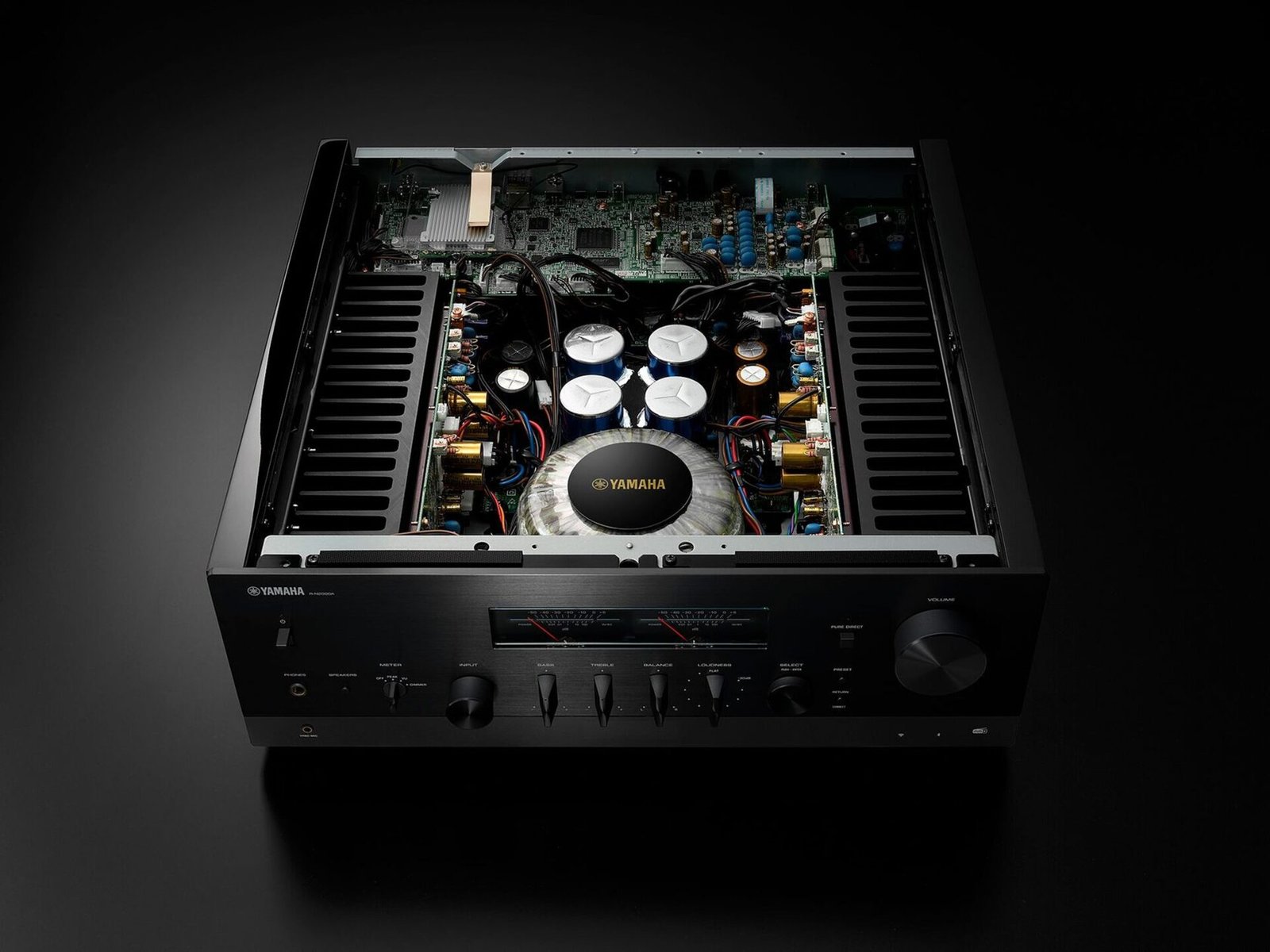
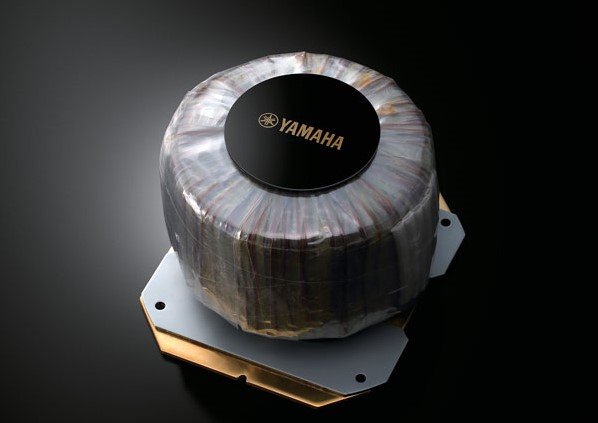
Toroidal Transformer and Power Supply. Power comes from a toroidal transformer, a type Yamaha notes is usually kept for flagship components, chosen for its low stray field and its quiet delivery. In a lovely touch, a 3 mm brass plate is placed between the base of the transformer and the inner chassis to control vibration. Another attention to detail we search for, and appreciate when we find it on the lower side of the price ladder.
Mechanical Ground Concept. As in its hi-fi flagships, Yamaha applies what it calls a mechanical ground concept. The bolts of the feet are welded directly to the main chassis, and the large heat sink, the power transformer, and the block capacitors are all bolted straight to the chassis as well. Yamaha aims to drain unwanted vibration away and turn the enclosure into a rigid, quiet foundation, which the company credits for a weighty, expressive low-frequency response. The unit stands on heavy-duty, chrome-plated brass feet that reinforce that foundation.
Low Impedance Concept and Grounding. Yamaha pays close attention to grounding, under a banner it calls the low impedance concept. Thick wiring carries the ground connection to reduce energy loss and signal degradation, and a screw connection is used for the output of the power amplifier section to strengthen that ground. Yamaha connects this work to an open, natural soundstage. The speaker terminals, worth a mention here, are cut from solid brass and take a spade or a thick banana with a firm, secure grip.
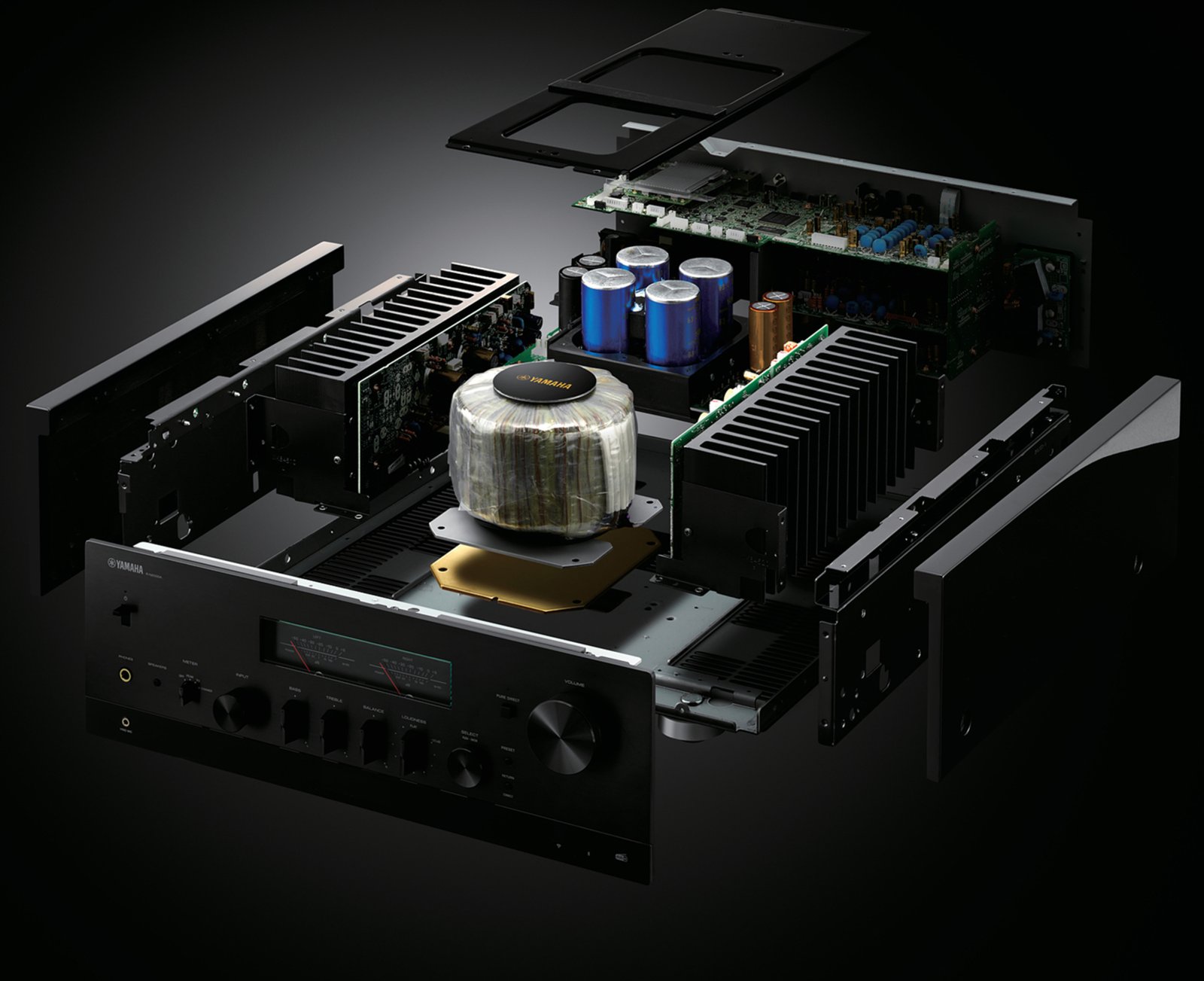
A Philosophy Borrowed From The Big Guys. Running through these choices is a single idea: the R-N2000A should behave like a scaled-down Yamaha flagship. The floating amplifier, the symmetrical layout, the overbuilt supply, and the heavy, grounded chassis are the same themes that run through the top-of-the-line 5000 Series, brought down to a price many more people can reach. Yamaha is open about the lineage, and while a chassis at this money will not match a stack that costs several times as much, the intent is clear, and some of it carries through to the way the receiver sounds and feels.
Signal Integrity and a Quiet Backdrop. Several of these decisions point the same way, toward a low-noise, undisturbed signal. The balanced topology, the isolation of the sensitive circuits from the supply, and the careful grounding are aimed at a quiet backdrop behind the music, and Yamaha makes much of the pitch black silence this is meant to deliver. It is the one design claim that lined up most clearly with what we heard, since a dark, quiet background is among the receiver’s strongest traits, and it gives the music a clean, still canvas to sit on. Taken together, the engineering paints a picture of a maker that took the enclosure seriously, and that seriousness is easy to feel the moment you set it up and start to listen.
Component Level Details
The Output Stage and Power Supply. At the heart of the amplifier, we find the Sanken MLE20 and MJD20 MOSFET devices, arranged in a double push pull configuration (4 MOSFETs per channel), a layout designed for strong, controlled current delivery. Feeding them is a large 600 VA toroidal transformer, paired with four 18,000 µF capacitors, rated at 63V to build up the current capacity and the rise time the output stage can call on, for a total of 72.000 µF and a maximum available stored energy of 142.88 Joules. It is a serious power supply for an all-in-one at this price, and it goes some way toward explaining the weight and the grip we heard in the bass region, since a stiff supply and a well-fed output stage are exactly what a dense, bass-heavy passage requires.
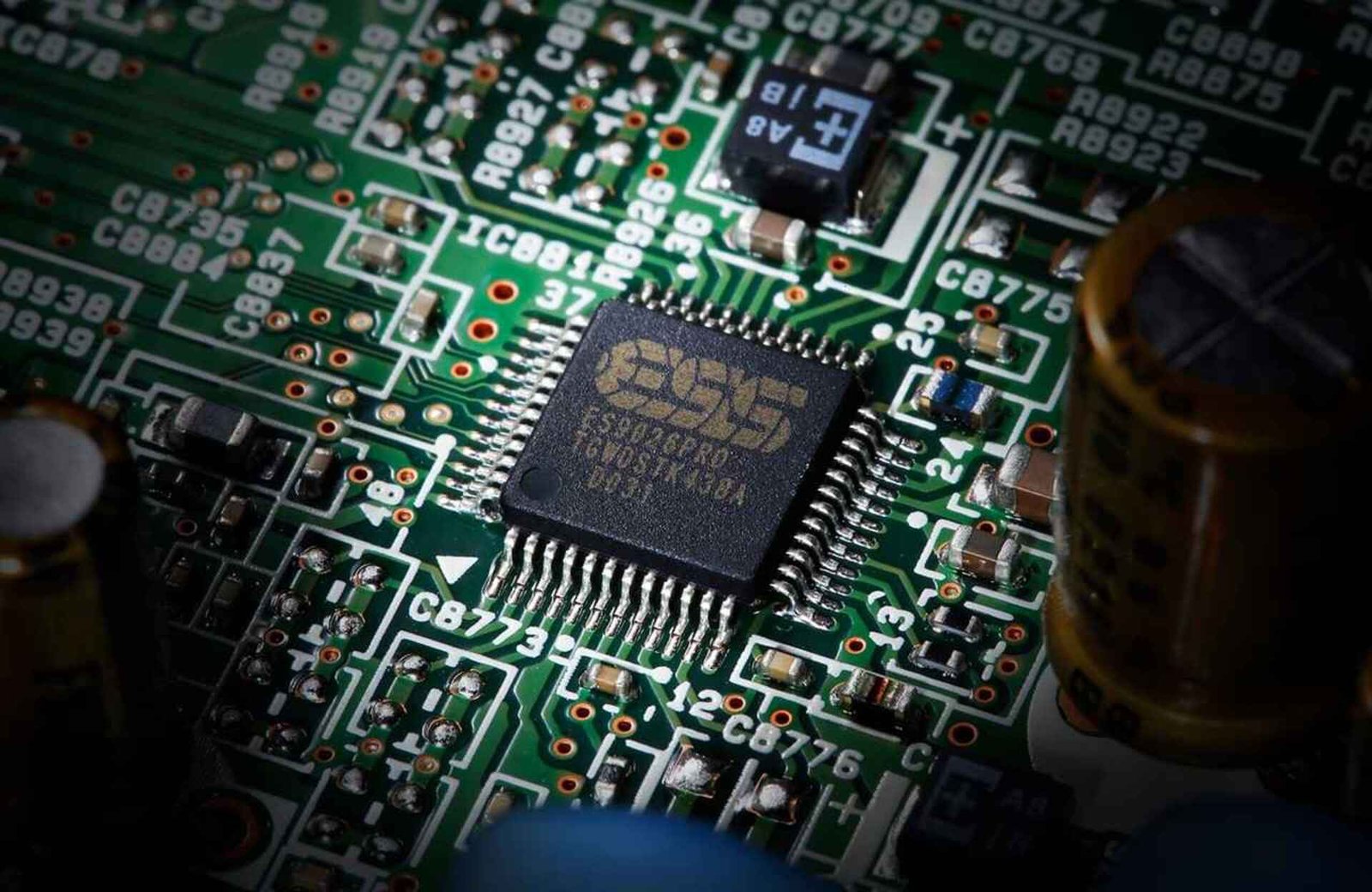
The ESS SABRE ES9026PRO DAC. On the digital side, Yamaha built the converter around the state-of-the-art ESS SABRE ES9026PRO from ESS Technologies, and it is treated as more than a token afterthought. The chip runs in a four-channel configuration feeding a balanced analog output, which Yamaha says refines the current delivery and lifts the transparency of the conversion. The USB input adds a dedicated crystal clock to improve timing, and the digital section accepts DSD at 11.2 MHz native and PCM to 384 kHz, which is everything most libraries will ever hold.
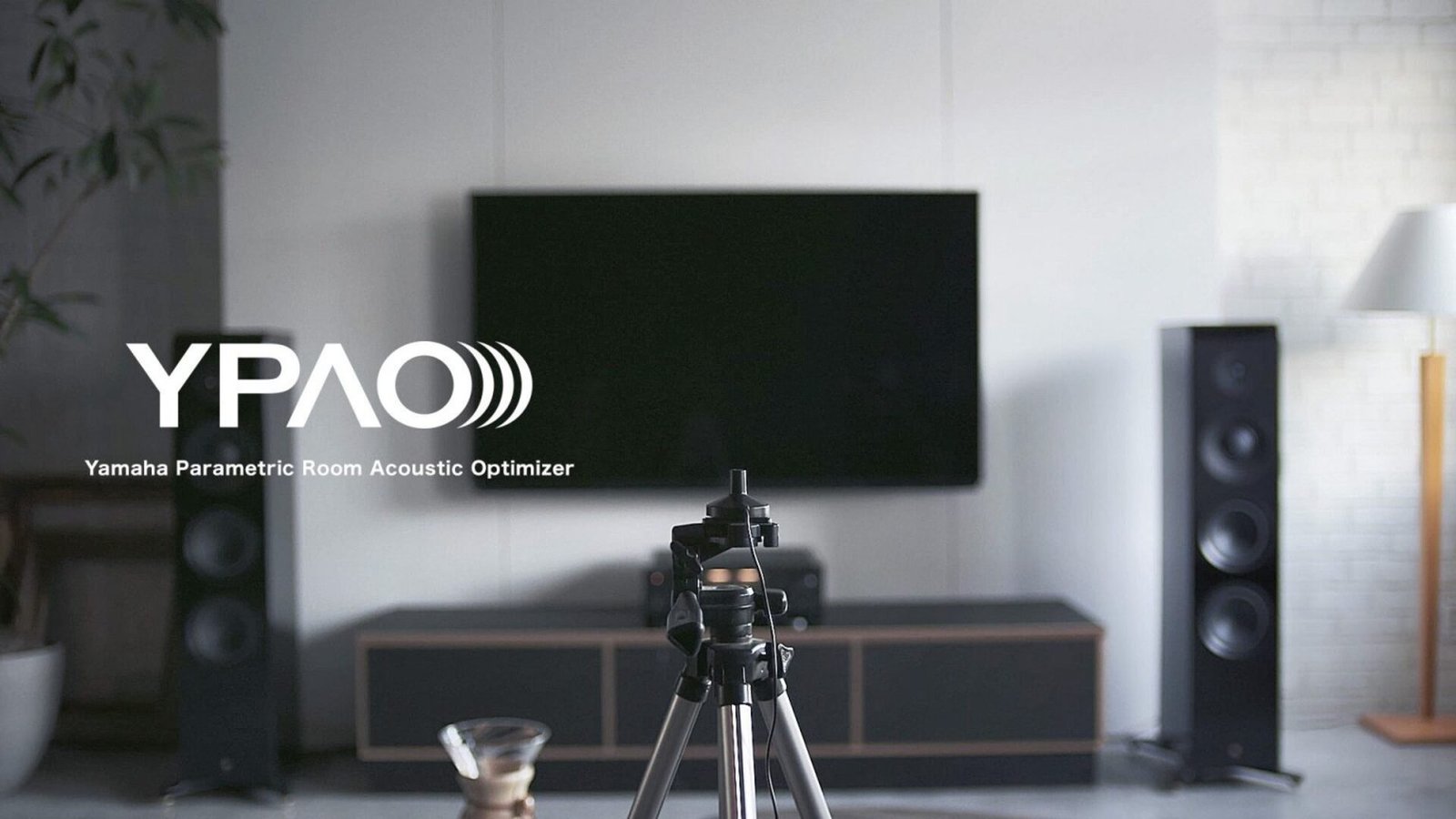
YPAO Precision EQ and R.S.C. Room correction comes from Yamaha’s own YPAO, refined over decades in the company’s home theatre receivers, here doing its equalising at a very high 192 kHz and 64-bit resolution. Alongside the precision EQ, YPAO R.S.C. (Reflected Sound Control,) targets the early reflections that smear imaging, adapting to the materials of your walls and the placement of the speakers. Pure Direct sits alongside it for the moments you want the shortest signal path, and the receiver is Roon Tested, so it drops into a Roon setup without fuss. We will come back to YPAO, further down the review.
On the numbers, Yamaha rates the R-N2000A at 90 watts per channel into 8 ohms and 145 watts into 4 ohms. Those figures set expectations on the lower side of power ratings, and we will be careful about them when we talk about how it drives a speaker.
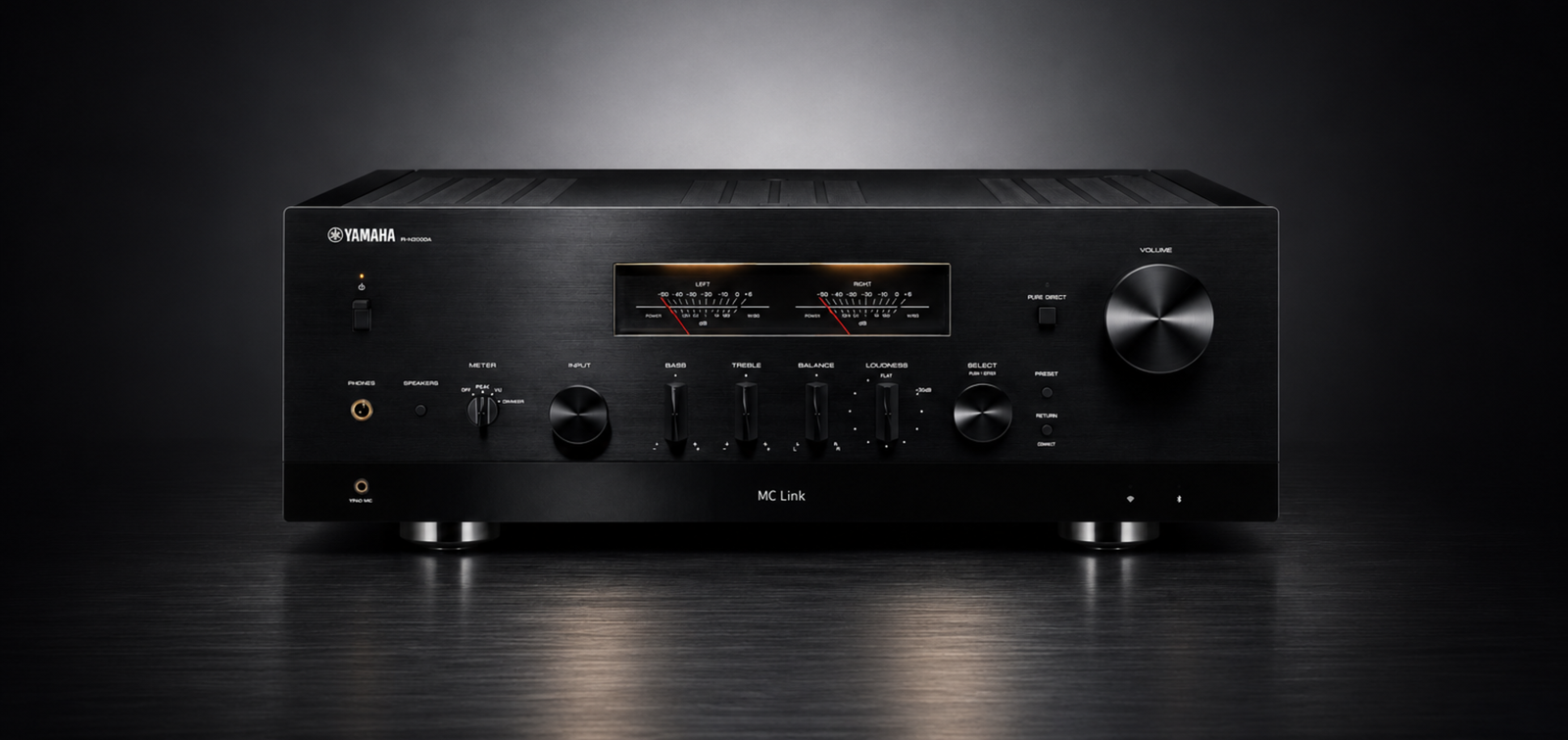
The Display and Everyday Interface. The fascia pairs those illuminated meters with a high-resolution OLED strip along the lower edge, showing the track, the source, and the sampling rate at a glance, and dimming through several levels down to almost nothing for a film. Old character above, modern clarity below, and it is part of why the R-N2000A is such a pleasure to read and drive from across the room.
Build and Design
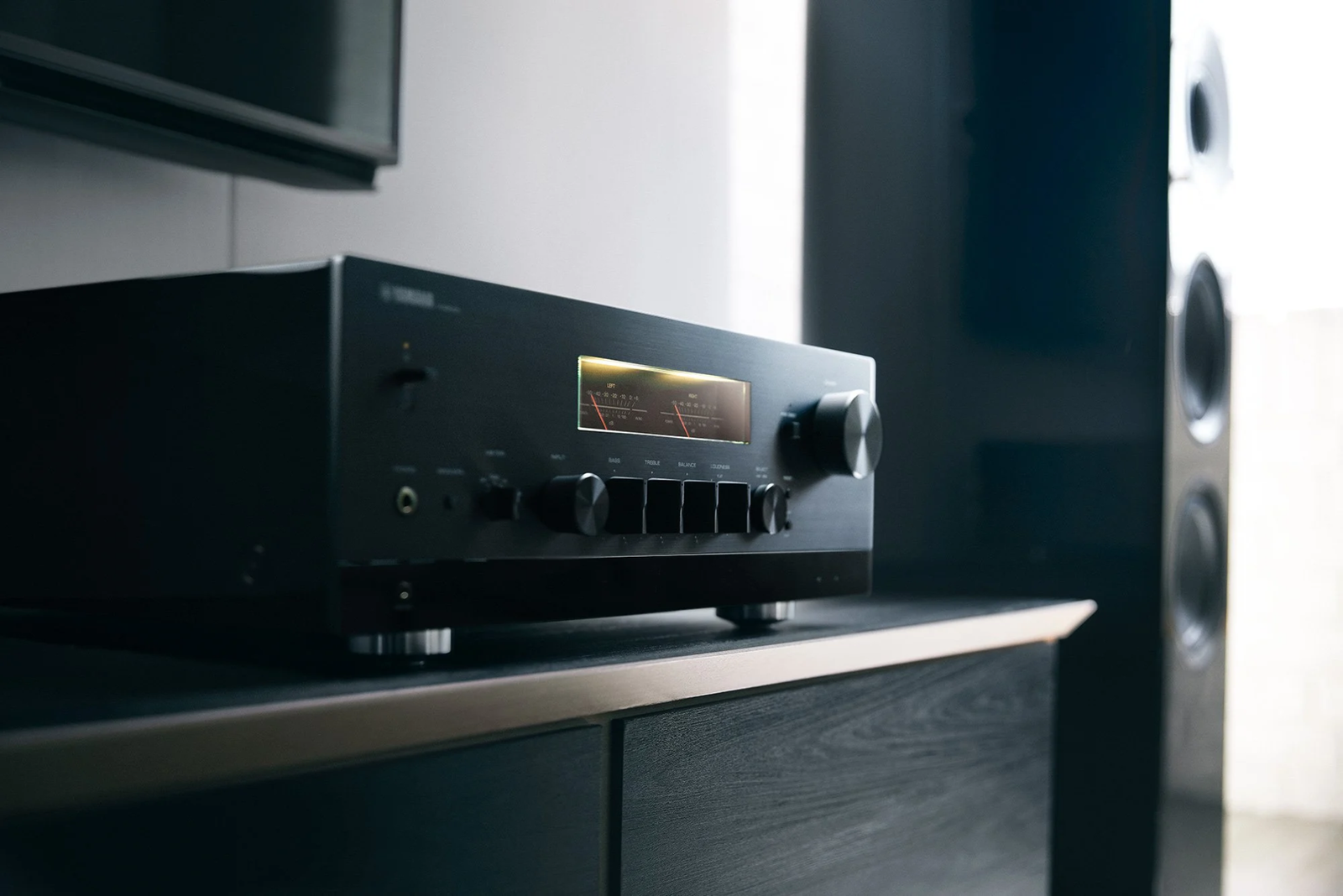
The build won us over before a single note played. The R-N2000A is a full-width component, and lifting it tells you Yamaha did not cut corners on the metalwork. The aluminium front is cool and cleanly finished, and for the money it looks and feels well made, the sort of unit you are happy to have on show at the centre of a system.
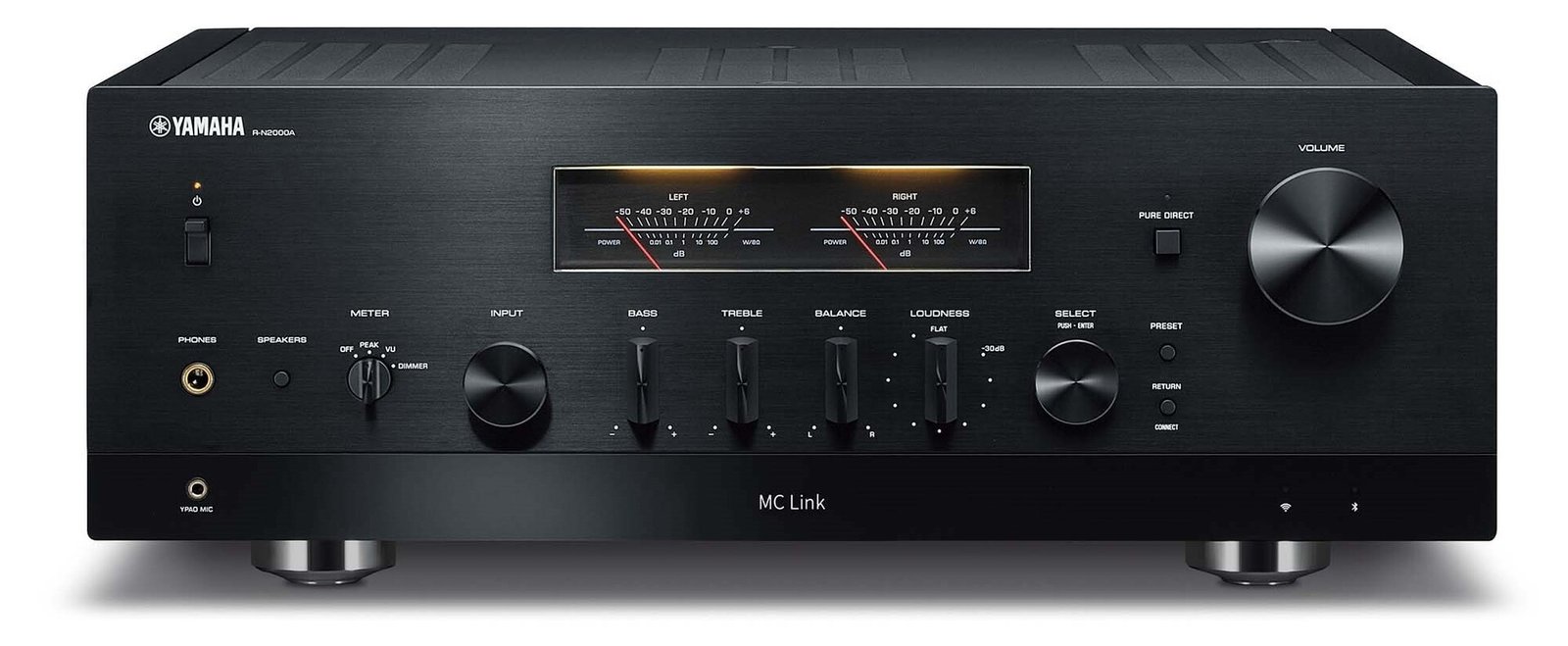

Then there are the meters, and we will admit we are a little in love with them. Two illuminated analog needles swing with the music, backed by a small display for track information, and they give the whole enclosure that vintage hi fi look we grew up admiring. One of us leans toward exactly this kind of classic face, and for him the meters alone are worth a great deal. They add nothing to the sound, of course, and we do not care one bit. A component that makes you smile before it plays a note has already started well.
The controls carry the same care. The volume turns with a smooth, weighted feel, and the source selector lands on each input with a satisfying click, so you find yourself reaching for them for the pleasure of it. Day to day the R-N2000A is a pleasure to live with, quick to wake, easy to read from the chair, and simple to drive through its front panel or the app.
Sit it on the rack and it settles with the assurance of a component built to last, and the fit and finish hold up to a close look, panels meeting cleanly and the switchgear moving with a consistent, damped action. For the price, this is a lot of enclosure, the sort of piece that will still look and feel right in ten years. We kept running a hand across the top plate on the way past, the way you do with an object you have grown fond of.
If we have a gripe, it is the remote, which feels light and plain next to an enclosure this handsome, though it does everything you need without complaint. The glossy areas also pick up fingerprints, so a soft cloth stays useful. None of this troubles the core impression, which is of a serious, good looking piece that carries its price with confidence.
Features, Connectivity and Freedom
This is where the R-N2000A makes its strongest case. The features and value it brings to the table make it the most complete machine we have tested at this price range.
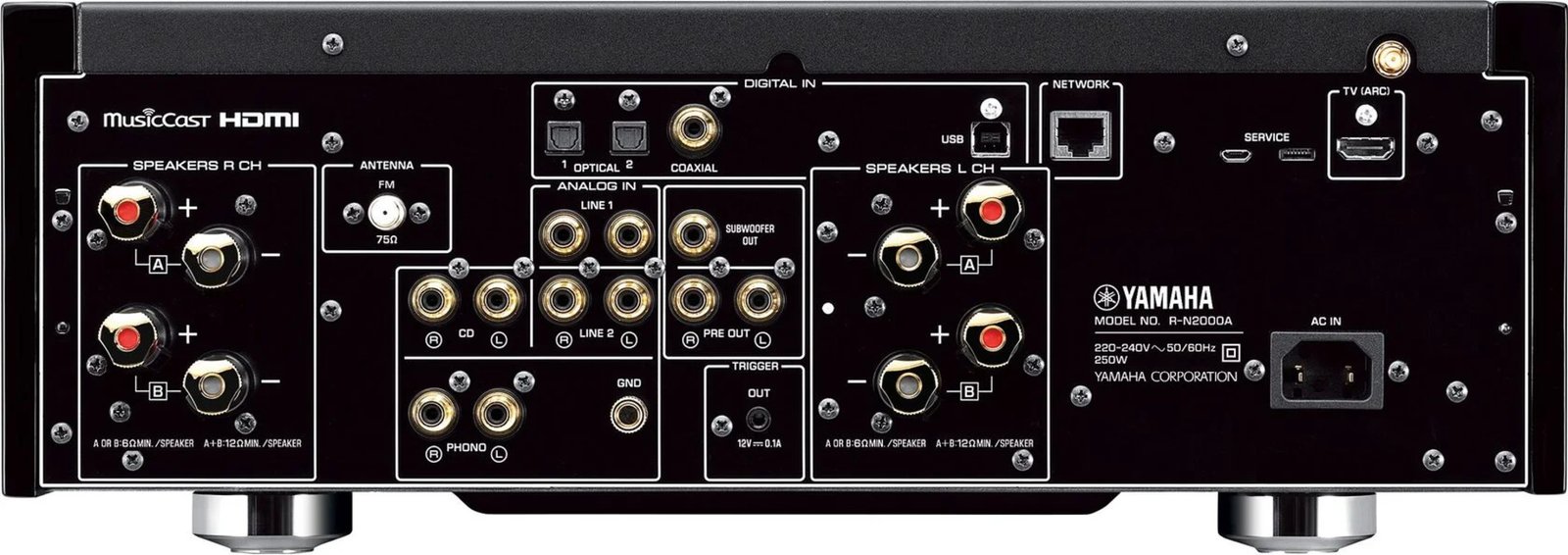
Let’s start with the connections. There is a proper phono input for a turntable, line inputs, optical and coaxial digital inputs, and a USB DAC input for a computer, which was one of the two sources we used most. There is HDMI ARC, which we hooked up to a television for part of our time with the unit, and it turns the whole thing into the heart of a living room: one cable, one remote, tidy and simple. A subwoofer output and a trigger output round things off, and a headphone socket sits on the front for private listening. Taken together, the input list is generous in a way that keeps coming in handy.
On the network side, the R-N2000A runs Yamaha’s MusicCast platform, with the wide service support you would hope for, and it behaved beautifully throughout the whole time we used it. We leaned on its streaming and on the USB input, and both worked, bug-free, day after day. We were impressed by the reliability and bug-free experience. AirPlay 2 and Bluetooth are there for casual use, and Roon owners are covered too. The freedom this brings is the quiet heart of the R-N2000A. We plug it in, connect the speakers, and we are listening in minutes, with no separate streamer, no outboard DAC, and no tangle of interconnects to worry over. That pleasant, hassle-free feeling of pressing one button and letting the music play is, for many people, worth more than any single specification.
The R-N2000A also earns its keep in the small daily conveniences a listener meets over daily use. Switching between the streaming service and the computer over USB was quick and untroubled, the unit held its settings and woke to the last source we had used, and the app, while plain, did its job without drama. We leaned on its own streaming and on the USB input above all, and both stayed dependable across the whole time. Bluetooth and AirPlay 2 covered the casual moments when a guest wanted to play something from a phone, and the presence of a subwoofer output leaves an easy path for anyone who wants to add low-end reinforcement later. It is a connectivity list that keeps saying yes, whatever you throw at it, and that range is a large part of why we rate it so highly on features and everyday value.
The HDMI ARC connection deserves a second mention, because it changes what the R-N2000A can be. Wired to a television with one cable, it becomes the sound of the living room as well as the music system, film dialogue coming through clean and the whole setup answering to a single remote. For a household that wants one tidy, capable centre for music, streaming, records, and television, this is the sort of feature that often decides a purchase, and it works exactly as it should.
And then there is YPAO, which we want to single out, because room correction at this price is rare and very useful in ordinary, untreated rooms. It is quick to run and easy to use, and it is one of the strongest reasons to consider this receiver. Most buyers will place a unit like this in a normal living space with hard walls and little treatment, and a tool that measures the room and tames the worst of it, without asking the owner to become an acoustics hobbyist, is a serious selling point. To show you exactly what it does, we have included a measurement of the in-room response with YPAO switched off and again with it on, so you can judge the difference for yourself.
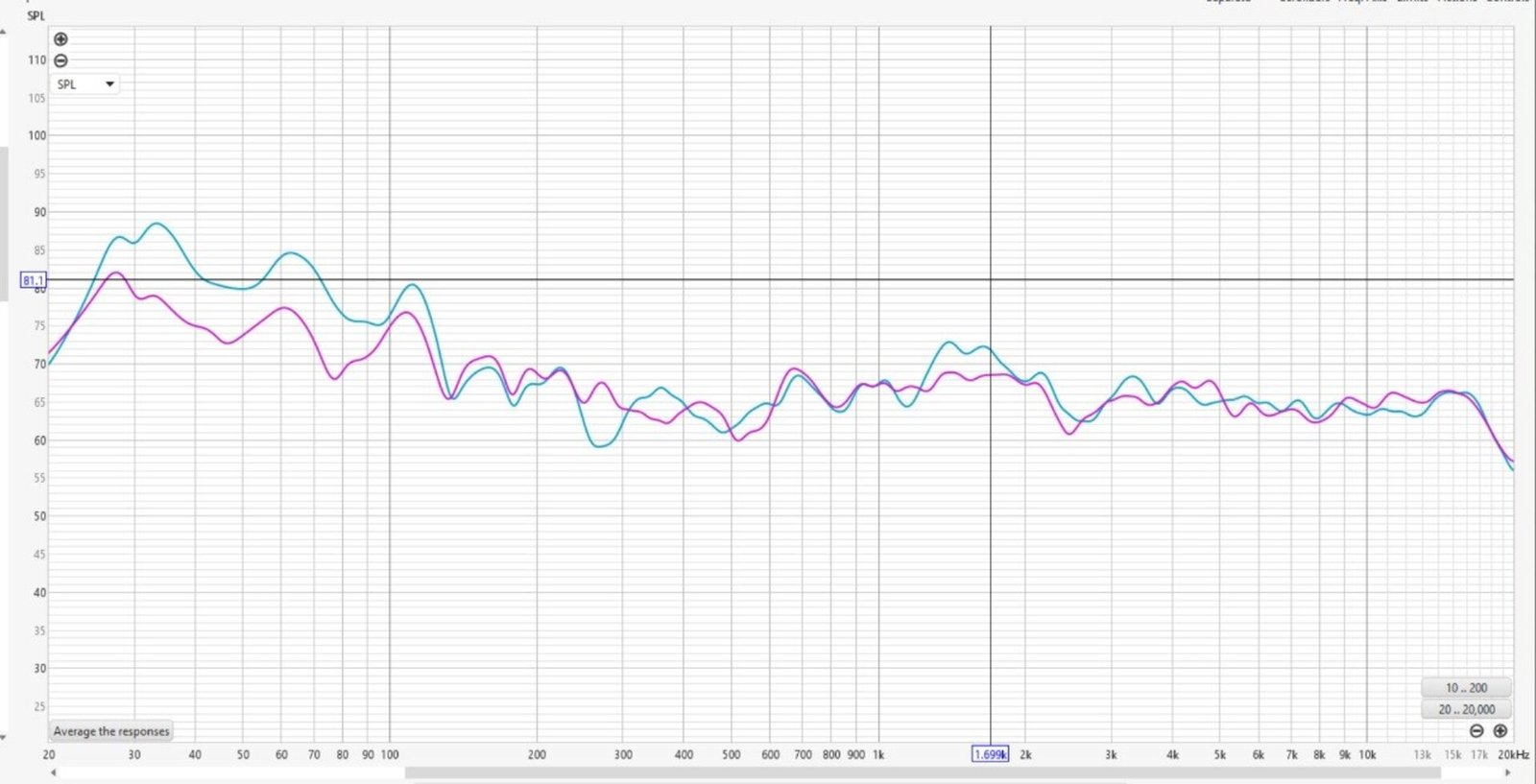
Turquoise trace – YPAO OFF. Violet trace – YPAO ON.
The graph shows two in-room measurements taken at the same listening position, comparing YPAO room correction on and off.
Below roughly 100 Hz the two traces separate. With the room correction turned off, the response rises to a peak around 88 dB in the 25-35 Hz range. With YPAO on, that same peak drops to around 81 dB, a reduction of roughly 6-7 dB. A secondary bump can be observered near the 60 Hz area, and it shows the same pattern: 84 dB with room correction off, and around 76-77 dB with it enabled. YPAO is pulling down a bass rise in this region tied to a room mode or boundary reinforcement near the listening position.
The bass reduction we measured translates directly into what we heard at the listening position. The bloated low end tightens, and low notes stop overlapping each other and it is clear that it cleans the midrange as well. Bass guitar lines, kick drums, and low piano register become more distinct, for example. As we said before, this newly found controlin the low frequencies changes how the rest of the frequency range are perceived. With the bass no longer overwhelming the room, midrange detail comes forward with more clarity, and the soundstage gains a depth and separation that the uncorrected response was masking. Instruments occupy their own space with sharper edges, and the sense of layering between foreground and background elements becomes easier to follow.
The overall listening experience shifts toward something more relaxed, cleaner, and more natural. Long listening sessions feel less fatiguing, since the ear no longer works to filter out an inflated bass region perceiving the rest of the sounds more clearly. YPAO delivers a system that sounds even more coherent, with a tonal balance closer to reality.
We keep coming back to the same thought here. As a set of features, as a single enclosure that does almost everything a modern listener needs, the R-N2000A is hard to fault and easy to recommend. The questions, as ever, live in the sound, so let us turn to that.
Auditioning the R-N2000A with the Monitor Audio Platinum 300 3G
For the bulk of our listening, we paired the R-N2000A with the Monitor Audio Platinum 300 3G, a speaker we know well and one, that in oour opinoi, after testing dozens of speakers, gives back exactly what an amplifier feeds it. We sourced the receiver mostly from its own streaming and, at times, from a laptop conected over USB, and we let it settle and play across many long evenings before writing anything down. What follows is the character we heard, and we want to emphasize that a sonic signature is a matter of taste more than a simple matter of good or bad. The R-N2000A has a clear voicing. Whether it is for you is a question only your own ears can answer. That is why it’s important to hear it for yourself, preferably in your own system and room before buying it.

The first thing that really touched us was the low end, and it is the highlight of this receiver. The subbass is power-audio-style weighty and textured, deep and articulate, with a controlled sense of slam that surprised us for a unit at this rated power level. On Infected Mushroom’s Guitarmass and Bliss on Mushrooms, the lowest notes were delivered with body and pressure, and we could follow the pitch and the texture of each one without the low end turning to mush. It is not the last word in tightness, and we could feel the modest power putting a ceiling on the ultimate grip, yet the weight and the articulation down low are the receiver’s calling card, and we kept returning to them. On Smilk’s Acoustic Crumpet the low end anchored the rhythm cleanly, letting the rest of the track sit on a firm foundation.
The midbass and kick tell a slightly cooler story. The bass character was fast and clean, and the timing felt tidy, though the kick region leans a little, offering more tension than outright weight, and somewhat lacking in physicality when a track wants to deliver a punch you feel in the chest and neck. It never blurs or overhangs, and it keeps the music moving, so the effect is of a low end that is quick and controlled at the top frequencies of the bass spectrum while it is weighty and deep at the bottom.

Through the midrange, the R-N2000A is clean, analytical, and resolute, and it leans towards clinical. Voices and instruments are placed correctly and drawn with good transparency, and there is just a touch of warmth but not in a sufficient way so that, at times, the presentation can be a little lifeless. It is correct, but it doesn’t come with an emotional involvement. On Diana Krall’s Temptation, her voice sat exactly where it should, clean and clear, without the bloom and body that a warmer, closer to a class A amplifier often lends it. We found ourselves admiring the accuracy while waiting for a warmth that did not arrive. This midrange presentation reports the music faithfully and keeps its distance. As for how much that suits you comes down, once more, to taste.

The treble is plain. There is little sparkle and little air, and the sense of shimmer and openness at the very top is at times missing, so the presentation does not extend and illuminate the way the finest designs do. The articulation is modest too. On Idrissa Soumaoro’s Cherie, a track that climbs into the very top octave, the air and light we listen for were there but did not stand out. Cymbals arrived with their body while their halo stayed recessed. The saving grace, and it counts for a great deal over a long evening, is that the top end never turns sharp or splashy, and there was no sibilance and no fatigue anywhere in our sessions, no matter the SPL or time we spent listening. So the treble is simply there, but in a flat, clean, and untroubled way, but without the spark that lifts a great treble into something special.
None of this makes the top end a hardship. Over a month of long evenings we never once reached to turn the treble down, never flinched at a bright recording, and never met the edge of listening fatigue that a pushier top end can bring. What you trade for that ease is the last measure of excitement, and where you land on that trade is, once more, a matter of taste and of the music you love most.
From what we experienced with Yamaha’s own speakers, for example the NS2000-A model, it does tend to present the music with a boost in the higher octaves, or on the brighter side of the musical spectrum if you would. In this case, the pairing with their own speakers seems to be an easy choice, helping harmonize the system.
The soundstage follows a similar logic. Width is decent, spreading the music sensibly across the front, but without extending past the left and right speakers. Imaging is pretty precise, placing each element in a clear spot. What is missing is depth. The soundstage is presented as a flat space, with little front-to-back layering and little of the three-dimensional space that lets you hear players sitting at different distances. On Nils Frahm’s All Melody, the images were drawn cleanly and placed with care, and the room the piece can conjure stayed pressed onto a single plane. It maps the music accurately and in two dimensions, and if a deep, enveloping soundstage is what you chase above all, this is the part you will feel.
On detail and resolution, the R-N2000A gives you what is on the recording and passes source changes through clearly, so it is transparent to what you feed it. The character, though, is best described as simply present. There are no extremes here, no warmth pushed forward and no cutthroat, hyper-analytical edge pulling detail into your lap. Information is there, clean and legible, and it is served without drama. It is, in a phrase we kept using between ourselves, just there. We experienced it as an impartiality, treating every frequency equally without favoritism.

Dynamically, the receiver is modest and unshowy. It handles the shifts in the music at sensible levels with composure, and it does not startle or thrill. On the big orchestral swings of Mahler’s Symphony No. 2 Resurrection and Stravinsky’s The Firebird Suite, the scale and the detail were laid out clearly, and the quiet passages sat against that lovely dark background, though the sense of a hall exploding into life stayed measured, in keeping with the receiver’s calm, even character.

Which brings us to listening pleasure, and here we will be plain. It is pleasant. The R-N2000A is easy to listen to for hours, never fatiguing, clean and comfortable, and it makes a fine companion for a long evening with a book or a conversation. We would say it leans toward the background of your attention more than the front of it, competent and even. It’s somewhat forgettable, the kind of sound you enjoy while it plays and do not ache for when it stops. On acoustic material, Estas Tonne, Danit’s Naturaleza, and the flutes of Nicholas Gunn’s Blossom and Elliott Tordo’s Silent Moon, the music came through clean and articulate, a little short of the last measure of body and air, and we listened happily without ever being pulled into the experience. None of this is a failing, but a character, an even, clean, resolute character with a standout low end. Your taste will decide the rest.
We spent more time than we care to admit chasing the low end on its own, because it is the trait that most sets this receiver apart. Across electronic and film material, the subbass reached down with weight and stayed legible, giving tracks a foundation that many rivals at the price cannot manage. Even as we felt the power ceiling on the very tightest transients, the body and the reach kept us happy, and it is a low end you feel as much as you hear. That impression, more than any other, is the one that remained with us.

At lower volumes, late in the evening, the R-N2000A held its shape well. The bass kept its weight, the detail stayed in place, and while a little life eased off at a whisper, as it does with almost any system, the presentation stayed clean and easy to follow without being congested. This is a receiver you can also enjoy softly, which counts for more than it sounds when you listen at night with the house asleep.
Rock and denser mixes held together too. The receiver kept the strands of a busy arrangement legible, the low end anchoring the rhythm while the midrange was clean, and although the top could have used more sparkle to light up cymbals and edges, the sound never hardened or grew tiring. It is a tidy, composed way with a crowded track, in keeping with everything else we heard.
Coming back to the character as a whole, the word we kept reaching for was even. The R-N2000A does not push any part of the music at you. It lays the recording out cleanly, keeps the background quiet, hands you a weighty low end, and stays calm and untroubled from bottom to top. Some evenings we wished it would take us by the collar, and it never quite did. Other evenings, tired and simply wanting music in the room, we were grateful for that composure.
Both reactions are fair, and both point back to the same even, resolute voice, which is why we keep saying that this signature is a matter of taste more than a matter of better or worse.
A Word on the Dynaudio Contour 60i

We also spent time driving the Dynaudio Contour 60i, in a 35-square-meter acoustically treated room, a larger and more demanding speaker than a 90-watt receiver would usually be paired with. We can say we came away impressed by how the R-N2000A coped. For its modest power, it handled the heavy load admirably, keeping the Contours composed and controlled at sensible listening levels, holding on to the same clean presentation and that weighty, articulate low end we had enjoyed on the Platinum 300s. We think that driving a speaker of this size and appetite with this much poise was unexpected, and it speaks well of the engineering inside.
We came to enjoy the Contour pairing for calm, considered listening. It is a partnership that rewards a listener who wants scale and ease over sheer SPL or power, and it widened our sense of what this receiver can sit in front of. A month with it left us with a clear picture of a modestly powered unit that punches a little above its rating, so long as the demands stay sensible.
We want to be measured, because power is the one place a reader could be misled. Pushed hard and asked for high volume on such a load, the R-N2000A reaches its limits quickly, and the sound firmed up and lost its composure. The sound signature turned a bit congested, sounded a bit crowded as it ran out of headroom. This is no powerhouse, and a big, hungry speaker played loud is not the job it was built for. Kept within sane, normal levels, though (within its specified power range), the pairing was better than we expected, and it showed us that the R-N2000A can be partnered with speakers a class above what its market position might suggest, so long as you are not chasing absolute power.
Living With It
A review can list features all day, and a receiver earns its place in the quiet business of daily use. Here the R-N2000A shined like a precious stone. We used it daily over the course of a month, that is more than we use our reviewed gear, and this was for the simple reason that it made listening easy, pleasant, enjoyable. One button, the meters swinging left-right, the music playing, and nothing else to think about. That freedom, the pleasant sense of turning it on and letting it play, is the heart of what this unit offers, and it is worth more in a normal week than any single number on a spec sheet.
Setting it up was very easy, which is the point of a product like this. The unit is heavy and a solid shelf is a welcome addition, with a little air above, since the top runs warm after a long session, and once it is in place there is nothing to fuss over. For anyone who has spent years shuffling separates and cables, the calm of a single, capable machine is its own reward, and it is easy to see why someone would choose this.
The streaming stayed dependable throughout, waking onto the last source and getting out of the way, and the room correction was a few minutes’ work we were glad to have done. Hung off the television, the R-N2000A tidied a living room down to one product and one remote, and it slipped into everyday life without friction. And when the lights went down, the glow of the meters made the whole system something we wanted to sit beside. Call it sentiment. We believe the pleasure of ownership is part of this hobby, and this receiver hands you plenty of it.
Closing Thoughts
After a month of living with the R-N2000A, we see a receiver of very clear priorities. The engineering is clever and reaches toward gear that costs a great deal more, the build is lovely and carries its price with confidence, the features and value are very good in this class. The low end is a definitive standout, weighty and articulate in a way that kept us hooked. Set against that, the sound overall is clean, resolute, with a cool tilt, the soundstage is presented as a flat plane, the treble is tamed, and sibilant free and the power rating is modest.
We want to be clear about how to read all of that, because it would be easy to mistake description for judgement. The sonic signature of the R-N2000A is a matter of taste, not a simple matter of right or wrong. A clean, resolute, evenhanded sound with a strong low end and a calm, fatigue-free top is exactly what some listeners want and have been searching for, and it is often at odds with what others chase. If your heart is set on air, warmth, sparkle, and a deep, enveloping soundstage, you will feel where this receiver holds back, and you may be happier looking toward warmer, more harmonically expressive designs, tube amplifiers among them. If you want a clean, quiet, orderly presentation without any emphasis on frequencies, nothing drawing attention, but still comes with a nicely integrated weighty low end and no fatigue over a long evening, this voicing may suit you very well.
Where the R-N2000A becomes easy to recommend is in everything around the sound. As we’ve said already, this is a single enclosure that streams, corrects your room, drives your speakers, plays your records, and connects to your television, all with a build and a set of controls we loved and an ease of use that is a pleasure day after day. The room correction deserves the last word here, because YPAO at this price is very welcome, quick to run, and for the many people who will place this unit in an ordinary room it will earn its keep from the first evening. Add the freedom of pressing one button and letting the music play, and you have a receiver that fits everyday life beautifully.
The completeness, the ease, the build, the room correction, and that weighty low end are all easy to love, and they will carry many owners happily for years. The cooler, calmer, plainer side of the sound is the price of that tempered presentation, but for the listener that it suits, it should be welcoming. We have tried to lay both sides out plainly, so that you can weigh them against your own taste and your own room, which in the end is the only thing that matters.
Acknowledgment
We would like to thank HifiExpert for the loan of the R-N2000A and for the chance to live with it over a full month in our own rooms. Having the time to set it up, run it in, and listen at leisure across different speakers is what lets us write the kind of detailed piece we like to write, and we are grateful for it.
Should You Buy It?
We are often asked to name the buyer, and this one is easy enough. The R-N2000A is for the listener who wants one enclosure to do almost everything, who streams every day, who values room correction in a normal living space, and who wants a television, a turntable, and a music system to live together without a rack of separates. For that person it is close to ideal, and its completeness at the price is very good. It is also a lovely thing to own and to look at, and the ease of it will make you listen more, which in the end is the whole point of this crazy hobby.
It is a harder sell for the listener whose pursuit is the last few percentage of air, warmth, and soundstage depth, 3D. A hard sell to someone happy to assemble and match separate components to chase infinity, who will play demanding speakers at high volume. That listener will feel the reserve up top, the flatter soundstage, and the modest power, and would likely be more content spending the more money elsewhere.
We would add that this is a receiver that suits a certain season of the hobby, the point where you have chased the last percent for years and find yourself wanting music with less effort and less clutter. There is a sense of wisdom in that turn, and the R-N2000A serves it beautifully, giving back time and calm and a tidy rack in exchange for a sound signature that stays sensible and clean.
Knowing which of these two you are, before you buy, is the whole trick, and we would sooner point you toward the right choice than talk anyone into a sound that is not for them. For the right owner, the R-N2000A is recommended without hesitation.
Pros
- Standout subbass, weighty, deep and articulate, the highlight of the receiver
- Clean, resolute, detailed presentation over a good, dark background
- Beautiful build with lovely vintage meters and premium tactile controls
- Class-leading features and value, streaming, HDMI ARC, phono, and a capable DAC in one chassis
- YPAO room correction, a rare and welcome feature at this price, for such a device, quick and easy to use
- Effortless, hassle-free setup and a pleasant everyday experience
- Listening pleasure is present and relaxing
- A super-flat sound signature that may appeal to some but not to others
Cons
- No treble sparkle or air, and somewhat modest articulation at the very top
- Clinical, lean midrange with very little warmth
- Somewhat flat soundstage with little depth and 3D
- Modest power and dynamics, reaching its limits when pushed hard. Not for the SPL and power-hungry users
- A super-flat sound signature that may appeal to some but not to others
Scoring
We should say up front that these scores reflect the exact system we ran during our sessions. The R-N2000A has a clear personality, and the sub bass is its highlight: deep, with real pressure and almost no bloom, anchoring everything above it. Kick drums are precise and clean, bass lines usually stay easy to follow within the system’s available power band. This is a lean, tight, detailed, disciplined sound. If you expect warmth and thickness, physicality and presence, air, sparkle and top end prowess, it might not fit your needs.
The flip side is a cooler, more clinical signature, with a super flat top end and modest depth. We read that as a voicing choice, not necessarily a fault. What tips value hard in its favour is one enclosure holding everything from amp, DAC, phono, streaming and YPAO room correction, which very few rivals give you at this price. As always, the final sound leans on speaker pairing, cabling, room and source, so treat these numbers as a snapshot of this exact setup.