As always, whenever we begin a new review, we start by looking closely at the company behind the product. For us, understanding the history, philosophy, and long-term vision of a manufacturer is essential because it frames everything that follows. It tells us why a product exists, what problems it is trying to solve, and what values guided its development. This context shapes our expectations and, more importantly, helps us interpret what we hear.
Simaudio is a Canadian manufacturer with roots that go back to the early 80s. Founded in 1980 by Victor Sima, the company established itself from the very beginning as an engineering-driven brand, focused on building electronics that combine reliability, longevity, and serious sonic performance. While many companies of that era chased trends or flashy specifications, Simaudio followed a more disciplined and methodical path, investing heavily in circuit design, power supply development, and meticulous assembly.
From its headquarters in Quebec, Simaudio grew steadily over the decades, earning a reputation for products that perform consistently well in real-world systems and that stand the test of time. Their components are known not only for their sound quality but also for their robust construction and long service life, qualities that are highly valued in modern consumer electronics.

The launch of the MOON brand marked an important milestone in the company’s evolution. With MOON, Simaudio sets out to clearly define its presence in the high-end audio world, offering a coherent range of source components, amplifiers, and later digital solutions, all built around the same core principles. Clean power delivery, low noise operation, mechanical rigidity, and careful component selection.
One of the defining characteristics of Simaudio is its commitment to in-house development and manufacturing. Design, assembly, and quality control are all handled internally in Canada, allowing the company to maintain strict oversight over every stage of production. Rather than outsourcing critical elements, Simaudio prefers to refine and perfect its own solutions, from analog amplification stages to digital processing and streaming platforms.
Over the years, the company resisted the temptation to constantly reinvent its lineup for marketing reasons alone. Product lifecycles are relatively long, and updates tend to be meaningful, driven by genuine improvements in technology or performance rather than cosmetic changes. This conservative and engineering-led approach resonates strongly with listeners who value consistency, reliability, and musical integrity above novelty.
With this background in mind, we approach the MOON 371 not simply as a standalone product, but as the latest expression of decades of accumulated experience. It represents Simaudio’s vision of how modern streaming, digital conversion, and amplification should coexist in a single chassis, without compromising the values that have defined the company since its earliest days.
Compass Collection and Product Positioning
The MOON 371 is the first model introduced within a new product range called the Compass Collection. The idea for this collection emerged during the development of the North Collection, a project that started several years before its official launch. During that period, Simaudio decided to redesign its entire top-tier lineup from the ground up. Amplification technologies, volume control architectures, and system integration were all rethought, and every circuit used in the North Collection was new, marking a fundamental shift in product philosophy.

After the North Collection was launched, Simaudio identified a growing demand for a more accessible platform that could integrate key technologies from the flagship range into a single chassis. The previous entry-level Neo range was nearing the end of its lifecycle, and customers repeatedly asked for a product that would deliver North Collection design principles at a more attainable price point. The Compass Collection was developed as the response to that demand.
The MOON 371 became the first product realized within this new range and serves as its reference point. It is not a revised ACE, and it is not a bolt-on evolution of earlier models. It is a complete redesign, sharing nothing with previous generations except the MiND streaming platform. With its introduction, Simaudio discontinued several products at once, including the ACE, the 340i, and the 280D, consolidating their functionality into a single integrated platform.
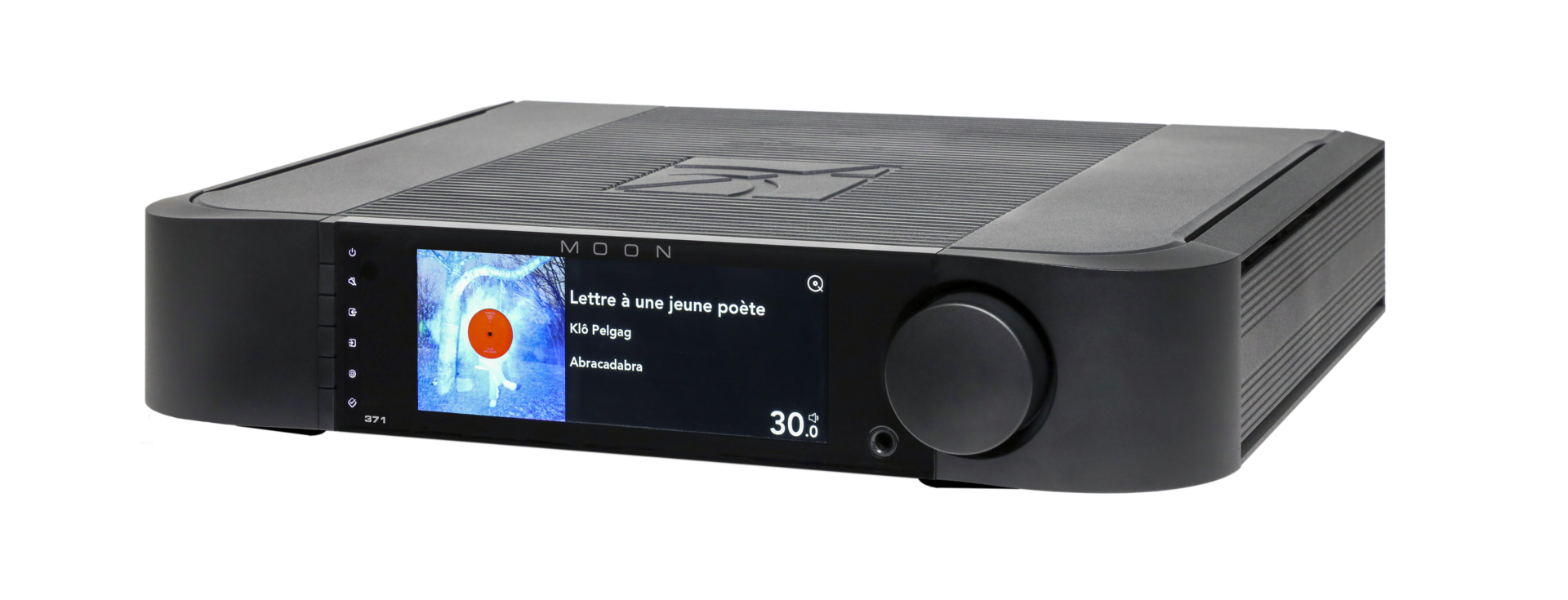
The MOON 371 is designed around full system integration. Network streaming, digital conversion, phono stage, and power amplification coexist in one single enclosure. This level of integration became possible due to advances in circuit miniaturization, power supply architecture, and internal isolation techniques that were developed during the North Collection project. These advances allow multiple high-performance subsystems to operate within the same chassis without electrical or mechanical interference.
Given Simaudio’s complex naming conventions, we felt it was worth clarifying what the model numbers actually represent. These designations are not arbitrary, and each number reflects a specific position and function within the product lineup. In this case, for the 371 model, the leading 3 identifies the unit as the entry-level model of the Compass range. The 7 indicates the level of functional integration. Basically, a higher number means more functions combined, in this case, a network player, modular DAC, phono stage, and power amplification into a single chassis, and the last one, 1, represents the platform generation or model sequence.
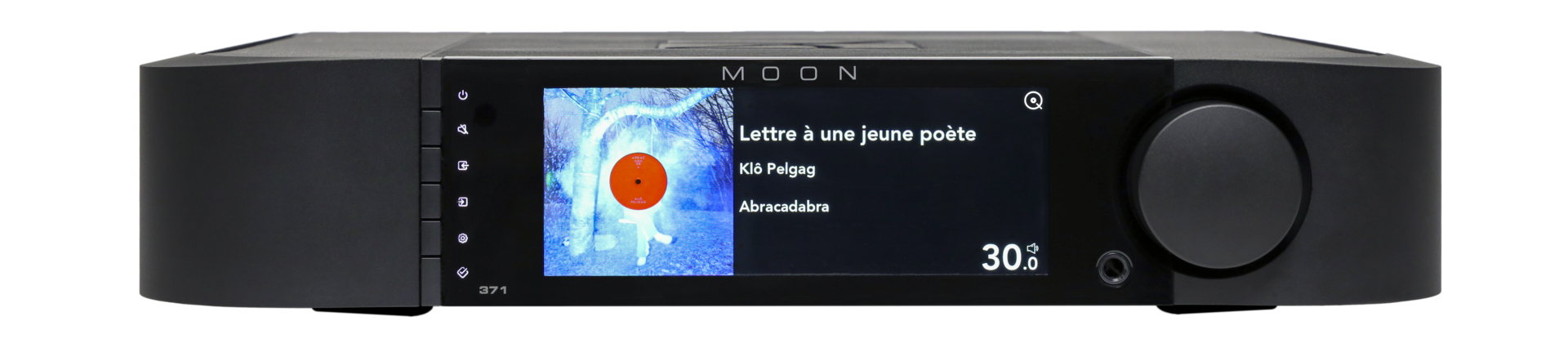
The MOON 371 has the same 10-year warranty applied to the North Collection products. Manufacturing remains in Boucherville, Canada. Both the DAC board and the streaming board are modular, allowing future upgrades over the product’s lifespan. This approach reflects Simaudio’s long-term design philosophy focused on durability, serviceability, and value retention.
The MOON 371 represents the distilled outcome of technologies, integration strategies, and manufacturing practices developed for the North Collection, implemented in a compact integrated platform designed to deliver high performance without the complexity of multi-box systems.
Connectivity, networking, and DAC Architecture
The rear panel of the MOON 371 reflects its role as a true system hub, offering a broad and carefully organized set of connections that covers both modern digital use cases and traditional analog sources.
On the analog side, the 371 provides both single-ended RCA and balanced XLR inputs, allowing straightforward integration with external sources such as standalone DACs or preamplifiers. A dedicated phono input is present, complete with a grounding terminal, and supports both MM and MC cartridges configurable through the internal menu system. A pair of RCA analog outputs is also included, enabling the 371 to function as a source component or preamplifier if the system configuration calls for it.

Digital connectivity is equally comprehensive. The MOON 371 offers HDMI ARC, allowing direct connection to a television and seamless integration into a living room environment. Optical and coaxial S/PDIF inputs accommodate traditional digital sources, while a USB host input supports local storage playback. Network connectivity is handled via dual Ethernet ports, providing stable wired streaming through the MiND platform, and a dedicated USB service port is included for updates and maintenance.
Loudspeaker connections are handled by a pair of robust, high-quality binding posts, clearly labeled and spaced to accommodate a wide range of cable terminations. These terminals feel mechanically solid and inspire confidence when used with heavier speaker cables.
The AC power inlet, main power switch, and fuse holder are positioned on the side of the unit, keeping high voltage sections well separated from signal connections. Overall, the rear layout is logical and uncluttered, with clear labeling and sensible grouping that makes system integration straightforward even in more complex setups.
On the network side, playback is handled via the MiND2 platform, offering Qobuz, Tidal, Spotify, and Roon connectivity.
In addition to internet services, the platform can play back content from local network servers and attached storage using UPnP protocols, and can handle high-resolution files. Control and navigation are provided via the dedicated Moon MiND Controller app for iOS and Android, which allows track selection, queue management, and service login without needing to rely on external control apps.
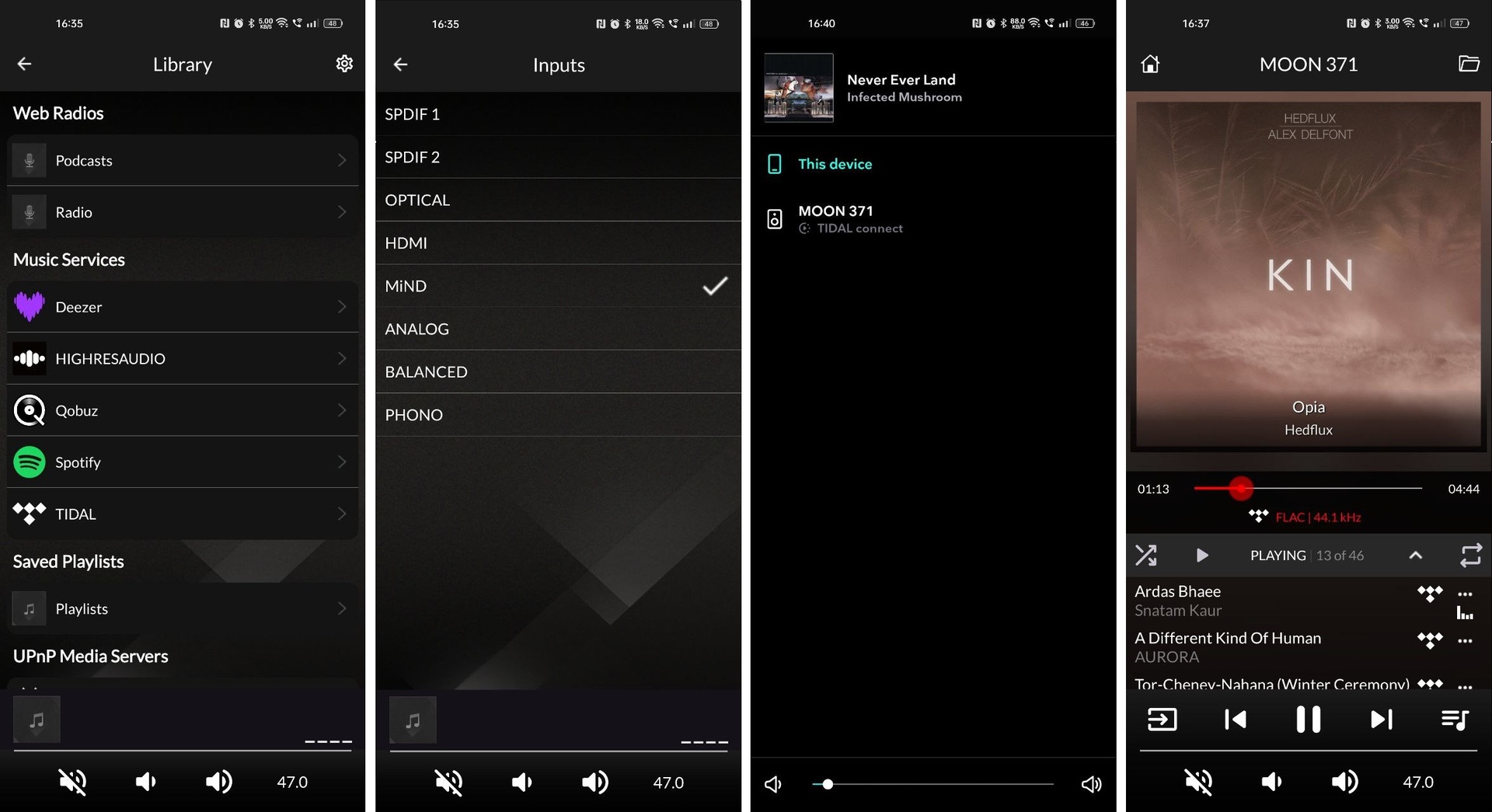
The screenshots above illustrate several core sections of the app. On the left, we see the Library view, where streaming services such as Deezer, HighResAudio, Qobuz, Spotify, and TIDAL are directly accessible. Web radios, podcasts, and UPnP media servers are also listed, highlighting the platform’s flexibility in handling both internet-based and locally stored content. The layout is clean and logically structured, with quick navigation between services and saved playlists.
The second screen shows the Inputs menu. Here, all physical and digital inputs of the MOON 371 are clearly displayed: SPDIF 1 and 2, Optical, HDMI, MiND streaming, Analog, Balanced, and Phono. This unified control approach allows the user to switch sources directly from the app without touching the front panel or remote. It reinforces the idea that the 371 is designed to function as a true system hub.
The third image demonstrates TIDAL Connect in operation, where the MOON 371 appears as a selectable playback device. This confirms native integration with streaming platforms, allowing music to be pushed directly to the unit while maintaining high-resolution signal paths.
The fourth screenshot shows the Now Playing screen. Album artwork is displayed prominently, along with track metadata, playback position, file format (in this case FLAC 44.1 kHz), and queue management. Transport controls are clearly arranged, and volume can also be adjusted directly within the app.
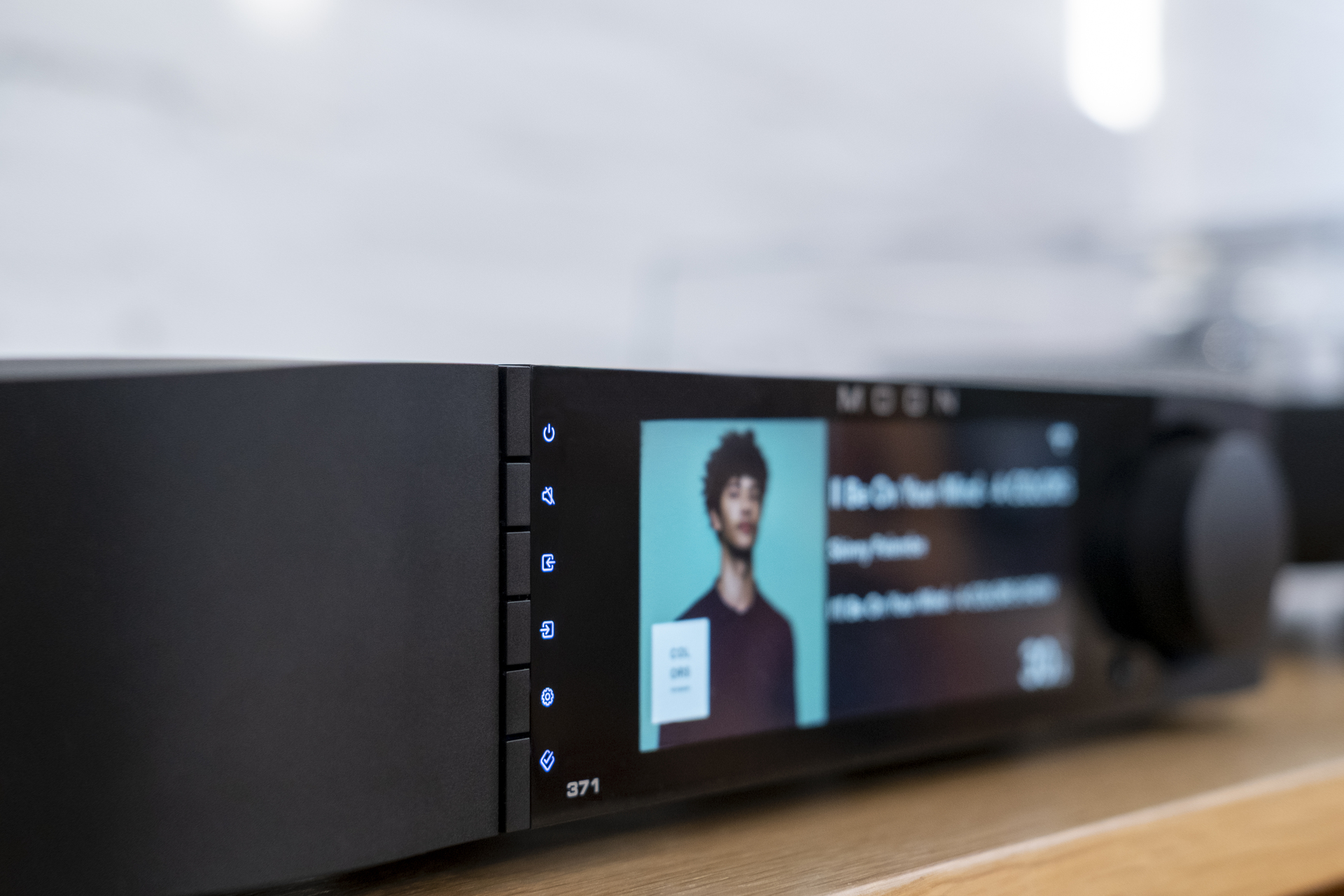
The interface was stable and responsive, and during our testing, it showed reliability across extended listening sessions. Even after leaving the house and disconnecting from the local network, the application reconnected within seconds upon returning. The reconnection process was automatic and seamless, without requiring manual intervention or reconfiguration. In the same manner, standby control was equally responsive. The unit can be turned on or off directly from the app, with execution occurring within seconds, mirroring the quick reconnection behavior. This level of responsiveness reinforced the impression of a well-implemented and stable network ecosystem rather than a feature later added for convenience alone.
For the digital side of things, the conversion inside the MOON 371 is handled by a DAC stage based on an ESS Sabre chip, integrated within Simaudio’s modular digital platform. Further down the review, we will include a short Q&A sesion with the product director talking about the specific DAC chip model used and why Simaudio chooses to work with this specific company.
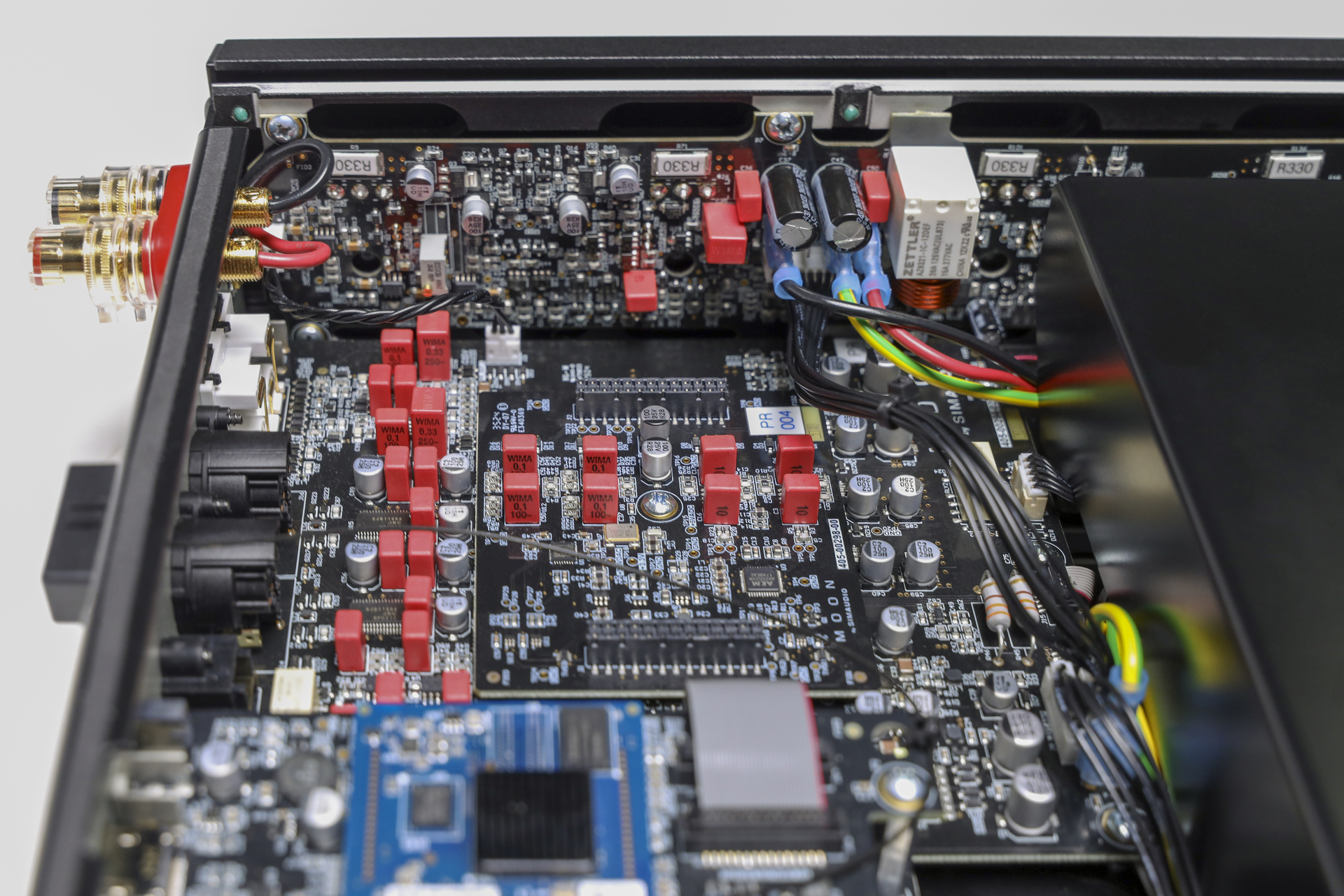
The DAC section was designed as a separate, modular subsystem, physically and electrically isolated from the amplification stages. This modular approach aligns with Simaudio’s long-term design philosophy, allowing future updates while minimizing interaction between digital and analog domains. Power for the DAC is supplied by dedicated, independently regulated rails derived from the MHP power supply, ensuring a stable and low-noise operating environment. Supported formats include high-resolution PCM up to 32-bit / 384 kHz and DSD up to DSD256, covering all commonly used high-resolution material.
Returning our attention to the DAC section, we reached out to Simaudio, notably to Dominique Poupart, the company’s Product Director, in order to clarify several technical aspects regarding the MOON 371. He generously shared a wealth of detailed information that was not available through public sources, allowing us to gain a deeper and more accurate understanding of the design choices behind this product. This is what he had to say about the DAC chip and implementation techniques used:
- We understand that the MOON 371 uses an ESS Sabre-based DAC implementation, but the exact chip variant and surrounding architecture are not publicly specified. If possible, could you share any details regarding the DAC design philosophy, filtering approach, output stage topology, or the reasons behind the specific ESS implementation chosen for the Compass platform?
- At MOON, we have been designing DACs around ESS chipsets for well over a decade, and during that time we have followed their evolution closely. Our engineering team knows these chips extremely well, and we’ve built a strong working relationship with ESS over the years. Although ESS is an American company, its DAC development team is actually based in Canada, and over the years, we’ve built a strong and friendly working relationship that allows us to collaborate efficiently and gain deep insight into their technologies. For the MOON 371, we selected the ES9039Q2M, which we consider to be the best two‑channel ESS DAC currently available. The DAC implementation in the 371 is intentionally compact, ensuring short signal paths and optimized proximity between the conversion stage, the high‑quality clock system, and the dedicated voltage regulators. Our digital filtering approach uses a minimum‑phase filter with no pre‑ringing, ensuring a natural sonic presentation.
- On the analog side, the output stage is deliberately kept very simple, with carefully optimized impedance and operating parameters. Because the DAC directly feeds the internal preamplifier stage, the integration within a single chassis gives us performance advantages as we avoid many of the interface and buffer requirements that would otherwise be necessary in a separate-component system. Without these added layers of circuitry and complexity, we can reach a higher level of performance at a given price point. The end result is a level of refinement and musical transparency that we are genuinely proud of.
- Finally, the DAC resides on a modular card, which means that the platform offers a degree of future‑proofing and could potentially accommodate an upgrade path later on.
Based on our listening sessions and direct comparisons, the DAC presented a clean, tight, neutral character. Microdetail retrieval was strong, low-level information was clearly preserved, and spatial cues were rendered with precision and accuracy. Importantly, the presentation avoided the sharpness or glare sometimes associated with poorly implemented Sabre designs. The sound remained composed, controlled, and free of subtle digital artifacts, suggesting careful attention to output stage design, filtering, and clock management.
Timing accuracy and transient definition were particularly noteworthy. Percussive attacks were rendered with speed and clarity, while sustained tones retained body and stability. Across extended listening sessions, the DAC section integrated coherently with the amplifier’s overall voicing and contributed to a well-organized and controlled presentation. During very long sessions, and depending on the material used, we did notice that the tightly controlled and neutral character could become more apparent, and at times fatiguing, particularly for listeners accustomed to a warmer or more relaxed presentation. In this context, pairing the MOON 371 with warmer-sounding cables was appreciated, allowing the system balance to be shaped gently while preserving the unit’s cohesive and integrated character.
Strictly for comparison purposes, we also evaluated the MOON 371 using external digital sources connected via balanced XLR, the Eversolo A10, and the discrete R-2R Gustard R30. The Eversolo A10 was chosen as a comparison point because it represents a popular and well-regarded streaming DAC that is often used in similar scenarios, offering an integrated digital platform, balanced outputs, and broad format support. It is also worth mentioning that it represents Eversolo’s flagship device. As such, it provided a meaningful reference for evaluating how the MOON 371’s internal DAC performed against a refined all-in-one digital source. This allowed us to better contextualize the performance of the 371’s DAC within a realistic system configuration and price expectations. The Gustard R30 is, in our view, a very strong choice for listeners who prioritize a natural, organic musical flow and emotional involvement. Its R2R architecture delivers a sense of ease, harmonic continuity, and musical density that we find highly engaging. Within its segment, it offers a level of musicality that is difficult to surpass, which made it a relevant and meaningful comparison point. It also represents a realistic scenario, as the R30 can be integrated into a system alongside an integrated amplifier, but at a higher overall investment.
This comparison proved especially revealing. Finding an amplifier capable of matching the control, coherence, dynamic authority, harmonic prowess, and overall composure of the MOON 371 requires stepping into considerably higher cost tiers of amplification.
Looking more closely, compared to the A10’s more immediate delivery, the internal DAC of the MOON 371 presented a slightly refined and natural character, with a smoother tonal balance and a more relaxed sense of coherence. It was not a night-and-day difference, but we found it a bit more pleasant during listening sessions. Compared to the Gustard R30, a quad mono R-2R ladder DAC with a fully discrete analog output stage, the MOON 371’s internal DAC preserved excellent resolution and control, while the R30 emphasized a denser harmonic presence and a more organic musical flow, transforming the experience into a more engaging one.
Ultimately, these differences became obvious only when presented side by side. It is often through direct comparison that we become aware of these finer nuances that add life and long-term enjoyment to music. When such qualities are entirely absent, the presentation can quickly become tiring and uninvolving. In the case of the MOON 371, its internal DAC sat on a very fine line between strict neutrality and musical pleasantness, delivering a controlled and accurate sound while retaining just enough ease to remain engaging during listening sessions.
That said, the 371 delivered a coherent and well-integrated DAC performance that fit seamlessly into the larger system, making it easy for us to clearly identify the performance tier in which its implementation belongs. Based on direct comparison with both integrated digital sources and dedicated external DACs, its level of resolution, control, and overall musical balance placed it comfortably well above entry-level DAC solutions and firmly within a more serious hi-fi bracket.
While high-end external DACs can still bring their own distinct character, achieving a clearly superior result required moving into significantly more expensive territory. In the context of an all-in-one device, this quickly becomes difficult to justify. The DAC integrated into the MOON 371 proved to be very strong for its price class, delivering a level of refinement, coherence, and musical satisfaction that felt fully appropriate for the overall system concept and removed any immediate need for a better external digital conversion.
The DAC implementation also felt fully in line with the MOON 371’s broader design goals: technical precision, low noise, and neutrality, without sacrificing musical engagement or long-term listenability.
Amplifier Architecture
The MOON 371 is built around a class AB power amplifier rated at 100 watts per channel into 8 ohms and 200 watts per channel into 4 ohms. While these figures describe nominal output capability, the amplifier’s behavior is primarily shaped by two proprietary circuit-level technologies developed by Simaudio: MDCA, responsible for distortion management at the amplification stage, and MHP, which defines the power delivery architecture of the entire unit.
Dominique Poupart also shared further technical insight and explanation regarding the transistor selection and implementation used in the class AB amplification stage. Below is the Q&A part detailing this very important aspect of the amplification stage.
You mentioned in interviews that Simaudio uses custom transistors manufactured specifically for you, supplied in large batches and manually matched in-house. We would love to better understand what differentiates these devices from standard off-the-shelf components. If you are able to share, we would be particularly interested in:
- Why are standard commercially available devices not sufficient for your design goals?
- There are “good enough” devices out there, but why not trying to make even better?
- Which parameters were most critical in the selection process (linearity, switching speed, thermal stability, noise behavior, matching tolerance, etc.)
- Linearity and matching tolerance. In the end we still have to match them at the factory anyway, but since they are already closer together in their parameters than off-the-shelf transistors, it gets easier and faster to match the parts, and we manage to get globally better match altogether.
- How these transistor choices ultimately influence the electrical behavior and sonic performance of your amplifiers
- We began collaborating with OnSemi on these custom transistors long before the creation of the MDCA circuit. At that time, our amplifier designs were zero‑global‑feedback architectures, which meant we could not use global feedback loop to compensate for non‑linearities. As a result, the core circuit had to be extremely linear right from the start, and this made the choice of the transistors absolutely critical. With MDCA now intrinsically cancelling distortion outside the signal path, one could argue that the requirements for transistor linearity might be less stringent. But in practice, there is no reason to relax our standards now that we have access to such excellent devices. The better the building blocks, the better the end result—even with MDCA doing its work.
Together, these two technologies form the electrical foundation of the MOON 371 and determine how it behaves under real-world operating conditions.
MOON Distortion Cancelling Amplifier (MDCA)
MDCA is Simaudio’s proprietary distortion correction architecture. Instead of relying on traditional global negative feedback loops that route the output signal back through the input stage, MDCA introduces a separate correction path that operates entirely outside the main audio signal path.
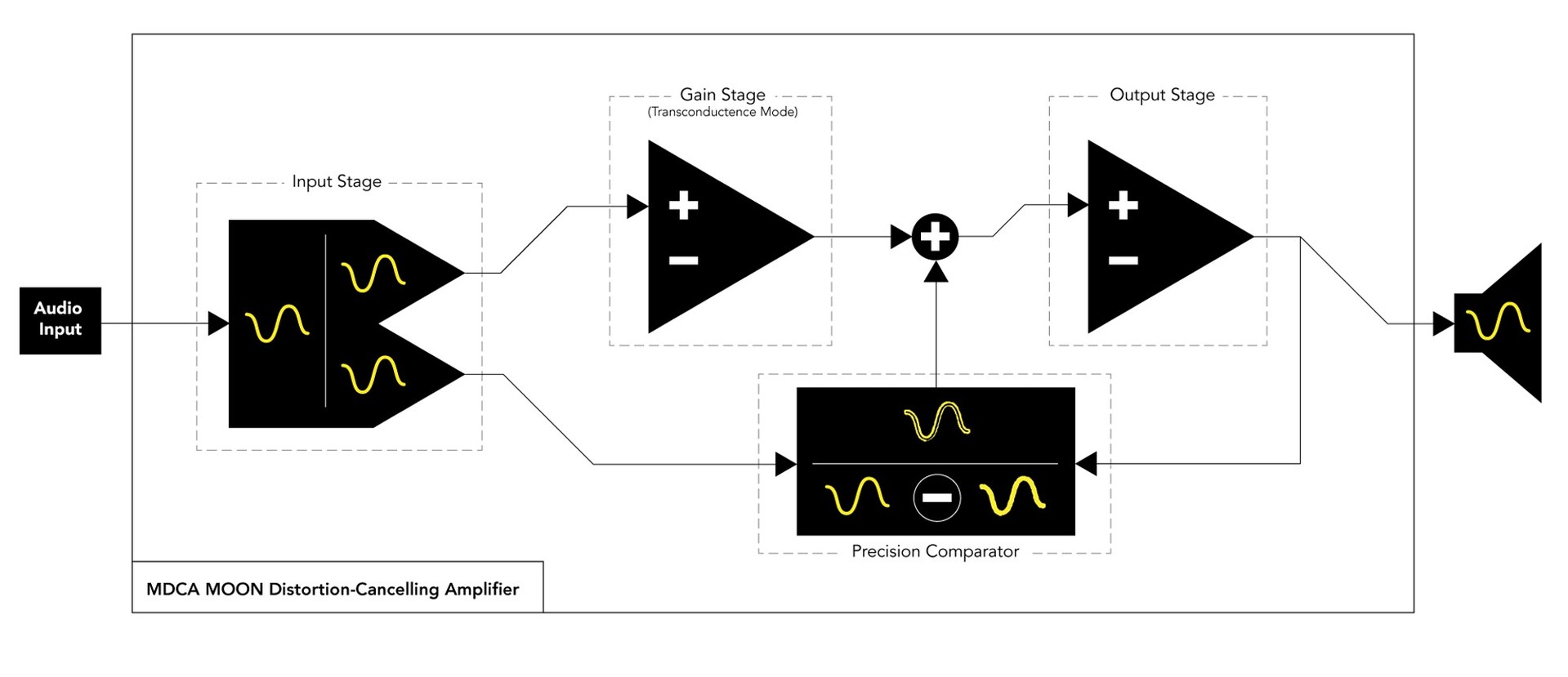
The system uses a dedicated comparator circuit that continuously compares the original input signal with the amplifier’s output signal, which contains any distortion introduced during amplification. The comparator subtracts the output from the input, leaving only the distortion component. This residual error signal is then inverted and injected directly into the output stage in opposite phase, where it actively cancels the distortion generated within the amplification process.
Because this correction path operates outside the high-power signal domain, it functions in a low-stress environment. This allows the correction process to be applied with higher precision and timing accuracy. Correction is generated only when required and only in the amount necessary, avoiding excessive intervention in the signal.
According to Simaudio, this approach reduces both distortion and noise while maintaining stable linearity across varying output levels and load conditions. MDCA also contributes to lower output impedance and improved damping factor, directly affecting loudspeaker control and bass articulation without altering the fundamental character of the input signal.
Dominique Poupart was kind to elaborate on the implementation of MDCA within the Compass Collection, specifically how this technology was adapted and integrated into the MOON 371.
- It is clear that MDCA originates from the North Collection and was adapted for the Compass products. Are there any meaningful structural or implementation differences in how MDCA operates in the 371 compared to the North Collection amplifiers, or is the underlying principle preserved entirely with only scaling or integration changes?
- The underlying MDCA principle in the MOON 371 is identical to the one used in our North Collection amplifiers. We did not alter the core architecture or the way the technology behaves. What changes in the Compass implementation is simply the level of refinement and the component count required to reach a more accessible price point. In practical terms, MDCA in the 371 preserves the exact same operating philosophy and signal‑control behavior as in the North models. The differences are strictly related to scaling, using a simplified, more affordable set of parts while maintaining the essence of the topology. The goal was to retain the MDCA benefits and musical character, while adapting the implementation so it fits the Compass Collection without compromising the fundamental performance principles.
MOON Hybrid Power (MHP)
MHP is Simaudio’s proprietary multi-stage power supply architecture, developed to combine the advantages of switch-mode and linear power supplies while avoiding their respective drawbacks. In the Compass Collection, the MOON 371 represents the first implementation of MHP capable of supplying a full power amplifier stage, a significantly more demanding task than powering source or preamplifier circuits.
The first stage of the MHP is apower factor correction circuit directly connected to the AC mains. This stage ensures that current and voltage remain in phase and prevents harmonic pollution from being injected back into the electrical grid. It converts the incoming AC voltage to a stabilized 400 volt DC rail and remains mostly unaffected by fluctuations in mains voltage.
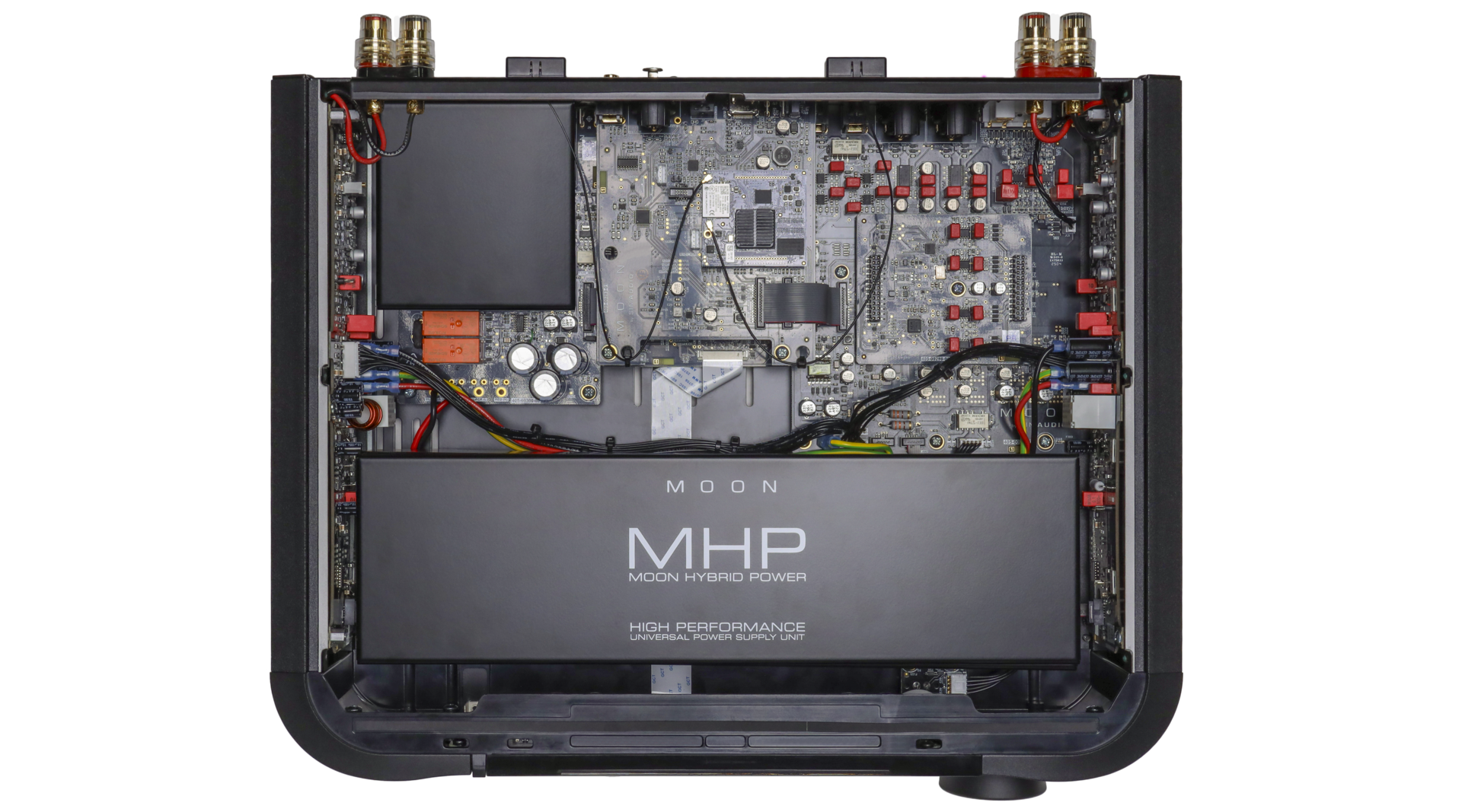
The second stage provides galvanic isolation and power transfer using an LLC resonant topology. This resonant approach stabilizes the voltage delivered to the amplification stage and avoids hard switching behavior commonly associated with conventional switch-mode power supplies. By eliminating hard switching, this stage prevents the generation of switching noise and harmonics that could otherwise enter sensitive audio circuits.
The third stage of the MHP operates as a linear voltage regulation section. This stage delivers clean, regulated DC voltage and provides independent regulation for each functional subsection of the MOON 371, including the power amplifier, analog stages, digital processing, streaming module, and phono stage. This separation minimizes cross-contamination between sections and maintains a low noise operating environment throughout the unit.
By eliminating the need for a large traditional power transformer, the MHP architecture avoids magnetic and electric fields that typically generate noise at 60 Hz, 120 Hz, and their associated harmonics. Any residual noise produced by the MHP system exists at very high frequencies well outside the audible band, making it particularly suitable for sensitive analog circuits such as the phono stage.
And finally, Dominique was very kind to explain the reasoning behind the development of the proprietary MHP power supply, outlining the technical motivations and performance goals that led to its adoption in the MOON 371.
- Was this architecture chosen purely for electrical performance reasons such as current delivery, noise suppression, and efficiency, or did you also expect it to have a perceptible influence on sound quality? For example, aspects such as dynamics, transient behavior, perceived speed, and overall musical engagement. If possible, we would very much appreciate any additional technical information you could share regarding this design.
- Your question puzzles me slightly, because the way it is phrased seems to imply that factors like noise performance or current delivery would not have a perceptible impact on sound quality. In reality, they absolutely do.
- Regardless of the wording, the hybrid MHP power supply was developed with multiple objectives in mind, including the sonic attributes this architecture makes possible. One key example is noise performance: the MHP supply operates at frequencies far beyond the audio band, which means it does not pollute sensitive circuits such as the phono stage. This allows the phono section to operate with extremely low noise. In contrast, a traditional supply with a large power transformer working at 60Hz mains inevitably introduces some low‑frequency noise components into the audio.
- There are additional benefits as well. The MHP offers improved voltage regulation which translates into sonic gains, greater dynamic expression, better transient, and an overall sense of speed and musical engagement.
- In short, the MHP architecture was developed both for its measurable electrical advantages and for the clear, audible improvements it enables in real‑world listening. If anything, its technical performance and sonic impact are inseparable.
Reference System and Associated Equipment
All listening sessions were carried out with the MOON 371 integrated as the sole source, preamplifier, and power amplifier in the system. To evaluate system matching and load handling, the unit was tested with three different loudspeakers, each presenting a distinct electrical and sonic profile.
Loudspeakers used
- KEF R11 Meta
- Dynaudio Contour 60i
- Monitor Audio Platinum 300 3G
Cabling used
- Speaker cables: Charlin HP8000
- XLR interconnects: Charlin XLR2100
- Power cable: Charlin Power 5200
All cables remained unchanged throughout the listening sessions to maintain consistency across loudspeaker swaps and comparisons.
This selection allowed us to evaluate the MOON 371 across varying sensitivities and electrical demands, while also exposing it to different voicing philosophies.
Listening Impressions
We started within the classical music territory, because in many ways, this is the foundation of everything that followed. Some would even argue that classical music is the only true music and everything else is a derivative form. Whether one agrees with that statement or not, we believe classical recordings remain one of the most demanding tests for any amplifier and source chain. They expose timing errors, tonal imbalance, dynamic compression, and spatial inaccuracies with ease.

The Stravinsky – The Firebird Suite (Reference Recordings / Minnesota Orchestra) is a piece we like to play for its explosive dynamic contrasts and complex orchestration.
Starting on the Platinum 300s, from the very first orchestral blooms, the MOON 371 demonstrated excellent control over macro-dynamics. Crescendos maintained composure and structural clarity, especially during dense passages. The low-frequency content, particularly timpani and double bass sections, was reproduced with articulate weight and speed, and with good physicality, something we always pay attention to. The bass was well defined and provided a firm and stable foundation for the rest of the orchestra to rely on, and it did not smear the midrange.
Decay and texture were very satisfying. String sections displayed good harmonic layering, and reverb tails extended well into the soundstage. The 371 handled micro-dynamics with good precision, allowing subtle variations in bow pressure and orchestral articulation to remain coherent and easily audible.
Switching to the KEF R11 Meta, the soundstage focused noticeably. It became a bit more holographic, and the feeling of depth was a bit more pronounced. Bass articulation was well controlled, although the KEF’s inherent low-end character felt slightly less physically grounded compared to the Monitor Audio Platinum 300 3G.
With the Dynaudio Contour 60i, we paid closer attention to current delivery and dynamic behaviour. We noticed that the impedance swings and more demanding load did not disturb coherence whatsoever. Large climaxes were rendered correctly. Even so, the amplifier managed to maintain rhythmic control throughout.
A selection of classical tracks that we thoroughly enjoyed:
- Mahler – Symphony No. 2 (Ivan Fischer, Budapest Festival Orchestra)
- Rachmaninoff – Symphonic Dances (Dallas Symphony / Reference Recordings)
- Beethoven – Symphony No. 7, II Allegretto (Carlos Kleiber / Vienna Philharmonic)
Across these recordings, similar traits emerged. The MOON 371 preserved dynamic scaling from the quietest passages to full orchestral impact, which we liked very much. Instrument separation remained well defined. The articulation of low strings and timpani was consistently tight and textured. Soundstage-wise, the 3D was very well rendered with all 3 tested loudspeakers.
What stood out repeatedly was control, bass tightness, and articulation. Even during highly complex climaxes, the amplifier did not change or smear the soundstage, did not compress dynamic transitions, and was very consistent.
Classical music revealed that the MOON 371 thrives on control, articulation, cleanliness, and dynamic prowess. It may not romanticize the presentation, but it respects the structure of the recording and delivers it with coherence and transparency.

Loreena McKennitt – The Gates of Istanbul
We started our listening sessions with a track from Loreena McKennitt, The Gates of Istanbul, a recording chosen specifically for its drum work, which has a distinctly lifelike character when reproduced with proper control and timing. This track exposes amplifiers that lack bass discipline, as the drum can easily lose realism and impact when low-frequency grip is not fully maintained. It immediately highlighted the marvelous low-frequency behavior of the MOON 371. With the Monitor Audio Platinum 300 G3 in the system, the drum work came across with exceptional tightness and control. The bass was powerful and delivered a very physical chest-thumping impact while also remaining extremely well defined. The low-end moved air surprisingly well and retained a level of grip and speed we very rarely encounter at any price range, and this is a hard statement to make because we tested these speakers with many amplifiers!
Loreena’s voice was reproduced with good harmonic detail and articulation. The presentation remained clean and neutral, with no artificial bloom or added class A/tube-like warmth. Vocal textures were so finely resolved that we felt they gave a good impression of a lifelike performance.
Switching to the Dynaudio Contour 60i, the same sense of bass control and tightness was preserved. This, we believe, was particularly notable given the Contour 60i’s demanding electrical behavior, with impedance dropping to around 2.5 ohms at 100 Hz. Even under these conditions, the MOON 371 maintained coherence, presence, and a notably impressive dynamic behavior throughout. Power draw reached close to 500 watts from the wall at times, yet the amplifier continued to operate without strain and with complete control. With the Dynaudio, dynamics remained fully intact, and timing stayed precise despite the increased load difficulty, a performance we genuinely appreciated and feel deserves clear praise, especially when considering the modestly rated specifications.
Moving to a cheaper, more afordable speakers, the KEF R11 Meta, the presentation became more immersive, with a precise and sharply focused, pinpoint soundstage. This is an area the KEF’s excel at, and the 371 clearly showed us what the speakers are capable of. Imaging was very accurate, and spatial cues were rendered with very good positioning within the soundstage. The MOON 371 allowed the R11 Meta to fully express its strengths, showing us that matching is not really an issue for it.
Across all three loudspeakers, coherence and dynamic behavior exceeded what the specifications alone suggested. The MOON 371 consistently delivered a level of control, drive, and composure that impressed, especially considering the compact form factor and modest 9 kg weight of this class AB integrated platform.

Djelimady Tounkara – Mansa
Our long listening sessions also included Djelimady Tounkara by Mansa, a track that quickly shifted the focus toward rhythmic layering, string articulation, and microdynamic behavior. With the Monitor Audio Platinum 300 G3 connected, the amplifier delivered an engaging presentation, where rhythmic drive and transient precision stood out. The bass foundation was solid and well-controlled, never becoming bloated or congested.
The guitar work was reproduced with excellent detail and articulation. Individual plucks were clearly separated, with fast attack and clean decay, allowing the rhythmic interplay to remain easy to follow even during denser passages. Harmonic structure was rendered with accuracy, giving the strings a natural timbre and a convincing sense of body.
Switching to the Dynaudio Contour 60i, the rhythmic coherence also remained intact, and this is something we tried to pay close attention to. The MOON 371 continued to show strong control over timing and pacing. The demanding impedance behavior of the Contour 60i did not disrupt the flow or articulation of the low end. Dynamic contrasts were well preserved, and the amplifier maintained a stable and confident presentation throughout the track, reinforcing the impression of solid current delivery under load.
With the KEF R11 Meta in place, we felt spatial definition became a bit more apparent. Instrument placement within the soundstage was precise, with clear separation between percussive elements and string lines. The presentation felt immersive and well-organized, allowing the track’s rhythmic complexity to remain engaging without congestion. The MOON 371 once again demonstrated its ability to adapt easily to different loudspeaker designs, maintaining consistency in timing and coherence.
Across all three loudspeakers, the track highlighted the MOON 371’s strengths in rhythmic stability, articulation, and control. The combination of speed, grip, and dynamic confidence contributed to a performance that felt both energetic and controlled, reinforcing the amplifier’s ability to handle complex material with ease.
During extended listening sessions, we also paid attention to the behavior at reduced playback levels. At low listening levels, roughly below 70 to 60 dB, we noticed a reduction in perceived dynamic contrast and a slight hardening of overall coherence. Transient impact was less pronounced, and articulation felt restrained compared to listening at normal or higher levels. While tonal balance remained stable, the sense of drive and engagement diminished as volume decreased. This behavior was consistent across all three loudspeakers and is something we felt should be mentioned.

Death Row – Chris Stapleton
Another exceptional piece, Death Row by Chris Stapleton, a track that placed a strong emphasis on macro dynamics, vocal presence, and overall system control during higher energy passages. Starting with the Dynaudio Contour 60i, the MOON 371 delivered a powerful and controlled presentation that remained coherent throughout all playback levels. Dynamic swings were well reproduced, and the amplifier maintained composure into demanding passages, reinforcing the impression that real-world performance extended beyond what the published specifications alone might suggest.
Stapleton’s voice came across as physical, present, and highly engaging. Vocal delivery had a lively and springy character, with strong articulation and a convincing sense of body. Fine detail remained intact during louder passages, and the performance retained clarity and structure throughout the test.
Switching to the KEF R11 Meta, the presentation gained additional spatial definition. The amplifier showed no signs of compression or loss of control, even when pushed toward its upper operating range.
With the Monitor Audio connected, the sense of scale and physicality increased further. The MOON 371 drove the Platinum 300 G3 with very good control, delivering strong impact and very good dynamic energy. The presentation remained cohesive and stable, with timing and articulation fully preserved across the entire track. Once again, the amplifier demonstrated that its dynamic capabilities in practice exceeded expectations based on specifications alone.
As with previous tracks, listening at very low playback levels (volume under the level setting of 20) revealed a reduction in perceived dynamic contrast and overall coherence. The presentation lost some of its liveliness and dimensionality

AURORA – A Different Kind of Human
An album we often listen to because we enjoy her voice so much, A Different Kind of Human by AURORA. Talking about the track with the same name, it made us keep our attention focused on low-frequency control, sustained bass pressure, and the ability of the amplifier to manage complex bass behavior. Particular attention was given to the passage starting at 1:38, where deep sub bass rumble is layered with repetitive percussive elements that demand both sustained output and precise transient control.
With the system set at reference listening levels, the MOON 371 delivered a clearly felt physical response. The sub bass remained continuously pressurized, while the rhythmic percussive elements created a distinct chest thumping sensation similar to a machine gun firing. The bass foundation was excellently controlled throughout this section, giving a convincing impression of weight and excellent articulation.
This passage highlighted a challenge that many amplifiers struggle with, maintaining constant sub bass pressure while also delivering fast, physical impact on top of it. The MOON 371 managed to sustain the low-frequency energy while maintaining the correct timing and immediate force required to convey the rhythmic pulse. The result was a tactile and immersive experience, with the low end behaving as a coherent and controlled whole.
Across the listening sessions and across all 3 speakers, this track reinforced the impression that the MOON 371 handled demanding low-frequency material with very good control and precision. Articulation, pressure, and physical engagement were consistent, contributing to a powerful and convincing reproduction of this wonderful song.

Lost – Phaxe and Morten Granau
We moved next into the realm of electronica and more precisely psy trance with Lost by Phaxe and Morten Granau. This type of material places strict demands on speed, timing accuracy, and spatial presentation. Correct reproduction, we believe, relies on precise transient control, good low frequency behavior, and a three-dimensional soundstage that remains well defined as complexity and energy keep increasing.
The MOON 371 handled this material very well. Bass lines showed very high precision and control, starting and stopping exactly where intended. The kick carried a strong chest thumping character while the lower subbass parts remained fully preserved and present. Timing stayed sharp and consistent, allowing rhythmic patterns to lock into place without any smearing or blooming.
As playback levels were raised beyond normal listening, the sense of immersion increased noticeably. Low-frequency energy became physically tangible, with pressure that could be felt through the body, adding to the experience of movement and drive that defines this track. The presentation remained stable and composed even as power levels increased, turning the track into a clearly engaging journey.
All three loudspeakers behaved very well with this material. Each model expressed its own character clearly, and the amplifier allowed these differences to emerge easily. The MOON 371 acted as a consistent and transparent driving force, something we appreciated deeply, especially with material as demanding and rhythm-focused as this.

Divine Moments of Truth – Shpongle
On this perilous journey, we continued with Divine Moments of Truth by Shpongle, a track that we would say places a strong emphasis on spatial complexity, phase manipulation, and layered three-dimensional presentation. The MOON 371 handled the constant phase shifts and spatial movement with precision, maintaining a clearly organized soundstage throughout. Imaging was well defined and allowed the track’s intricate structure to unfold perfectly. The overall presentation came across as clean, properly weighted, and free of excess, giving the track a sense of balance that felt exactly right.
Using the KEF R11 Meta, the three-dimensional aspect of the track became especially spectacular. Spatial layering and depth were rendered with excellent focus and immersion. Bass articulation, however, reflected a less defined low-end reproduction of the R11 Meta, compared to what we experienced with the Monitor Audio Platinum 300 G3.
Switching to the Dynaudio Contour 60i brought a different balance. While scale and presence were convincing, bass tightness did not reach the same level we had become accustomed to with the Monitor Audio. These differences, we believe highlighted the individual voicing and behavior of each loudspeaker rather than limitations of the amplifier itself.
This track made it clear that the MOON 371 scaled effectively with more capable and more revealing loudspeakers. Its ability to expose differences in bass articulation, spatial rendering, and overall presentation reinforced the impression that it should not be overlooked when considering a high-end system built around demanding material and ambitious loudspeaker choices.

Hotel California – Eagles
Hotel California is a track that proved to be an absolute pleasure to listen to on the MOON 371. The presentation was immediately inviting, with a sense of ease and refinement that we enjoyed. Tonal balance felt spot on across the entire spectrum, giving instruments and vocals a convincing sense of weight and realism.
Bass reproduction stood out through its physical presence and control. Low frequencies carried a chest-thumping impact that remained tightly integrated with the rest of the spectrum. The sense of scale and authority added to the enjoyment of the track, reinforcing its familiar drive and groove.
Vocals were rendered with good cleanliness and articulation with a somewhat natural sense of body and physicality. Instrumental separation was good, allowing guitars, percussion, and various ambient cues to occupy their own distinct space within the soundstage. The presentation felt coherent and complete.
This track highlighted the MOON 371’s ability to deliver an engaging and balanced performance with material that relies as much on musicality as on technical precision. It was simply enjoyable to sit back and listen, with nothing calling attention to itself and everything working together as intended.
When listening with the Monitor Audio Platinum 300 G3 and the Dynaudio Contour 60i, we found ourselves wishing there was additional power available. The physicality and chest-thumping character of the bass were so engaging that it encouraged higher and higher listening levels. The amplifier remained composed and controlled, and the sense of impact was deeply satisfying, which only amplified the desire for even more headroom. This reaction was driven purely by enjoyment, and we think this speaks a lot for the Moon 371.

Sultans of Swing – Dire Straits
Sultans of Swing is a familiar recording that allowed us to focus on timing, midrange articulation, and overall musical flow. The MOON 371 presented the track with a strong sense of coherence, keeping the rhythmic interplay between bass, drums, and guitars well organized.
Guitar lines were rendered with excellent clarity and articulation. Pick attack and string texture were clearly defined, allowing Mark Knopfler’s playing style to come through with awesome realism. Microdynamic shifts were well preserved, giving the performance a lively and engaging character without exaggeration.
Vocals sat naturally within the mix, with clear diction and a good sense of presence. The midrange was open and expressive. Soundstage was well defined, with 3D imaging and clear separation between instruments.
Across all three loudspeakers, the MOON 371 maintained consistency in timing and tonal balance, letting each speaker express its own character. This track reinforced the amplifier’s strengths in musical coherence, articulation, and long-term listenability, making it another highly enjoyable part of the session.

Shine On You Crazy Diamond Parts 1 to 5 – Pink Floyd
Shine On You Crazy Diamond Parts 1 to 5, a recording that is great for testing the atmosphere, layering, and long-term coherence and overall emotional feeling across extended musical passages. From the opening synth textures, the MOON 371 presented a wide and clearly defined soundstage, with layers unfolding gradually and naturally. Spatial cues were rendered with precision, giving the track a sense of depth and scale that we expect when listening to it.
As the composition built momentum, we started to pay attention to how low-frequency foundations behaved, and again, as with the other tracks, we felt a solid and well-controlled, well-articulated bass line that carried weight and physicality while staying coherent with the rest of the frequency spectrum. The overall tonal balance leaned toward control and accuracy, presenting the recording in a more neutral, composed, and disciplined manner.
Guitar textures were reproduced with clarity and nuance and good texture, preserving sustain and harmonic richness.
It is worth mentioning that while the emotional weight of the performance came through convincingly, the presentation favored precision and cleanliness with an enhanced dynamic range, over added warmth or romanticism. Thus, listeners accustomed to a more harmonically enriched or warmer amplification chain might perceive a slightly more restrained emotional bloom even though the sense of coherence and control remained consistently strong throughout the track’s dynamic development.
Across the different loudspeakers, the MOON 371 maintained coherence and balance, letting each system express its own special character while also preserving the essence of the recording.

Summer’s Ending Soon – The Midnight
We have a particular appreciation for retrowave, a genre that draws heavily from 80s analog synthesizers, neon-lit nostalgia, and the aesthetics of vintage arcade culture. It is a sound deeply rooted in an era defined by glowing cathode ray tube screens, pixelated graphics, and synthesizer-driven soundtracks that shaped an entire generation.
We grew up with that culture. The sound of retrowave brings back memories of long afternoons spent in arcade halls, the echo of electronic sound effects blending with music, moments of carefree rebellion, skipping school just to squeeze in one more game, one more level, one more coin. There is something undeniably emotional about this genre for us. It recreates a feeling, a time, a mindset, it is like a real emotional time machine.
That personal connection perhaps makes us even more attentive when listening to it. Summer’s Ending Soon, from The Midnight is a track that is particularly revealing when it comes to low-frequency behavior, tonal balance, and long-term listening comfort. From the opening passages, the MOON 371 delivered a bass response that was chesty and punchy, while also extending deep enough to be felt. Low frequencies carried a strong physical presence, with a sustained, almost earthquake-like foundation that remained well controlled and clearly articulated.
The bass provided a solid structural foundation for the entire song. We believe that, in this case, the way the amplifier maintained sub bass pressure while keeping the kick defined, chesty, and tactile played an important role in sustaining engagement and gradually increased the overall sense of enjoyment as the track unfolded.
Retro synth recordings often place high demands on tonal balance, as they can easily drift towards an icier, sibilant, and more fatiguing presentation if warmth or excess sibilance are not handled properly. In this case, the MOON 371 maintained a presentation that felt smooth. Listening fatigue did not become an issue here, and the sound remained inviting throughout.
High frequencies were reproduced with an airy and open character, showing good extension and detail without ever becoming harsh or sibilant. The top end stayed relaxed and well integrated. Midrange came across as present and physical, with good articulation and good 3D placement within the soundstage.
Overall, this track highlighted the MOON 371’s ability to handle poorly recorded electronica material with pleasure and balance. Bass performance, tonal balance, and correctness, together with spatial coherence, worked together to deliver a performance that was engaging and highly enjoyable, making this track one that simply invited us to keep listening longer and louder.

These Bones – The Fairfield Four
Diving into some gospel, trying to find the sweetness in voices, among others, we listened to These Bones by The Fairfield Four. The MOON 371 delivered a wide and convincingly 3D soundstage, which became the defining highlight of this recording. Spatial cues were very well rendered, and stereophony extended beyond the physical boundaries of the loudspeakers, creating a strong sense of immersion.
Vocal placement was well placed within the soundstage. Individual voices were clearly separated, which we believed allowed harmonies to unfold naturally and convincingly realistic. Articulation was rendered with ease, giving the performance a relaxed and engaging character that felt true to the recording.
Overall, this track showcased the MOON 371’s ability to reproduce space and vocal texture with precision. The combination of width, depth, and vocal clarity resulted in a presentation that was highly enjoyable and particularly effective in conveying the atmosphere and presence of the performance.
Conclusions
After extended listening across a wide range of material and loudspeaker pairings, this is the summary of the MOON 371 delivered sonic performance:
Bass performance is the first thing that stood out and is one of the unit’s defining strengths. Low frequencies were reproduced with exceptional tightness, precision, and control, delivering a physical and engaging presentation that remained well articulated and properly weighted. The ability to generate chest-thumping impact while maintaining weight and definition was repeatedly obvious across all 3 tested loudspeakers and became one of the most memorable aspects of the experience.
The overall presentation remained clean and well-organized from the top of the frequency range, all the way to the bottom. Articulation was very good across the entire spectrum. Timing and rhythmic structure were consistently preserved, contributing to a sound that felt controlled, confident, and easy to follow, even during complex passages.
Power delivery exceeded expectations. In practice, the MOON 371 behaved as a far more capable amplifier than its specifications alone would suggest. Dynamic headroom, current delivery, and composure under load were unexpectedly high for such a compact and very lightweight, 9kg, class AB integrated design. The amplifier scaled very well with demanding loudspeakers, reinforcing the impression, at least on our part, that it can find its way even in systems well beyond what its all-in-one status, size, or price might imply.
Soundstage reproduction and spatial behavior also proved to be notable strengths of the MOON 371. Width, depth, and 3D placement were very convincing, with stereophony extending beyond the physical boundaries of the loudspeakers when the recording allowed it. Across multiple tracks, the sense of space felt natural and immersive, reaching a level that we honestly did not expect from an all-in-one unit at this price range.
Taken as a whole, the MOON 371 delivered a level of control, cleanliness, articulation, and power that placed it well above expectations for an all-in-one solution of its size. It proved capable of anchoring a serious high-end system while offering modern integration and long-term usability, making it a compelling and technically accomplished product.
If there is one aspect that we felt deserves mention, it would be the behavior at very low listening levels. Below roughly 65 dB, perceived dynamics and overall coherence were slightly reduced, and the presentation became a bit flat in its sense of energy and drive.
We would also like to note that the overall tonal balance of the amplifier leaned toward a neutral and controlled, clean character, something that listeners accustomed to the warmth and harmonic richness of tube amplification might perceive as somewhat sterile.
To conclude, a feature that we missed, especially considering its status as a newly launched product (October 2025), would be a parametric equalization or a room correction function, even though we never once felt the need to adjust something. This is an area where other competing products have offered solutions for quite some time. That said, this omission is clearly aligned with Simaudio’s design philosophy. The company remains firmly rooted in a purist approach, prioritizing signal integrity and simplicity over digital intervention. Given the high level of sound quality the MOON 371 delivers out of the box, we felt this choice was understandable, and in this context, Simaudio deserves a pass.
Looking ahead, we would be interested to see these features implemented in a future iteration, provided they are executed with the same level of care and sound quality that defines the rest of the product.
We would like to thank AVstore for the opportunity to spend extended time with the MOON 371. Having the chance to evaluate such a well-executed and technically ambitious component in our own reference system is always appreciated, and it allowed us to explore its capabilities thoroughly across multiple loudspeaker pairings and listening scenarios.
Pros
- Exceptional bass tightness, speed, and physical impact, combined with strong control and articulation
- Clean, coherent, and highly detailed presentation across the entire frequency range
- Real-world power delivery and current capability that significantly exceed specs and expectations for its size
- Stable and confident behavior with demanding loudspeaker loads, scaling well with high-end speakers
- Well executed all-in-one architecture combining streaming, DAC, phono stage, and amplification with long-term upgrade potential and a 10-year warranty
Cons
- Reduced perceived dynamics and coherence at lower listening levels below normal playback volumes
- Neutral and controlled tonal balance that may be perceived as slightly dry or sterile by listeners accustomed to tube or warmer amplification
- No integrated parametric EQ or room correction options
Associated Equipment:
- Digital Transport / Roon Server / DAC / Integrated: Moon 371
- Loudspeakers: Monitor Audio Platinum 300 3G, Dynaudio Contour 60i, KEF R11 META
- Interconnects: Roboli XLR 2100
- Speaker cables: Roboli HP8000 2.5m
- Power Cables: Roboli Power5200