Listening room: the small living room, 4 m by 5.3 m with a 2.7 m ceiling, modest treatment • Loudspeakers: Monitor Audio Platinum 300 3G
Source: computer via USB, Qobuz and Tidal • Preamplification: Yamaha C5000 • Amplification: Yamaha M5000 power amplifier
Cabling: Roboli XLR 2100 and XLR 2000 interconnects, Roboli HP8000 speaker cables, Roboli Power5200 power cables, HMS USB cable
Loaned by: HifiExpert
TLDR
The Luxman DA-07X fits an audiophile who treasures detail, transparency, resolution, and sharpness, who wants to hear the smallest change in a recording, and who is happy to build a warm chain around the source. For well-recorded voices, acoustic music, and anything rich in spatial information, this is a very exciting DAC to live with. A listener looking for warmth, body, and a relaxed, forgiving presentation will not be pleased with its character. A warmer source, like the Gustard R30, or any other R2R DAC, suits that listener better.
Three qualities define the Luxman DA-07X:
- Resolution. The DA-07X is a highly resolving, highly detailed DAC. The most minute changes in a recording are audible, from small shifts in level to the breath before a phrase and the last part of a reverb tail. Inter-note silence is very clean. The dark background behind the music makes the microdetails even easier to follow, and recordings we know very well had layers we had almost forgotten about.
- Brilliance. The tonal balance is tilted towards the bright side, with plenty of sparkle and air in the upper octaves. Transients have a sharp, clean edge. The attack of a guitar string or a piano hammer is very well defined, which is good news regarding articulation and instrument separation. Next to our Gustard R30, the DA-07X is more detailed, brighter and more sparkly. The R30 has more body and more tonal richness.
- Sometimes a bit too much. On bright or hot recordings, the upper frequencies can feel somewhat too explicit, and S sounds are a bit more pronounced than on warmer sources. The lower midrange is slightly lean, with less harmonic density than we like on male voices and cello. Long sessions at high volume with poor recordings can become tiring.
The soundstage is wide and precise, with a very specific position for each sound and good depth behind the speakers. Imaging is a strength of this DAC.
Matching is very important. With the Roboli cables, the Yamaha C5000 and M5000, and the Monitor Audio Platinum 300 3G, the DA-07X was a joy. We would avoid pairing it with cleaner, more analytical electronics like the ones from Hegel or cables that sometimes come with a brighter character. Of course, this depends on personal preferences.
Introduction
The Luxman story begins in 1925, at the birth of commercial radio broadcasting. Kinsuido, a picture frame company in Osaka, opened a radio department, and that department later became LUX. Lux is Latin for light. A very nice name for an audio company.
The LUX-735 high-fidelity radio, with its magnetic horn speaker, launched in 1928. In 1958, Luxman presented the MA-7A vacuum tube amplifier, with a patented crossover NFB circuit. The SQ-5A integrated amplifier, from 1961, had the centre level meter many audiophiles associate with the brand to this day. Then, in 1987, Luxman launched the original DA-07, built around its fluency DAC technology. Almost four decades later, the DA-07X uses the same name, but this time with an X at the end.
Luxman describes its philosophy in a few simple words: “Natural sound, without coloration, develops an intimacy between the music and the listener.” We recognized this philosophy in the way Luxman tunes its equipment. It perfectly captures what we consider to be the brand’s house sound. From our experience, this character is more pronounced in their amplifiers, while the DA-07X, currently their only standalone DAC, takes a slightly different approach. It retains some of that familiar Luxman character, but expresses it more subtly.
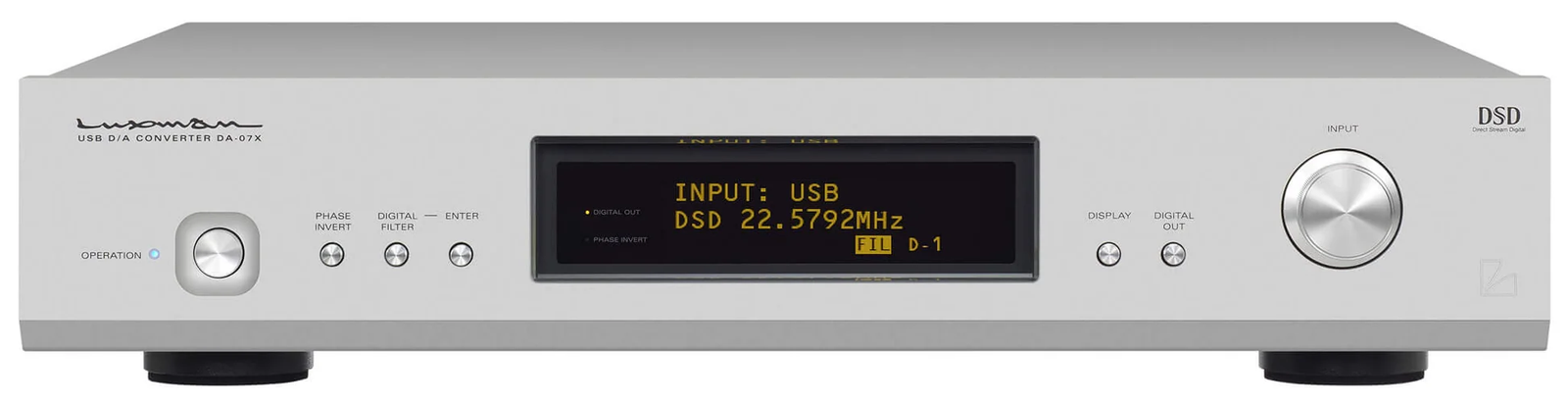
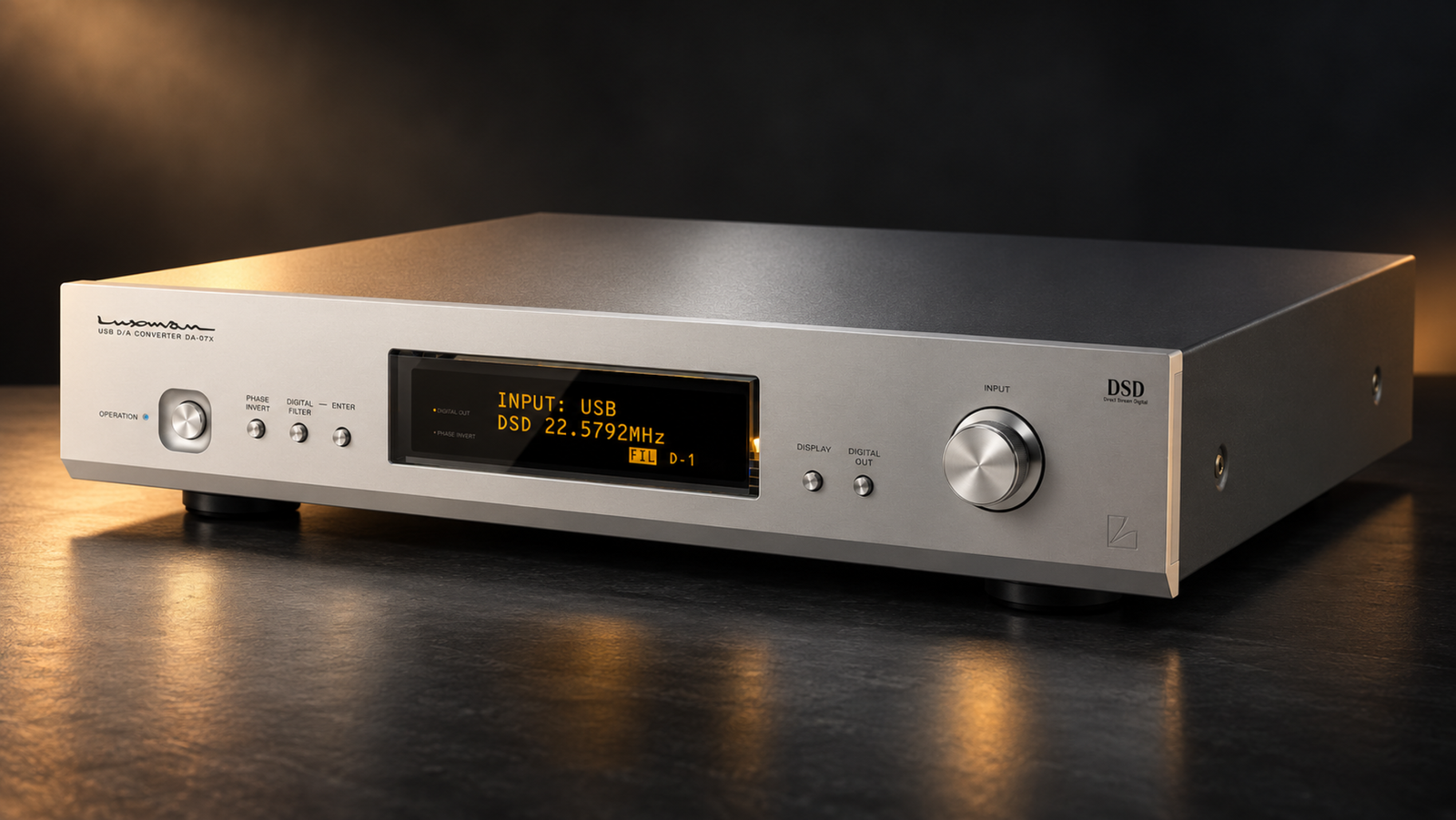
The DA-07X is a two-channel USB D/A converter. It is developed from the D-07X SACD/CD player, with the disc playback removed, and Luxman says functionality, connectivity, and sound quality are improved for its role as a standalone DAC. The slim chassis matches the NT-07 network transport.
Keep in mind that we all listen differently, with different music, different electronics, and very different rooms. We write about how the DA-07X sounded to us, in our room and on our chain, and about how it made us feel. Your own ears have the final word, so book a demo.
Design, Build and Technology
The DA-07X uses the slim format of the DA-06, the standalone Luxman DAC launched in 2013. Its digital processing is adopted from the D-10X, the flagship SACD/CD player, and the DAC board uses the same chips as the D-10X and the D-07X.
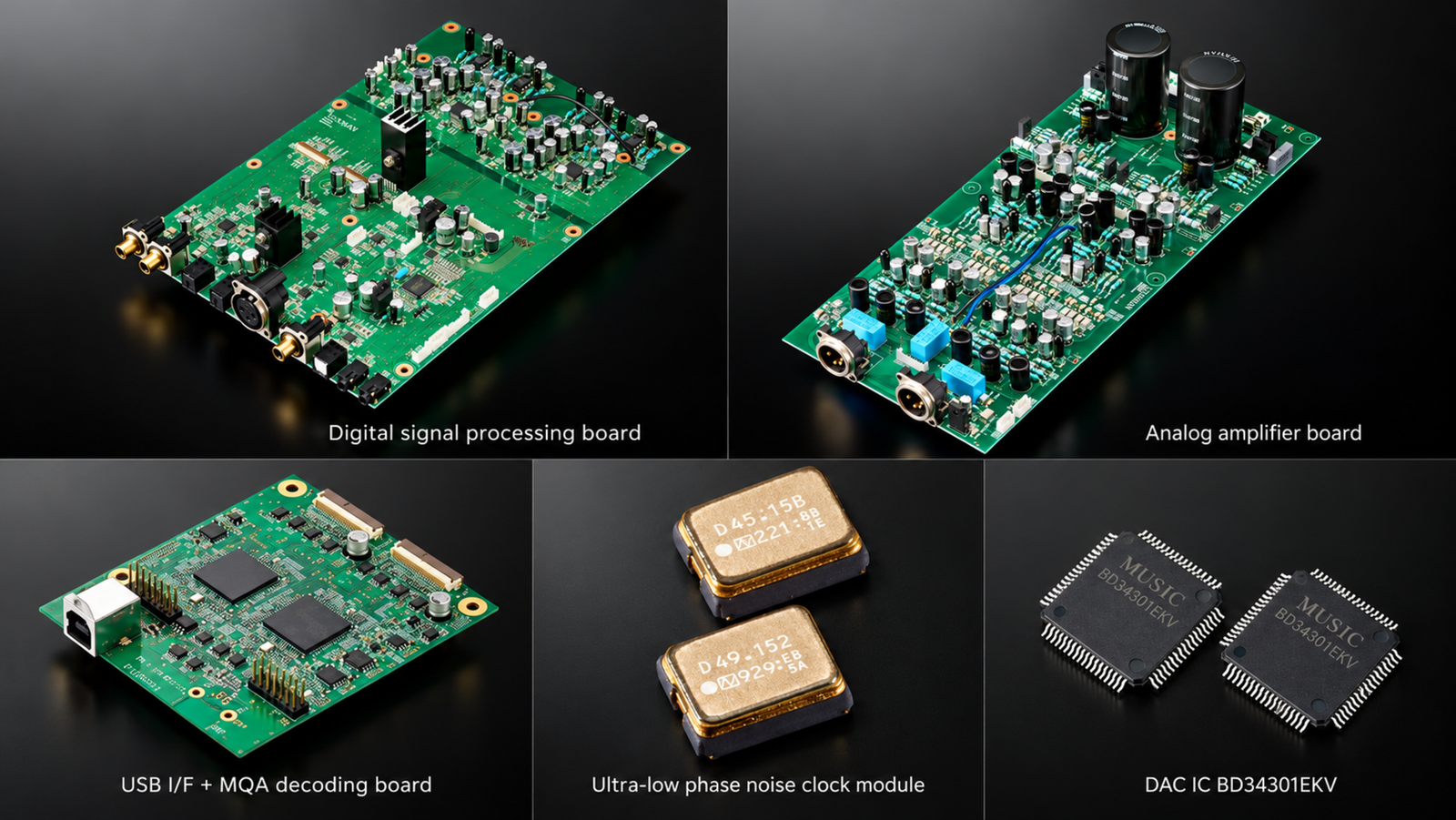
The digital-to-analog conversion is handled by two ROHM BD34301EKV chips, in a dual mono configuration. Each chip works in mono mode, one per channel. Luxman calls this DAC block the heart of the digital circuitry. MUS-IC is ROHM’s highest grade line of audio ICs. For the chip itself, ROHM specifies a typical signal-to-noise ratio of 130 dB and a typical THD+N of -115 dB. During development, ROHM says it identified 28 parameters related to sound quality and designed the chip around them. The chip has two digital FIR filters, a sharp roll-off and a slow roll-off, with a rejection band attenuation of 150 dB or more.
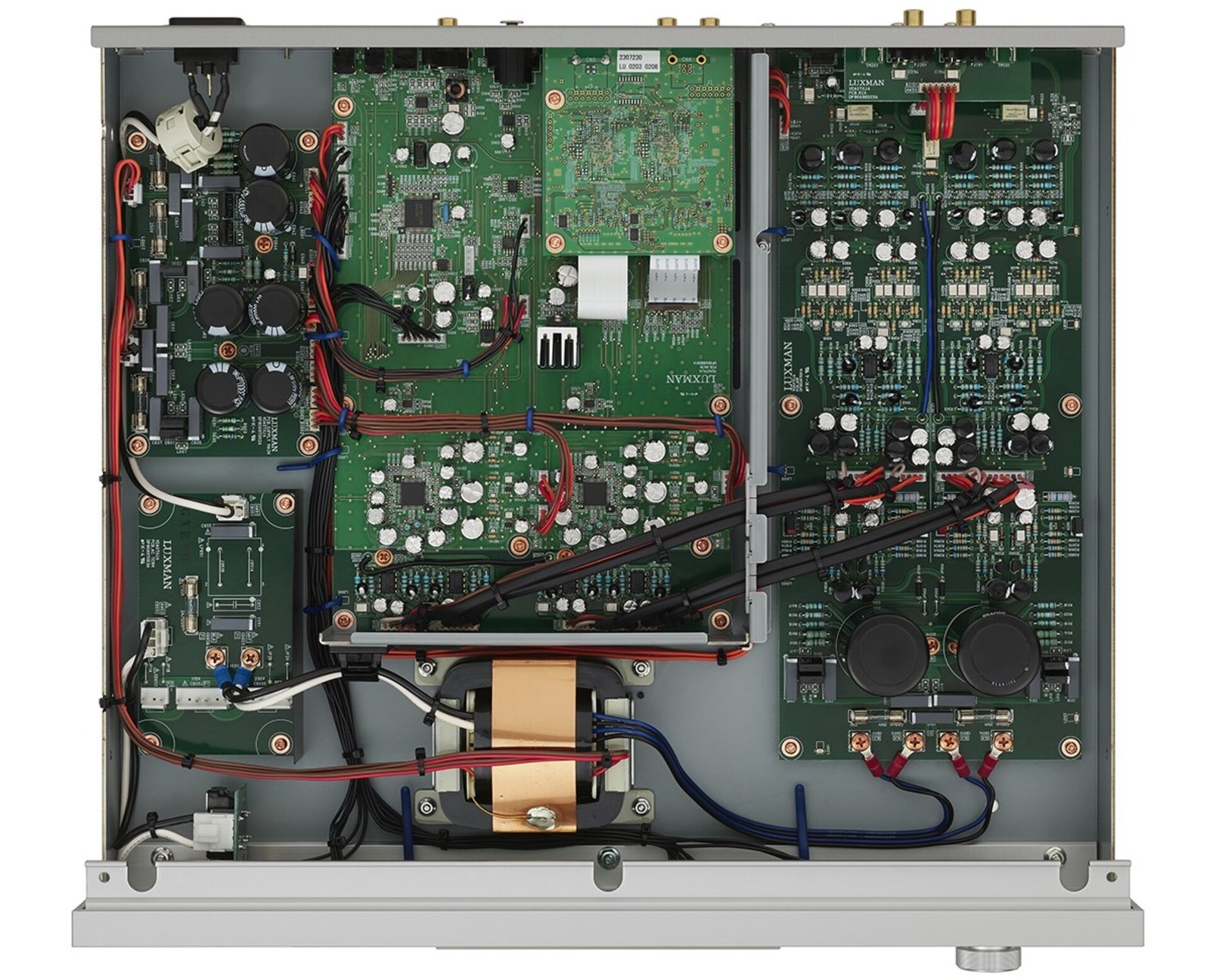
The analog output stage, which Luxman says determines the final grade of the component, uses fully balanced current-to-voltage conversion. The differential outputs of each DAC chip are processed independently, in dual mono. The discrete buffer circuit after the conversion also works as the low-pass filter stage. It uses four identical amplifiers, one for each differential output of the two DAC chips. The output voltage is 2.4 V on both the balanced XLR and the unbalanced RCA outputs, with 2.3 V for DSD. Output impedance is 600 ohms balanced and 300 ohms unbalanced. An output phase switch on the front panel inverts the absolute phase of both outputs, for compatibility with the next component in the chain.
The reference clocking uses two ultra-low phase-noise clock modules, with the noise near the oscillation frequency reduced to a minimum. The USB input works in asynchronous mode, managed by a dedicated DSP, and the S/PDIF inputs use a built-in, high-precision DAIR clock. Luxman says both are there for lower jitter. For Windows and Mac, Luxman offers a free driver compatible with BulkPet transfer, which spreads the transmission load evenly over the USB connection for higher stability. Luxman Audio Player, the company’s own playback software, is also free for both platforms.
Several functions switch off signal paths that are not in use. A digital output off function closes the unused digital routing, and Luxman says both improve the quality of the analog output.
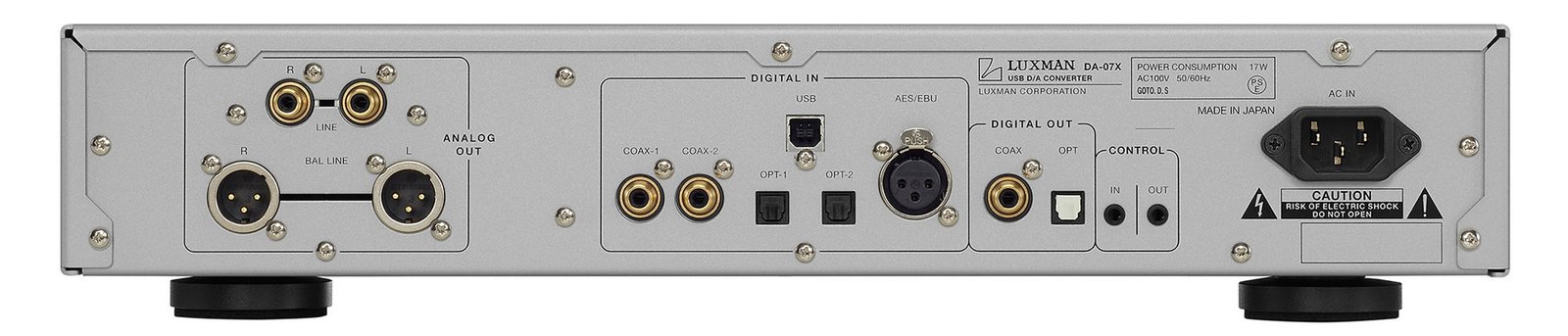
The digital inputs are one USB, two coaxial, two optical, and one AES/EBU on XLR. The analog outputs are one pair of balanced XLR and one pair of unbalanced RCA, with wide spacing between the connectors for thick cables with large plugs. There is also a DD converter function, which passes the incoming digital signal through to one coaxial and one optical digital output, at up to 192 kHz and 24 bit.
Over USB, PCM is accepted up to 768 kHz at 32 bit and DSD up to 22.5 MHz. The coaxial, optical and AES/EBU inputs accept PCM up to 192 kHz at 24 bit, and DSD at 2.8 MHz as DoP. MQA is fully decoded.
Two digital filter modes are available for PCM and MQA, plus a filter bypass. For DSD, there are two analog filter modes.
Luxman uses highly regulated power supplies, with an O core power transformer, independent series regulators for each circuit block, and a pair of custom-made 10,000 µF filter capacitors.
Wiring and parts. Luxman uses its traditional non-angled circuit board wiring, high-purity OFC internal wiring, and a number of its own original parts.
Chassis and feet. The chassis is shielded against digital and electromagnetic interference. The bottom is made of two steel plates, 2 mm and 1.6 mm thick, for 3.6 mm in total, which adds ground mass, rigidity and a low centre of gravity. The feet are cast iron, with a density gradient, to isolate the circuits from external vibration. The AC inlet is mounted upside down, so the whole terminal supports the weight of a heavy power cable. The unit measures 440 mm in width, 92 mm in height and 402 mm in depth, and weighs 12.8 kg. Power consumption is 21 W.
The front panel is centred on a large, high-definition OLED display, with a four-stage dimmer and an automatic shut-off function. It shows the status of the unit and the format of the incoming signal. The slim format matches the NT-07 network transport and the P-750u MKII headphone amplifier.
Luxman specifies a frequency response of 5 Hz to 20 kHz within 0.4 dB, and 5 Hz to 47 kHz within 3 dB. Total harmonic distortion is 0.001%, and the signal-to-noise ratio is 124 dB (IHF A).
System and Setup
We used the DA-07X in our small living room, 4 m by 5.3 m with a 2.7 m ceiling and modest treatment. We played music from a computer over USB, using Qobuz and Tidal, through an HMS USB cable. The DA-07X was connected to a Yamaha C5000 preamplifier through its balanced XLR outputs, and the C5000 drove a Yamaha M5000 power amplifier. The loudspeakers were the Monitor Audio Platinum 300 3G.
Cabling was Roboli throughout. XLR 2100 and XLR 2000 interconnects, HP8000 speaker cables, and Power5200 power cables.
The cables played a big part in this review. The DA-07X is a highly detailed, very transparent DAC, almost too detailed at times, and it benefits from a bit of warmth somewhere in the chain. The Roboli cables have that warmth. They added body to the lower midrange and softened the edges of the brightest recordings, with all of the resolution we enjoyed so much intact. With this pairing, the DA-07X sounded both balanced and exciting.
In a system that, for example, makes voices sound a little bit slimmer than they should, or cymbals sound a little bit harder and in your face, this DAC would be too bright. Silver cables, amplifiers with a brighter character, and loudspeakers with an elevated treble all add more of what the DA-07X already has plenty of. A warmer amplifier, warmer cables, or a speaker with a generous midrange suits it much better.
Our Gustard R30, which we know very well, was the reference point during the month, also because the differences between the two are very easy to hear. We did compare it to the Moon 491, which was a closer match, with both being revealing and transparent. But for the sake of contrast, we chose to only keep the R30 in our comparison, moving forward.
Listening Sessions
In a few words, the DA-07X is detailed, bright, fast, and precise, with plenty of air around the instruments and clean silence between the notes. It is a DAC for the listener who likes to hear everything, with preferences for details, sharpness and transparency.
Voices
Voices on the DA-07X are clear, well-defined, and very detailed. Breath, lip noise, and the small inflections at the end of a phrase are all audible. Body and chest resonance are somewhat lighter than on warmer sources.

Pernille Rosendahl is a Danish singer, known to many listeners from her years with Swan Lee. Feet on the Ground is built on a deep, driving low end. Through the DA-07X, the bass had a firm, clean outline, with very good articulation on every note. Her voice was presented in front of the arrangement, clear and precise, with the small changes in her delivery very clear. With the volume up, the upper midrange had a little too much energy for our taste.

Chris Stapleton’s voice on Death Row had a lot of texture. The grain in his voice, the rasp at the edge of the louder notes, and every small breath were all audible, maybe too audible, acting as if it were placing a magnifying glass over these delicate, fine, subtle sounds. The guitar strings also had a sharp, precise, fast attack. What we would say is missing is some of the weight and warmth of his chest voice. The R30 presented him fuller and rounder. With the DA-07X, more of what is inside the recording was audible.
A Different Kind of Human is the title track of AURORA’s 2019 album with the same name, and through the DA-07X it was a pleasure to listen to. The rapid bass sequence starting around 1:38 was fast and tight, each pulse clearly separated from the next. There was air all around her voice. The electronic layers behind her were easy to pick apart, one by one. As such, we would like to add that articulation, taken from the lowest frequency to the highest, is a strong point for the Luxman DA-07X.

Loreena McKennitt’s Dante’s Prayer, from The Book of Secrets, is a very intimate performance. The piano had a very clean attack and a long, detailed decay. Her voice was presented with great precision, and the reverb around her opened into a large space, with its last part audible down to a whisper. Her voice has pronounced S sounds, and on the DA-07X they were a bit more explicit than we like. Clean but more forward, more in your face. Even so, presented with a slightly cooler colour, the song moved us as much as ever.

Avi Kaplan is the former bass vocalist of Pentatonix, and his songs Aberdeen and All Is Well are built around that very deep voice. On the DA-07X, the texture of his voice was presented in great detail, with the small vibration at the bottom of each low note clearly audible. The acoustic guitar next to him had a crisp, clean attack. His voice sounded a bit lighter, with less chest resonance, and a bit more emphasis on the S sounds.
Allan Taylor is an English songwriter, and Colour to the Moon is an album he records for the German label Stockfisch, known for very natural, close-miked productions. Every small slide of his fingers on the strings was audible, together with the resonance of the guitar body and the soft breath before each line. His voice was presented close and clear, very much in the room with us. The guitar had a lot of sparkle. His voice had a bit less warmth than on the R30.
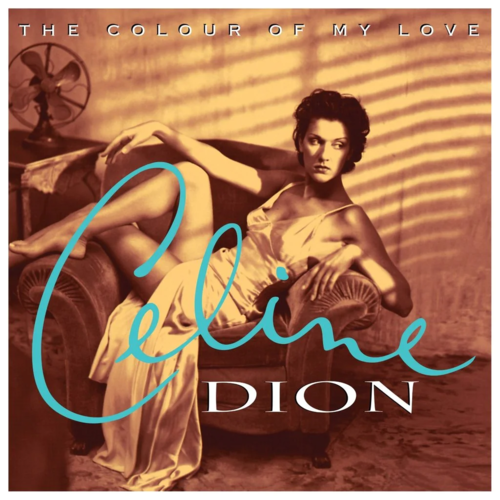
The Power of Love, from Céline Dion’s 1993 album The Colour of My Love, is built on a very long crescendo. In the quiet opening verses, her voice was presented with great clarity, every breath and every shift in intensity easy to perceive. In the final chorus, the dynamic scale was impressive, with her voice clear in front of the orchestra and the drums. Overall, a great presentation that showcased just how detailed a track can be, when the electronics are capable of revealing such details.
Scale, Space and Dynamics
This is one of the areas where the DA-07X impressed us. Positional precision is excellent, depth is very good, and the smallest spatial cues are very clear. Microdynamics are very lively. Macrodynamics are good, with a clean, controlled presentation as the volume goes up.

Heilung call their music amplified history, built on Iron Age and Viking Age sources. Traust and Svanrand have a foundation of deep ritual drums, low octaves, and layered voices. The drum strokes had a sharp, defined start, and the decay of every hit was very clear. The layered voices were easy to separate from one another, with a lot of small textures audible between them, even the quieter sounds at the back. With the R30, the drums had a bigger, rounder body and a heavier atmosphere was felt. With the DA-07X, they had more detail and more precision, and the ritual felt less dark.

In the Wind by Yosi Horikawa is one of our benchmarks for spatial precision. Every small percussive sound had its own precise spot between and around the speakers, with the quieter sounds placed further back in a believable way. The transient attack of each sound was fast and clean, the decay very well rendered, and the space around them was palpable. We enjoyed this track a lot on the DA-07X. Absolutely one of the highlights of the month!

Jean-Michel Jarre released the sequel to Oxygène in 1997, two decades after the original, with Parts 7 to 13. Parts 7 and 8 are full of synthesizer layers moving across the soundstage. The movement from one speaker to the other was precise, and the layers further back had very good depth and a lot of air. The highly layered top end of Part 8 was presented with good separation, each high-frequency element at its own height. This is the kind of recording the DA-07X suits best.

Stravinsky‘s The Firebird Suite, with Eiji Oue and the Minnesota Orchestra on Reference Recordings, is a very dynamic recording. The transitions from the quietest passages into the loud orchestral sections had good scale, and the smallest changes in intensity in the quiet parts were clear enough. The instrumental groups were easy to follow, with the woodwinds very well placed inside the orchestra. In the loudest passages, the strings had a slightly steely edge, and the orchestra sounded a bit light in the lower registers.

Mike Dawes is a British fingerstyle guitarist, and his Jump is a solo acoustic arrangement of the Van Halen song, played on one guitar with slaps, tapping and harmonics. The DA-07X was superb on this track. The slaps on the body of the guitar had a hard, fast start. The tapped notes were sharp and clean, the harmonics had plenty of shimmer, and each technique was clearly separated from the others, which tells us a lot about speed and transient precision.

Govi’s nylon string guitar on Euphrates is surrounded by hand percussion in a warm, spacious mix. The attack of each plucked note was clean and precise, with a long decay. The small percussion sounds were placed with great accuracy around the guitar, some of them far out to the sides. The nylon strings sounded a bit brighter than they naturally are, and the softness this instrument is known for was somewhat reduced. Could this be a case where more detail is not always better, or a case where that extra detail turns the recording into what it actually is, with all the other electronics making it sound incorrect? Hard to tell. In the end, it all boils down to humoan preference.
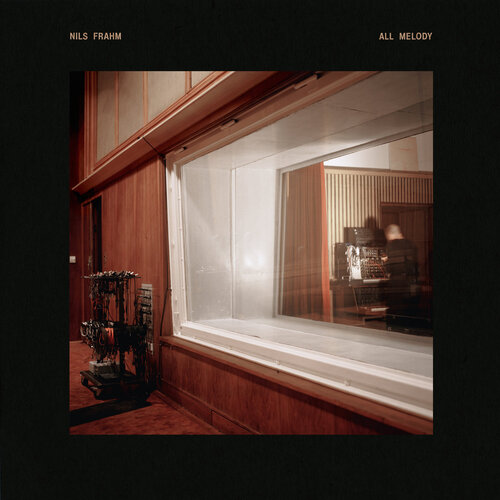
Nils Frahm recorded All Melody, released in 2018, in Saal 3 of the Funkhaus in Berlin. The album is filled with sounds of piano, synthesizers, and voices layered in a big acoustic space. The piano had a crisp, articulate attack, with the mechanical noise of the hammers and pedals audible in the quiet passages. The layers behind it were placed deep in the soundstage, and the hall itself was easy to perceive. The synth pulses were tight and fast, precision being the key word we thought about when listening to this track.

Armand Amar wrote the music for HOME, Yann Arthus-Bertrand’s 2009 documentary about our planet. On The Desert, the duduk and the flutes were presented at the centre of the soundstage, with the breath of the players clearly audible. The reverb tail was long and very detailed, with good depth behind the players. The duduk had slightly less of its dark, woody tone than we expect from this instrument, but the detail presented was excellent and highly dense.

Yello is the band of Dieter Meier and Boris Blank. From the album Touch Yello, Till Tomorrow is a track built on deep, layered electronic bass lines. The lowest layers were fast, tight, and easy to separate, each having its own firm outline. The small electronic effects were pinned to exact spots across the soundstage, some of them well outside the speakers.
Treble and Sibilance
The treble on the DA-07X is extended, airy, and full of sparkle. Cymbals and bells have plenty of shimmer, with long decays. With good recordings, this is a pleasure. With bright recordings, it can become a bit much.

Sophie Zelmani is a Swedish singer and songwriter, and All I See Is You and My Soul Remembers are two of the recordings we use to test sibilance. Her voice is quiet, close, and full of small detail. Through the DA-07X, every small change in her voice was audible: the breath between the words and the slight movement of her lips. The S sounds were more pronounced than on the R30. They remained clean, with no harshness, and with the Roboli cables in the chain, they were under control. With brighter cables, they rapidly became a problem, so care must be taken in matching.

Cigarettes After Sex’s Affection is one of the hardest tracks we know for sibilance, with Greg Gonzalez’s soft, breathy voice very close to the microphone. On the DA-07X, the S sounds in the vocal were clearly audible, a little sharp at higher volumes. The reverb and the soft guitar layers around the voice had air and detail in abundance. This track is one of the clearest examples of where the DA-07X reaches its limits.

Diana Krall’s Temptation, a Tom Waits song from her 2004 album The Girl in the Other Room, is a recording we use for testing the brushed cymbals, which here had a fine, detailed texture, with a long, clean shimmer and decay. We use it for the piano, which had a clean, precise attack. And especially for her voice, which was very clear, with the consonants forward and crisp. Some of the warmth and the smoky character of her voice were reduced, and a little of the romance in this recording was missing.
For the final piece, we want to talk about Janine Jansen’s recording of Vivaldi’s Four Seasons. It is played by a small chamber ensemble, and we use it to judge violin tone. Her violin was presented in great detail, with the texture of the bow on the strings and the smallest changes in pressure clearly audible. In the fast passages of Summer, the articulation was excellent. The upper harmonics were bright and airy.
Final Thoughts
Lux is Latin for light, and for us, the name fits the open, brilliant sound of the DA-07X very well. We believe the listener who enjoys hearing every breath, every string noise, and every reverb tail, the small things that make a familiar recording feel new again, will be very happy with it. The build quality, the connectivity and the care inside the chassis all match the cost, and Luxman’s century of experience is easy to see in each of them. Paired with care, the DA-07X can be a DAC to keep for many years.
We would like to extend our deepest gratitude to HifiExpert for their generosity and trust, and for the chance to spend a month with the DA-07X.
Pros
- High resolution and excellent microdetail retrieval
- Good spatial precision, with a wide, deep soundstage and precise imaging
- Fast, clean transients and very good articulation and instrument separation
- Extended, airy and sparkling treble
- Excellent build quality, with a rigid steel chassis and a complete set of inputs and formats
Cons
- The bright tonal balance can be too much with hot recordings
- Less body and harmonic density in the lower midrange than on warmer sources
- Careful matching is needed, it should be paired with a warm chain of electronics and cables
- There is no volume control, so a preamplifier or an integrated amplifier is needed in every system
- Only two digital filters to choose from for PCM, plus a bypass, which limits the versatility when tuning the sound


