Cayin HA-6A MK2 Review: One Amplifier, Endless Possibilities

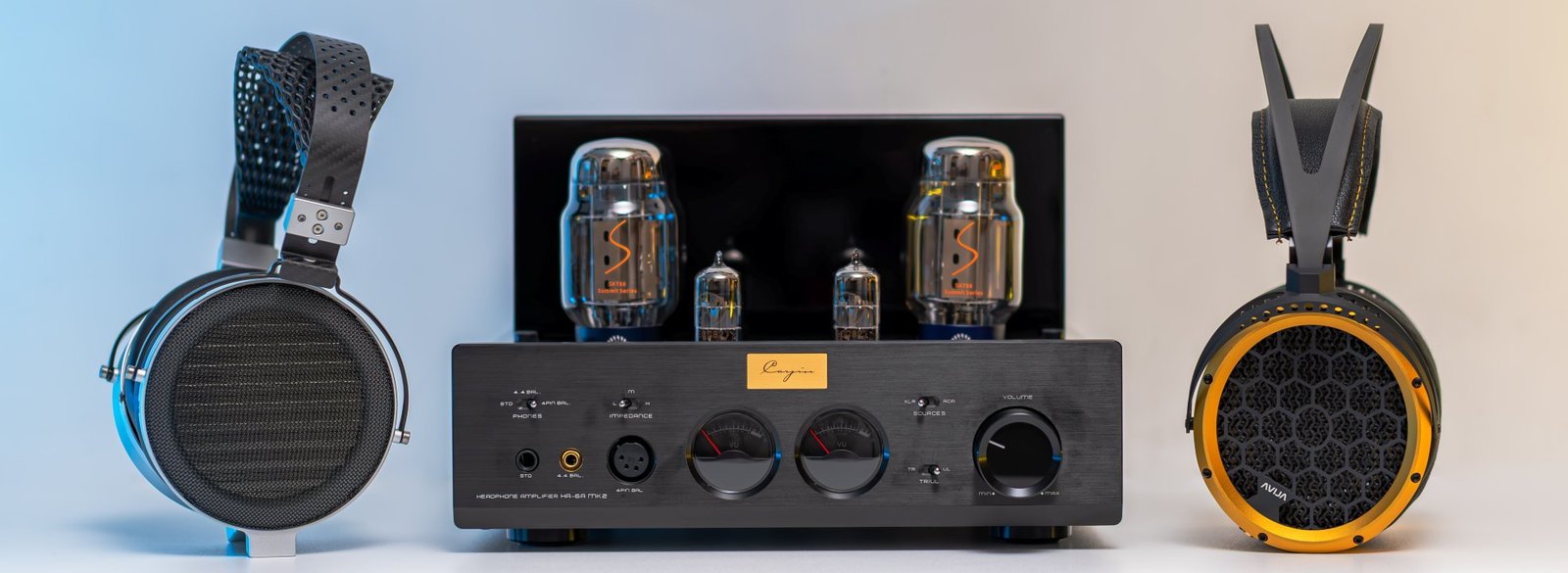
You know how it feels when yet another tube amplifier drops at my door for evaluation? It’s like getting your third honeymoon, and you get to feel something floating in the air (in a vacuum maybe?) with all of its quirks, raw instincts, moments of elation, of disappointment, and sometimes…happiness. That’s exactly how I feel when a great amplifier comes around, and without spoiling everything beforehand, this seems like a piece that will be imprinted on my cortex for a long time.
There’s a strange moment happening to almost every headphone enthusiast sooner or later.
A moment when solid-state amplifiers no longer impress you with their perfect measurements, razor-sharp leading edges, or dead-silent backgrounds. You stop chasing absolute linearity, flat frequency response, and immaculate technicalities and start chasing something else instead. Suddenly, you care less about hearing everything happening behind your tracks and more about awakening a memory or making you curious, sad, or joyful. That’s usually the moment when vacuum tubes enter your life…and your wallet starts crying softly in the background, as all sorts of NOS and new production tubes already start wandering in your dreams.
Over the years, I’ve tested some truly insane tube amplifiers. One bigger and heavier than the other, offering unlimited power numbers in return and sleepless nights with a glass of whisky nearby. From scary-looking transformer-coupled monsters like the Cayin Soul 170HA and the Trafomatic Primavera that could probably power a small village here in Transylvania, to majestic-sounding SET amplifiers like the Feliks Audio Envy Performance/Susvara Edition that made me question if solid-state amplification still had a place in my life. All of these showed me just how far tube designs can go when money, sanity, and common sense are thrown out of the window.
But today’s review is a little bit different, as it pulls me back into reality due to its smaller size, less impressive power ratings, and, more importantly, a lower price I need to pay. The updated Cayin HA-6A MK2 isn’t trying to become the most powerful headphone amplifier on Earth, nor is it trying to bankrupt you before your first listening session. Instead, it once again reminds us that music should be devoured with pleasure. As an art form, it needs to make you curious and hungry for more…and sometimes it even needs to make you dangerous and fearless. At least this is what I felt with it on my table.
It’s the kind of amplifier that makes you sit down for just one track and then suddenly realize it’s 3 AM, your drink went cold three hours ago, as you’ve been tube rolling like a mad scientist trying to unlock forbidden knowledge. In the usual fashion, I’m not only going to demystify everything you need to know about it in its stock form. I went shopping for current production and NOS tubes for the last two months, so I can deliver the ultimate Cayin HA-6A MK2 review, with lots of tube rolling and dad jokes included. Depending on the tubes you throw into it, the HA-6A MK2 can sound sweet, lush, and buttery smooth…but you can also turn it into an aggressive little beast with enough kick and bite to wake up planar headphones that normally laugh at smaller tube amplifiers like this one. One moment it whispers sweet lies into your soul, and the next moment it’s throwing double-kick drums at you like it just discovered Sepultura for the first time. To anyone’s surprise, I love amplifiers like these, as I’m not getting a love it or hate it sound, but an open lab to experimentation that lets you change the way it performs according to your needs.
In a world where so much HiFi gear is starting to sound technically impressive but emotionally sterile, the HA-6A MK2 feels different and even…human in nature. It’s imperfect in some ways, magical in others, and endlessly addictive once you start discovering its shape-shifting personality. So today, we’re not only talking about power output, transformers, impedance taps, and vacuum tubes. We’re diving deep into tube rolling, headphone pairings, sound performance, noise floor behavior, and of course…whether this thing deserves a spot among the tube amplifiers that made me feel alive.
Ladies and gentlemen, grab your favorite headphones and let’s check what Cayin cooked this time around. But before I fire up my cylinders, what should truly awaken your curiosity is the asking price. Cayin has been known to deliver outstanding sonics for the buck, but I feel they slightly outdid themselves with the Mark II. Not only do we get a lot more freedom if you see a tube roller in the mirror and a pretty substantial boost in power output compared to the original HA-6A, but the price remained in check as it was before. The whole package goes for only $2,999 in the USA, £2990 in the UK, and the Europeans are selling it for €3,490; it’s time to switch homes, I guess. Alright folks, let’s fricking go!
Design & Build Quality
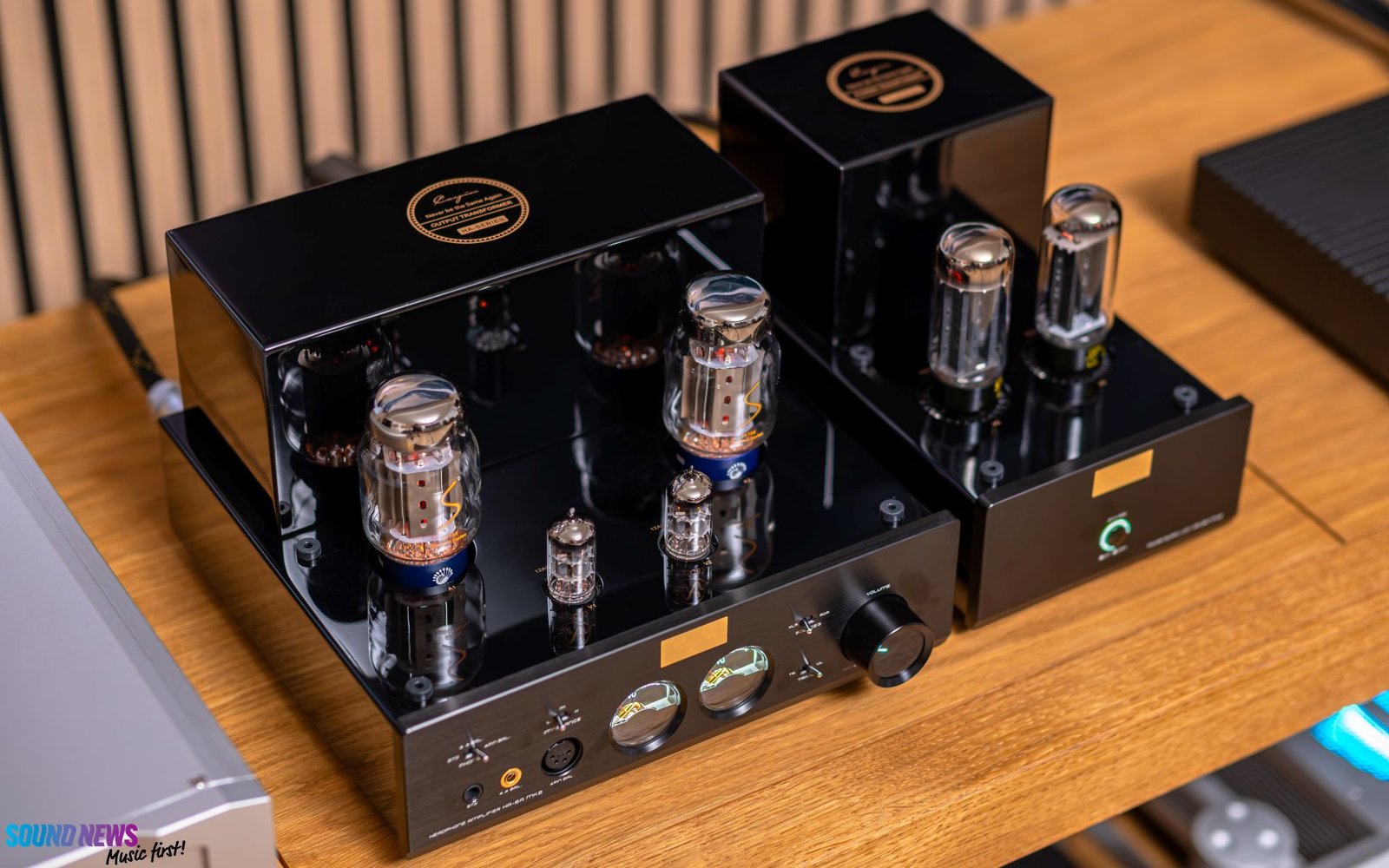
When you get a colossal-looking tube amplifier for the first time in your life, you’re radiating pride and a sense of accomplishment, as if something extraordinary just happened in your life. But if your name is Sandu and you need to carry such amplifiers and place them on various tables and shelves for a proper photo shoot and video B-Roll footage, you start cursing such amplifiers. I mean, when internal space is no longer a concern, it’s just normal that such an amplifier will deliver you the sun and the moon in terms of sonics, but when you fiddle with electronics on a weekly basis, cardboard boxes are coming and going in a constant flux, you no longer appreciate beastly looking amps.
The size of my biceps doubled in the last seven years or so, and in the end, I’m not mad at all. Trafomatic Primavera had 32 kilos fully equipped, Cayin Soul 170HA almost 41 kilos when combining the main unit with the power supply, and my back wasn’t quite happy when I needed to put them up or down from my audio racks. The HA-6A MK2? Waaay more manageable, as the main unit weighs “only” 11.2 kilos and the PSU a featherweight 8.2 kg.
Perhaps what I like the most about the HA-6A MK2 is that Cayin didn’t limit its usability or build quality in any way. The majestic analog VU meters? Still present and dancing wildly to the rhythm of the music. The illuminated volume knob? A gift from the Gods for nightwalkers like me. I don’t need to light up the room just to see where the volume knob is located; it’s such a small thing, yet it’s a massive quality-of-life improvement when listening in a dimly lit room. Last but not least, the damn thing is built to last, out of thick metal; we get thick front panels and detachable tube guards, which…in my case are never mounted, as I always fiddle with tubes of all sorts and the HA-6A MK2 feels like a playground for tube heads like me.
We still get a high-quality umbilical cord that connects the main unit to the PSU; it’s shielded, it’s thick, and it uses high-purity copper conductors. There’s little to nothing to complain about this one. Except for not using wooden panels as they did on the Soul 170HA, these two have a very similar build quality and attention to the smallest details. Hell, even the metallic remote control is identical and so helpful when listening to music a few meters away from it. Let’s not forget that it can also function as a fully-fledged active preamplifier, and without a remote it’s a no-go; luckily, that was sorted out, and we already get an impressive first impression
Controls & I/O
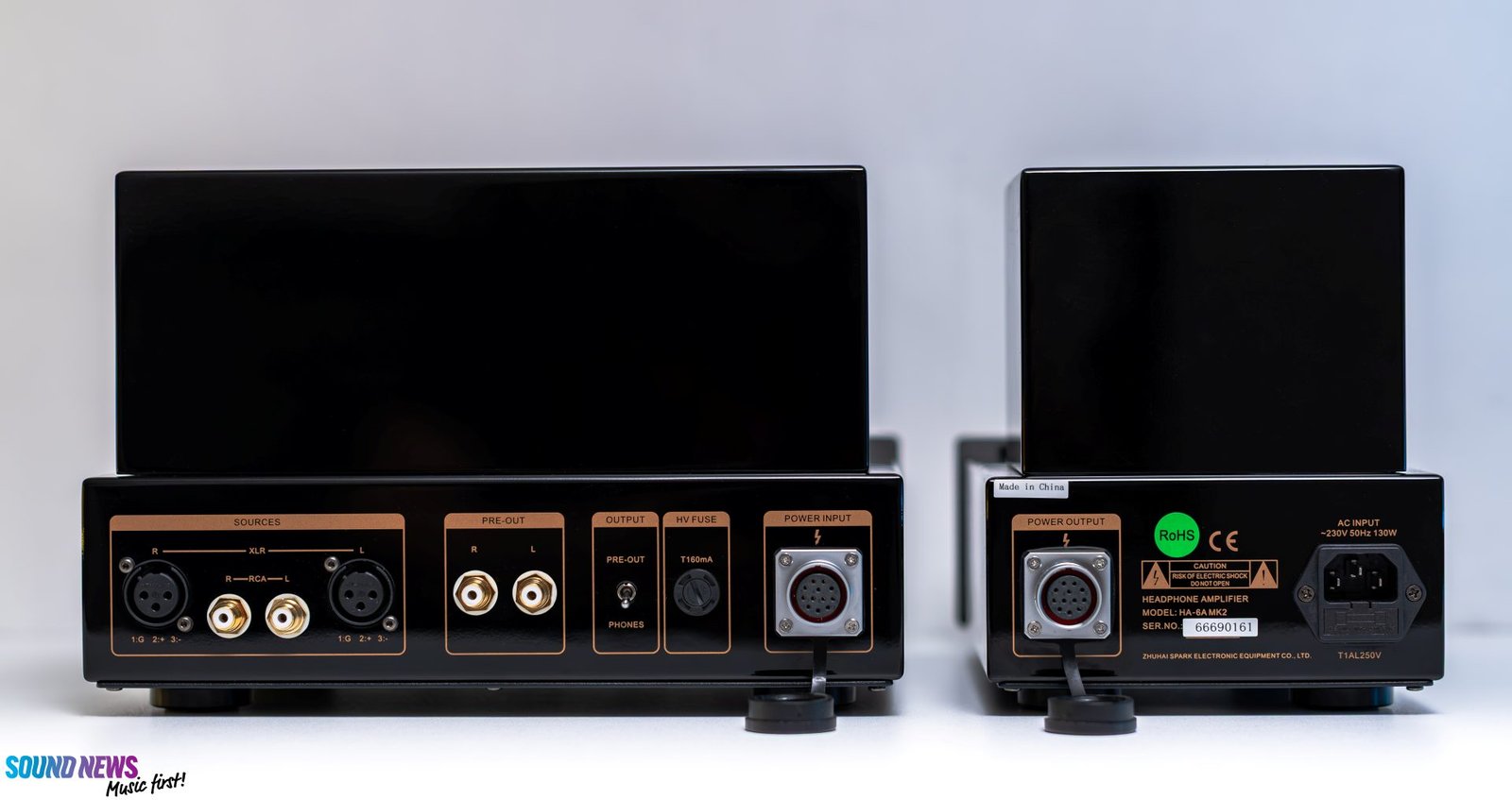
Since we’re discussing an analog input-to-output headphone amplifier and preamplifier, you won’t find a lot of features or a complicated layout. This is a straightforward, set-and-forget type of amplifier that won’t confuse you with numerous switches or hidden menus. On the front panel, you’ll find a balanced 4-pin XLR and 4.4mm headphone output, alongside a single-ended 6.35mm headphone jack. An impedance selector and a headphone output switch are located on the left, while the source selector and TR/UL mode switch sit on the right, near the illuminated volume knob, with everything else moved to the back.
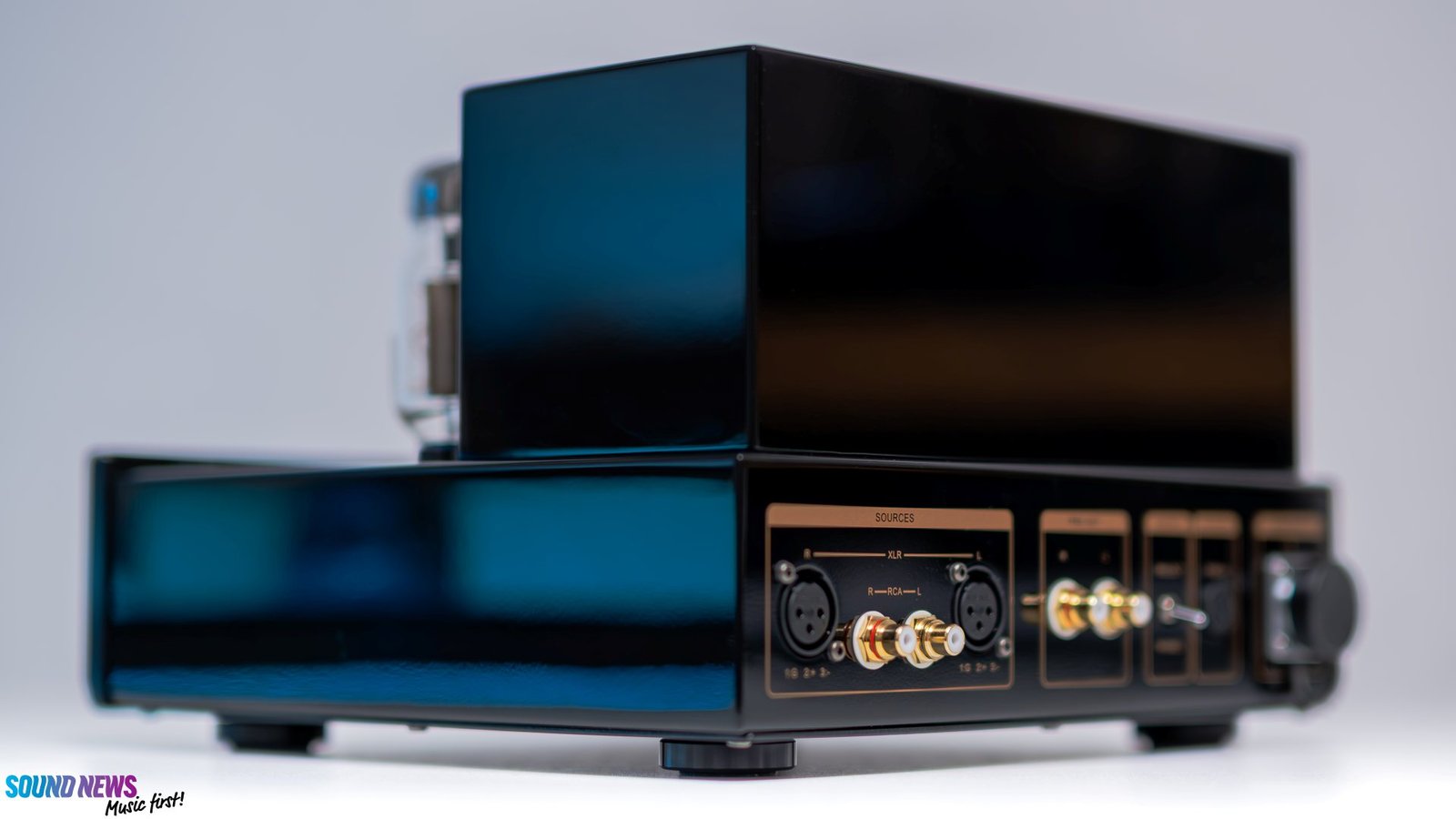
Since it can function as either a headphone amplifier or a preamplifier, you’ll also find a pair of RCA and XLR inputs, plus a pair of RCA outputs when operating as a preamplifier. An AC inlet, a voltage selector (230V or 115V), and a serial number are the last features you’ll see there.
Under its Hood
Before I give you a ton of sound impressions, first I need to explain what the Cayin HA-6A MK2 actually is, what makes it tick, how it works, and why you should care. I’m discussing a purebred transformer-coupled Single-Ended Triode (SET) Class-A amplifier. Even the power rectification stage is tube-based, so you won’t get a purer all-tube amplifier than this one.
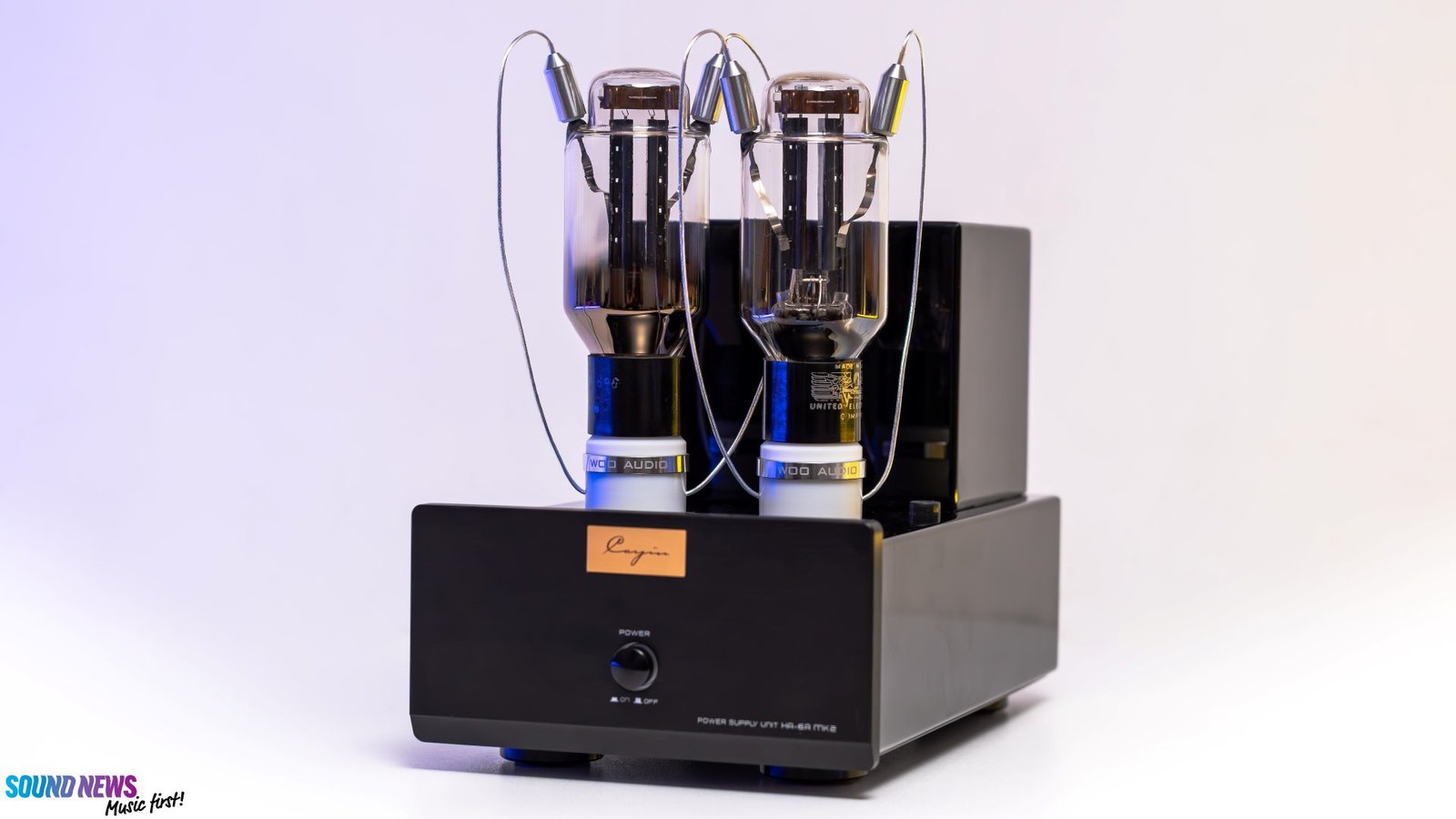
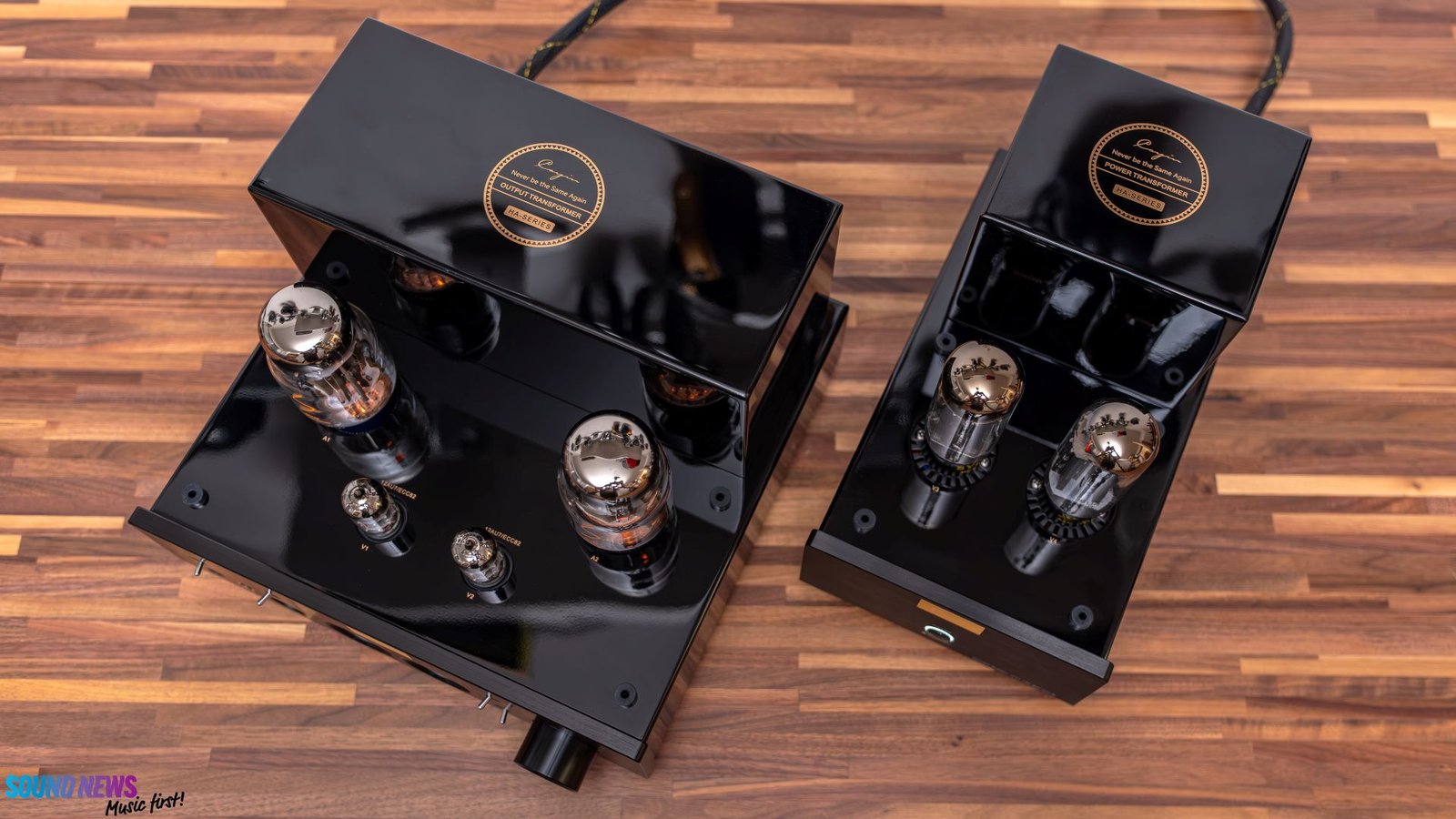
The power rectification duties are handled by a pair of JJ GZ34S rectifiers located in the power supply unit. The main unit uses a pair of JJ ECC82 tubes at the voltage amplification stage and a pair of Genalex Gold Lion KT88 power tubes working in either Triode Mode (TR) or UltraLinear Mode (UL). The KT88 is one of the most respected power tubes in the audio world, combining excellent reliability, strong current delivery, and a punchier, faster presentation compared to many classic tube alternatives. That particular choice already tells me a lot about Cayin’s intentions with this amplifier.
In Triode Mode, it outputs up to 3000 mW per channel via the 4-pin XLR output, and the power goes up by 50% to 4500 mW per channel in UltraLinear Mode. While the sound was slightly changing its character on the Soul 170HA when swapping between TR and UL mode, the change is much bigger on the HA-6A MK2, and I can only presume that the substantial increase in output power is playing a major role here. On the Soul 170HA, the difference between the two modes was much smaller, producing 18 Watts in UL mode and 15 Watts in TR mode. Here, the jump is significantly larger, and so is the audible effect.
If you’re new to tube amplifiers, then it’s important to understand that transformer-coupled designs like this one behave very differently from OTL amplifiers. The output transformers allow the amplifier to deliver considerably more current into difficult headphone loads, improving compatibility with modern planar-magnetic designs while retaining the sonic benefits tube enthusiasts are usually chasing in the first place.
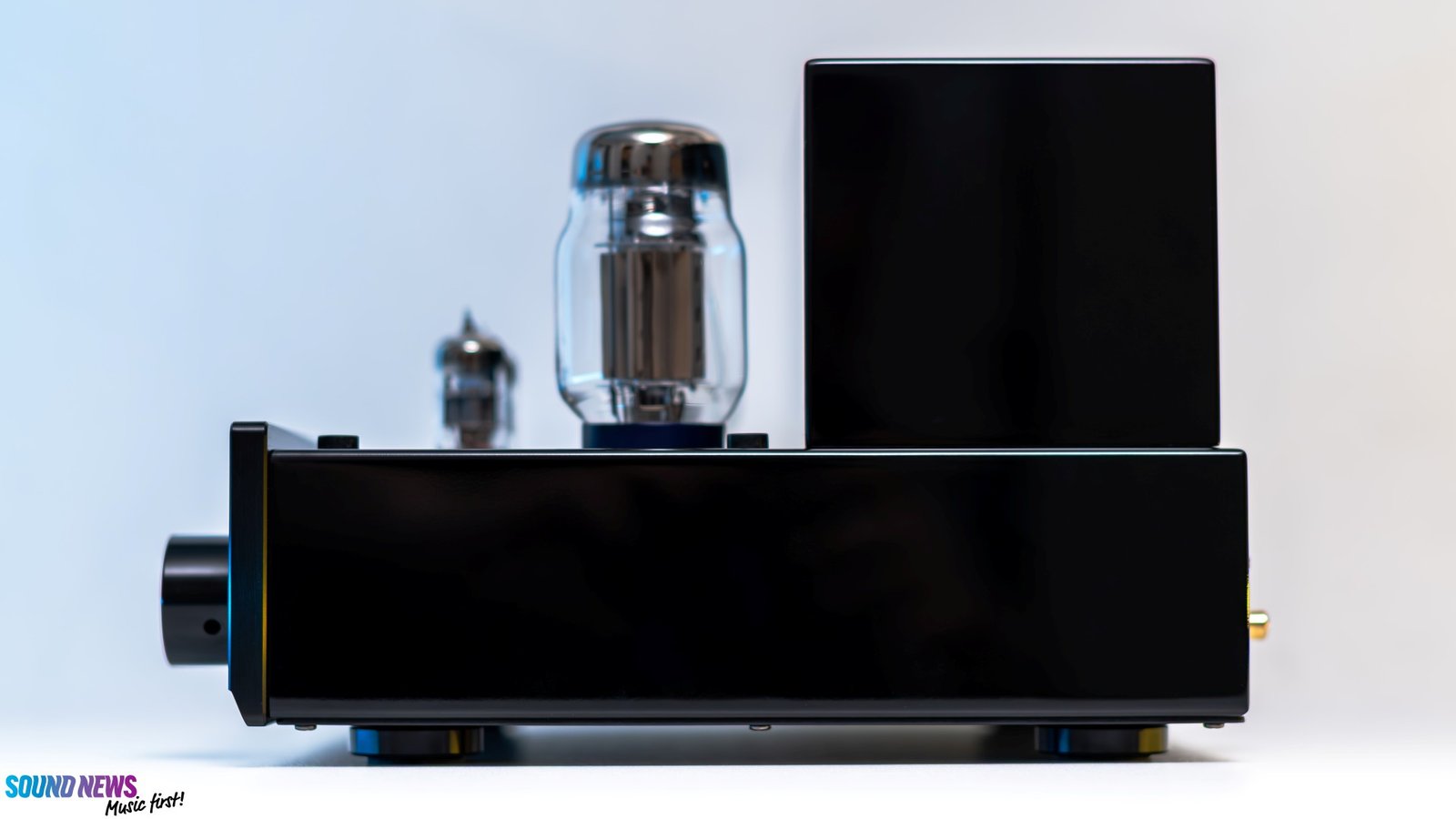
Since we’re dealing with a transformer-coupled amplifier, the massive metallic cubes on top of the amplifier are exactly where the transformers reside. These are in-house-developed transformers using high-purity copper windings, which produce significantly lower magnetic noise in comparison to traditional off-the-shelf transformers. Considering how much of a tube amplifier’s final character is dictated by the quality of its transformers, this is one of the areas where manufacturers either make or break the final product.
Everything inside is put together via point-to-point wiring, exactly how high-performance old-school amplifiers were designed to function. Critical signal wiring is done exclusively with silver-plated copper conductors for improved conductivity, and for coupling duties, audio-grade AudioCapX capacitors were used, improving the precision and stability of signal transmission. Nichicon electrolytic capacitors populate the less critical parts of the circuitry, and overall, this seems like a very well-made amplifier, with high-quality components everywhere I look.
Perhaps the two biggest changes we’ve got with the Mark II are boosting the signal-to-noise ratio from 98 dB on the first generation to 104 dB on the MK2, and adding proper preamplifier functionality. A 6 dB improvement might not look particularly impressive on paper, but in practice it translates into a noticeably blacker background, improved low-level resolution and cleaner micro-detail retrieval, especially when listening with highly resolving headphones. Secondly, it can now function as a proper active preamplifier through a pair of RCA outputs found on its back, just in case you need to inject some tube flavor into your stereo rig.
Test Equipment
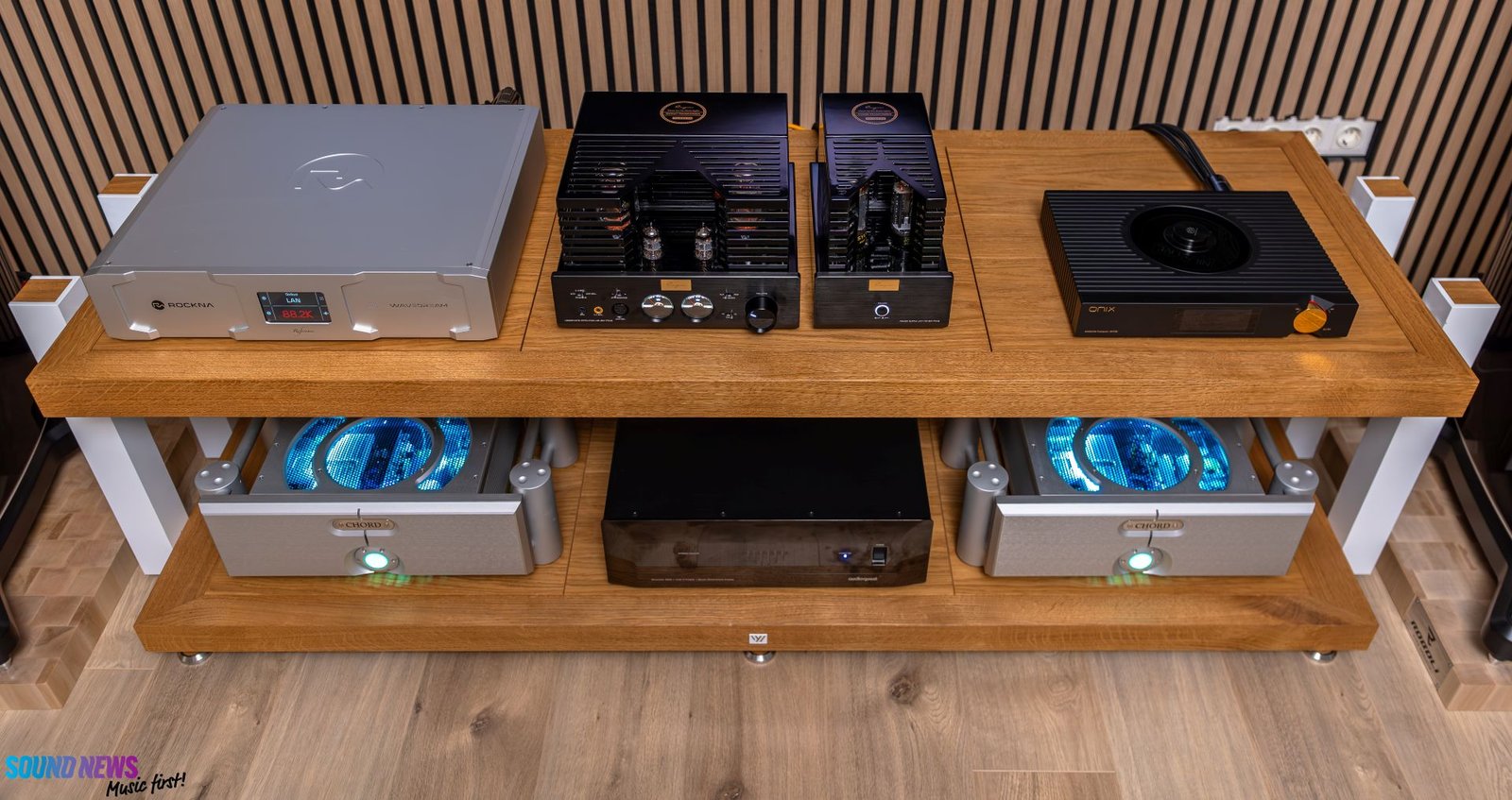
Before you ask, the Cayin HA-6A MK2 was primarily used in a head-fi battle station as a headphone amplifier, but I also utilized it as a preamplifier in a well-thought-out stereo rig.
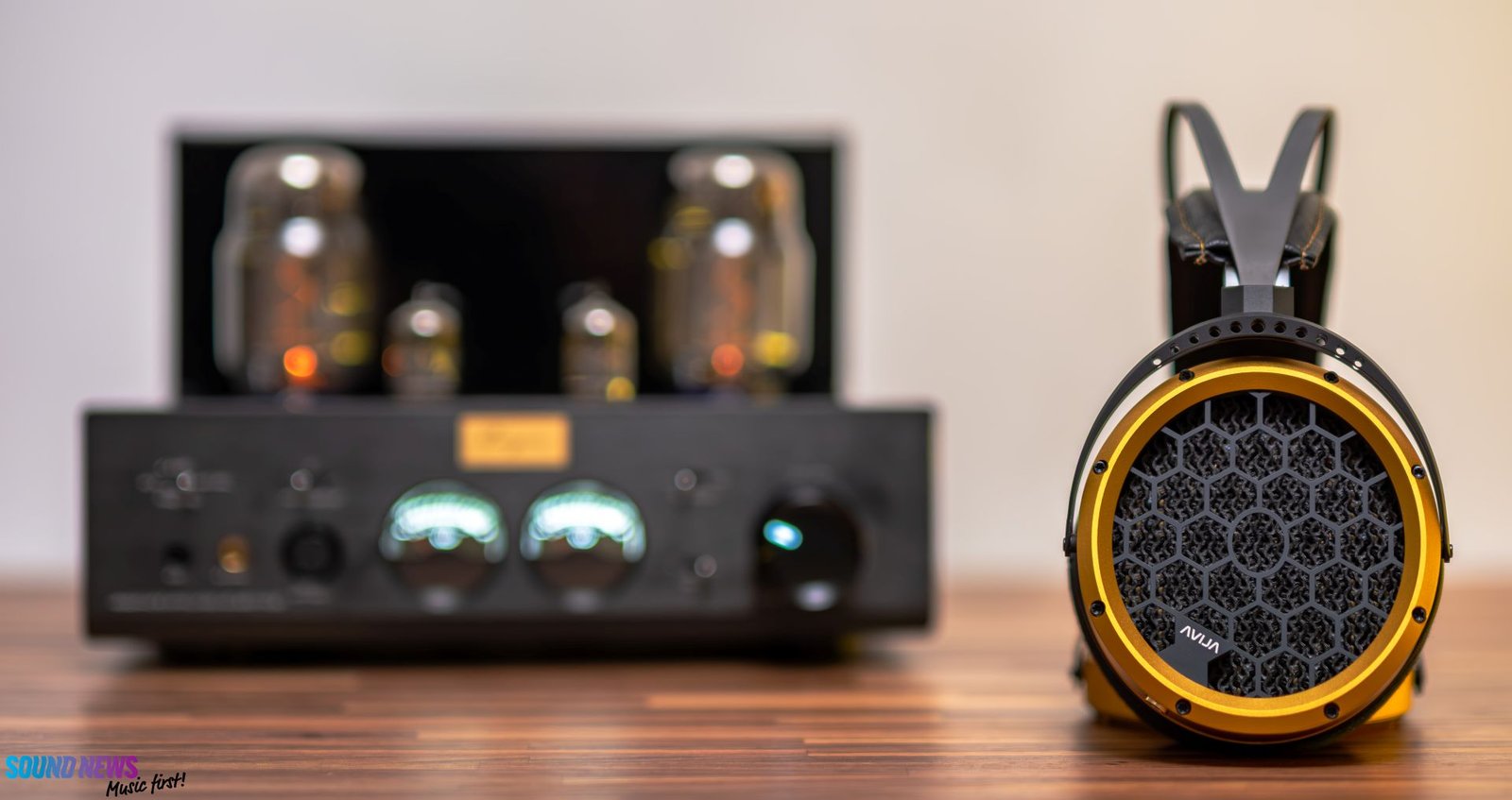
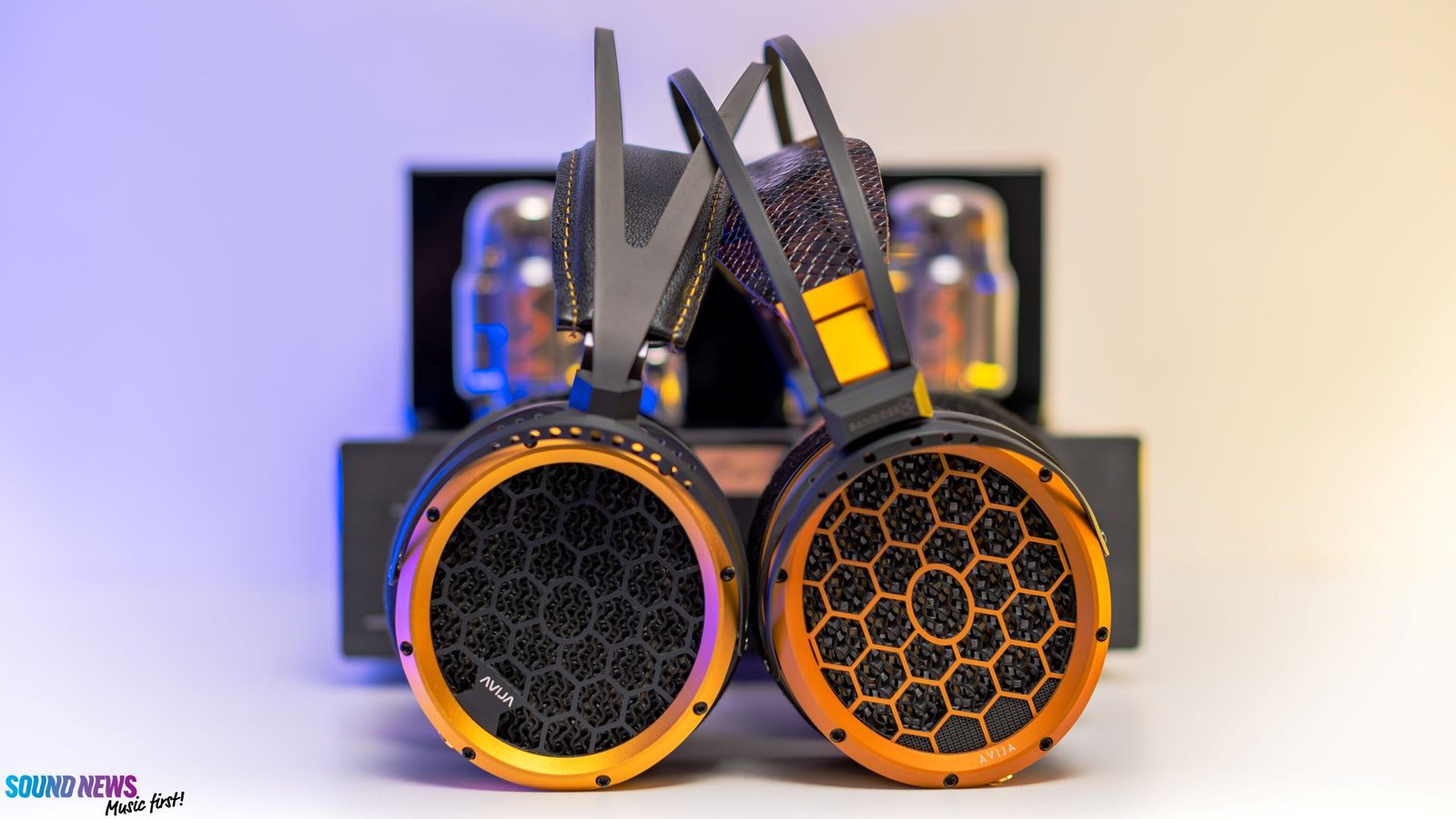
This is a well-made headphone amplifier, which is why it was imperative to use as many headphones as possible, ranging from dynamic to planar-magnetics, available in both closed-back and open-back configurations. Most of my testing, however, focused on the Bandoss AVIJA Precision, Audeze LCD-5S, T+A Solitaire P, and Sennheiser HD800S.
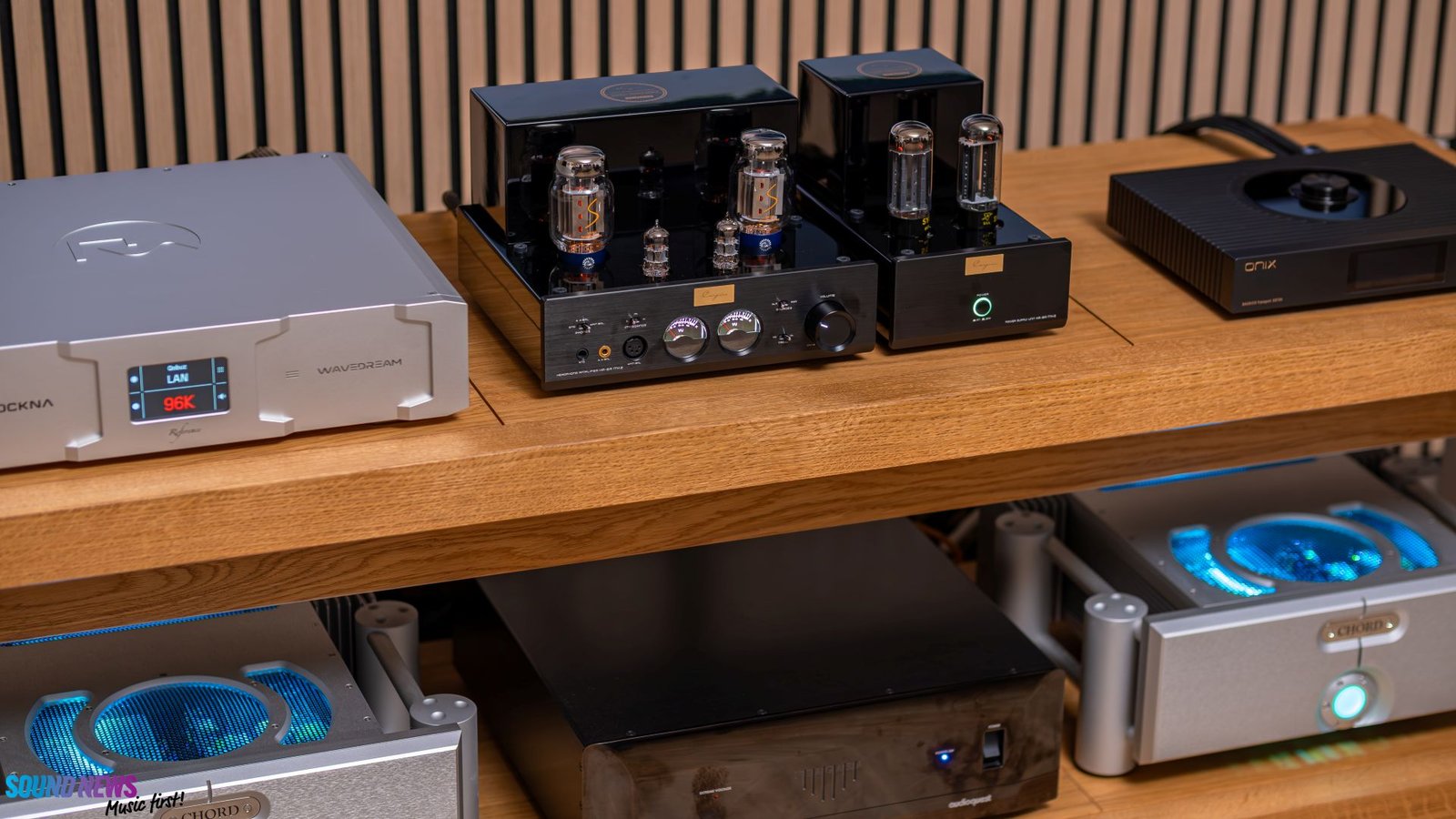
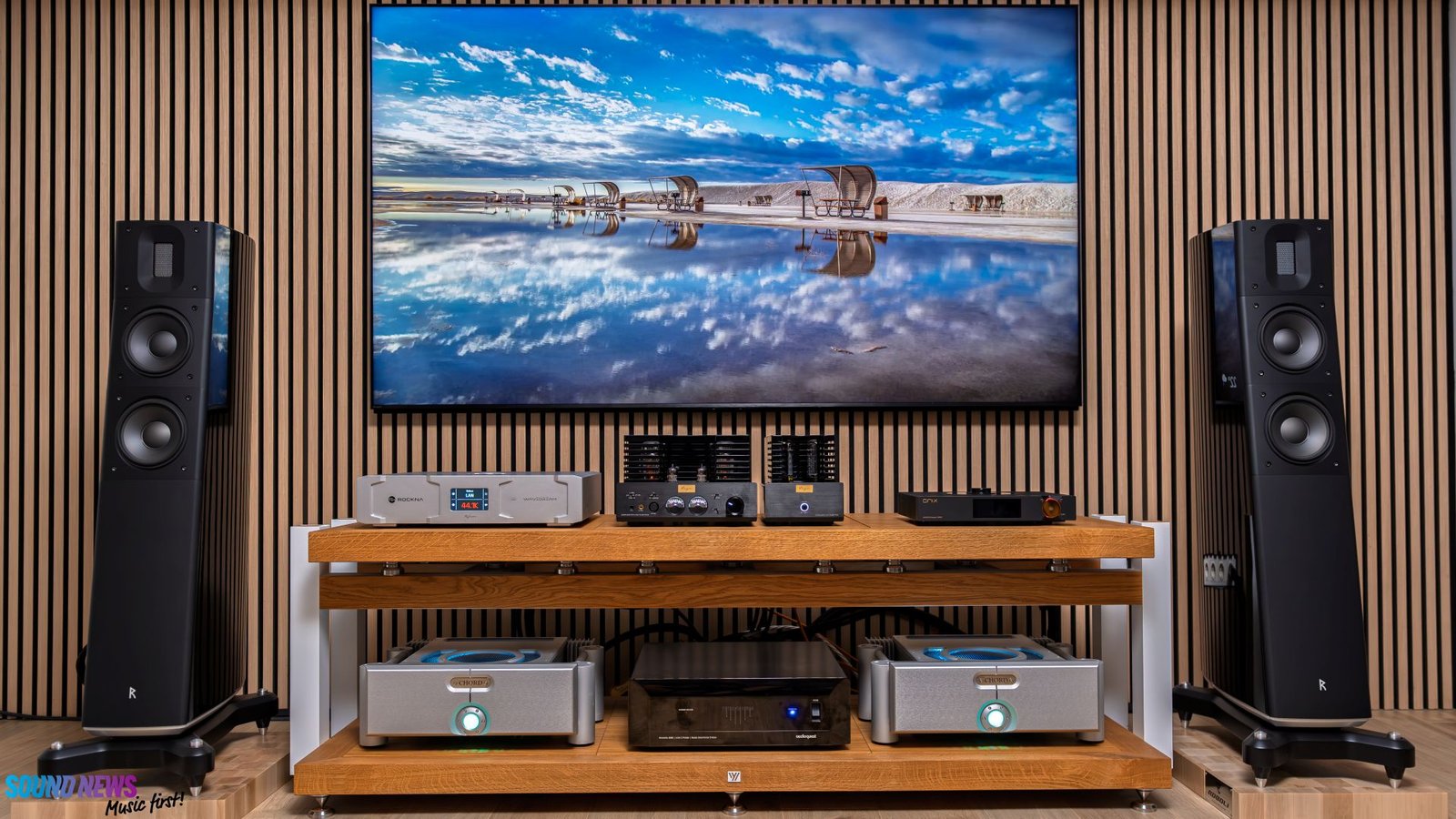
In the living room, the Rockna Wavedream Reference Signature DAC ($27,000) worked as a streaming DAC, followed by the Cayin HA-6A MK2, which temporarily replaced a Chord Ultima PRE and controlled a pair of Chord Ultima 3 monoblock amplifiers ($32,000). Raidho TD2.2 loudspeakers ($49,500) were my speakers of choice, playing tunes for almost two weeks before I made my final evaluation. All cabling used was from the Crystal Cable Monet range, including power cords, interconnects, Ethernet, and speaker cables. Everything was also powered by a KECES IQRP-3600 balanced power conditioner.
Everything should be as clear as the blue sky, so what are we waiting for? Let’s hit some eardrums!
Sound Performance
I. Preliminary Sound Impressions
Alright lads, today I’m not going to discuss one, but four different sounding versions of the HA-6A MK2. The “just unboxed” version comes first, the one that already has at least 100 hours under its belt comes next, the one that has the rectifier tubes exchanged with a couple of alternatives will shed some light on all of the whys and hows of rectifier rolling, and for the last version, I’ll swap every available tube with NOS and current-production alternatives and let’s check all of them one by one.
But before I begin, here’s a short disclaimer first: two weeks ago, I went to see Metallica live with my son, and tomorrow we’re going to see Iron Maiden on the same stage. I apologize in advance for having a slightly stoic mindset throughout the entirety of this article. Nothing I can do about it; high levels of dopamine and testosterone will definitely change your perspective on life.
About ~three months ago, the kind gents at Cayin Audio decided to send me a big package, and I’m grateful for that. Here comes the second disclaimer: I indeed received the HA-6A MK2 from Cayin in exchange for a long article, a dedicated photo shoot, and a video review shot in 4K DCI with high-quality glass, mostly prime lenses, into which I’ll pour seven full days of work. Add countless days of testing, tube swaps, and a fair amount of money spent on current-production and NOS tubes, and you’ll get the full picture. With that said, I’m trying to be as objective as possible, staying as close as possible to our readers and viewers, without taking personal bias or preferences into account. With that out of the way, let’s jump right in. If you never experienced a beefier-looking tube amplifier before, then expect a comedy drama unfolding once you take it out of the cardboard box and immediately start listening to music. Two friends of mine draw conclusions in the first ten minutes after unboxing their brand-new amps; they either keep or return the units they just purchased an hour ago, but that is exactly what you shouldn’t do when assessing the sound of a big transformer-coupled amplifier.
You see, not even the chemistry inside its electrolytic and coupling capacitors has stabilized yet, let alone the cathode and anode structures of brand-new vacuum tubes, and please don’t get me started on massive custom-built transformers that aren’t performing at their best in the first 50 hours of use. Whether you believe in burn-in or not, one thing is certain: tubes, capacitors, and transformers settle with use, and their electrical behavior changes during those first dozens of hours. I’ll cut to the chase; I wasn’t impressed with the freshly unboxed HA-6A MK2. The sound was lacking weight; you could forget entirely about dynamics, and worst of all, the treble was sharp and piercing. I was unable to get into the groove, not even with lush and rich-sounding headphones from Audeze, Meze, or Bandoss.
Since I’m constantly tinkering with new stuff, boxes are coming and going on a weekly basis and since my son is already a very active member of the head-fi movement, I let it cook in his room, attached to an entry-level R2R DAC (Apos Druid) and playing all sorts of hip-hop, rock and metal tunes (yes, I’m proud!) for a few hours per day over the course of a month. I placed it back into my system and the metallic tint I previously heard, the artificial-sounding vocals, and the overly excited upper treble were no longer a major inconvenience. In fact, it sounded like a slightly rounder and more romantic version of the Cayin Soul 170HA, having a similar character sound-wise, while injecting a touch of richness into the music that wasn’t quite there on the Soul 170HA in its stock form.
The KT88 tubes finally started shining brightly, and I immediately noticed their somewhat lusher presentation compared to the more serious, almost solid-state-like nature of the Soul 170HA. Sure, dynamics weren’t on the same level, and these are playing a forever-alone game on the Soul 170HA, but it’s only natural that its bigger brother would outperform its younger sibling in a few key areas, including raw power output. After swapping a few headphones and fiddling with the Triode and UltraLinear modes, a much clearer picture started emerging. In UltraLinear (UL) mode, the extra oomph and bass definition are the first things hitting your eardrums. While I’ve heard a clear difference between these modes on the Soul 170HA as well, the change is considerably bigger on the HA-6A MK2. Maybe because the power goes up by 50% in UL mode? I’m not entirely sure, but it feels like having two different-sounding amplifiers in the same chassis and choosing which one plays first.
Nonetheless, the bass is already awake in UL mode. It’s more fearless sounding, much punchier, digs deeper, and offers a noticeably tighter grip over the lowest frequencies. What’s surprising is that the overall presentation changes as well. The tighter control becomes immediately apparent and subsequently low-level information starts surfacing everywhere, as if somebody pressed a transparency boost button. Detail retrieval improves, and from a somewhat rich and sweet-sounding amplifier, it comes much closer to a solid-state design that prioritizes technical performance over lushness and liveliness.
I’ll give you a tip.
Headphones that naturally excel in the bass region, such as the T+A Solitaire P, Audeze LCD-4 and LCD-5S, and to some degree even the Bandoss AVIJA and Meze Elite, won’t necessarily need the UL mode. These benefit more from the added richness, sweetness, and saturation of the TR mode. With everything else that needs an extra push down low, the UL mode worked like a magic pill. The HiFiMan Arya Unveiled literally transformed into a bass cannon headphone, and if you need to headbang just a little, it’s a serious mood enhancer. Tube amplifiers usually don’t work that well with electronic music, and with only a few exceptions, they aren’t generally recommended for such genres. The UL mode solves that problem almost entirely, as timing improves, the amplifier responds faster to the incoming signal, and since power goes up by 50%, the grip over both planar and dynamic drivers improves considerably as well. It’s a win-win situation if you’re into all kinds of modern tunes.
II. Tube Rolling
The tube-rolling potential of the HA-6A MK2 is considerably higher compared to the first generation. The extremely rare 22DE4 rectifiers were replaced with GZ34 rectifiers, meaning you can use a wide range of substitutes such as GZ37, 5AR4, 5V4G, 5R4G, U54G, 5Y3GT, 5DJ4, and even 5U4G variants, which work just fine. The same goes for the power tubes. While the EL34 family remains widely available from different manufacturers, they simply can’t produce as much power as the newer Genalex KT88. Let’s not forget that you can also use KT66, KT77, KT88, KT90, KT120, and KT150 variants, including 6CA7 and 6L6 tubes. We also get a slight update over the Electro-Harmonix 12AU7EH tubes used in the original model, receiving JJ ECC82 tubes instead. Naturally, that means you can experiment with virtually every 12AU7, ECC82 and ECC802S variant available.
Obviously, I didn’t try every tube under the sun, but I still managed to get a pretty good understanding of the tube-rolling potential of this amplifier.
A. Driver Tubes
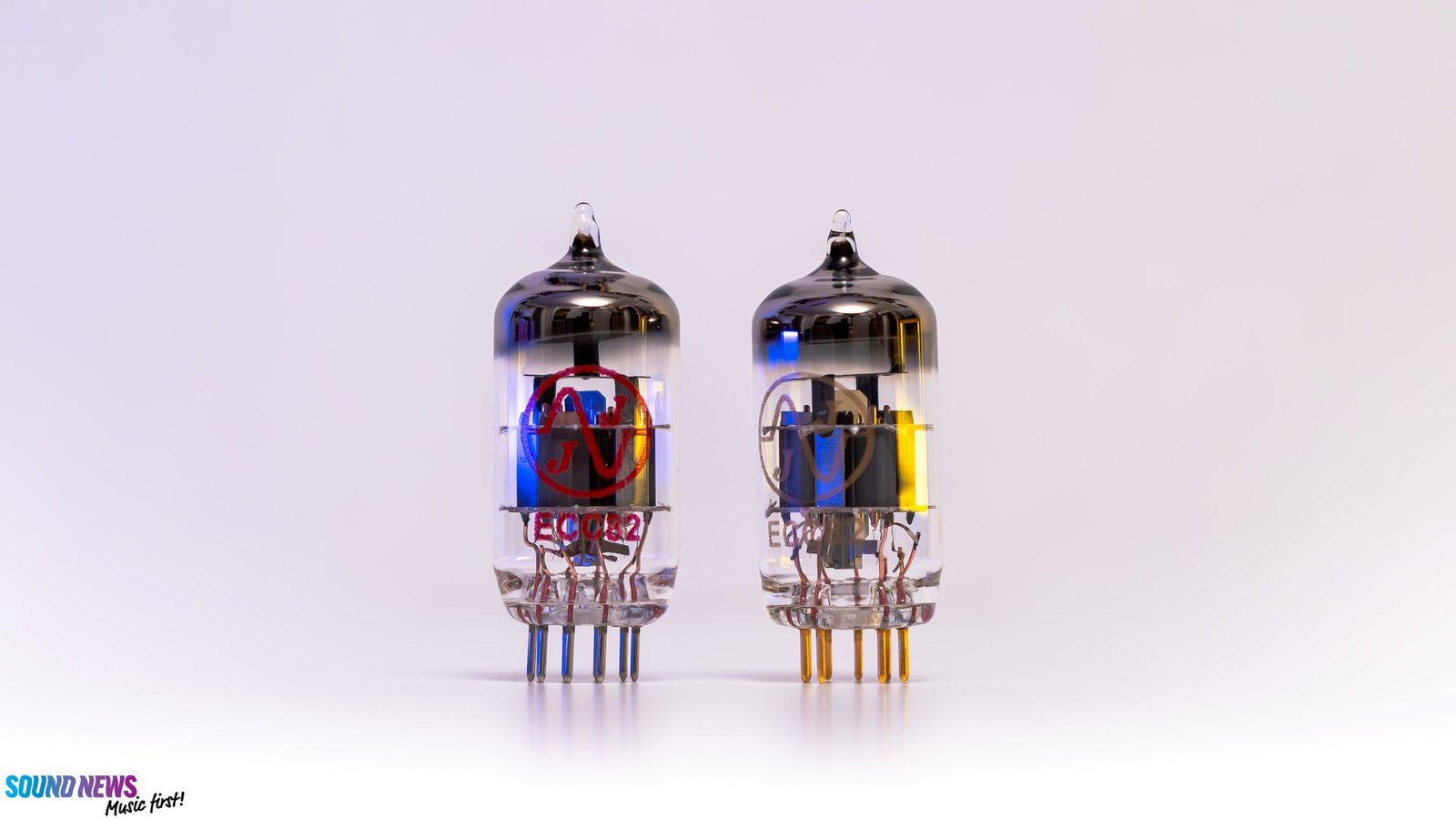
1. JJ Electronic ECC82 (~€36 per matched pair, these are the stock driver tubes)
I was pleasantly surprised by not getting the slightly overexcited treble energy of the Electro-Harmonix ECC82. The JJs sound somewhat smoother, yet there is still a faint metallic tint, making them sound a little more solid-state than tubey in nature. I was expecting to be disappointed, but they genuinely perform well, and I can only nitpick about their slight lack of tubiness and the sweet flavor I usually expect from double triodes.
2. JJ Electronic ECC82 Gold Pins (~€63 per matched pair, order from here)
To be honest, I wasn’t expecting much of an upgrade. We get a golden colored JJ logo lettering on the glass and obviously gold-plated pins for improved corrosion resistance, but that’s pretty much it. The specifications are identical to the stock JJ ECC82, and there’s nothing on the official product page suggesting a different sound. However, immediately after inserting them, the slight metallic tint I mentioned above completely vanished. It was replaced by an even smoother character, adding some lushness while slightly improving micro-level resolution. Without a single doubt, these are worth every penny I spent on them. Buy with confidence; you won’t be disappointed.
B. Power Tubes
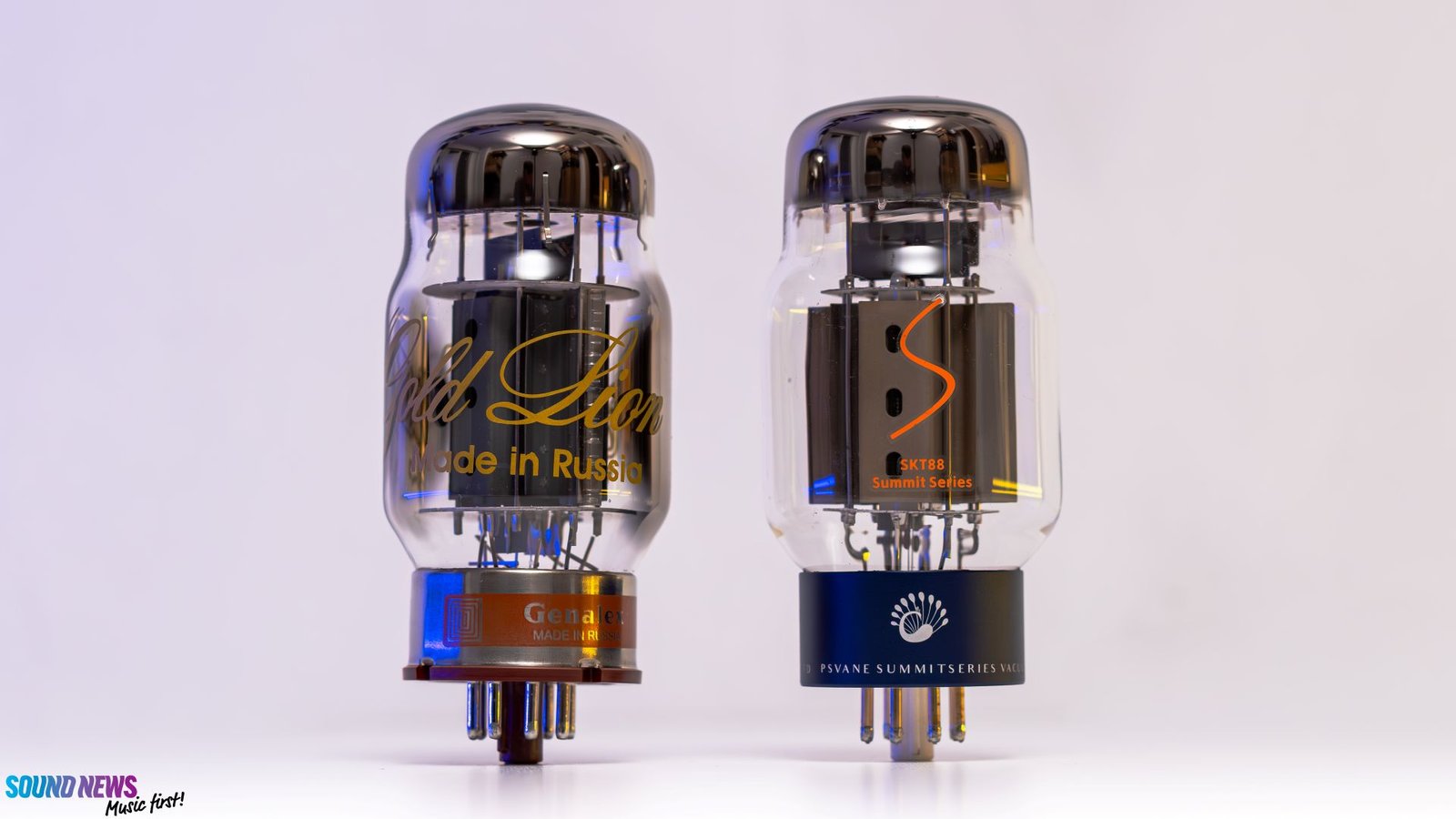
1. Genalex Gold Lion KT88 (€130–185 per matched pair; the cheapest place I found them is here)
Again, we no longer get the Electro-Harmonix treatment. Instead, we get much higher-tier Gold Lion tubes that look exceptionally well built. They feel solid, and KT88 tubes are generally very reliable in the long run, especially on lower-powered amplifiers like this one. These tubes aren’t biased aggressively and should easily last between 5,000 and 10,000 hours. The sound is surprisingly clean, without the grain and muddiness I often associate with entry-level EH tubes. There’s even some lushness and richness to their presentation, and for about a month I was perfectly happy with their performance. They also push a surprisingly high level of resolution for their price, and overall, they feel like an excellent match for this amplifier.
2. PSVANE SUMMIT KT88 ($280 per matched pair, get them from here)
Okay, I wasn’t prepared for such a rocket launch into the stratosphere. I can’t believe my ears; these are considerably more technical on every level, all while sounding lusher, richer, and sweeter. The improvement in tone and timbre versus the stock Genalex tubes is substantial, to say the least. And the resolution? With these tubes installed, the HA-6A MK2 is suddenly playing on the same field as the upgraded Cayin Soul 170HA. These tubes bring the kind of technical performance I usually expect from a well-made solid-state amplifier, and definitely not from a tube-based one. The sound gets tighter, faster, and punchier, with a noticeable improvement in pace, rhythm, and timing, while boosting resolution significantly higher. They sounded so good, even without any burn-in, that I simply stopped looking elsewhere. These particular power tubes also scored maximum points in the soundstage and holography departments. The build quality appears higher as well, and let’s not forget the impressive packaging with plenty of padding around the tubes and a generous 24-month warranty. Highly recommended as the final destination for power tube rolling.
C. Rectifier Tubes
It’s funny how many musicians and tube aficionados strongly believe that rectifier tubes merely clean up the voltage coming from the power supply and have no influence whatsoever on the final sound. It is true that rectifiers don’t sit directly in the signal path. However, everything related to power supply implementation affects the final result. Rectifiers influence voltage delivery, power supply impedance, voltage sag under load, current delivery, recovery characteristics and perhaps most importantly, noise levels and ripple rejection. So yes, rectifiers absolutely can have a significant impact on the final sound. Don’t believe me? Try a few different rectifiers yourself, ideally a mix of NOS and current-production variants, and prepare to be surprised.
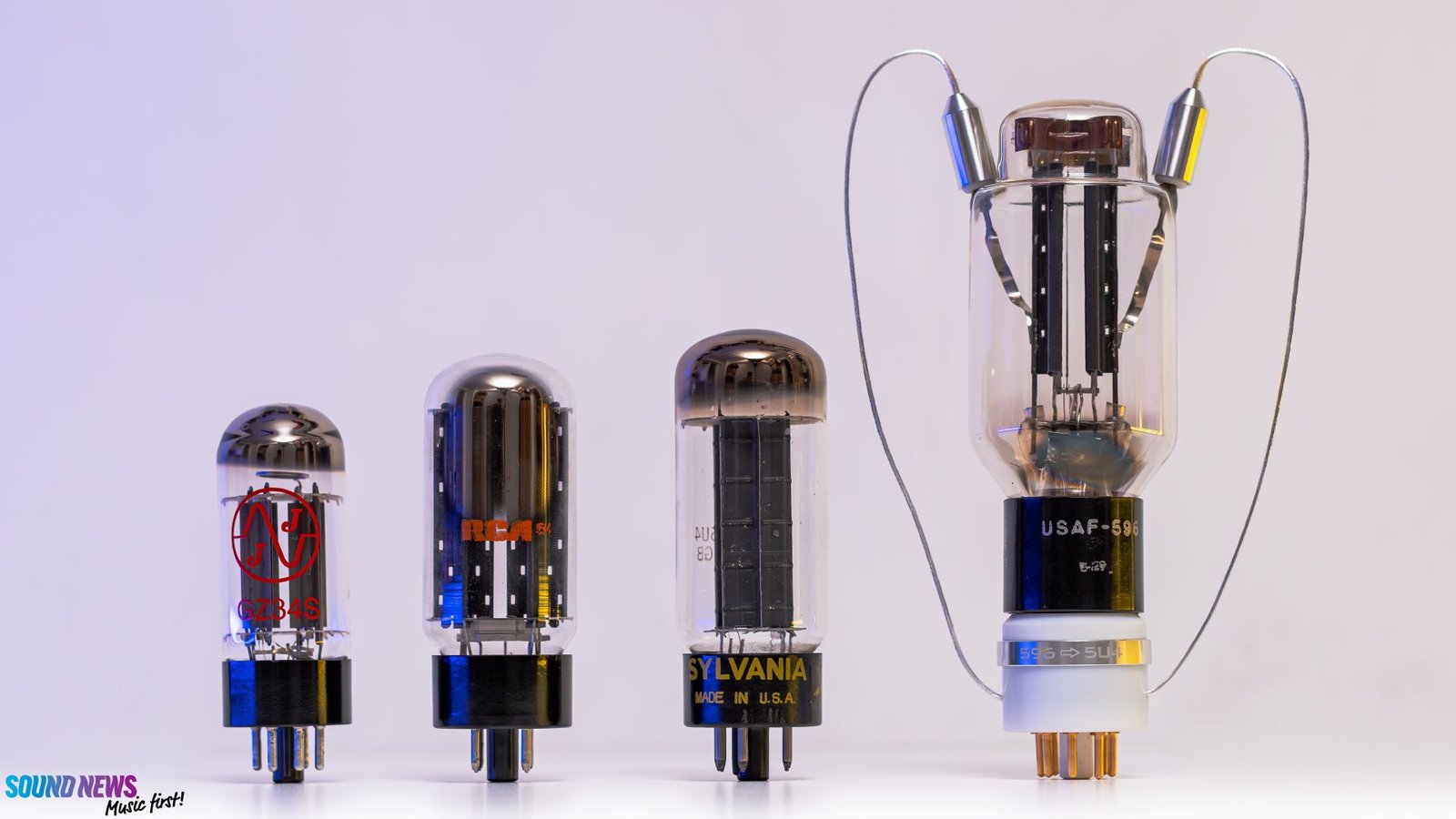
1. JJ Electronic GZ34S (~€52 per matched pair, stock rectifiers, order from here)
Pretty much a déjà vu moment unfolding, as these reminded me a lot of the stock JJ ECC82 driver tubes. There’s a slight metallic tint to the sound and the presentation becomes a touch harder when pushing the volume up. Apart from that, they offer surprisingly good resolution and cleanliness for the asking price. They do sound a bit more solid-state in nature, so don’t expect a particularly romantic or lush presentation, although some of that disappears once you engage Triode mode. Not much to complain about here, but at the same time, nothing that will truly impress a seasoned head-fi enthusiast.
2. RCA 5U4GB (~€200 per matched pair)
These are New Old Stock (NOS) tubes, and finding a pair can be challenging nowadays. Mine have black plates and black bases with red lettering. These were manufactured between the mid-1950s and the early 1970s, so yes, these are proper NOS tubes, and you should expect a much lusher and more romantic presentation compared to the stock tubes. In fact, these are the most euphonic-sounding rectifiers I currently have on hand. They sound incredibly rich, especially through the midrange and they roll off a significant amount of treble energy.
Their Achilles’ heel? Resolution. These offer the lowest resolution I’ve heard from this amplifier. The treble sounds heavily damped, and the bass becomes somewhat muffled, with a one-note character to the low end. This is a love-it-or-hate-it type of tube. My recommendation is simple: avoid them. Sure, with these installed, the HA-6A MK2 no longer sounds like a KT88 amplifier and starts behaving more like a 300B design, sounding much richer and more organic than before. However, the reduction in resolution and tightness is so significant that I can barely recognize my music anymore. My €200 loss is your gain. Not recommended.
3. Sylvania 5U4GB ($150–250 per matched pair)
Now we’re talking. The internal geometry looks very similar to the RCA tubes, featuring the same black base and black plates, with the only obvious difference being their slightly taller construction. Surprisingly, they sound completely different. The sound opened up tremendously. The soundstage is roughly 30% larger than with the RCA tubes and around 20% larger than with the stock JJs. The treble is cleaned up entirely without any obvious roll-off, while still retaining plenty of the richness and lushness that good NOS tubes can provide. The bass becomes tighter, faster and reaches deeper. It feels more layered and of noticeably higher quality. These are proper top-tier NOS tubes that I can recommend with my eyes closed. The only thing that slightly bothers me is that the stock JJ GZ34S remain ever so slightly cleaner and more transparent sounding. If you can snatch a pair around the $150 mark, I strongly recommend giving them a try.
4. USAF 596 with handmade Teflon adapters ($839 per matched pair, I got them from here)
Now, if there’s a rectifier tube that achieved mythical status in the SET amplifier world, then it’s definitely the USAF 596. Designed in the 1950s for the United States Air Force, it wasn’t created for HiFi amplifiers, guitar amplifiers, or anything remotely audio-related. Its intended purpose was supplying high-voltage DC power in military and aerospace electronics where reliability was absolutely critical. One fascinating detail is that it was essentially a high-reliability, high-altitude version of the 1641 rectifier, specifically engineered to operate at altitudes up to roughly 60,000 feet. Now take everything I just mentioned about the Sylvania 5U4GB and multiply it by two. Folks, it’s as simple as that. The stage practically doubled in size, and I barely recognized the amplifier anymore. It was already challenging the much bigger, beefier, and more expensive Soul 170HA. The stage expanded in every direction as if there was no limit to the sound. The same goes for resolution, as these are, without question, the clearest and most resolving rectifiers I tested. My KR 5U4G tubes are currently on loan, and I’m not sure when I’ll get them back, but these USAF variants seem just as clean and highly resolving, while gently infusing some of that tube flavor that isn’t present on the stock JJs and only marginally present on the KRs.
These could very well be the gold standard for every tube amplifier that accepts 5U4G variants. The only caveat is that the protective tube cage no longer fits. The Woo Audio adapters add quite a bit of height, and the tubes themselves are much taller than any other rectifier I have on hand. Right hand on my heart, these are the best rectifier tubes I’ve tested so far. I can’t complain about a single thing. They combine highly technical performance, resolution, transient response, soundstage and holography, with the eerie musicality that only great NOS tubes seem capable of delivering. These are simply exceptional, and I’m glad they aren’t as outrageously expensive as the KR 5U4G. Highly Recommended!
III. Driving Power
The Cayin HA-6A delivers up to 4.5 Watts in UL mode and 3 Watts in TR mode when using the 4-pin XLR output. Power drops slightly when using the 6.35mm output, and it drops considerably when driving sensitive IEMs via the 4.4mm balanced output. After some deeper testing, it appears that the amplifier doesn’t mind receiving a higher voltage from the source. It handled everything I threw at it without clipping, from the standard 2V output of most DACs all the way to the much hotter 7V output of my Rockna Wavedream Reference Signature DAC. Everything in between operated exactly as intended.
While 4.5 Watts per channel should be plentiful for most planar headphones out there, it’s incredibly important to choose the correct impedance setting, as that dictates how the output transformers operate internally and how power is distributed to the headphones. Choose the low impedance setting for headphones up to roughly 65 Ohms, and the amplifier will provide more current and less voltage. Select the mid impedance setting for headphones between 65 and 250 Ohms, and you’ll get a more balanced voltage-to-current ratio. Every headphone with an impedance higher than 250 Ohms should be used on the high impedance setting, a scenario where the amplifier works easiest, since vacuum tubes naturally operate at very high voltages and can deliver plenty of voltage in return, but not nearly as much current. That’s precisely where the output transformers step in and save the day.
For example, if I connect a low-impedance planar-magnetic headphone such as the HiFiMan Susvara OG and accidentally select the high impedance setting, the sound immediately starts distorting, even at moderate listening levels. These headphones demand lots of current and comparatively little voltage, so proper matching is absolutely crucial. Please don’t confuse the impedance selector with gain, as the 20 dB gain of this amplifier, and of most tube amplifiers, is fixed.
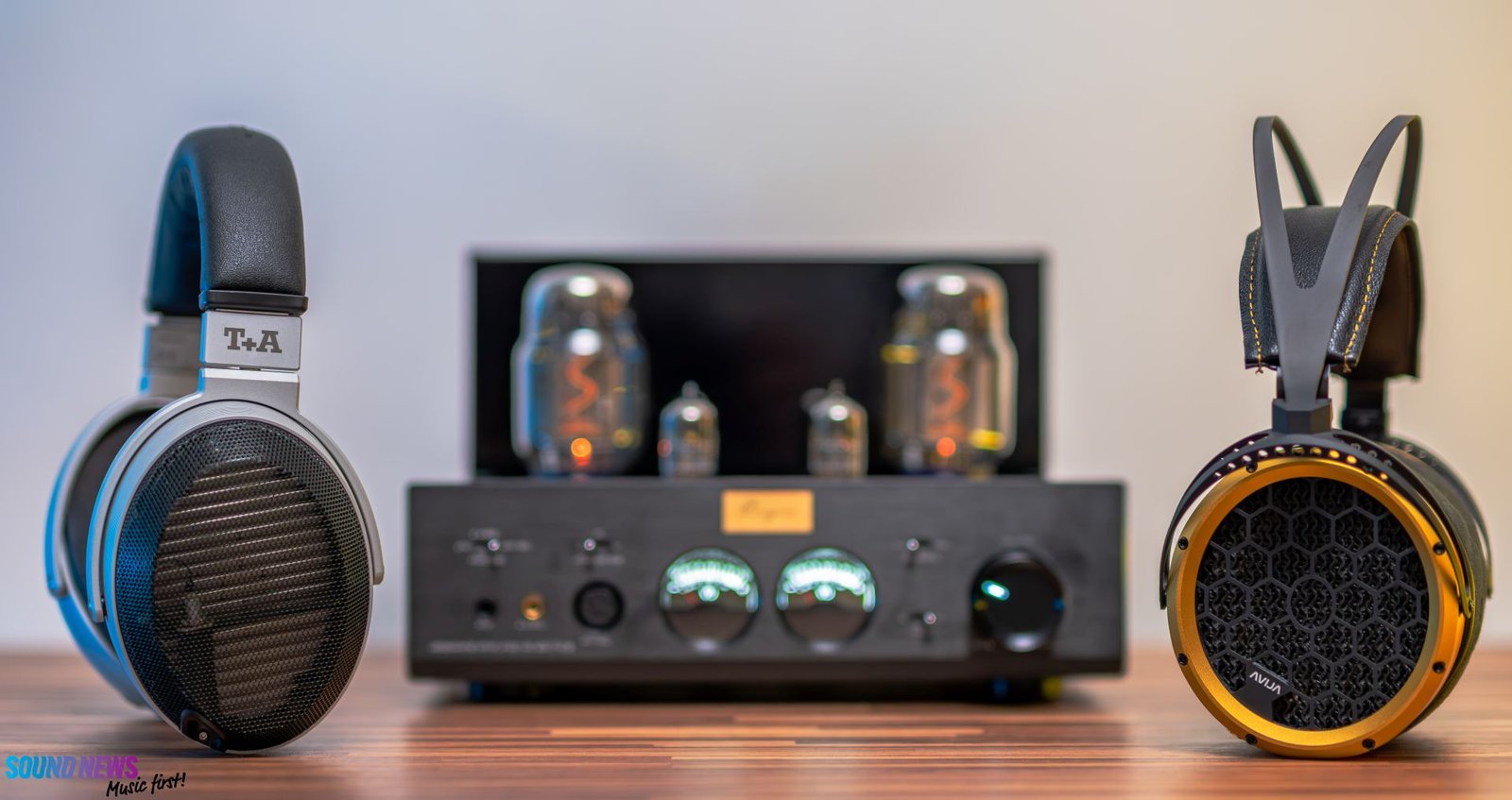
With that out of the way, let’s check what headphones it drives exceptionally well and which ones might cause a few headaches. I’ll start with the second hardest-to-drive headphone currently sitting in my stable. It received a serious update in recent months, so much so that I can now recognize only its sweet voicing and dense tonality, with most of its technical abilities improved beyond recognition. Of course, I’m talking about the Bandoss AVIJA Precision, the only headphone in the industry currently using the strongest commercially available magnets we were able to source, the mighty N58.
The overall geometry remained intact, but everything except the diaphragm itself was redesigned, shedding a little over 100 grams in the process. It’s considerably more comfortable this time around, and I can finally wear it for half a day without any discomfort. Unsurprisingly, it became one of my primary tools when evaluating the HA-6A MK2. Both the original AVIJA and the updated version can be difficult customers for many desktop amplifiers. Their sensitivity is much closer to the original HiFiMan Susvara than to most headphones I have on hand, and driving them properly can be quite a challenge.
I recently spent some time with Burson’s latest developments, namely the Soloist Stellar amplifier and the Conductor Stellar DAC/headphone amplifier combo. I found them marvelous-sounding with almost everything I threw at them. Their effortless character shone through versus most op-amp-based amplifiers I currently have on hand.
Yet neither of them was fully capable of unleashing the beast hidden inside the Susvara OG, and the same applied to the Bandoss AVIJA Precision. I could hear flashes of excellent dynamics, but both remained a step behind their bigger brothers, the Soloist Voyager and Conductor Voyager, which never seemed to limit the fun factor.
What’s particularly interesting is that the Cayin produces less power on paper, 4.5 Watts per channel versus 8 Watts of the Soloist Stellar, yet the sound feels jumpier, freer, and you could even say friskier compared to the solid-state Burson. As I’ve explained many times before, not all Watts are created equal. Power supply implementation plays a massive role as well, so please never judge an amplifier solely by its power ratings. The Cayin opened up the Bandoss AVIJA beautifully, and once connected to my Rockna Wavedream Reference Signature DAC, the maximum volume I could comfortably reach before my eardrums filed an official complaint was exactly 12 o’clock, dead center.
Yes, plenty of headroom still remained, but I didn’t feel any urge to continue. I still treasure my hearing. With bass-intensive tracks, I got exactly what I signed up for: deep rumbles down low, lots of authority and slam, especially with the right set of tubes installed. These N58 magnets start pumping serious amounts of dopamine if you’re into bass-heavy music, and I honestly don’t think I could ask for much better control than this. In this category I can include virtually every other headphone I have in my stable, including dynamic headphones. Another “AHA” moment happened when I connected the somewhat thin-sounding Sennheiser HD800S and selected the high impedance setting. The already expansive presentation of the HD800S suddenly became even larger. I genuinely started questioning whether I was still listening to headphones or if a pair of near-field speakers had secretly started playing in the room.
The crazy part was how much bass and lower-midrange substance the amplifier injected into them. The transformation from thin and analytical to full-bodied and natural happened before you could say, Jack Robinson. The change was immediate and spectacular. The jump in naturalness was even greater compared to what I previously heard from the Feliks Echo Vibe OTL amplifier, a design specifically created for such loads. The effect wasn’t quite as apparent with the stock tubes, and some of the metallic tint of the JJ GZ34S rectifiers still found its way into the music, but the Sylvania 5U4GB and later the USAF 596 completely turned that upside down, making the amplifier far more universal with every DAC and headphone available to me.
I should briefly mention that I wouldn’t recommend this amplifier if your primary headphones are the HiFiMan Susvara OG or the Mod House Tungsten. You can get both of them playing nicely up to roughly 90 dB on the low impedance setting, but above that point a small amount of distortion starts creeping in, especially in the bass. The higher you go on the volume knob and the bassier the music becomes, the more noticeable the distortion gets. Look, I don’t always listen at those levels, and this won’t be an issue at 80 or 85 dB. However, you also need to account for dynamic peaks that can add 8 to 10 dB for a brief moment.
With the Susvara OG, the experience was perfectly acceptable most of the time, but it was clear that the amplifier was gradually running out of steam when faced with such demanding loads where current delivery is everything. Even at moderate listening levels, I occasionally heard distortion on large dynamic swings, and that disrupted some of the fun. My advice is simple: avoid pairing it with the most demanding headphones currently available. There’s a reason Cayin developed the Soul 170HA. That bad boy is the pure definition of power overwhelming. It feels practically limitless in that regard, and if you’re curious, you can always check my full review of the Soul 170HA.
IV. Dynamics
Even in its stock configuration, this guy wasn’t slowing down on busy passages while driving the mighty Bandoss AVIJA Precision above 90 dB. “Challenge accepted,” I said to myself and immediately started throwing all sorts of rock, metal, and electronic tunes at it from my daily playlist. And it took it all surprisingly well. To tell you the truth, I wasn’t surprised. Not even a little. You see, we’re talking about a transformer-coupled KT88-based amplifier here, and there’s a world of difference between OTL (Output Transformer-Less) and transformer-coupled amplifiers, as current delivery is no longer the limiting factor.
And don’t get me started on the KT family of tubes, which are known for their notoriously fast and hard-hitting presentation. Many enthusiasts consider them closer to transistors than to traditional vacuum tubes, and when it comes to sheer power output, the KT family is still reigning supreme. I clearly remember trying the original Cayin HA-6A at the Meze booth during High End Munich 2022 (and as I’m writing these lines, I’m preparing to visit the legendary show once again) and feeling somewhat underwhelmed by its polite and unaggressive character. It felt as if it was gently rounding dynamics in advance, smoothing out the contrast between quiet and loud passages. I couldn’t quite feel the full force behind my tracks, and the Meze Elite sounded more like an Empyrean than an Elite, if you know what I mean.
But the MK2 is a completely different beast. The EL34 tubes are gone, replaced by meaner-sounding KT88s, and if you’re already neck-deep in the tube-rolling game, you might as well experiment with some of the crazier power tetrodes out there, such as KT120 or even KT150 variants. You’ll get additional heat, more power, and potentially even greater dynamic expression. I’m actually a little disappointed I didn’t have such a pair on hand. The more I tested the HA-6A MK2 throughout my evaluation period, the more I realized that this is no longer the middle child of Cayin’s amplifier lineup. Right now, I see it as a miniature version of the mighty Soul 170HA. That resemblance is reflected in its tube selection, in its working principle, and ultimately in its sound. Cayin didn’t simply split the amplifier into two chassis, replacing the single-chassis design of the original model and giving it a cosmetic makeover. They fundamentally changed its character and sonic behavior. It no longer limps once you raise the volume and place a demanding headphone in its lap.
You already know me by now. I can’t stand slow, mellow, and overly polite-sounding amplifiers because they fail to show proper contrast between low and high-intensity notes. Weak dynamics have no place in high-end audio. If you don’t feel your chest pounding and if your ears aren’t flapping on modern recordings, then it’s probably time to move on and look for something that injects genuine energy into your music. Looking back at every headphone amplifier that passed through my hands, from affordable options to sell a kidney territory, from solid-state to tube-based designs, I still consider the Cayin Soul 170HA the most dynamically capable amplifier I’ve experienced so far. Its dynamic range and headroom felt practically unlimited, especially when fed by a higher-output DAC. The HA-6A MK2 obviously isn’t reaching that same level, but unless you’re planning on driving the heaviest loads known to mankind, it will get the job done while injecting a tremendous amount of energy into the music. If dynamics are high on your priority list, then I’d rate it an 8.5 out of 10 with the stock tubes and a solid 9 out of 10 with carefully selected third-party alternatives.
Quality of Mercy by Michelle Shocked, available on both Qobuz and Tidal, appears to be an ordinary pop-rock track from the nineties on the surface. You get some drums, a guitar, a bass guitar, and a vocal duo dancing to the rhythm of the music, and that’s pretty much it. It isn’t overcrowded, and it isn’t trying too hard. The beauty of this track, however, lies in its incredible dynamic range. You’ll need to crank the volume much higher to reach 90 dB, a moment when the drums and bass guitar should hit with real authority and weight. This track simply shines on the Cayin. It sounds punchy, lively, and wonderfully physical. Every drum hit carries genuine impact, and it becomes almost impossible to sit still while listening to it. I’ve heard this track flattened and nearly lifeless countless times on lesser equipment, but here it absolutely brims with energy and emotion because dynamic compression simply isn’t getting in the way.
V. Soundstage & Imaging
My daily driver amplifier is the Audiobyte SuperHEAD (review here). It’s a marvelous-sounding solid-state amplifier with the purest tone and highest detail retrieval I’ve heard to date. You could say it’s a jack of all trades with little to no compromises. I love the way it renders tones in complex passages; I like that it never highlights the treble more than it needs to, and obviously I enjoy the way it handles every musical genre. The Burson Soloist Voyager, the Enleum AMP-23R and even the Aune A17 are almost as impressive, some winning in a few key areas while others excel at different things, but all of them are without a doubt outstanding amplifiers in their own ways. If you already own any of these, then there aren’t many places left to go if you’re hunting for an upgrade.
Unless…you want to stretch your music a little farther in every direction. And that’s where tube amplifiers come to save the day. Some do it reasonably well, some do it better than solid-state amplifiers, and only a select few broaden your perspective over the music in a way that makes everything else feel a little smaller afterward. There are maybe a handful of tube amplifiers that crossed my path sounding genuinely bigger than life itself. I bought some of them and later parted ways with them. I would love to own them all, but my house is already overflowing with cardboard boxes, and eventually difficult decisions need to be made. The ones that truly unlocked my imagination in recent years are the Feliks Envy Susvara Edition, which still plays in a forever-alone league of its own, and the Cayin Soul 170HA, which also portrays a vast and immersive soundscape, although not quite as grand as the Envy equipped with those magical Stradi 300B tubes.
The smaller HA-6A MK2 is perhaps not playing on the same level as the very best, but it’s outperforming my daily driver, and you can probably add most other solid-state amplifiers to that list as well. The longer decays and lingering reverbs of tube amplifiers paint a much bigger picture. The canvas becomes larger, the brush strokes wider, and suddenly you need to flex your neck a little harder to take everything in. If you’re into acoustic music, regardless of genre, then I cannot recommend a tube amplifier like this strongly enough.
Besides headphones, I’m neck-deep into HiFi speakers, probably even more so than into headphones themselves, and every time I connect a pair of open-back headphones to one of my tube amplifiers, I feel as if some of the magic of my Raidho TD 2.2 loudspeakers somehow migrates into my headphones. Obviously, the scale of the effect is much greater with floorstanding loudspeakers and considerably reduced when listening through headphones, but I kid you not, some of that openness and the strange urge to turn your head around, only to realize all the sounds are still coming from your headphones, remain present on top-tier headphones as well. This is one of the main reasons why I continue using both a solid-state amplifier and a transformer-coupled tube amplifier.
Unfortunately, you can’t have absolutely everything in a single design. Some limitations can only be minimized, not eliminated entirely. Tube amplifiers naturally emphasize echoes, decays, and reverberation trails. That’s simply part of their nature. Solid-state amplifiers, on the other hand, will almost always outperform tube amplifiers when it comes to speed, ultimate resolution, and low-frequency tightness. Again, that lives in their DNA.
My favorite Mongolian warriors, The HU, are slowly releasing tracks from their upcoming album on various streaming platforms. We already have four tracks available on Qobuz and Tidal, and I presume they’re available everywhere else as well. Don’t bother with the second track. Warrior Chant and The Men, however, are exactly the type of music you would expect from pure-blooded Mongolian warriors. Maybe the element of surprise wasn’t quite as powerful as it was the first time I heard Wolf Totem a few years ago, but I was still transported somewhere else entirely. The throat singing, the horse-head fiddle, the slow growls, the sound of an impending war…everything sounded genuine and real. Once your imagination starts playing tricks on you, that’s a clear sign that the music is no longer playing inside your head, but dancing all around you. That’s exactly what the HA-6A MK2 does for me, and I’m quite certain you’ll be surprised by how effortlessly it expands the scale of the music, stretching and enlarging it in every possible direction. Not a perfect 10 out of 10, but considering its price and the virtually unlimited tube-rolling potential, I’ll happily award it a 9 out of 10 in stock form and a 9.5 with upgraded rectifiers.
And who knows? Maybe with a fresh pair of KT150 tubes installed, it could even reach a clean 10 out of 10. I’ll update this article if I ever get the chance to try a pair. Nonetheless, if you’re coming from a solid-state amplifier, prepare your mind for a treat.
VI. Cayin HA-6A MK2 as a Stereo Preamplifier
The importance of having a well-made preamplifier in a two-channel stereo system is well known to me, and up to this point, the most expensive component sitting in my HiFi rack is the preamplifier itself. In my case, that’s the top-of-the-line Chord Electronics Ultima PRE ($52,000). My good friends and fellow writers around here all agree with my assessment. All four of us own dedicated active preamplifiers because they are the components that truly give wings to power amplifiers, unlocking the last drop of performance out of them. I have owned every available preamp from the Chord ULTIMA lineup, and I’ve tried a few others as well, including several flagship tube preamplifiers over the years. If there’s one component people still tend to underestimate, then it’s the importance of using a dedicated active preamplifier.
Having a DAC with an analog or digital volume control doesn’t automatically mean there’s a proper line amplification stage hidden inside. A few exceptions certainly exist, and every now and then we test DACs with genuinely excellent preamp sections, but those occasions are rarer than witnessing a total solar eclipse.
There are already several reviews online covering the HA-6A MK2, but I’m a little disappointed that none of them discussed its preamplifier capabilities. Rest assured, we’re different, and today you’ll get your answer. In my case, I inserted the HA-6A MK2 between my Rockna Wavedream Reference Signature DAC and the Chord Ultima 3 monoblock amplifiers, completely bypassing the Ultima PRE and allowing the Cayin to take over volume control duties. The RCA preamp outputs of the HA-6A MK2 can bring immense joy to stereo enthusiasts like me because solid-state electronics can sometimes gain a serious boost in realism, body, and warmth that solid-state preamplifiers don’t always provide as effortlessly. It was quite disappointing not having preamp outputs on my former Trafomatic Primavera, especially considering that the much more affordable HEAD 2 was equipped with such functionality. Thankfully, Cayin didn’t make the same mistake, and the HA-6A MK2 comes fully prepared for stereo duties. Since the Raidho TD2.2 loudspeakers represent the pure definition of transparency and detail retrieval, the only tube combination that made sense in my setup was the USAF 596 rectifiers together with the PSVANE SUMMIT KT88 and JJ ECC82 Gold Pins. In theory, this combination should deliver the best of both worlds, and thankfully, it did exactly that.
The first thing I noticed was the absence of the elevated noise floor I typically expect from tube preamplifiers. I should mention that the background wasn’t quite as pitch black as it is with my own reference preamp, nor was it controlled with the same iron grip, but it was noticeably cleaner and purer compared to what the Feliks Echo Vibe provided when functioning as a preamplifier. The cleanest-sounding tube preamplifier I’ve experienced to date remains the Feliks Envy Susvara Edition, and with the upgraded tubes installed, the HA-6A MK2 was approaching a very similar level of quietness. Not pitch black…but surprisingly close to that title. After only a few tracks, the unmistakable character of the Cayin HA-6A MK2 started unfolding before my ears. Every trait and every sonic characteristic I previously heard through headphones was now fully exposed in my loudspeaker setup. In fact, I could hear those characteristics even more clearly, as I consider my stereo system to be operating at a higher level of transparency and resolution.
You could essentially re-read everything I wrote in the previous five chapters, and most of those observations would remain perfectly valid when using it as a preamplifier. The sound changed dramatically when swapping tubes. I could make it sound more solid-state in nature or considerably more tubey simply by changing the tubes. The presentation shifted from rich, full-bodied and mellow in TR mode to fast, punchy and tightly controlled in UL mode. Everything I previously experienced through headphones had now migrated into the living room. Even the scale of the music occasionally felt blown out of proportion, particularly on live recordings, but that’s precisely the beauty of tube preamplifiers and tube rolling in general. You can tailor the sound according to your system, preferences, and listening habits.
System matching is always crucial, and that’s one of the reasons tube preamplifiers remain so popular among experienced audiophiles. It’s a playground. Swap, experiment, listen and repeat until you reach your personal nirvana. If I were to nitpick, then I would mention its slightly higher-than-usual gain, which cannot be adjusted when functioning as a preamplifier. On my reference preamp, even unity gain (0 dB) can occasionally be a little too hot because my monoblocks produce 500 Watts into 8 Ohms and 1000 Watts into 4 Ohms. Because of that, I often use the 0.5 gain setting, slightly reducing the output level and giving me more usable range on the volume control. I can’t do something similar on the HA-6A MK2, and as a result, the sound becomes loud relatively early, leaving a smaller adjustment window on the volume control. Nonetheless, what represents a minor nitpick in my particular setup could easily become a blessing in yours. If you’re using a lower-powered SET amplifier or a Class-A solid-state amplifier producing somewhere between 30 and 50 Watts per channel, then the slightly higher gain of the HA-6A MK2 could provide additional headroom and help your amplifier breathe a little easier. What’s a drawback for me could very well be an advantage for you.
On the positive side, I absolutely love the fact that Cayin equipped it with a dedicated remote control. It’s a simple but beefy all-aluminum remote, identical to the one supplied with the Soul 170HA, and it’s genuinely enjoyable to use while sitting comfortably on a sofa. That’s something I still can’t do with the considerably more expensive Feliks Envy Susvara Edition, although I’m hoping the next generation will finally receive a motorized volume wheel.
Wrapping Up
With its bigger brother sitting on my table and with a few of its friends, all proudly carrying flagship status in their respective bloodlines, honestly, I didn’t give it much hope at first. For the first two months or so, I focused on other gear that needed immediate attention. To be fair, I didn’t ignore it completely. I slowly started shopping for tubes so I could eventually deliver a definitive review somewhere down the line. The moment it accumulated roughly 150 hours of playback and after a few carefully chosen tube swaps, I finally gave it the serious attention it deserved. Only then did I realize the true potential of the Cayin HA-6A MK2. I’ve already said it and I’ll gladly say it again: this is a tube roller’s dream and a true playground for anyone who enjoys experimenting with different flavors and sonic personalities. It’s almost like getting several amplifiers in a single chassis, as the TR/UL switch, the impedance selector, and the tubes themselves all play a crucial role in shaping the final sound according to your preferences.
You prefer a more solid-state flavor? No problemo! Use it in UL mode, select the low-impedance setting, throw in a pair of PSVANE SUMMIT KT88 tubes together with the mandatory JJ ECC82 Gold Pins, and it will challenge most, if not all, great-sounding solid-state amplifiers. Need more midrange purity, richer tone and a more relaxed listening experience? Flip the switch to TR mode, ideally pair it with a good set of NOS rectifiers, and you’ll wake up in wonderland before you know it. Can you mix and match until you find the perfect balance and the best part? Everything happens in the analog domain. You aren’t adding DSP, EQ, or any other nerdy tricks that sometimes do more harm than good. You’re still working with voltages, current delivery, and the fascinating behavior of vacuum tubes to achieve different sonic results, and that’s exactly where the magic lies. Now that I have almost three months of experience with it, I can confidently say that it genuinely feels like the little brother of the Soul 170HA. We get less power and consequently fewer options when it comes to the most demanding headphones, but with reasonably efficient headphones, the family resemblance is unmistakable. Its dynamics were mighty impressive with the Bandoss AVIJA Precision, Audeze LCD-5S and HiFiMan Arya Unveiled, and the same applies to dynamic headphones. I was particularly surprised by the Sennheiser HD800S, where it effortlessly corrected some of their sub-bass and lower-midrange shortcomings, injecting life where there was previously too little of it.
Its preamplifier capabilities were equally appreciated, even if I had less usable range on the volume control than I would ideally like. It wasn’t muddying the waters, not even in stock form and more importantly, the music flowed freely, as if a serious standalone preamplifier was doing all of the heavy lifting behind the scenes. If you primarily use headphones but occasionally enjoy a stereo setup as well, you might be surprised by the positive transformation a dedicated preamplifier can bring to the table. The added effortlessness, the complete absence of grain, the larger-than-life presentation…that’s exactly what a dedicated preamp is supposed to do. Place one between your DAC and power amplifier and come back to thank me later. It’s a world of difference and one that needs to be experienced firsthand to be fully understood. My only real nitpick concerns its stock configuration, where it could occasionally sound a little metallic and slightly less engaging than I would prefer.
But let’s be realistic. It’s impossible to hit a reasonable retail price while simultaneously including exotic unobtanium-grade vacuum tubes. On top of that, nobody can guarantee that a pair of NOS tubes won’t fail within the first year of use, considering that many of them have already spent fifty or sixty years sitting quietly in somebody’s closet. Asking $2,999 in the USA, £2,990 in the UK and €3,490 in Europe is therefore a bit like buying a high-end LEGO set and then deciding later which upgrades you’d like to add. Maybe I’m simply pickier than most of you. I don’t know. But I need to be. That’s literally my job, separating the gems from the rubble. Some listeners might absolutely adore it in stock form, and that’s perfectly fine. Personally, I feel it operates at roughly 70 to 75 percent of its true potential with the factory tubes. The final stretch is reserved for the curious ones. If you already played with more tubes than I managed to cover in this review, perhaps you can share some of your findings with our community and with me. I would genuinely love to hear your recommendations and favorite tube combinations.

For countless reasons, this didn’t feel like an ordinary headphone amplifier and preamplifier combo. That’s precisely why the Cayin HA-6A MK2 earns our Highly Impressive Award. Congratulations to the Cayin team, and we’re genuinely excited to see what comes next. If you have any burning questions, please let me know in the comments section below, and don’t forget to smash that Subscribe button on YouTube; it means a lot to me. That’s all for now, folks. Sandu signing off!
PROs:
- Outstanding tube-rolling potential, supporting a huge variety of driver, power and rectifier tubes
- TR/UL mode effectively delivers two distinct sonic personalities in a single amplifier
- Excellent dynamics and punch for a tube amplifier
- Impressive soundstage expansion, imaging and holographic presentation
- Beautiful tone and timbre, especially with upgraded tubes
- Drives the vast majority of dynamic and planar-magnetic headphones with authority
- Excellent synergy with high-impedance headphones such as the Sennheiser HD800S
- Fully-fledged active preamplifier functionality
- Remote control included
- Very low noise floor for an all-tube design
- High-quality transformers and premium internal components
- Excellent build quality and industrial design
- Illuminated volume knob and VU meters greatly improve day-to-day usability
- Considerably improved over the original HA-6A in almost every aspect
- Delivers a surprising amount of Soul 170HA DNA at a fraction of the price
- Outstanding value for money
CONs:
- Stock tube complement doesn’t reveal the amplifier’s full potential
- Slight metallic tint and reduced engagement with the stock rectifiers
- Not the ideal partner for ultra-demanding headphones such as the HiFiMan Susvara OG or Mod House Tungsten
- RCA-only preamplifier outputs
- Larger footprint than most solid-state headphone amplifiers
ASSOCIATED EQUIPMENT:
- HiFi Racks: WoodYard Suspended Triple & Baby Modular
- CD/SACD Transport: Onix XST20
- Network Switch: Ansuz PowerSwitch D3
- DAC & Wired Streamer: Rockna Wavedream Reference Signature
- Preamplifiers: Chord Electronics ULTIMA PRE
- Power Amplifiers: Chord Electronics ULTIMA 3 (X2)
- Headphone Amplifiers: Cayin HA-6A MK2, Soul 170HA, Feliks ENVY Susvara Edition, Audiobyte SuperHEAD
- Loudspeakers: Raidho TD 2.2
- Headphones: Audeze LCD-5S, LCD-5, HiFiMan Susvara OG, Susvara Unveiled, T+A Solitaire P, Bandoss Avija, Sennheiser HD800S & many more
- IEMs: FiiO FX17, HiBy Zeta 2, Meze ASTRU
- Interconnect Cables: AudioQuest Dragon XLR (X2)
- Speaker Cables: AudioQuest Dragon ZERO 2.0m
- Headphone Cables: Crystal Cable Absolute Liberty (X2)
- Power Cables: AudioQuest Dragon Source (X2), AudioQuest Dragon High Current (X4)
- Ethernet Cable: Crystal Cable Da Vinci
- HDMI Cable (I2S): AudioQuest Dragon
- Balanced Isolation Power Conditioner: KECES IQRP-3600 / AudioQuest Niagara 5000