Three subjects can instantly set an audiophile publication on fire: cables, burn-in, and whether measurements explain everything we hear. Mention any of these three and watch grown men with expensive speakers and well-treated rooms turn into gladiators.
Cables are probably the most dangerous of the bunch, because everybody has an opinion. Some will tell you that a cable is just a cable, a length of conductive material that should not alter anything as long as resistance, capacitance, and inductance stay within reasonable limits. Others will swear that replacing a power cord, interconnect, or speaker cable was the missing piece that finally unlocked their HiFi system, lowered the noise floor, tightened the bass, widened the stage, and made their favorite records feel alive again. But somewhere between those two camps, real-world audio usually happens.
I have never been a cable absolutist. I do not believe that every cable changes the sound, nor that price alone guarantees performance, and I definitely do not believe that fancy jackets, exotic names, or snake oily abbreviations automatically turn copper into audio poetry. However, after many years of testing high-end electronics, loudspeakers, headphones, and enough cables to anger my wallet, I also cannot say that all cables sound the same in a highly revealing HiFi system. That would be just as lazy as saying that every expensive cable is a revelation. As usual, the truth is less comfortable and more interesting.
In a modest system, cables can be the least dramatic upgrade in the chain. In a poorly matched system, they can become tone controls with premium connectors. In a highly resolving system, however, where the source, amplification, speakers, power delivery, grounding, and room acoustics are already sorted, cables stop being jewelry and start behaving like the connective tissue of the whole organism. They will not transform a sleepy amplifier into a fire-breathing dragon, they won’t turn a bright-sounding speaker into a warm one without consequences, and they will not magically transform a bad recording into a good one. But they can preserve or blur the signal, carry or reject noise, affect grounding behavior, influence perceived speed, tonal density, and spatial cues. In other words, they can either get out of the way or leave a few fingerprints. This is why today’s review will be a little different from my usual single-product deep dive. Instead of looking at one component, I will be exploring a good chunk of the Pure Line Audio cable ecosystem. Not quite every product they make, but enough of their range to understand the thinking and whether their engineering story makes sense.
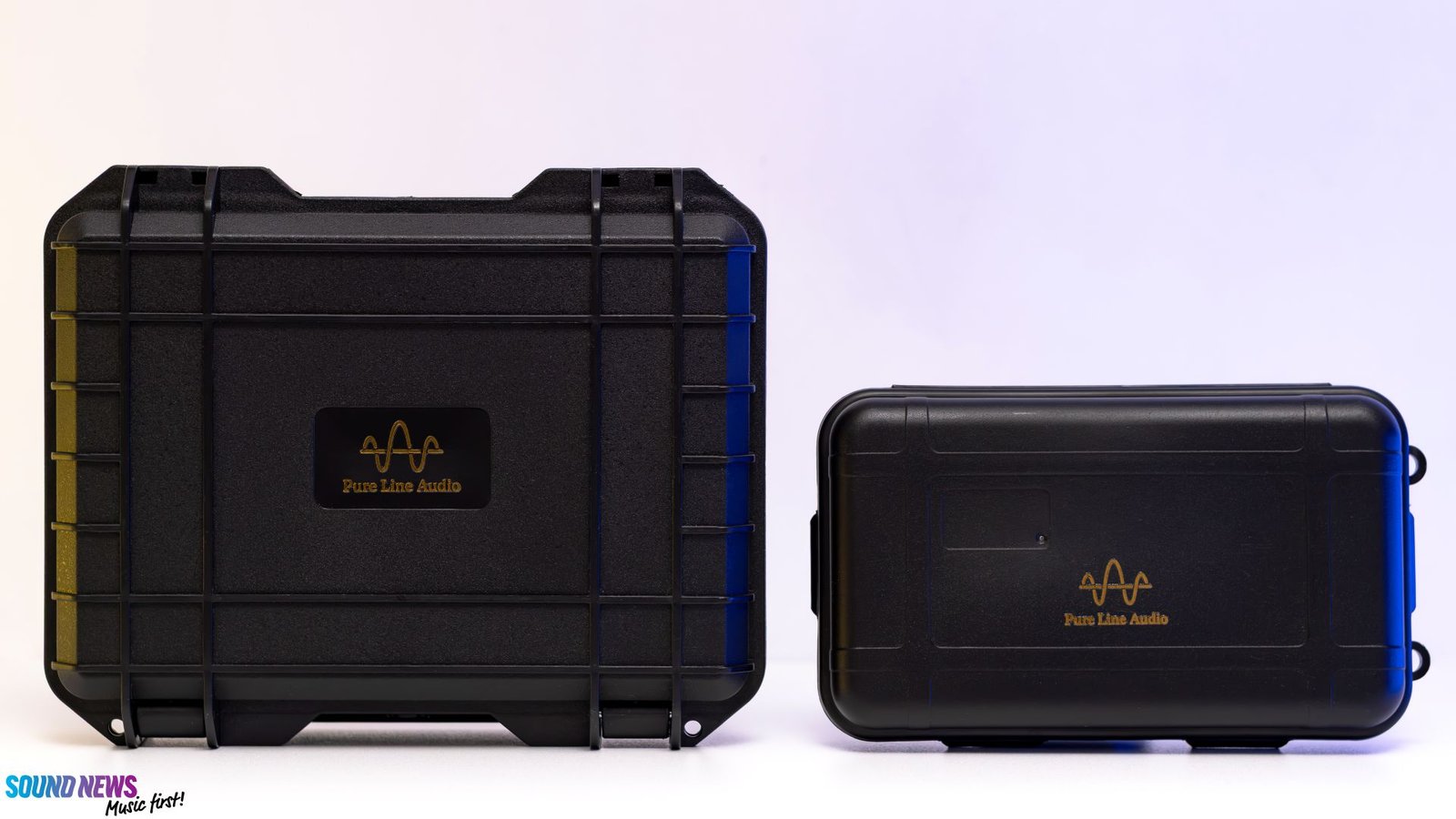
Pure Line Audio presents itself as an engineering-first manufacturer, one that speaks less about fairy dust and more about materials, geometry, grounding, shielding, and signal integrity. Their philosophy on paper is quite simple: preserve the signal and control noise. That sounds reasonable, maybe even obvious, but as always in high-end audio, obvious ideas are easy to write and much harder to implement in a way that can be heard, and separated from wishful thinking.
I will be looking at these cables not as isolated accessories, but as parts of a reference HiFi system. A power cable interacts with power distribution, grounding, and the noise already present in your home. An interconnect does not just move music from A to B; it connects input with output stages, it deals with impedance relationships, shielding strategies, and sometimes with the hidden gremlins. A speaker cable is asked to handle real current, amplifier damping, loudspeaker load behavior, and long runs, which can make small differences more obvious than expected. When all of these are placed in the same chain, things become clearer, as a full cable loom can either reveal a clear house sound or prove that the manufacturer tuned each product for a specific job. And that is the angle of this review.
I am not here to repeat the manufacturer’s claims with a straight face, nor to dismiss them before pressing play. I am not interested in cable religion, cable wars, or winning arguments over the interwebs. I am interested in what happens when these cables are installed in a familiar system, with components I know inside and out, with recordings I have used for years. The goal is not to hunt for night-and-day differences, but to describe the real ones if they appear, in a language that makes sense to music lovers, beginners, and veteran HiFi system builders.
After all the marketing language and audiophile folklore, a cable has only one real job: to disappear. Not visually, of course, but sonically, it should! A good cable should not shout its presence, inject personality just to impress in the first five minutes, or make every album sound like it passed through the same Instagram filter. The better the cable is, the less you should think about it and instead focus on the experience, on the music itself. A good HiFi system should feel resolving, sometimes relaxed, and other times explosive, but the attention should always return to music more than to anything else.
So, let us see if Pure Line Audio can walk that narrow path between engineering and emotion, if I’m dealing with just a cable loom or with the final layer of system optimization. Today, I’m reviewing six different cables and then a (surprising) component that made a bigger impact than expected. Time to plug them in, press play, and see what happens when cables are asked to disappear.
Under the Pure Line Audio sleeve
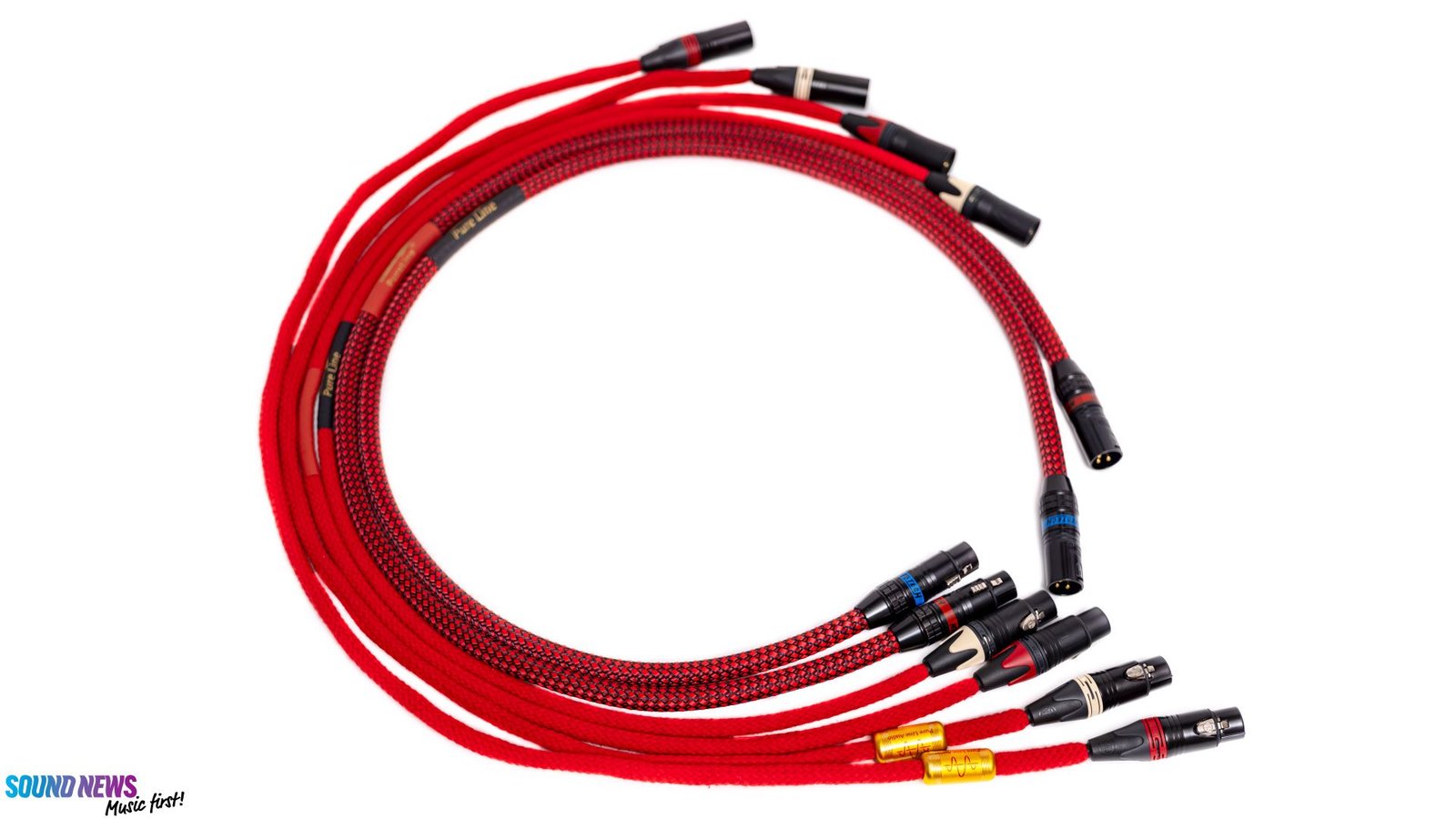
Before moving into listening impressions, it is worth looking at what Pure Line Audio is doing beneath those outer sleeves. Unlike many HiFi cable brands, which use proprietary names and patented technologies, Pure Line Audio takes a quieter and more direct route. Their language revolves around conductors, geometry, shielding, grounding, damping, and system-level noise control. The goal seems simple: preserve the signal, stabilize the power, reduce noise, and let the system behave as one coherent electrical chain. It might not sound as spectacular, but in a serious HiFi setup, these are exactly the things that can separate clean from blurry.
Conductors
At the core of Pure Line Audio’s designs is a strong focus on conductor purity. Depending on the cable, they use OCC copper, UP-OCC copper, pure silver, silver-plated copper, and hybrid conductor structures, where each material seems selected for a specific job. Copper remains the classic choice when tonal density and natural flow are needed. Silver, when properly implemented, can improve perceived speed, openness, and micro-detail information. Silver-plated copper tries to bridge those two worlds, offering a faster leading edge without abandoning the weight and drive of copper. The TriCore Ultra speaker cable is probably the clearest example of this approach, combining silver with a touch of gold, UP-OCC copper, and silver-plated OFC copper conductors. Rather than forcing a single conductor recipe across the entire lineup, Pure Line Audio seems to tune each cable to its purpose.
Graphene & Shielding
Another recurring element in their designs is graphene. You will see it mentioned in their interconnects and noise-control accessories. In their case, graphene is not presented as magical dust sprinkled over copper, but as an attempt to improve shielding, static dissipation, and high-frequency noise control. Noise is not always obvious. It does not always appear as hum or buzz. Sometimes it hides as a grayish background, softer transients, flatter stereo imaging, or a feeling that music is not breathing freely. Pure Line Audio combines shielding, grounding, and material choices to keep EMI and RFI away from delicate signal paths. This matters most with low-level analog cables, where tiny voltages need to travel between components without being polluted along the way.
Controlled Geometry
If conductors are the raw material, geometry is the architecture. This is where cables stop being just wire and become electrical components with measurable behavior. Resistance, capacitance, inductance, impedance, conductor spacing, shielding arrangement, and dielectric interaction all matter to some degree, depending on application, cable length, and system sensitivity. Pure Line Audio seems to pay close attention to geometry across the lineup. Their power cables use multi-gauge braided structures, XLR cables use balanced braided layouts, RCA cables use multi-wire arrangements, and the TriCore Ultra speaker cable relies on a hand-braided geometry meant to control conductor interaction and interference.
Grounding & Noise Control
Grounding is one of the least glamorous subjects in audio, but also one of the most important. Multiple components connected through power cords, interconnects, digital cables, and sometimes different wall sockets can create small ground potential differences, feeding noise back into the signal path. Pure Line Audio’s ecosystem includes power distributors, NoiseBlock products, SilentCore accessories, and a dedicated Ground Hub based around passive star grounding. The idea is simple: instead of letting each component establish its own slightly different reference point, you bring ground connections toward a single common node.
Their SilentCore Noise Blockers are described as passive modules using silver coils, graphene, and natural minerals such as tourmaline and shungite, designed to absorb static charge, dissipate high-frequency interference, and stabilize grounding behavior. This is probably the most controversial area of their lineup, and I would approach it with open ears, but also with a raised eyebrow.
Dielectrics, Damping & Connectors
Many audiophiles focus only on conductors, but the material surrounding those conductors also matters. A dielectric can store and release energy, influence capacitance, interact with vibration, and affect the cable’s mechanical and electrical stability. Pure Line Audio uses PTFE insulation in some designs and natural cotton layers in several products for mechanical damping and anti-static behavior. PTFE is respected for its low dielectric constant and stability, while cotton brings a more traditional damping approach that avoids wrapping everything in thick synthetic materials. Connectors matter too. Depending on the model, Pure Line Audio uses WBT, Neotech, Furutech-style, or gold-plated copper connectors, plus silver-gold infused solder joints.
Hand-Built, System-First Philosophy
Finally, there is the human element. Pure Line Audio repeatedly mentions hand assembly, individual inspection, and a system-level view of audio cabling. That last part matters most to me. A cable should not be judged only as an isolated object lying on a table. It should be judged in the system, between real components, with real grounding conditions, real power delivery, real loudspeakers, and real music. Their products are not only about silver, copper, graphene, cotton, PTFE, or connectors. Those are ingredients. The bigger idea is system stability. In my case, I won’t treat these cables as tone controls or accessories. I will treat them as parts of a complete electrical chain. Some might make a small difference; some might make a bigger one; we never know. If Pure Line Audio’s engineering story holds true, then their cables should not make my system sound different, but purer…After all, it’s in their name.
Test Equipment
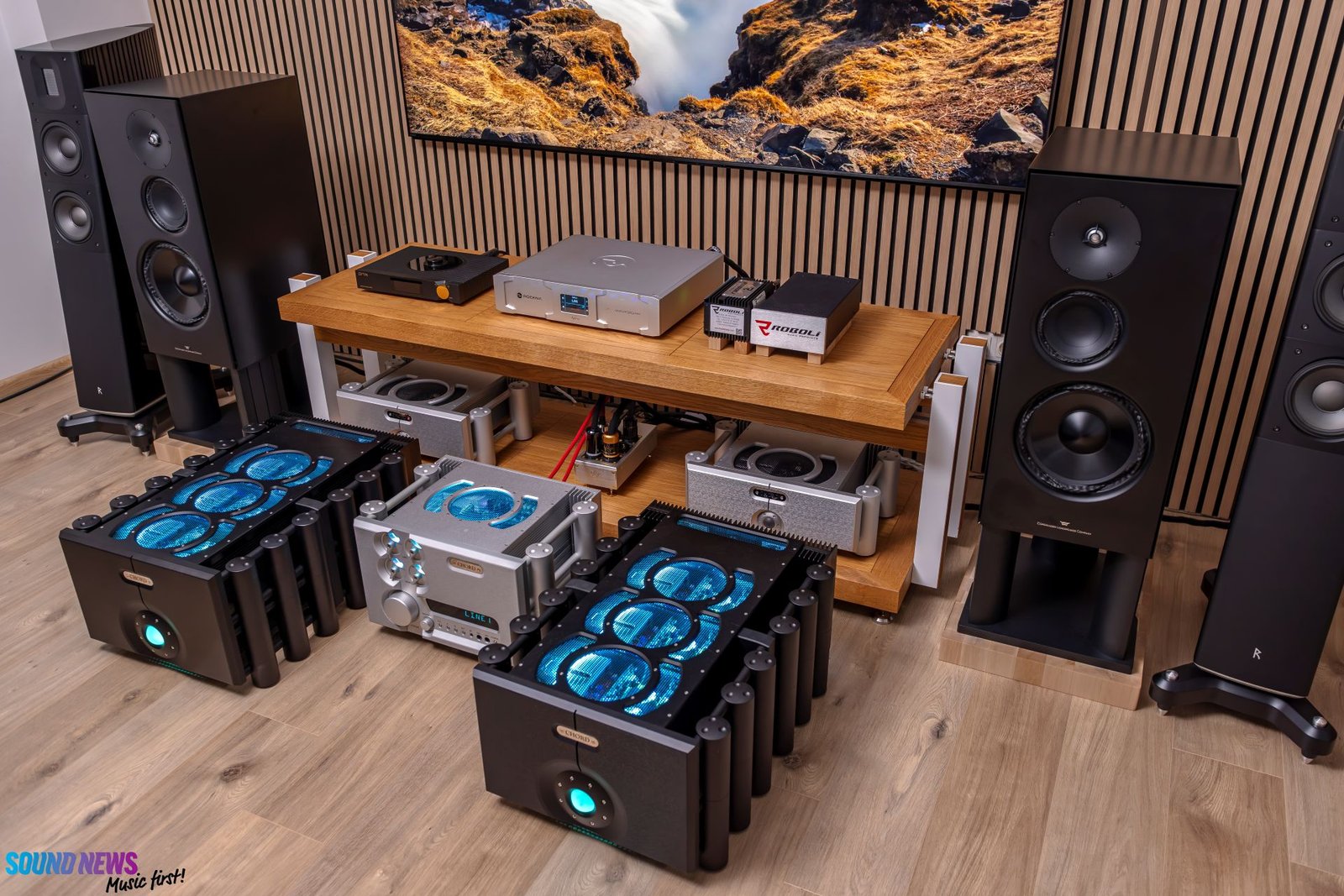
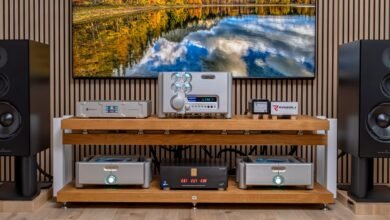
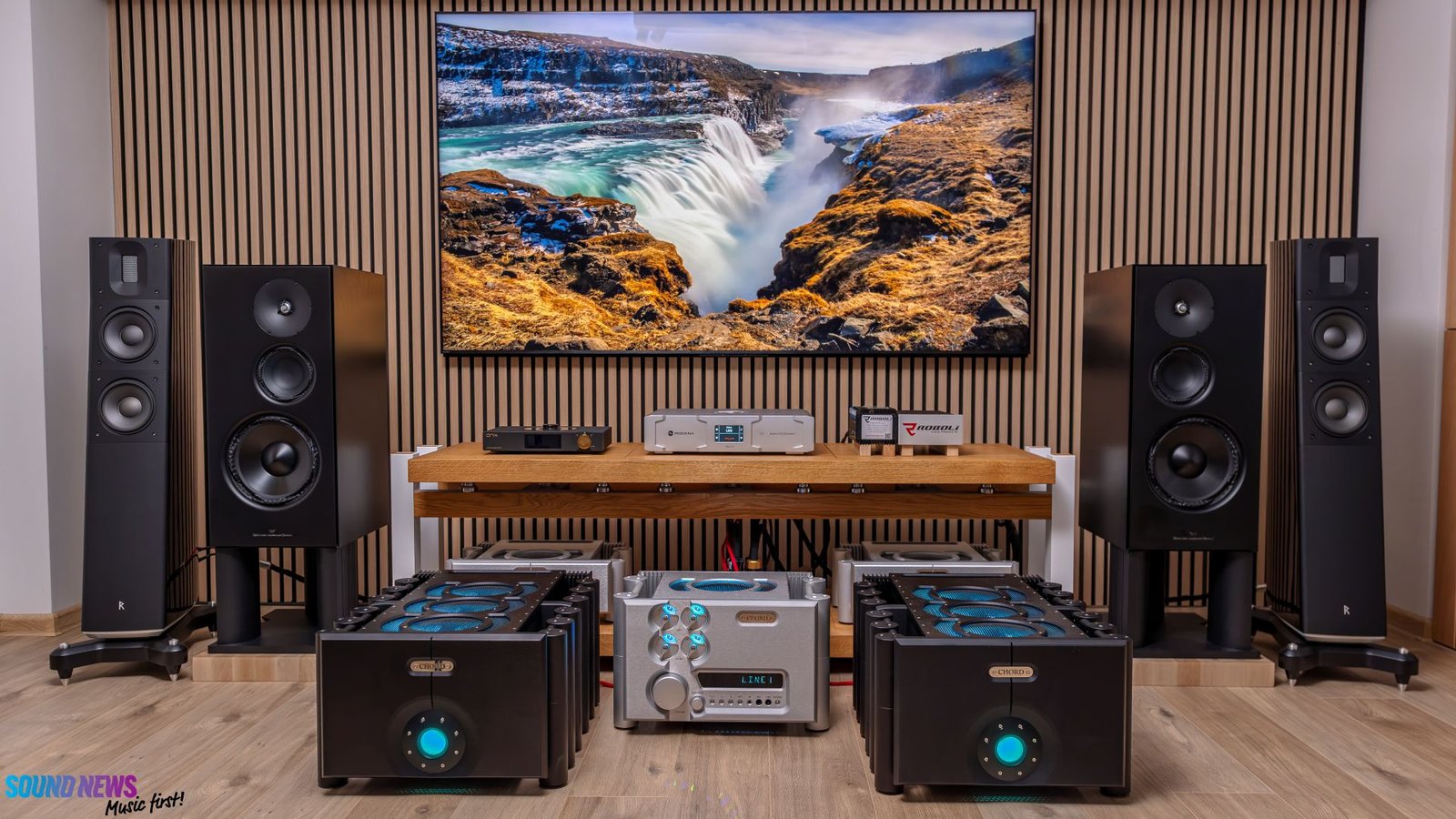
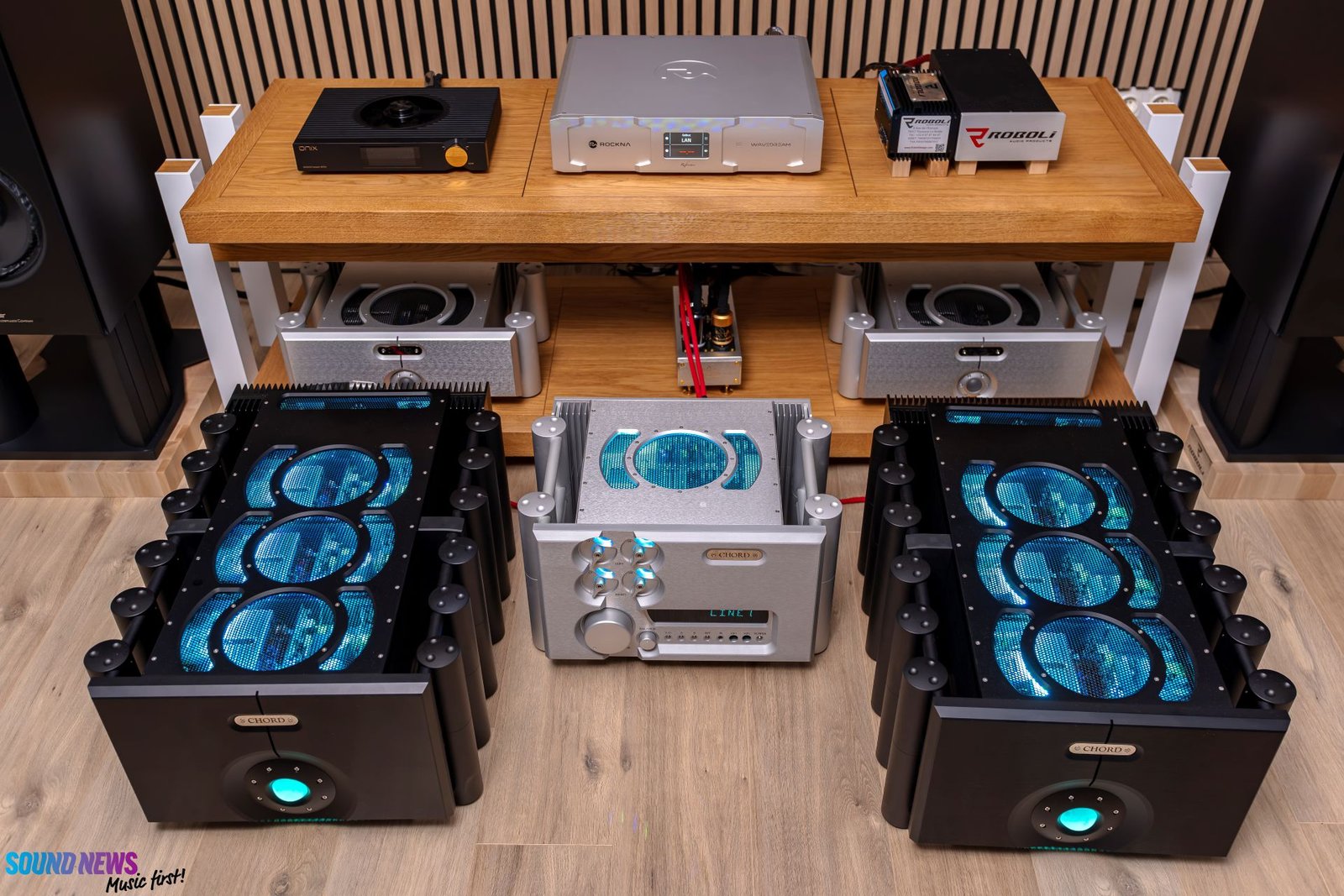
To put their best cables under the microscope, I fired up my daily driver setup. At the front of the chain sat the Roboli S240 UltraLine Ethernet switch, feeding the mighty Rockna Wavedream Reference Signature DAC, handling both digital-to-analog conversion and streaming duties.
From there, the analog signal is handed over to the Chord Electronics ULTIMA PRE, which in turn commands a pair of Chord Electronics ULTIMA power amplifiers, driving my trusted Raidho TD 2.2 speakers, a pair that doesn’t mask anything upstream. For fun, I also fired the clc.audio CLC65 speakers that are the pure definition of fun in every way imaginable. Everything was powered by the Pure Line Audio GoldCore 6 NoiseBlock Power Distributor (that replaced my trusty Keces IQRP-3600 balanced power conditioner), quietly doing its job in the background like a good referee should. Once I had a clear baseline, I started introducing the Pure Line Audio cables one by one, and let’s write broadly about that experience.
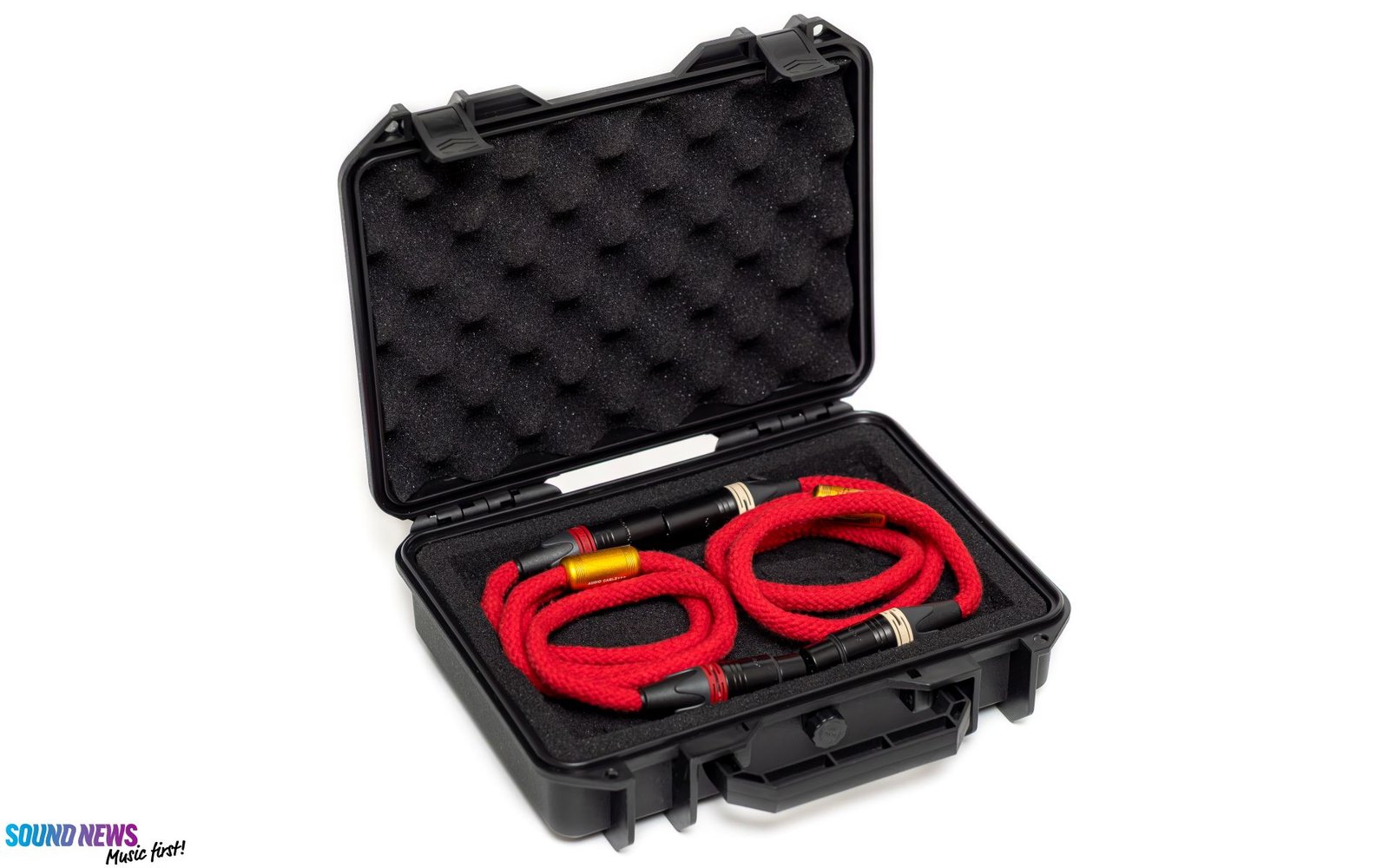
A Deep Breath of Fresh Air
Before I go ALL-IN with sound impressions, I feel that another small confession is needed. But this one won’t be as dramatic, I already crossed that river and accepted my fate in the AudioQuest Dragon review (here). That was the moment when I admitted that, after more than fifteen years of writing about all things HiFi, I finally reviewed a full cable loom and somehow lived to tell the story. That article was my first serious cable adventure. It was also the review that forced me to stop treating cables like accessories. I already told you how skeptical I was, how I avoided cable reviews for years, and how I never wanted to become the guy writing poetic paragraphs about power cords, interconnects, and speaker cables. And yet, life has a twisted sense of humor, because here I am again, doing my second full HiFi cable loom review.
The difference is that this time around, I’m not starting from zero. I’m no longer pretending that cables don’t matter, approaching them with folded arms and a suspicious eyebrow. That stage is behind me. AudioQuest Dragon didn’t just change the sound of my system; it also changed the way I look at the invisible infrastructure behind it. Let it be clear that electronics still do most of the heavy lifting, loudspeakers still define the room’s personality, and the room still has the final word, but the cables connecting everything can either keep the music flowing freely or quietly hold it back.
That realization is both liberating and dangerous, especially for your wallet. Liberating, as it opens a path towards better sound without replacing heavy boxes, but it’s dangerous, as once you start hearing meaningful differences in a highly resolving setup, curiosity becomes expensive…very expensive. You change one cable first, that’s how I started, then you swap another one, then you start looking behind the rack like a detective searching for weak links. Before you know it, you are no longer testing cables, you’re checking the nervous system of your HiFi rig. And that brings us to Pure Line Audio.
This review is not about proving, once again, that cables can make a difference. I already had that fight with myself, and I lost it beautifully. This time around, the question is simpler. What happens when a lesser-known European manufacturer that doesn’t have the global recognition and a massive dealer network tries to build a complete cable ecosystem and then survive, or maybe even thrive?
And there’s another reason I decided to have a look at them. After the Dragon experience, I didn’t want my first cable review to become a once-in-a-lifetime exception or a personal conversion story amplified by excitement. A second cable loom review is different. It creates context and forces comparisons. It shows whether my ears and my methodology can detect consistent patterns across different philosophies. It also keeps me honest, because the second time, you no longer hide behind surprise. The shock factor is gone, and the only thing that remains is careful listening.
So, I approached Pure Line Audio with a calmer mind. The big emotional wall had already been broken. I wanted to understand their house sound, assuming they had one. I wanted to hear whether their cables were pulling in the same direction. I wanted to know whether their engineering philosophy translated into a quieter, more expressive system, or whether the effects would remain subtle and difficult to describe. Let’s start right from the get-go.
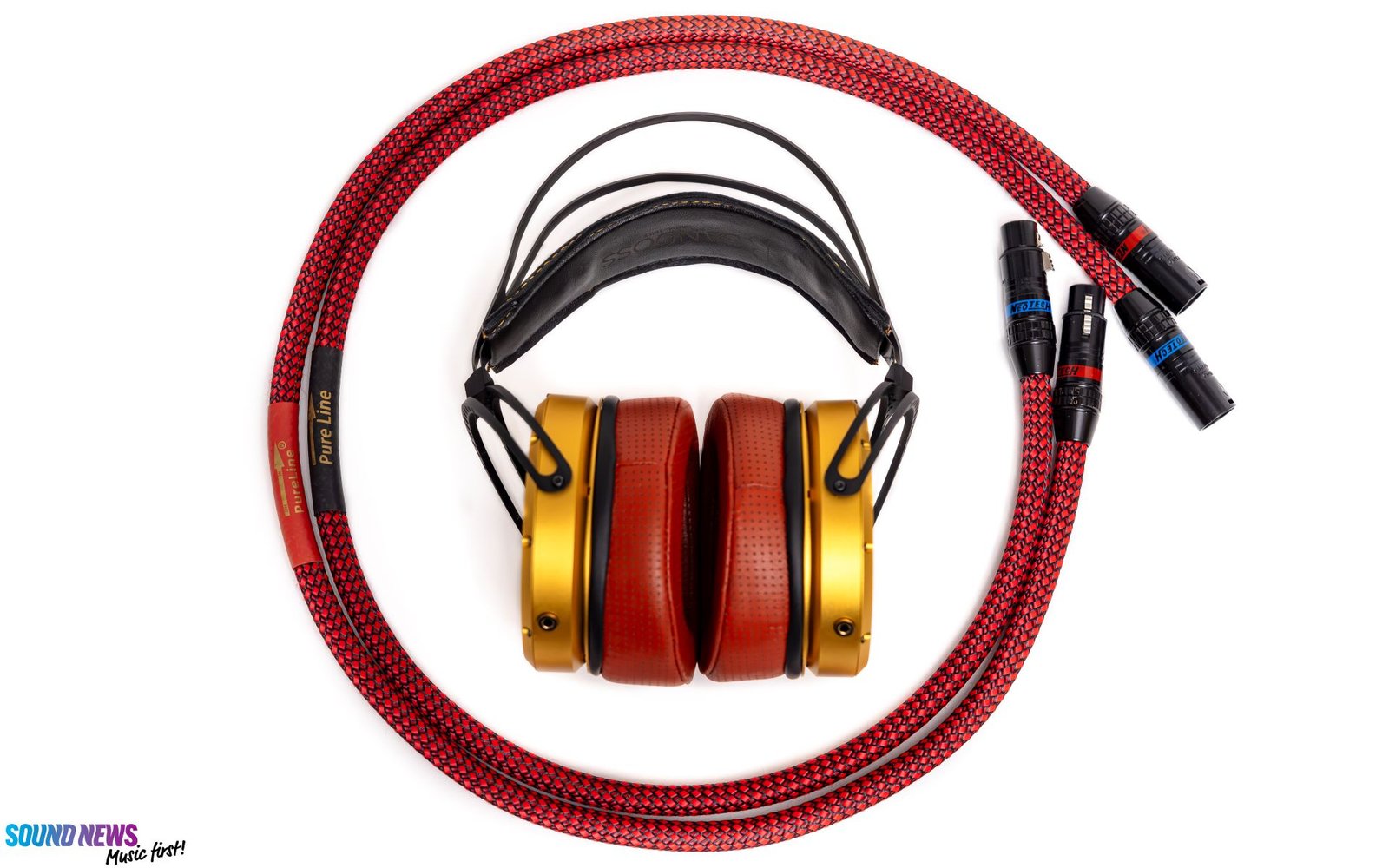
Sound Impressions
I. Pure Line Balanced XLR Interconnect Cable – €750 per 1-meter-long pair
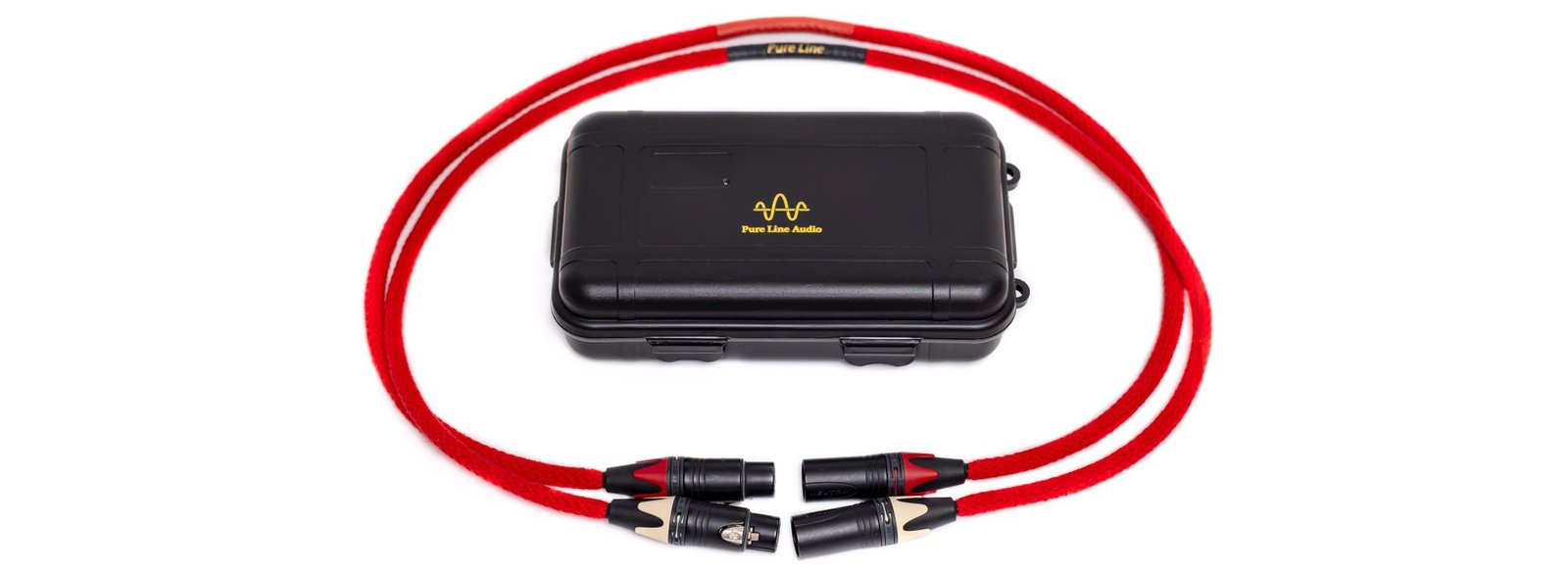
I decided to start with the Pure Line Balanced XLR interconnects, as they are the most affordable. In my system, this meant replacing my AudioQuest Dragon XLR interconnects, which are not exactly easy opponents. On paper, the Pure Line Balanced XLR has a serious recipe. OCC copper conductors enhanced with graphene, a four-braid balanced geometry, grounded shielding against EMI and RFI, Neotech XLR connectors, and silver-gold-tin solder joints. In other words, nothing about them screams cheap experiment. These are properly built interconnects, and from the moment you handle them, they give the impression of a product made by people who understand that analog signal transmission is not only about conductivity, but also about mechanical stability, shielding, grounding, and contact quality.
Once inserted into the system, the first change wasn’t hard to spot. Compared to my AudioQuest Dragon XLRs, the Pure Line Balanced XLRs pushed the sound toward a thicker, bolder, and denser presentation. The tonal balance shifted slightly lower, adding more substance to the music’s foundation. Bass notes felt deeper and heavier, pushing a stronger physical presence into the room. Kick drums gained body, bass guitars had more meat on the bone, and bass lines felt somewhat thicker and denser. The midrange followed the same direction as voices were slightly warmer and richer, maybe even sweet on several occasions. Male vocals in particular gained extra authority, and this kind of presentation can be addictive, especially in systems that lean a little towards brightness or linearity. If your setup feels lean, analytical, or overly eager to show you every imperfection in a recording, these interconnects might serve as a gentle counterbalance. They don’t roll off the treble in an obvious way, but they do shift the emotional center of music toward warmth, body, and tonal richness.
However, everything in audio comes with a trade-off, and in my system, the trade-off was easy enough to hear. Compared to the Dragon XLRs, which, mind you, are several times more expensive, the Pure Line Balanced XLRs didn’t open the soundstage as widely, nor did they project as much air around musical notes. The stage became more compact, with images moving slightly closer to my body. Depth was still good, and the music never collapsed between the speakers, but the Dragon cables had a stronger ability to remove the side walls, stretch the image, and let instruments breathe in a larger acoustic space. Resolution also took a small step back. Micro-details were still present, but they didn’t pop from the mix with the same effortlessness. Tiny reverberations, trailing decays, and background cues were harder to follow. The music felt denser, but also slightly more crowded. Not muddy in the classic sense, and not veiled to the point of becoming problematic, but there was a mild thickening of the stereo image that removed some separation between the layers of music. I could hear more overlap between instruments and less precision as complex passages began to stack on top of each other.
And that is probably the best way to understand these interconnects. They are not trying to be forensic tools, chasing the last molecule of air, or micro-detail. Instead, they bring weight, warmth, color, and density to the table. In my reference setup, which already has plenty of body, liquidity, and low-level resolution, I preferred the additional openness, speed, and transparency of the AudioQuest Dragon XLRs, which, by the way, are about 17 times more expensive… let that sink in. I can already imagine many HiFi systems where the Pure Line Balanced XLR would be the smarter choice, especially if the goal is to add tonal mass, tame excessive sharpness, and give music a fuller, more grounded personality.
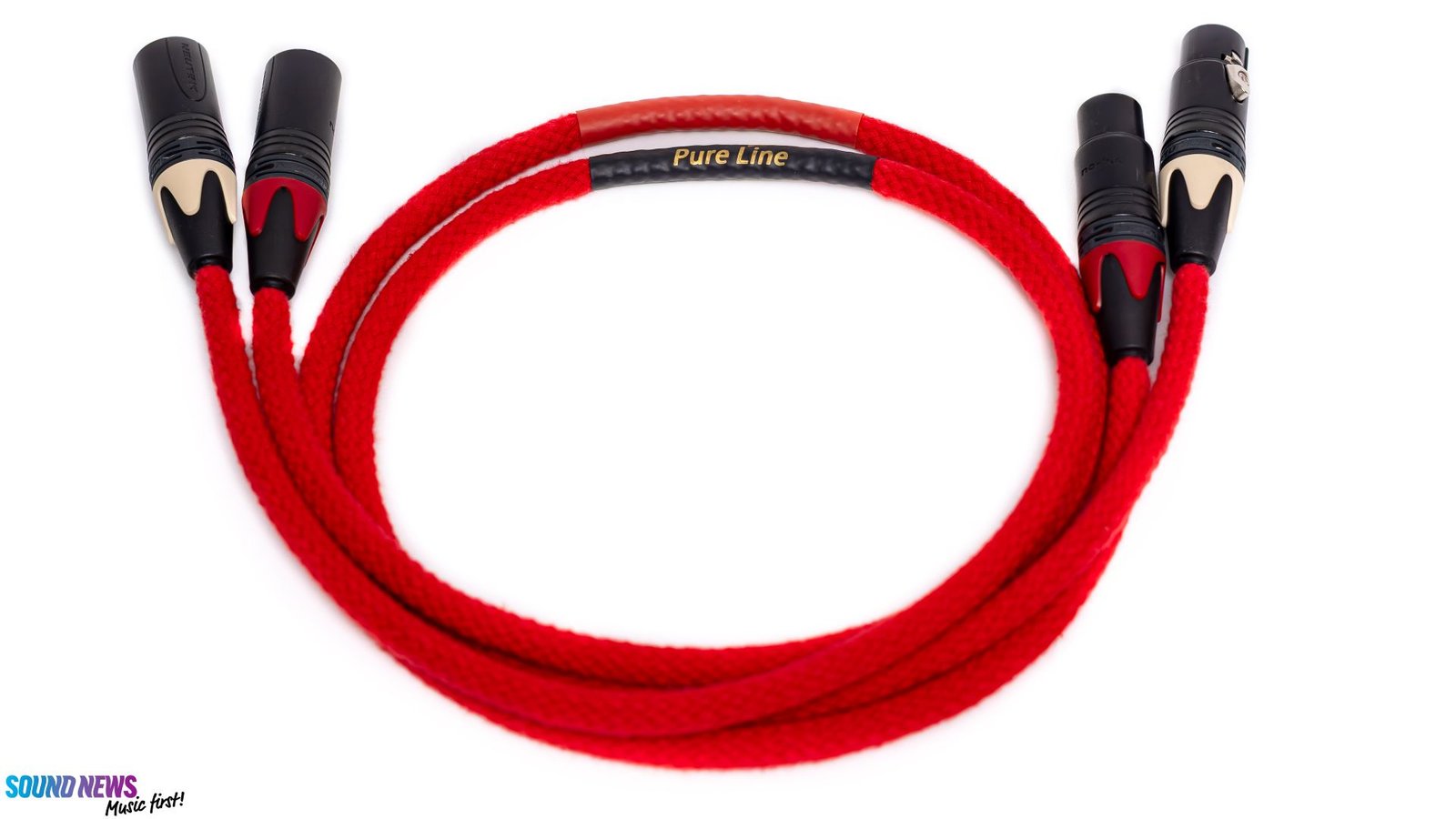
II. Pure Silver XLR Interconnect Cable – €950 per 1-meter-long pair
After spending enough time with the Pure Line Balanced XLR interconnects, I already had a pretty good idea of what their copper-based recipe was doing in my system. Then came the Pure Silver XLR interconnects, and the story changed immediately. On paper, these are built around pure silver conductors with a small gold addition, six conductors in a directional low-inductance layout, dual shielding, PTFE insulation, cotton damping, and Neutrik XLR connectors. In practice, they sounded like Pure Line Audio had opened the windows and let more light into the room. The thick, slightly congested personality of the Balanced XLR disappeared, replaced by a much quicker, cleaner, and more open presentation heard in the first seconds. The first thing that jumped forward was resolution. Micro-details were easier to spot, tiny reverberations had longer trails, and background elements were no longer hiding behind the main musical lines. Small percussion hits, room reflections, finger movement on strings, and decay patterns became clearer without turning the music into an autopsy. Many silver cables I tried in the past had a bad habit of chasing detail in the most obvious and sometimes aggressive way. Some of them pushed treble energy forward, sharpened outlines, making everything feel more impressive for five minutes, then tiring for the next two hours. Yet the Pure Silver XLRs didn’t behave that way. Indeed, the treble gained more sparkle and a better extension at the very top. Cymbals shimmered with additional energy, bells and upper harmonics had more shimmer, and the upper registers felt more alive. But the sound never became clinical, sharp, or metallic. I was getting more information, but not more aggression. That is a difficult balance to achieve with silver, and in this regard, Pure Line Audio deserves credit.
The second major improvement was the soundstage. Compared to the Balanced XLR, the stage expanded by at least twenty percent in my room. Width increased first, then depth followed, and finally the entire soundscape felt taller and wider. Instruments had more air around them, and the empty spaces between musicians became easier to spot. The music was no longer slightly clumped together, and complex passages didn’t feel as crowded. Separation improved, and the whole presentation felt less forced. Tonally, the Pure Silver XLRs were also more neutral and honest. They didn’t highlight the bass as much as the copper version, nor did they warm up the midrange to the same degree. Bass notes were cleaner and quicker rather than heavier, while voices became more open, immediate, and better separated from the surrounding mix. The midrange lost some of that extra warmth, instead gaining clarity and focus. In my system, that was a better compromise, because I already have enough body and density from the associated electronics. What impressed me most was that these cables didn’t sound like silver for the sake of silver. They didn’t overexpose recordings, bleach tonal colors, or flatten musical emotion in exchange for technical performance. If the Pure Line Balanced XLRs are for systems that need more meat on the bone, the Pure Silver XLRs are for systems that need more resolution, speed, and spatial freedom.
The shocking part? Undoubtedly, the price. Look, I’ve owned plenty of pure silver cables by now, and the ones that eventually convinced me to rewire my entire system were roughly ten times more expensive than these. What truly separates Pure Line Audio from most cable manufacturers is their direct-to-customer approach. They don’t rely on a worldwide network of dealers and distributors, and that alone changes the value equation dramatically. I won’t pretend that I have tested every HiFi cable brand under the sun, because nobody has. But if there is one cable manufacturer I can recommend with my eyes closed, then it is Pure Line Audio. Not only because their cables perform beautifully, but because their pricing makes sense.
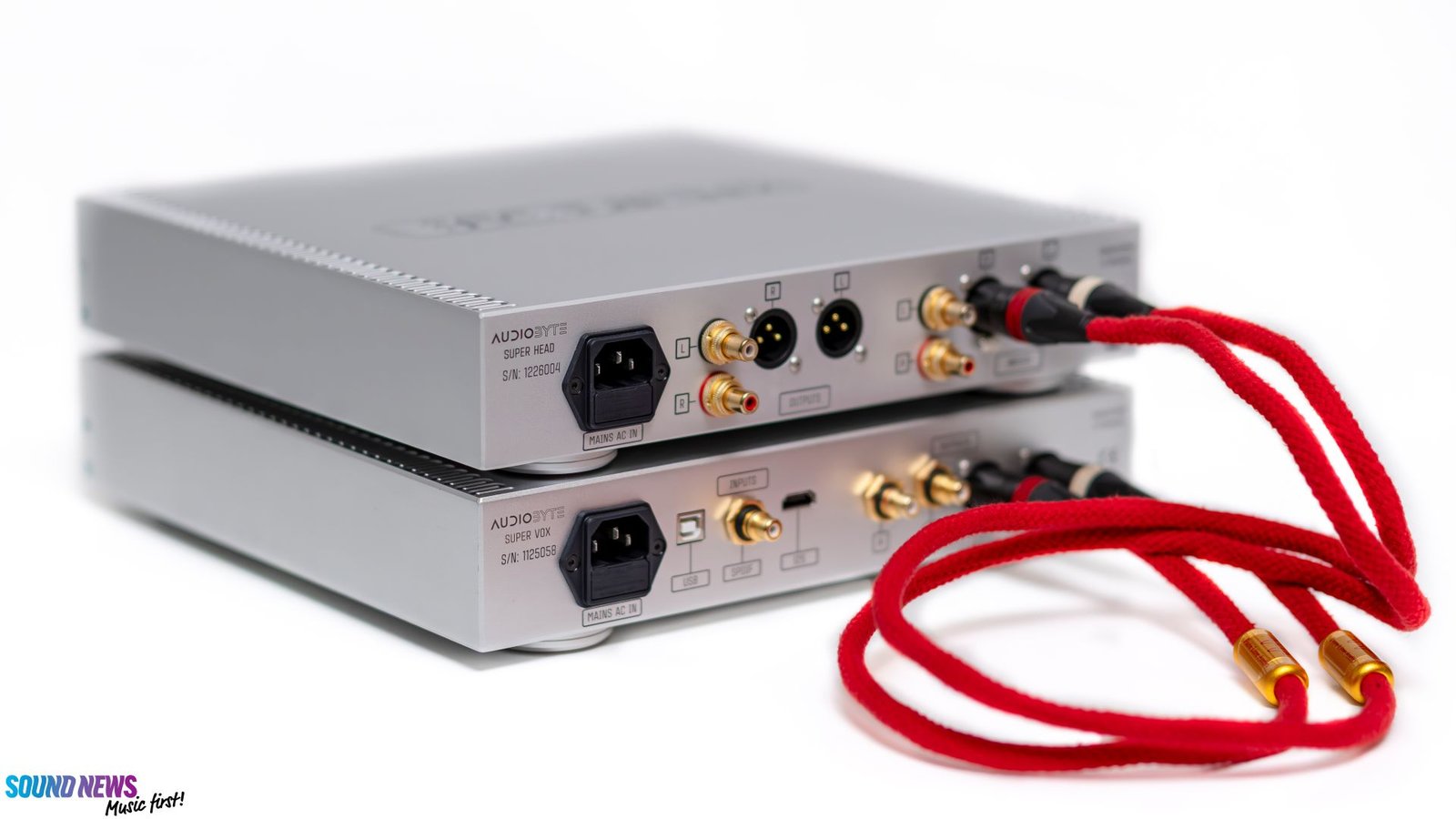
III. Pure Silver Ribbon Statement XLR Interconnects – €1,700 per 1-meter-long pair
After hearing their pure copper and pure silver interconnect cables, I thought I already understood the company’s two main flavors. With a blank face, I inserted the Pure Silver Ribbon Statement XLRs, and suddenly those two worlds were no longer fighting each other.
This is the cable that combines the warmth and density of their copper cable with the speed, airiness, resolution, and stereo separation of their silver cable, without inheriting the drawbacks of either! That sentence might sound like audiophile fantasy, I know, but that is exactly how they behaved in my system. They had the tonal substance and richness I enjoyed from the copper XLRs, yet they were much cleaner, more open, and more resolving. At the same time, they kept the sparkle, transparency, and spaciousness of the Pure Silver XLRs, without thinning the midrange or making the presentation feel cooler than it should be. These are still pure silver cables, yet they are quite possibly the richest-sounding silver interconnects I have ever tried. Usually, when I see pure silver written on a cable, I prepare myself for one of two outcomes: either impressive resolution with a slightly leaner tonal balance, or too much treble energy dressed as transparency. The Ribbon Statement did neither. These were open and highly detailed, but also saturated, organic, and complete top to bottom.
Bass wasn’t as thick as it was with the copper XLR, but it had better shape, better control, and a cleaner leading edge. Notes started and stopped with greater precision, yet they still carried proper mass. The midrange was beautifully textured, neither warmed up artificially nor stripped down for the sake of clarity. The treble region was spectacularly extended, but again, without the typical silver-cable sins. Cymbals had shimmer and air, upper harmonics were easier to follow, and tiny spatial cues floated much more freely around the room. I never felt that these were pushing trebles forward to impress. It was more about refinement and the absence of grain. The sparkle was there, but it felt controlled and properly integrated into the whole picture.
Soundstage performance also took another meaningful step forward. Compared to the copper XLR, there was no contest. Everything opened up, congestion vanished, and the music had far more breathing room. Compared to the regular Pure Silver XLR, the stage not only remained large but also more layered and believable. Instead of simply stretching the image left and right as good cables do, the Ribbon Statement improved the density of the images themselves, so that musical instruments were no longer floating randomly in space but had body and density within that space. Resolution and micro-detail retrieval were easily the best I heard from Pure Line’s interconnect range so far. The mild clutter and softening I heard with the Balanced XLR were completely gone. The music no longer felt thick but rich and transparent, smooth yet precise, full-bodied yet fast. That is a rare combination, and one that many cables chase without fully achieving.
There is also the raw material side of the story, which shouldn’t be ignored. Pure Line Audio confirmed that a single pair of these cables uses six meters of Duelund Silver Silk in Oil conductors. At around €158 per meter and using exactly 6 meters to craft a single pair of 1-meter-long XLR interconnects, this amounts to roughly €948 in Duelund conductors alone before Neutrik connectors, solder, shielding, sleeving, labor, packaging, taxes, and everything else are added. Considering that the finished cables sell for €1,700, the value proposition is surprisingly strong. This is not a case of dressing up basic wire with a luxury sleeve and a scary price tag. There is genuinely expensive, boutique-grade material inside. In my HiFi system, the Pure Silver Ribbon Statement XLRs were clearly the stars of the interconnect lineup. They kept the emotional fullness of copper, the speed and openness of silver, and somehow avoided the usual weaknesses of both. These were astonishing-sounding cables in every meaning of the word, and in the context of their construction and performance, they are worth every single penny.
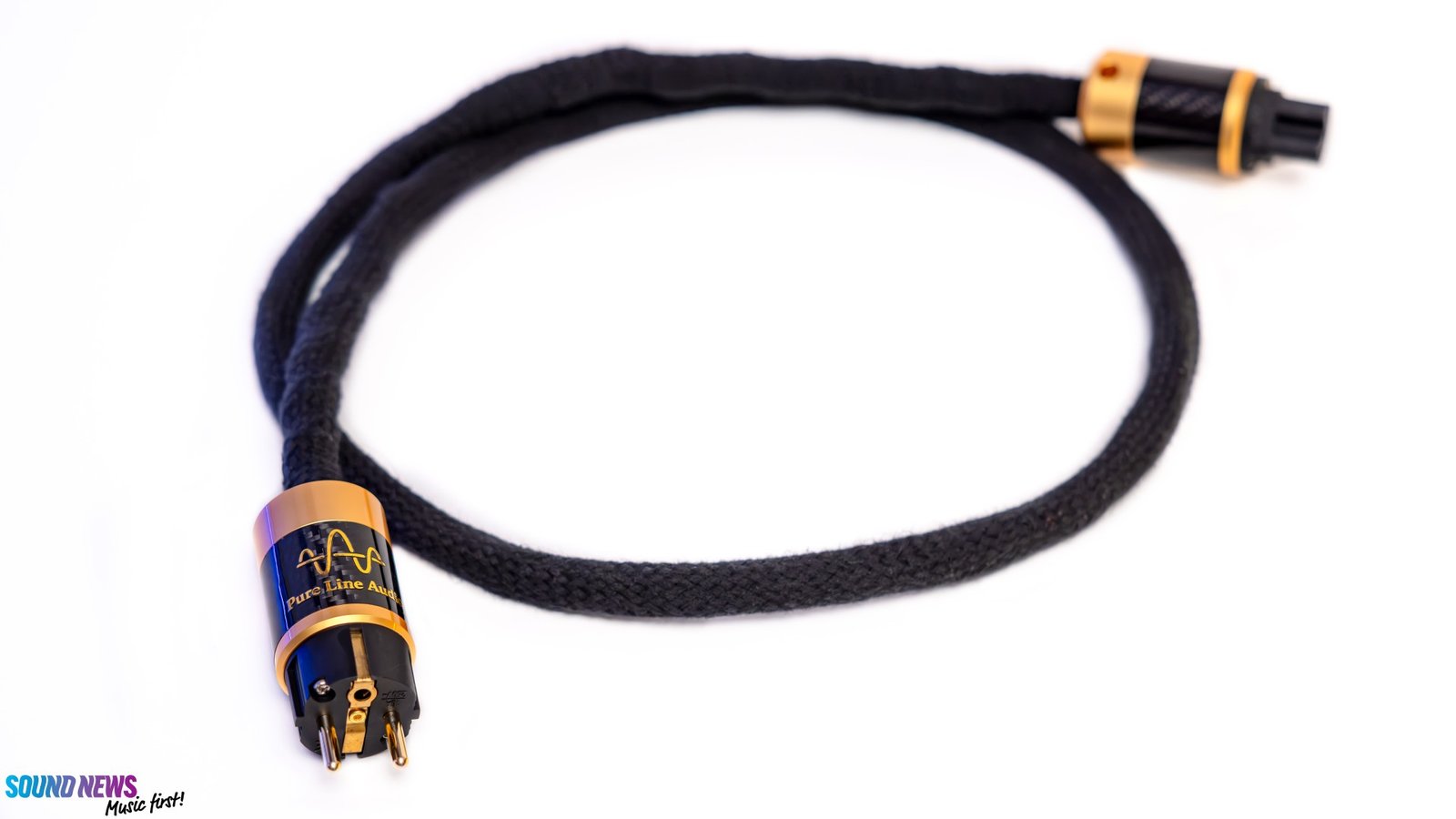
IV. Pure Line GoldCore Audio Power Cable – €1,500 per 1.5-meter-long cable
After spending some time with their interconnects, I moved on to Pure Line Audio’s power cables, starting with the GoldCore. On paper, this cable appears to be the company’s more refined and balanced approach to power delivery, built around silver-plated 6N OCC copper conductors, multi-gauge braided geometry, a dedicated grounding network, dual cotton insulation layers, and pure copper gold-plated connectors. In Pure Line’s own hierarchy, GoldCore is recommended mostly for DACs, streamers, and revealing systems where tone, texture, and refinement matter most. Naturally, that made me curious to try it first on low-current but high-resolution components.
I used the GoldCore in two positions only: first on my Rockna Wavedream Reference Signature DAC, and later on the Chord Electronics ULTIMA PRE. These are two components I know extremely well, and both are revealing enough to show even small changes in power delivery, grounding behavior, and noise rejection. What surprised me right away was how even-handed the GoldCore sounded. It didn’t tilt the system toward brightness, nor did it darken the presentation to create an artificial sense of smoothness. It didn’t romanticize the sound, soften transients, or slow down the music. Instead, it behaved like a well-balanced power cable that preserved timing, dynamics, and tonal honesty. That last part is important because many so-called “refined” power cables can become a little too polite. They can lower the perceived noise floor, but sometimes they also shave off the excitement and fun factor that make music feel alive. The GoldCore didn’t fall into that trap. On the contrary, it sounded highly dynamic and properly alive when the music demanded it. With modern EDM, rock, and metal, it kept the system highly engaging, never limiting the sudden bursts of energy that make these genres punchy in the first place.
A good example was Ptaha Fred by The Unsleeping (found on Qobuz and Tidal), a track that is heavy on distortion, far from polished audiophile material, and certainly not something you play when trying to impress someone with perfect recording quality. But that is exactly why I like using such music from time to time. Real systems should not only sound beautiful with perfect jazz pressings and carefully recorded female vocals. They also need to survive dirty guitars, aggressive bass lines, compressed drums, and the kind of energy that can quickly turn into ear-slashing chaos if the system loses control. With the GoldCore feeding either the Rockna DAC or the Chord ULTIMA PRE, the track remained explosive, dense, and energetic, but it didn’t punish me. The distorted guitars didn’t slash my eardrums, the upper registers didn’t become nasty, and more importantly, the overwhelming energy coming from the bass player wasn’t restricted. That bass line had a lot of drive and forward momentum. It didn’t feel rounded off; it was still raw and a little dirty, and that’s exactly how it should be!
Here’s the strongest compliment I can give to GoldCore. It didn’t try to change the personality of my components that I know so very well. The Rockna DAC remained precise, spacious, and natural. The Chord ULTIMA PRE remained fast, transparent, and highly controlled. The cable didn’t impose a strong sonic fingerprint on either of them. Instead, it allowed them to breathe freely, keeping the sound neutral but pleasing, without becoming sterile or aggressive. In short, GoldCore didn’t shock me with a dramatic tonal shift; it impressed me by not getting in the way. Although Pure Line recommends it mostly for DACs, streamers, and revealing systems, I see no reason why the GoldCore couldn’t be used on integrated amplifiers or even with SET power amplifiers, assuming the current requirements are within its rating, as it has the punch and dynamic freedom needed for more demanding components as well.
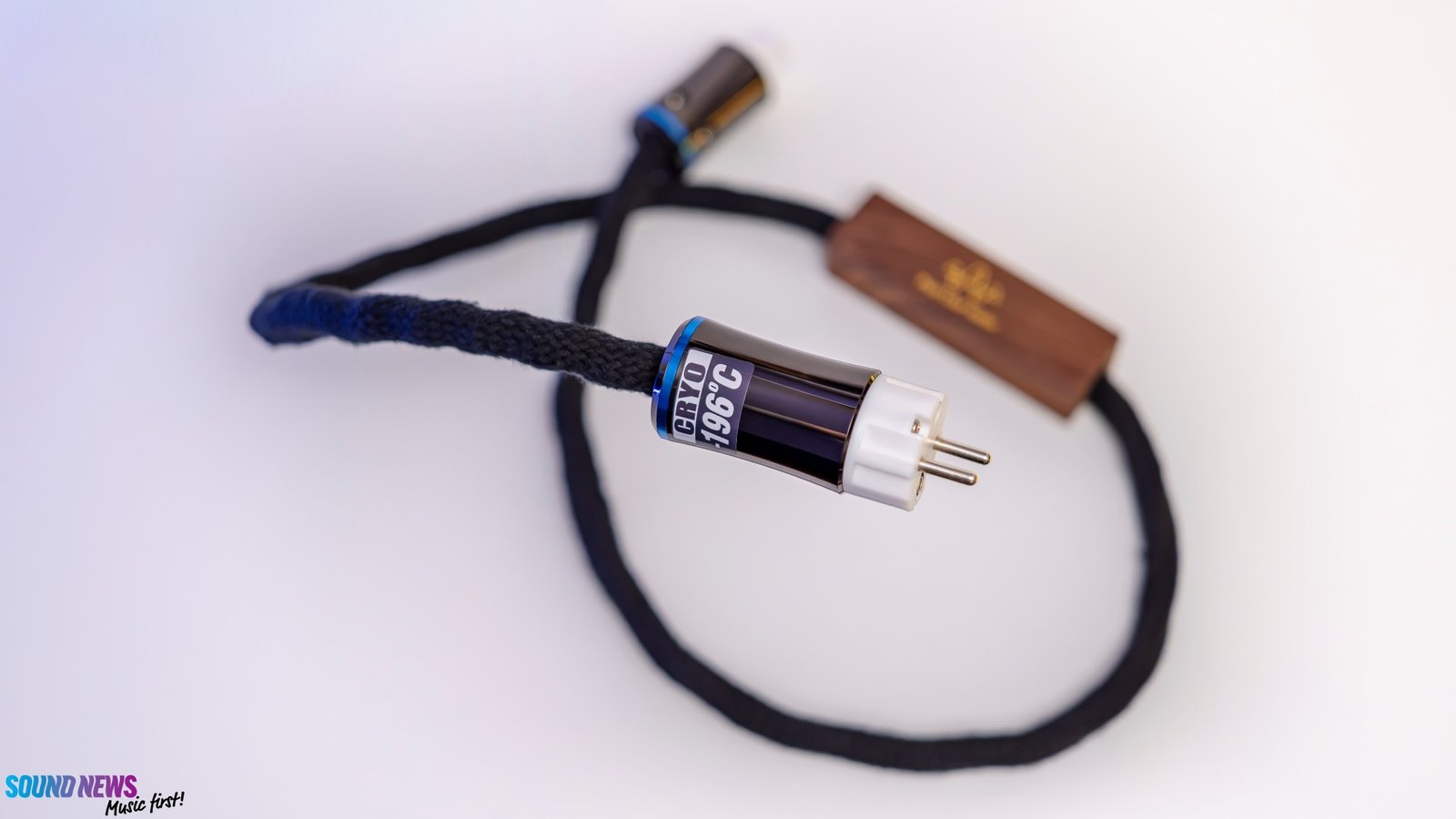
V. Pure Line Audio CryoCore Silver Power Cable – €2,500 per 1.5-meter-long cable
After GoldCore showed me that Pure Line Audio knows how to build a neutral, yet properly dynamic power cable, it was time to move toward something more ambitious. The CryoCore Silver looks and feels like Pure Line’s more obsessive take on power delivery, built not only around current capacity but around electromagnetic behavior, contact stability, dielectric control, and long-term consistency.
On paper, this is a much more complex beast than the GoldCore. Each live, neutral, and earth conductor assembly combines a solid-core silver-plated OCC copper conductor with no fewer than 24 additional silver-plated conductors braided in opposing directions. Pure Line Audio calls this a counter-braided geometry, and the idea is simple enough to understand: instead of letting electromagnetic fields accumulate and radiate freely around the cable, the opposing braids should partially cancel each other’s field behavior, reducing interaction with nearby signal cables and sensitive electronics.
That might sound like rocket science, but it makes sense. Power cables are not sitting in another room, far away from the system. They are usually behind the audio rack, tangled around interconnects, digital cables, speaker cables, power supplies, streamers, routers, switches, and other noisy little gremlins… which generate a small electromagnetic field that needs to be addressed. If a power cable can reduce the amount of electromagnetic garbage it emits while also rejecting some of the garbage already floating in that jungle, then we are no longer talking only about current delivery. We are talking about system hygiene. The CryoCore Silver also uses PTFE insulation throughout, solid silver connectors, and those connectors are cryogenically treated at minus 196 degrees Celsius for 72 hours. I know, cryogenic treatment is another one of those audiophile phrases that can instantly raise eyebrows. But here, at least, the idea is not presented as magic dust or snake oil. Pure Line’s explanation is about reducing internal stresses in the metal and improving contact consistency over time. Since every power cable ultimately depends on the quality of its contact surfaces, I can live with that explanation without rolling my eyes too hard.
Sonically, I would describe the CryoCore Silver as the more focused, cleaner, and tighter sibling of the GoldCore, while further removing grain and the so-called digitus. The CryoCore Silver kept that same neutrality but sharpened the picture a little further, all while keeping at bay the nasty things that usually occur at the very top of the frequency spectrum. If I were to take two things that impressed me most, they would be the timing and the noise reduction, which made the background…well, blacker. I’m not much into vinyl these days, or maybe I’m not that old or wise enough, but I’m sure this cable would be a blessing for a vinyl spinner, a DAC, or a preamp. Anything that doesn’t draw a lot of watts should sound squeaky clean and well-organized, with quite possibly the most impressive dynamics I’ve heard in a power cable at this price. The background darkening is not a small feat; it’s probably the most important one, as this cable works almost like a small power conditioner, removing internal noise and completely nullifying noise from its neighboring conductors. And with power cables, noise dissipation is everything! Remove it, and the truth will be revealed to you, or leave it unchecked, and your electronics will never reach their full potential.
Now, this is not the kind of power cable I would buy to warm up a thin-sounding system or to add bass energy to underwhelming bookshelf speakers. The CryoCore Silver is more like a precision tool for already great-sounding (read: revealing) systems, where the remaining bottlenecks are not obvious tonal issues, but tiny layers of noise, field interaction, contact instability, and low-level masking. It doesn’t beautify the sound, but cleans it up.
In my book, GoldCore remains the easier recommendation for most source components and preamplifiers, thanks to its neutral, lively, and beautifully balanced character. CryoCore Silver, however, pushes things further toward control, absolute silence, and electrical stability. It is more expensive, no doubt about that, but it is also more technically ambitious and more revealing of what a system can still hide behind the curtain. Sometimes, recommending an expensive power cable feels like shooting yourself in the foot, but this one genuinely improved an already great-sounding component and pushed it closer to extraordinary. My only regret is that I had just one CryoCore Silver on hand. I would have loved to hear what three of them could do, powering the HiFi switch, the DAC, and the preamplifier at the same time.
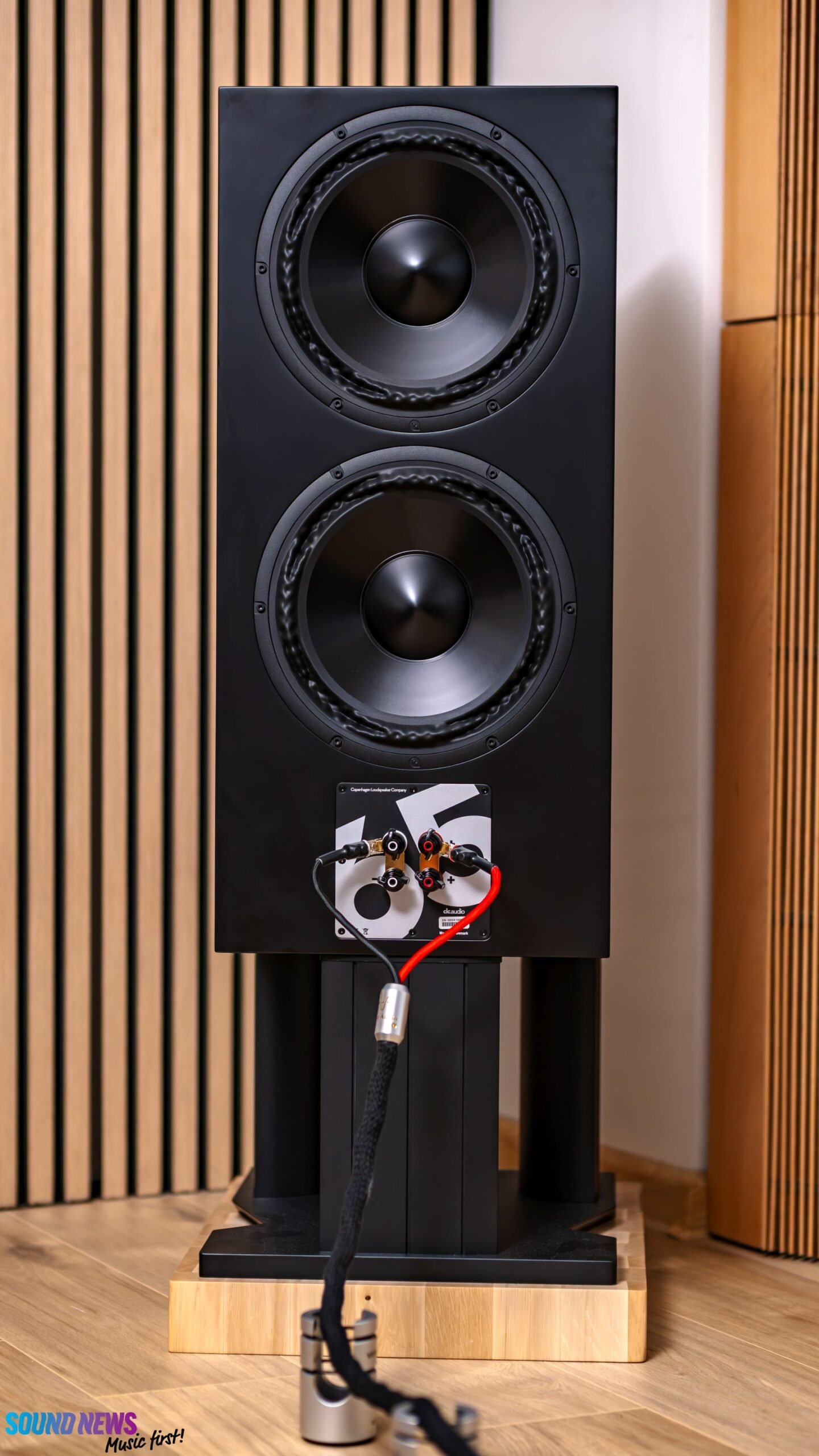
VI. TriCore Ultra Speaker Cable – €3,000 per 2-meter-long pair
If interconnects carry delicate low-level information and power cables take care of the electrical foundation, then speaker cables have one of the most demanding jobs in the entire chain. They sit between the amplifier and loudspeakers, where the signal is no longer tiny and fragile, but powerful and constantly changing. At this point, we are dealing with real current, loudspeaker impedance swings, amplifier’s damping factor, and a load that is anything but constant. This is why I never understood the idea that speaker cables are just wires. In practice, they become part of the amplifier-loudspeaker relationship. If the cable adds too much resistance, inductance, and capacitance, or simply behaves poorly under dynamic load, then the amplifier’s grip over the speaker can suffer badly.
Pure Line Audio’s TriCore Ultra is their statement speaker cable, and its name already tells you the main idea behind it. Instead of choosing a single conductor material and forcing it to deal with everything, Pure Line combines three different conductor types, each with a specific role. Part of the cable uses solid-core silver with a touch of gold, chosen for refinement and micro-detail. Another part uses UP-OCC copper, meant to preserve tonal density, midrange naturalness, and warmth. The remaining section uses silver-plated OFC copper, responsible for transient response and a nice timing overall. Pure Line describes this as a triple solid-core architecture with individual PTFE insulation, hand-braided geometry, dual natural cotton damping, and gold-plated copper terminations. And it makes plenty of sense. Combining pure silver with pure copper and seasoning with a mix of both brings the best of both worlds. When properly executed, such a recipe should avoid the usual trade-offs, but as always, music doesn’t behave like sine waves; it’s a lot more complex than that.
Once inserted into my system, I was surprised by how close its overall performance was to my own 2.5-meter AudioQuest Dragon ZERO speaker cables, which retail for around €35,000 per pair and also combine silver and copper in their construction. I don’t know exactly how much time Pure Line Audio invested in research and development, but one thing became clear very quickly: these cables don’t perform like a school experiment. They sound as if years of relentless polishing went into perfecting the formula, because frankly, nothing seemed out of place, and I had a hard time differentiating them from my Dragon ZERO cables. My AudioQuest cables still sounded a touch clearer and more holographic, especially with the CLC65 loudspeakers, which seemed to benefit from their thicker gauge and more advanced noise-reduction approach. But apart from that, both cables performed impressively, tight, cohesive, and incredibly dynamic.
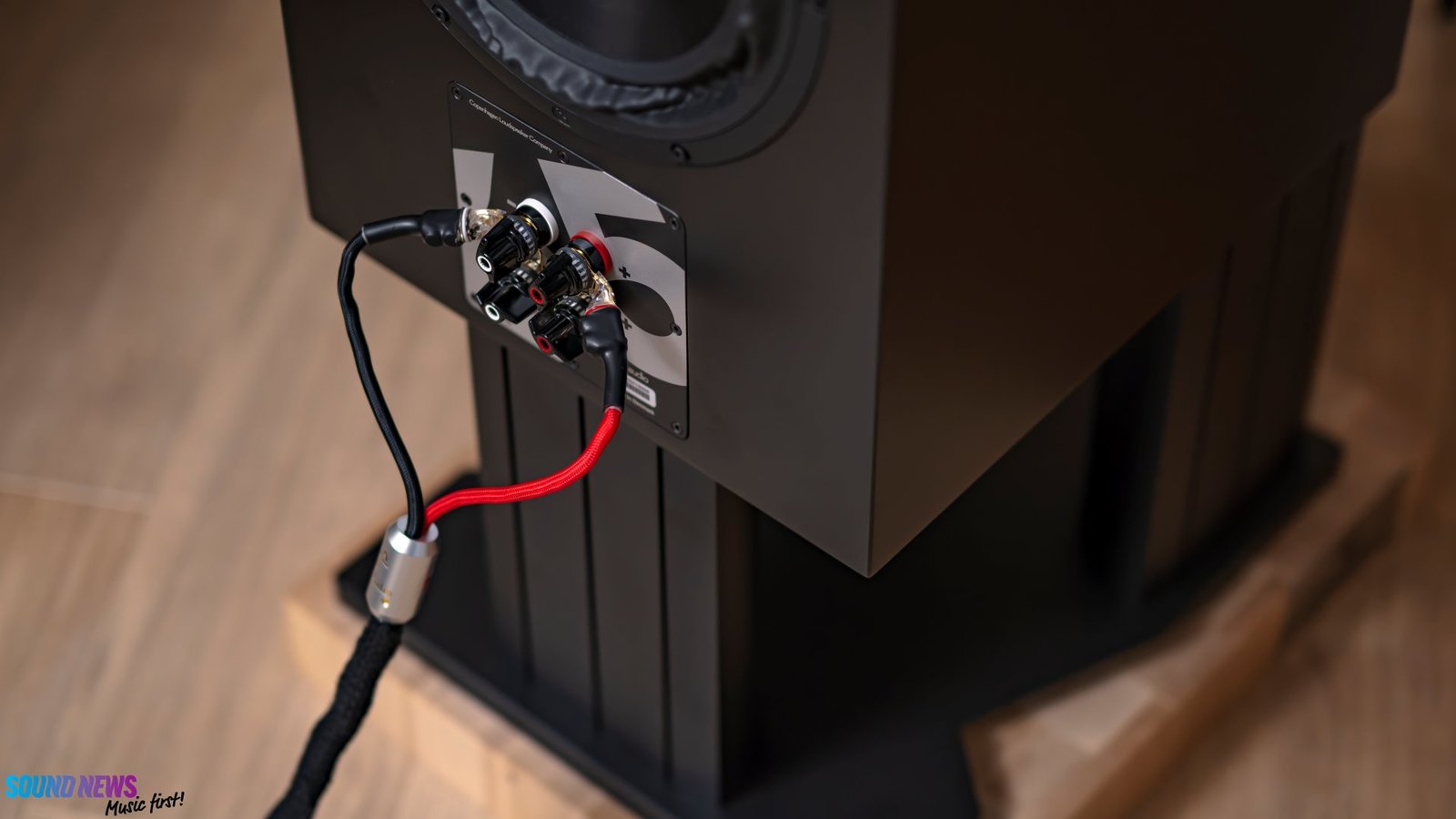
Up to this point, I had swapped more than six pairs of speaker cables, mostly because I wanted to minimize one of my speakers’ main limitations, more exactly, their restricted bass delivery. Every cable that followed needed to improve bass depth, extension, grip, and the overall fun factor. Easier said than done, because it took me a couple of years to find the right dance partners, and those weren’t exactly gentle with my wallet. If I were to rank every speaker cable I’ve tried so far, then the TriCore Ultra would sit comfortably in second place, right behind my Dragon ZERO cables, but ahead of several much more expensive cables that used only pure-silver conductors. And here’s a fun fact: the CLC65 loudspeakers use massive 10-inch front-firing woofers and two additional 10-inch passive radiators on their backs. These speakers aren’t hiding their identity. They were built for oomph, powerful bass slams, and plenty of giggles.
Their only drawback? They demand the very best amplifiers, usually with power overwhelming, and the tightest-sounding speaker cables you can find if you want to properly control all that bass energy. I had already borrowed quite probably one of the most powerful amplifiers out there, delivering 1,405 watts RMS per channel into a 4-ohm load, which is a serious feat of strength. The only thing I needed was a pair of equally impressive speaker cables capable of delivering all that juice without slowing things down. The TriCore Ultra brought the thunder on tunes that worship the thunder god, offering a level of punch, grip, and control that wasn’t quite there with my former QED, Kimber, older-generation AudioQuest, or pure-silver Crystal Cable speaker cables. The more music I listened to, the more I realized that low frequencies didn’t necessarily become fatter. Instead, they gained better shape, a speedier attitude, and a more immediate start-and-stop behavior. Kick drums had cleaner outlines, bass guitars were easier to follow, and physical impact remained intact. That matters a lot with speakers like mine, because the Raidho TD 2.2 can sound surprisingly powerful when properly controlled, but it won’t fake bass authority if the amplifier-cable-speaker interface isn’t doing its job.

Listening to Sinnerman by Nina Simone (found on Qobuz and Tidal), all the hiss and noise embedded in the recording were still present from start to finish, but they felt like part of the equation rather than a distraction. Nina’s voice gained weight without flattening everything around it. She took center stage, but never overshadowed the rest of the band. The track felt more continuous, better separated, and surprisingly coherent, even though it is far from a perfect recording. I got the impression that music was built from textures rather than individual notes fighting for attention. Guitars had body and weight, brush sticks had bite and natural decay, and vocals floated with strong focus between the speakers. Overall, this is what made the TriCore Ultra so special in my book. It acted less like a tone-control cable and more like a current-preservation tool. Its triple-material architecture and locking speaker terminations seem aimed at one thing: letting the amplifier speak freely with the loudspeakers, without interruptions or bottlenecks. And that is why speaker cables matter. Once energy flow is restricted between the amplifier and the loudspeakers, there is no component downstream that can restore that. The TriCore Ultra simply made my loudspeakers behave as if the amplifier had a firmer hand on the wheel.
VII. GoldCore 6 NoiseBlock Power Distributor – €1,500 per unit
If you’ve read some of my reviews before, then you already know that I usually leave the biggest surprises, or the biggest disappointments, for last. And that is exactly what I’m about to do today. If you’ve been following SoundNews for a while, then you also know that we tested some of the best power conditioners we could get our hands on. From the Plixir BAC1500 to the mighty KECES IQRP-1500 and IQRP-3600 beasts, from the Tsakiridis Super Athena to the AudioQuest Niagara 5000, plus a few smaller devices along the way, we know very well what good power conditioning can bring to a serious HiFi system.
But what about a simple power strip? That’s where it hit me. It is literally in the name: NoiseBlock Power Distributor. Pure Line Audio didn’t call it that by accident, because in reality, we hadn’t tested anything quite like it until now. A power strip was always the simplest and least glamorous part of a HiFi system. It either had decent sockets, proper internal wiring, and a solid enclosure…and that was pretty much it. Power conditioners were the serious stuff, the heavy boxes filled with transformers, filtering stages, isolation, regeneration, or balanced-power circuitry. A distributor was mostly there to give you more outlets and, hopefully, not choke the system while doing so.
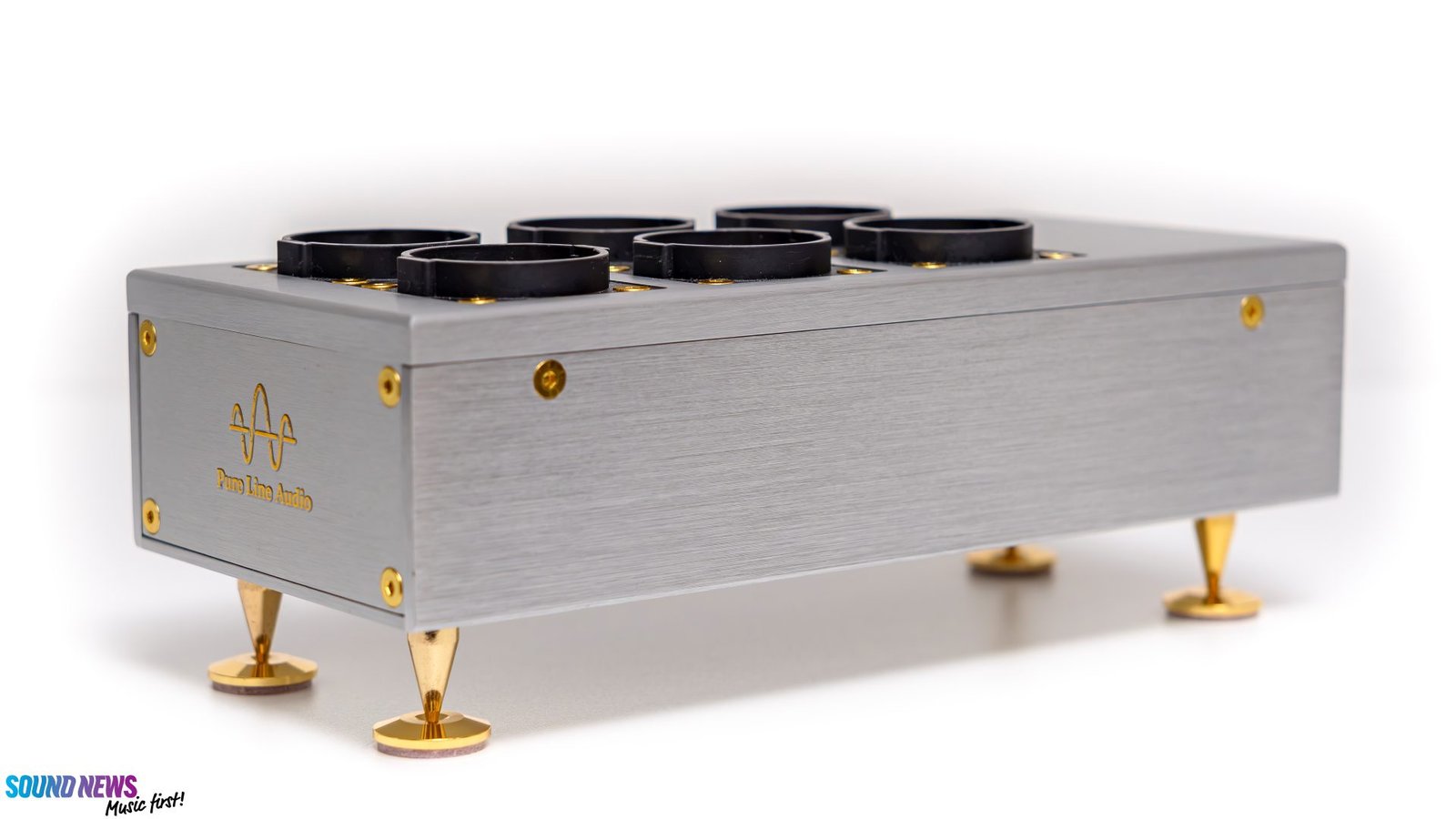
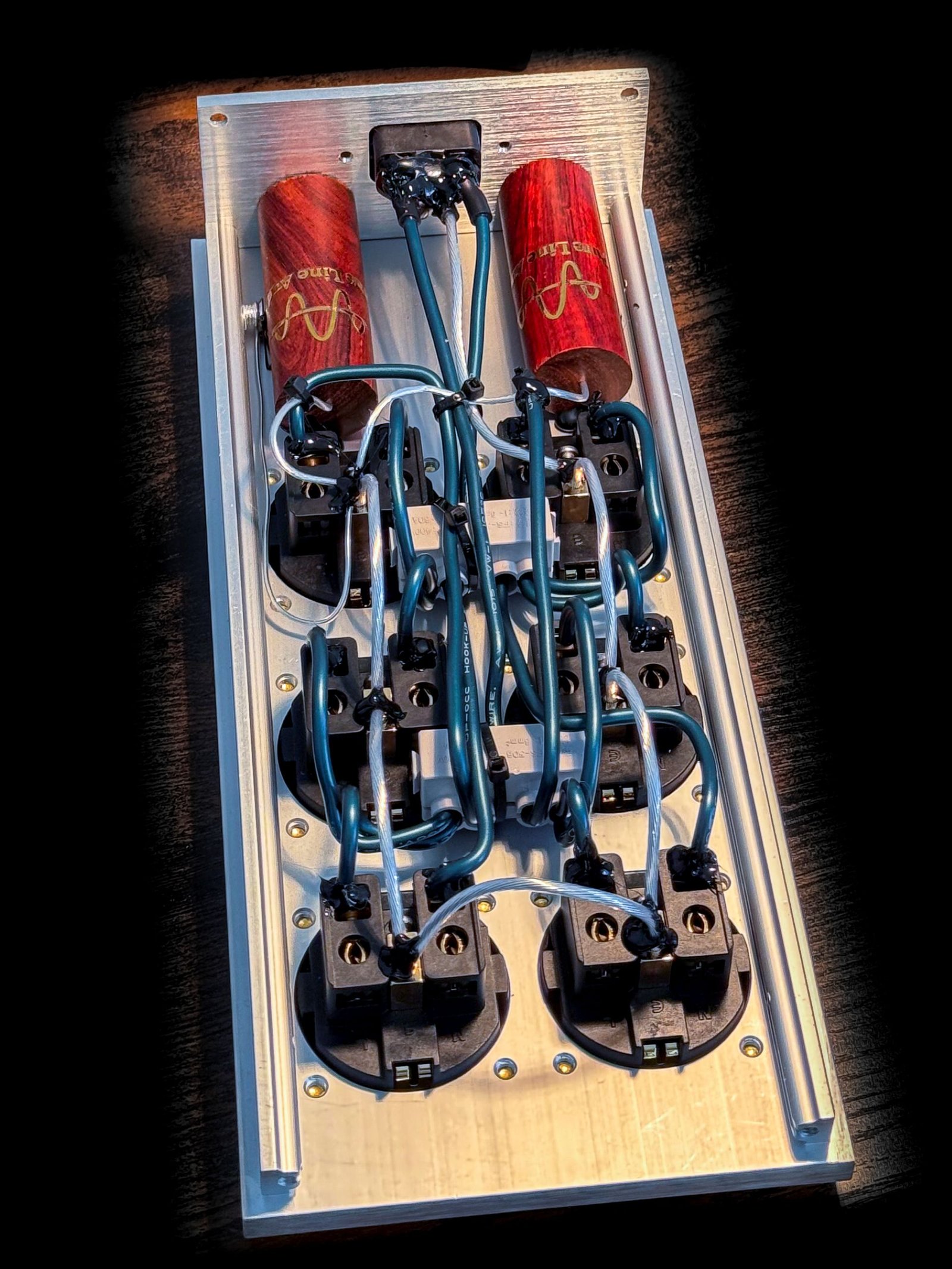
GoldCore 6 NoiseBlock challenged that idea pretty quickly. The construction already tells you that Pure Line Audio didn’t want to build a fancy extension cord with prettier sockets. We are dealing with six Furutech gold-plated Schuko outlets, silver-plated OCC solid-core copper wiring, a star-connected architecture with equal-length power paths, and an aluminum chassis that feels reassuringly solid. The star connection is important because each outlet has its own direct path from the input, rather than forcing components to share a messy daisy-chained internal route. In theory, this should reduce interaction between connected components and keep the current delivery stable across all outlets. But the key ingredient here is clearly the integrated NoiseBlock system. Pure Line Audio places passive NoiseBlock modules directly inside the distributor, using graphene layers and piezo-electric mineral compounds to capture and dissipate high-frequency EMI and RFI pollution before it can reach the connected components. The important part is that these modules are not placed directly in series with the current path, so the distributor tries to lower noise without limiting current delivery. That is the big promise here: cleaner power, but without strangling dynamics. Many power conditioners can clean up the background, but some of them also reduce speed, limit current peaks, or make the system sound calmer at the expense of excitement. Sometimes you get a darker background, but also a softer punch. In the case of GoldCore 6 NoiseBlock, the answer was surprisingly simple: not much.
And I didn’t even connect the usual suspects, my Chord ULTIMA 3 monoblocks, which can draw up to 2,500 watts each at full power. Nope. I went straight for the craziest and most power-hungry monoblocks I know of, which also happen to look every bit as insane as that sounds. I connected the top-of-the-line Chord ULTIMA monoblocks, which are roughly four times bigger than my ULTIMA 3s and can draw up to 3,500 watts each at full power. Multiply that by two, and you can imagine the task this little power distributor was facing. Scary? More like incendiary. Literally.
To say that I was surprised that dynamics didn’t lose their jump factor and immediacy would be a massive understatement. I was gobsmacked, shocked, and amazed. I was pretty good at physics back in the day and even won a few awards in my hometown, but not even in my simplest dreams would I have assumed that a power distributor could handle these 66-kilo-a-piece behemoths at eardrum-hitting 100 dB SPL levels without breaking a sweat. Bass lines were as impactful as I remembered them through my KECES IQRP-3600, and not even for a microsecond did the energy drop, soften, or feel restricted in any meaningful way. Modern funk and electronica were still punchy, alive, and properly caffeinated. But the biggest surprise had not yet been revealed.
The noise…it simply vanished. It disappeared, and the background became calmer, almost nonexistent. Not in an exaggerated “black hole between the notes” kind of way, but in a more natural and believable manner. The music felt less aggressive as the volume climbed. Edges were cleaner, spatial cues were easier to follow, instruments were no longer fighting for space as much as before, and the entire presentation seemed to gain a stronger sense of order. It felt as if a thin layer of electrical fuzz had been removed, and somehow the system revealed an extra layer of information and contrast. Not fake detail, or treble tricks, but actual musical information that was previously harder to follow.
At that point, I finally understood why Pure Line Audio calls it a NoiseBlock Power Distributor rather than just a power strip. It doesn’t behave like a conventional passive block of sockets. It adds a real sense of system-level organization, allowing music to flow more calmly without becoming boring. That last part is crucial because I don’t want a power product that turns Metallica into Diana Krall after two songs. I want less noise, but not less music.
The most impressive part was how well it handled both source components and amplifiers at the same time. Sensitive electronics clearly benefited from the quieter environment, but power-hungry components didn’t feel restricted. Compared to full-blown power conditioners like the KECES IQRP-3600 or AudioQuest Niagara 5000, I won’t pretend that the GoldCore 6 is doing exactly the same thing. Those are more complex devices, built around different philosophies and with more ambitious conditioning or isolation strategies. But that is not the point here. The surprise is that this distributor brought a meaningful improvement without behaving like a classic conditioner. It didn’t try to dominate the system or reshape the tonal balance. It simply gave every component cleaner energy delivery. Still, with a heavy heart, it seems that the NoiseBlock distributor is ever so slightly clearer-sounding than my KECES IQRP-3600, particularly in the bass region, where the KECES adds a bit of mass but removes just a smidge of layering and detail. You could say that the KECES was darker and bassier-sounding, while the Pure Line Audio distributor was clearer and more honest-sounding.
At €1,500, the GoldCore 6 NoiseBlock Power Distributor is not cheap, but once you look at the Furutech outlets, solid-core OCC wiring, star-grounded architecture, aluminum chassis, integrated NoiseBlock modules, and hand assembly, it no longer feels pricy, but reasonable, something I could easily recommend without remorse. More importantly, it didn’t sound like a mere accessory pretending to be important, but behaved like a proper upgrade. This was the biggest surprise of the Pure Line Audio loom so far, because I expected good cables to make a difference, but I did not expect a simple power strip to become one of the most important pieces in the chain. Impressive won’t be the right word here.
At €1,500, the GoldCore 6 NoiseBlock Power Distributor is not exactly pocket change, but once you start counting the ingredients, the numbers begin to add up. Furutech outlets, solid-core OCC wiring, star-grounded architecture, aluminum chassis, integrated NoiseBlock modules, and hand assembly don’t exactly scream hardware-store power strip with a nicer jacket. In fact, the more I looked at what went inside it, and more importantly, the more I listened to what came out of it, the more reasonable its asking price became.
This is one of those products I could recommend without remorse, because it didn’t behave like an accessory desperately trying to justify its existence, but like a proper upgrade. And that was the biggest surprise of the entire Pure Line Audio loom so far. I expected the silver interconnects to open the stage. I expected the power cables to influence refinement and dynamics. I expected the speaker cables to improve grip and control. But I did not expect a power strip to become one of the most important pieces in the chain. Impressive is not the right word here. Annoyingly convincing would be much closer.
Wrapping Up
Reviewing a full cable loom is never easy, as every single one of them interacts with the system, and sometimes even with our own stubborn preconceptions. This is why I always try to be careful when describing differences in cables. I don’t want to turn every small change into a religious event or pretend that a cable can transform a mediocre system into a reference one overnight. That is not how things work. However, when a full cable ecosystem starts performing consistently, and every product seems to follow the same engineering direction, then it becomes impossible to ignore the benefits.
Pure Line Audio cables don’t feel like random products built around fashionable materials and wrapped in pretty sleeves. There is a clear philosophy behind them. For example, the copper-based interconnects leaned toward warmth, body, and density, while their Pure Silver XLRs pushed things toward openness and resolution. The Pure Silver Ribbon Statement XLRs combined both directions beautifully, becoming some of the richest-sounding pure-silver interconnects I have heard so far. The GoldCore power cable proved neutral, alive, and dynamic, while the CryoCore Silver went further into focus, having a stronger noise control as an added bonus. The TriCore Ultra speaker cables showed that Pure Line Audio understands the difficult relationship between amplifier and loudspeakers, offering a strong grip, without limiting dynamics or forcing a strong tonal fingerprint. Finally, the GoldCore 6 NoiseBlock distributor was probably the biggest surprise of the bunch, proving that it can serve as a solid foundation for an entire system.
But the real shock comes when we start talking about value.
In high-end audio, cables can quickly enter absurd territory, and to tell you the truth, I never counted how much I spent on my Crystal Cables Monet and AudioQuest Dragon cables, because I would probably get mad at myself. Sometimes you look at the materials, connectors, construction, and retail price, and the numbers no longer quite make sense. A large part of that comes from the traditional distribution model. Just combine all the manufacturer, distributor, and dealer margins with the marketing costs, logistics, and taxes, and the final price has very little connection to the raw materials inside the product. Pure Line Audio seems to ditch this approach. They don’t appear to work with a worldwide network of dealers and distributors, and that alone changes everything. By selling directly and keeping the chain shorter, they can use higher-quality conductors and better connectors while still arriving at prices that feel fair.
The Pure Silver Ribbon Statement XLR is the perfect example. When the raw Duelund Silver Silk in Oil conductor alone represents a huge part of the final retail price, before connectors, solder, sleeving, shielding, labor, packaging, and warranty are even considered, you quickly understand that Pure Line Audio is not playing the usual luxury-margin game. Their margins seem extremely thin by high-end audio standards, almost shockingly so. I don’t know how sustainable this approach will be in the long term, but as a customer and music lover, I can only appreciate it.
This is why Pure Line Audio might have the strongest price-to-performance ratio I have encountered so far among HiFi cable manufacturers. Their cables aren’t cheap in absolute terms, but the asking prices feel unusually honest. As always, system matching matters, but the best Pure Line Audio cables were not merely good for the money. They were genuinely excellent, and I’m already contemplating getting the NoiseBlock Power Distributor and a pair of Pure Silver Ribbon Statement XLR interconnects for my head-fi system, as both performed well above my expectations. Pure Line Audio proved that high-end cable design doesn’t need to be wrapped in mythology, dealer markups, or astronomical pricing to make sense. With high-quality materials and a direct value-first approach, they managed to build a cable lineup that competes far above its asking price.

For that reason, and especially for its outstanding value proposition, Pure Line Audio receives my only Editor’s Choice Award for 2026 as the highest-value-for-money cable brand I have encountered so far. Congratulations to the team, and I’m looking forward to their next adventures. If you have any burning questions, please let me know in the comments section below, and don’t forget to smash that Subscribe button on YouTube. It means a lot to me. That’s all for now, folks. Sandu signing off!
Pure Line Audio Pricing:
- 1.0M Pure Line Balanced XLR Interconnect Cables – €750
- 1.0M Pure Silver XLR Interconnect Cables – €950
- 1.0M Pure Silver Ribbon Statement XLR Interconnect Cables – €1,700
- 1.5M Pure Line GoldCore Audio Power Cable – €1,500
- 1.5M Pure Line Audio CryoCore Silver Power Cable – €2,500
- 2.0M TriCore Ultra Speaker Cables – €3,000
- GoldCore 6 NoiseBlock Power Distributor – €1,500
- More information on: https://purelineaudio.com/
ASSOCIATED EQUIPMENT:
- HiFi Racks: WoodYard Suspended Triple & Baby Modular
- CD/SACD Transport: Onix XST20
- Network Switch: ROBOLI UltraLine Switch S240
- DAC & Wired Streamer: Rockna Wavedream Reference Signature, Audiobyte SuperVOX
- Preamplifiers: Chord Electronics ULTIMA PRE
- Power Amplifiers: Chord Electronics ULTIMA (X2), ULTIMA 3 (X2)
- Headphone Amplifiers: Feliks ENVY Susvara Edition, Audiobyte SuperHEAD
- Loudspeakers: Raidho TD 2.2, clc.audio CLC65
- Headphones: HiFiMan Susvara OG, Susvara Unveiled, T+A Solitaire P, Bandoss Avija, Audeze LCD-5S, Sennheiser HD800S & many more
- IEMs: FiiO FX17, HiBy Zeta 2, Meze ASTRU
- Interconnect Cables: AudioQuest Dragon XLR (X2)
- Speaker Cables: AudioQuest Dragon ZERO 2.0m
- Headphone Cables: Crystal Cable Absolute Liberty (X2)
- Power Cables: AudioQuest Dragon Source (X2), AudioQuest Dragon High Current (X4)
- Ethernet Cable: Crystal Cable Da Vinci
- HDMI Cable (I2S): AudioQuest Dragon
- Balanced Isolation Power Conditioner: KECES IQRP-3600