Indiana Line Lira 6 Loudspeaker Review – The Lyre Sings in the Living Room


TLDR
The Lira 6 is Indiana Line’s newest three-way floorstander, built on a Symbiotic Drive philosophy where the drivers, cabinet, and crossover are designed together as one coherent instrument. After living with full-range speakers for many years, we can say that what Indiana Line did here with their Symbiotic Drive is marvelous.
Three qualities defined the speaker for us:
1. Extraordinary Coherence: the whole speaker sings with one voice from the lowest note to the highest octave, with no disconnect anywhere in the frequency spectrum, the drivers playing as one unit.
2. Ease: the 90 dB sensitivity, the benign 4 to 8 ohm load, and the wide usable power window make it forgiving of amplifiers, and the down-firing, floor-coupled port keeps it friendly in regard to placement.
3. Value: at 2300 €/pair, it delivers exceptional value for the engineering and the extraordinary musical and coherent result on offer.
A sealed midrange gives voices body, and the aluminum-magnesium tweeter dome stays smooth and fatigue-free across long sessions. Through all our listening sessions, it held its composure at every volume, at low and high power alike.
Where it lands: a champion of long, fatigue-free, pleasurable listening and exceptional value. It shines the most in a warmer, harmonically rich chain, and it would be somewhat of a miss for anyone chasing absolute cutthroat detail and earth-moving bass slam above all else.
Introduction
Indiana Line is a brand worth knowing before we talk about how the Lira 6 sounds, so we want to give you a little of its history. It is an originally Italian company, founded in Turin in 1977, but its story starts a step earlier, with a company called Selectra that imported American Utah loudspeakers into Italy. Shipping finished speakers halfway around the world made little sense at the time, so the cabinets were built locally from imported parts. When Utah ran into trouble at home, the Italian side carried on under a new name, Indiana Line, developing and building its own designs. The name is a nod to Utah, the American region long associated with Native American tribes, and it was chosen to signal the sort of quality then credited to Anglo-Saxon components.
From a first catalog of six models, the brand won a following on a single promise it printed in its earliest advertising and has pursued ever since: listening pleasure. In 2006, Indiana Line was taken over by Coral Electronic, an Italian maker founded in 1975 that folded three decades of its own driver know-how into the brand. Today, the loudspeakers are developed by a research team in Poland working closely with Italian experts, so the Lira 6 arrives carrying an Italian design heritage and a modern engineering effort at once. We think this lineage matters to the listener because the ideas that run through the company’s whole history, the Curv cone material, the gently sloping crossover filters, the easy 4 to 8 ohm load, and that founding pursuit of listening pleasure, are the very ideas we followed through the Lira 6.
The Lira series is the newest line in the company’s story, and it crowns decades of loudspeaker design work and know-how. The range, updated recently, consists of many models: a smaller Lira 2 bookshelf, a larger Lira 3 bookshelf, a smaller floorstanding two-way Lira 5, the Lira 6 we have received for review, and the Lira 7, a center channel for those who want to build a home cinema around them.
Before we fall down the rabbit hole of subjective impressions, it is important to say plainly that we all listen differently. We have unique musical tastes, we use different electronics, and we live in totally different, distinct spaces. You can gain an objective sense of a speaker from the numbers and the placement notes, we will give you both, but the only truth that finally matters is the one you discover with your own ears, in your own space. We write about our journey with these speakers, how they sound to us, how we connected with them, and how they made us feel over the weeks they lived with us. That is it. If what you read here speaks to you, then book a demo with the dealer and let your own ears be the judge.
We will tell you now, so the rest of this review makes sense, that this is a happy story. The Lira 6 is, in our experience, one of the more good-natured high-performance lower-cost floorstanders we have hosted. It found its place in our room quickly, and it played well with everything we offered it. The discovery with this speaker is of a quiet, sweet kind. It is the growing affection you feel for something that simply gets on with the music, evening after evening. Let us set the scene.
Symbiotic Drive: One Coherent Instrument
The whole of the Lira 6 is built around a philosophy the company calls Symbiotic Drive, and from our experience with the speakers, this is much more than a marketing phrase printed on a brochure, like we are used to seeing in this day and age. The idea is that the drive units, cabinet, and crossover are developed together, from the ground up, as a single electroacoustic system. We have spoken before, and been adamant about it on other reviews, that coherence is the quality that separates a pleasant speaker from a believable one. A speaker can carry a spectacular tweeter and a powerful woofer but can still struggle to convince, because the parts never quite agree on what they are trying to say together. Here, the design starts from the whole and works inward.
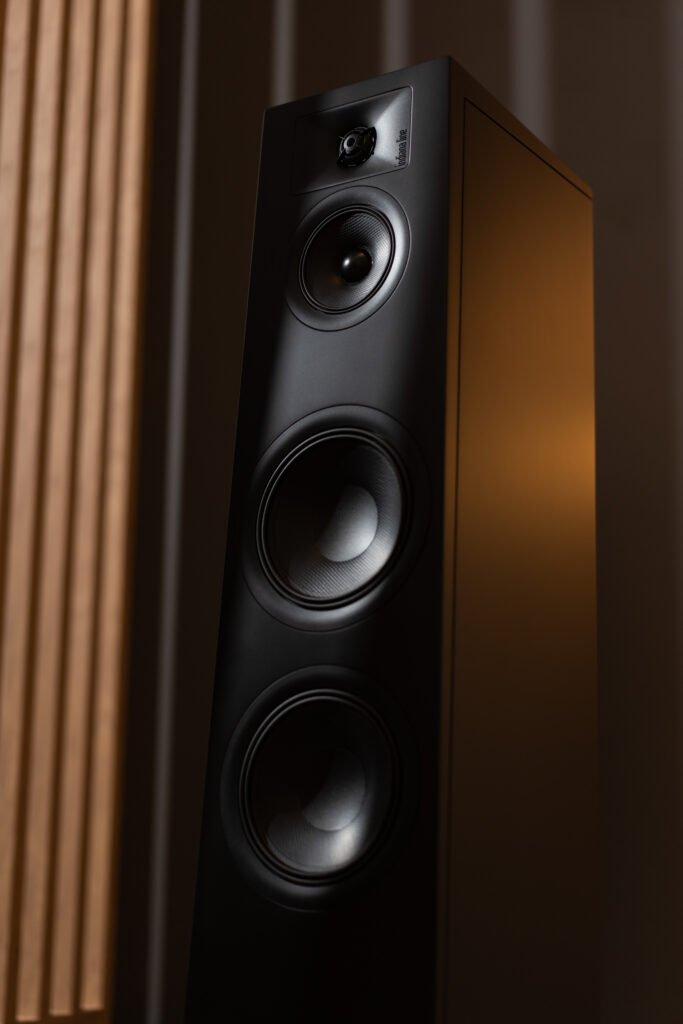
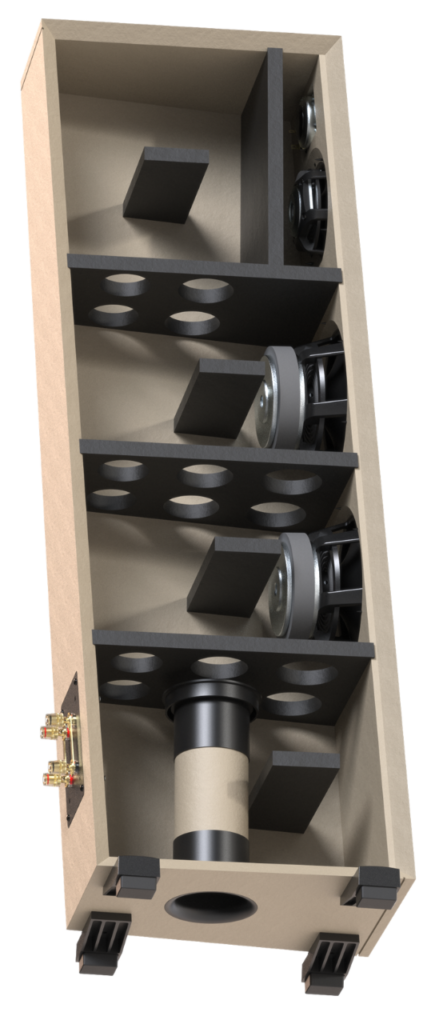
The choices behind the materials list are careful and considered. Curv woven polypropylene forms the cone diaphragms across the midrange and the woofers, which gives the family a shared material character. An aluminum-magnesium dome tweeter handles the treble. The enclosure is built from MDF with black bamboo forming the internal bracing. Every element is designed in house. We believe this kind of vertical thinking is exactly what gives a speaker a consistent tone, because the same minds make the decisions for the cone, the cabinet, and the filter that ties them together. When the company says a choice was made for sonic reasons, that decision was made and heard under one roof.
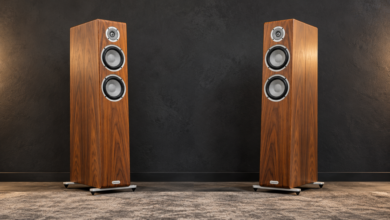
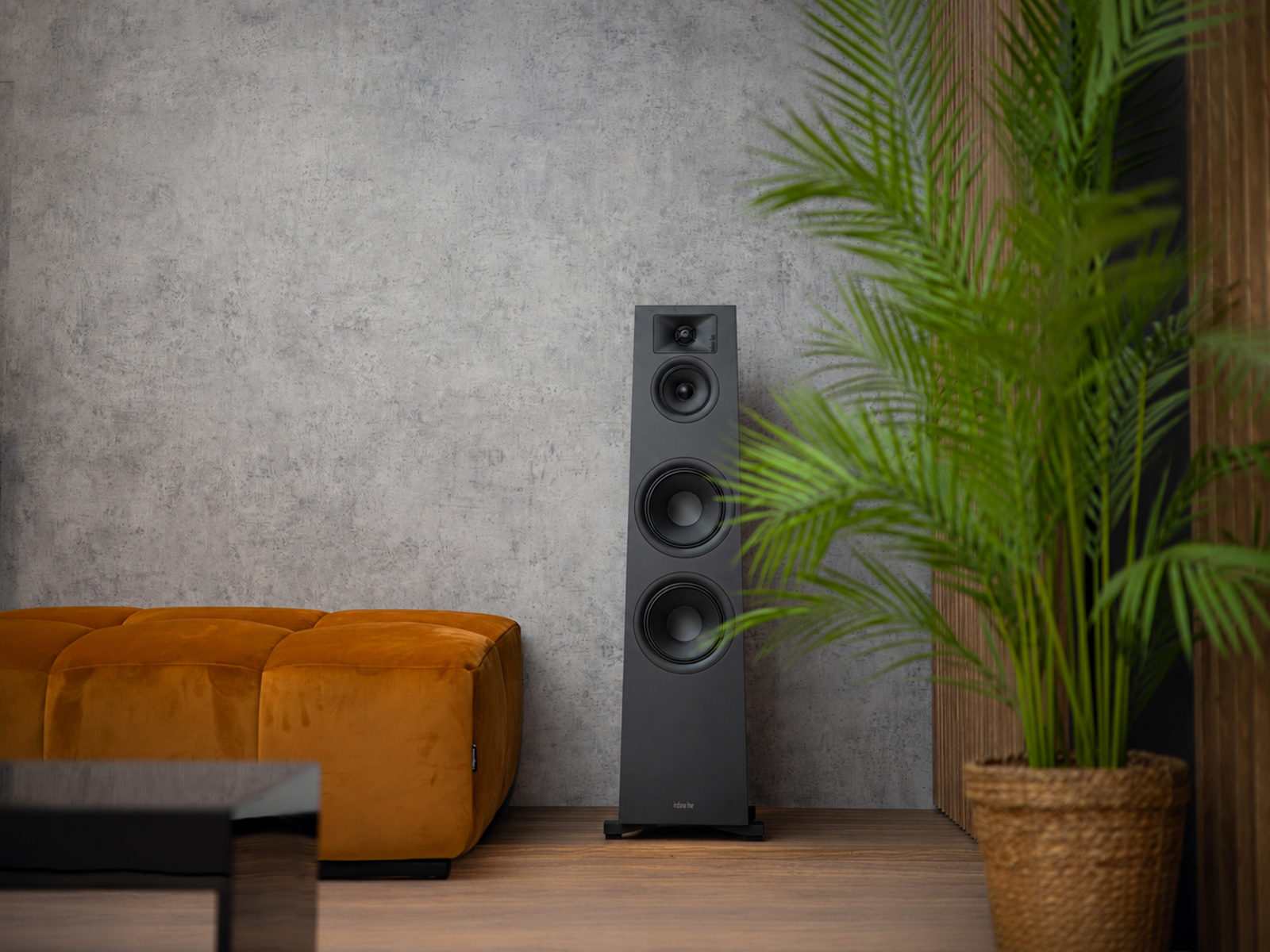
There is also a romance to the form that we find difficult to ignore, and we are not embarrassed to admit, it shaped how we felt sitting in front of the pair. With the magnetic grille fitted, the cabinet becomes a minimalist monolith. The trapezoidal profile is meant to recall the silhouette of the ancient lyre, the very instrument that gives the speaker its name. A lyre is famed for harmony and defined by simple lines, and that is a lovely thing for a loudspeaker to aspire to. As we sat with the pair across many evenings, that image stayed with us, and we got the feeling that the engineers wanted exactly that: an object that looks like it should sing in tune with itself.
Before moving on, we want to dwell on the word coherence for a moment longer, because it is the thread that runs through everything we heard. A three-way speaker plays music through three different types of drivers. These drivers have to hand over music to one another, once at the low crossover frequency and once at the high crossover frequency. Every handoff is a chance for the timing, the tone, or the phase to slip, and the ear is ruthless about noticing when it does, even when the listener cannot name what is wrong. When coherence is done wrong, the speaker takes on a split character. The tweeter sounds one way, the woofers another, and the ear perceives a seam where the music should flow as one. A single instrument that should come from one point splits in two: the higher tones from one spot, the lower tones from another. This grows particularly apparent and annoying with voices, where, for example, a pronounced S arrives as a screech, divided from the body of the voice beneath it. When a designer pays no particular attention to this fundamental aspect of loudspeaker engineering, wind instruments, to take another example, acquire a fatiguing and unconvincing character, because the brain works to make sense of what it receives, compensating for the timing discrepancies, phase errors, and a plethora of related problems that show up when each driver makes its own distinct sound.
The Symbiotic Drive idea, with its very specific filter slopes and specially selected materials, is an attempt to make those handoffs disappear. This is one of the most important ambitions any speaker at any price can hold, and the Lira 6 holds it in high regard.
Build Quality, Cabinet, and the Art of Standing Still
The enclosure is made out of MDF with a front baffle measuring 21 mm, finished in multiple layers of durable matte lacquer over a PE and PU base. Our review pair arrived in a matte finish that resists fingerprints beautifully, and dusting it with a microfibre cloth leaves the surface clean, even, and free of the tiny swirl marks that high-gloss piano lacquers sometimes pick up. We dust a great many speakers in this house, and we noticed and appreciated this at once.
The cabinet is gently tilted backwards, this being a deliberate engineering choice. The rear tilt aligns the drivers in time so that their output arrives at the listening position in phase, which is one of the practical foundations of the coherence we keep returning to. The side walls are non-parallel, converging toward the center in the vertical plane, wider at the base, and tapering as they rise. This geometry reduces internal standing waves, and it gives the speaker a slender, almost weightless look. Inside, the black bamboo bracing ties into the side panels, the rear, and notably the thick front baffle, damping vibration so the enclosure itself stays quiet while the drivers do the talking. A quiet cabinet is an unglamorous thing to engineer well, and it is one of the reasons clean speakers sound clean.
The speaker rests on four rubber-damped feet that mechanically decouple it from the floor. This matters more than the description suggests because the bass reflex port fires downward through the base of the cabinet. The feet set the gap that lets the port breathe into the floor without turbulence or compression, using floor coupling to reinforce the low end in a controlled, predictable way. It is a tidy, practical solution. It leaves no marks on the floor, due to the lack of spikes, and it makes the speaker forgiving about placement.
A small detail earns our affection: the precision trim rings that conceal the driver mounting hardware and sit perfectly flush with the baffle. There is a 10 mm gap between the black grille frame and the cabinet edges, a gap that accentuates the trapezoidal architecture and the crisp side profile. These are the touches of people who care about how a thing looks, and they are the touches we tend to notice and appreciate.
The Tweeter
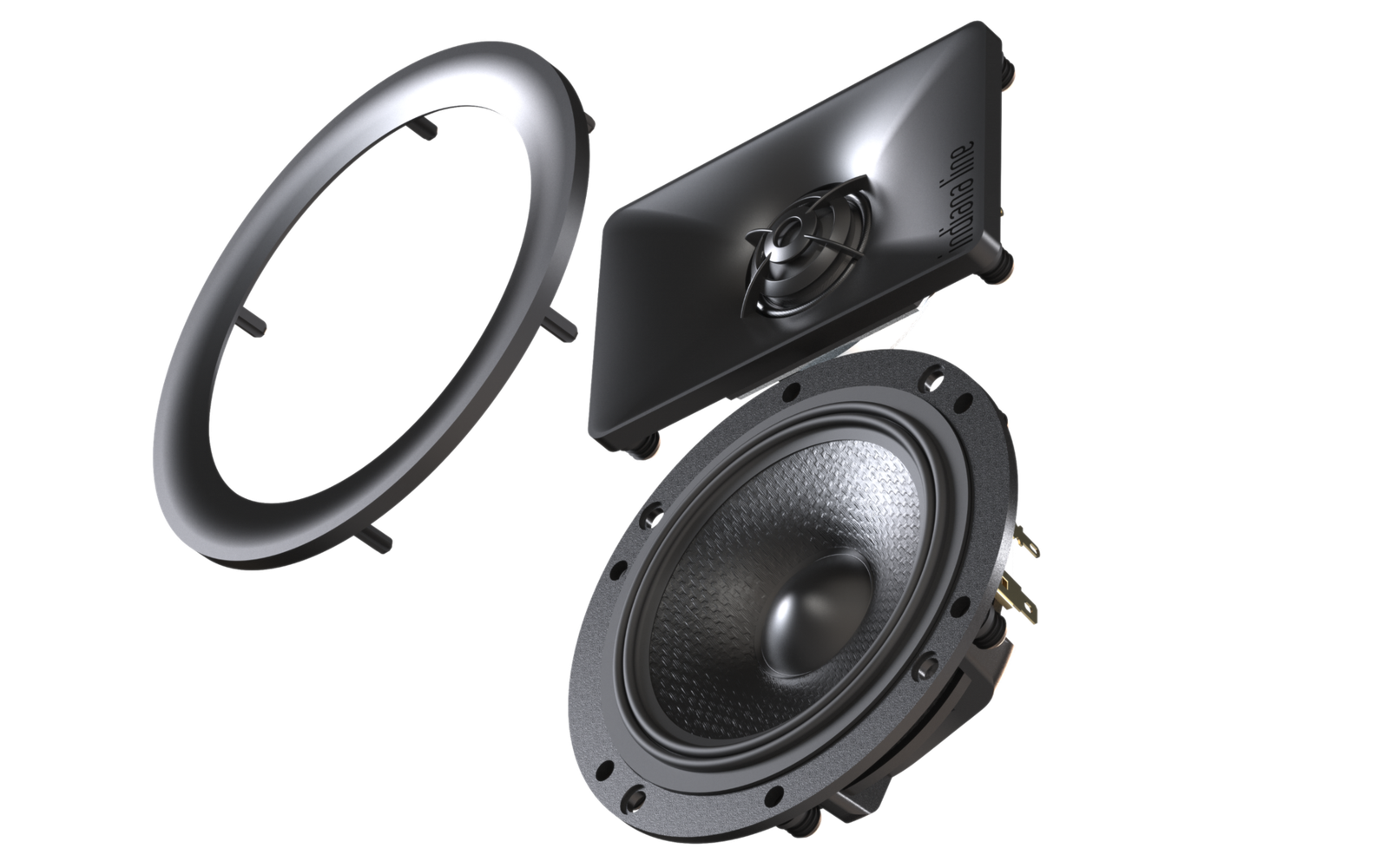
The tweeter is a 28 mm aluminum magnesium dome. The company states that it offers around 21% more radiating area than a standard unit of its class, which translates into higher sensitivity. We note that this figure comes from the manufacturer and we have no independent measurement to confirm it, so treat it as a stated specification and not a confirmed measurement. A narrow surround reduces the moving mass, the dome itself is formed to roughly 50 microns, and the motor uses a refined neodymium assembly with a copper shorting ring and advanced cooling. A hybrid rear chamber damping system lowers the resonance frequency, which the company links to extremely low distortion.
What interests us most is how the tweeter is integrated, because integration is key. The tweeter sits inside a 3D Guide waveguide with an EQ Ring phase corrector set into it, and the inclined baffle aligns it with the midrange below. The company states that the two voice coils are aligned to the listener within 1 mm and describes the motor topologies of the tweeter and the midrange as identical. The intent is unmistakable, and it is the right one: the top two drivers are meant to behave as one source, and in our listening sessions, that intent comes through clearly and consistently.
The Midrange
A 4.5 inch midrange, or 120 mm driver, works in its own sealed enclosure. It features a cast aluminum basket and a ground up Curv diaphragm. It is driven by a neodymium underhung voice coil motor that is, as noted, topologically identical to the tweeter’s. A purpose designed Dual Wave suspension and a precisely profiled trim ring stabilize the diaphragm and control its dispersion. The design lets the midrange shoulder part of the upper band easing the load on the tweeter, and then hand off cleanly to the pair of woofers below.
The human voice and the body of most acoustic instruments live in the midband, and that is the region where the ear is least forgiving. Special considerations like the ones taken when designing the mid-tweeter duo are very important and add a lot to the end result. We applaud the engineering and decisions behind these choices.
The Woofers
Bass duties fall to two 7-inch long-throw woofers, 175 mm each, again built around Curv diaphragms so they share the material family with the midrange above. Their sophisticated motor systems use robust ferrite magnets and three. Yes, you read that right, 3 shorting rings, two aluminum and one copper, to tightly control inductance and yield extraordinarily low dynamic distortion. The second generation Dual Wave suspensions enable a wide operating bandwidth and suppress intermodulation distortion at large excursions, working in harmony with the Curv cones to prevent the breakdown modes.
Two 7-inch cones present a large total radiating area while keeping the moving mass of each cone low, which helps with speed and definition in the bass area. It also lets the designer place the drivers to manage the floor and the room more gracefully. The down firing, floor coupled port completes the picture, turning the boundary near the floor into an ally. The promise here is a bass that is full, physical, and quick. Needless to say, we were eager to test that promise against the music we trust.
The Crossover
Under the black anodized aluminum terminal plate sits a three way crossover network with air core inductors and polypropylene capacitors, with the low frequency and the mid and high frequency sections physically separated from one another to reduce interaction. The crossover points sit at 600 Hz and 3000 Hz. The network supports biwiring and biamping, and it incorporates dedicated LC Trap circuits that extend the usable range of the partnering woofer and tweeter.
The detail we find most telling is that the crossover uses very gentle slopes, so that all the sections work in phase coherence, with the company describing the goal as a speaker that behaves like a single full range transducer. Gentle slopes are a brave choice. They require drivers that stay well behaved far outside their nominal band, because each driver keeps contributing across a wider region, and any misbehavior shows up instantly. When the drivers are good enough to allow it, gentle slopes reward the listener with a seamlessness that steeper filters work hard to approach. That phrase, a single full range transducer, sits right at the heart of the Symbiotic Drive idea, and it is a wonderfully pleasant quality we easily heard across every track.
Measurements
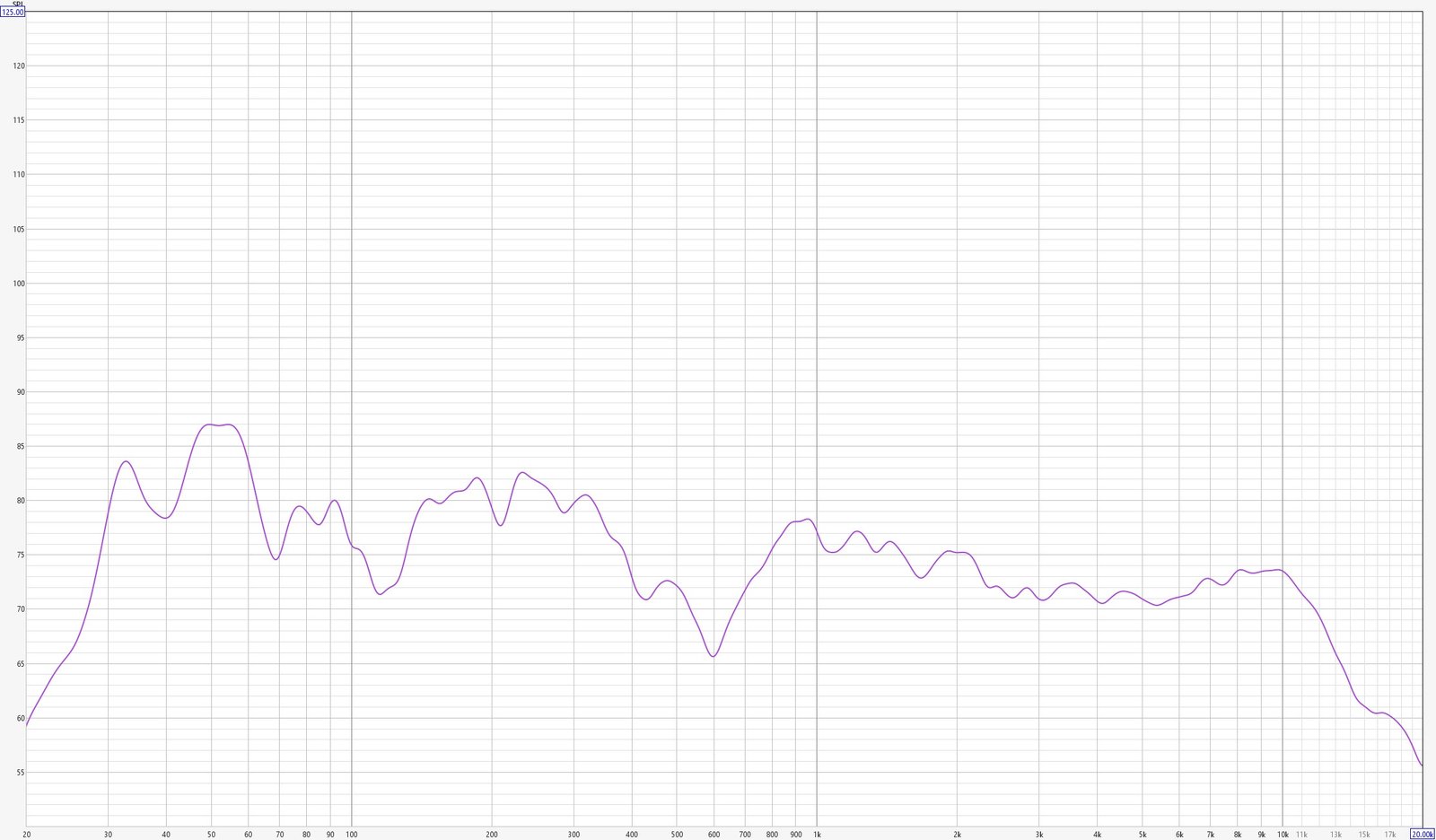
Measurement taken in-room (room dimensions – 5 meters by 6 meters by 4 meters tall), off-axis, at the listening position
The off-axis response of the Indiana Line Lira 6 shows a speaker with strong low-frequency energy and a generally relaxed upper-frequency balance.
Bass extension is impressive, with useful output reaching deep in the 30 Hz realm. There is also an elevation between 45-60 Hz. This gives the Lira 6 substantial weight, depth, and room-filling authority, although part of this rise is certainly influenced by room placement and room modes. Several pronounced dips at 70, 120, and 600 Hz also look more like cancellation effects from the room, floor, and measurement position than intrinsic defects in the loudspeaker.
From around 800 Hz upward, the response becomes considerably smoother. The gradual downward trend from the upper midrange through the treble is normal for an off-axis measurement and indicates a controlled, non-aggressive radiation pattern. Between roughly 1 and 10 kHz, variations are relatively moderate, suggesting that vocals and instruments retain a coherent tonal character even away from the central listening position.
The strong decline above approximately 10–12 kHz is also expected off-axis, particularly if the measurement was taken at a significant horizontal angle. It should not automatically be interpreted as a lack of treble extension on-axis. It suggests that the Lira 6 directs its highest frequencies more narrowly than its midrange. We did not feel a lack of sparkle or high-frequency energy from the speakers.
Overall, this graph points toward a full-bodied, bass-rich and slightly relaxed presentation, with very good off-axis smoothness through the most important midrange and lower-treble region.
System Matching: A Speaker That Plays Nice and Scales Up
As we have been adamant about across this whole hobby, matching is everything. It is the discipline that separates a system that merely performs from one that transcends. We want to be very clear, because it would be unfair to frighten you: unlike other speakers, the Lira 6 is forgiving of honest mistakes. The 90 dB sensitivity and the benign 4 to 8 ohm load make it an easy electrical partner, and the manufacturer’s 30 to 200 W recommendation gives you a good window to work within.
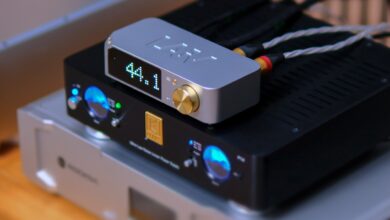
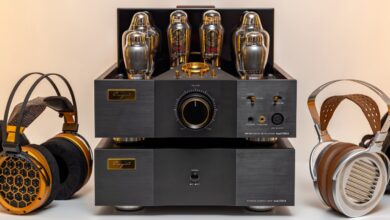
We still rotated through our reference electronics, because it is our nature and because each amplifier tells a different truth about a speaker. We listened with the brutally honest Chord Ultima Integrated, with the heavily biased Class A Burson Timekeeper Voyager, and with the Aeolos Ultra, a tube amplifier we ran on its standard tubes, so no tube rolling here. For digital, we moved between two players, the resolving, organic Gustard R30 and the lusher, more harmonically rich 3DLab Nano Network Player Platinum v5. The source throughout was streaming at full resolution through Tidal and Qobuz. We let every amplifier warm up properly before we judged it, because we have learned the hard way that cold electronics tell lies.
The pairings taught us more than any single component did. With the Chord and the Gustard together, the presentation turned cutthroat, the two of them piling honesty on honesty until the top end grew sharper than we wanted to live with. Swap the Gustard for the 3DLab, and the picture changes completely. The Chord kept its speed and its grip, the 3DLab poured warmth and harmonic density back into the midrange and the top, and the combination was excellent, the finest match we found across the whole rotation.
The Burson told a softer story. Paired with the 3DLab it leaned mellow, the Class A smoothness and the lush player easing into each other until we wanted more edge and drive. With the Gustard in front of it the Burson firmed up and found its footing, and that was the pairing we settled on for it.
The Aeolos Ultra was the easy one. The tube amplifier performed excellently with both digital sources, holding its composure and its sweetness whether we fed it the Gustard or the 3DLab, and it left us happy either way. It is the kind of pairing flexibility that makes a speaker easy to recommend.
Our settled preference, the pairing that made us stop swapping and start simply listening, brought the Chord Ultima Integrated together with the 3DLab Nano Network Player Platinum v5 and cables on the warmer side of neutral. It gave us the speed and the resolution we love with the body and the sweetness the Lira 6 rewards, and it left the air and the fine detail at the top fully intact. We would gently steer you toward a partner with a little warmth and harmonic density, because the aluminum magnesium dome is very detailed and at times forward in the presentation. This is a preference. The speaker is balanced enough that a more neutral or a faster direction can make you very happy too, and your room and your taste should have the final word.
We feel compelled to add a thought that applies far beyond this one speaker. Every loudspeaker ever built is operating below its potential in most of the systems it ends up in. The speaker sitting in your room right now has more to give than you have yet heard from it, and the right source, amplifier, and cables can make it feel like a different instrument. The lovely thing about the Lira 6 is that it gives you a great deal of its potential straight away, and then it gives you more as you refine. It meets you where you are, and it walks the rest of the road with you. That is a rare and welcoming temperament.
This is precisely what a good dealer exists for, and we want to say it so loudly. A dealer who listens, asks the right questions, and has heard hundreds of combinations can save you the months of trial and error that we sign up for willingly. Walk in with an open mind, bring your own music, and let them show you what these speakers can do. The potential is always there. It simply takes someone patient enough to find it, and with the Lira 6, finding is a pleasure.
Setup, Room, and Reference System
One of our two listening rooms measures roughly 5.2 by 6.3 metres, with a tall 4-metre ceiling, a comfortable domestic living space, because we believe a speaker should be judged in the kind of room you will use. We place the Lira 6 a sensible distance from the rear wall and toe them in gently toward the listening position, then trust the rear tilt and the time alignment to do their work at the seat. Because the port fires downward and uses floor coupling, the speaker is forgiving about wall proximity, which is a welcoming convenience in a living room where furniture and doors do not care about audiophile ideals. Moving the speakers closer to the wall reinforces the bass, so we tune to taste from there, and we found the useful range of placement to be pleasantly wide.
On a thick carpet, you will want to confirm the port can still breathe; on a hard floor, the coupling is immediate, and the bass tightens noticeably. Once the foundation feels solid underfoot, the bass firms up and the soundstage locks into place between the speakers. We spent an enjoyable afternoon on this, and the light speaker, at 18kg, repaid the attention.
We also experimented with the magnetic grille on and off. The acoustically transparent fabric is well chosen, and the tonal balance changes very little with the grille fitted, so you can leave it on for the minimalist monolith look without guilt. For our most critical listening, we removed it, as we always do, and for everyday evenings, we were happy to let the lyre keep its clean face.
Reference system for these sessions:
- Amplification: Chord Ultima Integrated, Burson Timekeeper Voyager, Aeolos Ultra
- DACs: Gustard R30 and 3DLab Nano Network Player Platinum v5
- Source: streaming at full resolution via Tidal and Qobuz
- Interconnects: Roboli XLR 2100
- Speaker cables: Roboli HP8000 4m
- Power Cables: Roboli Power5200
Listening Sessions
With the matching settled, every track became a small act of discovery.

Oxygène 8 from Jean Michel Jarre is an atmospheric, shimmering recording with a great deal happening in the upper registers, built from synthesizer textures that test a treble unit for transparency across long stretches. These speakers gave us something we quite expected, knowing how beautifully coherent they are, and we liked it enormously. The aluminum magnesium dome stays quietly out of the way. It keeps the top end smooth and even, delivers the high frequencies in a natural way, and just steps aside to let the music through. We have spent a long time listening to ribbon and AMT tweeters in speakers costing many times the price of these, and yes, those tweeters have a way of delivering grace and excellence, dazzling you with detail and shimmer, though sometimes they do this at the expense of making the tweeter itself become the main part of the experience. What this humble dome does is a disappearing act, keeping you from ever realizing it is there, exactly as a full-range driver would.

We have returned to HOME score by Armand Amar many times over the years, and it has a special place in our hearts, so we brought it to the Lira 6 with high expectations. Armand Amar writes for acoustic instruments, human players, and the physical rooms they perform in, and a recording like this stresses a speaker to tell the truth about breath, air, and timing. On The Desert, the wind instruments were delivered with a body and a realism that left us speechless. The duduk and the flutes carried the weight of the breath behind them, every note shaped by a human player, and the reedy texture of each instrument came through whole, from the first push of air to the final decay. This is where the speaker’s coherence earns its keep, because a wind instrument usually plays across the handoff between the midrange and the tweeter, and any seam there robs the note of its realism. The Lira 6 kept the instrument in one piece. It came from a single point, placed in the room with us, and we had the distinct feeling of the instrument playing in the house, a few steps away, breathing the same air we did. Then we listened to Fire, and the Lira 6 showed us the other end of its range with the same composure. The bass arrived deep, full, and physical, with weight that pressurized the room and settled into the floor through the down firing port. It stayed clean and controlled as it descended, the low notes keeping their pitch and their shape, the foundation grounding everything above it. The coherence held here, too. The bass connected seamlessly to the instruments, so the whole presentation stood as one piece, from the deepest foundation to the highest breath. It is our feeling that few speakers at this price hold themselves together this well across the entire musical spectrum.

This recording by Chris Botti with Andrea Bocelli, Italia, we save deliberately for a moment when the system feels fully settled and ready, and the Lira 6 has earned it. We heard Andrea’s voice with a presence that moved us. The midrange gave the baritone chest resonance and body, and the instruments in the opening phrases blended seamlessly with the voice, each element naturally connected to everything around it. When the trumpet entered, it rose through the mix with a sweetness that stayed present and full of body, a feeling we could follow with ease all the way up. We could feel the brass as well as hear it, the sensation that accompanies live brass in a physical room. It is the kind of moment that reminds us, every time, why we fell into this hobby, one quiet evening at a time. The Lira 6 communicated it with a completeness that we enjoyed enormously.

Loreena Mckennitt’s voice is one of the great tests of a speaker’s ability to render emotional intimacy, and Dante’s Prayer is one of her most intimate and devastating recorded performances. Through the Lira 6 it arrived with enough emotional charge to bring a quiet, warm, relaxed atmosphere to the room that we did not want to break. The midrange and the tweeter together tracked the decay of her voice into near silence, following the last traces of reverb into the noise floor and holding the thread the whole way down. The voice was rendered sweet, intimate, and with feeling, every inflection was communicated as it was meant to be. The boundary between the acoustic space captured on the recording and the acoustic space we were sitting in became gently ambiguous, and we were fully inside the experience. One thing to note is that Loreena’s voice carries accentuated s notes, and through the Lira 6 they simply belonged to her voice, present and natural, never bothering us or drawing attention to themselves. That is how coherent these speakers are. Wonderful. We are not embarrassed to say, it brought a stillness over both of us. That is the intended response, and the speaker delivered it.

We turned to Ethel Cain and A House in Nebraska to hear how the Lira 6 would handle a voice set against a wall of distorted guitar, and it answered with a composure that won us over. There is a particular kind of recording that exposes a speaker without mercy, where an intimate vocal sits in front of a thick, saturated guitar, and the two live so close together in the mix that, if the speaker lets them bleed into one another, the voice loses its edges, and the music turns to mush, becoming highly annoying. A House in Nebraska is exactly that kind of recording, and we brought it to the Lira 6 knowing it would ask hard questions.
Her voice sat at the very front, clear, intimate, and full of feelings, every catch and quiet break of it communicated as she meant it. Midrange had body and stillness when needed, anchoring it in the center of the soundstage with a focus that never wavered. Behind her, the distorted guitar lived in its own space, thick and saturated.
Throughout the whole track, her voice stayed distinct and whole, the guitar kept its place toward the back, and the two occupied the same air without ever collapsing together. Here the coherence does its quiet work once more.
Then we pushed the volume up, the kind of level this song invites and almost demands, because music this emotionally charged wants to surround you. The Lira 6 kept its footing without a flicker of strain. The voice stayed composed, the distorted guitar held its form, and the space between the two stayed open and clear all the way up. The presentation held together as one piece, from the breath at the front to the saturated wall behind it, composed and unshaken at a very high level.

Traust by Heilung is built from deep ritual drums, low octaves, and layered voices, and it descends further than most recordings dare, pressing down toward 30Hz. The Lira 6 went there effortlessly. The two 7-inch woofers and the down-firing port reached the bottom of the track with enough weight that they loaded the room and pressed down into the floor, the lowest octaves arriving full and physical, felt in the chest as much as heard.
What caught our attention was the composure that accompanied the deep notes. The bass kept its pitch and its shape throughout the frequency range, every drum strike landing with a clean edge and a defined body. Deep bass only convinces when it stays connected to everything above it, and here the foundation tied seamlessly into the drums and the chants. Here, the coherence shows itself at the very bottom of the frequency range.

Feet on the Ground by Pernille Rosendahl is a hard track for any speaker, and this is where the Lira 6 fell short. We have been honest with you throughout this review about how much these speakers have given us, so we owe you the same honesty when something does not come together, and here it did not. The track is built on a deep, driving low end, the kind of bass that should hit you in the chest, go deep, and sustain at the same time, all the while pushing the whole song forward, and that foundation is the engine the rest of the music rides on.
Pernille Rosendahl’s voice was wonderfully rendered. It sat at the front with body and presence, every phrase clear and full of feeling, anchored in the center of the soundstage with the focus and the natural tone we have come to treasure from these speakers. The midrange held her exactly where she belonged, intimate and close, and on the strength of the voice alone, the track drew us in. This part, the Lira 6 did beautifully, and it is worth saying this plainly before we come to the rest.
The bass is where the trouble lies. The deepest low end came across complete, short of the slam and the kick that the track leans on for timing. So the foundation arrived thin and held back when the song called for weight and impact. The drive that should have pushed the music forward stayed quiet, and the track lost the physical punch at its core. We feel that this is the one place where two 7 inch woofers and a slim cabinet reach their limit, and a recording this demanding in the lowest registers asks for more than they can give. The voice kept us listening. The bottom end left us wanting more.
A Word on Where the Lira 6 Sits
At its price, the Lira 6 stands among capable, well-known budget floorstanders, and it has a clear sense of its own character. As stated again and again throughout this review, we believe this speaker is built around coherence, the sense that the whole of it speaks with one voice from the lowest note to the highest shimmer reproduced by the dome. It rewards the long evening, the listening at the end of that busy, stress-filled day, at home, where ease and honesty keep you in the listening chair or couch …for hours.
Conclusion
It is our feeling that Indiana Line has built something remarkable for the price, while also moving the engineering forward in measurable ways. The sealed, dedicated midrange, the time-aligned drivers, the down-firing and floor-coupled bass, the phase coherent crossover, the quiet, well-braced cabinet: these are choices made in the service of one complete instrument. The result is a speaker that is easy to drive, easy to place, forgiving of imperfect partners, and pleasantly musical. That combination at this price is rare enough that we want to celebrate it.
Please do not take our word for it, and we mean that sincerely. Book a demo, bring your own tracks, and spend an evening with the pair. Try a warmer amplifier and a more honest one, listen at low volumes and at moderate ones, leave the grille on and take it off, and let the speakers breathe and settle. If the coherence and the tonal honesty speak to you the way they spoke to us, you will know within an hour, and you will keep finding new reasons to smile for months afterward. And if curiosity turns into something more serious, ask your dealer about available offers, because that can only add to the pleasure of bringing them home.
We also want to thank AVStore for their endless generosity and goodwill. It is because of them that we had the opportunity to live with these wonderful speakers for an entire month.
Pros
- Remarkable coherence from top to bottom; the whole speaker sings with one voice, which is its defining quality.
- Easy to drive and easy to live with: 90 dB sensitivity, a benign 4 to 8 ohm load, and a wide 30 to 200 W power window.
- Down firing, floor-coupled bass is friendly about wall proximity and stays clean and full in normal rooms.
- Sealed, dedicated midrange gives voices body, stillness, and a natural sense of presence.
- Honest, detailed treble from the aluminum magnesium dome that takes on the flavor of the amplifier while staying smooth and fatigue-free.
- Scales beautifully with volume: full and detailed when quiet, authoritative when loud, and composed throughout.
- Exceptional value for the engineering and the musical result on offer.
Cons
- It greatly rewards a warmer, harmonically rich chain, where its sweetness blooms most fully.
- It is a champion of long, fatigue-free, pleasurable listening, and it would be somewhat of a miss for listeners chasing absolute cutthroat detail, surgical finesse, and earth-moving bass slam above all else.
- The down-firing port wants a level, stable footing and room to breathe, so very thick carpet deserves a moment of thought during setup.
Equipment Used
- DACs: Gustard R30 and 3DLab Nano Network Player Platinum v5
- Amplifiers: Chord Ultima Integrated, Burson Timekeeper Voyager, Aeolos Ultra
- Source: streaming at full resolution via Tidal and Qobuz
- Cables: interconnects and speaker cables on the warmer side of neutral
Every word in this review reflects our honest experience, shaped by our room, our matching, and our ears. It is, by its very nature, subjective. We have done our best to be measured and fair, and to separate what we heard from what the manufacturer claims. The only judge that finally counts is you.