Audiobyte SuperHEAD Review – The Cleanest Power I’ve Ever Heard

Anybody can make an amplifier loud. Plenty can make it punchy. A good few can make it smooth, rich, or impressive in short bursts. But creating a headphone amplifier and preamplifier that sounds clean, effortless, organic, and utterly unforced at the same time? That is a different sport altogether. That is where years of trial and error, dozens of circuit revisions, deep engineering knowledge, and a pinch of madness begin to matter.
As some of you already know, I’ve had a long relationship with Romanian digital sorcery, especially when the names Rockna Audio and Audiobyte enter the discussion. I’ve lived with enough of their creations to understand that these people are not interested in making ordinary gear. They are not in the business of chasing trends, recycling familiar topologies, or making “me too” electronics that would disappear in a sea of aluminum boxes. They usually start with a problem, then solve it in their own way, often taking the scenic route through the rabbit hole and occasionally resurfacing with something that makes you question if the rest of the industry is trying hard enough.
Most of the time, when people hear those names, they immediately think of DACs, FPGA wizardry, custom digital processing, proprietary clocks, and all the nerdy stuff that makes audio enthusiasts lose their minds. And that makes perfect sense, because both Rockna and Audiobyte have earned a serious reputation in that field. But every once in a while, the same people remind us that they’re not only obsessed with decoding zeroes and ones. Sometimes, they turn their attention to the analog domain, and when they do, things get interesting, since this is how they started it all in the late 90-ties.
Enter the Audiobyte SuperHEAD.
Even its name sounds like it walked into the room with its shoulders wide open, ready to prove a point. But as usual, a cheeky name means absolutely nothing if the unit itself can’t deliver the goods. Fortunately, this one had my curiosity long before I sat down to write a single line about it.
The first time I heard the SuperHEAD was this winter, during my visit to Rockna and Audiobyte in January 2026. I was already familiar with their digital work, so my expectations were not low to begin with, but I still wasn’t fully prepared for what I heard. It wasn’t a fireworks kind of impression. It didn’t try to stun me with fake sharpness, hyper-etched contours, or the kind of overstated “wow effect” that falls apart after a few days. What hit me instead was something much rarer: effortlessness. The sound simply flowed. It was organic, easy, controlled, and exceptionally clean, but never sterile, dry, or emotionally detached. It had that dangerous kind of refinement that sneaks under your skin slowly, and once it does, your standards quietly shift upward.
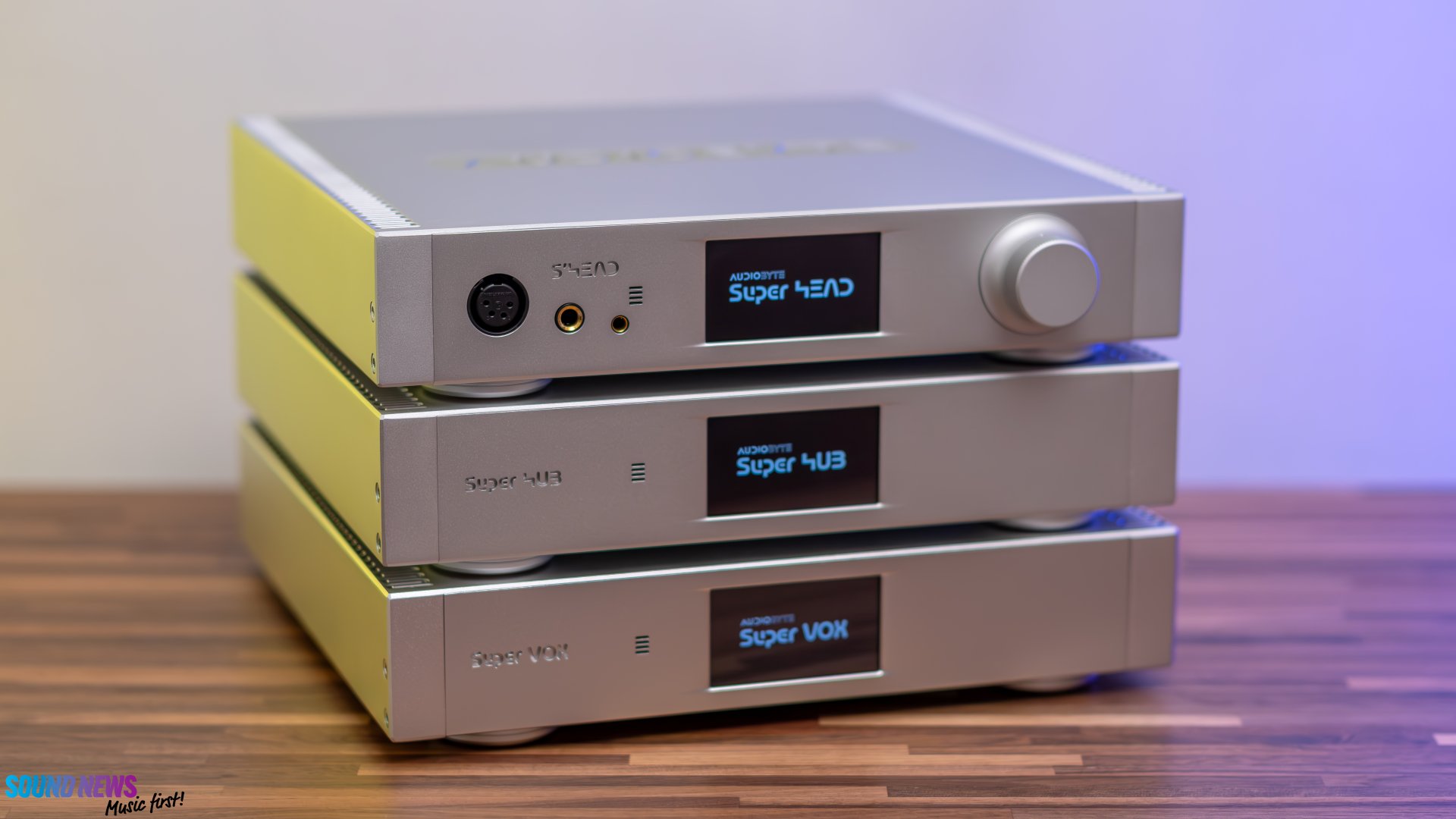
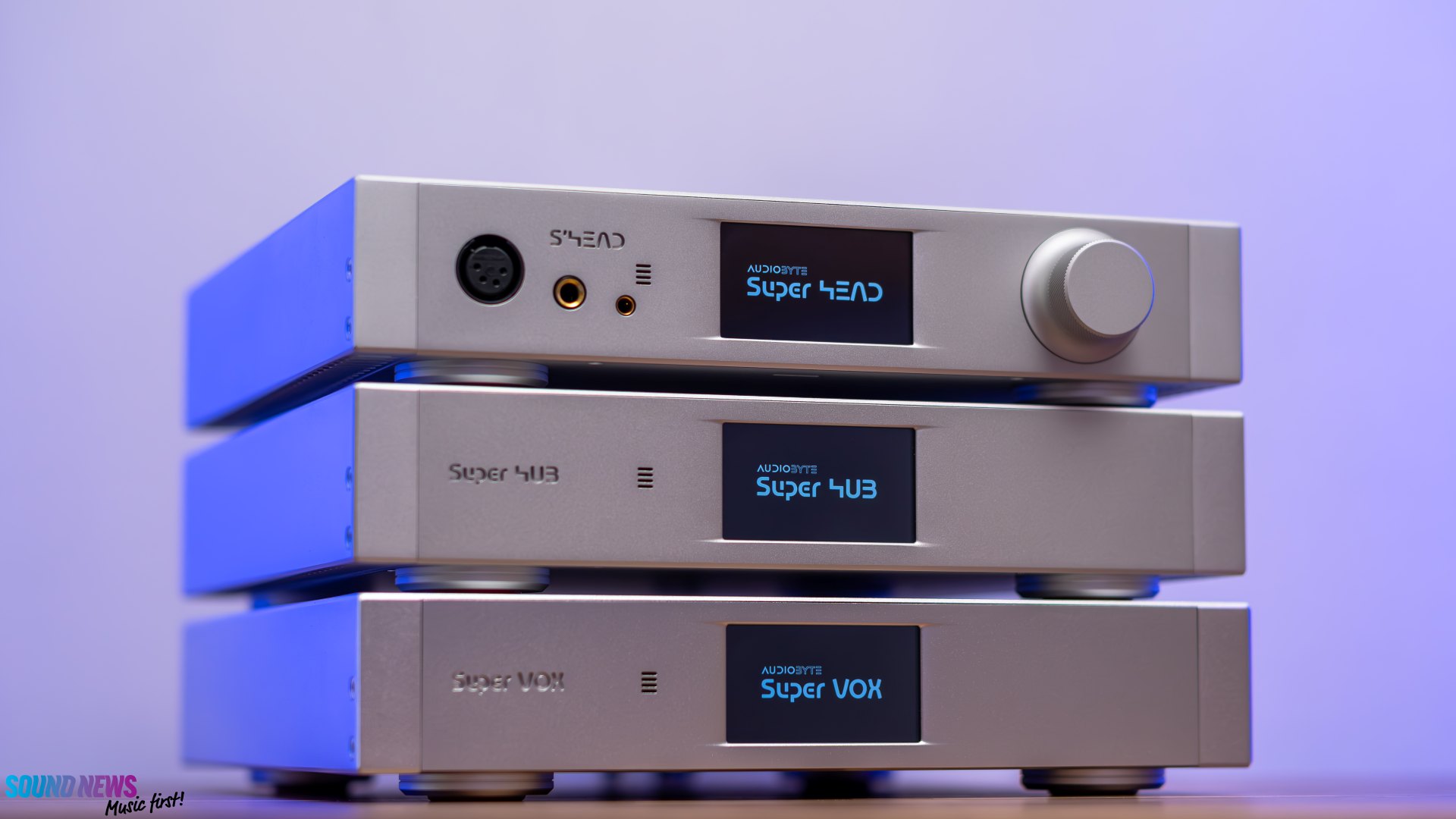
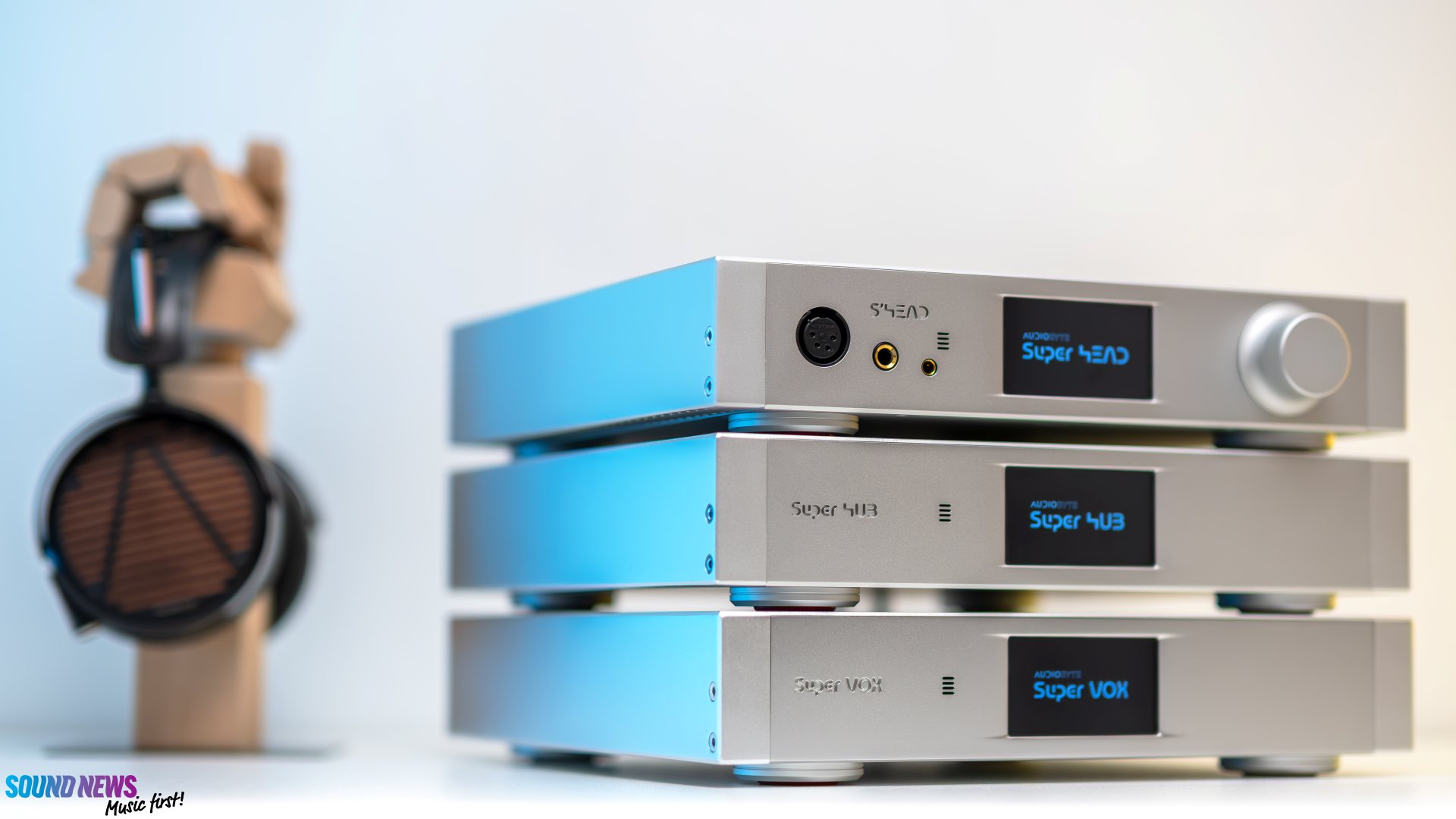
Part of that impression surely came from hearing it in the environment it was designed for, together with the rest of its family: the SuperHUB streamer, the SuperVOX DAC, and the SuperHEAD itself, working as a complete 3-in-1 ecosystem. There is always something special when electronics are conceived not as random, standalone boxes, but as a coherent system meant to work in unison. You can hear that when it happens. There is a sense of order, of balance, of internal understanding between components that often gets lost when we throw together Frankenstein systems from three to five different corners of the audio world.
But even in that context, one thing was immediately obvious: the SuperHEAD was no sidekick.
Pure analog, fully discrete, JFET input stage, MOSFET output stage, dual MUSES chips for accurate volume control, biased into push-pull Class-A operation, all for a pretty sum of $4000 in the US and €4000 here, locally. For some of us, that description alone would already be enough to skyrocket curiosity levels. But the real surprise comes when you look closer at how Audiobyte approached the power stage. Instead of using a handful of large output devices, as others often do, they went with no fewer than 64 MOSFETs. They’re smaller, but also faster settling, more stable, and subjectively more refined in their final presentation. The circuit itself remains deceptively simple, almost stubbornly so, but sometimes real mastery isn’t about how complicated an amplifier or DAC looks under the hood. Sometimes it’s about knowing exactly what to leave out.
That simplicity, combined with all that device parallelization and careful analog implementation, resulted in something I don’t say lightly: this is one of the cleanest-sounding amplifiers I have ever tried. Possibly the cleanest. Not in the boring, lifeless, over-filtered sense of the word, but in the way high-end electronics should sound when noise, grain, haze, and tension are stripped away, leaving only the signal’s purity, enough space to create a precise 3D map of the music, with the tone and timbre completely unhindered.
Of course, hearing something briefly in a factory setting and living with it in your own system are two different things. I’ve learned that lesson too many times to jump into conclusions after a first date, no matter how seductive the first kiss might be. So, I brought the SuperHEAD into a proper listening context, paired it with serious DACs, demanding headphones, and enough familiar music to understand not only what it does right, but also where it stands in the increasingly savage world of high-end head-fi and preamplification.
Today, we’re finding out if Audiobyte’s SuperHEAD is merely another beautifully executed headphone amplifier and preamplifier, or is (a lot) more than that. It will be put to the test with tiny IEMs, demanding planar magnetic cans, and stand floor speakers. I’ll even include two funky comparisons so we can better assess its performance. So, what are we waiting for? Let’s hit some eardrums!
Design & Build Quality
If there’s one thing I’ve learned over the years, it’s that you can usually tell how serious a manufacturer is long before pressing play. You don’t need measurements or a week of listening; sometimes, all it takes is a few seconds with the unit in your hands after unboxing the damn thing. The way it feels, the way light dances on its surfaces, the way every edge, cut, and material comes together, those things speak louder than spec sheets ever will.
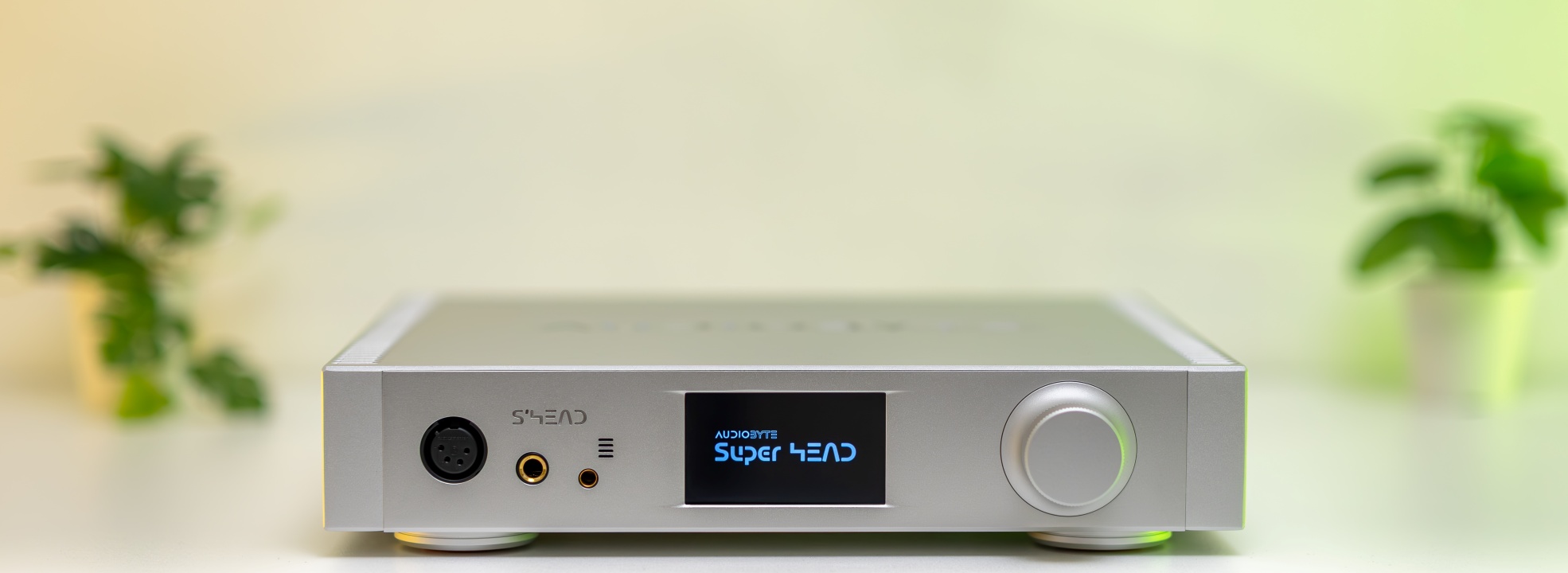
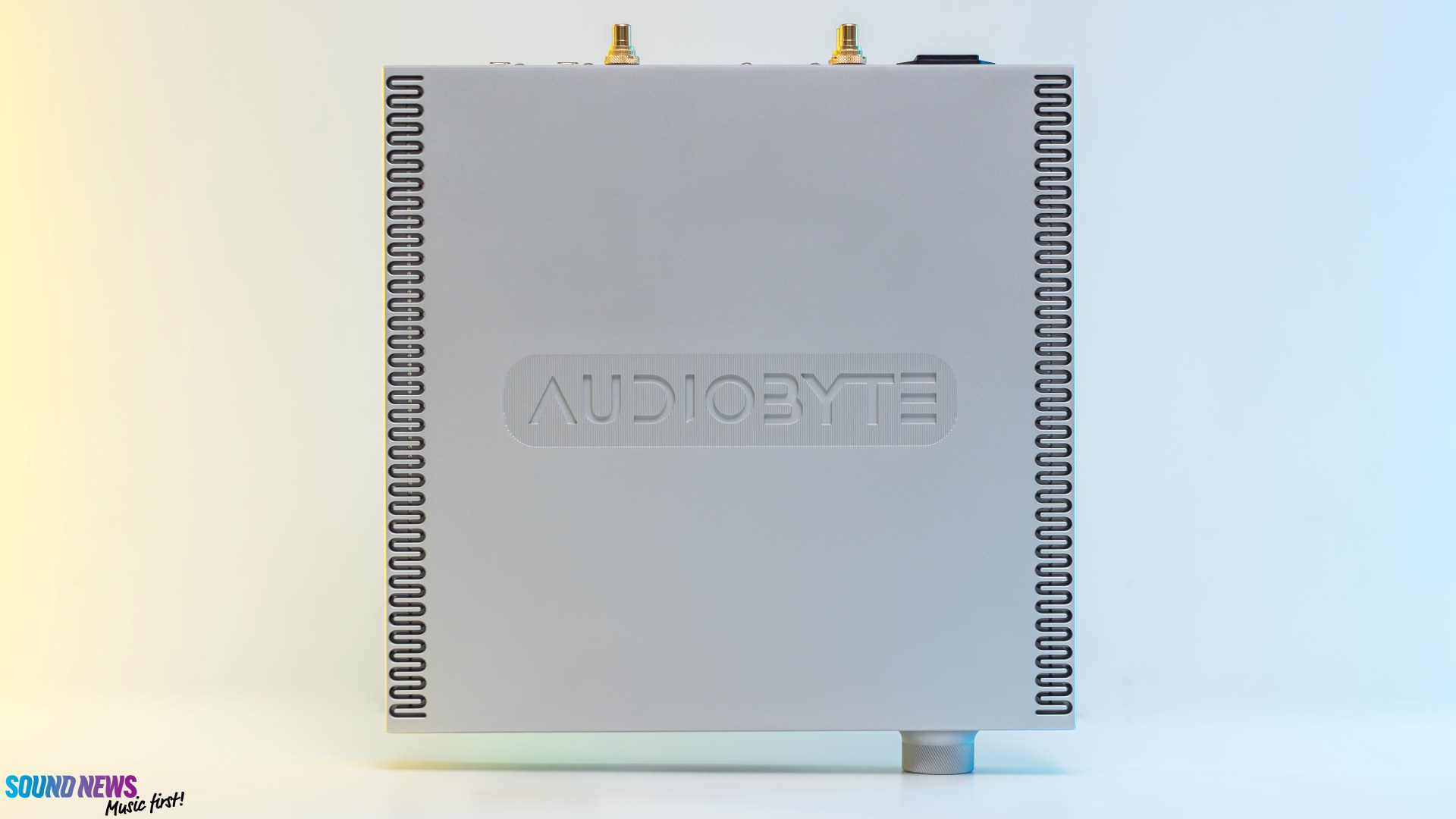
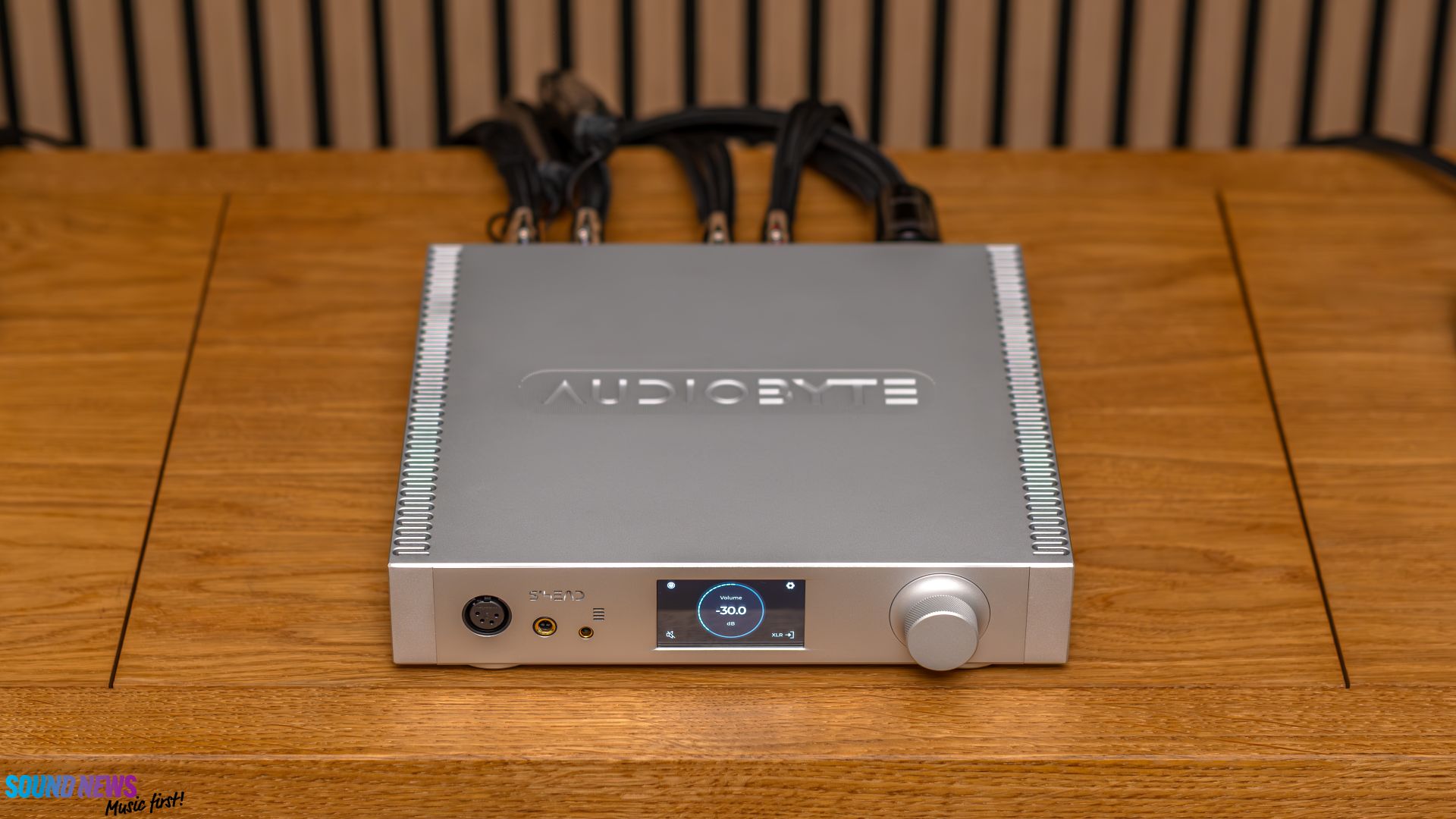
Machined out of thick aluminum plates, the SuperHEAD doesn’t try to impress with flashy gimmicks or unnecessary design decisions. It’s clean, purposeful, and unmistakably Audiobyte from every angle you’re looking at it. There is a certain confidence in its industrial design, like it knows exactly what it is and doesn’t feel the need to shout about it. The CNC work is immaculate, with tight tolerances and a finish that feels both refined and durable, the kind that won’t start showing battle scars after a couple of weeks of real-world use.
I’ve said it before, and I’ll say it again: at this level, these are no longer simple audio components; they are pieces of modern furniture. They sit in your room, occupy space, and make a statement whether you want that or not. But how about the Wife Acceptance Factor (WAF for short)? Let’s just say that my lady asked about it, what it does, and if it can replace some of the bigger boxes from the audio rack…and that’s a rarer event than having a full planetary alignment in the sky. She digs the look, and it seems that WAF is going through the roof with this one.
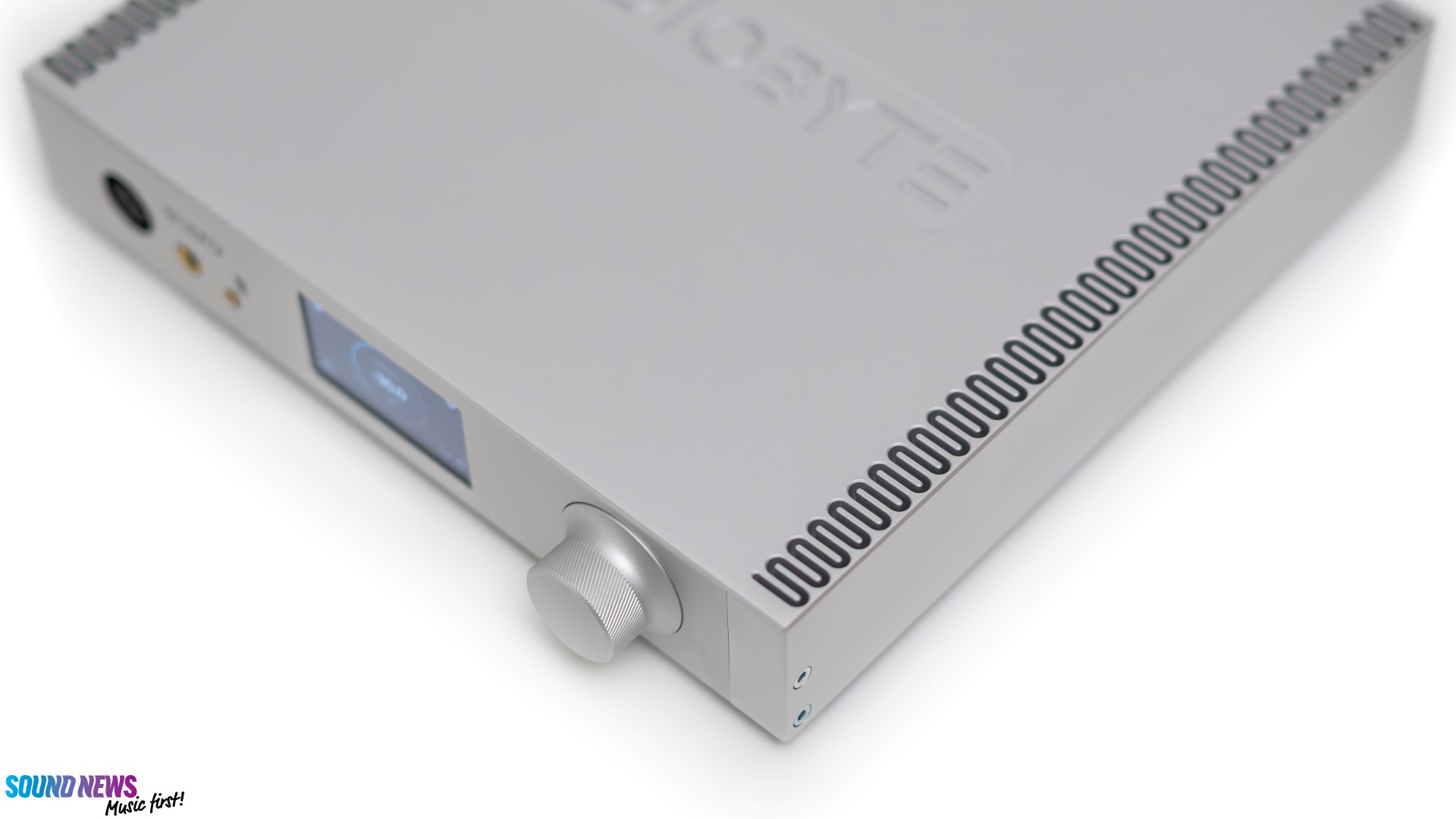
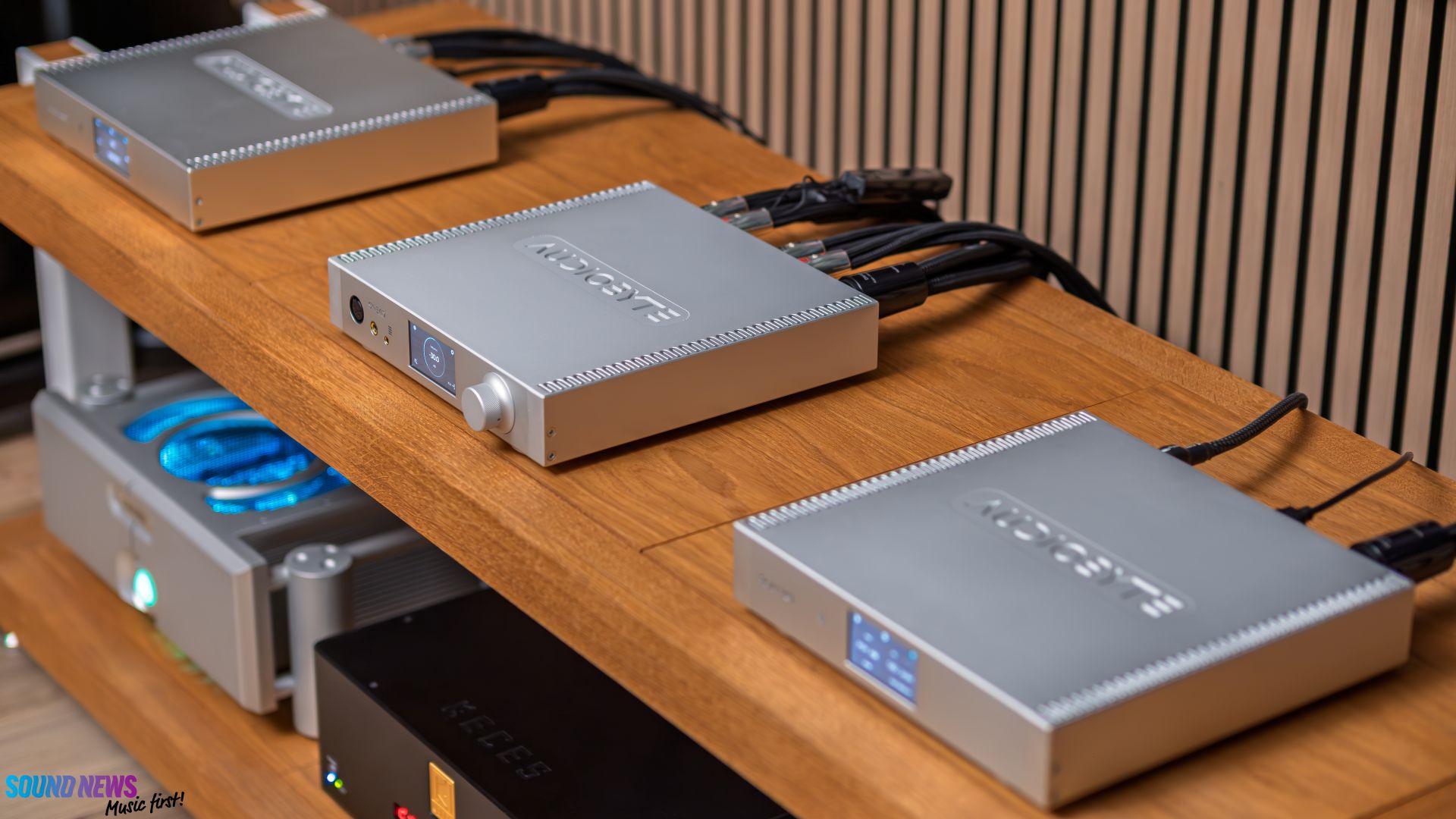
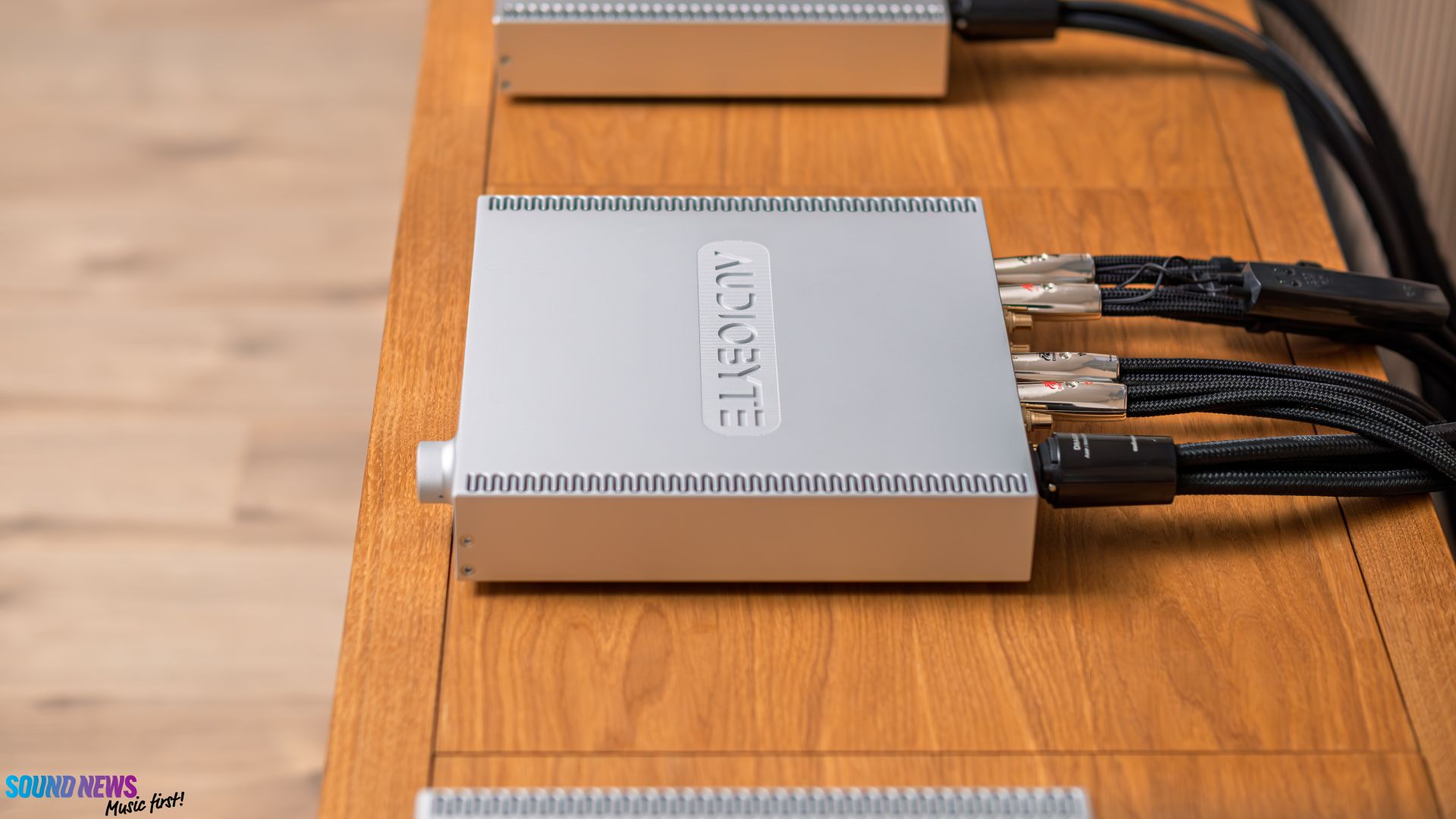
What caught my attention almost immediately were the one-of-a-kind heatsinks sculpted along its sides. Instead of going with generic fins or hidden thermal solutions, Audiobyte did something that resonates on a deeper level with this hobby of ours. The heatsinks resemble sound waves frozen in time, flowing across the chassis in a pattern that feels both artistic and functional. And yes, they are not there just for show. Running a push-pull Class-A topology with a serious number of output devices means heat is part of the equation, and those sculpted fins are doing a proper job of dissipating it. The unit gets warm, as expected, but never alarmingly so, provided you give it a bit of breathing room. Personally, I would still place it on a dedicated shelf or rack level, just to let those “sound waves” do their thing without obstruction.
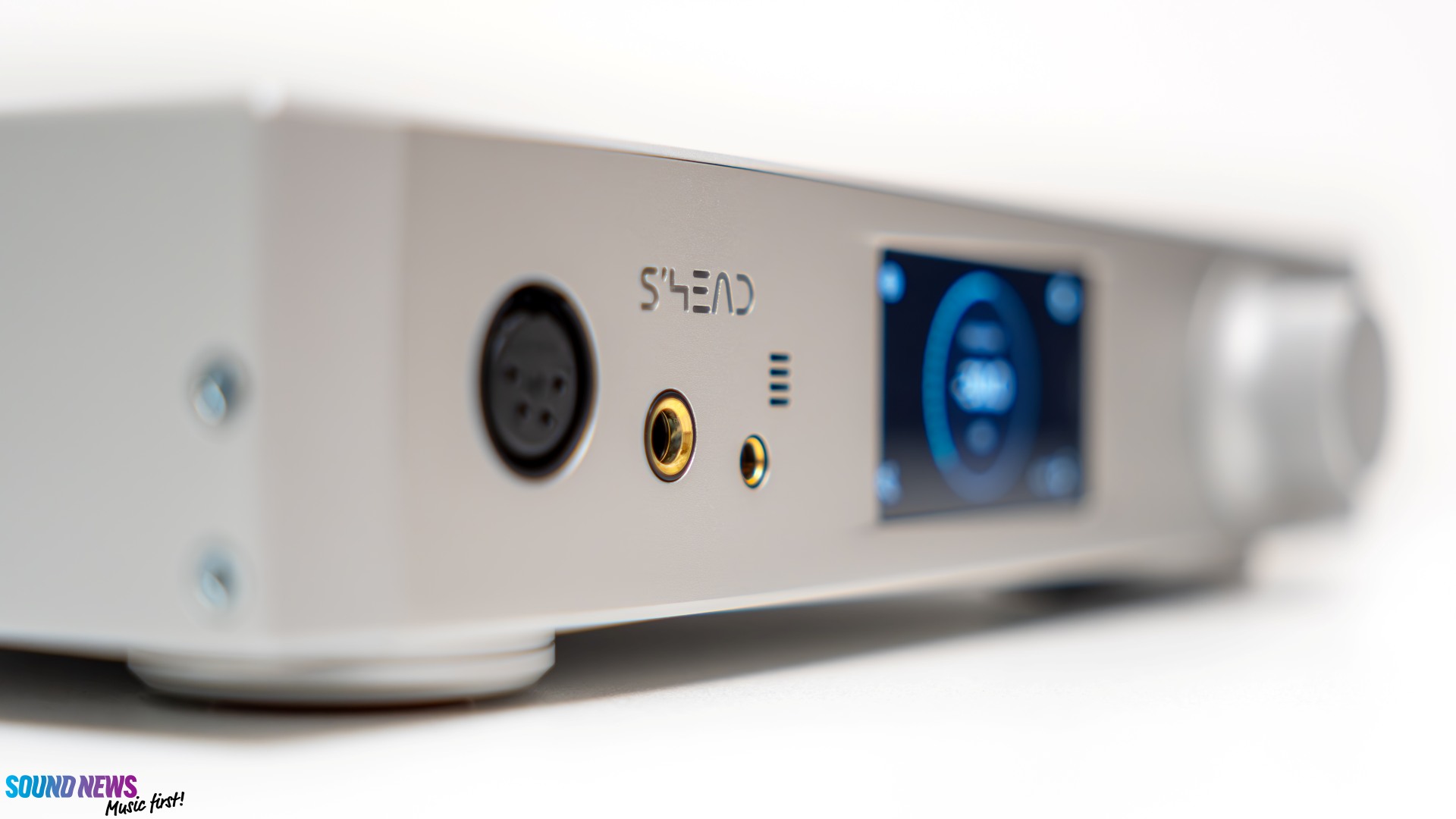
Moving to the front panel, things become even more interesting. The volume knob of the SuperHEAD is, without exaggeration, one of the most tactile and refined implementations I’ve experienced to date. It has that perfect balance of physical resistance and smoothness, where every tiny adjustment feels deliberate, precise, and controlled. There’s no wobble, looseness, or artificial friction, just a beautifully damped motion that makes you want to interact with it more than you probably should. It’s one of those elements that might seem secondary on paper, but in daily use, it becomes a central part of the experience. You don’t just adjust volume, you feel it, and that connection matters more than most people realize.
Underneath the unit, Audiobyte went the extra mile with a set of wide metallic feet, each one carefully machined and paired with rubber pads that provide both stability and vibration control. They are not the usual afterthoughts you see on lesser gear. These feet are substantial, properly integrated into the design, and wide enough to give the unit a planted, confident stance. Once placed on a surface, the SuperHEAD doesn’t slide around, it doesn’t wobble, it simply sits there like it belongs.
There are also a lot of smaller details that reveal themselves only after spending more time with it. The way the edges are slightly softened to the touch, the perfect alignment of every connector, the subtle transitions between surfaces, and the absence of visible screws in key areas all contribute to a sense of cohesion that is hard to fake.
If I were to nitpick a little (and you know, I always do!), I could say that its minimalist approach might feel too restrained for those looking for visual drama. There are no glowing logos with RGB lights, no oversized high-resolution displays with trillion colors on board, no unnecessary distractions. But then again, that would completely miss the point.
Controls & Connectivity
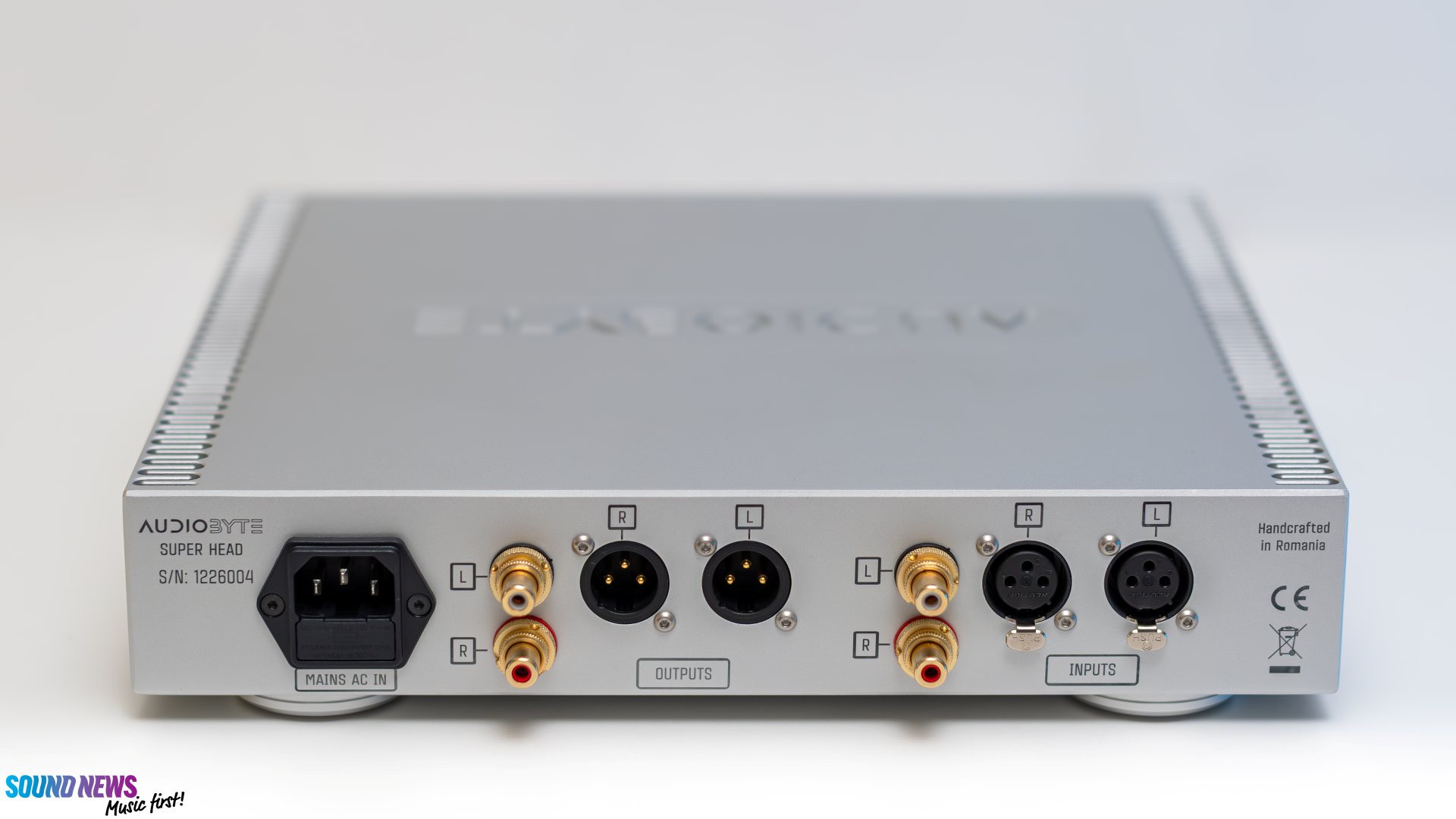
At first glance, the SuperHEAD keeps things clean and straightforward, avoiding unnecessary clutter on both the front and rear panels. Around the back, you’ll find the usual suspects done right: both RCA and XLR inputs and outputs, allowing it to function not only as a headphone amplifier, but also as a fully capable preamplifier in a speaker-based setup. This flexibility is important, especially for those of us who like to mix head-fi sessions with proper loudspeaker listening without constantly reconfiguring the system.
Signal routing is clean, connectors are of high quality, and spacing is generous enough to accommodate thicker interconnects. Small detail, big quality-of-life improvement. When used as part of the full stack together with the SuperVOX DAC and SuperHUB streamer, controlling everything becomes a seamless experience. And this is where Audiobyte gives you two distinct ways of commanding the system, both equally well thought out.
The first and probably the most intuitive when you’re sitting close to your gear is via the touch screen interface found on all three devices, yes, including the SuperHEAD. It is incredibly responsive, fast, and fluid. It feels natural, almost like using a modern smartphone, and after a few minutes of interaction, it becomes second nature. There is no learning curve, just a direct connection between your intent and the system’s response.
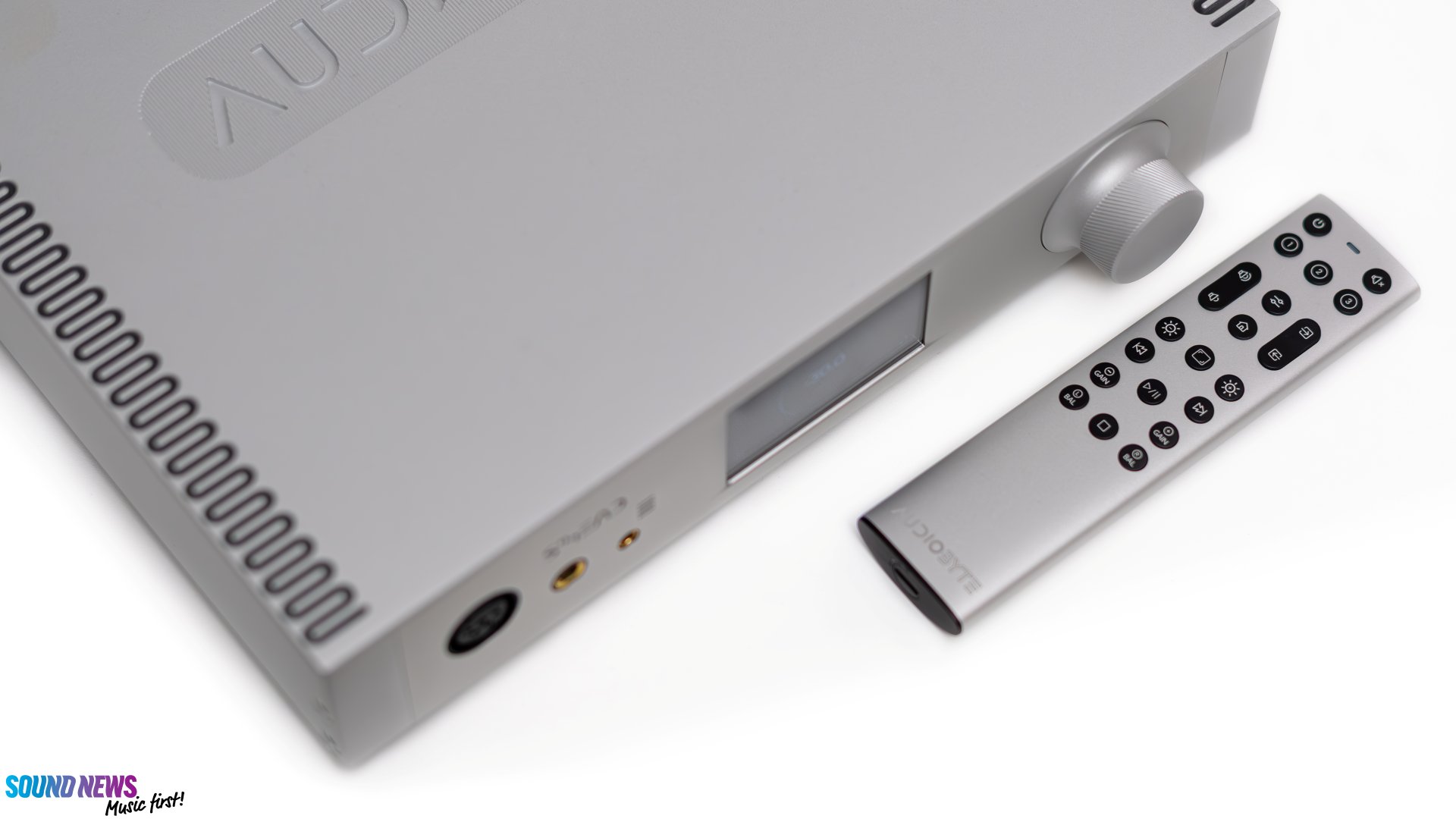
The second method comes in the form of a beautifully executed, full CNC-machined aluminum remote control. And just like the unit itself, this is not your average plastic afterthought thrown into the box (I’m looking at you, Gustard!). It has weight, it has presence, and more importantly, it’s well-made.
In practice, I found myself using both methods depending on the situation. When working at my desk or sitting close to the head-fi system, the touch interface was the quickest and most satisfying way of navigating through settings and adjusting volume. When relaxing on the sofa, working as a preamp with lights dimmed, the remote became the obvious choice
Under its Hood
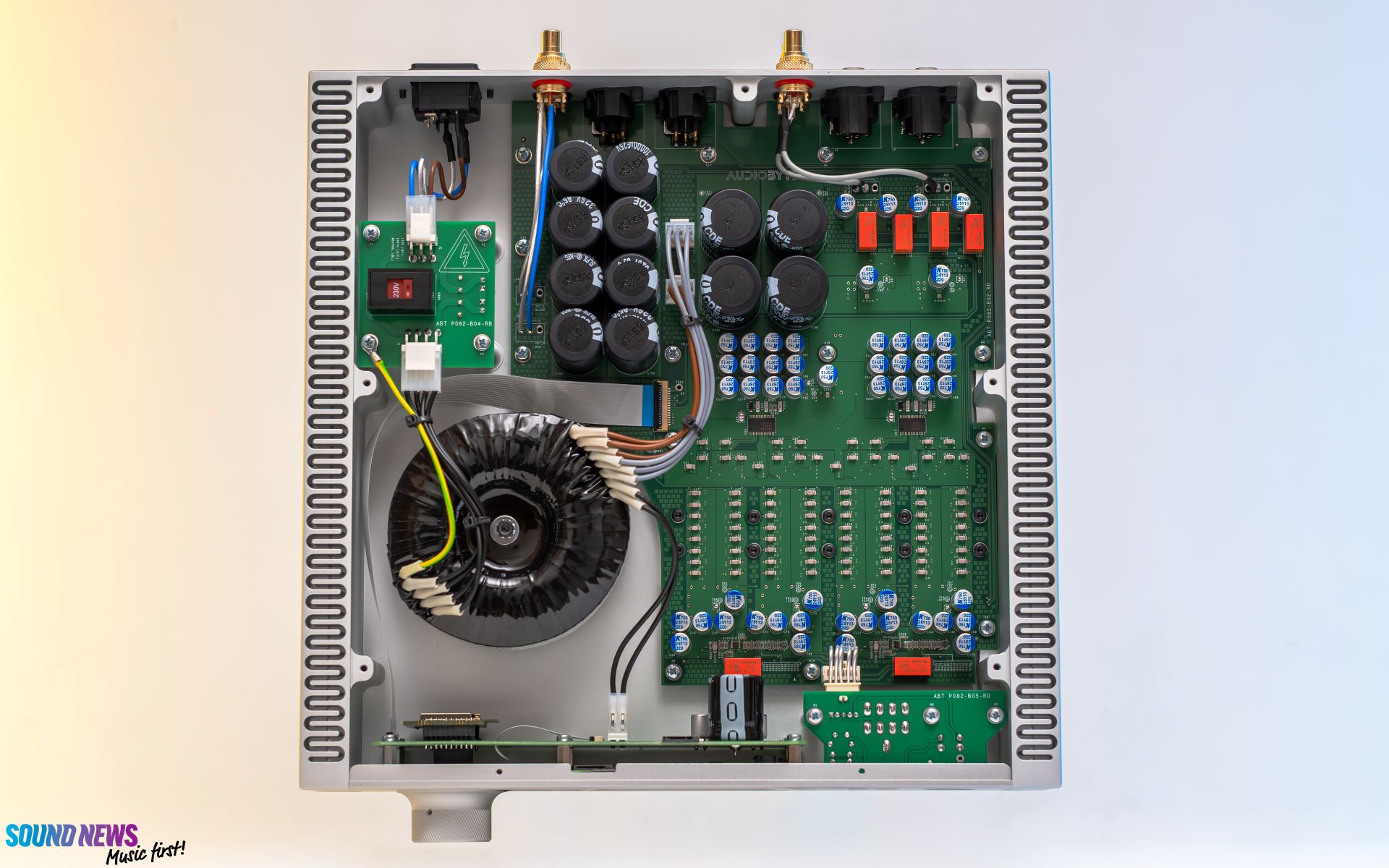
At its core, this is a pure analog, fully discrete design, built around a push-pull Class-A topology. And before moving forward, let’s pause for a second here, because those words are often thrown around loosely. Running a push-pull Class-A stage is not the easiest or the most efficient way of building an amplifier. It generates heat, it wastes power, and it requires careful biasing to keep everything stable. But when done right, it brings something that’s becoming increasingly rare: linearity, effortlessness, and control without forcing the sound into submission.
The SuperHEAD doesn’t rely on op-amps in its signal path, it doesn’t cut corners, and it doesn’t try to cheat physics or acoustics. Instead, it builds everything from the ground up, starting with a JFET input stage. That choice alone says a lot about the intended voicing. JFETs are known for their low noise, high input impedance, and naturally smooth transfer characteristics, making them ideal for preserving the integrity of the incoming signal without adding grain or artificial sharpness.
From there, the signal is handed over to what is arguably the most intriguing part of this design: the output stage. Instead of going with a handful of large output devices, Audiobyte opted for a parallel array of 64 MOSFETs. Yes, sixty-four. They are smaller individually, but when used in large numbers like this, they bring several key advantages: improved thermal stability, faster settling behavior, and a more refined, evenly distributed current delivery. It’s a different philosophy compared to designs that rely on brute force with fewer, bigger transistors. This is more about finesse and control, about spreading the workload intelligently rather than concentrating it.
And the result of that approach is reflected directly in its power delivery. The SuperHEAD outputs a serious 9 Watts per channel into 32 Ohms and around 5.8 Watts into 50 Ohms, numbers that already place it comfortably in the drive pretty much anything you throw at it category. But raw wattage is only part of the story. What matters just as much is how that power is delivered, how stable it remains under load, and how gracefully it handles dynamic swings.
Even more impressive is its maximum output of 17V RMS into 100 Ohms, available both from the headphone output and when used as a preamplifier. That kind of voltage swing ensures excellent compatibility with a wide range of headphones and power amplifiers alike, giving it the flexibility to act as the centerpiece in both head-fi and speaker-based systems.
Of course, none of this would matter much without a solid foundation underneath. Feeding this entire circuit is an oversized linear transformer, followed by a generously implemented power supply section packed with a substantial amount of filtering capacitance and proper regulation stages. In fact, about two-thirds of its entire internal space is occupied by the power supply implementation. Clean, stable, and abundant power is the backbone of high-end audio, and the SuperHEAD treats it as such.
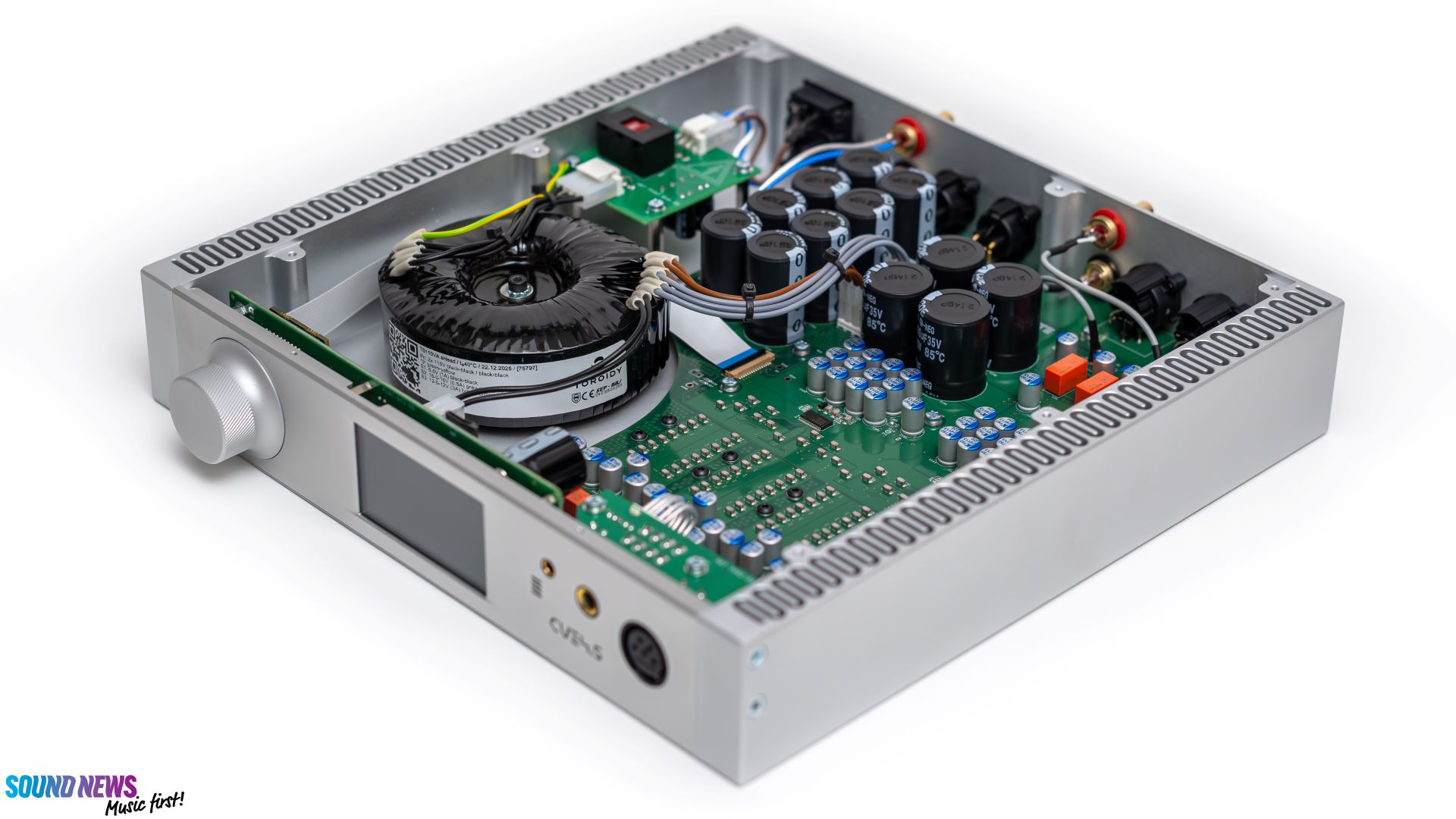
Zooming further into the circuit, you’ll also find the use of tens of C0G capacitors (also called NP0) for local decoupling, a detail that might fly under the radar for many, but carries real importance. C0G capacitors are among the most stable and linear ceramic capacitors available, with virtually no voltage coefficient and no microphonic behavior. In practice, that means cleaner, more predictable power delivery at the micro level, especially critical around sensitive gain stages, quietly contributing to lowering distortion and preserving signal integrity.
Instead of using a basic potentiometer or a generic digital solution, the SuperHEAD employs dual MUSES chips for precise and transparent volume attenuation and gain control. This ensures excellent channel matching even at low listening levels, something that becomes extremely important when using ultra-sensitive IEMs or listening quietly at night via speakers. The implementation feels consistent, accurate, and free of the typical issues associated with lesser volume control solutions.
In the end, we are looking at an ultra-short signal path, a well-chosen topology, an overbuilt power supply, and a highly controlled output stage working together in harmony.
Test Equipment
Before you ask, the Audiobyte SuperHEAD was primarily used in a head-fi battle station, but I also tried it as a preamplifier in a well-thought-out stereo rig.
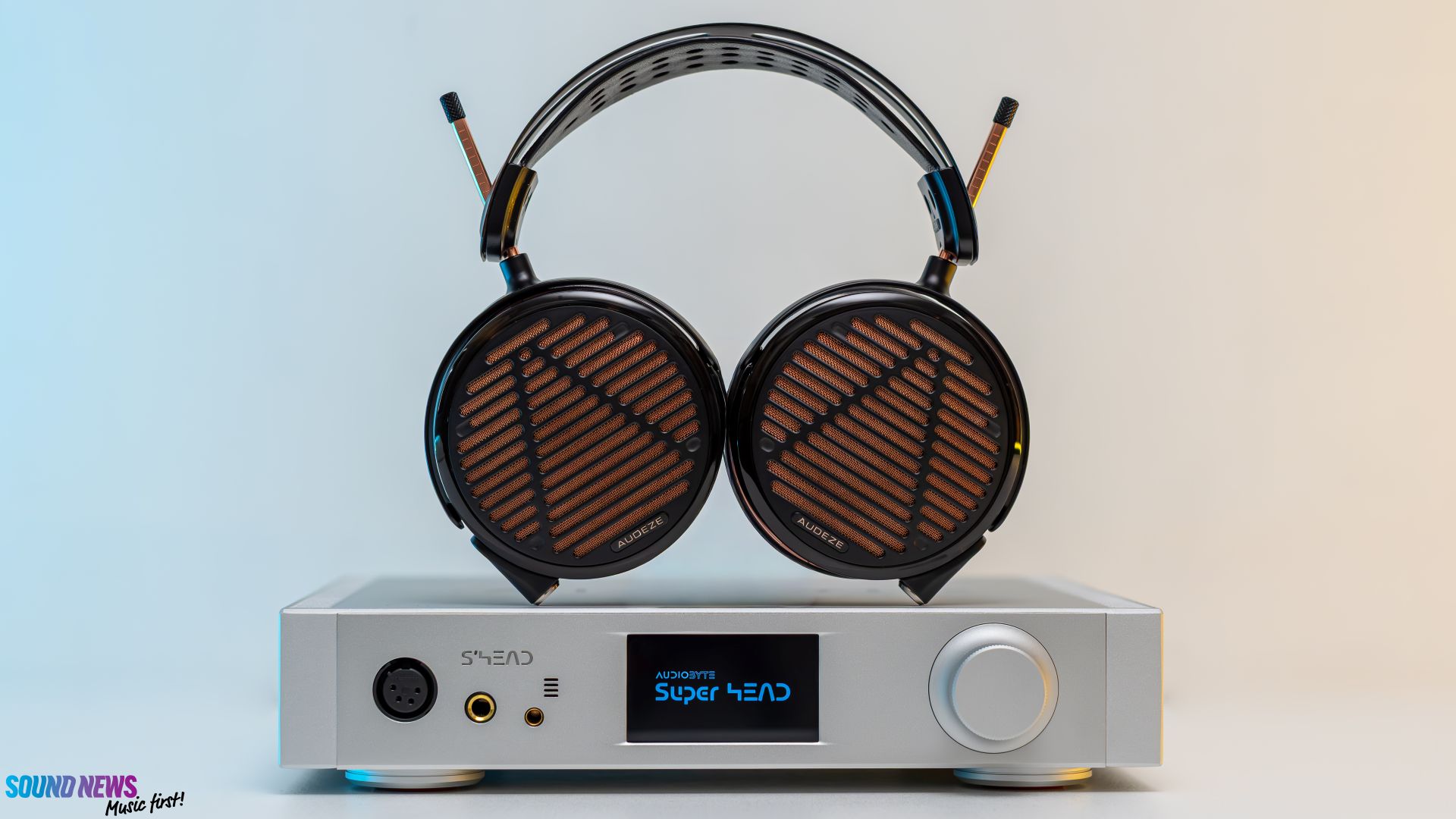
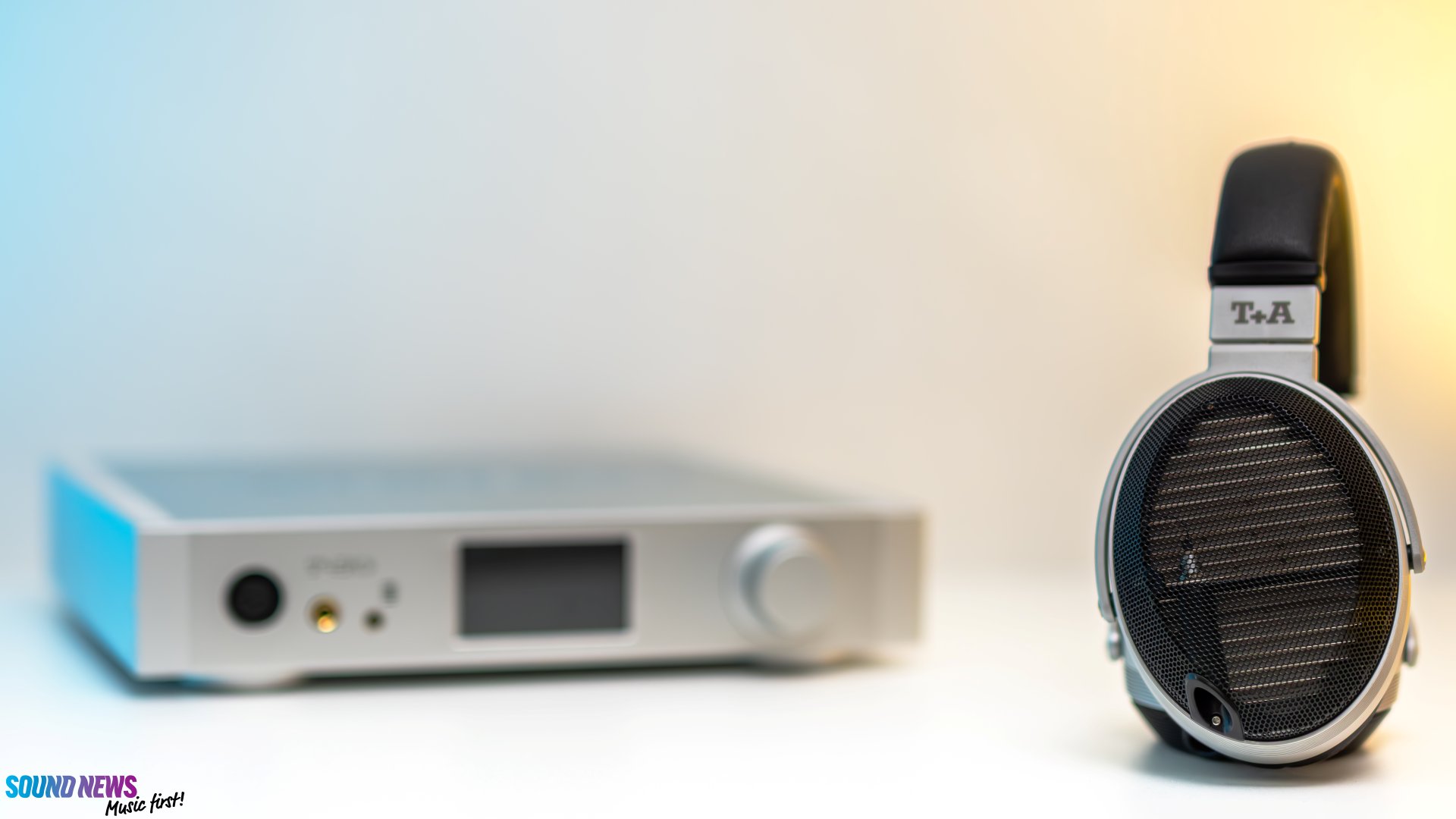
This is an end-game solid-state headphone amplifier, which is why it was imperative to use it with as many headphones as possible, ranging from dynamic to planar-magnetic types, available in both closed-back and open-back configurations. For the sake of science, I will also test its noise floor with a few ultra-sensitive IEMs, but most of my testing will focus on a pair of HiFiMan Susvara OG, Audeze LCD-5S, T+A Solitaire P, Bandoss Avija, and Sennheiser HD800S.
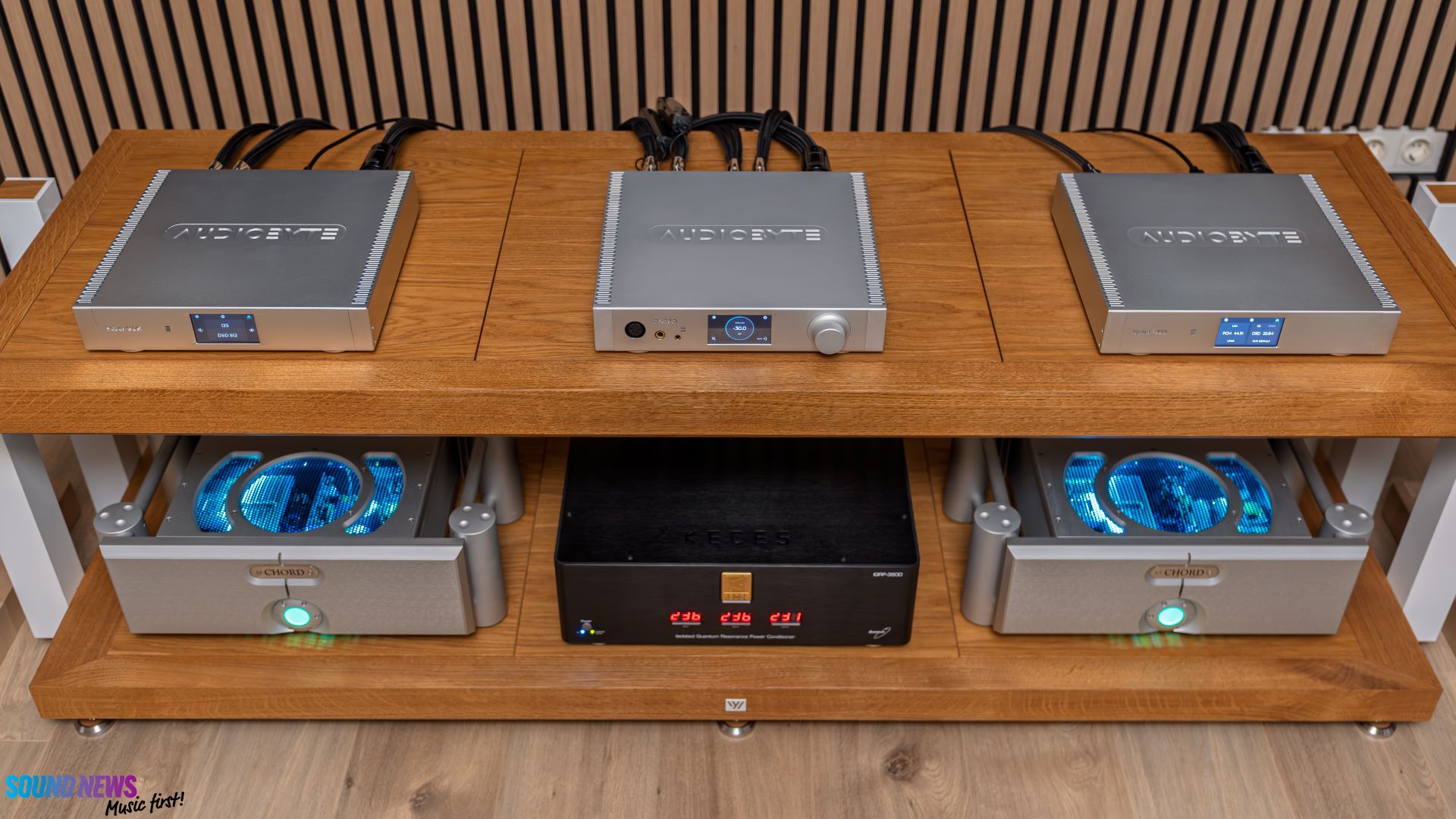
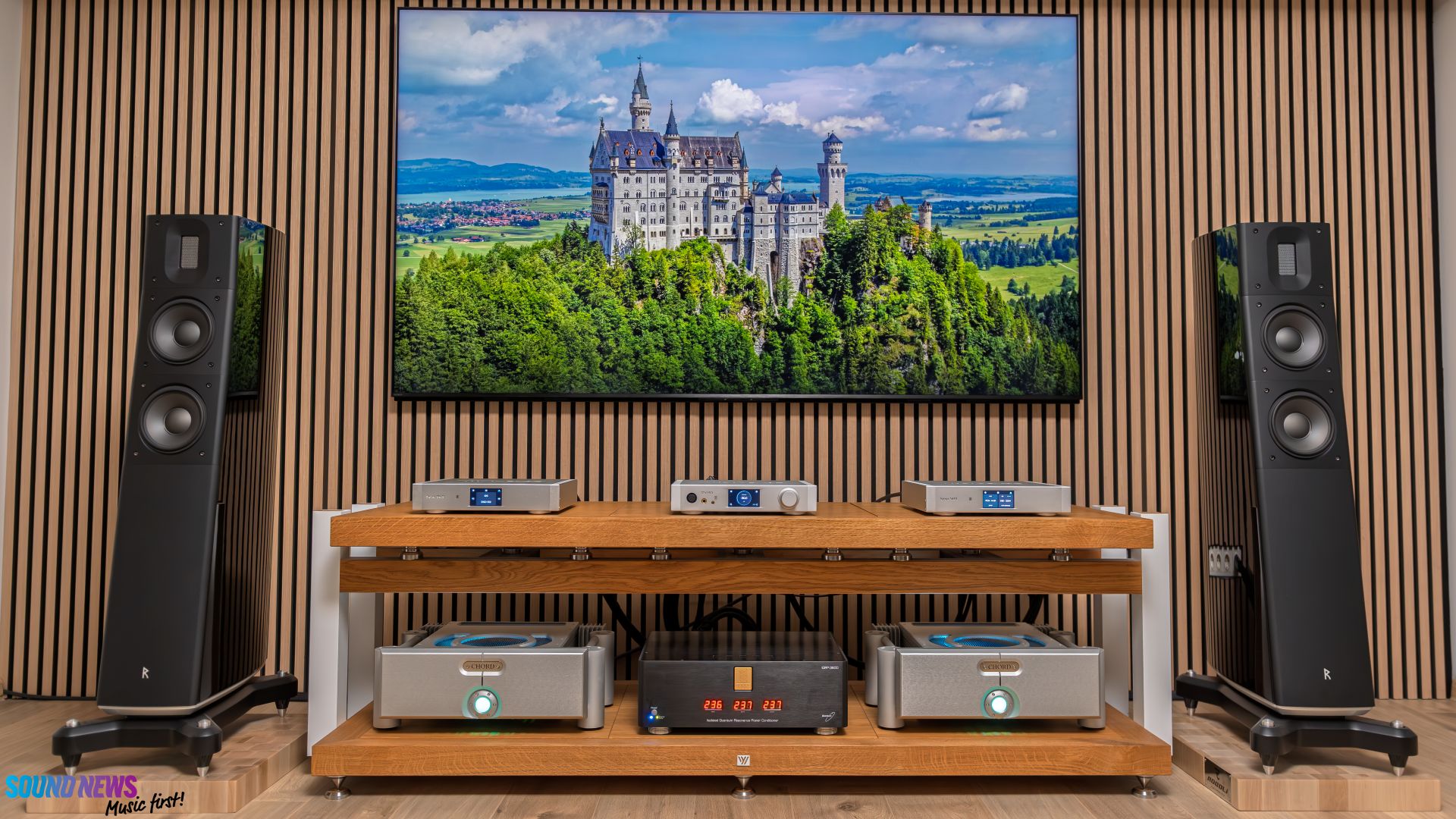
In the living room, the SuperHUB served as both a wired streamer and hardware upsampler, followed by the SuperVOX – an FPGA-based multi-bit DAC and then by the SuperHEAD, which replaced a Chord Ultima PRE controlling two Chord Ultima 3 monoblock amplifiers. Raidho TD2.2 were my loudspeakers of choice, playing tunes for two weeks before I made my final evaluation. All cabling used was from the AudioQuest Dragon range (power, interconnect, HDMI, and speaker cables). Everything was also powered by a KECES IQRP-3600 balanced power conditioner.
Everything should be as clear as the blue sky, so what are we waiting for? Let’s hit those eardrums already.
Sound Performance
I. Preliminary Sound Impressions
Ever since returning home from my short trip to Bucovina with a few friends of mine, the sound I’ve heard at the Audiobyte factory has been stuck in my head. You can easily forget a less impressive sound compared to what you have at home, but a better one? Good luck with that! We discussed that sound for a couple of hours on the train ride back home. It wasn’t just its organic nature, which I already expected, nor the amazing liquidity that only a multi-bit FPGA-based DAC such as the SuperVOX could deliver. It was the sound that wasn’t getting in the way and the sheer absence of effort that impressed me the most, even when pushing the amplifier beyond its absolute limits.
Since testing audio equipment is what I do on a daily basis, the first thing I always do is push everything above its designed intent. In the case of headphone amplifiers, that meant raising the volume well beyond my usual listening levels and trying to spot any irregularities. Clipping or distortion is usually the first thing to appear, especially in the sub-bass region, where things can suddenly fall apart. Dynamics are next, which often take a step back, rounding off the frequency response and shifting focus toward the treble. Lastly, dynamic compression can creep in, and while the volume goes up, the perceived energy no longer follows, sometimes remaining flat or even decreasing, partially losing control over the driver’s movement. I perform this HiFi ritual so often that even in show conditions or when visiting a friend, I instinctively push the volume higher just to understand the limits and uncover any hidden drawbacks.
In the case of the SuperHEAD, I couldn’t detect any irregularities in its sound, even when pushed to absolute maximum volume. Distortion is nowhere to be found, even with the HiFiMAN Susvara OG. Bass rattle is not part of its vocabulary, nor is any slowing down of dynamics or the dreaded dynamic compression. You can push it as hard as you like, even feed it a much stronger signal of 7.5V via XLR, and yet it maintains its composure effortlessly, as if opening the windows for a clearer sound. Take any solid-state headphone amplifier I’ve tested so far, any one of them, and there was always some kind of limitation.
Examples? Easy. The Gold Note HP10 Deluxe exhibited soft clipping with difficult loads at higher power levels, especially with Harman effects enabled and particularly with the Susvara. The Burson Soloist Voyager had an audible noise floor with ultra-sensitive IEMs, and its case temperature exceeding 60°C limited its usability long term, especially in the summer. The Ferrum OOR introduced a slight grain that slowly crept into the sound, and pushing the volume further reduced perceived resolution. The Holo Bliss KTE showed noticeable dynamic compression and clipping at higher volumes, even at around 95 dB, the Susvara lacked sub-bass energy and proper control. The LAiV Harmony HP2A delivered brute force, especially when fed higher voltage inputs, shining at 10V or more, but at the expense of losing refinement and increased noise, behaving more like a power amplifier than a dedicated headphone amplifier. The background was never completely black, and I could never quite lift the veil. The HiFiMAN PRELUDE lacked ultimate resolution and transient attack, gradually slowing down the overall presentation. The Enleum AMP-23R, while outstanding in sound and probably my personal favorite, suffered from extremely high operating temperatures and a less reliable auto-bias system, especially in early versions.
And the list goes on…
To this day, I haven’t experienced a solid-state headphone amplifier that I could describe as close to perfect in every aspect, starting with build quality, working temperatures, features, long-term reliability, and only then, sonics. The SuperHEAD doesn’t exhibit any of the issues mentioned above. Its resolution stands shoulder to shoulder with the Enleum AMP-23R and Holo Bliss KTE. Its transient response is similar to that of the Burson Soloist Voyager, yet it is completely noiseless regardless of load, and there is more than enough power on tap to drive virtually any headphone on the market and then some.
II. Driving Power
Audiobyte cryptically informs us on the SuperHEAD’s webpage that we get a maximum output of 17V RMS. In Watts, that would equal to squared 17 divided by the load in Ohms. Meaning we get 9 Watts per channel into 32 Ohms, 5.8 Watts per channel into 50 Ohms, and 2.9 Watts per channel into 100 Ohms via the 4-pin XLR or 4.4 mm balanced outputs. It’s plenty powerful by regular headphone amplifier standards, and the same logic applies if we discuss its preamplifier section. It will easily handle hot (7V) and super-hot (10V) output DACs without limiting its working range or raising distortion. It’s quite versatile in this regard. Since we have so many MOSFETs in the output stage, working in a push-pull Class-A configuration, you can almost feel through these words how much better the grip over the headphone drivers is versus a conventional fully discrete amplifier that uses four or eight transistors in total.
But the power output is not the secret sauce here; it’s the predictable behavior of these numerous MOSFETs and their almost limitless potential. You can clip four or eight transistors, but sixty-four? Let’s be serious. Sound clipping or dynamic compression are meaningful concepts on this amplifier. You can easily push it to maximum, and it will still sound like a diva gracefully singing back to you. Engage raw and aggressive music, and all of that will remain scary, explosive, powerful, and testosterone-driven, but without adding any coloration, limitation, or sound artifacts like many amplifiers do nowadays.
The predictable nature of the SuperHEAD at any load or working condition is what impressed me right from the very beginning. Discussing how much power remains on tap, I feel like I need to gently explain how the gain stage works. You can add anywhere from 1 up to a maximum of 20 dB of volume, acting as extra gain once you reach the 0 dB setting. All of that doesn’t directly influence the internal gain structure of the amplifier; you’re simply unlocking up to 20 dB of volume on tap. In essence, you aren’t changing the internal gain of the amplifier from unity gain to higher values, as we see on most amplifiers nowadays, you’re just unlocking additional power that is, by default, limited via the user interface.
Now that you know how the gain stage works, let’s discuss raw driving capabilities. And I will start with a special headphone brand that is close to my heart: Audeze. I’ve been playing with Audeze cans since 2009, when the LCD-2 were revealed, and ever since, I’ve always been excited to hear all of their latest developments, until I got to hear the LCD-5…and got completely confused by the sound. The vast soundstage and some of the strongest bass deliveries of the LCD-4 were completely removed by the LCD-5, and what was once a legendary headphone became much more linear…and, to me, a bit boring. I tried so many times to love the LCD-5, but they never quite sang to me the same way all of their previous LCD series did.
Enter the updated LCD-5S! Now with SLAM technology baked in, and as you can imagine, the bass slam is back on my audiophile diet. These get funky with bass-intensive music, and the sound is no longer playing inside my head, but more like half a meter away from it. This is what the LCD-5 needed to be in the first place, and I’m so glad Audeze is finally back on track with one of the most interesting releases of 2026. Now, this is not an easy headphone to drive; in fact, it’s one of the more demanding planars out there. Having slightly smaller drivers than the LCD-4, they need extra power to reach a similar SPL. Think about comparing a 5” woofer with a 7” one; the smaller diaphragm will need more power to reach the same sound pressure level that the bigger one achieves with less effort. The SuperHEAD beautifully drove the LCD-5S to what could only be described as maximum potential. The bass wasn’t only lightning fast and incredibly physical with every beat, but also highly nuanced and rich in information, still digging deep between 20 and 50 Hz. The bass quantity was outstanding and nothing to scoff at, but the quality? It was epic! I can’t comprehend a cleaner and more nuanced bass than this. It was fun, intoxicating, yet incredibly clean and deep-reaching, and I still had about ~25 dB of volume left on tap!
The T+A Solitaire P is a wonderful headphone if you know its limitations. It’s incredibly powerful in the sub-bass and just as impressive in the treble, but it needs a bit of sweetness, a bit of soul in the midrange to make it sound organic and alive, and you know what? That’s exactly what the SuperHEAD does to all of my headphones. As previously mentioned in a couple of my reviews, JFETs as well as MOSFETs behave in ways similar to vacuum tubes. Unlike BJT transistors, which are current-controlled, JFETs are voltage-controlled, just like tubes. They exhibit soft clipping when overdriven, tend to produce dominant second-order harmonics, and follow a square-law transfer curve similar to triodes. Interestingly, MOSFETs used as current buffers are also voltage-controlled. They too predominantly generate even-order harmonics and clip more gracefully when pushed. Can you guess why Nelson Pass so often favors JFETs at the input stage and MOSFETs at the output stage? Because this combination often yields a more organic, tube-like presentation. And while I don’t hear any distortion or noise coming from the SuperHEAD, as I might on tube amplifiers, it definitely shows a similar tone and timbre to a top-of-the-line transformer-coupled tube amplifier. Imagine getting tube-like sound in terms of tonal richness and natural flow, but without the drawbacks of tube designs, such as added noise and distortion, and you’ll get the sound of the SuperHEAD. The Solitaire P sounded as pure as I know it to be on my Feliks Envy Susvara Edition. The tones and textures started blooming, and finally, the soul of the music and midrange purity returned. I could barely remove them from my head, as if someone had glued them to my face. This wasn’t just a good pairing; it was marriage, living happily ever after, and all of that fluff. Seriously, if you own the Solitaire P, you need to hear this pairing.
And then comes the HiFiMAN Susvara OG, the most demanding pair of headphones in my stable. Not the cleanest or most truthful, that title belongs to the Susvara Unveiled, but definitely the hardest to drive. Dynamic compression? None. Distortion rising, especially in the bass? I can’t hear any of that. Transients slowing down, bass losing grip or definition? None that I could detect. No stereophonic flattening, no weird artifacts, just a very pleasing sound from top to bottom that indeed pushed the amplifier harder than anything else. It’s actually the only headphone in my collection that lets me reach 0 dB and go slightly above it. I still had about 10 dB left on tap, and honestly, I can’t complain. This amplifier drove them beautifully, and I never expected it to behave this way, considering the hundreds of times I’ve experienced clipping with these cans. The only downside I’ll mention is that it wasn’t quite as 3D and open as the Feliks Audio Envy Susvara Edition (duh!) with this particular pairing, but aside from that, these two amplifiers shared surprisingly similar sonic traits.
III. Dynamics & Transient Response
And here it goes, my favorite chapter to write about. The nut-cracking dynamics and faster-than-light transients. I have some great things to share with you and then…something else you need to know. Let’s zoom out for a second and remember what, in this regard, were the most impressive solid-state headphone amplifiers I’ve experienced over the years. The most painful critical hits below the belt were delivered by the Enleum AMP-23R and then by the Burson Soloist Voyager MAX. Their super-hot (literally and figuratively) Class-A bias made them incredibly snappy, jumping into action in no time with modern beats and, if fun is what you’re chasing, nothing could outplay them at their own game. They did have some limitations here and there; however, a crazy high dynamic range and lightning-fast transients were definitely not among them.
Every other amplifier that passed through my hands was half a notch, a full notch, or even a couple of notches below these two, sounding softer, sometimes even polite by comparison. And once you experience sub-bass slowly massaging your eardrums at lower volumes, it becomes very hard to go back to something that doesn’t possess the same skills. The SuperHEAD sits just half a notch below the Enleum, sounding only a touch less impactful. I’m talking less than a 5% difference here, and you really need to listen attentively to catch it. To be completely honest, finding a difference between these two will take time, maybe a few hours or days, especially if the rest of your system isn’t fully up to the task.
The Enleum will sound a bit more enthusiastic in the lowest octaves, while the SuperHEAD counters that with an extra layer of effortlessness and refinement that feels slightly subdued on the Enleum. It’s not a decisive win for one or the other; it’s about what matters more to you. And it won’t surprise you if I say that, sonically, these two are more alike than different, except for their price tags, as the Enleum commands a significantly higher asking price, hovering around $6500 as I’m typing this.
When words fail, music speaks. Saxnbass by MarkusPhilippe (found on Tidal and Qobuz) is, on the surface, your typical smooth jazz sub-genre. It’s slow-paced, never congested or overly excited, aiming to relax you more often than not, even with a generous presence of sax and an even stronger emphasis on bass. However, give it some time, and you’ll realize that it’s not just the interplay between two instruments or the impressive depth and spatiality that pulls you in. It’s the sheer physicality of the performance, the energy levels radiating from both artists. The ground almost feels like it’s shaking when Markus pushes his bass guitar to the limit. The entire album feels like a drifting dance floor, swinging from groove to groove, creating an incredibly grounded foundation for the dialogue between the saxophone (Philippe Chrétien) and the bass (Markus Fritzsche). Undoubtedly, this album has a voice of its own; it almost invites you to lean back, turn the volume up a notch, and soak in the integrity and passion of this remarkable duo. On some head-fi systems, this album can become borderline sleep-inducing, but on the SuperHUB, SuperVOX, and SuperHEAD trio? It’s like getting a serious shot of dopamine, eyes wide open, ready to hit your eardrums again and again.
Drop the hammer on Demiurge by Meshuggah (found on Tidal and Qobuz) and the SuperHUB, SuperVOX, and SuperHEAD don’t just play it; they weaponize it, turning the opening riff into a tectonic event that rips through your skull with zero hesitation. The guitars aren’t just heavily distorted, they’re becoming granular, experiencing the texture of distortion unfolding in layers you didn’t know existed, getting raw yet impossibly controlled at the same time. The repeated kick drums detonate in piston-like movements, starting and stopping on a dime with no overhang. There’s no blur, no muddiness, just pure mechanical violence delivered with terrifying precision. And here’s the twist: no matter how hard you push it and how stupidly loud you go, it doesn’t collapse or compress dynamics. It simply scales, effortlessly, like this trio was built for this exact moment. The vocals sit carved in steel, aggressive yet perfectly anchored, never shouting over the chaos. What should be an impenetrable wall becomes a structured battlefield, with every element locked in place, with transients snapping into action like a loaded gun. This isn’t headphones listening anymore, it’s a head-fi battle station that slowly prepares you for controlled destruction, and you’re standing right in the blast radius. Punchy? Hell Yeah!
IV. Resolution / Detail Retrieval
Resolution is one of those overused words in audio, thrown around so casually that it often loses its meaning. But every once in a while, a piece of gear comes along as a genuine revelation of what detail and resolution actually are. The Audiobyte trio is not shoving more detail down my throat; I don’t hear leading edges sharpening to artificial levels. They will, however, reveal more while sounding less forced.
The first thing that hits you is effortlessness. With most highly resolving systems, you’re aware of the resolution. It’s almost like the system is tapping you on the shoulder, saying: “Hey, listen to this micro-detail, and look, there’s another one!” The Super stack doesn’t do that. It simply removes the barriers between you and the recording, letting everything flow naturally into your eardrums. You don’t go hunting for details…they just appear. And not in a flashy way, but in a matter-of-fact way.
Low-level information is where this system shines. Background murmurs, faint reverbs trailing into infinity, fingers sliding across fret boards and strings, the subtle intake of breath before a vocal phrase, all of these are not just audible, but fully formed, carrying weight, texture, and position in space. It’s not a “yes, I can hear it now” kind of improvement; it’s more like “how was this missing before?”
What impressed me even more is how this level of resolution is maintained regardless of complexity. Throw a busy track at it, say layered electronica, a dense orchestral work, or some aggressive metal, and it doesn’t collapse into a blob. Instead, it decompresses the music, separating every strand without dissecting it unnaturally. You can follow individual lines with ease, but at the same time, you never lose the cohesion of the whole. That balance between micro-detail and macro coherence is incredibly hard to achieve, yet here it feels as if it’s…nothing out of the ordinary.
Texture plays a huge role in how resolution is perceived, and this is where the SuperHEAD’s topology gives a helping hand. The JFET input and MOSFET output stage don’t just pass the analog signal along to your headphones or speakers; they shape how it’s presented. There’s a higher density to the notes, a fullness that prevents them from sounding thin, skeletal, or overly sharp. Many ultra-resolving solid-state designs tend to strip music down to its bare bones, emphasizing outlines over substance. This one does the opposite: it fills those outlines with color, mass, and realism. So instead of hearing sharper edges, you hear deeper layers.
Another key aspect is the absence of grain. True high resolution isn’t just about hearing more; it’s about hearing more cleanly. There’s a purity to the background that goes beyond the usual “blackness” cliché. It’s not just quiet, it’s void-like, as if the noise floor has been pushed so far down that it simply ceases to exist. Notes emerge out of nothingness and return just as effortlessly, without leaving any residue behind. This has a serious effect on long listening sessions. Highly detailed systems can often become fatiguing because they overload your brain with information or present it in an unnatural way. Here, the opposite happens. You end up listening longer, diving deeper into your music, rediscovering albums you thought you knew inside out, not because the system is analytical, but because it’s transparent to the point of invisibility.
And that’s perhaps the highest compliment I can give it. It doesn’t sound like a “high-resolution system”.
It sounds like no system at all. What you’re left with is the recording in its purest form, flaws included, beauty intact, nothing hidden and nothing exaggerated. Good recordings will shine like never before, while poorer ones won’t be sugar-coated, but they also won’t be torn apart. Everything is presented as it is, with honesty and refinement walking hand in hand.
V. Soundstage & Stereo Separation
If resolution tells you what’s inside the recording, then the soundstage and stereo separation tell you where everything lives. What was clear to me is that the SuperHEAD won’t impress you instantly with an artificially inflated stage that wraps around your head. Width is absolutely there; it’s wide enough to step outside your skull and breathe, but what truly defines this amplifier is its depth. It doesn’t just spread sound left and right, it paints a clear picture in front of you, layer by layer, with a precision that feels both technical and eerily natural.
Starting with the Audeze LCD-5S, a headphone that by design leans toward intimacy rather than grandiosity, the transformation is immediate. The stage doesn’t suddenly become massive, but it opens up in depth in a way that feels natural. Vocals step forward just enough to feel present without becoming intrusive, while instruments are pushed back into clearly defined layers. More importantly, there is actual air between those layers. You’re no longer dealing with a flat wall of sound, but with a structured presentation that unfolds in front of you, almost like watching a performance rather than listening to it.
Switching to the Bandoss Avija takes things even further, as the Super stack begins to fully flex its spatial capabilities. The Avija turns into a holographic experience, where sounds are no longer confined to a left-right axis but start floating freely in space, occupying different depths and even subtle height variations. What impressed me most wasn’t just the size of the stage, but its stability. Even in the busiest passages, nothing collapses or shifts unnaturally. Every element holds its position nicely even when reaching higher volumes.
Then comes the T+A Solitaire P, a headphone that can sometimes struggle with cohesion despite its impressive technical abilities. Here, the SuperHEAD does something quite special. The stage remains wide, easily on par with what I’ve experienced from the Enleum AMP-23R, but now it gains substance and continuity. The center image locks in, vocals gain weight and emotional presence, and the entire presentation feels more grounded. Instead of just hearing a wide and airy stage, you’re now experiencing a coherent acoustic environment where every element has both focus and texture.
Now, compared to something like the Feliks Envy Susvara Edition, the Super stack is by a hair less open and expansive in absolute width. The Envy can stretch things just a bit further, creating that almost speaker-like illusion that feels boundless and incredibly 3D. But the SuperHEAD counters it in a different way. Its strength lies in how it renders depth and layering. Instead of simply making everything wider and taller, it makes everything a bit clearer in relation to everything else. You don’t just hear that a sound is far away; you understand how far it is, where it sits in the 3D mix, and how it interacts with the rest of the scene.
VI. Audiobyte SuperHEAD working as a Preamplifier
At this point, I think we can all agree that not every device featuring a volume control can be called a true preamplifier. I’ve said it before, and I’ll say it again: there’s a world of difference between a digital attenuator, a relay-based passive stage, and a proper analog line stage that actively drives a power amplifier. The latter is what brings life into a system: control, dynamics, scale, and that elusive sense of effortlessness that separates a good setup from a truly engaging one. So naturally, I was curious. Could the SuperHEAD, a device that already impressed me as a headphone amplifier, step into the role of a serious preamplifier and hold its ground against dedicated units?
Challenge accepted!
A few minutes later, I removed my trusted Chord Ultima PRE from the chain and inserted the SuperHEAD in its place, feeding the same power amplifiers and loudspeakers that I know inside out. Expectations were high, but also realistic, as replacing a reference-grade preamp is never a trivial task.
The first thing I noticed wasn’t a dramatic shift, and that in itself was telling. There was no collapse in dynamics, no thinning of the sound, no sudden loss of oomph or energy. The system remained composed, controlled, and fully alive. Volume behavior also confirmed that we’re dealing with a proper active stage, not a compromised solution. There was plenty of drive on tap, and I didn’t need to push the volume nearly as far as I would with passive implementations.
Then came the real surprise. The SuperHEAD sounded by a hair purer and clearer than the Ultima PRE! And I don’t say that lightly. There was a subtle but noticeable increase in transparency, as if a very fine layer of haze had been removed from the presentation. Micro-details emerged with slightly more ease, edges felt cleaner, and the entire soundscape gained a touch more precision. It was a tiny difference, but in a revealing system, it was absolutely audible. That said, the trade-off became apparent shortly after. The Ultima PRE still holds the crown when it comes to scale, openness, and holography. It paints a (much) grander picture, stretching the soundstage further in all directions and adding that larger-than-life feel that can make bookshelf speakers sound like full-range floorstanders. The SuperHEAD, while by no means closed-in or restricted, presents a slightly more intimate and focused stage. It doesn’t push the boundaries of your room quite as far, nor does it exaggerate the sense of space.
But here’s the interesting part: what it loses in sheer scale, it compensates for with accuracy. Instead of getting a grand, cinematic presentation, you get a tightly structured, highly coherent sound field where everything makes perfect sense. It’s less about impressing you with size and more about convincing you with realism. Tonally, the differences are just as telling. The Ultima PRE adds a bit more body and warmth, especially in the midrange, gently sweetening the presentation and making vocals feel slightly more forward and romantic. The SuperHEAD, on the other hand, stays true to its nature; it is cleaner, more neutral, and less colored. It doesn’t try to enhance or embellish; it simply steps out of the way.
Dynamics were another area where I expected compromises, but none came. The SuperHEAD delivers authoritative, uncompressed dynamics, even at higher listening levels. The system still pressurized the room with ease, bass remained tight and controlled, and transient attacks retained their speed and impact. There was no sense of strain, no softening of edges, and no reduction in energy.
In the end, the SuperHEAD proved itself as a fully capable, high-performance preamplifier. While it doesn’t quite match the Ultima PRE in terms of sheer scale and holographic presentation, it surpasses it ever so slightly in purity and clarity. And that’s a trade-off many will gladly accept, especially those chasing a more neutral, reference-grade sound.
VII. Comparisons
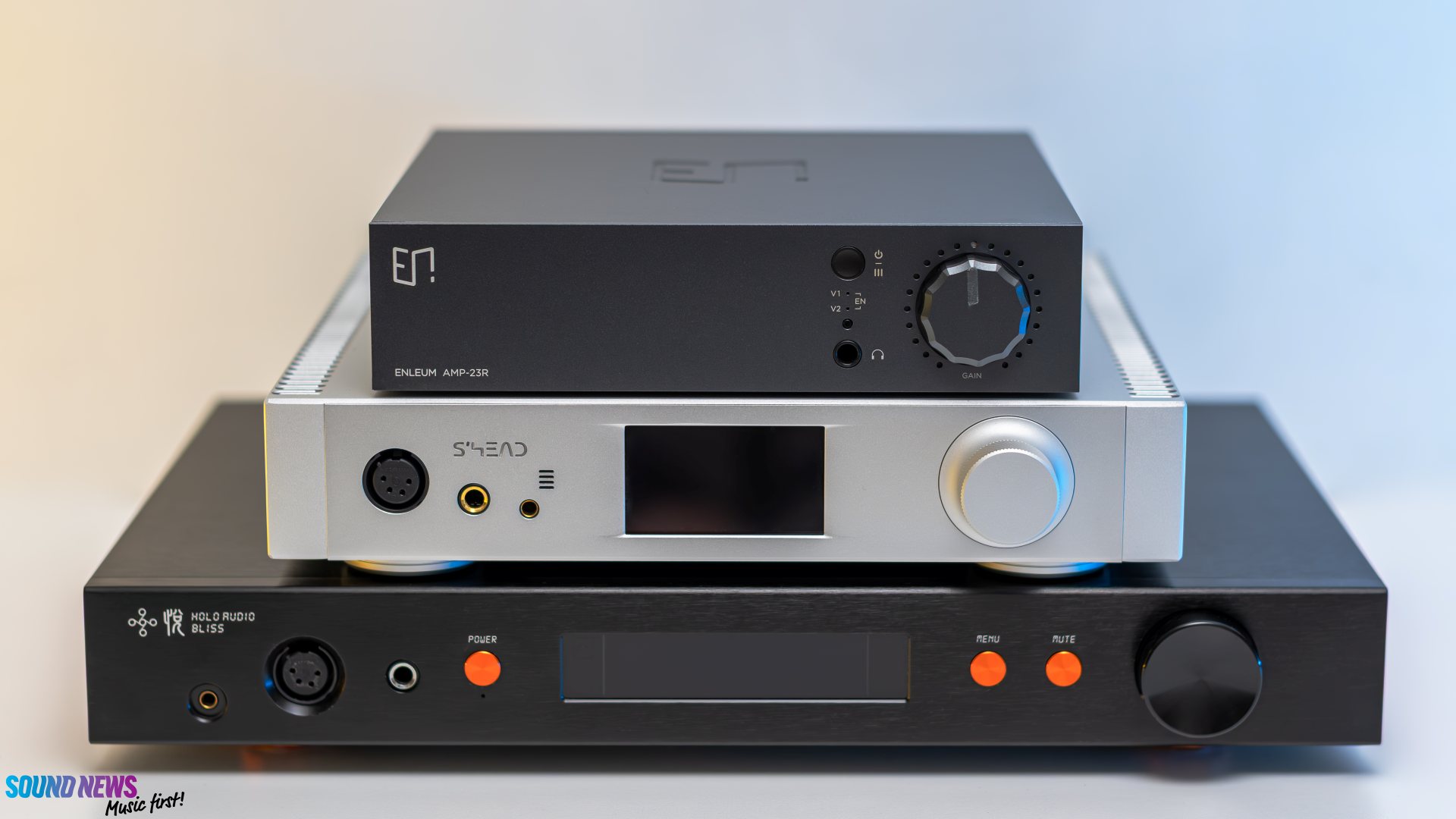
Alright lads, now that you know how it sounds down to the smallest details as both a headphone amp and as a preamp, it’s time to see how it fares against two of the best headphone amplifiers I’ve tested around here.
Audiobyte SuperHEAD ($4500) VS Holo Audio Bliss KTE ($3550) VS Enleum AMP-23R ($6500)
If you’re a manufacturer, distributor, or reseller and my words might offend you in some way, then please accept my apologies, but understand that I need to stay true and honest to my readers and viewers. My opinions are always my own, and that isn’t going to change anytime soon. I’ll be as objective as possible, without taking my personal preferences into account. If you’re an avid reader, please enjoy the showdown.
All my comparisons are done in the morning, after a hot shower, two puffs of Audispray, a hot coffee, and after volume matching them at 90 dB with a decibel meter. All of these are mandatory, as I know my hearing and mood will be at their peak.
1. Design, Build & Usability
SuperHEAD’s unique casework, one-of-a-kind sound-wave heatsinks, aluminum remote control, ease of use, and overall simplicity pull ahead. It clearly stands out versus the other two, and let’s not forget that it offers two ways of controlling it. The AMP-23R also looks quite special, with interesting design choices, but it doesn’t offer the same level of connectivity, slightly lagging behind. The Bliss is the biggest and heaviest of the bunch, but also the one lacking a defining visual trait. It’s essentially a massive piece of aluminum with a dot-matrix display in the middle. Nothing wrong with that, but it’s nowhere near as unique or cool as the others, scoring lower in this round.
• Audiobyte SuperHEAD: 10
• Enleum AMP-23R: 9.5
• Holo Bliss KTE: 9
2. Features & Functionality
When it comes to features, Enleum’s amp takes the lead, as we’re dealing with a top-tier headphone amplifier and an equally impressive integrated amplifier. This thing will drive all your diaphragms in different shapes and sizes, hence slightly pulling ahead. Audiobyte and Holo Audio follow closely, as both function as end-game headphone amplifiers while also offering a fully-fledged preamplifier section. The key difference is that the SuperHEAD provides a much nicer user interface, with a software-assisted volume control, something you don’t get on the Bliss, placing it last in this category.
• Audiobyte SuperHEAD: 9.5
• Enleum AMP-23R: 10
• Holo Bliss KTE: 9
3. Power Output
When it comes to sheer power numbers and trying to compare apples to apples, I recalculated their power ratings at 60 Ohms. The Bliss delivers around ~6.4 Watts, the SuperHEAD about ~4.8 Watts, and the AMP-23R trails slightly with around 4 Watts into the same load. However, when the HiFiMan Susvara started its ritual dance, only the Bliss KTE showed signs of losing composure and drive, gently clipping at higher volumes, something the other two didn’t exhibit under any load or condition. Still, I’ll rank them strictly based on their power ratings.
• Audiobyte SuperHEAD: 9
• Enleum AMP-23R: 8.5
• Holo Bliss KTE: 10
4. Tone & Timbre
When it comes to tone and timbre, all three showcase a pure tonal character with a slightly thicker-than-usual timbre, boosting bass weight, enriching the midrange, and delivering a grain-free treble. All are biased into Class-A and built from discrete components, and in this regard, I find them equally impressive. Their tonal balance is quite similar, and I genuinely believe you can’t do much better than this in solid-state electronics. The key difference is that tones are slightly purer and clearer on the SuperHEAD, followed by the Enleum, while the Bliss sounds just a touch more muted and flatter. Not a huge difference, but it’s there.
• Audiobyte SuperHEAD: 10
• Enleum AMP-23R: 9.5
• Holo Bliss KTE: 9
5. Soundstage, Layering & Depth
When it comes to soundstage, layering, and depth, the Bliss slightly pulls ahead in overall stage size, sounding grander than the rest, pushing the sweet spot further back into the last rows of the auditorium. The SuperHEAD, however, offers a deeper and more three-dimensional presentation, making it easier to separate musical layers. The Enleum sits somewhere in between, still engaging and immersive, but behaving more like a jack-of-all-trades rather than a specialist, scoring slightly lower than the rest.
• Audiobyte SuperHEAD: 9.5
• Enleum AMP-23R: 9
• Holo Bliss KTE: 10
6. Dynamics & Transient Response
Moving on to transients and dynamics, contrary to its power ratings, Enleum’s creation brings the thunder every single time aggressive electronica hits the playlist. It’s about half a notch better than the SuperHEAD, a full notch ahead of the Bliss with regular headphones, and up to two notches better with bass-heavy material, where the Bliss tends to flatten dynamics and reduce overall engagement. That said, all three are incredibly fast, snapping into action instantly, and I can’t downplay their transient performance in any way; there’s simply a difference in how dynamics and fun factor are delivered.
• Audiobyte SuperHEAD: 9.5
• Enleum AMP-23R: 10
• Holo Bliss KTE: 8.5
7. Resolution & Transparency
I left the hardest test for last. When it comes to transparency and detail retrieval, all three are highly resolving, especially on a micro level. We’re splitting hairs here, and I mean it. Still, after closing my eyes and running several reference tracks, the SuperHEAD sounded just a touch purer, extracting slightly more information, followed closely by the AMP-23R and then by the Bliss, which remains highly impressive but slightly overshadowed by the rest. It’s important to mention that as volume increases, the SuperHEAD retains its pure sonic profile intact. No resolution smearing, no artifacts, no tonal shifts, it sounds identical at 100 dB as it does at 50 dB. The Enleum becomes slightly grainier at higher SPLs, while the Bliss is affected the most under demanding conditions, where distortion and mild tonal shifts (bass losing authority, treble gaining emphasis) can occur.
• Audiobyte SuperHEAD: 10
• Enleum AMP-23R: 9.5
• Holo Bliss KTE: 8.5
8. Final Results
• Audiobyte SuperHEAD: 67.5 points
• Enleum AMP-23R: 66 points
• Holo Bliss KTE: 64 points
No matter how I look at it, the SuperHEAD stands out as the better-looking unit, easier to integrate into both a head-fi and stereo setup, it’s less finicky about source material and input voltage, and consistently delivers immaculate sonics at any volume level and load, be it sensitive IEMs or hard-to-drive planar headphones.
Wrapping Up
On paper, it might look like just another fully discrete, Class-A headphone amplifier and preamplifier with lots of bells and whistles. We’ve seen plenty of those already, some more powerful, some more feature-packed, some more exotic in their execution. But numbers and spec sheets don’t tell the full story here. What Audiobyte managed to do with the SuperHEAD is to strip everything down to its purest form and then rebuild it with intention, care, and an obsessive attention to detail that becomes obvious the moment you press play.
This is not an amplifier that tries to impress you with coloration, warmth, or a particular sonic flavor. Quite the opposite. It walks a very fine line between absolute transparency and musical engagement, and somehow manages to excel at both. It is one of the cleanest, purest-sounding solid-state amplifiers I’ve experienced to date, yet it never crosses into sterile, lifeless territory. There’s body, texture, and emotion, but none of it feels added or forced.
Its driving capabilities are nothing short of exemplary. From the most sensitive IEMs to the most demanding planar headphones like the Susvara OG, it never once lost composure. No clipping, no dynamic compression, no loss of control or sub bass energy, even when pushed well beyond sane listening levels. It simply delivers as if it was built with headroom to spare in every possible scenario. And that predictability and sense of control under any condition is something I value more than raw power alone.
As a preamplifier, it proved itself to be far more than an afterthought. In fact, it stands proudly next to dedicated preamps, even challenging my own reference Chord Ultima PRE in certain aspects. It might not paint the same grand, holographic picture, but it counters with a slightly purer, clearer presentation and a level of control that makes it incredibly easy to integrate into a wide variety of systems.
What impressed me the most, however, is how complete this product feels. The design, the build quality, the usability, the performance, it all comes together in a cohesive package that doesn’t leave you wanting more. The CNC-machined chassis, the unique heatsinks, the tactile volume control, the touch screen, the aluminum remote…these are not just nice additions; they are part of an experience that feels thought-out from start to finish.
Of course, nothing is perfect. If you’re chasing the absolute largest, most expansive soundstage possible or the sweetest harmonics out there, there are still alternatives that might stretch the boundaries a bit further. If you want a more colorful, romantic presentation, there are amplifiers that will cater to that taste. But if your goal is to get as close as possible to the truth of the recording, without sacrificing musicality, then the SuperHEAD makes an incredibly strong case for itself.

I’ve tested countless headphone amplifiers over the years, from budget-friendly units to no-compromise statement pieces. Very few managed to strike this balance between technical excellence and emotional engagement, plus a price point that makes sense today. For all of the reasons combined, the Audiobyte SuperHEAD deserves our absolute highest Editor’s Choice Award. The only award we grant once per year, per category (in this case, solid state headphone amplifier). Congratulations to the team, and I’m looking forward to what’s coming next. But who am I kidding now? All of their next-generation devices have already been revealed, and obviously, a SuperVOX review will follow in the coming weeks, and I’m planning on doing something cool with the SuperHUB later in May. If you have any burning questions, please let me know in the comments section below, and don’t forget to smash that Subscribe button on YouTube; it means a lot to me. That’s all for now, folks. Sandu signing off!
PROS:
- A one-of-a-kind design with some of the coolest looking lateral heatsinks, the custom aluminum remote is also getting some style points
- Outstanding fit & finish and attention to the smallest details, and as an added bonus, the case temperature never exceeded 50°C /122°F
- Advanced feature set, a simple-looking UI, and all the inputs and outputs you can wish for
- Noiseless with ultra-sensitive IEMs up to 0dB, offering a pitch-black background
- Plenty powerful for every headphone in my stable, will drive any dynamic or planar headphone available
- Pure, clean, and unspoiled sounding at all times, with any load at any volume
- Deep and holographic sounding, with emphasized 3D effects
- Impressive dynamics and transients, easily keeping up with demanding tunes
- Highly technical sounding on all accounts, yet getting effortless and easy on the ear
- Excellent active preamplifier section, supporting a wide voltage intake and offering excellent compatibility with power amplifiers or active loudspeakers
- Tightly controlled with any load and at any volume level, letting you hear the upper limits of your headphones
- Zero strain or listening fatigue
- Probably the most refined/honest-sounding solid-state headphone amplifier I’ve tried to date
- Excellent price-to-performance ratio
CONS:
- Sounds best with the rest of the Audiobyte family, a SuperVOX DAC and SuperHUB wired streamer/upsampler/DDC are mandatory to unleash its fullest potential
- Partial worldwide availability at the moment
ASSOCIATED EQUIPMENT:
- HiFi Racks: WoodYard Suspended Triple & Baby Modular
- CD/SACD Transport: Onix XST20
- Network Switch: Ansuz PowerSwitch D3
- DAC & Wired Streamer: Audiobyte SuperVOX, SuperHUB, Rockna Wavedream Reference Signature
- Preamplifiers: Audiobyte SuperHEAD, Chord Electronics Ultima PRE, Feliks ENVY Susvara Edition
- Power Amplifiers: Chord Electronics Ultima 3 (X2)
- Headphone Amplifiers: Audiobyte SuperHEAD, Enleum AMP-23R, Holo Audio Bliss KTE, Feliks ENVY Susvara Edition
- Loudspeakers: Raidho TD 2.2
- Headphones: HiFiMan Susvara OG, Susvara Unveiled, T+A Solitaire P, Bandoss Avija, Audeze LCD-5S, Sennheiser HD800S & many more
- IEMs: FiiO FX17, HiBy Zeta 2, Meze ASTRU
- Interconnects: AudioQuest Dragon XLR (X2)
- Speaker cables: AudioQuest Dragon 2.0m
- Headphone Cables: Crystal Cable Absolute Liberty
- Power Cables: AudioQuest Dragon Source (X2), AudioQuest Dragon High Current (X2)
- Ethernet Cable: Crystal Cable Da Vinci
- HDMI Cable (I2S): AudioQuest Dragon
- Balanced Isolation Power Conditioner: KECES IQRP-3600