Back in 2020, when the world was getting weirder by the day and I was still called DACMan by a few brave souls on social media, a pretty unique DAC landed on my table and brightened the next years of my life. It was Audiobyte’s HydraVOX together with its complementary HydraZAP power supply that messed with everything I thought I knew about digital-to-analog converters. Until that point, I was still convinced that top-of-the-line delta-sigma DACs were the final frontier when it came to resolution, speed, and the microscopic extraction of hidden information, but there are always surprises that rewrite preconceptions in the most unexpected ways. A few years passed since then, and every single component in my HiFi system changed a couple of times, including my speakers and headphones. Looking back at those pictures, even my listening room seems completely unrecognizable. My expectations followed the same pattern, but my patience for mediocre digital wizardry is no longer what it used to be. But somewhere along the way, I found my calling and moved almost entirely into the R2R camp, currently rocking a Rockna Wavedream Reference Signature DAC (review here). Don’t jump hastily to conclusions, as I still don’t believe R2R ladders are sprinkled with fairy dust, but they somehow put more soul into the music and made everything more real, as if the zeroes and ones sound less like mathematics and more like big orchestras to my ears.
If you haven’t lived under a rock for the last two decades, then you know that Rockna and Audiobyte are sister companies that never wake up in the morning asking themselves which off-the-shelf DAC chips should be placed on a board next to a fancy display, add a catchy marketing slogan, and then ship them out worldwide. These folks never operated this way and never cared about what’s popular on audio forums; they never chased HiFi trends that come and go, and certainly never built “me-too” products, as most HiFi brands are doing so bravely nowadays. Instead, they live and breathe all things digital audio. From one-of-a-kind DACs, display-less streamers and servers, custom digital filters, million-hour-long FPGA code, overbuilt clocking systems, Einstein-level conversion algorithms, and all of the invisible madness that most people never see, but everyone can hear when it’s done right. These folks do it all, but only on their own turf, on their own terms. Over the years, Rockna delved deep into R2R territory and built some of the most extraordinary resistor-ladder DACs on the planet, while Audiobyte took a wilder, more experimental road, trying to keep their prices as affordable as humanly possible.
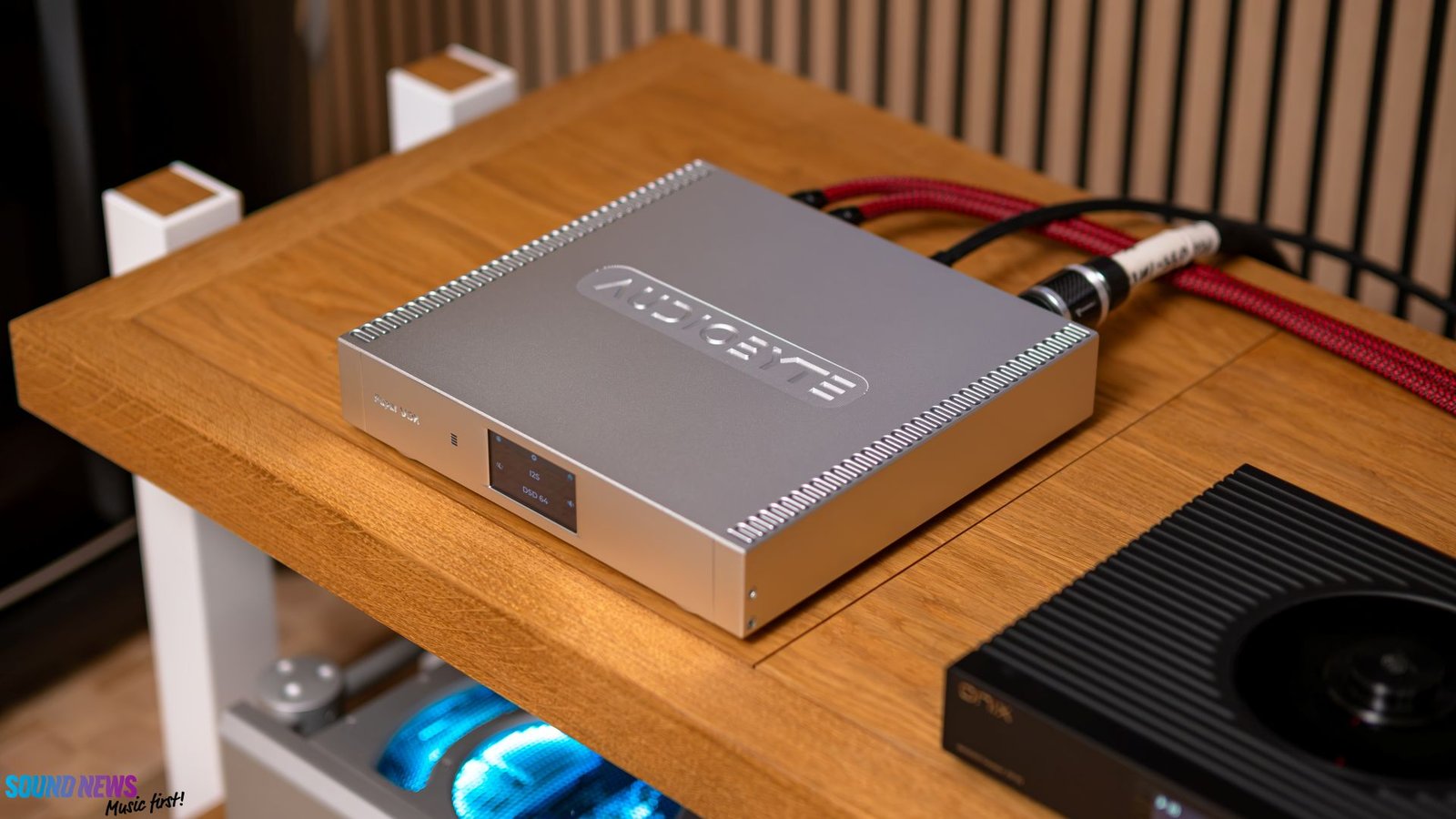
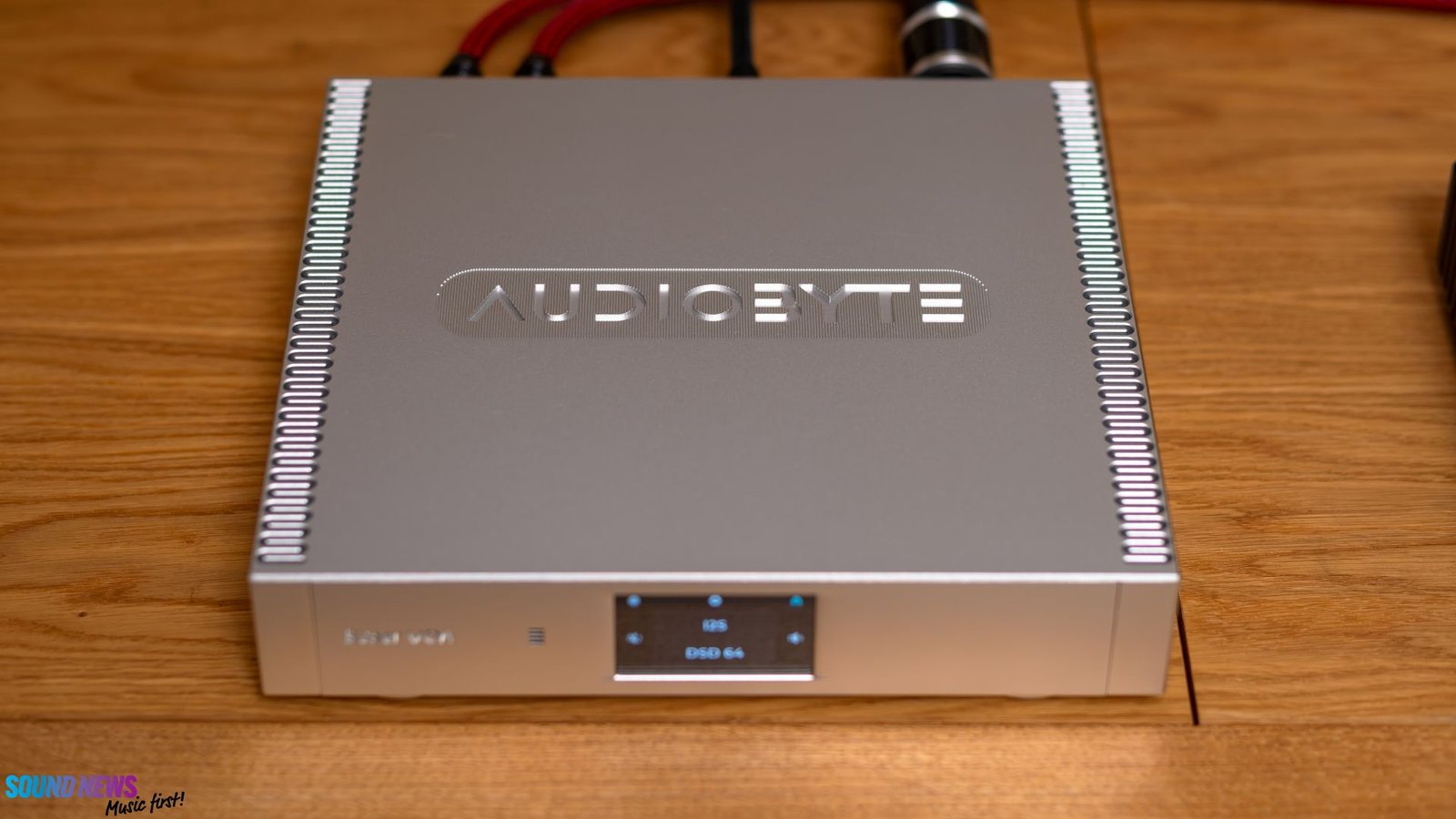
Today I’ll put their latest machine, the SuperVOX, to the test, and as the name suggests, this is not a shy little update, nor a facelifted HydraVox MKII that everybody expected. Not in the slightest. The SuperVOX feels like Audiobyte taking everything they learned along the way, adding Rockna’s digital expertise and years of obsessive research, compressing that knowledge into a compact 3.8 kg wunderbox. This is their newest standalone DAC with no bells and whistles attached, sitting above the older HydraVOX family, designed as a higher-performance D-to-A converter, sporting bigger brains and a sexier enclosure.
The interesting part is that while some of its internal conversion arrays might visually resemble a resistor ladder, this isn’t a resistor ladder DAC in disguise, and if you’re wondering what it is exactly. In simple terms: it’s a custom, fully balanced, FPGA-based multibit DSD / multi-level delta-sigma DAC built from scratch. And it seems that high-precision resistor arrays with equal-value elements are used together with proprietary processing to reduce noise and avoid relying on aggressive digital filtering, aiming for a smoother flow of the music.
I see it as Audiobyte’s answer for people who wanted more than HydraVOX already offered, without straying into Rockna’s rockstar territory. It’s a highly sophisticated DAC with some of Rockna’s DNA and its own conversion philosophy. Looking back, HydraVOX challenged my reference DAC six years ago and forced me to rethink what an FPGA-based converter could do. But today, SuperVOX arrives in a very different world, where stronger competition is breathing down its neck, and yours truly is considerably harder to impress. Back then, I was hunting for resolution and speed, but today? I’m hunting for truth, for sweeter tones, and most importantly, for the rare feeling when digital stops sounding like it and behaves more like music.
Today, we are not looking at just another DAC in a shinier case with a long list of supported formats. Today, we are looking at the spiritual successor of one of the most memorable creations I have tested so far. A machine that carries Romanian digital DNA, Rockna-level ambition, and Audiobyte-level madness, all while keeping the price as relevant as possible. It will cost you $4,500 in the USA and €4,000 here in Europe, and while the Hydra prefix is completely gone, it’s time to find out if it truly deserves that “Super” badge.
Design & Build Quality
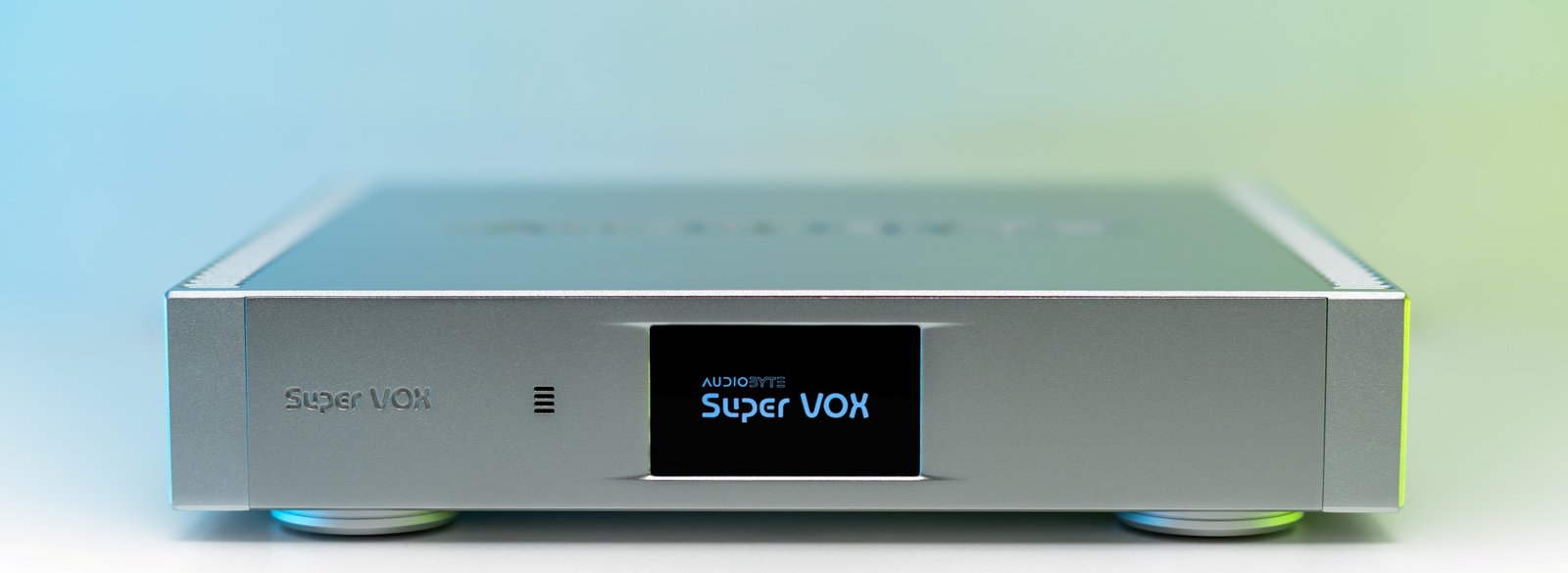
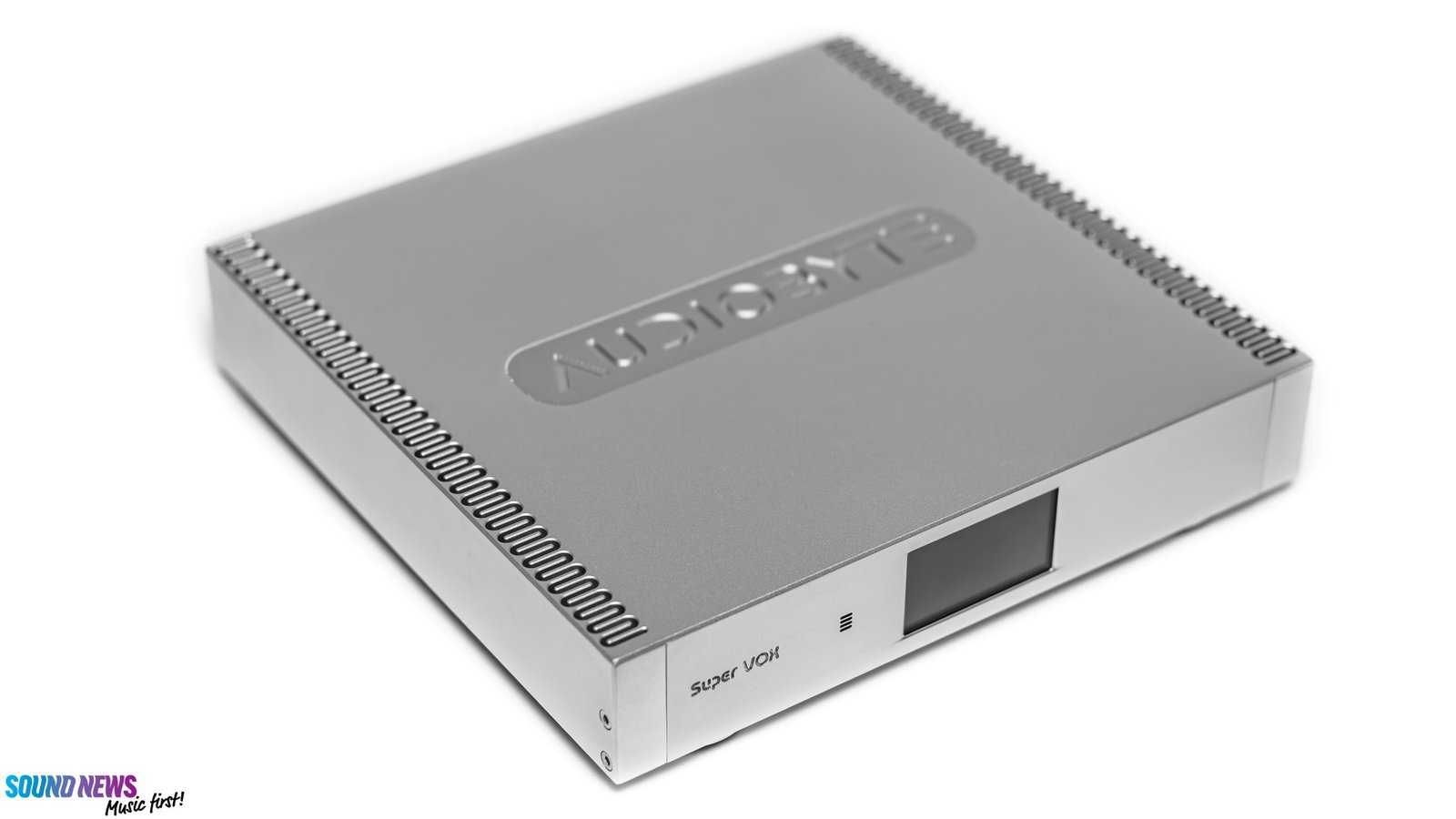
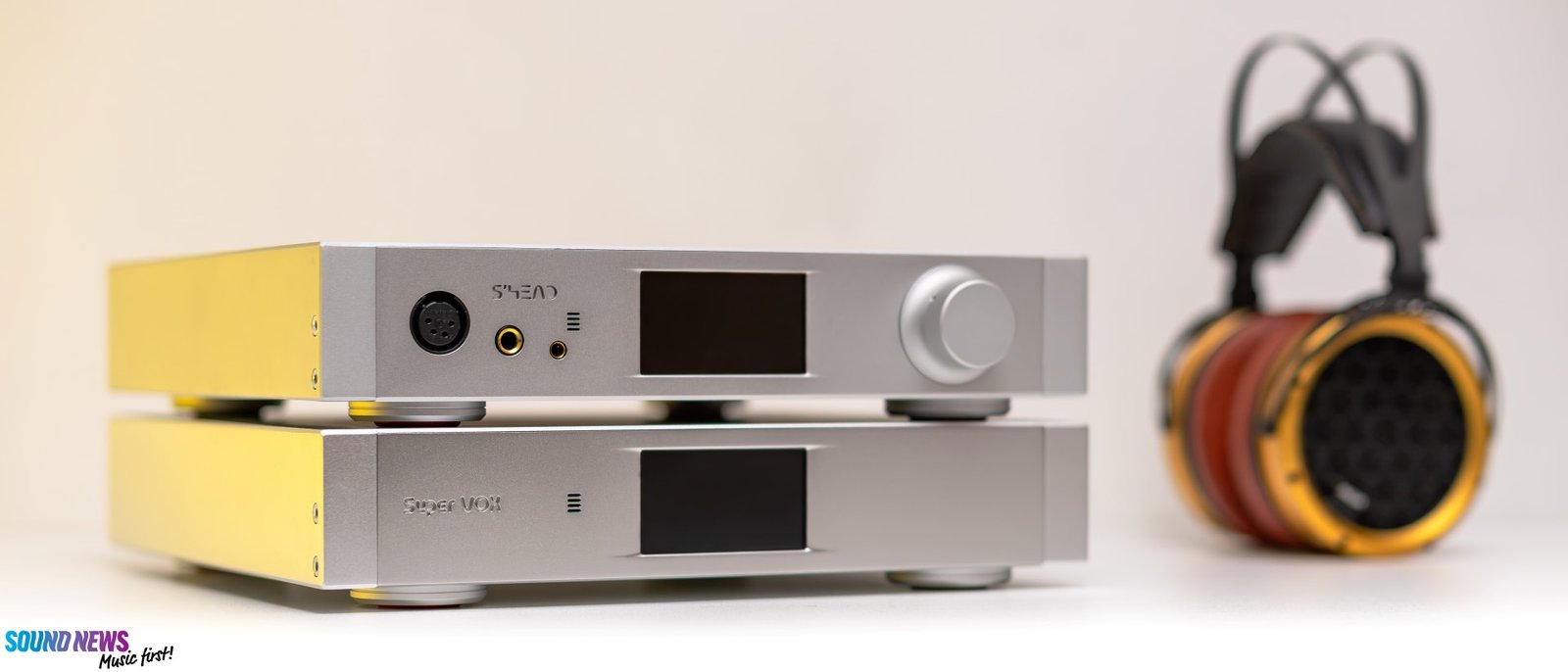
If the SuperVOX looks suspiciously familiar to you, then your eyes are not playing tricks on you. It shares the same case, dimensions, weight, and general build quality with its head-fi sibling, the SuperHEAD. Audiobyte clearly found a winning recipe with this new enclosure and decided not to fix what wasn’t broken in the first place. I don’t blame them for that, because this is one of those compact cases that feels more expensive than it probably should, offering just the right mix of industrial seriousness, modern minimalism, and high-end charm.
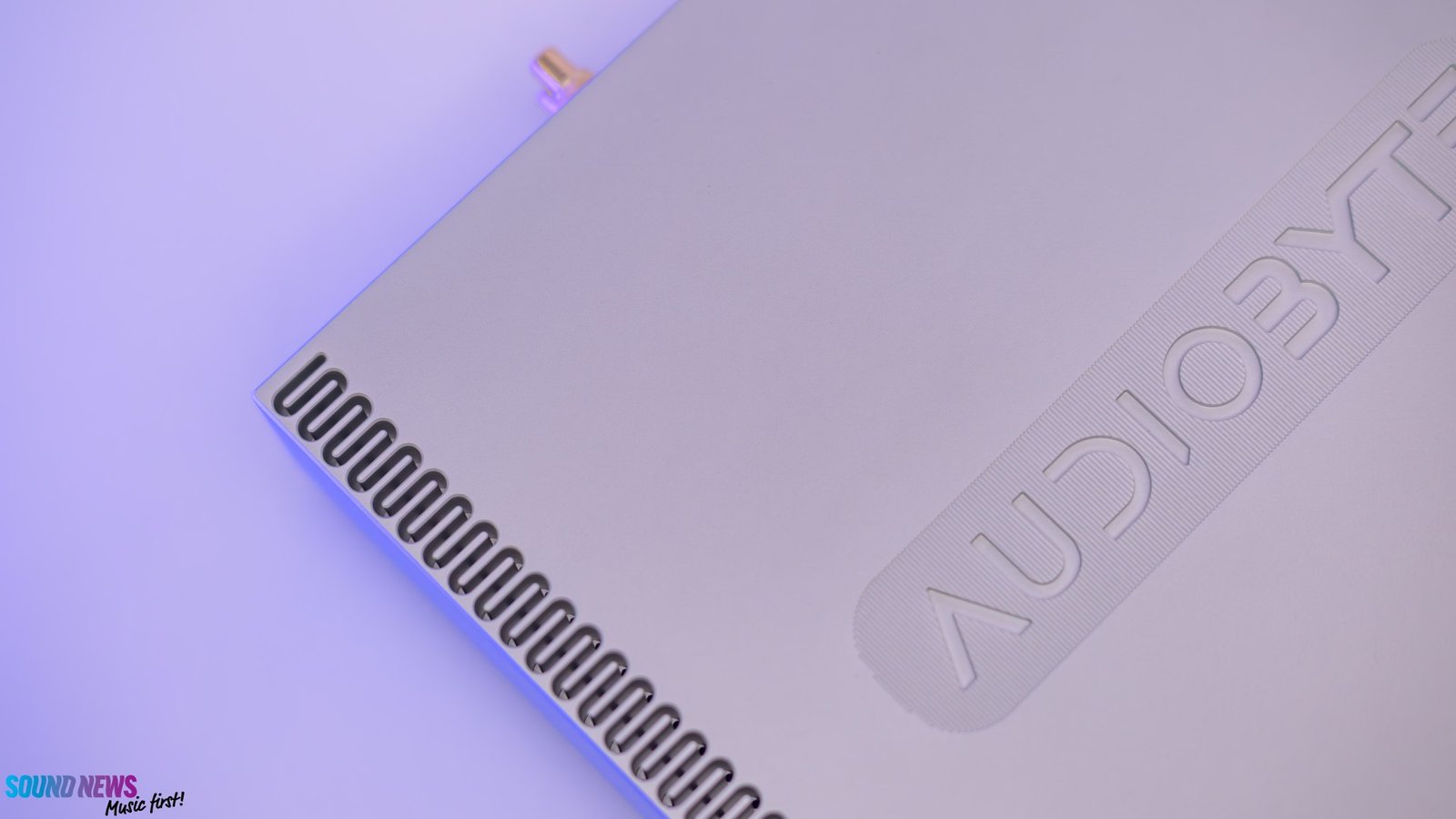
Machined out of the same thick aluminum enclosure used by the SuperHEAD, the SuperVOX already felt familiar the moment I pulled it out of the box. Same dimensions, same 3.8 kilo weight, same sculpted side heatsinks, same wide metallic feet underneath, and the same minimalist Audiobyte attitude. If you’ve seen or touched the SuperHEAD, then you already know what to expect here, as both units clearly belong to the same family and are meant to sit side by side without starting a domestic war on your audio rack.
And honestly, I don’t mind this approach at all. Quite the opposite. When a case looks this clean, solid, and has enough personality, reusing it makes perfect sense. The side heatsinks still look like sound waves frozen in aluminum, the front panel keeps things tidy and serious, and the whole unit has that compact but dense feeling that usually separates serious gear from empty boxes pretending to be heavy.
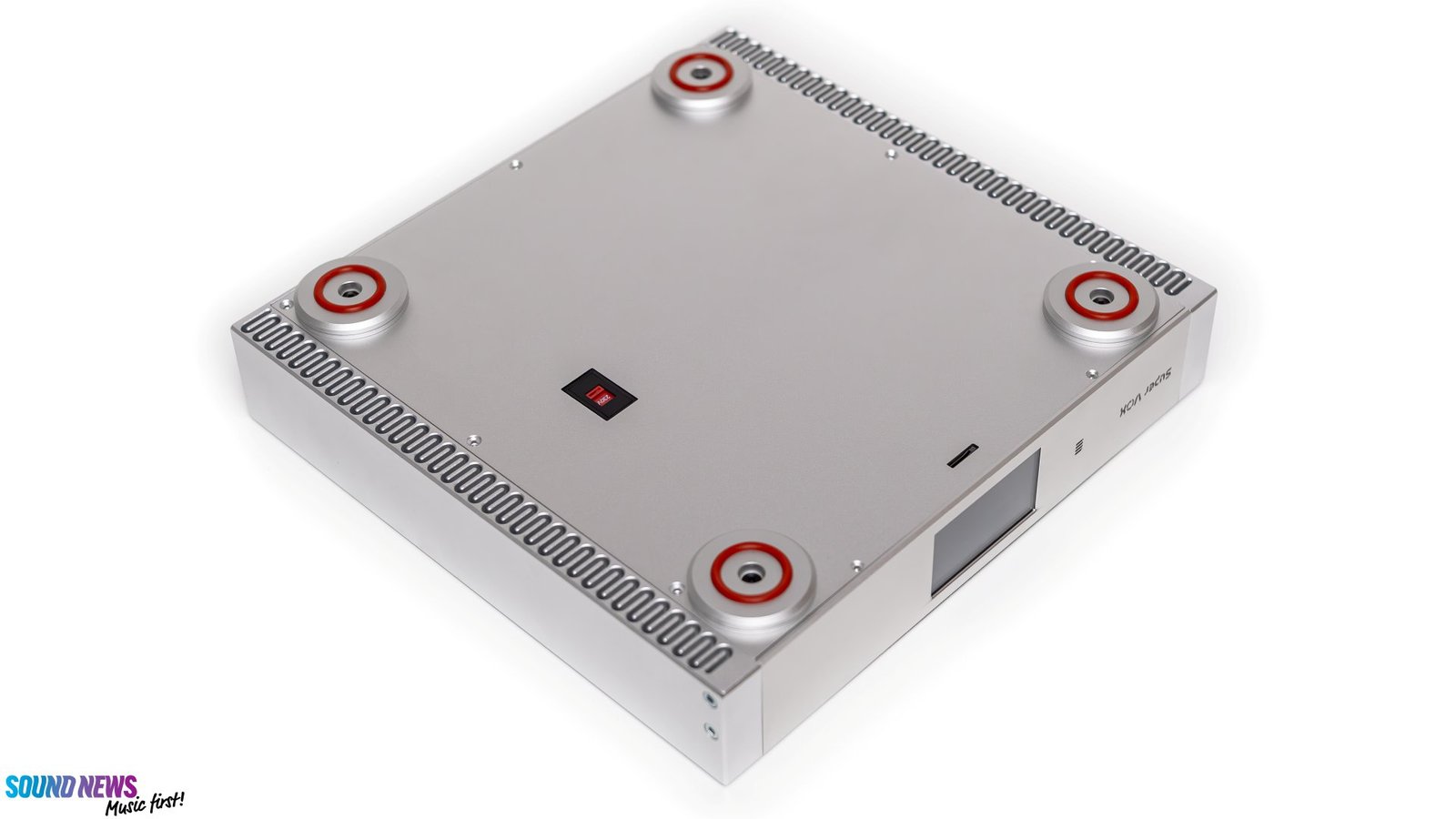
Since SuperVOX is a DAC and not a hot-blooded Class-A headphone amplifier, there is less thermal drama, but I would still give it a bit of breathing room. Good digital design, clocking sections, power supplies, and discrete output stages don’t exactly enjoy being cooked in silence. Place it on a dedicated shelf, let those sculpted fins do their job, and the SuperVOX will look right at home, either on a desktop or in a full-sized HiFi rack.
If I nitpick, I could say the minimalist approach might feel too restrained for those looking for visual theater. There are no oversized displays, no dancing VU meters, no glowing logos, and no nightclub-for-electrons behavior. But that’s exactly why I like it. SuperVOX looks like a serious digital source built by people who care more about signal paths, clocking, conversion, and long-term ownership than cheap visual tricks.
All things considered, SuperVOX follows the same design philosophy that made the SuperHEAD such a pleasant object to live with. It’s compact enough for a desktop setup, classy enough for a serious HiFi rack, and solid enough to remind you that Audiobyte didn’t cut corners where it matters.
Inputs & Outputs
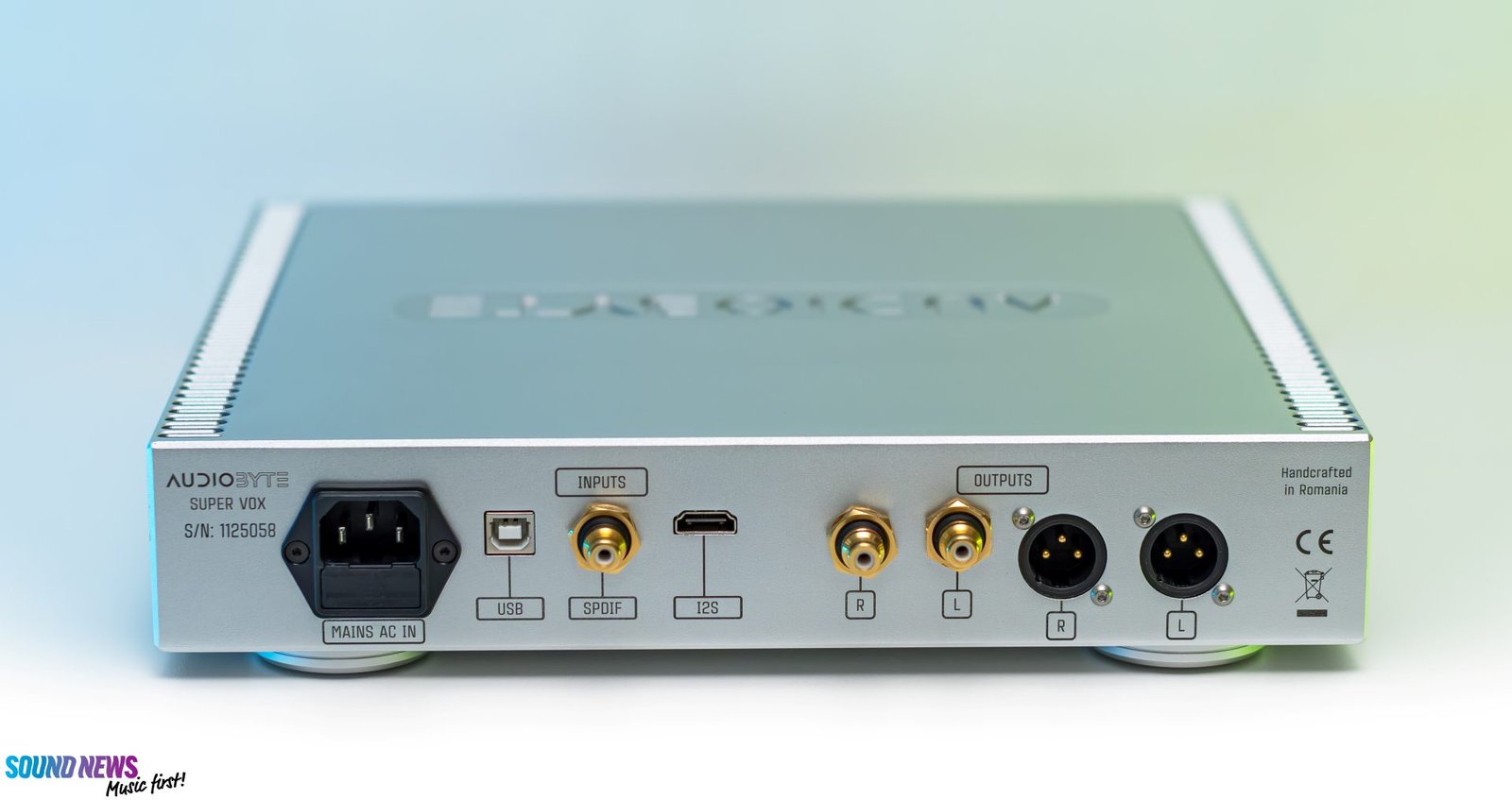
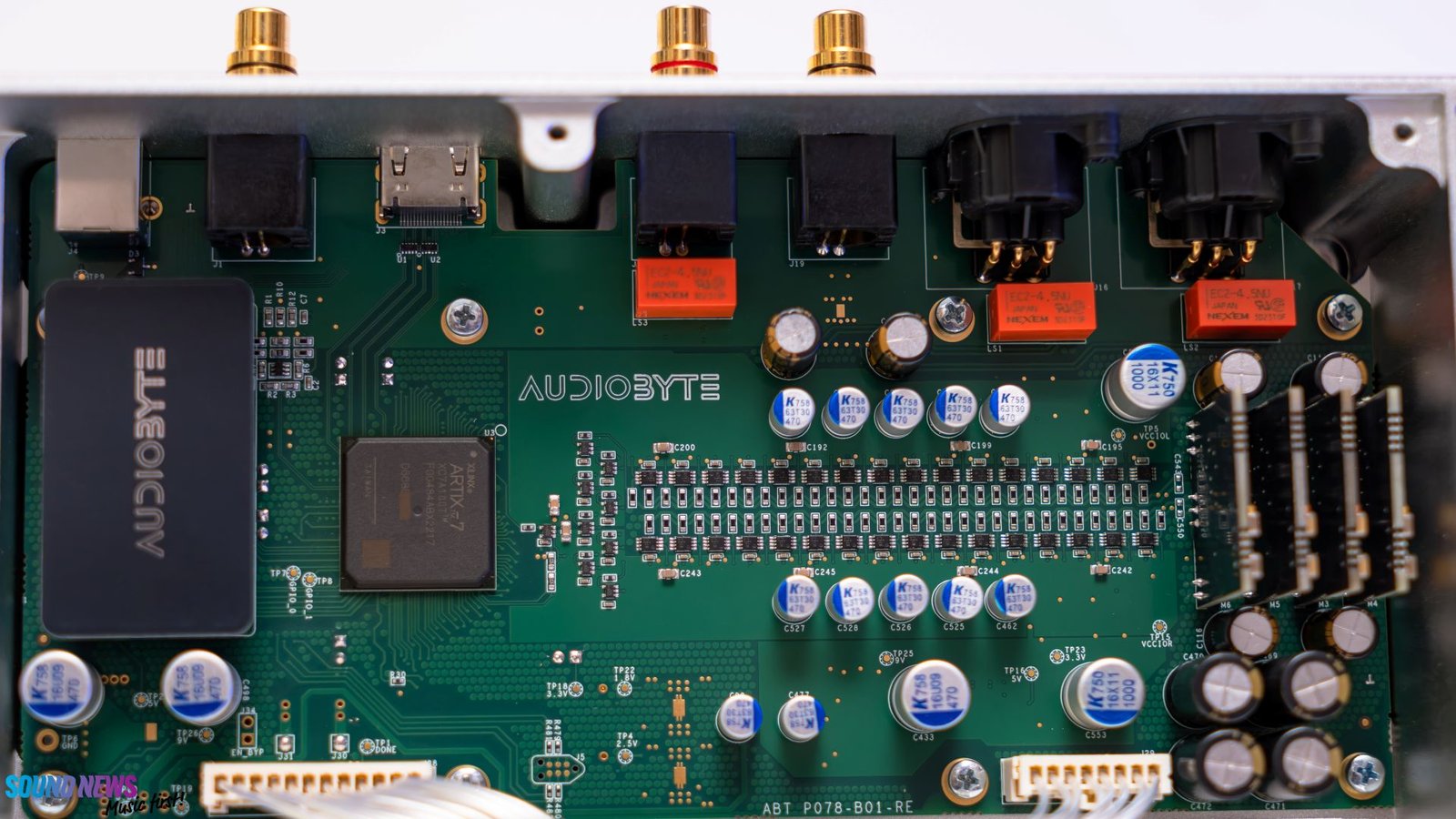
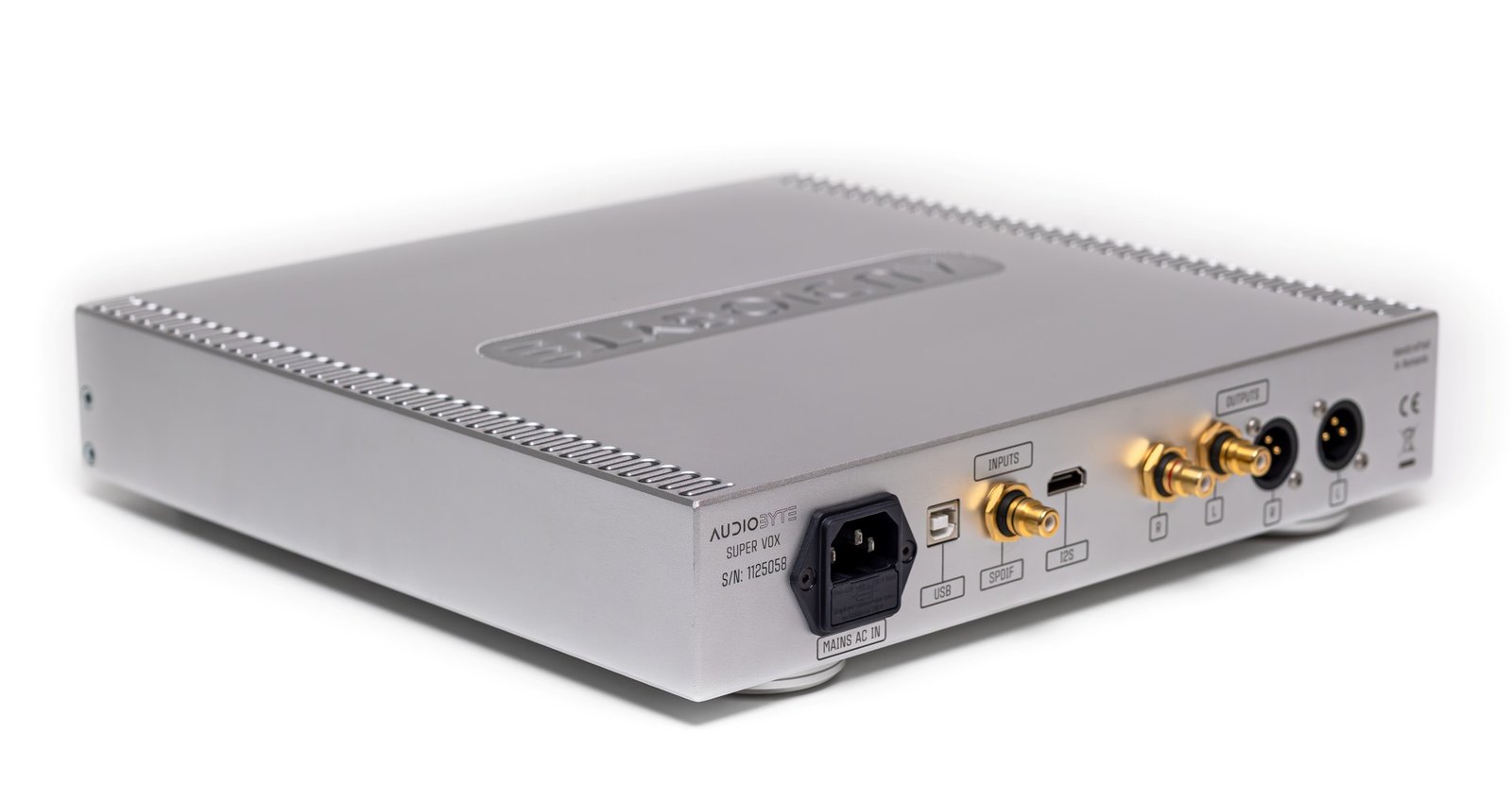
Connectivity is simple and focused: USB, I2S via LVDS over HDMI, and S/PDIF on the digital input side, followed by RCA and XLR analog outputs. No Bluetooth, no streamer inside, no Wi-Fi antenna trying to cosplay as a high-end feature. And that makes sense. SuperVOX is just a high-performance DAC, not an all-in-one lifestyle box. If you want streaming, upsampling, reclocking, and network duties, Audiobyte already has the SuperHUB for that. Keeping the DAC section focused and separated from unnecessary distractions is usually the smarter long-term move.
In the end, SuperVOX is built around a very clear idea: custom digital processing inside an FPGA, serious clock management, a proprietary multibit DSD/multi-level delta-sigma conversion system, flexible filtering, proper volume control, a low-noise linear power supply, and a fully balanced discrete output stage. It follows Audiobyte’s own path, and as someone who gets bored quite quickly by copy-paste engineering, I find that refreshing.
Under its Hood
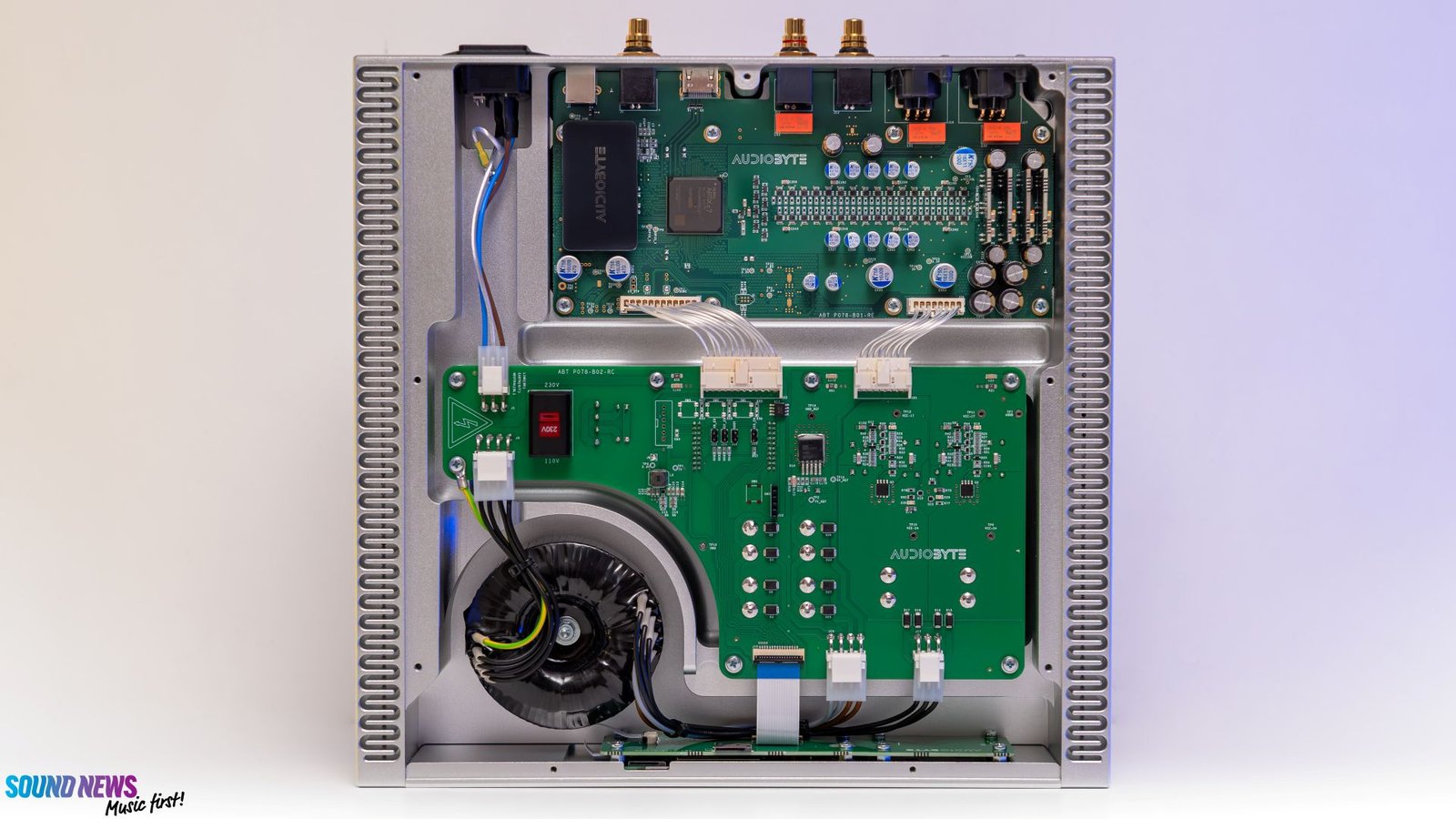
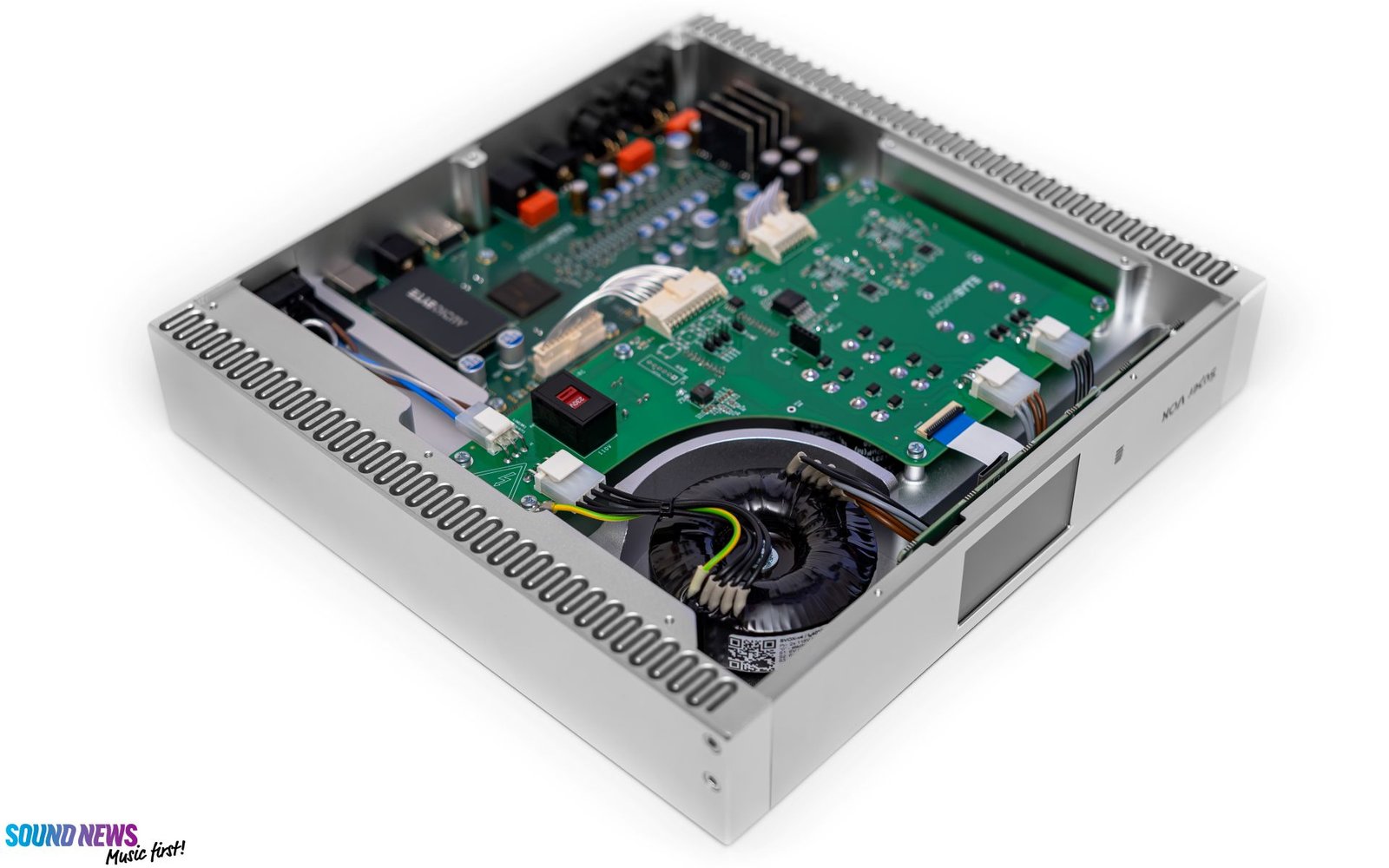
At its core sits an AMD 7-Series Artix FPGA, and that already tells you plenty about Audiobyte’s way of doing things. Instead of picking a commercial DAC chip from AKM, ESS, Cirrus Logic, or anyone else, building a nice analog stage around it, and calling it a day, Audiobyte went for the harder road. The FPGA is basically a programmable piece of silicon, meaning that the most important parts of the digital conversion process are not dictated by an off-the-shelf chip manufacturer, but by Audiobyte’s own code, algorithms, filters, math, sleepless nights, and probably a few extra cups of coffee.
And before moving forward, let’s pause for a second here, because “FPGA DAC” is one of those terms that gets thrown around quite a lot nowadays. An FPGA by itself doesn’t magically make a DAC better, just like owning a fancy kitchen knife doesn’t make you a Michelin-star chef. It all depends on what you do with it. The code, the processing, the clocking, the analog stage, the power supply, and the way everything works together matter a lot more than the buzzword itself. Luckily, Audiobyte and Rockna have been playing this game for a very long time, and digital audio is not a side quest for them. This is their main obsession.
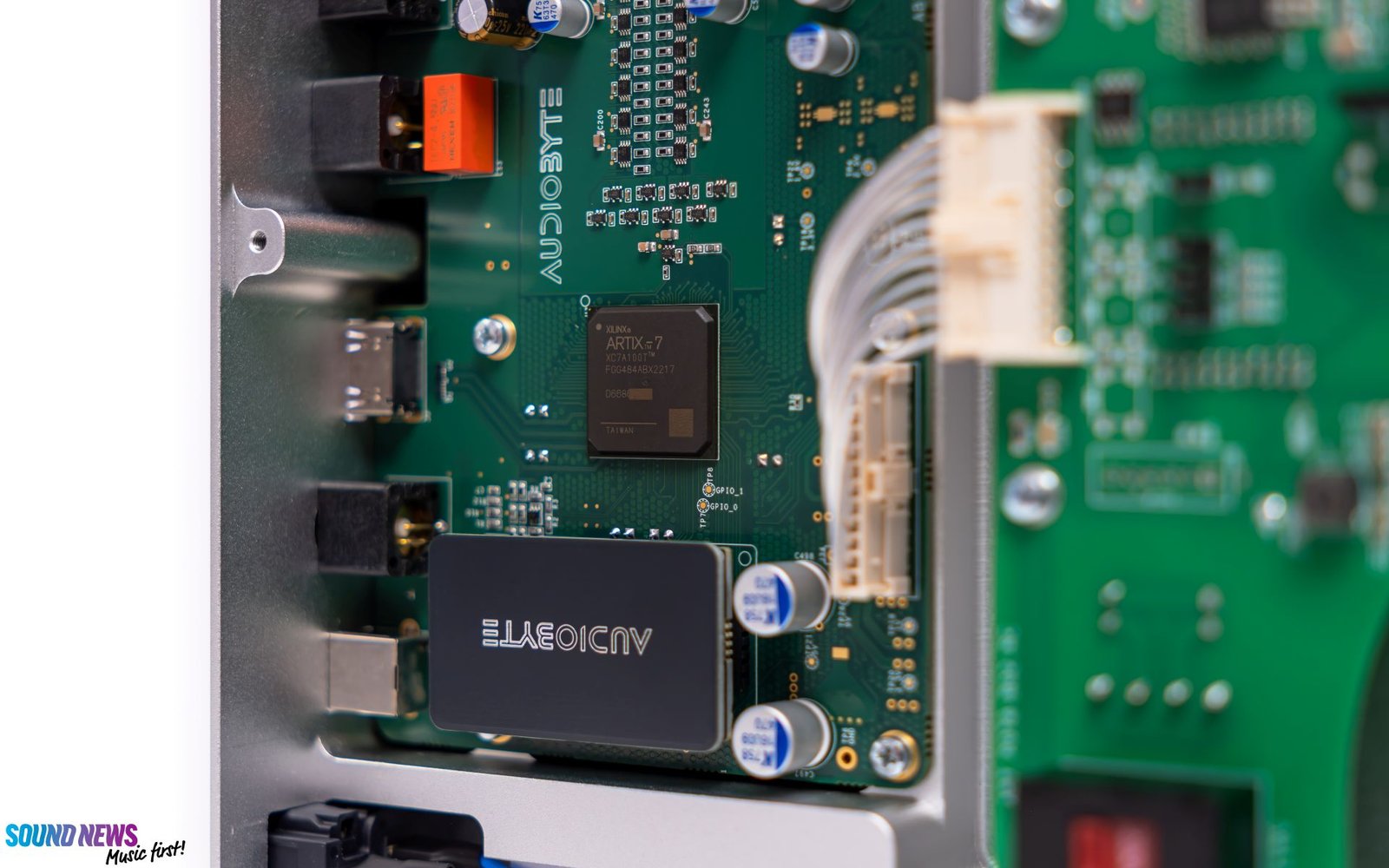
SuperVOX uses a multi-level delta-sigma architecture, running at 11.28/12.28 MHz, with a fifth-order, 36-bit-precision, 33-level modulator. In simpler terms, this isn’t a traditional one-bit DSD converter, nor a classic resistor ladder DAC, although some of the internal conversion arrays might visually resemble a ladder. Audiobyte uses equal-value elements and proprietary processing to achieve greater linearity, reduce noise, and avoid relying on aggressive digital filtering that could damage the natural flow of the music. It’s a different philosophy, and that’s exactly what makes it interesting.
Clocking is another massive part of the story. We all know that timing errors in digital audio can make music feel flatter, blurrier, and less focused, even when the frequency response looks perfectly fine on paper. This is where the advanced Femtovox clock manager steps in. Its job is to provide a stable timing foundation for the entire conversion process, keeping jitter in check and allowing the DAC section to operate with higher precision.
SuperVOX also gives you three upsampling filter options: minimum, hybrid, and linear. I always appreciate having choices here, especially when they are not buried under a menu designed by someone who hates humanity. Linear phase should be the most technically correct option, preserving phase accuracy as much as possible. Minimum phase usually trades some of that textbook behavior for a more natural impulse response with no pre-ringing. Hybrid sits somewhere in between, trying to balance accuracy and musical ease, and I’m glad Audiobyte didn’t force a single flavor down our throats.
Another useful feature is the bypassable high-precision digital volume control, offering 256 steps in 0.5 dB increments. This means that SuperVOX can behave like a proper DAC feeding a preamplifier, or it can directly drive a power amplifier if you want to keep the system minimalist. I know that digital volume controls can raise eyebrows, especially among analog purists, but when implemented with sufficient precision, they can work extremely well. The key is channel matching, transparency, and avoiding resolution loss at normal listening levels. Obviously, if you need a pure-blooded preamp to drive your power amplifier or monoblocks, then opting for the SuperHEAD seems like the next logical step. I’ve written a separate article about it, and there’s a dedicated chapter about its performance as a dedicated preamp; here it is in case you need it.
After all of the digital wizardry is done, the signal is handed over to a discrete output stage. Audiobyte didn’t go for a lazy op-amp-only solution here, but for a discrete output stage feeding both RCA and XLR outputs, with a fully balanced internal architecture. That tells me they wanted SuperVOX to be taken seriously not only as a desktop DAC, but also as a proper source in a grown-up stereo system. The maximum output amplitude is rated at 2.9V RMS, which is lower than the industry standard 4V, but numbers alone don’t tell the whole story. A slightly lower output voltage can actually be a blessing in some systems, especially when modern DACs, preamps, and amplifiers are already pushing too much gain into the chain. What matters more is how clean, stable, and dynamically free that output feels in practice.
Feeding everything inside is a low-noise custom linear power supply made by Toroidy, and I’m glad Audiobyte didn’t take the easy route here either. Digital circuits, clocking systems, FPGA processing, and analog output stages all require clean, stable power to perform at their best. With less noise, we get better focus, nicer dynamics, a blacker background, and a more relaxed presentation; all of this usually starts with cleaner power.
Audiobyte also mentions high-quality silver-plated copper internal cabling, which might seem like a minor detail on paper, but it again suggests this wasn’t built as a cost-cutting exercise. SuperVOX might be the more affordable path into serious Audiobyte digital compared to Rockna’s upper-tier machines, but it doesn’t feel like a product where every small choice was squeezed until there was no life left in it. There is still a healthy dose of audiophile madness inside, and frankly, I wouldn’t want it any other way.
Test Equipment
Before you ask, the Audiobyte SuperVOX was primarily used as the heart of my head-fi battle station, but since this is a fully fledged DAC, I also moved it into my main stereo rig to see how it behaves with serious loudspeakers, monoblocks, and a much bigger acoustic space in the mix.
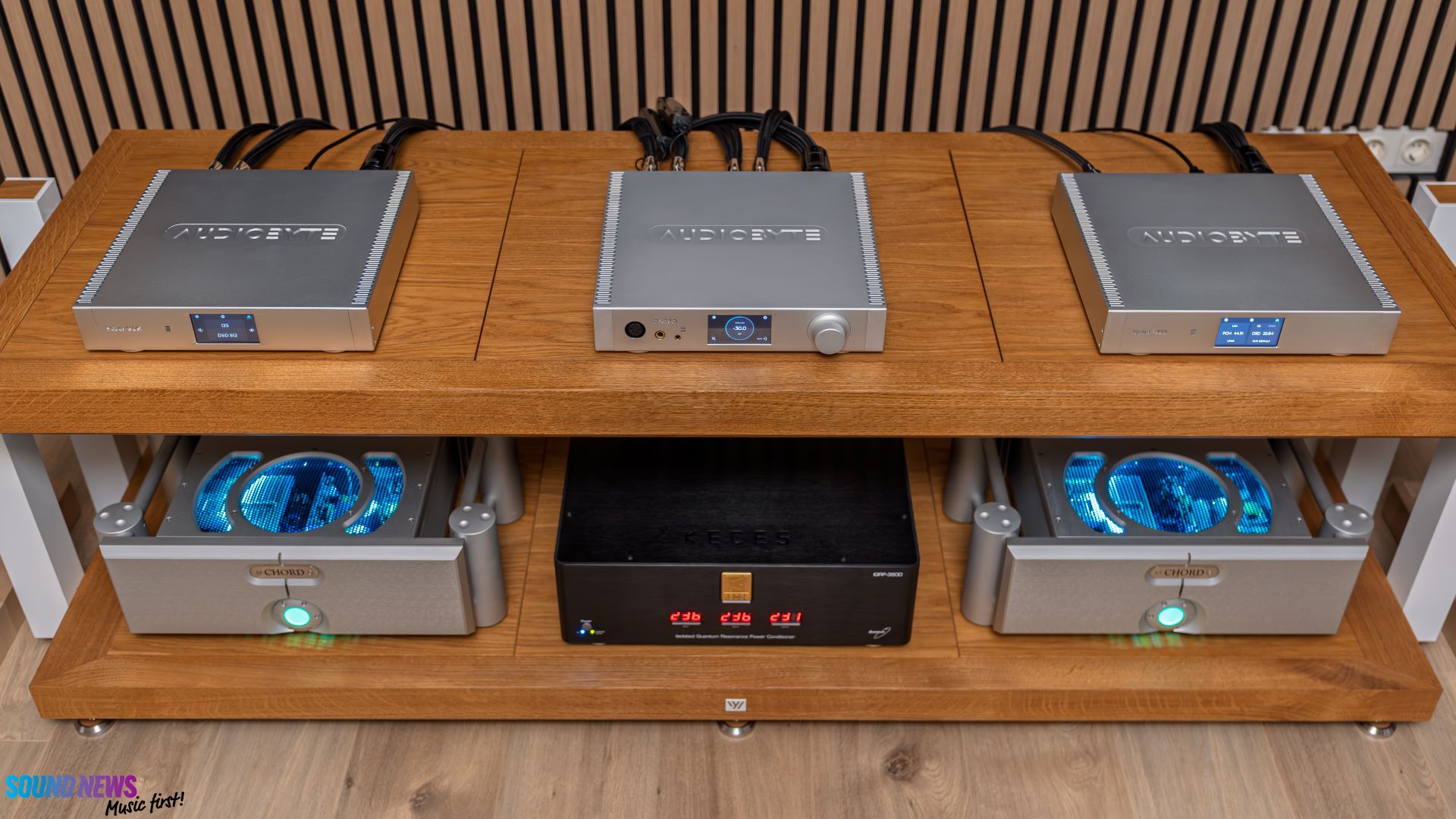
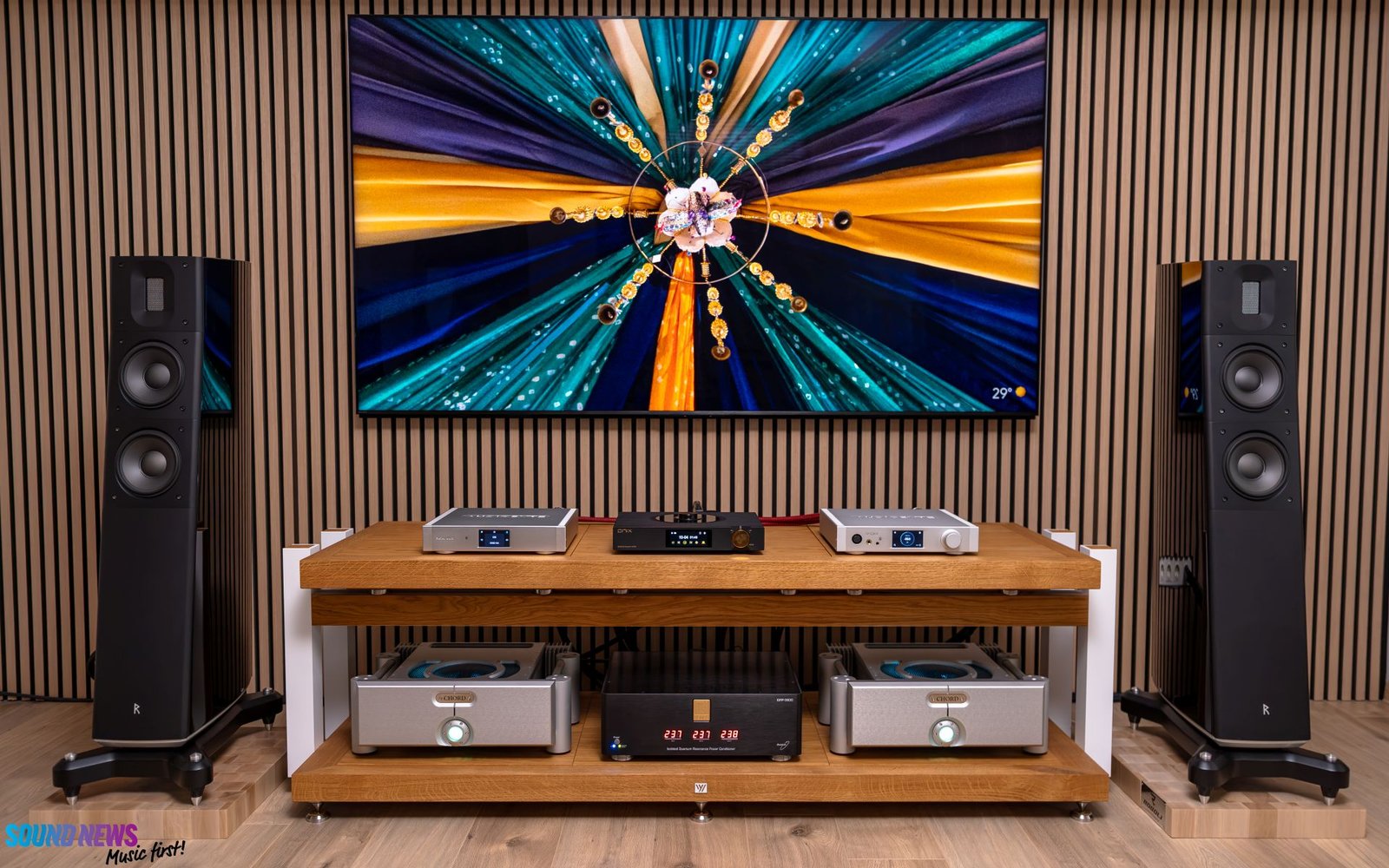
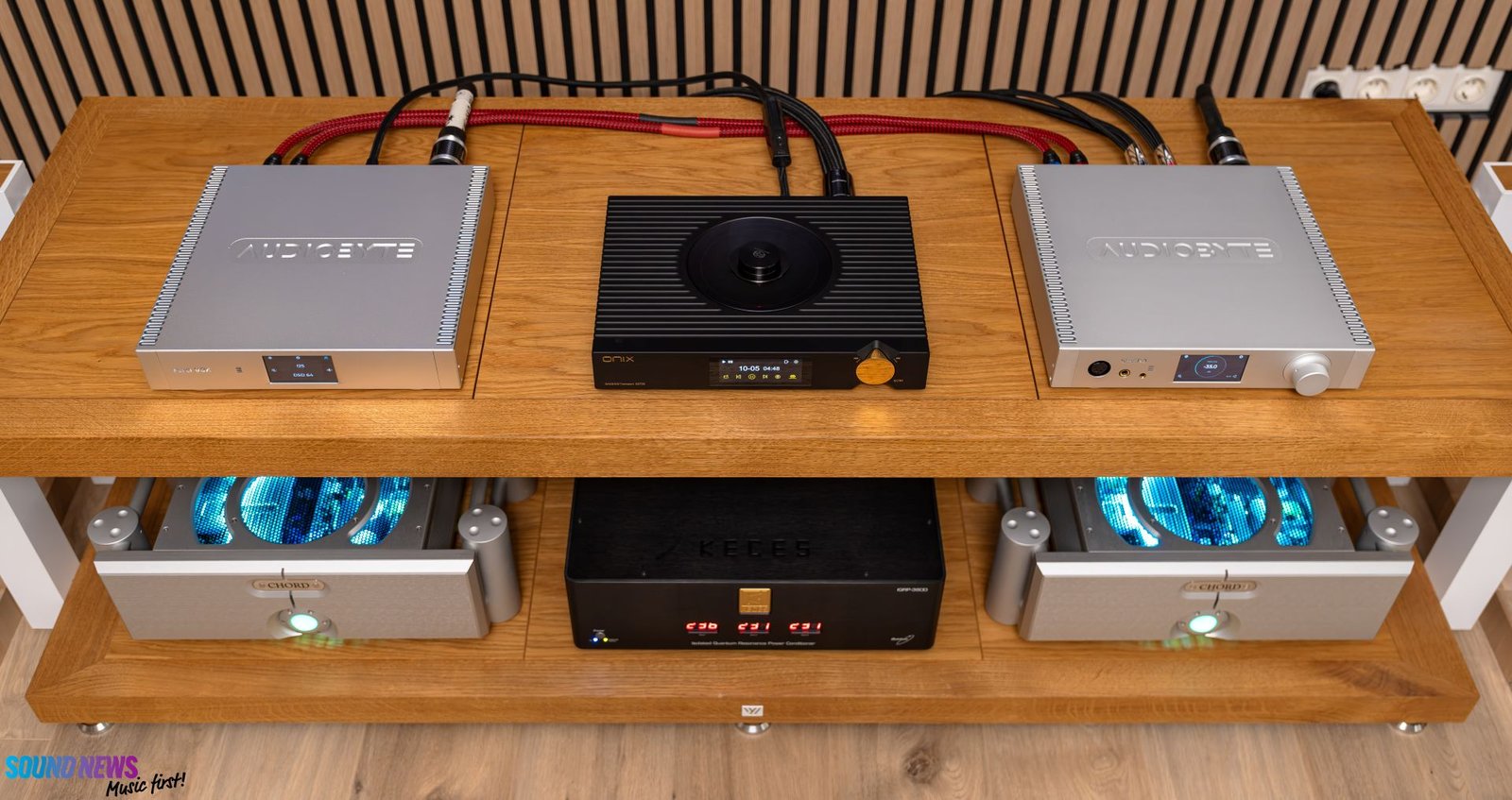
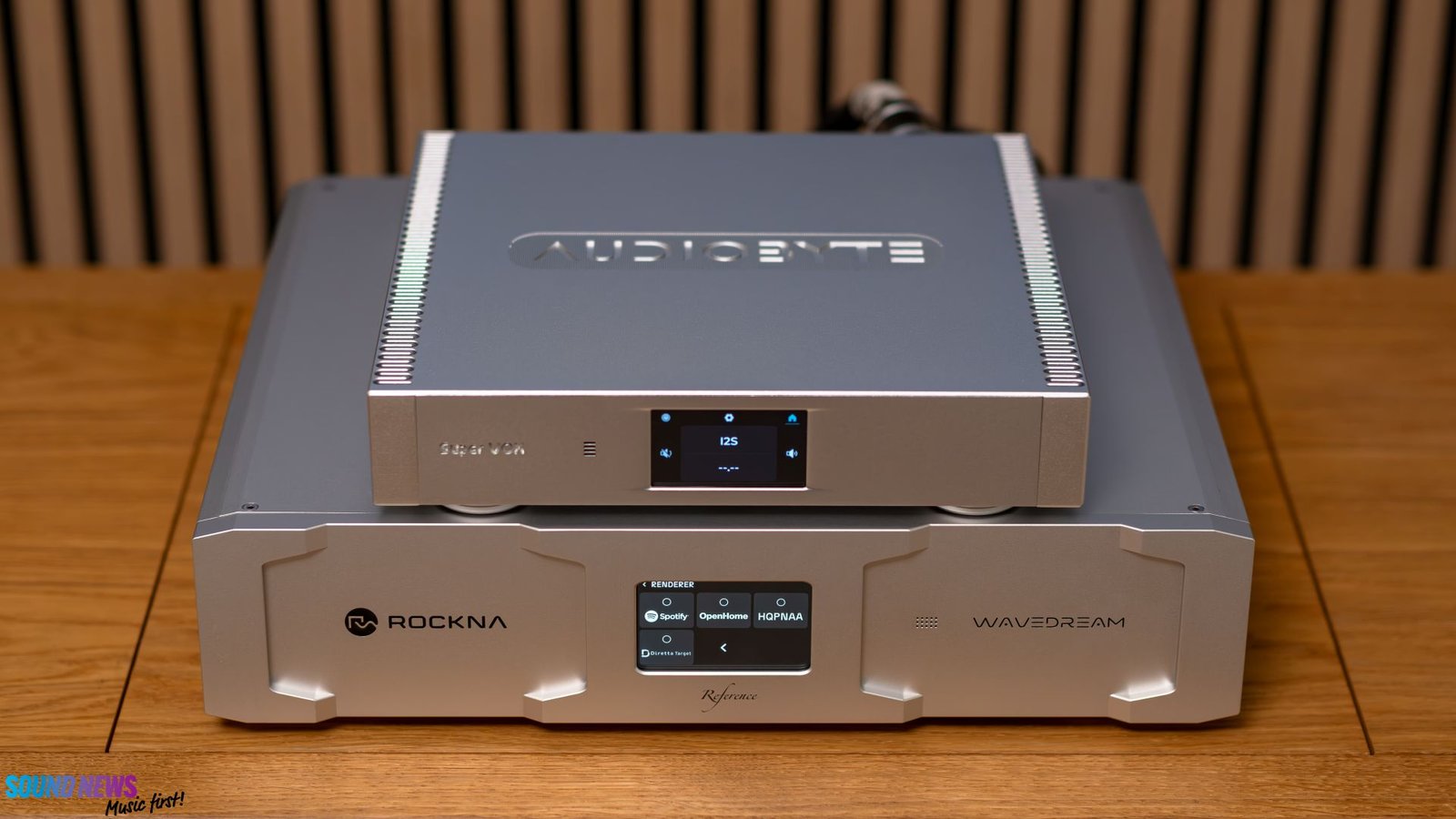
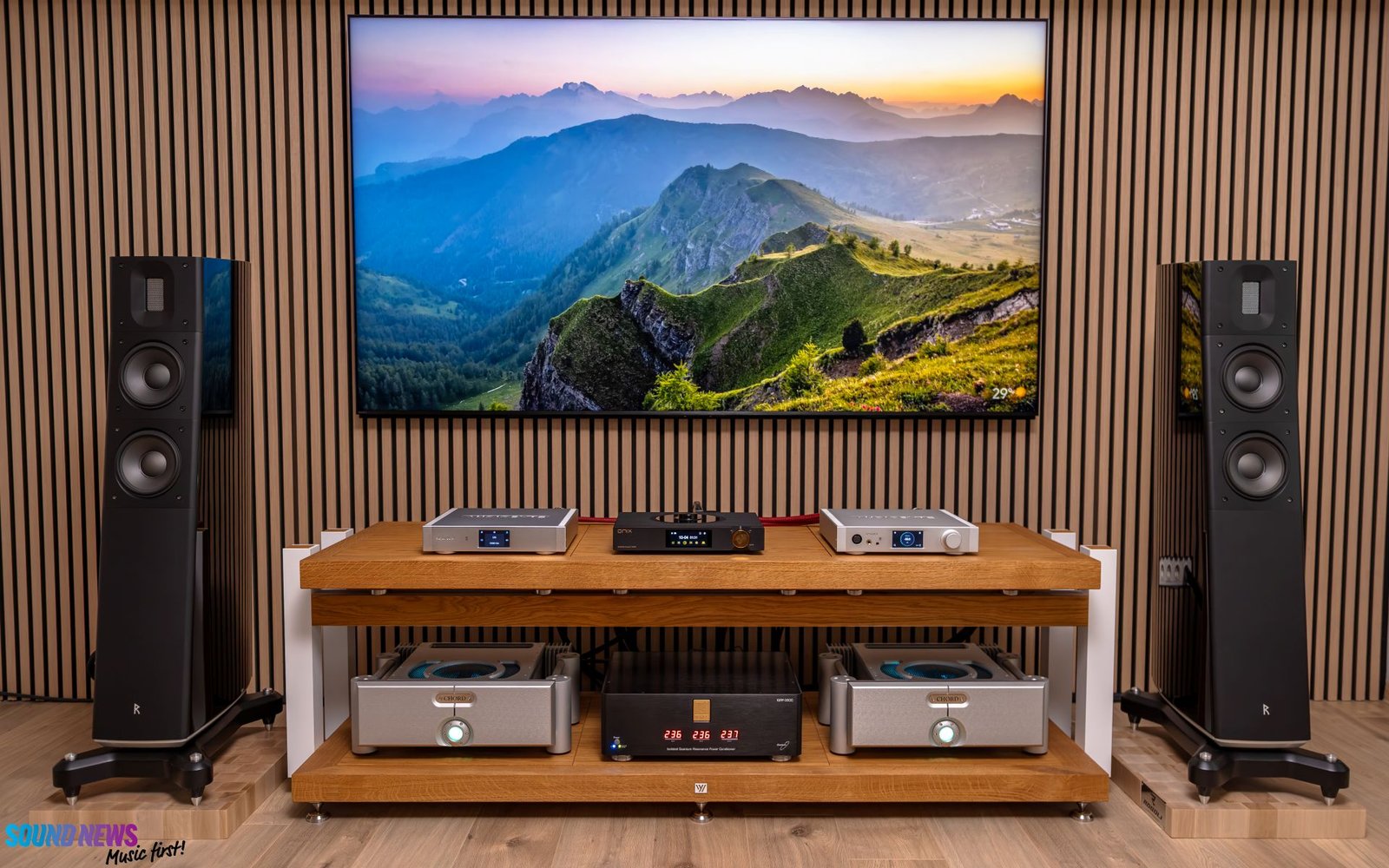
In the living room, the SuperVOX replaced my Rockna Wavedream Reference Signature DAC for a couple of months, and that is not exactly an easy chair to occupy. The signal chain was again kept as clean and familiar as possible: SuperHUB as streamer and hardware upsampler, followed by SuperVOX, then into the Chord Ultima PRE, which controlled two Chord Ultima 3 monoblock amplifiers. Raidho TD2.2 were my loudspeakers of choice, playing tunes long enough for the initial excitement to fade away and for the real evaluation to begin. This felt like the most logical and probably the most natural pairing, as all three units were clearly designed to work together as a compact but very serious Audiobyte stack.
All cabling used in the big rig came from the AudioQuest Dragon range, including power, interconnect, HDMI, and speaker cables. Everything was powered by a KECES IQRP-3600 balanced power conditioner, just to make sure that the SuperVOX wasn’t fighting noisy power, poor cabling, or other gremlins hiding in the system.
In short, SuperVOX was tested both as part of the complete Audiobyte stack and as a standalone DAC in a considerably more ambitious stereo setup. Headphones, IEMs, loudspeakers, high-end cables, and a reference DAC breathing heavily behind its back…everything was ready for a proper digital showdown. Everything should be as clear as the blue sky, so what are we waiting for? Let’s hit some eardrums!
Sound Performance
I. Preliminary Sound Impressions
The naked truth is that I’ve tried a good deal of D/A converters by now. Some would say an unhealthy amount, but hey! This is my jam, this is what I like to test and play with, and believe it or not, sometimes the differences are much bigger than what certain individuals or publications might tell you. I’ve juggled with all possible technologies, and every single time, I realized that I cannot associate a simple sentence or even a more elaborate phrase with the sound these converters produce.
You might think that an R2R ladder DAC or a chip-based solution will always sound like one, but the funny thing is that a Rockna DAC doesn’t sound at all like a traditional R2R DAC, nor does Audiobyte’s FPGA-based SuperVOX sound like the rest of the FPGA-based delta-sigma DACs I’ve tried around here. Some people might associate Audiobyte’s doings with what Chord Electronics does on the digital front end, and while there is a certain degree of logic and similarity with what Rob Watts conjures once in a while, sound-wise, I cannot think of two HiFi brands that sound more completely and utterly different. And I’m not joking here, folks. I have owned every single Chord Electronics DAC, all the way up to the Digital to Analog Veritas in Extremis, or as people tend to call it, the DAVE. And that one is the pure definition of speed, transient attack, and resolution pushed to the extreme. But I wouldn’t call it smooth or sweet-sounding, nor did it try to untangle the music and make it fly in all directions. It was amazing at what it knew best…but it wasn’t an all-rounder DAC in the true meaning of the word.
The SuperVOX follows a completely different path, a path that tries to conquer your heart. Maybe we don’t get the last drop of resolution, nor the quickest shift in dynamics, as the DAVE does best. Instead, we get a broader look over our music, as if the sound is slowly expanding its zone of influence, and suddenly hits you from different angles you weren’t prepared to hear. Last but not least, the tone and timbre of the SuperVOX are the real superpowers at play. It’s almost a paradox, but this software-defined DAC is, in a way, more “musical,” more real, and much smoother and sweeter-sounding than most R2R ladder DACs I’ve come across. I won’t put Rockna into this discussion, as they do things differently compared to most R2R creations coming from the Far East, but if I add LAiV Audio, Denafrips, Musician, or Audio-GD into this discussion, then without thinking twice, the SuperVOX will appear as sounding more fluid, more human, and less robotic in nature. It’s the one that lets me think I’m listening to tape reels or DSD recordings all the time, rather than streaming high-resolution PCM content.
I’m an avid Super Audio CD collector, and even if I started collecting them a little more than a year ago, I believe I gathered most, if not all, classic and modern rock releases available on SACD, because frankly, nothing sounds like it. Not even high-quality vinyl. And I’m not talking about resolution here, where, surely, SACD plays a forever-alone game compared to any other physical media formats. I’m talking about the message, about the feel, about what my mind perceives from the record itself. Does it connect me with something much bigger than myself, does it unlock my imagination, or does it simply make me dissect music into a million tiny pieces? SACD has this effect on me, and if you own a digital transport that can send that data to a DAC that natively decodes DSD material, then I kid you not, it’s like hearing music for the first time…ever.
The SuperVOX sends a very similar message when I’m listening to music, but it does that with every PCM or DSD recording. The flow and sweetness are always there, no matter what, and I’m sorry, but aside from hearing this on the HydraVOX DAC as well a few years ago, I’ve never experienced a similar presentation at SoundNews HQ. It’s difficult putting it into words, but it’s like experiencing digital vinyl, and I’ve probably written something similar about the Rockna Wavedream Reference Signature…because these two share a few similarities sound-wise, but luckily, they have nothing in common price-wise.
A lot of you have been asking me privately to review the SuperVOX, and I’m sorry for not rushing it. I have a different mindset. I try to live with a DAC for at least two months before drawing meaningful conclusions. I’m not here to be first, to draw most of the clicks, or to play the clickbait game. I’m here to deliver meaningful conclusions a music lover might appreciate, and a measurements-only believer might completely ignore. What I’m going to say next needs to be taken with a pinch of salt; after all, I no longer own the HydraVOX DAC that served as my digital front end for about two to three years. A direct comparison with HydraVOX wasn’t possible, as none of our friends use one of those, but I’ll rely on my long-term memory and tell you that the SuperVOX was improved in two key areas that were marginally lacking on the original gangster.
Resolution, or the so-called detail retrieval, seems higher on the newest unit, or much higher if you’re adding the SuperHUB. The HUB is the one that unlocks its full potential, and I feel sorry for not doing the same thing with the HydraVOX back in the day. But even without the SuperHUB in place, it’s obvious to me that there’s additional wiggle and micro-contrast when it comes to low-level information. Think about all of the small things that usually pop at low SPL on high-resolution systems. Those things felt a bit muted and less outlined on the HydraVOX, appearing clearer and easier to intercept on their latest creation. I feel this is where Audiobyte’s team focused most of their attention, trying to unmask as many micro-details as possible without ruining the core attributes that made an Audiobyte DAC special to begin with.
II. Dynamics & Transient Response
We have arrived at the second-biggest leap forward, and this is another area where Audiobyte’s team has clearly focused their efforts. First came resolution, and sure enough, SuperVOX conquered higher peaks than its predecessor, but the next improvements? They could be of even greater importance, at least to some of you, and yes, I’m looking straight into the mirror too. After all, this is a subjective hobby, even if I always try to remain as neutral as possible, leaning towards our readers more than towards anyone else.
Resolution is important, but dynamics and transient response are what make music feel alive. A DAC can be extremely detailed and extended at both frequency extremes, but if it can’t move from silence to full impact in a split second, music starts to lose its physical presence. It becomes informative, but not necessarily involving or toe-tapping. And you already know me by now: if a digital source doesn’t make my right foot move uncontrollably and drums don’t bite with proper attitude, then we already have a problem and, quite possibly, a return package leaving my place without me writing a single word about it.
If you put your mind into it, then theoretically, there can’t be a shorter signal path than what’s currently available in these software-defined FPGA DACs. Most of the heavy lifting is done by a single programmable silicon brain, and when you open up the case of such units, you might be surprised by how tidy and simple everything looks. But never confuse visual simplicity with a lack of engineering madness. On the surface, a quantum computer looks way more simplistic than your average gaming PC, right? Yet there’s a quantum leap in thinking between these two. The same logic applies here. What looks simple from the outside might hide years of R&D, countless simulations, failed revisions, and sleepless nights.
This is where the SuperVOX begins to distance itself from ordinary chip-based DACs. With a regular off-the-shelf DAC chip, the manufacturer is limited by the chip’s architecture, filters, modulation scheme, and conversion behavior, as these are mostly set in stone at the factory. Sure, you can tune the output stage, play with the clocking system, and tinker with the power supply, but the heart of the conversion is mostly fixed. With an FPGA-based design, things get a lot wilder and freer. The manufacturer has a lot more freedom to decide how data is handled, how timing is preserved, how filtering behaves, and how the conversion itself is performed. Of course, having freedom doesn’t automatically mean we’ll get better sound, but in the right hands, that freedom can become a serious advantage.
Transient response is one of the first things I focus on when a new DAC magically appears on my table. I never start with audiophile-approved music. Give me regular, overly processed, badly mastered stuff, usually with fat bass lines pouring out of wild electronica tracks, and I’ll draw conclusions in no time. I’m into the funky stuff that never politely asks for attention, but instead kicks the hell out of my eardrums without proper warning. If a DAC can deliver those things and keep up with faster beats, only then do I know I’m dealing with something worthy. Something that can impress a snobby audiophile as well as a melomaniac.
Relying on my memory, there’s a strong sense that the newer unit is faster on its feet, more immediate in its presentation, and more precise when timing is critical. HydraVOX was already an impressive machine in this regard, and I’m sure the HydraHUB further enhanced that feeling, but it always seemed a bit smoother and more relaxed. In a way, HydraVOX was gently pressing the brakes, and I’m sure some of you loved this trait and appreciated its smoother character, especially when paired with hotter-sounding gear or less-than-ideal recordings. SuperVOX feels clearer on a crowded track, highlighting a stronger contour and leading edge without artificially sharpening them. It pushes stronger transients, but without brightening the spotlights, more accurately preserving the timing of the recording.
Macro-dynamics are excellent as well, and that’s where the HydraVOX truly shone. An apple won’t fall far from the tree, and it seems that SuperVOX operates similarly, as when music asks for a big swing, it doesn’t hesitate. It doesn’t compress or flatten dynamics, and it doesn’t make everything sound smaller than it should. Orchestral crescendos grow naturally, metal tracks retain their violence, electronic music has proper slam, and double drums will hit with impressive authority. This is the kind of DAC that doesn’t fear high dynamic range tracks, but plays them with a big smile on that shiny CNC-machined face. Quiet moments stay silent, but loud moments explode when they need to. SuperVOX locks into the groove and binds the notes as if a SACD is spinning somewhere in its vicinity, as if it is constantly receiving a native DSD data stream. It’s difficult putting that into words, but HydraVOX and SuperVOX are the only DACs I’ve tested around here that have these natural instincts of bonding notes together into continuous music.
In the earliest days, I mistook its liquid-sounding character for a lack of nerve, but the more I listened to it, especially connected to the SuperHEAD via a couple of high-end headphones, the more I realized that it’s not lacking when delivering the thunder. Maybe the slow burn-in of the electronics made me think that, or maybe my brain was slowly accommodating to the sound, but right now, I can clearly perceive its note-binding liquidity, and I appreciate it dearly. After all, I don’t know a single off-the-shelf chip-based DAC that offers the same trait, and this is precisely what makes the SuperVOX stand out from the usual suspects.
In the end, SuperVOX feels like a faster, cleaner, and more dynamically expressive evolution of the HydraVOX idea, but at the same time, it leaves room for bigger and more exotic creations from Rockna Audio, which, in my humble opinion, mastered dynamics more so than any other D/A manufacturer that passed through my hands. Of course, there is a tiny bit of subjectivity at play, yet after trying close to ~150 D/A converters in the comfort of my home, nothing toppled the Wavedream Reference Signature in three key areas: resolution, dynamics, and openness. Nothing. Nonetheless, if the best of Rockna would get 10 out of 10 points, the SuperVOX will get a solid 9, the HydraVOX 8 points and half, and if you’re wondering how a Topping D900 single-bit FPGA DAC would fit in the same discussion, it would get a 7 at best, especially in the slam department, where it still doesn’t quite pound as hard in the lowest octaves as the rest of the units discussed here.
III. Soundstage & Stereo Imaging
A lot of people still believe a DAC only decodes zeroes and ones and can’t manipulate air travel or influence the openness of the sound in any way, and I have a weird feeling that these people are multiplying nowadays faster than rabbits, but I stand with a very different crowd. If there’s a unit that can manipulate the openness and 3D effects of your HiFi system, then the ace of spades is always hidden in the DAC’s sleeve. These digital creatures can seriously boost…or limit air travel more than you can possibly imagine; they can make your music flat or extremely 3D; some even shrink the stereo image to the point where the center stereo image completely disappears. I’ve experienced all of these states, and I suggest being open-minded whilst listening to music, as these things can’t be measured right now, but your brain will easily differentiate a closed-in source from a bombastic-sounding one.
The HydraVOX was already one of those digital sources that went for a bigger canvas. It wasn’t equipped with the best zoom lens, and it still couldn’t beat five-figure digital or analog sources, but it was beating the crap out of ChiFi units that were still making the rounds at our HQ at the time. I still remember how it gently pushed the music into my peripheral vision, especially when connected to a nice headphone amplifier driving a set of open-back planar headphones. It didn’t just stretch the soundstage, but also gave notes more breathing room, a sense of depth that was quite interesting to experience first-hand, making crowded music less claustrophobic and more speaker-like. It was not the main reason, but one of the reasons I replaced my Matrix Element X with the HydraVOX back in the day.
The SuperVOX follows the same bloodline, and again, it won’t challenge the beefier and more expensive digital creatures I’ve tested around here, but I still feel it has refined the old formula. The stage feels cleaner around the edges, and I have an easier job focusing on individual instruments floating midair. Maybe because the noise floor dropped and the resolution increased? I’m not entirely sure, but the SuperVOX sharpens the lens a little, reduces fog, and lets me experience clearer center focus. It doesn’t push images forward aggressively like what I usually get with ordinary chip-based converters, nor does it artificially stretch everything until the recording starts sounding bigger-than-life, as it does on massive R2R devices. Instead, it gives music enough space to breathe while keeping the outlines of musicians and instruments in focus.
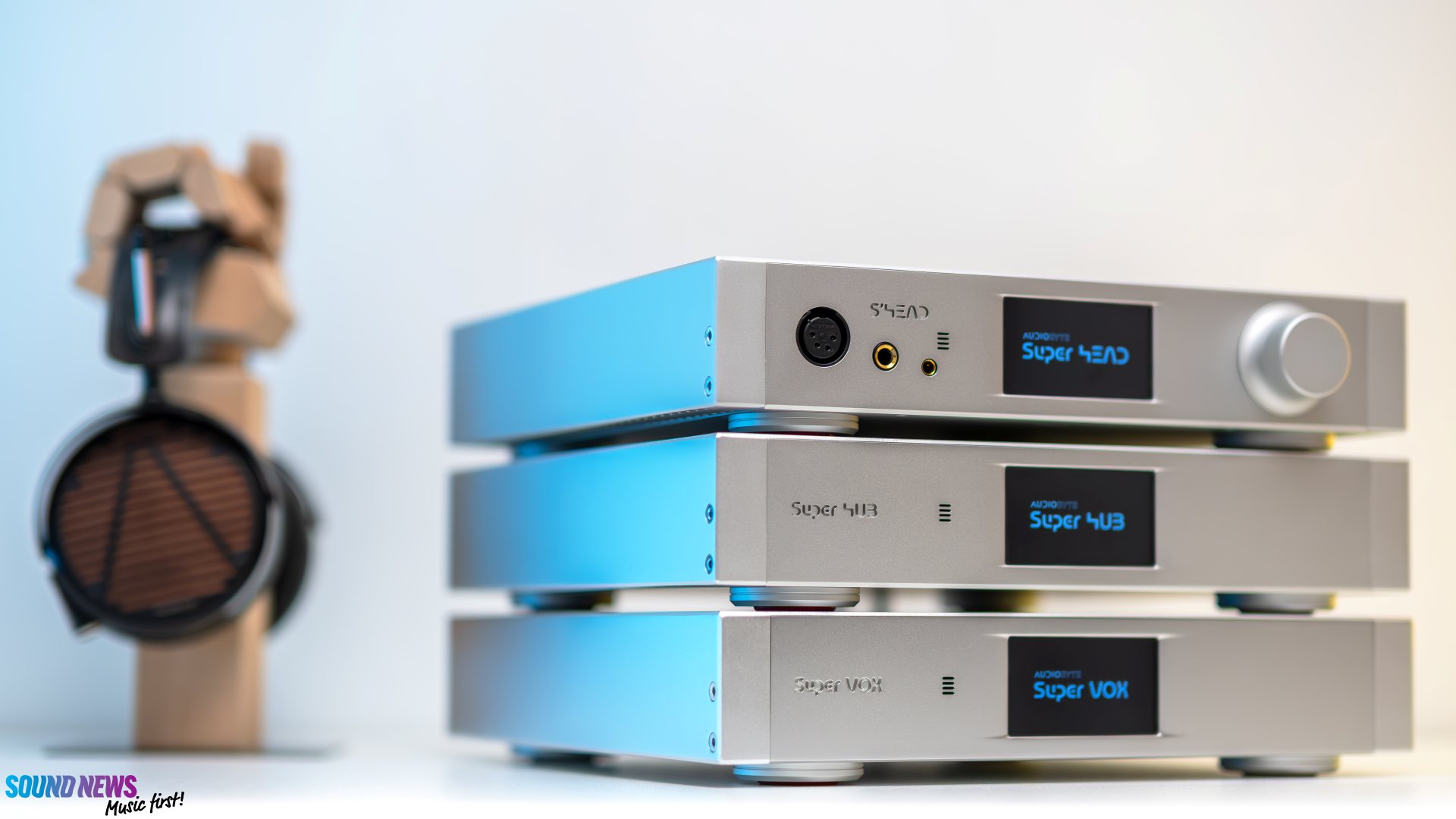
Such things are easy to spot with a pair of high-end loudspeakers, but how about headphones? I’m lucky to have on loan Audiobyte’s Super-stack consisting of the SuperVOX DAC, SuperHEAD headphone amplifier/preamplifier and the SuperHUB streamer/hardware upsampler and when using all of these three together working as one system, I get a weird feeling that I should sell the rest of my headphone related electronics and just stick to the Super-stack that gives me almost everything my Wavedream Reference Signature + Feliks Envy Susvara Edition does, at only a fraction of the cost. Besides easily driving the most demanding loads and never running out of steam, I like how real and easy-going everything is when pouring, regardless of the music’s complexity or the load attached to the amplifier. But the biggest trait? The sound is never, for a microsecond, aggressive, closed-in, or flat!
And that doesn’t happen only with the Sennheiser HD800S, but with basically every headphone from my collection. Be it the HiFiMan Susvara OG, the updated Bandoss Avija, the Audeze LCD-5S, or the T+A Solitaire P, the Super-stack always paints a substantial canvas right before my eyes, and I don’t need to stop my work to experience its beauty. The sound’s floating mid-air, but doesn’t shout for your full attention. You can look if you need or want, but you can continue working, watching a movie or playing a game, depending on what you do in that exact moment. If I put Sennheiser’s HD800S on my head, which already has a stadium-sized ego when it comes to soundstage, then the SuperVOX won’t magically make them even larger sounding than that; it will give them breathing distance, and that pleasant out-of-head sensation that makes live albums addictive. The Susvara OG and the Avija are less about exaggerated width and more about layering, depth, and image stability; here again, the SuperVOX feels confident and well-organized.
Moving into the loudspeaker rig made this chapter even more interesting. The Raidho TD2.2 are already masters at disappearing when properly driven, and with the SuperVOX feeding the chain, had no trouble throwing a breathable stage. The room didn’t feel artificially inflated, but it did feel slightly larger than the usual suspects, especially with atmospheric music. There was enough air between the notes and vocals, and I’ve got a stronger sense that sounds were developing in front of me rather than being pushed directly from the speaker cabinets.
However, I need to put things into perspective. As open and airy as the SuperVOX can be, it still doesn’t quite reach the same level of scale, layering, and three-dimensional authority that I’m getting from the Rockna Wavedream Reference Signature. The Rockna still feels deeper and more holographic, in both my head-fi battle station and later in the living room. It paints with a larger brush, but also with more colors, placing musicians not only left and right, but also in more convincing front-to-back layers. There is more darkness between notes, more depth behind the stage, and a stronger feeling that the acoustic space continues beyond the visible borders of the room. But let’s be fair here. The Wavedream Reference Signature sits in a completely different price category and was never meant to be an easy target. The fact that SuperVOX even invites this comparison says a lot about how far Audiobyte pushed this little machine. It doesn’t dethrone the Rockna, but it carries some of that family DNA in a more compact and approachable form.
IV. Resolution / Detail Retrieval
I want to draw your attention to one important topic today: measurements matter only to a certain degree. If I compare the raw measurements of the older HydraVOX with the current measurements posted on SuperVOX’s page, then the results will (probably) puzzle you. The THD appears higher at 0 dB, and the signal amplitude is lower. However, it’s important to mention that single-bit DACs like the HydraVOX generate much higher noise at lower volumes (a metric that wasn’t provided), where low-level information resides. SuperVOX is a multi-bit DAC, and the noise floor is no longer that high at lower volumes, automatically suggesting that you’ll get a substantial boost in resolution, especially on the micro-scale, where things truly matter. Obviously, I can’t do a direct back-and-forth comparison with the HydraVOX, as I don’t have one around, but relying purely on audio memory, I will note that the SuperVOX is much closer to the Rockna Wavedream Reference Signature DAC than to the older Rockna Wavelight DAC. HydraVOX was more like a rebadged Wavelight in technical terms; it was still good, still unearthing plenty of detail, but it never tried to outplay the best digital creatures on the market.
This is the part where Audiobyte put their skills to good use, as low-level information finally passes through the veil and you can hear it without strain, without applying any third-party enhancers like better cabling or power conditioning. The SuperVOX is therefore able to show off a substantial improvement in resolution at both ends of the frequency spectrum. The bass in particular is of higher quality; it’s not just jumpier and more playful in its energy, but also sharper, clearer, and more defined, showing improved layering at the micro level. Bass detail can be a tricky part to discuss on entry- to mid-level equipment, but it’s essential and very obvious on a DAC of this caliber. The same goes for the treble region. The HydraVOX always appeared to be a smooth rider, and so is the SuperVOX, but this time around, there’s more sound to explore. There are new nuances here and there, all while never boosting the DAC’s sharpness and treble energy. Treble sharpness wasn’t tuned in; it’s more like opening the valve, letting additional micro-level information pour into the room. It’s one of those things that differentiates a great DAC from an outstanding one. People think technology doesn’t move forward when it comes to HiFi, but I think it never moved as fast as it did in the last decade, and the SuperVOX is the living proof of that.
Putting it into perspective, I’d say we get a slight resolution uplift versus a Gustard R30 DAC, and it’s more or less the same with a Gustard X30, and if you’re still rocking a Rockna Wavelight, there’s just more music on the SuperVOX, albeit without the hard-pounding nature of Rockna’s creations.

Kazuhito Yamashita passed away earlier this year. He was arguably one of the greatest guitarists to ever walk the Earth, and yet, very few people outside the classical guitar world truly knew his name. Be honest, does his name ring a bell? For many of you, probably not. And that’s the strange truth about greatness: the best is almost never the loudest or the most universally known, be it a HiFi brand or a one-of-a-kind musician. Yamashita was not merely a guitarist but a force of nature. His technique was almost unreasonable, sometimes bordering on the impossible. He invented ways of playing the guitar that didn’t really exist before him, from single-finger tremolos that could mimic entire orchestral sections to left-hand extensions that seemed to operate at the anatomical limit. There were moments when he didn’t sound like a guitarist anymore, but like a full orchestra trapped inside six strings. When he released his transcription of Mussorgsky’s Pictures at an Exhibition in 1981, the classical guitar community split in two. Half called it a historic milestone, while the other half called it madness. I think it was both. The instrument had never been treated like that before, and I’m not sure we’ll witness something similar anytime soon. Too many called him a one-man band, and there were too many occasions when he seemed to forget that he was still…human. If you want a great place to start experiencing his work, I wholeheartedly recommend The Art Of Kazuhito Yamashita: Transcriptions & Masterpieces For Guitar Duo. You can still find him on several streaming platforms, but to my ears, he always sounded best on Qobuz, followed closely by Tidal.
Now, why would I bring back from memory such a great soul in a DAC review? Because through the Super-stack, he felt alive again. I’m sitting here with headphones on my head, and I can’t stop smiling and trembling at the same time. I closed my eyes way too many times, not because I wanted to focus on a particular passage, but because I wanted to hide my tears when my son was passing nearby. Yamashita pushed the classical guitar beyond what seemed possible. And somehow, the SuperVOX, together with the rest of its Audiobyte mates, resurrected that feeling so easily, and so emotionally, that for a few minutes I completely forgot I was still on planet Earth.
The Elephant in the Room
Before moving on, I need to address the elephant in the room: comparisons. Usually, this is where I would put the SuperVOX next to another DAC, volume-match them, swap back and forth for a few days, and then write down what happened. This time around, things are a little more complicated.
In my humble opinion, I don’t currently have another DAC that can be directly compared to the SuperVOX from a sonic perspective. Sure, I could place a few chip-based delta-sigma DACs next to it, maybe even an R2R ladder DAC, and start writing about it, but that wouldn’t be a truly fair comparison, because SuperVOX doesn’t really play by those rules. The only comparison that would make perfect sense is against the older HydraVOX, but sadly, I no longer have that one around. Relying purely on memory can be useful for describing general character and long-term impressions, but it wouldn’t be precise enough for a proper one-on-one showdown. Audio memory is tricky; it remembers emotions better than decibels, and I don’t want to pretend otherwise.
So, instead of forcing a comparison just for the sake of filling a chapter, I’ll keep this one honest. SuperVOX will be judged on its own merits, in my current reference system, against my long-term experience with many digital sources, and with the understanding that a proper HydraVOX versus SuperVOX comparison might happen in the future if I can get both units under the same roof again. Anything else would be more entertaining than informative, but I promise to you one thing: If an equally impressive FPGA delta-sigma DAC ever crosses my path, I’ll make sure to compare it with the SuperVOX separately in an article or video review.
Two Cons and a Conclusion
In typical SoundNews fashion, I won’t highlight only the greatness, although I would really like to stop here and call it a day. There are a few limitations that you should know about, but also the reasoning behind these limitations. The biggest nitpick is the SuperVOX’s output voltage. Instead of the industry-standard 2V via RCA and 4V via XLR, we have an output voltage of 2.9V on both RCA and XLR. The RCA output doesn’t concern me, as it’s a little stronger than usual, but the XLR voltage is slightly below the industry standard, meaning you’ll need to crank the volume a little higher to reach a similar SPL level with an industry-standard 4V DAC. This isn’t a big deal for folks rocking monoblock amplifiers that could power the Death Star at any gain level, but it could be a mild inconvenience with 2W to 10W SET amplifiers, where every volt from the source counts. Now, this small inconvenience could also be a blessing. There are certain amplifiers that use aggressive gain; I’m looking at you, Feliks Audio. With such amplifiers, a lower input voltage can actually tame that aggressive gain and let you use a larger portion of the volume range. You could now go past 12 o’clock, rather than stick somewhere between 9 and 11.
The reasoning behind this decision is simple. A higher output voltage would increase noise and distortion, defeating the purpose of a small DAC outperforming larger, costlier units, so it was decided to stick with a lower output voltage.
Secondly, it lacks an active preamplifier stage, so it won’t be the best direct partner for a power amplifier. The reasoning is that their SuperHEAD already performs like an end-game active preamplifier, and if you intend on powering a monoblock or two, this is the most obvious course of action. Get both and call it a day. Now, if you also need a DDC, hardware upsampler, and wired streamer in a single chassis, I cannot recommend the SuperHUB enough. Honestly now, hand on heart, I don’t know a single unit that can perform as a dedicated DDC, hardware upsampler, PCM-to-higher-res PCM or PCM-to-DSD sampler, and wired streamer with Roon and Diretta capabilities. Do you know of any unit at any price point that does such things? I don’t. The SuperHUB isn’t just the perfect digital transport and streamer for the SuperVOX, but for any other DAC as well. It’s a DDC, hardware upsampler, streamer, Roon, and Diretta endpoint for any DAC on the market.
Can the DACMan have too many DACs? That would be a waste of great engineering; after all, I have only two ears. But how about two DACs? One for the Big Rig and one for the head-fi battle station? Well, that’s exactly what I’m going to do, because from now on, the SuperVOX will be my main DAC in the office, where most of my headphone listening, writing, and editing work happens. I don’t need to remind you why it feels so different and fresh from a sea of D/A converters. I’m tired of testing the same DACs with the same chips and output stages disguised as different engineering under different banners and brands, but with Rockna and now Audiobyte, I’m covering all of my needs with two of the most advanced converters out there. Considering how much time went into crafting the SuperVOX and the rest of the Super family, plus the ongoing support they still receive weekly, Diretta was implemented just two days ago. I cannot recommend the SuperVOX enough, and the same goes for the rest of the family. The SuperHEAD has already been tested around here, and you can check my review here. Who knows, maybe I’ll drop a video for the SuperHUB in the coming weeks. I think it deserves a shot; after all, it’s unique in what it does and how it does it.

Our Highly Impressive award is fully justified, so congratulations to the team, and I’m looking forward to what’s coming next, probably a lot of firmware updates. If you have any burning questions, please let me know in the comments section below, and don’t forget to smash that Subscribe button on YouTube; it means a lot to me. That’s all for now, folks. Sandu signing off!
PROS:
- A one-of-a-kind FPGA-based DAC that doesn’t sound like your usual chip-based converter
- Same beautiful casework as the SuperHEAD, with excellent fit and finish, sculpted lateral heatsinks, and a compact but serious-looking chassis
- Rockna / Audiobyte digital DNA in a smaller and more approachable package
- Clever multi-level delta-sigma / multibit DSD architecture with proprietary processing, custom FPGA code, and advanced Femtovox clocking
- Simple and elegant user interface, without unnecessary distractions or complicated menus
- Excellent tonal balance, sounding clean, full-bodied, natural, and unforced at all times
- Higher resolution compared to the older HydraVOX, without becoming sterile, sharp, or overly analytical
- Beautiful note-binding liquidity, making music flow in a continuous and organic way, almost as if native DSD was constantly playing somewhere in the background
- Impressive dynamics and transient response, easily keeping up with fast, crowded, and demanding tunes
- Wide, open, and holographic sounding, with very good stereo imaging and believable instrument placement
- Clean background and low noise, helping notes appear out of nowhere with excellent contrast
- Works wonderfully as part of the full Audiobyte Super-stack, especially with the SuperHUB feeding it via I2S and SuperHEAD handling amplification duties
- Equally impressive in a head-fi battle station or in a serious stereo rig
- Strong price-to-performance ratio considering the custom architecture, build quality, sonics, and ongoing firmware support
- Probably one of the most interesting and emotionally engaging non-R2R DACs I’ve tested to date
CONS:
- XLR output voltage is limited to 2.9V, which is below the usual 4V industry standard
- No active preamplifier stage inside, so it won’t be the ideal partner for every power amplifier
- To unleash its full potential, you’ll probably want the rest of the Audiobyte family (SuperHUB and SuperHEAD)
ASSOCIATED EQUIPMENT:
- HiFi Racks: WoodYard Suspended Triple & Baby Modular
- CD/SACD Transport: Onix XST20
- Network Switch: Ansuz PowerSwitch D3
- DAC & Wired Streamer: Audiobyte SuperVOX, SuperHUB, Rockna Wavedream Reference Signature
- Preamplifiers: Audiobyte SuperHEAD, Chord Electronics Ultima PRE, Feliks ENVY Susvara Edition
- Power Amplifiers: Chord Electronics Ultima 3 (X2)
- Headphone Amplifiers: Audiobyte SuperHEAD, Feliks ENVY Susvara Edition
- Loudspeakers: Raidho TD 2.2
- Headphones: HiFiMan Susvara OG, Susvara Unveiled, T+A Solitaire P, Bandoss Avija, Audeze LCD-5S, Sennheiser HD800S & many more
- IEMs: FiiO FX17, HiBy Zeta 2, Meze ASTRU
- Interconnects: AudioQuest Dragon XLR (X2)
- Speaker cables: AudioQuest Dragon 2.0m
- Headphone Cables: Crystal Cable Absolute Liberty
- Power Cables: AudioQuest Dragon Source (X2), AudioQuest Dragon High Current (X2)
- Ethernet Cable: Crystal Cable Da Vinci
- HDMI Cable (I2S): AudioQuest Dragon
- Balanced Isolation Power Conditioner: KECES IQRP-3600