Around four years ago, I was toying with the idea of finally integrating a Denafrips Terminator Plus DAC into my HiFi system. Was it pure luck, coincidence, or the Fates quietly playing with the threads of my life? Somehow, just minutes before placing an order, a Chord Electronics DAVE DAC landed on my table courtesy of my good friend Catalin.
Although I genuinely liked the Denafrips sound for its sweet tonality and strong bottom end, some things weren’t so rosy. If you’ve read at least a couple of my articles, then you already know how much I value ultimate resolution, speed, and dynamics above anything else. If I think about it, that’s my personal Holy Trinity, the three qualities I simply cannot live without in a HiFi system. Whenever a DAC starts slowing down dynamics, lowering resolution, or pressing the brakes on transient attack, that’s usually my cue to purge it with fire.
Challenge accepted!
After carefully volume-matching both units with a decibel meter and going through several rounds of blind comparisons, the first word that came to mind was… decimation. What was previously a great-sounding DAC suddenly felt merely good. What was punchy became a heavyweight boxing champion. What was detailed and clean turned ultra-revealing to the point of simply disappearing from the chain. One unit sounded like music had been recorded and then politely played back. The other sounded like everything was happening right there, in real time, unfolding in front of me. One was gently sugar-coating my music and softening the transients, while the other completely stepped aside, vanishing from the acoustic chain and letting the music roam freely in the room. One felt like a modern-day PC, solving most of my daily tasks with flying colors. The other felt like a quantum computer, solving everything at lightning-fast speeds. Subjectivity certainly played a role, but the decision was obvious. In no time, I once again became a Chord Electronics customer, buying the DAVE from my local dealer.

But this is not where my story begins.
Over the years, I have reviewed most of their digital-to-analog converters, and long before that, I extensively used the legendary Chord Electronics DAC 64 eons ago, followed by the Chord Electronics QBD76 HDSD decades later. Chord Electronics weren’t new to me after all, and I already knew what their particular interpretation of Digital-to-Analog Veritas In Extremis (DAVE) could bring to the table.
Months later, the familiar itch of upgraditis started growing stronger. Chord Electronics had just revealed their brand-new line of power amplifiers and preamplifiers carrying the same technological DNA found in their ULTIMA lineup. Naturally, I borrowed a Chord Electronics ULTIMA PRE 3 preamplifier together with a Chord Electronics ULTIMA 5 power amplifier. Right there, even without any burn-in whatsoever, I realized that I would probably stick with this brand for quite a while. Nothing I had tested before sounded as tightly controlled, as impactful in the lowest octaves, or as clean when pushed to the absolute limits.

Testing the limits of analog designs is something I usually do within the first few minutes of powering them on. But no matter how hard I pushed them, distortion never started building up. Instead, I was greeted with a level of refinement that was simply missing from my previous amplifiers. It’s probably redundant to mention that, since then, things escalated quickly.
My preamp evolved from the PRE 3 to the PRE 2 and, just two weeks ago, to the mighty Chord Electronics ULTIMA PRE. On the power-amplifier side, the stereo ULTIMA 5 eventually made way for a pair of Chord Electronics ULTIMA 3 Monoblock amplifiers, thanks to their superior transient handling, iron-fisted grip over my speakers, and what can only be described as seemingly unlimited headroom and power.
Please don’t call me a Chord Electronics fanboy, because in truth, I’m not.
I’m always open-minded to experimentation, and I secretly dream about the day when something will surpass the performance of my current setup and the upgraditis itch will once again disturb my sleep. Now imagine my reaction when Chord Electronics, together with the local dealer, invited us to visit their factory in Maidstone, Kent, UK.
Hell Yeah! was probably the most accurate response I could produce. I immediately called my colleague, and within minutes, we both agreed to once again set foot in Kent. Again, because about a year and a half ago we had already visited the legendary speaker manufacturer KEF (here’s our KEF factory tour), which, surprise, surprise, also happens to have its headquarters just a stone’s throw away from Chord Electronics, right there in Maidstone. We booked our flight two months in advance, but apparently, Wizz Air had other plans. Our Tuesday flight was canceled and replaced with one on Monday.



On a second thought, an extra day in the UK meant another chance to see the beautiful London, taste the local dishes, and of course sample a respectable amount of cider, ale, and stout. Hopping on an Uber boat cruising along the River Thames, we were able to admire much of London thanks to the surprisingly sunny weather blessing the city that day. From Putney Bridge to Westminster Abbey, from Big Ben to the London Eye and Buckingham Palace, the city revealed itself in all its glory. We even passed the notorious HMS Belfast, permanently moored as a museum ship, operated by the Imperial War Museums.
We ended the day the only proper way possible: with a generous portion of fish and chips and a couple of IPAs to refill the energy levels.
Maidstone, Kent – Day 1
After a good night’s sleep, the next morning we had a train to catch from London Victoria Station to Maidstone. That was also the moment when Colin Pratt, Chord Electronics’ Sales Director, began playing pranks on us that would continue for the next two days.
We were tricked, outplayed, and I must admit, occasionally outdrunk. I only wish every Sales Director would be this open-minded, helpful and so… fricking metal \m/. At some point, we realized we had attended several gigs over the years without even knowing it. Our musical tastes overlap heavily, and who knows, maybe one day we’ll randomly bump into each other at a gig somewhere around the world.
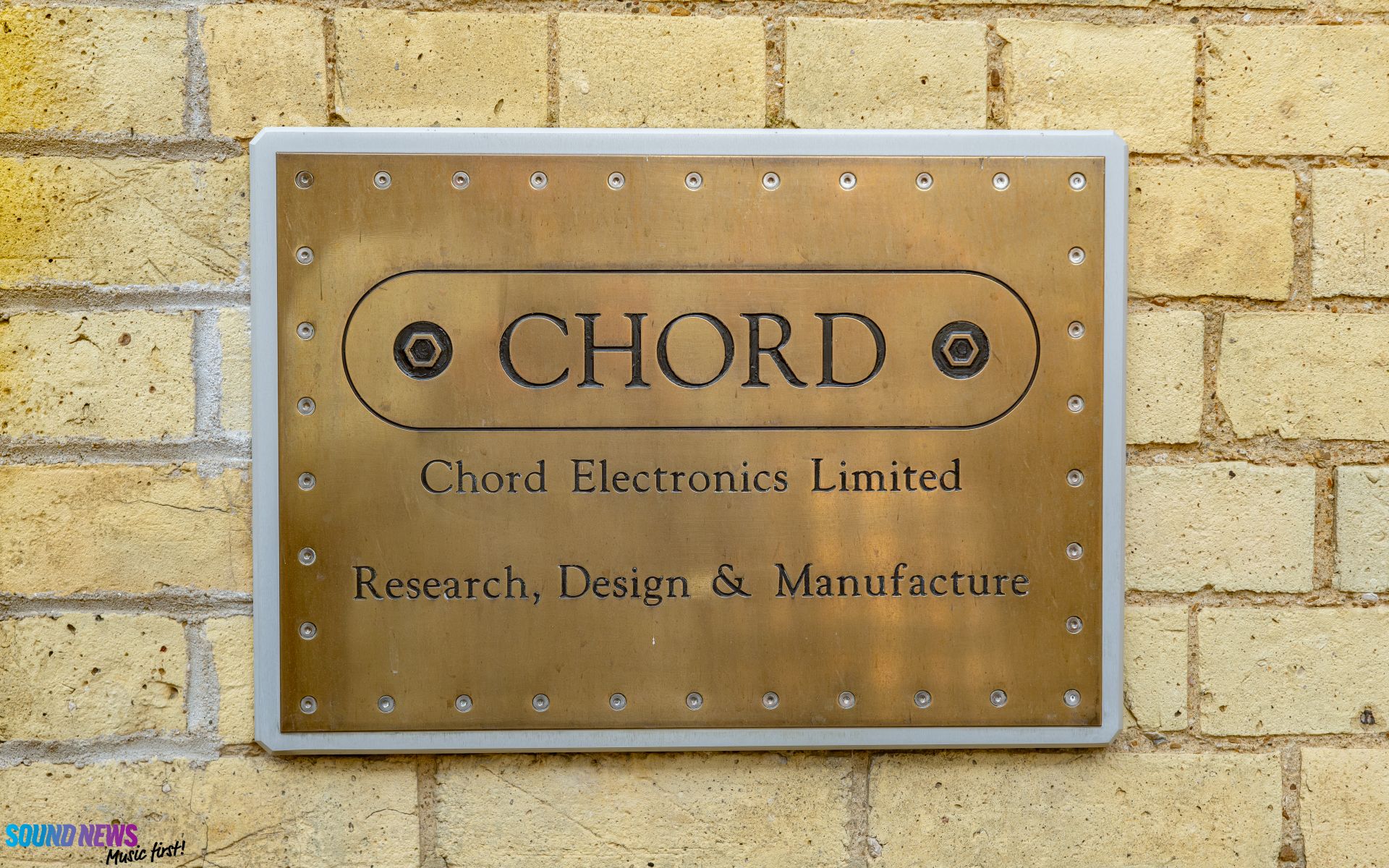


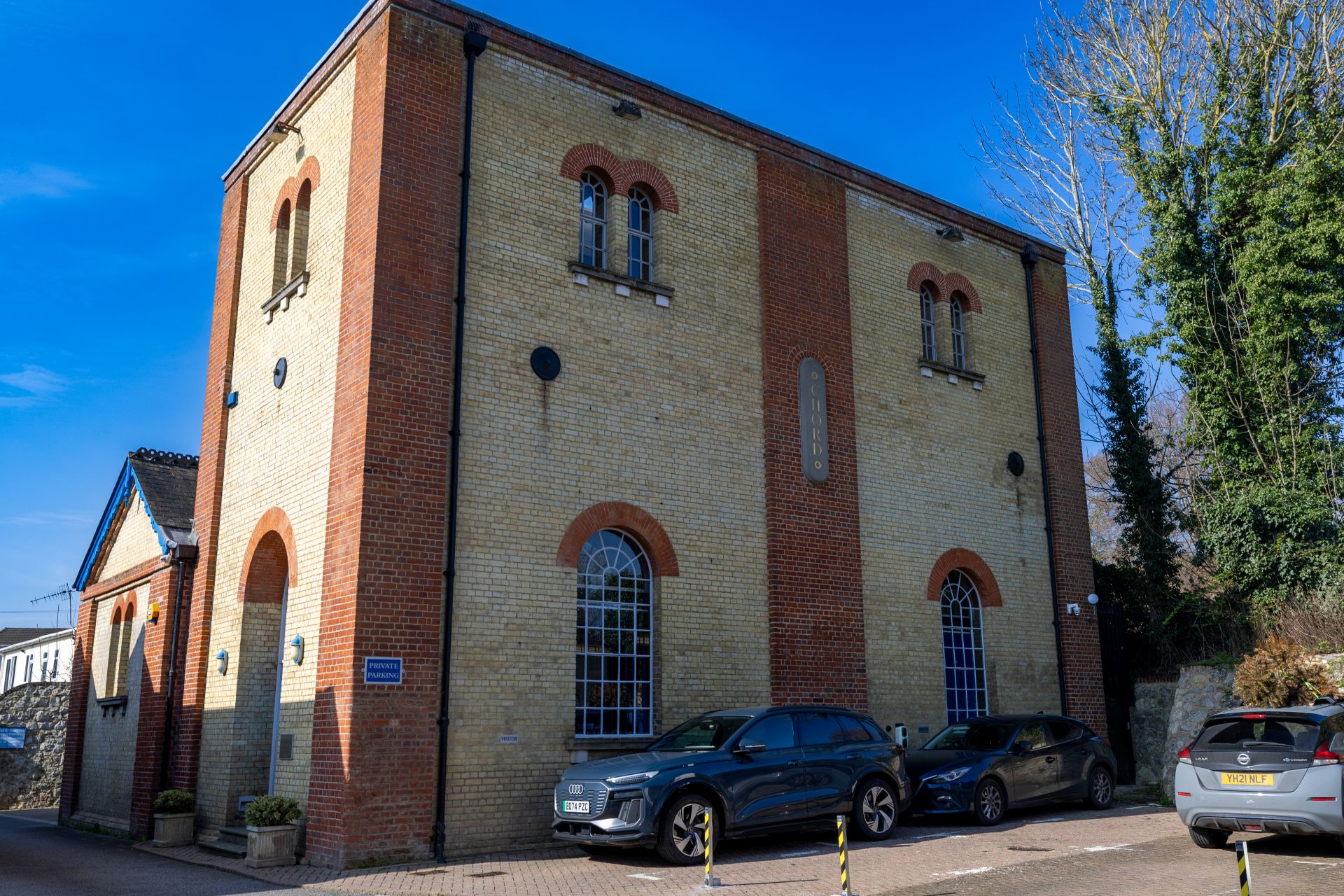
After surviving roughly an hour of dark humor, we finally arrived at the original Chord Electronics factory. We later learned that most of their R&D work and internal meetings had moved to a secondary building directly opposite, but equally charming and filled with clever minds.
Colin introduced us to Matt Barlett (Managing Director) and then to Dan George (PR/Marketing), who would guide us throughout the day. They probably noticed the excitement written all over our faces. My head was practically steaming the entire day, the result of trying to contain too much enthusiasm while asking way too many technical questions.
Colin and Matt showed us some of founder/owner John Franks’ latest research and developments. While I’m obviously not allowed to reveal what’s coming next from Chord Electronics, I am allowed to say this: John Franks’ name will be all over those designs, if you know what I mean. Known for his Class-AB sliding bias amplifier topologies combined with adapted dual feed-forward error correction, John continues pushing analog designs forward at an impressive rate. Some upcoming designs will be smaller, some considerably larger, but all of them will remain firmly rooted in the analog domain.
We were also told that Rob Watts is deeply immersed in new digital developments that will eventually follow the arrival of the upcoming Quartet upscaler into listening rooms around the globe. But that’s a much longer story for another time.



Tea, Biscuits, and a View
On the top floor of the R&D building (The Works), we were welcomed with tea, coffee, and biscuits, accompanied by a surprisingly beautiful view over the quiet village surroundings.
Looking out the window, it suddenly became clear why designing audio equipment here probably doesn’t feel like work at all. When the countryside stretches calmly beyond the glass, developing new digital filters or analog circuits probably feels less like engineering and more like a brain-tingling creative exercise.

Inside the Main Chord Electronics Building
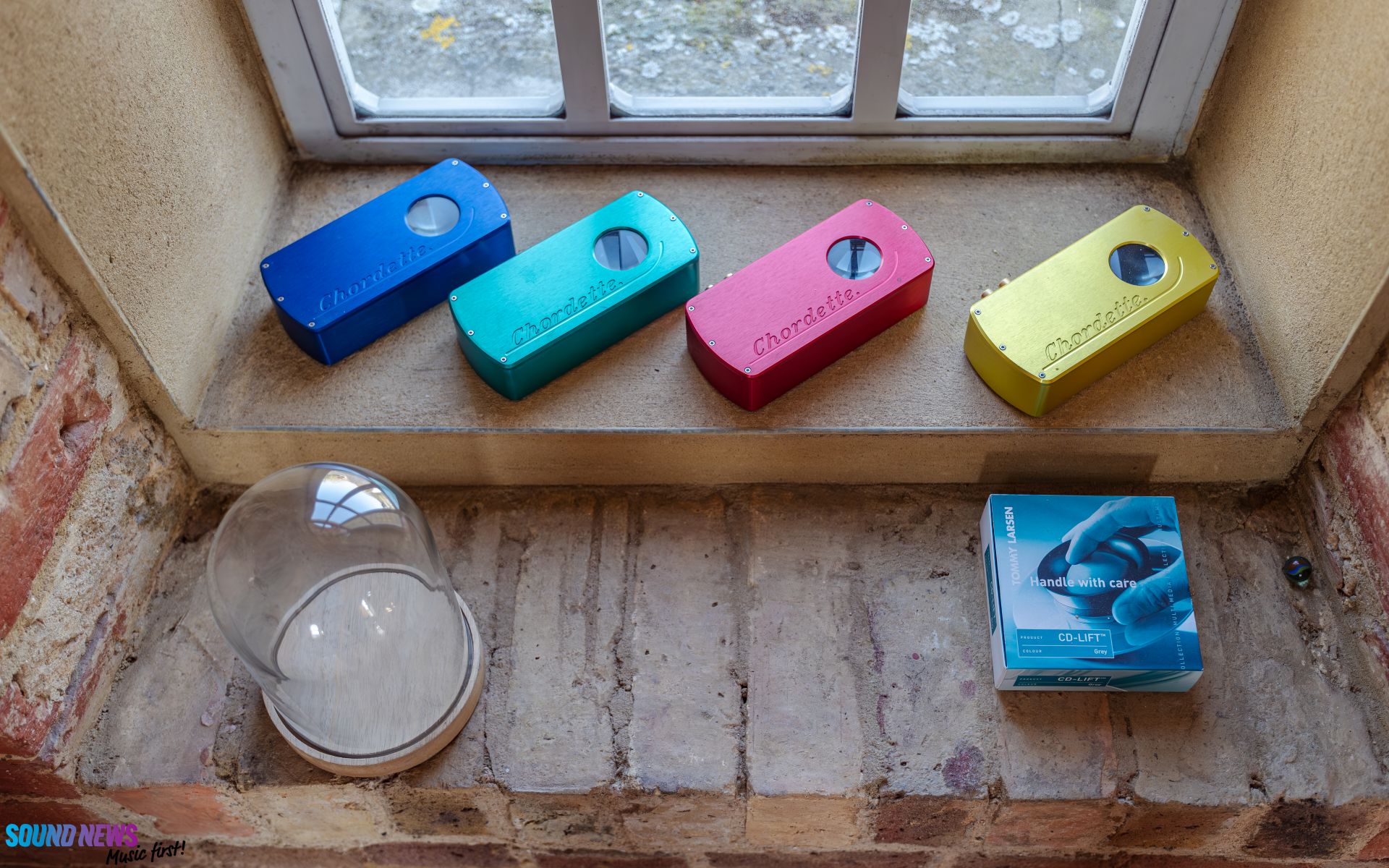
About an hour later, we decided to visit the original Chord Electronics building (The Pumphouse), a facility that is neither massive nor tiny, but feels exactly the right size for crafting everything from the Mojo and Hugo DACs all the way to the ULTIMA amplifier series.

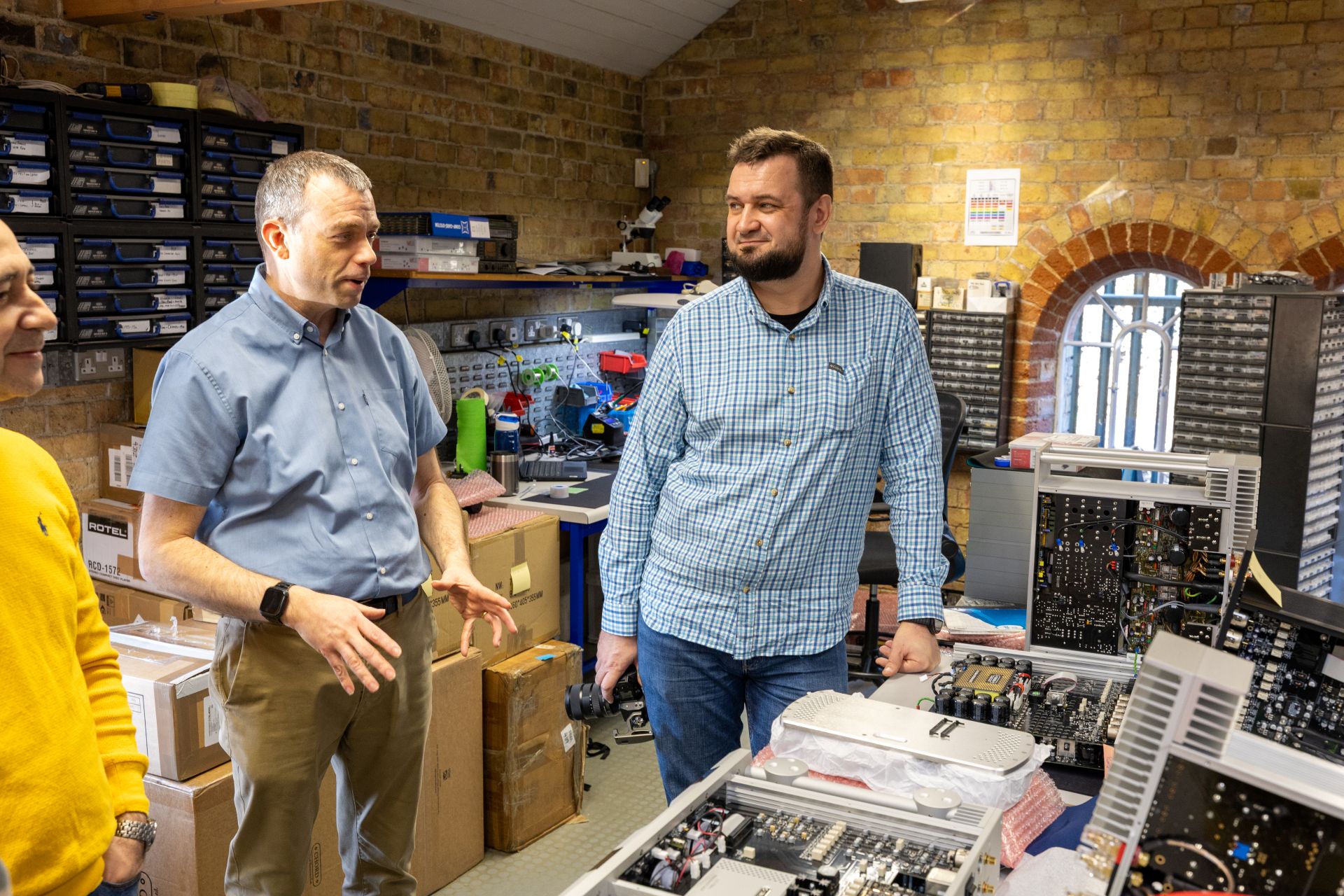
Testing, packing, and shipping happen on the ground floor, but things become far more interesting once you climb higher. On the second floor, I finally met someone I had wanted to meet for quite some time: Tom Vaughan. Years earlier, I had exchanged a few emails with Tom while working on my ULTIMA PRE 3 and ULTIMA 5 two-in-one review. That was the moment when I first learned about dual feed-forward error correction and sliding bias operation. Needless to say, I still had a ton of questions.
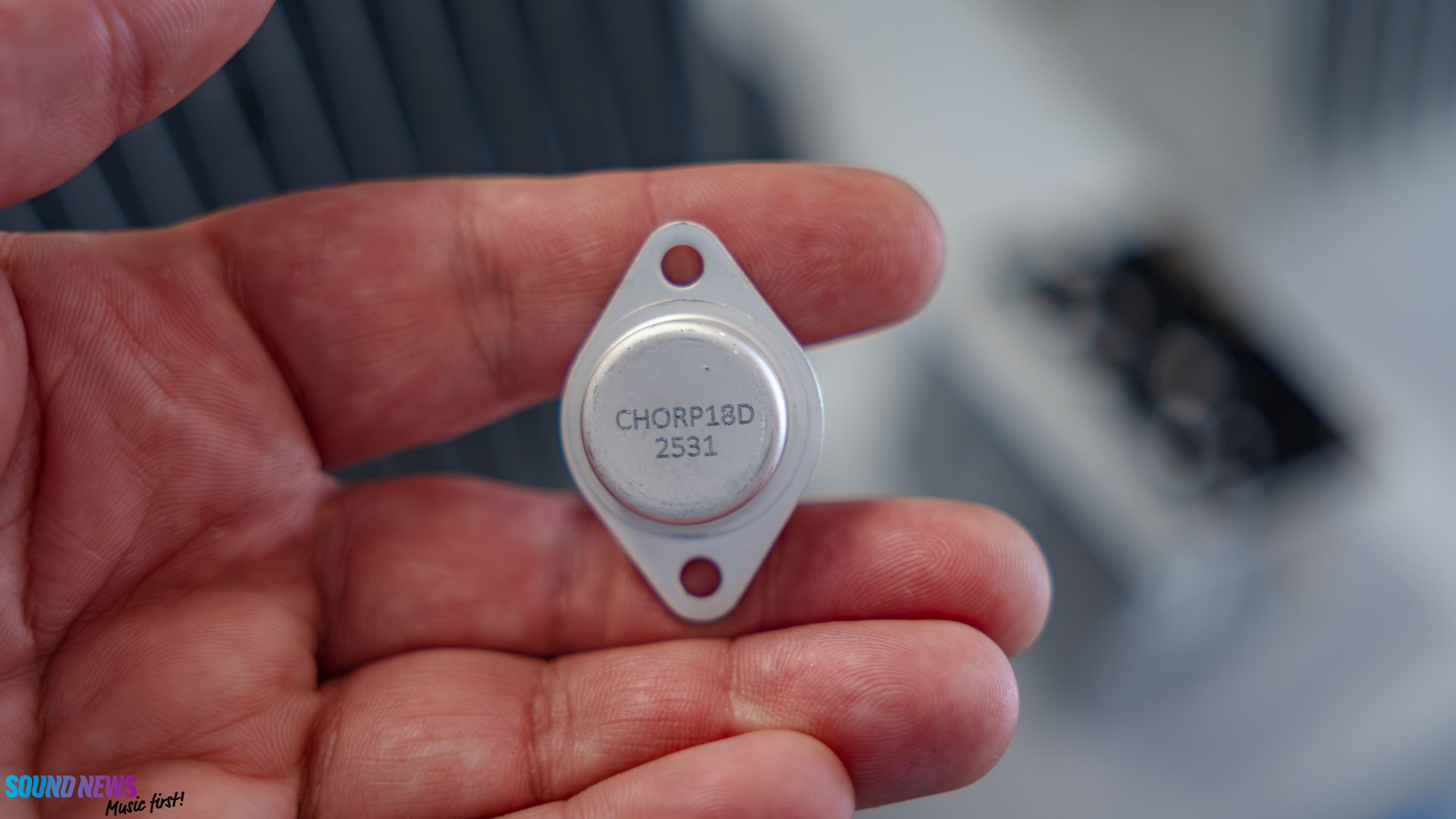

Over the years, I’ve tested countless stereo and monoblock amplifiers, but one recurring phenomenon always puzzled me. Whenever I encountered amplifiers using Exicon lateral MOSFET output devices, the sound almost always improved. The purity increased. Textures became richer. The presentation gained a tube-like naturalness, but without the limitations of tubes. Standing there, surrounded by amplifier modules and output devices, it suddenly clicked.
Chord Electronics’ ULTIMA series, including the ULTIMA 6, ULTIMA 5, ULTIMA 3, ULTIMA 2, and the flagship designs, all rely on custom Exicon MOSFET devices, carefully selected and implemented within their sliding-bias architecture. Seeing the actual components, transistor modules, capacitor banks, and power supply assemblies, made it even clearer why these amplifiers behave the way they do.
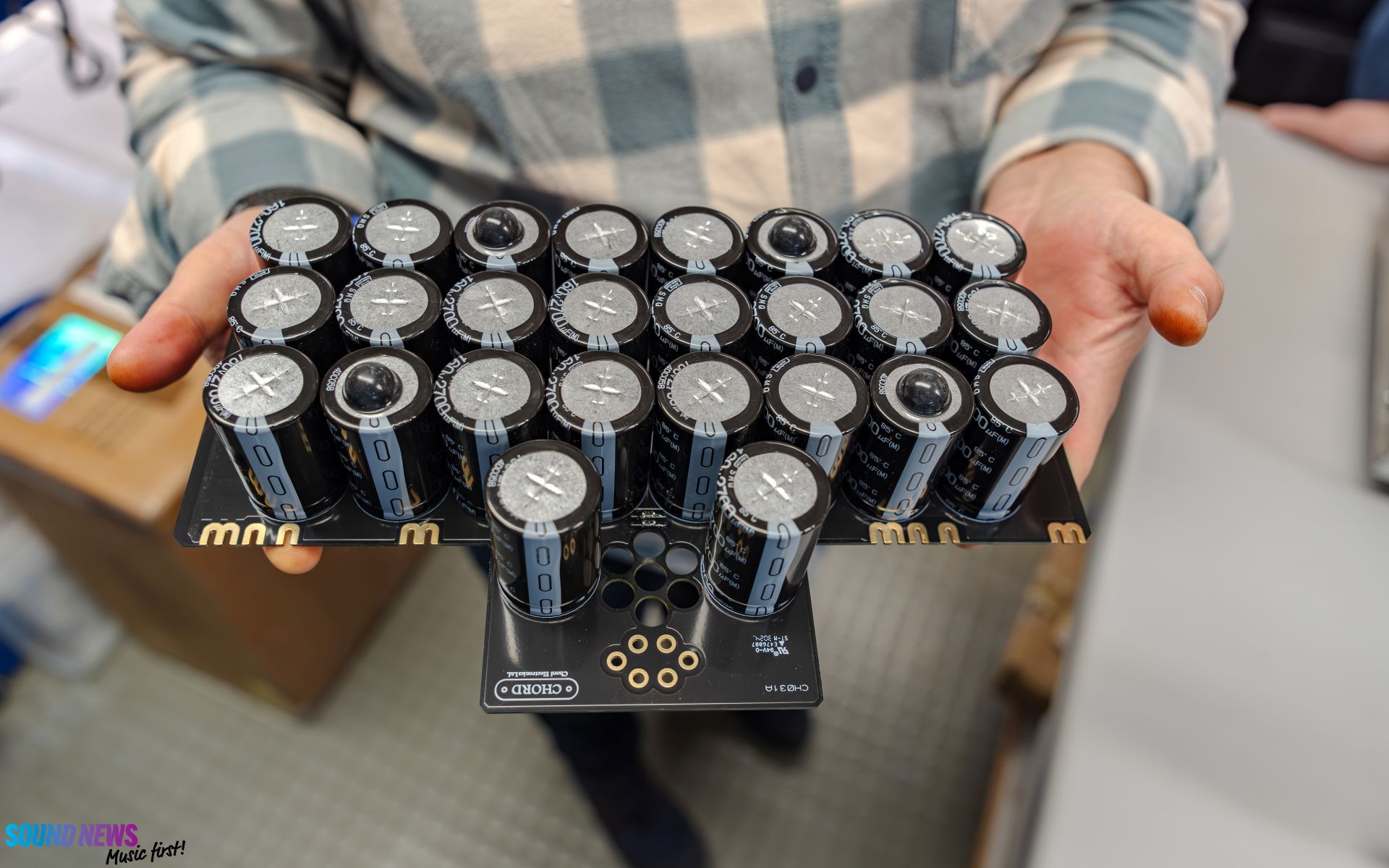
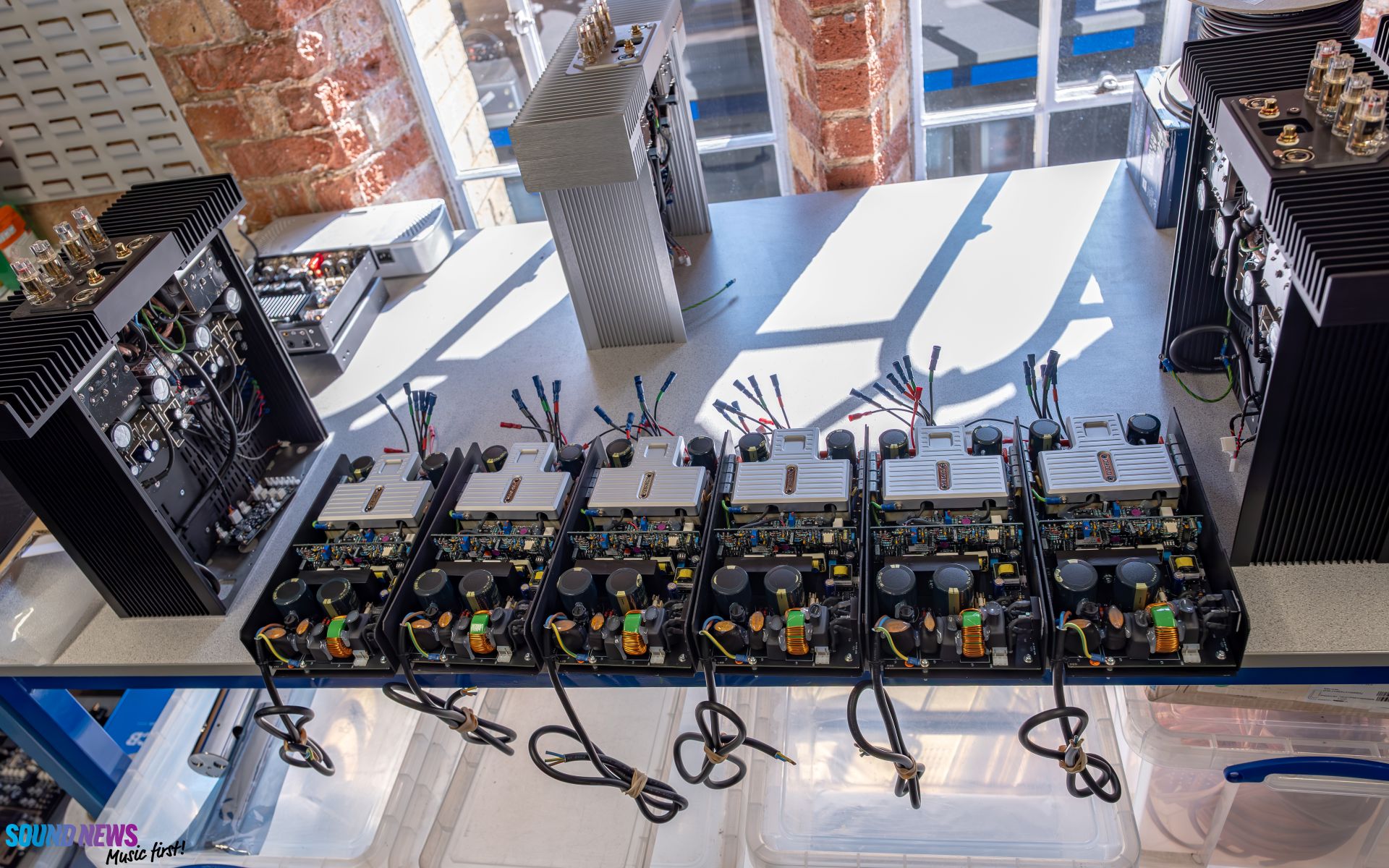
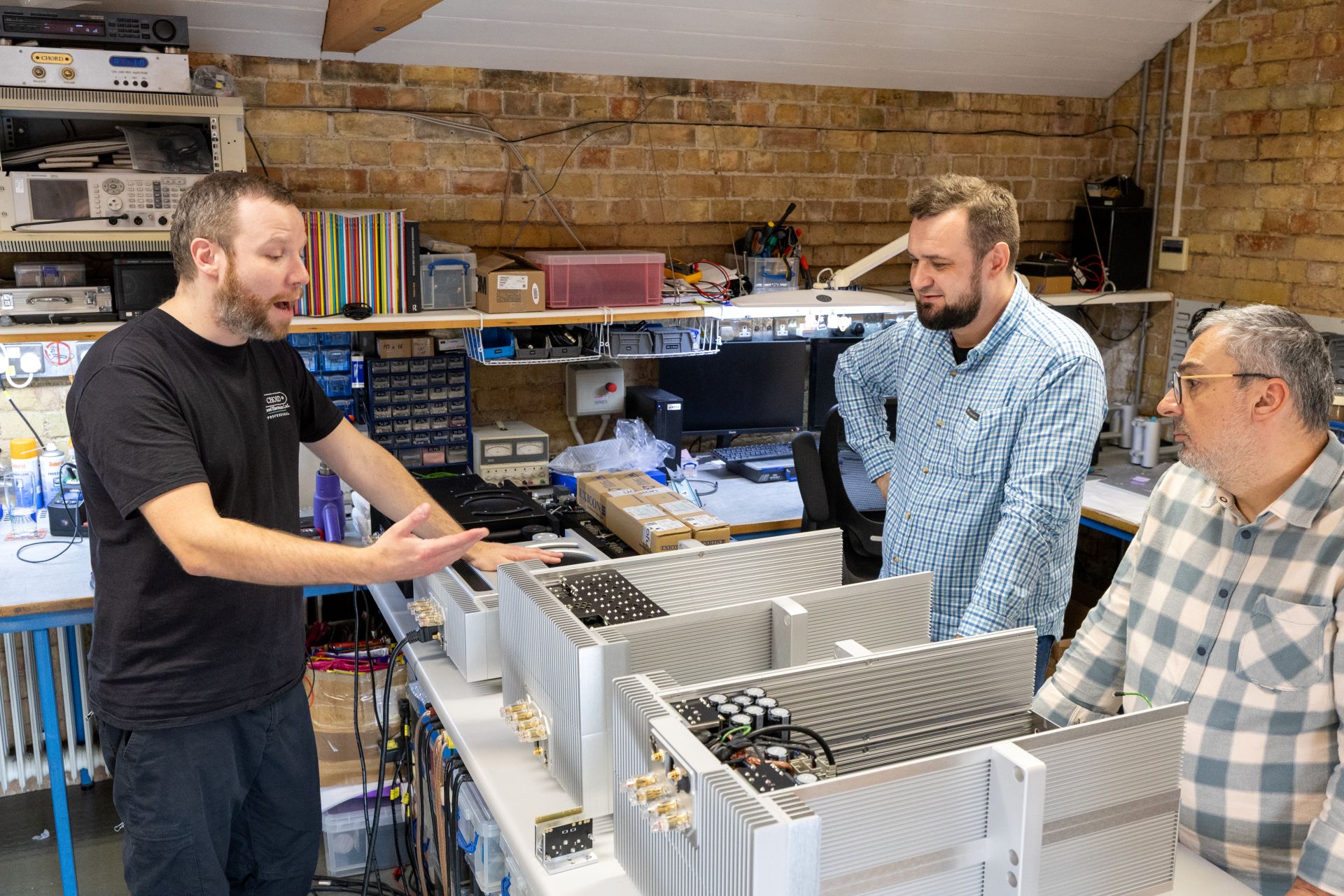
Some of the parts we held in our hands were massive: dense capacitor arrays designed to deliver instantaneous current, intricate circuit boards, and those distinctive MOSFET output modules that ultimately translate electrical energy into musical force. Tom patiently walked us through the reasoning behind many of those design decisions.
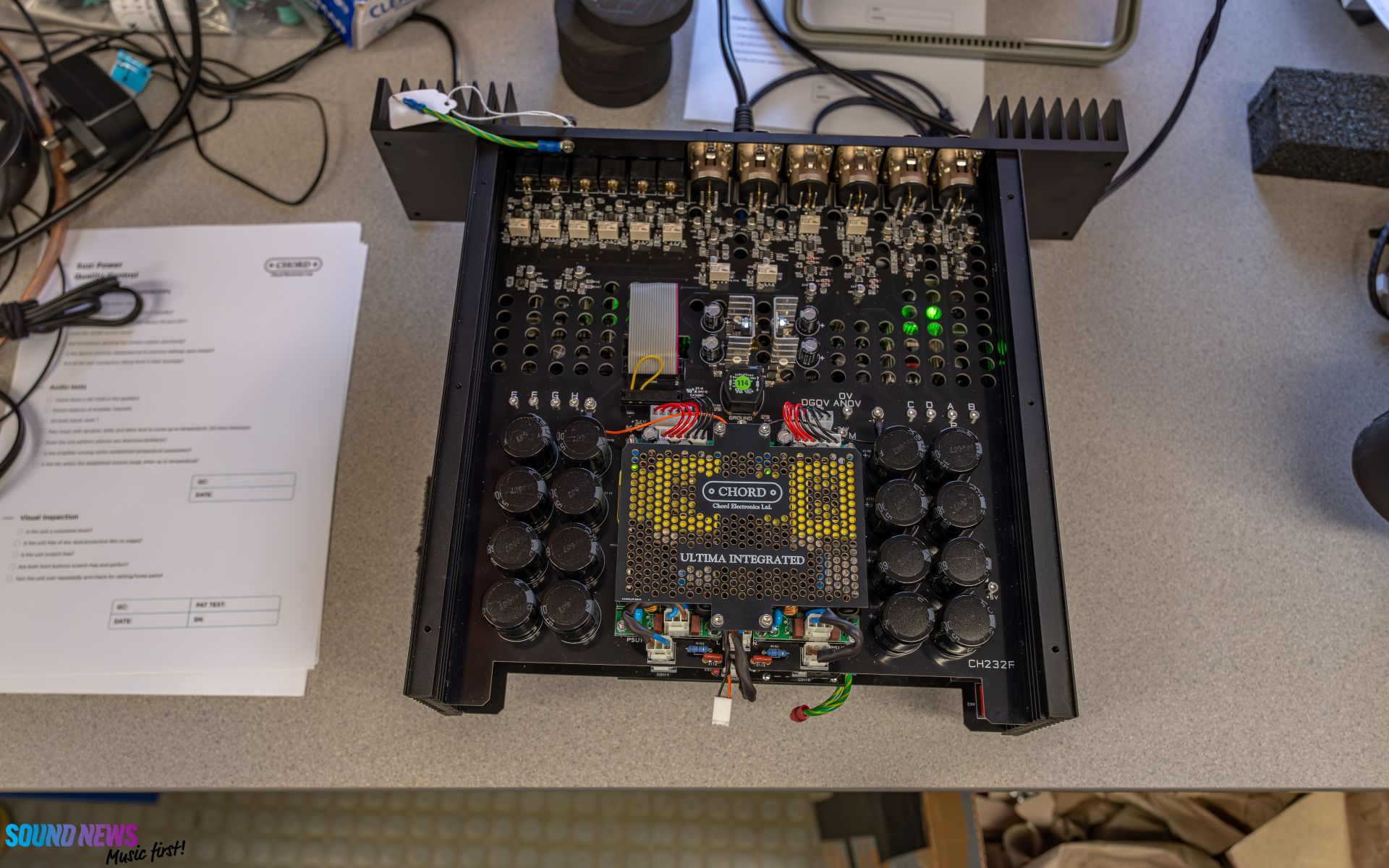


Why certain binding posts were chosen? Why dual feed-forward correction remains so important? Why are carefully engineered switching power supplies with enormous inductors and filtering stages mandatory in modern high-performance audio designs?
Naturally, I was curious about everything: input stage topology, component selection, and the rather intimidating capacitor banks used inside their flagship amplifiers. I learned a lot that day, and I can’t thank Tom enough for feeding my curiosity.
Meeting Mitch
A couple of hours later, we met Mitch Duce, Chord Electronics’ Service Manager and quite possibly the man with the coolest job in the company. Testing gear. Listening to music. Testing it again. Then listening again.
Mitch is an incredibly knowledgeable guy who has brought more than a few 20-year-old amplifiers back to life, restoring them to their former glory. During our conversation, he confirmed something I’ve believed for a long time: measurements only tell half the story. He shared several examples where audible differences were obvious to the ear, yet difficult and sometimes impossible to measure. Our brains remain astonishingly complex processors. And when it comes to evaluating a DAC, preamplifier, or amplifier, trusting our ears is still one of the most powerful tools we have.
The Listening Room
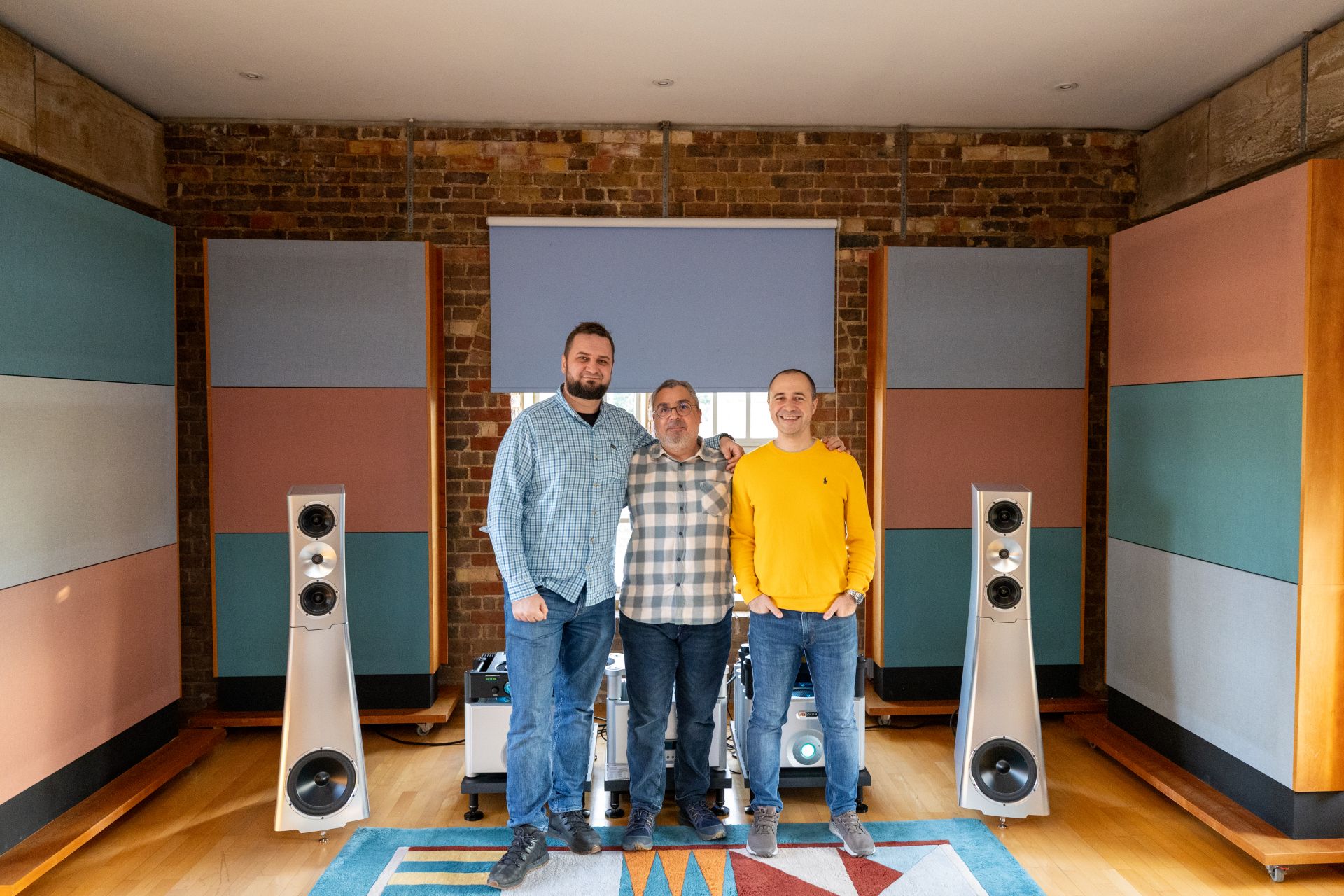
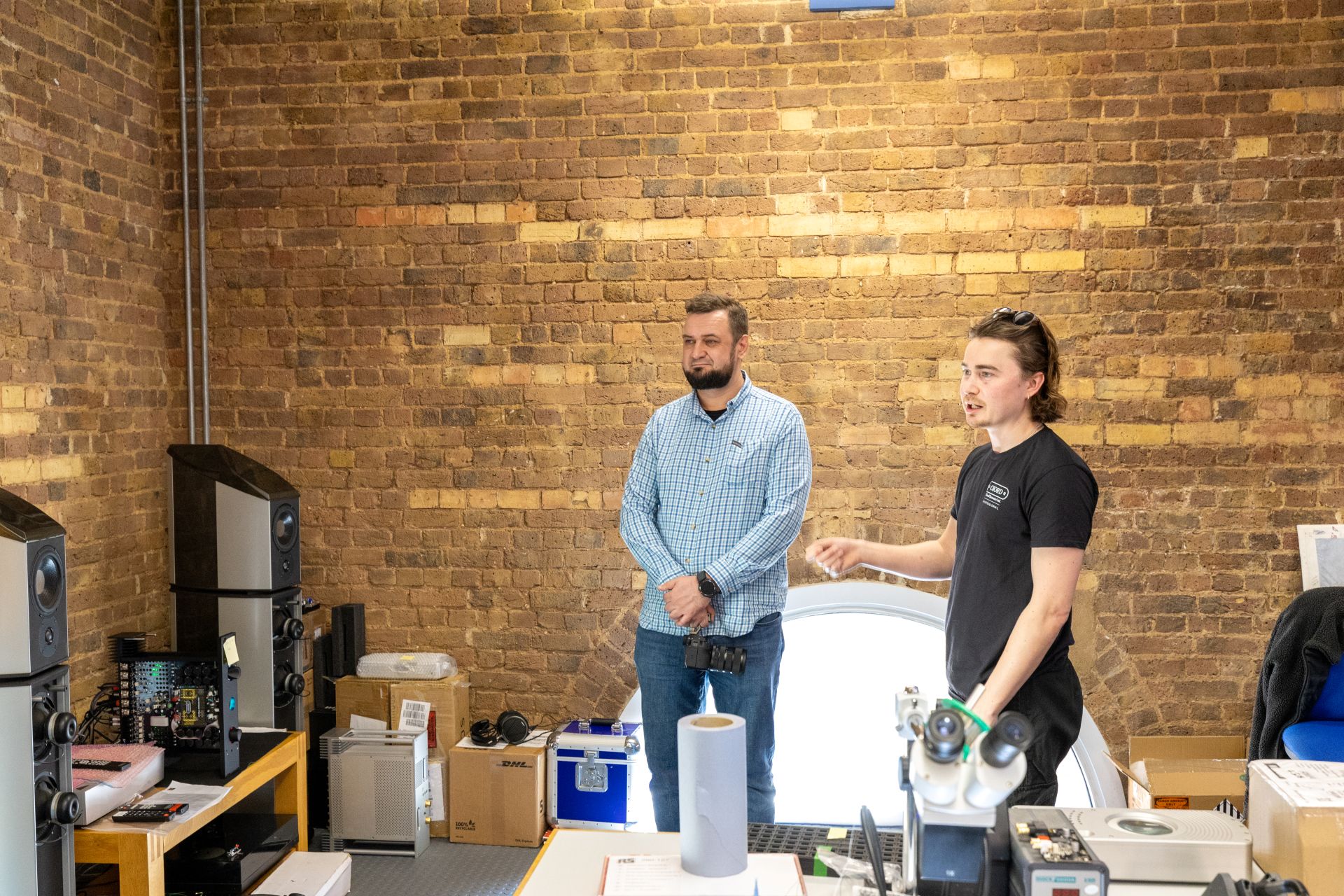
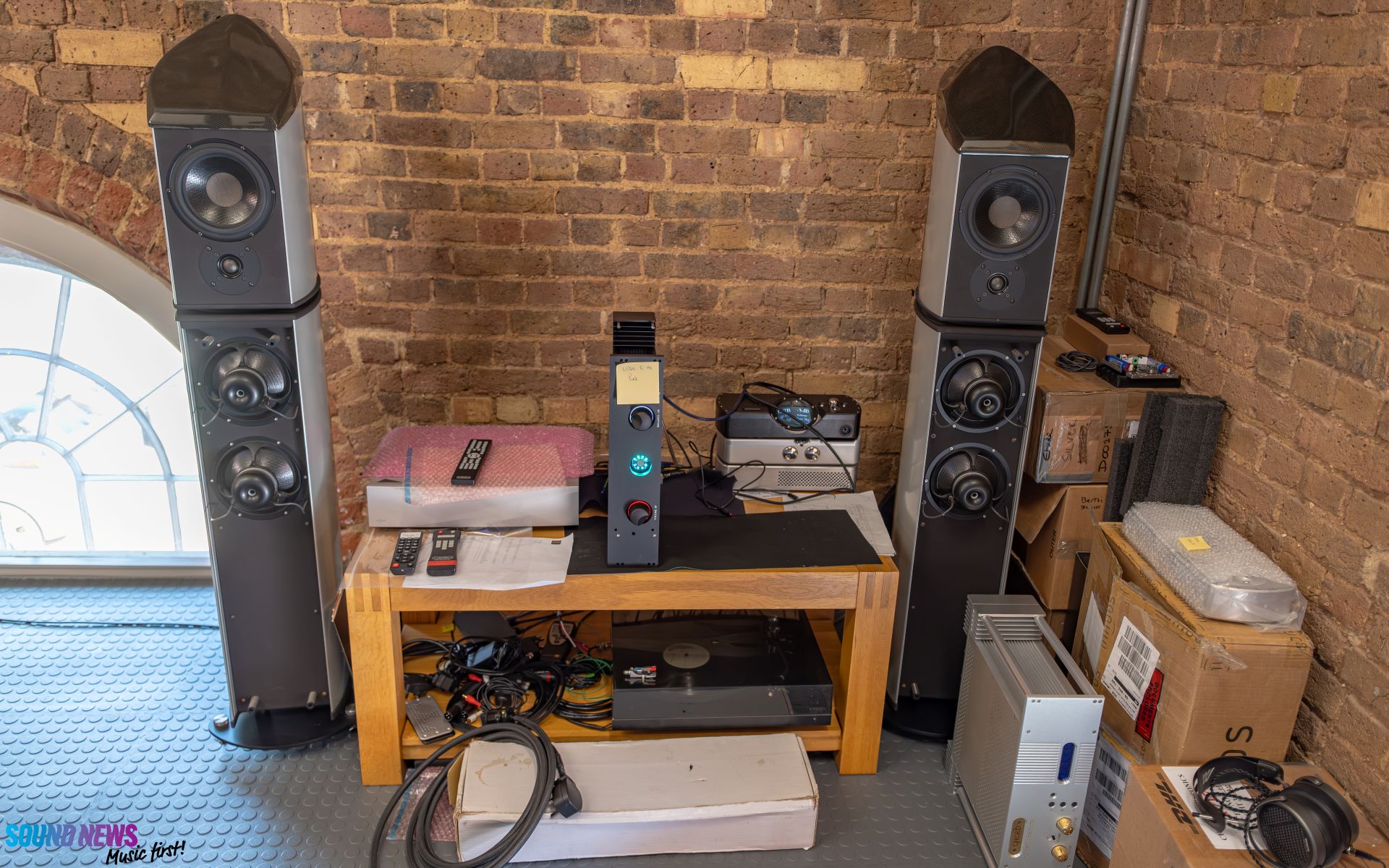
Eventually, we reached the most special room in the building, THE listening room. History was everywhere. Old DACs, CD transports, amplifiers, and prototypes in various shapes and colors lined the shelves like artifacts from different eras of digital and analog innovation. Two systems were set up for listening. The first one showcased more accessible Chord Electronics devices. The second already incorporated equipment I knew very well, the ULTIMA PRE 3 and ULTIMA 5 combination that once lived in my own listening room, together with the new INTEGRATED, driving a pair of Neat Acoustics EKSTRA loudspeakers.


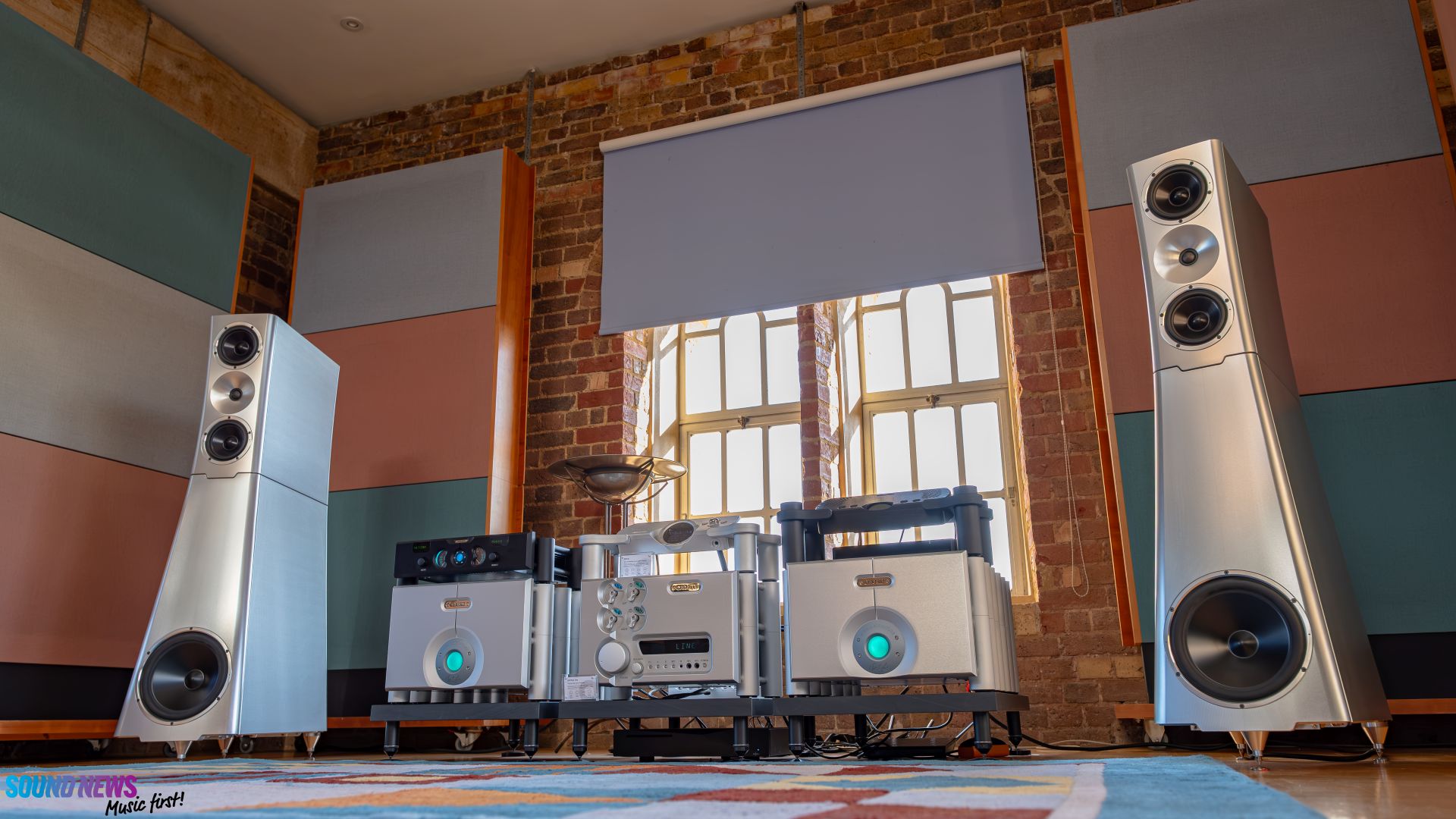
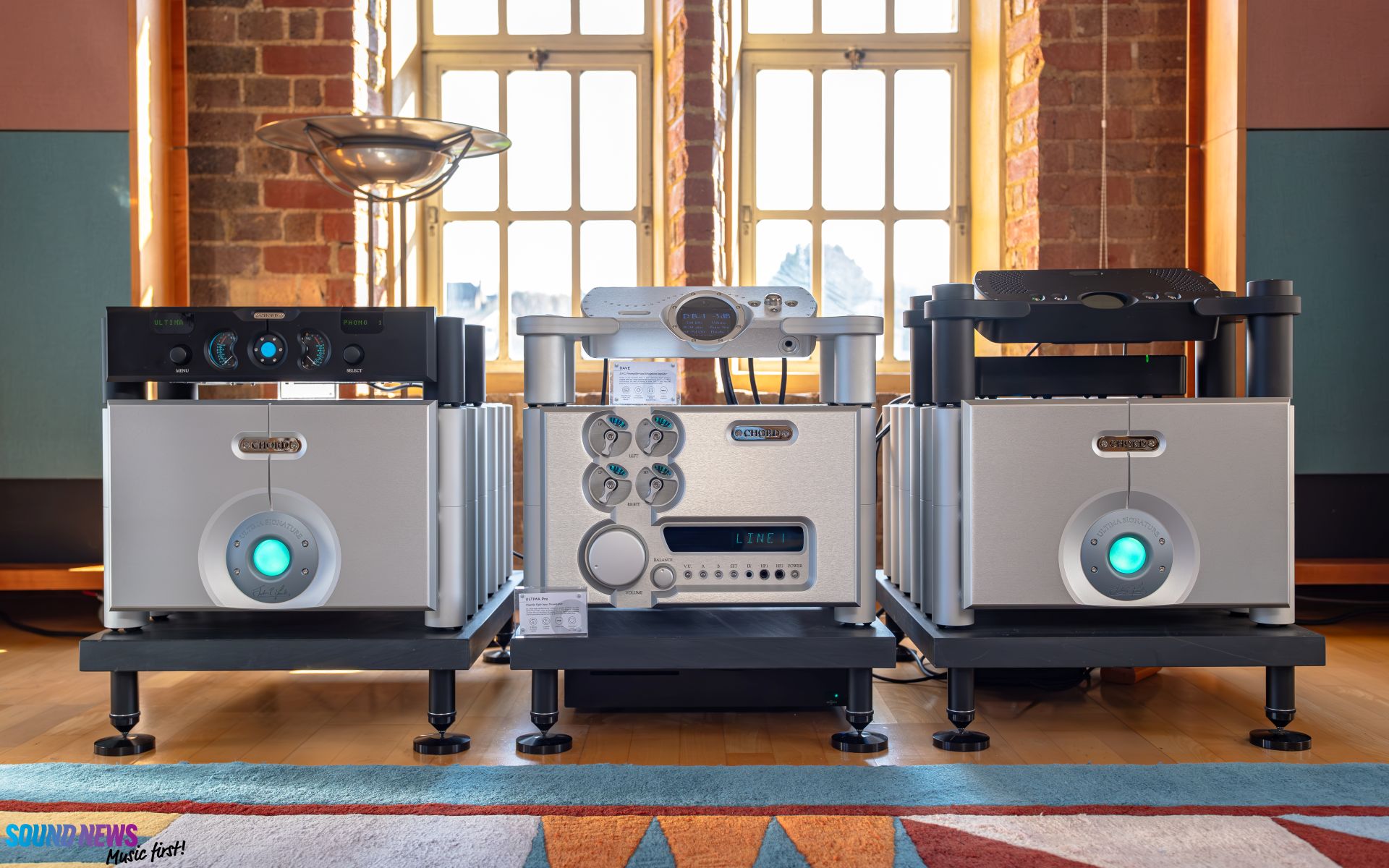
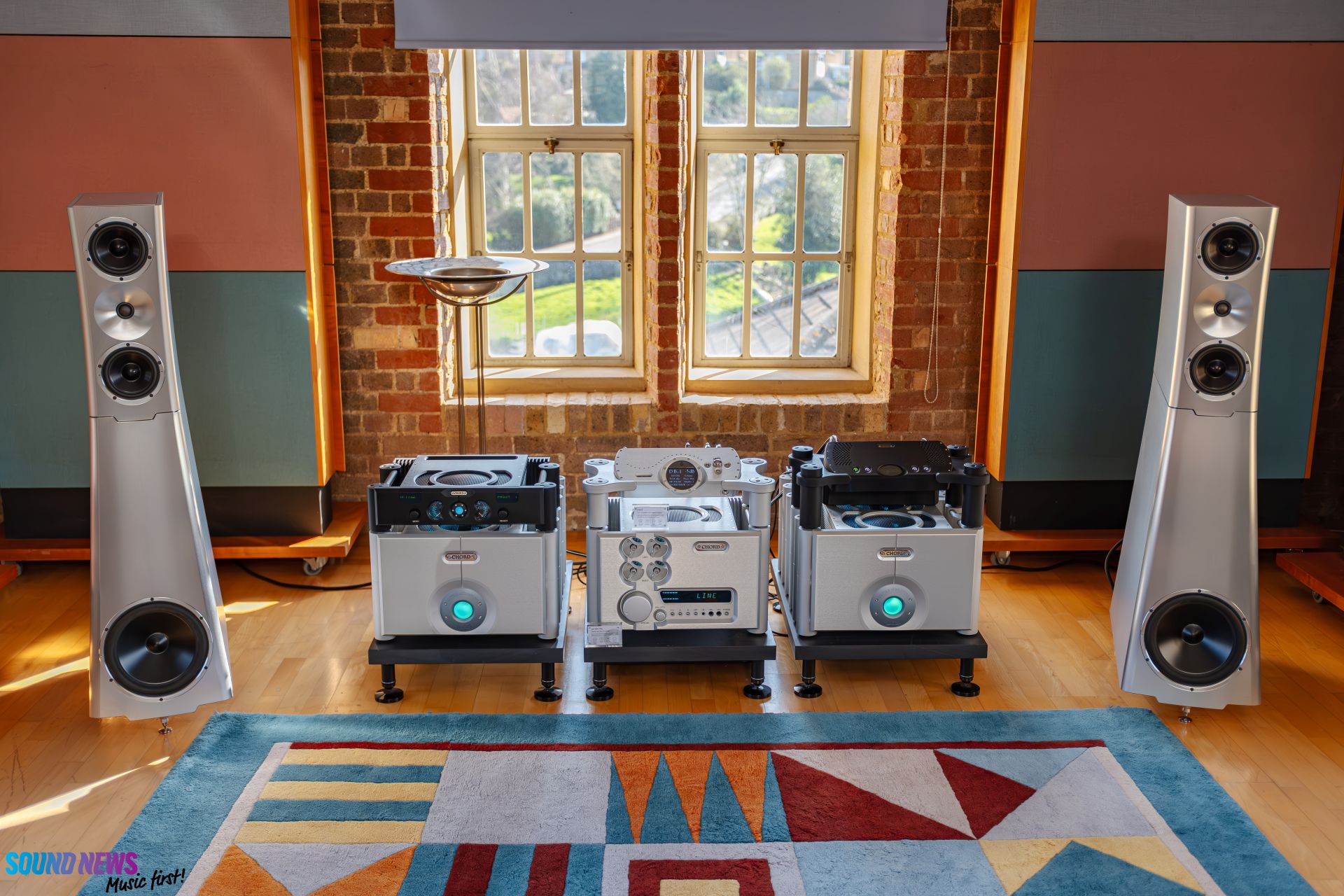
But then we approached the main system. And that’s when things got serious. My body literally started shaking, first from the sheer low-frequency energy filling the room, and then from the sight of the system itself. The brand-new Quartet upscaler had been introduced into the chain, while the heavy lifting was handled by the formidable pairing of the Chord Electronics ULTIMA PRE and the colossal Chord Electronics ULTIMA monoblock duo, driving a pair of YG Acoustics Sonja 3.2 loudspeakers.
These speakers retail locally for roughly €135,000, but the amplifiers behind them were even more intimidating.
Those ULTIMA monoblocks are roughly four times larger than my own ULTIMA 3 amplifiers, being twice as deep and twice as tall. Just looking at them sent shivers down my spine. Each amplifier delivers 1400 watts per channel, with the first ~100 watts operating in pure Class-A. Absolute madness! Overkill? Probably. But oh… so desirable.

The Sound
I’ve heard YG Acoustics speakers multiple times before at shows in Warsaw and Munich. To be completely honest, I sometimes struggled to connect with their presentation, occasionally sounding a bit too strict or analytical for my taste.
But in this system? Everything changed, and at some point, my jaw hit the floor!
The sound was effortless, grand, open, and wide. There was zero grain, zero harshness, and absolutely no listening fatigue. We couldn’t believe our ears. Then again, something similar happens with my own speakers at home, the Raidho Acoustics TD2.2. Some people describe them as clinical or cold, yet when paired with my Chord Electronics amps, they sound anything like that.
Synergy is a powerful thing. This is the room where I stayed the longest. Two hours passed in the blink of an eye as everyone queued up their favorite tracks. Five from me. Four from Catalin. Several more from Lucian and Mihai. Outside, however, the sunlight slowly faded as evening approached, and then…it hit me.

The Chord Electronics Family
As the day slowly unfolded and we moved from one floor to another, meeting engineers, technicians, and service specialists, one thing became increasingly apparent. Many of the people working at Chord Electronics had been there for a very long time. Ten years, fifteen, twenty in some cases. In an industry where people often move from company to company chasing the next opportunity, that kind of loyalty is rare, and it says a lot about the place. But what struck me even more was the atmosphere between them. The conversations didn’t feel like formal workplace exchanges between colleagues. They felt relaxed, friendly, almost familial. Jokes were flying across the room, stories were shared freely, and there was an unmistakable sense that these people genuinely enjoyed working together.
At one point, it felt less like walking through a factory and more like visiting a large family where everyone knows each other, trusts each other, and shares the same quiet obsession with great sound. And perhaps that shouldn’t come as a surprise! When a group of passionate engineers spends decades working side by side, chasing the same goal that can bring music closer to reality, something stronger than a professional relationship naturally forms. It becomes a community, and that feeling was impossible to miss on the first day.
Evening at the Black Horse Inn
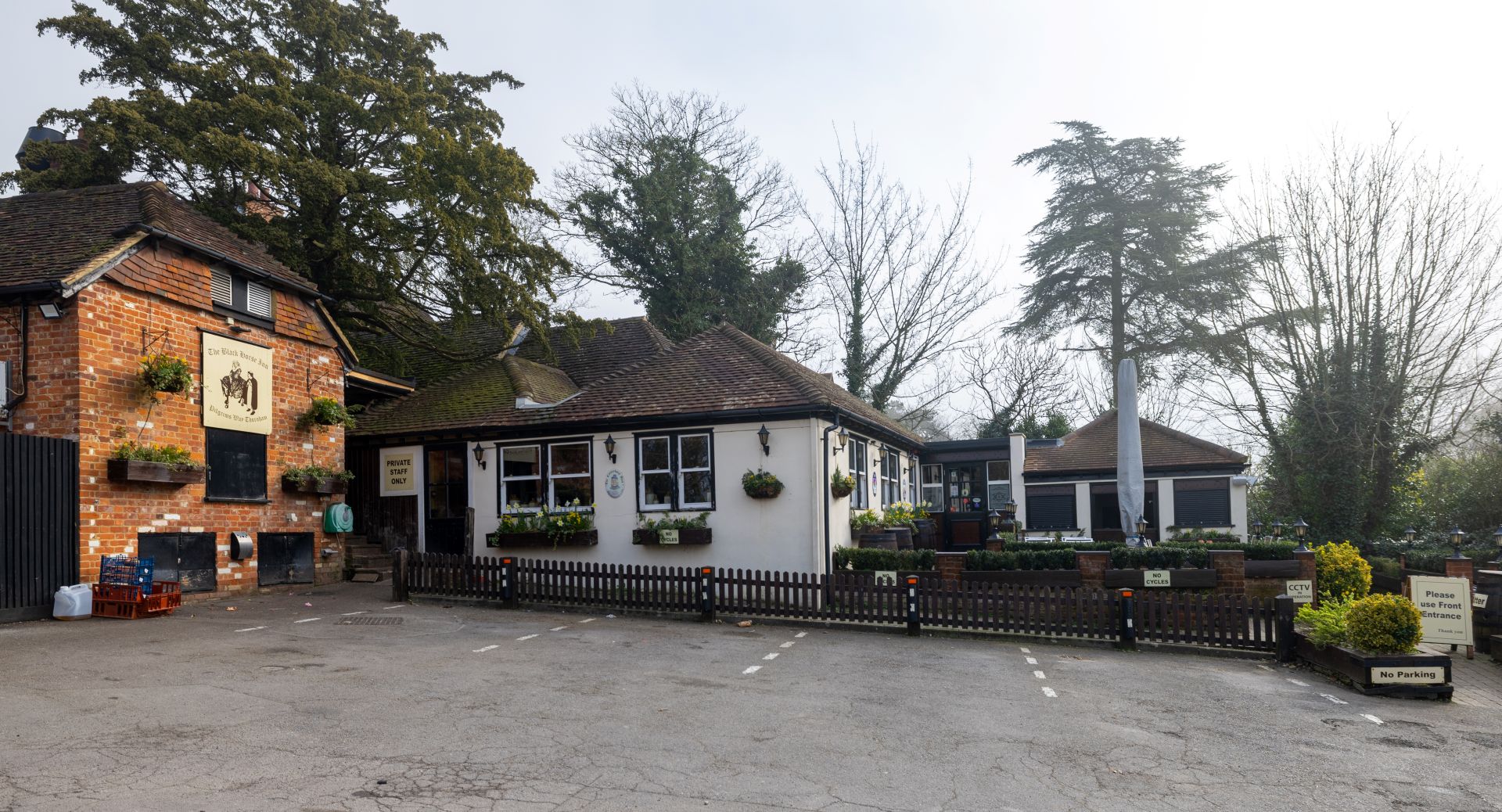
Later that evening, Colin drove us to the Black Horse Inn Pilgrims Way, a charming 16th-century building located along the historic Pilgrims’ Way at the foot of the North Downs. The inn began operating around 1725, though the structure itself is much older. Today, it remains a well-known pub, restaurant, and hotel just outside Maidstone. We checked in, dropped our bags, and shortly afterward joined most of the Chord Electronics team for dinner. I won’t reveal how many beers were consumed that evening. Let’s just say the conversation flowed easily, the laughter was genuine, and by the time we finally went to sleep, we knew the next day would become something rather special.

That evening, as the conversations slowly faded and the last glasses of ale disappeared from the wooden tables of the inn, a quiet calm settled over the countryside around us. The North Downs were wrapped in darkness, the narrow roads outside the pub almost completely silent, as if the entire region had decided to rest after a long day.
Somewhere between the laughter, the technical debates, and the clinking of glasses, it became clear that this trip was already something special. We had just spent the day exploring the minds and machines behind some of the most fascinating audio equipment in the world, yet the adventure was far from over. The English countryside still had a few surprises waiting for us.
Little did we know that the following day would take us far away from circuit boards and amplifier chassis, into ancient castles, quiet cathedrals, misty forests, and rolling hills where sheep casually observe wandering audiophiles. And in a strange way, that contrast felt perfectly fitting. Because after spending a full day watching how music is recreated through science and engineering, the next day would remind us why we love music in the first place.

Thurnham, Maidstone, Kent – Day 2
After a proper full English breakfast and finally seeing the world in color again, we were greeted by something we hadn’t necessarily expected: a bright, sunny sky above Thurnham. With such a beautiful morning unfolding in front of us, it suddenly felt like the perfect opportunity to explore some of the defining historical landmarks of the region.

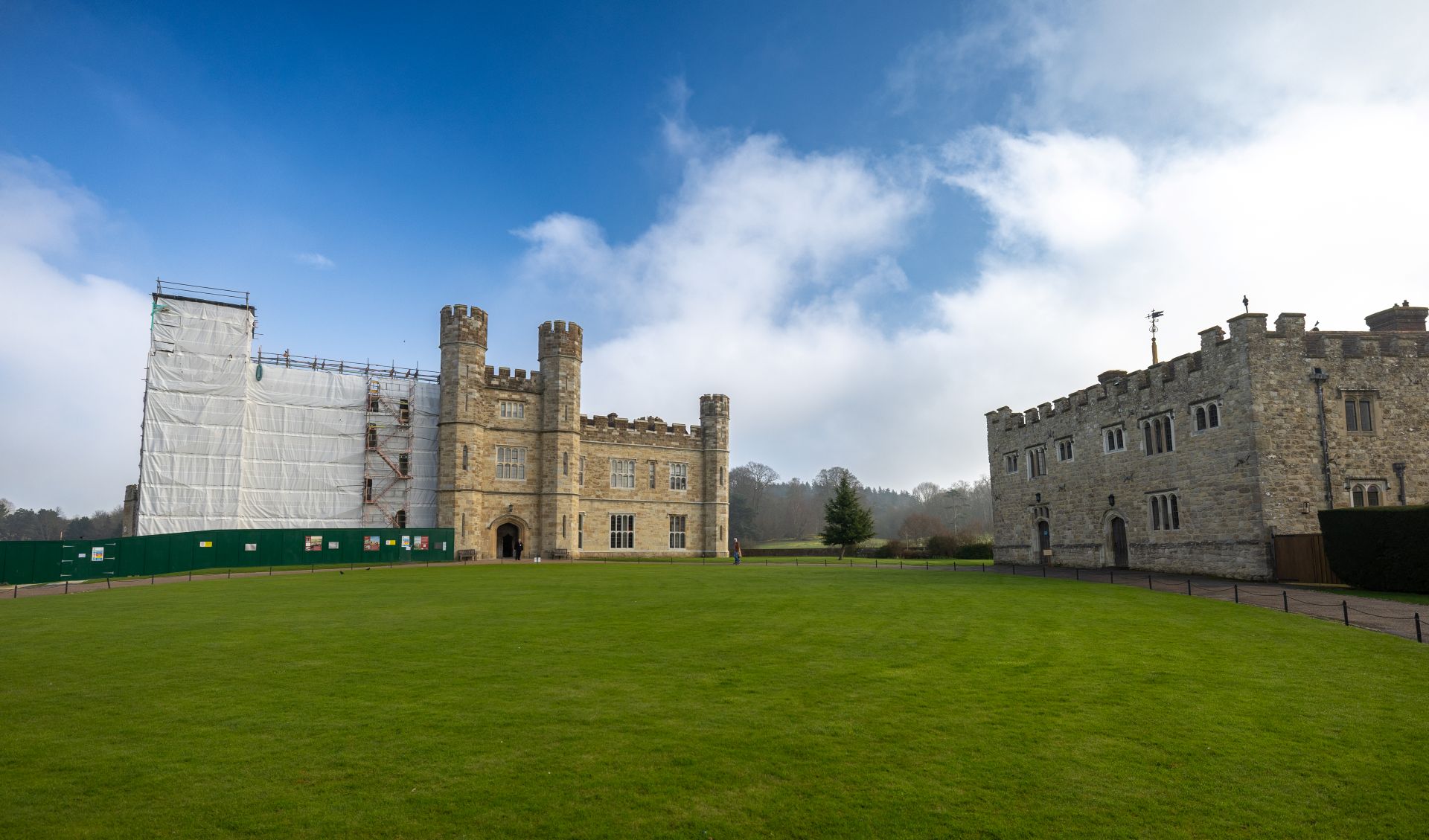
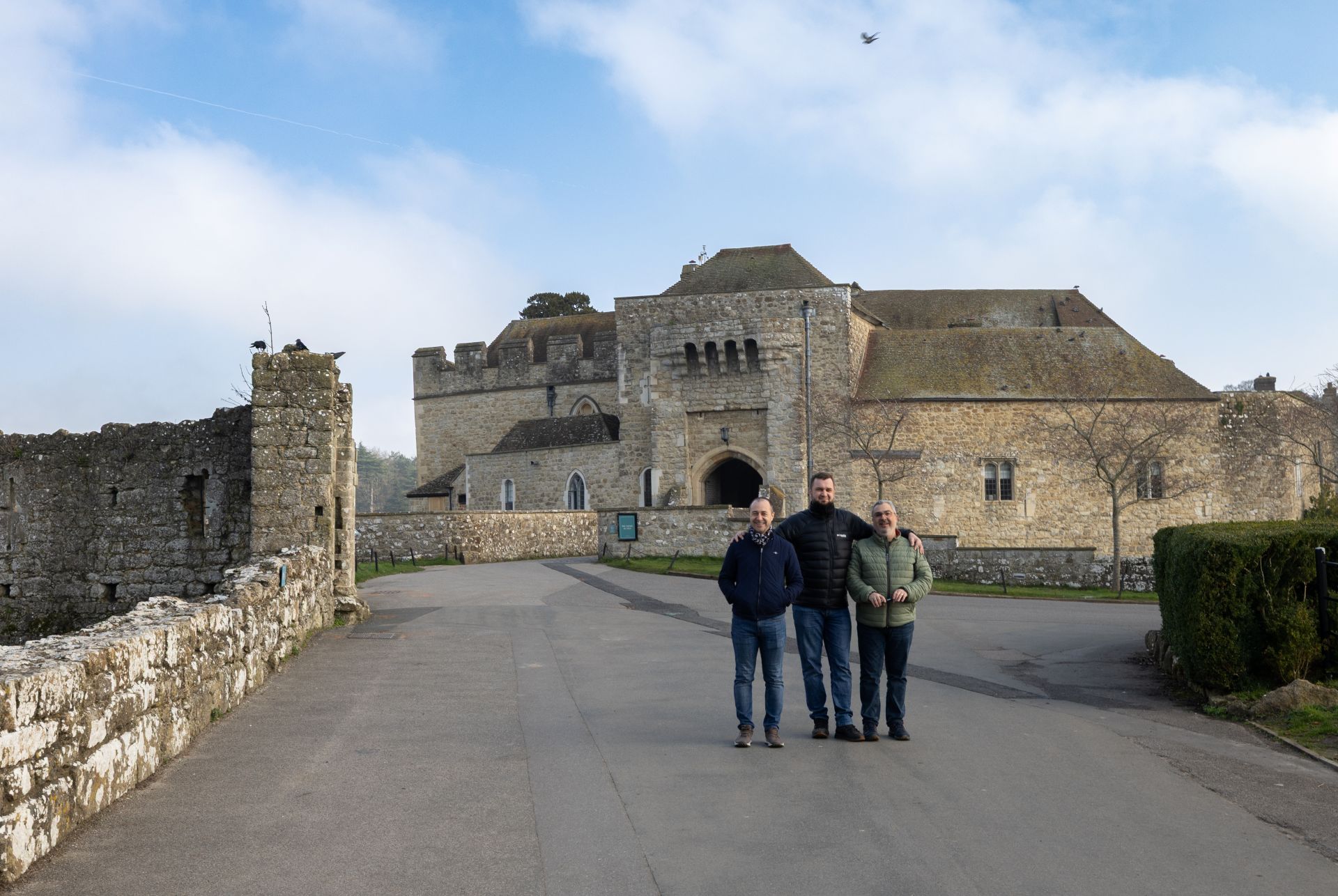
Our first stop was the legendary Leeds Castle, located only about six miles away. The site itself has been occupied since 857, but the castle as we know it today carries layers of history spanning centuries. In the 13th century, it came into the hands of King Edward I, who made it one of his favorite royal residences. Later, in the 16th century, Henry VIII used it as a dwelling for his first wife, Catherine of Aragon.
Today, Leeds Castle feels less like a fortress and more like a peaceful sanctuary. Set like a jewel in the quiet countryside of Kent, the castle rests on two small islands in the middle of a shimmering lake fed by the gentle waters of the River Len. From a distance, it almost looks like a mirage with pale stone walls rising from the surface of the water, having their reflections dancing softly with every ripple of the wind. Standing there, watching the morning light reflect across the lake, I completely detached myself from the usual rhythm of work, deadlines, and audio gear. Some places simply have that effect on you. I’ll let a few of the pictures do the talking here.
Rochester – Stone, History and Silence
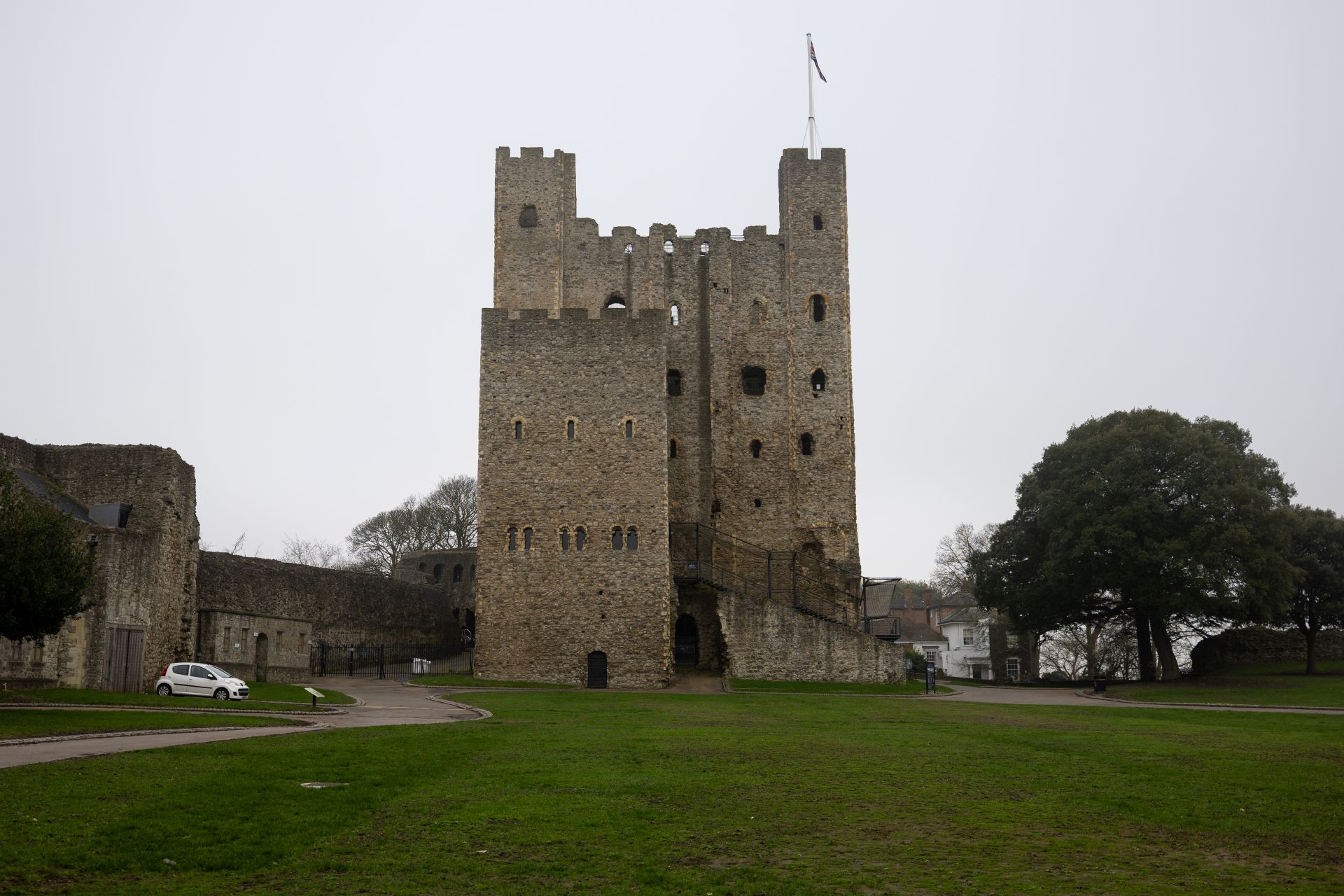
A couple of hours later, we continued our journey toward the historic town of Rochester, where two remarkable landmarks stand only a few steps apart. The first is the imposing Rochester Castle.
Rising above the quiet flow of the River Medway, its immense Norman keep stands like a stubborn memory from a time when England was still sharpening its swords and building its future in stone. Constructed in the 12th century under the orders of William de Corbeil, the castle doesn’t merely dominate the skyline; it anchors it.

Approaching the keep feels a little like stepping into the pages of an old chronicle. The walls are thick, weathered, and pitted by centuries of wind, rain, and the occasional siege. One can almost imagine the echoes of armor scraping against stone staircases, the muffled shouts of soldiers, and the glow of torches flickering through narrow corridors.
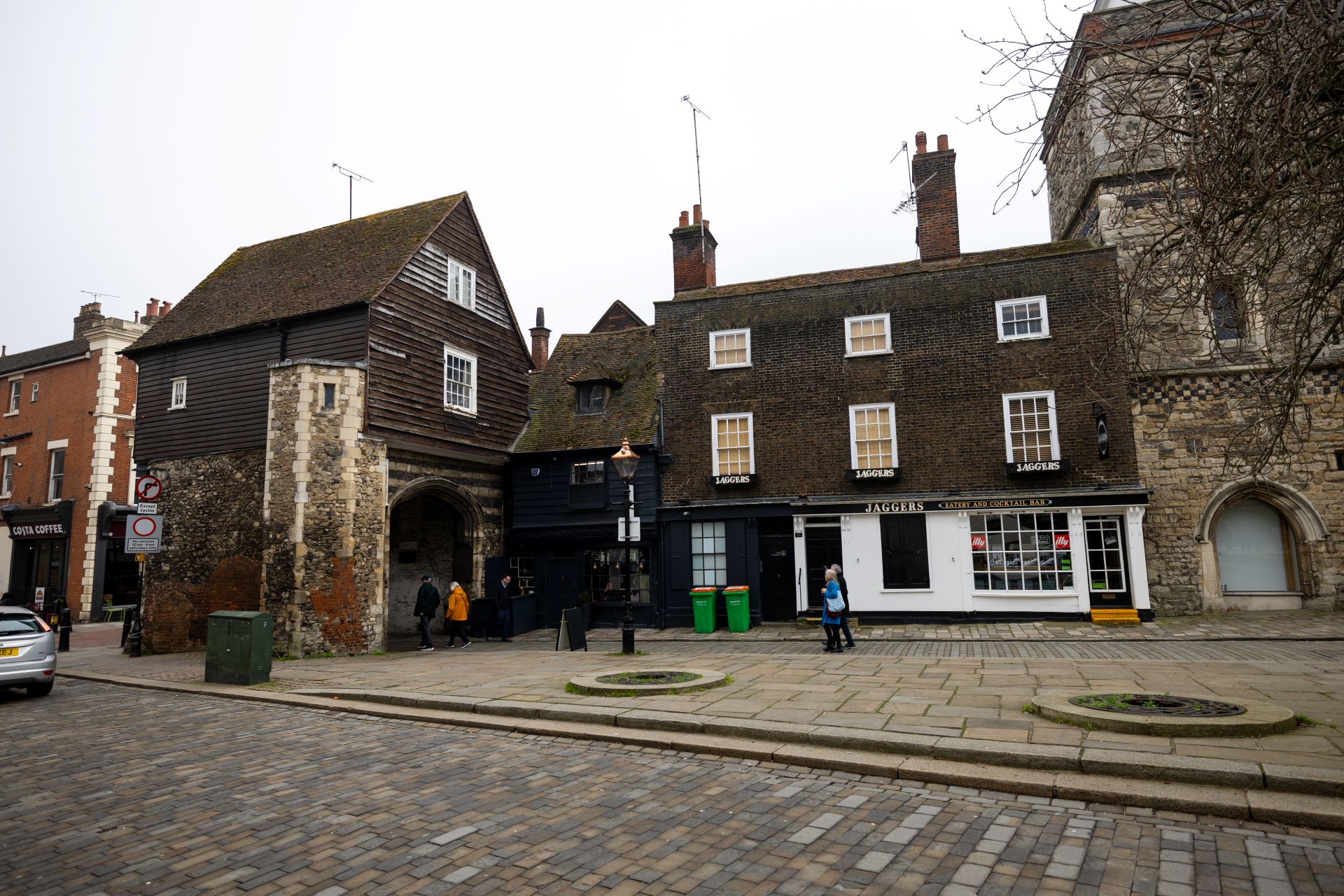
Just a few steps away stands a very different monument to time: Rochester Cathedral. If the castle speaks in the language of power, the cathedral answers in the language of patience. Founded in 604 AD by Justus of Canterbury, it is the second-oldest cathedral in England, a place where centuries haven’t merely passed, but quietly settled into the stone itself.

Walking through its doors feels like stepping into a long, uninterrupted breath of history. The nave stretches forward in a rhythm of Norman arches, each column worn smooth by time and by countless hands that have brushed against them through the ages.
After soaking in so much history, we rewarded ourselves with a well-deserved cup of coffee before heading back toward Thurnham.
The Trail Through the Mist
Back at the Black Horse Inn Pilgrims Way, we decided to do something completely different. We chose the longest trail we could find nearby, roughly a seven-mile walk through the countryside around Thurnham. At first, the path seemed perfectly ordinary. But within minutes, something magical happened.

A thick mist slowly rolled in and swallowed the landscape around us. Within moments, we could barely see our feet, and maybe the next three steps ahead. The entire world had turned into a soft white wall, and for the next two hours, we walked through that fog.
We could hear animals somewhere in the distance. Occasionally, we spotted tracks in the mud, but the mist was so dense that seeing anything beyond a few meters was nearly impossible. And strangely enough… I loved every second of it!

There was something mysterious about walking through that fog, surrounded by silence, forests, and unseen wildlife. At some point, the trail led us through a dense patch of woodland. And as we emerged on the other side, the fog suddenly began to lift.
In the distance, the sun was slowly setting over the hills, painting the sky with warm golden colors. A few sheep were calmly grazing nearby, almost as if they had been placed there deliberately to guide us back toward the path. It was one of those moments that are almost impossible to describe properly with words. And that says a lot coming from someone who hikes through the Carpathian Mountains at least four times per year.

Yet somehow, that misty trail in Kent remains one of the most memorable walks I’ve ever experienced. The following day, we attempted another trail, this time under a clear sky. But without the mist, without the mystery, it simply wasn’t the same. Less than two hours later, we were already back at the inn.

Heading Back Home
A cider and an IPA later, we packed our bags and hopped on the train that would eventually take us to the airport. Technically speaking, the second and third days had nothing to do with Chord Electronics. And yet… they felt like a natural continuation of the experience.
Because after spending a full day surrounded by circuits, amplifiers, and brilliant engineers recreating music through technology, the English countryside reminded us why we love music in the first place. Moments like these stay with you long after the trip ends. And those days in Kent were nothing short of majestic.
Thank You X2!
As our train slowly rolled away from Kent and the English countryside started dissolving behind the window, I realized that this trip was about much more than a factory tour. It was about meeting the people behind the circuits, the minds behind the ideas, and the personalities behind the glowing power spheres that many of us proudly place on our HiFi racks.
Chord Electronics isn’t just a brand assembling DACs, preamplifiers, and amplifiers. It’s a group of passionate engineers, music lovers, and slightly crazy perfectionists who spend their days chasing the impossible: turning electrons into emotion.

From the first handshake with Colin, Matt, and Dan, to the technical deep dives with Tom, the fascinating stories from Mitch, and the countless cups of tea, jokes, and laughs shared along the way, it quickly became obvious that the real magic of Chord Electronics doesn’t only live inside aluminum cases and FPGA code. It lives in the people who design, build, and obsess over every single detail.
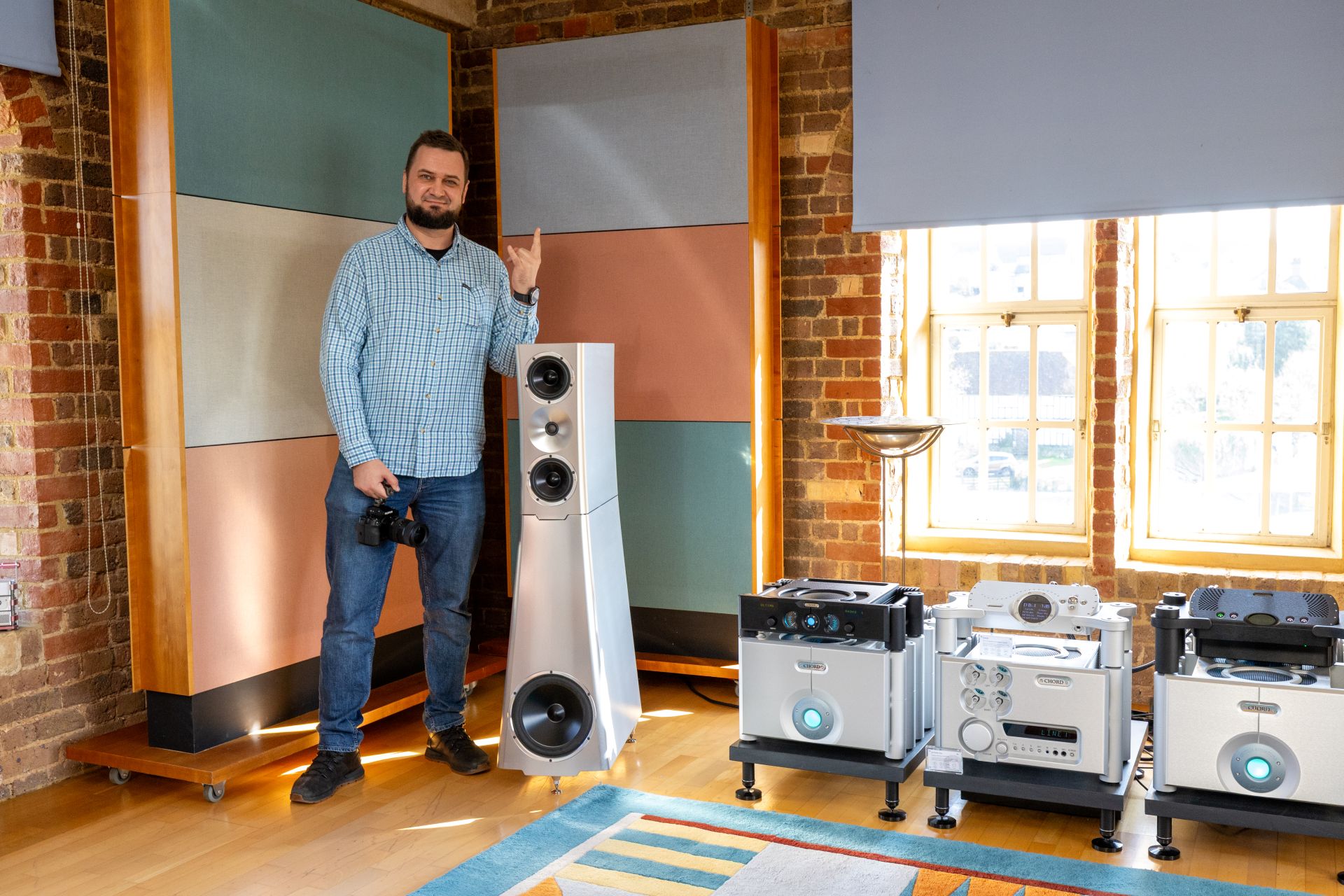
So, a massive Thank You goes to the entire Chord Electronics team for welcoming us with open arms, feeding our curiosity, and showing us what happens behind the curtain.
Of course… visiting a place like this can be a dangerous thing for an audiophile. You walk in perfectly satisfied with your system, and you walk out wondering whether your rack might somehow accommodate something a little…larger. Perhaps something with slightly more power. Maybe something with a few more ULTIMA badges on the front panel. Who knows… maybe one day those absolutely ridiculous ULTIMA mono behemoths will find their way into my listening room as well. Stranger things have happened in the world of HiFi. Until then, I’ll keep enjoying my current Chord Electronics trio, keep chasing great music, and keep asking too many technical questions whenever engineers are within hearing distance.

And who knows… perhaps the next time you’ll read about Chord Electronics around here, it won’t be a factory tour. It might be the sound of something considerably larger… and considerably more powerful finding its way into my listening room. Because once you’ve seen how the magic is made, it becomes dangerously easy to imagine a little more of that magic finding its way into your own listening room.
Before wrapping things up, I would also like to extend a sincere thank you to the team behind AVstore.ro and especially to Lucian, one of the key members of their crew, for making this trip possible. Without their support and enthusiasm for great sound, the visit to Chord Electronics simply wouldn’t have happened. Lucian has been a familiar face in the Romanian HiFi scene for years and someone who shares the same passion for music and great equipment that keeps this hobby alive. Sometimes it’s easy to focus only on the gear itself, but behind every great listening experience, there are people who genuinely care about bringing that experience closer to the rest of us. So, Lucian and the entire AVstore.ro team, thank you for helping make this journey possible.