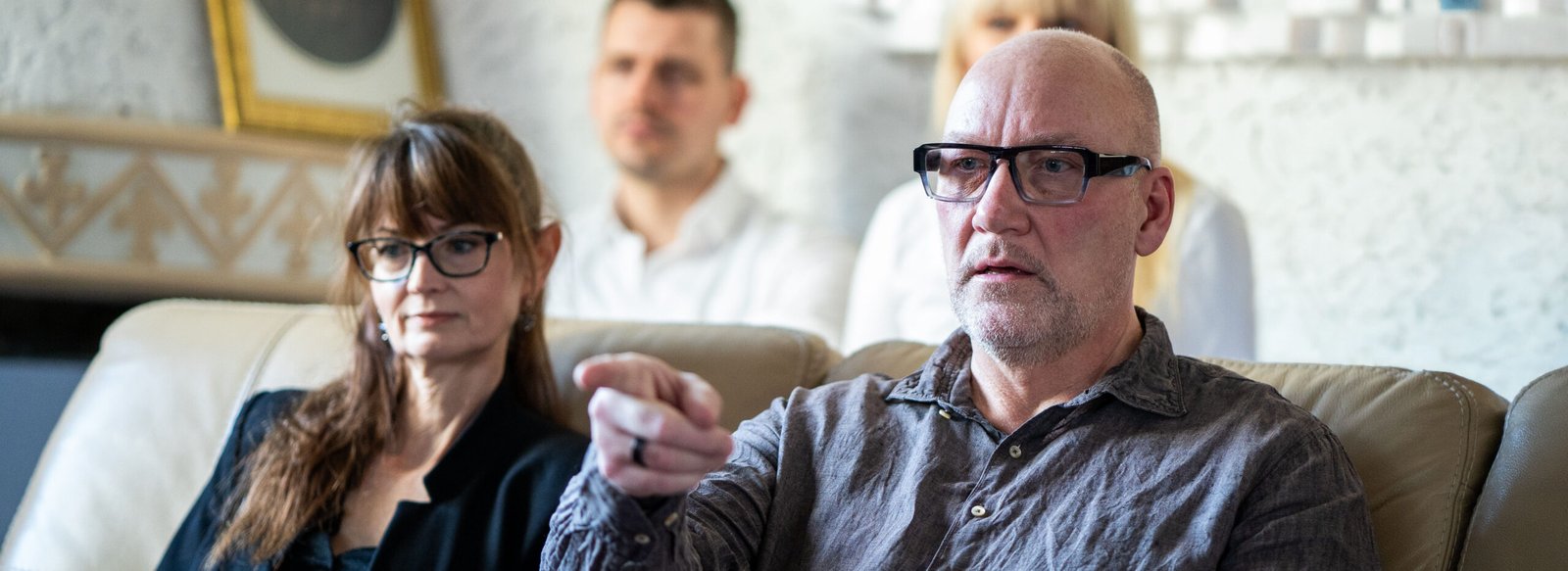
An interview at High-End Vienna 2026 with the founder and chief designer of Vitus Audio
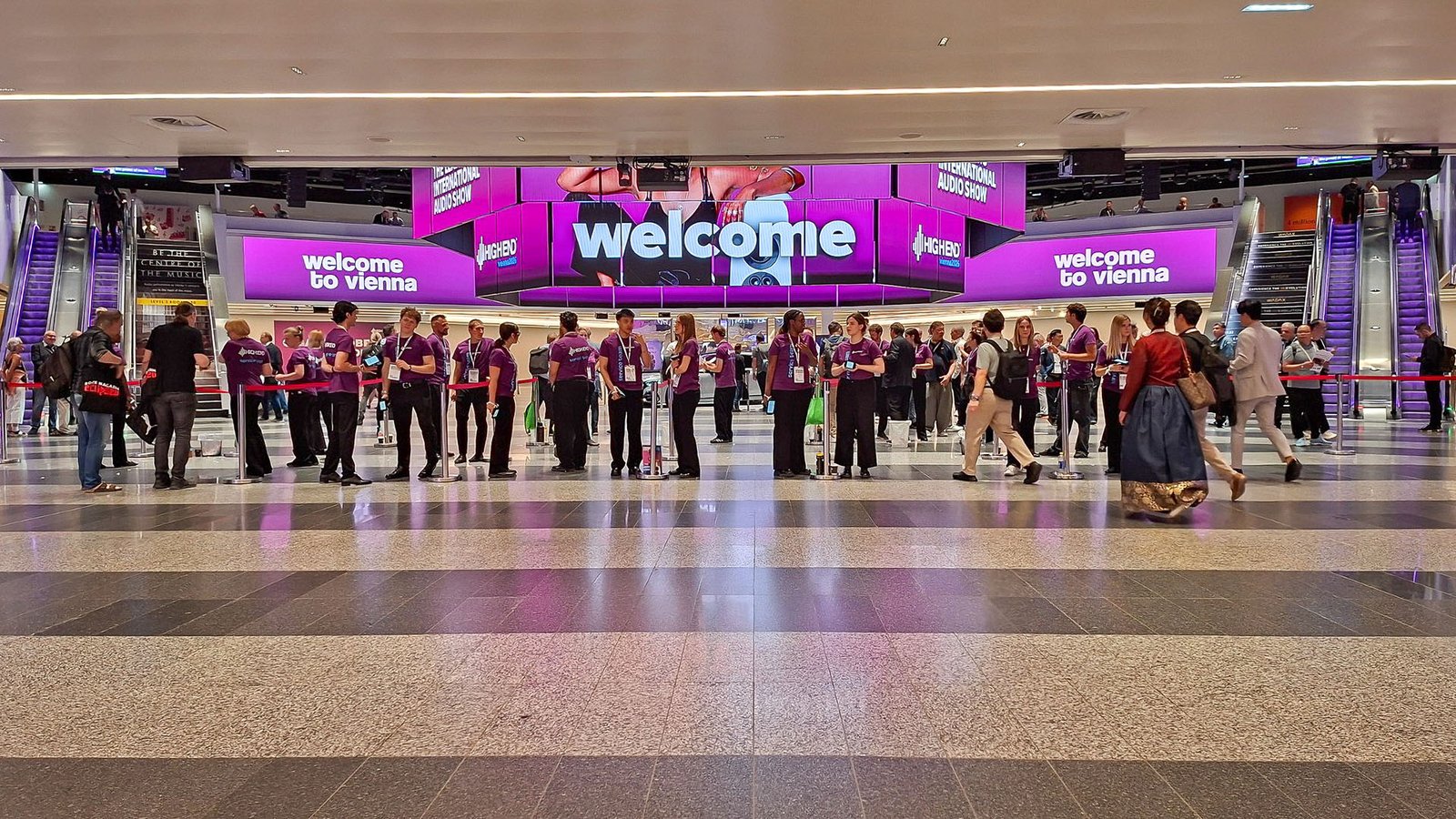
The High-End show has arrived in Vienna for the first time, taking over the Austria Center with its characteristic blend of serious listening rooms, ambitious collaborations, and passionate conversations on the side. It is in this setting, amid the quiet hum of electronics warming up and the distant sound of music drifting between rooms, that we sat down with Hans-Ole Vitus Nielsen, the man behind one of Denmark’s most respected names in high-end audio.
Hans-Ole’s story is one of the smartest people in the industry that I have had the chance to talk to, who turned obsession into craft. Born in Aarhus, Denmark, he was playing the snare drum in a street marching band by the age of 12, and tearing open his first hi-fi separates not long after. He studied electronic engineering and spent years at Texas Instruments before deciding, in the mid-1990s, to channel everything into a single goal: building the finest audio components he could imagine. That process took eight years of private R&D before Vitus Audio’s first products, the RP-100 phono stage, the RL-100 line stage, and the SM-100 monoblock power amplifier, were unveiled at the Stockholm show in early 2003. Since then, the company has grown into a three-tier lineup (Reference, Signature, and Masterpiece) handmade at their facility in Herning, Denmark, and sought after by audiophiles worldwide.
In recent years, Hans-Ole stepped away from day-to-day management to focus entirely on engineering and R&D under the Vitus RnD ApS umbrella, alongside the Alluxity brand. Now back in a broader role, he is, if anything, more energized than ever. At Vienna, Vitus Audio was present across four rooms: two showcasing Signature systems, and the other two showing Masterpiece series featuring the monumental MP-M201 Mk.II monoblock amplifiers and MPS-201 preamplifier. We found him in good spirits, as always, eager to share, with his well-known Scandinavian openness and fairness.
Before jumping into the interview, I have to thank Hans-Ole Vitus for his time sacrificed; we spoke for almost one hour, and for his extraordinary openness and sincerity. I am very grateful for this opportunity!
Tell us about what Vitus Audio is presenting here in Vienna.
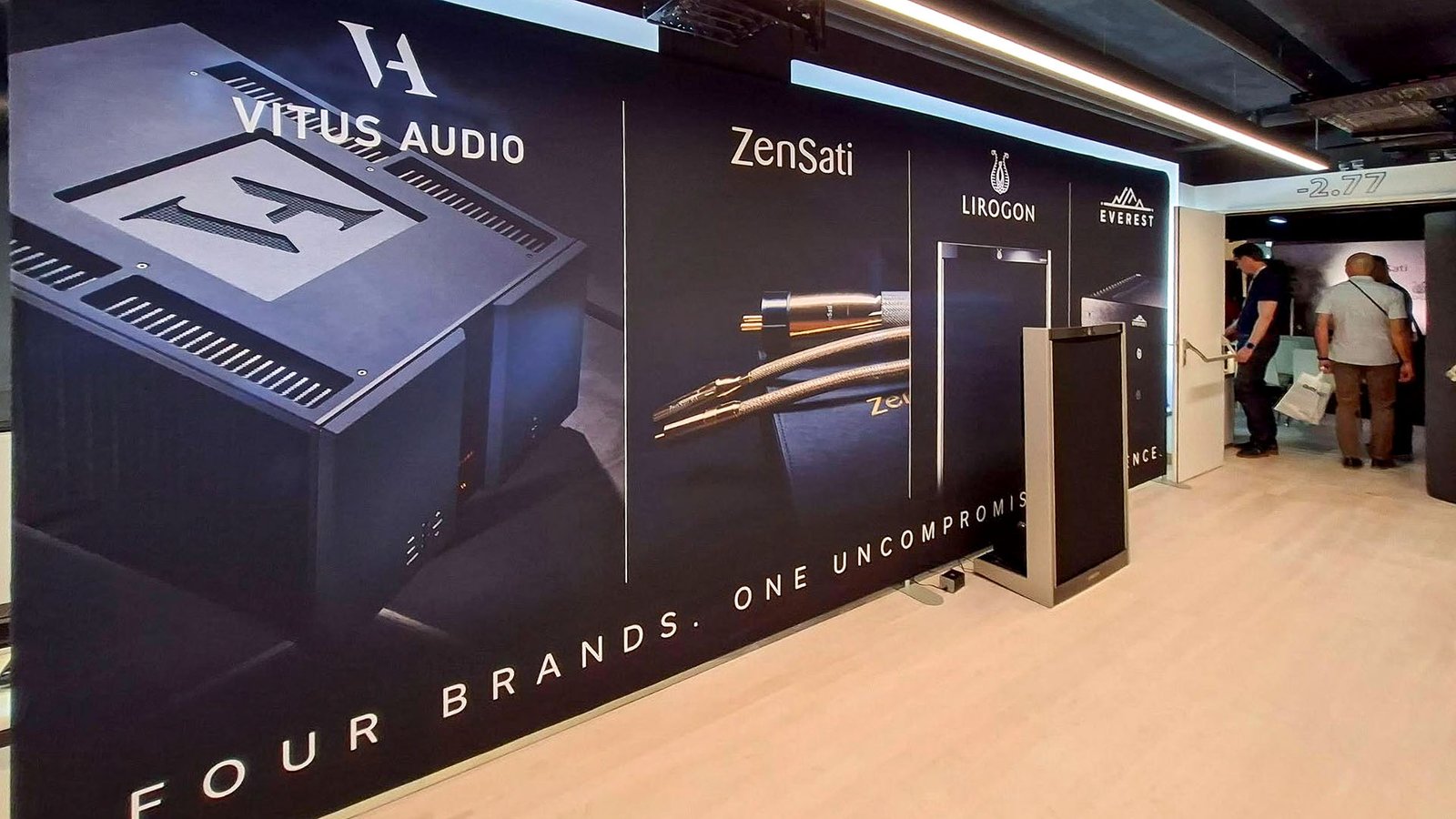
We don’t have any new product launches at this show. We are here primarily with our Signature and Masterpiece lines across four rooms. In the first room, we show the SD025, the SL103, and the SS103 from the Signature Series with ZenSati, together with Everest Audio, and Lirogon (electrostatic speakers), both young Polish companies, using Solid Tech racks from Sweden.
The second room at the minus-two level is a collaboration between Goebel High End (speakers), WADAX digital, and Vitus Audio. We are showcasing the Masterpiece MPL-201 and the Masterpiece Monoamps MPM-201.
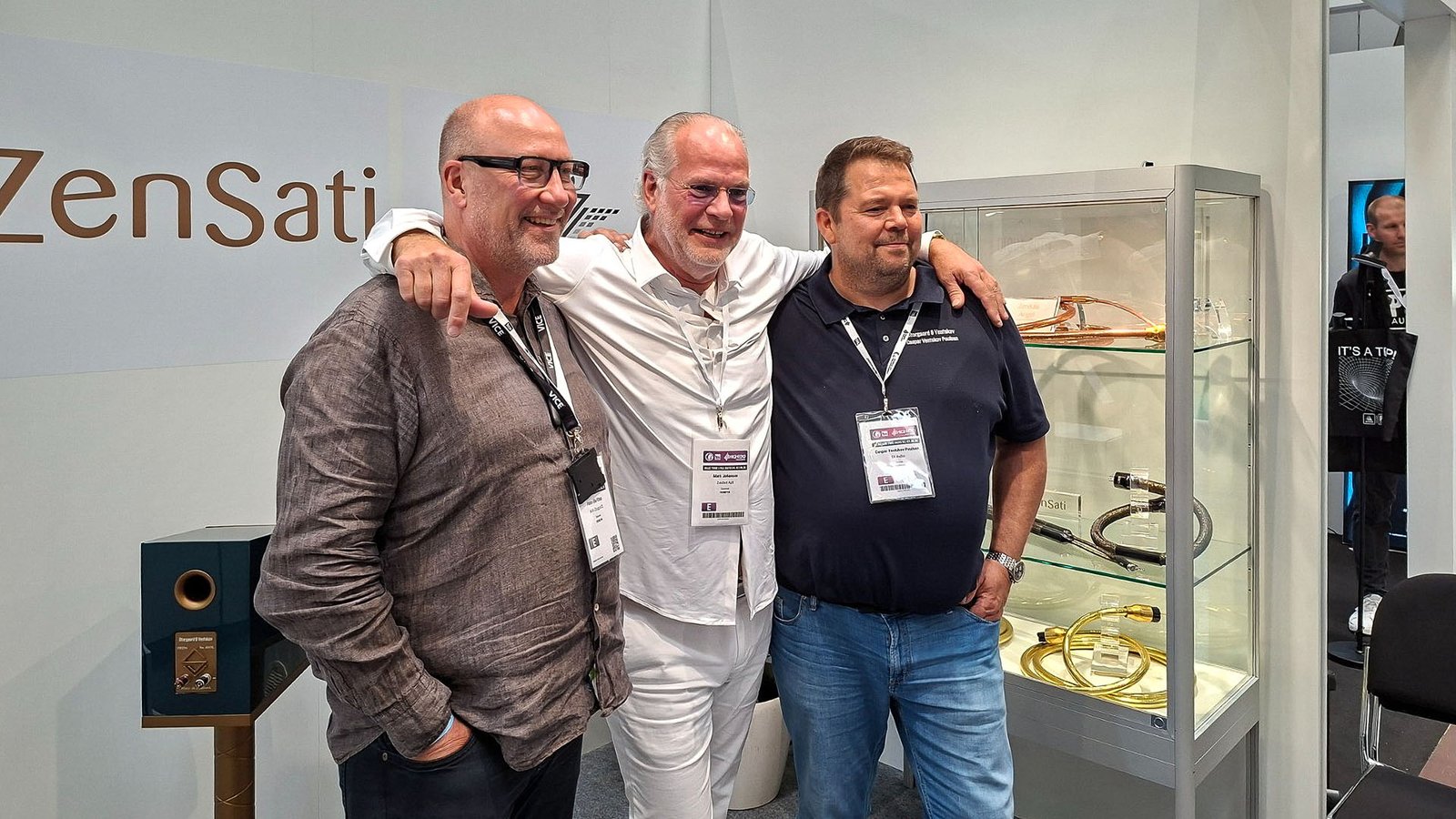
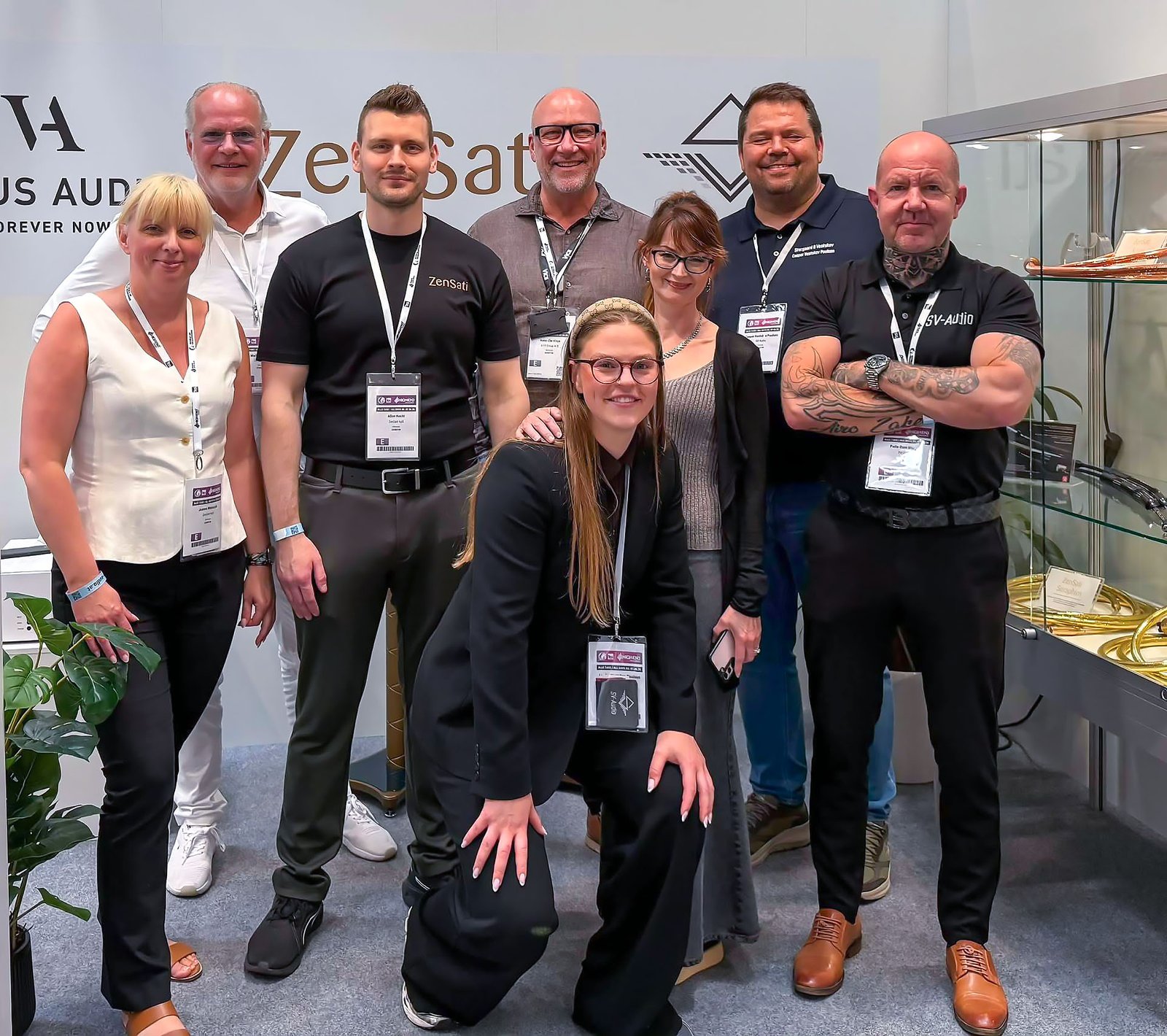
At Hall X5, we have another collaboration under the Danish Audio Excellence theme, which includes ZenSati, the new Danish speaker company SV Audio, and Vitus Audio. We also have NEO racks in the room and Ordvik acoustic treatments. There, we were showcasing Signature Sirius, the SCD 025, the SD 025, the SL 103, and the SM 025.
The last room we have is on the first floor, in room 1.31, a collaboration among us, Phono Akustica, and Avalos. In this room, we showcase Masterpiece again: the MPL-201 pre-amplifier and the MPS-201 (the Masterpiece stereo amplifier).
What is the latest product you’re actively showing here?
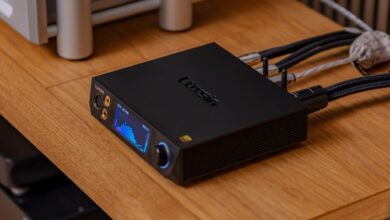
In the SV Audio / Danish Audio Excellence room, the centerpiece is the SM-025, which was launched at last year’s Munich show. That went into production in Q4 of last year. But we also have, not in a dedicated room but in conversation, the finalized output-stage module for the SIA-030. That module is now complete and shipping. We literally just went into full production last month. This has been delayed for a long time; there were many challenges to solve with that Phono-stage. However, the good news is that the DAC/streamer module Xtreme Award edition of the SIA-030 should enter production in Q3 of this year. So these are two significant projects we are now wrapping up.
You mentioned a new phono stage platform in development. Can you tell us more?
Yes, and I actually have photos here of the SIA-030 with optical phono (DS Audio) prototype, I almost forgot about that. The first DS Audio-compatible module we are making is a pure DS Audio optical input module for the SIA-030. From there, we will continue developing larger standalone designs. The new platform we are building tests several new technologies: FETs alongside the bipolar transistors I have always relied on, new types of power supplies, and a mix of shunt and series regulation, all aimed at reducing noise. We will first implement this technology in gain stage modules that feed into all our existing products, primarily the phono stages, so that every phono stage already in the field can be upgraded. And then, beyond that, we will have a completely new design with DS Audio optical cartridge inputs living right next to conventional MM/MC inputs in the same unit. That is where we are heading, but we are still in the proof-of-concept stage.
How do you approach the DS Audio optical cartridge market? Other manufacturers are already offering compatible phono stages.
Honestly, I haven’t listened to all of them. But the ones I have heard, in my personal view, are simply not in the same league as what DS Audio themselves are doing. DS Audio made their own phono stage for their optical cartridges, and it is very, very good. I told them this directly, and they said they welcome the competition, which makes sense because their main revenue comes from the cartridges themselves, and they are essentially giving away their circuit IP. But it is not a question of the circuit being super complicated; it is about how you approach the design. I am a competitive person by nature. I always want to try to build the best there is. So, for the first DS Audio module going into the SIA-030, we are obviously working within significant size constraints; we can only go so far within those limits. But the next step, for the standalone unit, I don’t care about price; I don’t care how much space it takes. We just need to build absolutely the best we can. And only when we are at least at the same level as DS Audio’s own phono stage will we release it. That is our approach.
What is happening with the RP-102, SP-103, and MP-P201?
Over the next two years or so, we will be moving to a completely new platform for the RP-102, SP-103, and MP-P201. The new platform will accommodate both a conventional MM/MC phono stage and DS Audio optical cartridge support in the same chassis. It is some time away, but we are in proof-of-concept now.
Looking further ahead at the product roadmap, what is coming next?
The DS Audio phono module for the SIA-030 is our next product, alongside a DAC streamer module we are finishing for the same platform. The standard MC/MM phono stage module is already in production. After that, the next major launch will be a new integrated amplifier in the Reference Series, the RI-200, which will retail at around €12,000. That is considerably below the current RI-101 Mk. II. It will have the same physical footprint as the RI-101, but the naming probably will confuse people, I am sure. You have the big brother, the RI-101, and the new, more accessible model is called the RI-200. It does not look like a logical step. But the logic is this: the current RI-101 produces 300 watts per channel, so calling a lesser model RI-100 makes no sense. The RI-200 will have provision for a phono stage module, a DS Audio phono stage module, and the DAC streamer module from the SIA-030 — all in one. Whether we can physically fit two module slots or just one, that still needs to be resolved. We are targeting an introduction at the Warsaw show, though we may not be 100 percent finished with the full mechanical design by then. And then sometime next year, we will upgrade the RI-101 to the RI-350. And then it will make complete sense as RI-101 will be translated to RI-350, and the new RI-200 will be positioned correctly in the lineup.
I heard about a CD player as well — is that serious?
Yes. When we were in China a couple of weeks ago for the Shanghai and Beijing shows, our Chinese partners told us that at this €12,000 price point for the RI-200, they would really appreciate a matching CD player. My first reaction was, well, that is something we did in the past. But they said, “If you can offer that at this price point, we want it.” So I went and asked a few others around the world, and enough people gave the thumbs up. When you hear that from enough of your partners, you know you are going to get the orders. Why would you not make it? Especially in a market like China, where streaming services like Tidal, Qobuz, or Roon are not accessible, a high-quality CD player at that price point makes complete sense. So we are doing it, a standalone CD player, not SACD, just CD, at around €12,000.
On Competition, Manufacturing, and the State of the Industry
How do you see the pressure from Chinese manufacturers in the broader audio market?
I am very happy that Vitus Audio operates in the higher end of the market. Because in the mass market, the mainstream, affordable price points, you simply cannot compete with China. There is no point trying. And the problem I see is that the Western world has sacrificed quality at so many levels in pursuit of cost savings. We source some of our chassis parts from China, simply because we cannot find the right quality in Europe. And it is not even cheaper for us, the parts are actually slightly more expensive, and then we have to ship them. But right now, that is the only way to get the quality we need for certain components.
Is this a structural problem or something the West brought on itself?
Both. The system there is built completely differently. They pay different wages, have access to resources and state-backed, essentially non-refundable credits, and have entirely different incentive structures. The competition is genuinely not fair. But Europe and the rest of the Western world created this situation themselves. Twenty years ago, everyone wanted to maximize profit margins, so they shipped production overseas. Now those countries have the tools, and sometimes they are the only ones with the tools. I recently asked a European manufacturer about a deep-deburring machine, and they looked at me like I was speaking another language. I go online and find 200 Chinese companies offering the same thing at high quality. In Europe, it is: ‘We have some contraptions, and we grind by hand.’ What are you talking about? We were in one Chinese CNC shop at the Shanghai show, and the quality of their work was staggering. And who gave them that technology? Apple did, among others. They are not stupid people. They are playing a very long game, twenty, thirty, fifty years. We in the West need to do something to stay relevant, but it is genuinely difficult.
Do you see any positive signs?
I actually do, and this is where I think Europe has a competitive edge that is easy to underestimate. I am starting to see real signs that people want to slow down. They want to disconnect from the phone. They want to go back to listening to vinyl, to cassettes, to physical music. They are fed up with screens. And that is exactly our world. The mainstream consumer electronics model, a new product every three to six months, mountains of waste, enormous energy consumption, is the opposite of what high-end audio represents. Our products are built to last a generation. That is fundamentally a better proposition, and I think more people are beginning to recognize that.
What about the entry of more affordable, screen-based audio products from Asia — does that concern you?
Not really, no. Some of those products are actually quite good. The sound quality is not always there yet, but for younger people coming into the hobby, it is an upgrade from what they had before, and it is an upgrade they can afford. That is how people get into this industry. They discover that music reproduction matters, start listening more seriously, and, over time, move up. So it could actually help us by bringing new listeners into the audiophile world. And at our price levels, even with the Alluxity brand, which we have now folded back under the Vitus Audio umbrella as ‘Alluxity by VA,’ with a retail price of below €10,000, we are simply not in the same market as those products. We are never going to be in the €1,000 to €2,000 bracket. I am not worried.
On Design Philosophy, Measurement, and the Sound of Vitus Audio
How would you describe the Vitus Audio sound philosophy in a single phrase?
Total lack of listening fatigue. That is the primary thing. I was at a classical concert just last night, actually, for the first time in a while; usually, I go to rock shows, Joe Bonamassa, that sort of thing. We were sitting very close to the stage, maybe four meters from the principal soloist, and not once did I get that cringe, that feeling where a note is too sharp, too bright, where something makes you want to turn the volume down. It was pure resolution, complete naturalness. That is what I want from a hi-fi system. I always say: if I hear a system and I want to turn the volume down, something is wrong. That is the single biggest warning sign for me.
How do you achieve that — is it about circuit topology, or something more?
It comes from the approach to the design. I have always loved tubes, especially for guitar and bass amplification, and even harmonic distortion from tubes sounds musical. And uneven-order harmonic distortion from solid-state, less so. So what I wanted to do was merge the qualities that tubes bring to voices and acoustic instruments, liquidity, that sweetness, that almost sensual quality in the midrange, with the control, power, punch, and resolution that solid state can deliver. Achieving that took eight years from when I started to when I had a product I felt was actually worth releasing. The RP-100 phono stage and RL-100 line stage were the result of that process.
And on the measurement side — how seriously do you invest in test equipment?
Very seriously. The oscilloscope I use in my R&D facility costs €25,000 after a discount and the trade-in of my previous unit. How many companies in this industry have a piece of test equipment at that price point? We also use Audio Precision audio analyzers, and we had a Rohde & Schwarz audio analyzer as well, which is now obsolete. When we bought it, in the configuration we needed, it was between €50,000 and €60,000 just for the audio analyzer. This is what we do. We invest in getting the measurements right because there is no point in listening to something that is not electrically correct first.
What is your design process today — simulation first, or listening?
We hired a very strong engineer who works heavily with simulation. He builds his own models for individual components, and his simulations are extremely precise. On the most recent DC-coupled design, the variation between his simulation and the actual prototype was 1.6%. That is spot on. His latest phono stage design, which is considerably more complex, came in at 4.5% variance, which is still very good for that level of complexity. Personally, I was old-school for a long time, trial and error, schematics, math, breadboards, then PCBs. That is honestly still how I think. But now we integrate: simulation first, then into board layout, then we produce the PCB in-house on our SMD line, mount up, test, tweak, then go back and update the simulation model to match the hardware. We go back and forth like that until we have an approved platform, a technology we know works and sounds right. Only then do we build it into a product.
You mentioned your in-house PCB production. Tell us more about that.
We have had a full SMD and through-hole production line in-house for about ten years now. We are looking at upgrading some of the machines. The reason is simple: quality control and turnaround time for changes or prototypes, but the first reason is to be able to populate the boards ourselves and control quality down to the smallest steps possible. Having the machines in-house means a design change can be on a board and tested the same day, rather than waiting weeks for an outside supplier. Even in my separate R&D facility, I have prototype PCB machines that can produce boards up to eight layers. We have invested a great deal in this capability, and it shows in the product’s consistency.
On AI, Strategy, and the Future of the Company
Are you using AI tools in your workflow? How advanced is your use?
I would say I am fairly advanced compared to most people in this industry, though I am certainly a beginner compared to dedicated IT experts. Most people use ChatGPT, Claude, or Copilot to ask questions, which is fine and useful. But what I started doing last year is using GitHub for version control, Visual Studio Code as my main tool, and GitHub Copilot integrated with it. So I build repositories. For example, I have taken every review Vitus Audio has ever received, converted them all to Markdown, because it is text-only and far smaller, and loaded them into a dedicated sales and marketing repository. Then I can ask the system to analyze the entire history of reviews and tell me what the core brand values are, expressed in the reviewers’ own words. The output is something I can then work with and refine, with full version history. I can see document version one, two, three, every change tracked, every decision recorded.
And how does this work for interviews like this one?
(N.r.: this interview was recorded live in High-End Vienna, taking almost one hour from the precious time of Hans Ole Vitus, and we are extremely grateful for that!)
Exactly like this. I record the conversation. The transcript is written to a Markdown file in the repository. Every interview I have given, every question I have answered, every public statement I have made, it all goes in. So when someone sends me twenty interview questions, I put them into the folder, point the system at the relevant repositories, and ask it to suggest answers. But, and this is crucial, I have trained it on how I actually speak and write. So I then ask it to convert the suggested answers into the way I would normally communicate. The effort I put in is maybe fifteen minutes of review and refinement, and I can respond to twenty detailed questions with fifteen pages of answers within a couple of hours. The people at the other end are often stunned. And yes, it is genuinely me, because everything it draws on is what I have said and written over the years. It gets closer and closer to how I actually think.
Is this about efficiency, or is it deeper than that?
It is about clarity and consistency. It forces me to be very clear about what the company stands for and where it is going. I use it to build strategy documents, SOPs, product descriptions, and user manuals, all the things that tend to be scattered and informal in a boutique company. And it helps me stay focused on what matters: engineering. I would never use it for the design itself. But for everything around the design: communication, positioning, documentation, it is an extraordinary tool if you use it properly. The key is that you have to put the right input in. And that is exactly what building this knowledge base over time allows you to do.
Finally, what is the overall strategic direction for Vitus Audio?
Since coming back from four years focused purely on R&D, I have a very clear sense of what I want. My goal is to keep AVA Group and the Vitus Audio brand completely boutique. I have absolutely no interest in doing everything or growing for the sake of growing. What makes me happy is building things of exceptional quality, things that, if I had them in my own listening room, I would be genuinely proud of. If I do not have that feeling about a product, it is not a Vitus Audio product. Simple as that. And the strategic principle behind this is something I care about deeply: I always want to be able to say no. No to orders that do not feel right, no to compromises on quality, no to deals where my instincts tell me something is off. We have no outstanding debt. We run a positive balance. And I have no desire to change that, because the moment you start running left and right with new products, compromising quality to chase volume, you destroy what you built very quickly. The most powerful word in business, and in life, really is ‘NO.’ And having the financial freedom to say it is, for me, the whole point.
Interview conducted at the High-End Vienna 2026 | Austria Center Vienna
Vitus Audio — vitusaudio.com
Vitus Audio products are available in Romania by HiFi Expert (hifiexpert.ro) and worldwide through dedicated distributors (https://www.vitusaudio.com/experience/retail-partners/)