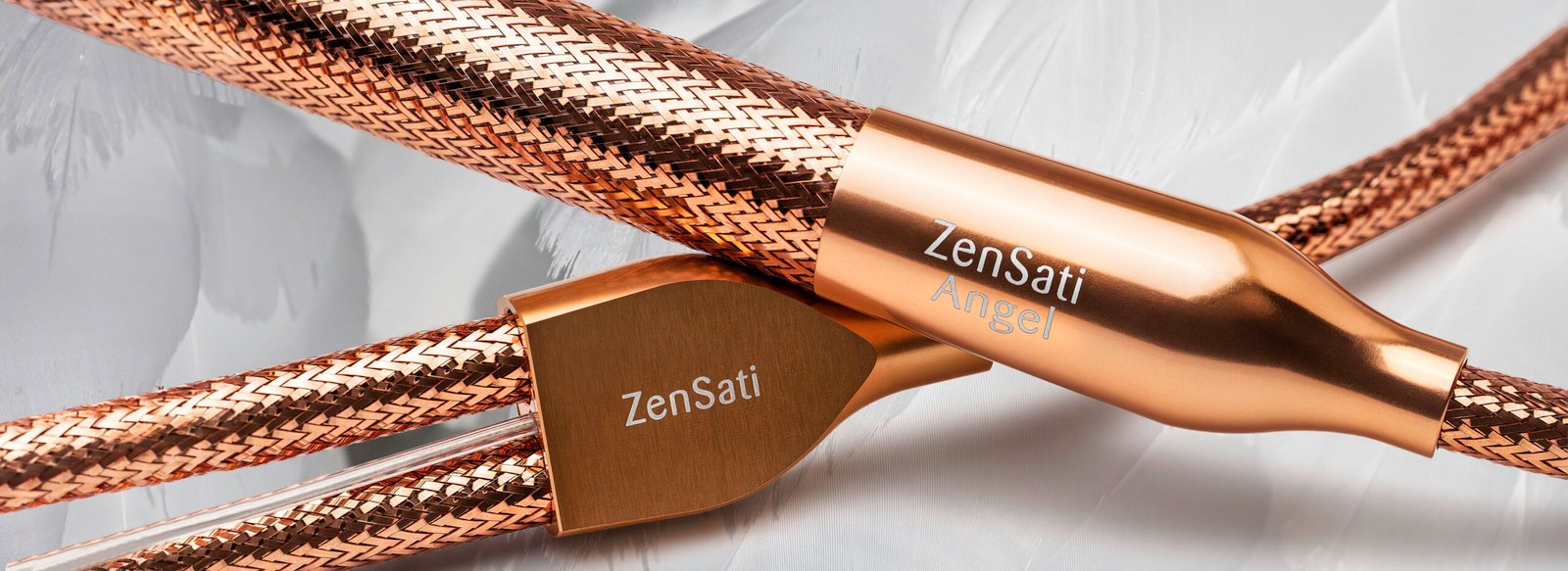
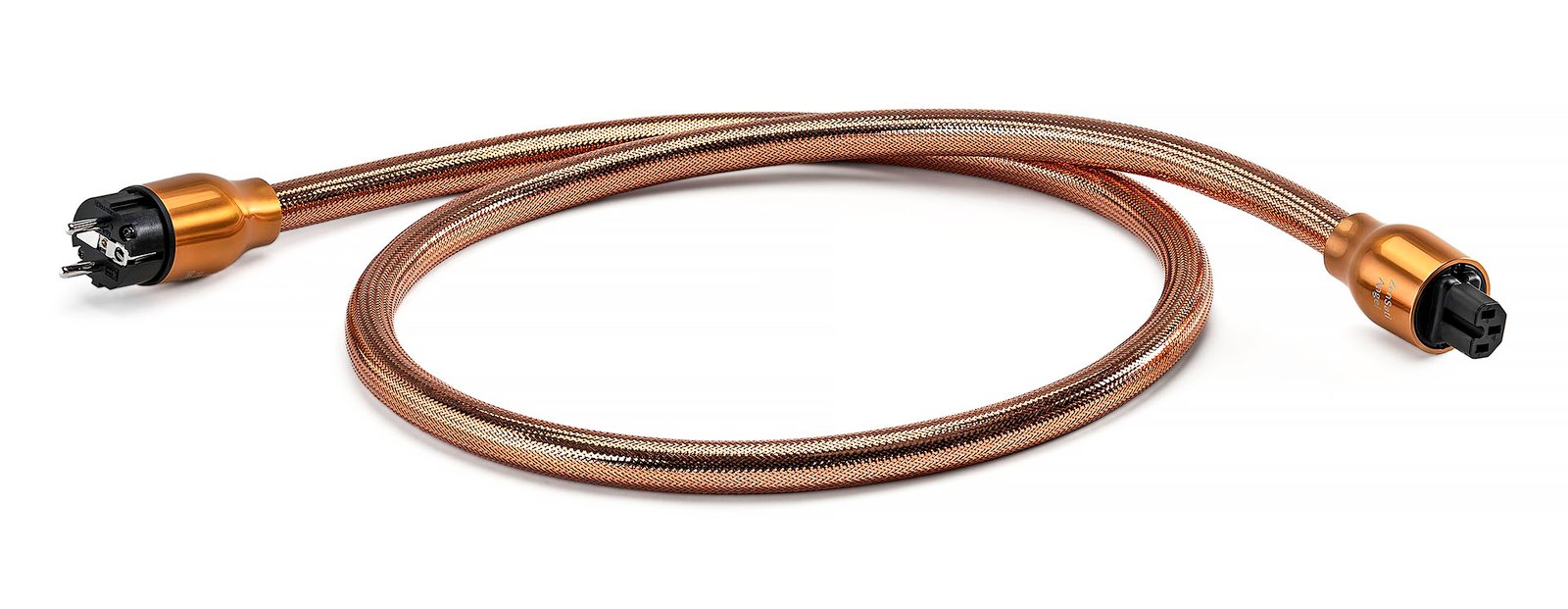
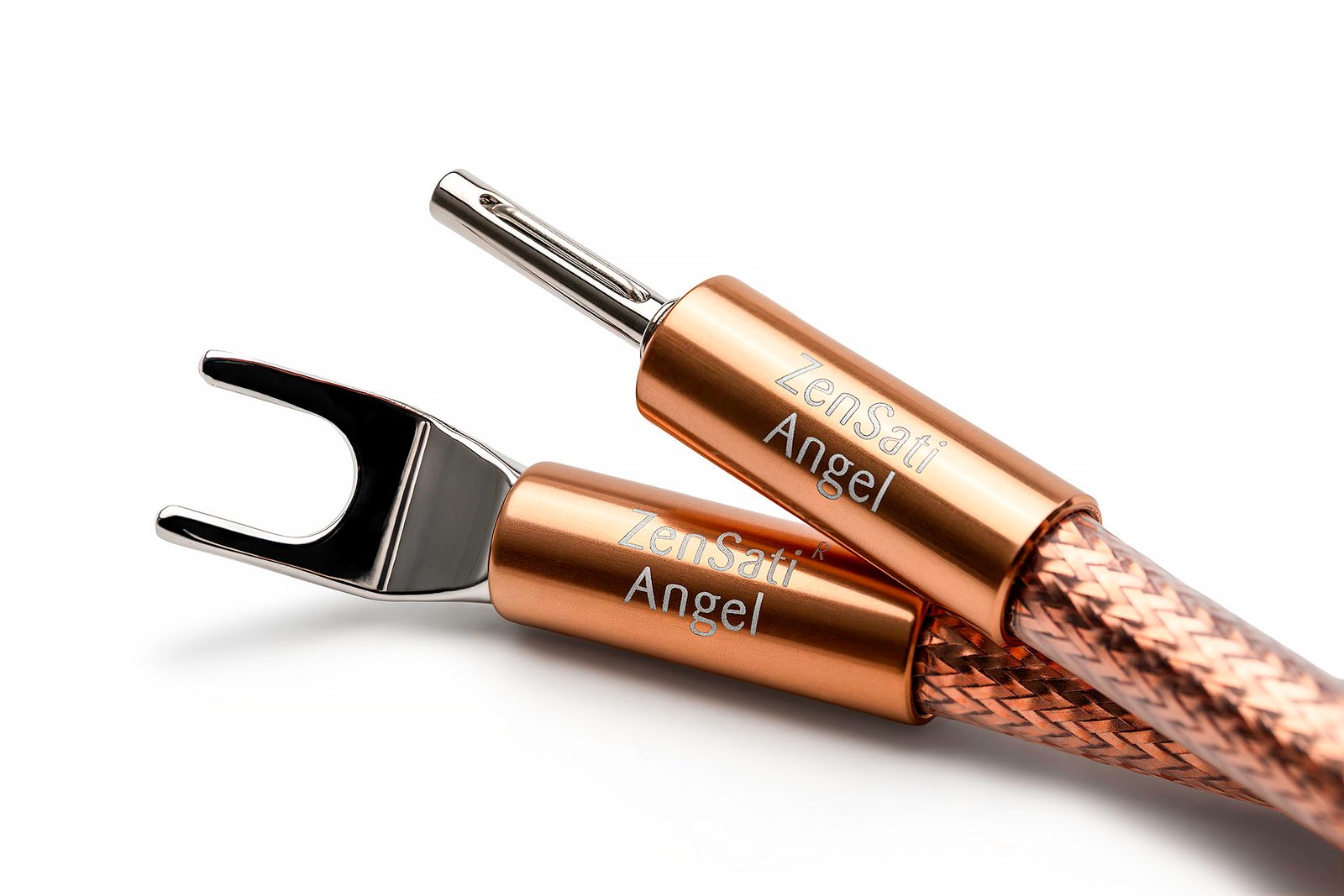
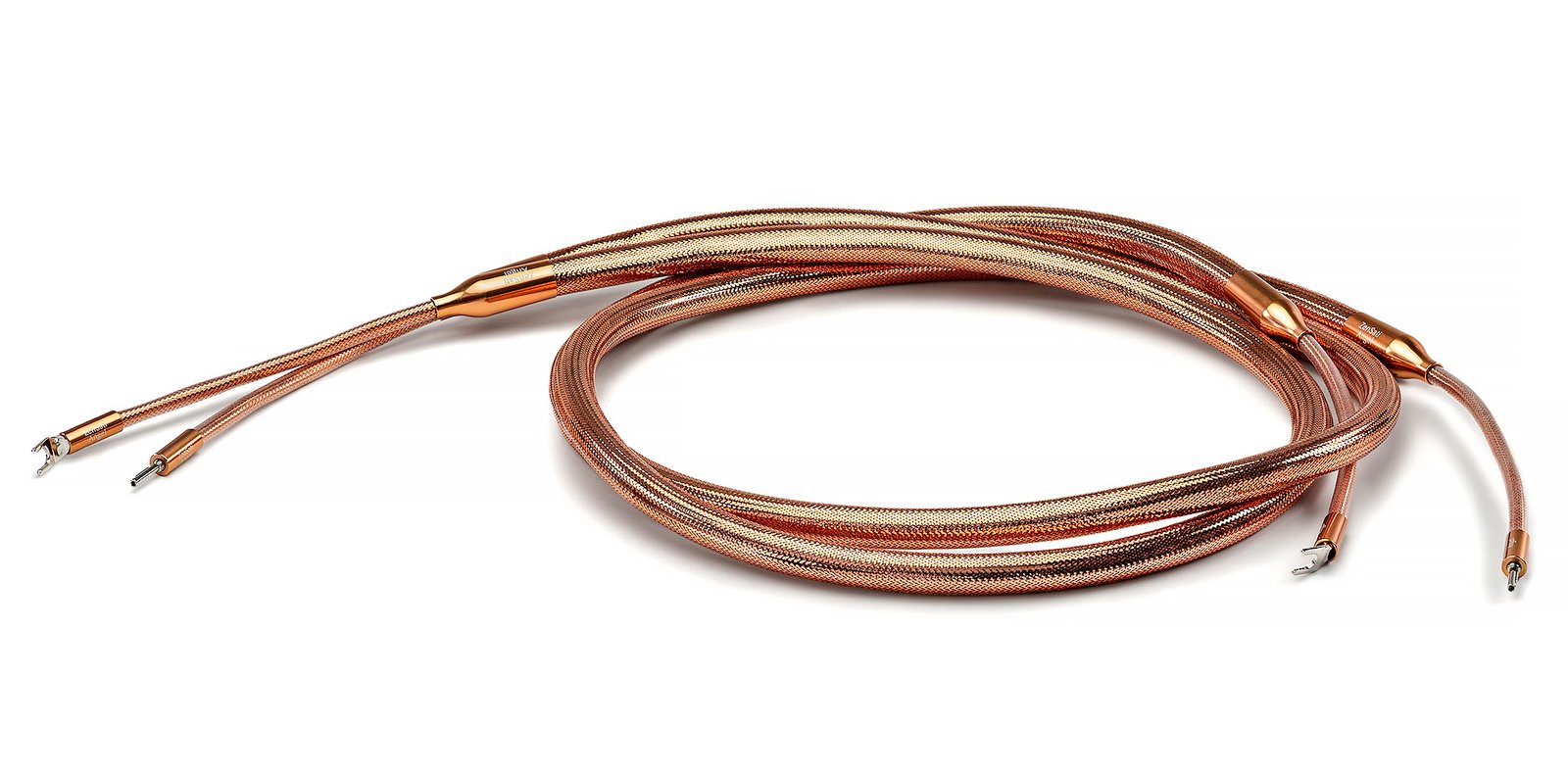
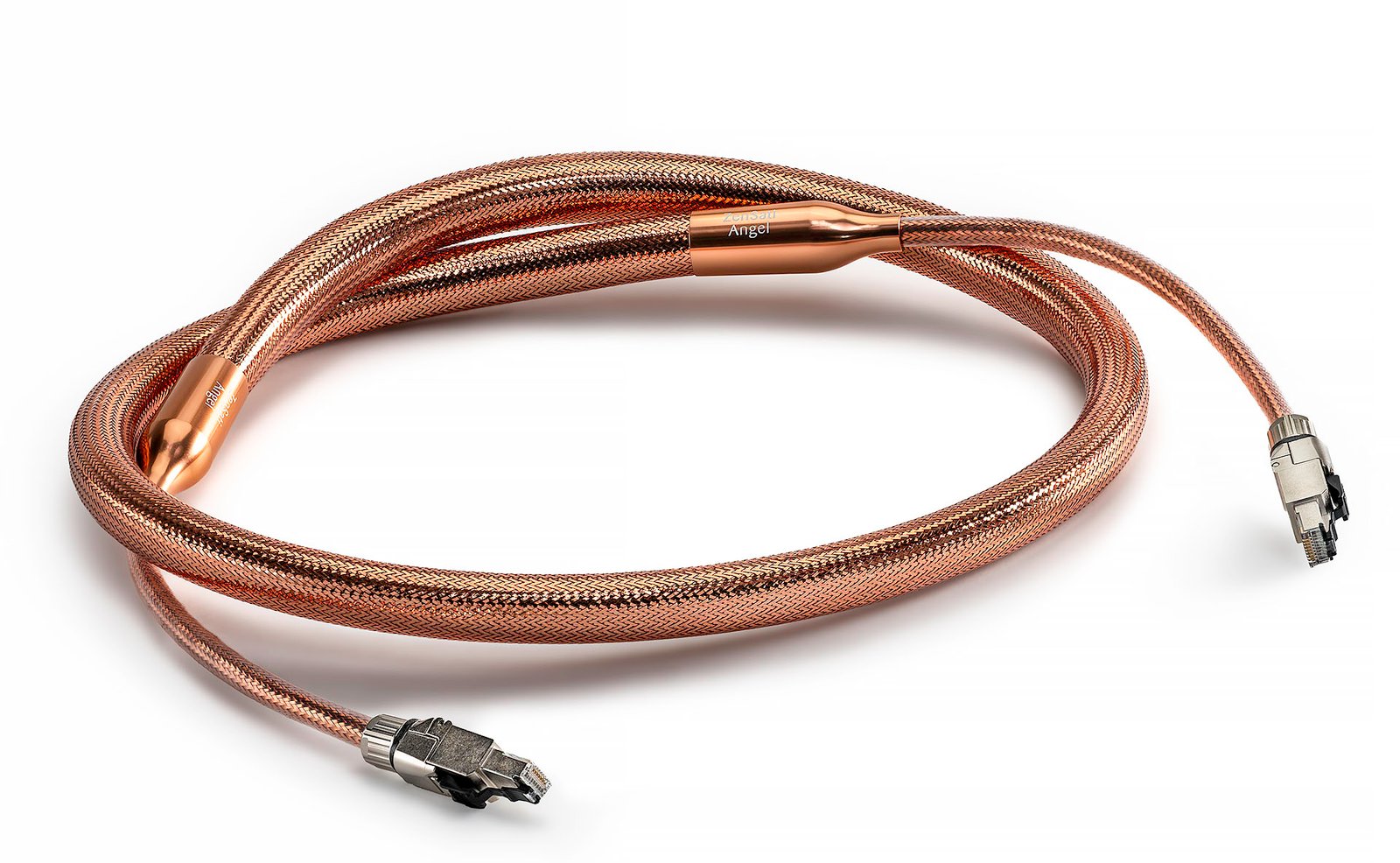
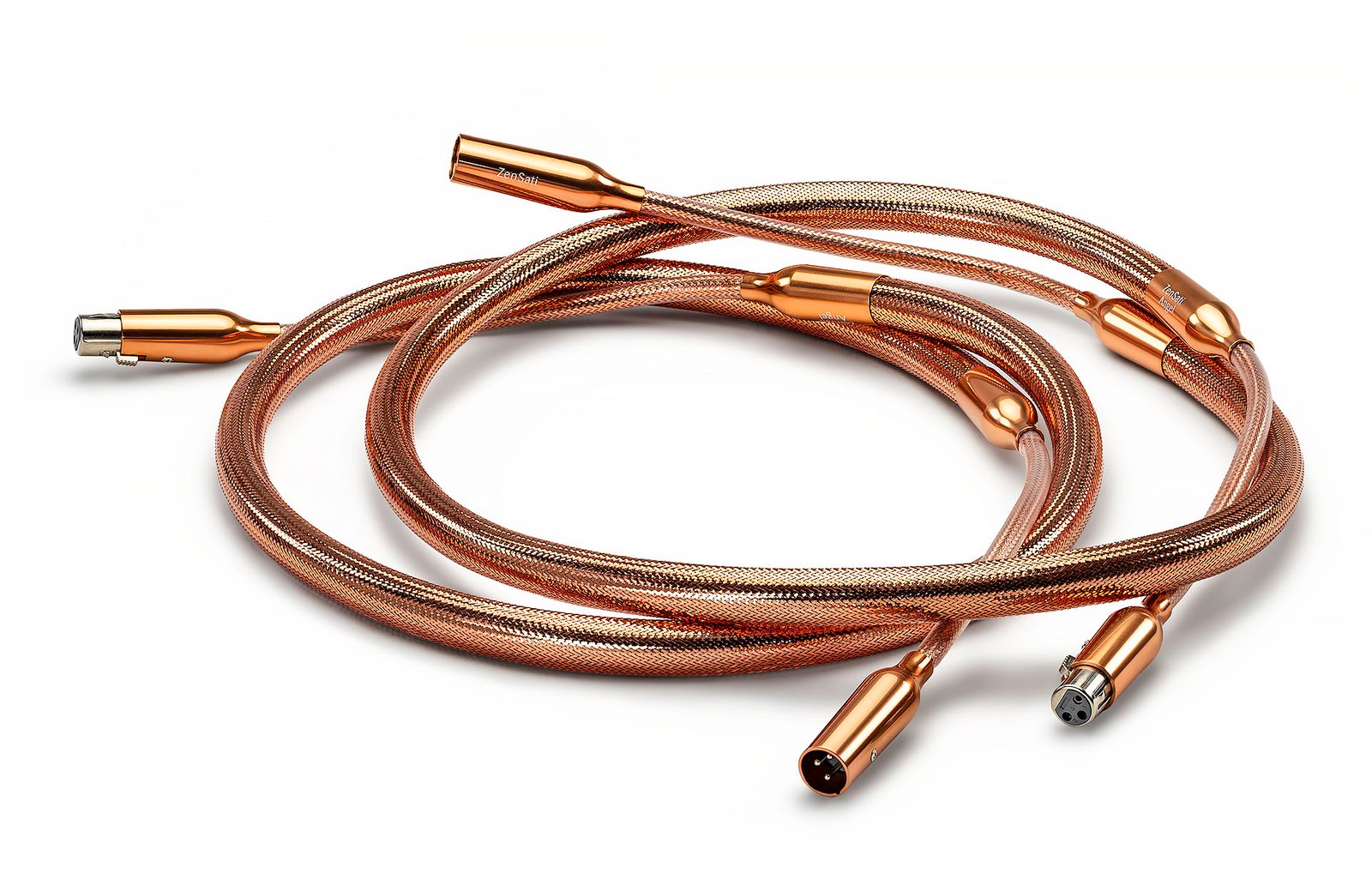
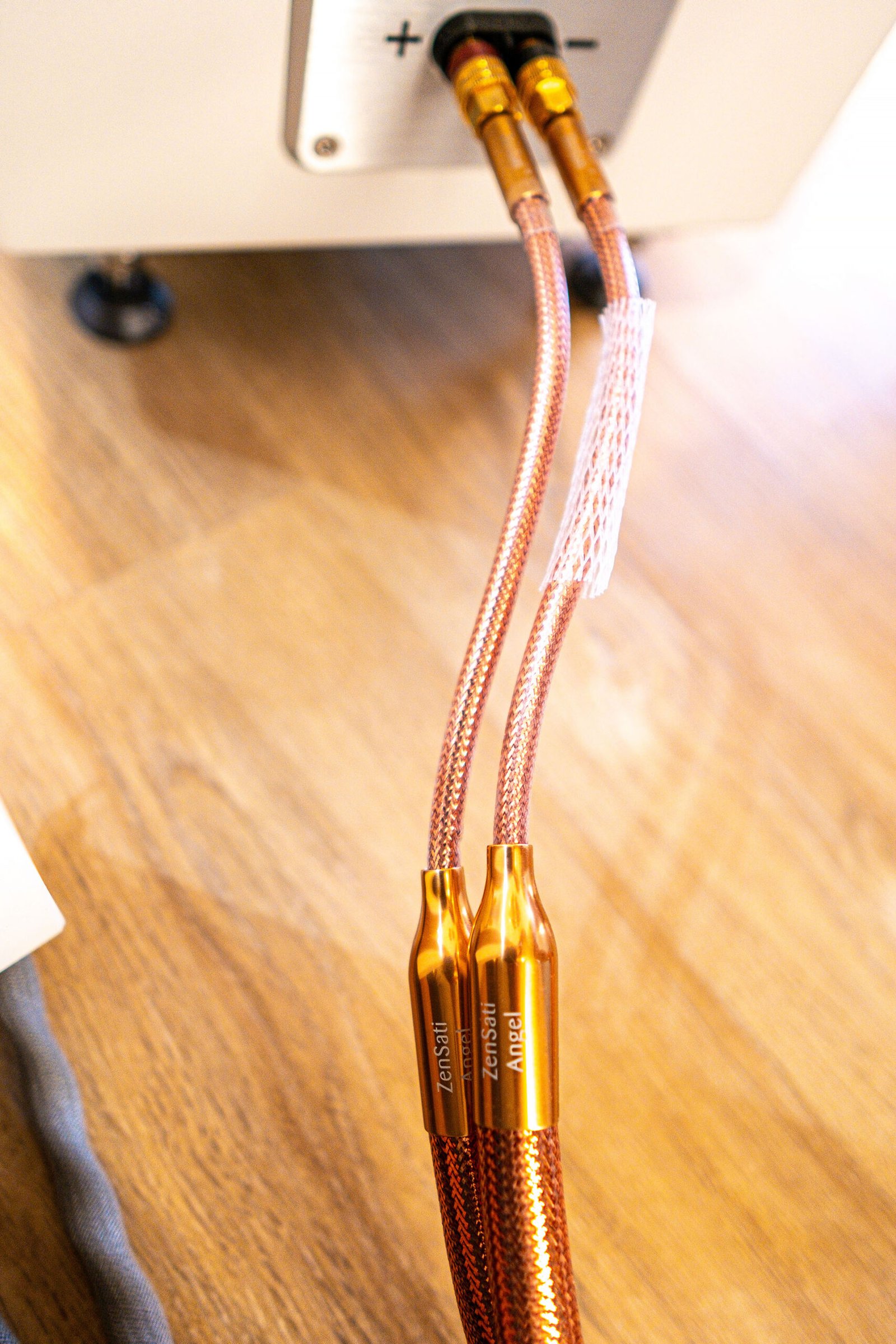
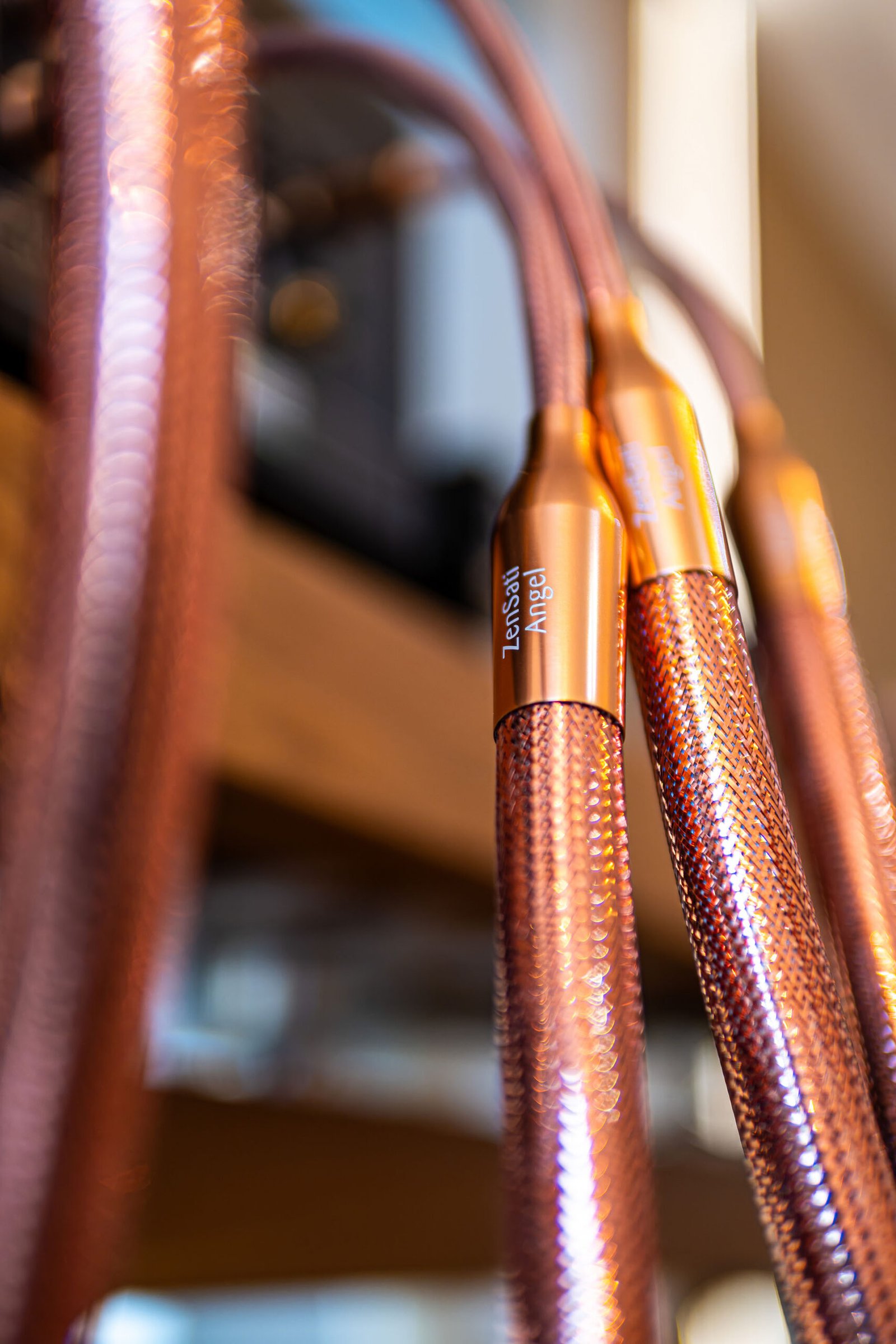
Under review: a complete ZenSati Angel loom. Four power cords (2 m), two pairs of XLR interconnects (2 m), one pair of speaker cables (3 m), one USB cable (1.5 m), and one Ethernet cable (1.5 m).
The Angels We Imagine and the Angels We Read About
Close your eyes and think of an angel. I am willing to bet a good part of my record collection on what you see. Soft light. White robes that never need ironing. A harp, of course, plucked by unhurried fingers of someone with all eternity to finish the phrase. If you grew up in Europe, the picture probably includes two chubby, slightly bored little cherubs leaning on a windowsill, the ones Raphael painted at the bottom of the Sistine Madonna in 1512, which the souvenir industry has been printing on mugs, umbrellas, and Christmas cards ever since.
It’s a lovely picture. It’s also almost completely wrong.
Open the old books, and the angels that come out of them aren’t just illustrations. The very first thing they say to us when they appear is “Fear not“. They say it to Zechariah in the temple, to Mary in Nazareth, to the shepherds outside Bethlehem, and to the women at the empty tomb. You don’t open a conversation with that sort of thing unless the other person has every reason in the world to be afraid. When the prophet Isaiah sees the seraphim (the “burning ones” with six wings each), the very posts of the temple door are shaken by the sound of their voices. The cherubim are not little kids with dimples. They are the ones who are stationed at the gate of Eden with “a flaming sword which turned every way”. In 2 Kings, there is a single angel who walks through the camp of the Assyrian army in one night, and by morning the army of 185,000 is no longer a problem for Jerusalem. The angel who comes to Daniel has a face “as the appearance of lightning” and his eyes “as lamps of fire,” and Daniel, a man who had just spent the night with the lions, drops dead on the spot. Even the rather gentle phrase “a multitude of the heavenly host” is a military phrase. A host is an army. When the shepherds looked up, they were looking at a regiment.
The Psalmist calls the angels “beings that excel in strength.” Michael, whose name is a question, “Who is like God?”, leads the armies of heaven in the war described in the Book of Revelation.
And here is my favorite detail. In the Book of Revelation, John hears a voice from heaven and struggles to describe it. It was, he writes, “as the voice of many waters, and as the voice of a great thunder: and I heard the voice of harpers harping with their harps.” Thunder and harps, in the same breath, in the same verse, from the same source. Not one or the other. Both. Much earlier, when God asks Job where he was when the world was made, the answer paints the cosmos at its very first sound: “when the morning stars sang together, and all the sons of God shouted for joy.1” The angels did not hum politely at creation. They sang with the stars.
Rainer Maria Rilke understood this better than any greeting card ever will. In the first of his Duino Elegies, he writes, “Ein jeder Engel ist schrecklich”: every angel is terrifying. Beauty, he says a few lines earlier, is nothing but the beginning of a terror we can only just bear. The angel is not frightening because it is cruel. It is frightening because it is complete. Nothing is missing; nothing is held back.
So which is it, really? The ethereal apparition with the harp or the being whose voice actually shakes the doorposts? The answer in the old books is beautifully straightforward. The soft light is how the angel appears. The power is what the angel is. The ethereal apparition can be the most powerful entity in the world in an instant. The sublime elegance is a weapon, and the transparency can be the sharpest blade. Angels were never fragile. They can sing with the thunder of colliding stars. The apparition must never be confused with the essence.
There is one more thing the books tell us, and it is the one that made me smile when the boxes from HiFi Expert arrived. The word “angel” comes from the Greek angelos, itself a translation of the Hebrew mal’akh2. Both mean exactly the same thing: messenger. Before an angel is a warrior, a guardian, or a singer, it is the carrier of a message that is not its own. And the virtue of a messenger is not creativity. A messenger who improves the message is no longer a messenger. He is an editor.
I can’t think of a better job description for an audio cable.
Mark Johansen (the man behind ZenSati) told me pretty much that very thing in November last year in Bucharest, a long way before I ever found myself living with his Angels. “When God sends an angel to do something,” he said, “they do it without complaint, with love and speed, and they come back quickly.” Fast, faithful signal transmission, no coloration; that’s the whole premise of the angelic range.
The theologians of late antiquity, Pseudo-Dionysius the Areopagite most famously, arranged the heavenly beings into nine choirs. The seraphim and the cherubim stand closest to the throne. The simple angels sit in the ninth choir, the closest to us. They are the ones who actually come down, knock on doors, and deliver the news. ZenSati’s catalog follows the same order: Seraphim at the top of the angelic trio, Cherub in the middle, and Angel as the first step, the one most likely to find its way into a real listening room. Into mine, for three weeks.
Which leaves the question that this review is trying to answer. When a cable is called an Angel, which Angel are we talking about? The pretty one from the greeting card, the sweet, soft, harmless one? Or the other one?
Fear not. You’ll know by the end of this review. Just don’t expect only the harp.
TL;DR — The Short Conclusion
For those of you who read the conclusions first (and I know you are very many indeed) here’s the short version.
The ZenSati Angel full loom is the most complete transformation I’ve ever heard from cables in my reference system. I did a complete overhaul of everything in the system at once (power cords, interconnects, speaker cables, USB, Ethernet). The first thing that changed was clarity. A window I’d never noticed before became far cleaner and then effectively just vanished. The tonal balance was spot on as ever, no tilt, no added sparkle, no borrowed warmth. Details that were previously totally invisible now appeared without being pushed forward; they were simply there as part of the texture of the sound. The bass went down, the treble went up, and the system finally revealed what it was capable of all along. The Angel loom has a voice of its own, really, a voice of speed and confidence, with a sweetness that never comes at the expense of clarity, a smoothness that never shortens the top end, and a sense of completeness in that nothing is missing and nothing is held back.
The honest ceiling is the other side of the same coin. The Angel will show you everything, including the weaker recordings in your collection and the weaker links in your chain. It requires a system in balance to be at its best.
In Romania, Angel cables start at c.€4,400 for a 1.5m USB cable, and a 2.5m pair of speaker cables is c.€14,700, so a full loom is a significant investment. Under the beautiful copper skin is a true messenger with real power, and it’s earned our Highly Impressive Product Award.
A Promise Made at Nine — Mark Johansen and ZenSati
Every company has an origin story. ZenSati’s is no different. It all started with a nine year old boy in Denmark making his very first pair of cables and vowing to one day have his own cable company.
Mark Johansen grew up in a musical household. He learned the piano, flute, and guitar and, from age nine, experimented with audio technology as a hobby, with his dad as his tutor. He went on to be headhunted by the biggest audio distributor in Scandinavia, where he learned the ins and outs of the business from a design point of view, through production, and into the rather unglamorous reality of the business. At some point he just said, “Now is the time.” He put together a business plan, and ZenSati was launched in 2009. The customers came straight away.
The name is a manifesto in itself. “Zen” is an old Asian word for “strong knowledge” and “Sati” is truthfulness. Strong knowledge in service of truth. Written by Mark with a capital Z and a capital S. Every ZenSati cable is handmade in their own facility in Helsingør (in Northern Denmark) and is acoustically and mechanically tested prior to leaving the facility. The house philosophy is three words that don’t really go together: neutrality, speed and musicality. The cable, in ZenSati’s view, is a passive messenger. You should hear the system, not the cables.
Today the catalog runs to nine series, each with a name and a personality. Razzmatazz is the party. Zorro, the masked swordsman in red, is the challenger. Authentica follows. Then come the three angels, Angel, Cherub and Seraphim. Above them sit #1, the dark and silent sILENzIO, and #X, the anniversary flagship created for the company’s tenth birthday in 2019. ZenSati cables have been developed and tested with an impressive list of electronics and loudspeakers, from Wilson Audio and Vitus to Soulution, CH Precision, Magico and Ypsilon.
Regular readers will know that this is not my first ZenSati encounter. I spoke with Mark at the HiFi Expert event in Bucharest in November 2025, in a conversation we published as “We Make People Happy”, and earlier this year, the Zorro speaker cable earned our Highly Impressive award. But a single cable, however good, tells only part of the story. This time I wanted the whole choir.
What Others Have Heard
Before I go into my own take on the Angel, I did a bit of digging to see what other people had to say and found there were surprisingly few opinions. Most of the published commentary has been focused on the two extremes of the range (Zorro and Authentica on one end, Seraphim, sILENzIO and #X on the other). The Angel, in the middle ground, appears to be one of the best-kept secrets in the catalog.
What I did find is extremely consistent across the board. The same few words keep cropping up in the reviews and the listening notes: speed, neutrality, transparency, and a complete lack of any character. Edgar Kramer (editor of SoundStage! Australia) lived with a Seraphim loom for a long time and described it as a very precise conduit to the tonal beauty of the music. Matej Isak of Mono & Stereo counted ZenSati as one of the most beautiful cables he’d ever seen (a very rare thing to say about a cable that’s in a rack). One owner who’d gone full loom reported two things that seem to be at odds: more detail and yet, at the same time, more calm. A concert pianist quoted by the company actually said she was quite frightened at first by the amount of detail the cables revealed.
Frightened. Fear not, indeed. Keep that word in mind as well.
Copper the Color of Dawn — Look and Feel
Let me start with a confession that will probably come as no surprise to anyone who’s ever seen a ZenSati room at a show. They’re some of the most beautiful cables in the world and the photos just don’t do them any justice.
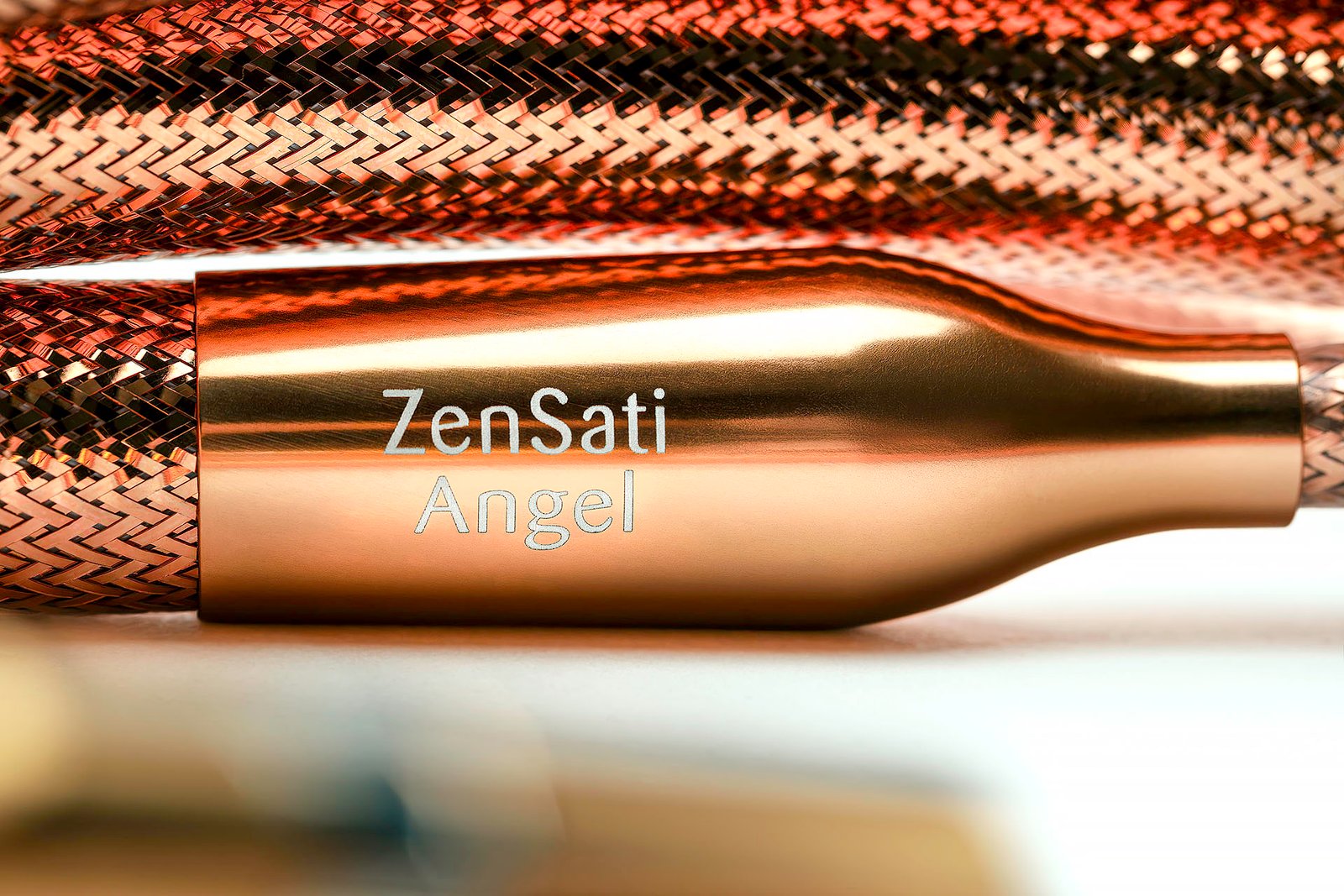
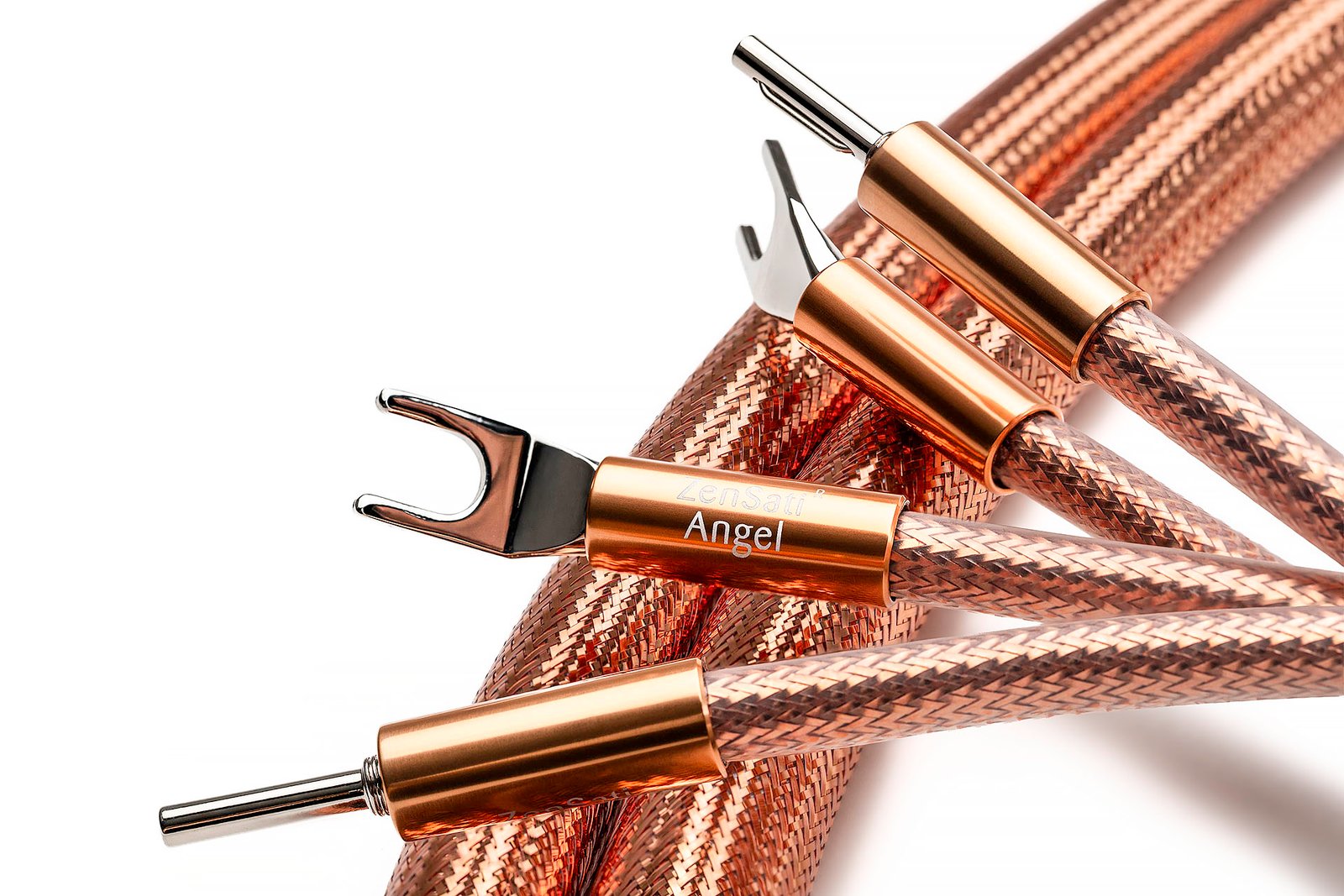
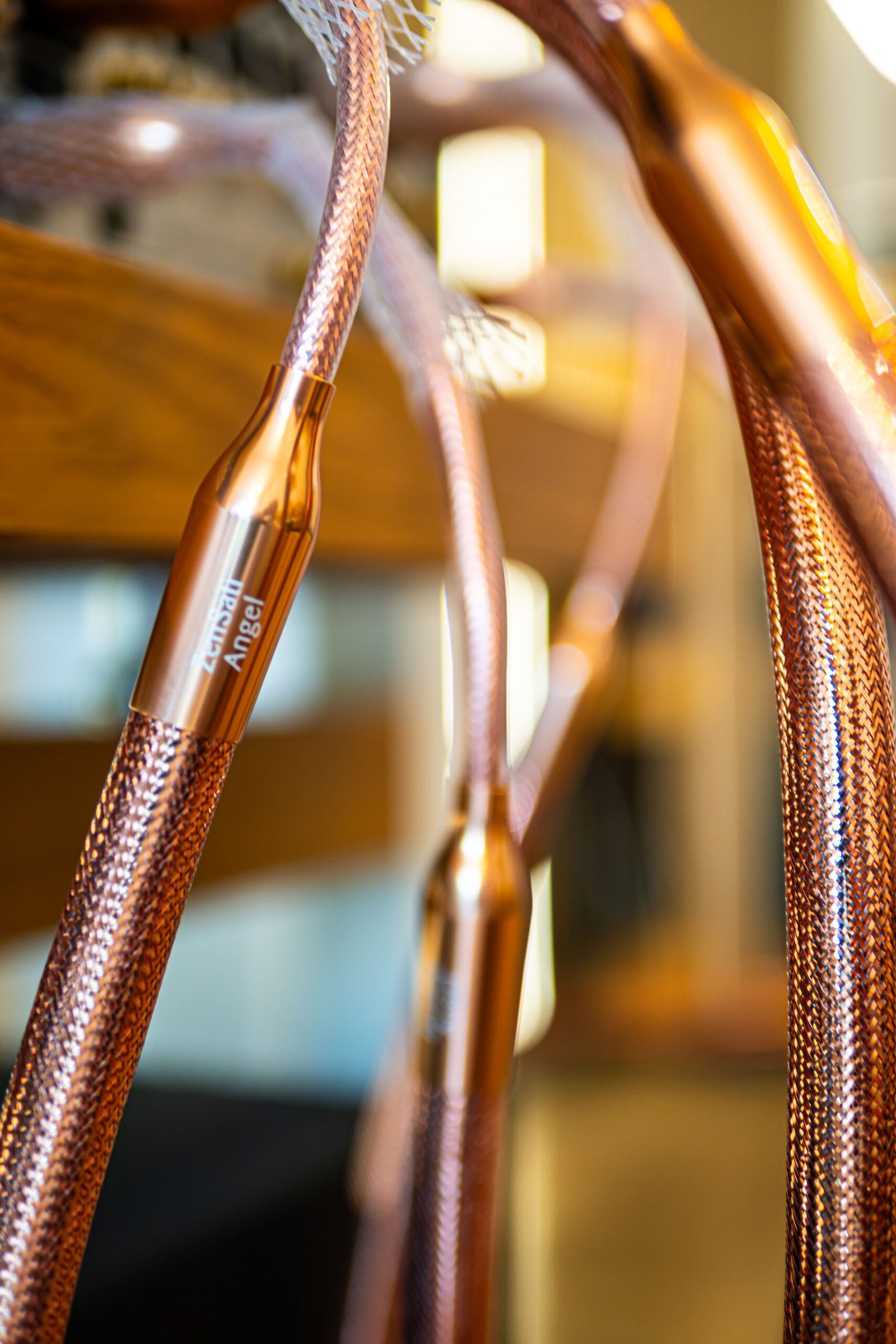
The Angel on screen is copper. In hand, it’s copper at the first light of morning, a warm, rosy metallic sheen that changes with the angle and with the different lamps in the room. In reality it’s a far more beautiful copper than any picture I’ve ever seen (mine included). ZenSati describes the Angel as having “the astonishing full copper look,” and that’s pretty much spot on. The finish is throughout the loom, so it’s all one piece of copper, one family of copper threads. When everything was in place, my rack looked as if it had been dressed up for an evening at the opera.
The finish is flawless. I looked closely, as I always do, for the small sins of handmade products, and found none. Mark told me that a cable “has to look perfect, no failures, just a perfect product,” and the Angel loom keeps that promise in every centimeter. The loom I received was almost new, so I could judge the finish as a customer would see it.
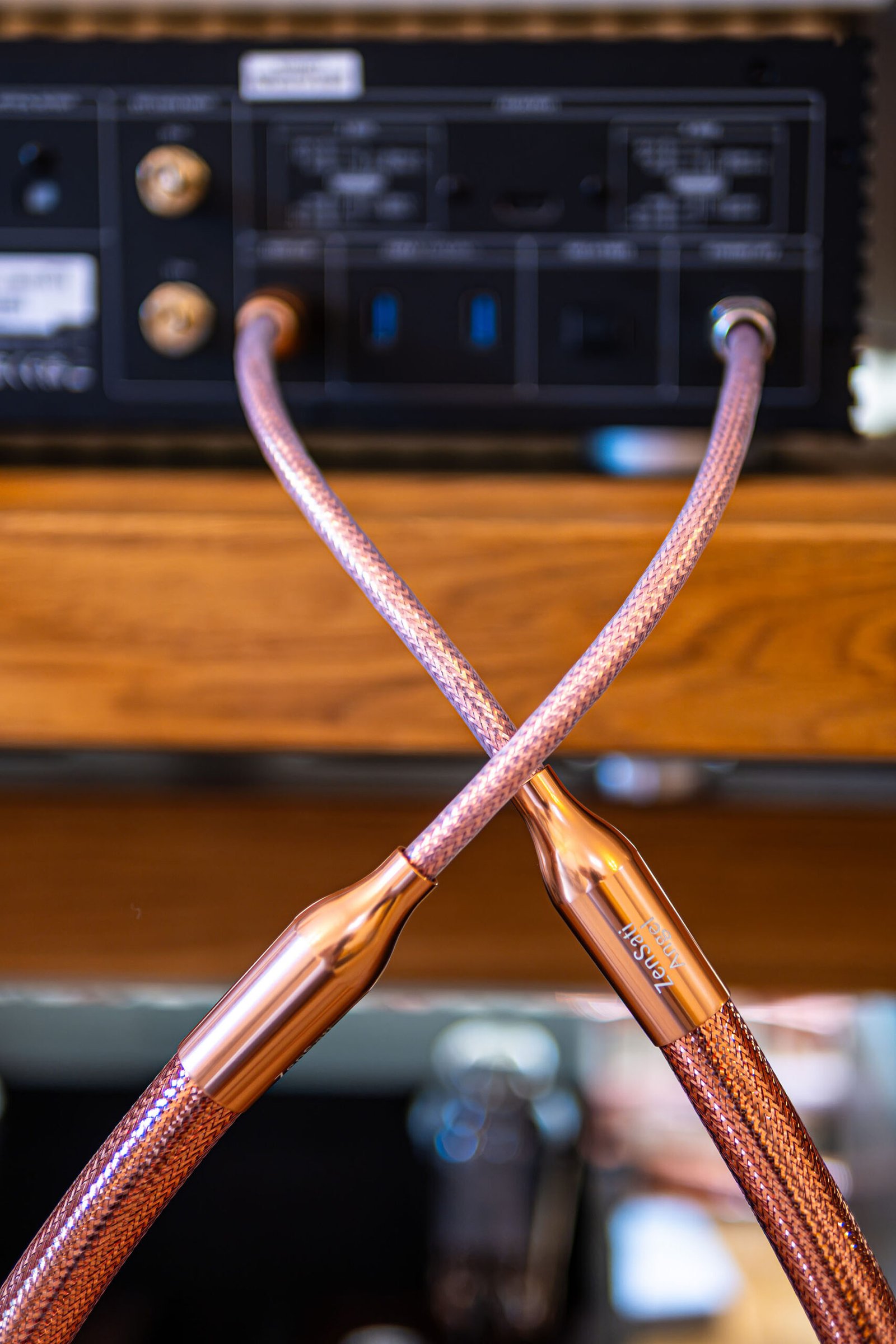
The real surprise came when I started connecting things. The Angel cables are thick, especially the power cords and the speaker cables, and I braced myself for the usual wrestling match with stiff, heavy, opinionated cables that refuse to bend where you need them to. It never came. Despite their diameter, the Angels are supple, easy to route, and not very stiff. They followed the paths I chose behind the WoodYard rack without pulling on the components or lifting the lighter devices off their feet. That matters more than it sounds: a cable that fights you during installation keeps stressing your sockets for as long as it stays in the system.
Inside the Halo — Conductors, Air and Connectors
ZenSati is famously discreet about the exact recipe of its cables, so let me tell you what is known, and what the company and Mark himself have shared.
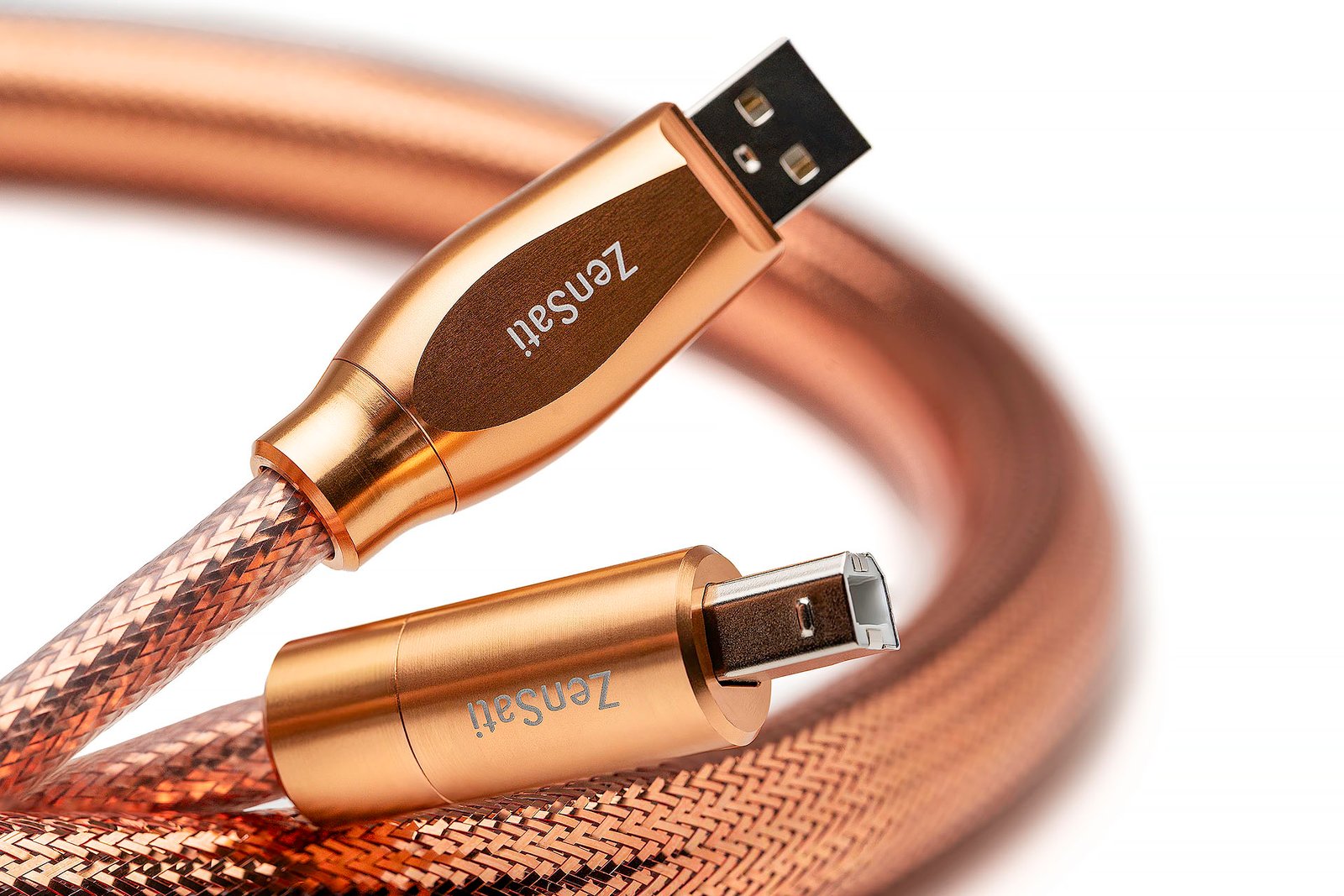
The Angel series is the point in the catalog where Mark begins using his own conductor designs, developed and refined in-house. Below it, the conductors are bought to ZenSati specifications. From the Angel onwards, they are his. The Angel uses a single, balanced, solid-core conductor of pure copper. Designers who favor solid core argue that one continuous piece of metal gives the signal no strand boundaries to cross and no interaction between neighboring strands. It is also far more difficult and expensive to make well than a bundle of thin wires. As ZenSati put it when I checked the details with them, it costs a fortune. It also makes the suppleness I described above even more remarkable. The Cherub keeps the same fundamental geometry and moves to silver-plated copper, and the Seraphim to gold-plated copper. “Same geometry, different materials,” as Mark put it, with a price step of roughly twenty percent between each, reflecting the real cost of the conductors. In his own words, raw copper brings dynamics and energy, gold is a little warmer and smoother, and silver-plated copper sits in the middle. None of them, he insists, is a tuned cable.
Geometry is the heart of the ZenSati approach, with conductor designs protected by a patent and made exclusively to ZenSati’s specifications. And around them there is air. Air is the dielectric of choice across every ZenSati line, with the conductors held loosely inside FEP tubes so that they are surrounded by as much air as possible. Air has a dielectric constant of almost exactly 13, the lowest you can get without a vacuum, while solid insulators such as PTFE sit around 2 and many common plastics higher still. Less solid material around the conductor means lower capacitance, faster signal propagation, and less energy storage and release- the so-called dielectric absorption- that many designers associate with smeared transients. ZenSati deliberately uses ordinary air rather than inert gas, which, as Mark explained, eventually escapes unless the cable is sealed in a metal sleeve.
The rest of the construction is a matter of care and patience. Each ZenSati cable is assembled by hand from more than 100 parts sourced from 25 suppliers around the world, using a proprietary contact technique for the best possible conductance. Shielding and damping are central to the company’s research, to keep external noise out and to stop the conductor itself from vibrating. Most importantly for this review, Mark tunes each series as a system. The power cords, the interconnects and the speaker cables of one line are balanced against one another through the geometry, the conductor dimensions, the capacitance and the distance between conductor and insulation. “If you mix cables from different brands, or even different ZenSati lines,” he told me, “you lose that coherence.”
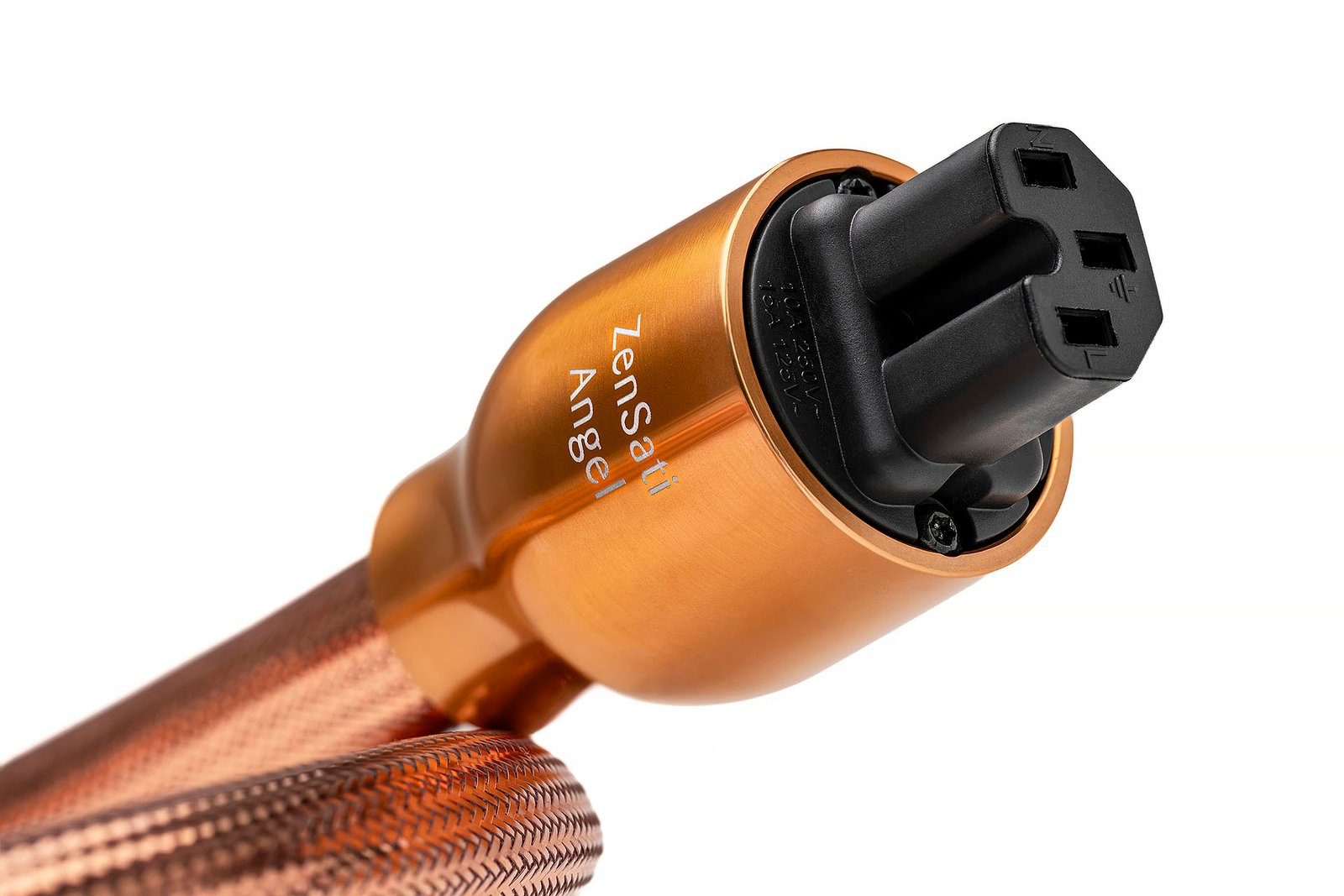
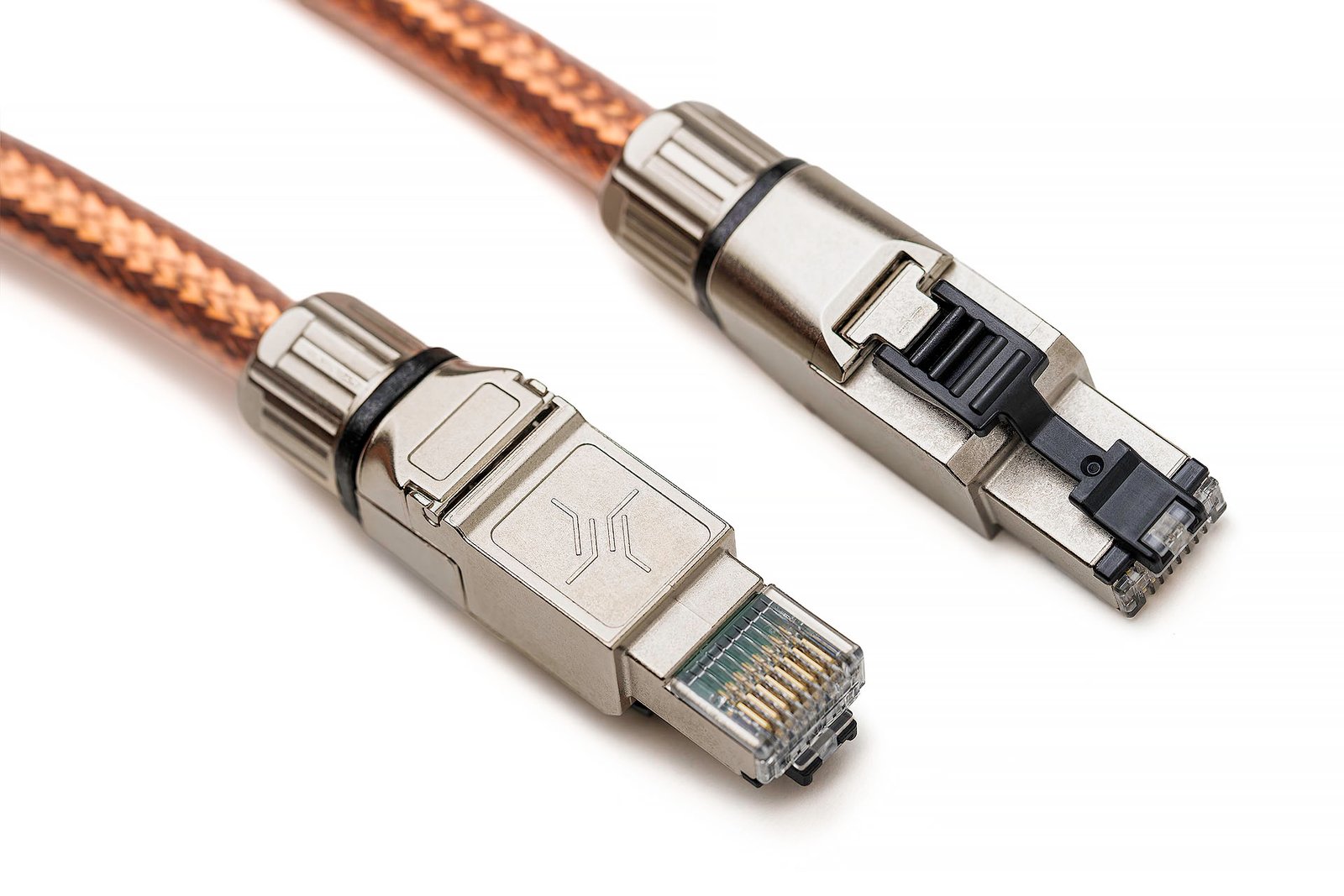
The connectors follow the same uncompromising logic. ZenSati uses only Furutech NCF connectors, housed in its own custom ZenSati shells, which is why you will not find the same plugs on anyone else’s cables. NCF stands for Nano Crystal Formula, Furutech‘s proprietary material. According to Furutech, it combines a special crystalline material that generates negative ions to eliminate static and converts thermal energy into far infrared, with nano-sized ceramic and carbon particles that provide a piezoelectric damping effect4. In plain words, it is designed to calm both the electrical and the mechanical noise at the very point where the signal passes from one metal to another.
All of this serves one goal, which ZenSati describes as letting the electrons work in a perfectly balanced environment. A messenger, after all, should travel light, travel fast, and arrive with the message untouched.
All or Nothing — Why I Changed Every Cable at Once
There is a classic way to review cables, and I have used it many times. You keep the system as it is, replace one cable, listen, put the old one back, listen again, and try to describe the difference. It is clean, it is scientific, and it is how I reviewed the Zorro speaker cable earlier this year.
It is also, I have come to believe, a little like judging an orchestra by listening to the second oboe.
Every time I reviewed a single cable, I came away with the same nagging feeling that something was missing. I could hear what the new cable added, but I could also hear it negotiating with everything around it, power cords from one company, interconnects from another, digital cables from a third, each with its own small opinion about the music. The newcomer’s real character always stayed partly hidden behind the others.
ZenSati is unusually firm on this point. Mark recommends starting with a speaker cable if you must start somewhere, but his real advice is to choose one line and stay within it: “Commit to it. Don’t mix.” The cables of a series are designed to work together, and a full loom, as the company puts it, allows the beauty of the system as a whole to shine through.
So this time I did something I had never done before in a review. I took out every cable in my system and replaced the whole lot with the Angel loom in one afternoon. No transition, no safety net.
A full loom brings coherence. It removes the negotiation between different designs, lifts a veil I didn’t know I had been listening through, and lets you hear the designer’s intention and the system’s real potential. It also reveals the weak links. That is the price of honesty, and I was ready to pay it.
It also means that this review will not tell you that the power cord does this and the interconnect does that. It will speak loudly, and as clearly as I can manage, about the character of the series as a whole, the voice of the Angel.
I lived with the loom for three weeks. The cables arrived almost new and already well played in, so I spent the first days simply listening to music, without notes, before starting the serious sessions.
The Test System
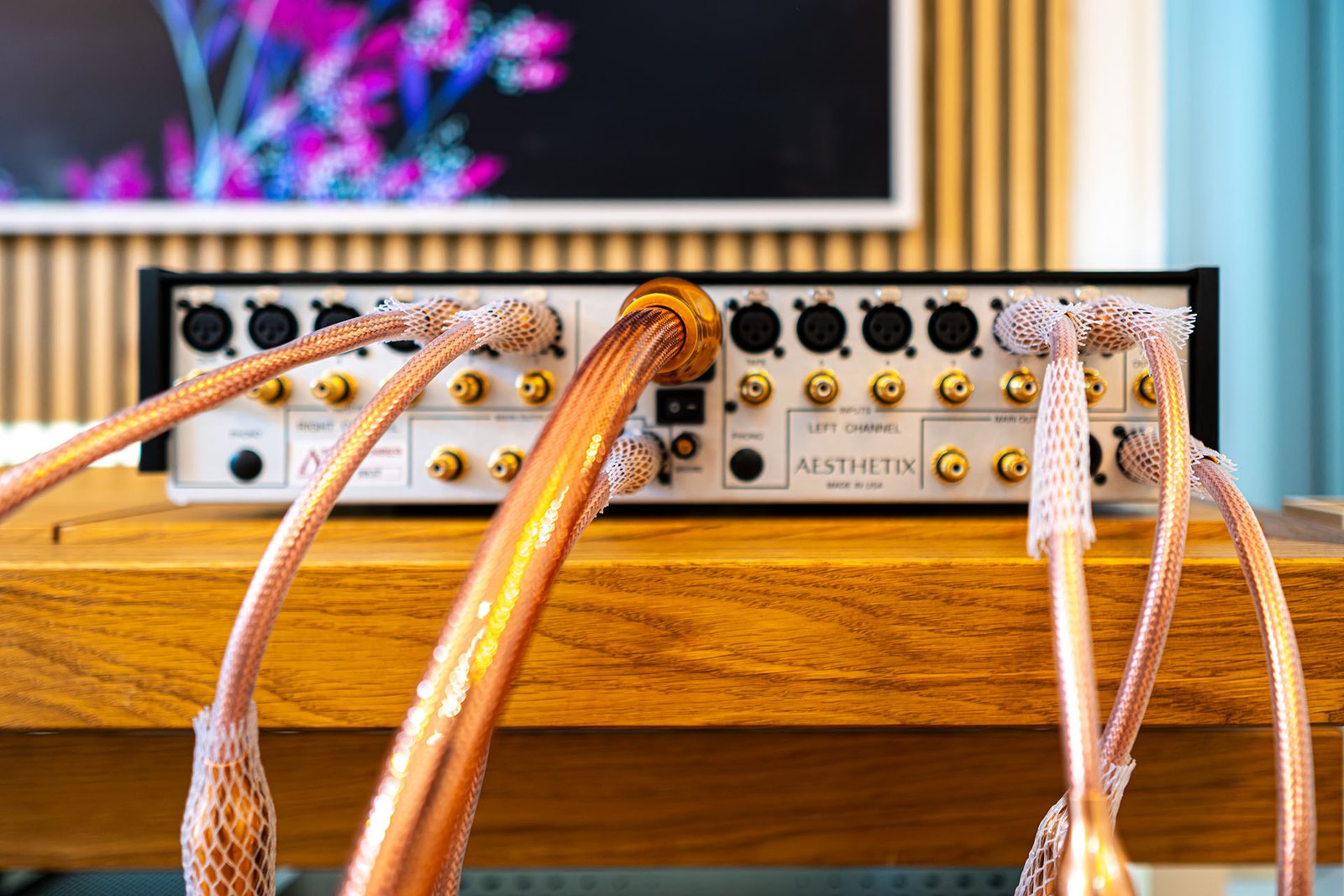
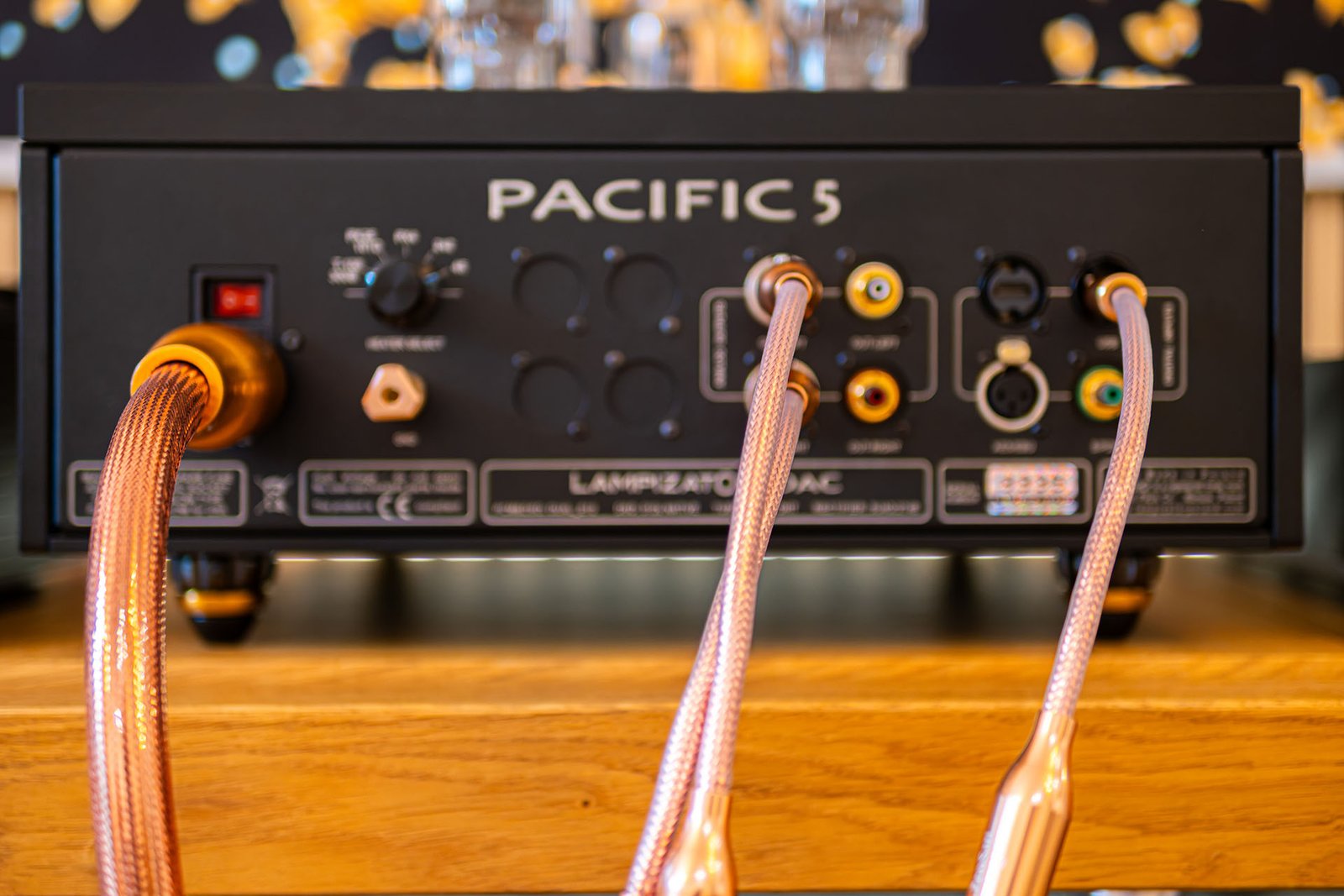
The Angel loom went into my reference system, listed in full at the end of this review: Wilson Audio WATT/Puppy 50th Anniversary Edition loudspeakers, the Aesthetix Eclipse trio (Atlas, Calypso and Rhea), the LampizatOr Pacific 5 DAC fed by a Gustard S26 Roon server and a Rockna Wavelight endpoint, and the Acoustic Signature Montana NEO turntable with the TA-5000 NEO tonearm, all on a WoodYard HiFi rack and powered through Tsakiridis conditioners on two dedicated lines.
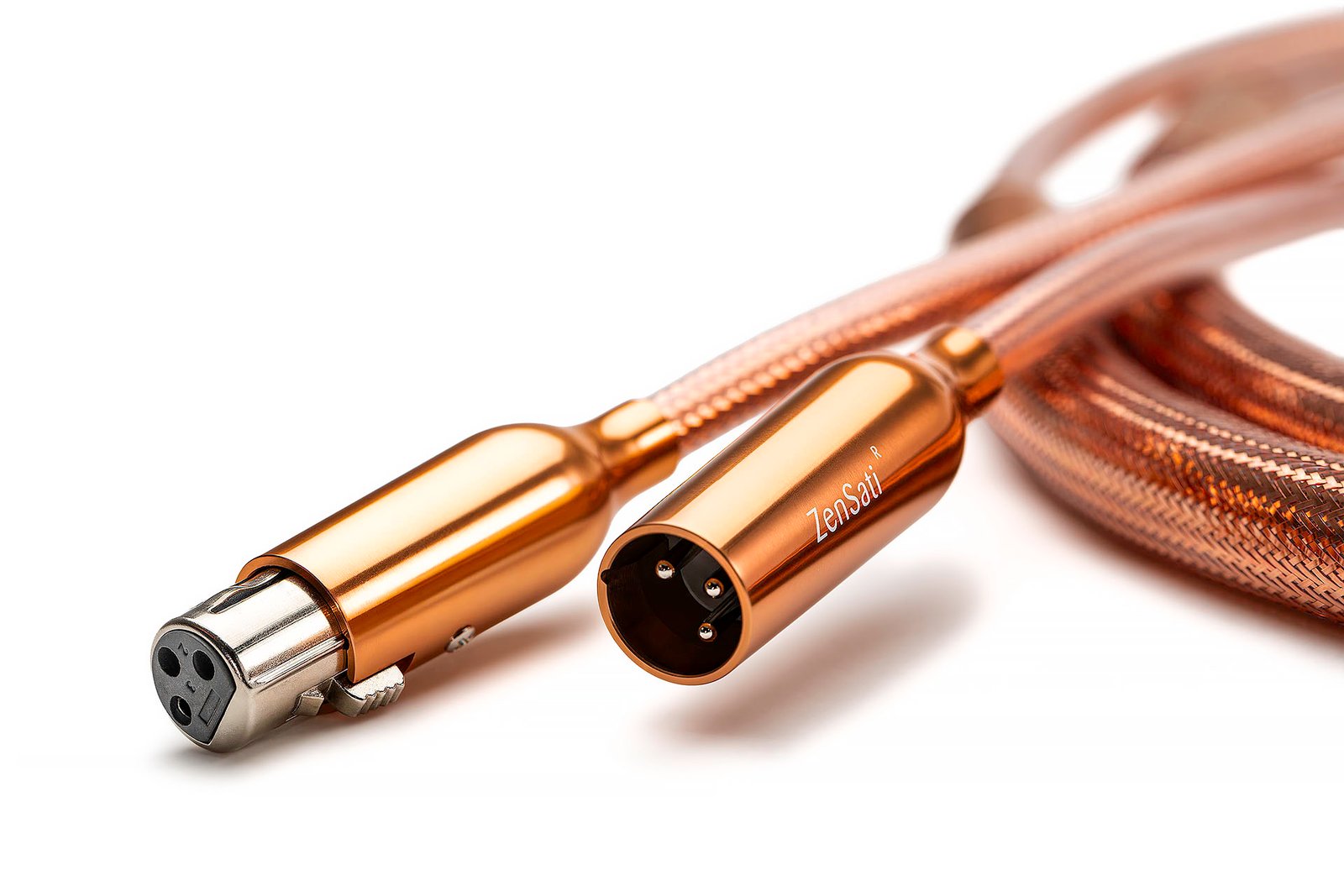
The Angel loom replaced my own reference cables: Albedo Gravity I power cords, Albedo Monolith Reference interconnects and speaker cables, and Pink Faun USB and Ethernet cables. The four Angel power cords fed the Atlas, the Calypso, the Rhea and the Pacific 5. The two pairs of XLR interconnects linked the Pacific 5 to the Calypso and the Calypso to the Atlas, the 1.5-meter USB cable connected the Rockna Wavelight to the Pacific 5, and the 1.5-meter Ethernet cable fed the endpoint. Two links of the analog chain stayed as they were: the Crystal Cable Van Gogh tonearm cable and the long XLR run from the Rhea, which needs three meters to reach the Calypso.
Only the Music
This is the chapter I always fear and always crave. Words are clumsy instruments for what happens in a listening room, but I promised you my honest experience, so here it is.
The Window That Disappears
The very first impression arrived before I had even sat down properly, and it was not subtle. It was clarity.
Imagine living for years behind a window you consider perfectly transparent. Then one morning someone replaces the glass, and only then do you realize that the old one had a faint film, a few years of invisible dust your eyes had politely learned to ignore. The new glass does not change the landscape. It does not add colors or sharpen the outlines of the trees. It simply stops being there. That was my first evening with the Angel loom: a much clearer window that almost disappeared.
The second thing I noticed, right behind the clarity, was tonal balance. I have heard many cables that announce their presence with a gain in clarity, and almost always the clarity comes with a price tag attached: a lift in the presence region, a slightly brighter treble, a leaner bass that makes everything sound more “detailed” for about a week before it starts to tire you. The Angel did none of that. The balance from the lowest bass to the highest treble stayed exactly where it should be, perfectly level, and the clarity came from somewhere else, from removing rather than adding.
And then, as the days passed, a third quality emerged, harder to name and more important than the other two. The loom had a voice. Not a coloration, not a signature in the usual sense, but an intention, a sense of purpose and confidence in the way music was delivered. Everything seemed to point in the same direction. This is the coherence ZenSati talks about, and for the first time I was hearing it rather than reading about it.

On Vinyl — Six Records with Angels Inside
I could not resist the theme. When I pulled records for the analog sessions, I found myself reaching, half by accident and then very deliberately, for music with angels in it. It turns out that classical music is full of them, and they are rarely the greeting card kind.
Messiaen — Quartet for the End of Time (Tashi, RCA Red Seal, 1976)
Olivier Messiaen wrote his Quartet as a prisoner of war and premiered it in January 1941, in the freezing barracks of Stalag VIII-A in Görlitz, for an audience of fellow prisoners. He took his inspiration from the tenth chapter of the Book of Revelation: “I saw another mighty angel come down from heaven, clothed with a cloud: and a rainbow was upon his head.” Two of the eight movements are dedicated to “the Angel who announces the end of Time,” and another is a dance of fury for the seven trumpets of the Apocalypse4.
The Tashi recording, with Peter Serkin, Ida Kavafian, Fred Sherry and Richard Stoltzman, sounded like a new pressing. In the opening “Liturgie de cristal,” Stoltzman’s clarinet blackbird and Kavafian’s violin nightingale floated over the cello’s high, glassy harmonics with a purity that made the cold of that barracks almost tangible. The details were extraordinary, the breath before a clarinet phrase, the piano’s sustained chords dying into the room, yet none of them were pushed at me. They were simply part of the fabric, ingrained in the texture of the sound.
Then came “Danse de la fureur.” All four instruments play in unison, fortissimo, in jagged, irregular rhythms that stop and start like a heart under stress. Here the apparition became the essence. The speed was startling, every attack beginning and ending exactly where it should, with no overhang, no softening of the edges, and the confidence of the presentation was total. The transparency that had been so delicate a few minutes earlier became a blade. I sat very still until the end of the side.
Mahler — Symphony No. 2 “Resurrection” (Klemperer, Philharmonia, EMI, 1962)
The fourth movement of Mahler’s Second, “Urlicht,” is a short song for alto on a folk text from Des Knaben Wunderhorn. The singer tells how she came upon a broad road, and an angel appeared and tried to turn her away. “Ah no,” she sings, “I would not be turned away. I am from God and will return to God.”
Hilde Rössel-Majdan’s voice on the Klemperer recording is dark, still and devout, and the Angel loom rendered it with a sweetness I did not expect from a cable that had just impressed me with its clarity. It was not the sweetness of added warmth or of a softened treble. The voice stayed perfectly clear, every consonant in place, every breath audible, and yet it had a tenderness and a bloom that made the words feel like a private confession. Sweetness, in other words, that did not compromise clarity or neutrality. The brass chorale that opens the song had real weight and a burnished glow.
And then the finale did what Mahler’s finales do, and the Angel loom followed without flinching. The offstage brass came from genuinely far away, the hushed entry of the chorus emerged from complete silence with the hair-raising softness Mahler asks for, and the final climax with organ and full orchestra filled the room with a scale that my system rarely reaches. The bass went lower and stayed tighter than I am used to. The upper strings and the sopranos at full force kept their sheen without hardening. For the first time, I felt I was hearing what the WATT/Puppy and the Aesthetix trio can really do when nothing stands in their way.
Elgar — The Dream of Gerontius (Barbirolli, Hallé, EMI, 1965)
In Elgar’s setting of Cardinal Newman’s poem, a dying man’s soul is guided through death to judgment by an angel, sung by a mezzo-soprano. Janet Baker’s Angel on the Barbirolli recording is one of the great vocal performances on record, and there is a small piece of record-collecting trivia I cannot resist: in America this recording first appeared on Angel Records, the EMI label whose logo, an angel writing in the grooves of a disc, echoes the “Recording Angel,” the very first trademark of the Gramophone Company in 1898, eleven years before the dog Nipper took over.
Baker’s first entry in Part Two, “My work is done, my task is o’er,” is a test of everything a system does with the human voice, and the Angel loom passed it with grace. Her mezzo had body, color and an unforced, glowing upper register, and the textures were impeccable: the grain of the voice, the slight change of color as she leans into a phrase, the warmth of the Hallé strings beneath her. The soundstage was wide and deep, with the choirs layered behind the orchestra in rows I could almost count. When the Angel’s Farewell, “Softly and gently, dearly-ransomed soul,” finally arrived, it was one of those moments when you forget that you are supposed to be listening critically. Everything was complete. Nothing was missing. True harmonic integrity, with no restraints.
Holst — The Planets (Mehta, Los Angeles Philharmonic, Decca, 1971)
If one record could stand for the theme of this review, it might be this one. It begins with “Mars, the Bringer of War,” a relentless march in five beats to the bar, with col legno strings, hammering timpani and brass that grows until it threatens to tear the hall apart. It ends with “Neptune, the Mystic,” where a hidden choir of women’s voices sings without words and slowly fades into nothing. The thunder and the harps, on the same record.
Mars was a revelation of speed and authority. The timpani and low brass had a weight and extension I associate with much larger systems, and the climaxes built with unstoppable momentum, every instrument holding its place even at the loudest moments. Powerful, but never aggressive.
Neptune showed the other face of the same messenger. The celesta and harps shimmered, the strings were soft as mist, and the wordless choir, placed far behind the orchestra, faded with a smoothness that never once cut off the upper register. I could follow the last notes of the voices further into the silence than ever before, until I was no longer sure whether I was still hearing them or simply remembering them. Smoothness that did not alter the extension. The apparition and the essence, side by side on the same LP.
Fauré — Requiem (Corboz, Bern Symphony Orchestra, Erato, 1972)
Fauré’s Requiem ends with “In Paradisum,” a prayer that the angels lead the soul into paradise. It is the gentlest angel music ever written, and Michel Corboz’s 1972 Erato recording, with the boy soprano Alain Clément in the “Pie Jesu” and Philippe Corboz at the organ, has been a favorite of mine for years.
This is where the Angel loom’s smoothness and upper-register extension showed their finest side. Clément’s treble voice in the “Pie Jesu” was pure and unforced and painfully innocent, with not a trace of edge or sibilance. In “In Paradisum,” the rippling organ figures and the sopranos floating above them created an atmosphere of complete serenity, yet I could hear the organ’s pipes speaking, the space of the church, the softest pedal notes underneath. Vivid images, impeccable textures, and a sense that the music was breathing on its own.
Handel — Messiah (Colin Davis, London Symphony Orchestra, Philips, 1966)
I ended the vinyl sessions with the most famous angels in music. In Part One of Messiah, a soprano tells the story of the shepherds, and the recitative climbs to “And suddenly there was with the angel a multitude of the heavenly host, praising God.” The heavenly host, remember, is an army, and Handel’s chorus “Glory to God” bursts in like one. Handel even marked his trumpets to play “da lontano e un poco piano,” from a distance and rather softly, so that they seem to arrive from the sky5.
Colin Davis’s 1966 recording, with its lean forces and brisk, dancing tempos, was a radical choice in its day, and the Angel’s performance celebrated its energy. Heather Harper’s recitatives were clear and immediate, and the entry of the chorus was spectacular. The trumpets really did seem to come from further back, behind the voices, and the rhythmic snap of the choir and strings had the speed and confidence that had become, by then, the signature of the whole loom. Clarity, power, and joy, all at once. Glory to God, indeed.

On Digital — A Viola, Two Trumpets, a Slide Guitar and a Box of Synthesizers
On the digital side, I listened widely across classical music, jazz, blues and soul, often late into the night. A few albums deserve a closer look.
Antoine Tamestit — Bel Canto: The Voice of the Viola (Harmonia Mundi, 2017)
Antoine Tamestit and the pianist Cédric Tiberghien built this album around a beautiful idea: that the viola, the most human-sounding of the strings, can sing like the great bel canto voices of the nineteenth century. Vieuxtemps’s Sonata, Op. 36 sits beside arias by Bellini and Donizetti, transcribed for viola and piano, and Tamestit plays them on the 1672 “Mahler” Stradivarius.
The Angel loom gave this viola exactly what the album promises: a voice. The low register had the dark, woody resonance that separates a great viola from a large violin, and the upper register sang without ever turning thin or nasal. I could hear the bow changing pressure, the rosin catching the string at the start of a phrase, the subtle variations of vibrato in the long lines of “Casta diva.” Tiberghien’s piano was round and full, each note decaying naturally into the hall. Detail, sweetness and neutrality held in perfect balance.
Chet Baker — Late Night Jazz (Elemental Music, 2024)
Chet Baker recorded these sessions in Paris in February 1988, three months before his death in Amsterdam. For decades, they existed only on a Norwegian release before reappearing in 2024. Baker’s voice and trumpet here are fragile, intimate and unbearably human, the sound of a man with very little left except the music. If the Messiaen was the warrior angel, this is the guardian angel, the one who simply stays with you through the night.
On “Skylark,” the Angel loom placed Baker’s trumpet in front of me with a startling realism: the soft attack of each note, the air around the horn, the tiny imperfections of pitch that make his playing so moving. When he sings “How High the Moon,” the voice is thin and close, and Angel lets every crack and breath be heard without ever making it clinical. The bass was round and articulate. It was not easy listening, emotionally. It was true listening.
Miles Davis — My Funny Valentine (Columbia, 1965)
Recorded live at Philharmonic Hall in New York’s Lincoln Center in February 1964, at a benefit concert, My Funny Valentine captures Miles with George Coleman, Herbie Hancock, Ron Carter and an eighteen-year-old Tony Williams, in a set of ballads that keep threatening to explode.
The speed of the Angel loom made this record dangerous again. Williams’s brushes and cymbals had a shimmer and a decay I had never heard so clearly, and when the band doubles the tempo and surges forward, the dynamic swings were immediate and physical. Hancock’s piano voicings bloomed with rich harmonic detail, Carter’s bass walked with real weight and pitch definition, and Miles’s trumpet moved from a whisper to a cry with no compression of the dynamic range. The audience, the hall and the stage were all there, each with its own space. Completeness, again.
Chris Rea — The Blue Jukebox (Jazzee Blue, 2004)
The Blue Jukebox, with its cover borrowed from the spirit of Edward Hopper’s Nighthawks, is Chris Rea at his most nocturnal: smoky blues and jazz, his gravelly voice, slide guitar, Sylvin Marc’s double bass and Eric Seva’s saxophone weaving around the songs.
On “Long Is the Time, Hard Is the Road” and “Steel River Blues,” the Angel loom delivered that extra dimension. Rea’s voice had grit and texture without roughness, the bottleneck slides had a metallic bite and a singing sustain, and the saxophone breathed in its own space at the side of the stage. Above all, the double bass was a joy, deep, tuneful and articulate, every note with a clear beginning, body and end. The extension in the low register let the bass carry the songs the way it should, and the whole record felt more alive, more like a band in a room late at night.
Boards of Canada — Music Has the Right to Children (Warp, 1998)
No audiophile test list includes this album, and that is exactly why I use it. The Scottish duo’s debut is made of detuned analog synthesizers, warped tape, children’s voices, and drum loops buried under layers of haze. There is no “natural” sound to compare against. There is only the question of whether the system can untangle the layers without destroying the atmosphere.
The Angel loom did both. On “Roygbiv” and “Turquoise Hexagon Sun,” the bass lines went deep and stayed tight, the beats hit with surprising speed, and the countless layers of synthesizer and noise separated into a deep, three-dimensional space without losing the dreamlike glue that holds the album together. On “Aquarius,” every voice sample and every warble of the tape had its own place. The clarity did not dissect the music. It revealed how carefully it was built.
What the Angel Brought
When I read back three weeks of notes, from Messiaen to Boards of Canada, the same qualities return again and again: clarity and perfect tonal balance, coherence and a voice with purpose, natural details woven into the texture, extension at both ends, speed and confidence, sweetness without loss of clarity, smoothness without loss of extension, and above all completeness and true harmonic integrity.
Read that list again, slowly, and notice how many of its pairs usually pull in opposite directions. Clarity and sweetness. Speed and smoothness. Detail and calm. Most cables, like most people, have to choose. The Angel loom refuses to.
The Honest Ceiling — The Angel Reveals Everything
Do you remember the loudspeaker manufacturer in Berlin who sent back his Zorro loom because he could suddenly hear every flaw in his own speakers? And the concert pianist frightened by the level of detail? This is where those stories come back.
The Angel loom does not flatter. It will not round off a harsh recording, thicken a thin one or add bass that is not there. A congested, overcompressed album sounds exactly as it is. The same goes for the system. If one of your components has a weakness, the Angel will find it and show it to you, politely but firmly. ZenSati says this openly: a high-quality system fitted with a full loom will shine, but a modest system will not benefit in the same way, because the cables only reveal the system’s own standard.
This is not a flaw. It is the job description. A messenger that changes nothing also hides nothing. The Angel loom belongs in a system that is already balanced and well set up.
Market Value
Let us speak plainly about money, as we always do here.
ZenSati does not publish a global price list, and prices vary from country to country with VAT and distribution. In Romania, the Angel series is distributed by HiFi Expert (hifiexpert.ro). These are the current Romanian retail prices, VAT included, converted to euros:
- Power cord, 1.5 m: €5,710
- XLR interconnect, 1.5 m: €5,360
- Speaker cables, 2.5 m: €14,720
- USB cable, 1.5 m: €4,420
Other lengths and the Angel Ethernet cable are priced on request. The loom in my system used longer power cords, interconnects, and speaker cables, so even at the lengths listed above it comes to more than €52,000, before counting the Ethernet cable and the extra meters. HiFi Expert will gladly quote exact prices for any configuration and, more importantly, arrange an audition in your own system.
ZenSati sits firmly in the ultra-high-end segment of the cable market: a boutique Danish manufacturer, with every cable assembled by hand in its own facility, bespoke connector shells, in-house conductor designs and a catalog that climbs all the way to the anniversary #X. Within that catalog, the Angel occupies the very heart of the range. It is the fourth of nine series, the first of the three angelic lines, and the point where Mark Johansen’s own conductor designs begin. Above it stand the Cherub and the Seraphim, and beyond them #1, sILENzIO and #X. In other words, the Angel is the ninth choir of ZenSati’s heaven: the first rank of the angels, and the one that comes down to Earth.
Conclusion — The Apparition and the Essence
I began this review by asking you to close your eyes and imagine an angel. I would like to end it in the same place, because after three weeks with the Angel loom, I know which angel I met.
On the surface, the Angel is all apparition. The rosy copper glow, the flawless finish, the supple cables that slide into place without a fight, and a sound that, on first contact, seems gentle: sweet, smooth, refined, utterly unforced. After half an hour with a solo viola or a boy soprano, you could easily mistake it for the greeting card angel.
Then Messiaen’s seven trumpets arrive, or Holst’s Mars, or the final chorus of Mahler’s Resurrection, and the apparition turns into the essence in an instant. The elegance becomes authority. The transparency becomes a blade. The sweetness was never softness, and the smoothness was never a veil. Like the voice John heard in Revelation, it is the sound of many waters and of a great thunder, and in the same breath the sound of harpers harping with their harps.
Rilke was right: every angel is terrifying, not because it is cruel, but because it is complete. That is the word I kept writing in my notes. Complete. Nothing missing, nothing added, nothing held back. A messenger that delivers the message as it was given, fast and faithfully, and then gets out of the way. It does not edit the music. It does not decorate it. It simply lets the system, and the recording, be what they truly are. Sometimes that is breathtaking, sometimes a little uncomfortable, as the gentleman from Berlin discovered. It is always the truth.
Mark Johansen told me that when God sends an angel, it does the job with love and speed, and returns fast. Mine will return to HiFi Expert soon, and I suspect the house will feel a little quieter, and my window a little less clear, when it does. That is the price of meeting an angel. You never quite see the world the same way again.
The apparition should never be mistaken for the essence. With the ZenSati Angel, the apparition is beautiful. The essence is even more so.
Thank You — HiFi Expert and ZenSati
Experiences like this one are only possible thanks to people generous enough to share them. My warmest thanks go to the team at HiFi Expert (hifiexpert.ro), and to Mark Johansen and everyone at ZenSati (zensati.com), for trusting me with a complete loom of the Angel series, the first step into ZenSati’s upper tier, for three unforgettable weeks. Their passion for music and their patience with a reviewer who wanted everything at once go far beyond commercial courtesy. If you are curious, ask HiFi Expert for an audition. Bring your favorite records. Bring the ones you think you know by heart. And prepare to meet them again.
The ZenSati Angel loom was loaned by HiFi Expert for the duration of this review.
Highly Impressive Product Award
There are moments in this pursuit when hesitation would simply be dishonest. This is one of them.
Based on everything documented in the pages above, the clearer window that almost disappears, the perfect tonal balance, the coherence and clear intention of a single unified voice, the details ingrained in the texture of the sound rather than pushed forward, the extension at both ends of the spectrum, the speed and confidence, the sweetness that never compromises clarity, the smoothness that never shortens the upper register, and above all that rare sense of completeness and harmonic integrity, I am delighted to award the ZenSati Angel full loom the SoundNews Highly Impressive Product Award.
An angel, after all, is a messenger. Mark Johansen and his team in Denmark have built one that delivers the music exactly as it was sent, with love, with speed, and with the quiet power of something that never needed to raise its voice to be heard.

Associated Equipment
- Loudspeakers: Wilson Audio The WATT/Puppy 50th Anniversary Edition
- Power amplifier: Aesthetix Atlas Eclipse
- Line preamplifier: Aesthetix Calypso Eclipse
- Phono preamplifier: Aesthetix Rhea Eclipse
- DAC: LampizatOr Pacific 5 (E12x2 engine, 4 × KR Audio 300B, KR Audio 5U4G, 2 × Philips Miniwatt E182/7119 CV5766)
- Roon server: Gustard S26
- Roon endpoint: Rockna Wavelight
- Network: Roboli S80L-2 switch, LHY Audio AS6 Pro optical converter
- Turntable: Acoustic Signature Montana NEO
- Tonearm: Acoustic Signature TA-5000 NEO (12″)
- Cartridges: Hana Umami Red, AIDAS Tru Stone Violet Gold
- Cables under review: ZenSati Angel full loom (4 power cords 2 m, 2 pairs of XLR interconnects 2 m, speaker cables 3 m, USB 1.5 m, Ethernet 1.5 m)
- Reference cables: Albedo Gravity I power cords, Pure Line Audio Cryocore Silver power cords, Albedo Monolith Reference MKII interconnects, Albedo Monolith Reference MKIII speaker cables, Crystal Cable Van Gogh tonearm cable, Pink Faun USB and Ethernet
- Power conditioners: Tsakiridis Super Athena and Tsakiridis Athena, with rhodium-plated Furutech FI-E30 sockets
- Mains: two dedicated lines, solid-core 4 mm² copper, rhodium-plated Furutech NCF wall sockets, HiFi Tuning Diamond Supreme3 fuses
- Rack: WoodYard HiFi, custom-built
- Accessories: Arya Audio Labs RevOpods, Graphite Audio ISSB-40 spike bases, Graphite Audio IC-35 Premium cones, Authentic Audio Image Pads Mini+
- Acoustic treatment: wooden slat panels with absorber, Vicoustic Echo Frame Geo and Echo Frame Stripes panels
Until next time, I wish you to hear only the best!
- Revelation 10:1 KJV: And I saw another mighty angel come…. https://www.pray.com/bible/kjv/revelation-10-1/ ↩︎
- (2015). The birth of Jesus. The Hutchinson News, (), n/a. ↩︎
- Schmidt, P. (2010). Evaluation of capacitance moisture sensors for use in municipal solid waste. https://core.ac.uk/download/226122781.pdf ↩︎
- Furutech FI-09NCFR IEC inlet in KBL Sound Extrema | Best of High End. https://bestofhighend.com/kbl-sound-extrema-power-terminal/ ↩︎
- Strangways, A. H. F. (1938). The Criticism of Music. Proceedings of the Musical Association. https://doi.org/10.1093/jrma/65.1.1 ↩︎
- (2015). The birth of Jesus. The Hutchinson News, n/a. ↩︎