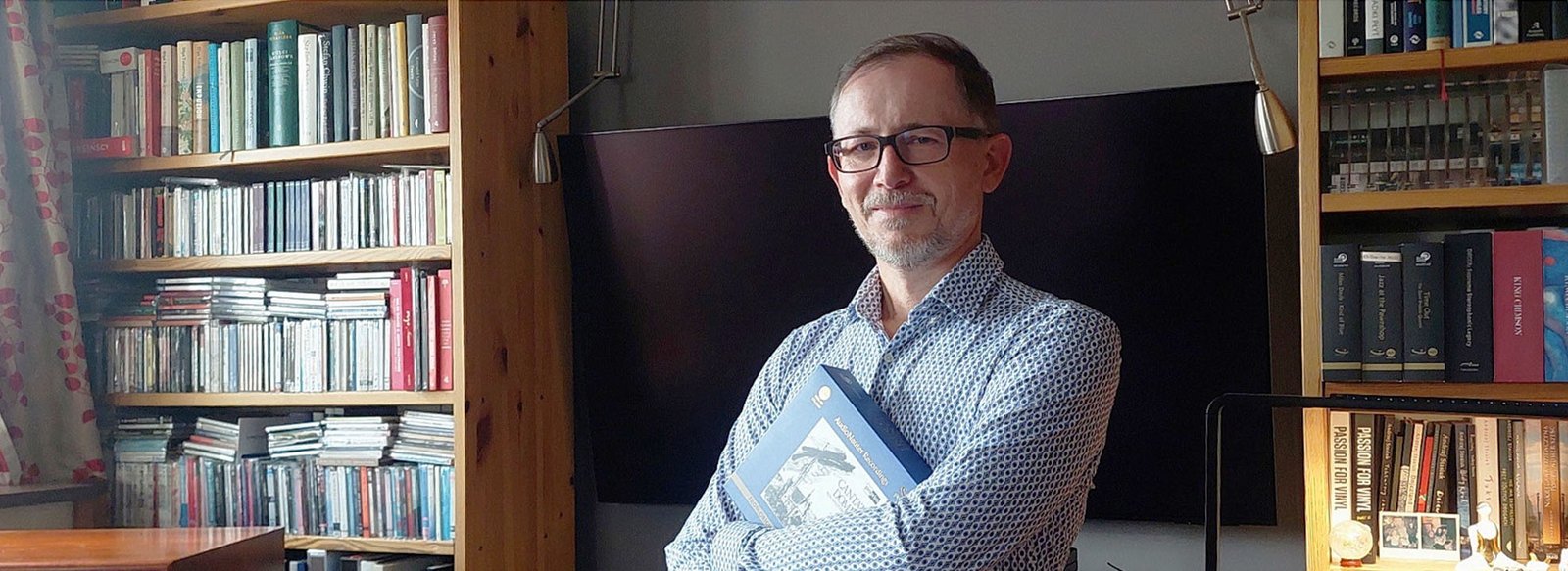
Exchange interview, conducted in writing · Catalin Cristescu, SoundNews
Introduction
Every translation, Wojciech Pacuła believes, is a new text. It can be faithful, or it can be beautiful, but not both at once, and its author is no longer only the person who wrote the original, but also the one who carried it across. So I should confess at the start that what you are about to read is, by its own definition, a text with two authors. Wojciech answered my questions in Polish. The English, for better or worse, is mine.
We met in Vienna in June, and I felt we clicked before either of us had said anything about equipment. That is worth saying out loud, because this interview is an experiment: two editors from two countries interviewing each other in their own magazines, on the theory that our readers deserve to know there is a world beyond their own language. My answers to his questions appeared in High Fidelity in October, as THE EDITORS No. 38. These are his answers to mine.
Wojciech has been publishing High Fidelity on the first day of every month since 1 May 2004, in Polish and in English, which means he has been doing this considerably longer than most of the equipment he reviews has existed. He studied literary theory, earned a PhD in the field, worked in the theater as a soundman, and in late 2004 founded the Krakow Sonic Society (KSS), a circle of music lovers who have now met in each other’s homes more than 150 times. All of it shows in the way he writes: editorials that begin with doughnuts, referendums, bunnies and record shops, and arrive, somehow, at the very heart of audio.
We talked about why the outside world is the only way into an audio story, why a fixed rhythm still matters on the internet, why there is no such thing as a neutral component, why the Compact Disc is a shark, why the audiophile was never really a loner, and why a small record shop in Krakow mattered more than it should have.
My warm thanks to Wojciech for his time, for answers far more generous than my questions deserved, and for agreeing to this small experiment in crossing borders.
The Interview
1 · Doughnuts on Stradom Street
SoundNews: I want to start with doughnuts. In your R.E.D. editorial you tell us exactly where you were standing when Russia invaded Ukraine: on Stradom Street, in the queue for pączki, when your wife called. And then, three paragraphs later, you are discussing whether audio progress is linear. Your April editorial does something similar. It begins with a Krakow referendum and an eviction on Bożego Ciała Street and arrives at the three stages of a loudspeaker company. Most audio editors treat the outside world as an intrusion. You seem to treat it as the only way in. Is that a conscious method, or simply the way your mind works? And do readers ever write to tell you they came for the amplifier and would rather not hear about the mayor?
Wojciech Pacuła: It’s true that in my columns, and an editorial is really a column, I usually start from something that has nothing to do with audio. It’s a way of catching the reader’s attention. I didn’t invent it. There is more than a century of essay writing behind it, in English as well as in Polish. But it also suits me, because I tend to think about audio not in isolation from what is happening around us, but as part of, if I may sound a little grand, life itself. Nothing happens on its own. Everything has its references in other fields.
Besides catching the reader’s interest, the method is also meant to pull them away from a narrow view of the world. I’m not interested in audio as a kind of “fortress”, a glass palace that no one and nothing from the outside can enter. That makes no sense. We don’t live on a desert island, and audio is nothing special. It is simply one of the things people do. A wonderful, marvelous activity, an adventure for life, but only a part of life, and by no means the most important part. That would be family, friends, your place on earth, faith, if you are a believer, personal growth, safety and so on.
Beyond the purpose behind it, though, there is also something in me that needs to meander like this. A narrow view of what I do bores me. In fact, it is not only boring, it is unproductive. I feel better working with my visor wide open than with a narrow strip of the world projected in front of my eyes. Interestingly, it doesn’t make me lose focus. Quite the opposite: it helps me understand better what I am actually talking about. And what I am talking about, in the end, is audio, music and the emotions that come with them.
Exactly, emotions. That’s what this is all about, isn’t it? At least that’s how I see it. For the musicians and the studio, it’s about capturing the emotions of the music being performed. For us, on the reproduction side, it’s about rendering them in a way that lets us try to understand what the people on the other side of the glass wanted to achieve, and perhaps even something more. It’s no secret, and theories from many fields of art say as much, that a work also contains things its creators had no idea of and never expected, things that simply “flowed” through them.
To come back to the beginning: this method of “deconcentration” is deliberate, and partly learned, but it is also simply how I work and how I think. And perhaps, over the years of High Fidelity, I have managed to pass some of that approach on to our readers. I have never received an email expressing outrage, or even mild discomfort 🙂 A group of people has even grown up alongside me for whom this way of thinking about audio is the natural one. Last year, after one of my presentations, a reader came up to me and said, half joking and half serious, that when it comes to reading about audio, he is “from the Wojtek Pacuła generation”. That was nice to hear.
2 · The first of every month
SoundNews: The internet’s great promise to publishers was liberation from the deadline. Publish when you like, as often as you like, at whatever length. You looked at that freedom and responded by imposing a monthly magazine on yourself, on the first of the month, and then kept it up for twenty-two years, some two hundred and seventy issues, in two languages. Why the discipline? What does the first-of-the-month structure give you and your readers that publishing continuously would not? And, honestly, in twenty-two years, how close have you come to missing one?
Wojciech Pacuła: I’m asked this from time to time, and I notice that my answers change a little over the years, depending on what I think about the state of the internet at that moment. One thing doesn’t change: I am a child of print. I can’t help it, and I don’t even want to, but print is a value in itself for me. Picking up a printed magazine is an intellectual experience as well as a haptic, physical one.
The body is not separate from the mind. We depend so strongly on how the body and the intellect work together that it makes no sense to talk about them as separate elements. Juan Luis Arsuaga, the author of Ciało (Our Body: Seven Million Years of Evolution), goes as far as saying that the body “grew” itself a mind, so that the mind could manage it better. A bold statement, but reading the book lets you see yourself from a different angle. That is why physicality matters so much to me. I buy a lot of books, so many of them are Kindle purchases. But everything that matters, I later buy on paper. It’s the same with music: I stream like mad, but everything that truly moves me, I own on CD, or occasionally on LP.
So when I was thinking, at the turn of 2003 and 2004, about what my own magazine might look like, I knew straight away that it should follow the rhythm of printed magazines. It was an expression of my longing for print, even if in the space of the internet. At the time I didn’t know, and I don’t think many people suspected, that the move from the physical medium to the screen would have such far-reaching consequences.
Today we know that when we read a text on a screen, we absorb only a small part of what we absorb when we read the same text in print. It’s the same with writing. Handwriting created unique neural pathways in the brain that expanded our cognitive abilities. Typing on a keyboard doesn’t do that. Which, by the way, is further proof that the brain and the body are inseparable.
On the other hand, the internet is the reality we live in. It made possible many online magazines that could never have existed in print, because the economics would not have allowed it. An online magazine costs a fraction of what you need to run a printed one.
Publishing on a strict schedule narrows that gap to some extent, as I see it. It disciplines me, and it ties readers to a rhythm. And rhythm is badly needed on the internet. In the flood of garbage, in the “enshittification” of the internet, to borrow the term that the Canadian writer, journalist and technology activist Cory Doctorow brought into public debate, a fixed publishing schedule is extremely valuable. It also builds trust between readers and us, the journalists. And, I should add, I have never been late with an issue, and never even come close 🙂
3 · Neither is good, both are bad
SoundNews: In R.E.D. you reproduce that famous Stereophile cover from 1994, with the Cary CAD-805 and the Krell KSA-300S and the line “if one of these amplifiers is good… the other must be bad.” Thirty-two years later, you give the answer nobody wanted at the time: neither is good, both are bad, because neither reproduces the signal faithfully and each distorts in its own way. That is a wonderfully unhelpful answer, and I mean that as praise. So let me push it: if every component is simply a particular set of distortions, on what grounds do you award anything? And what is today’s version of that 1994 cover, the false either-or that our industry is currently arguing about while missing the point?
Wojciech Pacuła: Ha, sorry for not offering a helping hand… My job as a journalist is, on the one hand, to describe reality and, on the other, to try to organize it in a way that seems right to me. My studies in the department of literary theory cured me of any illusions about the “objectivity” of the writer. There is no such thing. Perhaps there shouldn’t even be. It smells of ideology to me, and ideology is always suspicious when it is “total” and non-negotiable. The one thing we can do as journalists is to approach a subject honestly and with empathy.
That is why I believe there is no room for objectivity in audio either. A “neutral” component does not exist. It is an idea, something like Plato’s ideas: a wonderful concept, but impossible to realize. Hence my conclusion about that Stereophile cover. The idea itself, setting against each other two technologies that stir such strong emotions in our industry, seems excellent to me. But the need, built into the question, to answer and to “vote” for one solution or the other is a problem for me.
Communication theory tells us that every copy loses something of the original, whatever that original is, and that includes copies of digital files. In an audio system we are dealing with a cascade of copies. What appears at the loudspeaker terminals is current from the wall socket, modulated by the input stage, the preamplifier and, even earlier, the source. Each of these elements copies the original. So it doesn’t matter whether the copy is made by a vacuum tube or by a transistor. Something is lost.
So the question one could ask is rather “Which technology distorts the sound less?”, not which one is “truer”. But perhaps a much better question would be a different one: “Which way of distorting suits me better?” I spoke earlier about emotions, and about them being the core of what we do. If tubes “resonate” better with something in me, then that is the component for me. If transistors do, the same applies. And I think this goes for all such apparent oppositions. There is, I assume, a certain “core” that we can call right, that we can call good sound. But it has a fairly wide margin within which we can express our own “self”, and it will still be a sound in which most of us can find the truth.
Back to the cover. Today, I think, it would be about formats. That is one of my hobby horses, my hobby within the hobby, because I am passionate about early digital recordings, mainly from the 1970s. You could put streaming, CD (and SACD) and vinyl side by side, and that would probably be the equivalent of the tube versus transistor battles of the 1990s. Each of them can give fantastic results, and none of them is identical to analog tape, or even, and this is rarely mentioned, to the studio master file, WAV or DSF. There, for example, each channel is a separate file, and they are only combined during conversion. That changes the sound to a really large degree. And there are dozens of steps like that.
So the answer would depend on what “plays” in us, what suits us, not only in terms of sound but also in terms of ease of use. I believe the best format that has ever happened to audio is the Compact Disc, extended into SACD. But that’s just my opinion 🙂
4 · The shark and the dolphin
SoundNews: You built a small bestiary in R.E.D. Ichthyosaurs as an example of convergence, which lets you classify HDCD, SACD and MQA-CD as creatures that look like CDs and are not. Darwin’s living fossils sharing the ocean with newer ideas. Sharks and Homo sapiens getting along fine. Let us continue the zoology, because I suspect you enjoy it as much as I would. Which product or technology in audio today is the coelacanth, the thing everybody declared extinct that turned out to be alive in deep water? Which is the shark, perfect for four hundred million years and in no need of improvement? And is there anything currently being sold to us as a new species that is really just a well-marketed dolphin?
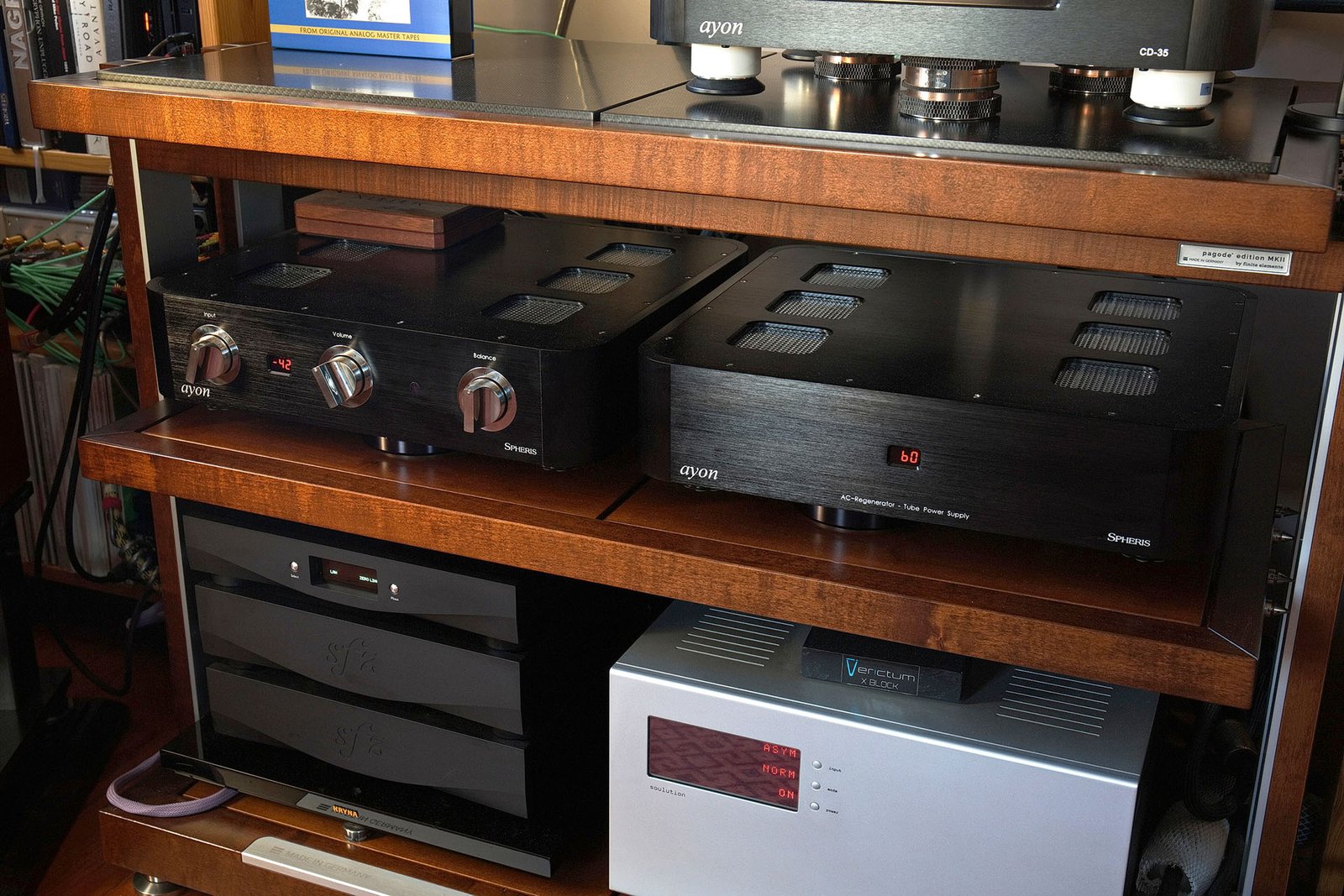
Wojciech Pacuła: Ha, I can see we think alike. There can be only one answer to this question: that kind of perfection is the Compact Disc format, the Red Book. It looks primitive, and in hindsight its assumptions also seem extremely limited. And yet, just like the shark, it is a perfect “tool” for what it does. The format itself needs no improvement, because Blu-spec CD2, UHQCD, SHM-CD and Crystal Disc are all played back in exactly the same way. Improvements can be made, as those examples show, by making it easier for the CD player to read the signal, and then by cleaning that signal of noise.
In my experience, a well-made CD played on a good player demolishes even the best files, and it is competitive with vinyl too. In many cases, it beats it. The only medium that offers something more, something “beyond”, is tape, both analog and digital: for example Mitsubishi’s ProDigi, or the dbx 700 system, which you can hear on André Previn’s After Hours, recorded by Telarc in 1989. I dream of one day hearing an original Denon digital master tape from one of their reel-to-reel systems… The problem, of course, is that most people have never heard a good CD player playing a good disc. But that is a problem of the listeners, not of the format.
And the dolphin? There are a few candidates for that title (by the way, dolphins are not only wonderful animals; they can also be, like humans, very cruel and merciless). One of them is DSP: correcting room acoustics, the frequency response of headphones, the sound of loudspeakers, and so on, with correction algorithms. It has kept coming back like a boomerang for many, many years. Academics love it, because on paper it works perfectly. In reality, there are very few systems of this kind worth considering. And none of them, at least as far as I can tell, has a place in high-end audio.
Correction systems for headphones and loudspeakers work nicely with inexpensive and mid-priced products. We lose resolution, but we gain a pleasant tonality and, sometimes, more dynamics. Whether that compromise makes sense is something everyone has to decide for themselves. Lately, these tools have been combined with an “AI assistant” that is supposed to help find the “perfect” frequency and phase response. I have heard a few such solutions, and they are really nice. But more as a curiosity, and as a support for systems that need improving themselves.
5 · The rigor of repetition
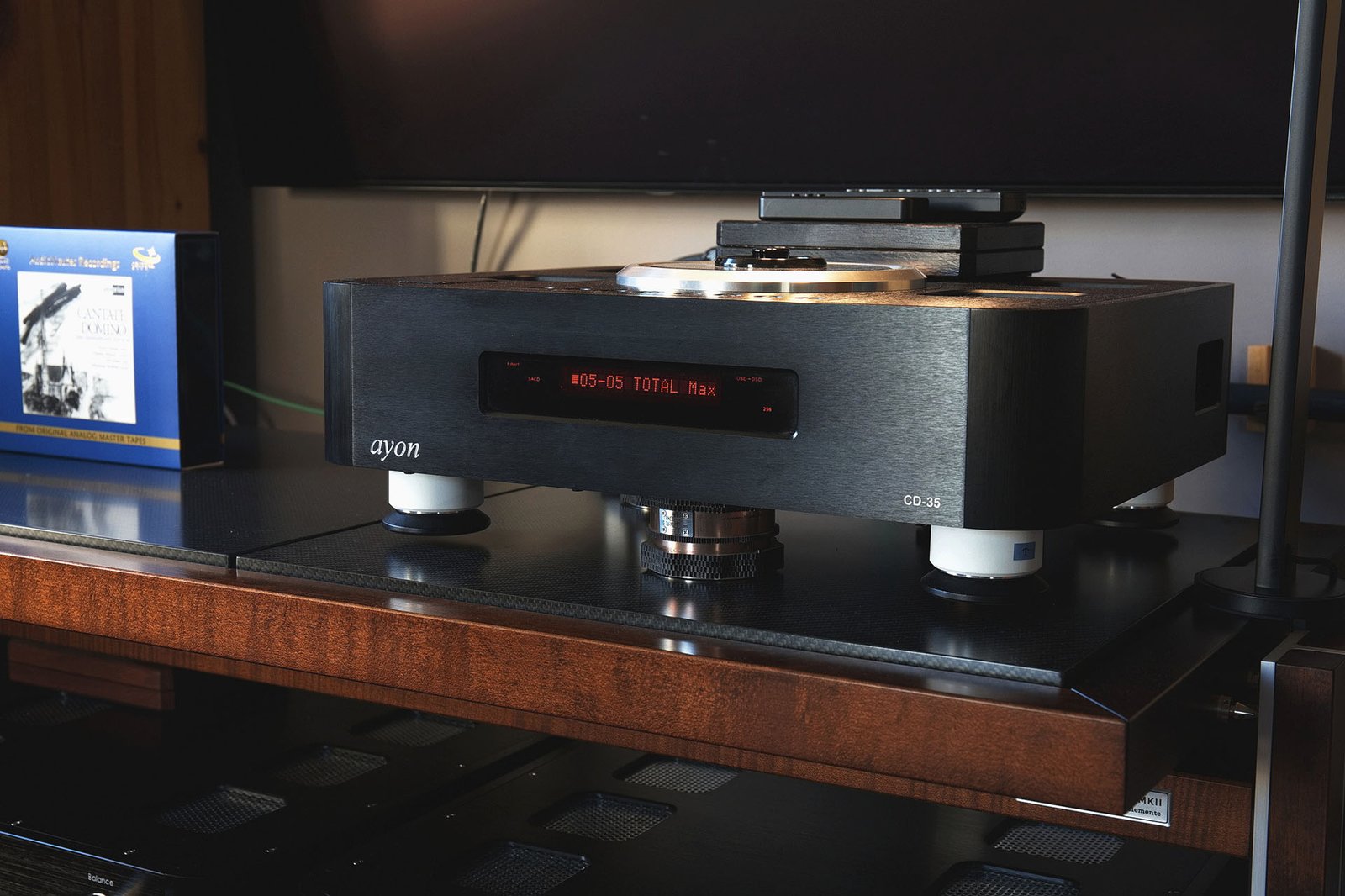
SoundNews: Your reviews contain something almost nobody else publishes: a section telling the reader precisely how you listened. Repeated A/B/A and B/A/B comparisons with known A and B, short fragments and whole tracks, and, my favorite detail, the Bosch PLR 50 C laser meter used to level a platform before you would trust a word of what you heard. Where does that rigor come from, and who is it for: the reader, the manufacturer, or yourself? And the question underneath it: has the method ever defeated you? Has a properly conducted comparison ever forced you to publish a conclusion you did not want, about a product you were hoping to love?
Wojciech Pacuła: I received my scientific training at university, and that’s where I was taught the scientific method. But that is also where I learned its limitations. Over many years of writing about audio, I have developed methods that let me get around those limitations and reach satisfying results. Rigor, in my view, is necessary to be able to compare components and phenomena over a longer period of time.
While we’re at it, I should add that I now listen in an AAA/BBB/AA sequence, because it turned out that our brain has to learn a given sample, a given fragment, before we switch to another one. Dirk Sommer of hifistatement.net suggested this to me. It is also one of the reasons why ABX comparisons, double-blind tests, don’t work in audio and give false results. The rigor of repetition is above all for me. I have to be sure that what I write is what I hear, or what I think I hear.
But I think this approach also serves manufacturers. Although few of them admit it, reviews are an important source of information for many of them, an essential feedback loop. They have to trust the reviewer, otherwise it doesn’t work, that much is obvious. And that is exactly why I try to make the test methodology clearly described and repeatable. I assume, probably wrongly, but never mind, that interested people, whether a manufacturer or a reader, will repeat the test, and that only by comparing what they hear, what they have read and what they expect will they make a purchasing decision. And my conscience is clear.
Precision in testing also leads, to come to your question about failure, to situations in which I am not happy with the result. It doesn’t happen often, because manufacturers are very careful to send me proven products, but it does happen. In that case, I send the product back and don’t write the review. I simply forget about it. From the very beginning I chose to “accompany” manufacturers rather than “confront” them. I cheer them on and try to reinforce the positives. Besides, I take no pleasure in listening to a product that doesn’t meet my requirements. It’s boring and pointless. I leave that to the haters and the internet bots.
6 · Argued out of your own furniture
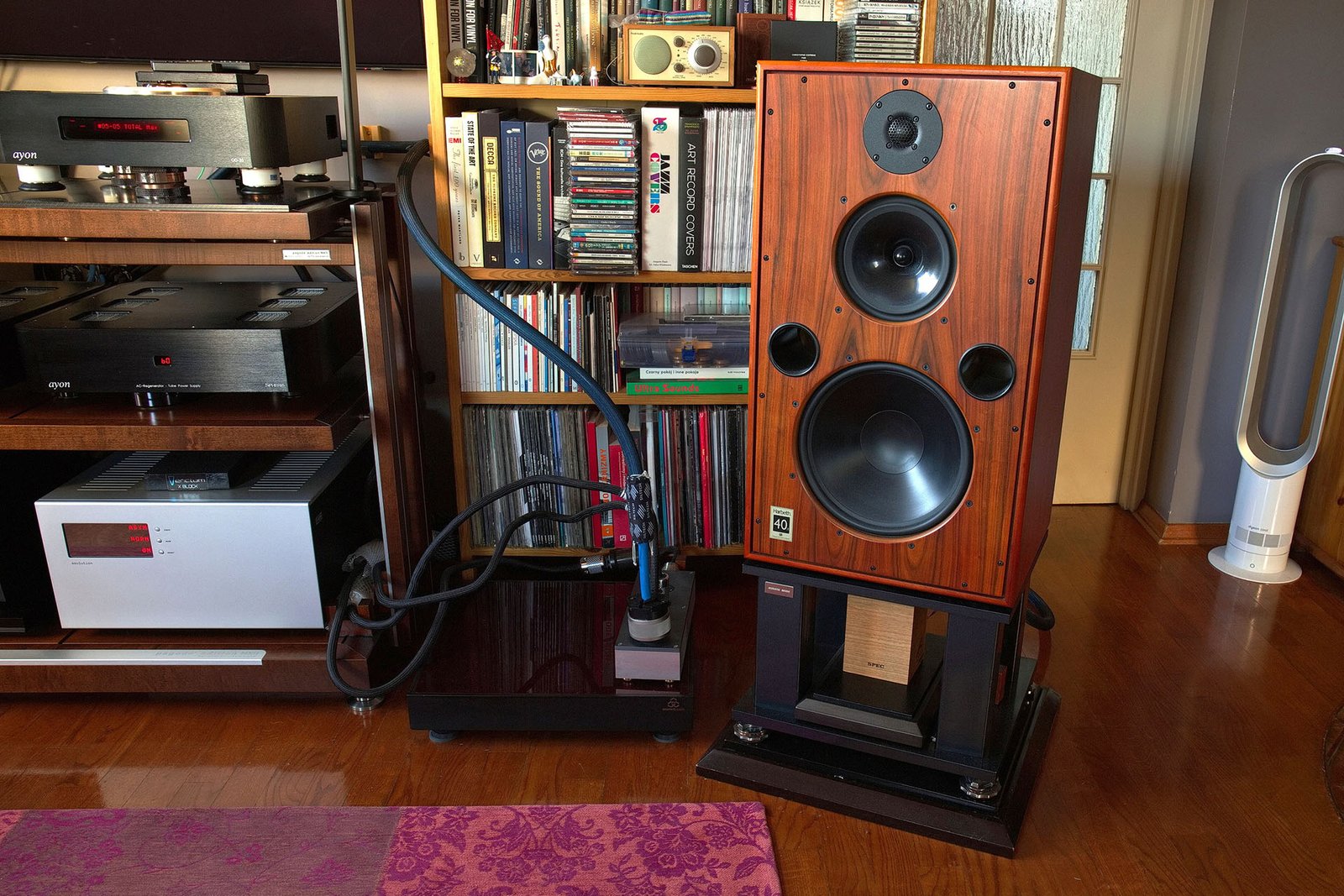
SoundNews: Here is the one I have been looking forward to. You have used a Finite Elemente Pagode rack for years (I have something similar too, from a company born in Romania, WoodYard, which translated the Pagode into something more approachable for the living room). Then you tested the Graphite Audio Classic 100 Ultra, a platform from a company whose entire philosophy is a public refusal of metal and ceramic, and which names Finite Elemente, Pro Audio Bono, Franc, Harmonix and Kryna as the thinking it rejects. You concluded it was “a perfect product” and put it into your reference system. What is it like to be argued out of your own furniture? Was there a moment of resistance before you accepted what you were hearing? And what does it do to a reviewer’s confidence when a component quietly demonstrates that a principle you have lived with for a decade was only ever one of several right answers?
Wojciech Pacuła: To tell the truth, no one has ever tried to persuade me to give up a product I use in favor of, I presume, their own. I don’t know whether they believe that what I have is really good, whether they are afraid of me, or embarrassed. I really don’t know 🙂 The fact is, it has never happened. Hints, glances, a raised eyebrow, that’s the most I have ever encountered, but it has never been said out loud.
What does happen is that I see for myself that it is time for a change. It is usually a process spread over time, because I very rarely change the products in my system, and when I do, I have to be 100% sure it is the right decision. Sometimes I know immediately that I have to do something, and yet I drag my feet, because every new product, even a better one, loses some small particles of what the previous one gave me. That is exactly where I am right now. I have been wrestling with myself for two years, ever since I heard the Soulution 717 amplifier. Any day now I may replace my beloved 710 with it, but it is not an easy decision.
It’s about something in my head that gives me absolute certainty about the reference system. It is not only a system for enjoyable listening, it is also a working tool. Both roles are equally important and complementary. But because their starting points differ, listening means pleasure and work means certainty, it takes more than the assurance that a new product “will sound good”. There are also questions of ergonomics, connections, setup and many details that readers don’t even need to know about, because they serve the review, and the reader is only interested in its result.
Perhaps if I borrowed components from manufacturers, the so-called long-term loans, which are almost the rule in our industry, it would be easier. If anything didn’t suit me, I could swap it for something else, and then for something else again. That’s a method too. But my approach is different. I have to know a component, like it and understand it. I also want to know and respect the people behind the products, and that matters a lot to me. Every component in my reference system belongs to me, which is why every such decision is important.
That said, I don’t see components in black and white. You asked about this earlier, in another context: there are no perfect components. There are those that work in a given application and in a given system. That is why Graphite Audio’s anti-vibration systems don’t solve every problem. They solve some of the problems other systems struggle with, and those other systems have the upper hand in other respects. In the end, it is always a subjective decision for me as a user. In this case, I decided that this particular set of qualities was right for stabilizing the tonality of my system, but not so profound as to replace the whole Finite Elemente rack. And, to come back to one of the earlier questions, in other systems, with other electronics and other needs, the decision might be different. Audio is the art of choices and, at the same time, the art of compromise. It is not a Garden of Eden 🙂
KTS No 157 – SPhinx & Edwin van der Kley Rynveld
7 · The Krakow Sonic Society
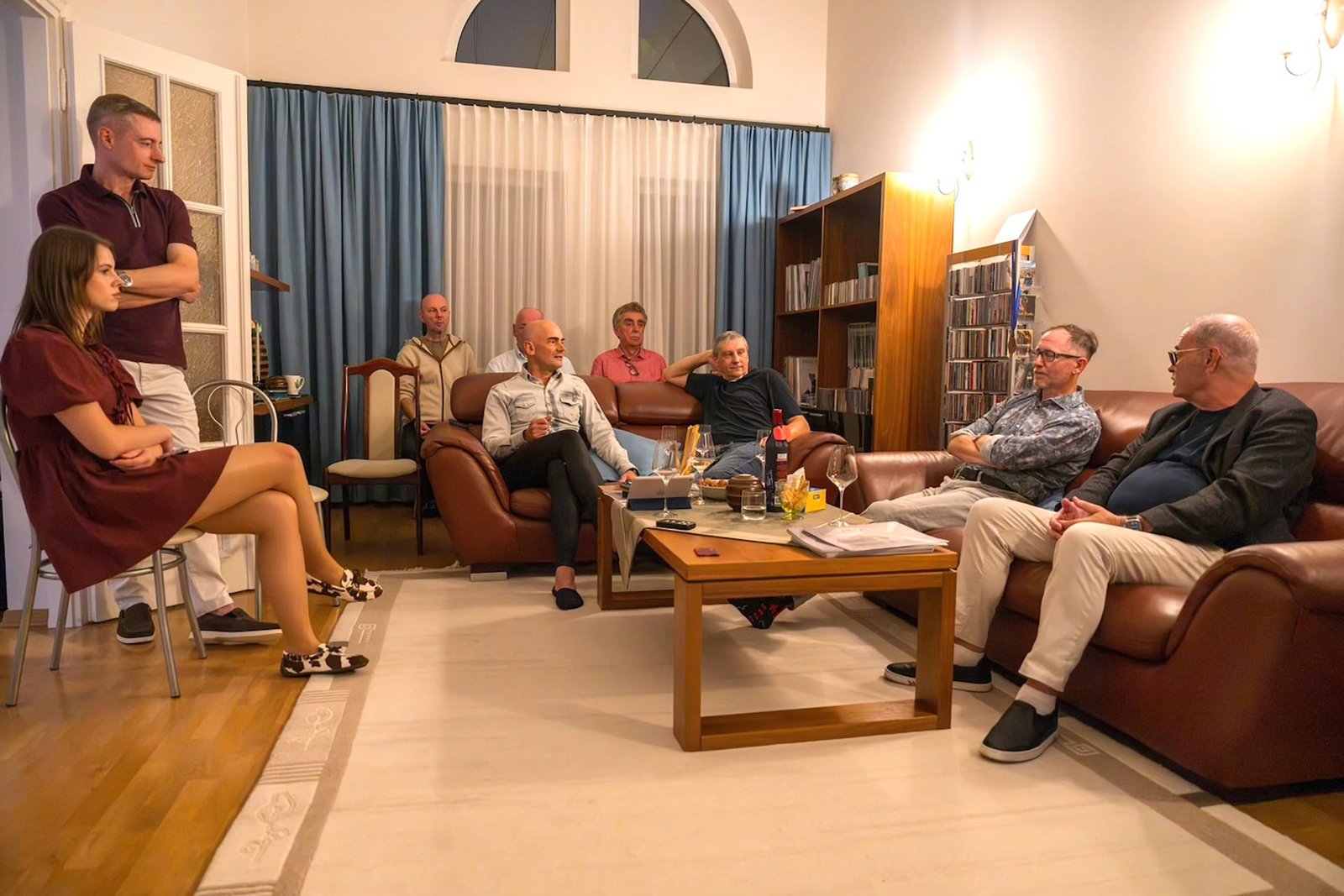
SoundNews: The Krakow Sonic Society has now met one hundred and fifty-five times since late 2004, most recently over a half-speed reissue of George Michael’s Faith, which is a beautifully unsnobbish choice for a group of high-end obsessives. Twenty people, in each other’s homes, listening together and then reading about it in your magazine. An audiophile is usually described as a solitary creature, and you have written about that isolation yourself. So what does the group ear actually do that the individual ear cannot? Has the Society ever been unanimous and, in hindsight, unanimously wrong? And are you a better listener in that room than you are alone in your own?
Wojciech Pacuła: Let me start with a truism, although I don’t know how else I could begin: human beings are social creatures. Contact with “the other” is one of our most important needs, just above the need for safety and our basic physiological needs, if we look at Maslow’s pyramid. I have a feeling it may even be more important than both of them. In the sense that, without other people, we die.
And yet… There is a persistent belief in perfectionist audio that this is a hobby for loners. To be honest, I have no idea where it came from. If I had to speculate, I would say we adopted it as our own, but it was formulated outside our world. It might have come from the wife of some audiophile music lover who locked himself in his listening room, or from envious, unfriendly tongues in other industries. But it isn’t true. It never was, and it isn’t now.
Music is like every other art. On the one hand, it is a personal experience, and therefore a solitary one. In the end, it is we who stand in front of the painting, we who sit with a book in our hands, we who expose ourselves to the music and live through it. Separately, and in a way that cannot be shared. On the other hand, art is a social experience. We talk about it, we share our impressions, and usually we want to convince others of our own interpretation. Audio is no different.
Look at what happens at shows, and Warsaw’s Audio Video Show is the best example. Crowds of people who are there together. Groups of friends and whole families usually come to the event together. Listening to music is a communal activity, too. You can shut yourself in a room, and sometimes you even have to. But right afterwards you will want to share what you experienced with someone, whether it’s the music or the sound of your system. You will want to infect someone with your emotions, and to show off a little. There is no room for loneliness here. If anyone saw it in us, they must have been looking in a distorting mirror. That wasn’t us.
That is precisely why I founded, and still run, the Krakow Sonic Society. I simply wanted to meet people I like and respect, so that I wouldn’t sit alone, because reviewing, as you know, means hours spent alone. Over time, though, it turned out that besides the social value, I had gained something like a broader perspective. The people at our meetings rarely agree with one another. They usually split into two camps, with factions inside each.
That doesn’t lead to a change of opinions, but to reflection on them. I have never changed my mind after a meeting, but I almost always question what I think. And that allows me to make small corrections in the future. I have learned a lot this way. So the Krakow Sonic Society is a place where views clash, and not necessarily one where consensus is forged. We don’t need to think alike, because art, and music and its reproduction belong to it, is multidimensional. When we all start thinking the same thing about it, it will mean we are living in a totalitarian society.
Which reminds me, and this also answers your question about a session that looks suspicious in hindsight, of a meeting at which we compared streaming services. At a session devoted to the Aavik SD-880 file player, a serious, expensive component, we did an exercise: a blind comparison of tracks played from Spotify, Tidal and Qobuz. We did it as A/B, B/C and C/A comparisons, without knowing the sources. I will add, in passing, that all the limitations of this kind of approach, the “blind test”, came out along the way.
First, the surprise: a clear majority of listeners chose the music played from… Spotify. Tidal came second, and Qobuz third. What happened? I think it comes down to the different masters prepared for each service. Spotify’s version simply “matched” best with our host’s system and with the file player itself. Second, we didn’t adjust the volume during the listening, and perhaps we should have. The differences in compression are considerable, and depending on the volume they favor one master or another. And third, music needs longer listening. That is proven practice and beyond discussion. We listened to short musical samples, because otherwise nothing could have been compared.
What happened after the meeting was interesting too. Almost immediately, everyone “forgot” their choices, and those who had liked Qobuz before were once again saying it was the best, even though during the listening they had voted for Spotify or Tidal. As I see it, that was an attempt to erase the experience. The question remains: was the test flawed and badly designed, or are we ourselves unable to accept facts that contradict our experience and our position? That is why it is one of the few meetings I would like to repeat. Perhaps under a different regime, but I would definitely like to do it.
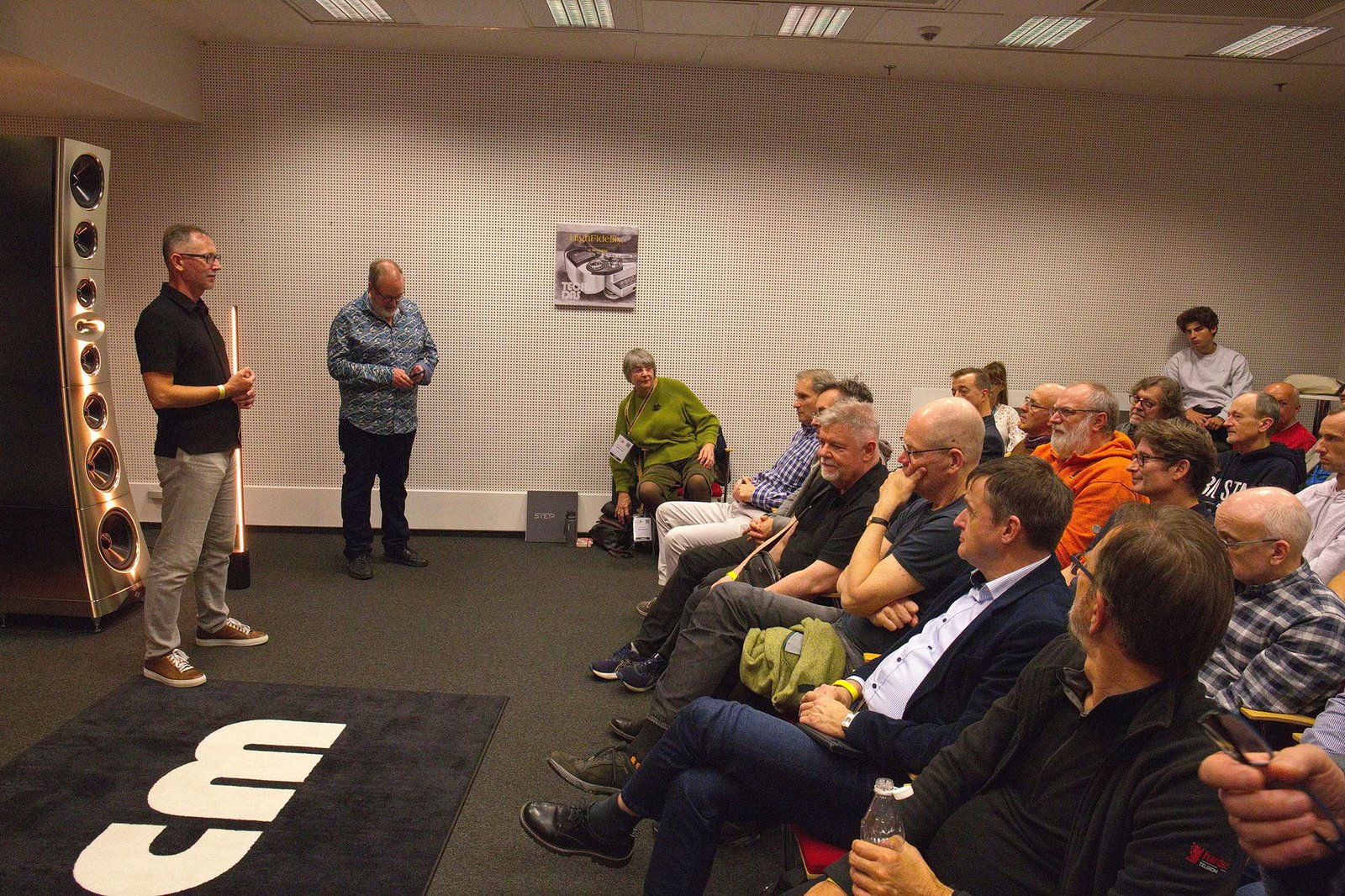
Wojciech Pacula at AVS 2026 – Master vs Unmaster Session
8 · From workshop to manufacturer
SoundNews: Your three-stage model, DIY, manufacturer, corporate, ends on a warning about gentrification: investors buying audio brands the way one buys shares, for short-term profit, stripping a brand of its identity. Against that, you set the Polish DIY scene, which you describe with real affection as restless spirits “who must keep digging, or else they’ll never find peace”, and you planned a whole September issue around Polish manufacturers. Two questions, then. Which Polish company do you expect to make the hardest jump, from workshop to real manufacturer, in the next few years, and what will it cost them? And when a foreign investor next comes shopping in Poland, what is the single question a reader should ask to tell revitalization from gentrification?
Wojciech Pacuła: That’s a question for a fortune teller… But if I had to name a brand, it could be J.Sikora. Seemingly big, seemingly well known, and yet still a small company, a family business really. But it has the potential to become a manufacturer on the scale of the big German companies. It will probably never be a Rega or a Pro-Ject, because those are completely different technologies and price ranges, but a Clearaudio? Why not.
There are also two amplification companies that could go fully “professional”, in the sense of larger-scale production. Both are from Krakow: Circle Labs and Divaldi. Both have excellent craftsmanship, ideas and technologies of their own. But both are also tiny ventures. There is one more Krakow company, almost a synonym for Polish audio: Ancient Audio. I think it should have been known all over the world for many years, but for now it keeps reinventing itself. And finally, Divine Acoustics and Franc Audio Accessories, two excellent makers of anti-vibration racks, feet and platforms.
They all deserve it, and they are all heading in the right direction. But you also have to know that such a transition means the product has to become more anonymous. It will still be an audiophile component, but for a wider, international audience, and that washes something like “rootedness” out of the brand’s identity. And rootedness is incredibly important in our industry. That is why the manufacturers who succeed are those who, while moving to larger-scale production, kept as much of the “garage” spirit as they could. I am thinking of Pylon Audio and Fezz Audio. In other words, you can still feel their passion for music and for the equipment. Without it, a company simply becomes another household appliance maker. Those are needed too, just not by us.
As for bringing a brand back from oblivion, the problem for audiophiles is that it isn’t always obvious, at least not right away, what counts as revitalization. But, let me tell you, you can feel it on some subconscious level. That’s exactly it: commitment, passion, even love for what you do. That is what separates revitalization from gentrification, which is simply a cash grab. That is why bringing Polish brands like Fonica or Radmor back from non-existence, or relaunching record labels such as Tonpress, is a dream on the one hand, and on the other, it frightens me.
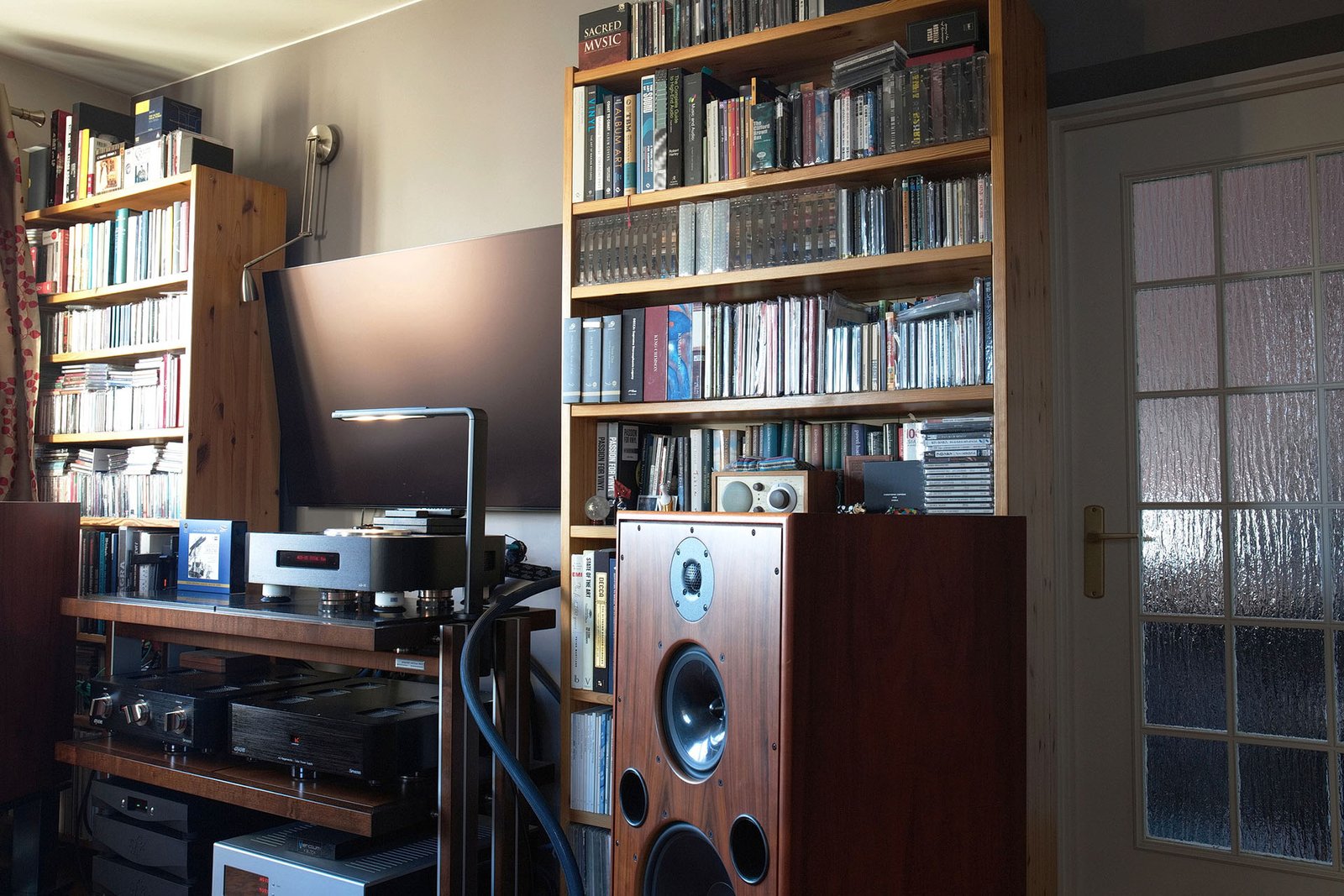
9 · What does not survive translation
SoundNews: High Fidelity has appeared in Polish and English for two decades, so a Romanian reviewer can quote a Krakow editor to a Polish readership without anyone finding it strange. That takes translators, and Marek Dyba and Ewa Muszczynko carry your voice into English every month. You are a writer who reaches for dictionaries in the middle of equipment reviews. You have quoted a national educational platform on the crystal structure of graphite and reached for Baroque oxymorons to describe a sound that was open and dark at once. So what does not survive translation? Is there a Polish word for something you hear that English simply refuses to carry, and does the reverse ever happen?
Wojciech Pacuła: As it happens, I have just finished an excellent book about translation, Przejęzyczenie (A Slip of the Tongue), edited by Zofia Zaleska, which collects her interviews with leading Polish translators. What comes out of those conversations is, first of all, something that is said quite often: a translation can be either faithful or beautiful, but not both at once. Second, though, a translation is a new text, whose author is no longer only the person who wrote the original, but also the translator. The greatest translators write so as to convey the spirit of the original, not literally, word for word. So the reader of a non-Polish version doesn’t get quite my text, but a compilation of my words and the translators’ words. In a sense, no one who doesn’t know Polish will ever really hear my voice. But that’s how it is, and I am immensely grateful to Marek and to Ewa, and before them to Andrzej Dziadowiec, for supporting me for so many years.
Besides, every now and then I have heard them complain about my vocabulary. I don’t know whether you pick it up in translation, but I try to write close to the spoken word. I can’t stand stilted, pompous writing, because it bores me. Reading it bores me too. For me, a text is a kind of conversation. The only thing I am careful with is swearing. In everyday life I swear quite a lot, and I enjoy it. I picked it up working in the theater, and the theater swears like nothing else. It stayed with me. On the other hand, I try not to avoid a strong word where it is necessary. Literature is also emotion, and swear words are part of it, part of our reality.
But back to the point: writing close to speech puts the translator through constant gymnastics. Because how do you translate my two favorite words, “wypierd” and “zajebioza”? The first describes something dynamic, free, natural and unconstrained by anything outside it. The second is a sign of admiration and respect, but of a streetwise, among-mates kind, not an academic one. Both have their equivalents in other languages, English included, but those are cut off from the Polish linguistic context, from what we hear when such a word comes up in conversation or on the page.
That is also why I don’t check the translations. I trust the translators. If I started checking, I would probably want to change everything. And it is no longer only my text. It is ours.
I don’t know whether readers think about it in the same way, but over time I see more and more clearly that writing about sound has a lot in common with translation. After all, we translate one language (music, sound) into another (description, text). It is the translation of one language into another and, at the same time, of one culture into another, because we change the form of the information. In that case, a journalist reviewing an audio product is a kind of “translator”, and readers are no longer reading only about the sound of that product, but also about the way the journalist took it in.
Let’s go further. If that is true, it would be a kind of sociological and ethnographic work. Journalists are immersed in a foreign culture, and their role is to describe it in such a way that the message carries the truth about both the language and the culture of a given product. Such a situation cannot be described objectively; ethnography ruled that out long ago. What matters is the process of getting closer to the truth. As Werner Herzog says in his essay “The Future of Truth” (Die Zukunft der Wahrheit), truth “is rather an unceasing effort to come closer to it. […] But this journey into the unknown, into the darkness of a vast, endless forest, gives us meaning and dignity […]”.
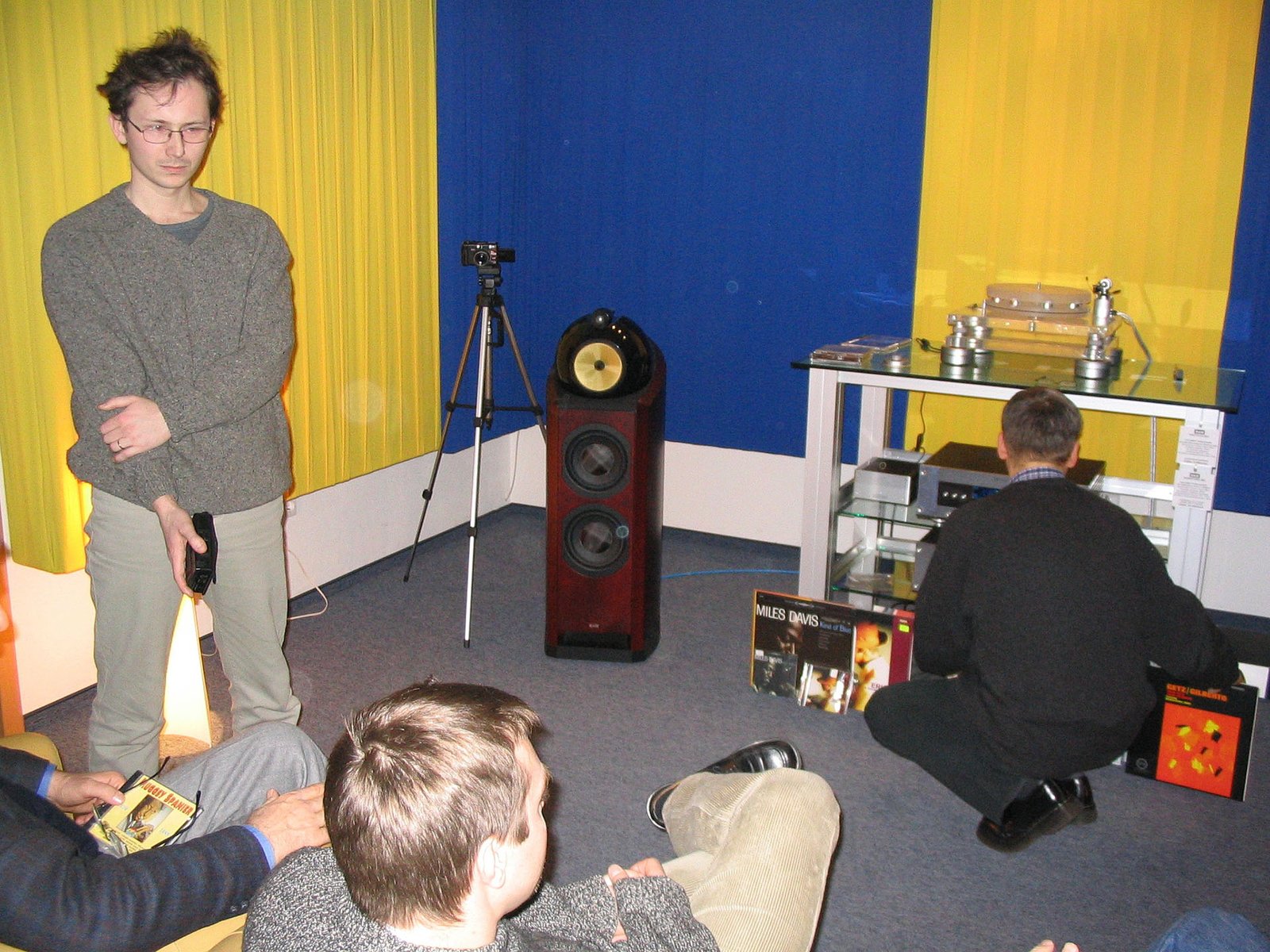
One of the very first meetings of KSS – 2004
10 · Paul’s Boutique
SoundNews: You ended the April editorial on certainty: that what matters most in this industry is knowing the company will still be there tomorrow, that they will repair your product years from now, and that the person on the other end is fundamentally like you. And a few paragraphs earlier you had mentioned, almost in passing, that Paul’s Boutique on Józefa Street is about to disappear under fresh plaster, and that you recently bought an unopened copy of Andrzej Mitan’s Ptaki there. That struck me as the saddest sentence in the piece, and the most human. So let us finish there. What happens to a listener when the physical places of their listening life start disappearing? And what will you be playing on the evening the shop finally closes?
Wojciech Pacuła: When the shop closed, I was in a pub with my wife, trying not to think about what was happening. As it turned out a while later, the closure was not the final chord in the life of Paul’s Boutique at all. The shop moved closer to the city center, to a better street and a bigger space. Shortly afterwards they reduced the used CD section, and a little later they practically closed it. I watched gentrification happen before my eyes. Now there are only expensive LPs, and not much spirit in any of it. These are probably good decisions for the budget, but not necessarily for the music. I fear that the last time I was there was the LAST time I was there.
When a shop like that closes, it is a very delicate thing for anyone who has bonded with it. It’s a bit like when they stop making the cookies in the flavor we love. It happens often, and there is nothing you can do about it. But it leaves a small wound, a small emptiness that scars over and stays inside us. Nothing else can fill it. You can try to build a similar relationship with another place and the people in it, but that will be something new, not a replacement. Fortunately, I have quite a few CDs that I bought there, and I replaced their cases with genuinely vintage ones that I found online, matching the years in which the discs were released. It is a way of saving at least a small part of what that place was, and of my memories of it. But there is no point in despairing. They are only places. People and music are what count. Everything else is temporary.
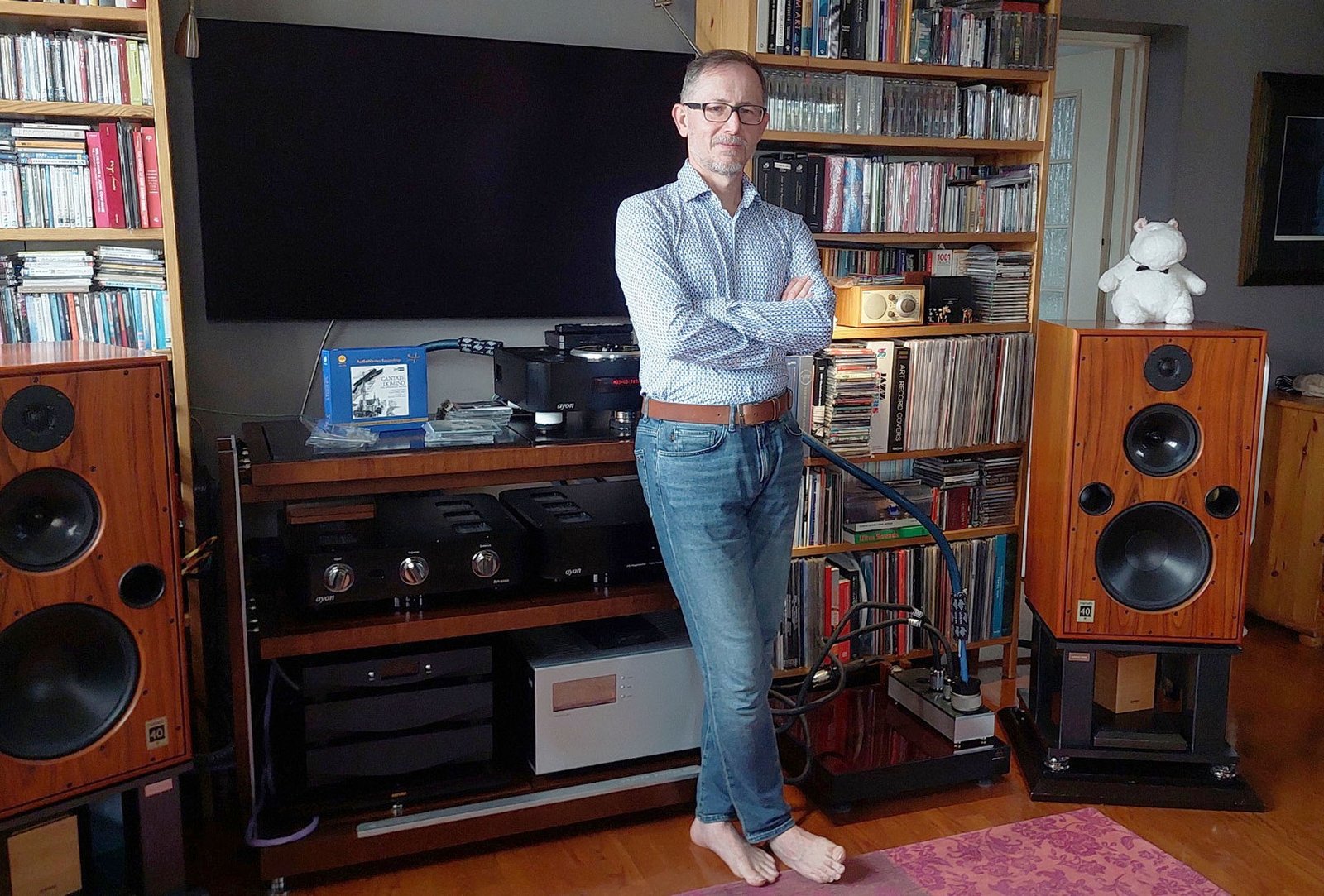
Closing
Wojciech believes that no one who doesn’t speak Polish will ever truly hear his voice, and that every translation is a compilation of two people’s words. He may well be right. But after ten answers that travel from doughnuts to dolphins, from Plato to the evening a record shop closed, I think something essential survived the crossing. A man who refuses to treat audio as a fortress. A reviewer who would rather send a product back than publish a review that only hurts, a rule I recognize, because it is mine too. A listener who measures his hobby by the people it brings into a room. And his last sentence needs no translator at all. People and music are what count. Everything else is temporary.
Exchange interview, conducted in writing in Polish. Translated and edited by Catalin Cristescu.
High Fidelity: highfidelity.pl


