Feliks ENVY Susvara Edition Review – When “Almost Enough” Is No Longer Enough

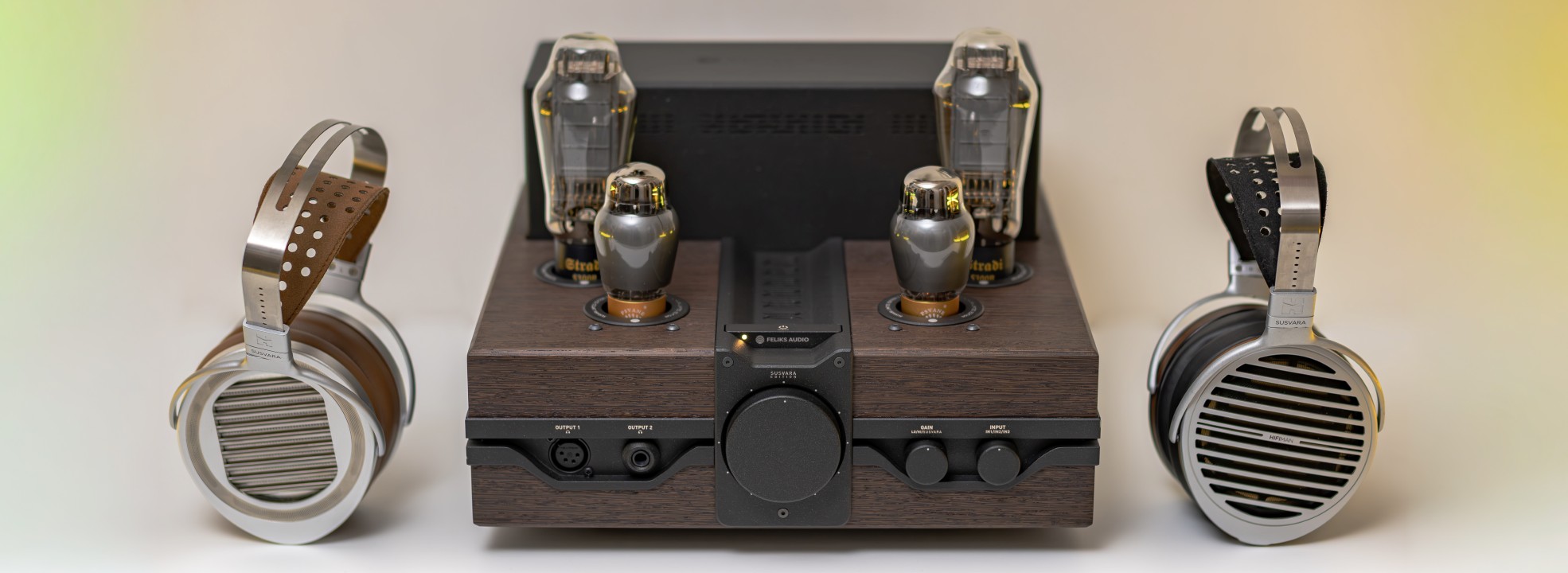
There comes a point in every audiophile’s journey when numbers stop mattering. Watts lose their meaning, specifications become irrelevant, and even price tags once the gatekeepers of the high-end fade into the background.
When the Feliks Envy Performance Edition first entered my system, I didn’t know what to expect, but it was clear that it wasn’t just another headphone amplifier passing through for evaluation. It felt different: it was beautiful from every angle, unapologetically boutique, and seemed engineered with a level of care that immediately set it apart from the usual. Over weeks of listening, tube rolling, and long nights spent chasing the final degrees of realism, the Envy Performance Edition proved itself to be one of the most emotionally engaging headphone amplifiers I have ever used. It wasn’t perfect! No amplifier is, but it came dangerously close in a way that lingered long after the review period ended. And that’s where the story should have ended.
Most manufacturers would stop there. They would celebrate the accolades, frame the Editor’s Choice and Best of Show awards, and move on to the next product cycle. But true boutique audio doesn’t work that way. It listens, learns, and occasionally…it responds.
It was at the HIGH END Show in Munich last year, and like every year, the days blurred together into a familiar rhythm: booth hopping, quick conversations, too much booze, and not enough sleep. The Feliks brothers were there with most of their team, as they always are, showing some of the most visually striking tube amplifiers in the business. By then, I already knew the Envy Performance Edition well. I had lived with it, reviewed it, rolled more tubes than I care to admit, and praised it for being one of the most emotionally engaging headphone amplifiers.
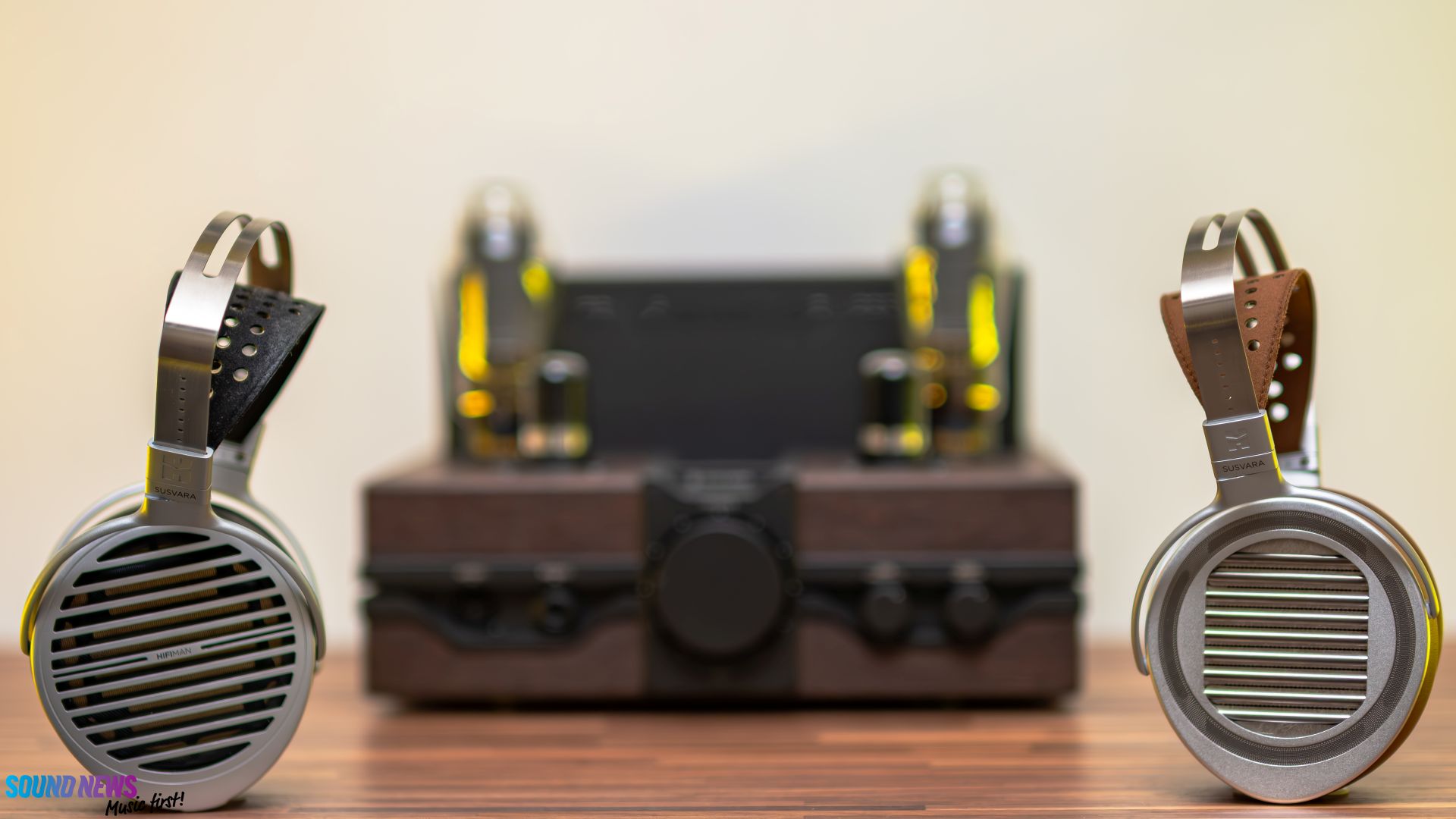
When Lukasz Feliks casually mentioned, “You should try the one-of-a-kind Envy in the HiFiMan booth”. I didn’t expect much more than a familiar smile. I sat down, slipped the Susvara OG onto my head, and waited for the usual mental checklist to kick in. I checked the gain setting and volume control, but instead of analyzing the tunes, I found myself just…listening. Minutes passed, there was no strain, no sense of the amplifier working harder as the music started to do its mojo. The sound didn’t flatten as the volume increased. It simply stayed composed, confident, more effortless than ever, and at some point, it clicked.
This was the first time I’d heard the Susvara without that faint reminder in the back of my mind that I was pushing an amplifier close to its limits. With the Performance Edition at home, I had learned exactly where that invisible line lived: past noon on the dial, where the sound was still beautiful without getting into clipping territory.
I took the headphones off and looked around, half-expecting someone to tell me I was imagining things. Back then, the Envy Susvara Edition wasn’t a product. It wasn’t listed anywhere, wasn’t available to buy, and certainly wasn’t being promoted. It was just there, quietly doing something different. Enough to make my friend Catalin linger far longer than planned, lost in the music with that unmistakable ear-to-ear grin we all get when the gear disappears, and the fun takes over. That short listening session stayed with me long after Munich’s show ended. Because once you’ve heard what’s possible, it becomes impossible to unhear it.
When I returned home and fired up my own Envy Performance Edition, nothing felt diminished. It was still magical. Still one of the most beautifully voiced tube amplifiers I’ve ever used. But now, there was a memory and a reference point that gently hovered in the background during late-night sessions. It was not dissatisfaction, something more dangerous than that; it was curiosity.
The Performance Edition had already taught me how much personality a single-ended triode amplifier could have. How dramatically its character could shift with tube rolling. How it could sound lush one moment and incredibly technical the next. It had also taught me honesty. That even greatness has edges. That even the best designs make compromises. When Feliks Audio eventually confirmed that the amplifier I heard in Munich wasn’t a one-off experiment but a fully realized evolution, I knew this review couldn’t be approached the same way as the last one.
This isn’t about rediscovering the Envy’s charm. We already know it well (go check my review here). This is about revisiting something familiar after it has grown stronger and more refined. It’s about finding out what happens when a designer listens not just to measurements, but to the comments from obsessive head-fiers, music lovers, and tube rollers who live and breathe all things HiFi.
The Envy Susvara Edition exists because the original Envy was almost perfect and because almost is a word that haunts people who care deeply about getting the last drop of performance. This review is about that last stretch. About whether the amplifier I heard in Munich is no longer a fleeting show memory, but a long-term companion in my own system. Let’s slow things down, sit back, and find out.
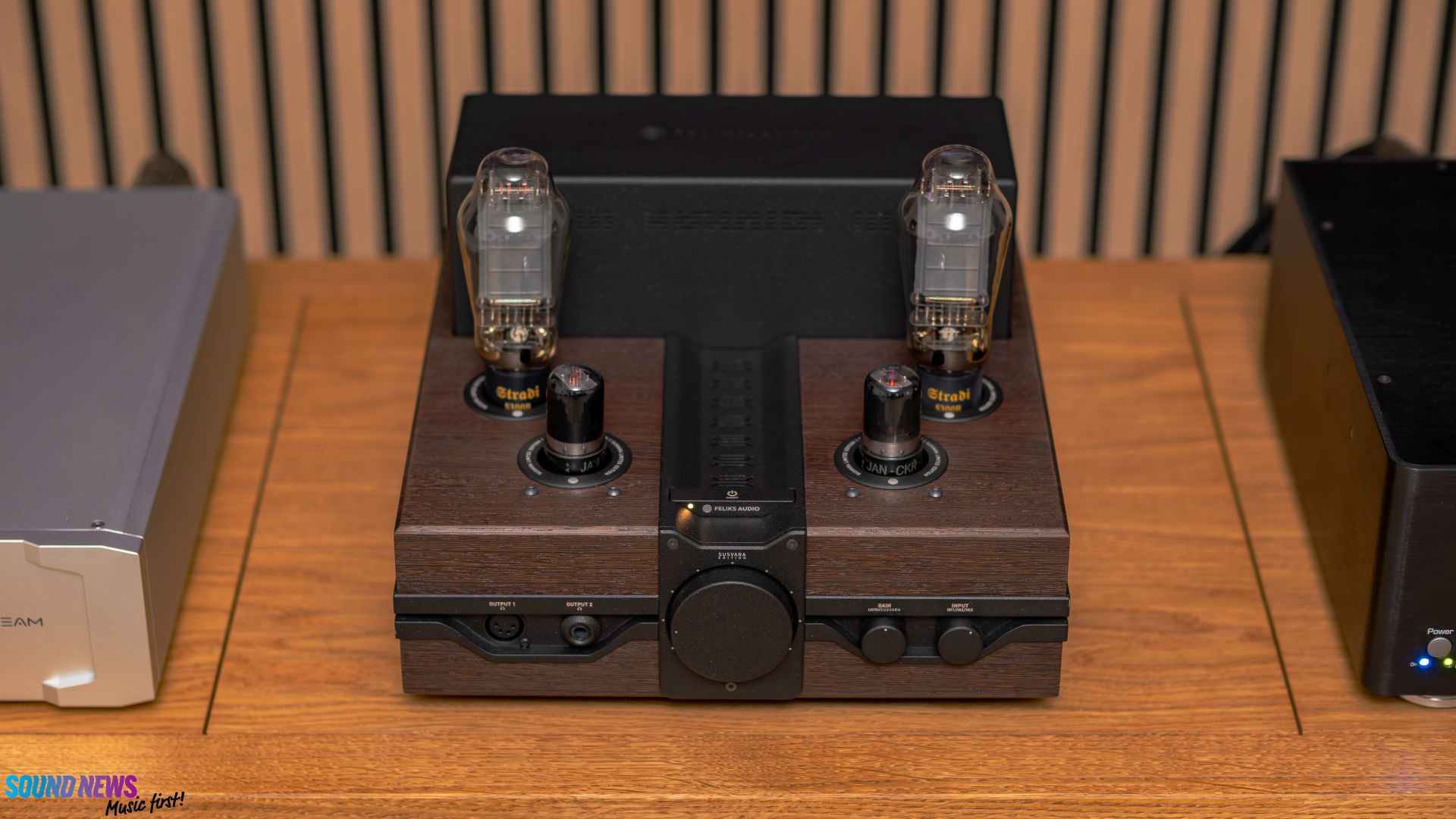
Before I begin, I need to remind you that I already wrote a 20-page, 11,300-word review of the Envy Performance Edition exactly one year ago, and I see no reason to repeat myself on its working principle, beautiful design choices, and the like. Instead, I will focus on what was changed and what makes it different in the first place.
Courtesy of Piotr Feliks, I have a full list of improvements to the Susvara Edition versus the regular Envy. Let’s discuss each one individually, then assess its performance with a couple of top-flight headphones.
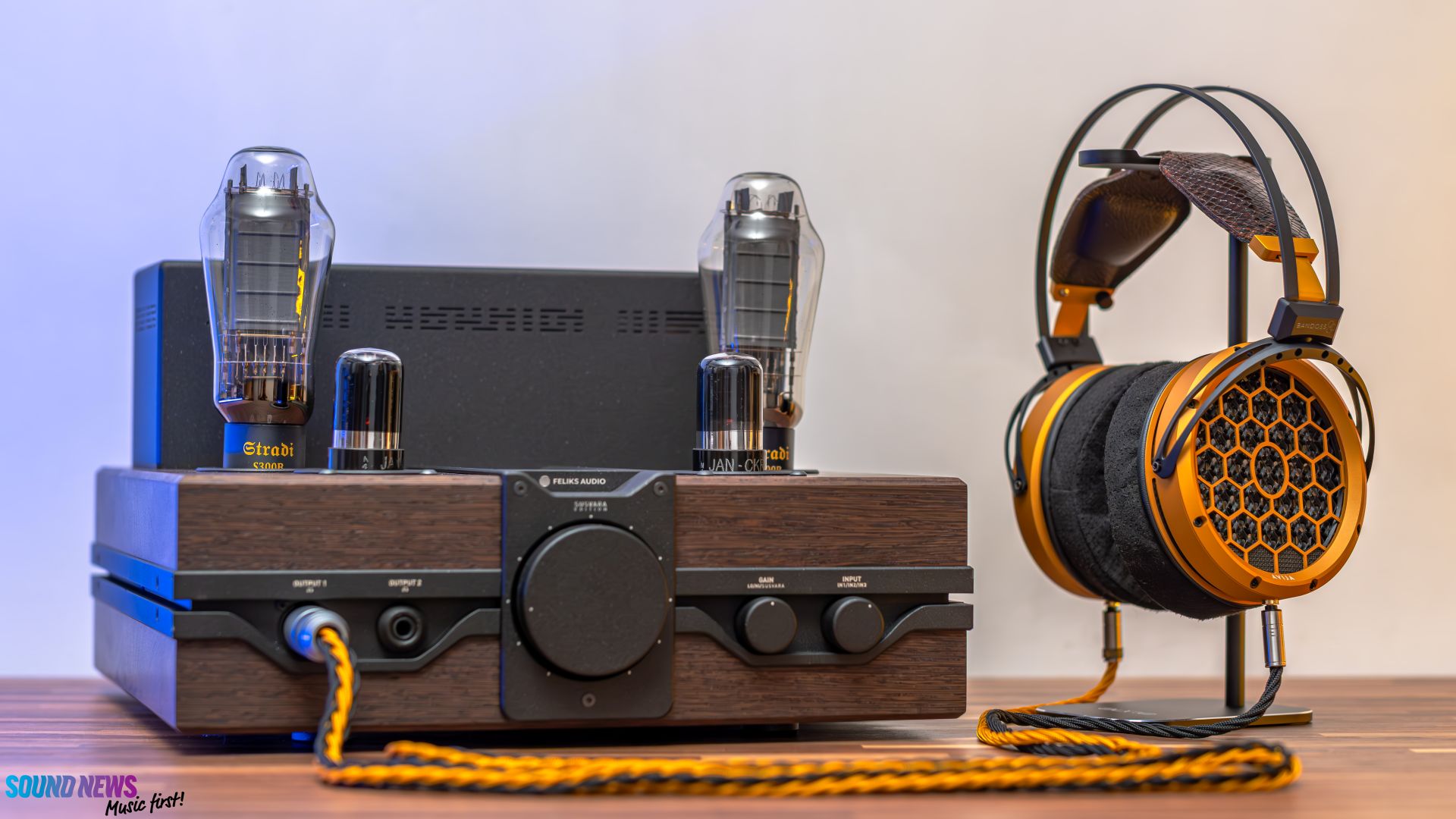
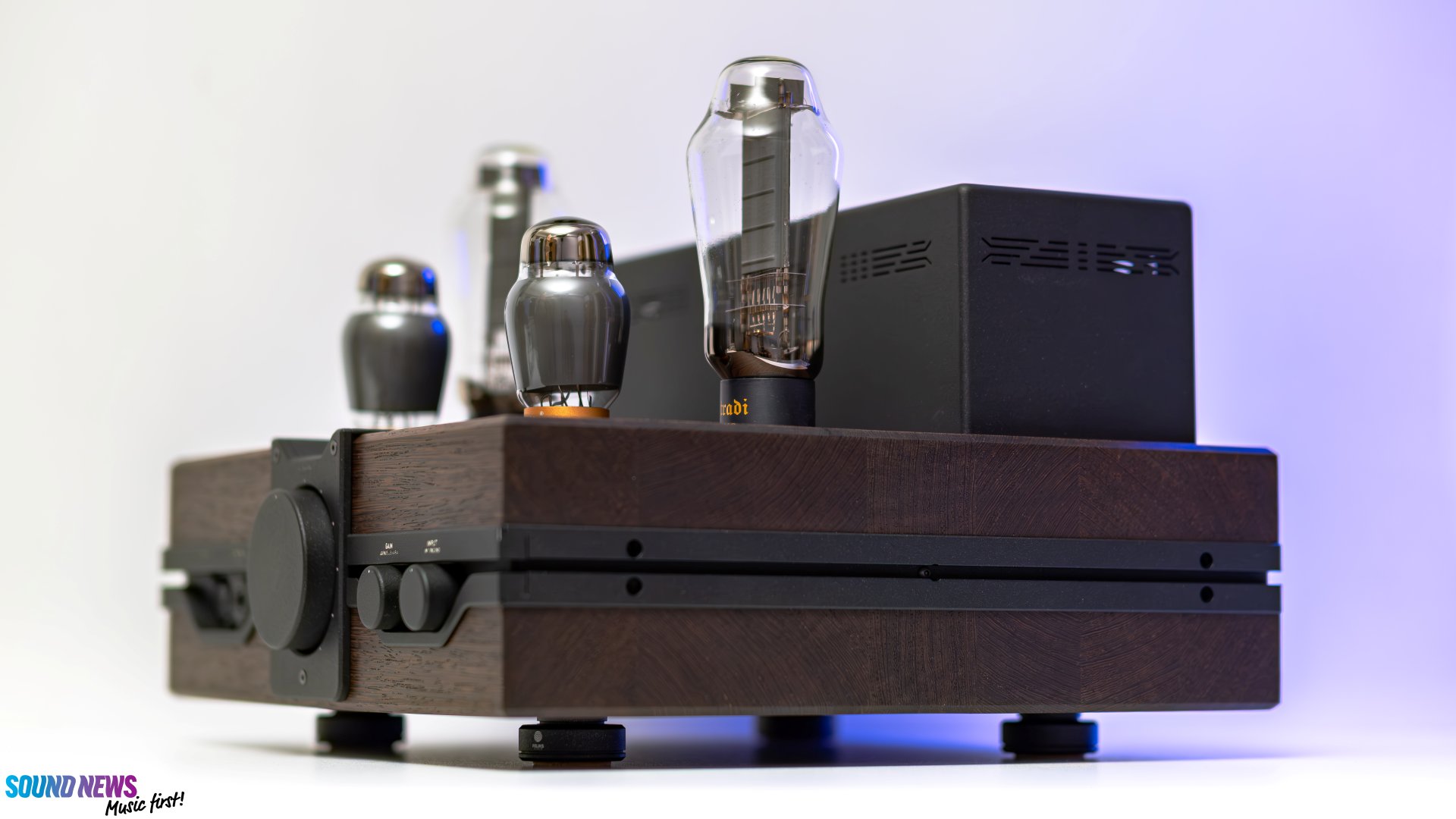
- Brand new custom-made Amorphous-core output transformers for ultra-low noise and superior dynamics. I’m not sure you’re familiar with tube amplifiers, but in transformer-coupled amplifiers like this one, the most important components are the output transformers, since the power tubes draw power from them. The higher the quality of these transformers, the higher-quality power they deliver to the power tubes, which directly influences the sound in many ways. And these aren’t ordinary transformers; they’re amorphous-core ones made by Lundahl. A regular transformer, usually made with silicon steel or grain-oriented silicon steel, has a crystalline structure. That means the iron atoms inside are arranged in neat, repeating lattice patterns. Sounds organized, right? It is, but it also causes a problem: the magnetic domains (tiny regions where atoms align magnetically) resist change when the magnetic field varies rapidly. This resistance to change is called hysteresis, and it’s one of the main reasons transformers can sound slow, muddy, or veiled. An amorphous core, on the other hand, is made of a non-crystalline (amorphous) alloy, typically from iron with some boron and silicon, rapidly cooled from molten form so that its atoms don’t have time to form a crystalline lattice. The result is a random atomic arrangement, more like glass than metal. This atomic chaos gives the amorphous core its magic; the transformer responds more quickly and accurately to signal changes, reducing Eddy Current loss, further extending the sound’s frequency response, and improving linearity at low listening volumes. In layman’s terms: if you want the best transformers…these are sitting at the very top. And if you’re wondering, the smallest 25Watt Lundahl amorphous-core transformers usually cost around ~500 EUR each. We have three of them in the Envy, and much bigger, much costlier ones, too.
- Improved signal wiring – modified for better internal interference handling. There’s not much information on this, but lower-resistance (impedance) and higher-purity conductors can have a tremendous impact on the sound, since the amplifier is built with point-to-point wiring throughout.
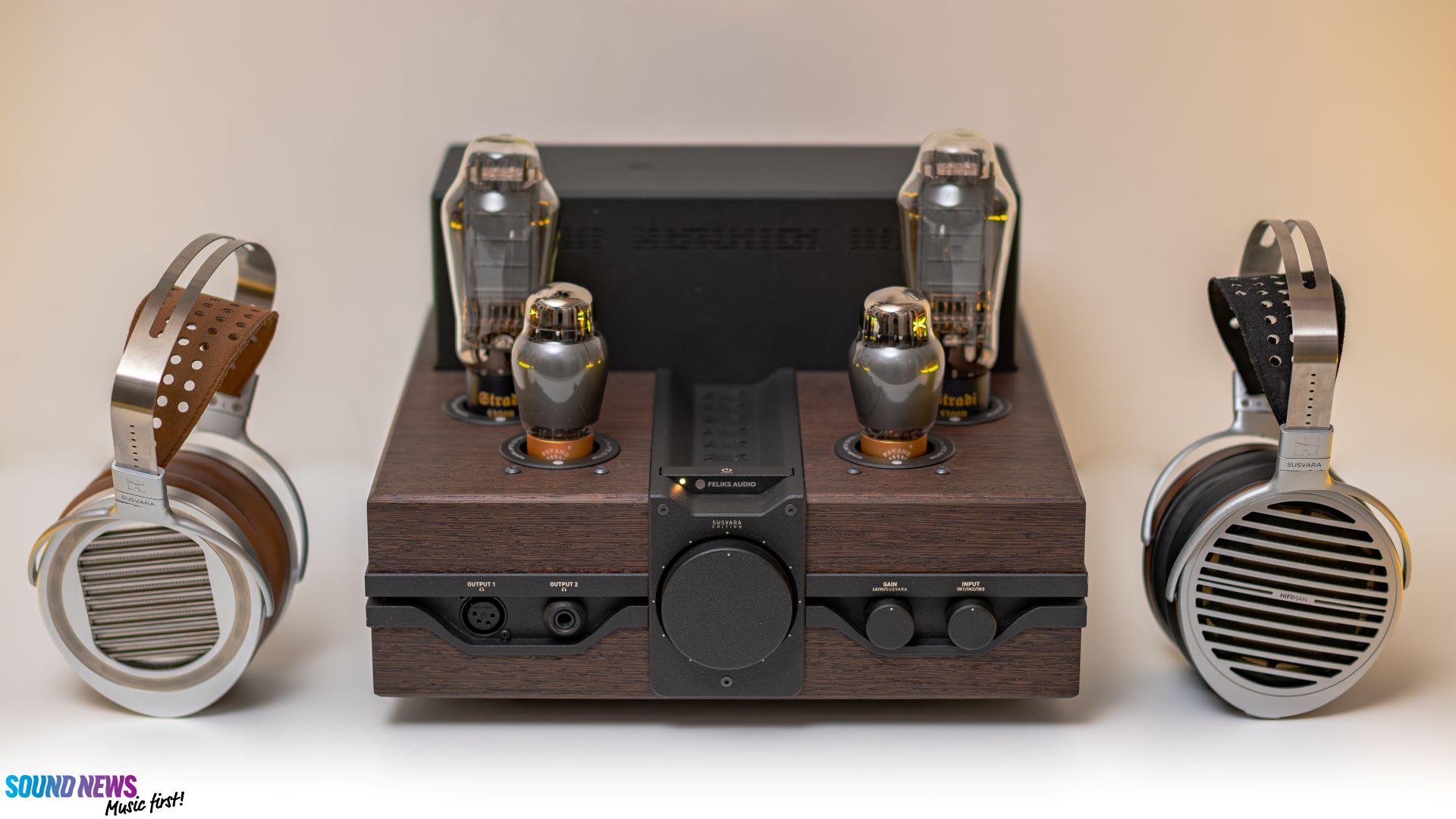
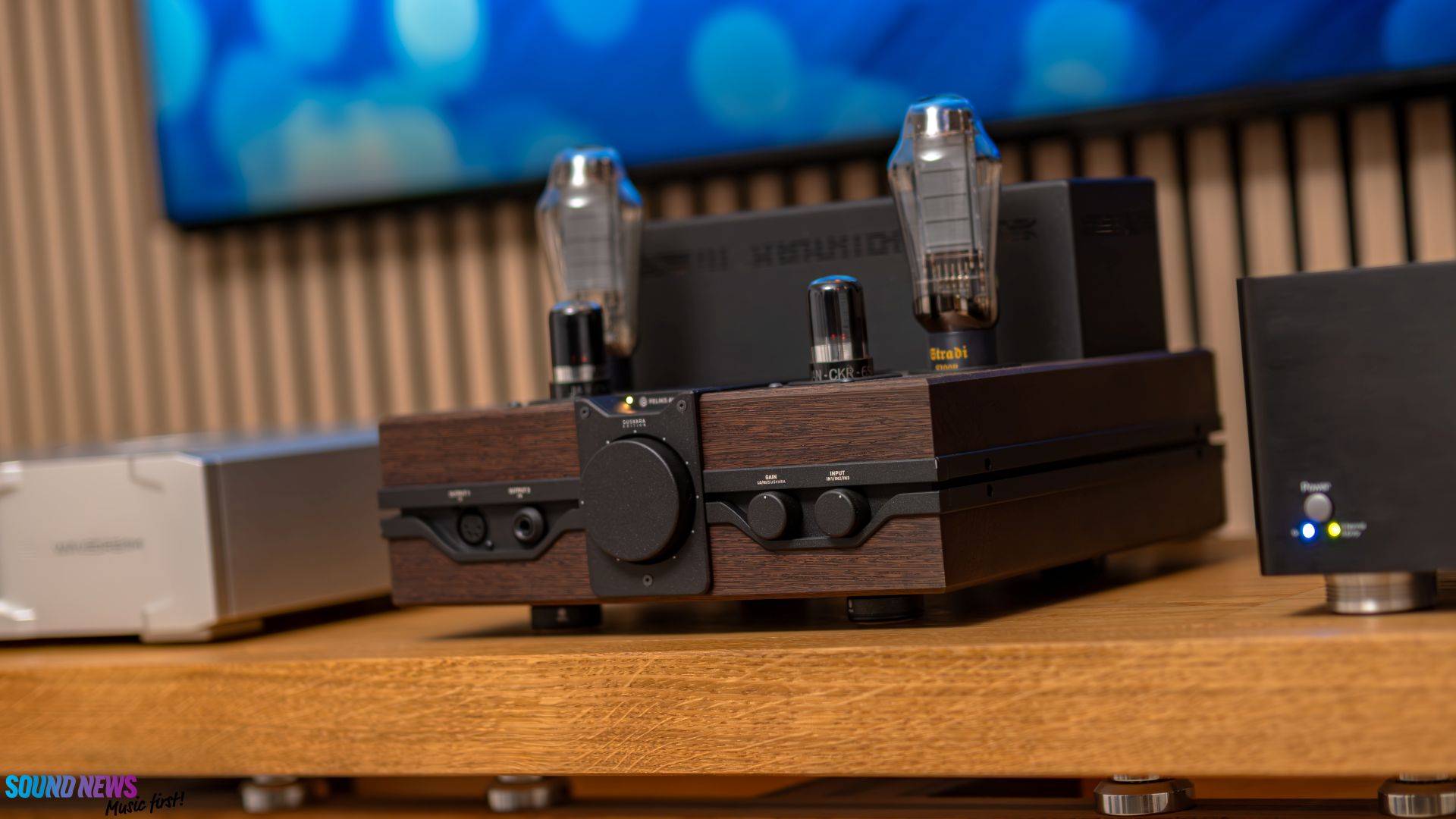
- Stradi S300B power tubes – a carefully matched pair of power tubes instead of the regular Electro Harmonix Gold 300Bon the Standard Edition or Full Music 300B on the Performance Edition. Once I hold them in my hand, I can immediately tell they’re more expensive, higher-performance tubes as their build quality seems immaculate. Separately, these will cost you $1000 a pair, so please be extra careful when handling them. Although their electrical characteristics are similar to Western Electric’s 300B tubes, the internal structure of the S300B is more similar to that of Siemens and Valvo tubes, resulting in a different sound. The WE 300B was designed to dissipate 32 Watts, while the Stradi S300B can dissipate up to 40 Watts. This means the S300 B will output slightly more power than the stock tubes in the Standard and Performance Editions and will also have a longer service life.
- We have higher-grade signal-critical components such as capacitors and resistors, matching the 25th Anniversary Edition, which was selling for $17,495 in the US and €15,500 here in Europe. Higher grade coupling capacitors improve dielectric absorption, nonlinear capacitance, and, more importantly, microphonics. Higher-quality power supply capacitors don’t sit in the signal path, but they still affect the sound because they provide better ripple handling and less modulation of the power supply by the load. Last but not least, all resistors generate noise, but some are much quieter than others. Lowering noise also reduces distortion, resulting in clearer, more transparent sound. All of these combined bring meaningful audible results.
- Enhanced protection for tube-related failures. You don’t want those S300B failing on you, don’t you?
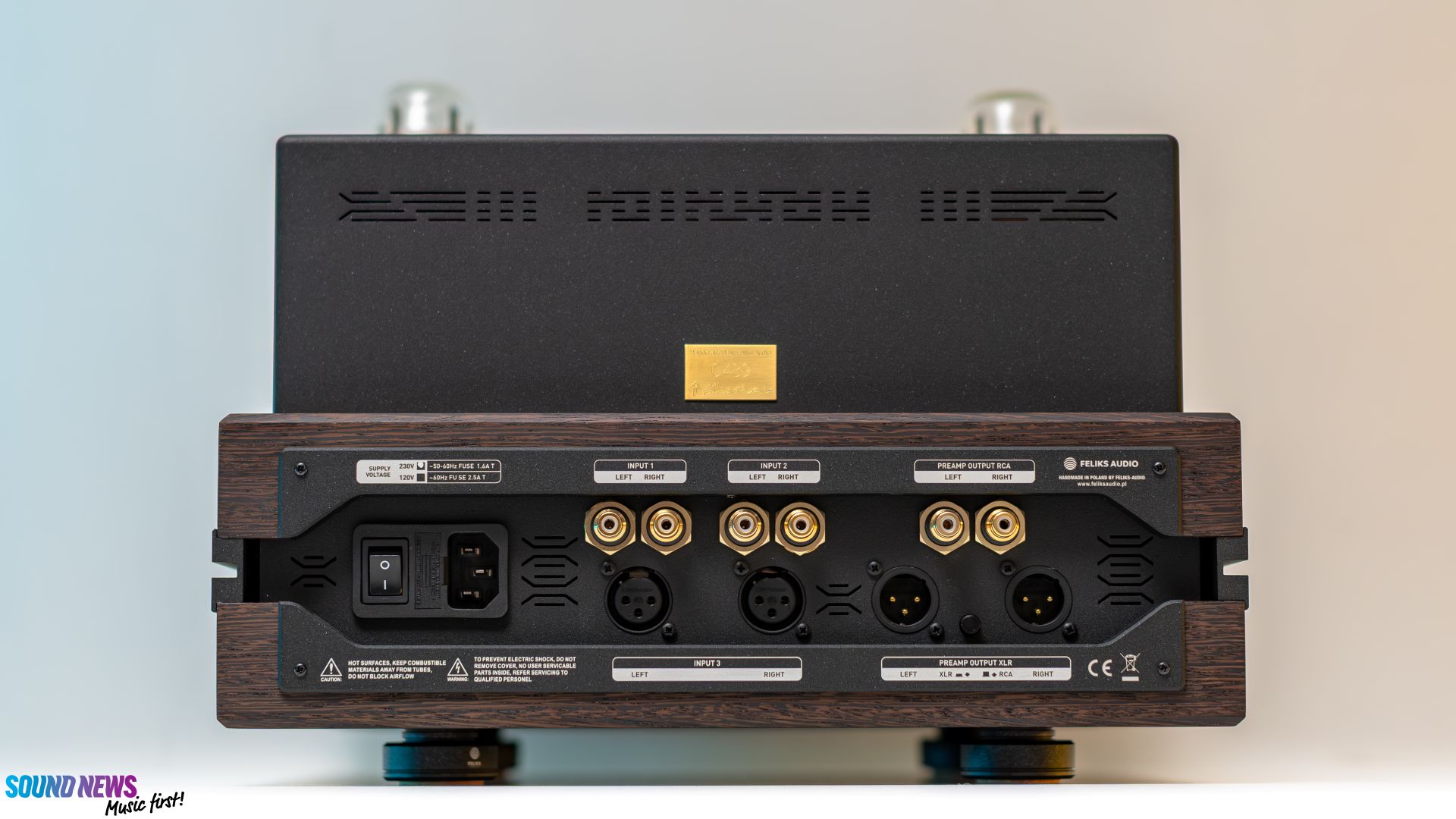
- Pre-amp output modifications and optimizations that decreased the noise levels. Adapting it for higher signal levels. I’ll discuss more about this in a dedicated chapter.
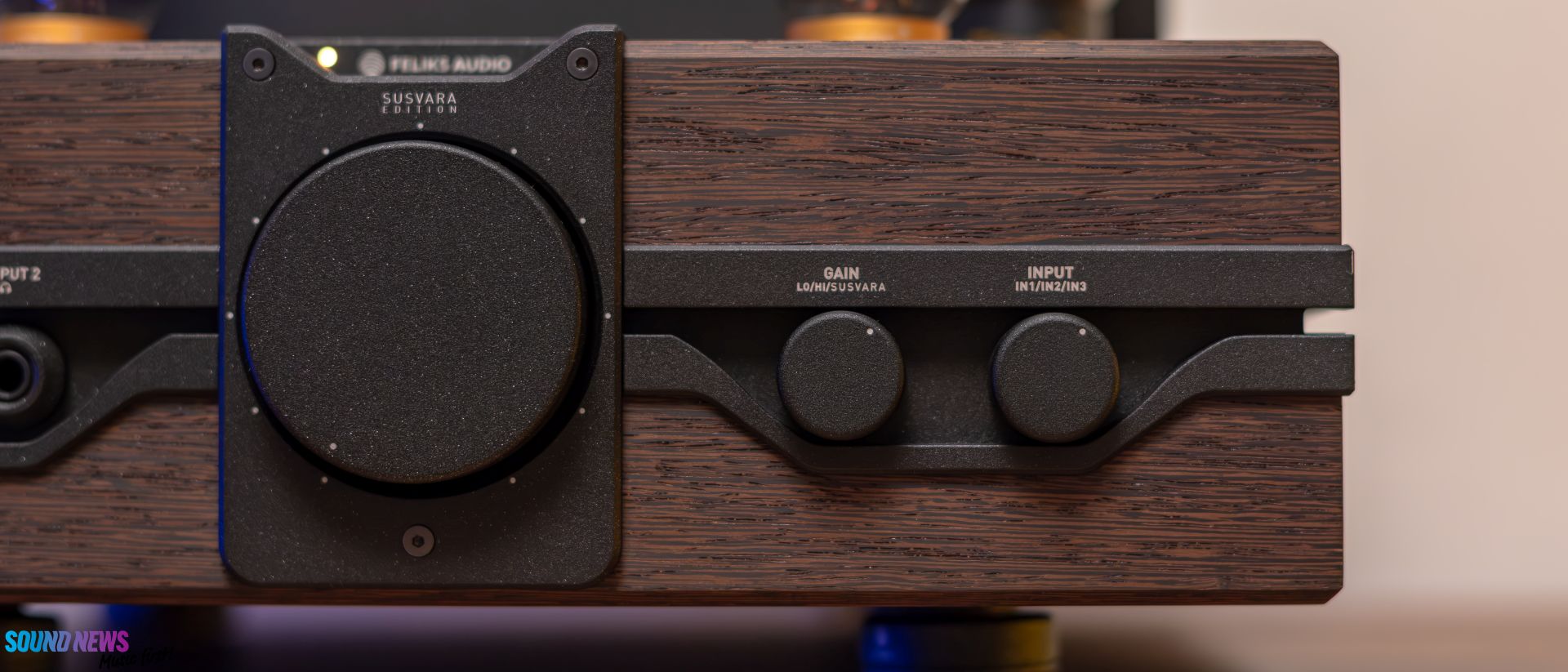
- New output impedance setting – low, high, and Susvara – providing up to 12 % higher voltage output and an extra Watt of power on this particular setting. Perhaps the coolest part of this amplifier was seeing the Susvara gain, as, in truth, these headphones were cut from a different cloth, being much more demanding than anything else I tried. The Performance Edition gently clips with these, and the Susvara Edition no longer does.
- Some tweaks to stabilize the tubes’ parameters and other minor improvements based on the customer’s feedback.
While on the outside there’s a small label indicating that I’m dealing with the Susvara Edition, on the inside, things are more different than alike, hence reaching a higher price of €12.999 if you buy it directly from Feliks Audio’s web shop right here.
Test Equipment
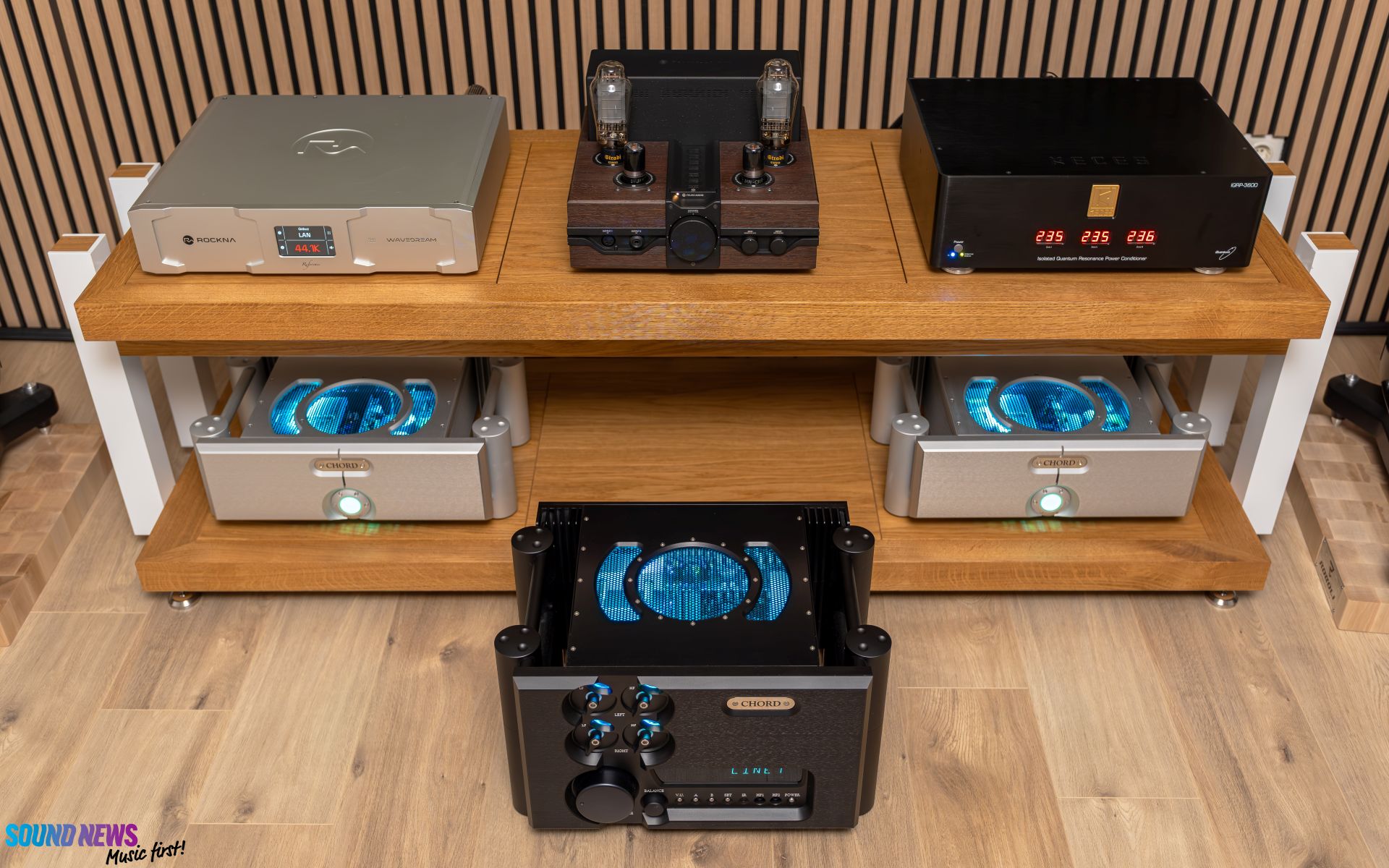
Before you ask, the Feliks ENVY Susvara Edition (SE from now on) was primarily used in a head-fi battlestation, but I also tried it as a preamplifier in a well-thought-out stereo rig.
This is an end-game headphone amplifier, which is why it was imperative to use it with as many high-end headphones as possible, ranging from dynamic to planar-magnetic types, available in both closed-back and open-back configurations. For the sake of science, I will also test its noise floor with a few ultra-sensitive IEMs, but most of my testing will focus on a pair of HiFiMan Susvara OG, Susvara Unveiled, T+A Solitaire P, Bandoss Avija, and Sennheiser HD800S.
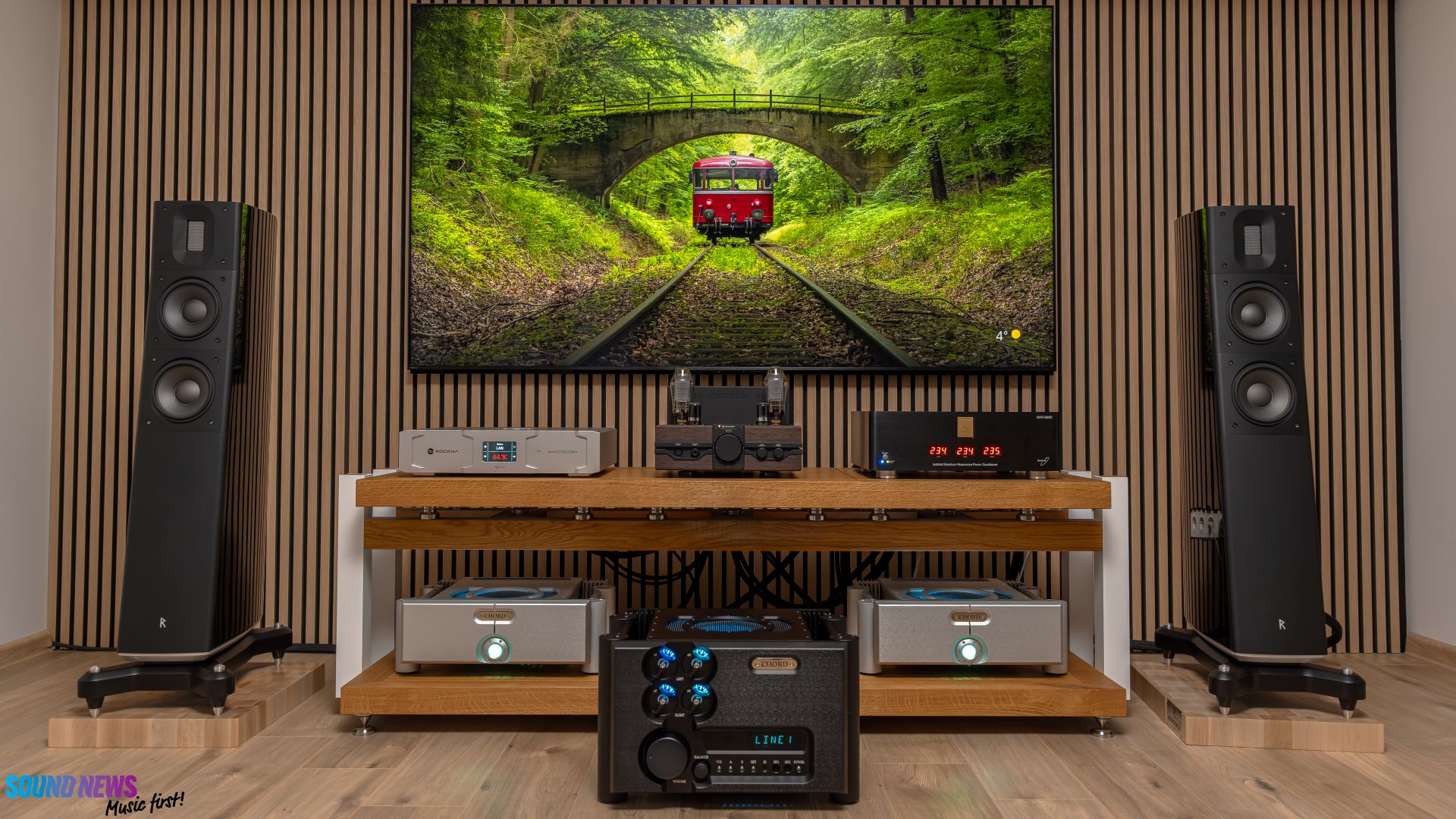
In the living room, the Rockna Wavedream Reference Signature DAC ($27,000) served as both a DAC and a wired streamer, followed by the Envy, which replaced a Chord Ultima PRE2 ($23,850) controlling two Chord Ultima 3 monoblock amplifiers ($35,500 for a pair). Raidho TD2.2 loudspeakers ($49,500) were my speakers of choice, playing tunes for more than 3 months before I made my final evaluation. All cabling used was from the AudioQuest Dragon range (power, interconnect, HDMI, and speaker cables). Everything was also powered by a KECES IQRP-3600 balanced power conditioner.
Everything should be as clear as the blue sky, so what are we waiting for? Let’s hit some eardrums!
Sound Performance
I. Preliminary Sound Impressions
The HiFiMan Susvara OG is such a nasty headphone. I love it and hate it simultaneously. On one hand, it was the one that let me hear nuances that were previously unheard. It truly unlocked a different dimension of sound, where I could finally compare top-of-the-line speakers with headphones and feel comfortable about it. On the other hand, it made me purchase more amplifiers than I can count on my fingers, and that completely halted my stereo adventures. In just a couple of years, I juggled more than 30 headphone amps (crazy, right?), trying to find the best match for the damn Susvara.
Around 2017, most desktop headphone amplifiers offered about one watt per channel, maybe two if you were lucky. Head-Fiers were unprepared for the incoming storm that would later become the hardest-to-drive pair of cans available on the market. Demanding passive-speaker levels of power to unlock the sleeping beauty within, headphone amplifier makers needed to rethink their creations from the ground up. In my case, it was never about making them loud; it was mainly about making them fun and dynamic-sounding, and that task alone, at the time, felt harder than stealing the moon from the sky.
Fast forward a couple of years, and I started playing with integrated and power amplifiers, trying to push those diaphragms to their upper performance limits while controlling the excess energy with an iron grip. Instead of choosing a single Benchmark AHB2 power amplifier, I purchased two for some wild dual-mono action, trying to further elevate those dynamics. Those were fun times, but changes were still needed in the headphone amplifier kingdom.
Another two years passed, and finally, the majestic Trafomatic Primavera (€17,850), which I nicknamed “The White Princess,” landed on my table. With about 10 watts per channel under its hood, it was toying with every headphone I had on hand, including the mighty Susvara. The Feliks Envy came years later and, on first listen, everything seemed dandy. Right off the bat, I liked the more affordable starting price; I much preferred its tube selection, smaller footprint, and lower operating temperature, but there was still something holding me back from using it primarily with the Susvara OG. At that time, these were the only headphones in my stable that required high gain; the rest performed just fine in the mid-gain position. But once I pushed the volume beyond 95 dB during dynamic peaks with bass-intensive music, some distortion gently crept in and clipped the sound little by little. They sounded exceptional at lower volumes and with less demanding content, but I still couldn’t throw disco parties with the Susvara OG, as that stressed the amplifier into gentle clipping.
Enter the Envy Susvara Edition, completely reimagined from the ground up for a perfect match with the Susvara and with the rest of the TOTL headphones available right now. And here’s the kicker: although it’s called Susvara Edition and, unsurprisingly, it’s quite probably the last amplifier you might purchase for your HiFiMans, it’s also a mighty fine amplifier with everything else. Don’t let its name fool you, because more often than not, I’m using the T+A Solitaire P for the extra slam in the bass and for the wide-open soundstage that no other headphones can replicate. When I feel emotional or worn out, I use the Bandoss Avija and recalibrate myself with the universe, as it sounds somewhat sweeter and fuller-bodied compared to any other headphone I have on hand. Both Susvara models sound fantastic on the Envy SE; everybody expected that already, but so does every other headset available, since the improvements targeted a clearer and purer sound that further unshackles the signal, removing obstacles from its path, and let’s discuss exactly that.
II. Resolution & Sound’s Transparency
It’s funny how many times I’ve written about this chapter, and every single time I needed to find completely different words and meanings to transmit the same message, but that’s not the case with today’s unit. People often associate tube-based headphone amplifiers with higher distortion, a higher noise floor, and, obviously, lower resolution and sound transparency. To a certain degree… that’s true! Entry-level tube designs do exactly that, and if you’ve never experienced properly made vacuum tube amplifiers, then you probably never heard what tubes are truly capable of.
However, once you step up your game and start playing with overkill, overengineered amplifiers that took years to perfect, your perception might take a 180-degree turn, and that was certainly my experience. I was a solid-state guy for as long as I can remember, and I thought resolution was always reserved for solid-state electronics. Looking back at a younger version of myself, I’m now smiling and nodding. I was silly back then, naive, but always hungry for knowledge.
My former Trafomatic Primavera headphone amp taught me things I didn’t believe for 15 years that a 32-kilo beast pumping 10 watts of power with no gain selectors could still be absolutely whisper-quiet with ultra-sensitive IEMs. I was gobsmacked! I couldn’t believe it. The VU meters were dancing to the rhythm, yet the music played crystal clear, with distortion and noise floor becoming long-forgotten nightmares. Resolution was pushed further than what I was getting from solid-state amplifiers sitting in its vicinity, and for a moment, it felt like I was hearing music for the first time in my life. The Feliks Envy Performance Edition came years later, and I got the same feeling; it made me look much deeper into the mix and experience all of its secrets.
However, after switching to the Susvara Edition, I can say that I’ve never heard a higher-resolution amplifier than this. Not even with the Enleum AMP-23R, the Holo Bliss KTE, or the Burson Soloist Voyager MAX. All of those were crystal clean, offering an open window toward the music, but the Envy SE squeaky-cleaned those windows, letting me hear ever so slightly more. More inner texture, more resolution, more of everything, really. Hiss in century-old recordings is still there, even more pronounced than ever, but it’s not making me lower the volume. It becomes part of the experience, and the music becomes whole rather than just a sum of its parts. Switching over to TOTL solid-state amplifiers, it’s almost like I need to increase the volume to hear a similar level of resolution to what I’m getting right now from the Envy. I even have a surprise for solid-state heads: a headphone amplifier with a different philosophy that sounds more like double triodes and less like JFETs. It’s as close to perfect as solid-state designs can go, but that’s a story for another time.
I was blessed to own and to borrow some of the best headphone amplifiers humanity has ever created. I haven’t tried them all, but with each passing day, I’m getting closer to that goal. However, from the ones I did try, the one that makes me curious to revisit my entire music collection, the one that makes me wonder if I would still hear additional nuances, is the Envy SE. We are talking about 100 out of 100 points, a first here on Soundnews.net. We don’t award these points so lightly, but this Envy leaves no stone unturned and no nuance unheard. It’s that resolving and utterly transparent.
Days ago, Puscifer released their latest album, Normal Isn’t (found on Tidal and Qobuz). I’ve been a Maynard follower since my university years. I was always fascinated by his different way of manifesting himself, mostly through music. Tool, A Perfect Circle, and then Puscifer, it seemed like nothing could stop the creative process. There’s something in common with all of these bands, yet each of them sounds completely different. In the case of Puscifer, the latest release sounds so different from their prior work that it almost feels like they just invented a new music style. It’s no longer progressive, indie, or groovy; it just hits differently. It doesn’t want to be fully understood on first listen, but we all enjoy discovering the unknown. What remains, however, is the immaculate mixing and mastering that reveals everything from the first play. Although we’re still dealing with complex rhythms and ethereal guitar solos with a goth vibe poured all over them, I was surprised how easily the Envy SE, together with the Susvara Unveiled, cut through the veil as if it were nothing. It may not be the best Puscifer album by a long shot, but one of the cleanest? That’s a strong possibility.
III. Dynamics & Transient Response
By the early ’90s, I no longer felt the USSR’s boot stomping on my face. Foreign music had already infiltrated the system decades earlier, and I was waving around stacks of cassette tapes I proudly called genuine, bought from dodgy corners of my hometown. Stepping into the first rock gig was an experience I will never forget, not even on my deathbed. I can still smell the sweat, the freshly cut grass, and the dirt clogging my nostrils with people jumping to the rhythm of overdriven speakers, coughing smoke at the edge of the stage. Back then, I didn’t know about dynamics, transient response, or resolution. Music wasn’t sound, it was a punch to the chest. Rock and metal weren’t resolving or clean; they were dangerous, raw, and powerful. It wasn’t just a music style; it was rebellion, a way of life, a different way of looking at things.
In that moment, for the first time in my life, I felt free. Free to choose what I want to listen to, free to speak what’s on my mind, free to choose my own friends, follow my own dreams, and speak my mother’s language, instead of the foreign one the system had shoved down my throat. That freedom spilled into the decades that followed: wearing all black at school, headphones permanently glued to my head, “Darku”, they started calling me.
That freedom of expression didn’t come from a frequency band, but from an animalistic instinct to break loose, to scream your lungs out, and to feel that you’re alive. Life was miserable back then; we were more animals than humans, we had little to nothing, yet we felt livelier than ever before.
But here we are now! A bunch of pedantic old folks, with trembling fingers tapping on touchscreens through prescription glasses, barricaded in ergonomic chairs in front of massive screens. We’ve bought purity in a box. We’ve come to listen to the divine filth of Tom Araya through digital filters, sixteen-times oversampling, overly processed digital-to-analog transfiguration, that scrubs away every trace of humanity, as if we were afraid of catching a virus from the recording.
That’s the brutal irony, it’s almost obscene. We’ve turned raw noise, sweat, high levels of testosterone, and a rebellious sound into a sterile experience. We let engineers obsessed with miniaturization shove the spirit of the ’90s into a microchip. We hunt for micro-details in Max Cavalera’s voice, when all he wanted was to tear down the walls. We analyze Tool’s soundstage, forgetting that those guys recorded in a damp basement, not inside a million-dollar bubble of silence.
That’s the great bitterness: we traded life for HiFi. Welcome to this wonderful, ask me anything, AI-driven, new silicon world order of 2026! We hang suspended in our HiFi systems worth tens of thousands, which are really just life-support machines for memories. The more expensive the system gets, the more well-behaved and detached we get from our primate nature of blood, flesh, bones, and hormone-driven beasts that need both divinity and chaos to function properly. Instead, we’re fed reinforced steel and silicon. We listen to the death of our freedom through headphones that promise a transparency we never had in real life.
We became perfectionists. We’ve domesticated rock and metal, and we put it under the microscope. And while a “super-resolving” NFCA or Odin-forbidding THX-AAA tech delivered flawless reproduction down to the smallest details, we later realized with a strong headache that we’ve lost the very thing that mattered: the ability to feel alive. All that was left was an exaggerated resolution, screeching in odd-order harmonics rather than singing beautifully in even-order ones. Many solid-state amps of today are big, glossy, blingy, and so utterly hollow-sounding inside, but the Envy SE? I just got thirty-five years younger, and my raw instincts woke up from hibernation.
Dynamics? Brutal, raw, sweaty, and testosterone-driven. It doesn’t get any livelier than this.
IV. Swapping a Chord Ultima PRE2 with the Envy Susvara Edition
Let me tell you a secret from my two-channel adventures that span a little over 15 years. I always loved the idea of using separates, and in the back of my mind, my dream system would be built from at least four or five components. Comparing a couple of integrated amplifiers with preamp + power amp combos made me realize that I could achieve so much more with the latter. The sound got tighter, the bass punchier, the fun factor reached the sky, and from that moment onward, my prey was always a new preamp or power amp. Years later, I discovered the importance of channel crosstalk and the idea of driving my speakers with individual monoblock amplifiers. So, what was a single integrated amplifier in 2009 is now a threesome affair, with two monos and a preamp doing all of the heavy lifting. People usually deny the importance of a good preamplifier; most of them think it does close to nothing, that it only controls the volume, but that’s only a tiny portion of what a preamp really does.
Just a week before Christmas 2025, I was toying with the idea of upgrading my preamp to the next level, some might say to the Ultimate level. After all, the unit I’m hunting for is called the Ultima PRE, with no extra code or cipher in the product name. This is as good as it gets in Chord’s product lineup, and the idea of trying, let alone owning one, got me so excited. Making such a one-of-a-kind swap meant sending back my Ultima PRE2, paying a substantial amount my wife wasn’t supposed to know about (shush now!), and waiting a month or more for the unit to arrive. But waiting and I are two lines not destined to intersect, as I wanted it NOW.
A microsecond later, an exclamation mark started hovering above my head, as I realized that the Envy could function as a full-blown stereo preamplifier! A genius move by the Feliks brothers that makes it so much more versatile if you’re into both speakers and headphones. As Piotr put it, there are plenty of preamp modifications and optimizations in the Susvara Edition that further reduced the noise floor, making it better suited to higher signal levels. I usually kept my Ultima PRE2 at 0.5x gain, ultimately halving the output power of my monoblocks, as with 1,000 watts per channel into 4 ohms, one could power a rock concert in a soccer stadium rather than a pair of stereo speakers. The volume gets loud way too fast at unity gain (1x), and since I like to fiddle with the volume and remote, a lower-gain position was more appealing to me. My friends already know my saying: you can’t have too much power in your amplifiers or too large a diagonal on your TV, such concepts don’t exist in the house of an audio/video consumerist like me. Bigger and more powerful are always better, regardless of the circumstances. In no time, the Envy was placed between a Rockna Wavedream Reference Signature (working as a wired streamer and DAC) and two Chord Ultima 3 monoblock amplifiers, driving a pair of Raidho TD 2.2 standmount speakers.
I’ve used quite a few preamplifiers before, such as the Musician Monoceros, Benchmark HPA4, Hegel P20, Trafomatic Head 2, KECES S4, Gold Note HP-10 Deluxe, LAiV HP2A, Chord Ultima 3, and quite a few others I can’t remember at the moment.
The cleanest-sounding preamp I ever tested was Chord’s Ultima PRE2; hence buying it some two years ago, and that shouldn’t surprise anyone. Selling for around ~$23,000 abroad and ~€20,000 locally, with its overkill and overengineered volume control, analog input and output stages, and 5-stage power supply implementation… honestly, it’s not a fair fight when trying to compete with a unit like this. This is exactly how a stereo component should look and behave in a high-end setup. Everything else I tried wasn’t remotely as transparent-sounding, let alone as open, 3D, and holographic.
When the Envy SE replaced it, I immediately noticed that the noise floor didn’t rise, as was the case with several previously tested preamps. After closely approaching the tweeters and pausing the music, there was no hiss or hum plaguing my listening session. For a brief moment, I thought my Chord PRE2 was still playing instead of the Envy, as the sound’s transparency wasn’t stained in any way. The sound remained as clean as I’ve known it to be for the past two years, and everything I already mentioned about the Envy’s detail retrieval via top-of-the-line headphones now extended to the living room.
Listening to the Inception and Interstellar soundtracks by Hans Zimmer made me realize that the Envy could indeed play in the big leagues and be compared to some of the best preamps out there. It wasn’t quite as 3D or as pinpoint-accurate in its presentation as a top-class dedicated preamp, but it was so darn close to my own unit that it would take several blind comparisons and only on reference recordings to truly experience the difference. There’s an unwritten rule circulating online among stereo heads that a tube preamplifier is mandatory if the rest of your system uses solid-state electronics. “This is the way,” they say, and to some degree, that’s true. I’ve heard countless systems that synergized beautifully with a tube preamp, not only infusing life into somewhat flat-sounding setups but also freeing the sound and letting it roam more freely through the room. A tube preamp usually improves tone and timbre and enhances spatial effects, especially for bookshelf speakers that try hard to mimic the sound of larger ones.
In a nutshell, that’s exactly what I heard from the Envy SE: a bold tonality emphasizing thick bass and midrange delivery. The funky part is that all of this comes at you without adding distortion or loosening a screw in any frequency region. Tightness remains intact, and the fun factor goes through the roof.
There’s always a thought tingling my senses with units that have multiple functions at once, that maybe one of them was added mainly for convenience, to tick a marketing checklist, and definitely not to sound freaking legendary. I’ve been there, done that, and experienced plenty of all-in-one devices that do one thing really well and everything else not so boldly. But not on the Envy’s watch! This guy pumps dopamine into both a head-fi rig and a headbanging two-channel setup. It has the nerves, it knows how to deliver proper dynamics, and it does so without asking for your permission.
V. Power Output with Big Cans & Noise Floor with tiny IEMs
Considering everything that has already been written in the original Envy PE review, it goes without saying that by using higher-quality internal components, the Susvara Edition is just as impressive, if not even more so, with ultra-sensitive loads. The Performance Edition was already a Muscovy duck in disguise with everything connected to it. You couldn’t hear it working once you moved the output impedance switch to low and connected a pair of FiiO FX17 or HiBy Zeta 2 multi-driver IEMs. And once you experience that kind of silence, not only does it become an invaluable tool for IEM collectors, but also a silence-inducing machine if you truly want to hear everything your newly purchased headphone or IEM has to offer. You can go as high as you please on the volume knob and yet the noise will remain silent, hidden from the golden ears that relentlessly search for it. Every other IEM from my stable performed just as impressively, and if you ever wondered whether a dead-silent desktop tube amplifier exists – they do, and they have for a very long time now, just not at a cost one would call affordable. The lowest noise floor and highest dynamics were always reserved for the best amplifiers, and the Envy SE doesn’t shy away from that rule.
Discussing the power output of the Envy SE is like mumbling about horsepower in a hypercar. These details don’t matter much. Accelerating to 100 km/h in 2.8 or 2.4 seconds is irrelevant. That’s crazy-fast acceleration either way, and both options will make your belly touch your back. In the case of the Envy, we have a little over 9 watts per channel, an extra watt compared to the original Envy. That extra watt and slightly higher gain, however, did make a difference. That difference isn’t there with 98% of the headphones available on the market, and most of you won’t need that much horsepower. But with the lowest-sensitivity cans like the Susvara OG or Mod House Tungsten? It’s like having a can of N2O (NOS) in a quarter-mile drag race. It’s exactly what was missing from the original Envy. In my case, the Susvara Edition never clipped, not even at dangerous sound pressure levels (SPL) with bass-heavy music. I pushed it to its upper power limits; that’s what hi-fi reviewers always need to do and report back. The Susvara Edition is therefore completely effortless in its presentation, regardless of volume, load, or content playing. It always kept its composure, chin up; it’s a stubbornly awesome amplifier that refuses to let its guard down. It’s undeniably powerful, more than it needs to be on several occasions, but that’s exactly what differentiates it from so many amplifiers and why it exists in the first place.
Getting that extra ~15% of headphone drive was the best idea the Feliks brothers ever came up with, as I no longer see a reason to keep an extra amplifier around like the Cayin Soul 170HA or a solid-state one offering similar power ratings. Thanks to larger amorphous-core transformers, the power tubes now deliver additional power that can make all the difference between gentle clipping and no clipping at all. While the Envy SE is still not on the same page as Cayin’s Soul 170HA in terms of raw power ratings alone, which pumps up to 18 watts per channel, I believe we get cleaner, higher-quality power from the Envy SE that sounds more refined and purer at the end of the day. Okay, lads, now let’s move on to the only comparison that matters.
VI. An Important Comparison
Feliks ENVY Performance Edition (€7,799) VS Feliks ENVY Susvara Edition (€12,999)
Courtesy of Piotr, the full set of improvements was already mentioned above, so there’s no need to state again that the Susvara Edition is, in a way, a rebadged 25th Anniversary Edition with extra muscle on tap, making it THE definitive Envy in the entire lineup.
Before we move on, just a kind reminder that I no longer have the Performance Edition, as it was sent back to Poland for the upgrade. Instead of getting the same obedient amplifier back, I received a bad boy: manlier on the outside and oh so scarier on the inside. I do not have them side by side, but I still trust my rusty ears. I lived with the Performance Edition for almost a year, and a little over three months with the Susvara Edition, so it’s still a valid comparison even if I rely only on my memory.
I’ve been repeating one sentence over and over again in some of my HiFi component reviews, and I’ll do it again today. The most important impression you will ever get when auditioning a new component in a very familiar system comes within the first minutes or, dare I say, even the first seconds. Your brain does a lot of heavy processing when you listen to music. It even adjusts some of the things you don’t like; it can correct the frequency response so much that in a couple of days, something that sounded meh at first might sound passable or even good. That’s your brain tricking you, making you feel comfortable even if the sound isn’t that good. But when a new component comes in? Your brain analyzes, it observes, it doesn’t beautify it yet; that happens minutes later. First impressions are always the most important and ever-lasting. If you go down memory lane, the first impressions are the ones forever imprinted into your cortex, not the ones formed hours later. So that’s why, after about 100 hours of music playback with a pair of headphones attached to it, I finally sat down for a long listening session, and in that moment, my mind was making hundreds of comparisons with my former Performance Edition that I no longer had.
The difference felt striking and immediate. Even my son’s untrained ears could discern a very different technical performance. Detail retrieval went up considerably. To put it into context, I always felt that a tube amplifier was playing with the PE, gently adding its own coloration, but I couldn’t feel the same thing with the SE. I’m not trying to say that the soul-grabbing performance of the PE faded into history, only that the SE completely lifted the veil and let me hear things usually reserved for TOTL solid-state amplifiers such as the Enleum AMP-23R or AudioByte SuperHEAD (review incoming shortly). The Envy SE was the first tube amplifier that made me look much more deeply into the recording itself, analyze it, observe it, and even become part of it without preparing beforehand. A coffee or a drink was no longer necessary, nor did I need to close my eyes. The sound became so pure that direct comparisons felt unnecessary at that point. Small nuances became bold ones; I was no longer questioning their existence. They became real, and I could hear them effortlessly. This is the absolute biggest difference the SE brings over the PE or Standard Edition. And with the veil completely lifted, many other aspects are positively affected.
The contrast becomes much higher, you could say almost infinite, akin to comparing OLED displays with less impressive IPS panels. It reaches a much higher ceiling in terms of dynamics, and for people like me, that’s what makes me appreciate music or pack it up and send it back to the manufacturer. Impressive dynamics determine whether music can be fun and whether it can transform your mood from happy to sad, or vice versa. They dictate whether I’m dealing with a universal amplifier that does justice to all musical genres or one that remains limited to well-behaved music. Throughout this review, I wanted you to understand that music has many faces, not always beautiful, sometimes ugly and grotesque. Maybe life hasn’t hit you hard… yet. But it will, at later stages. Things will get clearer; the world around you won’t feel like such a mystery anymore. Even electronics and their behavior will become less unknown and more predictable.
The Envy Susvara Edition doesn’t really try to do much, to be honest with you. The only thing it attempts and successfully accomplishes is disappearing. Not being there. Not influencing anything. It’s a wire with gain, allowing your headphones or speakers to achieve the true glory their craftsmen intended. It’s not there when you listen, and the stains it leaves on the music are fainter than ever before. Of course, it’s still tubey, smooth, and romantic on several occasions, but it’s like that because the music allows it. It’s a wire with gain in disguise that, at best, enhances the color of the music and completely unshackles it in every direction. On the X, Y, or Z axis, it spreads music across all dimensions. I’m not just about a wider or taller sound, but a deeper one as well.
The extra power output is helpful for some and a world terraformer for others. Once you no longer hear your Susvara clipping with bass-intensive music, you can’t go back to gentle clipping on the standard or PE versions. You cannot unhear the difference it makes with these behemoths that arguably shouldn’t exist in the first place. The amusing part is that while it’s called the Susvara Edition, you might as well call it the one to rule them all, since it works just as brilliantly with the rest of my hard-to-drive collection. You’ll enjoy the extra kick it provides and the zero-clipping approach with any set of cans you connect, because frankly, it sounds sublime with them all.

Wrapping Up My Story
Please excuse the ramblings of a man who mixes world politics with old memories and spices it all up with a little music and human emotion. That’s exactly what I am: a mixed bag of everything, trying to survive this new world order we’re living in. But why did I open up to you, and why have I started feeling better over the last three months? Part of the change is that, finally, my head-fi setup can once again compete with my stereo rig. I’m more curious about music than ever before, and it seems that goosebumps are no longer occasional, but a daily, mood-improving effect when I put the headphones on. The Envy somehow slowly healed my inner self and made me appreciate headphones again.
You need to understand that all an amplifier needs to do is disappear from the chain. Doing that sometimes feels like Mission Impossible, as every single component influences the sound little by little, even the ones that don’t stay directly in the signal path. With so many variables, delivering a sound that’s truly pure can become a life’s goal. That is the goal of all amplifier makers, but sadly, not all of them reach the finish line. I feel that we’re slowly getting there. The setbacks aren’t as pronounced as they felt years ago, and the limitations no longer seem ginormous, but manageable, almost non-existent.
Don’t look at the Envy SE as just another version of the Envy. It wouldn’t be on my table right now if the 25th Anniversary Edition, MeisterWerk, Performance, and Standard Editions hadn’t existed before it. The Susvara Edition is a gradual evolution in amplifier design rather than a revolution. It’s the same good old Envy, but pushed to the extreme this time around. The technicalities have reached cloud nine, and things like transparency or resolution no longer dominate the discussion. They’re as good as they can get, and that’s the beauty of it. Only with the Susvara Edition can Feliks Audio finally turn this page and start developing new things, because frankly, there’s still a lot of work to do.
The only elephant in the room, stomping left and right and making its presence felt the moment you reach the ordering page (here it is), is the asking price. It will set you back €12,999, so not many folks can afford it. It’s undeniably expensive, though not as much as the super-limited 25th Anniversary Edition was.
I won’t push you to make wild purchasing decisions. This thing is still expensive, more so than it needs to be, but at the same time, it holds a special place in my heart. No other tube headphone amp and preamp has sounded as transparent and pure as this one. It constantly plays tricks on me, and I never know when goosebumps will cover my body. Above all, I find it funky-sounding, delivering explosive dynamics with modern tunes and a level of refinement with everything else that I rarely experienced through headphones.
I’m happy to inform you that the Envy Susvara Edition will, from this moment on, be my new benchmark tube amplifier, the one others will try to outperform in the coming years. I already purchased a stash of tubes that should last me for the next ~10 years or so, and my body and spirit are ready for what’s coming next. I’ll probably stick with it for a while, and I pray to Odin that something out there will eventually top its performance or at least challenge it somewhere in the future. Arriving at the end of the road is not always a fun place to be, as it’s both rewarding and a little sad. It’s like losing your life’s purpose and your driving force. But for the moment, I’m simply happy to have such a marvelous-sounding amplifier that can double as a high-end preamplifier. Its hefty price tag will shoo away many headphiles, and that’s probably fine. It’s not for everybody, only for those who won’t accept anything less than the best.
When almost enough is no longer enough, you stop chasing adequacy and start demanding absolutes. You stop asking whether an amplifier can drive your headphones and begin asking whether it can disappear entirely, leaving nothing behind but raw, unfiltered emotion. That’s where the Feliks Envy Susvara Edition steps in, not to impress with brute force alone, but to erase the last remaining compromises. It’s the moment when powerful enough becomes effortless, when transparent enough becomes invisible, and when musical enough becomes transformative. It’s for those who already climbed the mountain, looked around, and realized there’s still a higher peak hidden behind the clouds.

It goes without saying that the Feliks Envy Susvara Edition deserves our absolute highest Editor’s Choice Award, one we grant only once per category per year. Congratulations to the team, and I’m looking forward to what’s coming next. If you have any burning questions, please let me know in the comments section below, and don’t forget to smash that Subscribe button over YouTube; it means a lot to me. That’s all for now, folks. Sandu signing off!
PROS:
- A one-of-a-kind unboxing experience
- The most striking-looking headphone amplifier we’ve seen to date
- Outstanding fit & finish and attention to the smallest details
- Rock-solid build quality and should last a lifetime
- One of the most powerful headphone amplifiers available to date, finally driving every headphone available
- Uses only four tubes (your wallet says thank you)
- THE definitive Feliks Audio Envy inside and out
- Ultimate levels of resolution and sound transparency
- Hunting for the best current production tubes is no longer necessary; it already has them by default
- The punchiest dynamics we’ve heard to date from a headphone amplifier
- Zero feedback Single-Ended Triode (SET) and full Class-A design make it pure and organic-sounding
- Noiseless operation with ultra-sensitive IEMs, offering a pitch-black background
- The preamplifier section is equally impressive, adding tons of stereo separation, airiness, and a lifelike tonality
- Zero strain or listening fatigue
- The best headphone amplifier we tried so far
CONS:
- Needs extra space to dissipate heat efficiently
- Long burn-in times: don’t draw conclusions until you reach 150 hours of use
- Requires about an hour of warm-up to sound at its best
- Vacuum tubes have a limited lifespan (~5000 hours)
- Lacks a remote control for use as a preamplifier in a stereo setup
- Pricey!
ASSOCIATED EQUIPMENT:
- HiFi Racks: WoodYard Suspended Triple & Baby Modular
- CD/SACD Transport: Onix XST20
- Network Switch: Ansuz PowerSwitch D3
- DAC & Wired Streamer: Rockna Wavedream Reference Signature
- Preamplifiers: Chord Electronics Ultima PRE2, Ultima PRE (incoming), Feliks ENVY Susvara Edition
- Power Amplifiers: Chord Electronics Ultima 3 (X2)
- Headphone Amplifiers: Feliks ENVY Susvara Edition, Cayin Soul 170HA, Audiobyte SuperHEAD
- Loudspeakers: Raidho TD 2.2
- Headphones: HiFiMan Susvara OG, Susvara Unveiled, T+A Solitaire P, Bandoss Avija, Sennheiser HD800S & many more
- IEMs: FiiO FX17, HiBy Zeta 2
- Interconnects: AudioQuest Dragon XLR (X2)
- Speaker cables: AudioQuest Dragon 2.0m
- Power Cables: AudioQuest Dragon Source (X2), AudioQuest Dragon High Current (X2)
- Ethernet Cable: Crystal Cable Da Vinci
- HDMI Cable (I2S): AudioQuest Dragon
- Balanced Isolation Power Conditioner: KECES IQRP-3600