Aune A17 Review – It Drives EVERYTHING!

Aune created a bit of a pickle for themselves two summers ago, as they made their S17 PRO too good for the price. When I reviewed that little Class-A hotrod, I called it my favorite solid-state headphone amplifier below one kilo-buck, and I wasn’t randomly throwing those words around after comparing it with three headphone amps. By that point, an unhealthy number of amplifiers had already occupied my desk, warmed my room in the winter, and tested the patience of my family, yet very few units managed to combine power, control, musicality, and technical performance quite like the S17 PRO, and for $699, that thing was ridiculously good. The only problem? The S17 PRO enjoyed heating my office quite A Lot. Engage its high Class-A bias, and you could almost cancel your barbeque plans for the weekend. Jokes aside, some units can eventually reach their thermal limit and automatically drop into the lower-bias, as the S17 PRO did for me. Its volume behavior also wasn’t perfect, especially when used as a preamplifier in a stereo setup, and after posting my video review, I even exchanged a few emails with Aune discussing exactly these things. After a lengthy email exchange, it was clear to both parties that an updated amplifier entered development.
That amplifier was revealed at a later date, simply called S17 PRO EVO. A clear evolution of the S17 PRO, having better thermal management, a more sensible volume curve, improved preamp usability, and several smaller refinements, turned it into something I originally wanted its predecessor to be. The funny part is that it barely sounded better as a headphone amplifier, and I mean that as a compliment. The EVO wasn’t created to shine a dimmer light on its predecessor and dance on its grave. Aune simply took an already fantastic amp, fixed most of its annoyances, and preserved the sound I loved in the first place. Its working temperature lowered substantially; it was no longer switching to a lower Class-A bias, and I happily recommended it again. At that point, I genuinely thought Aune had reached some sort of price-to-performance wall, and honestly, where exactly do you go from there? Add another transformer, more filtering capacitors, another handful of transistors, make the chassis twice as big, engrave “REFERENCE” somewhere on the front panel and triple the price? Welcome to High-End Audio, lads and lassies.
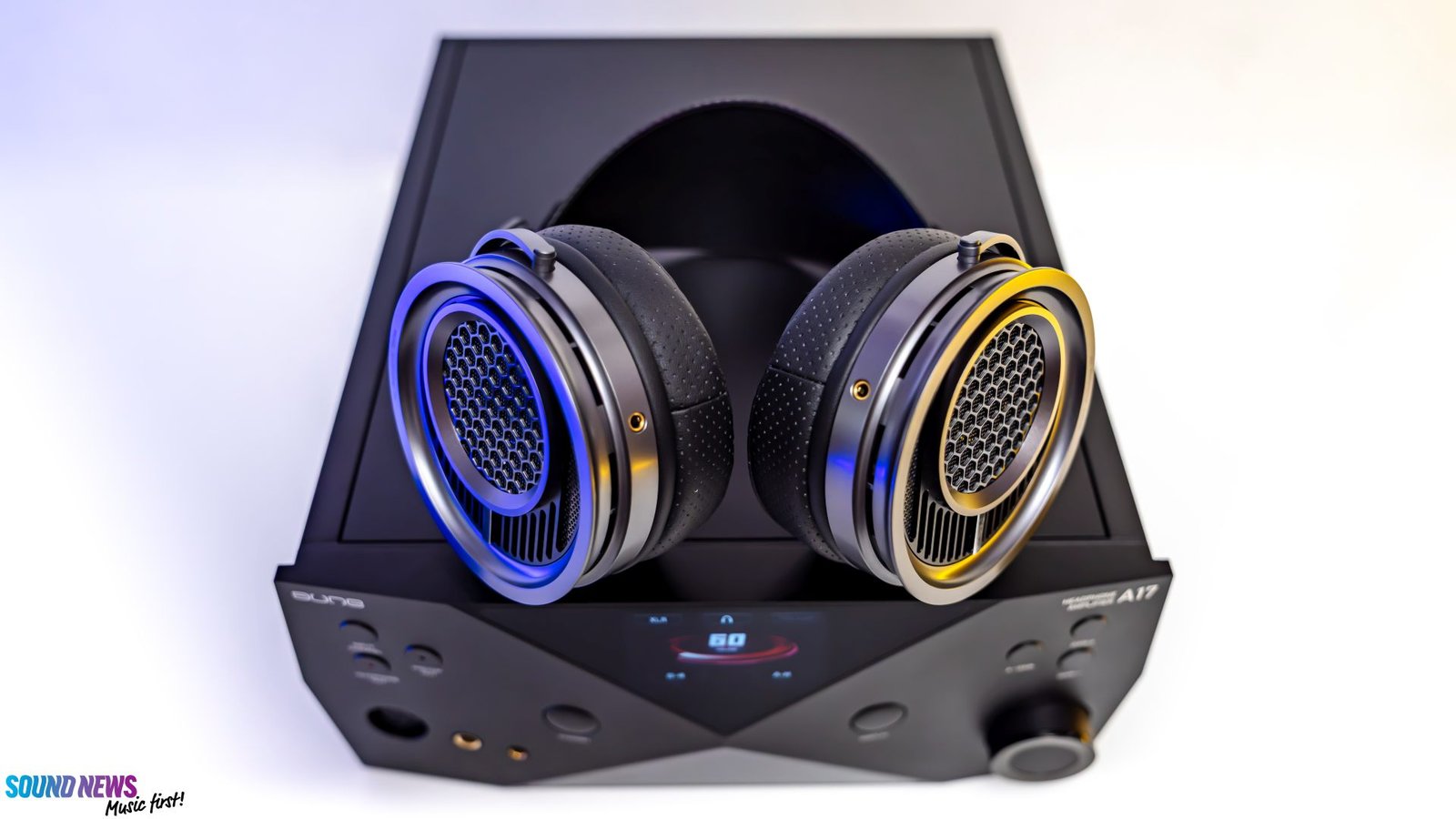
Fortunately, Aune had different plans. Their newest flagship headphone amplifier and preamplifier landed on my desk about a month ago, looking considerably bigger than anything I had previously tested from the company. It’s more ambitious, and judging purely by the hardware hiding underneath its thick armor, clearly it was developed without any restrictions that shaped the S17 family. My first expectation was perhaps a mild sonic improvement. A little more authority with harder-to-drive cans, maybe a deeper staging and stronger 3D effects, maybe a cleaner background with IEMs and tiny bits of resolution enhancements. You know…the usual expectations. But the more I listened, the more I understood that Aune no longer wanted to make it affordable and office-friendly. This time around, they wanted to build the best headphone amplifier, no matter the cost or size. And in a nutshell, that’s exactly what I felt when I swapped a couple of headphones around and let it do the heavy lifting. The price, naturally, went higher to $/€ 2.499, but it’s not outrageously high, as many HiFi brands are asking nowadays for their best of the best.
Folks, make yourselves comfortable with proper hydration within reach because we have plenty to talk about. I’ll dissect its power supply, its fully discrete amp stage, Class-A operation, current delivery, volume control and preamplifier functionality. Then I’ll torture it with everything from easy-going IEMs and dynamic headphones to several power-hungry planar beasts before comparing it directly with amps sitting higher on the food chain. Ladies and gents, this is the Aune A17, and for the first time, Aune isn’t trying to win the price-to-performance game, as now they’re coming for The Big Boys.
Design & Build Quality
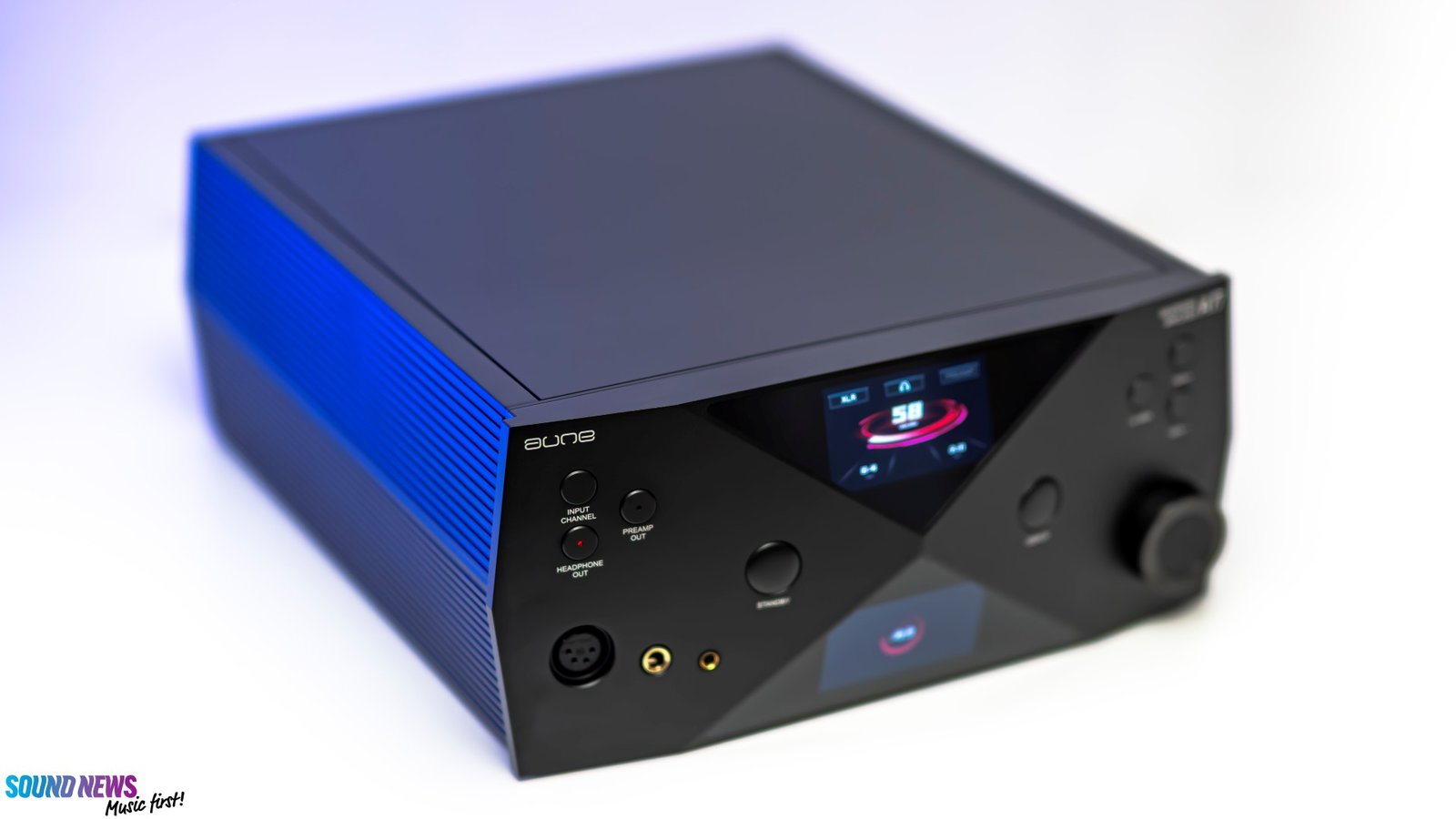
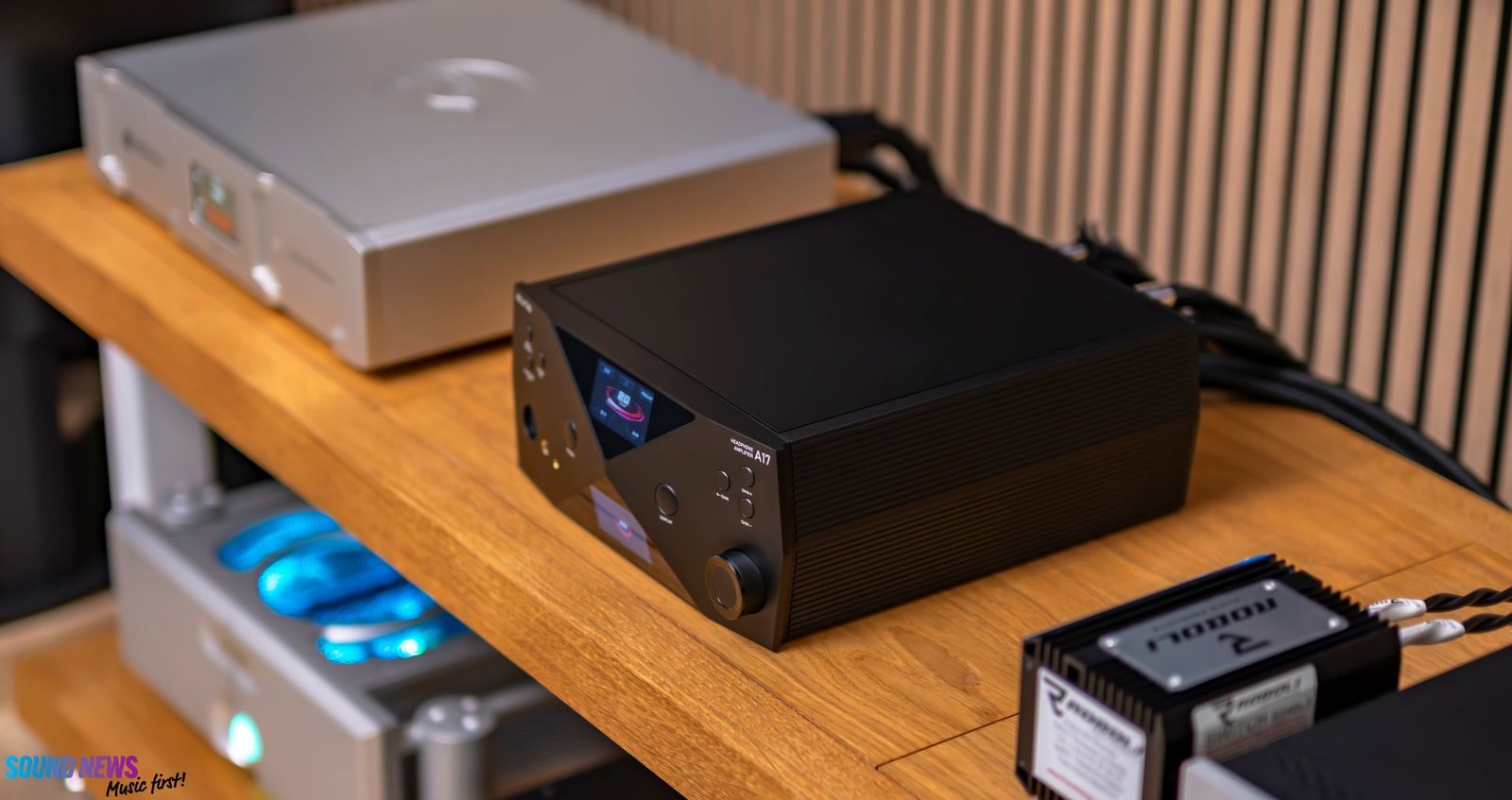
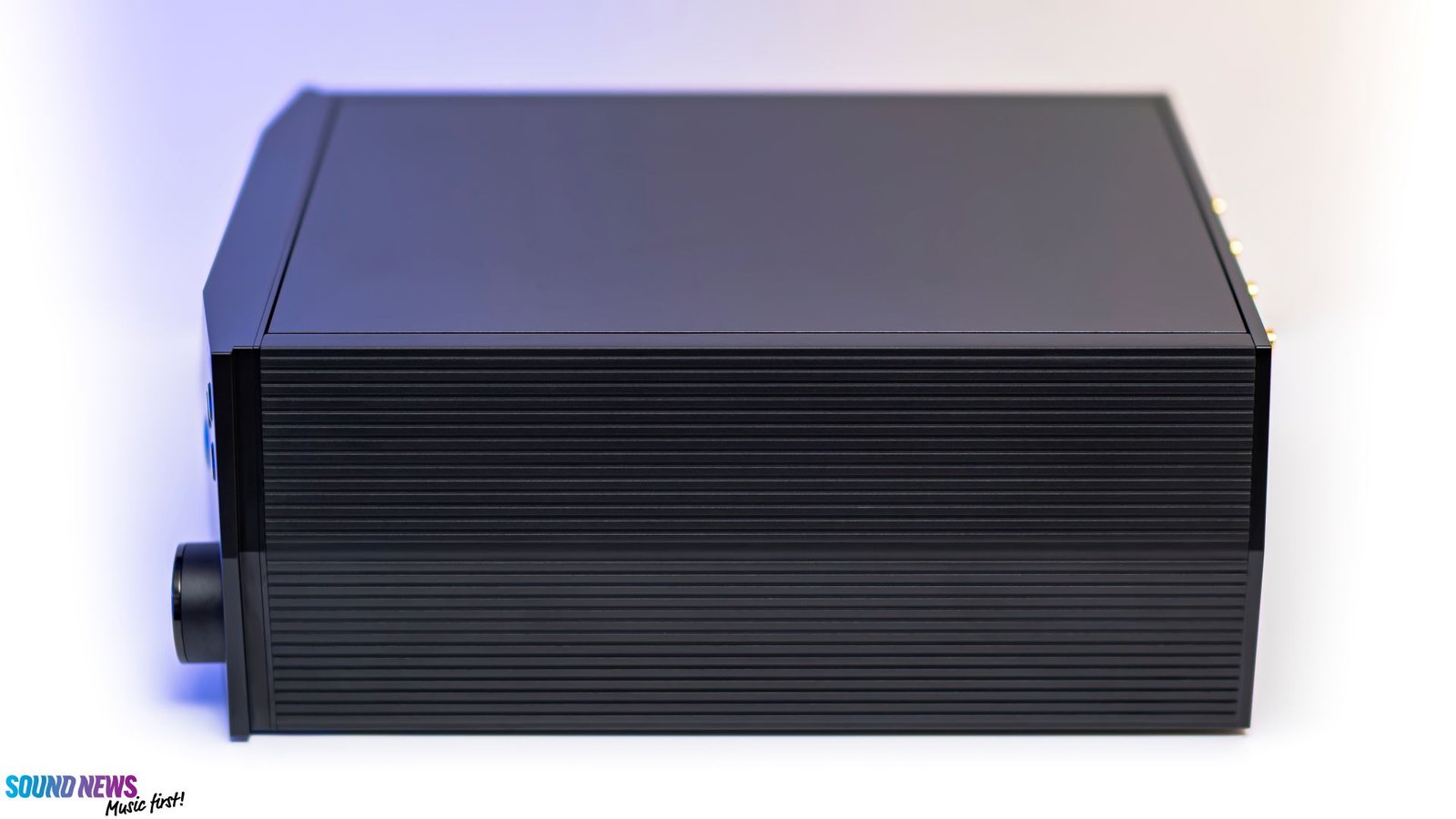
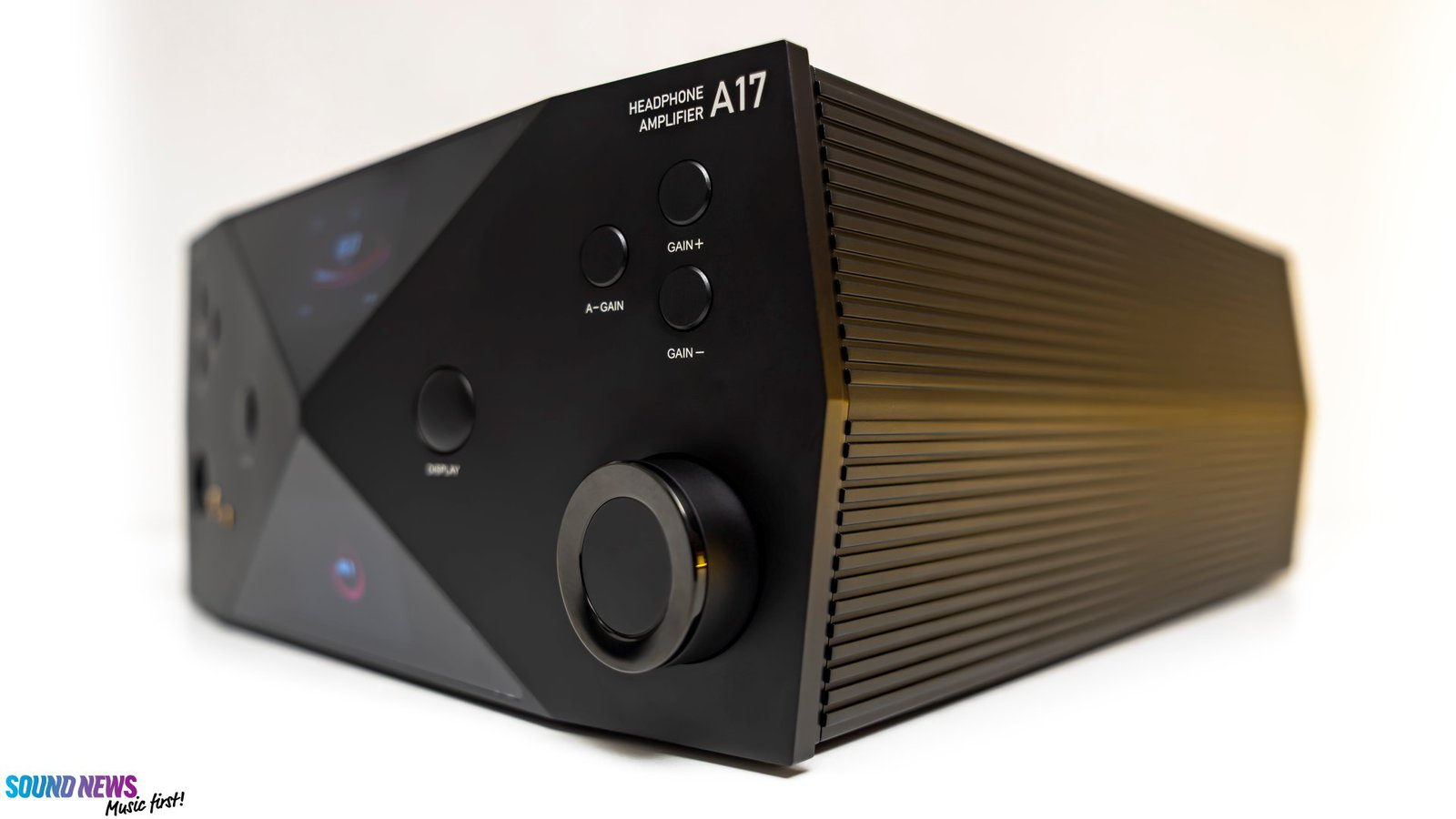
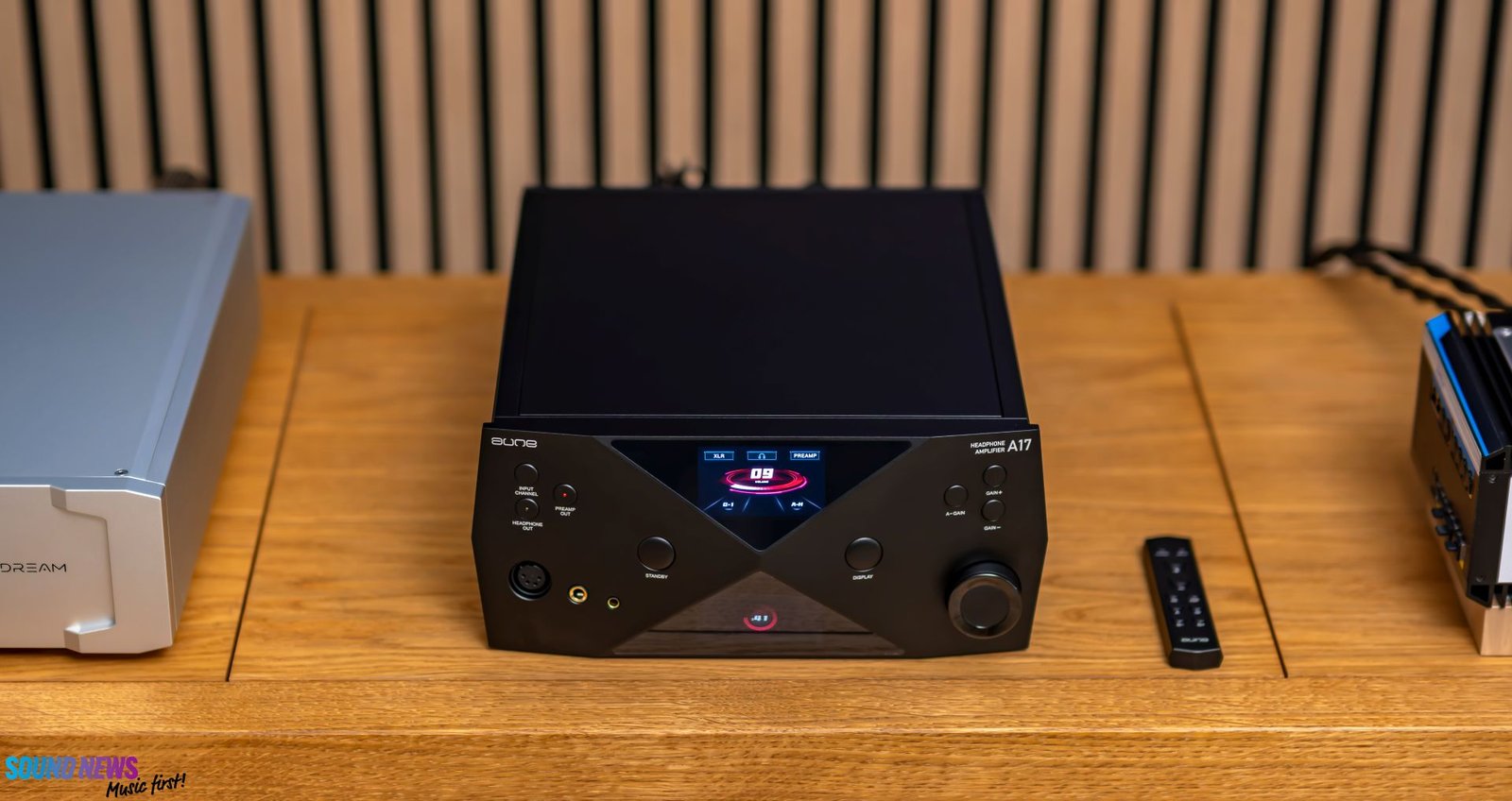
Aune has been using the same rounded, CNC-machined aluminum design language for several generations, and I always liked it. It all started with the S6 and S7 back in the day, and that exact look carries through to their latest S17 PRO EVO and S18, immediately recognizable as Aune products, with curved sidewalls, compact footprints, and a slightly futuristic appearance. The A17 takes a different road altogether. It is taller, deeper, much heavier, considerably more imposing, and visually more aggressive. At roughly 290 × 345 × 130 mm and weighing 15.7 kilos (or 34.6 lbs.) a piece, it’s no longer an amp I would casually squeeze underneath a monitor.
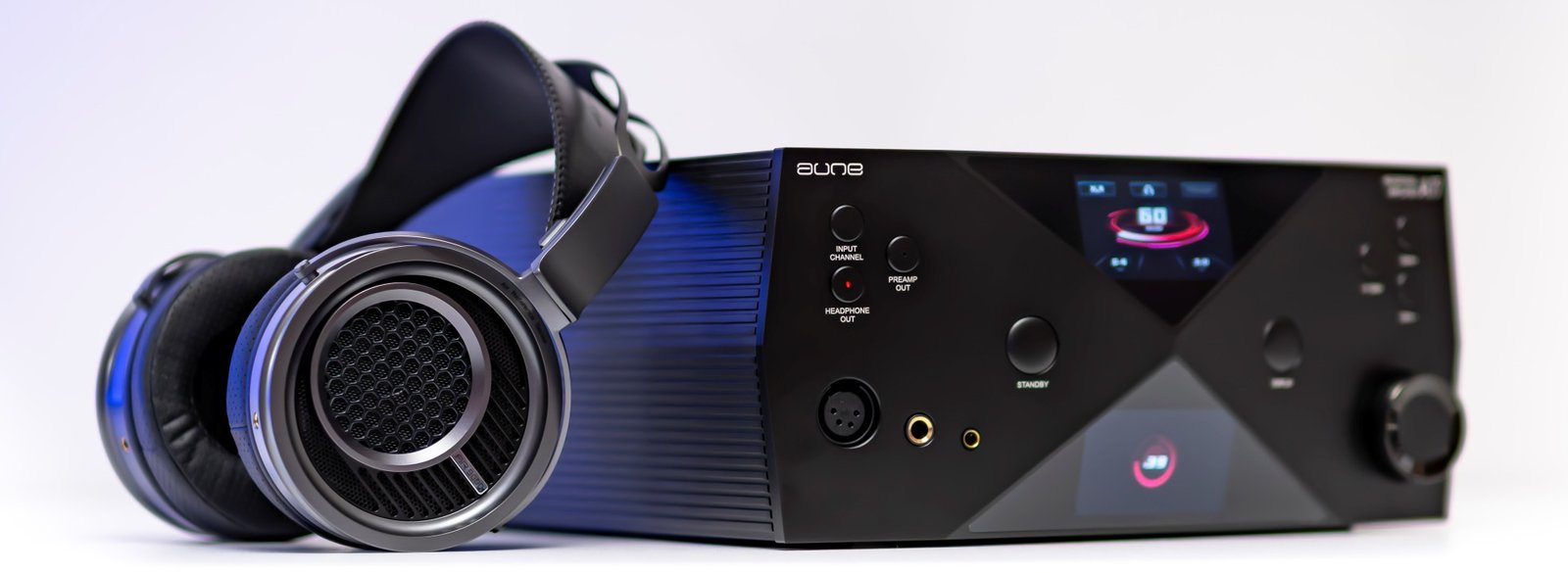
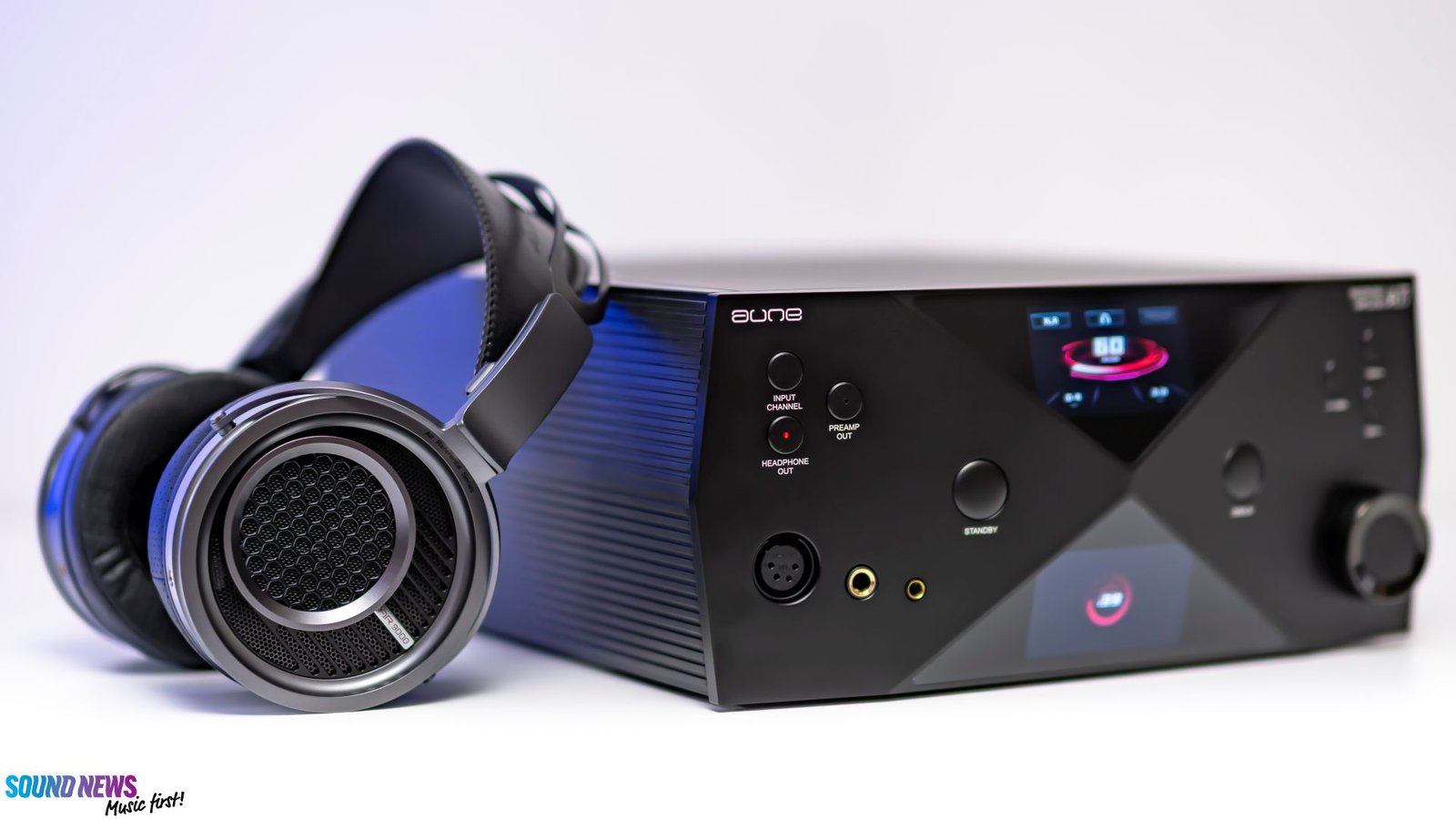
The first thing grabbing your attention is that crazy front panel. Aune describes the new aesthetic as Mecha-inspired, and for once I think the marketing department had its coffee before writing the brochure. Sharp diagonal lines intersect in the middle, dividing the fascia into several geometric sections, while the centrally mounted displays (yes, plural!) almost make the A17 look like an amplifier staring back at you. Play an angry soundtrack, give it two legs and it could probably defend the Chinese coastline from scary Kaiju. Jokes aside, its enclosure is made from thick aluminum and, more importantly for a proper Class-A design, large heat-sinks run along the enclosure using all of that metal mass to spread heat away from the internal components. That matters a lot, since the A17 is designed for continuous true Class-A operation rather than occasionally jumping between operating biases when things get spicy. And while, yes, it gets warm, it doesn’t get blazing hot. This time, Aune clearly approached thermal management as part of the original design rather than something to solve afterward. After letting it operate for 12 hours straight, the internal temperature never went higher than 48 degrees Celsius. That’s particularly satisfying, especially considering the hot summer days and the higher room temperature. The A17 feels conceived from day one around dissipating a lot of heat, and visually those massive heat sinks leave little doubt about their intentions.
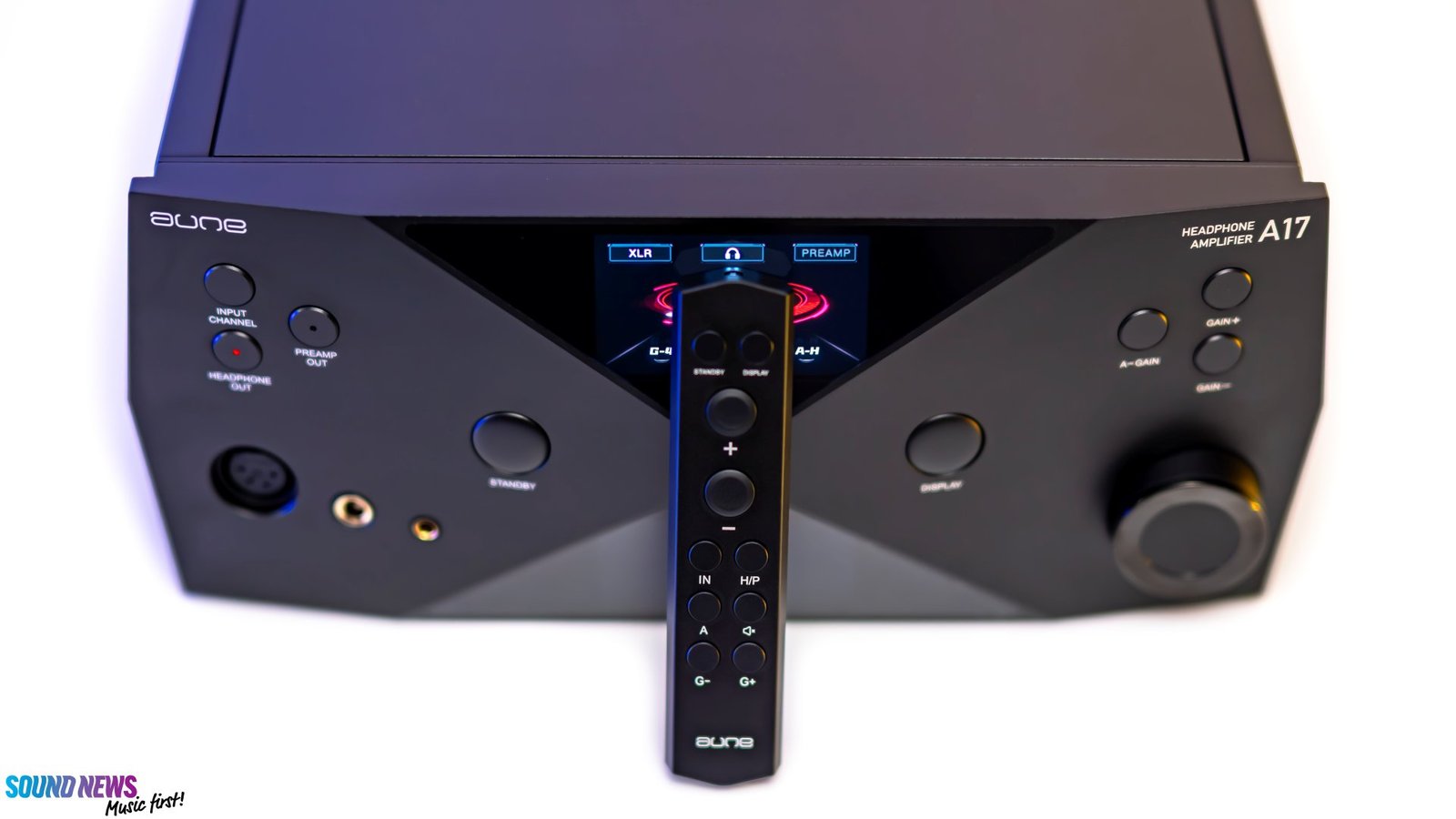
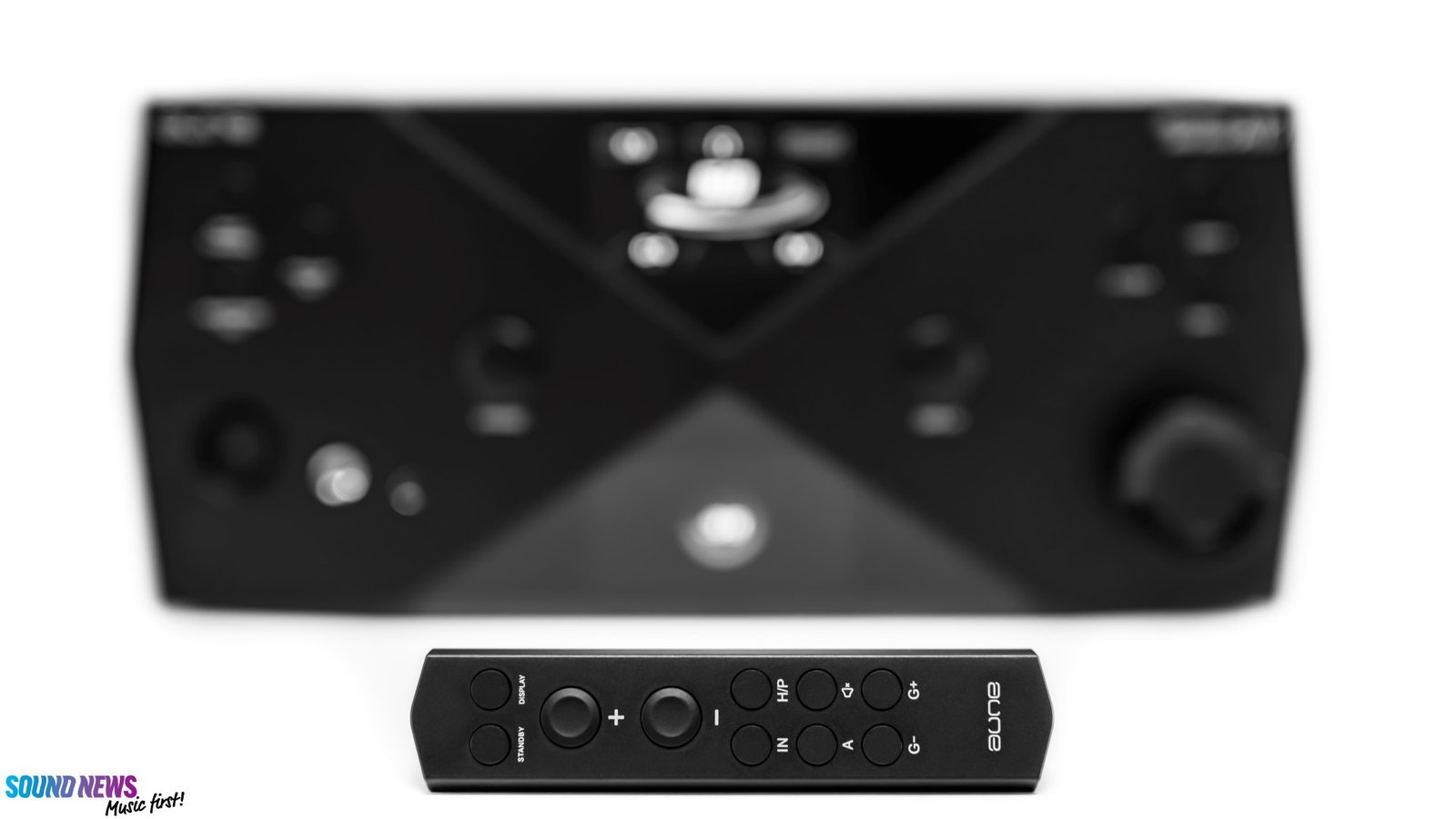
The front panel might look complicated with 8 buttons spread all around, but living with it proved surprisingly simple. Rather than hiding everything behind one multifunction knob and requiring the user manual to be within reach, Aune went for a refreshing one-function, one-button philosophy. Standby, input, HP and PRE output, gain +, gain -, current mode, and display functions receive direct controls, and the supplied aluminum remote follows the same logic. I reviewed enough HiFi equipment where changing a basic setting requires holding one button for a couple of seconds, rotating a knob while facing north, and sacrificing a small goat to the firmware gods. Sometimes I want to press GAIN and change the gain, and that’s what I’ve got on the A17. Another major departure from the S17 family is the display implementation. The A17 uses a dual-display arrangement that shows volume together with operating information such as gain, current mode and active inputs or outputs. Aune already highlighted the dual-display interface when the A17 was first announced, and in person it fits the angular front panel surprisingly well.The volume wheel sits proudly on the right, and in case you’re wondering, it’s a 99-step R2R system built around a JRC MUSES72323 electronic volume controller. From an ergonomics standpoint, having 99 positions is already a meaningful improvement over the 64-step arrangement I lived with on the S17 PRO, especially when dealing with vastly different headphone sensitivities or using the A17 as a preamplifier.
The package also includes an aluminum remote control rather than a plasticky one you want to throw in a trash bin a microsecond later. Again, it’s a small detail, but on a flagship product, these details are becoming important. Everything from its dimensions and cooling arrangement to its controls, displays, and sheer physical presence communicates that Aune wanted a clean break from its affordable desktop lineup and personally? I dig it! It’s unapologetically big, slightly crazy, and wonderfully overengineered all around.
Controls & Connectivity
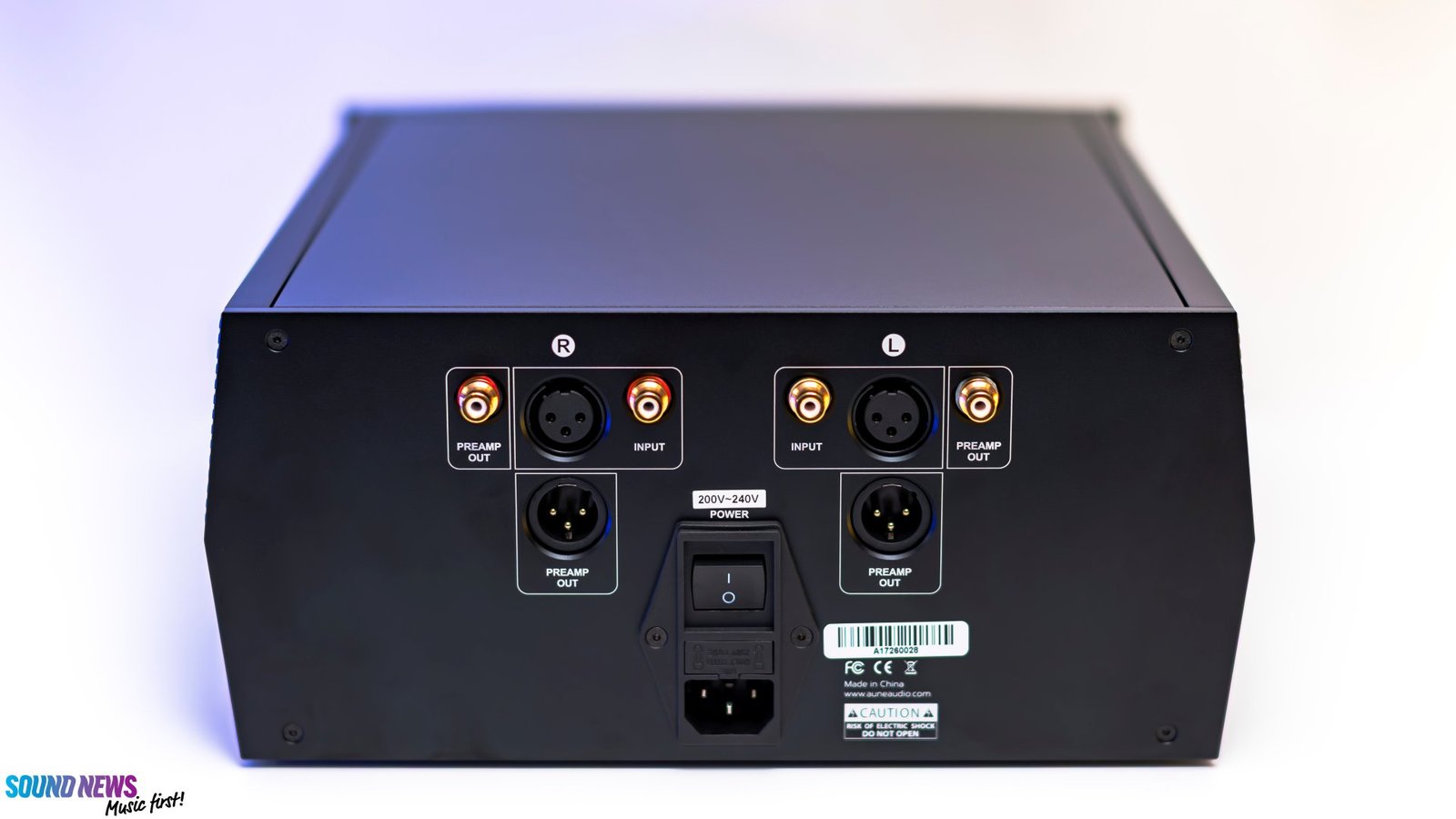
Speaking of inputs and outputs, on its front panel you’ll find a balanced 4-pin XLR, a balanced 4.4 mm Pentaconn, and a regular 6.35 mm single-ended output. Basically, unless your headphone cable terminates with a banana plug or something recovered from a Soviet submarine, you’re fully covered.
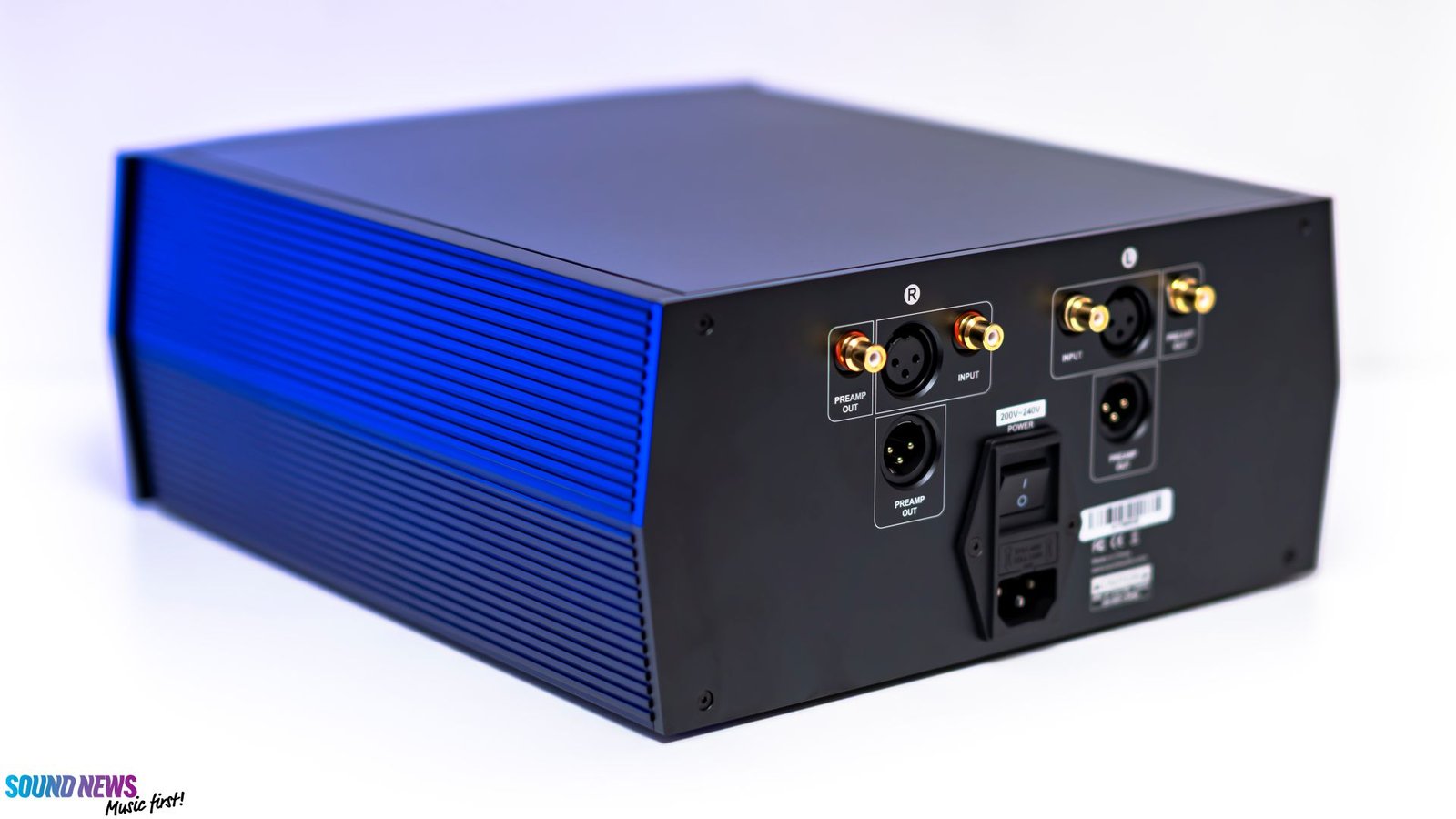
Flip the beast around, and things remain equally straightforward. Both RCA and balanced XLR analog inputs are provided, accompanied by a mirrored symmetry of RCA and XLR preamplifier outputs, meaning the A17 isn’t merely pretending to be a preamp as many headphone amplifiers do; this one was designed from the very beginning to perform both jobs equally well, but more about that in a jiffy.
Under its Hood
If you remember the S17 PRO, its recipe was already unusually ambitious for its (affordable) price: a fully discrete, fully balanced amplifier stage, Class-A operation, a linear transformer, an R2R volume control and enough power to properly drive planar-magnetic headphones. The EVO mostly refined that same formula rather than starting again from scratch
The A17, however, is a different beast altogether, and let’s discuss that. At its core, it remains a fully discrete Class-A headphone amplifier, meaning Aune isn’t relying on integrated operational amplifiers (op-amps) to do the heavy lifting. The amplification stage is built from discrete devices and operates with a substantial standing current flowing through it even when music isn’t playing. That is inefficient, produces plenty of heat, and will certainly not make Greta Thunberg send Aune a Christmas card, but when executed properly, Class-A operation keeps the output devices inside their most linear operating region and avoids the crossover behavior associated with conventional Class-AB designs. Aune officially describes the A17 as a fully discrete Class-A flagship. Meaning, this time they went considerably further with the bias current.
Aune specifies up to 0.6 Amperes of Class-A current per channel, which is a serious number for a headphone amplifier, considering the S17 PRO EVO offered only 0.1 to 0.2 Amperes. You can choose between two Class-A current settings, allowing the amplifier to run less aggressively with easier loads or unleash the full artillery strikes when difficult planar magnetics come close. Aune also provides four gain settings, giving substantially more flexibility than the simpler gain structure of the S17. G1 or low gain starts at 5.8 dB, which should work outstandingly with high-sensitivity IEMs or when operating it as a stereo preamplifier; G2 offers 9.2 dB of gain; G3 moves to 11.6 dB; and G4 up to 13.5dB of gain. I like that there isn’t a big difference between all of these gain positions, meaning you won’t blast a hole into your eardrums when accidentally moving from G1 all the way up to G4.
The A17 offers 11,5 Watts into 32 Ohms and 1,26 Watts into 300 Ohms; pause and re-read this sentence, because not many amps can show off their muscles as much as the A17 does. It’s the Mr. Olympia if you take into consideration its weight class and price. More importantly, however, is how much effort Aune apparently invested upstream of those output devices. Instead of the comparatively modest power supply used inside the S17 PRO, the A17 moves to dual transformers backed by a massive 80,000 µF capacitor array. The main toroid is a 100 Watt transformer powering the entire analog stage, and the capacitor array effectively becomes an energy reservoir sitting between the transformers and the amplifier stage. When music suddenly asks for considerably more current, say a kick drum exploding from absolute silence to peak SPL, then the amplifier can draw from that stored energy rather than wait helplessly for its power supply to catch up.
Does having more capacitance automatically guarantee better sound? Of course not. Otherwise, reviewing headphone amplifiers would be incredibly easy, but a strong power supply gives the amplifier better conditions in which to operate, particularly when current demand changes violently. Considering the kind of headphones I intend to connect to this beast, having an 80,000 µF reserve certainly isn’t something I’m going to complain about.
Volume control also received flagship treatment. Instead of dropping a cheap potentiometer directly into the signal path, Aune continues with a MUSES-based R2R volume-control architecture, now offering 99 volume steps instead of 64, meaning I can more easily appreciate how much power and headroom is still available when driving difficult loads, and this is genuinely useful. The signal can ultimately be routed toward the headphone outputs or to the preamplifier outputs, another detail showing that Aune considers the A17 a genuine headphone amplifier and stereo preamplifier. Put everything together, and suddenly the physical size of the A17 starts making considerably more sense. Most importantly, this isn’t engineering created for an impressive spec sheet. Because all of the internal components have only one job to do: disappearing when I press Play, and that, ladies and gents, is precisely what I’m going to do next.
Test Equipment
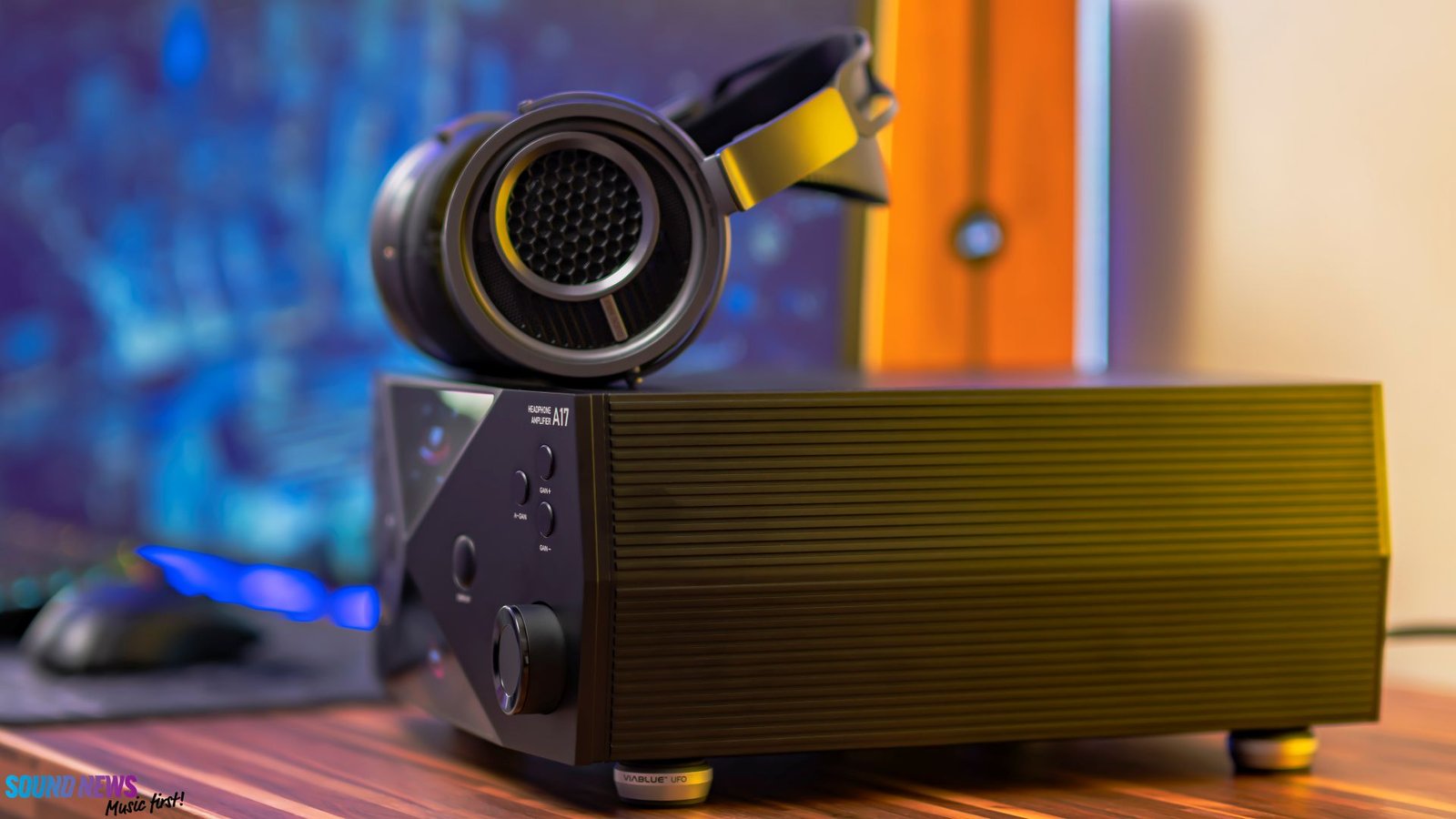
Before you ask, the A17 was primarily used in a head-fi battle station, but I also tried it as a preamplifier in a well-thought-out stereo rig. This is a flagship solid-state headphone amp, which is why it was imperative to use it with as many headphones as possible, ranging from dynamic to planar-magnetic ones, available in both closed-back and open-back configurations. For the sake of science, I will also test its noise floor with a few ultra-sensitive IEMs, but most of my testing will circle around a pair of HiFiMan Susvara OG, Audeze LCD-5S, T+A Solitaire P, Bandoss Avija, HEDD GT TWO and Aune’s own AR9000 flagships.
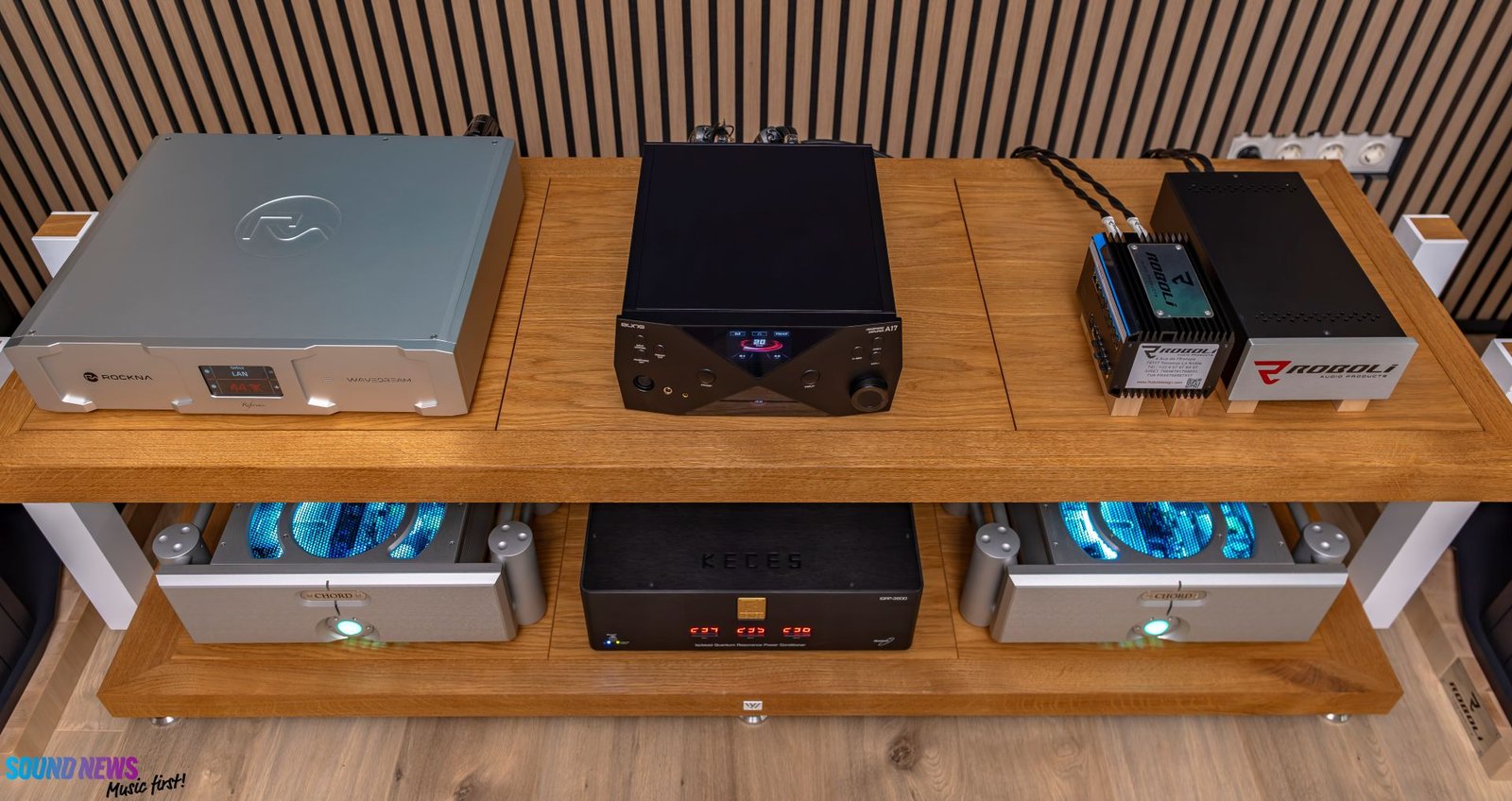
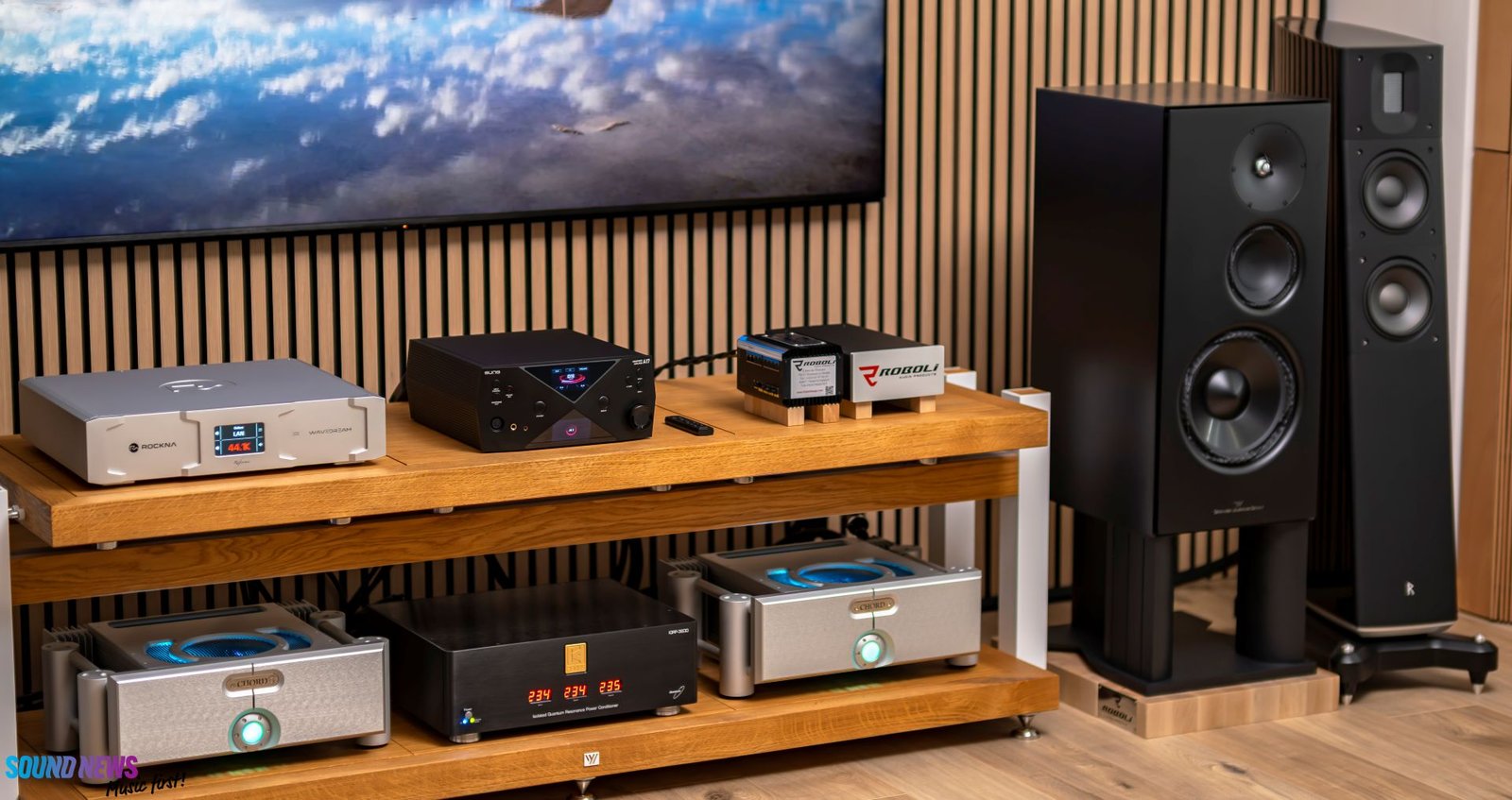
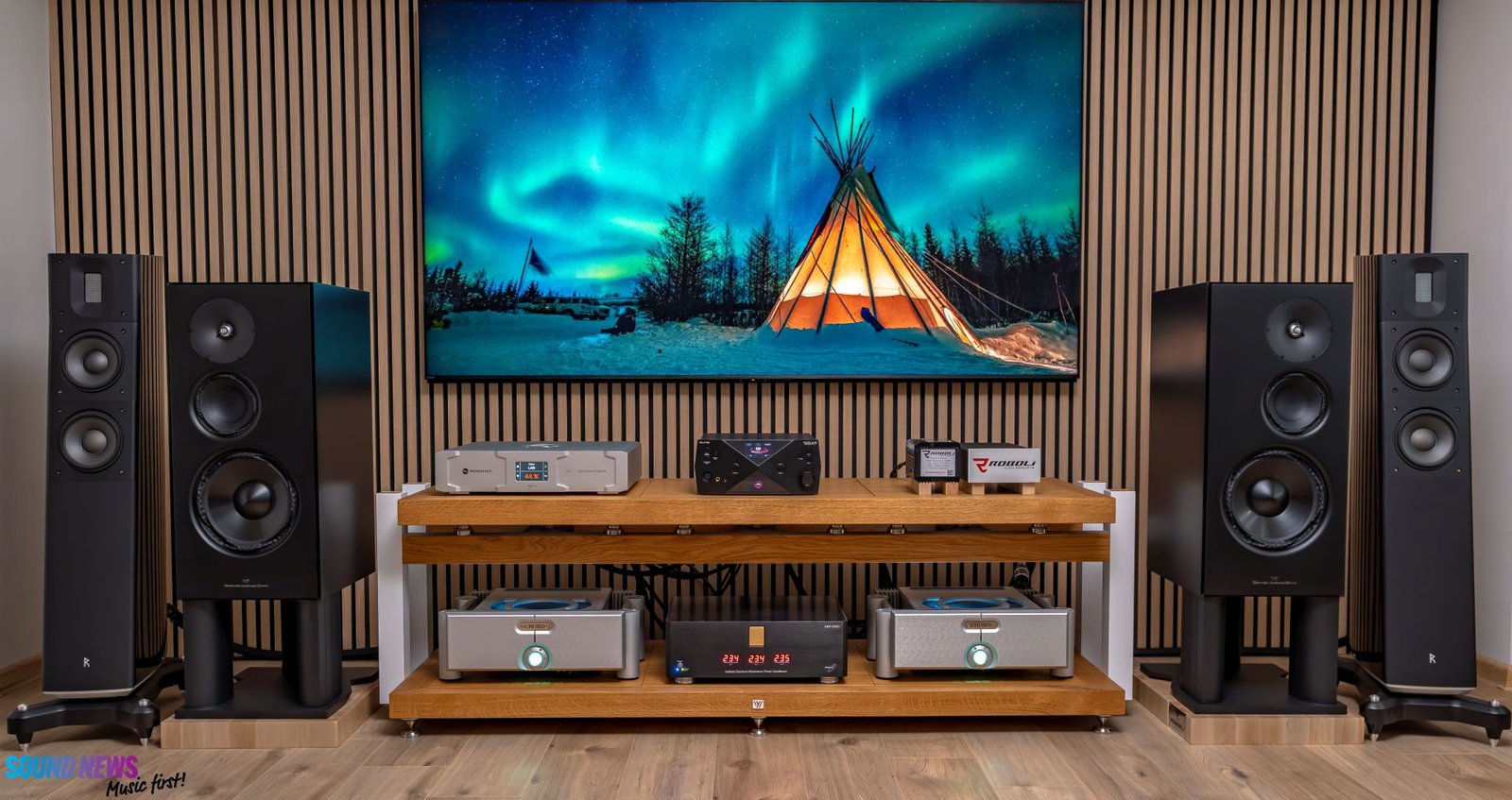
In the living room, the Rockna Wavedream Reference Signature served as both a wired streamer and DAC, followed by the A17, which replaced a Chord Electronics ULTIMA PRE controlling two Chord ULTIMA 3 monoblock amplifiers. Raidho TD2.2 and CLC.Audio CLC65 were my loudspeakers of choice, playing tunes for a month before writing a single word. All cabling used was from the AudioQuest Dragon range (power, interconnect, HDMI, and speaker cables). Everything was also powered by a KECES IQRP-3600 balanced power conditioner.
Everything should be as clear as the blue sky, so what are we waiting for? Let’s hit those eardrums already.
Sound Performance
I. Preliminary Sound Impressions
If you’ll have a look around here, then you’ll notice that most headphone amplifier brands have already been tested by yours truly. Not every single one of them, of course, because that would be nearly impossible, but the important names in headphone amplification have already made their way into our articles and videos. And it’s no secret to anyone that I love fiddling around with my stereo and head-fi battle station, and I hope you’re as mad as I am because as long as I breathe, I’ll probably keep investing time, money, and brain power into building better-sounding HiFi systems. Some completely unrelated individuals to HiFi might associate this behavior with an obsession, but it isn’t. It’s called dedication, love, and appreciation; at least that’s what I keep telling myself. Over the years, I’ve collected all sorts of headphone amplifiers, and that whole journey started with the HiFiMAN Susvara back in the day. There weren’t many amplifiers capable of properly driving them, and even today, not every amp is able to fully energize those golden diaphragms and inject a healthy dose of dopamine straight into my bloodstream. So, year after year, I started adding one amplifier at a time to my collection, and somewhere along the way, I realized that owning several amplifiers actually made perfect sense, as not a single one of them sounds exactly the same. They all have their own personalities and quirks. Some are stronger than others, some possess much higher headroom, some prioritize speed and control, some seriously alter their tonality, while only a handful stop putting music under a microscope and instead allow me to roam freely and simply go with the flow.
Some of you might know that I was a solid-state guy back in the day, then little by little, I moved toward top-grade vacuum-tube amplifiers because I felt that solid-state designs were no longer giving me the warmth, flow, and emotional connection I was craving. But something interesting happened along the way. The whole HiFi industry started moving in that same direction I was moving! Just look around you. R2R DACs have become the norm for many of us, fully discrete amps are now everywhere, while regular op-amp-based designs are slowly fading away. Year after year, Class-A bias currents have been climbing higher and higher, power ratings have increased, and many of the drawbacks I associated with solid-state amps ten years ago are slowly being chased down and hammered into the ground.
What’s even more interesting is that today, some world-class solid-state amps are becoming almost unrecognizable from world-class tube designs. Gone are the days when buying an expensive solid-state monster automatically meant accepting a hint of sharpness, some listening fatigue at higher volumes, or a misty fog appearing over heavily crowded passages. And maybe this sounds a little arrogant, but I genuinely believe that enthusiasts like me and you played a role in pushing manufacturers in that direction. Only a couple of months ago, I decided to purchase yet another solid-state amp because, frankly, nothing else sounded quite like it. I’m talking about the Audiobyte SuperHEAD, which remains one of the purest and most refined solid-state amplifiers I’ve encountered. Ironically, it sounds more tube-like in nature than what many people would consider a traditional solid-state design.
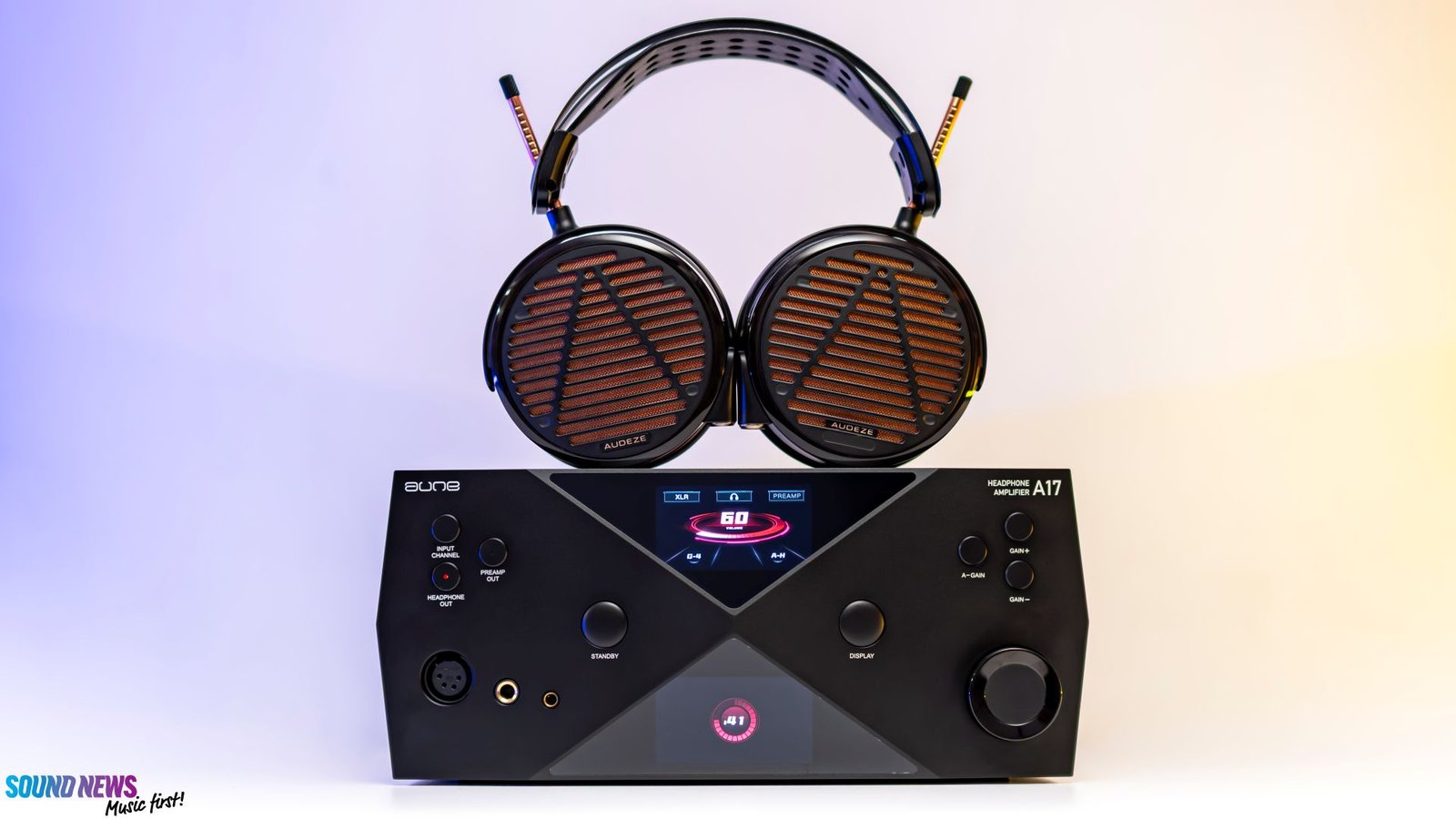
And this rather lengthy introduction to the Aune A17 serves one single purpose. I want you to understand that there is absolutely nothing wrong with owning several headphones and amplifiers, provided they offer you different perspectives on your music. Different DAC + AMP combinations make you think, explore, and remain curious. They remind you that this hobby isn’t only about chasing a higher percentage point of technical performance. Sometimes, it’s simply about discovering another way of experiencing the same song. I don’t think I need to mention every amplifier that passed through my hands over the last decade, but if you asked me today to describe a solid-state amplifier that combines the sweetness, warmth and natural flow of vacuum tubes with the speed, control, resolution and sheer technical ability of a flagship transistor design, then one amplifier would immediately come to mind and that is the Aune A17.
And I know, I’ve used similar metaphors when describing Audiobyte’s SuperHEAD, and there’s a good reason for that, because when talking about their tone, timbre and flow, then the A17 and SuperHEAD are actually much more similar than they are different.
II. Driving Power
For the past two months, I attended around 10 live concerts, and at half of them I went with my 12-year-old headbanger, because we need to teach the younger generation how to appreciate and eventually fall in love with the strongest and most valuable art form that ever existed on this planet. And the summer is not over yet! I still plan on going to a few more concerts because it’s the activity that really unites all people, regardless of race, political view, or religion. Music is instant! And while we are slowly fading away, music will always remain…eternal.
There’s another reason why I tend to play with new amplifiers of all sorts on a weekly basis, because I am trying hard to replicate the live events that blast so much energy throughout my body. Of course, I won’t be able to recreate the live event with hundreds of speakers blasting in my direction with the crowd chanting every single word in unison, but still, the crazy dynamics and music’s power can still be replicated with top-notch amplifiers, headphones, and speakers.
As I have already explained a couple of times, a single Watt from amplifier X will never be equal to a single Watt from amplifier Y, because there are way too many factors at play. If we look strictly at power ratings from the S17 PRO EVO to the A17, then the power increase might not seem earth-shattering at first. The S17 PRO EVO was already capable of delivering up to 7.5 Watts, while the A17 goes all the way up to eleven, literally offering 11 Watts and a half into the same 32 Ohm load. That’s roughly a 53% power increase, which is certainly impressive, but nothing that would explain all of the improvements I’m hearing.
However, once we have a look at the current output, things get much more interesting. The S17 PRO EVO could run at up to 200 mA of quiescent current, while the A17 goes all the way up to 600 mA! So yes, the available Class-A current has tripled on their flagship amplifier. And that matters a lot more than another watt or two, especially when discussing planar-magnetic headphones. Planars generally love a healthy dose of current; the more = the better. Give them sufficient voltage but starve them of current, and they will get loud, but they’ll strip life out of your tunes, they’ll lose their nerve and their bad attitude, and I’ve heard that countless times by now. But give them the current they crave, and only then can you truly feel the force behind those drivers, relentlessly kicking your eardrums as if there’s no tomorrow, and let me give you a couple of examples.
The original HiFiMan Susvara still belongs in my headphone stable, even if there are already a couple of headphones that offer similar technicalities, even at a more affordable price. I still keep them around because there’s no other headphone that pushes headphone amplifiers as much as these do. Slowly, they became my benchmark for how I view desktop amplifiers; if they drive them well, then the first test passes with flying colors, and if they don’t, then I’ll pack it up and send it back.
It won’t be a surprise telling you that the A17 easily juggles with the Susvara OG, because their S17 PRO and PRO EVO did the same thing. True, but the music’s force and dynamics that follow shortly are (much) stronger on the A17, to the point of almost calling them bass-heavy. The rhythmic vibes definitely wake up on the A17, and Susvara seems to respond quicker to micro shifts in dynamics, and there’s simply additional oomph and weight in the lowest octaves. The bass is without a single doubt the real star of the show here, as it’s a bit stronger than what I usually hear on the Audiobyte SuperHEAD, and it is quite similar to that of the Burson Soloist Voyager MAX. The real question isn’t if the A17 drives the damn Susvara, because it easily does that without even arriving at its upper power limits; the real question is if these sound any better? They did on the Feliks Envy Susvara Edition (its name spoils all of the fun), but when it comes to solid-state electronics? The A17 is easily sitting on the same podium with the very best solid-state amplifiers I’ve heard, and I’m not pulling strings or mingling with words right now.
The highest volume I could reach was 75 out of 100 steps available, and mind you, I love taking a beating, kicking the volume higher than usual. A safe listening volume of 90 dB would mean lowering the volume to around ~68, so again, lots of headroom still remaining. And the rest of my flock? Absolutely phenomenal sounding, starting with the T+A Solitaire P, Bandoss Avija, Audeze LCD-5S, Sennheiser HD800S, HEDD GT TWO and finishing with the brand-new Aune AR9000 open-back flagship cans.
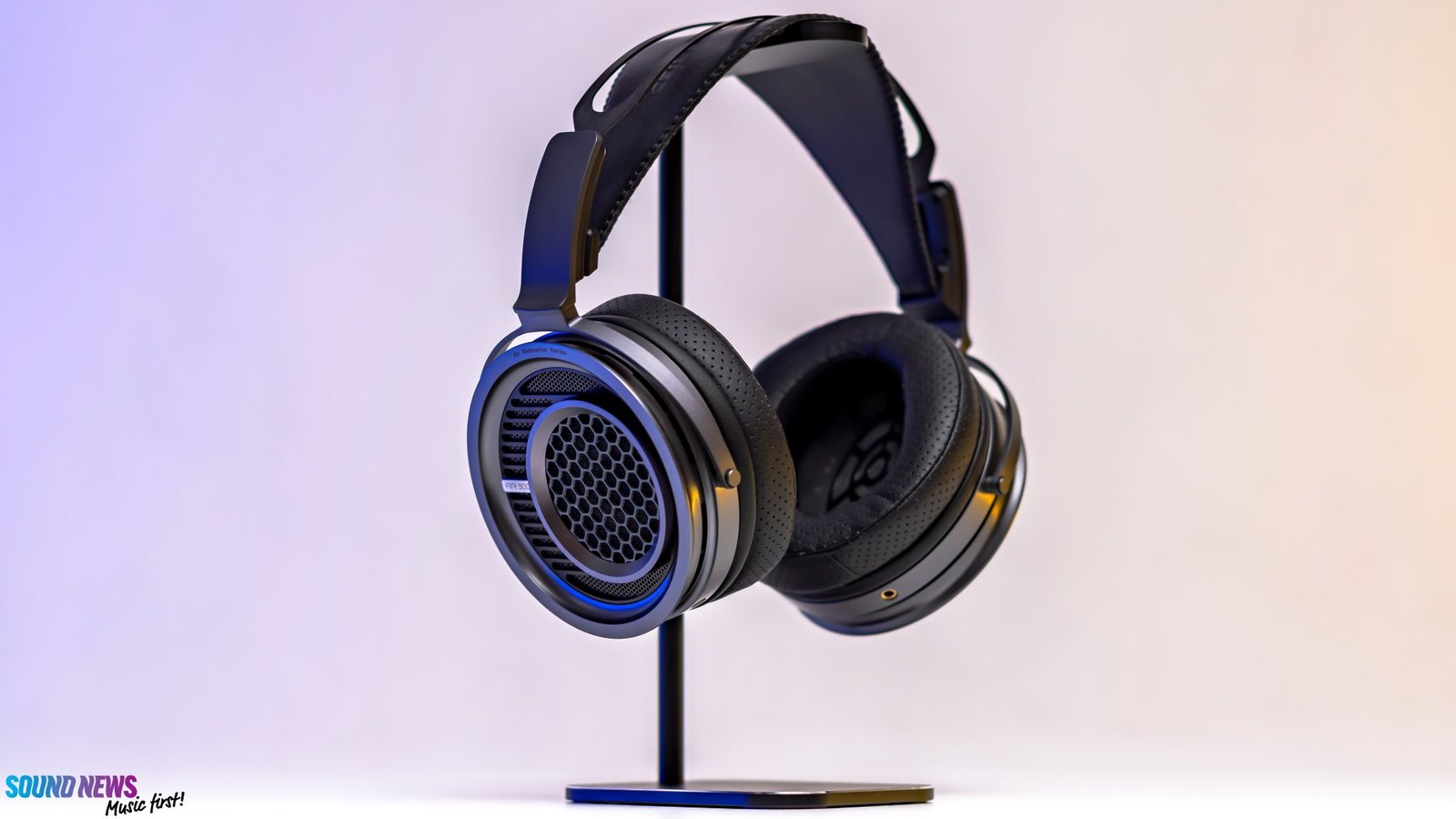
Unlike the aforementioned planar beasts, the AR9000 uses a custom 50 mm dynamic driver using Aune’s Omni-Stack Carbon Diaphragm and a patented motor system designed around unusually long, linear excursion – similar to what I usually see on top-of-the-line loudspeakers. I have already heard the AR9000 at two HiFi shows across Europe, but in a noisy environment like that, I couldn’t quite comprehend how impressive these can get with the A17; but once I let them dance together on bass-intensive tracks at home, I was stunned by the physical acoustic qualities of the AR9000. Yes, physical, because I was no longer just hearing bass reaching subterranean 20 Hz notes; I was feeling my eardrums moving so fast, getting bombarded with tons of low-end rumble. It was weird at first, but it became pleasing and entertaining after a few seconds. I usually get this kind of sound with my reference Raidho TD2.2 loudspeakers, and even more of that comes out of the CLC.Audio CLC65, but getting a physical manifestation of music from a pair of open-back headphones? That’s a first in my book, and yes, an AR9000 video review will follow shortly; you’d better subscribe to our channel so you won’t miss that funky video.
The bottom line is really simple! The A17 has gobs of power under its hood, more so than many flagship headphones will ever need. With the AR9000, I could easily drive them on the lowest gain position (G1), and still, there would remain a ton of headroom on the wheel; even Susvara OG and Mod House Tungsten will rarely need the highest gain setting (G4), but it’s great to have it for future-proofing. You never know how much crazier headphone manufacturers can get nowadays, but with the A17 on your table? You can sleep tighter than a cute toddler.
III. Dynamics & Transient Response
Discussing dynamics on a beastly amplifier like this is like discussing velocity on a hypercar. They go hand in hand, and when there’s so much horsepower under its hood (11.5 Watts per channel), that’s almost synonymous with powerful dynamics and will awaken some headphones from a sleepy state. Everybody likes a good bass delivery that puts a wide smile on your face. Come on, reveal the inner truth; don’t lie to yourself. All of us like some of that energy tingling our senses.
And while I’m no bass head in the direct meaning of the word, I really like when the bass isn’t only layered and clean, but also when you can feel the full force and driving power behind it. Unfortunately, very few amplifiers are truly unlocking this region to their true potential. Some amplifiers deliver squeaky clean bass lines but forget to deliver the thunder on heavy bass notes. Others will deliver a slow-moving, old subwoofer-like bass, but with little to no information emanating from the lowest octaves. It’s no bueno in both cases, because we need both the energy/kick and the information buried in that region to call an amplifier dynamically impressive. Usually, the component quality and the signal path dictate how clean an amplifier can get. The higher the quality of the internal components and power supply, the lower the internal resistance of the amplifier, which unlocks the beauty of the music in its purest form. And as you well know, music is not always calm and soothing; sometimes it’s a force of nature. It can get wild and unpredictable, and that’s exactly what an amplifier needs to do. To leave music unpredictable and scary, sometimes you need to fear the volume knob, with a joker smile adding a few more dB and leaning back on your chair. That’s what dynamics truly are, and if this is something you’ve never felt by now, then maybe it’s time to check what the fuss is about these “all discrete Class-A” amplifiers like the A17.
When discussing dynamics, over the years I’ve realized a thing that stood out. If the music sounds effortless, if it sounds right, if you no longer think about the frequency response entirely, then that, my friends, is truly what dynamics need to do. They need to work flawlessly without your consent or intervention. If the music needs to be wild, the wow factor should flood your body with positive vibes; and if the music needs to be gentle and emotional and your mood shifts to another direction, that’s again what dynamics, together with pace, rhythm, and timing, need to do. As when everything plays as one, without stutters, without remaining behind or running ahead, then you’ll get the perfect dynamics, with all of its pluses and minuses. With all of its grittiness, aggressiveness, refinement, and mellow attitude. It’s all of the above, all at once, and that, my friends, is what the A17 delivers with every tune I have in my collection. I’m usually adding a couple of tracks just to make my point understood, but I feel that’s unnecessary with the A17, because it’s always effortless in its presentation, it’s always powerful or gentle when it’s needed and never for a second, I felt that it was losing a beat or two, it never slowed down on aggressive tracks and it never went overboard with the low-end rumble. For me, this is a solid 10 out of 10!
IV. Noise Floor
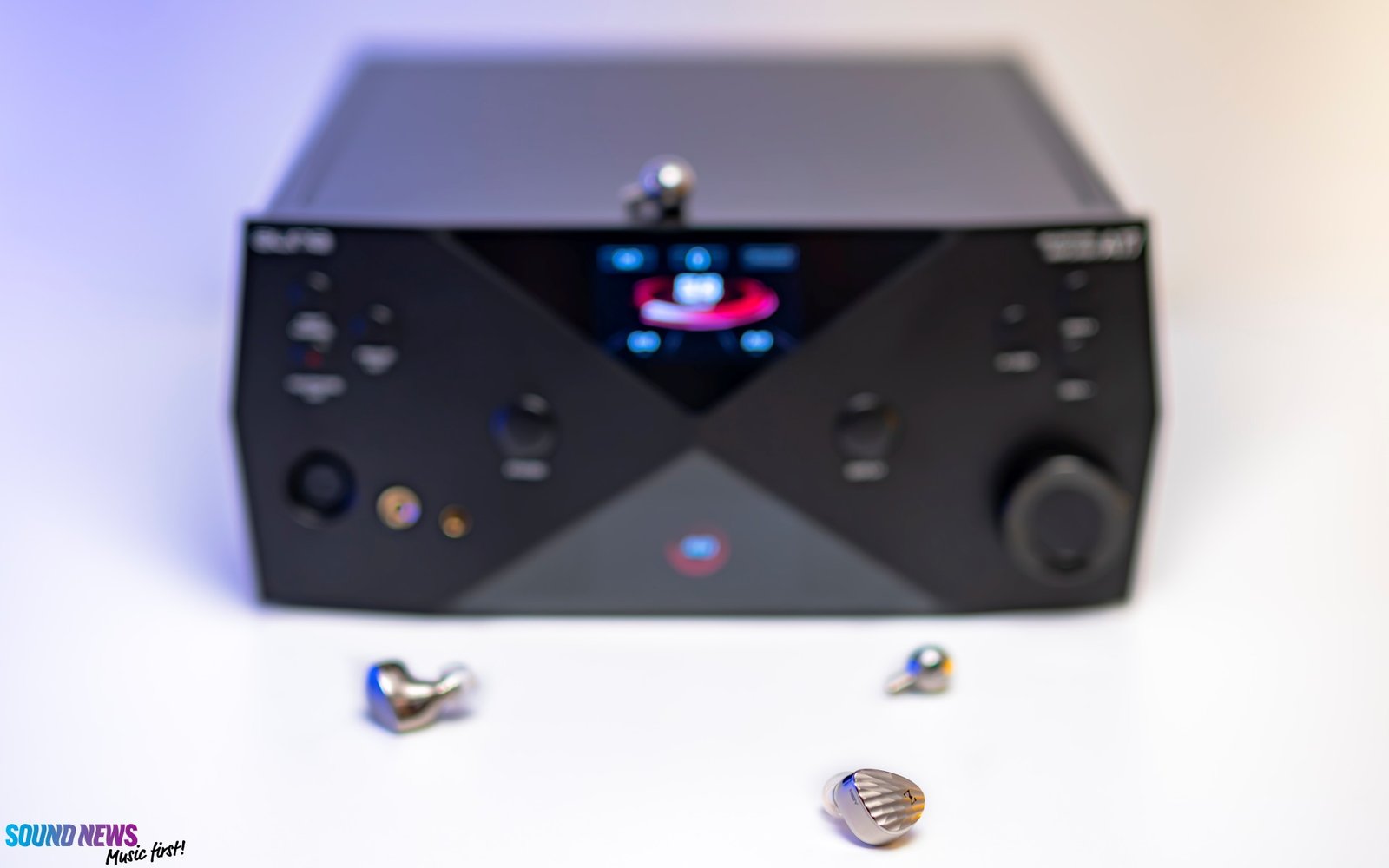
You know what I always liked about true Class-A amplifiers? It’s the fact that their power transistors are always engaged, working at full potential even when there’s no incoming signal or load attached. Once powered on, the power transistors never switch off as Class-B designs do, meaning that even without music playing, you can easily appreciate if some noise or hiss is coming through once inserting a pair of ultra-sensitive IEMs. You can’t always do that with Class-AB designs, because with no music playing, they are shutting power transistors, making you feel that there’s no noise whatsoever when pausing mid-track, a clever trick that Class-A designs never apply! And sure enough, I don’t ever need to engage a track or two on the A17, because at the highest gain position (G4) you can already hear a faint white noise covering your listening space. Once you lower the gain one step at a time, you can also hear the noise gently going down in intensity, but for that you will need a pair of ultra-sensitive IEMs, usually a pair that uses electrostatic drivers to deal with the upper treble region, as these drivers are usually more sensitive and susceptible to noise coming out from downstream equipment. In my case, it was either the HiBy ZETA 2 or the FiiO FX17, and occasionally a pair of Meze ASTRU stepped into the light. The results were always similar, and all of these IEMs sang the same story in unison; from G4 to G2, there is some low-intensity white noise coming forward, but it was “clean and pure” without hearing any pops or crackles.
Switching to the G1, the white noise stops altogether, and I can no longer hear it, even when inserting and disconnecting IEMs from the 4.4mm Pentaconn jack or even when cranking the volume all the way up. As long as you remain on the G1 gain position, you won’t be able to stop a noiseless background regardless of the headphone jack used on the IEMs connected to it. Obviously, there are more sensitive IEMs out there in the wild, and I don’t know how these will perform on the A17, but it’s safe to say that the A17 is an IEM-friendly amplifier and can be easily used with a plethora of IEMs, if you are one of these brave souls. I don’t use IEMs so often; I believe open-back headphones offer you so much more, especially in terms of physicality and stereophonic effects, but to each their own. You can definitely do that on the A17, and it will never muddy things up.
V. Resolution & Inner Detail
The A17 uses a twin JFET input stage, six power transistors working in three pairs in parallel per channel (that’s 12 power transistors in total) and everything’s powered by an impressive power supply section that is split in two: a high voltage toroidal transformer powers the entirety of its analog circuits while a low voltage transformer powers its digital section (display and user interface functions) so that the crosstalk would be as low as possible. Having separate high and low-voltage rails is important because that’s exactly what would make the signal path short and clean, which would ultimately lead to an impressive signal-to-noise ratio and, ultimately, a higher resolution.
As far as I know there are no noise shaping techniques at play, I see no use of negative feedback mentioned anywhere in its marketing materials, user manual and official page, meaning this amplifier is purely relying on the quality of the internal components and on the filtering and regulation stage of the power supply and that’s exactly what I would expect out of a flagship amplifier like this. Now I won’t go on and on about how it unlocked a note I didn’t know was there, or that I’ve heard a new nuance on a pair of flagship headphones that I haven’t experienced before, because… frankly, I’ve been toying with high-end electronics for a while now and I’m hearing the truth every day of the week. The best part about the A17 is that I get “almost” as much information as I do on the Audiobyte SuperHEAD, which to me is still the No. 1 amplifier when it comes to resolution and inner detail. The A17 is definitely walking a similar path, and it’s always trying to show you every side of music listening, not only the beautiful part, so you’ll definitely hear a lot of nuance and details that usually prefer to remain hidden. The A17 has that power and will try to unearth as much info as possible. I like that it does it without EVER infusing a higher dose of treble energy. In fact, the A17 is one of the most relaxing solid-state amplifiers I’ve heard when it comes to treble energy. You can hear its extension, you can hear the leading edge and all of the nuances, but with absolutely zero listening fatigue! At first, I thought that it was gently removing nuance and a few notes felt less outlined, but then I remembered that the JFETs used at the input stage are basically mimicking the sound characteristics of vacuum tubes, and that’s certainly a unique trait associated with the A17.
Overall, I’d say it offers 95% of the resolution I hear daily on the Audiobyte SuperHEAD, it’s close to ~98% to what I hear from a Burson Soloist Voyager MAX and it’s more or less on the same level with the Gold Note HP-10 Deluxe, Holo Bliss KTE and I’d say if offers a slightly higher resolution than that of the LAiV HP2A, HiFiMan PRELUDE and Feliks Envy Performance Edition. It’s still playing on a similar level with top-of-the-line amplifiers, and it’s slowly approaching the resolving abilities of the absolute best amps I’ve tried thus far, and that’s an impressive achievement for an amplifier that’s more affordable than its close competitors.
VI. Soundstage & Stereo Separation
Instead of using a couple of live records and then telling you bravely how easily it was decompressing all of that, letting the sound roam freely around me, I decided to do the opposite of that! I’ve used the worst recordings, the most crowded and disgusting-sounding records that usually sound like putting a pillow around your ears while somebody operates a chainsaw in your close vicinity. I’m exaggerating a little bit, but it’s clear that not every amplifier is able to untangle the biggest nods and the worst rock and metal tunes into an obedient-sounding track; that’s never going to happen.

Still, a couple of Deftones tunes slipped into my playlists, mostly their 20th Anniversary Deluxe Edition of their famous White Pony album. Passenger and Change (In The House of Flies) sound as gritty and unrefined as I remember it as a teenager; what I don’t remember, however, entirely are the low-intensity moans and groans. I didn’t experience the little air movements from left to right on my obsolete portable cassette and later CD players. Change (In The House of Flies) in particular sounds much more open than how I remember it back in the day, and for a few moments, I felt the track opening up, with a narrow path appearing in the middle, where I crawled and heard the music from a different view. Even the start of the track feels…unknown to me, with tiny reverberations hitting my eardrums in an unexpected way. This isn’t an album I would recommend to hear the stage opening up, but again, that was not my intent.

Moving on to a local folk-metal band that is very close to my heart (for way too many reasons), Dirty Shirt recently released their Dirty Thirty album, a collection of some of their best tracks from the last 30 years. Thirty…oh my, how time flies. Starting with Ciocârlia, the very first track already rejuvenated and reanimated my spirits to eleven, and I could immediately feel a substantial amount of air pushing the notes away from one another. This wasn’t necessarily about soundstage, but more about stereo separation, the kind that usually comes forward on dual-mono amplifiers that bury stereo crosstalk deep underground. This track alone already hinted at a substantial improvement in stereo separation versus the S17 lineup, which was impressive in its own right, but nowhere near as open and 3D-sounding as Aune’s best amplifier to date. I went on to listen to a big portion of the album and eventually stopped at Hora Lentă, another track that hits me straight in the feels. It’s a modern “doina,” if you will, a sorrowful type of song that makes you reflect on life events, choices, roads taken and perhaps a few roads you should have taken. And again…I don’t quite remember this track ever sounding so decompressed, laying bare all of its musical notes and allowing me to focus on whichever one I wanted. This ability to “choose” one note and “ignore” the others is pretty strong on the A17. I didn’t even need to hydrate with a proper drink to get into the mood, as I was already starting to see notes levitating around me.
After conducting a direct comparison with Audiobyte’s SuperHEAD, however, it became clear that the Romanian masterpiece still wins in the resolution and refinement departments, while the A17 wins you over with more powerful dynamics and an open-arms presentation that spreads music around you like a blanket of sound. Lads and lassies, it seems the A17 just scored another 10 out of 10.
VII. Aune A17 working as a Stereo Preamplifier
Before I move on to the only comparison that matters, there’s one major thing I still need to do: tell you how it behaves, what features it offers, and more importantly, how it sounds when working as a dedicated preamplifier in a stereo rig, because I feel not many A17 reviews will reveal these important bits of information.
I know a lot of you guys are connecting your DACs with volume controls (usually with digital or analog attenuators) directly to your power amplifiers, completely neglecting the active preamplifier, and for a while, I did the same thing; I went through the same dilemma years ago, but after toying around with a couple of active preamplifiers, there’s no going back for me! Looking today at my stereo system, the preamp is the most expensive component (currently selling for ~€$40.000) because it literally made the biggest difference. Obviously, I’m not expecting the A17 to dethrone it, but that would still be a fun little experiment, pitting them against each other in the octagon.
The Aune A17 isn’t only a respectable headphone amplifier; it is also an equally impressive Class-A active preamplifier. But what makes the A17 truly interesting is that every feature it offers can be applied to its preamplifier circuit. Meaning you can choose between two current bias settings, and more importantly, it offers 4 separate gain settings, and that already puts it ahead versus a lot of dedicated preamps I’ve tested as of late. Most preamps offer you a single gain position, maximum two, but here we no longer have those limitations, and if you are using low-powered SET (Single-Ended Triode) or an overkill beast outputting 1000 Watts per channel as I do, then the A17 will work beautifully with both. G4 gain seems better suited with SET amps and G1 with overpowerful beasts. And then come two current modes, which again affect the final sound. Low current mode will make it a bit more resolving and tighter, getting lighter on its feet and no longer pounding that hard in the lowest octaves, to the point of sounding a bit more linear. The high current mode definitely injects a higher dose of midrange and bass energy while further lowering listening fatigue and treble energy; it’s undeniably sweeter and creamier sounding in high current mode, and these two modes are influencing its headphone amplifier AND preamplifier section.
My HiFi system is incredibly resolving, and while I really don’t like to brag about it, it is still probably one of the most resolving HiFi systems I’ve heard to this day, but it took me years to perfect every single component. Replacing the Chord ULTIMA PRE with the A17 was super easy, and I never worried about an incompatibility issue, because it outputs an extremely low 100 Ohm impedance via its XLR preamp output. I put it into high current mode, G1 gain, connected two pairs of XLR interconnects, and started listening to music.
Not even a minute passed and I could already feel that deep Class-A bias coming into play, as it pushed forward a little more bass energy versus my own preamplifier. And I didn’t go easy on it! Oh, quite the contrary! I was adding bassier and heavier tracks one after the other, but most of my tests circled around Breathe by Circumference, Backstabba by Blurrd vzn, and Letter by Yosi Horikawa. The more music I played, the more I realized that I like the high current mode a lot more, and this is what I recommend to you as well. If you have enough horsepower, I see no point in using a higher gain setting; G1 worked just fine for me, and the highest volume I could reach in my room was 42 out of 100 steps! The A17 is definitely performing as a big-boy preamp, and never for a second have I felt that something was gravely missing or that my music didn’t sound right. The added low-end mass and midrange bloom made it…fun and rhythmic sounding, almost like inviting me for a breakdance. The impeccable resolution I’ve heard via headphones moved over into the living room and the sound remained as crisp and defined as before. And the same goes for its sound staging capabilities, as it opened up the stage like a veritable Class-A preamplifier.
To be honest with you, it was not on the same page with the Chord’s ULTIMA PRE, especially in terms of scale and 3D effects, where the best preamp of Chord Electronics chooses to impress with an infinite soundstage that stretches far and beyond my listening room. It was also a hair tighter sounding with bass-intensive tracks and a hair clearer sounding as well, but apart from that, I would say that A17 offers 90% of what my ULTIMA PRE offers at only a fraction of its price.
The bottom line is that the A17 isn’t only an awesome-sounding headphone amp, but a veritable flagship preamplifier as well, and considering we have four gain settings and two current modes, it should work just fine with a wide variety of power amplifiers, regardless of their working principle, so hats off to Aune for making an outstanding 2-in-1 with none of the compromises.
VIII. Quirks
Speaking of which, after one month of listening to it both as a preamp and as a headphone amplifier, I found two minor quirks, so let’s discuss them individually. The first one becomes more noticeable when using the A17 as a preamplifier, and it could be a small inconvenience when listening in a very quiet room. The quirk I’m talking about is the jump from zero to the first volume position. That jump isn’t huge, and on G1 it’s not that big of a deal, but when listening on G4, especially with a pair of easier-to-drive IEMs, the increase in loudness can get close to ~10 dB, depending on the sensitivity and on the IEMs used. And the same thing happens when using it as a preamp. You can’t really let it play super quietly, because it is completely silent at zero, while at the first volume position I’m already measuring around ~15 dB from my speakers on the decibel meter. No biggie, but still, you need to know about this because I leave no stone unturned in my writings.
The second quirk is the operating temperature of the unit. In low-current mode, it stays only warm to the touch, but once you move to high-current operation, the temperature steadily rises and stabilizes after roughly two hours of music playback. I don’t have an AC unit in my office, only in the living room, but I do have a large fan bringing cooler air from there. The highest operating temperature I measured was around 45 degrees Celsius with the fan turned on, and 48 degrees Celsius with the fan turned off.
That is certainly warm, but nowhere near the kind of heat I usually get from some top-of-the-line Burson Audio or Enleum amplifiers. Again, it’s a mild inconvenience, but nothing serious enough to lower my enthusiasm or excitement about the A17.
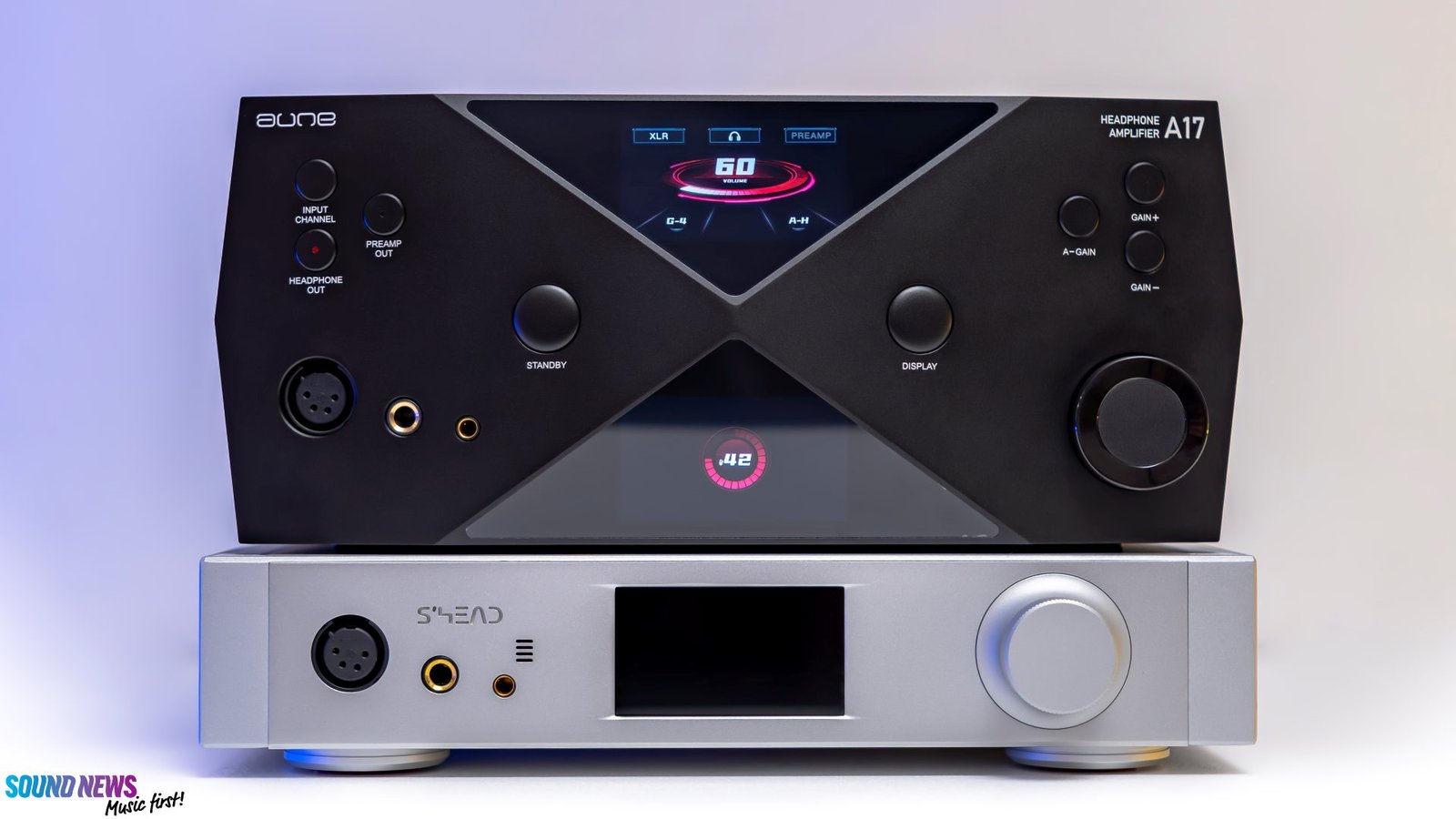
IX. A Comparison That Matters
Aune Audio A17 (€2.500) VS Audiobyte SuperHEAD (€4.000)
I won’t touch base on their looks, build quality, and feature set, because you already have my SuperHEAD review separately and I don’t like to repeat myself. I will only mention that the SuperHEAD is more compact, it’s lighter and easier to handle around, and it’s not as hot to the touch after two hours of non-stop listening. I bought the SuperHEAD after finishing my review because it just felt different, and I couldn’t pass the opportunity of owning one of the cleanest, super-articulate, and refined-sounding amplifiers on the market, and I’m glad I did. These two units can both work as standalone headphone amplifiers and dedicated preamps; they both have metallic remote controls, and in terms of build quality and feature set, there’s nothing I can complain about, as both are sitting at the top of the food chain.
Sound-wise, after conducting double blind tests over the course of two days, I have drawn my conclusions. The SuperHEAD is still the No. 1 amplifier in my book when it comes to resolution and purity of tone. It’s incredibly clean and resolving, and the same happens when I move it to the living room, operating as a dedicated preamplifier. The interesting part about it is that no matter how hard you push it to its limits, there’s always a lot of refinement, and never for a microsecond would the treble region become aggressive or sharp. Its tone and timbre are quite probably the best I’ve experienced to this day, and while it’s not super sweet or overly creamy, the purity of tone is overwhelming, and that will be constantly drawing your full attention. Some amplifiers let you appreciate the inner texture while others let you appreciate the leading edges and contours; the SuperHEAD lets you appreciate both, without any usual drawbacks associated with solid-state electronics, and these words are still standing.
The A17 is a little bit different, while still preserving the purity of tone and texture. I find the A17 ever so slightly bassier, tilting the tonal balance towards the dark side gently. It’s not colored sounding in the direct meaning of the word, but when comparing it with the SuperHEAD, it’s the one that I would call a little sweeter, a little fuller-bodied, and a hair denser sounding in the bass. It’s also somewhat punchier sounding in the bass, somehow reminding me a little about the Enleum AMP-23R that had a similar trait. This bass enhancement is quite pleasing, especially on open-back headphones that usually aren’t that bass-heavy, and the same goes with bookshelf speakers that might need some help reaching those sub-bass notes. It’s infusing an extra oomph down there, and that makes it a bit more fun-sounding in the long run, at the cost of not sounding exactly as refined and resolving, especially on the microscale, like the SuperHEAD. The technical differences aren’t that big, and it’s hard to put a number on it, but I’d say there is a 5% downgrade in resolution, plus a 5% uplift in bass energy and impact. Their midrange is more or less the same, and the same goes for the treble region, with the exception of getting additional sparkle on the SuperHEAD.
Power-wise, neither of these ran out of steam, and no matter how hard I pushed them to their limits, I never heard them lowering their enthusiasm or holding their blows with every musical beat. The hardest loads were driven with flying colors, but there was ever so slightly more headroom remaining on the A17, because it is, in fact, a little bit more powerful as well (11.5 Watts VS 9 Watts per channel). They both operate in full class operation, and in both cases there’s a lot of current flowing through their circuit boards, so they will easily drive all current production dynamic and planar headphones.
The stereo separation was impeccable in both cases! And I say that because solid states usually don’t throw a massive picture in front of you; that’s usually reserved for transformer-coupled tube amps of colossal proportions. But the A17, together with the SuperHEAD, are defying those preconceptions, laughing in the face of competition and always decompressing the music, as if the molecules of air are pushing against each other. I find them both impressive here, and I won’t downplay either of these. Same goes with their dynamics and transient response, even if there is a mild difference, and let me explain. As I’ve said already, the bass region is spectacular on the A17; sometimes it can become too much on bass-intensive music, but regardless of that, it always puts a smile on your face, and sometimes that’s exactly what you need after a busy day in the office. The SuperHEAD doesn’t slam as hard, even if it doesn’t hold punches, and it will definitely unleash its ultimate when needed. Where the SuperHEAD takes the lead is the transient attack, as I find it moving swifter in and out; it’s more immediate, it’s faster sounding at the end of the day, and it depends on what type of listener you are. Do you appreciate a more accurate transient attack, start and stop of the drivers, or do you appreciate wider smiles due to a more powerful bass delivery? That’s a question you should address yourselves.
Considering that the SuperHEAD is not destroying Aune’s A17 in a direct comparison, but welcomes its similar tone and timbre, dynamic behavior, refinement at the very top, and the complete lack of listening fatigue, it’s safe to say that the A17 already proved its worth, because it’s really good no matter the angle I’m looking at it.
Wrapping Up
Before wrapping up my story, I want you to remember something. I don’t care if you’re male or female, Muslim, Christian or Jewish; none of that matters to me. But if you smile or cry when listening to music, if the world around you suddenly shuts down and you’re teleported into your own universe where you become the main hero, then you’re part of a much bigger family. You’re part of my tribe, part of my circle of friends, and this might sound a little weird, but you are special for having those feelings, and I love you for that. You’re never alone on these pages because, in the end, we are all blood brothers!
And now, onto my conclusion. I wish units like this would land on my table every single day. Sadly, not every day is Christmas, and I’m sorry if throughout this review I showed you a slightly different side of myself and tried to be more direct and personal than usual. I did it because I wanted you to feel some of my genuine excitement and enthusiasm when something truly great lands on my table. The A17 doesn’t feel like Christmas came early. It feels like Easter, Christmas, and summer vacation all arrived at the same time. Because, to the best of my knowledge, I wasn’t describing only a stubborn Class-A headphone amplifier here, but also a rad Class-A active preamplifier that can easily replace a dedicated preamp while still giving you around 90% of what some of the absolute best preamplifiers can offer nowadays.
The A17 wasn’t perfect, but then again, perfect devices don’t exist. I had two minor quirks with it, and while its 45 to 48-degree Celsius operating temperature was completely expected, the jump in loudness from zero to one should still be a little lower, especially when using it as a preamplifier. Even so, these are mostly nitpicks and whining on my part. I genuinely struggled to find the needle in the haystack with this one, as you can probably tell, because sound-wise…this is where all of my whining and nitpicking stops. It is more or less on par with the best amplifiers I’ve owned to this day, and it is also among the most powerful ones, always ready to deliver the thunder with difficult loads. I tried my best, but I simply couldn’t reach its absolute limits. My ears were already ringing on a couple of evenings after several headphone swaps, while I was deliberately trying to make it distort, lose composure, or finally show me where its limits were, but no! It never crawled into a corner asking for help. It never lowered its dynamics or compressed the soundstage. It took everything head-on, always standing there with its aluminum chin held high. I lost the battle; I gave up the fight. It conquered every headphone and IEM I threw at it, and it even brawled with my much costlier preamplifier. Yet through all of that, I still loved its humble voice and everything it did to my music.

For all of these reasons combined, my Highly Impressive award is fully justified, and I’m genuinely happy that Aune has finally found a place at the high-end audio table. And while this might mark the end of their journey as a strictly mid-fi audio brand, it also feels like a beautiful and humble beginning, so please welcome aboard! If you have any crazy questions, please let me know in the comments section below, and don’t forget to smash that Subscribe button over on YouTube; it means a lot to me.
That’s all for now, folks. Sandu signing off!
PROS
- Outstanding driving power and current delivery, capable of driving every available planar or dynamic headphone
- Thunderous yet exceptionally controlled bass; this is one of its defining sonic traits
- Superb dynamics and transient attack, getting effortless regardless of musical intensity
- Full-bodied and slightly sweet sounding, combining much of the natural flow and tonal density of a great tube amplifier with the technicalities of a great solid-state design
- Excellent resolution without adding listening fatigue, getting highly revealing and transparent, yet unusually relaxed in the treble
- Huge, open and wide sounding; even crowded recordings remain decompressed and easy to navigate
- A genuinely impressive active preamplifier section
- Four gain levels and two Class-A current modes, unusually flexible for both headphone and stereo use
- IEM-friendly on its lowest gain setting
- Future-Fi looking with an impressive build quality, having all of the inputs and outputs you’ll ever need
- The strongest price-to-performance ratio (value) in high-end audio at the moment
CONS
- The jump from volume 0 to 1 is still a bit large, particularly when using it as a preamplifier
- It runs fairly warm in high-current Class-A mode, reaching roughly 45–48°C in our testing.
- Not quite the last word in microscopic resolution and transient speed
ASSOCIATED EQUIPMENT:
- HiFi Racks: WoodYard Suspended Triple & Baby Modular
- CD/SACD Transport: Onix XST20
- Network Switch: ROBOLI UltraLine Switch S240
- DAC & Wired Streamer: Rockna Wavedream Reference Signature, Audiobyte SuperVOX
- Preamplifiers: Chord Electronics ULTIMA PRE, Aune A17
- Power Amplifiers: Chord Electronics ULTIMA 3 MONO (X2)
- Headphone Amplifiers: Aune A17, Audiobyte SuperHEAD, Feliks Envy Susvara Edition
- Headphones: Aune AR9000, HiFiMan Susvara OG, T+A Solitaire P, Audeze LCD-5S, Bandos Avija, Sennheiser HD800S & Many More
- IEMs: HiBy Zeta 2, FiiO FX17, Meze ASTRU
- Loudspeakers: CLC.Audio CLC65, Raidho TD 2.2
- Interconnect Cables: AudioQuest Dragon XLR (X2), Pure Line Audio Pure Silver Ribbon Statement XLR
- Speaker Cables: AudioQuest Dragon ZERO 2.0m
- Power Cables: AudioQuest Dragon Source (X2), AudioQuest Dragon High Current (X4), Roboli Stars (X2)
- Ethernet Cable: Crystal Cables Da Vinci
- HDMI Cable (I2S): AudioQuest Dragon
- Balanced Isolation Power Conditioner: KECES IQRP-3600, Pure Line Audio GoldCore 6 NoiseBlock