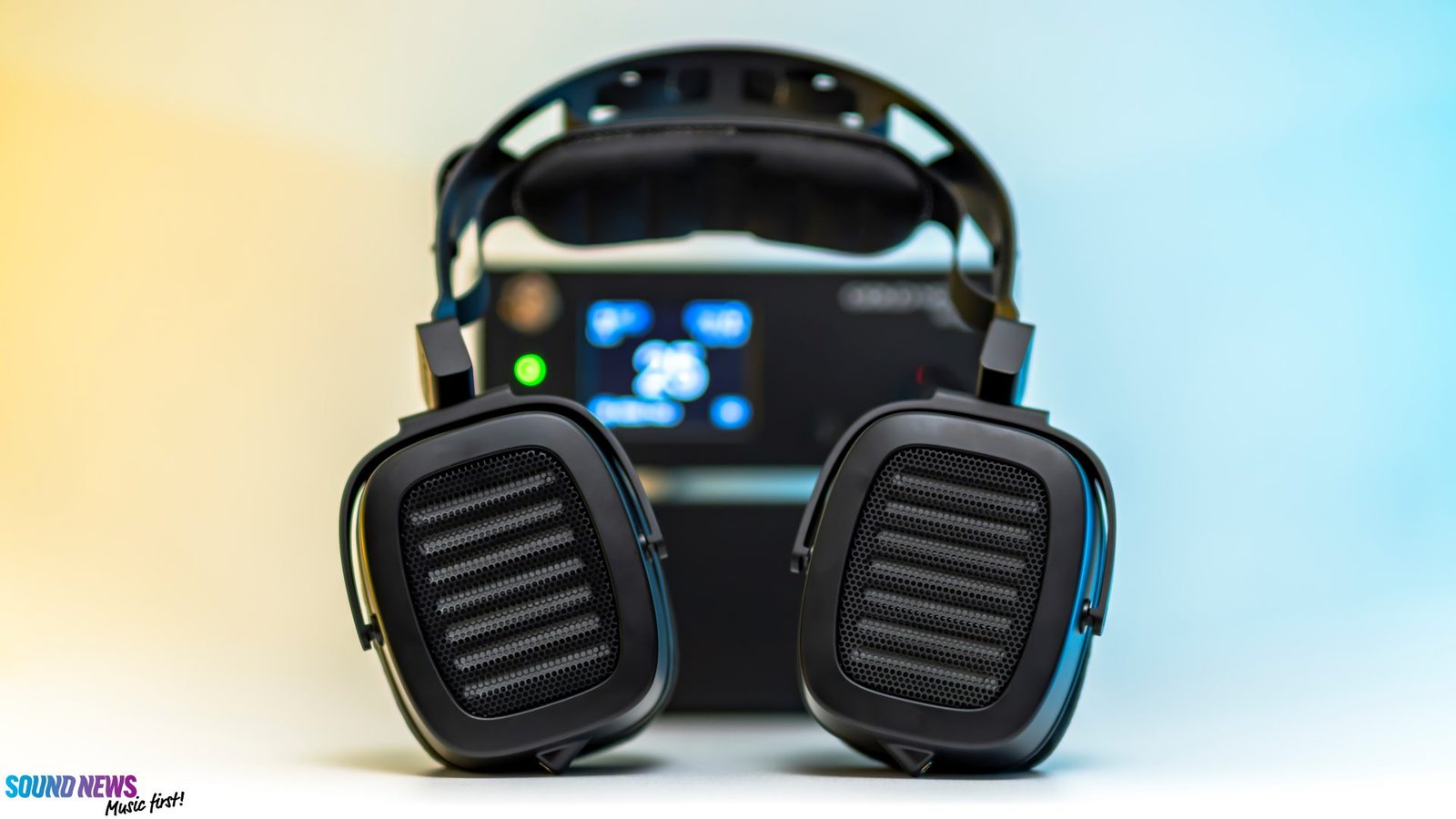
Gold Note HP-5.2 & PSX-5.2 Review – Reference Class-A power for the Rest of Us

There are two ways of building a less ambitious version of a flagship product. The simplest way? You start cutting features, strip the circuit board, remove a few components and connectors, and hope the family resemblance will be enough to carry the badge. The hardest way? You can take everything people loved about the bigger machine, rethink it, and try to preserve its personality at a friendlier cost. Luckily, that’s exactly what Gold Note tried to achieve with their brand-new HP-5.2, but first, let me quickly remind you what made the HP-10 I reviewed last year so special.
When I first met the HP-10 prototype at HIGH END Munich, what fascinated me wasn’t its Class-A bias, dual-mono topology, or the considerable power under its hood. Plenty of headphone amps can brag about those things nowadays. What made the HP-10 genuinely different was the thinking behind it…because it made you interact with your headphones, compensate for their weaknesses and, in some cases, completely reshape their behavior. Crossfeed, damping factor, Harman-inspired curves, balance controls and several additional tricks were applied directly in the analog domain, without turning the HP-10 into a DSP playground many Chi-Fi devices offer nowadays. That was Gold Note’s secret sauce, and after living with the HP-10 Deluxe and with its complimentary PSU-10 EVO for a while, I understood that those features shaped it into a headphone amplifier like none other currently available.
Fast-forward to today, and Gold Note is bringing much of that philosophy into a much more affordable HP-5.2. Once again, we’re dealing with a dual-mono Class-A headphone amplifier and preamplifier, capable of delivering up to 5 Watts of power per channel, and it’s again equipped with virtually every headphone connection you might ask for. More importantly, all of the Studio adjustments survived the transition. Crossfeed and adjustable damping factor are back; Harman curves and Superflat modes are, too. Analog preamplifier outputs are also present, while USB-C and Bluetooth connectivity turn this little Italian into something considerably more versatile than its dimensions might suggest.
And naturally, because this is Gold Note, another box is waiting nearby. Meet the PSX-5.2, an external four-rail power supply built specifically to squeeze the remaining performance out of Gold Note’s compact 5-series electronics. If my experience with the PSU-10 EVO taught me anything, it’s that these external power supplies shouldn’t automatically be dismissed as expensive HiFi jewelry. On the HP-10, adding its dedicated power supply produced one of the easiest differences to hear: a darker background, stronger dynamics, denser textures, punchier bass lines, and a more effortless presentation.
Naturally, the first thing I wanted to discover was whether history would repeat itself. Will the HP-5.2 preserve the character and flexibility that made its bigger brother so unusual, and can five watts properly awaken today’s demanding planar headphones? Are all those Studio settings genuinely useful for a second time around, or has the novelty worn off? And perhaps most importantly, how much of the HP-5.2 experience survives once the PSX-5.2 joins the party? There’s only one way of finding out. So, grab your favorite headphones, make yourself an Aperol Spritz, and let’s see how much of Gold Note’s DNA fits inside these two little boxes.
But hold that thought for a second, as Gold Note just made our lives easier, as there are no longer three different HP-5.2 versions to choose from. You get the whole package right from the start, and in case you’re wondering about pricing, here’s the breakdown:
Gold Note HP-5.2 (€990 in EU / $1,295 in USA):
- Dual-mono Class-A headphone amplifier and active preamplifier with four headphone outputs, analog Studio adjustments, an integrated ESS Sabre DAC with USB-C connectivity, and Bluetooth 5.2 AptX HD functionality.
Gold Note PSX-5.2 (€720 in EU / $895 in USA):
- Dedicated four-rail external power supply for Gold Note’s Series 5.2 electronics, designed to lower the noise floor, increase current stability, and squeeze the last drops of performance from the HP-5.2. Its dual-output architecture can also power a compatible phono stage and a line-level Series 5.2 component permanently connected.
There’s no Classic, BT, or Deluxe version anymore. The HP-5.2 arrives fully loaded from day one, while the PSX-5.2 remains the only optional upgrade and naturally, we’re going all-in with the HP-5.2 and PSX-5.2 duo, Hooray!
Design & Build Quality
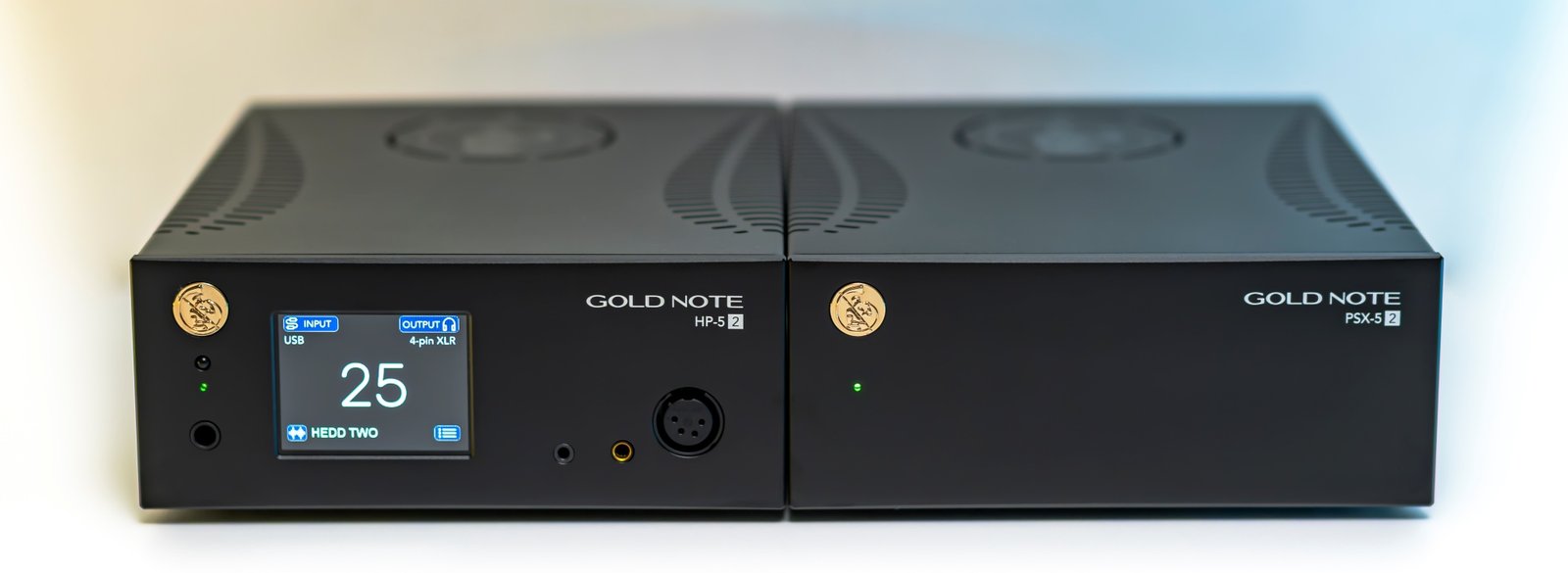
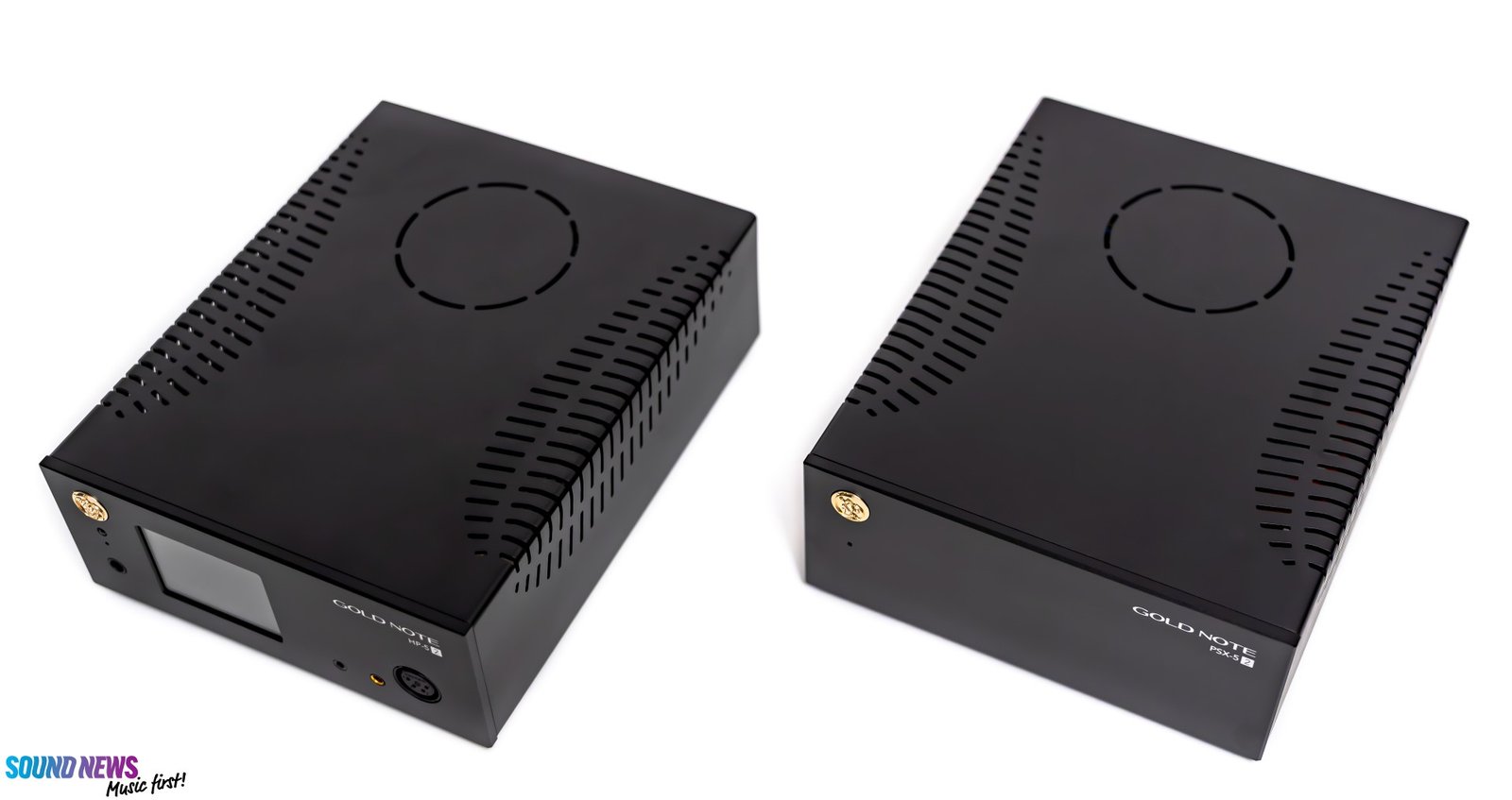
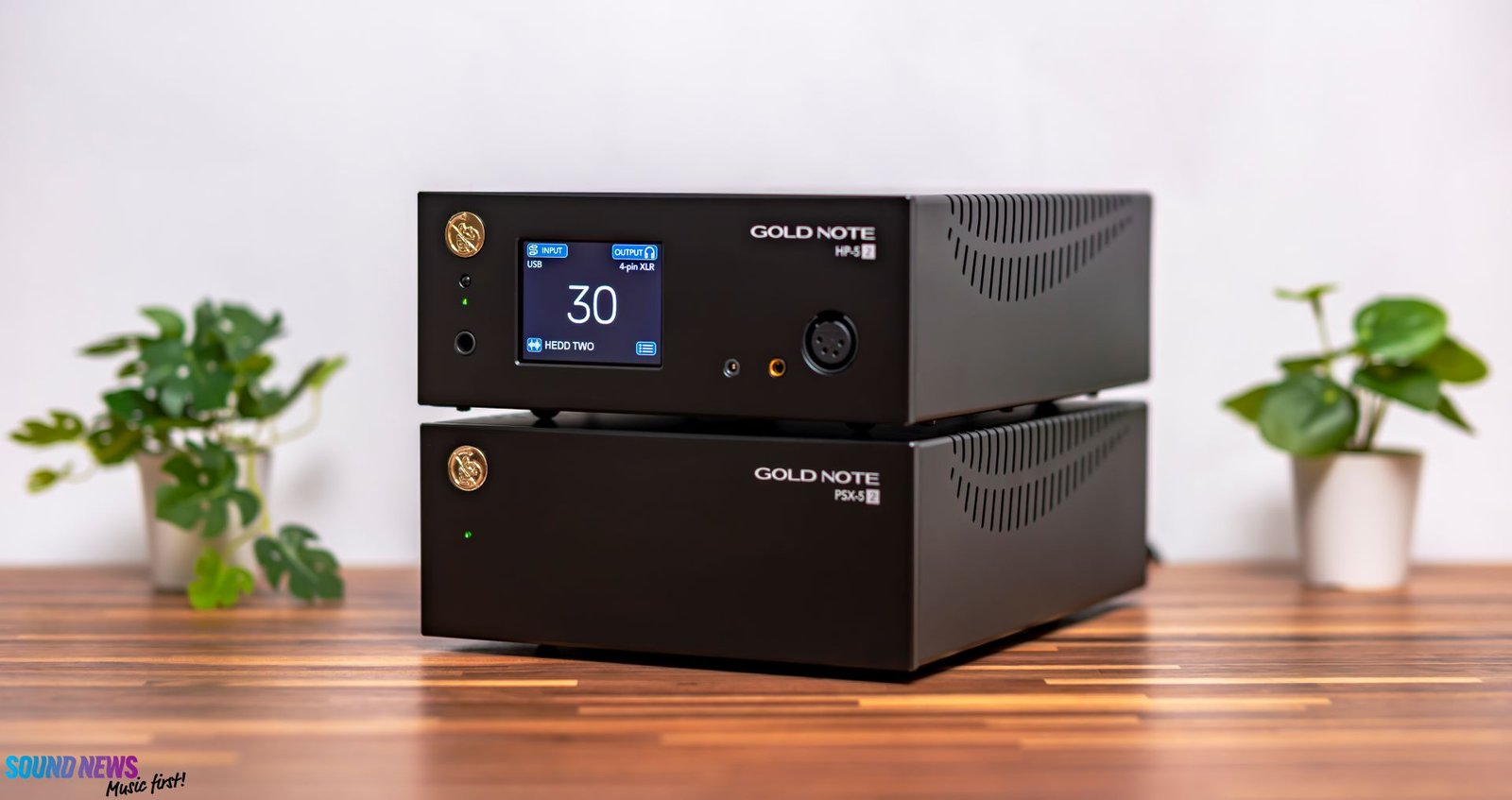
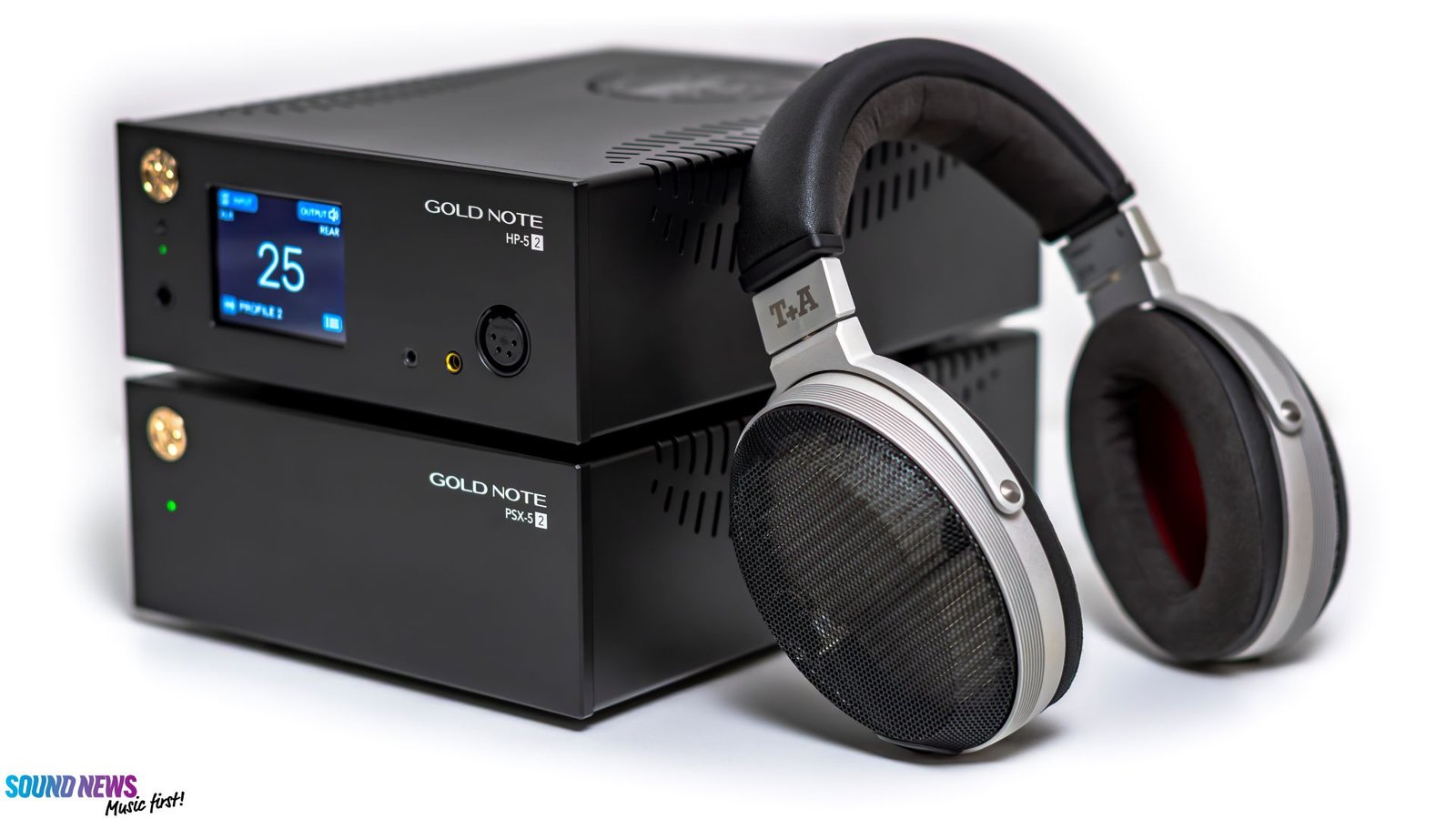
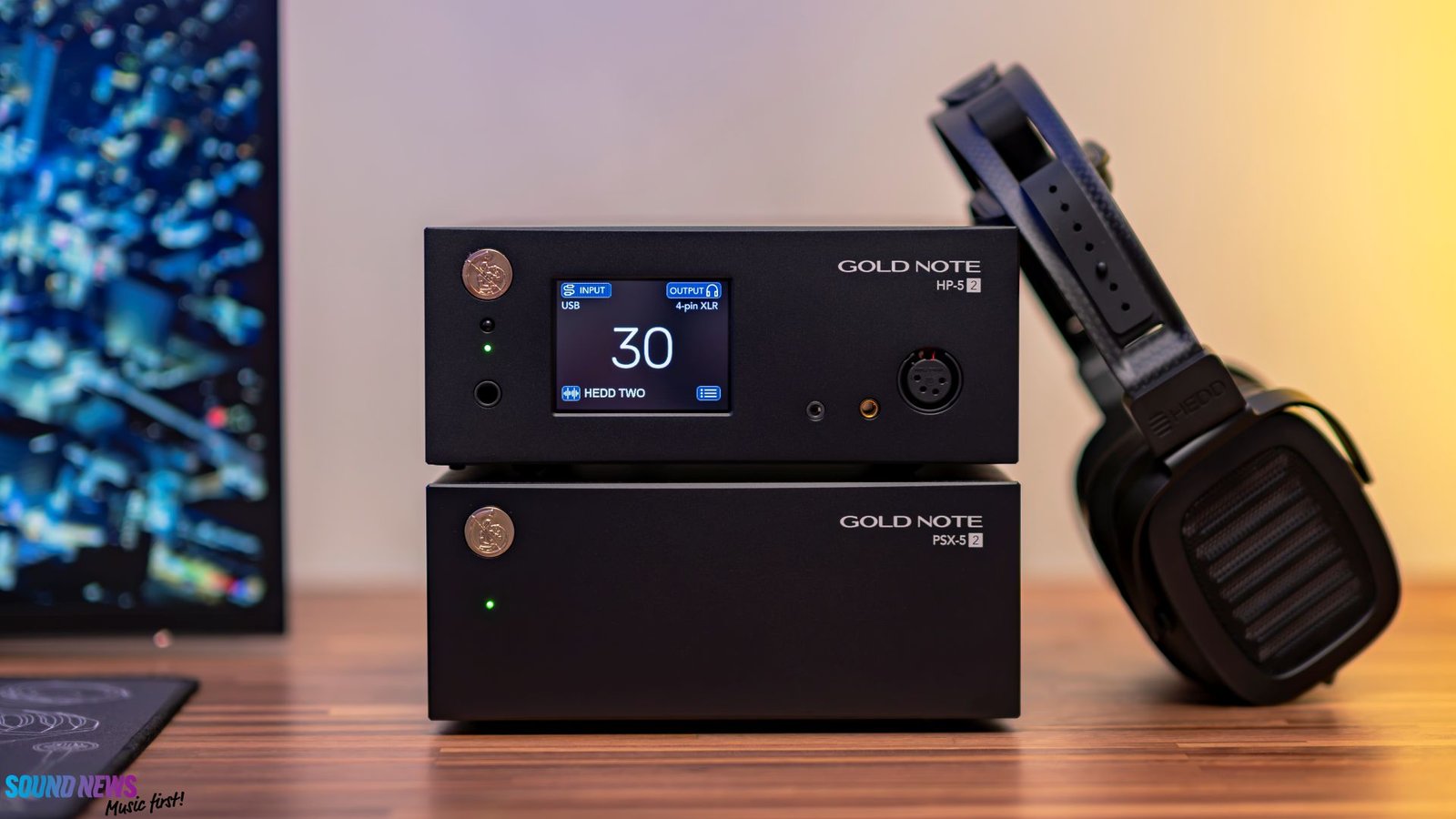
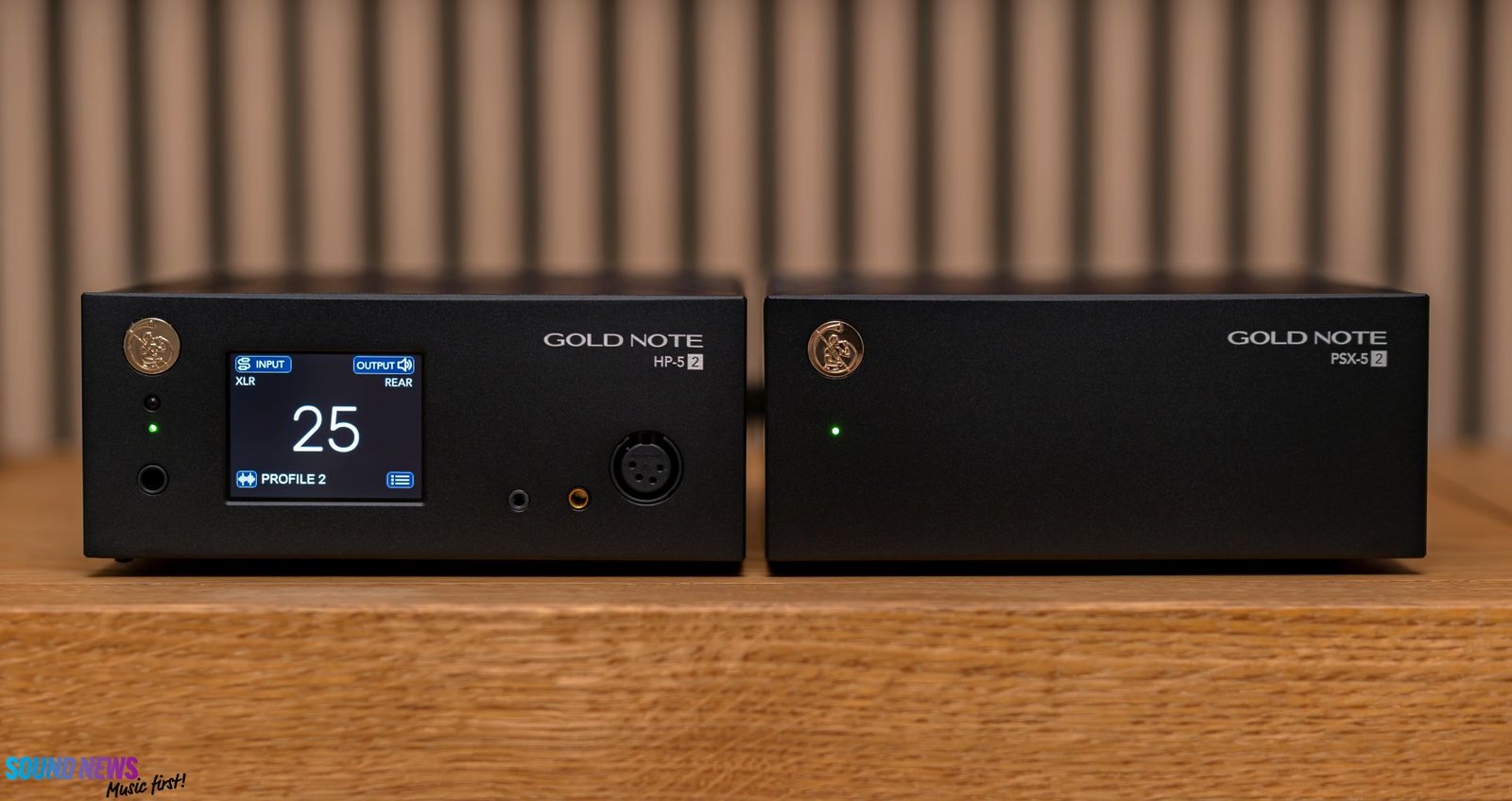
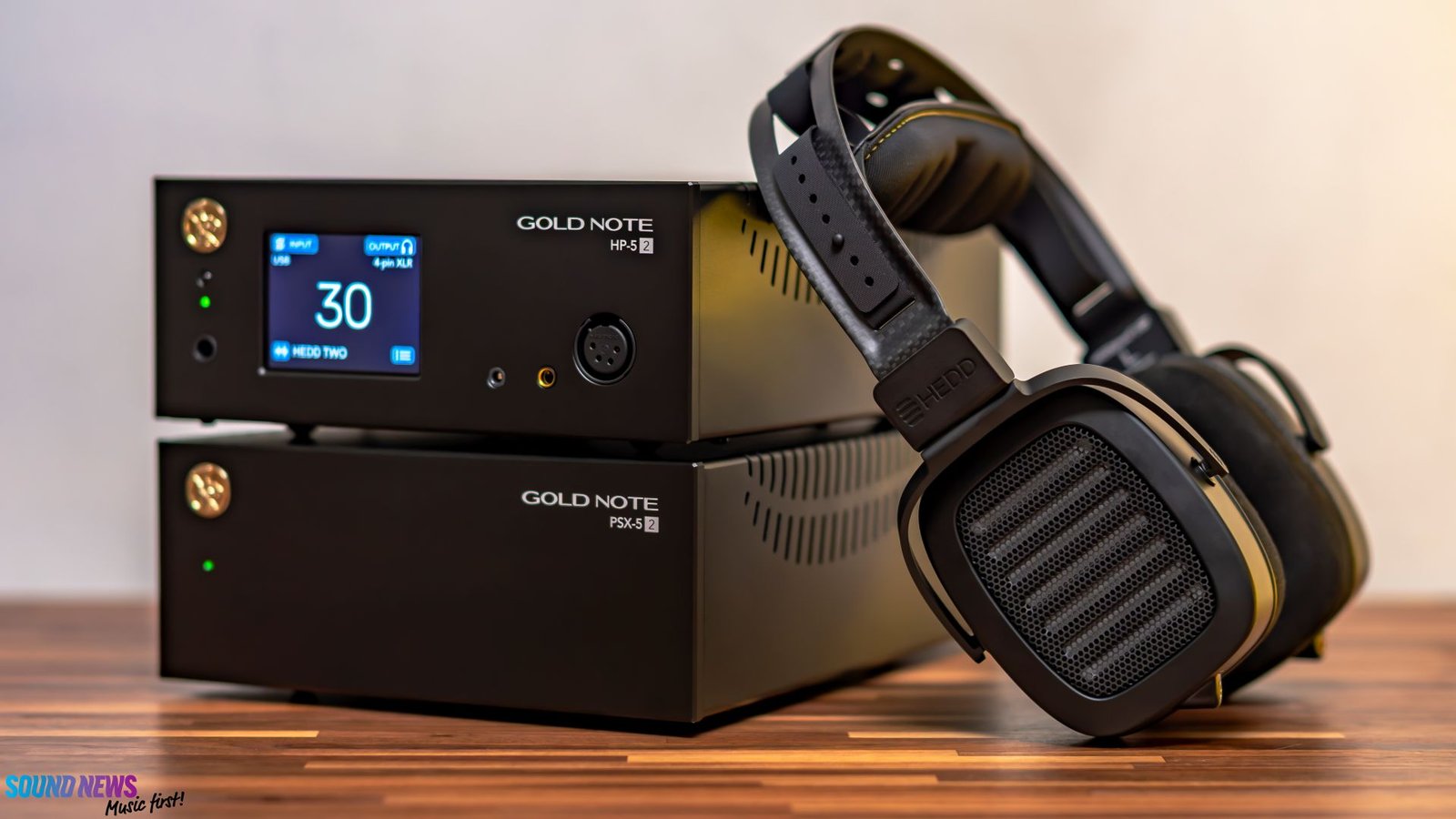
At a glance, the HP-5.2 and PSX-5.2 still look unmistakably like Gold Note products, proudly made in the heart of Tuscany, Italy. The proportions are familiar, the rounded corners are still there, the front panels are still uncluttered, and when the two boxes are stacked together, they form one tidy little tower that occupies little desk space. The HP-5.2 measures just 200 mm wide, 80 mm tall, and 260 mm deep, and the PSX-5.2 mirrors those dimensions exactly. The amplifier weighs 3 kilos, while the power supply drops to only 2 kilos.
However, if you handled an HP-10 or PSU-10 EVO before, then you’ll immediately notice that some of the cost reduction happened along the way. The HP-10 felt like somebody machined its enclosure out of aluminum ingots and then politely installed electronics inside it. Thick CNC-machined panels surrounded the entire unit, giving it considerably more mass and an almost absurd sense of solidity for something this compact. The HP-5.2 and PSX-5.2? Well…they no longer play that particular game. Both units still use anodized aluminum, but the main chassis is now built from thinner, bent aluminum sheets rather than from massive slabs found on the HP-10. Tap the enclosure with a finger, and you’ll hear the difference. Pick one up, and you’ll feel it immediately as well. The HP-5.2 is around a kilo lighter than its bigger brother, while the PSX-5.2 feels substantially lighter than the old PSU-10 EVO.
Is that a downgrade in build quality? Technically…yes, and there’s no point dressing it up. But there is an equally important second half to that sentence: these products also cost considerably less. Gold Note needed to bring most of the HP-10 philosophy into a much lower price bracket, and machining several kilograms of aluminum for every enclosure would have worked directly against that goal. Something had to give, and I would much rather see savings made on chassis thickness than inside the amplifier stage.
Panel alignment is still excellent; nothing rattles or bends under normal handling, the anodizing feels smooth and even, and the entire assembly remains more substantial than most small desktop amplifiers in this price range. The Gold Note logo sits proudly on top, while the clean black finish gives both components a stealthier appearance than the silver HP-10 Deluxe I tested before. Unlike the HP-10, which had a physical volume wheel that also doubled as a menu controller, the HP-5.2 removes it completely, meaning that volume adjustments are now handled exclusively from the supplied remote control, a simplification I’m not particularly fond of, especially on something designed to live within arm’s reach on a desktop or office environment, but I get it! After all, the HP5.2 is more than twice as cheap as the Deluxe version of the HP-10.
I actually like the way this duo looks when stacked. They have the same footprint, their front panels line up perfectly, and suddenly the little HP-5.2 gains a visual seriousness that it doesn’t quite have on its own. Still, anybody coming directly from an HP-10 should adjust expectations before opening the box. You are no longer getting the same CNC-machined metalwork that made the HP-10 feel like a miniature high-end component costing considerably more. What you are getting instead is a simpler, lighter, and more economical interpretation of the same Gold Note design language, and given where the HP-5.2 sits price-wise, I think that was the sensible place to save money. After all, I don’t listen to an aluminum case, I listen to what’s hiding inside it.
Controls & Connectivity
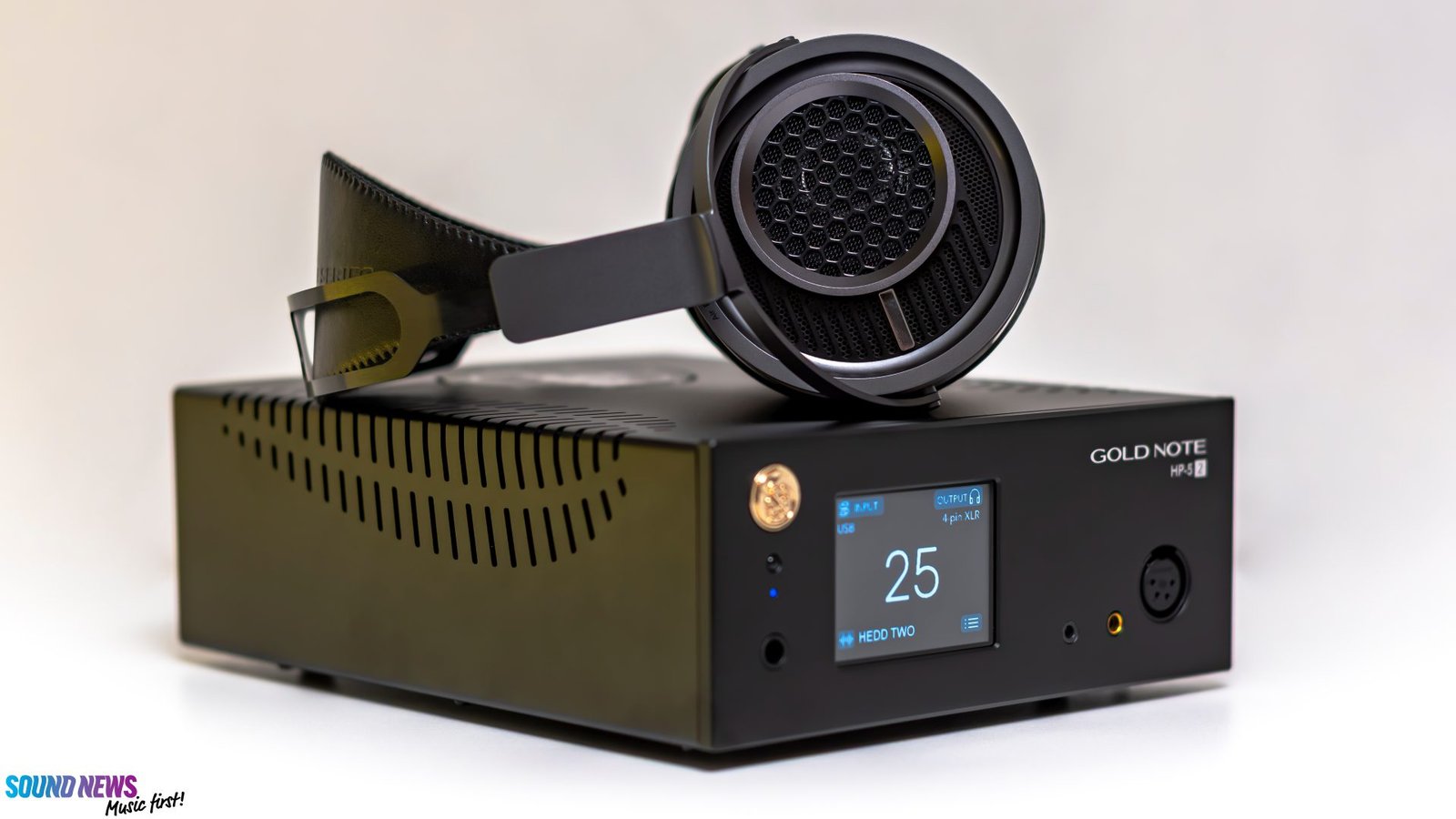
The HP-5.2 still gets a colorful touchscreen, surrounded by four headphone connections: 3.5 mm and 6.3 mm single-ended outputs alongside 4.4 mm Pentaconn and 4-pin XLR balanced outputs. Most functions and Studio settings can be accessed directly from the touchscreen. At the same time, the supplied multifunction remote becomes particularly important, since the HP-5.2 no longer offers the physical volume wheel found on the HP-10. Volume adjustment is therefore handled entirely from the remote control, something I personally consider a small ergonomic step backward for a desktop headphone amplifier.
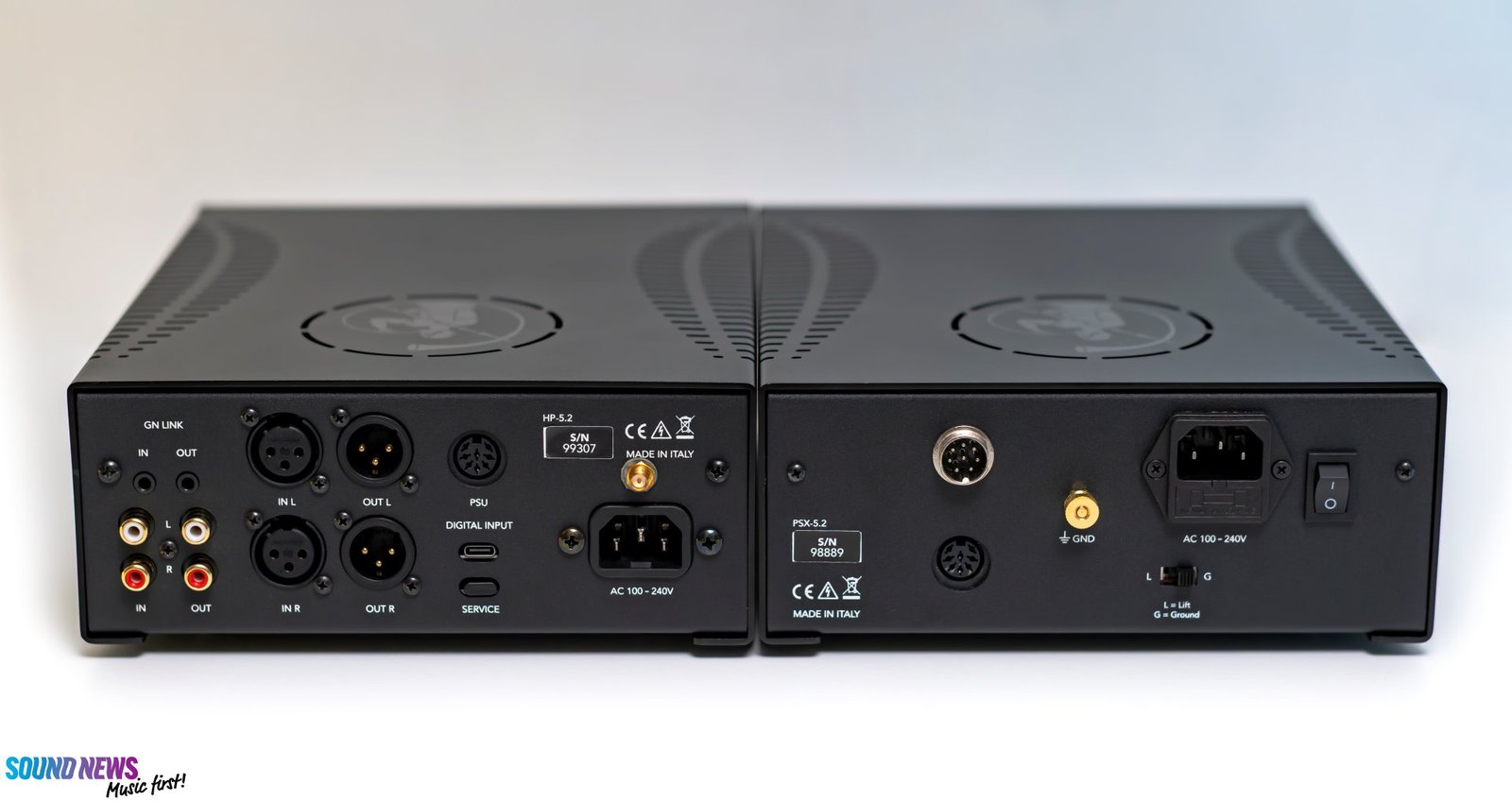
Around back, Gold Note provides balanced XLR and single-ended RCA analog inputs, mirrored by XLR and RCA line outputs, allowing the HP-5.2 to double as an active preamplifier. USB-C handles its wired DAC duties, while Bluetooth adds a convenient wireless option for those moments when simplicity matters more than sound performance.
The PSX-5.2 is naturally the introvert of the family. There’s almost nothing to play with on its faceplate, because its entire existence revolves around supplying cleaner and more stable power to another Series 5.2 component. Interestingly, Gold Note redesigned this generation with dual outputs, meaning a PH-5/PH-5.2 phono stage and one line-level device such as the HP-5.2 can remain connected simultaneously. Only the selected component receives the full available energy reserve, so please keep that in mind.
Under HP-5.2 and PSX-5.2’s Hood
I. HP-5.2
Looking strictly at the numbers, you might be tempted to call the HP-5.2 a smaller and less powerful HP-10. We get 5 watts instead of 10, a lighter enclosure, and a lower asking price. But once you dig a little deeper, it becomes obvious that Gold Note didn’t simply take the HP-10 schematic and attack it with a pair of scissors. At its core, the HP-5.2 remains a dual-mono headphone amplifier biased into Class-A operation. Its published specifications include a 20 Hz to 20 kHz frequency response, 0.015% THD+N at 1 kHz, and a 105 dB signal-to-noise ratio. Three gain settings are provided, called IEM, Reference and High, accommodating a wide range of IEMs and headphones, while the damping factor can be switched between High and Low depending on the connected load.
More importantly, the secret sauce of the HP-10 survived the downsizing process. We still get the full Studio settings working entirely in the analog domain, without converting the signal to digital for DSP processing. Crossfeed can be applied across the full spectrum or selectively to highs, mids, or lows; 3 Harman profiles remain, including a Super Flat mode; damping factor, channel balance, and mono/stereo adjustments are still available. The voltage input remains generous, accepting up to 5 Vrms over RCA and 8 Vrms over XLR. Balanced and single-ended outputs also allow the HP-5.2 to work as an active preamplifier.
The digital section looks slightly different. An ESS Sabre ES9023 DAC chip handles D-to-A conversion instead of two AKM4493 converters found on the HP-10 Deluxe. USB-C is available, but playback tops out at just 48 kHz PCM, a conservative limitation in 2026 and a clear sign that the internal DAC should be viewed more as a convenience feature than the centerpiece of this machine. Bluetooth 5.2 with AptX HD is onboard, working as both a receiver and transmitter…but if you care about lossless audio transmission, I would steer away from this convenient feature.
II. PSX-5.2
The PSX-5.2 might look like a smaller spiritual successor to the PSU-10 EVO, but internally, it tells a slightly different story. The PSU-10 EVO used four audio-grade transformers, including an inductive filtering stage, and weighed around 4 kilos. The new PSX-5.2 weighs only 2 kilos and uses a four-rail audio-grade power supply with two ultra-low-noise voltage regulators. Gold Note specifies more than 80 dB of line and common-mode noise rejection, a maximum output-voltage variation of only 0.05% and, perhaps most interestingly, a claimed full-power response time below 2.5 microseconds. With the PSU-10 EVO, the biggest improvement wasn’t merely a quieter background. It was stronger dynamics, tighter bass, clearer leading edges and a greater sense of effortlessness. If the PSX-5.2 can repeat even part of that trick, its current delivery and fast response might matter more than the noise-rejection numbers themselves.
Another improvement is its dual-output architecture. One output can remain connected to a PH-5 or PH-5.2 phono stage, while the other can serve a line-level Series 5.2 component such as the HP-5.2, DS-5.2 or CD-5.2. There is one catch: it cannot power both simultaneously. Whichever component is active receives the entire available energy reserve. Gold Note also added a Ground/Lift switch and dedicated grounding post, useful tools for fighting hum or ground-loop issues. Ultimately, the HP-5.2 and PSX-5.2 are clearly more economical products than their bigger siblings. We get lighter enclosures, half the quoted amplifier power, and a simpler digital section. But Gold Note preserved the essentials. Whether 5 Watts are enough for the nastiest planar headphones in my collection and whether the PSX-5.2 can pull the same dynamic rabbit out of the hat as the PSU-10 EVO are questions no specification sheet can answer. Luckily, that’s exactly why these two little Italians landed on my desk.
Test Equipment
Before you ask, the HP5.2 was primarily used in a head-fi battle station, but I also tried it as a preamplifier in a well-thought-out stereo rig. I used it with as many headphones as possible, ranging from dynamic to planar-magnetic, in both closed-back and open-back configurations. For the sake of science, I will also test its noise floor with a few ultra-sensitive IEMs, but most of my testing will center on a pair of Audeze LCD-5S, T+A Solitaire P, Sennheiser HD800S, Bandoss Avija, HEDD GT TWO, and Aune AR9000.
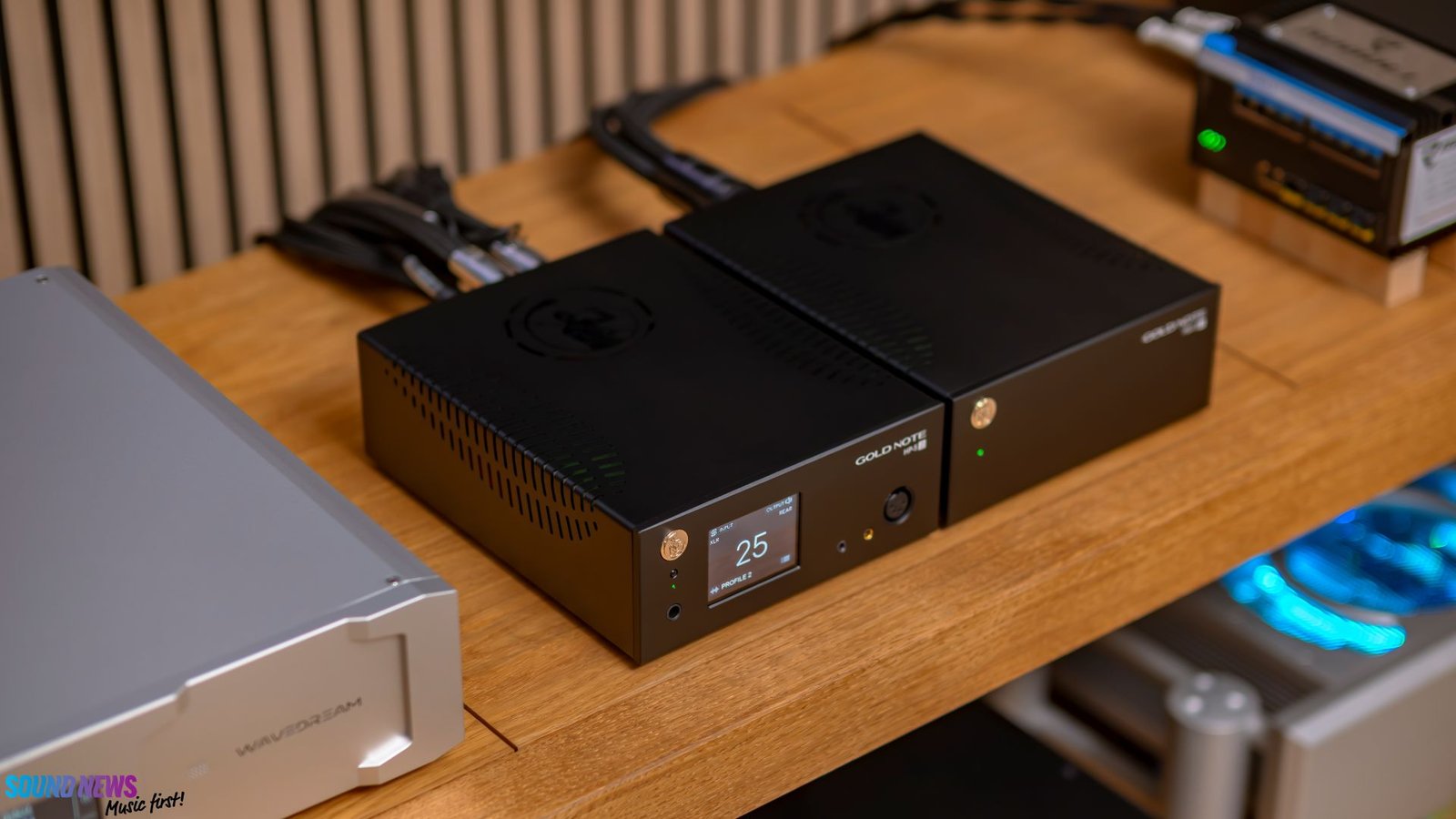
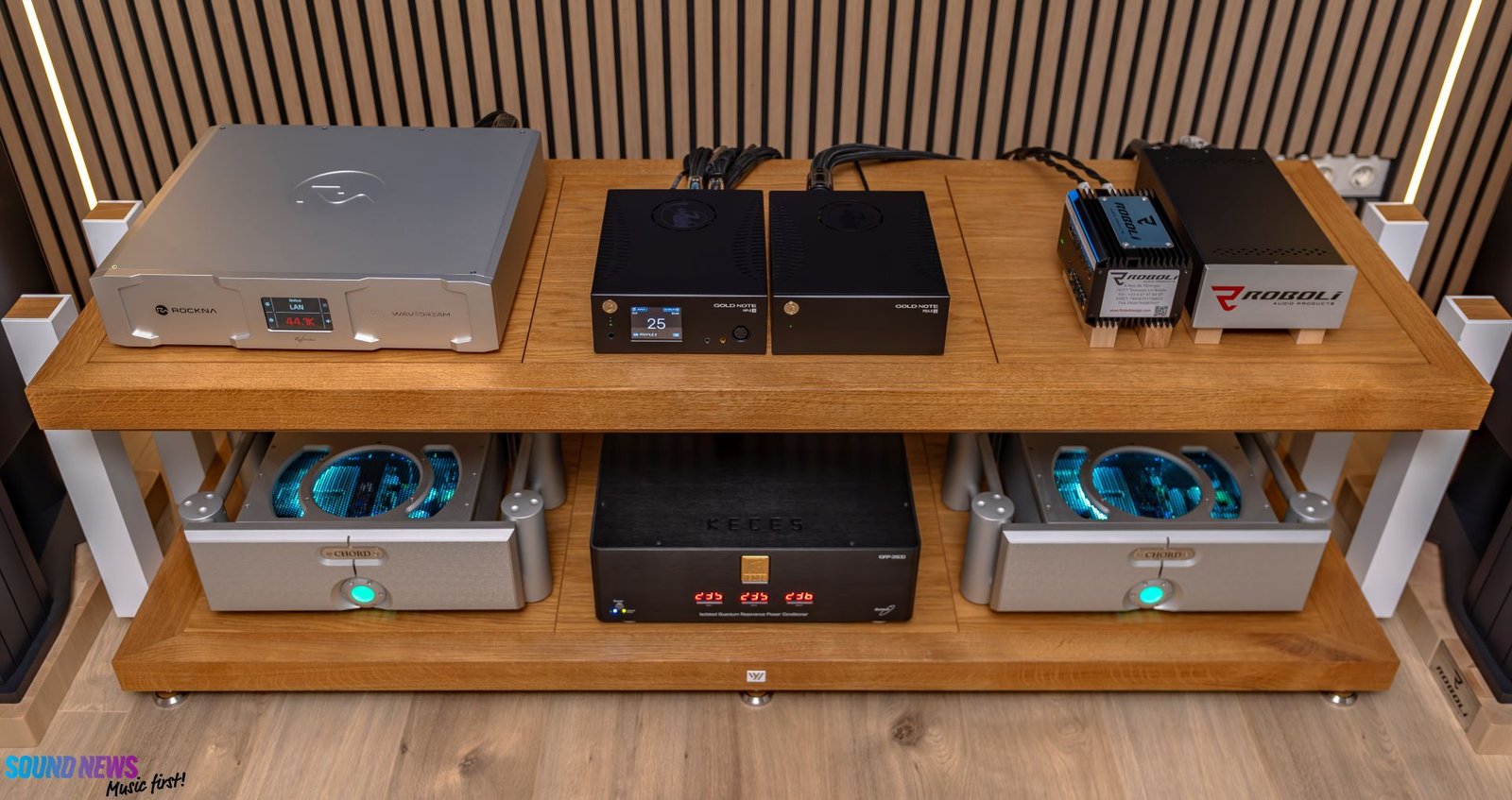
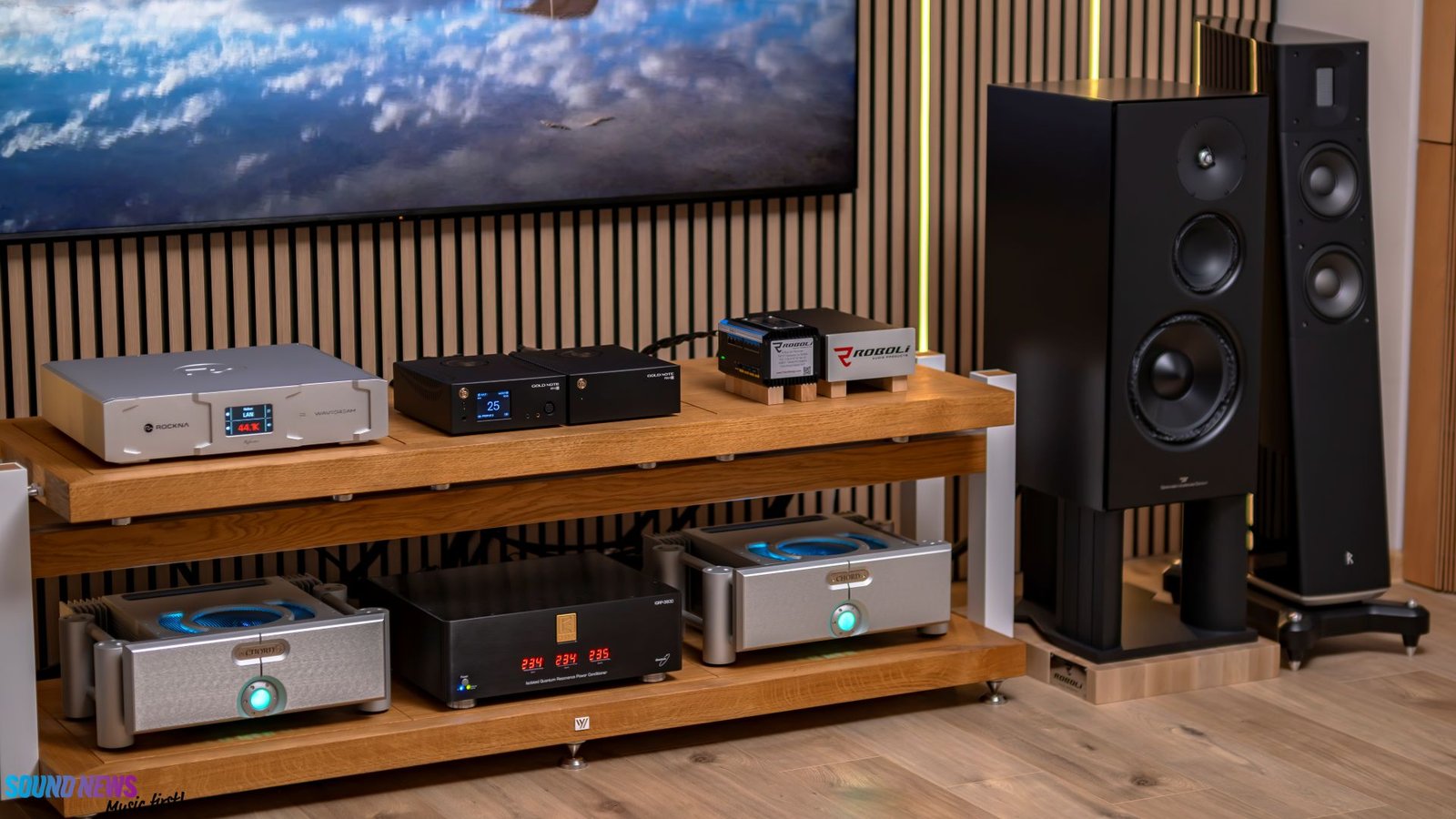
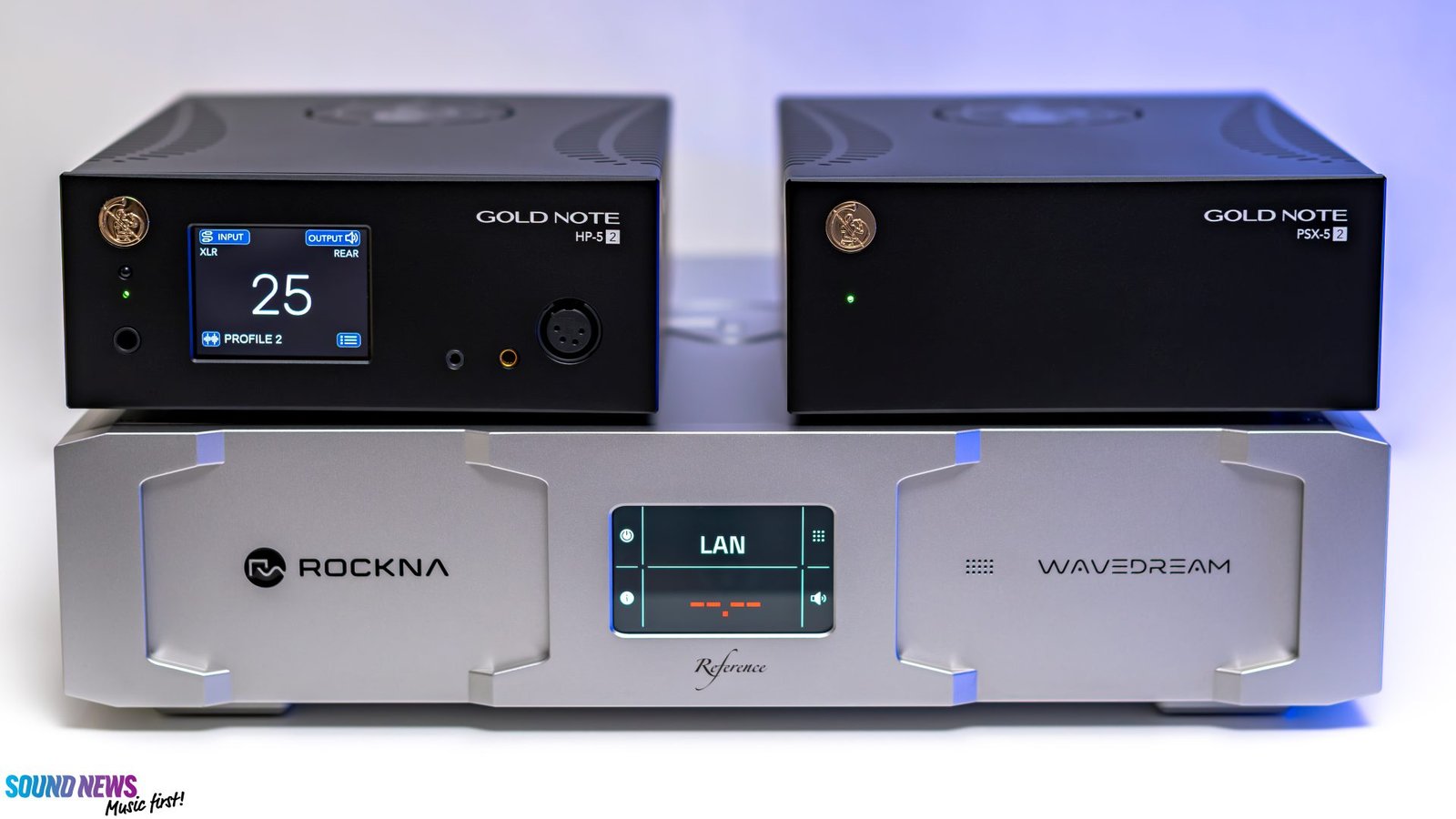
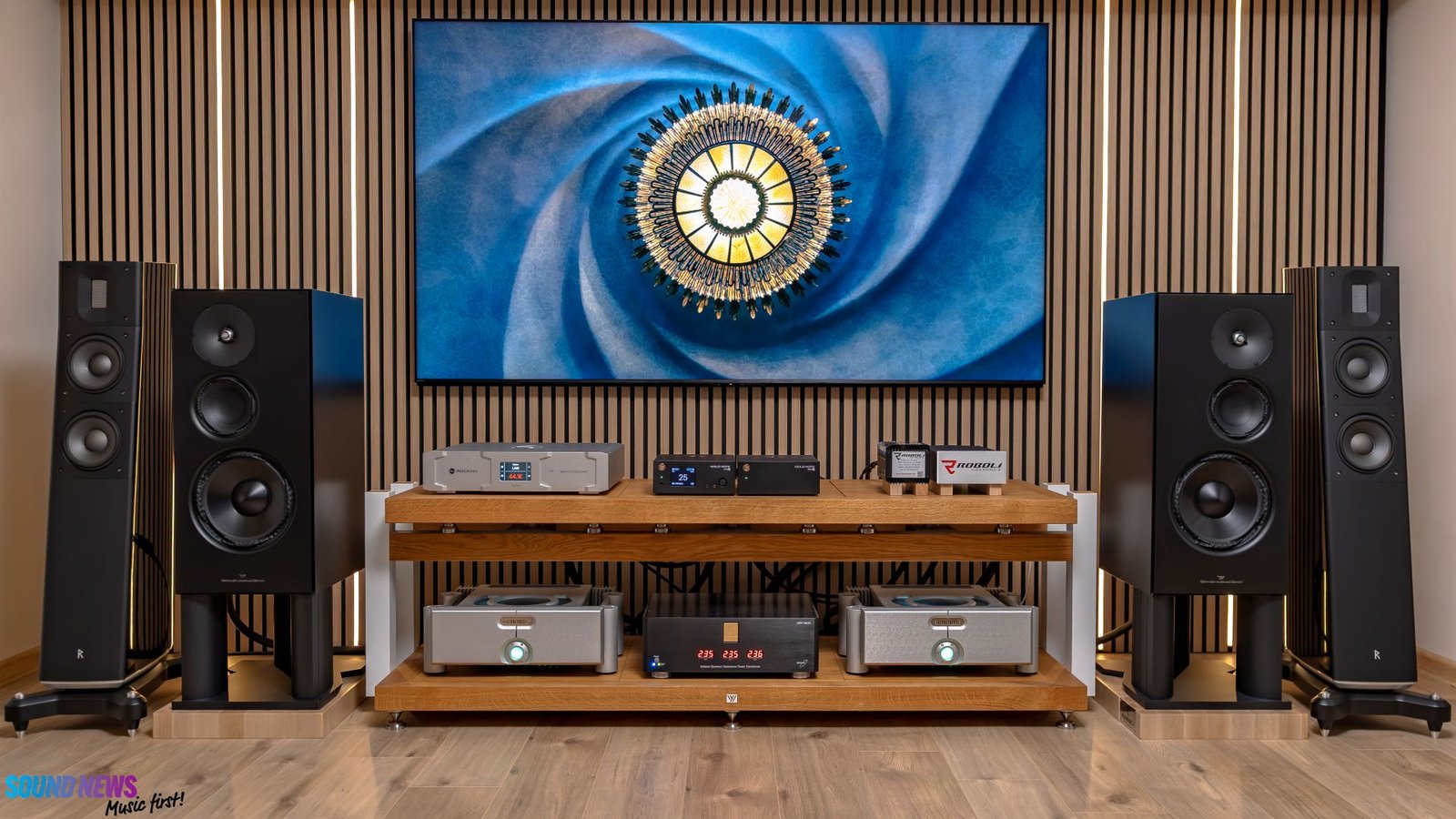
In the living room, the Rockna Wavedream Reference Signature served as both a wired streamer and DAC, followed by the Gold Note HP5.2, which replaced a Chord Electronics ULTIMA PRE controlling two Chord ULTIMA 3 monoblock amplifiers. Raidho TD2.2 and CLC.Audio CLC65 were my loudspeakers of choice, playing tunes for two weeks before writing a single word. All cabling used was from the AudioQuest Dragon range (power, interconnect, HDMI, and speaker cables). A KECES IQRP-3600 balanced power conditioner also powered everything.
Everything should be as clear as the blue sky, so what are we waiting for? Let’s hit those eardrums already!
Sound Performance
I. Why the STUDIO Settings still matter
I already dedicated a substantial part of my HP-10 review to Gold Note’s STUDIO settings, so there’s little reason to repeat everything here. The HP-5.2 carries over essentially the same philosophy, and more importantly, their impact on the final sound remains just as significant.
Crossfeed, adjustable damping factor, Harman tuning, channel balance, mono/stereo operation, and SuperFlat are still applied entirely in the analog domain, allowing you to slightly or sometimes dramatically reshape the behavior of the connected headphones without resorting to conventional DSP. And once again, the results depend heavily on what you plug into it. With the Sennheiser HD800S, Crossfeed and higher damping can inject considerably more bass weight and midrange density, while softening some of that familiar upper-treble enthusiasm. Connect an Audeze planar and the opposite approach might work better, bringing more openness and clarity up top. And this is still what separates Gold Note’s headphone amplifiers from everything else I have tested around here. Most amplifiers give you a gain switch and perhaps a Crossfeed button if you’re lucky. Still, the HP-5.2 (and HP-10 for that matter) lets you actually adapt the amplifier to the headphone, rather than simply accepting every strength and weakness that comes with it.
Crossfeed remains my favorite adjustment, as its influence goes well beyond stereo imaging. Depending on the selected mode, it can noticeably alter bass energy, tonal density, and the overall cohesiveness of the presentation. If all of this sounds like unnecessary hocus pocus, engage SuperFlat and the HP-5.2 steps aside, turning off the additional enhancements while revealing the natural character of your headphones. The novelty might have worn off after living with the HP-10 for a while, but the usefulness certainly hasn’t. Depending on the headphones you connect, these STUDIO settings can still turn an already good pair of cans into a noticeably better version of themselves, and the effect can be anything but subtle. And a small reminder: Gold Note has compiled a remarkably comprehensive PDF file covering headphones, IEMs, and even selected wireless models, with recommended settings for Crossfeed, damping factor, gain, and Harman profiles. And yes, wireless headphones made the cut too, provided they can also be used in wired mode. So, if you ever wondered what your Audeze Maxwell or Bowers & Wilkins PX8 S2 might be capable of when properly driven, then for the love of Odin, check the list (linky) for yourselves.
Best of all, it’s completely free and updated monthly with new models. The database started last year with a little over 100 entries, and today it already covers 451 headphone models. That level of effort deserves recognition, because Gold Note isn’t building an amplifier and moving on; they are actively supporting the head-fi community by helping users extract more from the gear they already own.
II. Power Output & Noise Floor
A couple of HP-5.2 reviews are already out there, yet surprisingly, none of them really explored its driving power or, more importantly, where its limits actually are. For a headphone amplifier, that seems like a fairly important question to answer. Specifications can tell you only so much; sooner or later, somebody needs to connect a few nasty loads, turn that volume up, and find out where the wheels start coming off. And yes, you’ll get those answers today.
Before I dive in, however, a small reminder is in order. We are dealing with a €990 discrete Class-A headphone amplifier and preamplifier, not a handful of op-amps tied to a volume control thrown into an aluminum box. Until fairly recently, getting a proper discrete Class-A amplifier usually meant saving pennies for quite a while, and I could name lots of examples already reviewed on this website. Having that sort of topology, together with Gold Note’s Studio features and preamp functionality, at around ~€1.000 still feels remarkably ambitious regardless of what I’m about to say next. And realistically speaking, nobody should expect a €990 amplifier to effortlessly command every €6.000, €8.000 or €10.000 headphones ever created. Expecting the HP-5.2 to awaken the heaviest loads fully is a little like asking a FIAT to win the 24 Hours of Le Mans. It might arrive at the starting line with plenty of enthusiasm, but physics will eventually enter the chat.
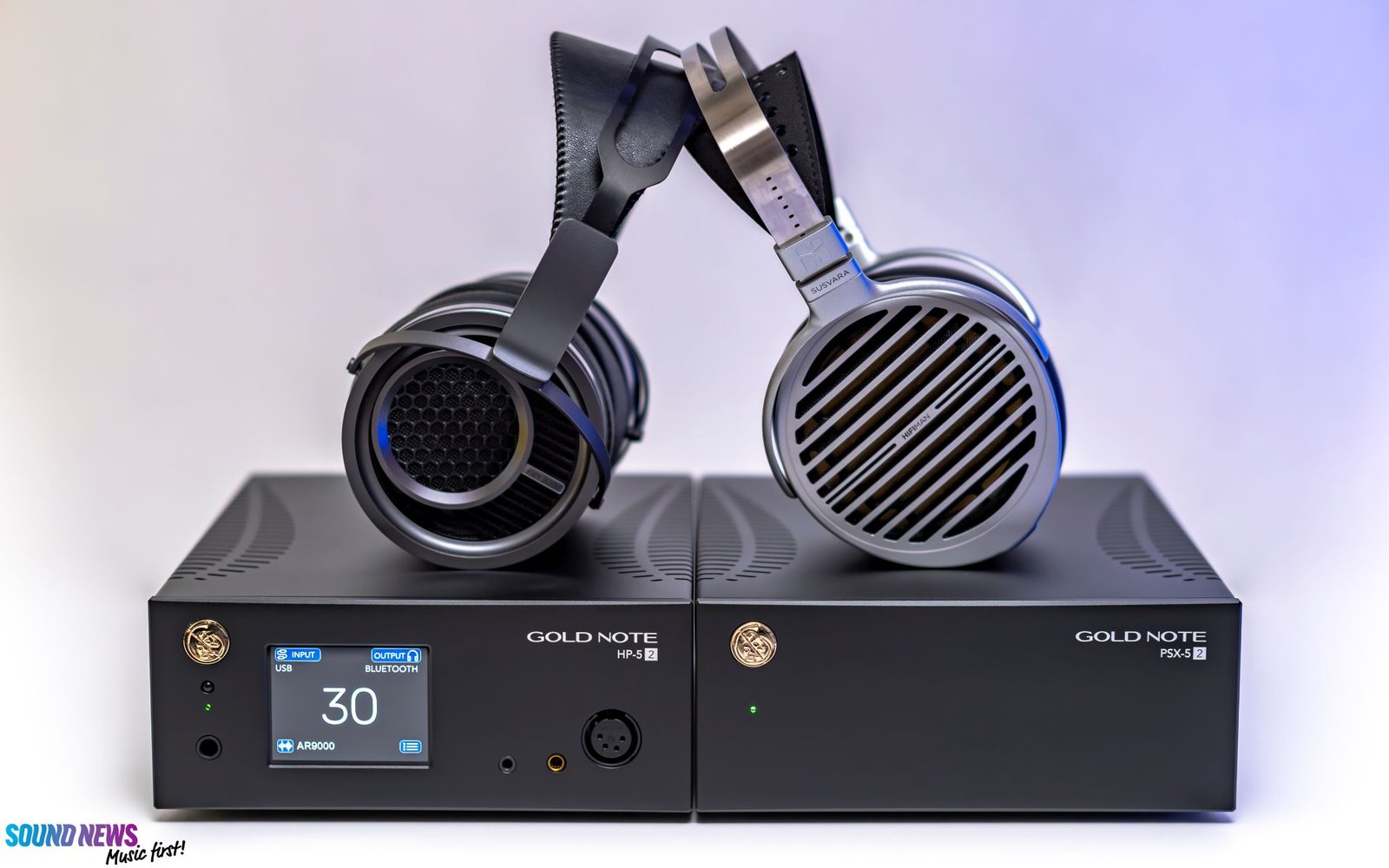
And sure enough, around 70 of the 99 volume steps available on tap, the HP-5.2 gently enters clipping territory with the toughest headphones in my collection. The HiFiMan Susvara OG and Bandoss Avija started slightly distorting on bass-heavy material where current demands rise dramatically. Feed the HP-5.2 from an external DAC with a hotter-than-standard output voltage, and clipping arrives slightly earlier, usually around the ~68 to 69 volume mark. Fortunately, those were the only two headphones in my stable that managed to push the little Gold Note beyond its comfort zone.
The T+A Solitaire P remains a favorite around here and, at the same time, one of the most technically accomplished and amplification-sensitive headphones I own. They demand high-quality power; otherwise, they’ll quickly expose amplifiers that start losing control. With the Solitaire P connected, the highest volume I dared reach was around ~60, a moment when dynamic peaks approached 105 dB! Obviously, I sustained that insanity for roughly a minute since I still value my hearing, but the important part is what happened next. Regardless of the Studio settings used, I couldn’t hear distortion building up, bass losing definition, or dynamics collapsing. Low frequencies stayed tight and controlled, while transients stayed alive and kicking. With the Solitaire P, the HP-5.2 behaved much like its bigger HP-10 brother, preserving strong dynamics while adding that extra bit of note weight and tonal density I usually associate with reference Class-A amplification. The same story repeated itself with the Audeze LCD-5S, HiFiMan Arya Unveiled, Aune AR9000, and HEDDphone GT TWO. Naturally, I didn’t need to push the volume anywhere near the same extremes. Around the ~50 mark, the HP-5.2 was simply cruising along, showing no signs of dynamic compression, softened transients, or loss of composure. And the conclusion on power is surprisingly simple: for most dynamic or planar headphones, the HP-5.2 has more than enough power and headroom.
Now, let’s move in the opposite direction and talk about tiny, ultra-sensitive IEMs. Gold Note doesn’t specify the exact gain values in dB for its IEM, REFERENCE, and HIGH gain settings, either on the product page or in the user manual. Subjectively, however, there is a substantial jump between them at around 10 dB or more, and naturally, IEM mode is the only sensible choice for such highly sensitive loads. Just as I did with the HP-10, I connected some of the most sensitive IEMs in my collection directly to the balanced 4.4 mm output. Whether I used the HiBy ZETA 2, FiiO FX17, or Westone MACH60, I could hear a faint trace of hiss in complete silence, mostly while inserting and removing the IEMs with no music playing. Once music starts, however, that tiny noise floor effectively disappears. Increasing or decreasing the volume doesn’t meaningfully change it either; the hiss remains constant, which immediately reminded me of the HP-10. It is there if you deliberately search for it in complete silence, but during actual listening, it becomes irrelevant.
Switching to REFERENCE or HIGH gain with sensitive IEMs is another story. The additional gain and power output predictably raises the noise floor and turns the experience into a much noisier affair, confirming that those two settings should be reserved only for properly sized headphones.
III. Adding the PSX-5.2 into the chain
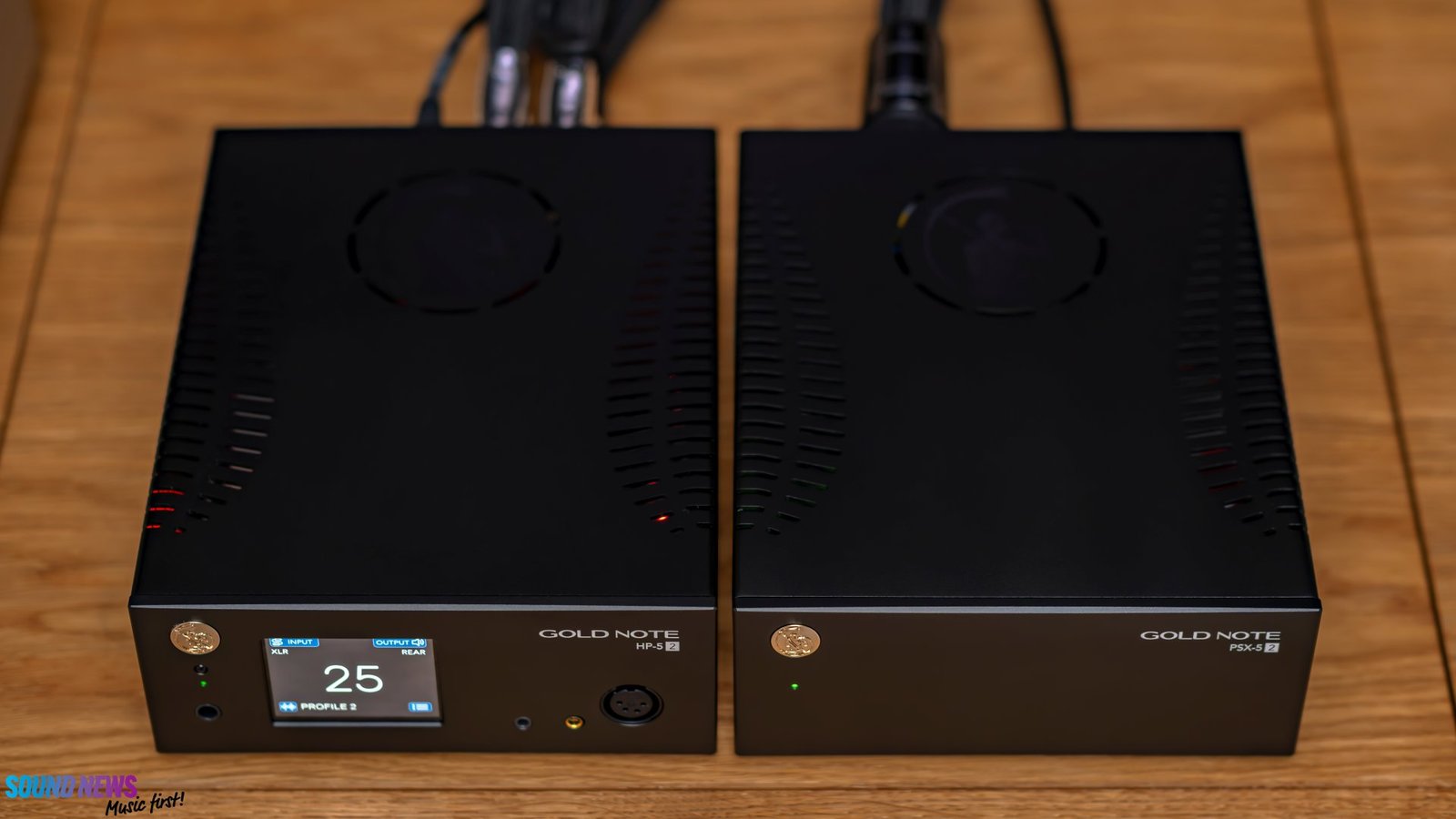
At €990, the HP-5.2 already arrives fully loaded, with all of its Studio settings, digital connectivity, preamp functionality, and enough power to satisfy most head-fiers out there, and for many of you, this will be the end of the story. But I’m here to tell you that the PSX-5.2 deserves to sit in the same shopping cart. Why? Because a good amplifier stage is only as good as the power feeding it. Power transistors need stable voltage, sufficient current reserves, and the lowest possible amount of electrical noise if you want them to perform at their best. You can design an impressive Class-A amplifier stage, populate it with high-quality components and fine-tune it for months, but if the power supply becomes the bottleneck? Well, that beautiful circuit will never fully spread its wings.
And space is precisely the enemy here. The HP-5.2 is already fully packed with electronics, so there is only so much room available for oversized filtering stages, elaborate voltage regulation, and generous energy storage. These things take up physical space, generate heat, and cost money. The PSX-5.2 moves that burden into a separate chassis, giving the amplifier access to a more substantial four-rail supply, improved voltage and current delivery, and more than 80 dB of line and common-mode noise rejection! That sounds impressive on paper, but more importantly, you can actually hear it. The biggest improvement wasn’t a dramatic tonal shift; instead, the PSX-5.2 seemed to remove a thin layer of restraint that I didn’t realize was there until it disappeared.
The first thing I noticed was dynamic freedom. Bass notes arrived with greater authority, drum hits felt more decisive, and the entire presentation reacted faster when music suddenly changed gears. The HP-5.2 already sounded controlled and punchy on its own, but with the PSX-5.2 attached, every transient attack had more confidence behind it. It felt less like the amplifier was working hard, and more like it had extra power reserves cruising around with little to no effort. In my humble opinion, the bass region benefited the most. All that energy didn’t necessarily make the bass louder, but the low end got better defined with additional layering, as if its resolution improved. Bass notes were easier to follow from their initial strike through the sustain and decay, while complex passages retained better separation when several low-frequency elements overlapped.
The second obvious improvement was the sense of air travel in between the notes. The Background appeared darker, individual notes separated more cleanly, and low-level information became easier to follow without the presentation turning brighter. Leading edges were a little more defined, but at the same time, everything seemed a bit more natural to my ears. And that combination gave the HP-5.2 a slightly more effortless, open, and wide character. And unlike what I experienced with the HP-10 and PSU-10 EVO, I wouldn’t say the PSX-5.2 fundamentally makes the smaller amplifier richer or more colorful. Remember, the HP-5.2 is a more neutral and reference-tuned machine to begin with. The external supply doesn’t change that personality; it simply lets it perform with greater authority, cleaner separation, and less apparent effort. The same improvements followed me into the stereo system when I used the HP-5.2 as a preamplifier. The stage opened up, transients improved, and busy recordings felt less compressed, especially when the music became dynamically demanding. On its own, the little Gold Note is already impressively capable, but with the PSX-5.2 attached, it simply sounds more complete top to bottom.
IV. Tonality & Dynamics & A Short Comparison with the HP-10
Describing the native tonality of the HP-5.2 is somewhat tricky, because just like its bigger brother, you can alter its personality quite dramatically through the STUDIO settings. Crossfeed will inject more weight and density down low, while the damping factor will change the behavior of certain headphones, and the Harman profiles? These will completely reshape the tonal balance to the point where two listening sessions will feel like enjoying two different amplifiers. But once you engage SuperFlat mode, a much clearer picture starts to emerge. And this is where the HP-5.2 slowly separates itself from the HP-10. The older and more experienced brother has a more authoritative personality. Bass carries additional mass, the midrange feels somewhat sweeter, and dynamics are always ready to punch you in the chest. And even with most enhancements disabled, the HP-10 still had that unmistakable Class-A richness running through its veins, giving music a slightly juicier character.
The more I compared the two, the more it became clear that the HP-5.2 takes a slightly different road. To my ears, the younger sibling is more reference-tuned, more linear sounding and straighter from top to bottom. There is less seasoning in the bass, less warmth spilling into the lower midrange, and there’s a lower saturation beautifying everything that passes through it. Instead of putting a strong personality ahead of the recording, it steps farther into the background and lets the source and headphones dictate most of what reaches your ears. And that could be a major pro or a mild con, depending on your listening habits. But regardless of what headphones it was powering, it never felt dry or thin-sounding; after all, I’m still describing a Class-A amplifier. There is still enough Class-A smoothness and sweetness to keep sharp edges from getting aggressive, and textures remain natural even when busy rock and metal tunes come into play. But compared with the HP-10, there is less milk and honey, if you will, and more honesty at the end of the day. I’m not sure if the extra power on tap makes the HP-10 a tad thicker and meatier sounding, but that’s my educated guess.
The HP-5.2 doesn’t push nearly as much energy down low; instead, it delivers tighter bass lines, closer to what the connected headphones naturally produce. It feels almost like comparing a deeper Class-A bias (richer and sweeter) with a lower Class-A bias (tighter, more linear) on the same amplifier. Whether that is better or worse will depend entirely on what you want from an amplifier. Personally, I think the HP-5.2 performs more as a reference tool and less like a coloring book. And naturally, if you miss some of that HP-10 sweetness and muscle mass, the STUDIO settings are only two taps away. Engage Crossfeed, increase the damping factor, and suddenly more bass authority starts emerging from the deep. Immediately, the sound gets denser, punchier and considerably more physical if that’s what you’re chasing. Which is perhaps the greatest skill of the little HP-5.2, as it starts from a neutral foundation, but you can still alter its sound to your liking.
V. HP-5.2’s DACs Performance, Resolution and Soundstage
Instead of the dual AKM4493 implementation I appreciated on the HP-10 Deluxe, the HP-5.2 takes a more conservative route with a single ESS ES9023 DAC. It is a much simpler solution to integrate, especially since the chip already incorporates its own 2 Vrms output stage, and on paper it can still deliver up to 112 dB of dynamic range. One obvious limitation, however, is that the digital input tops out at 48 kHz. That means high-resolution material will be downsampled before playback, which undeniably feels like a step backward compared with the HP-10 Deluxe. Still, perspective matters, because a very large percentage of the music available online remains in good old Red Book format at 16-bit/44.1 kHz, and the HP-5.2 will happily play that natively without breaking a sweat.
And if you are wondering how its internal DAC sounds? It was decent, sometimes even surprisingly good, particularly with well-mastered music. It was cleaner and more transparent compared to many entry-level DACs I occasionally play with on weekends, but I wouldn’t send it into the ring against today’s dedicated DACs hovering around the ~$500 mark. We are living through something of a golden age of affordable digital audio, where even modest budgets can buy you discrete R2R ladders, tube-output stages, or chip-based designs backed by properly engineered Class-A analog sections. Against that sort of competition, the HP-5.2’s internal DAC begins to show its limitations. The more I listened, the more I felt this section should be treated primarily as a convenience feature. It is there for those moments when you want an all-in-one solution, when desk space is limited, or when a dedicated DAC simply isn’t within reach, and used this way, it makes perfect sense. At times, it reminds me more of a competent dongle DAC permanently installed inside the HP-5.2 than a full-blown digital front end capable of showing what the amplifier section can truly do. The ES9023 also has a mild tendency to outline notes a little more than the HP-10 Deluxe, which can give the impression of extra clarity on the first listen. Yet once you focus on micro dynamics, inner textures, and the little acoustic cues, it becomes clear that the HP-10 Deluxe still pulls ahead with greater dynamic swings and finer resolution. So yes, the HP-5.2 has a perfectly usable DAC section, just don’t mistake it for the star of the show, because once you bypass it and feed the HP-5.2 a much cleaner signal from a reference external DAC, the whole story changes and I mean…dramatically.
Connect a DAC costing many times more than the HP-5.2 itself, and suddenly you’ll start hearing a level of micro-detail that I would normally associate with amplifiers costing several thousand dollars, and let me give you a couple of examples. I recently spent time with Aune’s flagship A17, a headphone amp and preamp I enjoyed immensely for its subterranean bass delivery and effortless behavior with every load. Yet when it comes strictly to inner resolution and micro-level information, the HP-5.2 sits surprisingly…on a similar level. The same can be said about Burson’s latest Soloist and Conductor Stellar models, which can climb well beyond the $2.000 mark depending on the configuration. Again, I am not saying the HP-5.2 matches every aspect of those amplifiers, but in terms of sheer transparency and its ability to show off tiny nuances buried in a recording, this little guy will surprise you.
In a nutshell, its DAC section was clearly built for convenience, but the analog amplifier section was built to perform like a serious reference amplifier. Use the internal DAC and the presentation feels somewhat closed-in and up front, but then again, I keep reminding myself that the ES9023 is effectively a system-on-chip solution rather than an ambitious DAC followed by a dedicated output stage and elaborate low-pass filtering.
Switch over to the balanced XLR input and let a proper external DAC do the heavy lifting, and suddenly it will be difficult to distinguish the HP-5.2 from its much more expensive HP-10 sibling. There may be a small difference in effortlessness and layering, with the HP-10 still sounding a little more relaxed and expansive, but at this point I’m splitting hairs. Class-A designs tend to excel at precisely this sort of thing. The output transistors remain active (Class-A) instead of constantly switching on and off around the zero-crossing point (Class-AB), and subjectively, that often translates into a smoother, more continuous flow of information with stronger cues around the listener. The moral of the story is simple: don’t judge the HP-5.2 solely by its internal DAC. That section is practical and acceptable for casual music listening. The real star is the amplifier hiding behind that hood, capable of significantly more.
VI. HP-5.2 Preamplifier’s Performance
Since the HP-5.2 also provides both RCA and balanced XLR outputs, it would have been rude not to throw it into my stereo system and check whether this little Italian could still moonlight as a proper preamplifier. So out went my Chord ULTIMA PRE, and in came the HP-5.2, sitting between the Rockna Wavedream Reference Signature DAC and a pair of Chord ULTIMA 3 monoblocks, driving both the Raidho TD2.2 and the CLC.Audio CLC65. Quite the unfair fight, I know. But that’s exactly the point! I wasn’t expecting a €990 component to embarrass a reference preamplifier costing many times more. I wanted to know if the HP-5.2 could still preserve enough transparency, dynamics, and control to become a realistic preamp option in a competent stereo system.
And the short answer is yes! It certainly does, and the first thing I noticed was how closely its preamp performance followed what I already heard through headphones. Compared with the HP-10, the HP-5.2 felt more neutral, and less eager to inject extra doses of bass and midrange sweetness into the chain. It didn’t thicken the vocals nearly as much, nor did it boost the lower registers. Instead, it behaved more like a wire with gain in between the source and my power amplifiers. On its own, the HP-5.2 remained tonally balanced and surprisingly transparent, since complex passages retained most of their structure and large orchestras never collapsed the music when dynamics exploded beyond sane SPL levels. Still, compared with my reference preamp, the system had less authority when pushed hard.
Adding the PSX-5.2 helped considerably and again, it feels like a no-brainer upgrade. The presentation opened up…maybe a little more than what I already experienced via headphones, as the bass gained a firmer foundation and transient attacks became more confident with every strike. More importantly, the system sounded less restrained, particularly during demanding passages, where the external power supply seemed to provide extra breathing room. Ultimately, the HP-5.2 can still replace a dedicated preamp; a strong feeling I already experienced via the HP-10 Deluxe. Just make sure the remote control is always within reach.
My Conclusions
The more time I spent with the HP-5.2, the less I wanted to describe it as a cheaper HP-10, and sure, the family resemblance is quite impossible to miss. The same STUDIO philosophy survived; Class-A operation is still at the heart of the machine; it can still work as an active preamplifier, and there are enough headphone outputs to organize a small Head-Fi convention. But sonically, the HP-5.2 has its own personality. Where the HP-10 was the more colorful brother, the HP-5.2 feels a bit more disciplined, more reference-tuned and more linear. It doesn’t automatically sprinkle parmesan over every recording simply because it was born in Italy, and I actually appreciate that distinction. Leave the STUDIO settings alone, and the HP-5.2 becomes a surprisingly honest amplifier that lets your DAC and headphones dictate most of the final result. But if you feel that something is still missing, then STUDIO settings are only two taps away.
Plenty of headphone amplifiers around ~€1.000 can sound clean, powerful and transparent nowadays. Some will even give you more raw power. But very few let you adapt the amplifier to the headphone in such a meaningful way, and fewer still do so entirely in the analog domain. Gold Note’s continuously expanding headphone-settings database makes the whole concept even stronger. At 451 supported models (and counting), this no longer feels like somebody added Crossfeed to the user interface on Friday afternoon and went home early. There’s genuine effort behind the ecosystem.
Power output is another pleasant surprise, although physics eventually has the final word. The Susvara OG and Bandoss Avija managed to push the HP-5.2 to its limits, particularly with bass-heavy material, but here’s the important part…those were mere exceptions. The T+A Solitaire P, Audeze LCD-5S, HiFiMan Arya Unveiled, HEDDphone TWO GT, Aune AR9000, Sennheiser HD800S, and practically everything else I connected sounded properly driven, dynamic, and controlled, with enough headroom left for listening levels I wouldn’t recommend unless you’re deliberately trying to damage your hearing.
The more I fiddled with the unit, the more I realized the PSX-5.2 is becoming impossible to remove from the system. I would call it a no-brainer upgrade, and if the budget permits, I would seriously consider adding it. The external power supply doesn’t transform the HP-5.2 into an HP-10. Instead, it removes some limitations, delivering stronger dynamic swings, more powerful kicks and sustains in the bass region, and nicer layering as the presentation opens up substantially.
Complaints? The enclosure is no longer CNC-carved, there is no physical volume knob, the internal DAC is merely decent, and not every IEM was playing in complete silence. But look at the other side of the coin. For €990, Gold Note gives you a dual-mono Class-A headphone amplifier, active preamplifier, integrated DAC, Bluetooth receiver and transmitter, four headphone outputs, three gain ranges, adjustable damping, Crossfeed, Harman profiles, SuperFlat mode and one of the most unusual analog tuning systems available in Head-Fi history. Something had to be sacrificed to reach that price, and Gold Note sacrificed the right things. The HP-5.2 isn’t the giant killer that the HP-10 occasionally felt like, nor does it have the same colorful, intoxicating personality. Instead, I would call it a serious overachiever, and if you already own a capable DAC, then the proposition becomes even stronger.
The Gold Note HP-5.2 will cost you €990 in Europe / $1,295 in the USA, while the optional PSX-5.2 adds an extra €720 / $895. If you’re getting one and still have some burning questions, please say Hi and drop me a line in the comments section below.
PROS:
- Compact and unmistakably Italian design with excellent fit and finish
- Outstanding feature set for the price
- Dual-mono, discrete, Class-A amplifier topology
- Reference-tuned, linear and honest presentation
- STUDIO adjustments remain genuinely useful and can dramatically improve headphone matching
- Crossfeed, damping and Harman profiles ALL operate entirely in the analog domain
- Excellent resolution when used with a high-quality external DAC
- Enough power for the overwhelming majority of demanding desktop headphones
- Three gain settings make it equally usable with IEMs and full-sized headphones
- Surprisingly capable active preamplifier section
- Bluetooth works both as receiver and transmitter
- PSX-5.2 noticeably improves dynamics, bass definition, openness, and effortlessness
- Unbeatable price-to-performance ratio
CONS:
- Internal DAC section is clearly below the performance level of the analog amplifier
- No physical volume knob; volume adjustments require the remote control
- Lighter, folded-aluminum construction feels less premium than the HP-10
- The most difficult planar headphones can push it into clipping territory
- Slight hiss can be detected with ultra-sensitive IEMs in complete silence
ASSOCIATED EQUIPMENT:
- HiFi Racks: WoodYard Suspended Triple & Baby Modular
- CD/SACD Transport: Onix XST20
- Network Switch: ROBOLI UltraLine Switch S240
- DAC & Wired Streamer: Rockna Wavedream Reference Signature, Audiobyte SuperVOX
- Preamplifiers: Chord Electronics ULTIMA PRE, Gold Note HP-5.2, Aune A17
- Power Amplifiers: Chord Electronics ULTIMA MONO (X2), ULTIMA 3 MONO (X2)
- Headphone Amplifiers: Gold Note HP-5.2, HP-10 Deluxe, Aune A17, Audiobyte SuperHEAD, Feliks Envy Susvara Edition
- Headphones: HiFiMan Susvara OG, T+A Solitaire P, Audeze LCD-5S, Bandos Avija, Sennheiser HD800S, Aune AR9000, HEDDphone GT TWO & many more
- IEMs: HiBy Zeta 2, FiiO FX17, Meze ASTRU, Westone MACH60
- Loudspeakers: CLC.Audio CLC65, Raidho TD 2.2
- Interconnect Cables: AudioQuest Dragon XLR (X2), Pure Line Audio Pure Silver Ribbon Statement XLR
- Speaker Cables: AudioQuest Dragon ZERO 2.0m
- Power Cables: AudioQuest Dragon Source (X2), AudioQuest Dragon High Current (X4), Roboli Stars (X2)
- Ethernet Cable: Crystal Cables Da Vinci
- HDMI Cable (I2S): AudioQuest Dragon
- Balanced Isolation Power Conditioner: KECES IQRP-3600, Pure Line Audio GoldCore 6 NoiseBlock