A mature, polished wireless ANC flagship that trades a little outright sparkle for warmth, comfort, genuinely top-tier noise canceling, and near-endless battery life.
One year later, a new companion arrives.
Looking back, exactly one year ago, I reviewed the Bowers & Wilkins Px7 S3 during my visit to Oslo. This time, my attention turns to Sennheiser‘s new Momentum 5, a slightly more affordable proposition, yet one that still carries the full weight of the Sennheiser promise of great sound. Since I am not on vacation just yet, I began the honest way, by simply living with it through a normal working week. Then, after hours, I took it on my usual evening walk into the park, which gave me plenty of real-world moments to put the ANC and transparency modes to the test. Across all of it, switching seamlessly and transparently between my laptop and phone during work hours, sinking into music at my desk, and stepping out into the bustle of the city in the evening, the Momentum 5 never once let me down. It turned out to be exactly what it set out to be: a mature and polished product.
Before I dive in, allow me a short detour into the story behind the badge, because with Sennheiser, the name really does carry weight. This is a German company founded all the way back in 1945, with one of the deepest and most influential histories in all of audio. It gave the world the HD 414 in 1968, the very first open-back headphones and, to this day, one of the best-selling full-size headphones ever made. It is the company behind the legendary HD 600 series that audiophiles still adore, and behind the flagship HD 800 reference. So when Sennheiser tunes a consumer headphone, it draws on an enormous acoustic library, and that heritage matters here, because the 42 mm driver inside the Momentum 5 is inspired directly by those famed HD 600-series units.
The Momentum line itself is now a proper dynasty. It began in 2012 with the original wired over-ear, which swapped the industrial look of older portables for stitched leather and stainless steel, instantly proving that style and substance could coexist. The Momentum 2.0 followed in 2015 and grew into a whole family, adding on-ear, in-ear, and the first wireless models. The Momentum 3 Wireless arrived at IFA Berlin in 2019, a lavish metal-and-leather affair. Then came the pivotal Momentum 4 Wireless in 2022, which shed the heavy metal frame for a lighter, mostly plastic build, dropping weight while pushing battery life and ANC to new heights. That fourth generation set the template, and the Momentum 5 is very much its refinement rather than its reinvention.
As for where it sits in the current range, think of the Momentum 5 as the flagship of Sennheiser’s mainstream wireless ANC lineup. Below it lives the more affordable ACCENTUM family, while just above and to the side sits last year’s audiophile-focused HDB 630, a headphone that chases pure sound quality and even offers parametric EQ, at the cost of some noise-canceling muscle. The Momentum 5, priced at €399.90 (399.99 USD), is the all-rounder of the family, meant to do a bit of everything and do it very well. With that context in place, let’s see how Sennheiser’s latest actually performs.

TL; DR – The short story.
If you want the conclusion first, here it is: the Sennheiser Momentum 5 is a wonderfully complete, worry-free pair of wireless ANC headphones. The sound is warm, full-bodied, and easy to live with; the ANC has finally caught up with the very best, the battery is close to endless, and the whole experience is smooth from the very first pairing. It is not the last word in outright audiophile resolution, and the bass can get a touch generous, but the Momentum 5 is polished, dependable, and genuinely enjoyable. My only real complaint is a slightly plasticky look for the price, but hey… the lightweight profile always has a cost. Everything else is a mature win. Highly recommended.
Build and comfort.
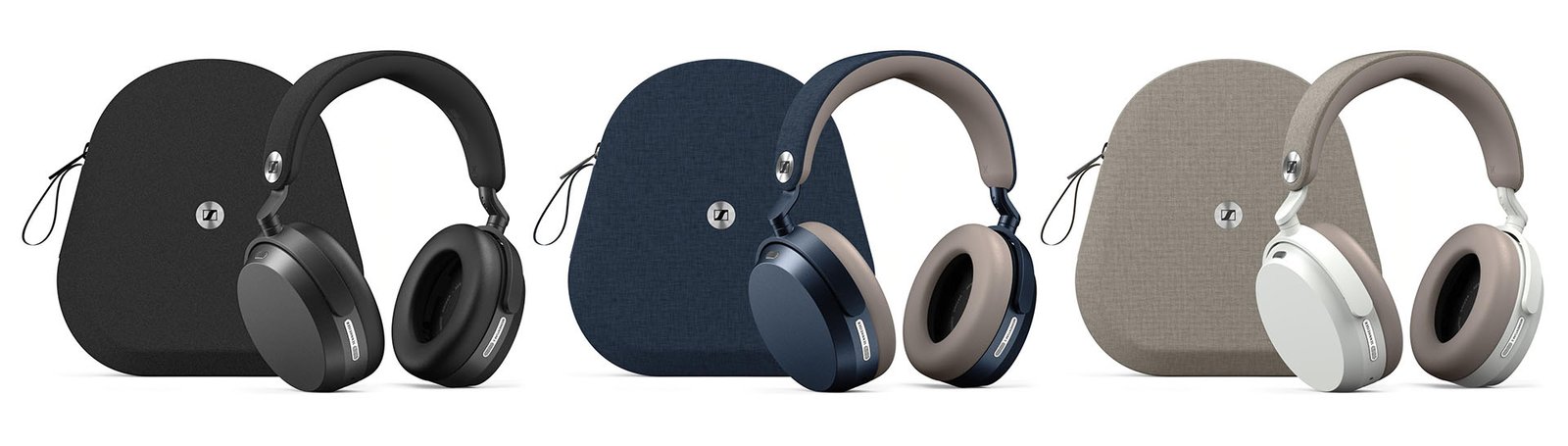
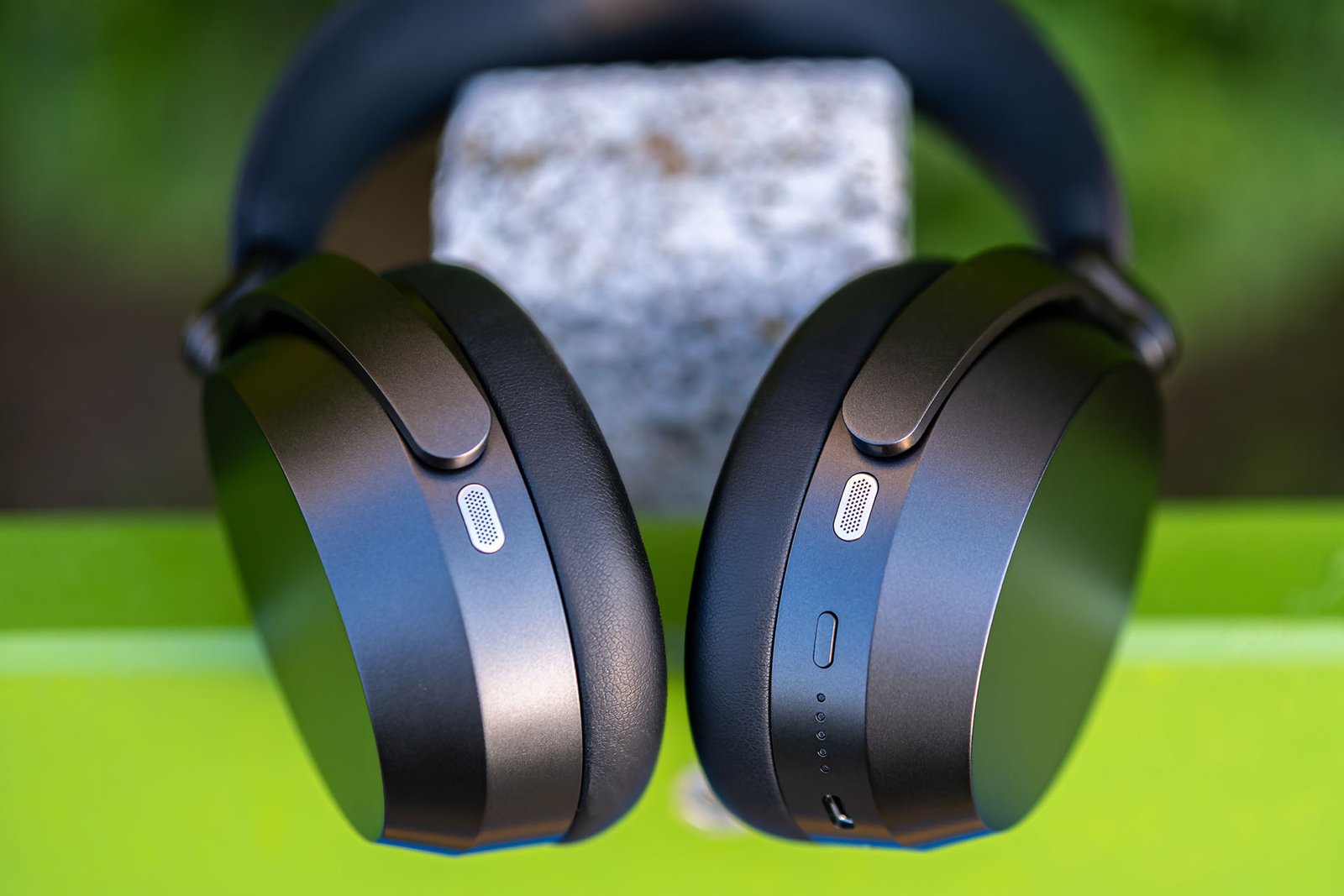
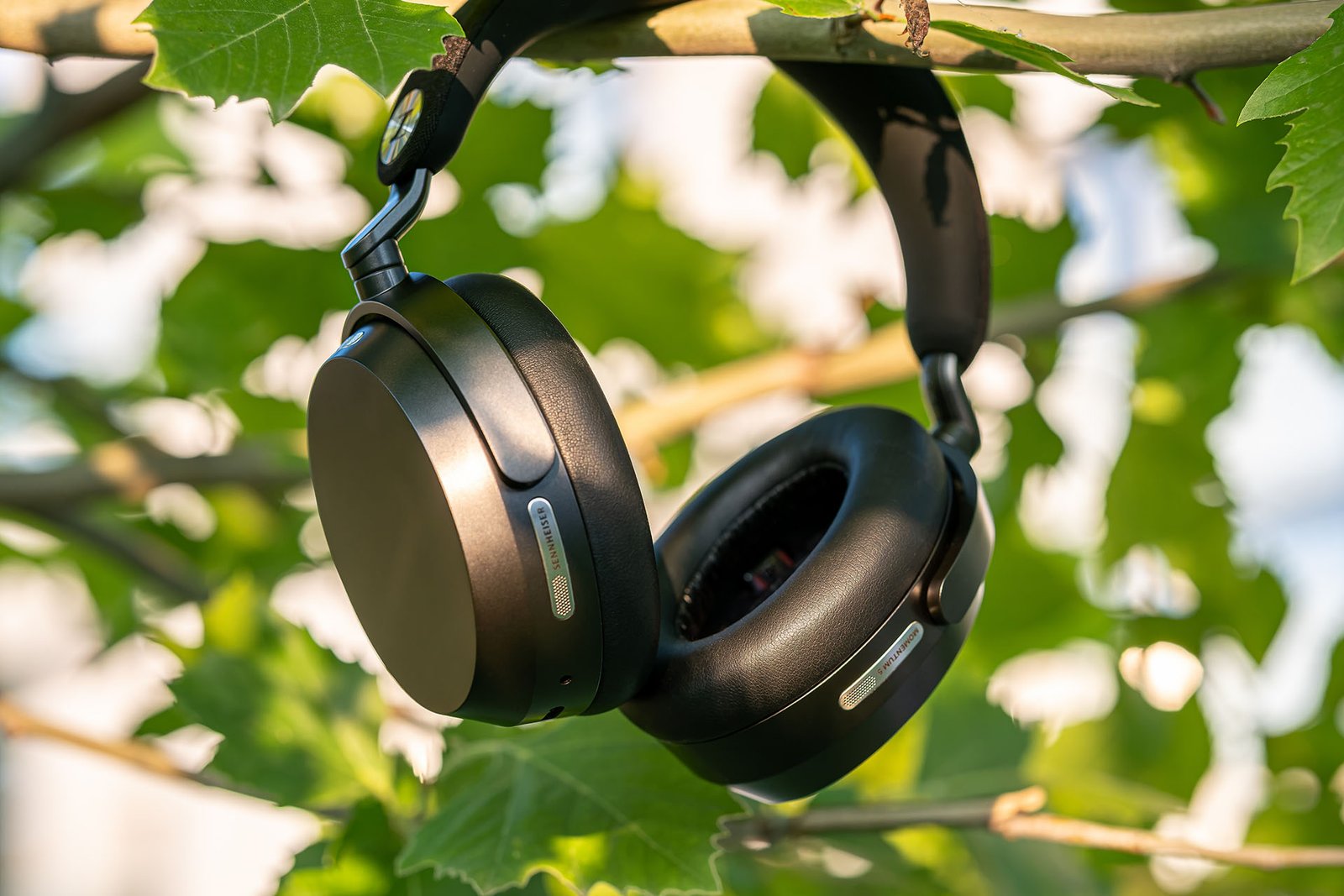
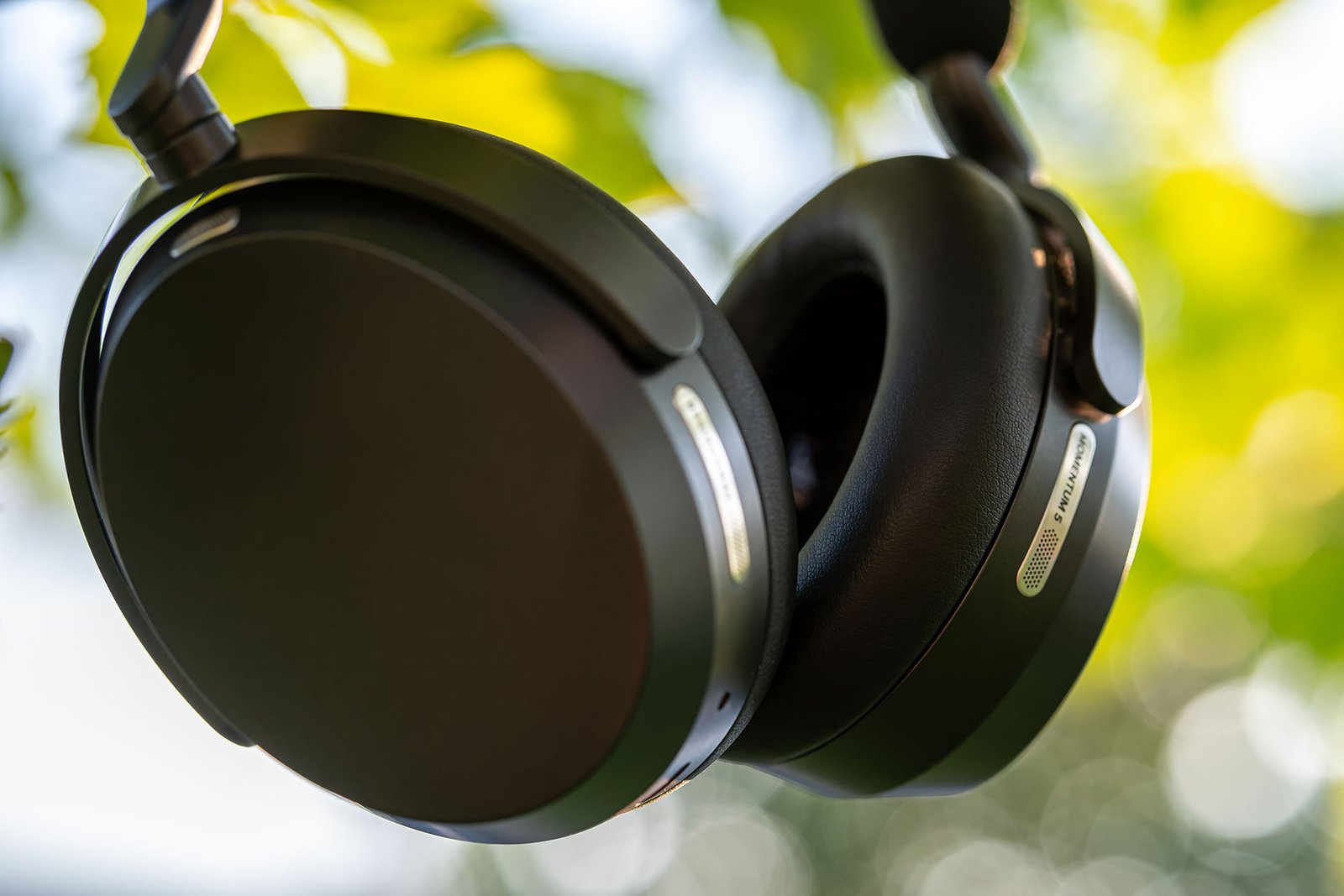
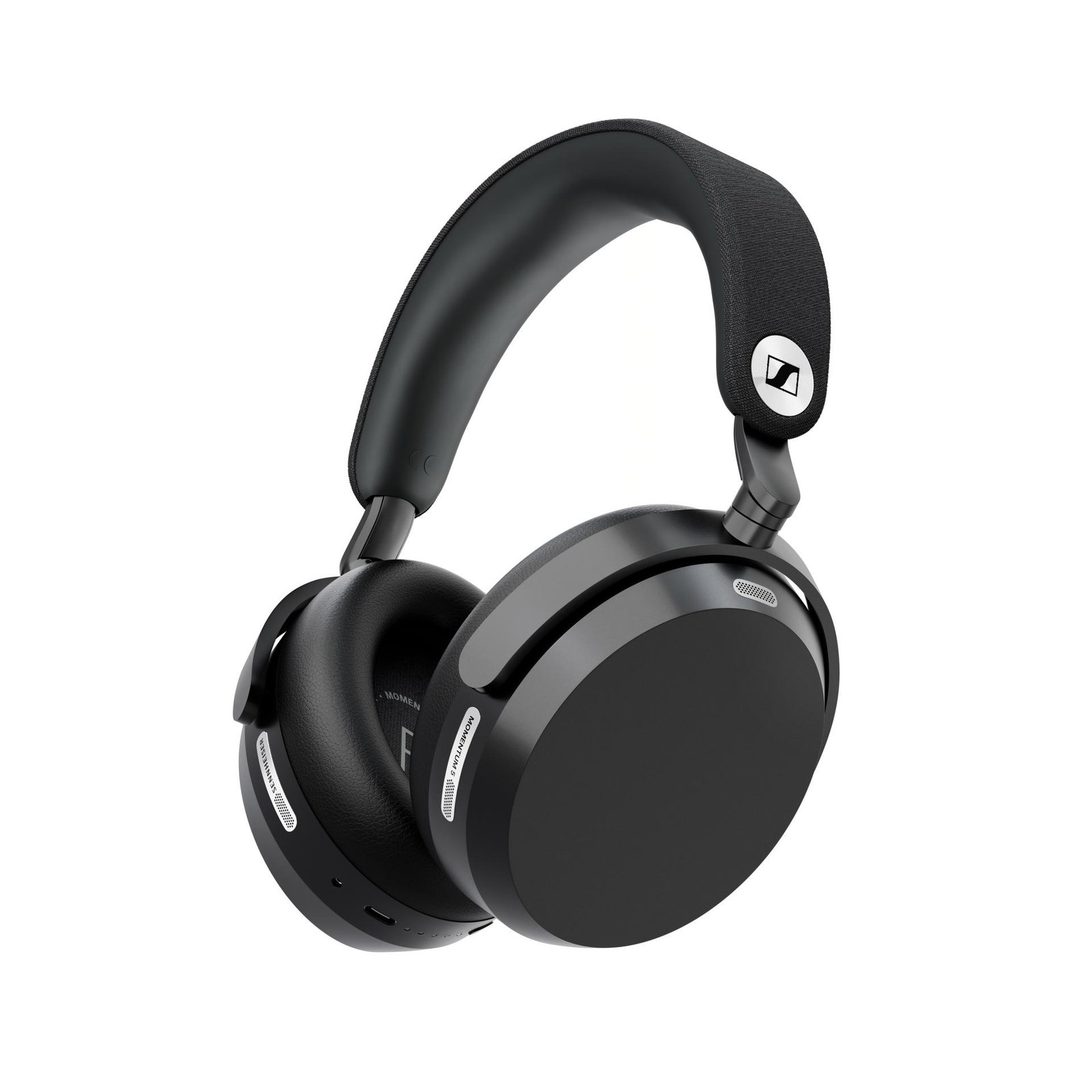
Let me be honest right from the start, because it is also my one reservation with the Momentum 5. This is a mostly plastic headphone with metal accents, and it does not project the same jewel-like luxury as the Bowers & Wilkins or, indeed, the Apple, Sony, and Bose alternatives at around the same price. The outer earcups are clad in matte plastic with clean, minimal seams, and there is a lovely fabric-like material across the top of the headband that I really do like touching. But if you want a headphone to feel like an expensive object the moment you lift it from the case, the Momentum 5 will not give you that little rush. It looks a bit understated, a bit humble. That is the price you pay for the featherweight comfort, and I made my peace with it very quickly.
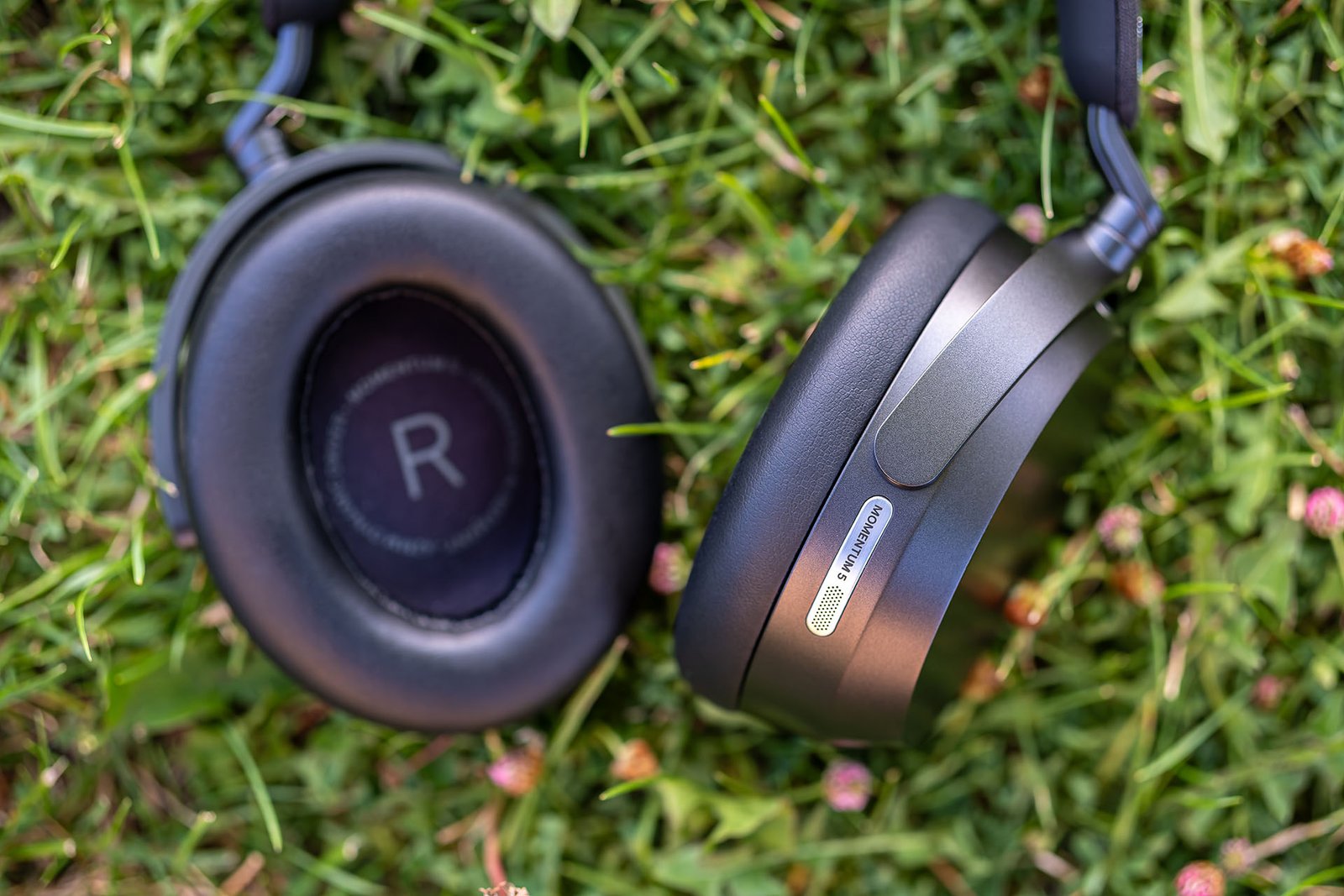
Because comfort is where this design earns its keep. At around 290 grams, the Momentum 5 is light, and the clamp force is on the gentle side. That means no hot spots, no fatigue, and no pressure headache after a long working day of back-to-back calls. The flip side of a light clamp is that vigorous head movement can make them slide a touch, so these are not the headphones I would take for a run, but for the desk, the plane, the sofa, and my slow evening walk into the park, they simply disappear on your head. The earcups are a decent size and fit my ears comfortably, with only the very tips lightly brushing the inside.
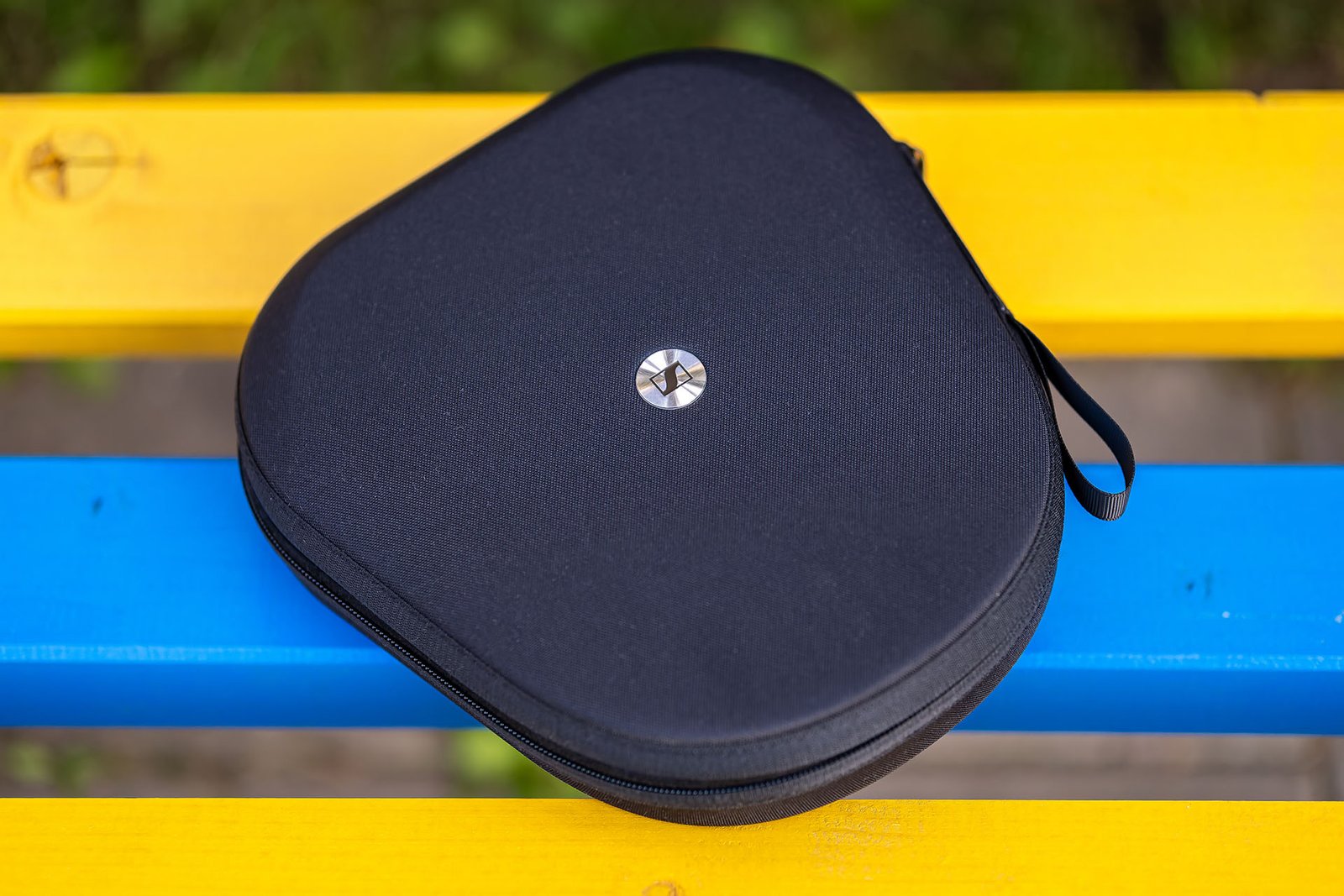
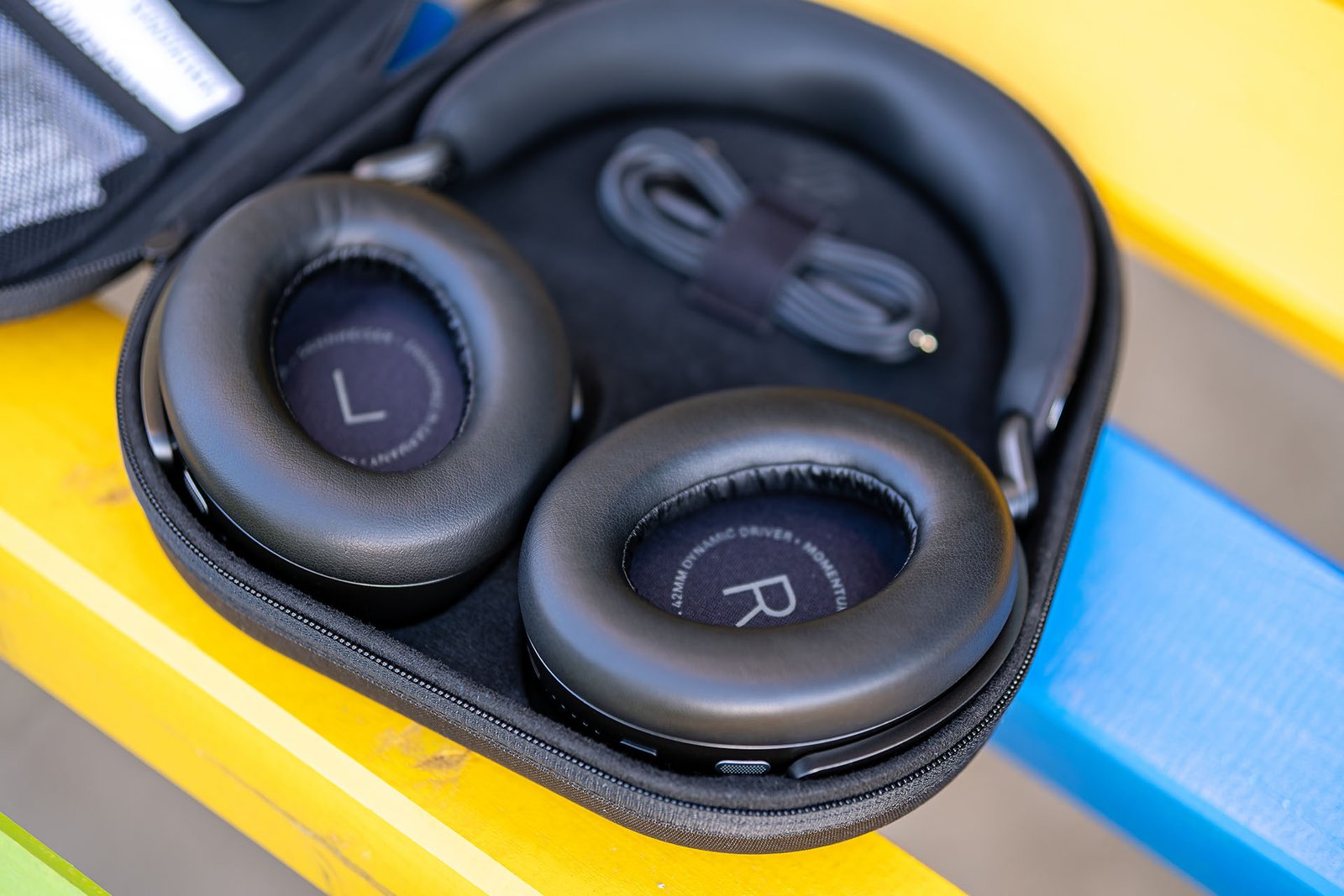
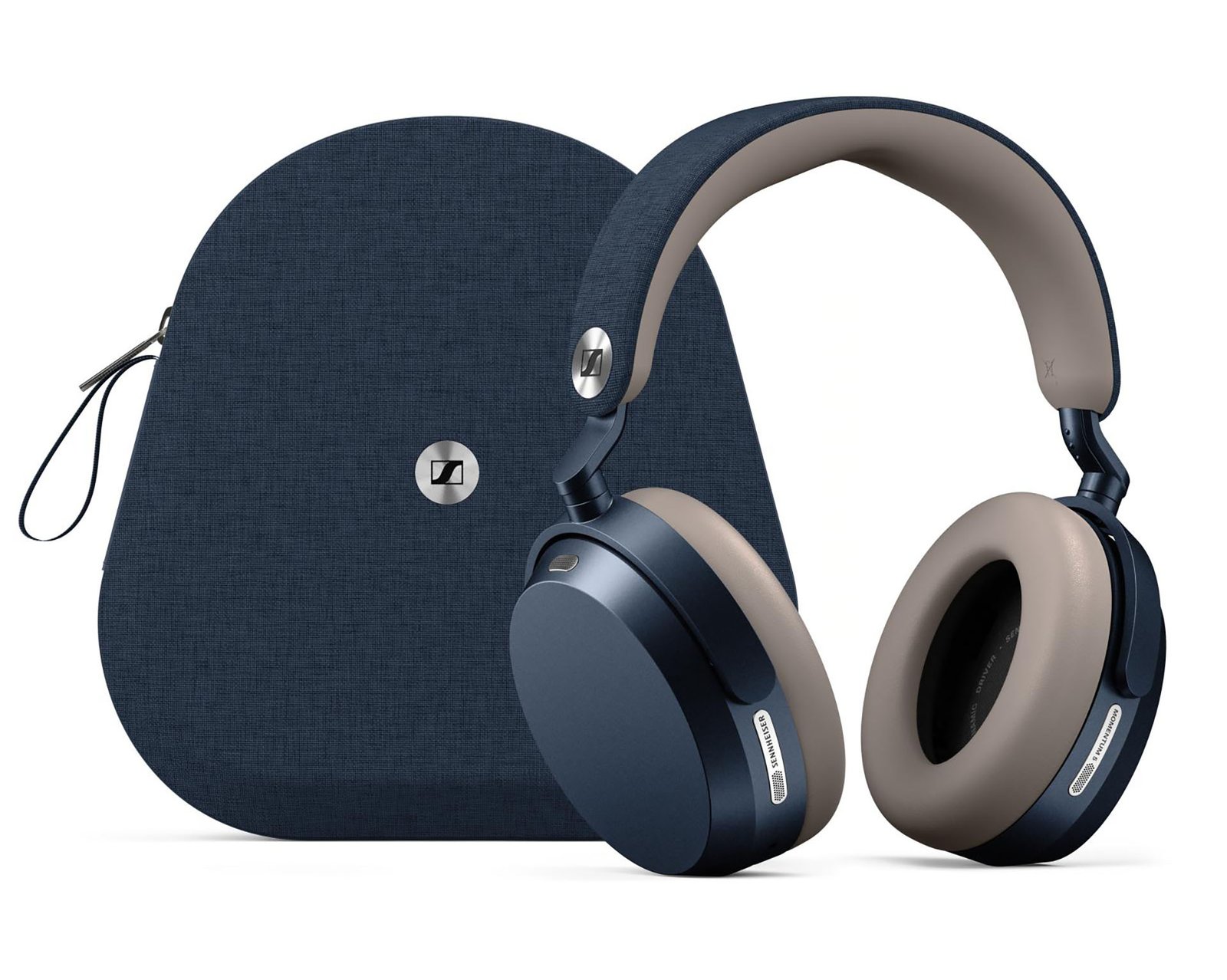
The star of the accessory show is the new carrying case. It is one of the flattest, slimmest cases I have seen on a modern over-ear, and it slips into a backpack without any drama. Sennheiser even carved a little handle-like groove at the top where the headband nests, so the carrying case actually lives up to its name. You also get two cables in the box: a USB-C charging cable and a 2.5 mm-to-3.5 mm analog cable. One note worth knowing: like most of today’s wireless headphones, the Momentum 5 needs to be powered on to make a sound, even when wired, because that clever DSP has to be awake to do its job. It cannot play purely passively.
Sound Quality.
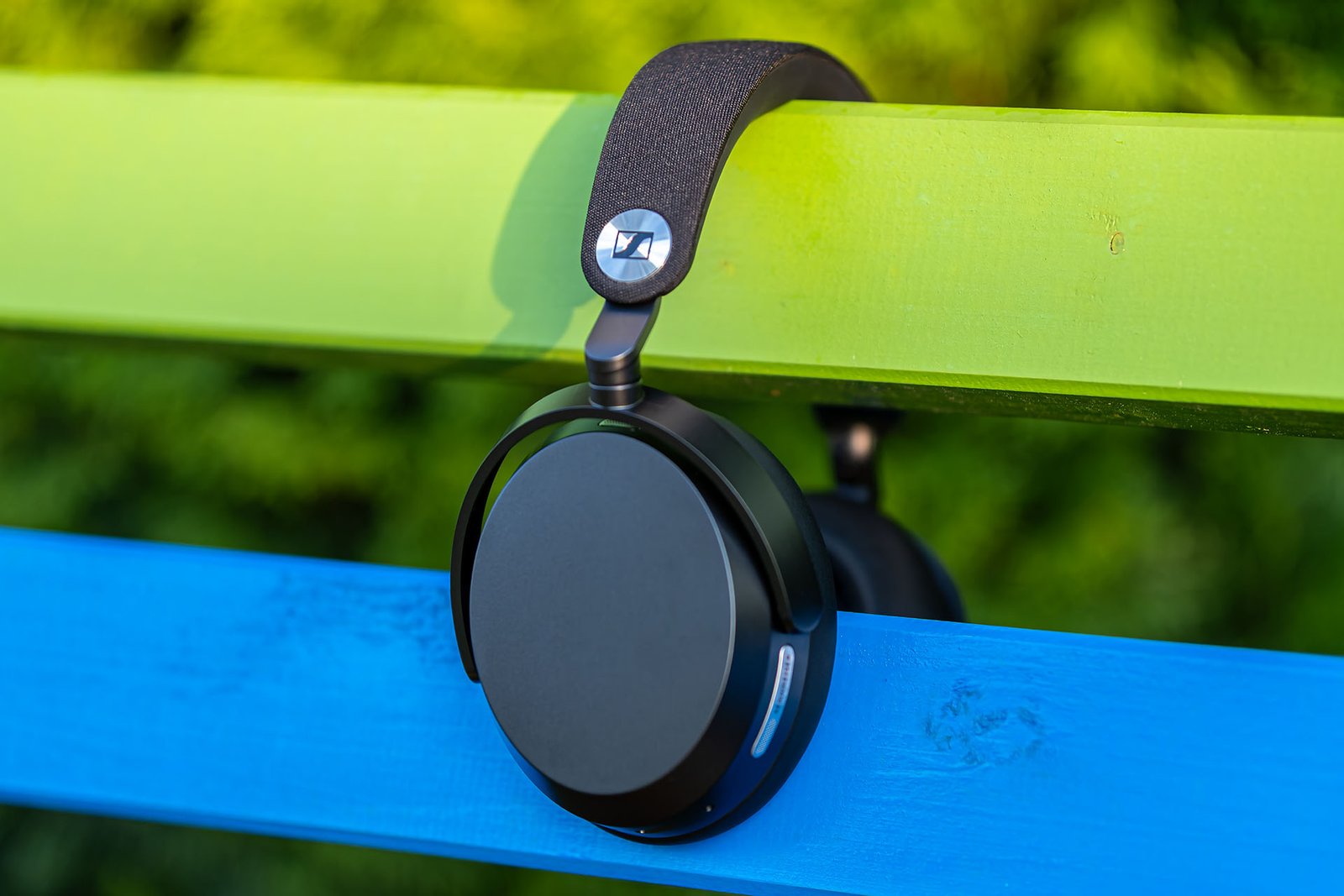
Now to the part that matters most to me, and the part where Sennheiser has decades of heritage to protect. The Momentum 5 carries forward the same 42 mm dynamic driver family inspired by the legendary HD 600 series, and out of the box, with the Neutral preset and ANC at 100%, it delivers exactly the warm, full-bodied signature the German brand promises. It is a sound you can settle into for hours. Nothing shouts at you, nothing fatigues you, and there is a pleasant richness across the whole presentation that makes casual listening a joy.
One caveat before I break it down, and it is a fair one for any wireless headphone. These are not passive audiophile cans, so the sound is shaped by the DSP, the ANC state, the codec, and even the seal on your particular head, which means your mileage will vary more than with a wired reference. Judged purely as a headphone, the honest summary is this: the Momentum 5 is a generally competent, warm, slightly bass-grounded performer. It is exactly the kind of sound I am happy to accept from a travel headphone. Now, let me get into the how and the why.
The bass is generous and confident, and it is the first thing you notice. There is a strong sub-bass presence below 60 Hz that gives deep rumble a satisfying physical body and oomph, a coloration that flatters electronic music and film in particular. One practical note for the glasses wearers among us, myself included: the arms of your frames can break the seal at the very lowest octaves, below roughly 40 Hz, which rolls off some of that deepest rumble. So, depending on your face, the low end may actually behave a touch more politely than the spec sheet suggests. Either way, I will be fair, because this is where the Momentum 5 shows its character rather than outright discipline. The low end leans a little loose, favoring quantity over pinpoint quality, and I kind of like that. Note articulation and dynamics are a bit blurry, so while there is real body and weight, you do not get that tight, deep, controlled slam that lands with total impact and finality. It is more about bass presence than bass precision. What you do get is warmth and fun, which for most listeners on a walk or a commute is a very welcome trade. Happily, the boominess stays confined to the sub-bass and mid-bass region, because the bass-to-mids handover is genuinely well done, with no bloat creeping into the lower midrange.
The midrange is a more nuanced story. It is forward enough that voices and instruments never feel buried or recessed, which keeps everything engaging and present. The end result is a midrange that is present and listenable rather than effortlessly clear. It works for its clarity, if that makes sense, instead of simply flowing. I want to stress this is not a bad midrange at all. Notes are never hidden, and curiously, I was never once bothered by any dip in normal listening. Your own ears and head shape will shift the exact effect, and the app makes it easy to smooth over if you want to.
The treble is the most honest weak spot, and the one area I would single out as the limiting factor. Like the mids, it has presence, but the effortless, airy shimmer you hear on the very best simply isn’t fully there. The timbre of cymbals and hi-hats can sound a little conflicted: a note starts oddly flat at the transient, rises to a peak somewhere, then fades before it truly gets to breathe with air and sparkle. In the context of the whole tonal balance, that lends a smoother top end than expected. Here is the crucial good news, though, and it is what keeps the Momentum 5 so easy to live with: there are no dealbreakers whatsoever. The treble is never harsh, never sibilant, and never fatiguing. It is polite and forgiving, being amooth, exactly what you want for all-day wear, even if it is the weakest link in the chain from a pure audiophile perspective.
As for staging and presentation, the Momentum 5 is a well-behaved but thoroughly standard closed-back. Imaging is a clear step better than the stereotypical three-blob, left-center-right effect, so instruments do have their own places, but the whole picture stays intimate and slightly enclosed, as if the notes are physically held inside the cups rather than spreading out around you. The usual audiophile yardsticks, resolution, layering, and instrument separation, all land in solidly competent territory rather than overachieving. I do not hold this against it, because closed headphones are acoustically tricky environments by nature, and asking a compact travel can to throw a huge, holographic stage is unrealistic. Consider it a footnote rather than a flaw: the Momentum 5 is not trying to be a technical showpiece; it is trying to be a warm, dependable, everyday listen, and at that, it succeeds. The overall verdict stays exactly where I began, competent, warm, a touch bassy, and thoroughly fun and likable.
To put all of that into real music, I spent a good while with a mix of the jazz and electric material I always come back to. On Marcus Miller‘s bass-heavy grooves, the Momentum 5 leaned into its strengths, delivering that thick, physical low end with plenty of drive and body, exactly the kind of fun that makes you tap your foot on the walk home. It is not the tightest, most articulate bass I have heard, and a purist might want a little more definition on the fastest runs, but there is real enjoyment in that generous warmth. Switching to something more delicate, a Ben Webster ballad with lots of brushed cymbals and breathy saxophone, exposed the treble’s small hesitations, with the cymbals sounding a touch veiled rather than shimmering. Yet vocals and the body of the sax came through with genuine warmth and presence, and nothing ever turned harsh or tiring. That is the Momentum 5 in a nutshell: a forgiving, easy-going, richly warm listen that flatters more than it dissects. And with a couple of small tweaks in the app, which I will get to shortly, it gets even nicer.
ANC, transparency, adaptive modes, gestures, and customization.
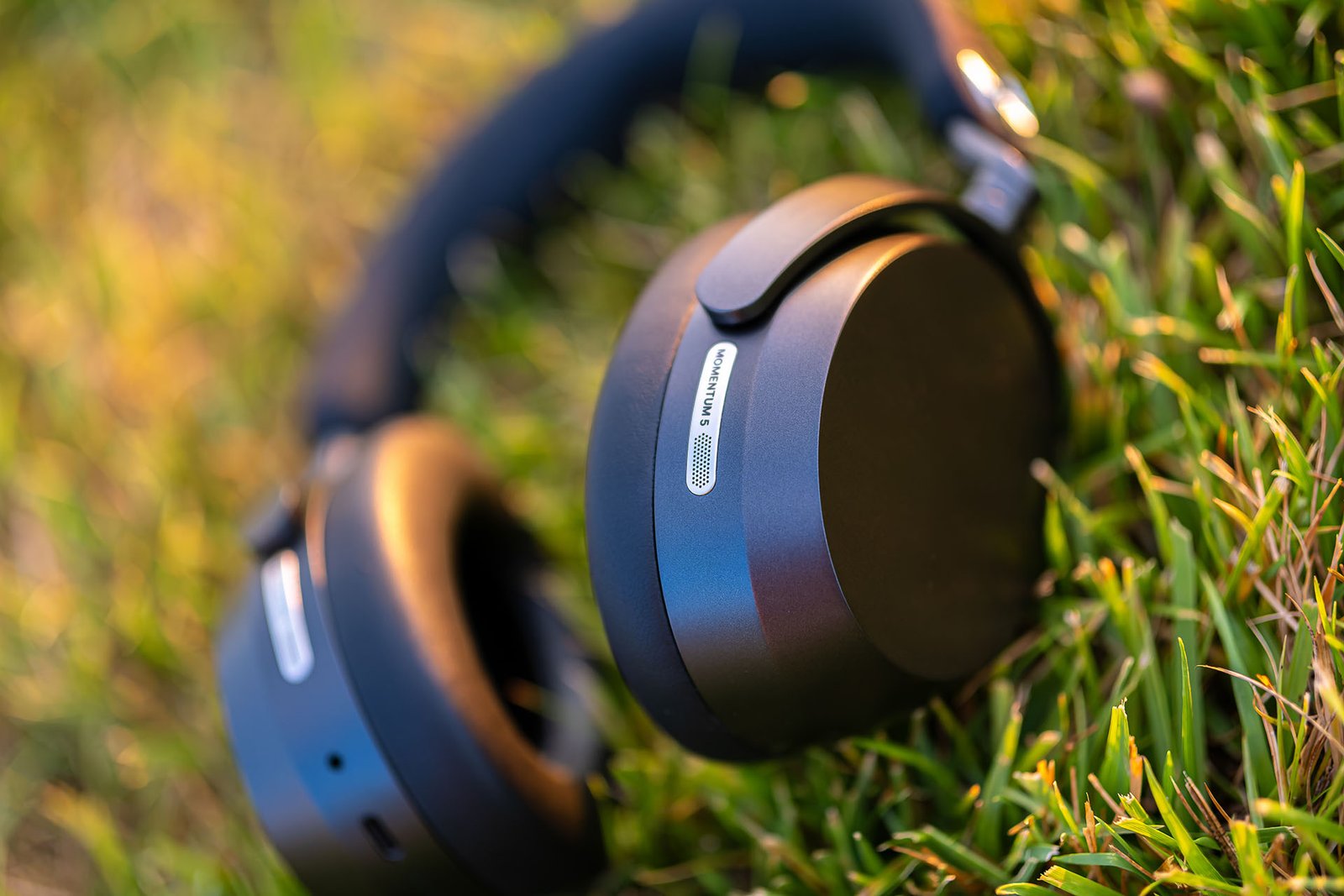
This is where the Momentum 5 quietly graduated. For years, Sennheiser’s noise canceling was the “good but not great” member of the flagship class. Not anymore. With four microphones per earcup, eight in total, feeding a new Hybrid Adaptive ANC system, the Momentum 5 finally sits comfortably alongside Sony, Bose, and Apple. On my walk into the park, traffic, wind, and the constant hum of the city softened into the background beautifully, and mid-range chatter, the murmur of office voices, was handled especially well, exactly as Sennheiser promised. Just as importantly, I did not get that uncomfortable “airplane cabin pressure” sensation that some rival ANC implementations force on my ears. At full strength, it is barely there, and once music is playing, I stop noticing it entirely.
Transparency mode impressed me just as much. I am usually the first to call these features gimmicky, but Sennheiser did a genuinely tidy job here. There are no shrill, high-pitched artifacts when you switch it on, and outside voices and environmental sounds come through naturally enough that I happily kept a conversation going without lifting the headphones off. This is the mode I reached for constantly while switching between my laptop and phone during the working day.
There is one clever quirk worth knowing. The Momentum 5 effectively has two base tunings tied to the ANC setting. Keep ANC on at 100%, which is also what the automatic Adaptive mode uses, and you get the standard Neutral voicing described above, which most people will use most of the time. Drop the slider below 25%, however, and the DSP essentially steps aside, giving a subtly different balance. The practical tip: if you want as little active cancellation as possible while keeping the intended stock tuning, set ANC to exactly 25% rather than off. Personally, I just left it at 100% and enjoyed the quiet.
Controls are handled via intuitive swipe gestures on a nice, wide touch surface, and they mostly work well, though I occasionally had to correct or undo a gesture. If I had a wish list, it would be a physical volume rocker to complement the touch panel, but that is a minor nitpick. On-head detection pauses and resumes automatically, and the whole thing simply behaves the way a mature product should.
Some Technical Details.
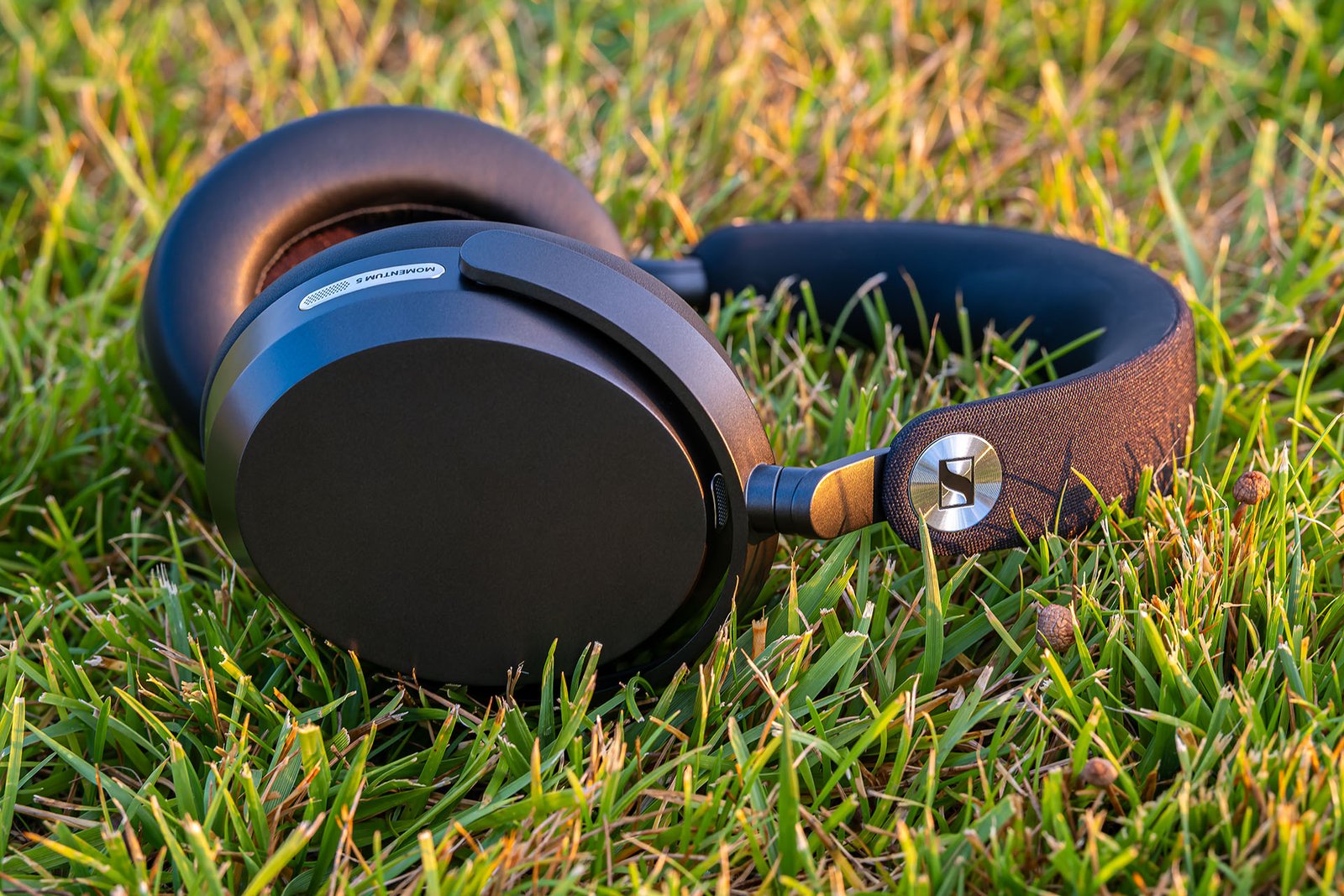
I will not copy the entire spec sheet here, but a few numbers deserve the spotlight. The heart of the Momentum 5 is that in-house 42 mm dynamic transducer, meticulously built at Sennheiser’s facility in Tullamore, Ireland, and inspired by the famed HD 600 lineage. The frequency response ranges from 6 Hz to 40 kHz, and the headphone carries Hi-Res Audio certification. Impedance isis 520 Ω, sensitivity at 108 dB SPL, and THD is impressively low at under 0.2%.
On the wireless side, the Momentum 5 runs Bluetooth 5.4 with a generous codec roster: SBC, AAC, aptX, aptX HD, aptX Adaptive, and, crucially, aptX Lossless via Qualcomm’s Snapdragon Sound platform, enabling CD-quality streaming from compatible sources. There is no LDAC, which the Sony camp will note, but the aptX Lossless story is arguably the stronger one. The hardware is also “Bluetooth 6.0 ready,” with 6.0 and LE Audio promised via firmware. Multipoint keeps two devices connected at once, making my laptop-to-phone juggling seamless, and Dolby Atmos with head tracking is on board for spatial-audio fans.
The headline that made me smile, though, is sustainability meeting longevity. Battery life is rated at a colossal 57 hours with ANC engaged, and I never once had to reach for the charger. A full charge takes about two hours, and a quick 10-minute top-up buys you roughly 7 hours of playback. Best of all, the 700 mAh lithium-ion cell is user-replaceable with nothing more than a small Phillips-head screwdriver. In an era of sealed, disposable gadgets, a pair of headphones you can genuinely keep alive for years is a lovely, responsible touch.
The Smart Control Plus app.
Setting up the Momentum 5 through the Smart Control Plus app was quick and painless, exactly as it should be in 2026. Pairing is fast, the interface is slick and reactive, and everything I wanted to adjust was a couple of taps away.
Sound shaping is handled by a new 8-band graphic EQ, upgraded from the 5-band of before. The interface itself is a pleasure, slick, reactive, and responsive as you drag the bands, and it comes with a very handy bypass toggle so you can flip between your tweaked curve and the stock tuning in an instant to hear exactly what you have changed. There is even an intelligent touch where the app auto-adjusts the overall level based on your settings, so a bass-heavy curve does not clip or throw off the balance. The limitations are the familiar graphic-EQ ones: you get fixed bands with no control over the exact frequency or the Q (the width of each adjustment), and each band tops out at ±6 dB of cut or boost. For the vast majority of listeners, that is more than enough room to taste, and it is genuinely easy to tame the boomy bass or lift the treble a hair. I should note that, unlike the pricier HDB 630, the Momentum 5 does not offer full parametric EQ. Sennheiser says this comes down to needing specific hardware chips rather than a software decision, so it is not something a future update is likely to unlock. It is the one feature power users might miss, but for a mainstream headphone, the 8-band graphic EQ is perfectly judged.
Beyond the manual EQ, you get a generous spread of presets, and these are worth exploring precisely because they are not vague marketing labels. Each one is a real EQ curve crafted by Sennheiser’s own audio team, covering the usual suspects like Bass Boost, Rock, Pop, Dance, Hip Hop, Classical, Jazz, and Movie. Because they are simply stored EQ values, you can peek at what each does, recreate it by hand, or, most usefully, load one as a starting point and then fine-tune it into your own custom preset.
The last piece of the puzzle is the Sound Personalization feature, and Sennheiser’s take on it is one of the more interesting I have used. Rather than a hearing test full of beeps, the app plays music and lets you conduct it. It starts with strings and a violin passage, then progressively layers in bass and drums, and as each element enters, you continuously choose how much of it you want in the mix. From that guided session, it builds a personal profile. The result I landed on, even after only a quick pass, mirrored my custom EQ in spirit, gently reining in both the bass and the treble. Curiously, the way it dipped the bass around 100 Hz is something you could not quite replicate by hand, which hints that under the surface, it has access to sharper, more precise adjustments than the graphic EQ exposes to us. It works well, and I prefer it to the raw Neutral tuning. Between the manual EQ, the expert presets, and personalization, the point stands: the iconic Sennheiser house sound can be shaped to almost any preference with very little effort, and that flexibility genuinely elevates the whole package.
A word on the Bowers & Wilkins Px7 S3.
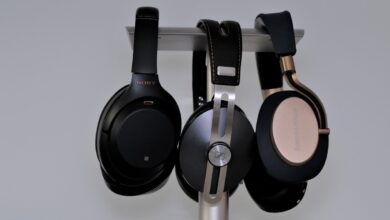
I cannot help but hold these two side by side, since the Px7 S3 was my companion in Oslo exactly a year ago, even though the Px7 is not the Bowers & Wilkins flagship. These are two very different philosophies. The Px7 S3, with its 40 mm bio-cellulose drivers, chases pure sound quality and premium tactility above all. Its build is a masterclass in warm, organic materials and sturdy metal, its comfort is sublime, and its sound is that unmistakable Bowers signature: fun, richly detailed, coherent, with an intimate soundstage that pulls you into the music. For a listener who prioritizes sonic refinement and a luxurious object in the hand, the Px7 S3 is still the more special performer and the more beautiful thing to own.
The Momentum 5, by contrast, is the more complete gadget and costs a little less: €399.90 versus the Px7 S3’s € 429. It gives you nearly double the battery life at 57 hours, a user-replaceable battery you can keep alive for years, ANC that has genuinely reached the top tier, and the same aptX Lossless codec support. Its sound is warm and thoroughly enjoyable but a touch looser and less resolving than the Bowers. So the choice is refreshingly clear: if sound quality, materials, and design are your priorities, the Px7 S3 remains my heart’s pick, while the Momentum 5 answers with a lower price, endurance, mature noise cancellation, repairability, and everyday polish that make it exceptionally easy to live with.
Pros and Cons.
Pros:
- Warm, full-bodied, easy-to-love house sound that never fatigues
- Excellent, genuinely top-tier ANC with no cabin-pressure sensation
- Natural, artifact-free transparency mode
- Huge 57-hour battery life and a user-replaceable cell for real longevity
- Full codec suite including aptX Lossless via Snapdragon Sound
- Featherlight, all-day comfort, and a superb slim carrying case
- Slick, well-featured Smart Control Plus app with 8-band EQ, presets, and personalization
Cons:
- The mostly plastic look and feel is the biggest one; it simply does not project the most premium appearance
- Bass can run a little loose and boomy; treble is the weakest link
- No parametric EQ and no LDAC
- A physical volume control would have been welcome
A big thank-you to AVstore.
As always, my sincere thanks go to my good friends at AVstore, one of the largest audio-video and serious hi-fi stores in Eastern Europe, for sending the Sennheiser Momentum 5 over for review and for their continued openness and trust. If you are in Romania, you can find the Momentum 5 on their online store, listen to it in their showroom, and choose between the available colors. For the rest of the world, follow the list of official Sennheiser resellers. Thank you for following me once again. Let’s hear only The Best!