Denon Home 600 Active Loudspeaker Review – A Century of Voicing in One Box

TLDR
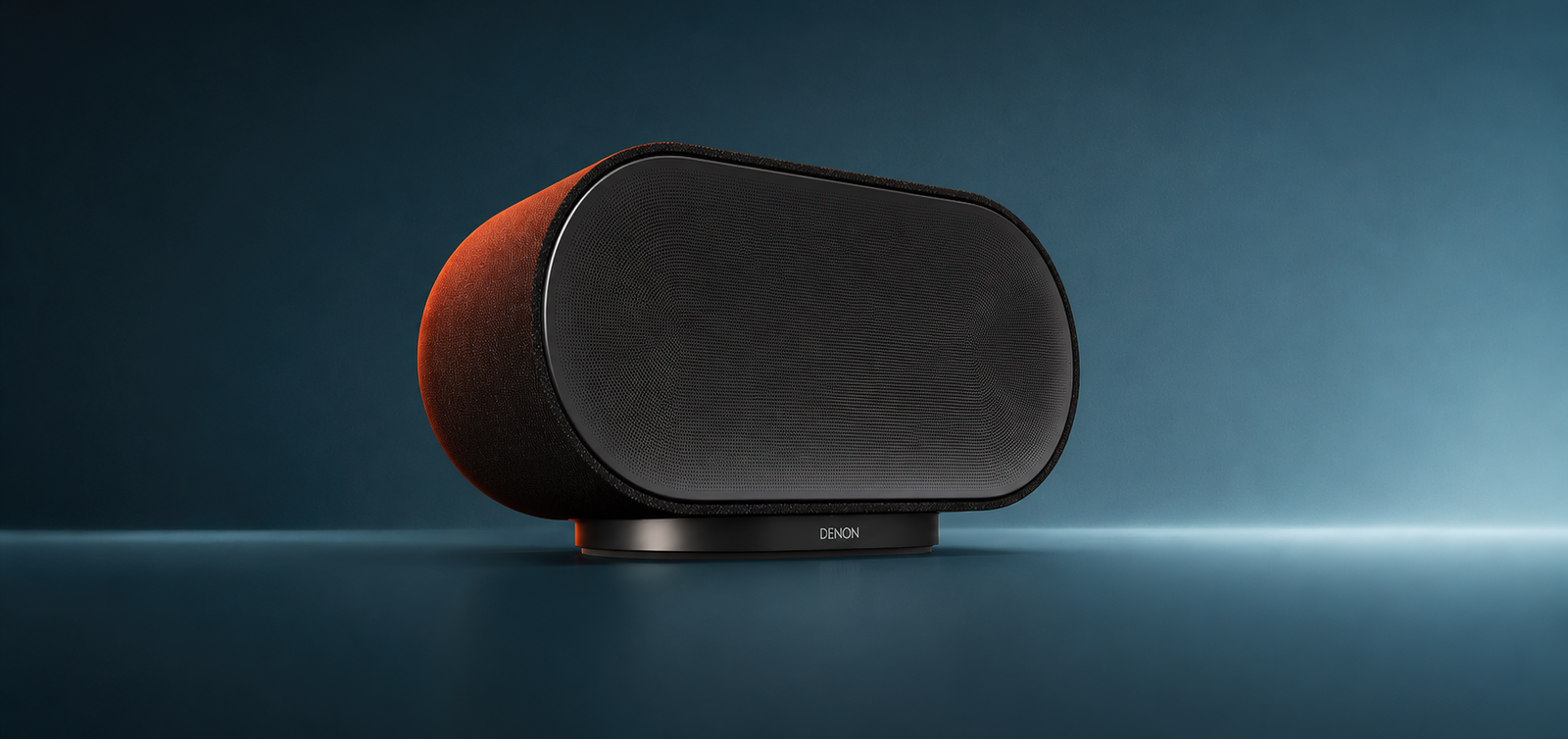
The Home 600 is the flagship of Denon’s refreshed wireless range, built on more than a century of audio heritage and the HEOS multiroom platform. It packs an eight-driver array with a dedicated Class D amplifier per driver, twin 6.5-inch built-in subwoofers, up-firing drivers for Dolby Atmos, and a fully modern connectivity suite.
Three qualities defined the speaker for us:
1. Its versatility is a major highlight. Start with one, pair two for stereo, or add up to five for multiroom or a full wireless home-cinema setup. Do it all with the built-in software, top to bottom.
2. Balance: bass, midrange, and treble play in harmony, none of them pushing past the others.
3. Value: for what it costs, the sound reaches further than we expected. The treble is sparkly and free of sibilance at any volume, the bass is articulate and reaches low without blooming or distorting, and the midrange is pleasant in timbre.
The Home 600 is not an audiophile-grade loudspeaker, and we would never present it as one. It lives in a niche of its own, sitting between the audiophiles chasing the last word in resolution and the beginners who just want a box that works. It serves the one in the middle and fills the niche of something that sounds good without spending a small fortune.
An exceptional choice for the everyday listener who wants great sound for films and music without filling the room with speakers and cables. It sits neatly in the gap between the non-enthusiasts and those who want to listen properly without the hassle.
Introduction
Every so often, a product arrives that only makes full sense once you understand the reasoning and market demand behind it. We feel the Denon Home 600 is exactly that kind of creation, and to appreciate what it is trying to be, it helps to look back at the long road Denon has travelled to reach it. This is a brand that carries a great deal of history in its bones, and the more we know about that history, the more deliberate the Home 600 looks to us.
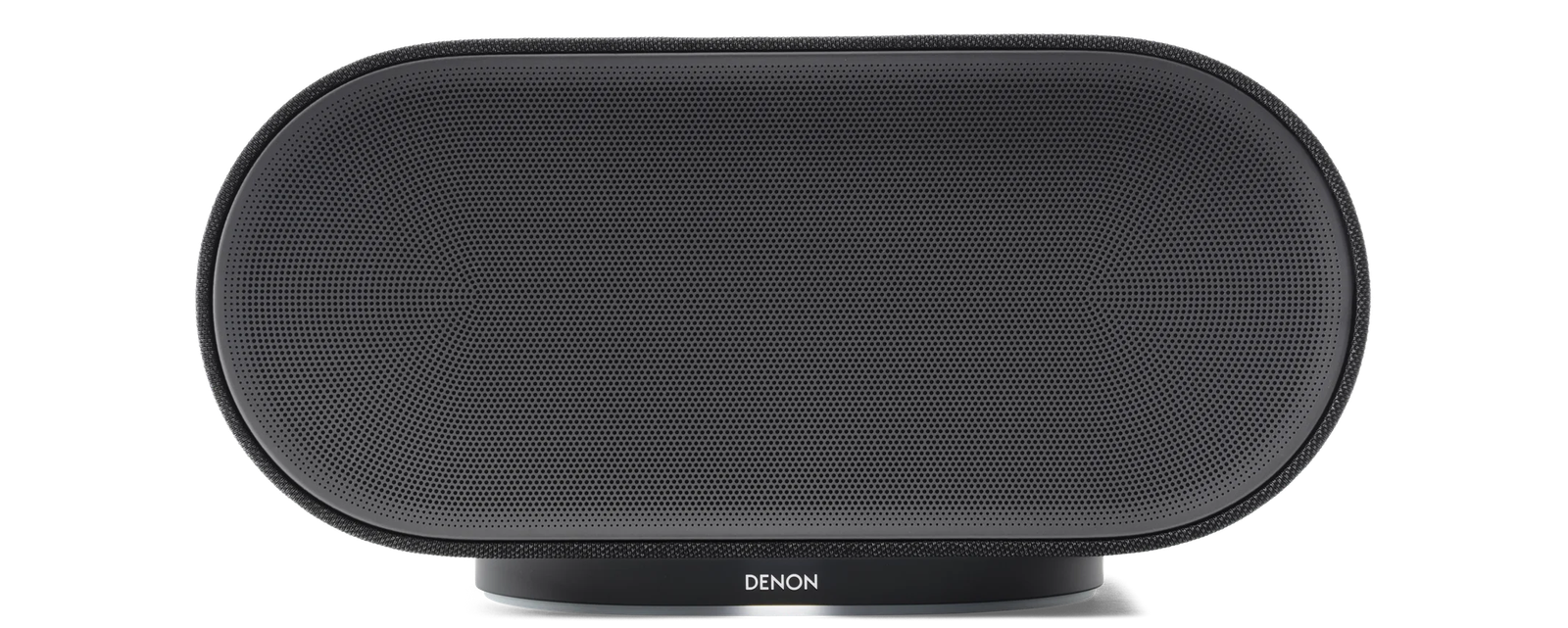
Denon is one of the oldest names in audio, with roots reaching all the way back to 1910. For most of that history, the company built its reputation on traditional hi-fi: turntables, cartridges, CD players, AV receivers, and integrated amplifiers that found their way into countless homes around the world. Denon was there for the birth of the commercial compact disc, and its name became almost synonymous with the AV receiver during the years when home cinema exploded into the mainstream. This is a brand that earned its credibility the hard way, across decades of separate devices and source components, each one voiced by ear and refined generation after generation. That heritage matters here because the Home 600 is the work of engineers who grew up with the demands of serious two-channel sound and large-scale home cinema, and who carry that knowledge into everything they design today.
The chapter of the Denon story that concerns a speaker like the Home 600 begins with HEOS. HEOS is Denon’s multiroom platform, and what many listeners do not realise is that it was originally developed in Australia before becoming the wireless backbone for the entire Denon and Marantz ecosystem. HEOS is the moment Denon committed fully to the connected home as a serious pursuit. The platform gives the company a way to stream from all the major services, to group speakers, room by room, and to fold wireless speakers into the same family as its receivers, sound bars, and hi-fi components. At its fullest, HEOS allows up to 64 devices across 32 separate zones to play together, which gives you a sense of how seriously Denon takes whole-home audio.
Denon debuted HEOS in 2014 by launching the foundational lineup of three connected speakers: the HEOS 3, HEOS 5, and HEOS 7. Then, in early 2020, the company brought the focus back to its own brand with the original Denon Home line: the compact Home 150, the mid-size Home 250, and the larger flagship Home 350. These three speakers are, in a very real sense, the direct ancestors of the Home 600, and they were far more than a fresh coat of paint over the older HEOS units. They arrived built from the ground up, with a much more powerful sixth-generation DSP that brought higher-level decoding and processing than the fourth-generation chips that came before, newly designed drivers, more power, and larger cabinets. The Home 350, for example, effectively took over from the older HEOS 7 and improved on it in nearly every measurable way.
That original trio was warmly received, and we remember the affection it earned. The press treated the range as a versatile, great-sounding family, praising the breadth of the HEOS platform and the quality of the sound across all three units. The Home 150, 250, and 350 proved that Denon could pour a century of voicing experience into a plug-and-play box and earn respect for it. That same voicing hand is easy to hear in the Home 600, in the way it keeps its balance and never flatters the ear, which is exactly the sort of restraint a company learns across a hundred years of tuning.
Denon Home Lineup – First one is the Home 200, middle 400, and the reviewed 600 is pictured on the right
The Home 600 is the most complete expression of that idea so far. After roughly six years, Denon has returned to refresh the Home range with a new trio: the Home 200, 400, and 600, and the result feels to us like a meaningful step forward. The 600 sits at the very top of that refreshed lineup as the flagship, and it inherits everything the line has learned along the way: the HEOS backbone, the multiroom flexibility, the streaming integration, and the conviction that a wireless speaker can be far more than a convenience. What pushes it beyond its predecessors is ambition. Where the earlier connected speakers played music beautifully within their size, the Home 600 reaches for scale, for low-end authority, and for the spatial dimension of Dolby Atmos music, which is territory that, not so long ago, demanded a full home-cinema installation with speakers strung around the room.
We write this review as people who live and breathe traditional hi-fi. We know exactly what well-chosen separates and passive speakers can deliver in terms of scale, dynamic range, and textural nuance. Part of the lasting magic of this hobby lives in that patient pursuit: matching an amplifier to a source, choosing cables, positioning speakers by the millimetre, and chasing a balance that suits both the room and personal taste over many years. As we have been adamant about in other reviews, this is a journey shaped by experimentation and personal feeling, and it is one we cherish. That perspective makes us curious about the tradeoffs that come with putting everything into a single enclosure, no matter how well executed.
So our goal here is not to repeat a marketing brochure, and it is not to ask whether the Home 600 can dethrone a dedicated rig, since that is rarely the point of a speaker like this. The more honest and more interesting question is how convincingly the Home 600 delivers on its own promise: room-filling, immersive, deeply musical sound, free of clutter and cabling, that still respects the listener across long sessions. We want to find where its strengths shine, where its limitations sit, and how it earns its place at the top of Denon’s wireless range. With that context in mind, let’s turn to the speaker itself, beginning with how it is built and what lies beneath its understated exterior.
I. Build Quality and Technical Overview
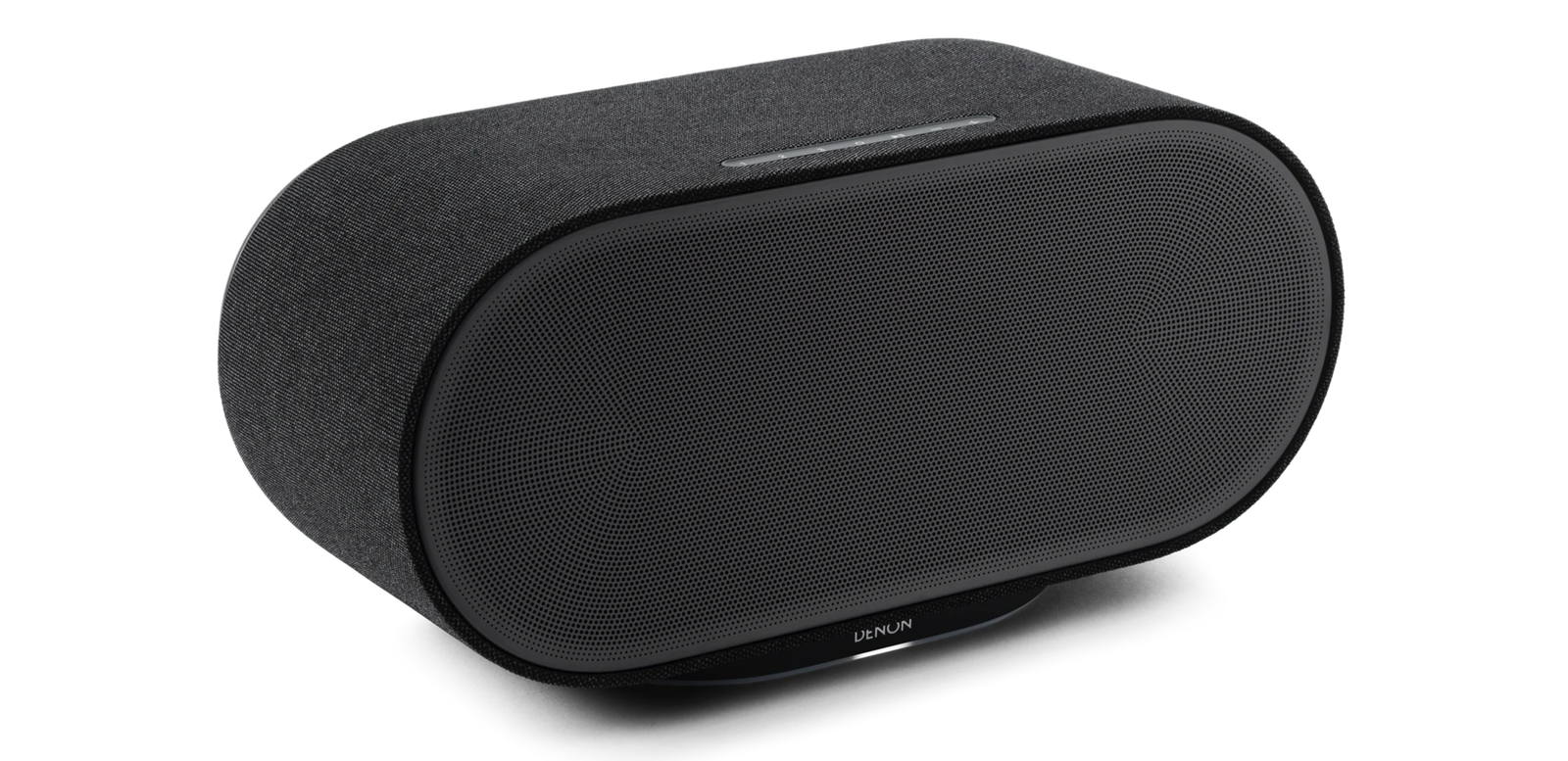
Our first impression of the Home 600 was of a speaker that takes itself seriously. This is a substantial object, and its presence in a room is clearly deliberate. The flagship of the range carries a footprint that reflects its ambitions, and the moment we lifted it, the weight told us there was real hardware inside. The cabinet met our hands with no flex or hollowness anywhere, the fabric grille sat taut and even, and the top-panel touch controls answered with a light, clean response the first time we reached for them. Denon describes the design language as understated and confident, and we find that fair: the look is restrained, modern, and meant to settle quietly into a living space. It is the kind of industrial design that ages gracefully, and it signals from across the room that this is a serious piece of audio equipment.
A quick note on specifications before we go further. The figures below are drawn from Denon’s published material. Some retailer listings describe the driver array in slightly different terms, so if exact driver sizes matter to you, it is worth confirming them against the unit’s own manual or the official spec sheet. We prefer to flag this openly, since accuracy is something we care about.
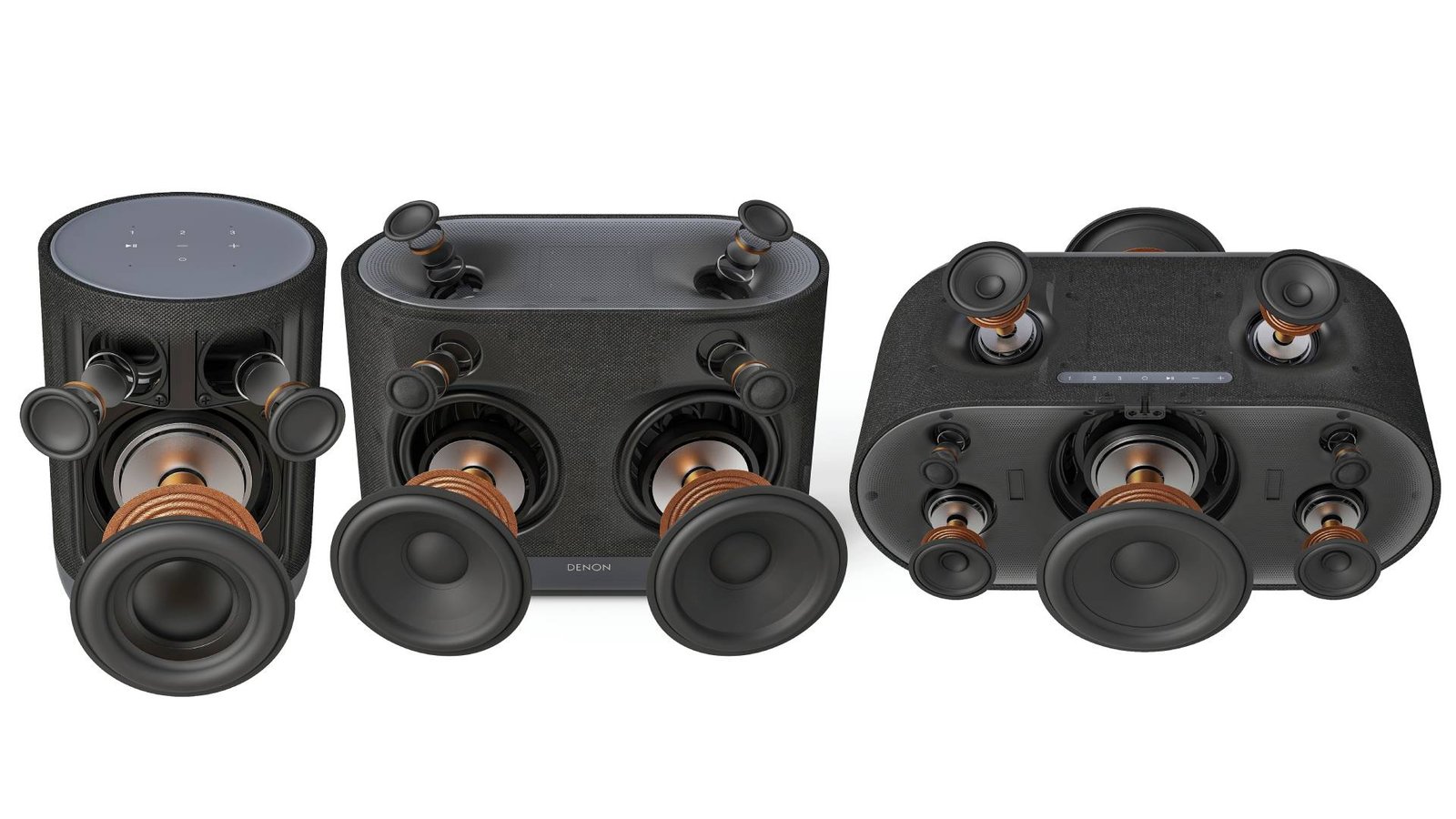
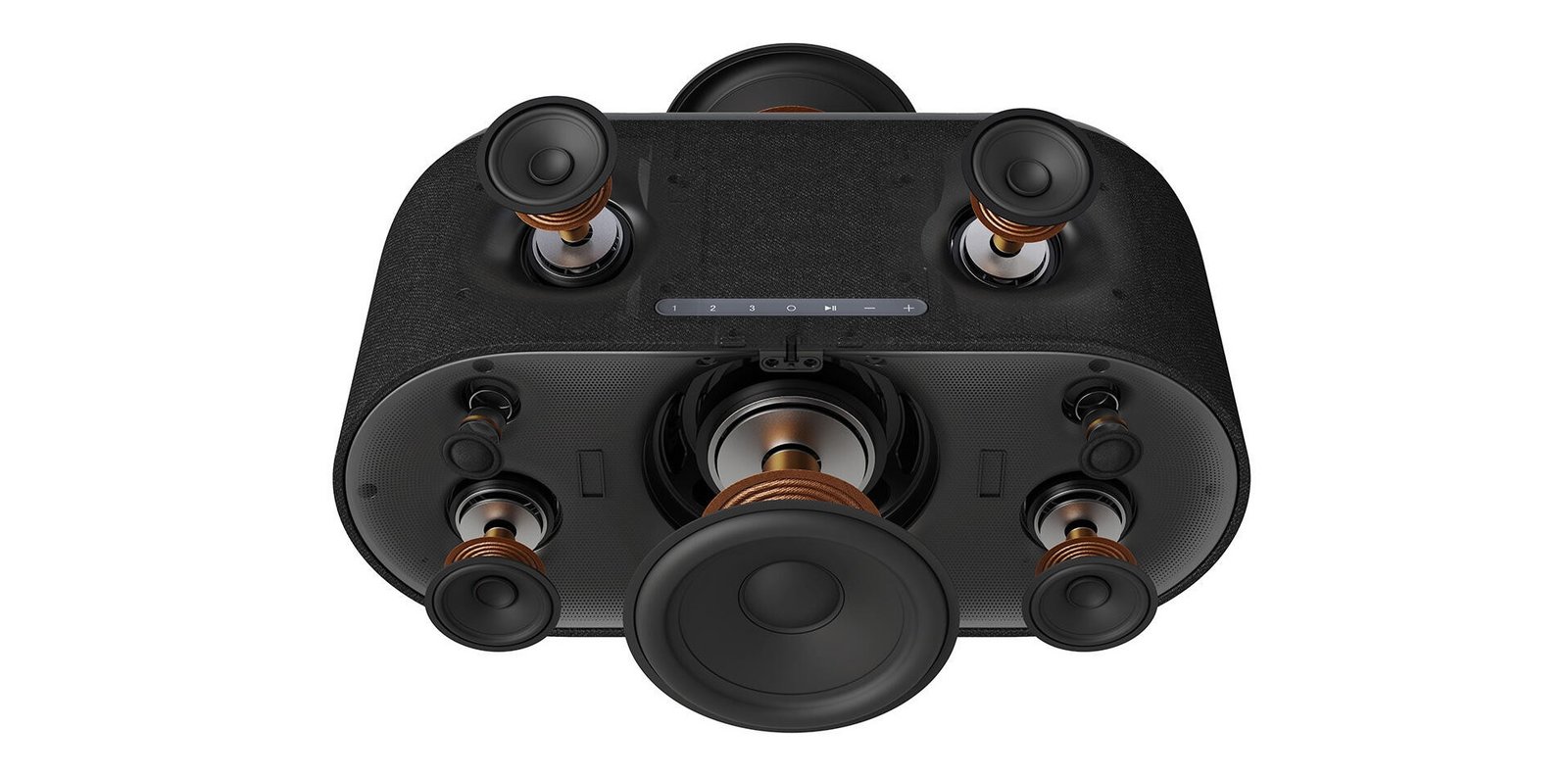
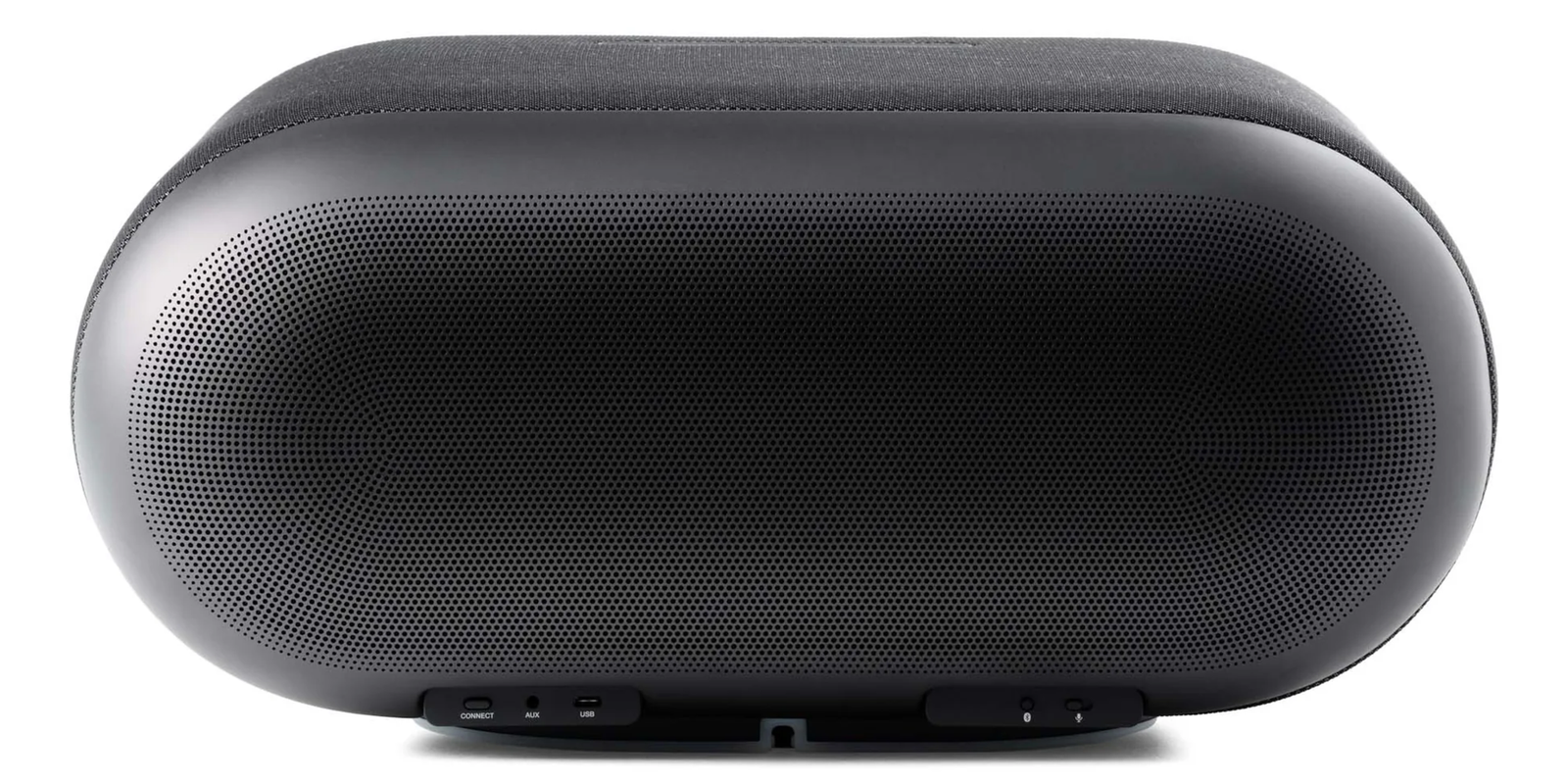
At the heart of the Home 600 is an eight-driver array, and crucially every one of those drivers receives its own dedicated amplifier. According to Denon’s specifications, the array comprises two 19 mm tweeters, two 66 mm midrange drivers, two 66 mm up-firing drivers for height, and two 165 mm (6.5-inch) woofers acting as built-in subwoofers. Eight Class D amplifier channels drive the eight drivers, one apiece. This detail is worth emphasising, because dedicated amplification per driver is uncommon in this category. With each driver actively and individually controlled, the design earns tighter command of every frequency band and, at least in theory, stronger overall coherence. It is an approach that mirrors how serious active studio and high-end speakers are engineered, and we read it as a clear statement of intent for a wireless all-in-one. The choice of Class D amplification suits the brief: it is efficient, runs cool, and packs a great deal of controlled power into a compact enclosure.
The two 6.5-inch woofers function as integrated subwoofers, and they form the foundation of the Home 600’s claim to room-filling authority. Denon positions the speaker as capable of deep, controlled low frequencies with no external subwoofer required. We will test those claims properly in the listening stage. On paper, the intent is unmistakable: bass that is felt as much as heard, delivered from one self-contained enclosure.
Above the woofers sit the midrange drivers and tweeters, handling the body, detail, and air of the music, while the pair of up-firing drivers is what allows the Home 600 to engage with Dolby Atmos music. These height channels fire upward, using ceiling reflections to project a sense of vertical space and to lift the soundstage beyond the physical box. We see this as the feature that most clearly marks the Home 600 as a product of its moment. Spatial audio has migrated from the cinema into everyday music listening, and Denon has built dedicated hardware to chase that height dimension directly. Up-firing drivers are, in our view, a more honest approach to the problem than processing tricks alone.
Processing and tuning are where Denon’s experience shows most clearly. The company makes a point of noting that its Home speakers are voiced by the same people responsible for its traditional hi-fi, hand-tuned to deliver a recognisable house sound. With eight independently amplified drivers, height channels, and Atmos decoding to manage, a considerable amount of digital signal processing works quietly behind the scenes. That DSP coordinates crossover behaviour between the drivers, manages the up-firing height information, blends the subwoofers into the rest of the range, and provides the protection that keeps the drivers safe when the speaker is pushed hard. None of this is visible to the listener, and that is the point. The goal of all that processing is the same one Denon has always chased: a balanced, musical presentation that holds together at any volume, from a late-night murmur to a full-blooded party level.
Connectivity is comprehensive and firmly future-facing. The Home 600 is built around HEOS, which handles streaming, grouping, and control through the HEOS app. Wireless options are generous: Wi-Fi spanning the 2.4 GHz, 5 GHz, and 6 GHz bands, with support for the latest Wi-Fi standards for stable high-resolution streaming, alongside Apple AirPlay 2 and Bluetooth. The inclusion of the newest Wi-Fi bands is a thoughtful touch, since hi-res and multiroom streaming place real demands on a home network, and a more robust wireless link translates directly into fewer dropouts and more dependable grouping. For wired and local sources there is a USB-C input and a 3.5 mm auxiliary input, and the speaker handles high-resolution audio, including lossless streaming from the major hi-res services as well as DSD playback from USB or network storage. Almost everything we might reasonably want to feed it is already catered for, in keeping with the all-in-one philosophy of needing no extra boxes.
The HEOS app is the everyday face of the speaker, and it carries a heavy share of the experience. From a single interface it pulls together the streaming services, lets you build and control multiroom groups, manage zones, and adjust the speaker to taste. The strength of a platform like HEOS is that it treats a collection of speakers as one system. You can play the same track everywhere in the house in sync, or send a different song to every room, all from your phone. Over our weeks with the pair, the app did its job quietly, and grouping the two units into a stereo couple took us only a moment from the phone. Our one small grumble is a familiar one for streaming speakers: the very first setup asked for the usual patience while the units found the network and pulled a firmware update, and after that, it settled and stayed out of our way. For anyone who has wrestled with juggling separate apps and inputs across a traditional setup, this kind of unified control feels liberating, and it is the part of the Home 600 experience that most clearly justifies the connected approach. It is worth adding that the same app integration reaches back to the older Home 150, 250, and 350 speakers, so existing owners can fold the new flagship into a system they already trust.
The Home 600 is also designed to grow with the owner, and this is one of the points we keep coming back to. Two units pair wirelessly for a wider, more spacious stereo soundstage: the natural first upgrade for anyone who starts with one and wants a fuller image. From there, the system keeps scaling: you can add a third, fourth, or fifth unit through the app, room by room, and even assemble a complete wireless home-cinema arrangement, with the Home 600 anchoring the front alongside the Denon Home Sound Bar 550 and a matching subwoofer for surround duties. All of it is managed from the same app, with no tangle of speaker cable anywhere in sight. This is the same expand-as-you-go logic that has underpinned HEOS from the beginning. You begin with one speaker, then grow across rooms or into surround as needs and budget allow. We find this a compelling proposition because it lets the system follow the listener’s life. Versatility on display here is, in our view, one of the speaker’s defining strengths.
Day-to-day control is shared between the HEOS app and a set of on-device controls. The speaker offers physical touch controls, including quick-select buttons for instant access to favourite sources or playlists, volume and playback controls for the moments you would rather not reach for a phone, and a microphone arrangement for voice-assistant use. The quick-select buttons in particular are a small but welcome nod to convenience, turning the speaker into something you can start without unlocking a screen. Setup, by Denon’s account, takes only a few minutes, which is the kind of effortless first run that this category depends on, and a deliberate contrast to the patient ritual of assembling and tuning a traditional component system.
A Note on Measurements
On our other reviews, we like to measure at the listening position, checking the manufacturer’s claims against the behaviour of the speaker in a real room. With the Home 600, this path is closed. The speaker is a wireless, streaming-first device. There is no way for us to connect it to our measurement chain over USB or through a laptop in the manner our test setup requires, because the speaker is built to receive music by stream alone. We could not feed it our usual test signals through the front door, so to speak, and so a proper set of graphs is simply not on the table for this unit.
We mention this plainly because accuracy matters to us, and we would never want to present numbers we could not stand behind. What follows leans entirely on listening, carried out over a long stretch of time and at every volume we could reasonably ask of the speaker. Careful, repeated listening tells you a great deal about a speaker’s character, and in the case of the Home 600 it told us everything we needed to know.
II. Listening Impressions
Before any track plays, a word on context. We ran the Home 600 as a wireless stereo pair, the two units set a little over two metres apart along the long wall of our living room, a step out from the wall behind them, with the listening seat around three metres back. We fed them over the network through the HEOS app, gave them room to breathe, and let them settle. As we have said across our other reviews, first impressions matter, but they are never the whole story, so we lived with the pair long enough for its real character to surface, across late-night listening, ordinary evenings, and a few sessions pushed up to party level.

Coherence is a quality that defines the Home 600, and it is the first thing we noticed. It became obvious the moment we put on Danit’s Naturaleza. The guitar arrived with body and a natural, organic quality, its harmonics and decay of a piece with the voice above it, and the whole picture hung together as one voice from the bottom of the range to the top. There was no sense of separate drivers, each doing their own job, which is exactly what the eight-channel, one-amplifier-per-driver design promises on paper, and here that promise was kept. This is the highlight of the speaker for us, and everything else is best understood through it.
We want to dwell on the balance for a moment, because it surprised us in the best way. Across every kind of music we played, the bass, midrange, and treble arrived in harmony, one with another. The bass never pushed itself forward beyond the average level of the music, and the treble never leapt out to draw attention to itself. This kind of even-handed balance is rare at any price, and it is rarer still in a wireless all-in-one, where the temptation to flatter the listener with extra bass or a lifted top end is always there. Denon resisted that temptation, and the reward is a presentation that is coherent and balanced in equal measure.
For the Price, the Sound Goes Further Than We Expected
For what the Home 600 costs, the sound it delivers reaches well beyond what we expected. We came in with the measured expectations that experience teaches you to bring to an all-in-one wireless speaker, and the Home 600 exceeded them. The quality on offer here outruns the price on the box, and it is a pleasant surprise that does not happen often. When we set what we heard against what we paid, the value is plain, and it colours everything we have to say about the speaker in the most positive way.
Treble and Microdynamics

The treble is sparkly enough to be a genuine pleasure, with an openness and a sense of air that lift the top of the music. On Idrissa Soumaoro’s Cherie, a recording that stretches up into the very top octave, the highs stayed open and clean, and while the last word in air belongs to far pricier reference gear, the Home 600 gave us no reason to wince. What pleased us most, across every session and at every level we tried, was that we found no trace of sibilance. Pushed quietly late at night or opened up to fill the room, the highs kept their composure. We have been adamant about this on our other reviews: a treble that turns harsh under pressure ruins long listening sessions, and the Home 600 simply does not do that. Cymbals shimmered and decayed naturally, voices kept their consonants intact without ever biting, and the result is a top end we could enjoy for hours with no urge to reach for the volume control. Crucially, for all its sparkle, the treble stays within the whole, never lifting itself above the music around it.
Midrange, Tonal Balance, and Timbre

The midrange is where our enthusiasm settles into honesty. Timbre is good, and instruments and voices carry a believable tonal colour that we respect. On Danit’s Naturaleza the female voice came through with warmth and a convincing sense of presence, and the guitar’s harmonics rang true. On Diana Krall’s Temptation, her voice was placed cleanly and sat right where it should, easy to follow and pleasant to hear across the whole track. Yet the mids are the part of the Home 600 that asks the least of our attention. They are competent and clean, they sit properly within the coherent whole, and they give us nothing to complain about, though they also stop short of the vividness and presence that make a midrange truly memorable. This is the area where the all-in-one form factor shows its hand a little, and where a listener coming from well-matched separate devices will sense the difference most. Tonal balance overall remains even and easy to live with, and the good timbre keeps the music pleasent, which matters more day to day than any single fireworks moment.
Bass Performance, Dynamics, and Extension
The bass is impressive for the size, and we mean that as real praise, not the qualified compliment often given to small speakers. We leaned on Nils Frahm’s All Melody to hear how the pair handled a slow build from delicate beginnings up to full weight, and the Home 600 followed the climb with composure, filling the room without losing its footing. The twin built-in woofers reach low for a box of this footprint and power, and the articulation is enough to stay pleasant. On the dense, driving pulse of Pink Floyd’s Time, from Dark Side of the Moon, notes started and stopped cleanly, lines were easy to follow, and there was even a feeling of weight present. We could feel the foundation of the music as much as hear it, and the speaker held its composure as we asked for more. For a wireless all-in-one, this is the kind of low-frequency performance that lets the Home 600 fill a room on its own terms, with no external subwoofer asked for and none missed.
Soundstage and Dolby Atmos

Run as a stereo pair, the Home 600 opens up a soundstage that is wider and more spacious than a single unit could manage, and the coherence we admired earlier holds across the whole image. On Violin by Tonebloom, the string was placed with a stability and a sense of separation that surprised us for the money, sitting clearly between and a little beyond the two enclosures, and the music spread out in a way that felt natural for the listening position. Instruments occupied stable places and stayed there as the volume rose.

Dolby Atmos music is one of the features that defines this generation, and the up-firing drivers do add a sense of height and openness when the material carries it. On RÜFÜS DU SOL – Alive, the height channels lifted the top of the mix clear of the boxes and set a layer of sound above the music, opening the ceiling of our room in a way stereo alone does not. The effect leaned heavily on that ceiling and on where the speakers sat, as up-firing designs always do, and moving the pair even a little changed how much height we heard. We treat it here as one capability among many, a welcome dimension that broadens the presentation on the right tracks, sitting alongside the speaker’s core strengths in coherence, treble, and bass. On the music that uses it well, it is a pleasant and genuine addition to what the Home 600 already does.
Versatility as a Highlight
The more time we spent with the Home 600, the more its versatility moved to the front of our minds, until it stood beside coherence and value as one of the three things we will remember the speaker for. A single unit is already a complete music system. A pair becomes a proper stereo soundstage. Add a third, fourth, or fifth through the app, and the system stretches across the whole house, room by room, or folds inward into a full wireless home-cinema setup with a sound bar and subwoofer joining in. We tried the everyday version of this ourselves, grouping the living-room pair with a single unit in the kitchen so the same album followed us from the sofa to the counter in sync, then splitting them apart again so each room played its own thing, all in a couple of taps. All of it happens in software, from the same app, with no rewiring and no fuss. This kind of grow-as-you-please flexibility is a major part of what you are buying here. You are buying the freedom to shape the system around your life, your rooms, and your budget over time. That freedom is worth a great deal, and it is rare to find it executed this cleanly.
The Sweet Spot for the Everyday Listener
There is a particular kind of listener we kept picturing while living with the Home 600, and it is for that person that this speaker makes the most sense of all. Picture someone who simply wants good sound at home, who watches films and listens to music in equal measure, and who has no wish to fill the living room with a forest of interconnected speakers and cables. For that person, the Home 600 is an exceptional answer. It gives serious, room-filling sound and, if paired with other 5 units, offers a genuine home-cinema capability, with everything managed from a phone and nothing to wire up or tune by hand.
The Home 600 lives in a gap that is too often left empty. On one side sit the people who are not audio enthusiasts and want nothing to do with separates, racks, and cabling. On the other sit the people who care about how music sounds and want to listen properly, yet have no appetite for the effort, the space, and the fuss that a traditional system demands. The Home 600 bridges the two. It serves the listener who wants the quality without the hassle, who wants their films and their music to sound right without turning a room into a hi-fi shrine. For that listener, we believe this flagship is close to ideal.
Conclusions
Living with the Home 600 left us with a clear and consistent impression. This is a speaker whose defining strength is coherence, bass, midrange, and treble sit in balance with one another, none of them pushing past the others. The treble stays free of sibilance at any level we ask of it, the bass reaches low while keeping itself in proportion to the rest, and the midrange is tonally pleasant even if it is the least remarkable part of the picture. Set against what it costs, the sound goes beyond what we expected to hear, and that value colours the whole verdict.
None of this makes the Home 600 an audiophile-grade loudspeaker, and we would never present it as one. It lives in a niche of its own, sitting between the audiophiles chasing the last word in resolution and the newcomers who just want a box that works, and it serves the listener in the middle who wants something that sounds good without spending a small fortune. For the everyday listener who wants good sound for films and music, with none of the speakers, cables, and fuss of a traditional setup, and who wants a system that can grow whenever they choose, this flagship is, in our view, an exceptional choice and a very easy recommendation.
Pros
- Good coherence from top to bottom, the speaker’s defining strength and the direct result of correctly tuning its one-amplifier-per-driver design.
- Beautifully balanced presentation, with bass, midrange, and treble sitting in proportion to one another and no band pushing past the others.
- For the price, the sound goes beyond what we expected, making the Home 600 an outstanding value for the quality on offer.
- Sparkly, open treble that stayed free of sibilance at every listening level we tried, making long sessions effortless and fatigue-free.
- Articulate bass with real weight and depth for the size and power, filling a room with no external subwoofer required, and never overstaying its welcome.
- Good, natural timbre that keeps voices and instruments tonally pleasant.
- Exceptional versatility: pair two units, or add three, four, or five through the app to build a multiroom or full wireless home-cinema system, all in software.
- Generous, future-facing connectivity through HEOS, with tri-band Wi-Fi, AirPlay 2, Bluetooth, USB-C, and a 3.5 mm input, plus hi-res and DSD support.
Cons
- The midrange is competent, though it is the least remarkable part of the presentation and where the all-in-one approach shows its weakness the most.
- Against well-matched separate devices, it gives up the last measure of textural nuance and fine articulation, and its soundstage stays flat, short on the front-to-back depth and three-dimensional layering that a dedicated system can build.
- The Dolby Atmos height effect depends on the room and ceiling, as all up-firing designs do, so its impact varies with placement.
Equipment Used
- Denon Home 600 wireless speakers (stereo pair), streamed over the network through the HEOS app
- HEOS app for streaming, grouping, and control
- Reference room and listening position used across our reviews