Polk Reserve R700 Loudspeaker Review – Warmth, Scale, Dynamics and a Lot of Joy!

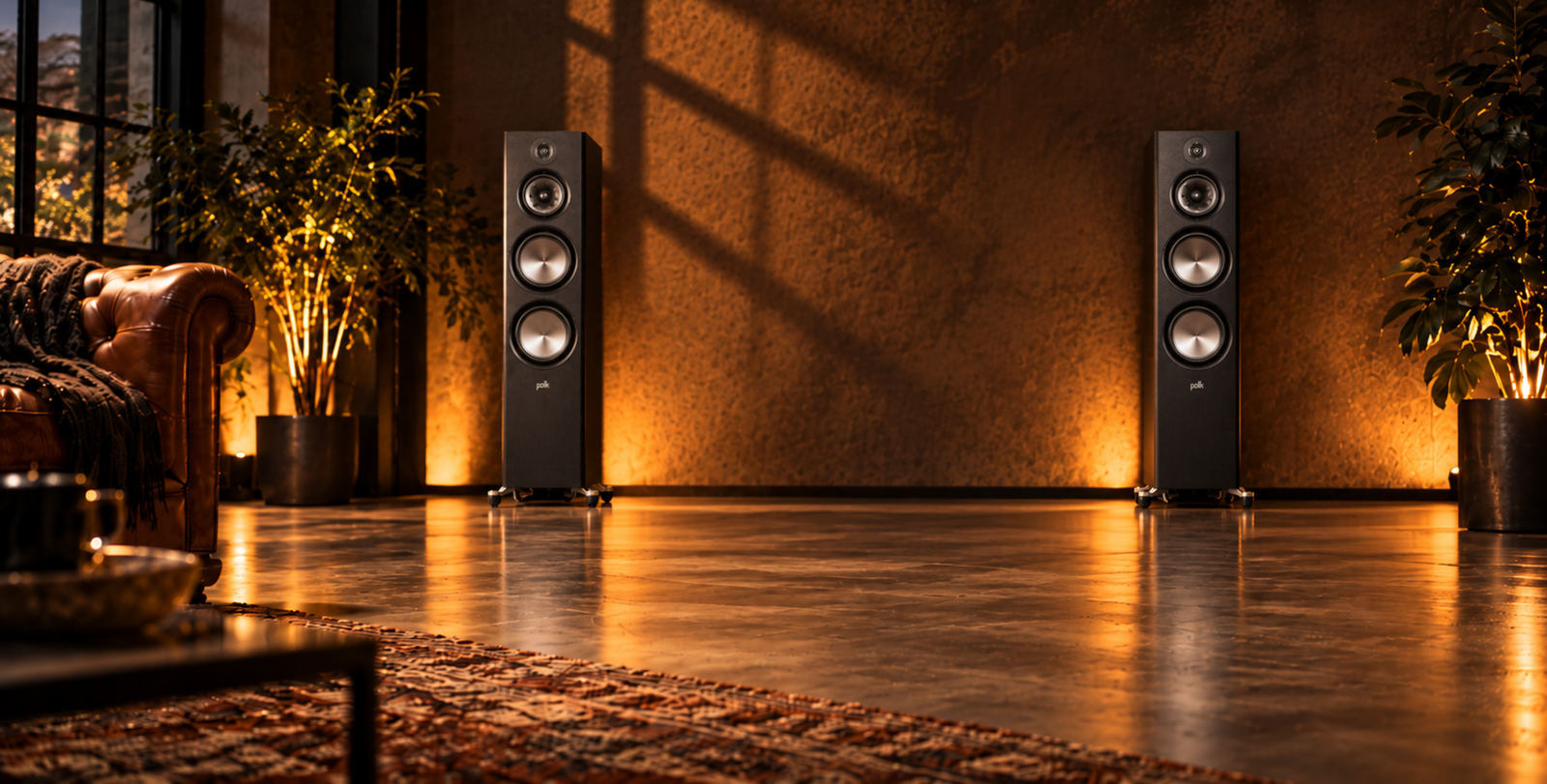
Listening room: the bigger room, 5 m by 6 m with a 4 m ceiling, treated • Placement: about 3 m apart, 1 m from the wall behind them and 1 m from the side walls, toed in directly at the listening position
Source and preamplification: MOON 491 • Amplification: Burson Timekeeper Voyager, Yamaha M5000 power amplifier • Cabling: Roboli XLR 2100 and HP8000 speaker cable, Roboli Power5200, Van Den Hul The Magnum speaker cable
Loaned by: AVstore
TLDR
We recommend the R700 to the listener who treasures physicality, powerful bass, and a present, harmonically rich midrange, one who watches movies on the same stereo system, and to the one who enjoys the simple pleasure of turning the volume up to party-level territory. For trance, electronic music, movies, and anything built on rhythm, scale, and energy, these speakers are enormously enjoyable. When chasing the finest microdetail, more air and more sparkle up top, there are clear limits. A more resolving loudspeaker will suit that listener better.
Three qualities define the Polk Reserve R700:
- Dynamics and physical impact. Macrodynamics are exceptional, and microdynamics are good. Large dynamic swings have scale and force, the kind you feel in the chest as much as you hear. The presentation remains uncluttered as the volume goes up, with very little congestion and almost no fatigue. Electronic music becomes pretty addictive on these speakers.
- A present midrange with serious bass underneath it. The midrange is slightly pushed forward, full-bodied, and harmonically rich. Voices have a strong physical, in-room presence. Bass has depth and weight, enough that we felt no need for a subwoofer during stereo listening. Bass precision is somewhat lower than the impact, with a slightly relaxed decay that adds a little generosity to every note.
- Long, loud and comfortable listening. Sibilance is absolutely under control, one of the qualities we enjoyed most in regard to the upper frequencies’ behaviour, and the smooth, restrained top end is also easy on the ear at high SPL. Treble refinement is modest. Air, sparkle and microdetail are somewhat limited, with some difficult recordings showing a slightly grainy texture.
The soundstage extends a little beyond the speakers, with good depth and a very solid centre image. Imaging is accurate for the price bracket, and the cabinets disappear only partially.
Matching is not necessarily important. The R700 already has plenty of warmth, body and physicality, so we would pair it with a powerful amplifier with strong current delivery and very good bass control, and with a source or preamplifier that’s on the detailed side of neutral. It’s not overly important, but keep in mind that with too little control, the bass can become long, a bit bloated, and boomy.
Introduction
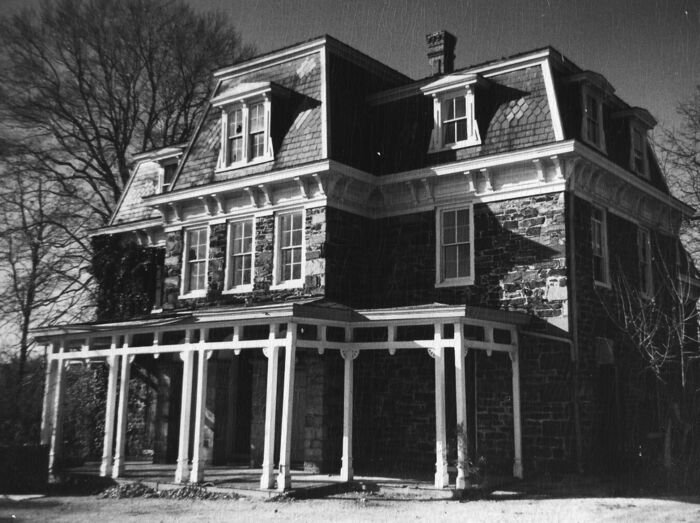
Polk Audio goes back to 1972, when three Johns Hopkins University graduates, Matthew Polk, Sandy Gross, and George Klopfer, started the company in Baltimore with the goal of building loudspeakers as accurate and lifelike as possible. Their first home is an 18th-century mansion on Notre Dame Lane, which the three of them nicknamed the Addams Family house. A great start for a loudspeaker company, wouldn’t you agree?! The Monitor 7, from 1974, and the Monitor 10, from 1976, earned the young company its first name among audiophiles. Matthew Polk’s own words today are that great sound is for everyone. After more than a month with the R700, that phrase feels right at home with the Polk Company.
The Legend Series launched in 2018 as Polk’s top-of-the-range loudspeaker line. Polk introduced the Reserve Series in 2021, with the idea of putting the key Legend acoustic technologies into more affordable, understated speakers. The Series includes nine models: two bookshelf speakers, the R100 and R200; three center channels, the R300, R350 and R400; three floorstanding speakers, the R500, R600 and R700; and the R900 height module. The R700 is the biggest, and the one we chose for the test. On paper, it promises a great deal for a relatively accessible position in the market. In practice, you will find out from this review that it delivered as promised.
Keep in mind that we all listen differently, with different music, different electronics, and very different rooms. We write about how these speakers sounded to us, in our room and on our chain, and about how they made us feel. Your own ears, in your own space, have the final word, so book a demo.
Design, Build and Technology
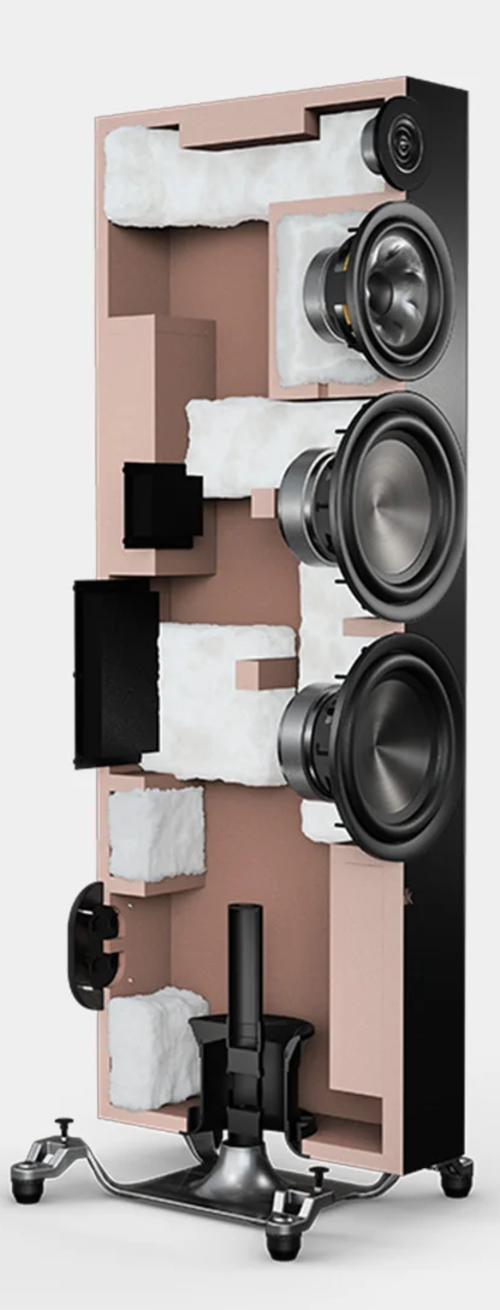
Cabinet and finish. The R700 measures 1143.8 mm in height, 320.7 mm in width and 428.3 mm in depth, feet included. Each speaker weighs 35.9 kg, so unpacking and positioning them is definitely easier with two people. Polk offers black and walnut finishes. The cabinet is cross-braced inside, with rounded exterior corners.
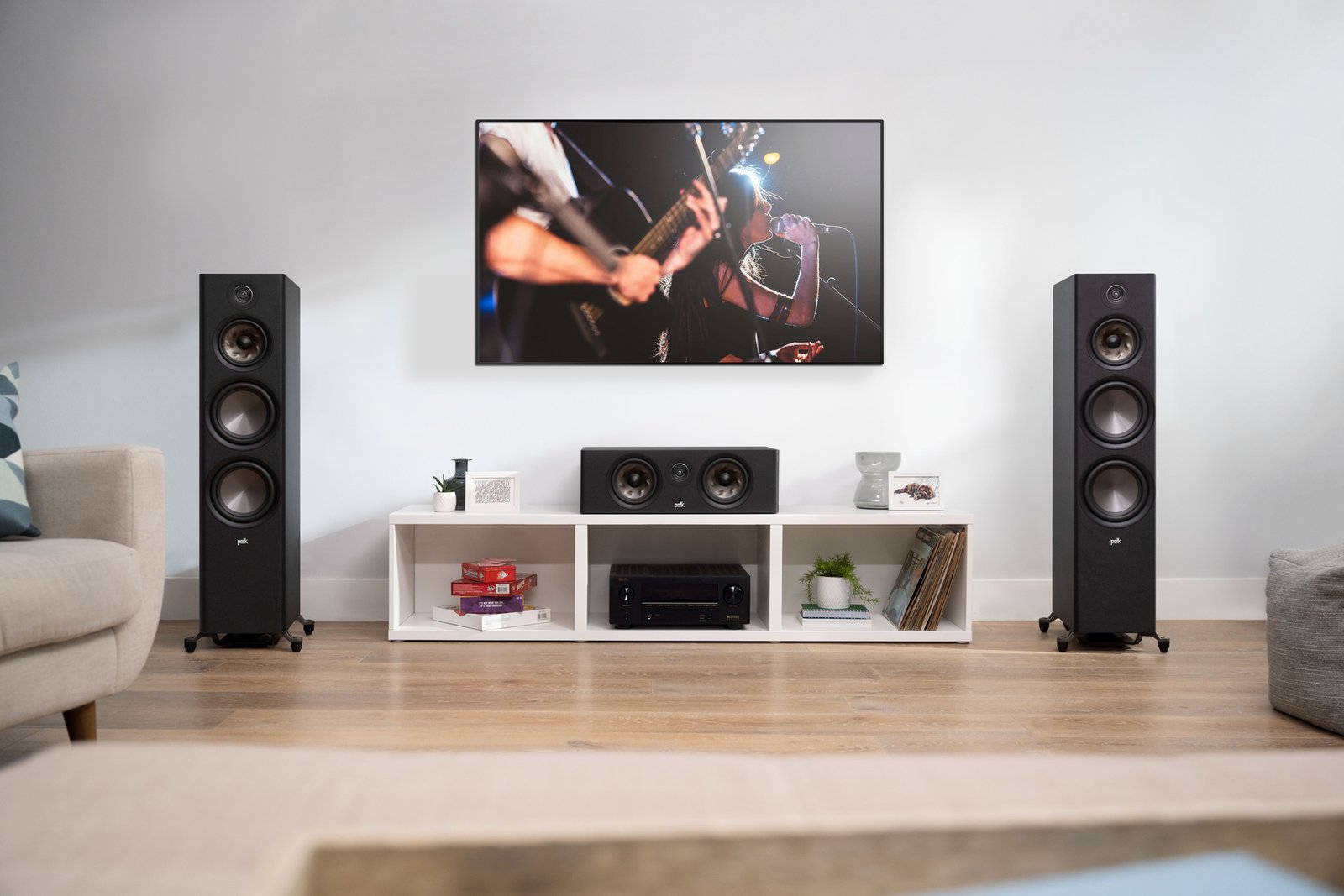
Build quality is excellent for the price. The cabinet feels very solid, with enough mass to suggest a considerably more expensive loudspeaker. From a normal listening distance, the look is clean, well executed, and modest. Visually, we prefer them with the magnetic grilles off.
Feet. Polk lists spike and pad options. We used the soft rubber pads. They allow a small amount of movement when the cabinet is pushed by hand, so the speaker has an almost floating feel on the floor. For a loudspeaker of this size and weight, that compliant contact is very well judged. Wonderful decoupling! The port also fires down towards the floor. This makes the gap under the cabinet part of the port system, so the feet have a functional role beyond simple stability.
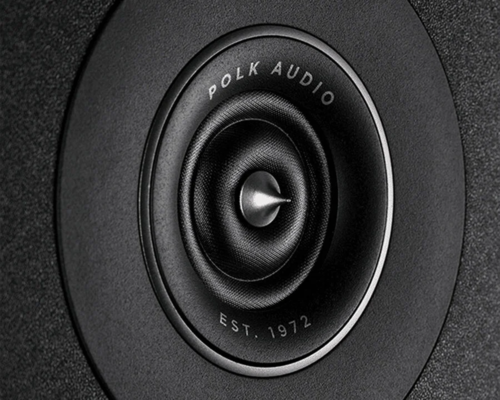
Pinnacle Ring Radiator tweeter. High frequencies are handled by Polk’s 1-inch Pinnacle Ring Radiator, a design associated with the more expensive Legend Series. A ring radiator uses an annular diaphragm, clamped at both its inner and outer edge. The moving section is narrow and light, which generally pushes breakup modes higher in frequency than on a conventional dome of similar size. Polk pairs it with a pointed waveguide which, they say, spreads high frequencies evenly around the room and widens the sweet spot. Behind the diaphragm is a damped rear chamber that reduces unwanted resonances. The crossover to the midrange is at 2700 Hz.
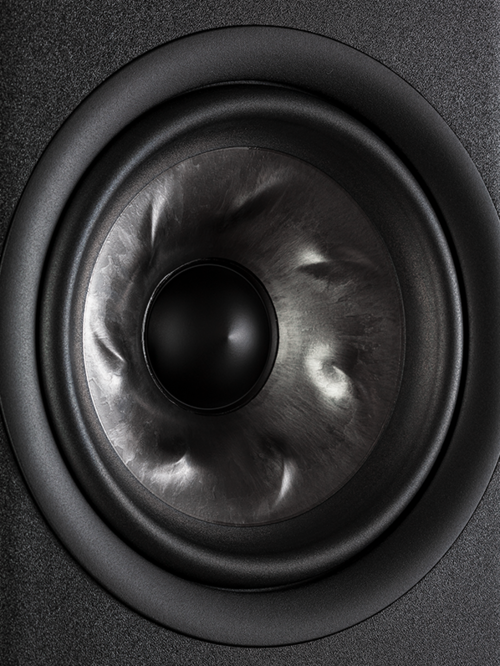
Turbine Cone midrange. A dedicated 6.5 inch Turbine Cone driver covers the midrange. The moulded ridges on its surface are functional. The reasoning, Polk says, is that the turbine geometry increases cone rigidity without adding mass, so the cone deforms less as excursion and frequency increase. The driver works between 350 Hz and 2700 Hz, relieved of the lowest frequencies. It also has its own sealed enclosure, separated from the bass drivers and the air pressure they build up inside the main cabinet. A sensible architecture for a speaker of this size.
Bass section and Power Port 2.0. Two 8 inch polypropylene cone woofers handle the bass, loaded by Polk’s floor firing Power Port 2.0 with X Port. The Power Port geometry smooths the airflow as it leaves the enclosure. X Port adds a set of closed pipe resonators, which Polk calls Eigentone filters, tuned to absorb specific port and cabinet resonances. This is considerably more elaborate than a conventional reflex tube. Polk specifies a frequency response of 38 Hz to 38 kHz at the 3 dB limits, with an overall range of 30 Hz to 50 kHz.
Sensitivity, impedance and terminals. Sensitivity is 88 dB at 2.83 V and 1 m. Minimum impedance is 3.6 ohm. Polk lists compatibility with 8, 6 and 4 ohm amplifiers and recommends between 50 and 300 W. That 3.6 ohm minimum is a good reason to think about current delivery, something we cover in the system matching chapter. At the rear, two pairs of nickel plated five way binding posts allow single wiring, biwiring or biamping.
Measurements and analysis
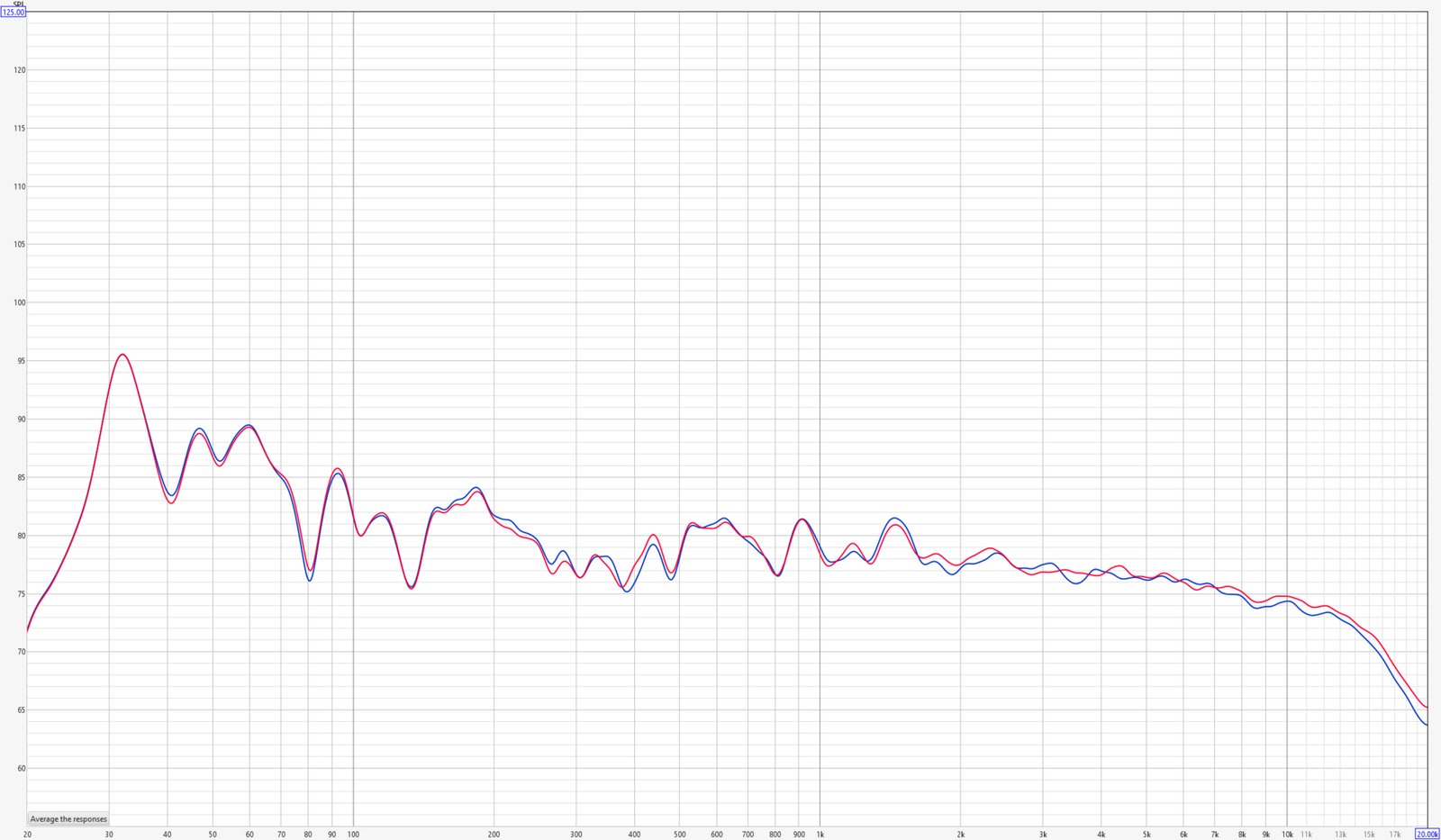
In room measurements: Red – On Axis ; Blue – Off Axis
The in-room measurement tells us quite a lot about the R700. The first thing that stands out is the bass output. It rises strongly below 50 Hz and reaches a substantial peak around 30 Hz in our room. Some of that is clearly room contribution more than the loudspeaker alone, so we would not use this graph to define the exact tuning frequency, but it does confirm that the R700 produces serious energy very deep into the bass. This matches our listening impressions, as we found the low-frequency system particularly effective, and we are sure that a contribution to that is due to the Power Port 2.0 arrangement wich works very cleanly, with very little unwanted resonance coming through the port.
Above the bass region, the response becomes more even. The succession of peaks and dips between roughly 50 and 500 Hz is largely what we expect from an in-room measurement, where floor, ceiling and wall reflections interact with the direct sound. What’s more important is the broader trend, and here there is no major sustained excess or depression through the midrange. From roughly 350Hz upward, the response is particularly well behaved, with only relatively small variations through the presence region and lower treble.
The specified crossover points also help explain what we see in the measurement. Polk crosses the woofers to the midrange at 350 Hz, and the midrange to the tweeter at 2.7 kHz. The graph does not show any obvious discontinuity around 350 Hz, which suggests a well-integrated handover between the woofers and the midrange. Poor integration here often produces a thick, hollow, or uneven lower midrange. In this case, the transition looks controlled, even if the room adds the usual small-scale irregularities in that region. The 2.7 kHz crossover to the tweeter also appears well integrated. This is high enough to let the midrange cover a broad and important part of the spectrum, but still low enough for the tweeter to take over before directivity problems become more serious. The close tracking between the on-axis and off-axis responses through the upper midrange and lower treble suggests that this handover is handled very well. There is no major dip, peak, or obvious shift in balance around the tweeter crossover region, which supports the same impression of smooth dispersion and coherent integration that we heard from them.
Moving away from the main listening axis does not fundamentally change the tonal balance of the speakers. The R700 maintains a very similar spectral balance and does not develop a large hole around the crossover region or lose treble energy abruptly.
That is important in a real room. It means the reflected sound reaching the listener from the side walls should have a tonal character reasonably close to the direct sound. It also means that the listening window is relatively forgiving, so small changes in toe-in or seating position should not produce dramatic changes in timbre. Again, the smooth transition between the Turbine midrange and Pinnacle ring-radiator tweeter appears especially successful here, with no obvious discontinuity around the crossover region.
At the highest frequencies, the balance gradually slopes downward, becoming more obvious above roughly 10 kHz and accelerating towards 15–20 kHz. The off-axis trace loses slightly more output here, as expected, but the difference is still modest until the extreme top octave. This correlates quite well with what we heard: the R700 has a smooth and forgiving treble with less emphasis on illumination and air. Importantly, this is a gradual reduction, not a narrow cancellation or obvious resonance, so the top end still looks controlled and well behaved.
Setup, Room and Placement
Compared with other large floorstanders we know, the R700 is much easier to position. That’s good news for anyone who has fought with a big pair of towers in a normal living room.
We experimented with the distance from the wall behind the speakers and with several toe-in angles before settling on our final position. Sensitivity to the rear wall is mild. The changes are audible regardless, so some care there pays off.
Toe-in, in comparison, has a larger effect, with changes appearing in both tonal balance and imaging. We got our preferred result with each speaker aimed directly at the listening position.
System Matching
As we’ve spoken about and been adamant about in other reviews, matching is the key to bliss.
The MOON 491 and Yamaha M5000 combination suits the R700 exceptionally well. The speaker is moderately demanding to drive. The M5000 has very good control over the two 8-inch woofers, with tight bass even at high SPL. The MOON 491 adds clarity and a more detailed character, which is what a warm loudspeaker like this one benefits from. On a few occasions, at our highest listening levels, we wished for a little more amplifier power.
Around 300 W into 4 ohms or more is a very good starting point, if high SPL and full dynamic range are priorities. This is our own preference, separate from Polk’s 50 to 300 W recommendation.
We would also be careful with electronics that are already very warm or soft. They add more bass lag and more warmth to a speaker that has plenty of both. The R700 is quite forgiving of the electronics used, so the amplifier is the more critical choice of the two. Of course, preferences decide in the end.
Listening Sessions
If we had to describe the voicing in a few words, we’d say dynamic, punchy, bass-heavy, midrange forward, great for home theatre, a bit of a party speaker, and easy to listen to at higher SPL. The drivers integrate well. Mediocre recordings are treated kindly, something we also found was directly related to listening pleasure, with detail analysis becoming a forgotten thing.
Bass

In room, the lowest octaves have strong physical weight, and the midbass punch is powerful enough to be felt properly. Kick drums and electronic bass lines have substantial force. Articulation is also good for this price point. Bass does not intrude on the midrange, which is good news regarding clarity, transparency, and also adding to the low, almost non-existent intermodular distortion in the lower mids.

Center of the Universe by Mandragora was reproduced with considerable impact and excellent macrodynamic force. At higher volume, the bass had enough physical weight to approach the feeling in a club. The relaxed decay added scale. Bass notes were distinct from the first beat to the last, with no bloat, no excessive bloom and no fatigue at any point. We would have liked a firmer outline on the kick, with a little more detail inside it.
With Ditoma’s Let’s Go, the large shifts in energy had a great show of force. The rhythmic structure was easy to follow, layer by layer. We turned the volume up again and again to hear whether the presentation would remain organised and enjoyable. It did. Trance music is an absolute pleasure on these speakers.

On AURORA’s A Different Kind of Human, the rapid bass sequence starting around 1:38 gave us a clear idea of how the R700 handles speed. Every pulse had plenty of weight behind it. The individual notes were easy enough to follow, with the longer decay reducing the space between them a bit. A more defined contour would have been welcome here too. The physical effect suited the track beautifully.
Marcus Miller’s bass on Cousin John had excellent body and very good punch. Each pluck was defined enough to follow the rhythm with ease. A little more texture around the initial pluck, with a sharper outline to each note in the faster passages, would have been nice. For the price, the weight and impact Marcus had through these speakers are above and beyond what most audiophiles would expect. High praise for this!
Traust by Heilung has deep ritual drums, low octaves, and layered voices. It goes very deep. The R700 had the weight for it. We felt the lowest drum strokes physically, in our chests. Each hit had a big, round body with a slightly longer tail, which made the ritual feel even heavier and darker. The voices were clear above the drums.

Yello’s Till Tomorrow has deep, layered electronic bass lines. The low end was big, round, and very enjoyable. At normal levels, the layers were easy enough to separate. With the volume up, the lowest layers blended a little more into each other. The groove and the scale of the track were a lot of fun.
Midrange
This is another strong quality of the R700. Voices are exquisitely natural, with good harmonic texture. They also remain clear when an arrangement becomes dense and harder to reproduce. Acoustic guitars, strings and piano gain a lot from the fuller tonal balance. At high SPL, the midrange is clean, with no shoutiness.
Jesse Marchant’s voice on Adrift was thick, present, and very well defined. The harmonic density gave us a strong sense of a person in the room with us. It moved us. The bass throughout the entire track had good power and weight. At a substantially higher volume, we heard very little dynamic compression, with the vocal clear and the low end controlled enough for a rich, engaging experience. Powerful voice, powerful bass. This was one of the tracks where our emotional connection was strongest, one that represents the R700 very well as a complete loudspeaker.
Chris Stapleton’s voice on Death Row had a great deal of body and physical presence. The slightly forward midrange suited his delivery beautifully, giving it weight and again, a strong sense of being in the room. The small inflections in his phrasing were easy to follow. The finest breath information and texture were somewhat less obvious due to the recessed treble. Tonally, this is exactly the type of recording the R700 is made for. Once again, the weight and force Chris had through these speakers impressed us. For the asking price, it’s out of this world!
The Prelude from Bach’s Cello Suite No. 1. Mischa Maisky plays the cello with a big, warm tone, the resonance of its wooden body presented here through the R700 in a beautifully natural way. The lower strings had plenty of weight and a rich harmonic density, which suited the instrument beautifully. The texture of the bow on the strings was audible, although somewhat less explicit. The emotion of the piece was there with us, every time we played it.
Jacqueline du Pré’s recording of Elgar’s Cello Concerto, with Sir John Barbirolli and the London Symphony Orchestra, is one of the most emotional performances out there. Her cello was presented in front of the orchestra, full-bodied and very present, very physical. The slightly forward midrange suited the intensity of her playing. When the orchestra grew louder, the cello was clear in front of it, with no congestion around it. The smallest changes in bow pressure were a bit less obvious, but this did not in any way shape or form alter the pleasure we got from listening to this masterpiece.
Janine Jansen’s recording of Vivaldi’s Four Seasons is played by a small chamber ensemble. Her violin had a sweet, rich tone, with good body in the lower register. The strings behind her were easy to follow, with a warm, full foundation. In the faster passages of Summer, the violin was clean at higher volume, with no harshness. The upper harmonics and the air around the instruments were a little restrained, so the ensemble sounded a bit warmer than we are used to.
The acoustic guitar in Naturaleza by Danit had a beautiful body and a lot of harmonic richness. The fuller tonal balance gave the instrument substance and made the vocals feel more alive, more weighty. We forgot about detail, transparency, speed, transients, attacks, and decays and just simply enjoyed it.

Patricia Barber’s Company gave us a more intimate view of the midrange. Her voice had good texture and body. The bass line was articulate enough, with more weight than we expected. The details around the brushed percussion and the piano were audible, but less explicit. The emphasis was on the tonal body of the performance, with the smallest details sent more into the background.
High Frequencies
Treble energy is balanced. Refinement from the Pinnacle tweeter is average. The slight grain on difficult recordings is what we would say is the weak spot of these speakers. But the detail that is there feels naturally integrated into the music, and that is a very good thing.
Maybe part of the reason these speakers are so comfortable at high SPL is the way their energy is distributed. Most of it is concentrated in the midrange and bass, while the presence and treble regions, where the ear is more sensitive and listening fatigue develops more quickly, are kept under close control.
With Inkarnation’s Licht Prakash Light, we heard less sparkle than we are used to. The upper frequencies had less air and less illumination. The broader tonal balance was pleasant regardless. This recording made the limits in finesse and extension easy to identify.
On Fire for You by Cannons, some of the S sounds in Michelle Joy’s voice felt slightly separated from the main body of the vocal. The effect was subtle, and easy to identify anyway. The sibilance itself was very well controlled and posed no threat to our ears.
Diana Krall’s Temptation is a recording we know very well. Her forward consonants were clean. We could raise the volume with no trace of sibilance at any level we tried. The brushed cymbals had a smooth texture, with the last part of their shimmer and decay a little bit more restrained. There was less air around her voice and the piano than we prefer. The presentation was very pleasant all the same.
Loreena McKennitt’s Dante’s Prayer is one of the most intimate performances we know. Her voice has pronounced S sounds. Through the R700, they were smooth and belonged to her voice. The reverb around her and the piano was shorter and less airy than we’d like. Despite this, the emotion was there, warm and close. We enjoyed it a lot!
Soundstage and Imaging
Lateral positions are easy to follow. Three-dimensionality is good, with enough separation between front and rear information for a proper sense of depth. The background behind the instruments is clean.

Annette Askvik’s voice on Liberty was precisely placed between the speakers, with a good sense of depth behind it. The surrounding instruments extended very little beyond the cabinets. The smallest spatial cues, the air and silence around the voice, were a bit lacking. On this track, the speakers were easier to identify as sound sources than we would have liked.
In the Wind by Yosi Horikawa is one of our benchmarks for spatial precision, built from small percussive sounds and recorded textures placed all around the listening position. Through the R700, each sound had its own spot between the speakers, with a clear left and right position. Width extended a little past the cabinets. Depth was good, with the quieter sounds placed further back in a believable way. The smallest sounds at the edges of the soundstage were a bit softer in outline.
Jean-Michel Jarre’s Oxygène Part 7 is full of synthesizer layers moving across the soundstage. The movement from one speaker to the other was easy to follow. The lead synth was presented right in the middle, at a good distance behind the speakers. The layers further back had good depth. They were also a little less airy than we would like, with less space around each sound. A very enjoyable track on these speakers, but not the best when it comes to detail, precision and absolute transparency.
On The Desert, from Armand Amar’s HOME score, the duduk and the flutes were presented at the centre of the soundstage, with a strong physical presence. The acoustic space around the players was believable, with good enough depth behind them. The reverb tail was somewhat shorter than we expected. The wind instruments had a beautiful body, which suited the speakers very well.
All Melody by Nils Frahm is built from piano and synthesizers layered in a big acoustic space. The piano was presented in front, with good body and a precise position. The layers behind it had good depth, each one easy to locate. From the central seat, the cabinets were easy to forget on this track, more than on most of the other recordings we played.
Dynamics and High SPL Listening
As the volume increases, timbre and dynamic rhythm remain intact. Bass remains defined, the midrange is clear, and the upper frequencies are free of harshness.
With Who Will Find Me by DJ Shah and Adrina Thorpe, the vocal was transparent, clear, and present. The electronic bass had enough physical force to give our room a club feeling. The balance between dynamics, vocal presence and listening comfort worked particularly well on this song. Trance, house, techno, dubstep, deep, psytrance, and every other EDM genre is very, very enjoyable with these speakers. This comes from their warm character and exceptionally forgiving treble, with very little tendency toward sibilance. Wonderful.
Feet on the Ground by Pernille Rosendahl is a hard track for any speaker, built on a deep, driving low end that pushes the whole song forward. The bass had weight, slam, and drive. The kick had serious force in the chest. Pernille’s voice was present and full in the centre of the soundstage, even at high volume. The low end was a little rounder than on the recording. The energy of the song was all there.

Stravinsky’s The Firebird Suite, with Eiji Oue and the Minnesota Orchestra, gave us a very different view of the dynamic performance. The transition from the quieter sections into the large orchestral passages had excellent scale and force. As the orchestra became more complex, the main instrumental groups were easy to pick apart, with no bloat. The large dynamic changes impressed us considerably more than the smallest variations in intensity.

Stimela, The Coal Train is Hugh Masekela’s song about the migrant workers taken by train to the South African mines. Hugh’s voice had excellent body and presence. The big changes in intensity had considerable impact, the percussion had good force, and the midrange was transparent at high SPL.
Low Volume Listening
The R700 is very good at low volume. Bass has enough weight to preserve the tonal balance, voices have their physical presence, and dynamics remain lively. Soundstage width changes very little. Our ears are less sensitive to bass at low levels, so the slightly warm tilt helps here, preventing the balance from sounding thin. Microdetail is less obvious as the SPL drops. For late evening listening, the pair is pleasant and engaging at much lower levels. They are somewhat short of the last word in delight and awe at whisper levels. We enjoyed them anyway.
Movies
We used the R700 for movies a great deal, with very good results. Dialogue is clear, forward and dynamic, intelligible in busy scenes and full enough to sound natural. The slightly forward midrange is a big advantage here, since voices are presented clearly in front of the music and the effects. Bass extension and physical impact are sufficient for many movies without a subwoofer. Action scenes have proper scale. With this much dynamic reserve, explosions and effects also have a surprising, awesome impact. We believe that for anyone who wants one pair of speakers for both music and movies, the R700 makes a lot of sense.
Final Thoughts
The R700 is one of the most fun loudspeakers we’ve had in our room at any price level, let alone the one they sell for! Trully recomended !!
Book a demo and bring the music that makes you want to turn the volume up! It’s worth it.
We want to thank AVstore for their generosity and trust, and for the chance to spend more than a month with the R700.
Pros
- Exceptional macrodynamics and very good behaviour at high SPL, with strong physical impact and little sense of congestion as the volume increases
- Warm, rich and slightly forward midrange, with excellent vocal presence and harmonic density
- Bass with impressive depth, weight and impact, enough that we never felt the need for a subwoofer during stereo listening
- Excellent sibilance control and low listening fatigue, even during long sessions at high volumes
- Very good versatility for both music and cinema
- Wonderful with all genres of music
- System matching is not especially demanding, but the R700 benefits from a powerful amplifier and electronics with a more detailed, open character to balance its naturally warm presentation.
Cons
- Treble refinement is limited, with modest air, sparkle, and microdetail, together with a slightly grainy texture on difficult recordings
- Bass precision is dependent on amplification and can be lower than impact and physicality, with a slightly relaxed decay and kick drums that require a more defined contour