Bowers & Wilkins Factory Tour – Inside Worthing and Southwater with the 800 Series Diamond D5

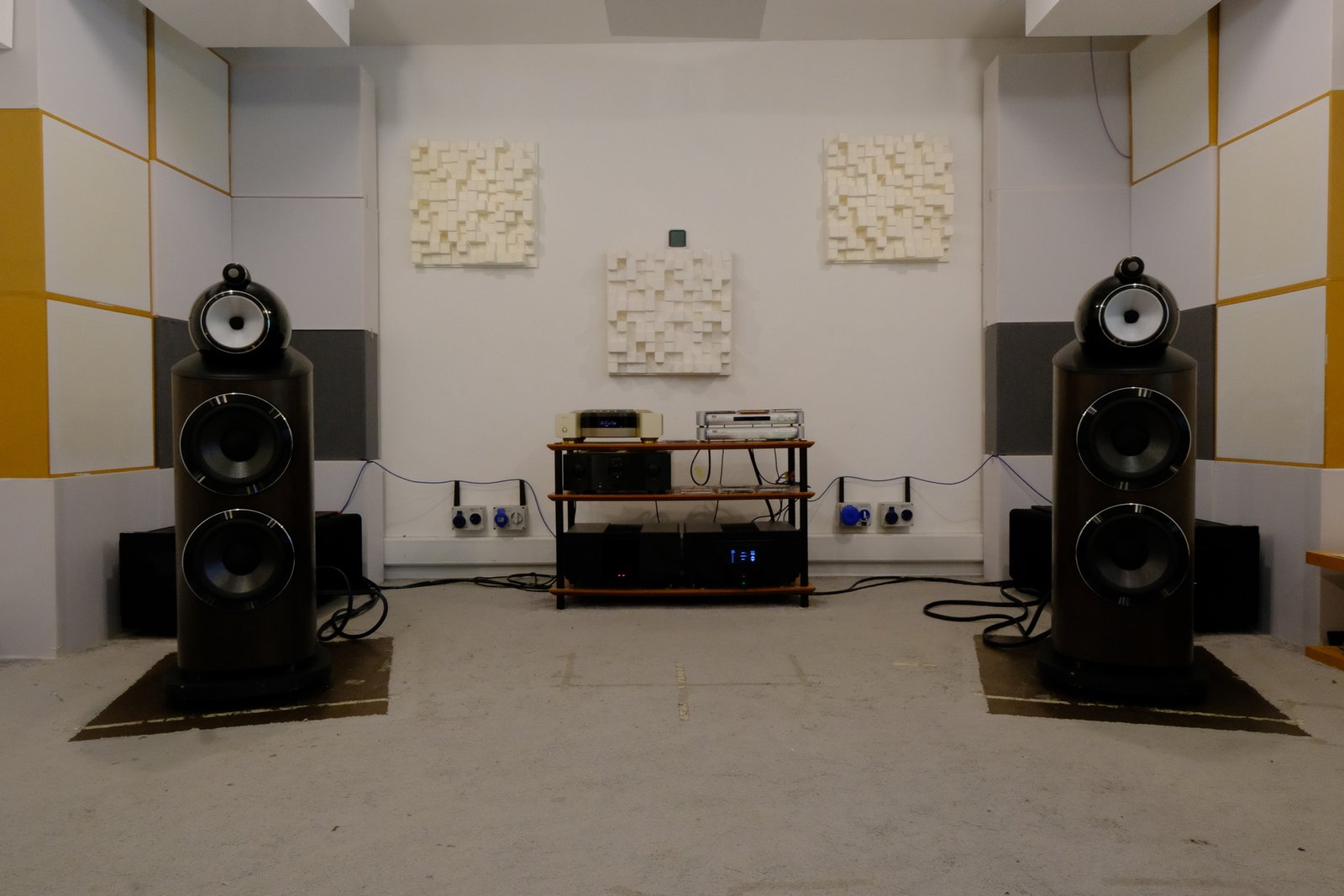
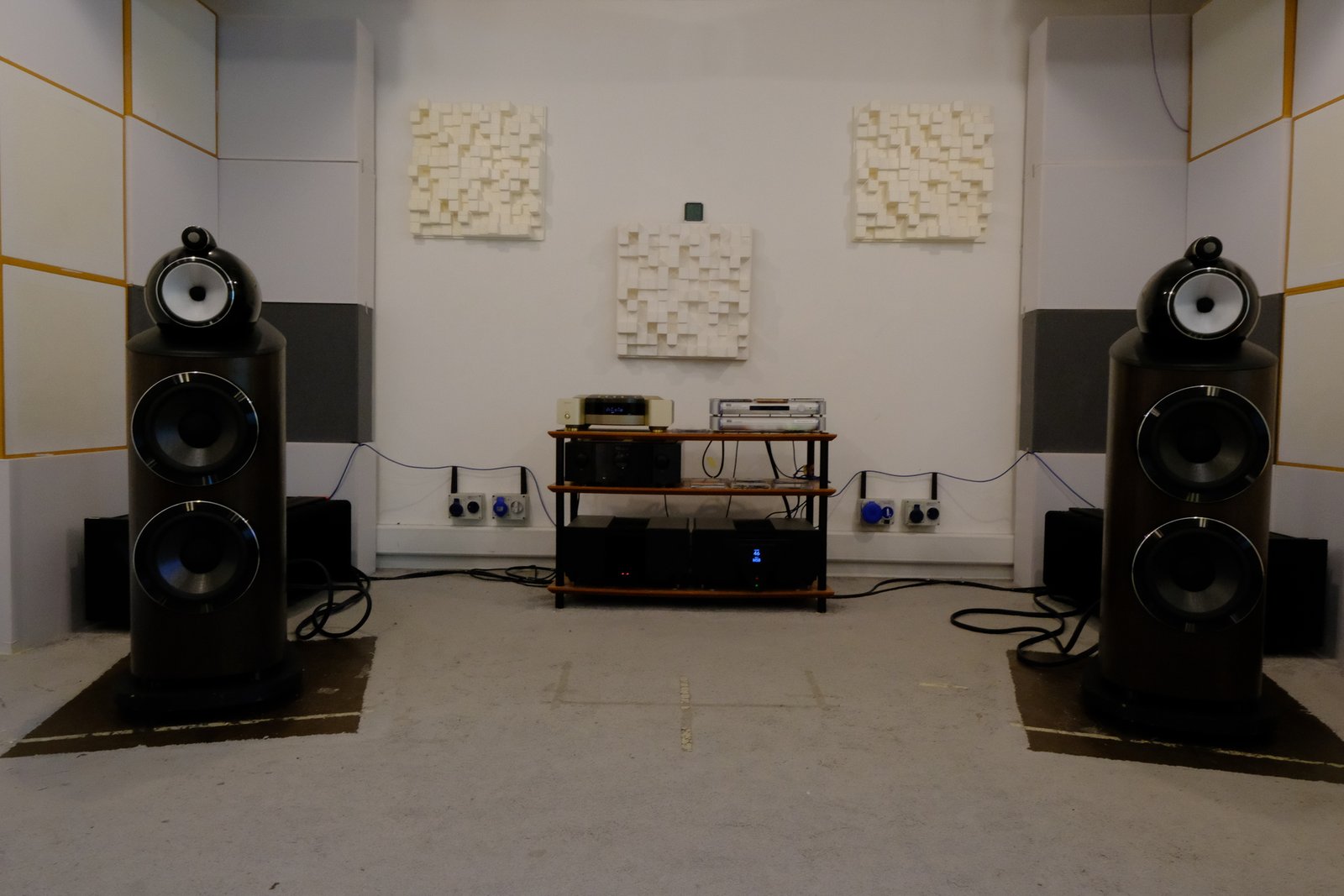
Locations: Dale Road factory, Worthing, and the Southwater Research Establishment, West Sussex • Listening room: one of the dedicated listening rooms at Southwater, loudspeakers swapped by hand on marked positions
Source: Denon DP S1 CD transport, MSB Diamond DAC • Amplification: Gryphon Commander preamplifier, Gryphon Apex monoblocks
Hosted by: Bowers & Wilkins
Introduction
Bowers & Wilkins turns sixty this year. The company marked the anniversary with the fifth generation of the 800 Series Diamond, unveiled at High End Vienna on 4 June 2026 and available from the 9th of September. A few weeks after the launch, about twenty people from the audio press were invited to Worthing to see how these loudspeakers are made, and to hear them. We were part of that group.

We know these loudspeakers pretty well. Over the past years we used the 802 D4, the 803 D4 and the 804 D4 as reference points in other reviews, and as we’ve spoken about and been adamant about in those articles, careful system matching is extremely important with the D4 models, otherwise, harshness and listening fatigue are close by. Matching is something we place a lot of importance on, because the amplifier and the room shape the sound of every loudspeaker. A flagship that sounds right with only one very particular chain is a harder recommendation to make.
Bowers & Wilkins describes what it aims for with two words: True Sound, the idea that a loudspeaker should reproduce a recording the way the artist intended and add as little as possible of its own. Transparency is a quality we have come to value more and more over the years, so transparency was on our minds on the factory floor and later in the listening room.
The programme of the visit was as follows: on the first day, after lunch, Andy Kerr from Bowers & Wilkins presented the D5 range with a table full of parts. The factory tour took up a large part of the afternoon. On the second day, a minibus took us from Brighton to Southwater, where the morning was reserved for presentations of some new products coming in the near future, which we cannot write about at this point, and the day closed with a listening session, D4 against D5, model by model. We will get to that session later in the article.
A Brief Look at Bowers & Wilkins
John Bowers and Roy Wilkins met during the Second World War, in the Royal Corps of Signals, and after the war they opened a radio and electronics shop in Worthing. John Bowers started building loudspeakers in the workshop behind the shop, and in 1966 a satisfied customer, Miss Knight, a former singer, left him 10,000 pounds in her will. That money helped shape what we call today B&W Loudspeakers.
The first speaker introduced was the P1. The profits from it went into measuring equipment, a choice that tells us a lot about the priorities of the company from the very beginning. The DM70 of 1970 combined a curved electrostatic panel with a moving coil bass unit, the DM6 of 1976 introduced the yellow woven Kevlar midrange cone that defined the look of the brand for a long time, and in 1979, the first 801 launched, a loudspeaker designed for recording studios. Abbey Road was one of the studios that adopted it. The studio is closely associated with the 800 Series to this day.
The Matrix 801 of 1987 introduced the interlocking internal bracing used in every 800 Series cabinet to this day. John Bowers died in December of that same year. The Nautilus, with its spiral tapering tubes, launched in 1993. The diamond dome tweeter joined the 800 Series in 2005, the Continuum cone was introduced with the D3 generation in 2015, and with the D4, in 2021, the conventional spider under the midrange cone was replaced by what Bowers & Wilkins calls Biomimetic Suspension. In 2023, the D4 Signature models added a further round of refinements on top of the D4.
Bowers & Wilkins sound systems have also been fitted in cars for many years, and that work is done at Southwater too. The company changed hands several times in the last decade, and since September 2025 it is part of Harman. Today the 600 and 700 Series are built in China. The 800 Series Diamond and the Nautilus are built in Worthing, and research and development is based at Southwater, a short drive inland, as the successor to the original research centre in Steyning.
First day – Dale Road
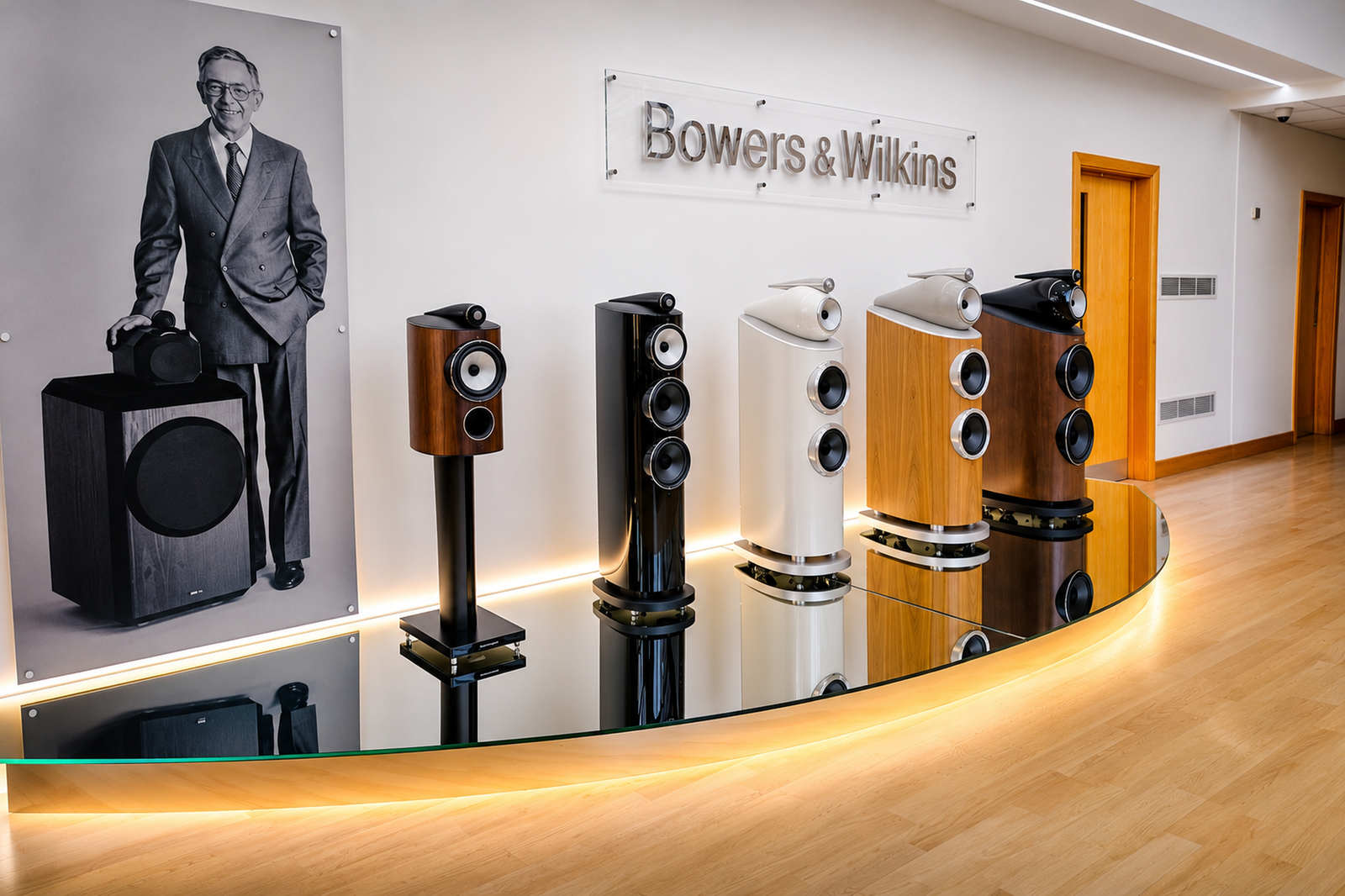
The factory is a large building on an industrial estate in Worthing, and the lobby is where the history of the brand is on display. It is also where our hosts from Bowers & Wilkins welcomed us. We were curious, and a little excited, to find out how much of the 800 Series Diamond is made here and whether anything is outsourced.
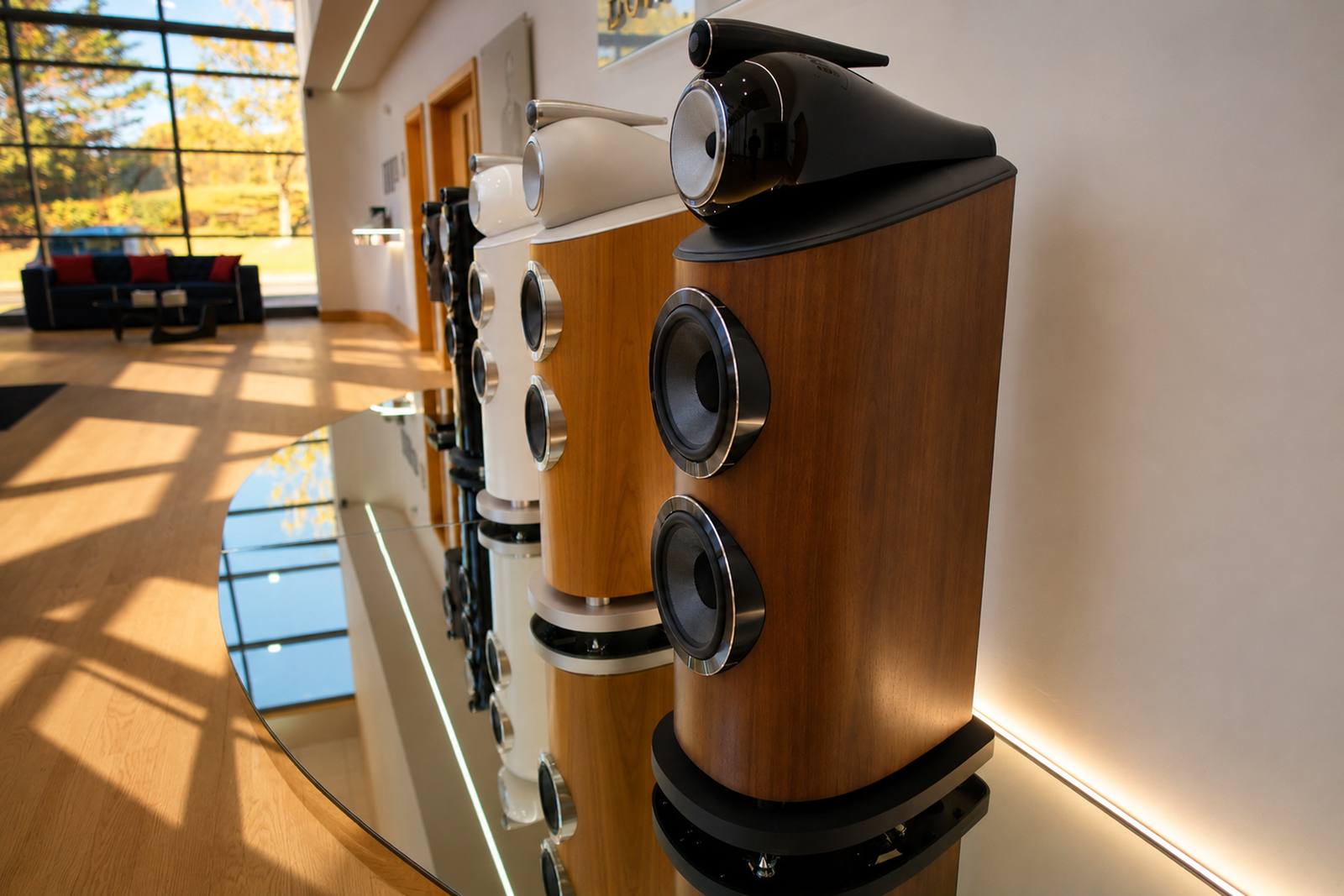
Before the presentation, the newly designed D5 parts were scattered at the front of the office. An 804 cabinet shell in walnut, without drivers, showed the newly designed aluminium enclosure for the midrange driver with clean-cut apertures and the aluminium mounting baffle for all drivers. Next to it, the Matrix assemblies, birch plywood panels slotted together, with the front aluminium panels bolted in for increased mounting rigidity of the bass drivers. Against the wall, long crossover boards. We will talk about all of them in detail further down.
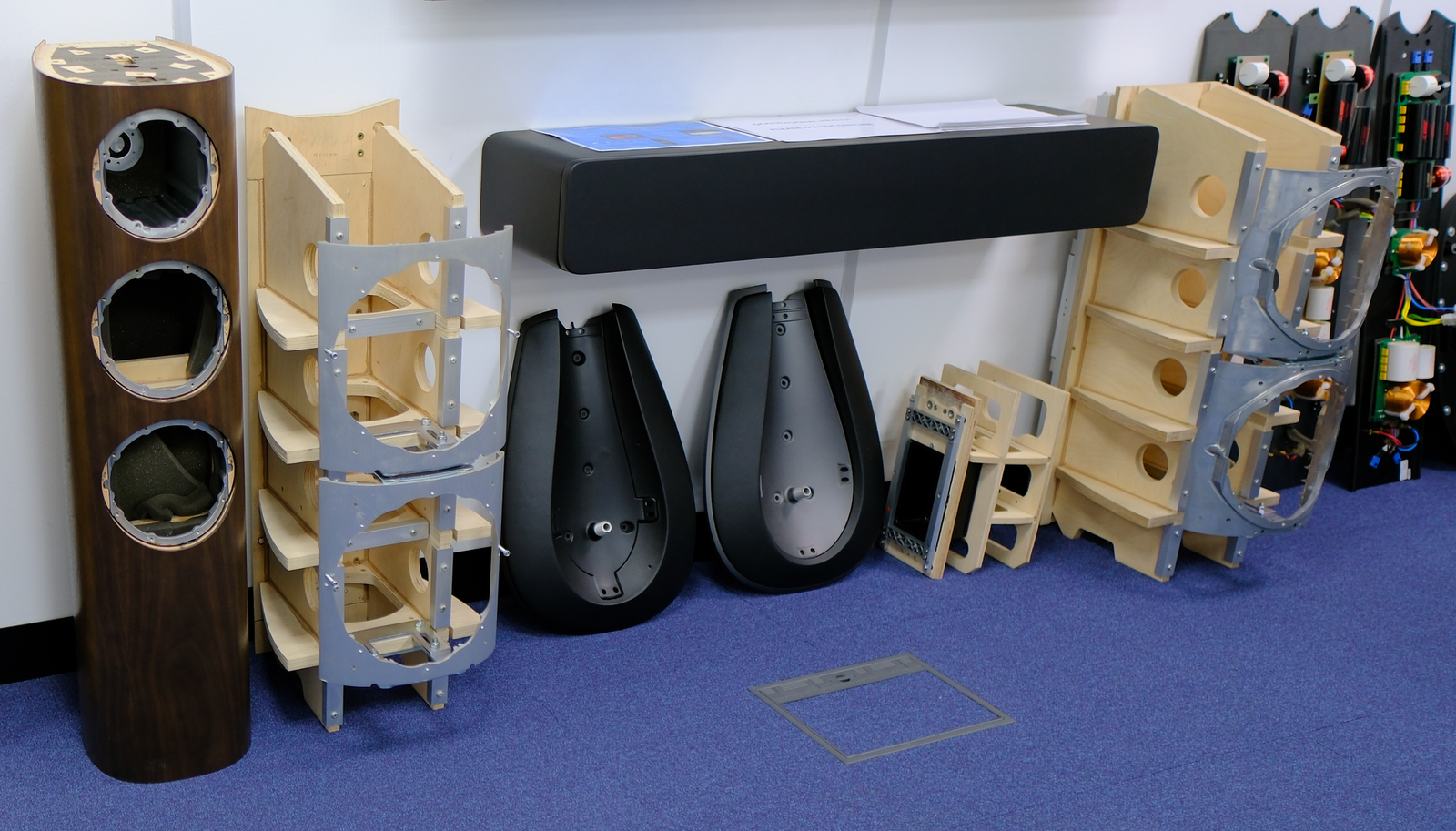
The newly designed parts for the D5 iteration
Our first glimpse of the production floor, seen through an aging, slightly discolored plexiglass window. Decades of exposure had left their mark, casting a hazy, bluish tint over the impressive machinery below. Not the clearest view, but certainly an exciting first look at where the magic happens.

As the presentation of the newly developed D5 started, Andy Kerr did something we appreciate a lot at events like this. He passed the parts around, so we could look at each part, turn it over, and weigh it in our hands as he explained what has changed and why.
The first thing he talked about was the newly developed internal “turbine head”, designed specifically for the 804 D5. This cast-aluminium enclosure houses the midrange driver and represents a significant step forward for the smallest floorstander in the 800 Series.
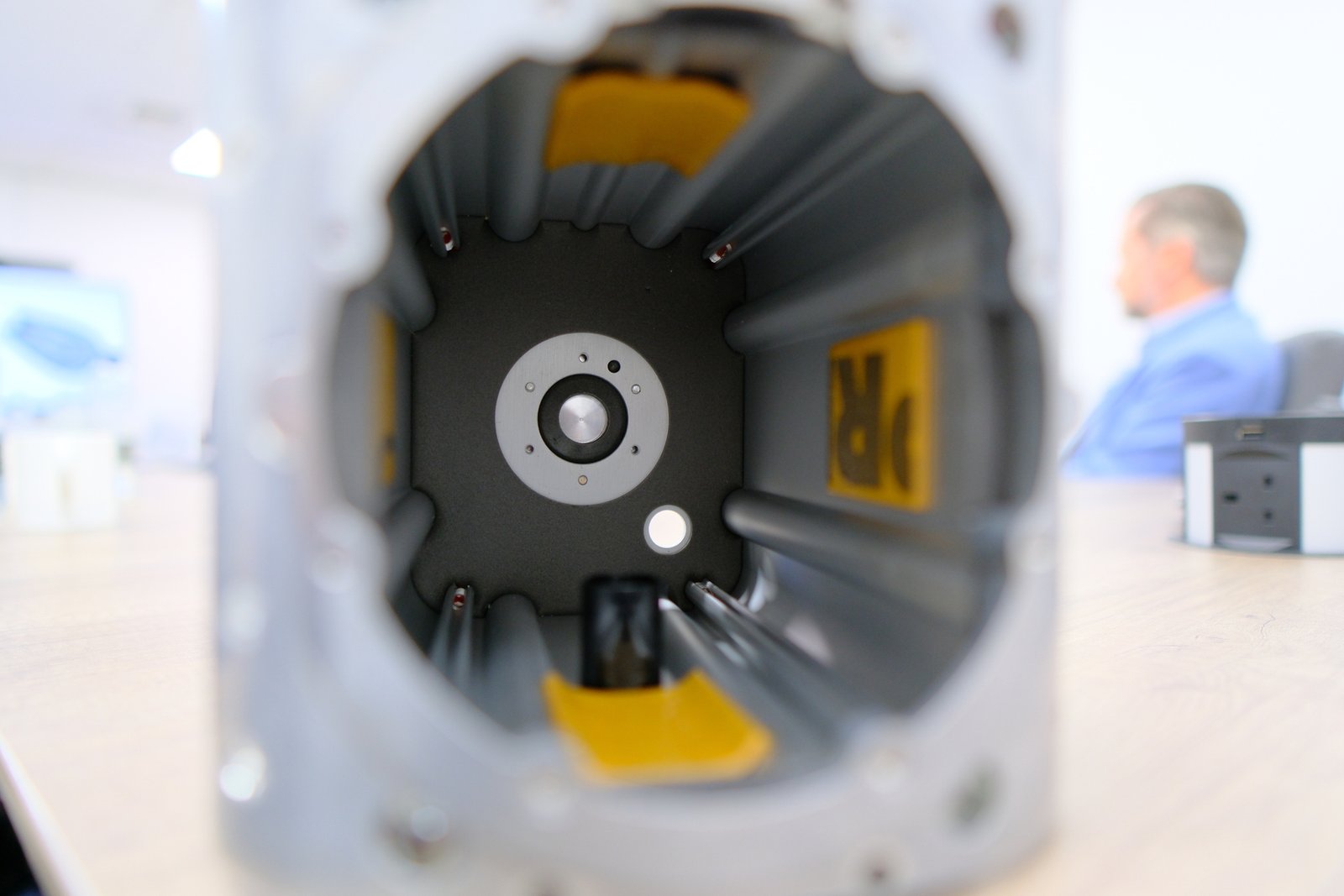
In previous generations, if you wanted the “full-options” treatment, including a dedicated aluminium enclosure with a tapered tube for the midrange driver, you had to move up to the 803 or higher. With the D5 generation, Bowers & Wilkins has finally brought an aluminium tapered enclosure to the slender, elegant 804 as well. The idea was to narrow the performance gap between the 804 and its larger siblings, making the differences across the lineup far less dramatic.
And as we’ll explain in detail during our listening impressions, this seemingly small change made a surprisingly large difference, easily heard, especially when compared a/b with the previous D4 generation. In fact, the 804s turned out to have one of the most meaningful improvements compared to the previous generation. From the inside, it has a dense pattern of radial ribs, a small central opening for the rear of the driver, and yellow damping pads glued to the walls. It is also pretty heavy for its size.
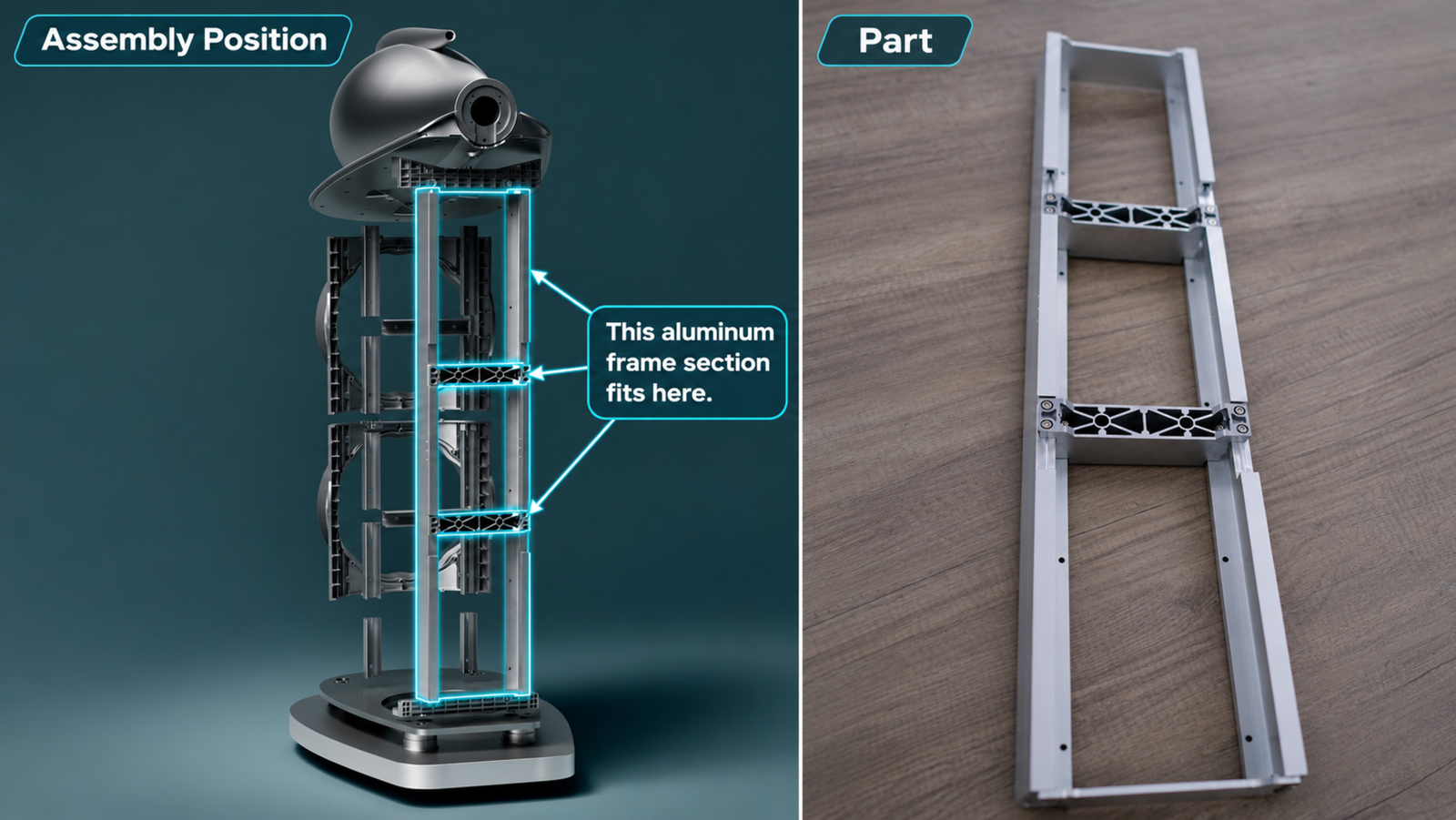
The next parts on the table were the ones that make the D5 cabinet different. The Space Frame Bracing is new in this generation. It is a pair of long parallel aluminium rails, joined by transverse members at intervals, and Bowers & Wilkins bolts it to the rear of the Matrix, inside each cabinet. The Matrix itself has been reworked into what the company calls the Enhanced Matrix, with thick aluminium sections profiled around each drive unit aperture and ribbed at the back. We had two of these aluminium panels on the table, a flat one and a curved one, each with the large round cutouts for the bass units. They are a lot more substantial than the photos on the product pages suggest.
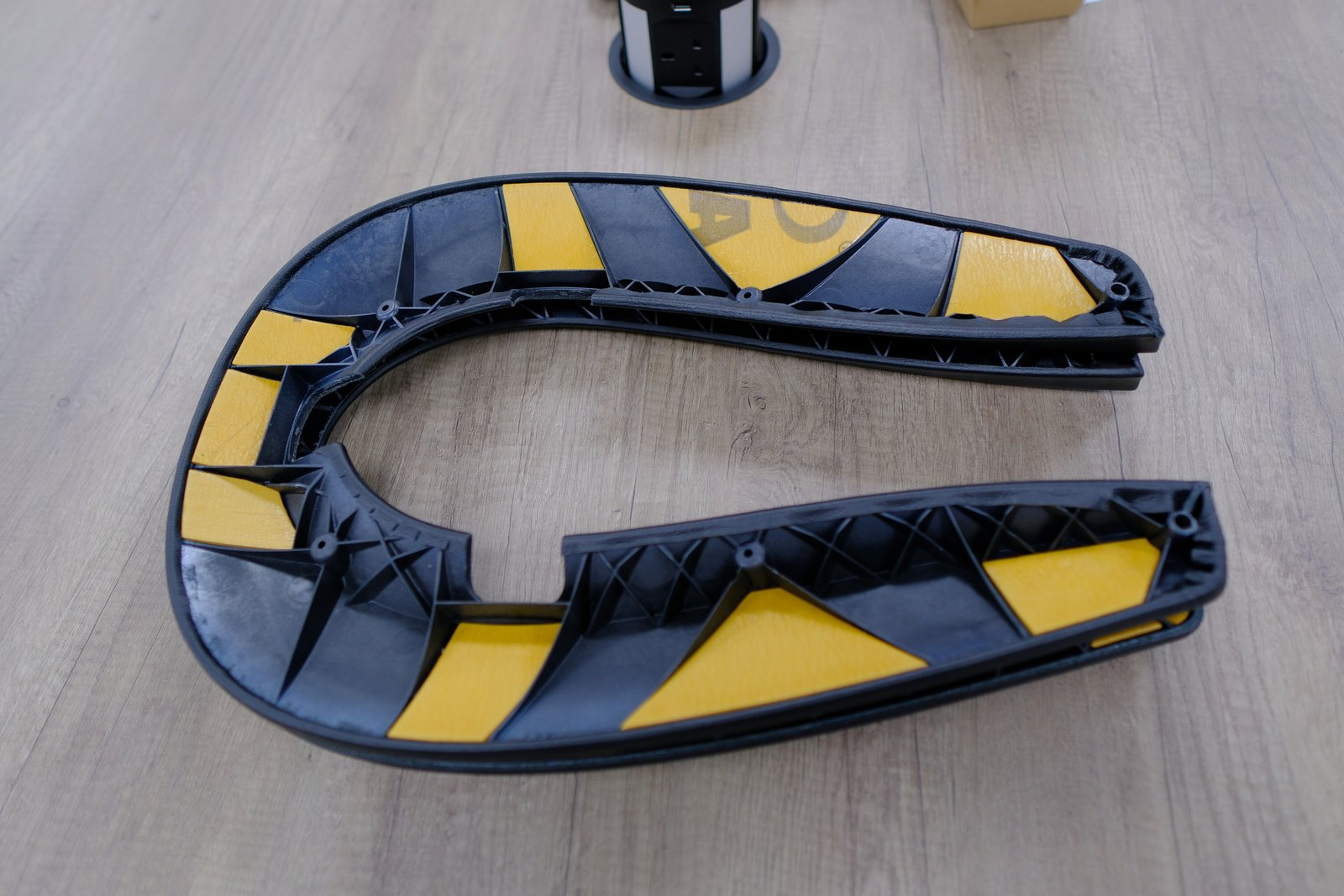
At the top of each cabinet there is a new aluminium plate, with thicker ribbing, more fixing points and revised decoupling mounts. It is finished in a luxury, full-grain British leather trim that is used to wrap the aluminum top-plate and is also damped with noise-insulating material. It is the horseshoe-shaped moulding with yellow damping inserts set into a triangular grid, following the outline of the top of the cabinet. Bowers & Wilkins says the Space Frame, the Enhanced Matrix, and the new top plate together make the D5 enclosure mechanically quieter than any it has built before.
The floorstanders are bottom-mounted on a reworked aluminium plinth, profiled to follow the shape of each cabinet, with constrained layer damping and tuned mass dampers chosen for the resonances of each model. Its lower edge now covers the castors and the spikes, and the base looks a lot tidier than on the D4.
The crossovers are mounted on aluminium plates fixed to the back of the cabinet. In the D5, these plates are coupled to the cabinet and to the Space Frame with M8 and M4 fixings, so they add stiffness to the enclosure and isolate the components from the air pressure inside the box.
The D4 generation was already using premium components, including Mundorf capacitors, with progressively more sophisticated configurations as you moved up the range. The D5 builds on that foundation, taking advantage of the work carried out for the Signature models.
Let’s start with the mechanical change in the design. The new crossover assemblies are mounted on additional rigid aluminium plates. The back plate is firmly connected to both the cabinet and the new Space Frame Bracing system using substantial M8 and M4 fixings. This means the crossover mounting structure also contributes to the overall damping of the cabinet parts, helping control unwanted vibration.
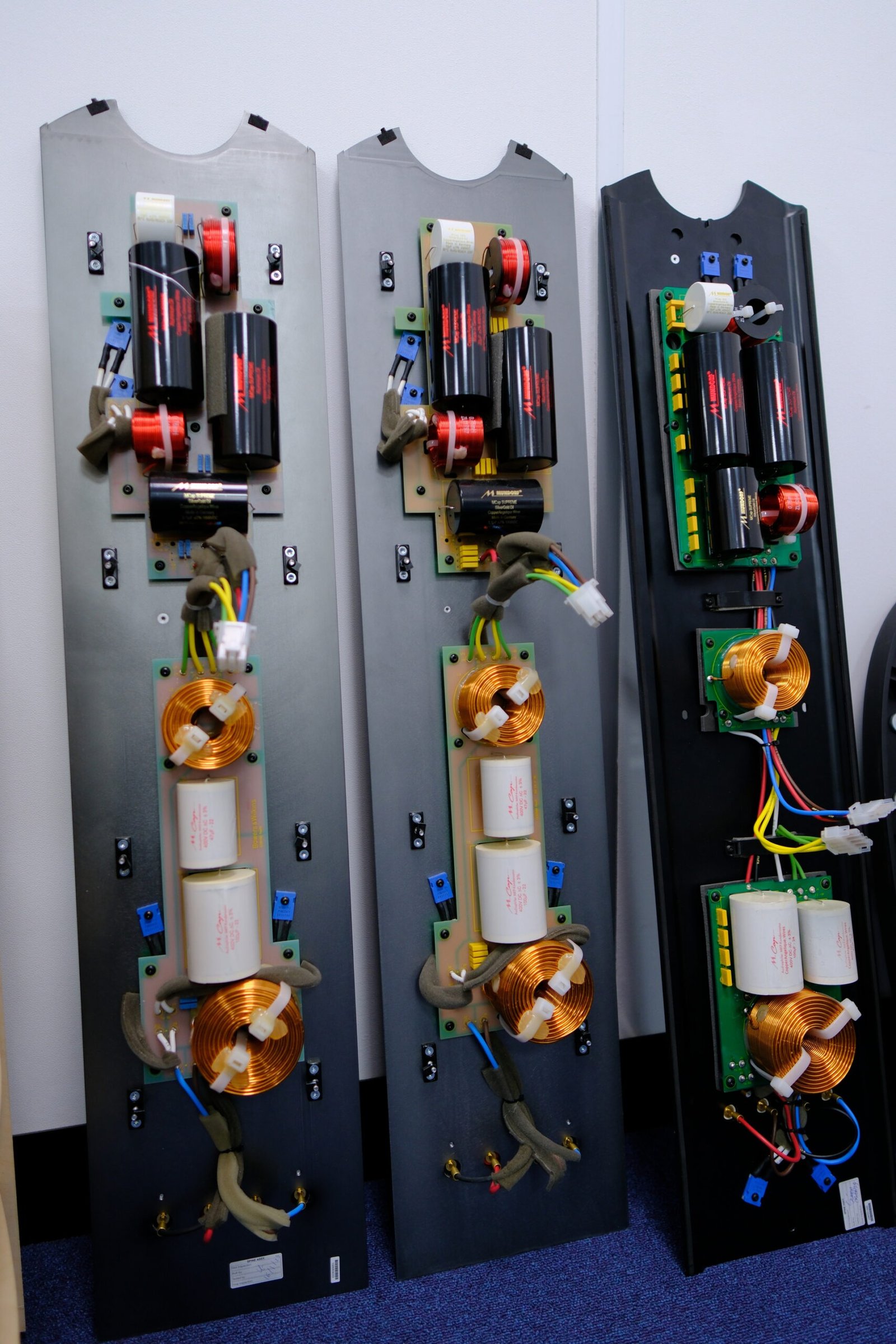
Looking closely at your photograph, with the right-hand assembly representing the D5 iteration, the most interesting difference is how the crossover components are distributed across the mounting plates, particularly the arrangement of the inductors.
A large inductor is now physically isolated on its own PCB, the copper coil in the middle is now placed on its own green circuit board. This is noticeably different from the two assemblies on the left, where the large inductors share longer boards with capacitors and other components. The crossover is clearly divided into more distinct sections. On the D5 iteration, we can identify three functional-looking areas: an upper network dominated by one small white capacitor, a Mundorf MCap EVO SilverGold Oil two black Mundorf MCap Supreme Aluminium Oil capacitors, and one smaller Mundorf MCap Supreme SilverGold Oil capacitor, with two smaller inductors, a middle board with a single large air-core inductor, and a lower network combining another large inductor with two lower-quality Mundorf Mcap capacitors. The small yellow square capacitors are used as bypass capacitors, connected in parallel with larger capacitors in the crossover network. Their role is to improve high-frequency behaviour by reducing the influence of the larger capacitors’ parasitic characteristics, such as inductance and losses.
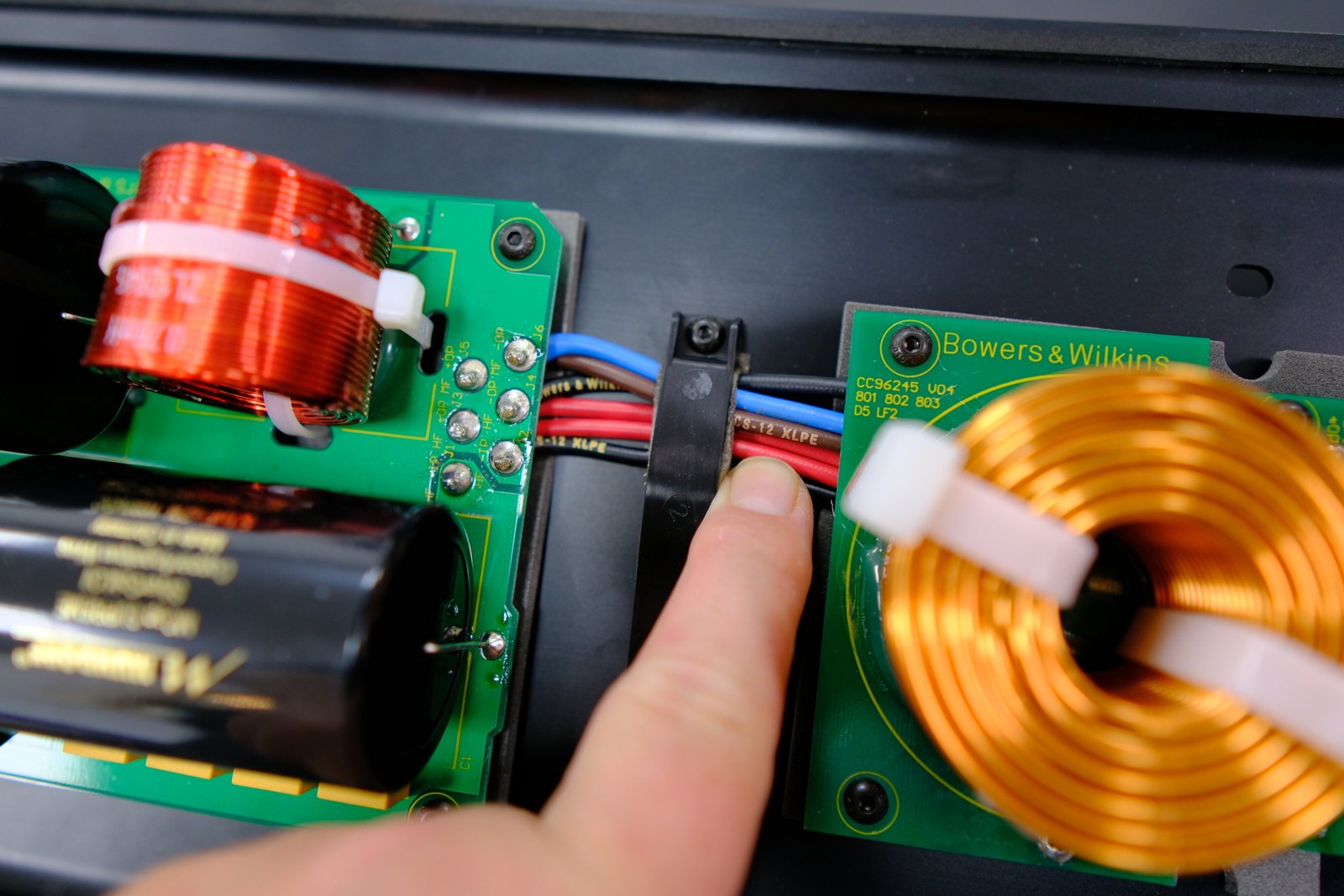
Every model also receives an entirely new internal wiring harness, featuring higher-quality cabling and improved terminal-post links. The cable used for the D5 range is the Van den Hul CS-12 XLPE.
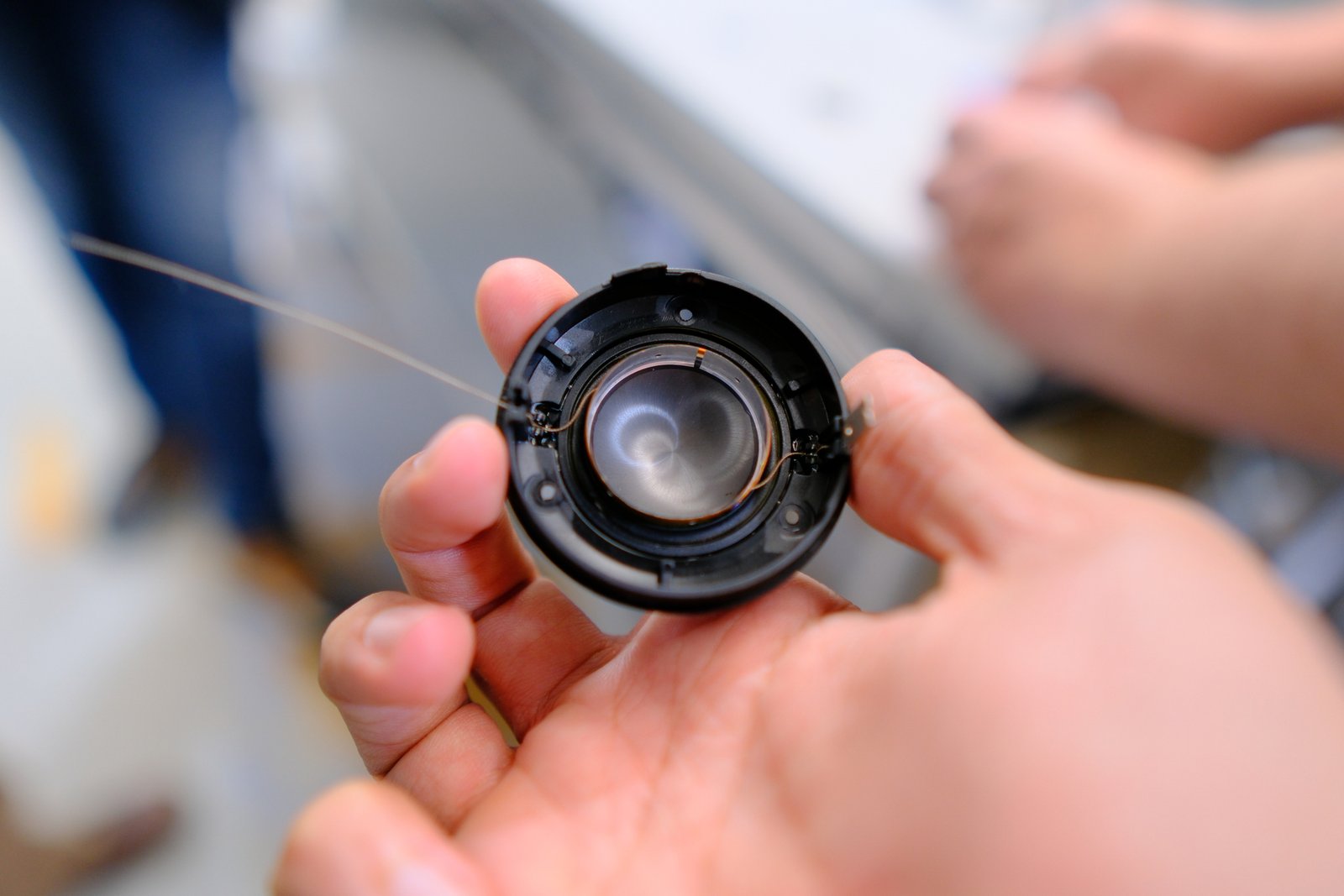
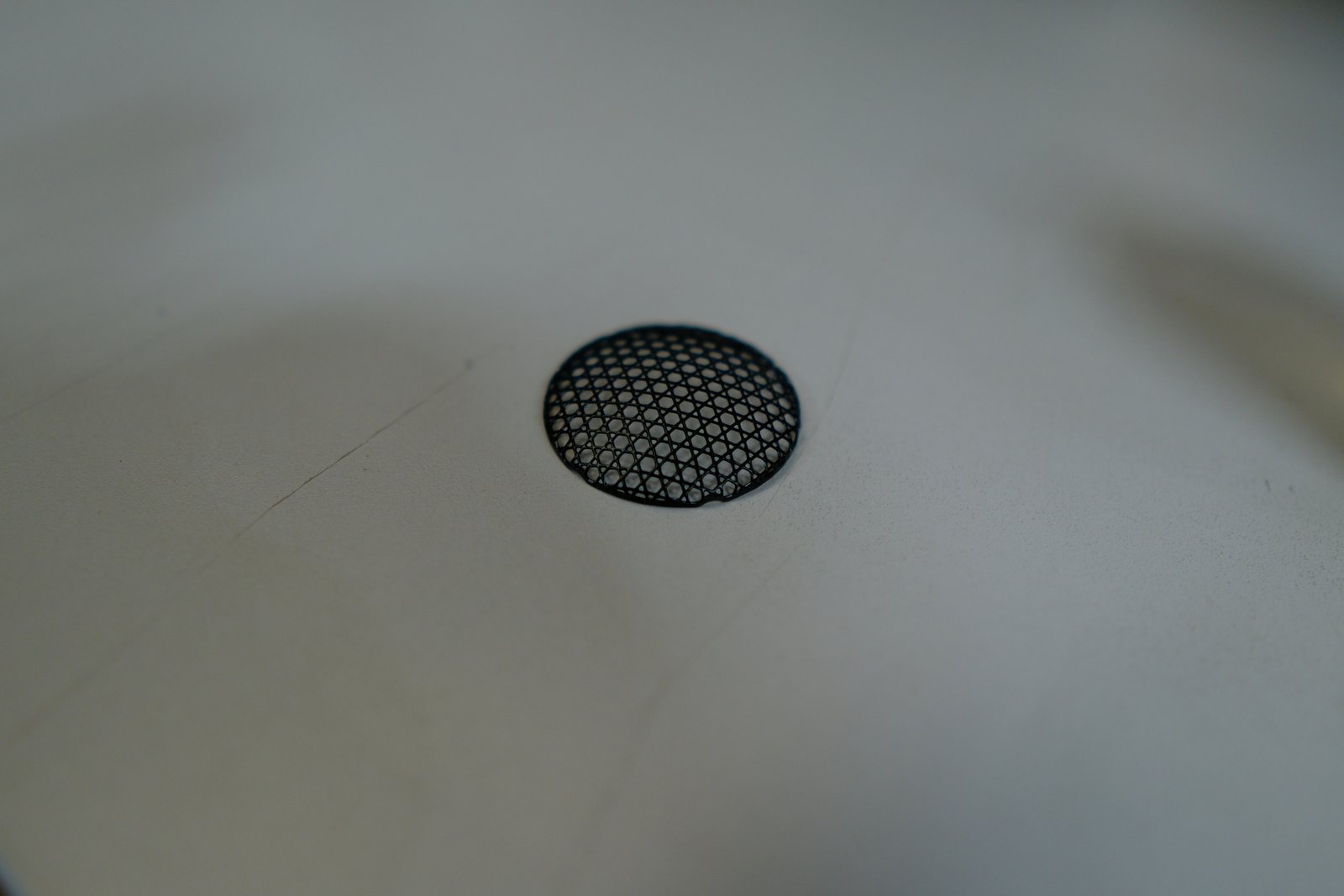
The drive units look familiar from the outside, and Bowers & Wilkins says every one of them now has the upgraded motor systems developed from the Signature models. The Diamond Dome tweeter gains the more open grille first used on the 801 D4 Signature, a fine hexagonal mesh with a lot less metal in front of the dome, which we later saw loose on a bench upstairs. We had two tweeter housings on the table, one silver and one black, and a third one opened along its length, showing the long tapering tube behind the dome.

The D4 mesh compared to the newly designed one for the D5
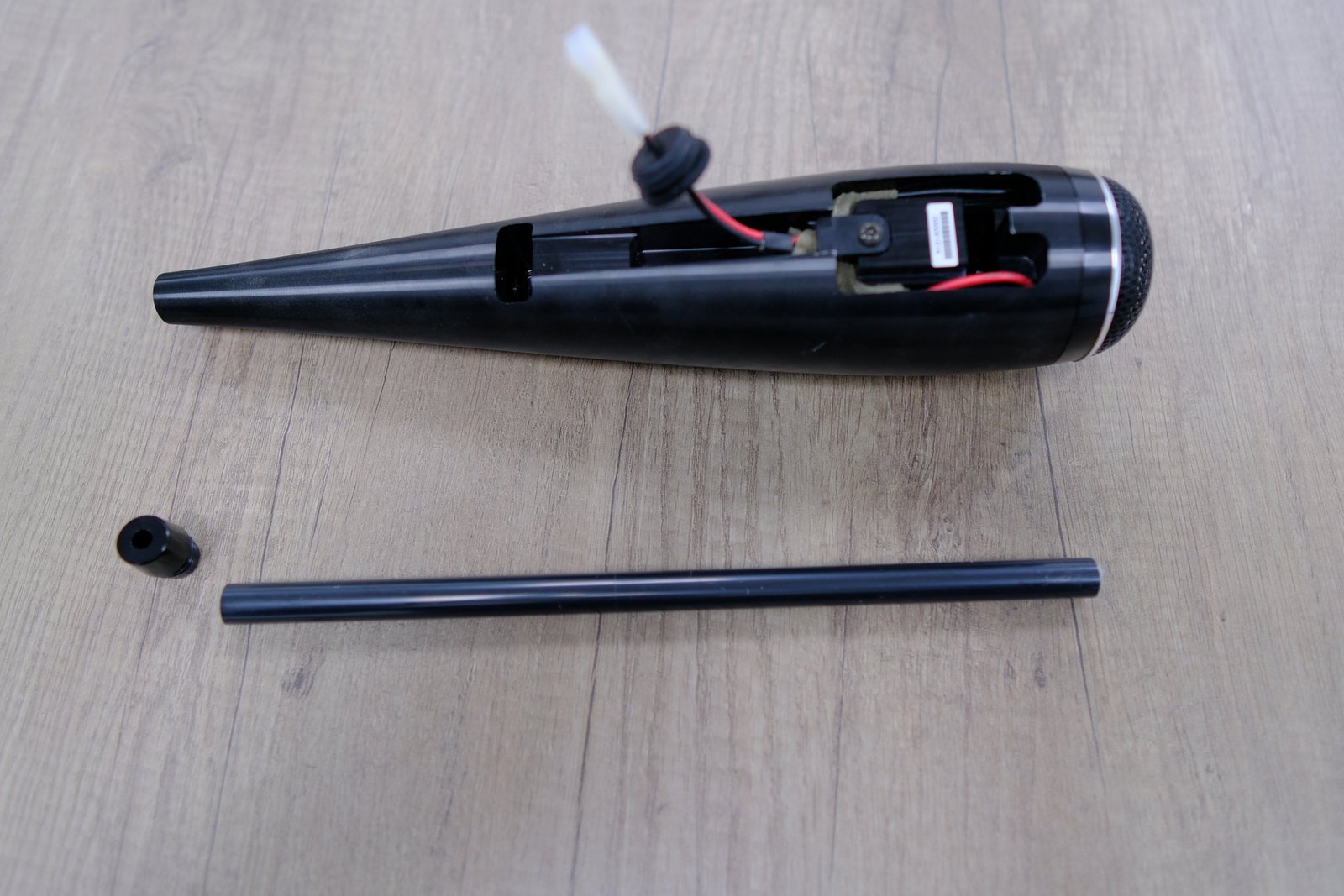
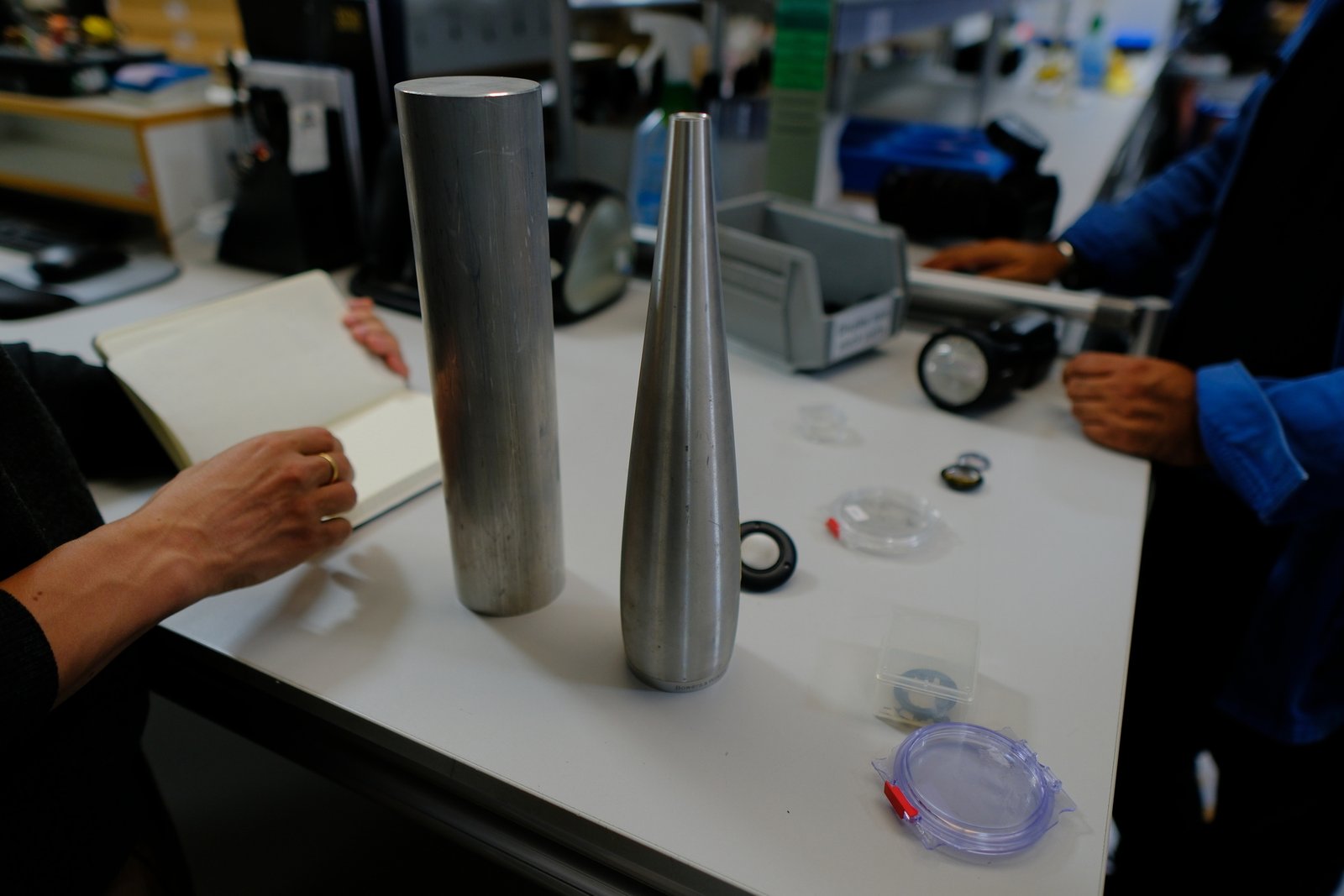
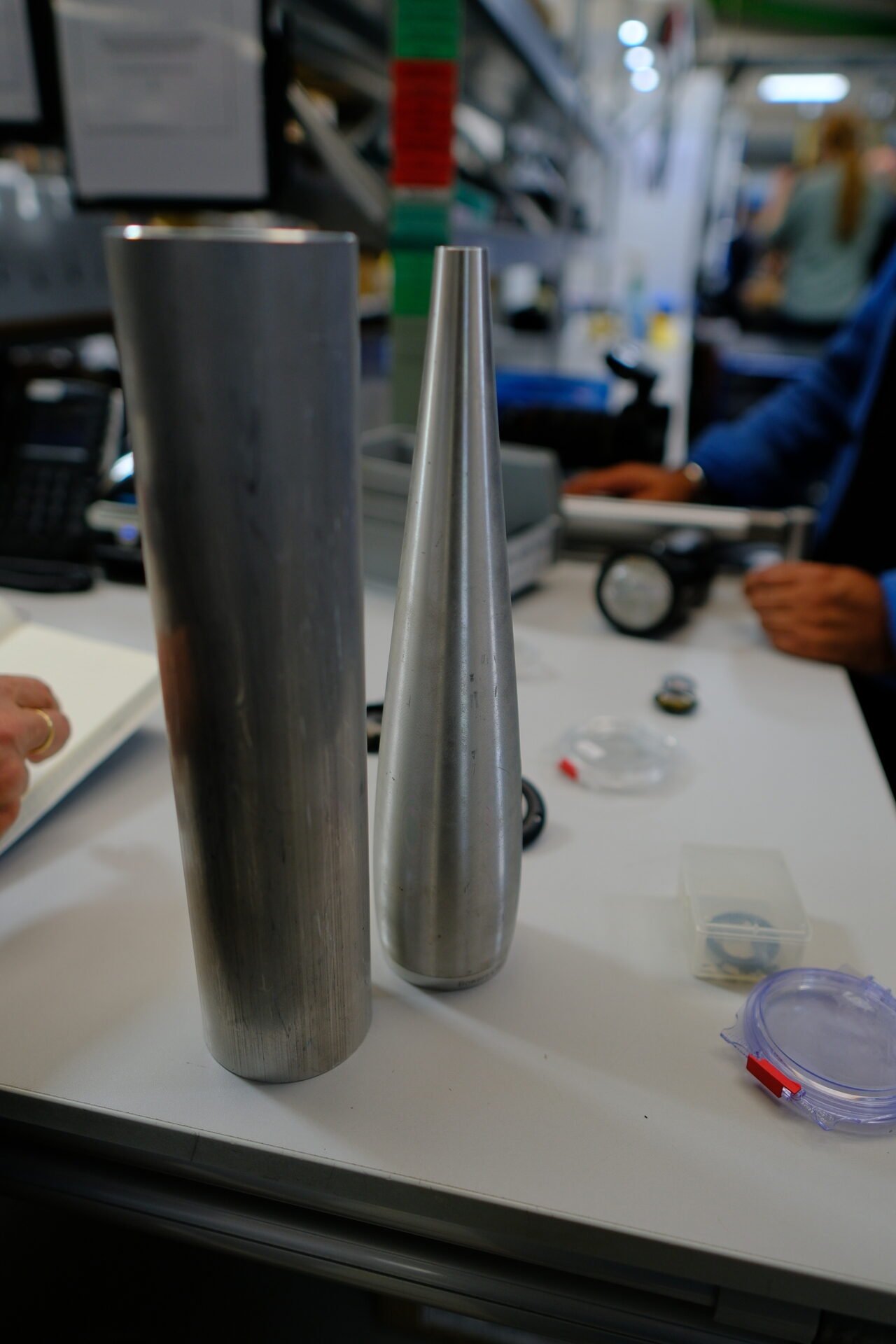
Below we can see the disassembled Tweeter-on-Top assembly. The long, slender component is the actual tapered tube doing all the heavy work of absorbing all the unwanted sound energy radiating backwards from the tweeter diaphragm, reducing internal reflections and allowing the tweeter to operate more cleanly. Next to it is the solid aluminium housing, precision-machined using CNC equipment from a single block of aluminium. This rigid, acoustically inert enclosure provides a stable foundation for the tweeter while helping to minimise unwanted vibrations and resonances.
Much of what is new in the D5 started on the 801 D4 Signature: the top plate design, the damping material in the collar, the tweeter grille and the motor systems of the drive units. The Signature models were a limited and more expensive step above the D4. In the D5, those parts are standard across the range.
What is truly special about the D5 range is the transformation of the 804, the smallest floorstander in the 800 Series. In previous generations, its Continuum midrange driver was mounted directly into the main cabinet, unlike its larger siblings, which benefited from the dedicated Turbine Head. With the 804 D5, Bowers & Wilkins has introduced a dedicated, internally mounted aluminium enclosure for the Continuum midrange, derived from the Turbine Head concept and acoustically isolated from the bass section. This gives the midrange driver a much more controlled environment in which to operate, reducing unwanted interference from the woofers and internal cabinet resonances.
It might look like a relatively small engineering refinement on paper, but its contribution to the listening experience is anything but small. As we’ll discuss later, the improvement in midrange clarity, openness, and separation was substantial, bringing the slender 804 considerably closer to its larger siblings than ever before. Keep it in mind for the listening session.
The D5 comes with a series of new finishes: Stealth Black, Warm White, Light Walnut and Dark Walnut, with the Dark Walnut inspired by the 801 Abbey Road Limited Edition and replacing the Rosewood of the D4. The panel gaps are smaller, and the fixings on the back are hidden, so the rear of the cabinet is a smooth, slightly curved plate.
In Europe, the 801 D5 costs approximately 50,000€.
The Woodshop
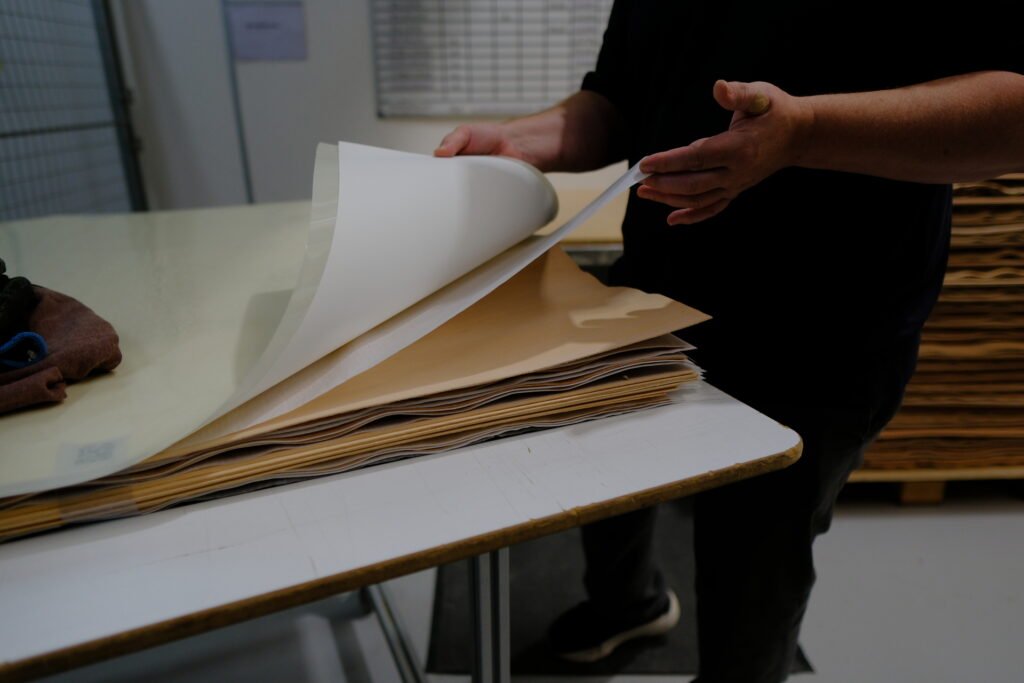
The tour started with the construction of the cabinets. The curved cabinet walls are made from thin birch plies laid at alternating grain directions, with a sheet of dry glue film between each pair, and a face veneer on the outside. We lifted the corner of a stack, so we could see the order: wood, film, wood, film, with the veneer on top.

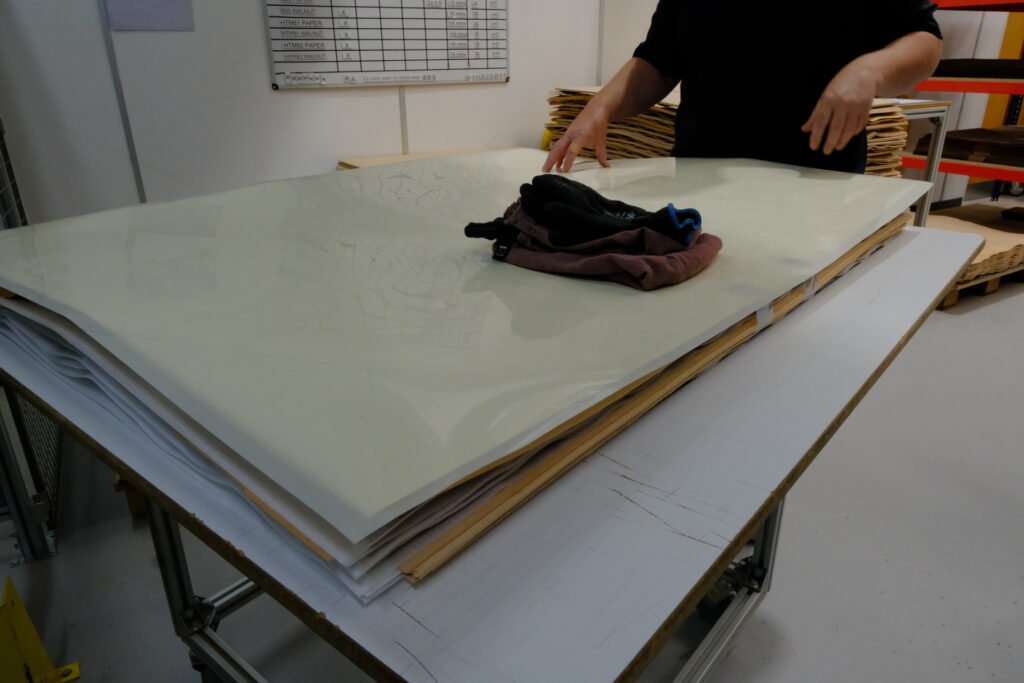



The press itself is a heavy steel frame around an aluminium former shaped like the cross-section of the cabinet, a horseshoe. The stack is wrapped around the former, the press closes from the sides, and heat and pressure turn the layers into one curved, very stiff wall. The force involved ranges from 80 to 120 tonnes, depending on the model.
For the 802 cabinet, the manufacturing recipe we saw specifies a total of 41 sheets, including 20 layers of glue film. This is an important distinction that says the cabinet is made out of a carefully engineered combination of wood, adhesive, and other specialised layers.
Once the entire stack has been assembled in the prescribed order, it is transferred to an enormous industrial forming press. This is where things become particularly interesting.
The flat laminate is positioned over a heavy, cabinet-shaped metal mould. As the press closes, its tooling progressively forces the flexible stack to follow the curved geometry of the mould, transforming it from a flat assembly into the familiar rounded Reverse Wrap cabinet.
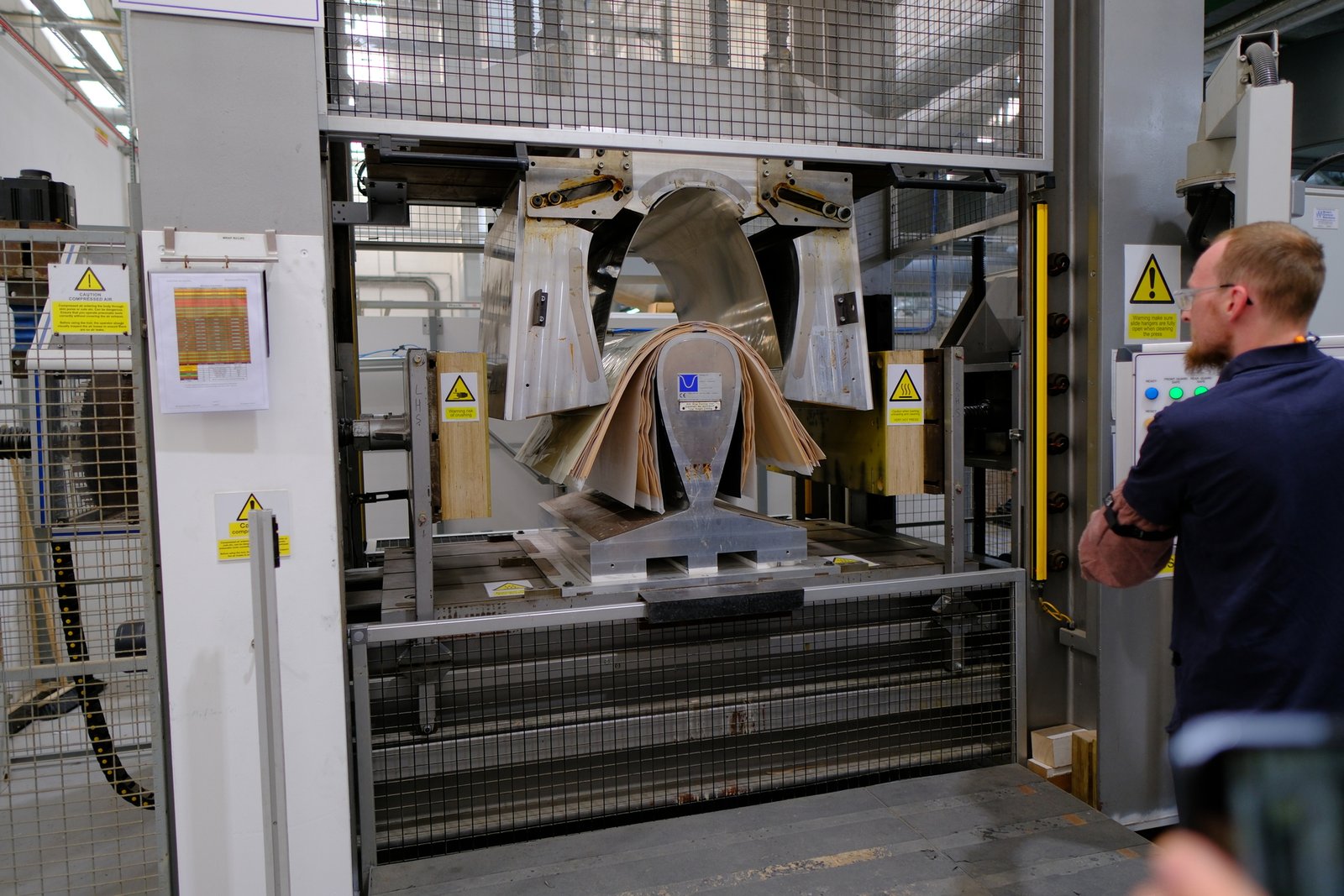
The combination of heat and pressure is essential. The pressure forces the individual plies into intimate contact with one another, following the mould’s curvature, while the heat activates the adhesive system. The layers are held in position as the adhesive bonds them together, transforming what began as a flexible collection of separate sheets into a single, rigid laminated structure.
The plywood is effectively being manufactured and formed into its final three-dimensional geometry in the same operation.
The pressing cycle must be carefully controlled. Insufficient heat or time could compromise adhesive bonding, while incorrect pressure distribution could produce gaps, poor consolidation, or dimensional inaccuracies. The substantial curvature of the cabinet also means that different parts of the laminate experience different bending stresses during forming. The outer layers follow a longer path around the curve than the inner ones, making the sequence, grain orientation, and flexibility of the individual sheets especially important.
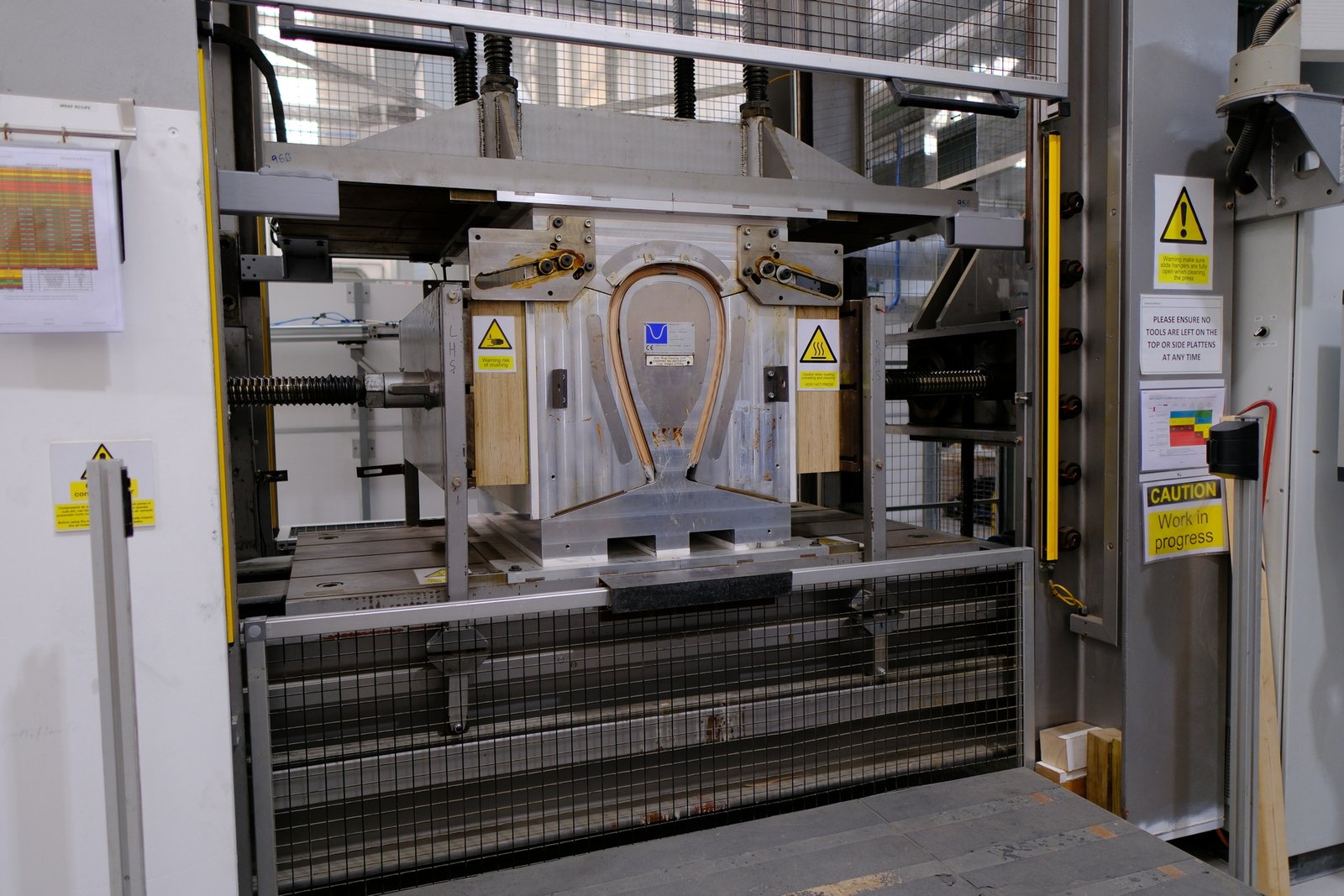
The production document beside the press specified a temperature of 125 to 130 °C, a CAL temperature of 135 to 155 °C, and a pressing time of 26 minutes, with a tolerance of two minutes. Interestingly, it also allowed adjustments according to the ambient temperature in the woodwork department. Even in such a highly controlled manufacturing process, the surrounding environment still matters. Wood is a natural, moisture-sensitive material, and its behaviour during forming can be influenced by environmental conditions. The process therefore combines tightly specified parameters with the practical experience needed to work with a material that is never quite as predictable as aluminium or steel.
After pressing, the newly formed shell is still hot and must be handled carefully. It is removed from the tooling and allowed to cool while its geometry is maintained. All the newly formed shells must undergo a gradual cooling period before moving on to the next manufacturing stage.
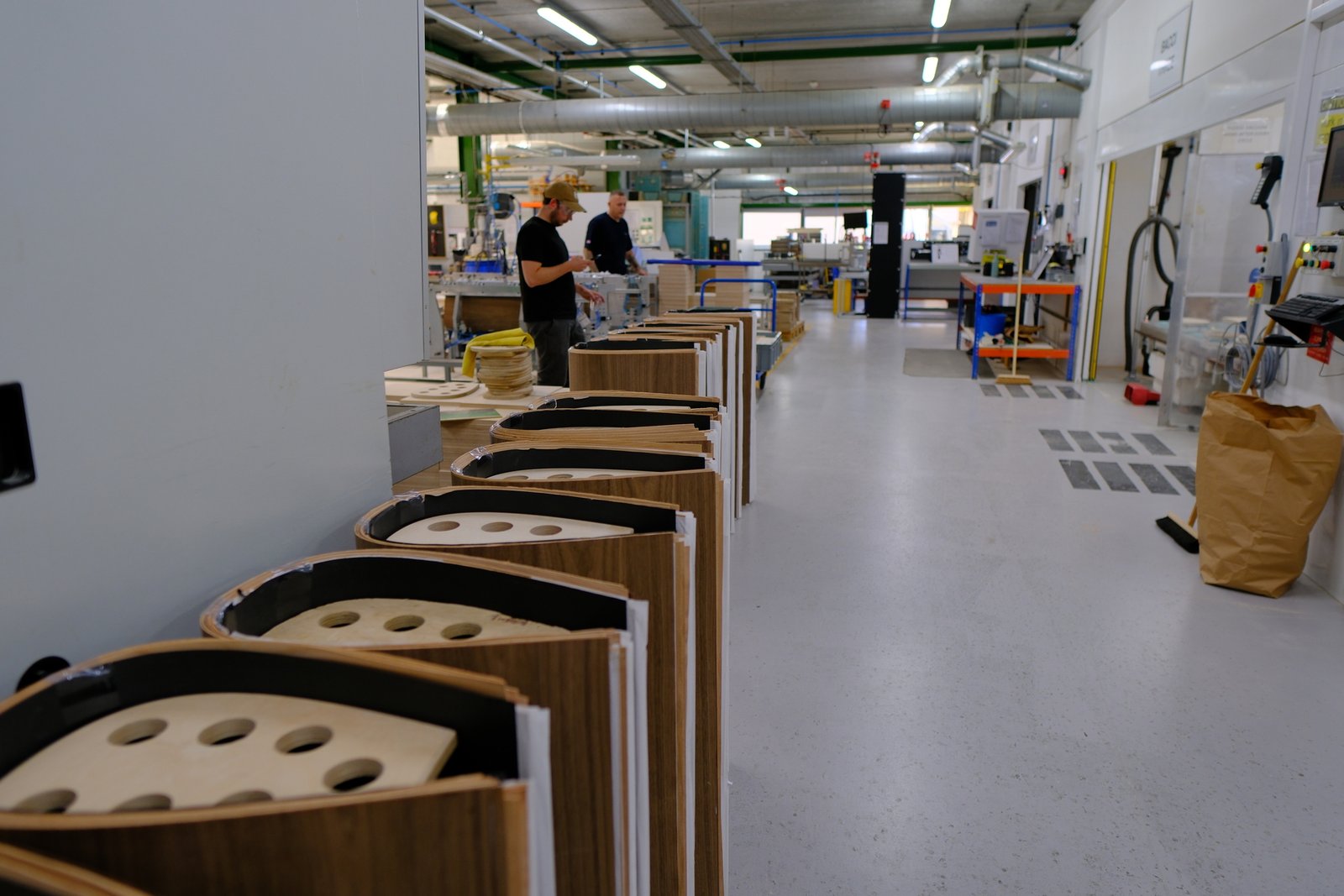
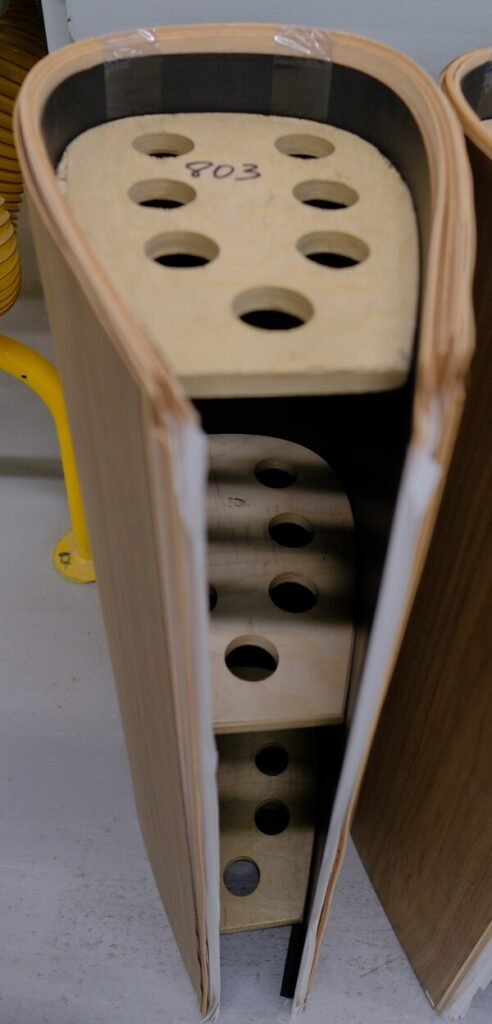
Rather than forcing the temperature down through artificial cooling, Bowers & Wilkins allows the cabinets to cool naturally on the factory floor, gradually reaching the surrounding ambient temperature.
This is more important than it might initially seem. Wood is a natural material, and the thick, multilayered structure of these cabinets responds to temperature changes differently from a solid piece of metal. Rapid cooling could create uneven temperature gradients between the outer and inner layers, generating internal stresses as the material contracts. In a curved laminated structure, these stresses could potentially lead to warping, microscopic cracks, or even separation between the bonded layers.
Allowing the cabinets to cool slowly helps minimise these risks, giving the laminated structure time to stabilise while retaining the precise curvature imposed by the press. It is another example of how manufacturing a high-end loudspeaker involves much more than sophisticated machinery and impressive engineering. Sometimes, the best approach is simply to give the material the time it needs.
After cooling, the pressed shells go to the CNC machines, called “BACCI” units in enclosed cells, where the edges are trimmed of excess material, the final geometry is defined, and the necessary openings and mounting features are created. Each cell has blue fixtures for two curved shells side by side, so one pair of cabinets is machined together.
Internal Matrix bracing and aluminium reinforcement structures are then installed to increase rigidity further.
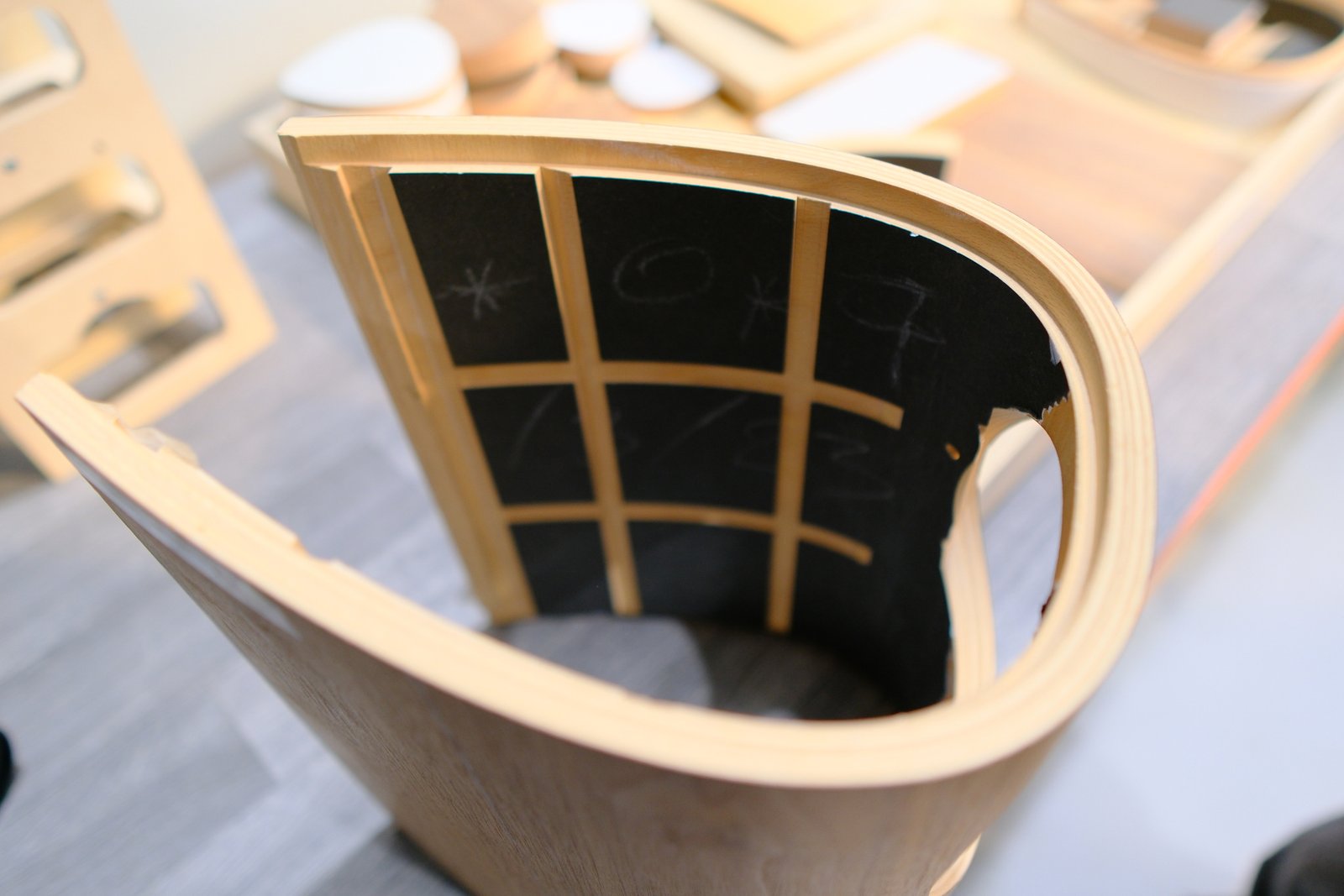
Below, we have a closer look at the unfinished cabinet shell of the 805 D5, revealing what normally remains hidden beneath its beautiful exterior. The thick, curved walls are formed from multiple layers of laminated wood, clearly visible along the exposed upper edges. This is the result of the pressing process we described earlier, where thin wooden sheets are bonded together under heat and pressure to create the familiar Reverse Wrap shape.
Inside the curved shell, we can clearly see the precisely machined slots that will accommodate Bowers & Wilkins’ famous Matrix bracing system. These slots allow the interlocking internal panels to fit together in a rigid, three-dimensional structure, effectively creating a maze of interconnected compartments inside the cabinet. Once assembled, the Matrix reinforces the curved shell, increasing its stiffness and reducing unwanted cabinet vibrations. It’s a fascinating glimpse into the engineering normally hidden inside the finished 805 D5.
The large circular opening on the right is where the bass/midrange driver will eventually be mounted. It’s fascinating to see how much structural engineering goes into even the smallest model in the 800 Series. What appears from the outside to be a relatively simple, elegant wooden enclosure is actually a carefully engineered structure designed to remain as acoustically quiet as possible.
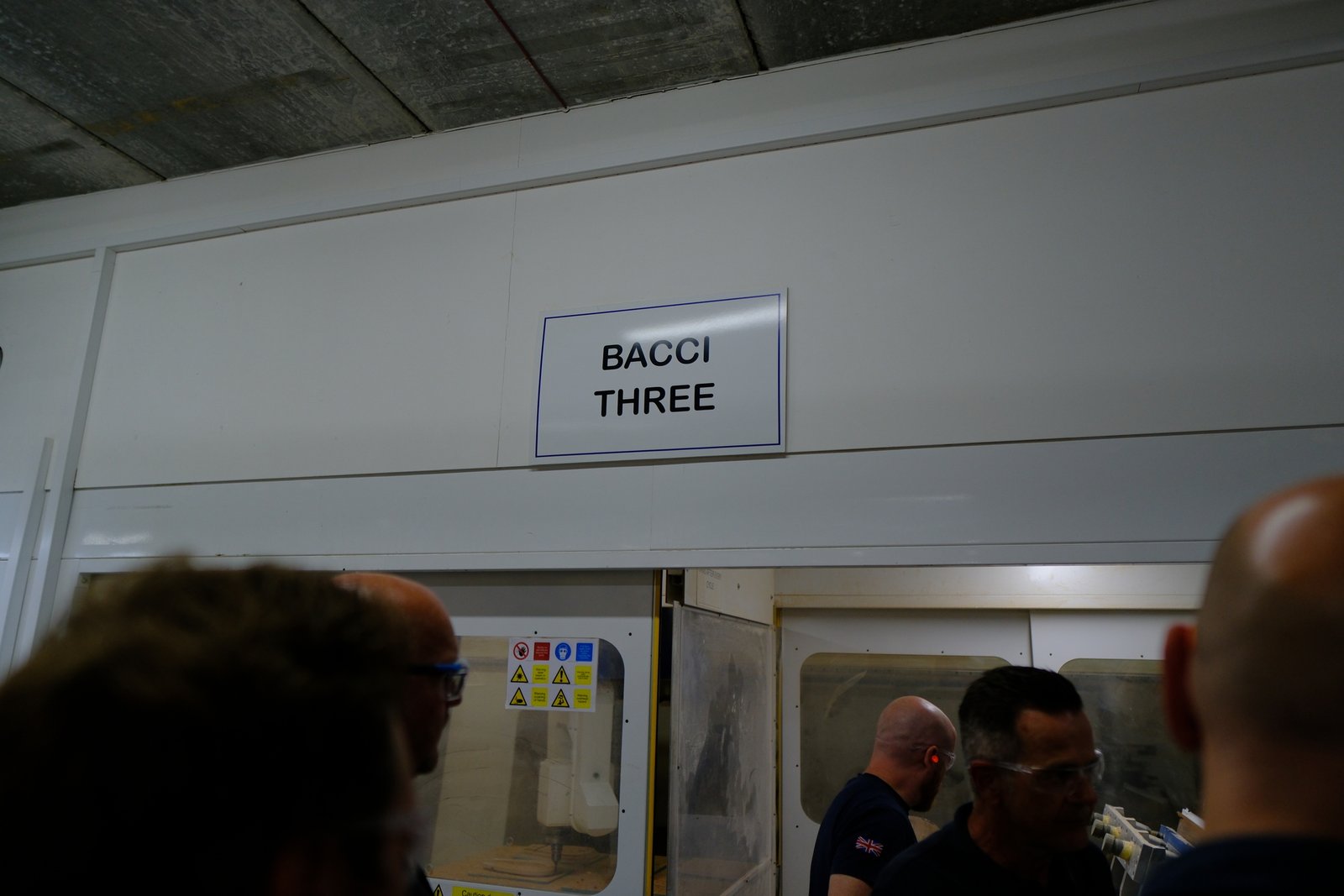
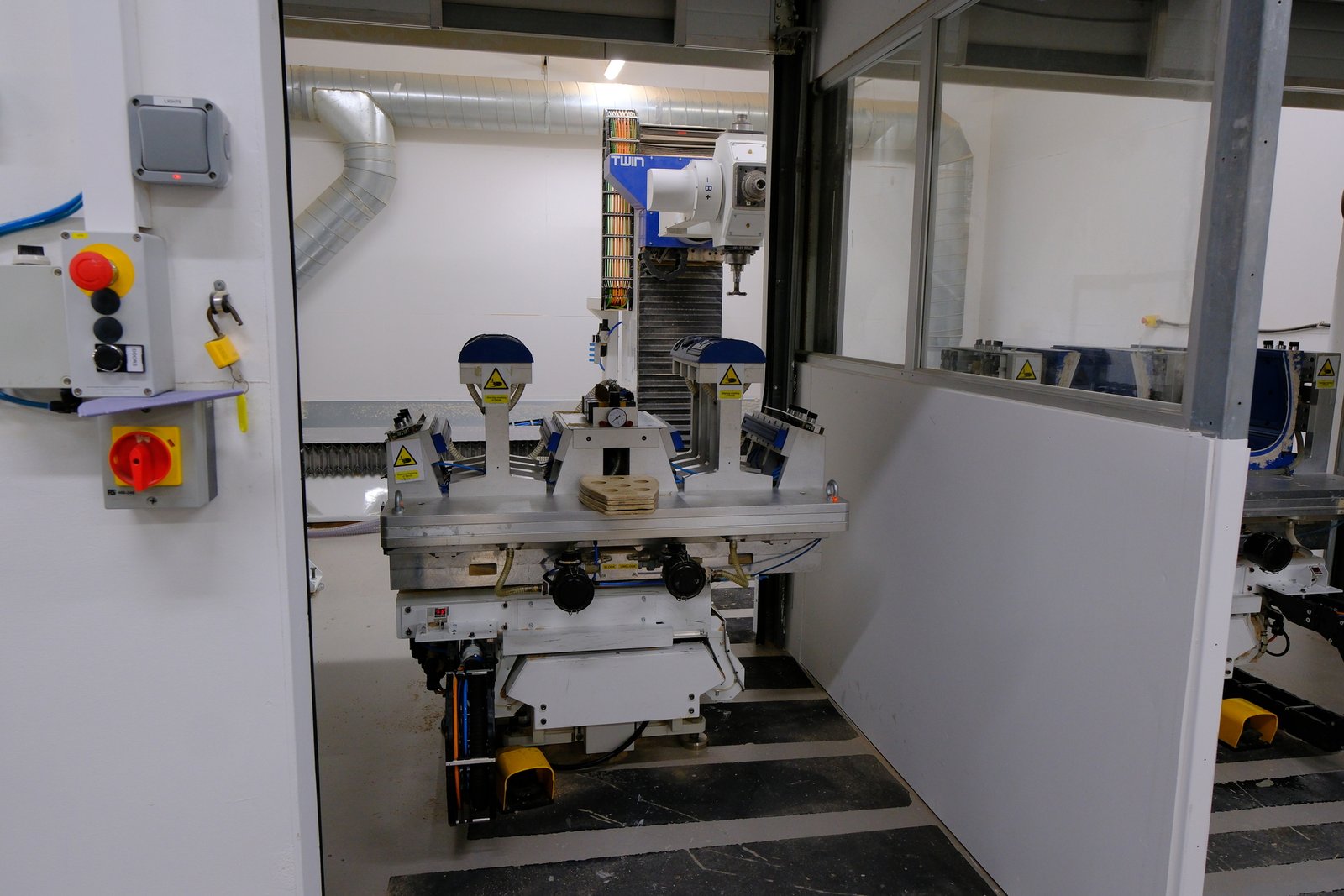
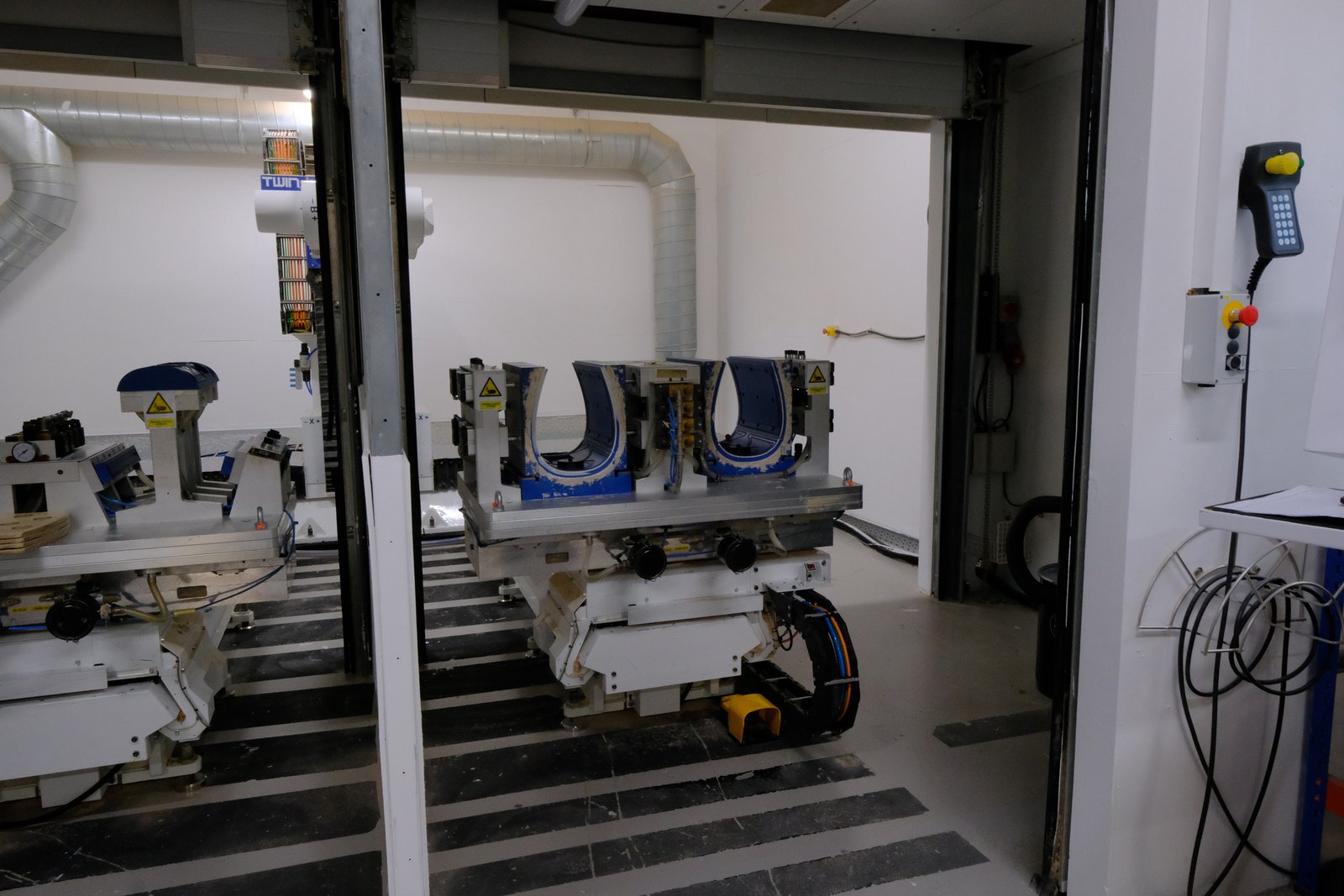
BACCI units
Next to the CNC area, there is a booth that surprised us with its presence, especially in a loudspeaker factory, with a sign reading Matta, Bowers & Wilkins, 805 Wrap Measurement Station. This is a British industrial AI company born out of research at the University of Cambridge’s Institute for Manufacturing. But they do not use any ordinary quality-control equipment. We’re talking about sophisticated machine-vision systems capable of measuring components with micrometre-level precision in seconds, identifying microscopic defects, monitoring production consistency, and detecting deviations before they become expensive manufacturing problems. In certain applications, Matta’s technology has demonstrated defect-detection accuracy exceeding 99%, even with remarkably little training data.
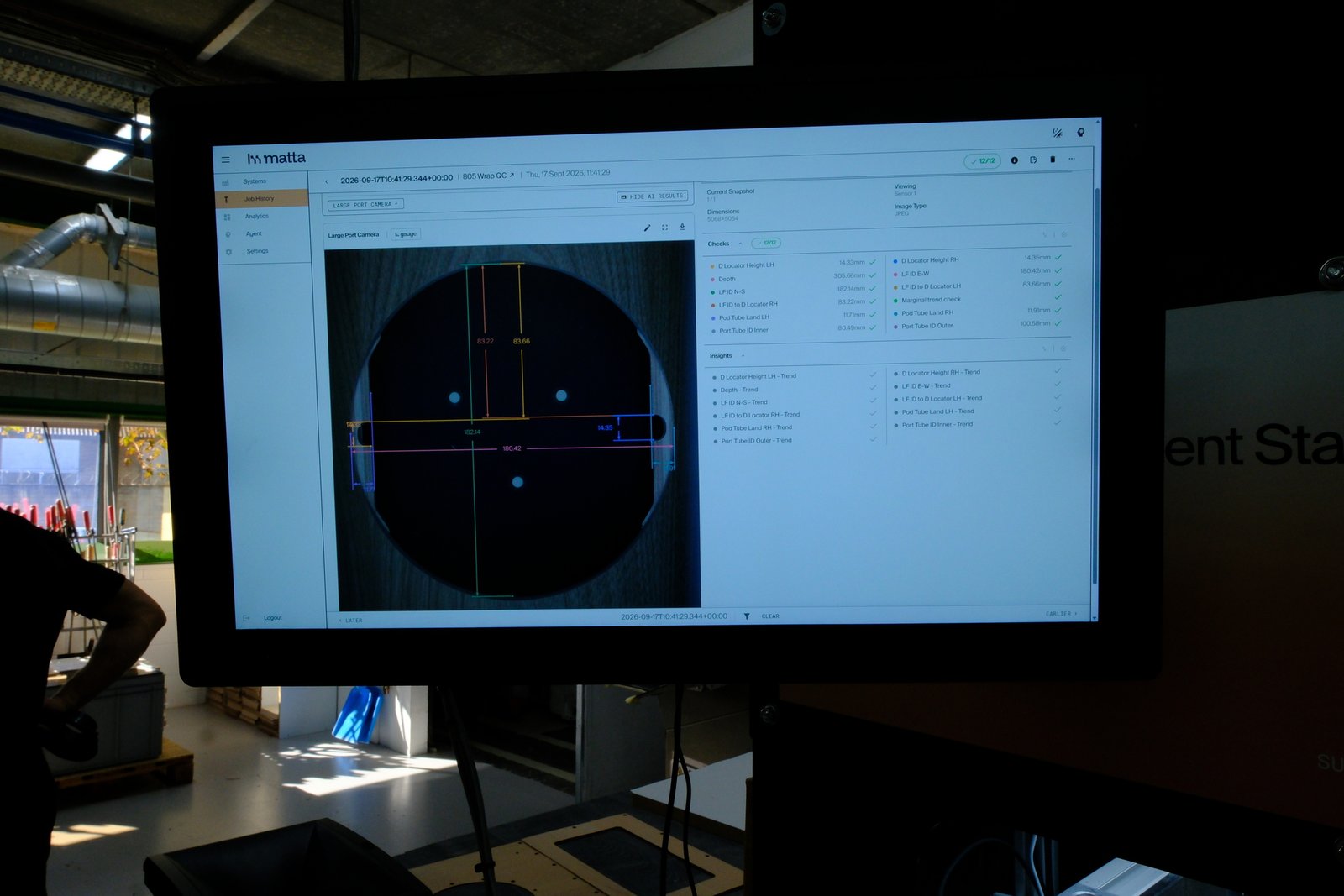
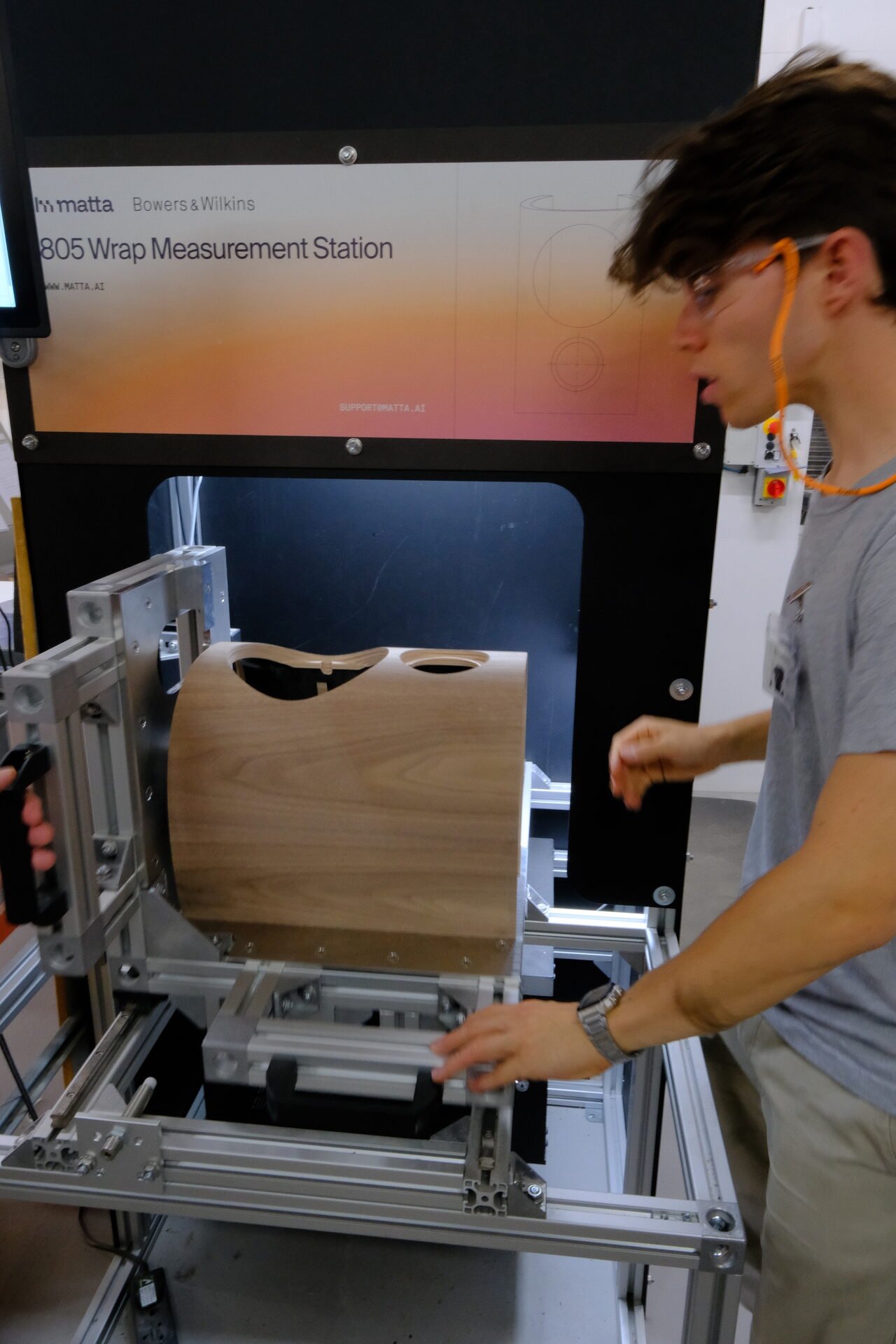
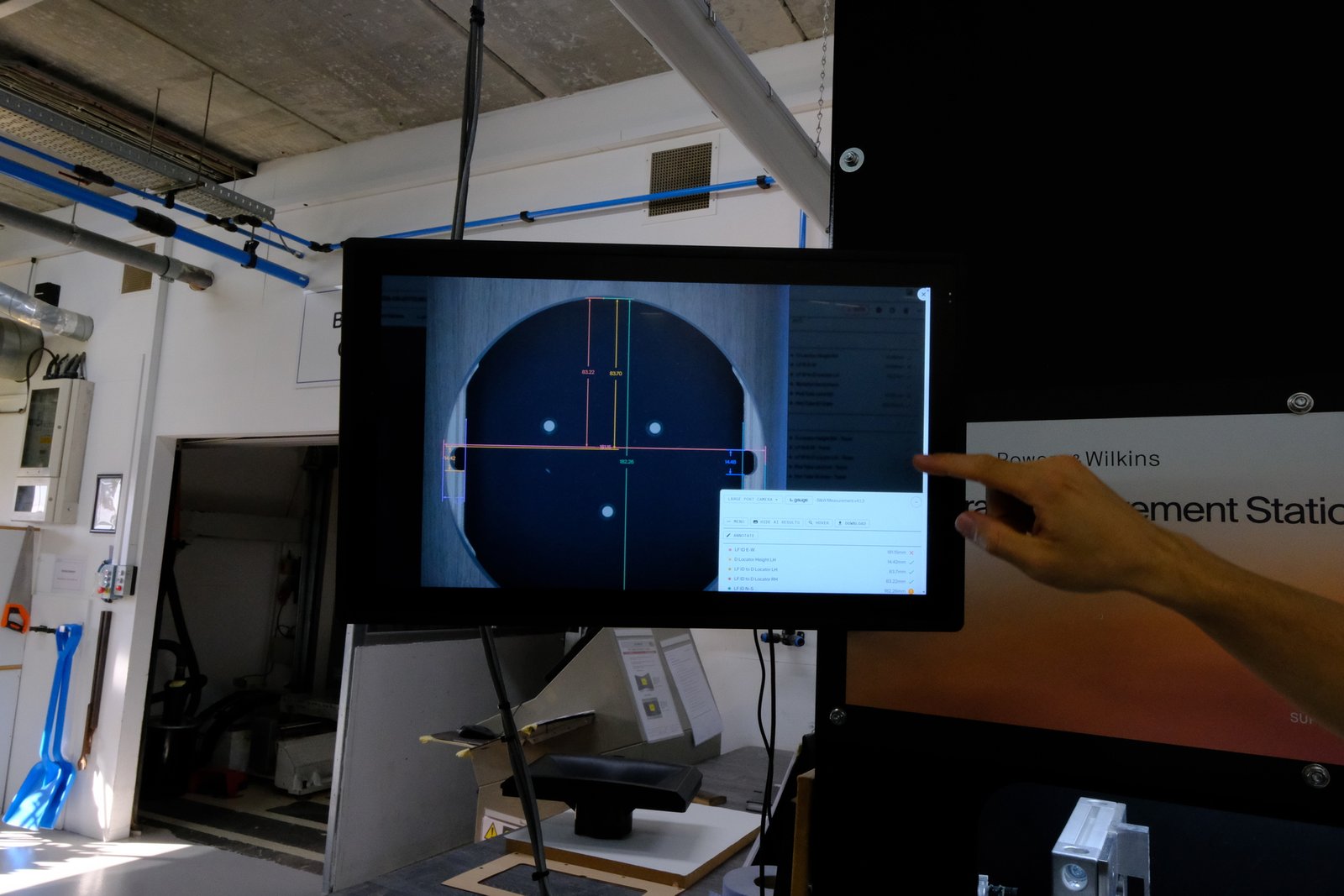
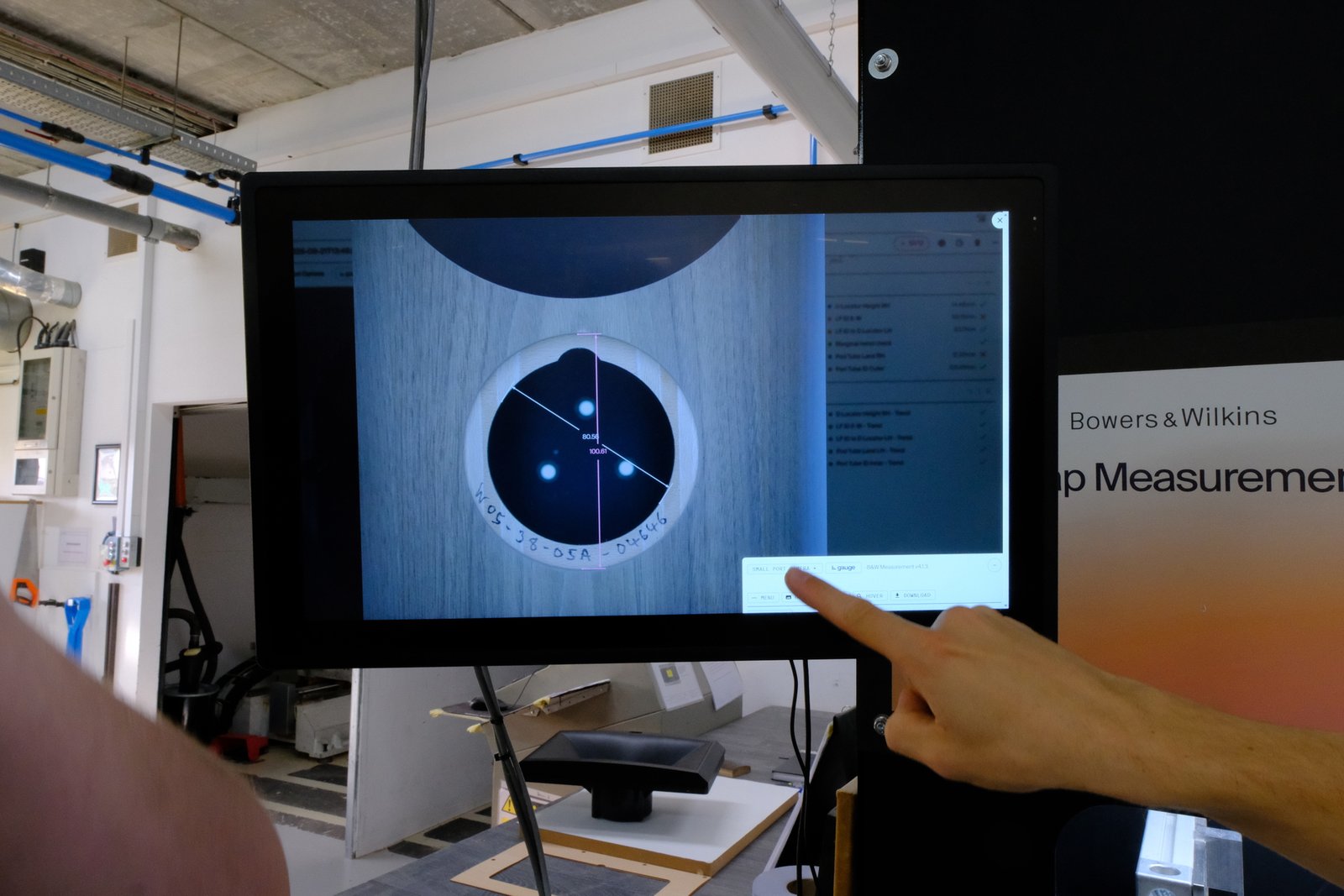
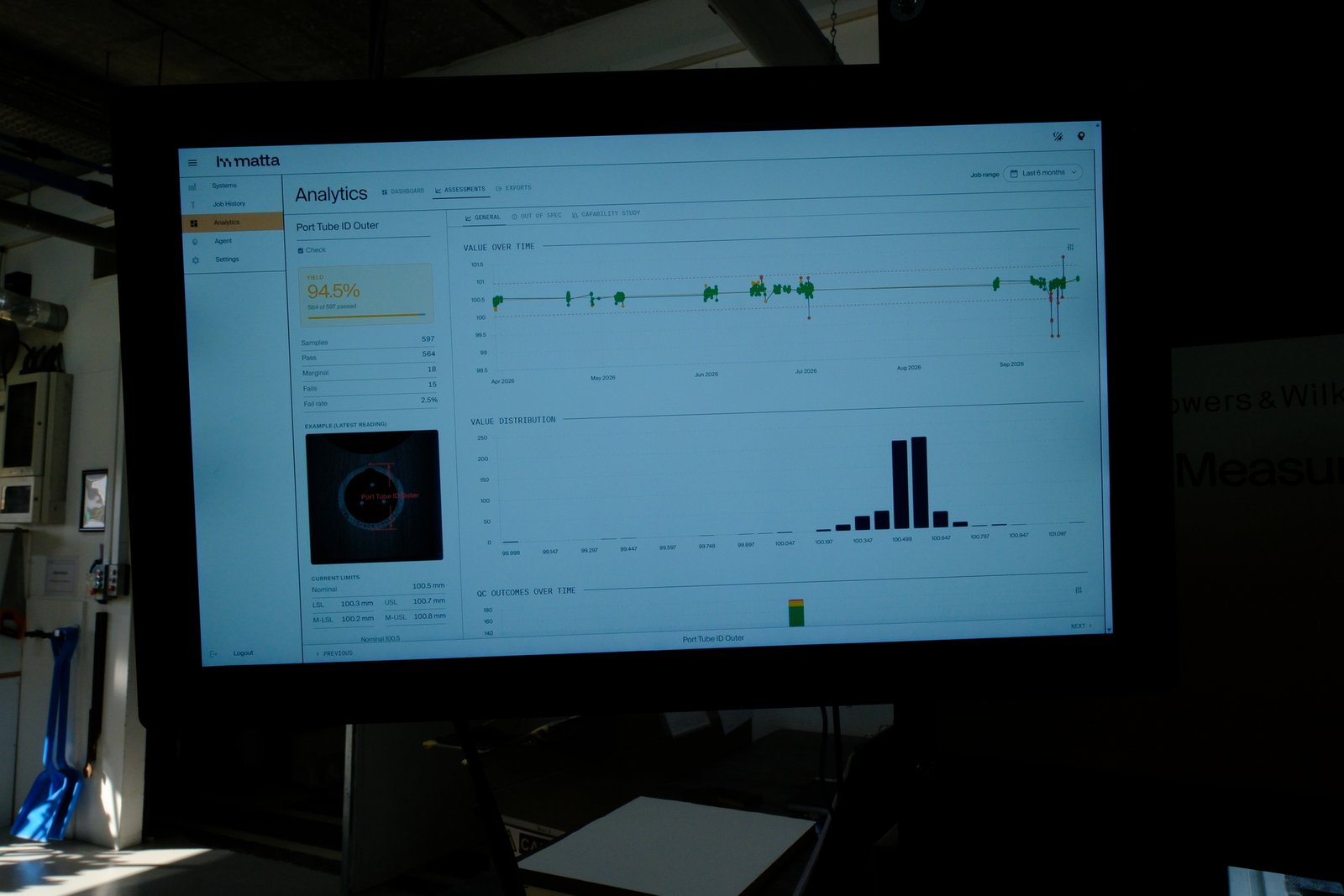
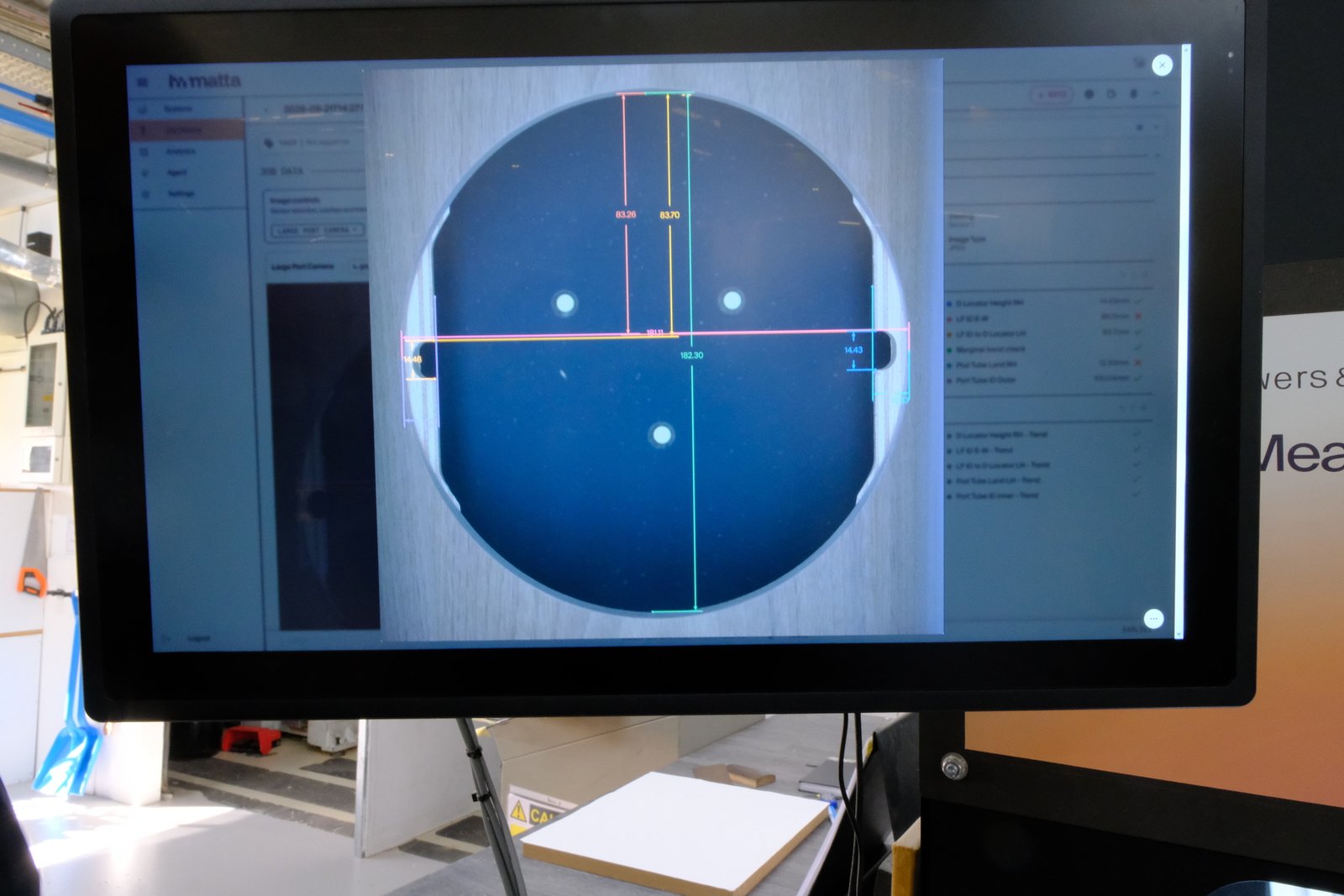
What makes this particularly impressive is the calibre of the industries for which this technology is relevant. We’re talking about the kind of advanced inspection and measurement capabilities associated with aerospace engineering, defence, automotive manufacturing, and even medical devices. In some of these industries, manufacturing precision is not simply about producing a better product, but can be a matter of safety, reliability, and, in the most critical applications, help save human lives.
And yet, here we were, standing inside a loudspeaker factory, looking at technology developed for precisely this level of manufacturing scrutiny.
The software also provides detailed statistics for each production batch, including failure rates, the percentage of components outside specified tolerances, and recurring errors. This allows engineers to identify manufacturing inconsistencies and potential problems before they affect an entire production run.
The measurement takes seconds. Measuring by hand used to take about ten minutes, even for a cabinet as small as the 805. It’s fascinating to see artificial intelligence moving beyond simple automation and becoming a valuable tool for quality control, process optimisation, and engineering decision-making, even in an industry as specialised as high-end audio.
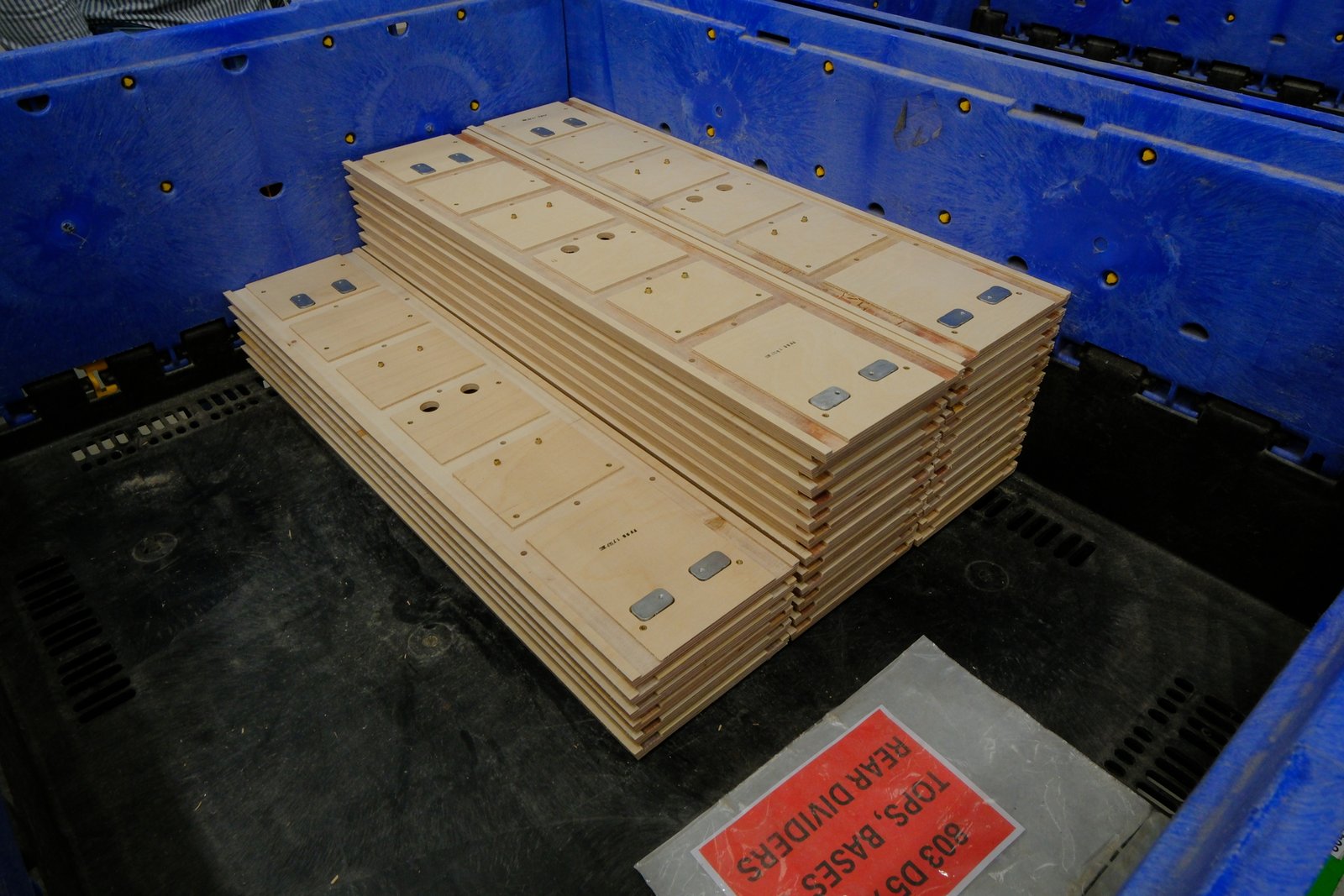
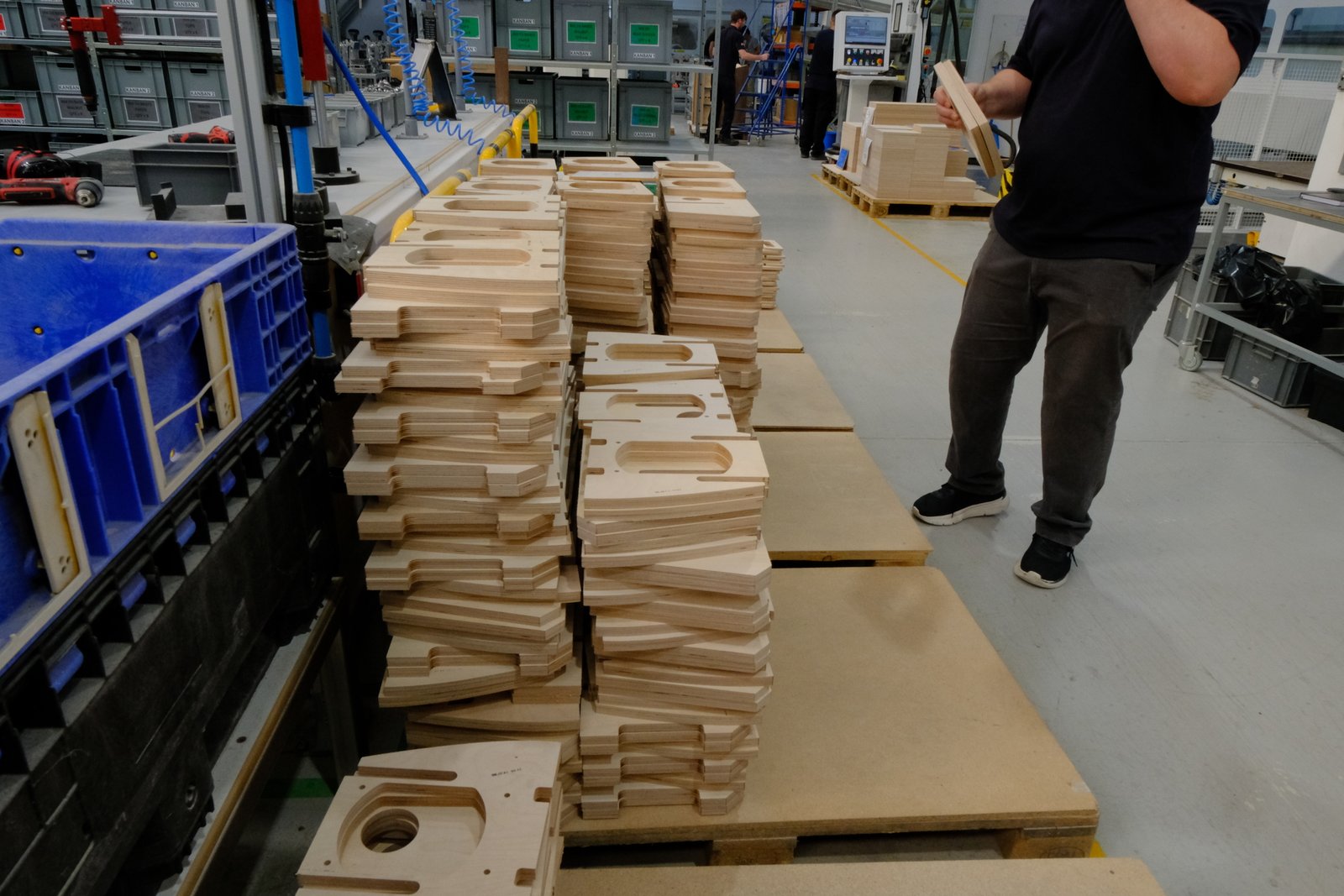
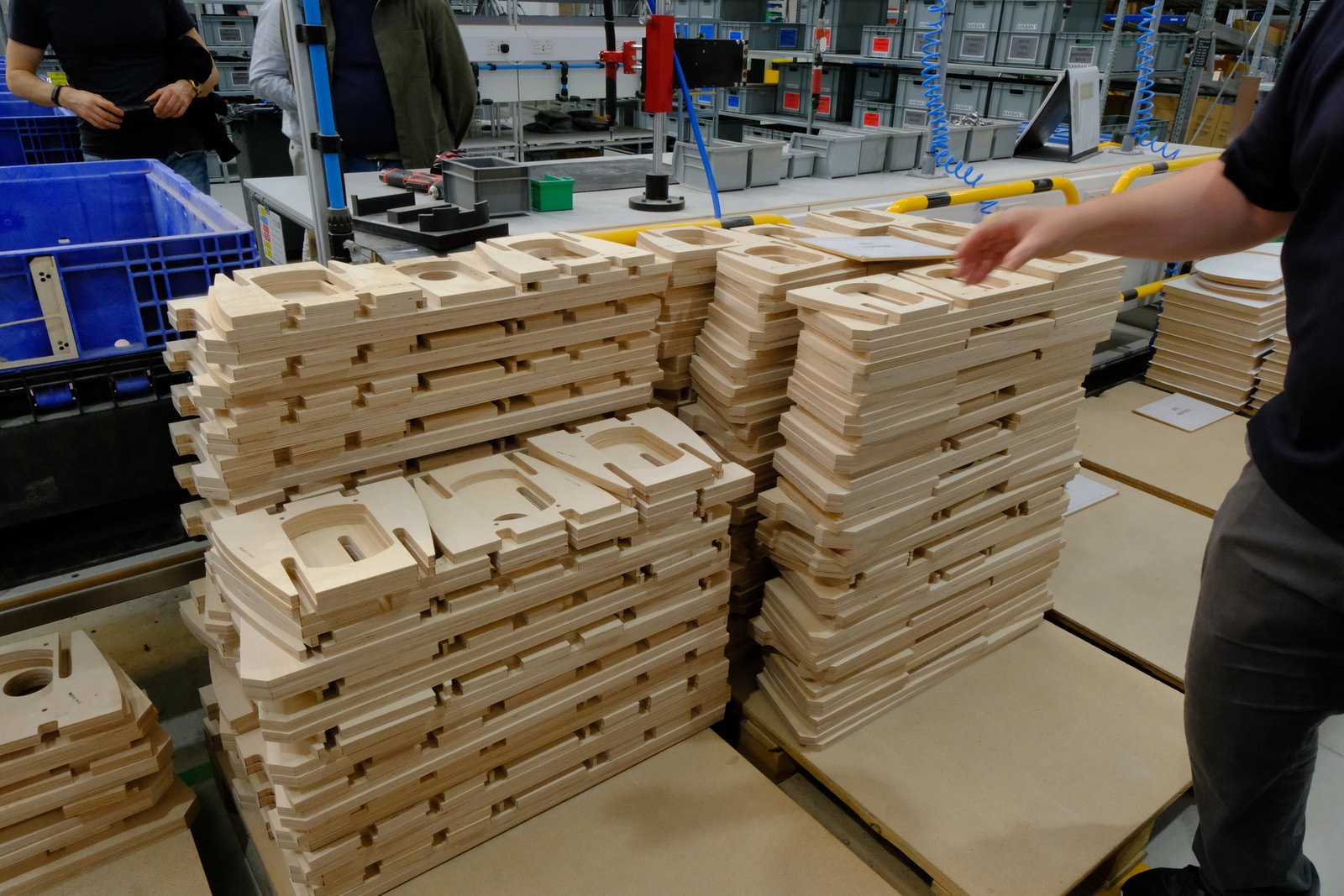
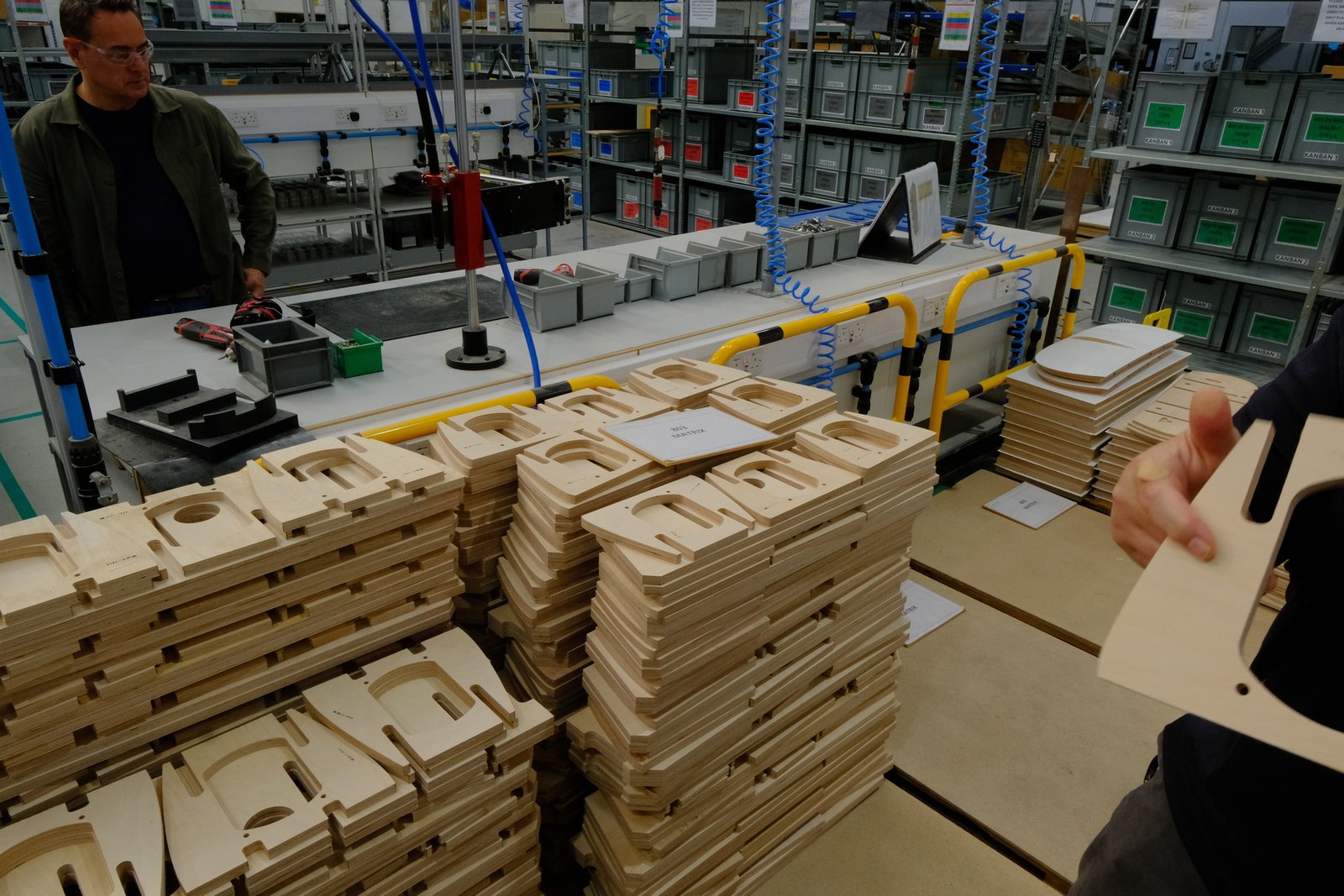
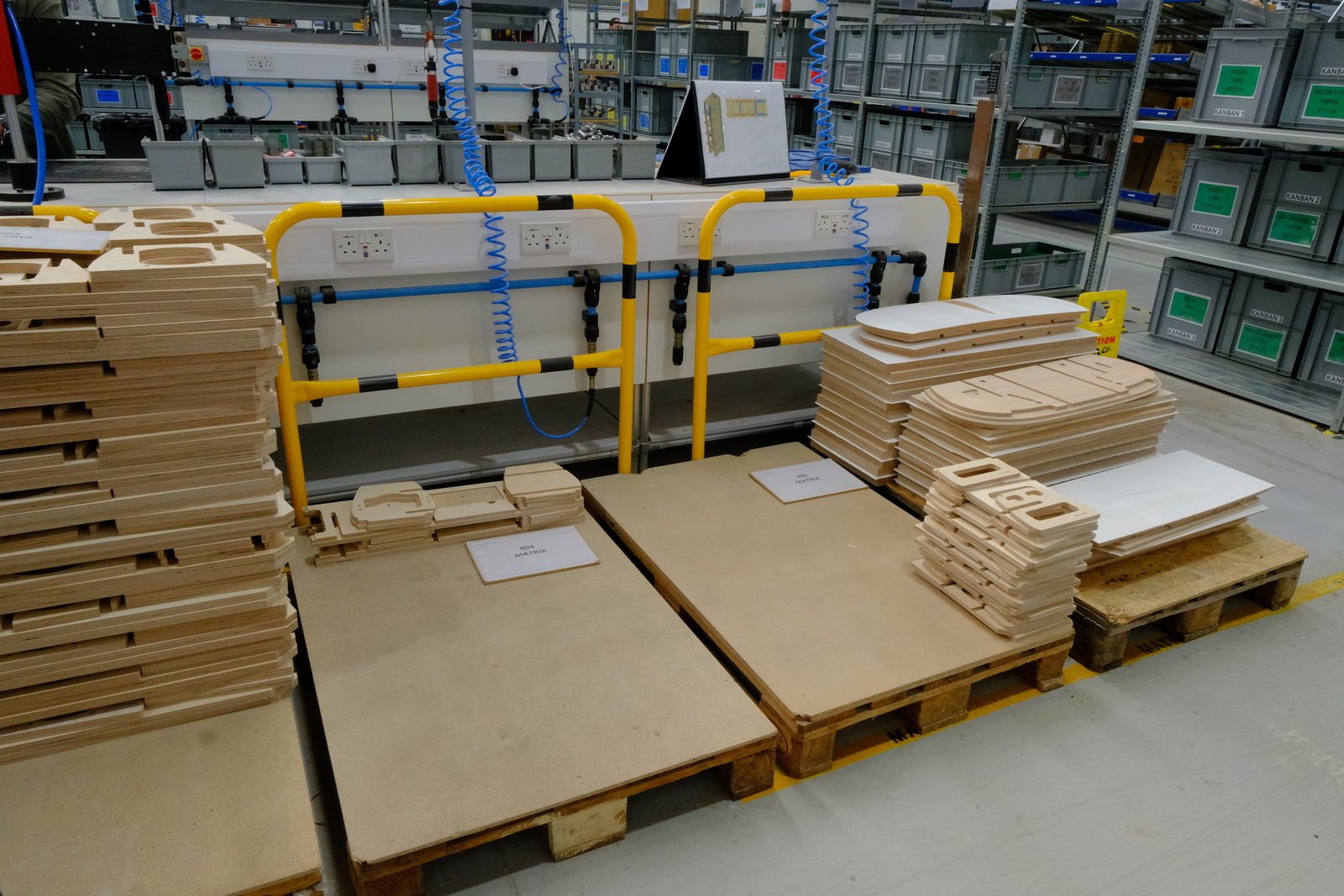
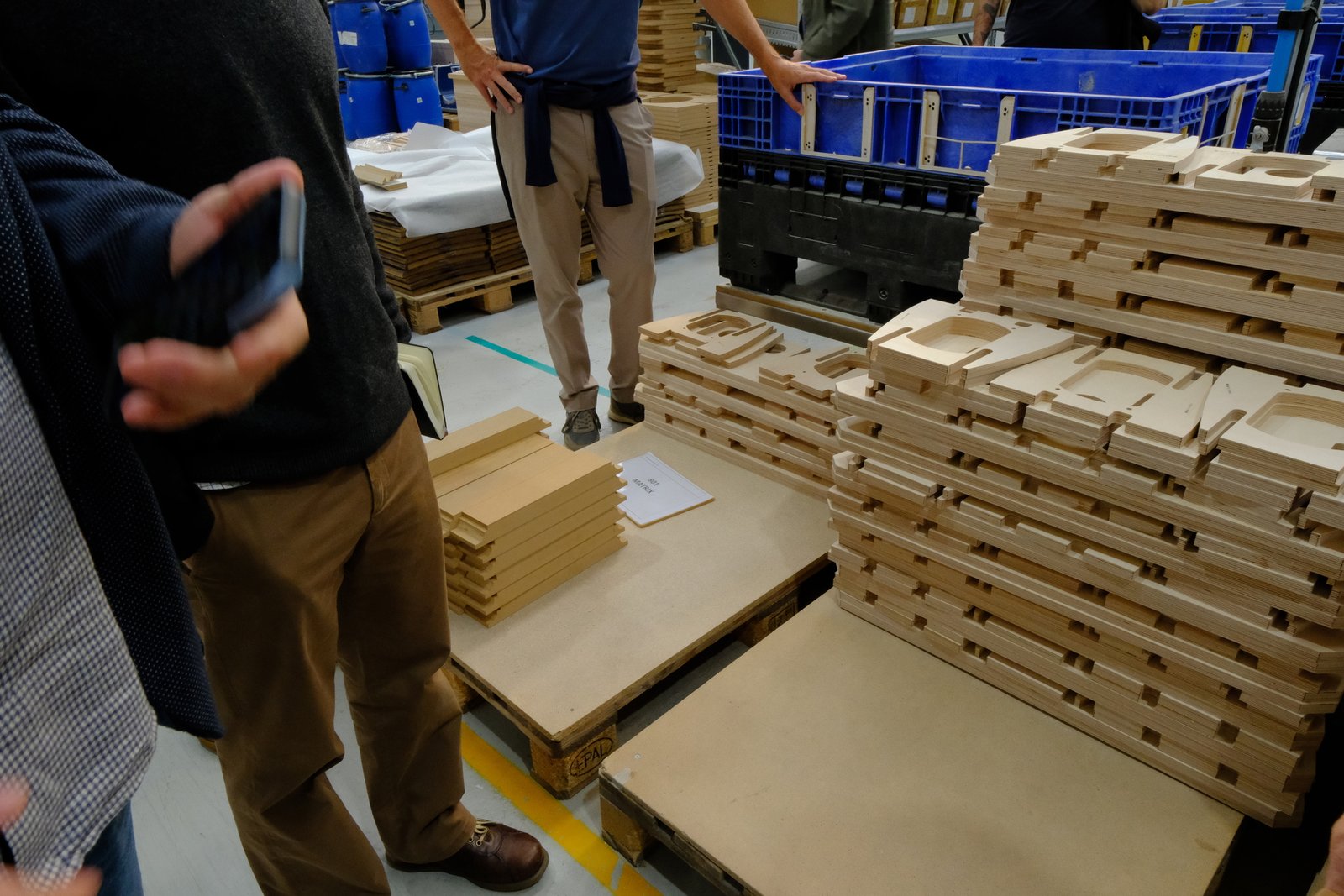
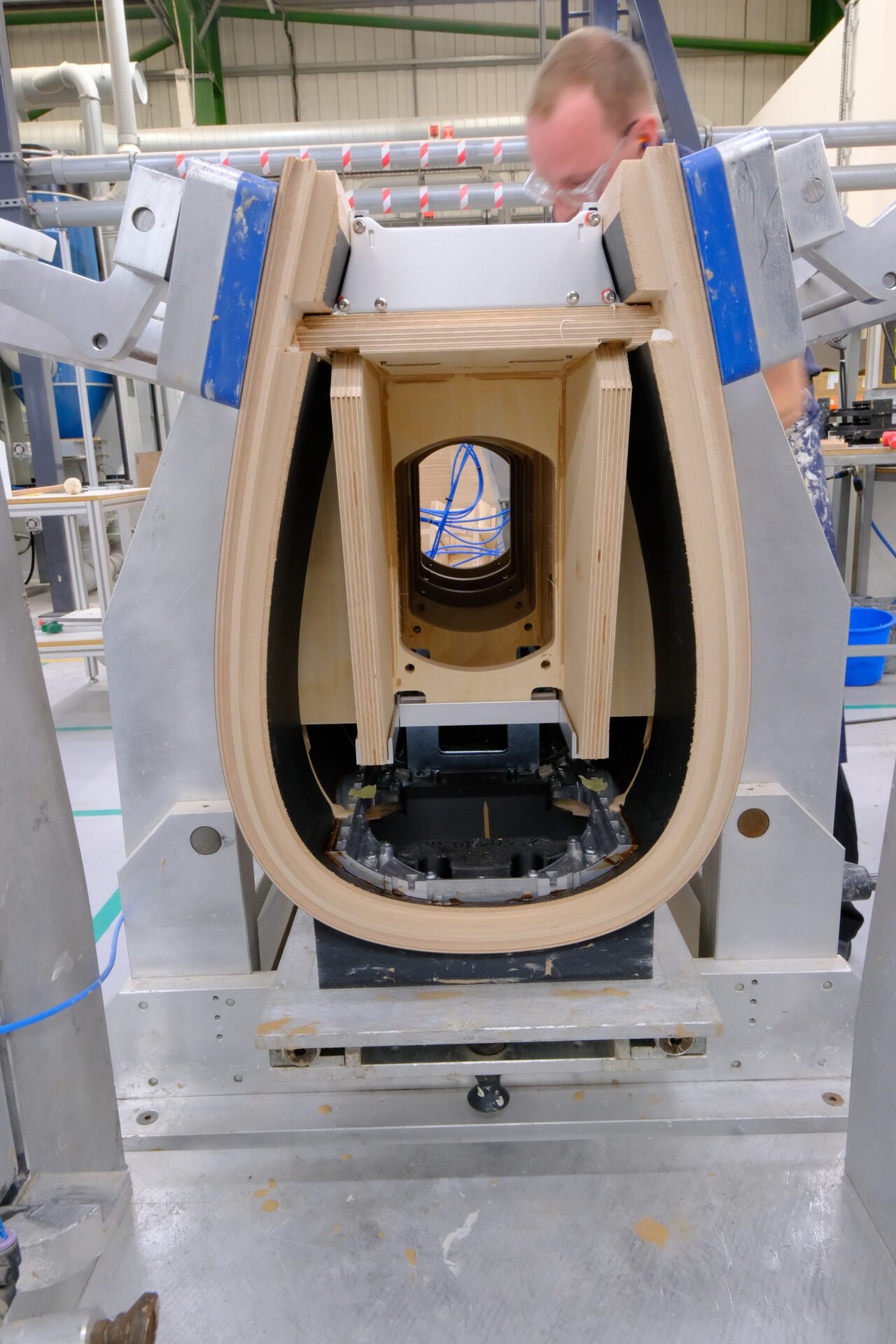
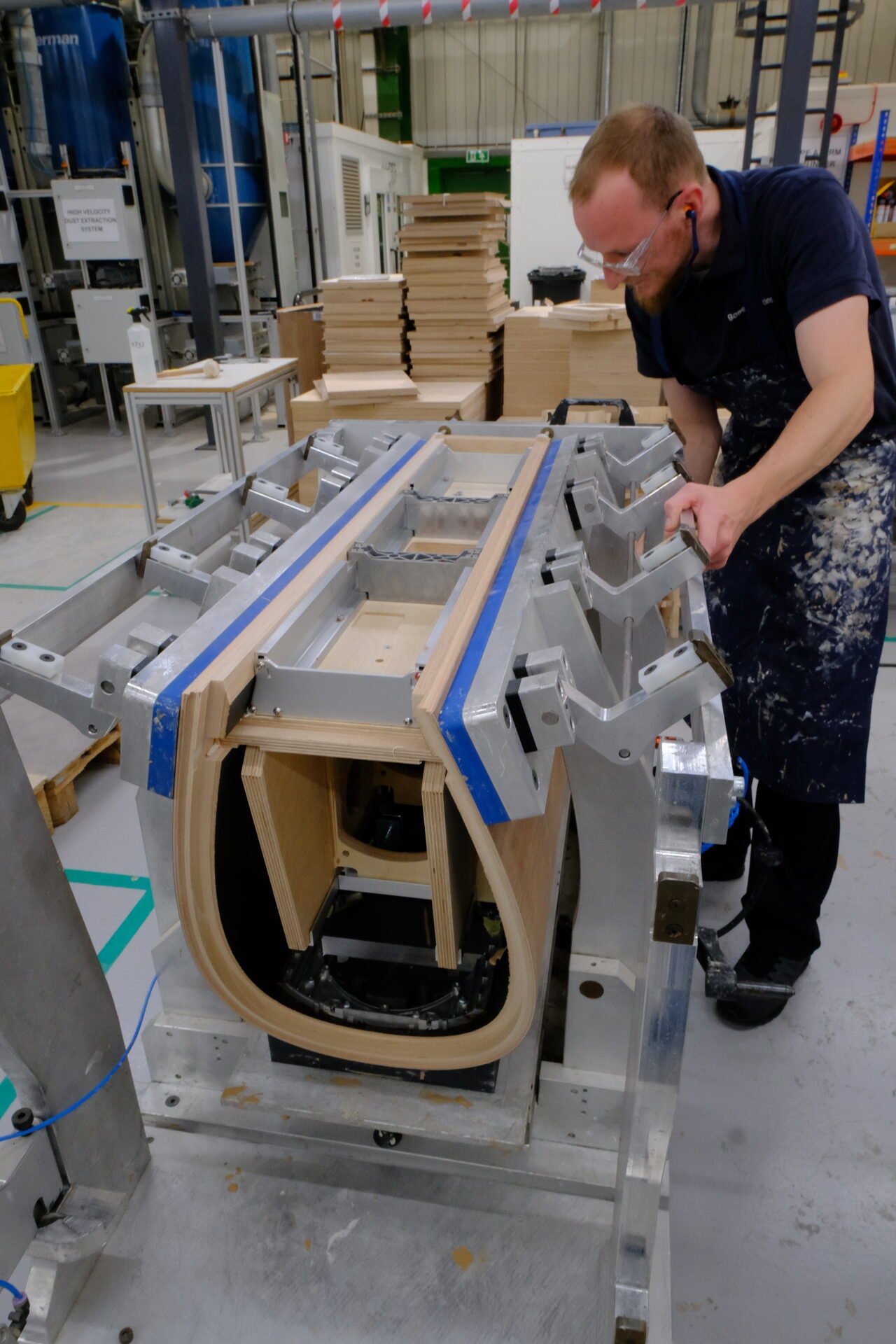
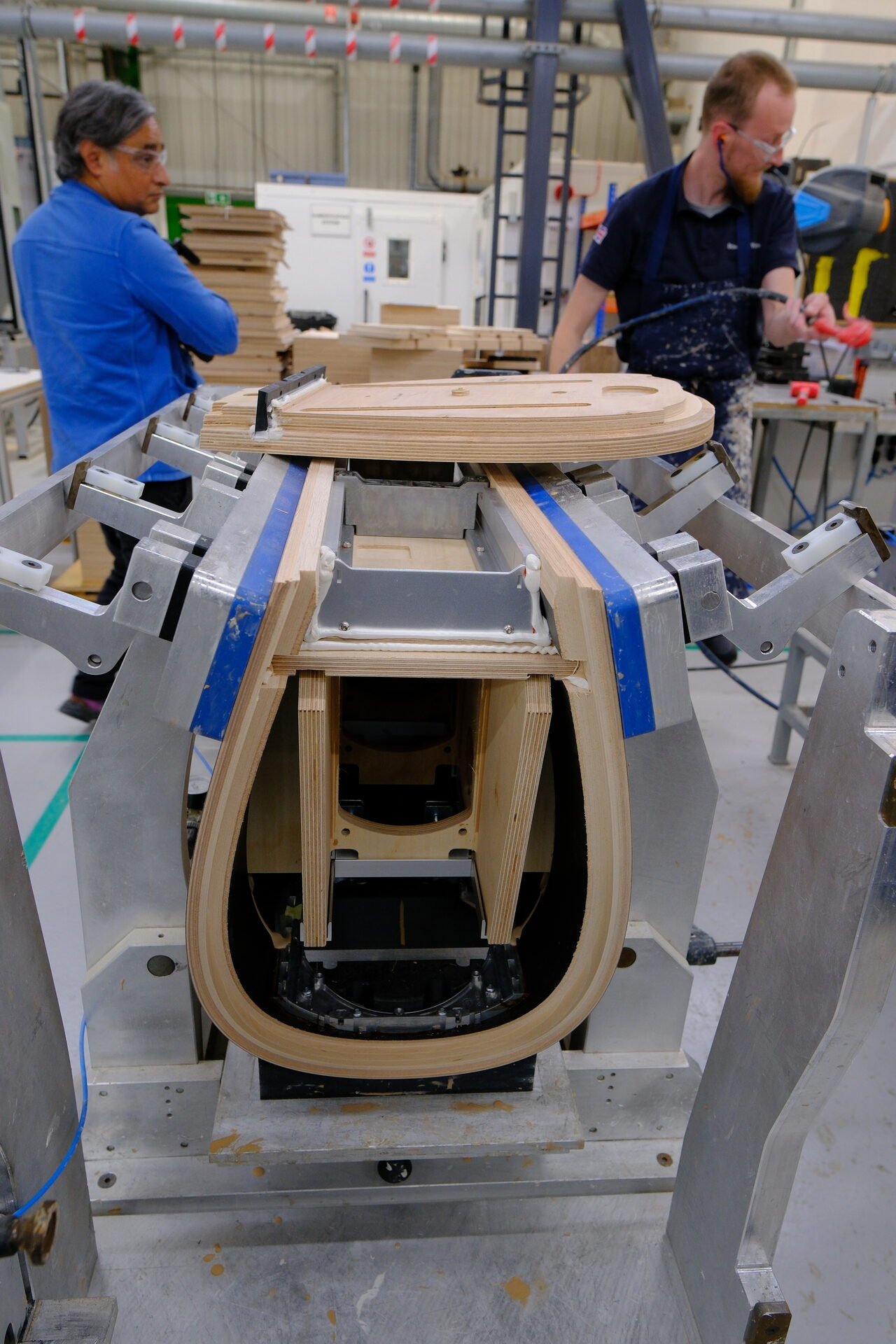
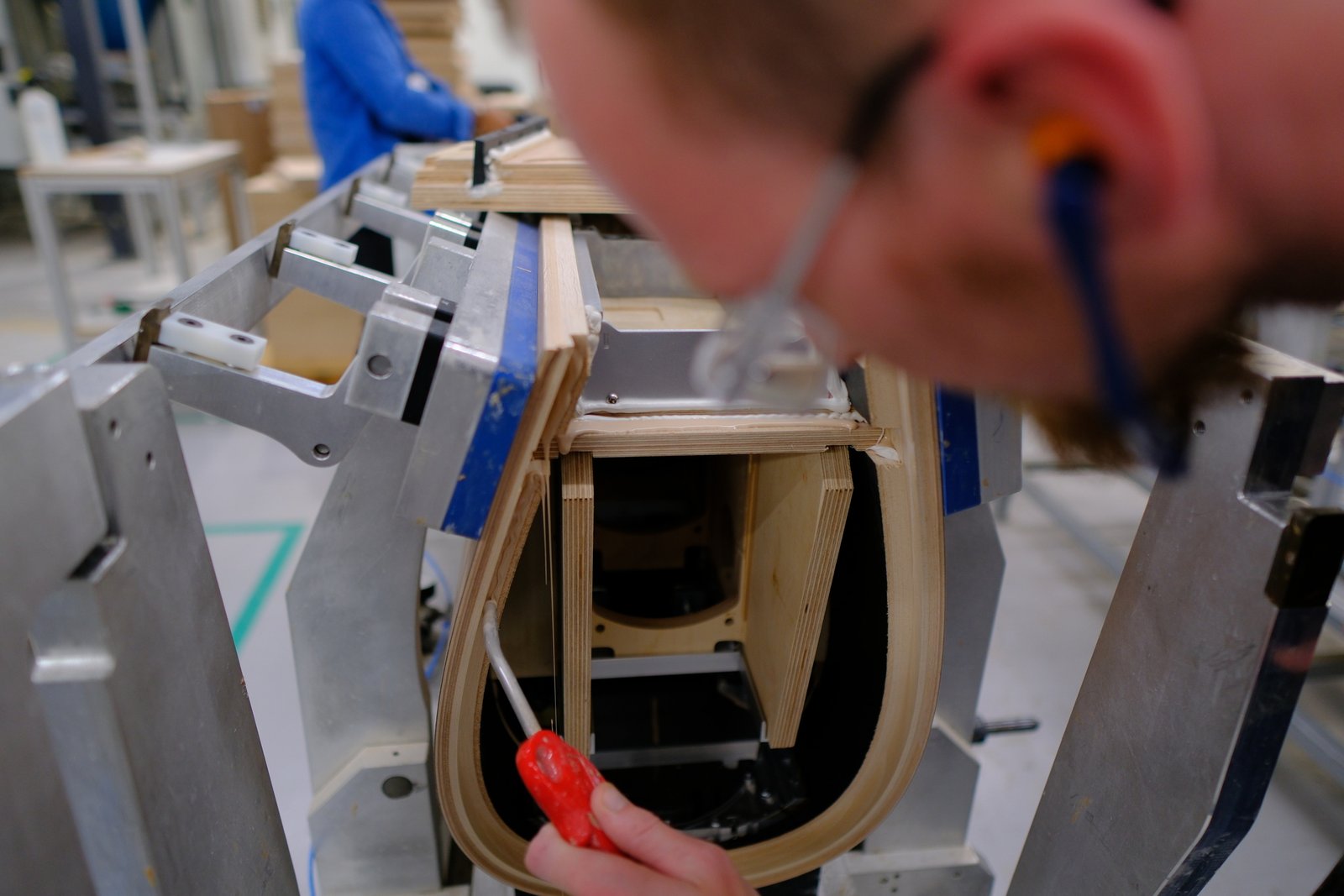
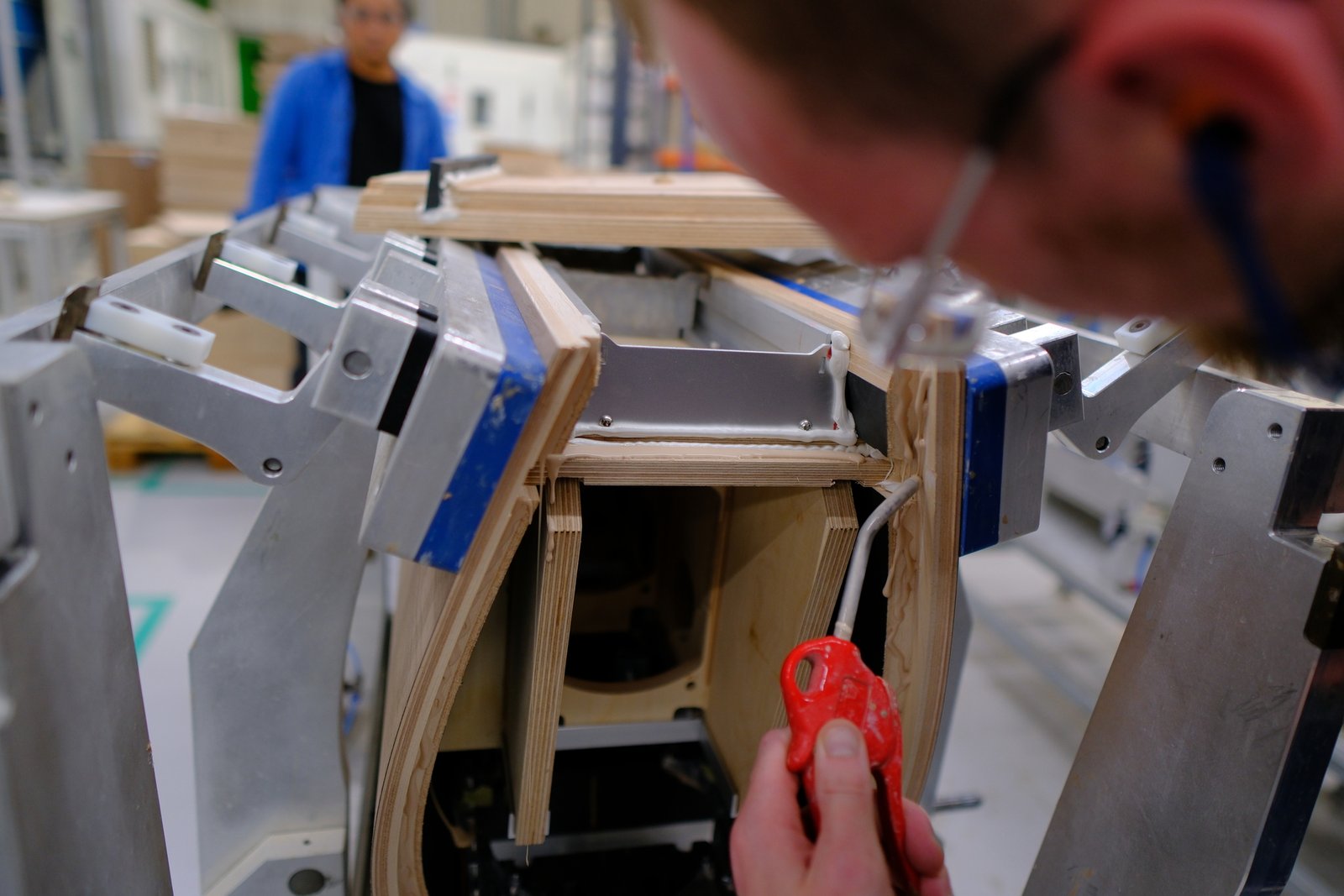
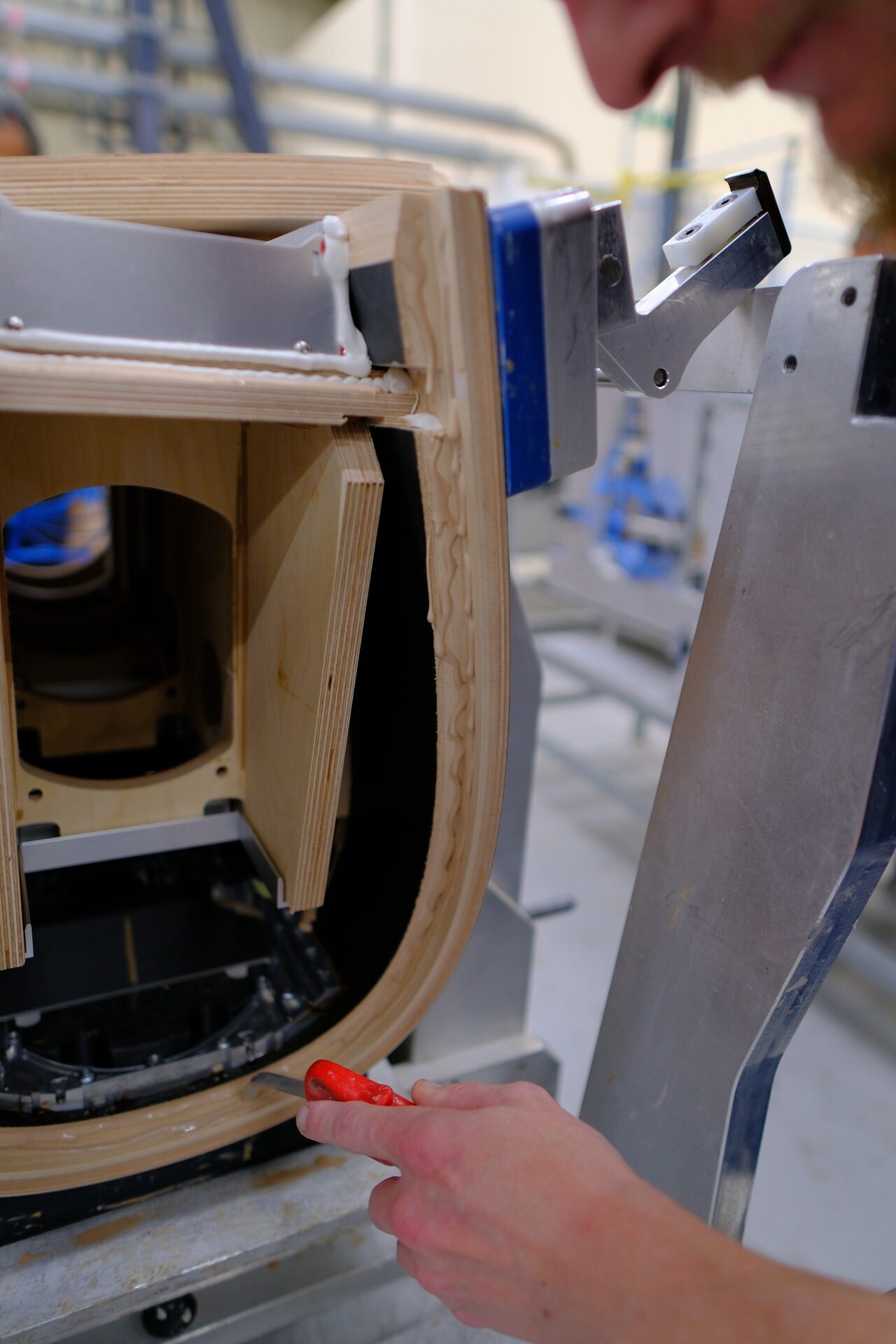
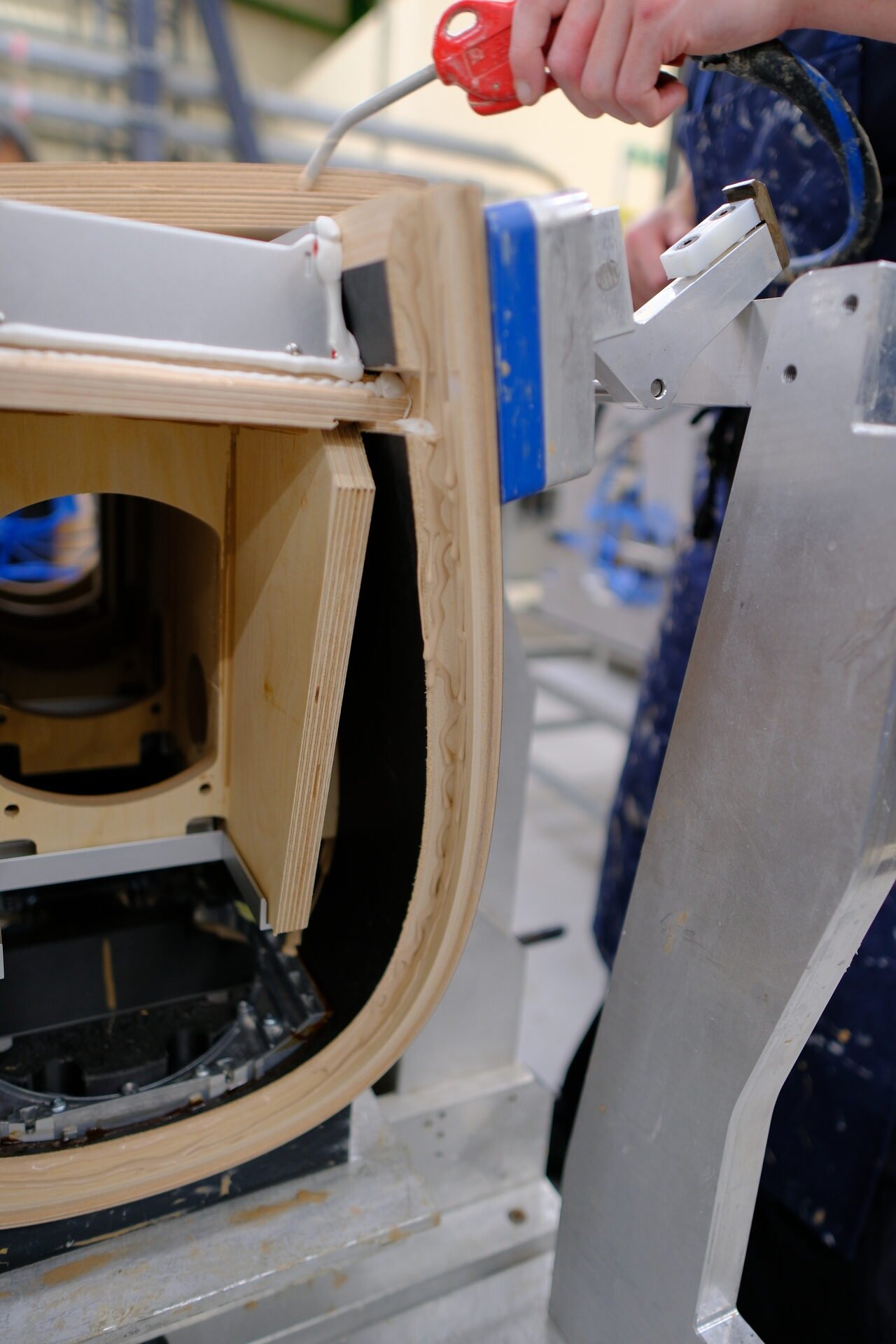
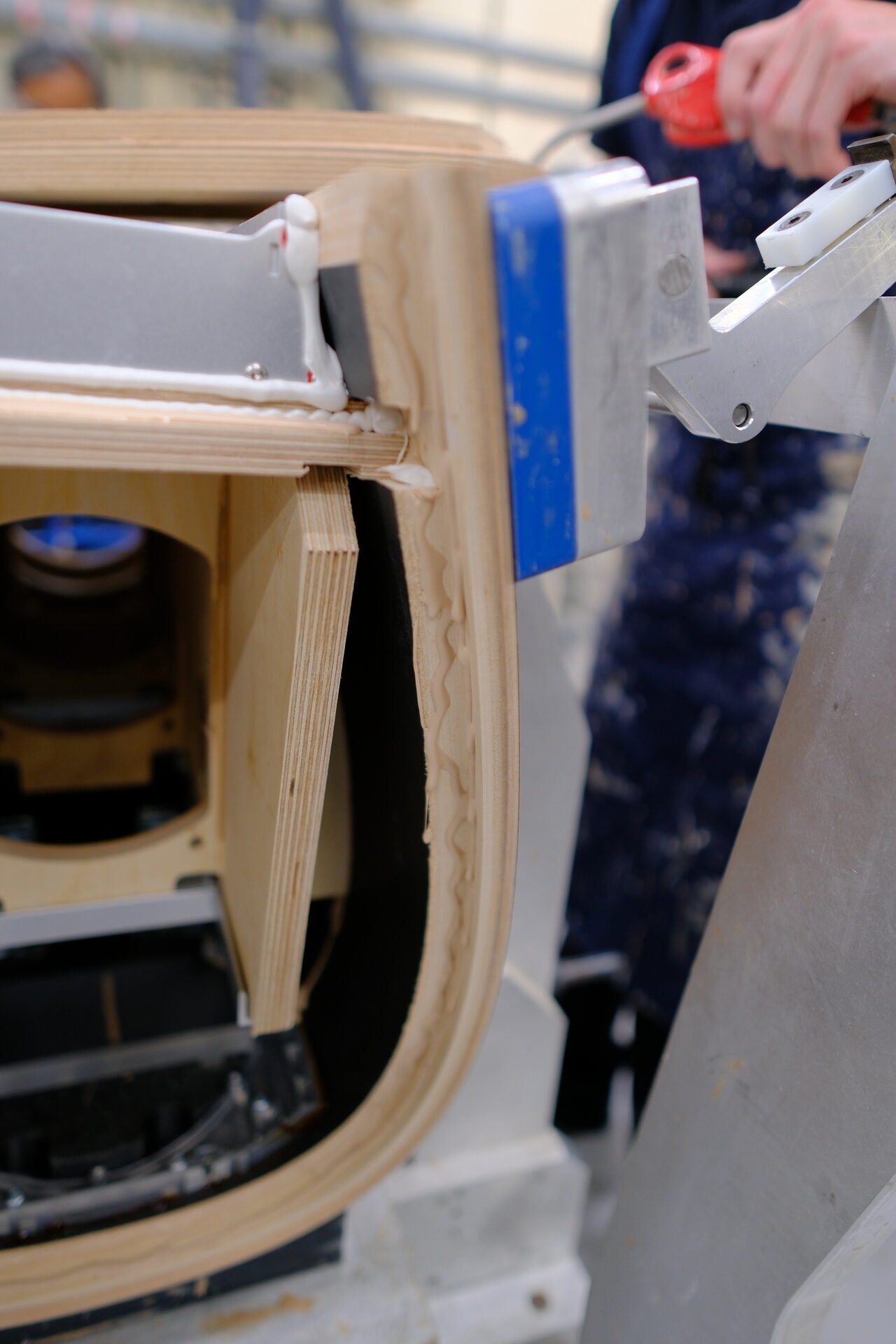
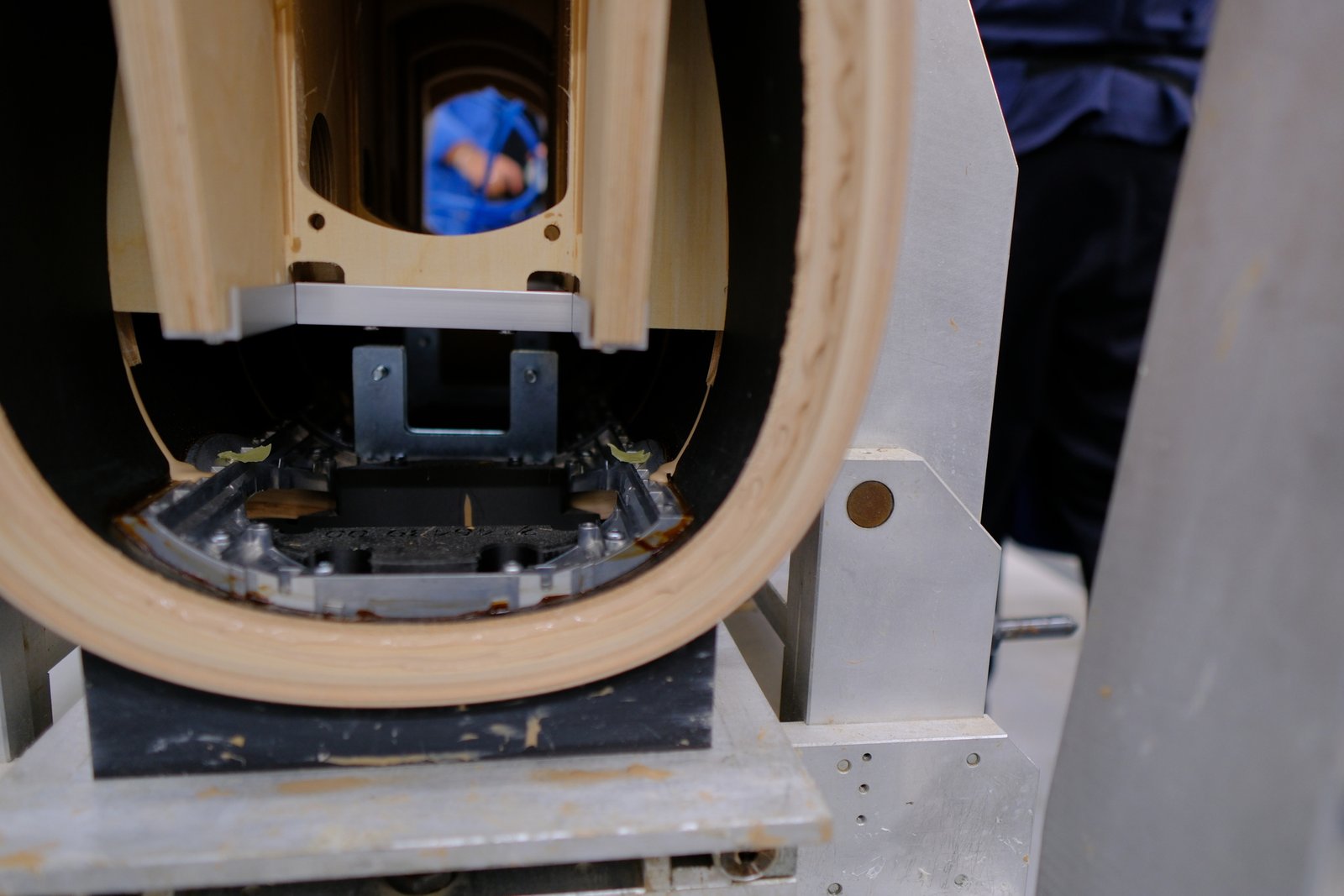
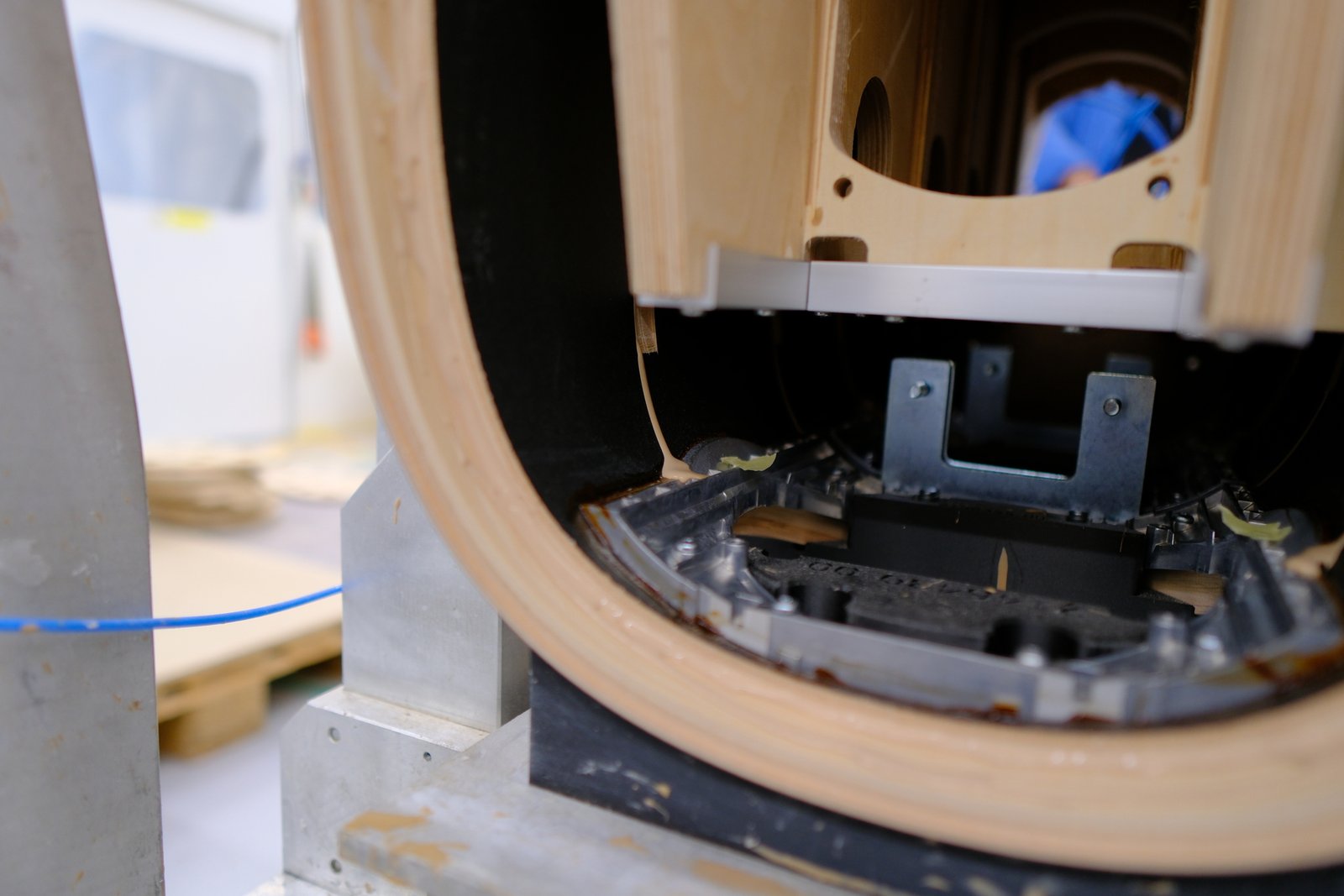
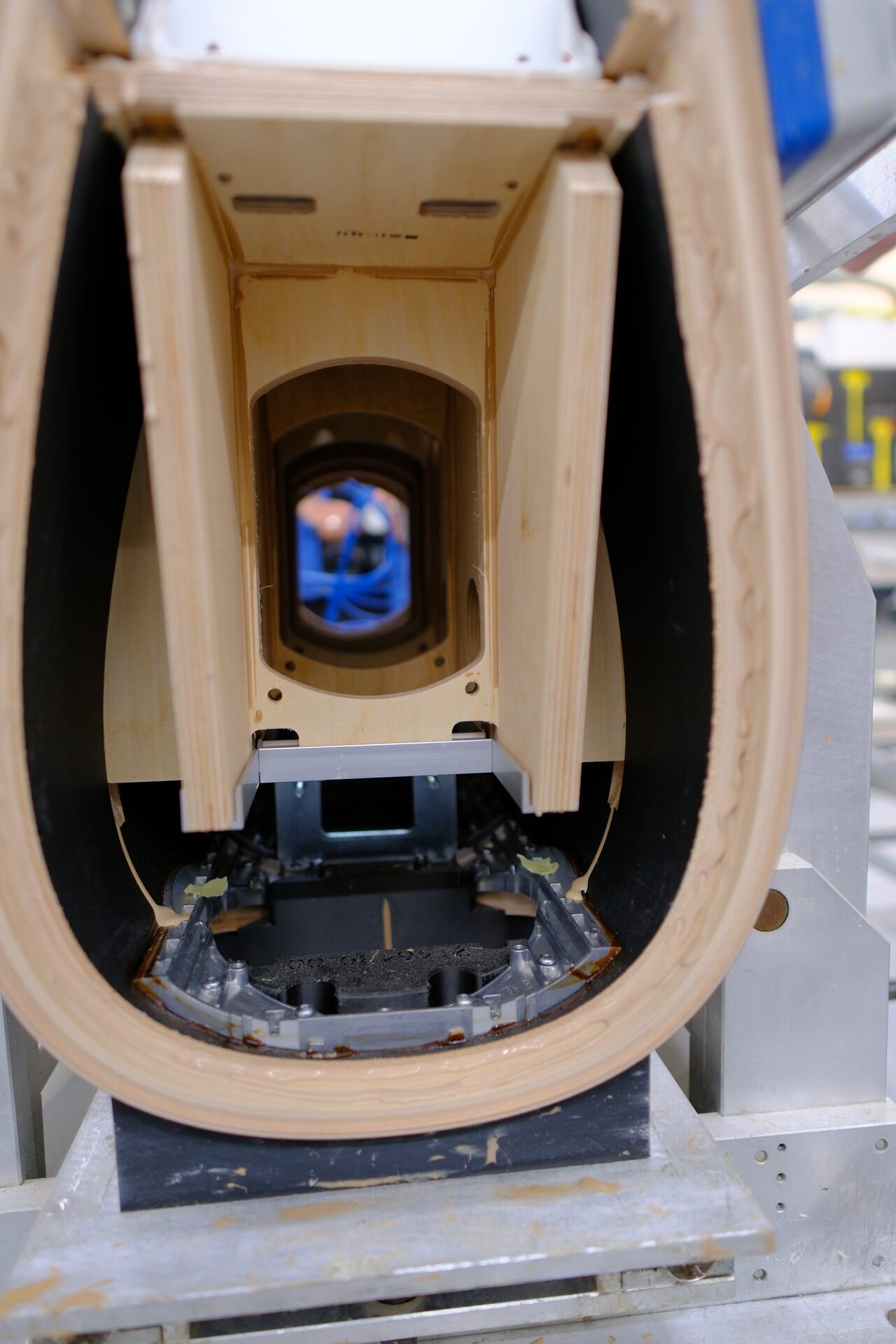
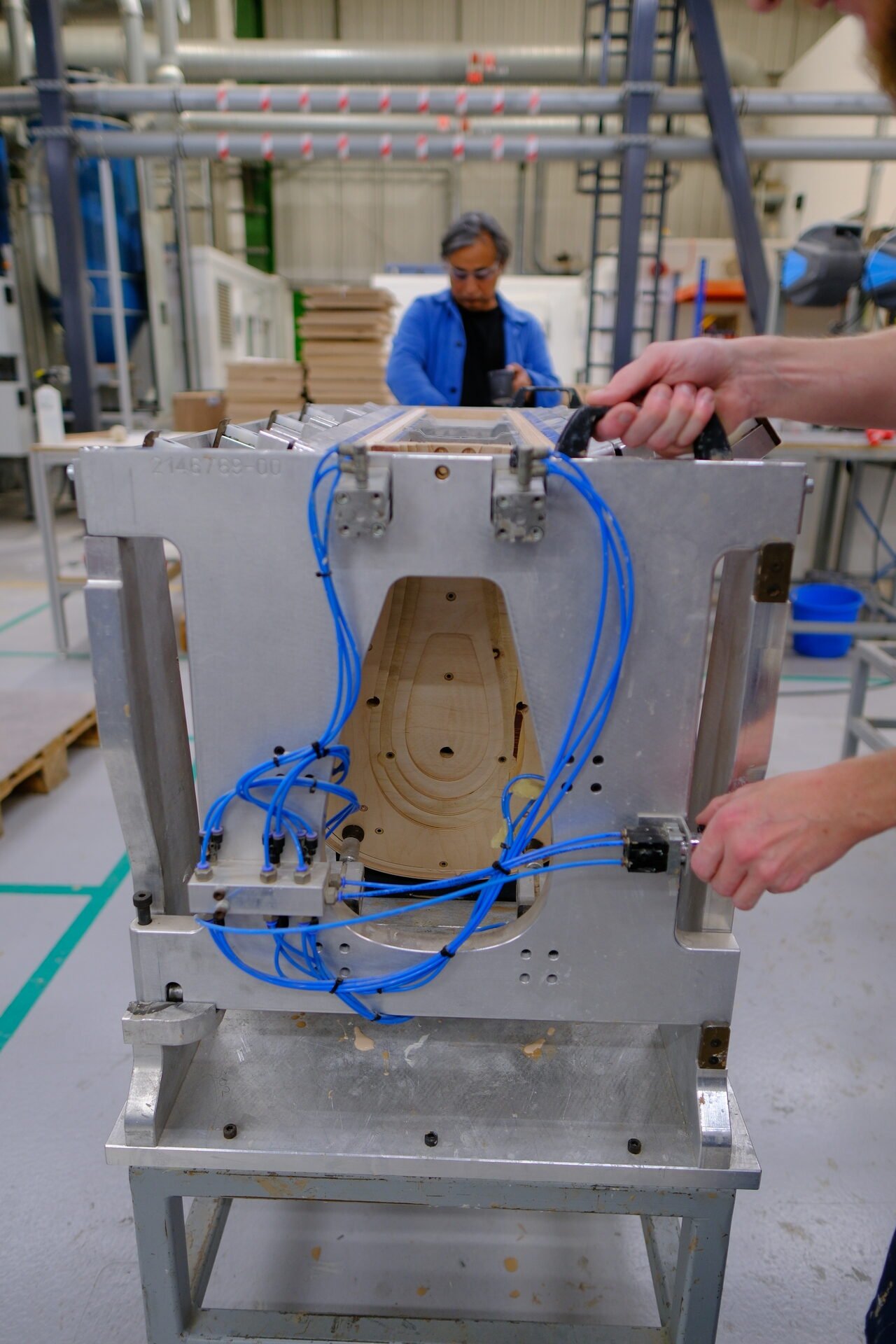
Assembly is a very physical part of the woodshop. The Matrix panels, cut from birch plywood, are stacked on pallets, sorted by model, with labels such as 803 D5 Tops, Bases, Rear Dividers. Each cabinet is clamped into a jig, an aluminium frame with blue padded jaws and pneumatic cylinders, the Matrix is glued and screwed in, the top and bottom panels are fitted, and the whole assembly stays in the jig until the glue cures. The operators work with glue guns and hand tools, and the fitting is done by hand.
Paint and Finish
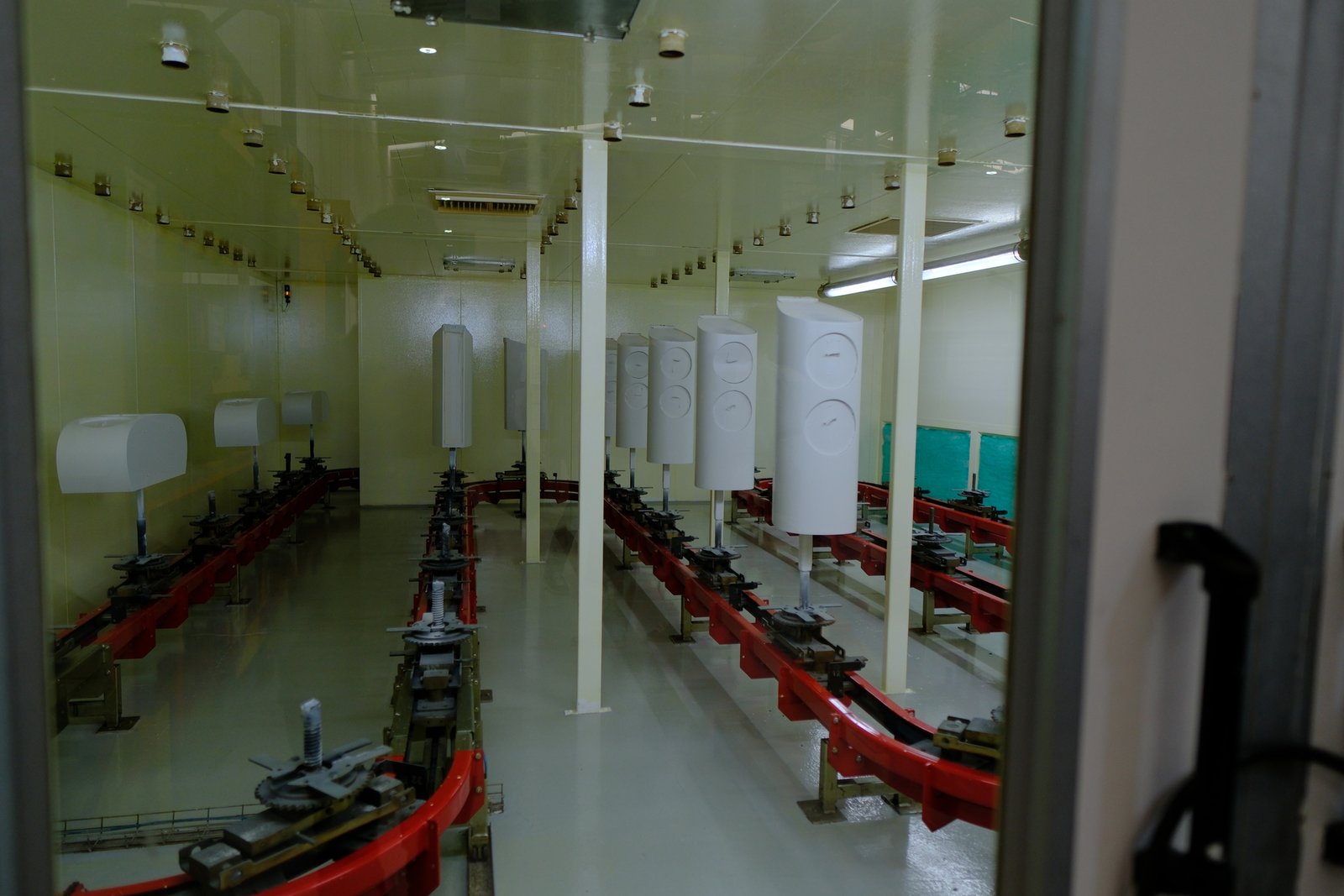
The paint shop is a separate area behind closed doors. Through the glass we could see white cabinets hanging from an overhead conveyor, and inside one of the booths a painting robot wrapped in protective film.
Before painting, the cabinets are sealed and sanded. The floorstanders we saw at this point had a dark grey base coat, with the apertures masked and the Matrix visible through the openings. Some cabinets were mounted on a yellow fixture inside a booth, with a timer counting on the control panel. Veneered cabinets go to the sanding benches, where operators in respirators and long sleeves work on each one by hand. We watched one of them sand an 805 in walnut, on a perforated bench that pulls the dust away.
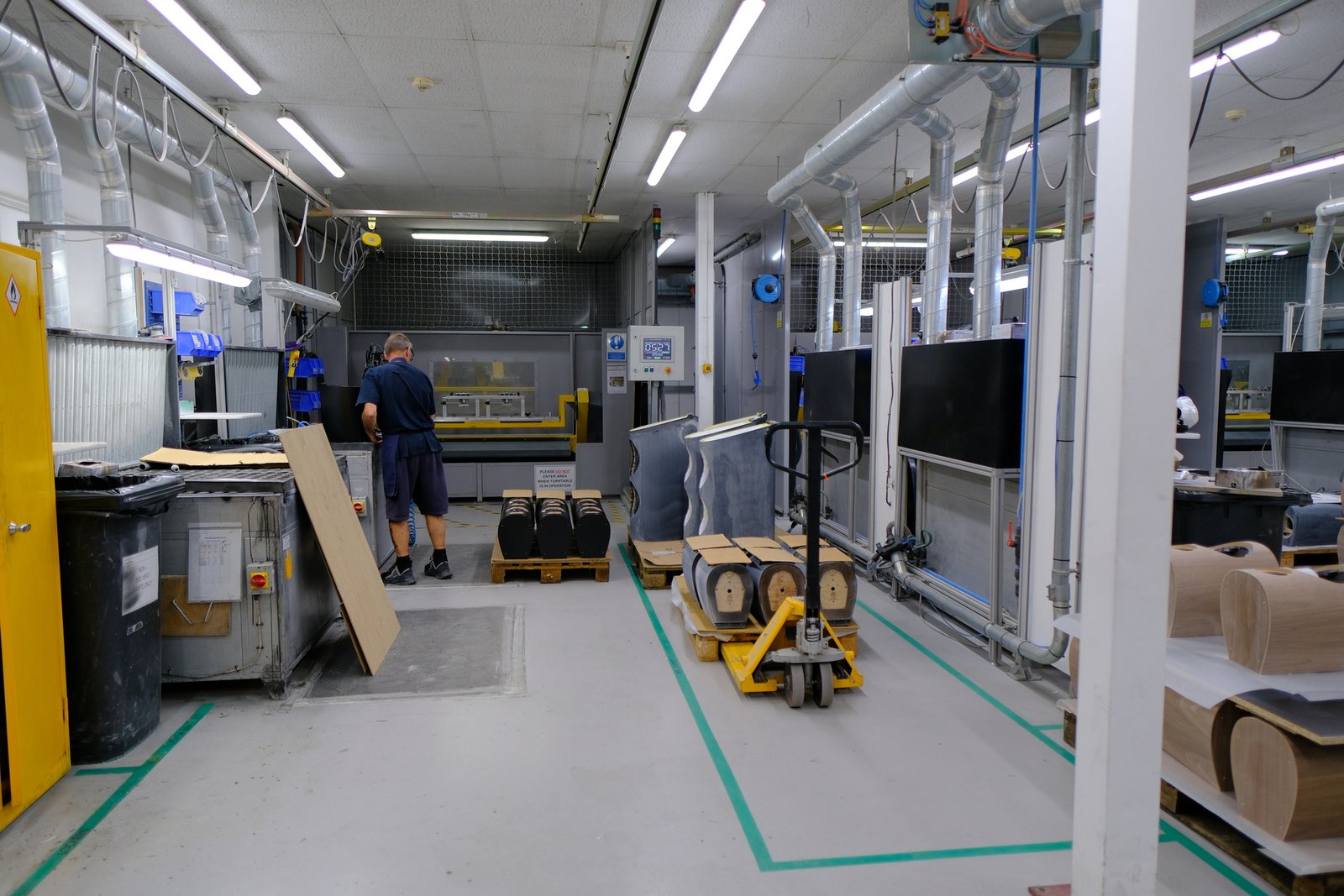
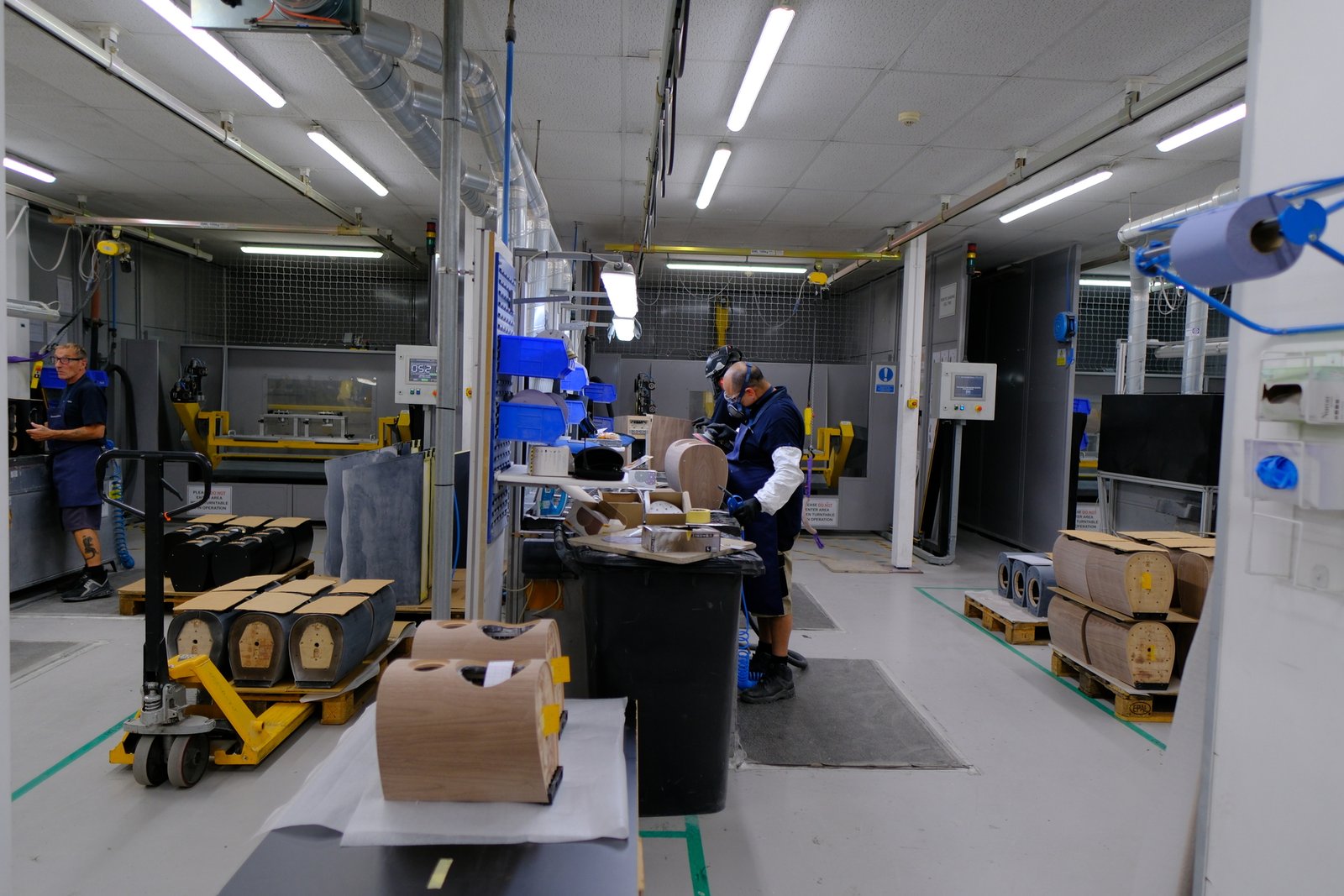
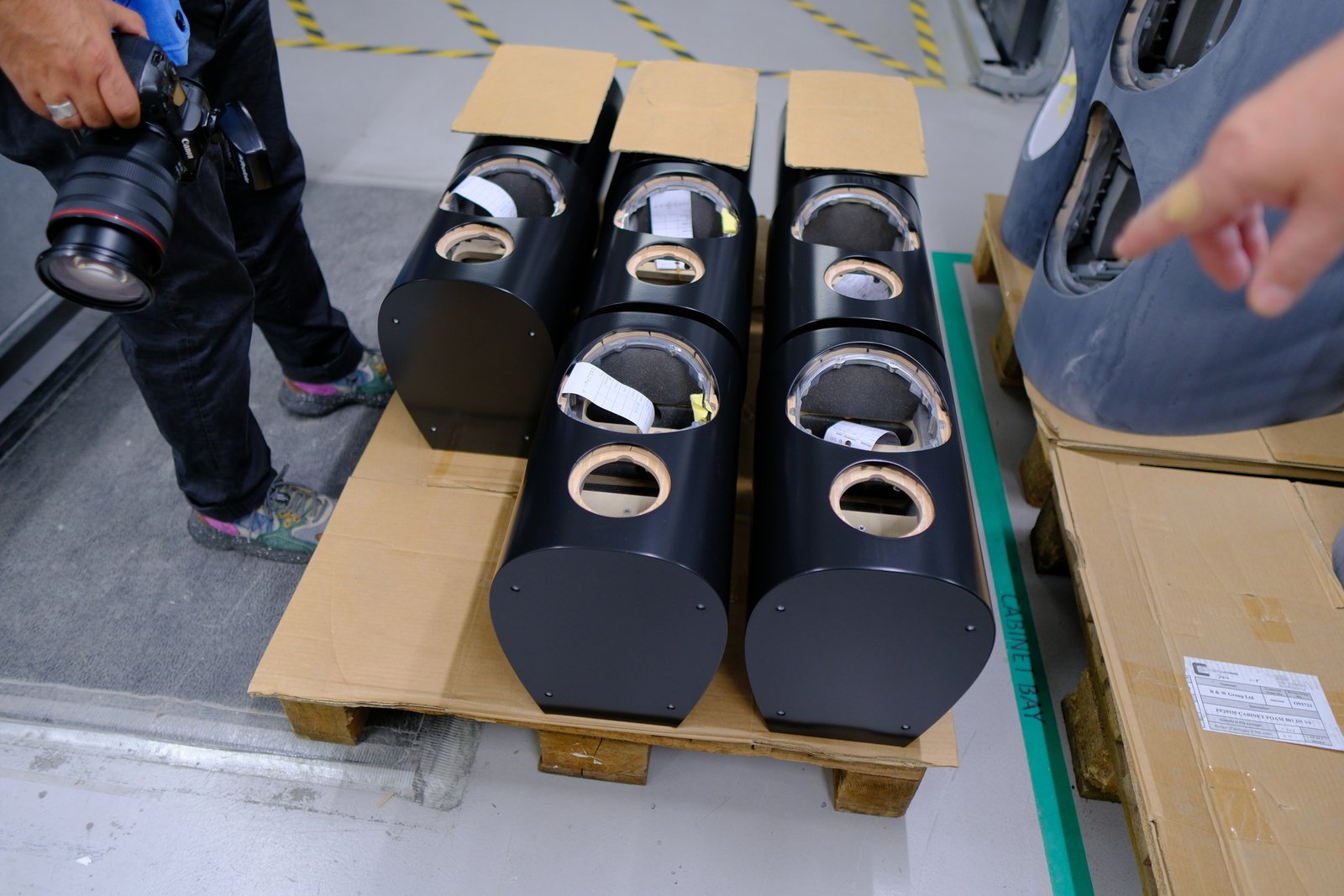
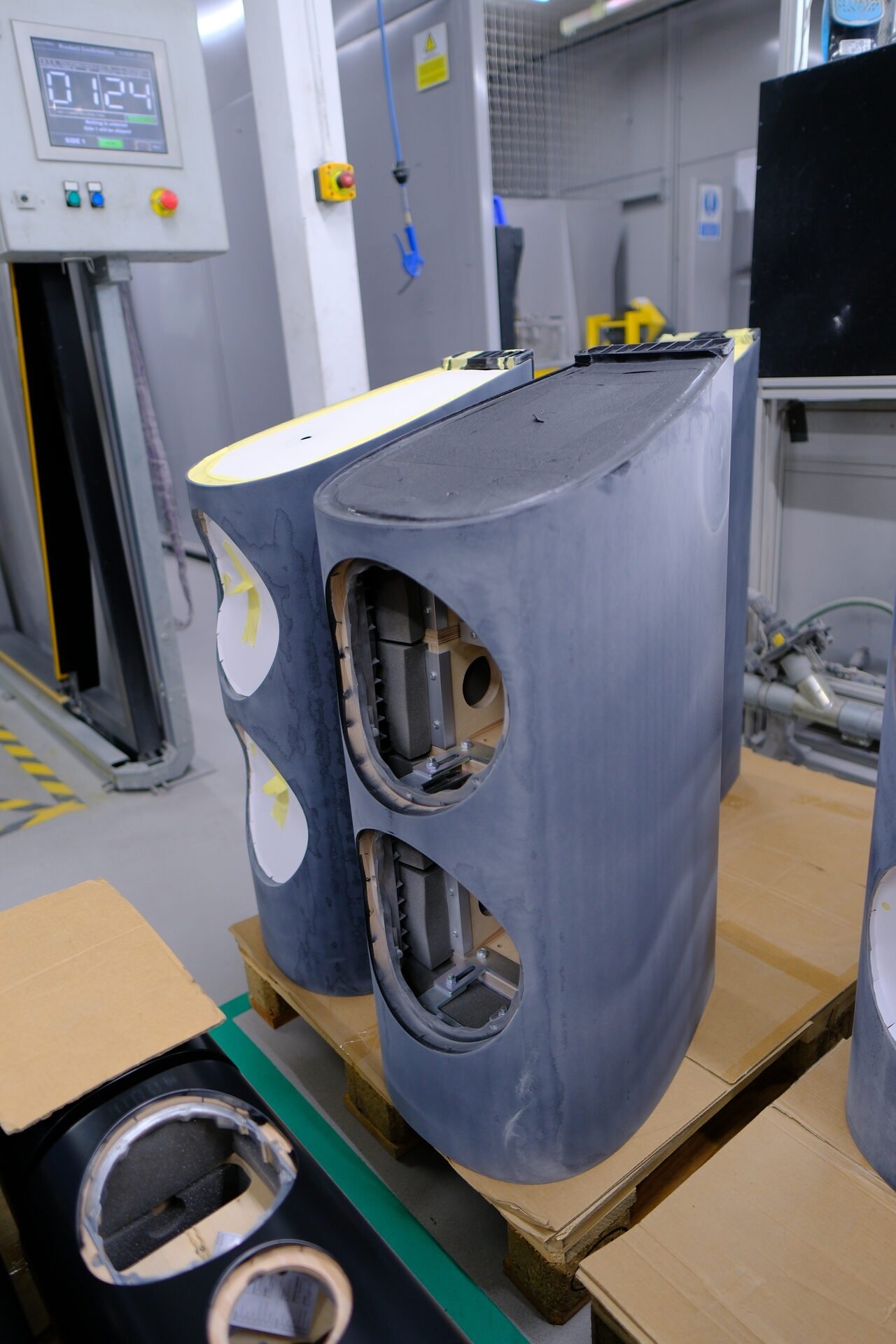
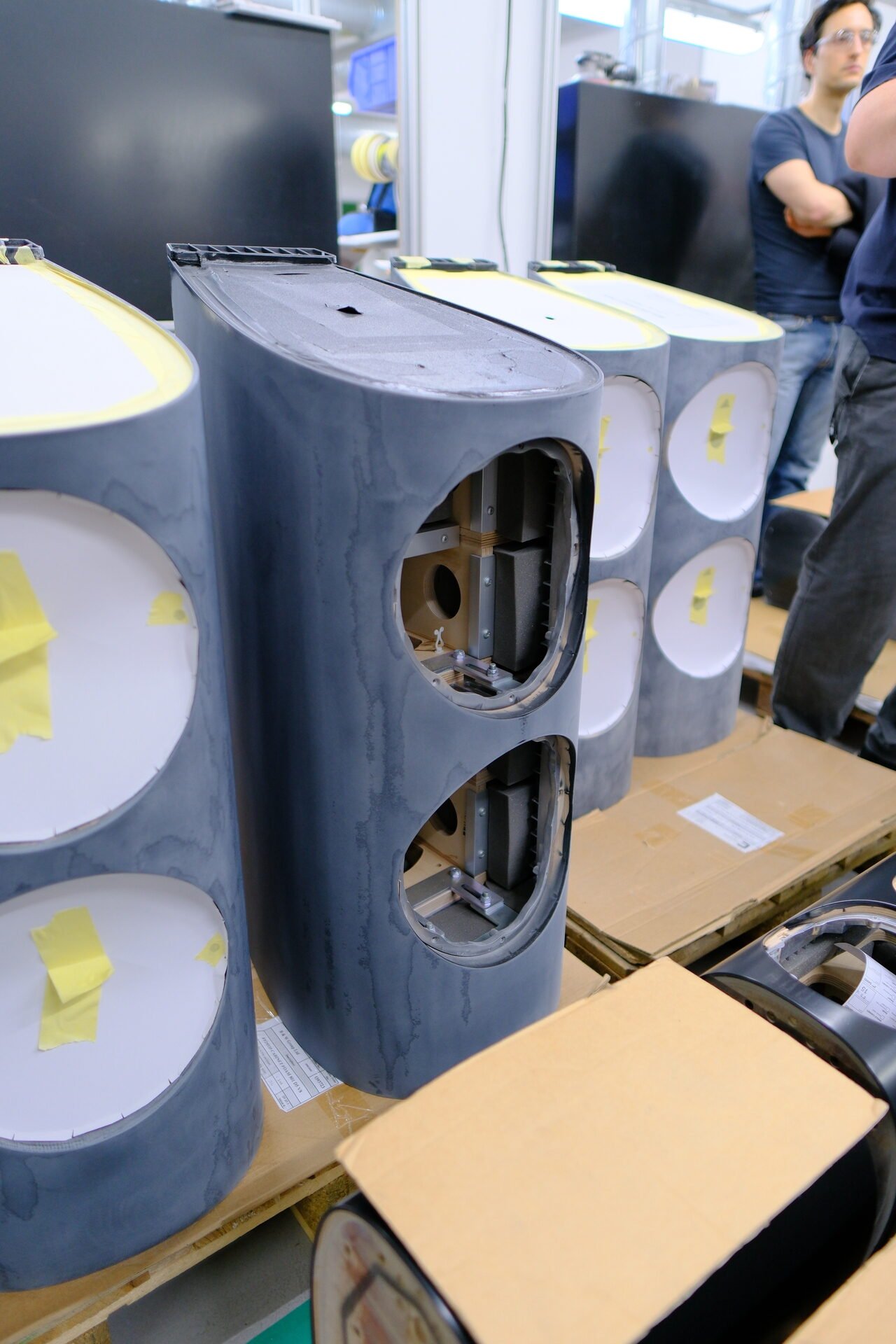
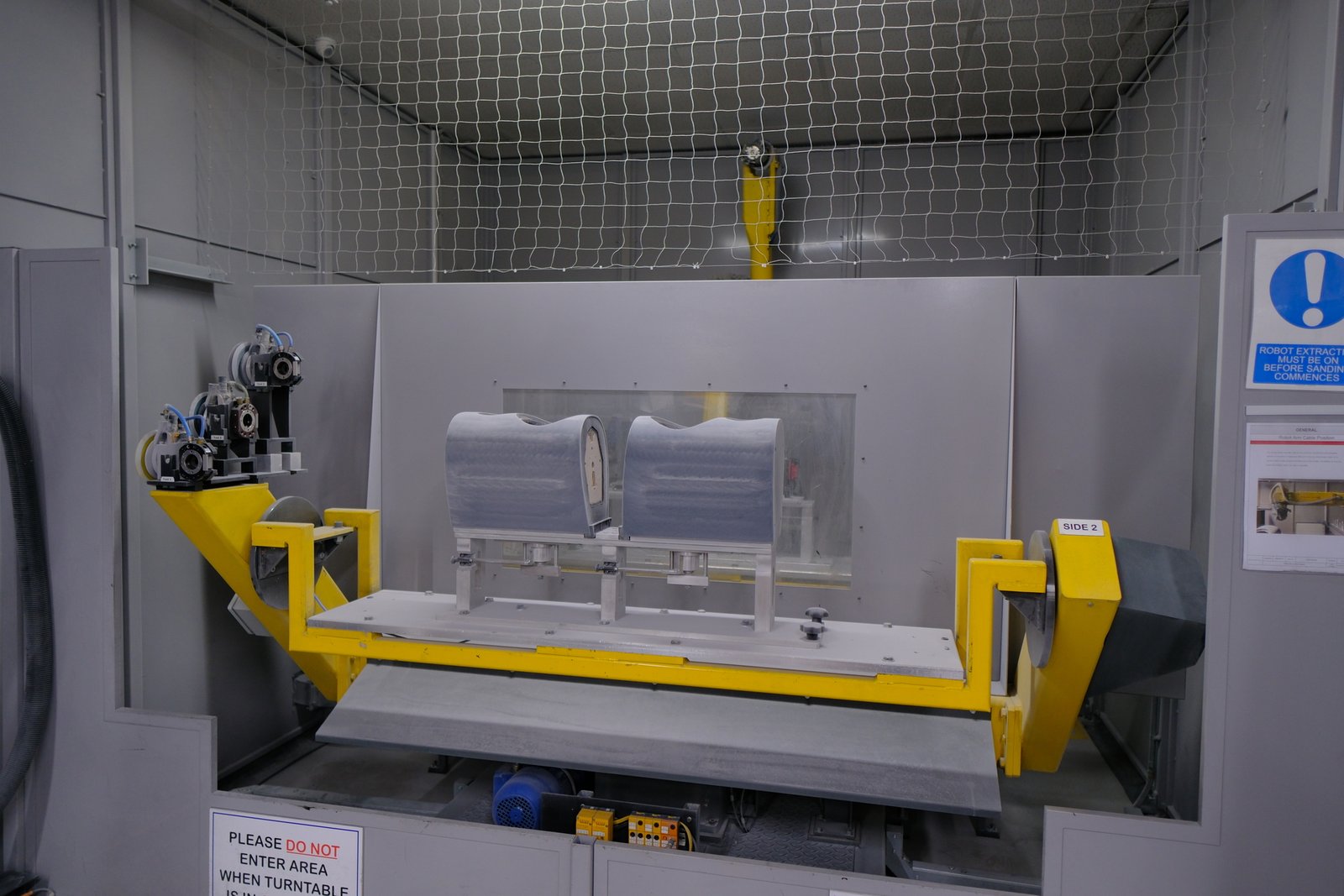
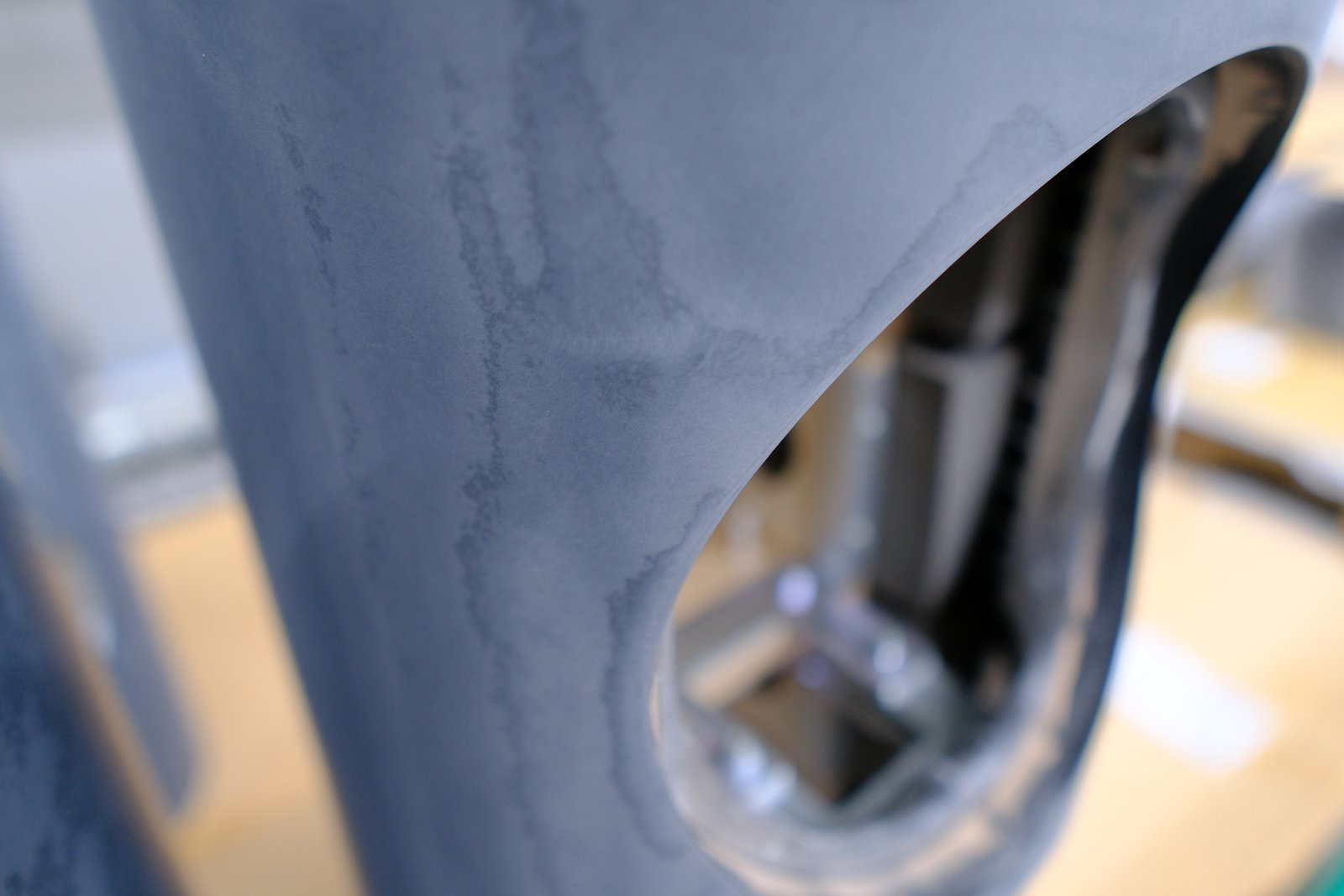
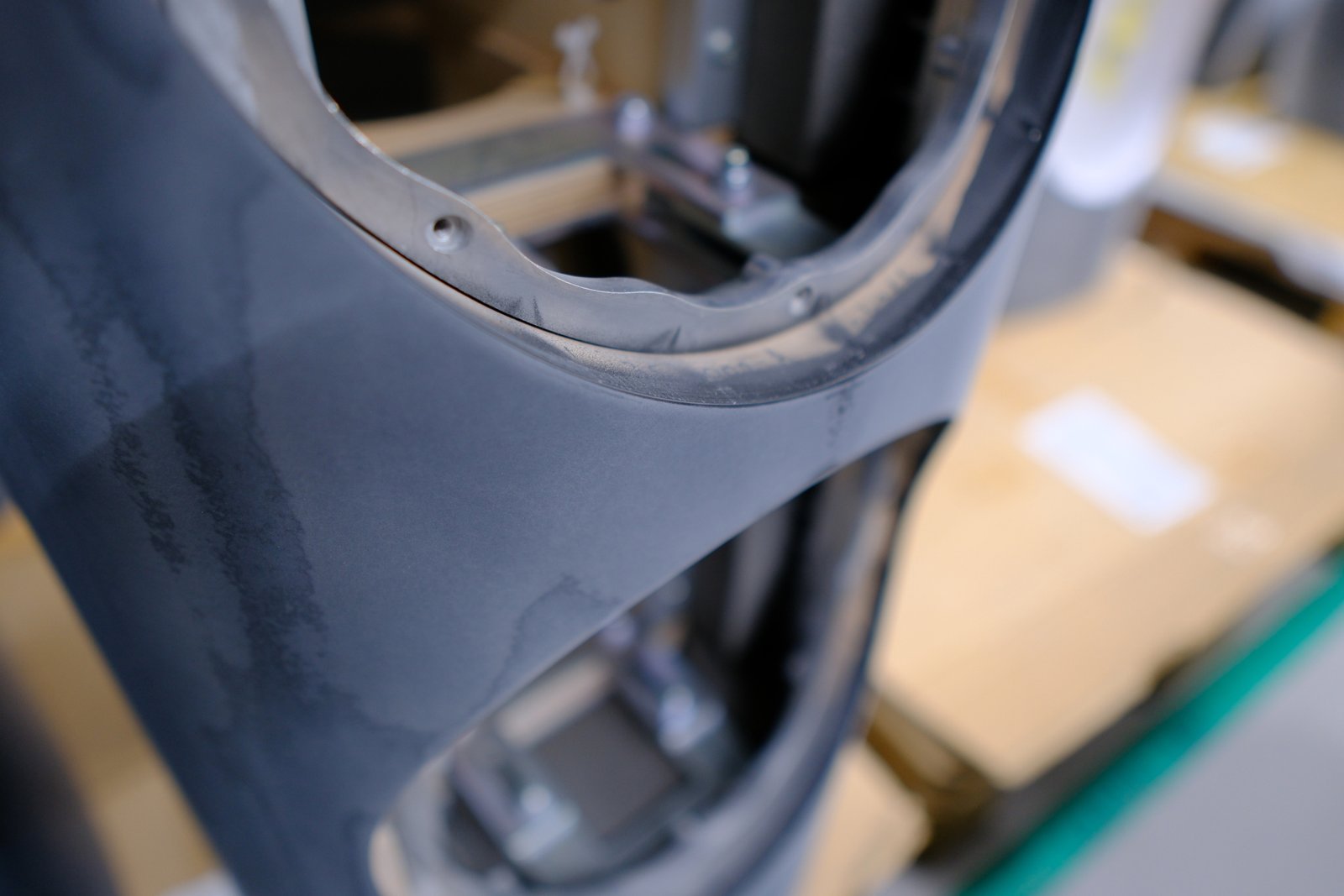
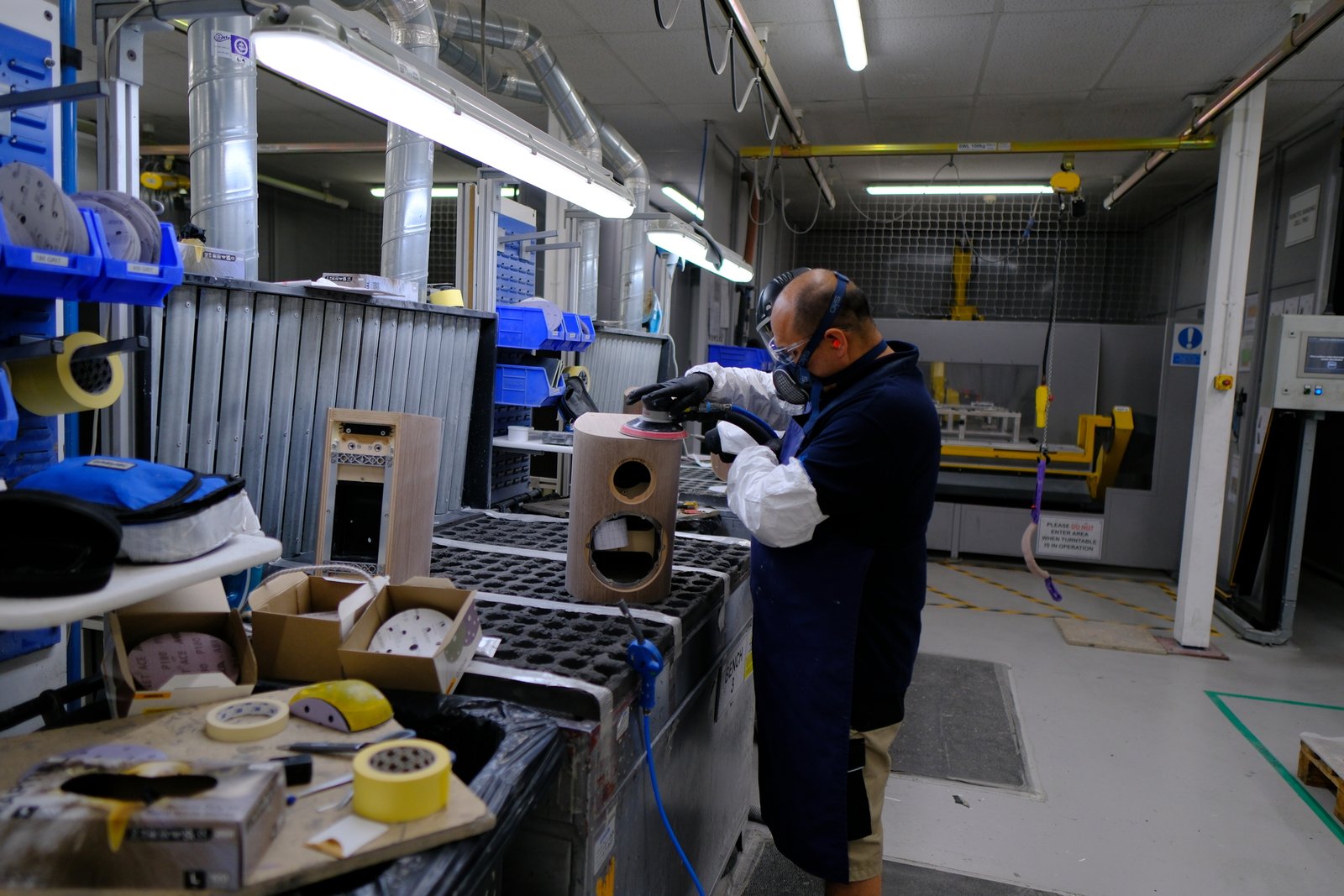
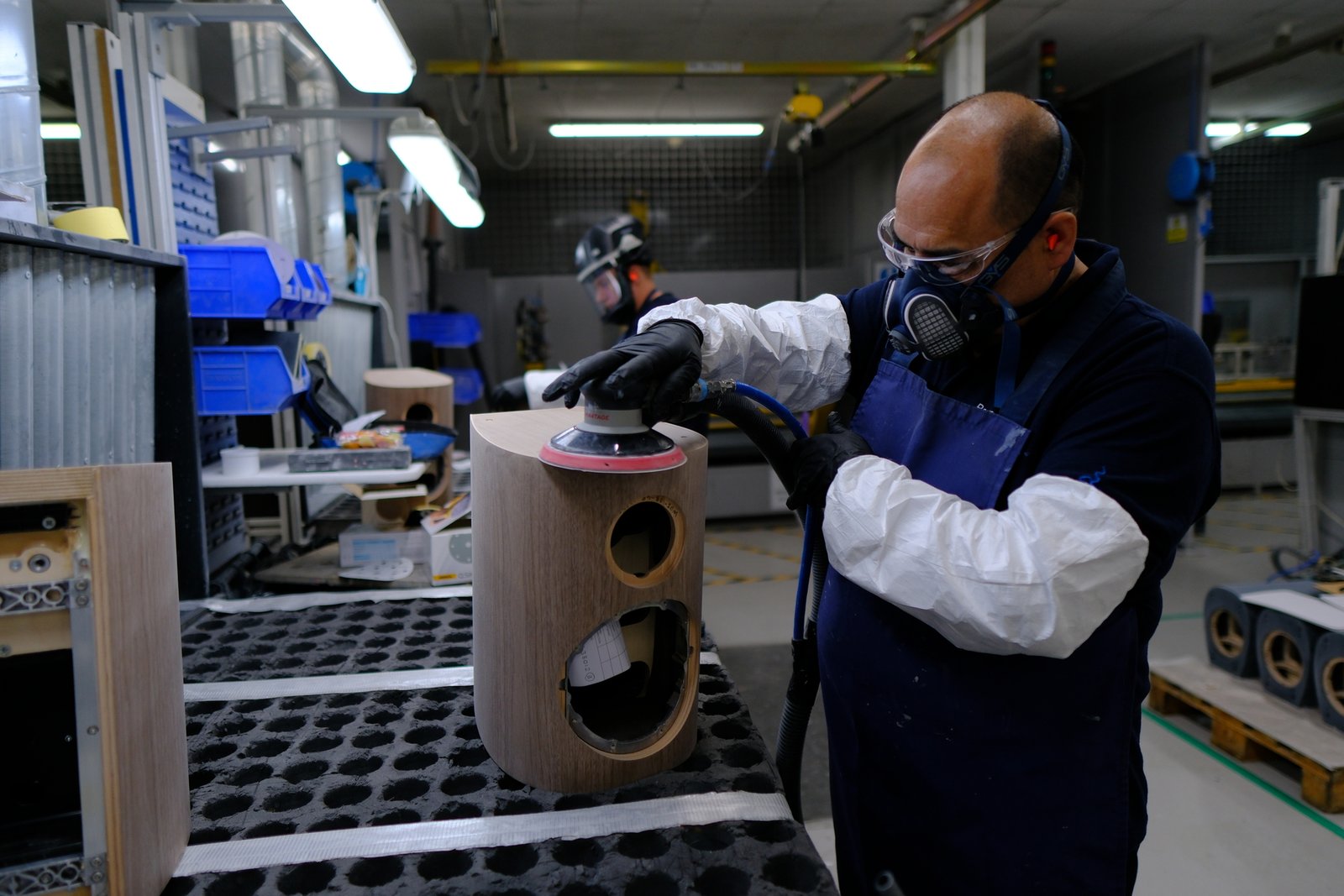
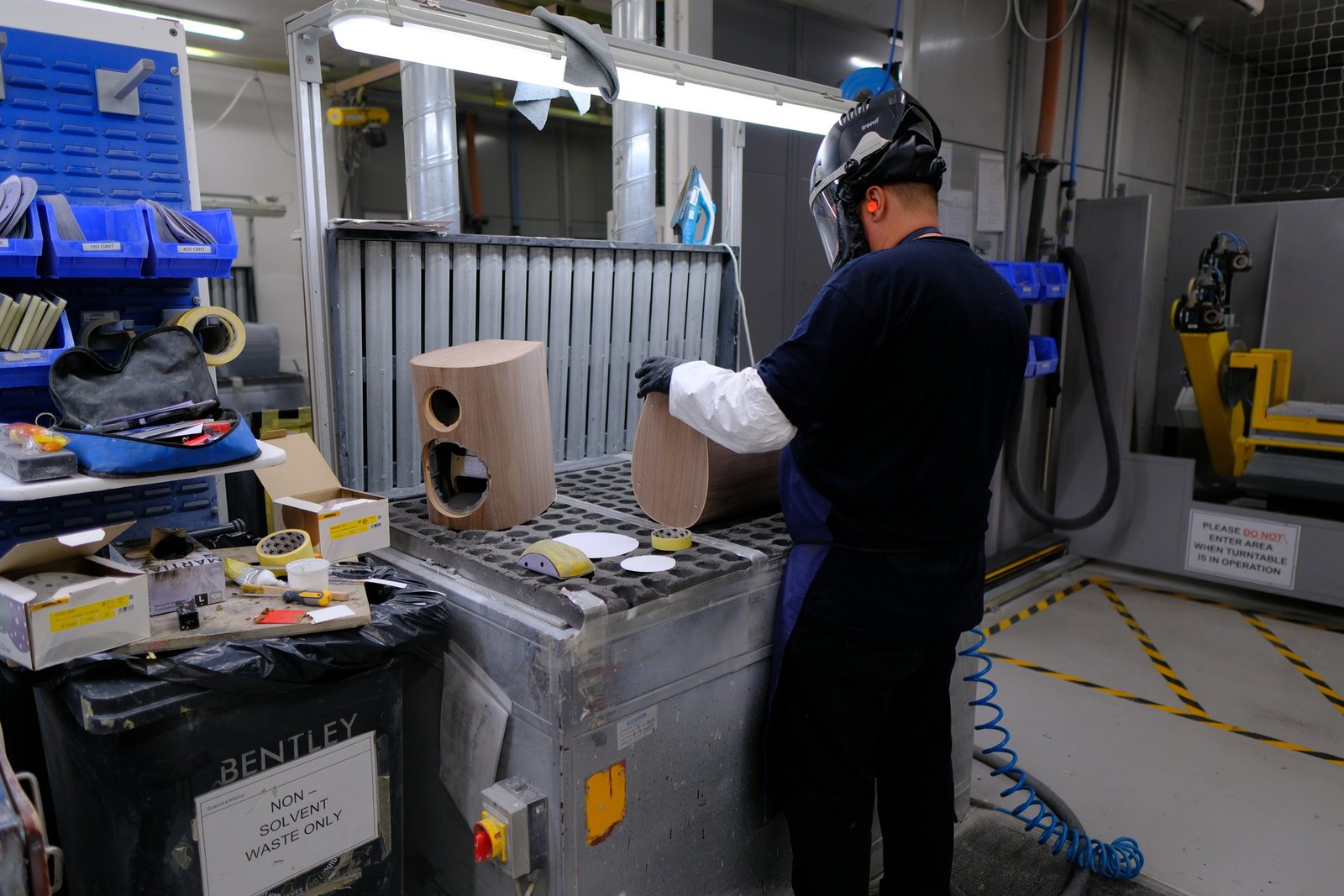
Wood veneer finishes receive one round of sanding and three coats of lacquer, the painted finishes receive several rounds of sanding and eight coats in total. The result, on the finished loudspeakers in the lobby, is a deep, very even gloss under the bright lights. Bowers & Wilkins also says the paint process was revised for the D5, with the new Stealth Black finish in mind.
Drive Units and Crossovers
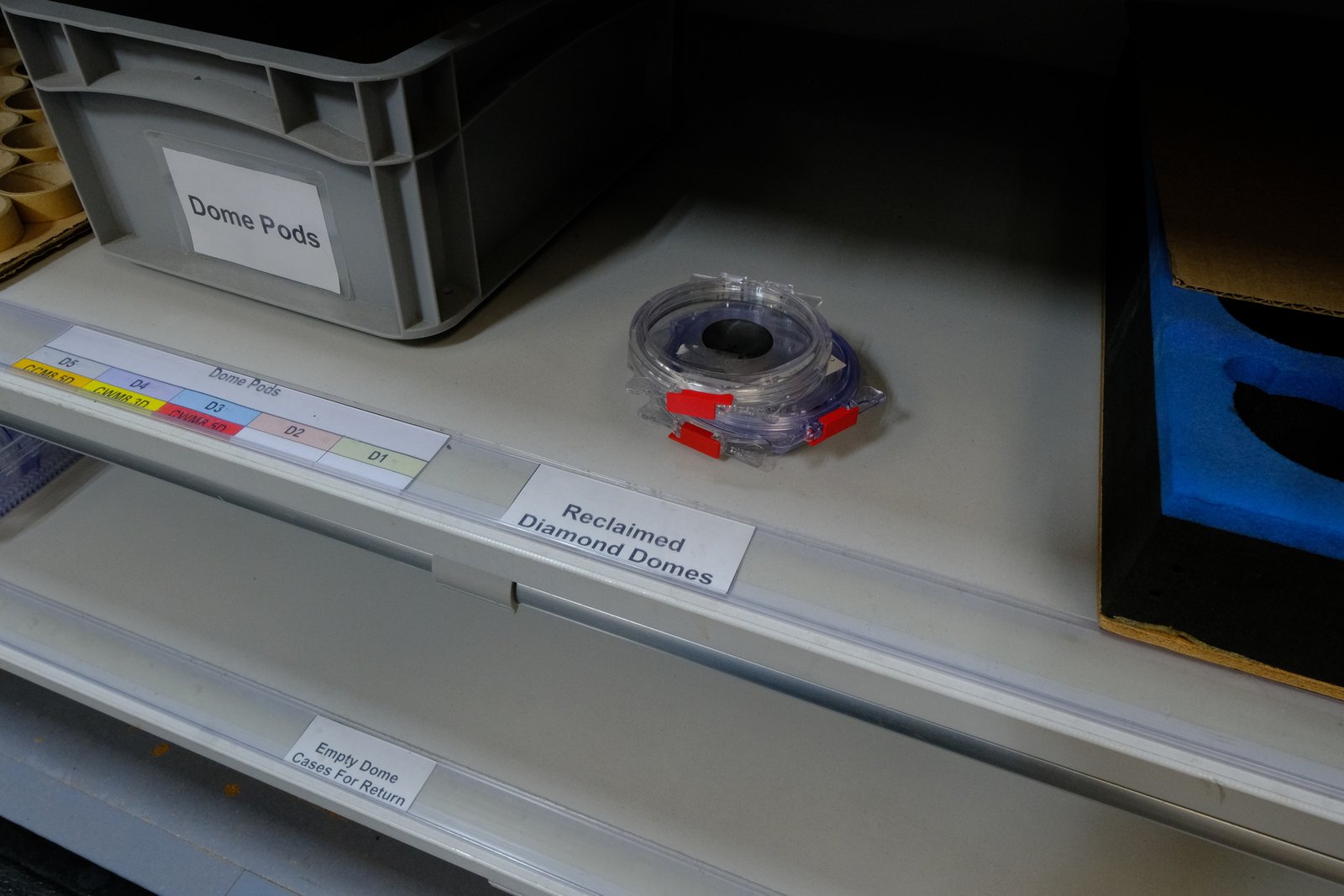
The doors to the drive unit area have the usual signs about hearing protection, and right inside there is a small test chamber, a box lined with grey foam wedges and an orange base plate full of holes, standing open between two lines. Further in, the shelves are full of drive units ready for their cabinets, silver-grey Aerofoil bass cones on one rack and the familiar woven Continuum midranges on another. In another corner, rows of bass unit chassis with the magnets already fitted are lined up on long racks, dozens of them, ready for their cones.
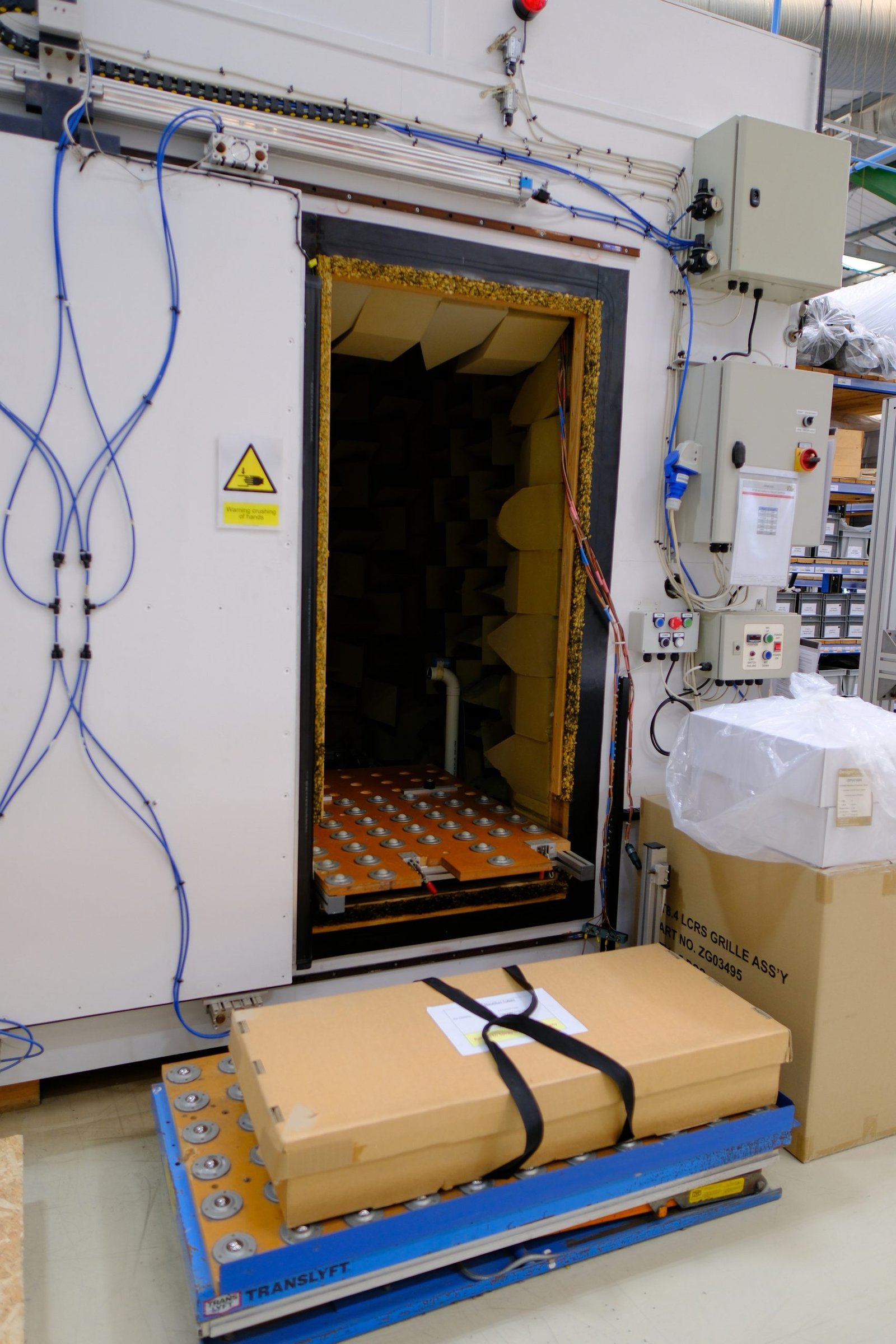
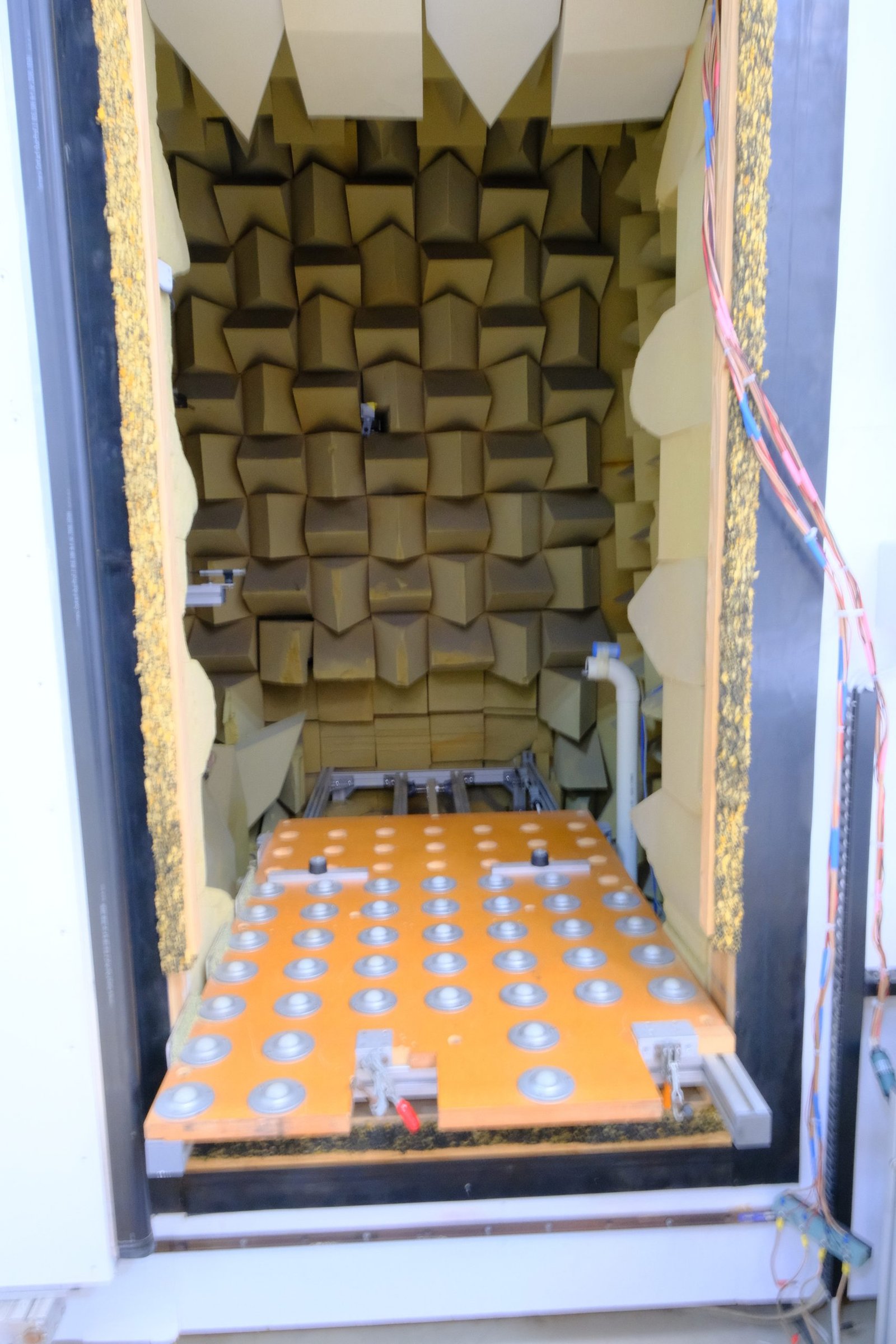
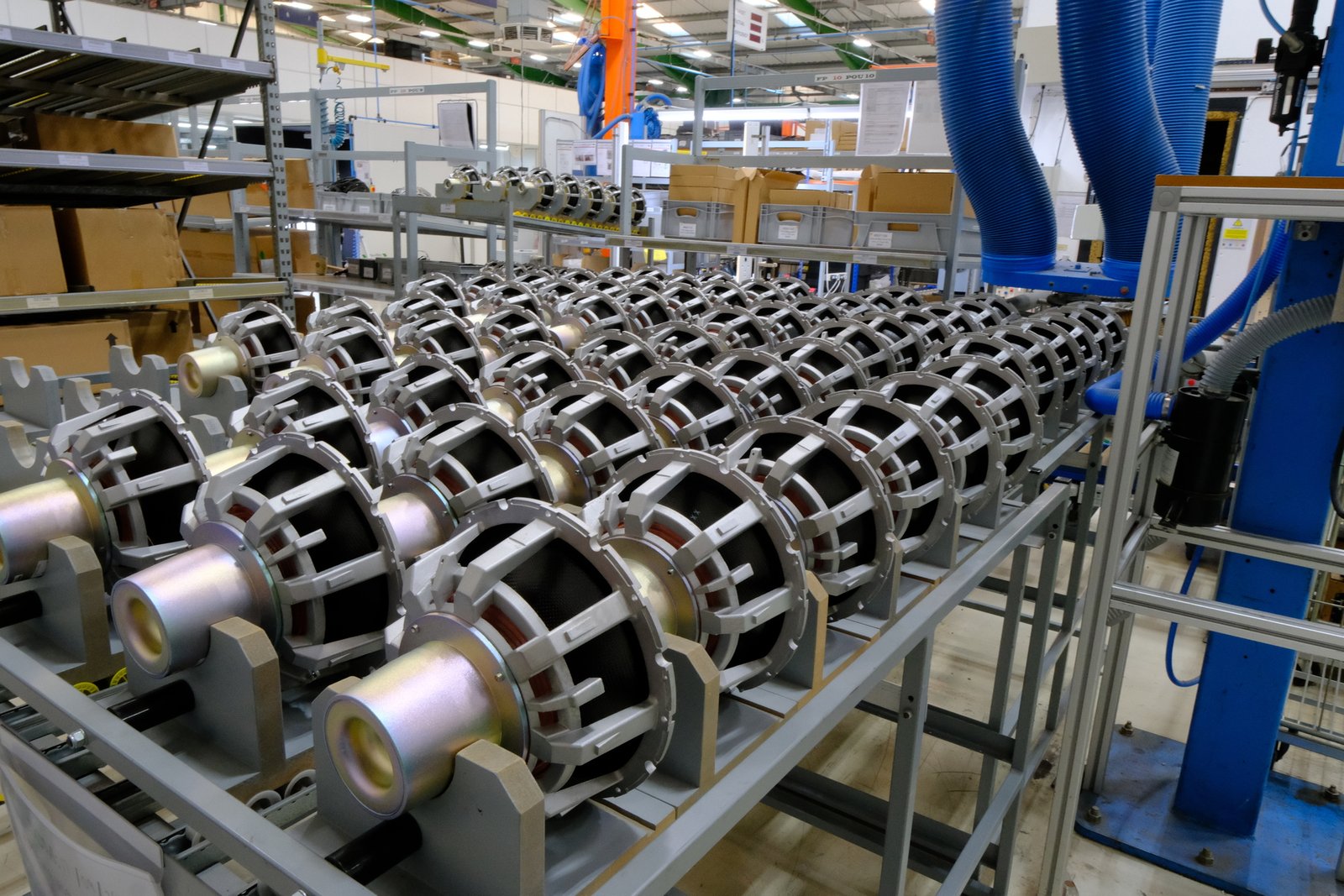
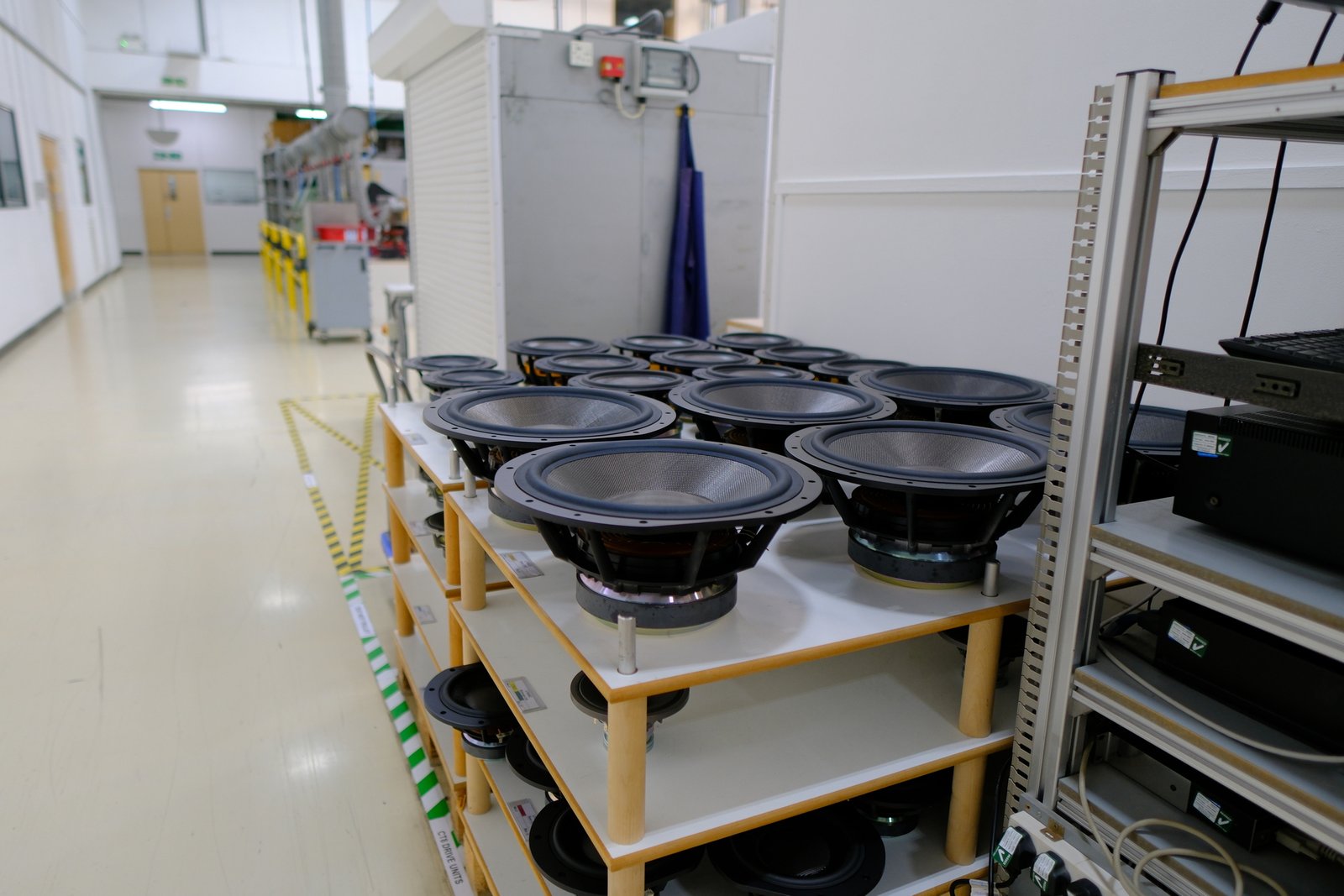
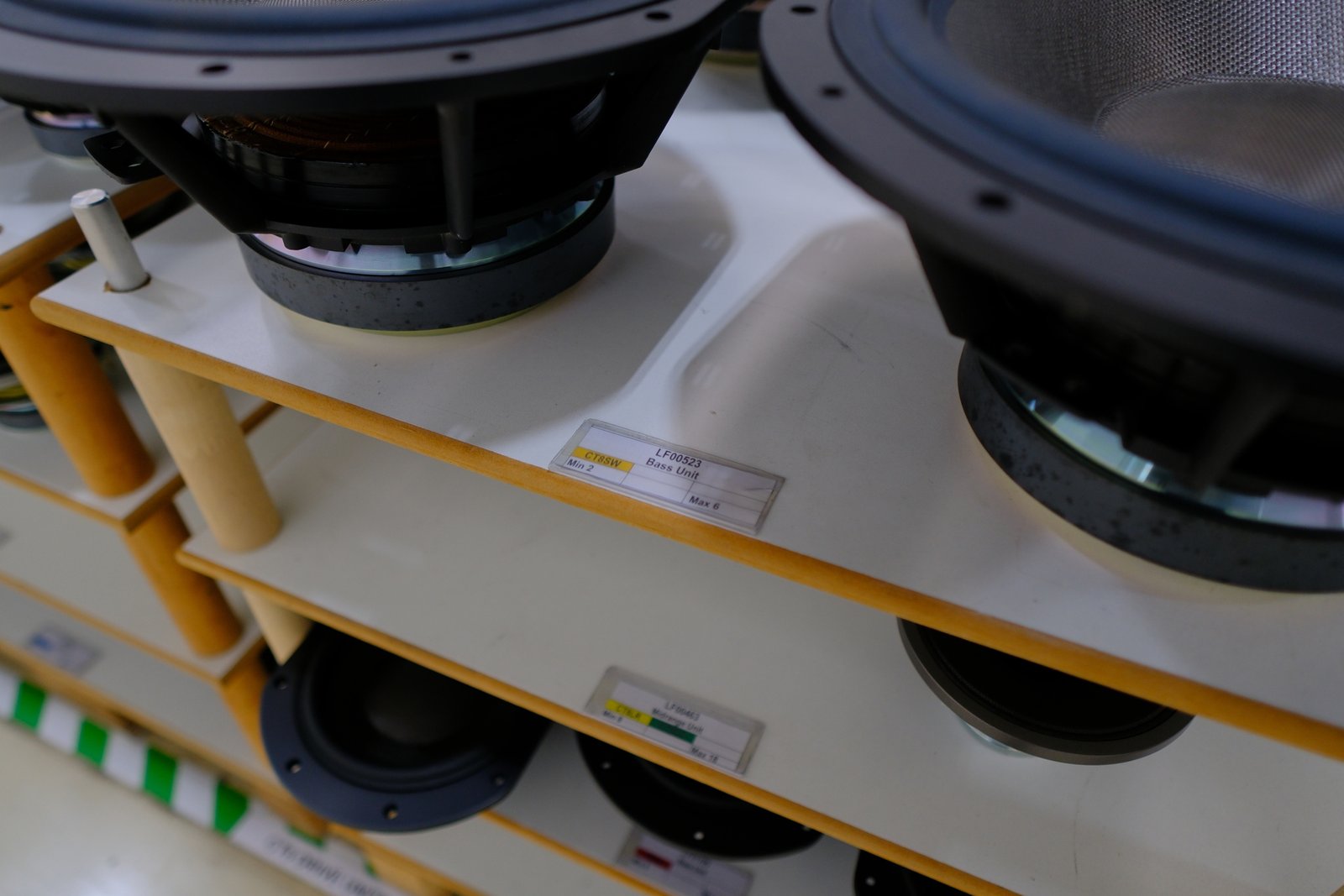
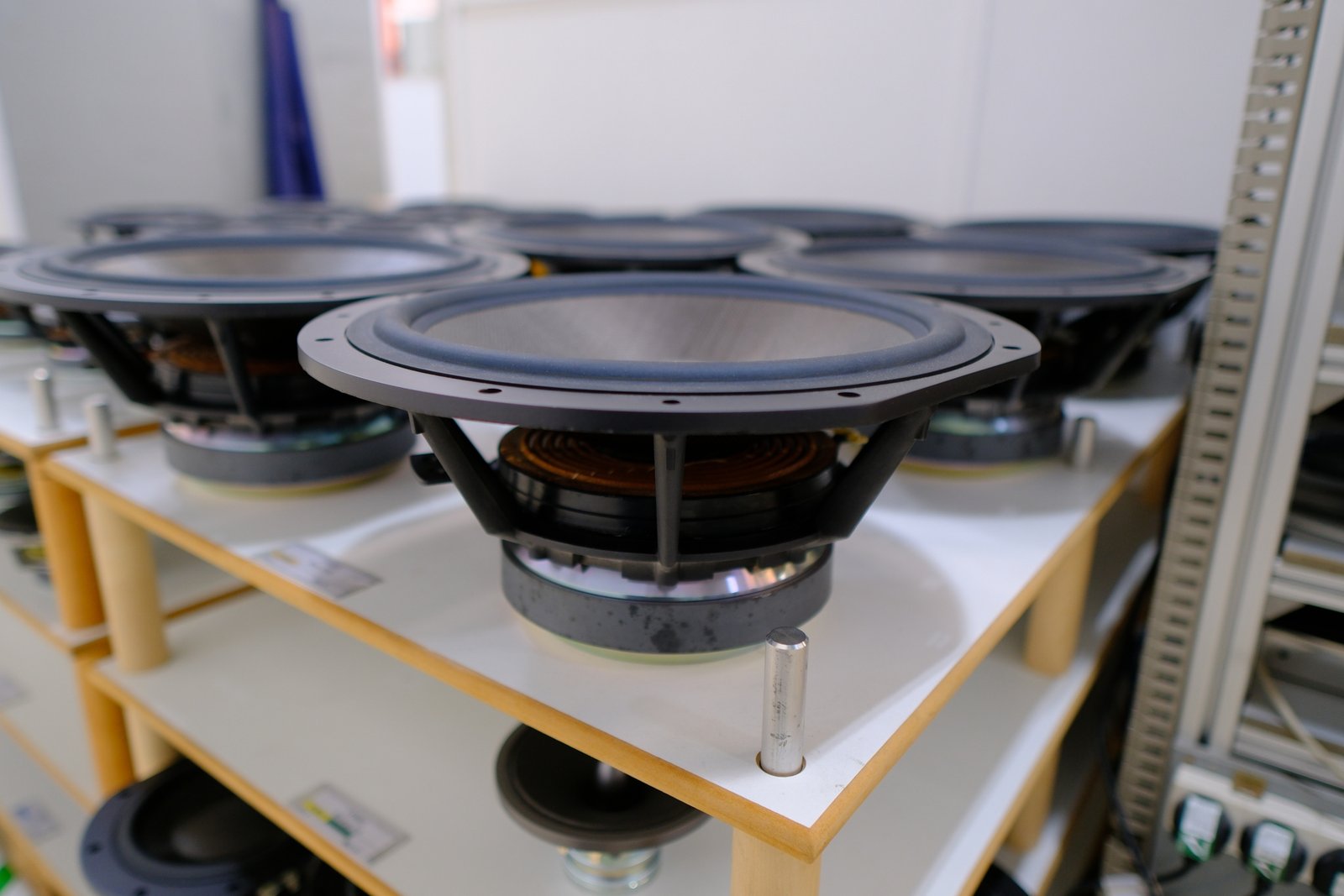
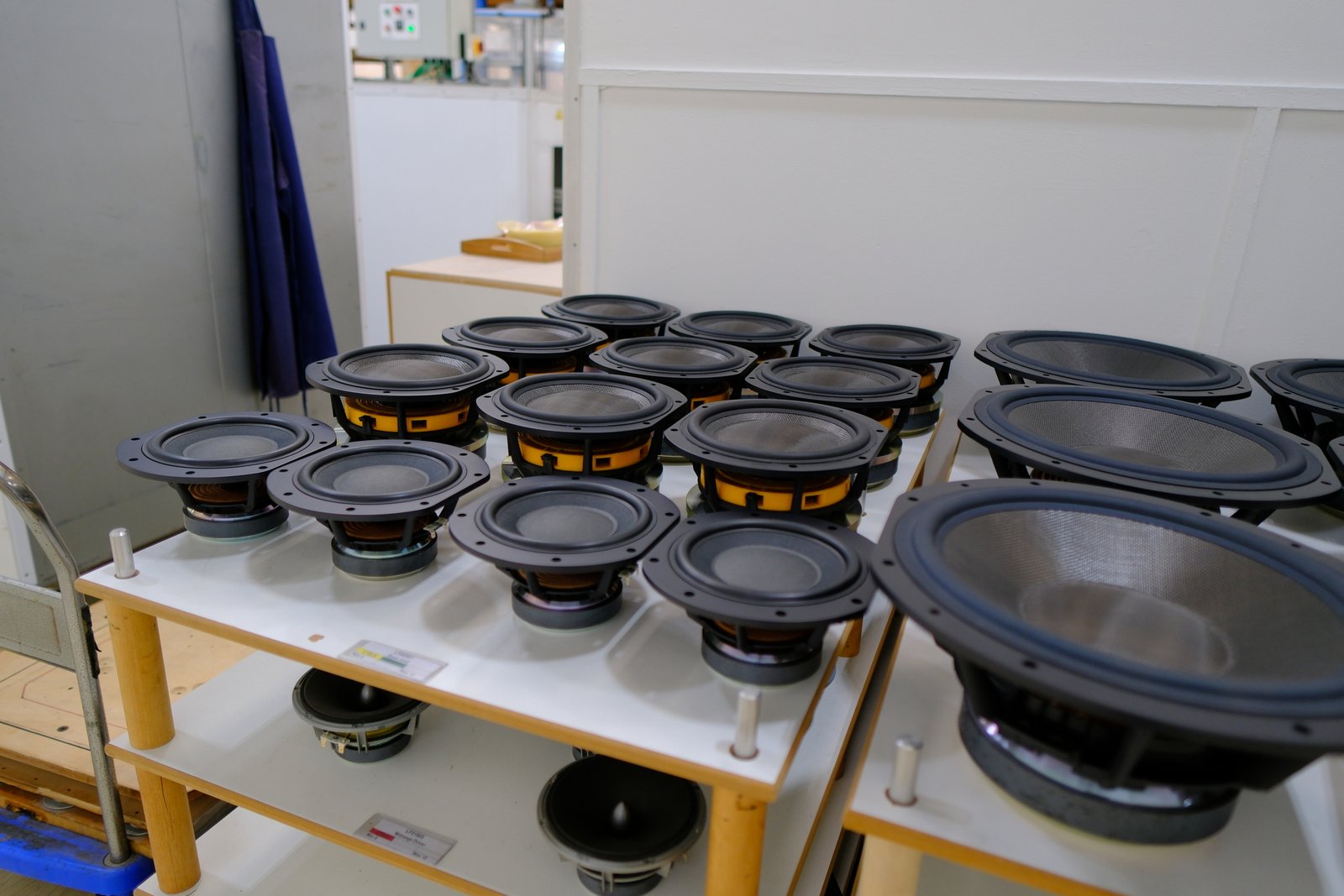
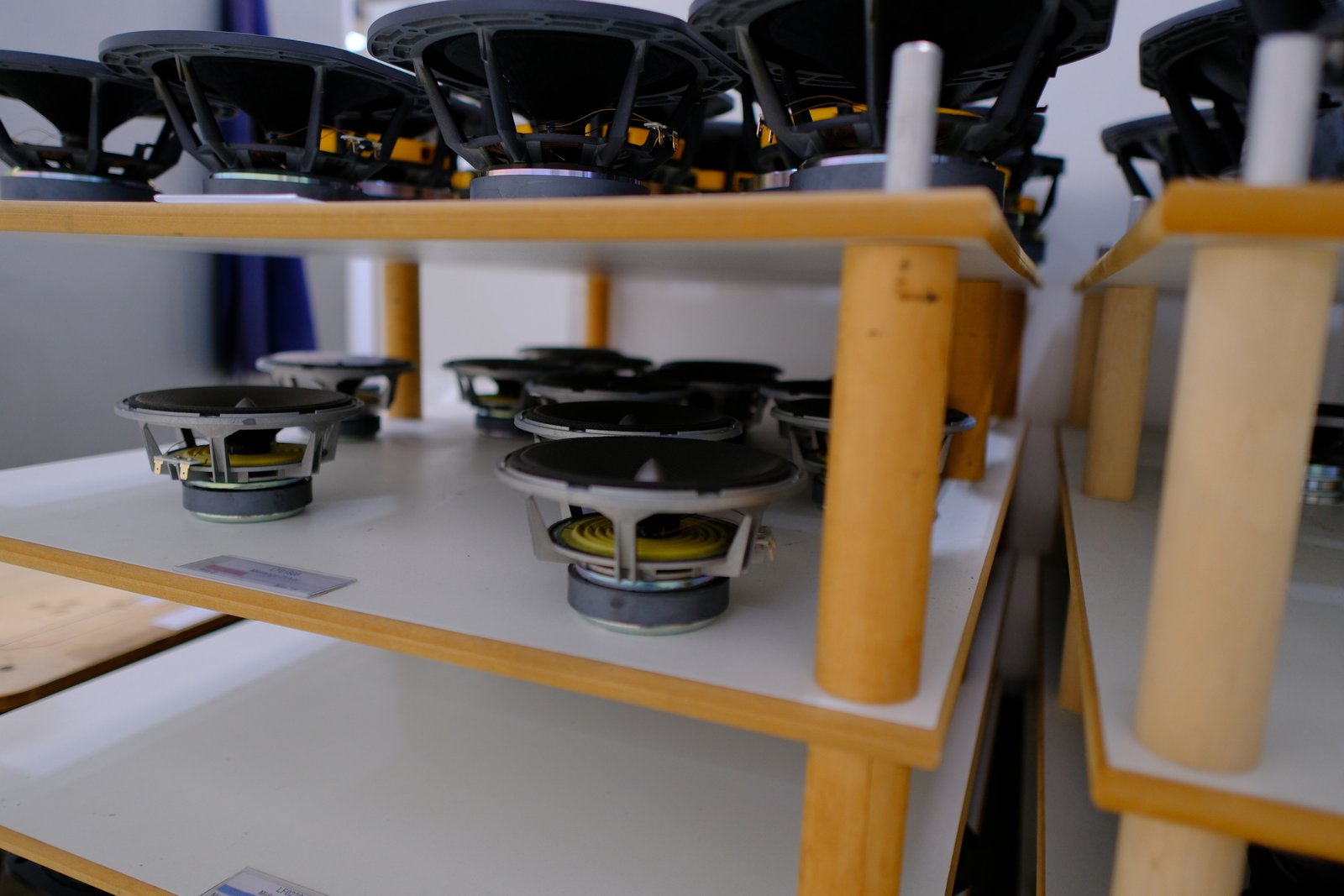
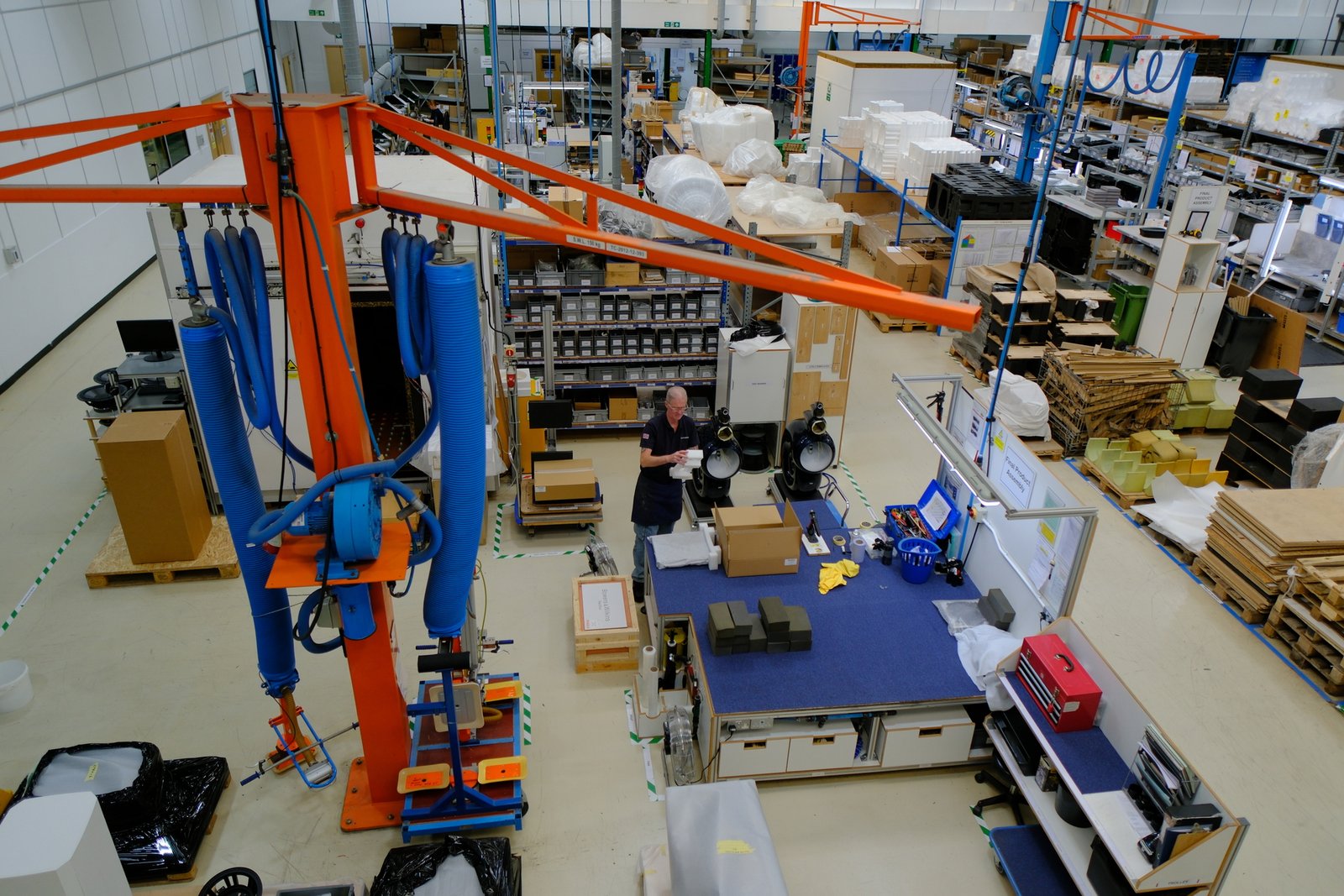
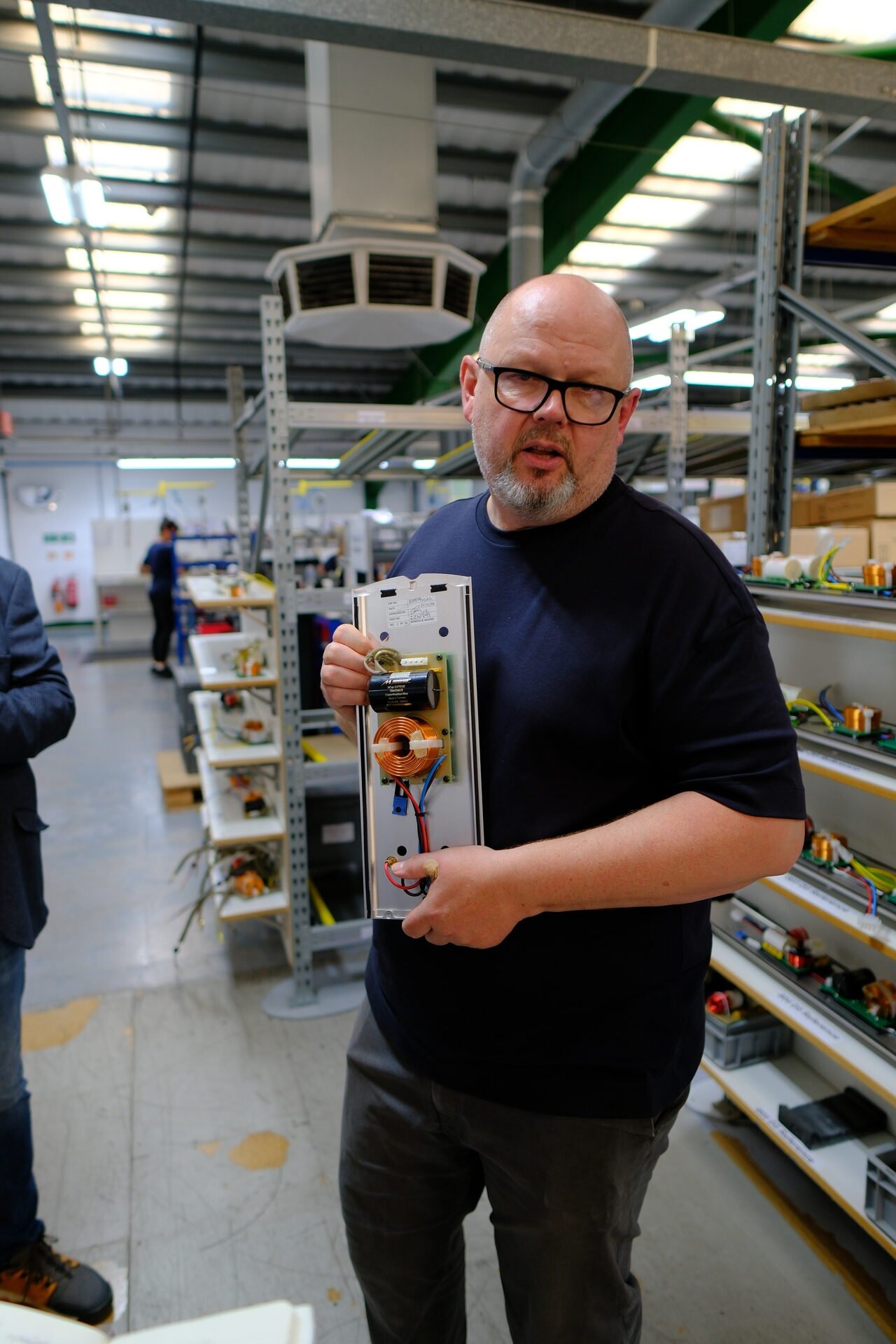
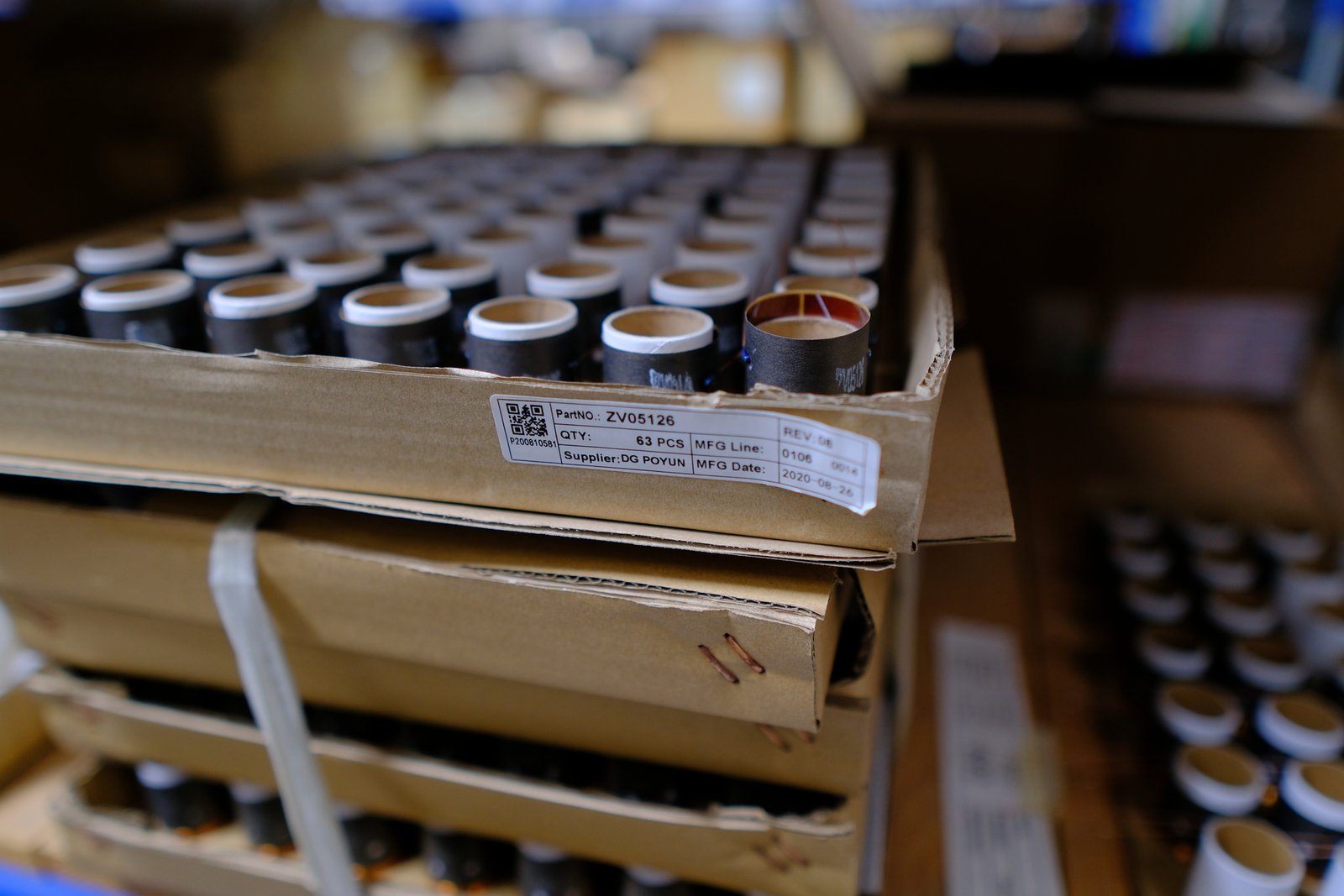
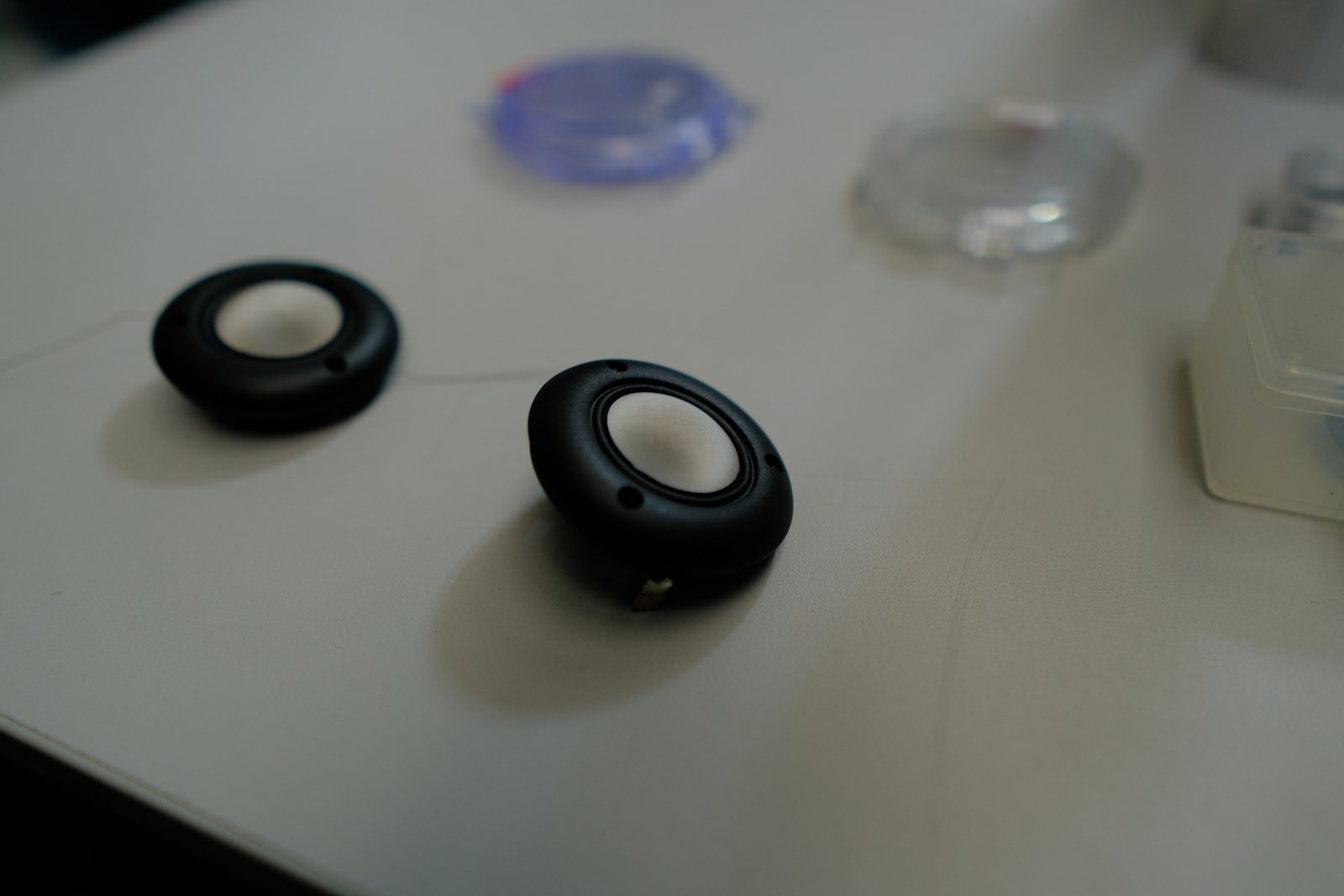
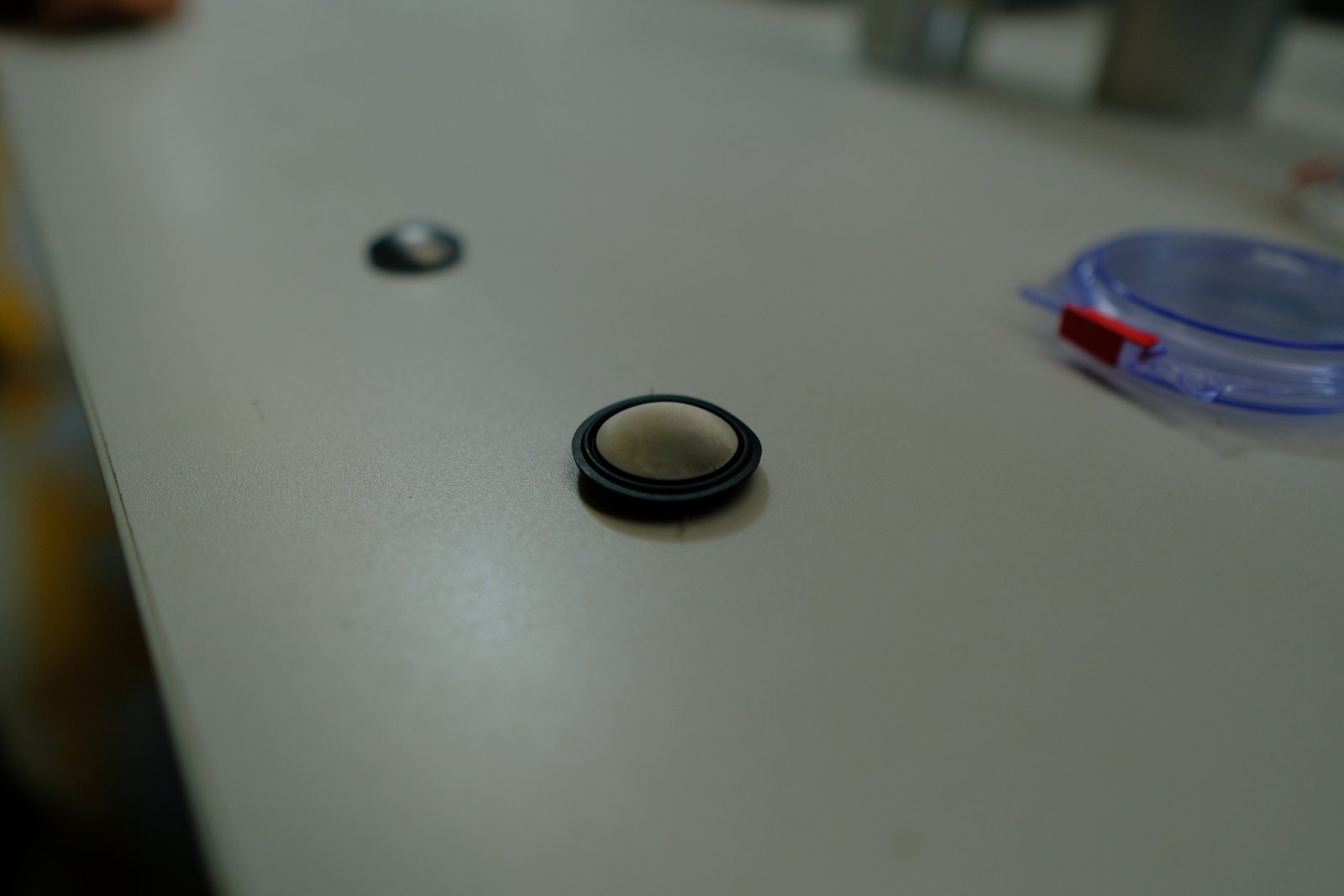
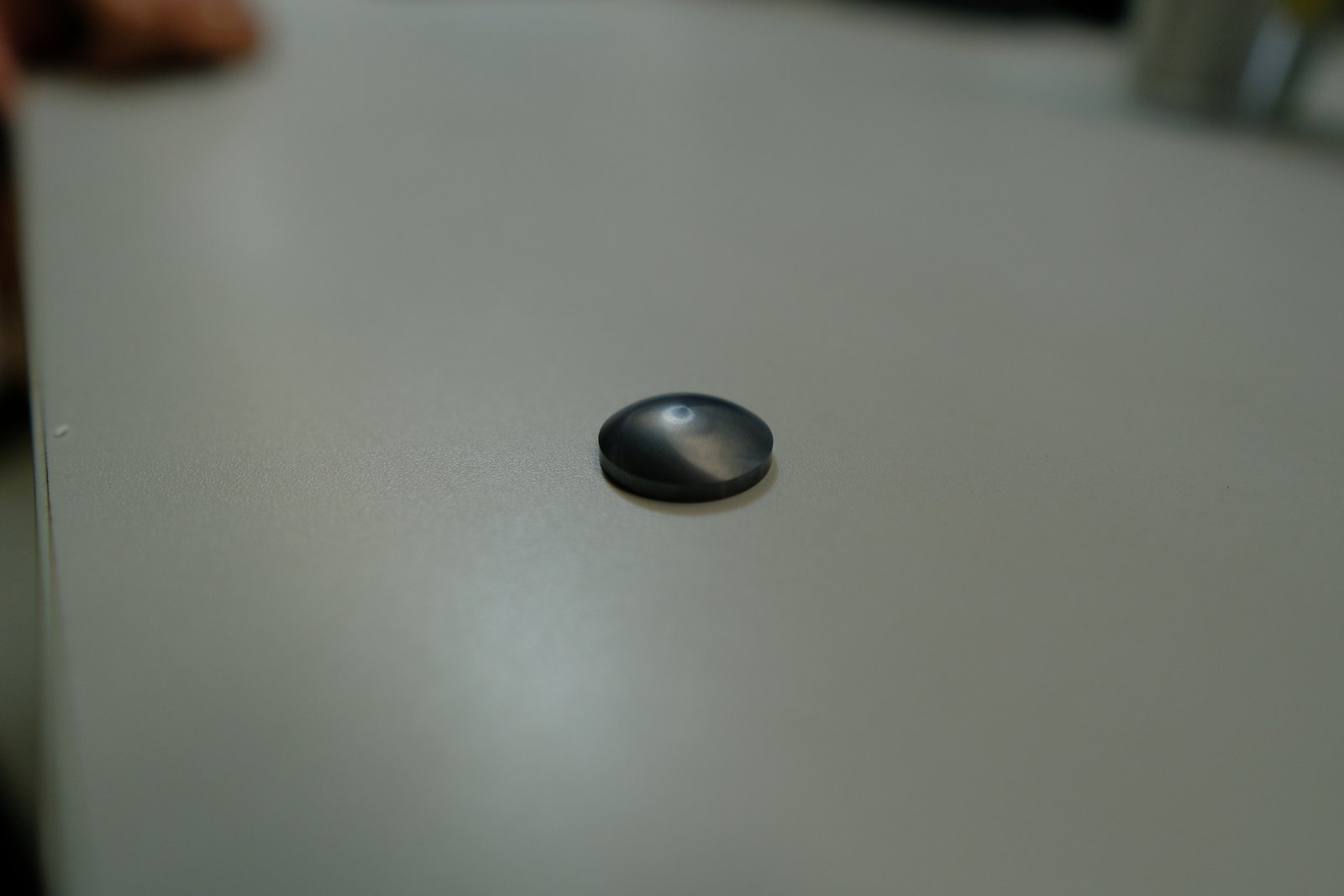

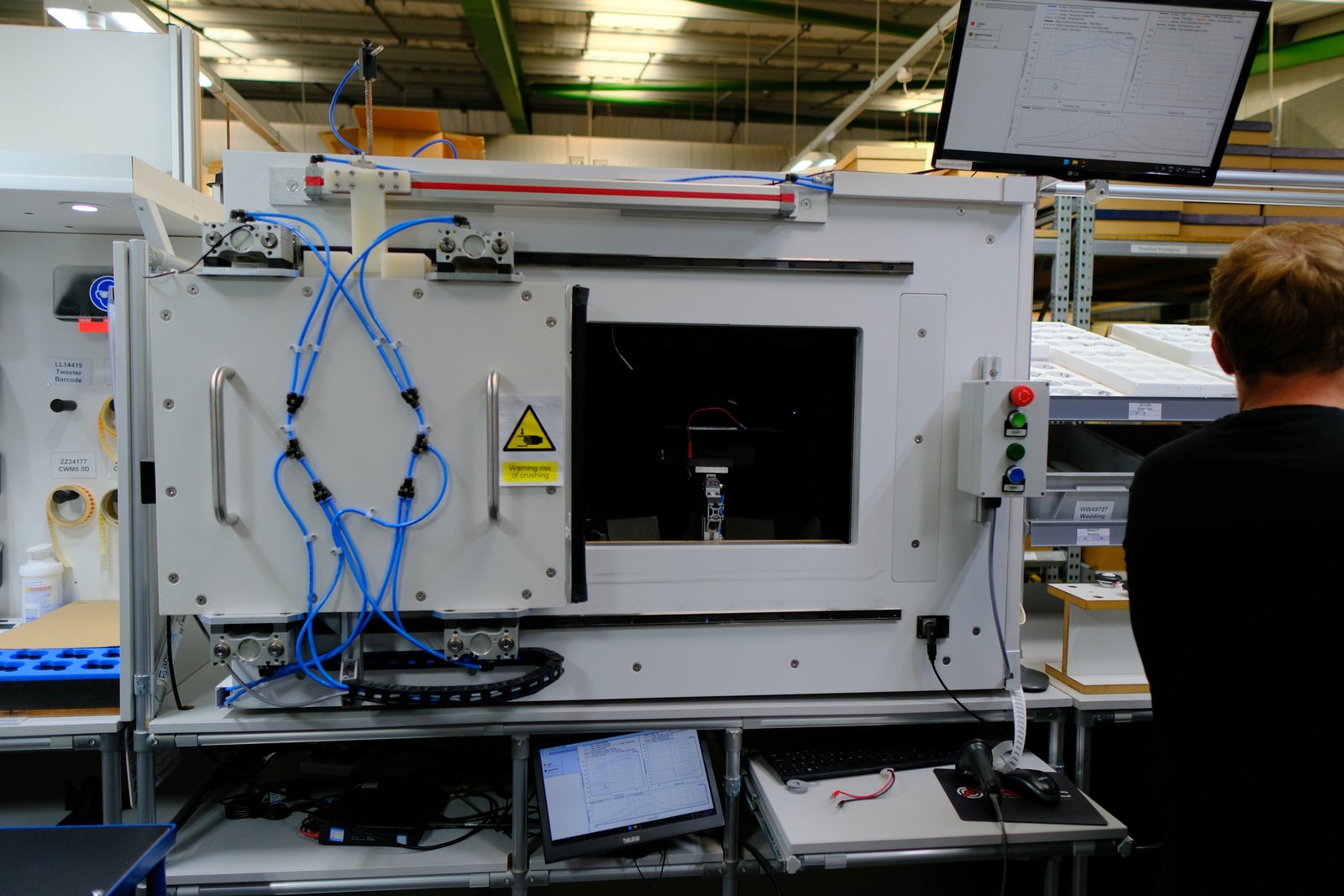
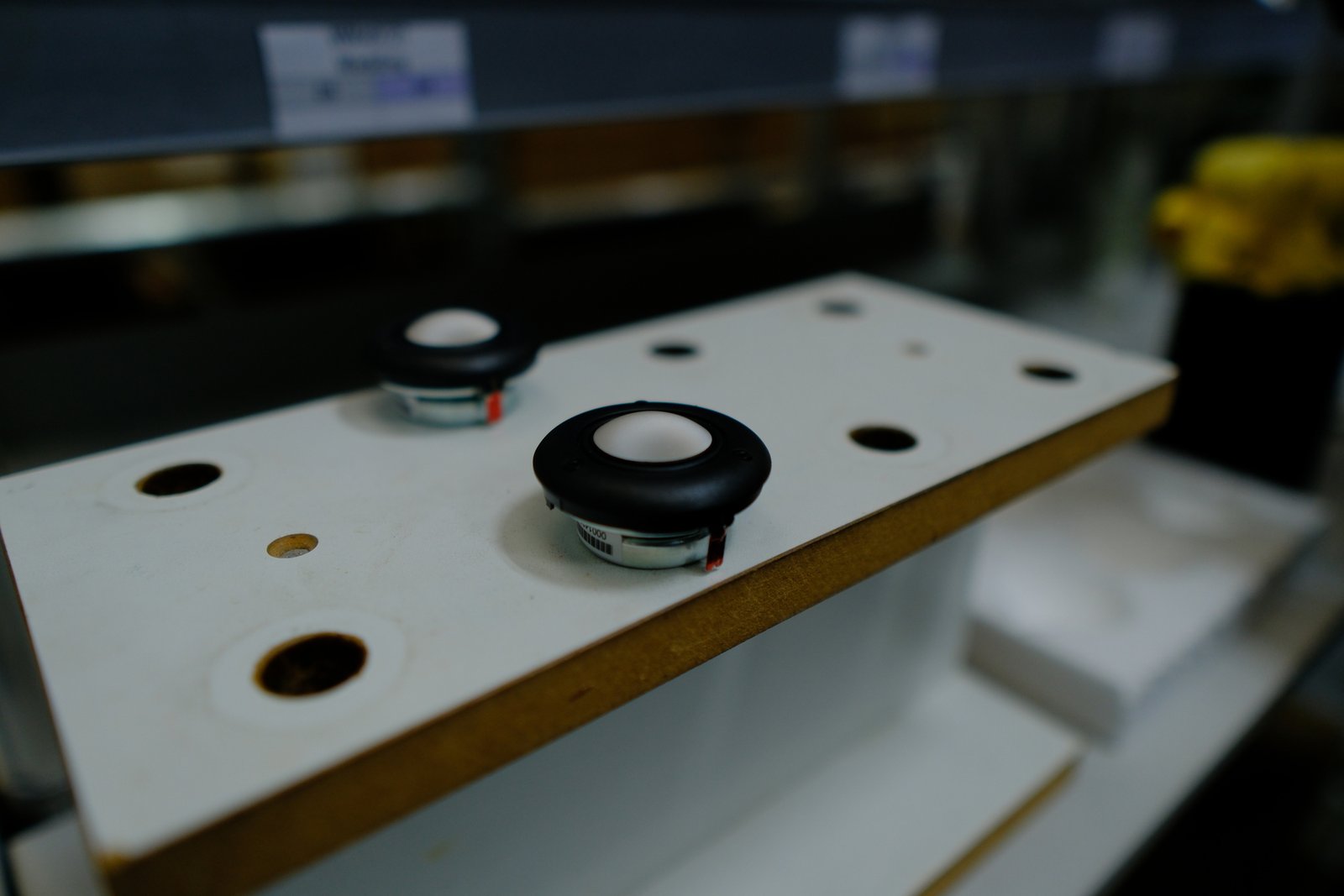
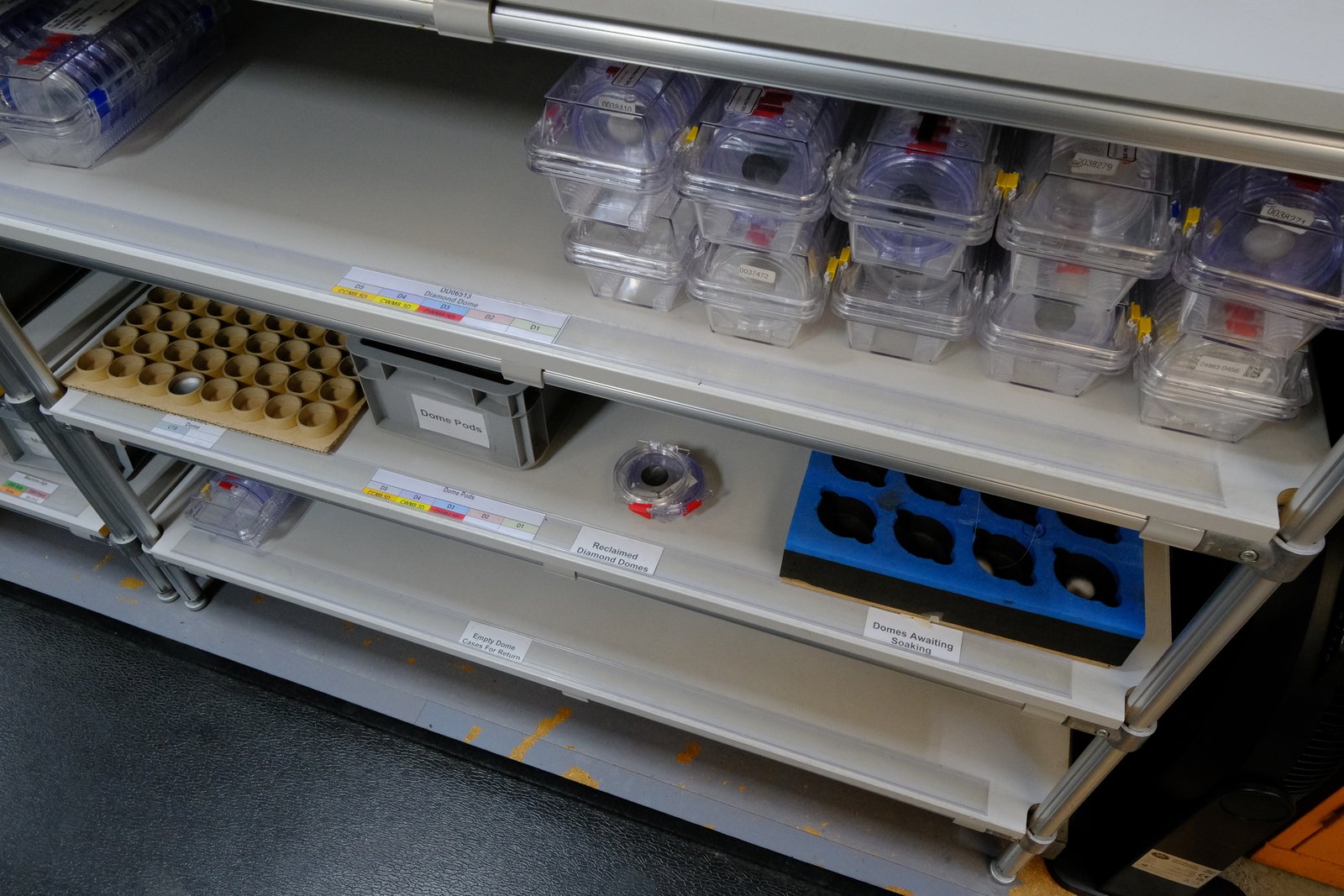
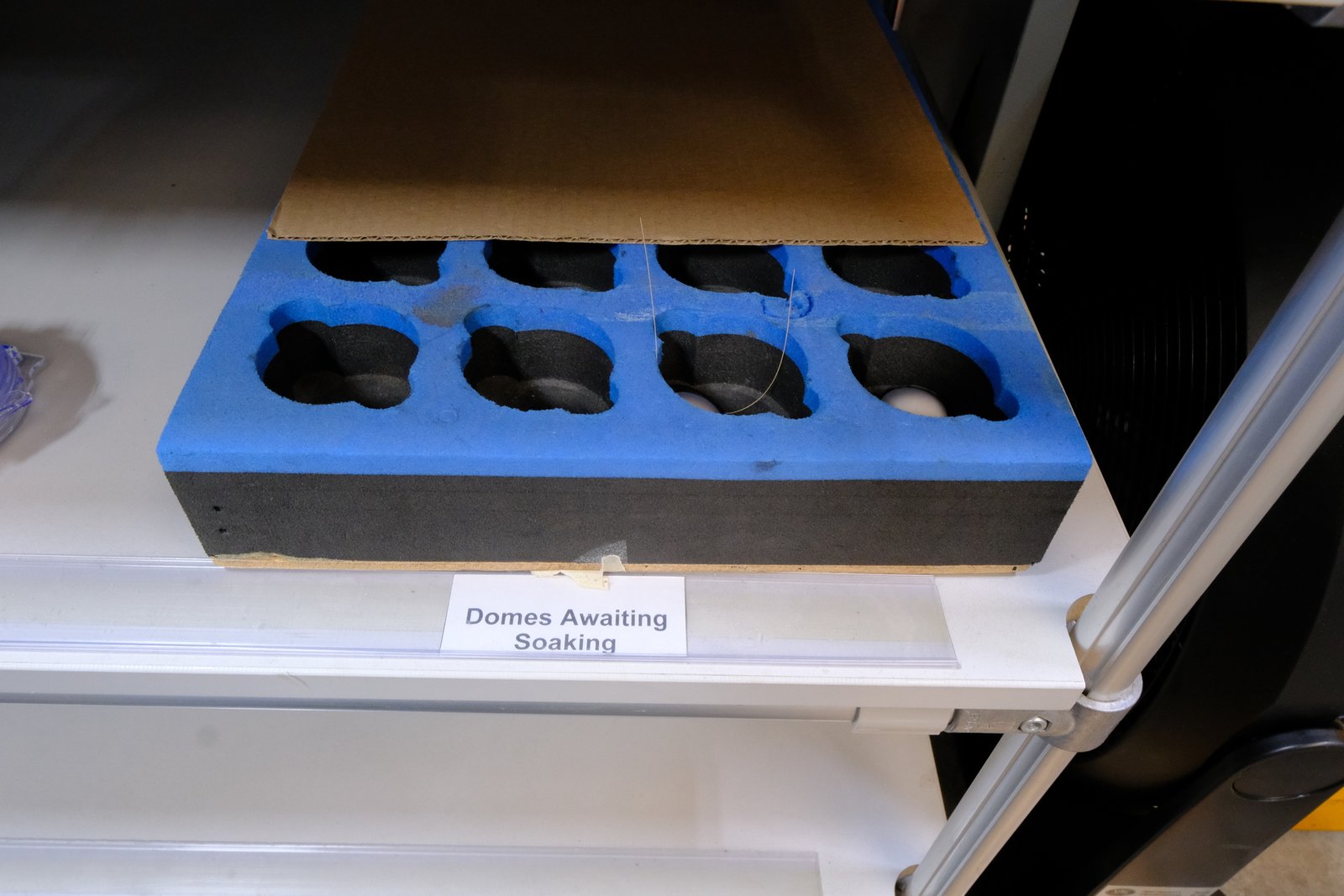
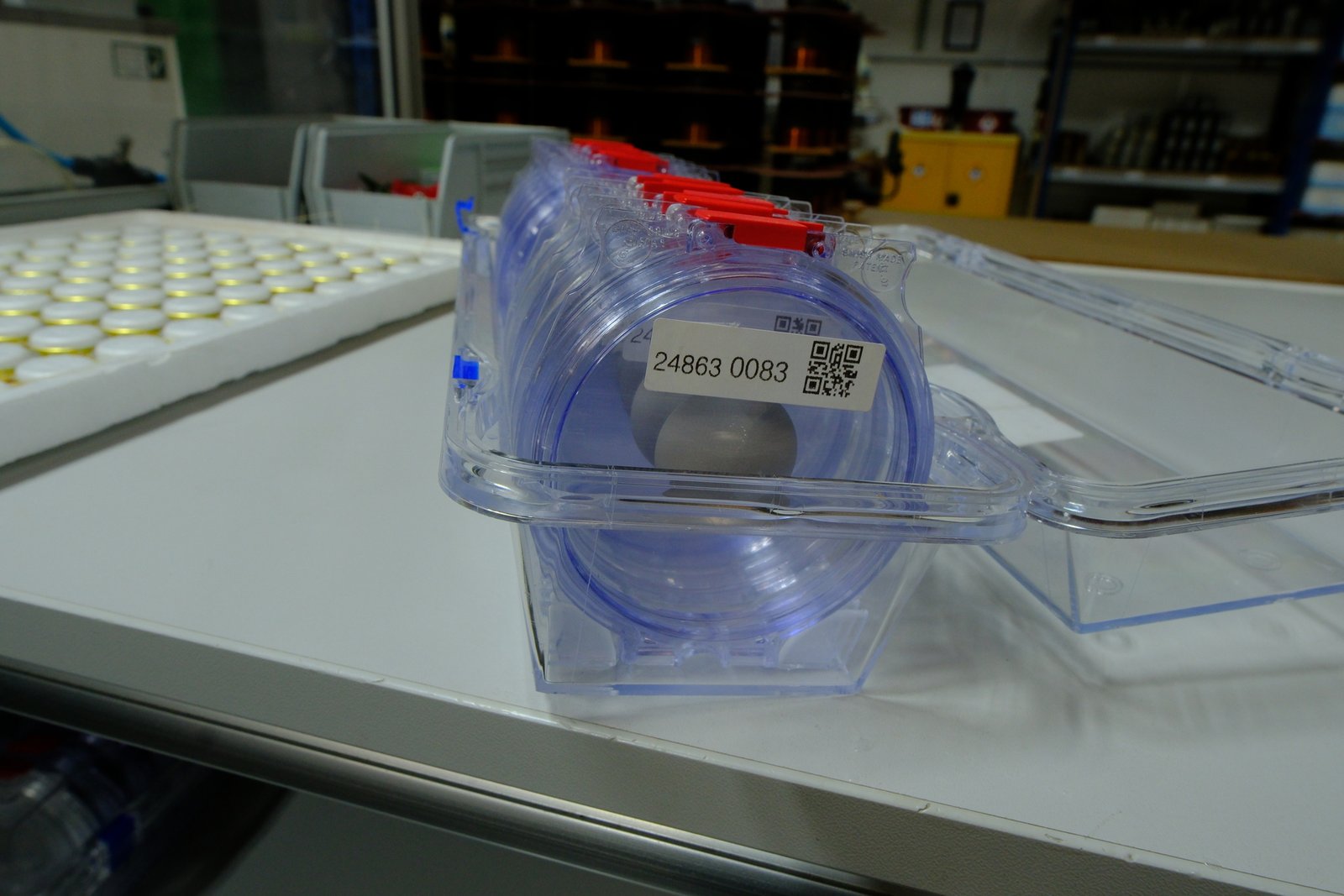

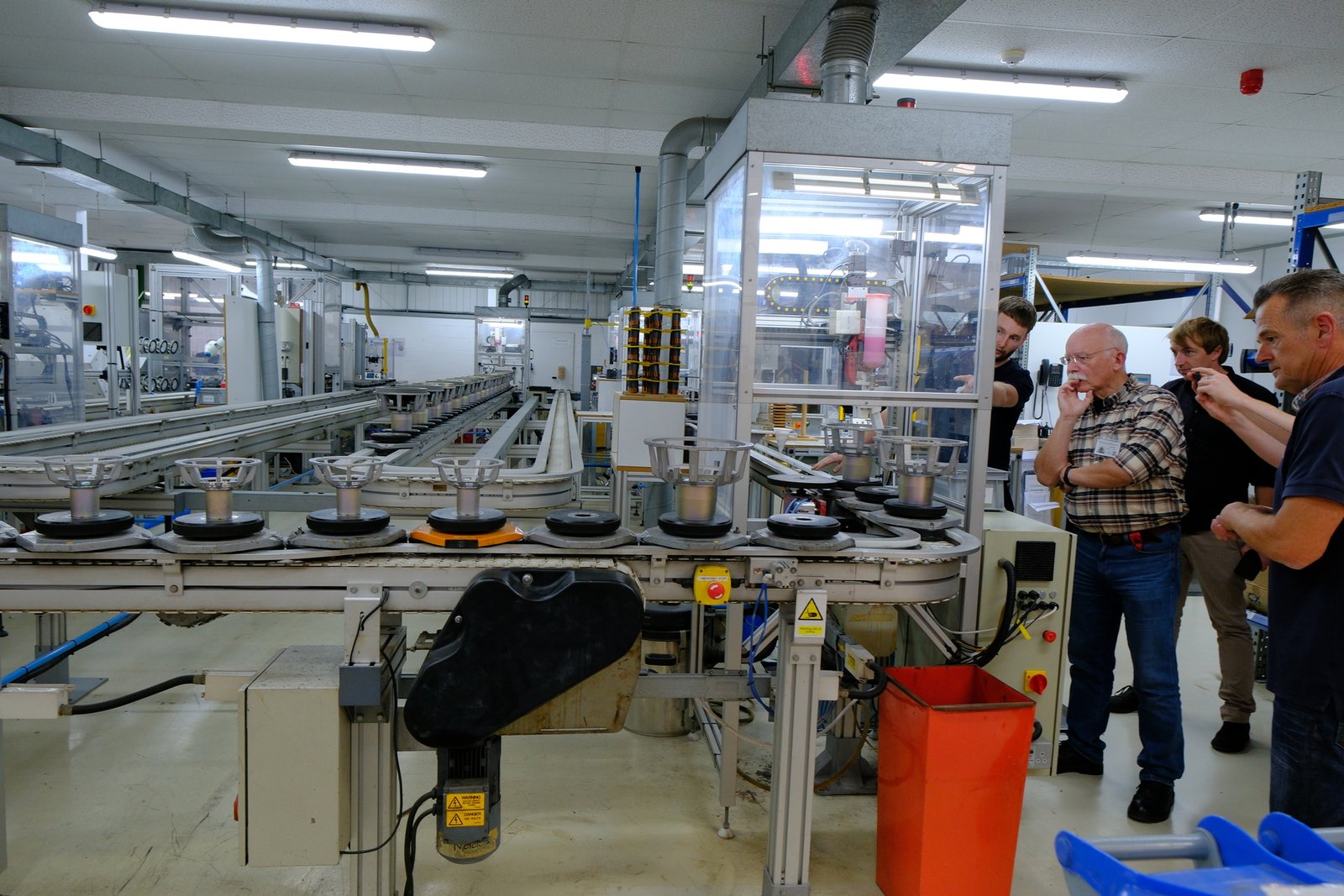
The drive unit assembly line is partly automated.
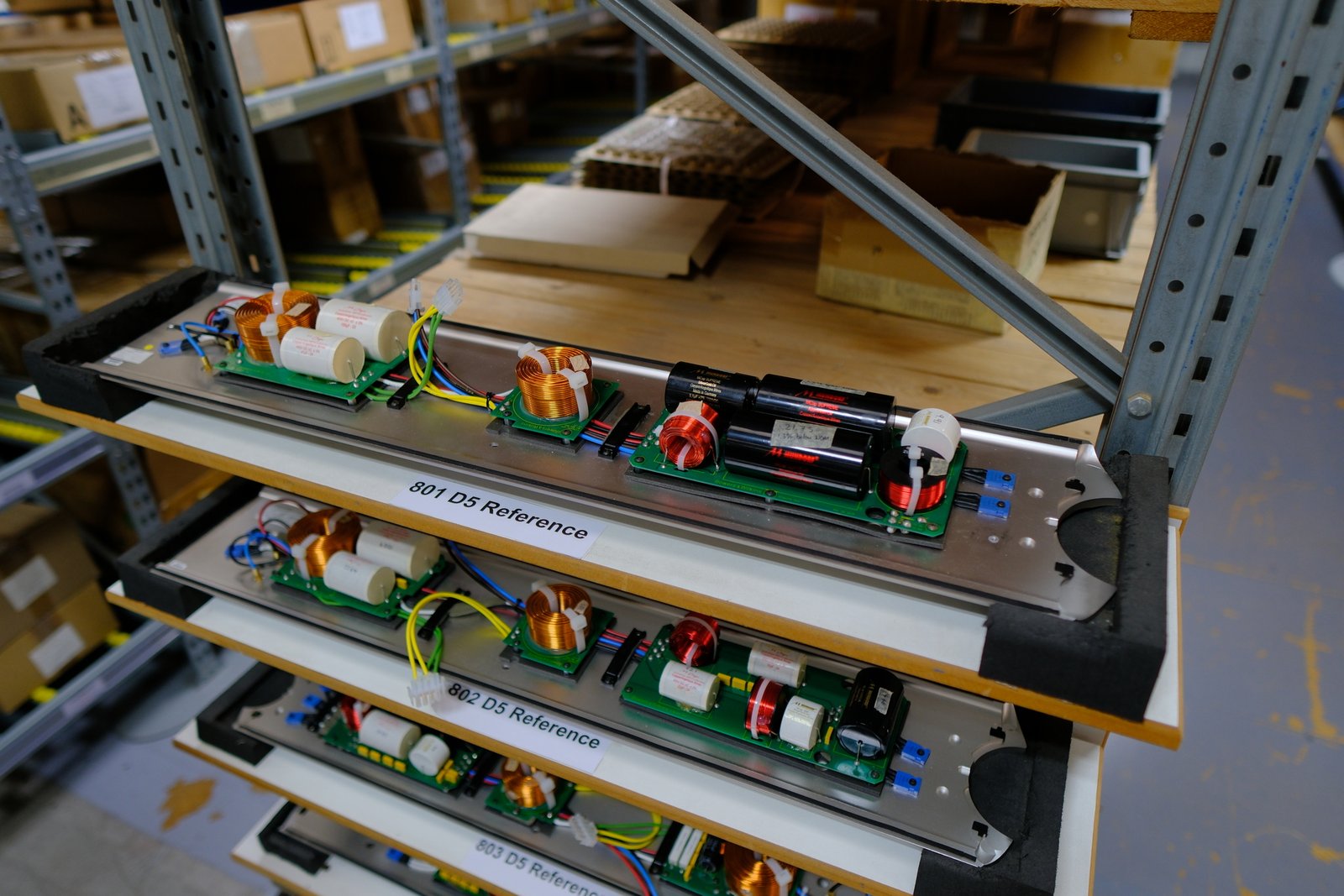
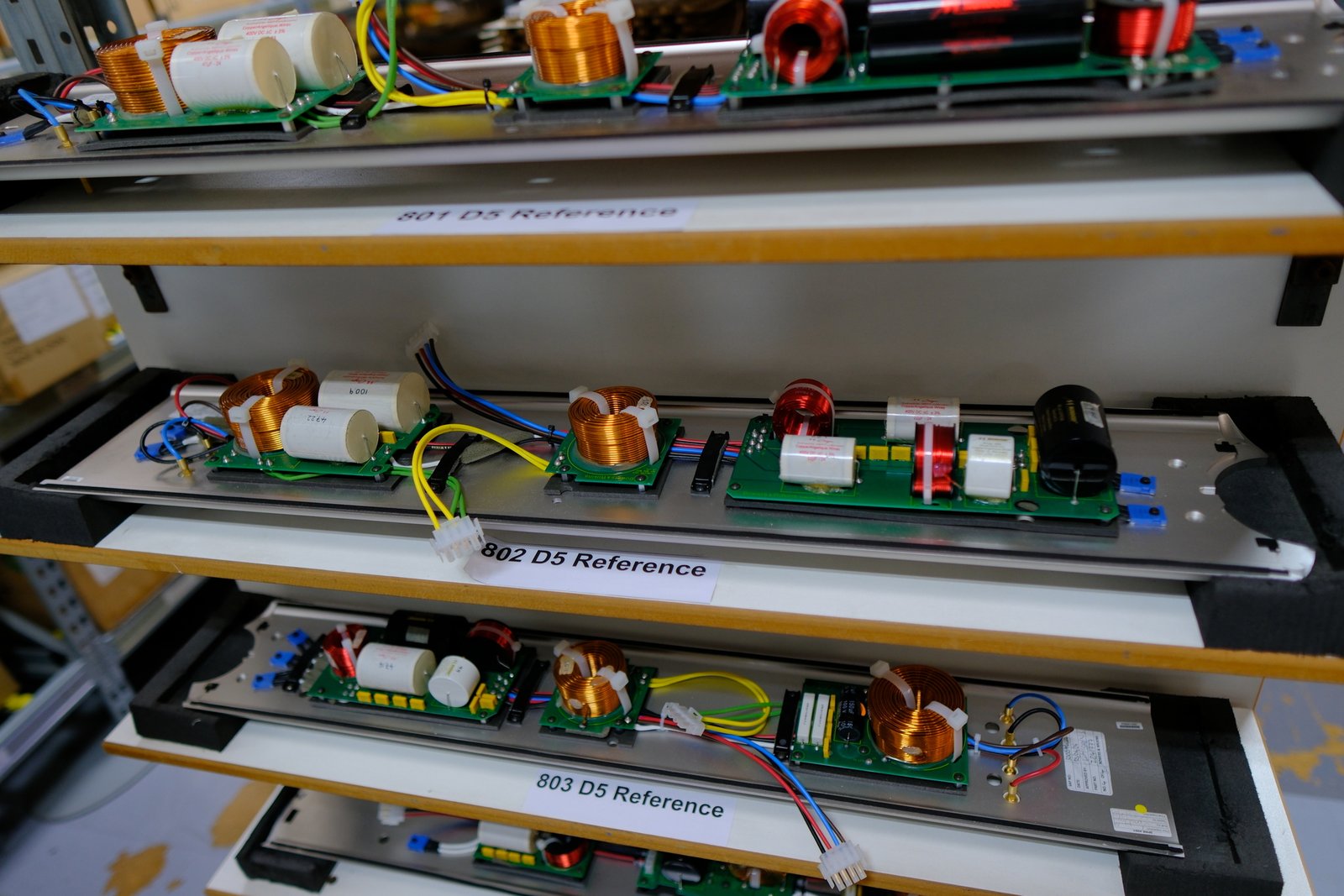
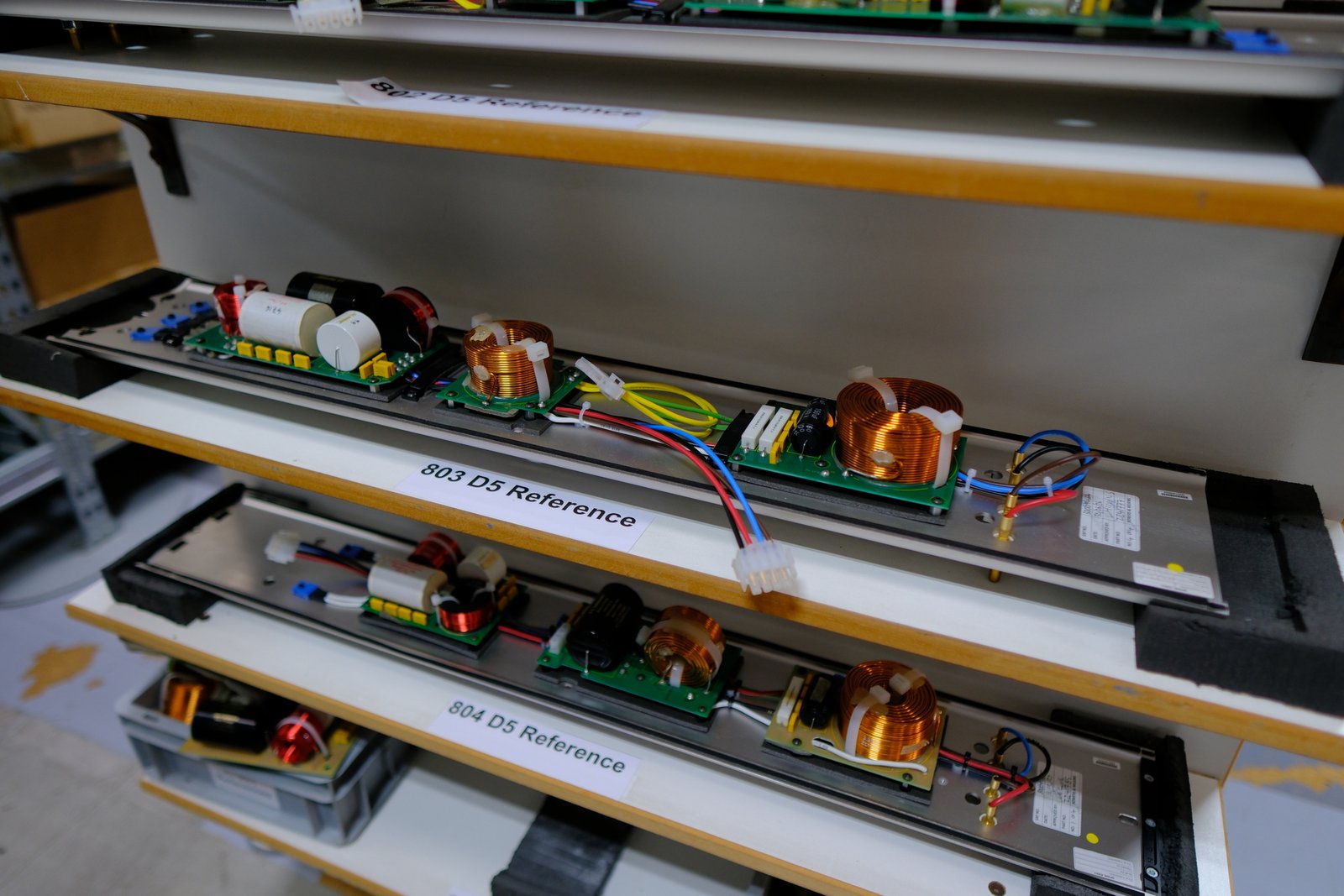
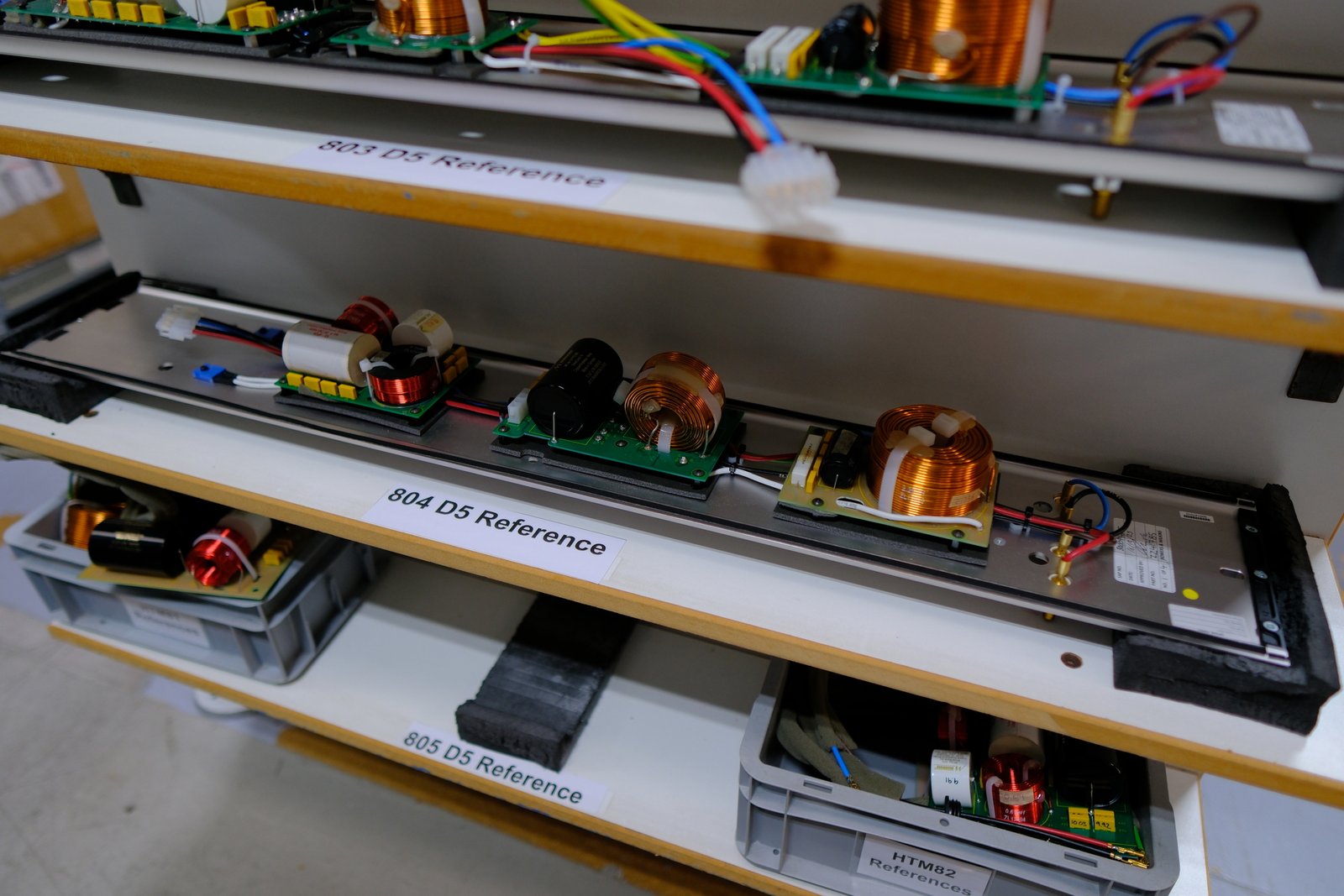
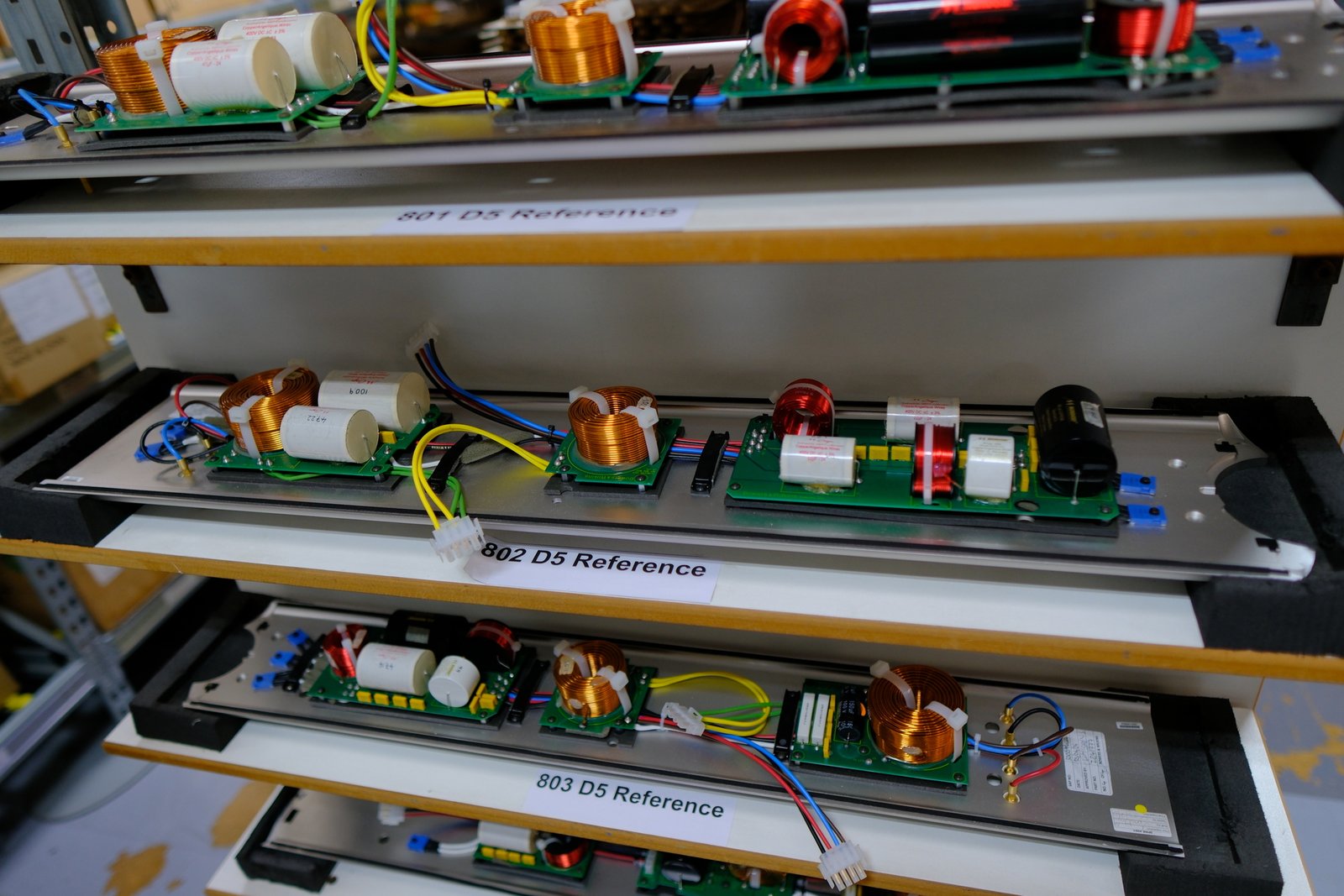
The crossover area had one detail we found particularly interesting in the whole factory. Next to the assembly benches, there is a rack of shelves, each one with a complete crossover on its aluminium plate and a label: 801 D5 Reference, 802 D5 Reference, 803 D5 Reference, 804 D5 Reference, 805 D5 Reference. These are the golden samples, and every crossover built for that model is checked against them. On the 801 D5 reference board we could read the parts: Mundorf MCap Supreme capacitors, a Mundorf MCap Supreme SilverGold Oil among them, air core inductors, and small handwritten labels stuck on the capacitors with the measured values.
Final Assembly, Test and the Warehouse
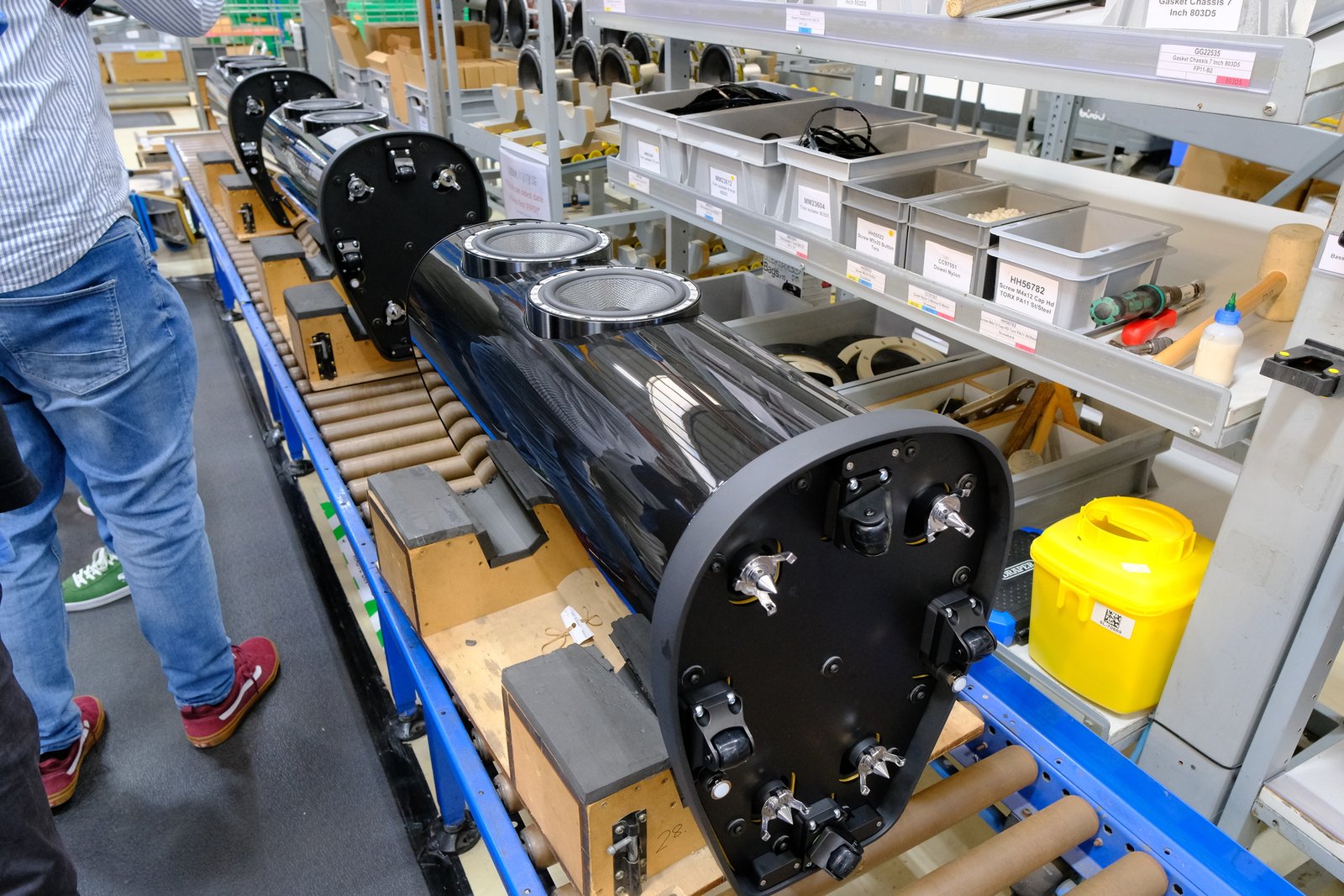
Next we see cabinets, drivers, and crossovers meet on the final assembly line. When we passed, a row of floorstander cabinets in gloss black were lying on a roller line, backed up, with the crossover plates and terminals already fitted and the drive units in bins on the shelves above. A finished floorstander, still in its protective film, was standing at the end of the line.
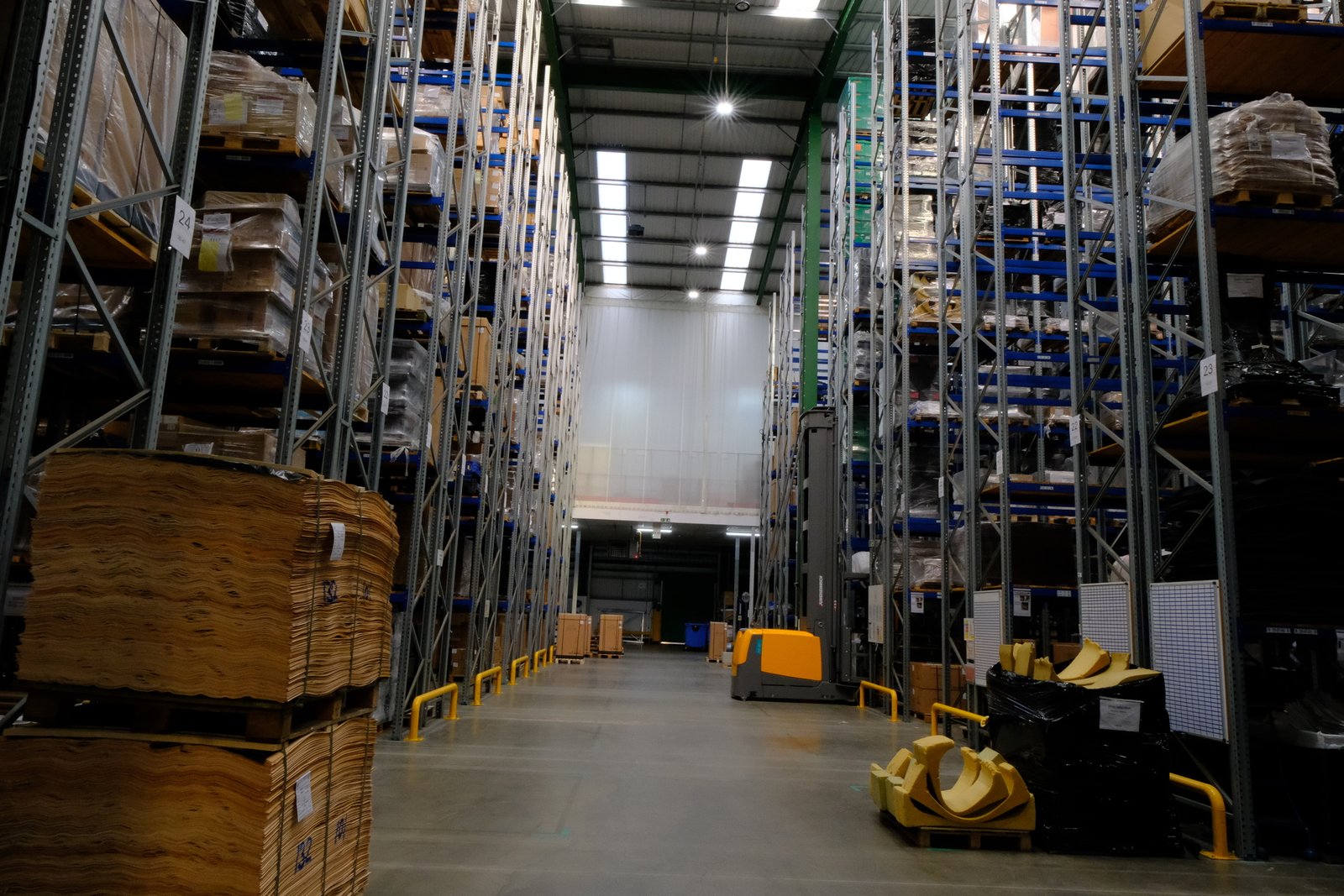
Here we can see the reference loudspeakers used for quality control at the end of the assembly line. Easily recognisable by their distinctive light-blue finish, these speakers serve as the benchmarks against which newly manufactured units are measured.
Once assembly is complete, every loudspeaker undergoes acoustic testing, with its measured performance compared directly against the established reference. This allows Bowers & Wilkins to verify that each finished unit meets the required performance tolerances and behaves consistently with the intended design.
What makes this approach particularly impressive is that quality control isn’t simply about checking whether a speaker works. It’s about ensuring that every unit leaving the factory performs as closely as possible to the reference standard. After all the sophisticated engineering, precision manufacturing, and careful assembly we’ve witnessed, this is the final confirmation that the finished product delivers what its designers intended.
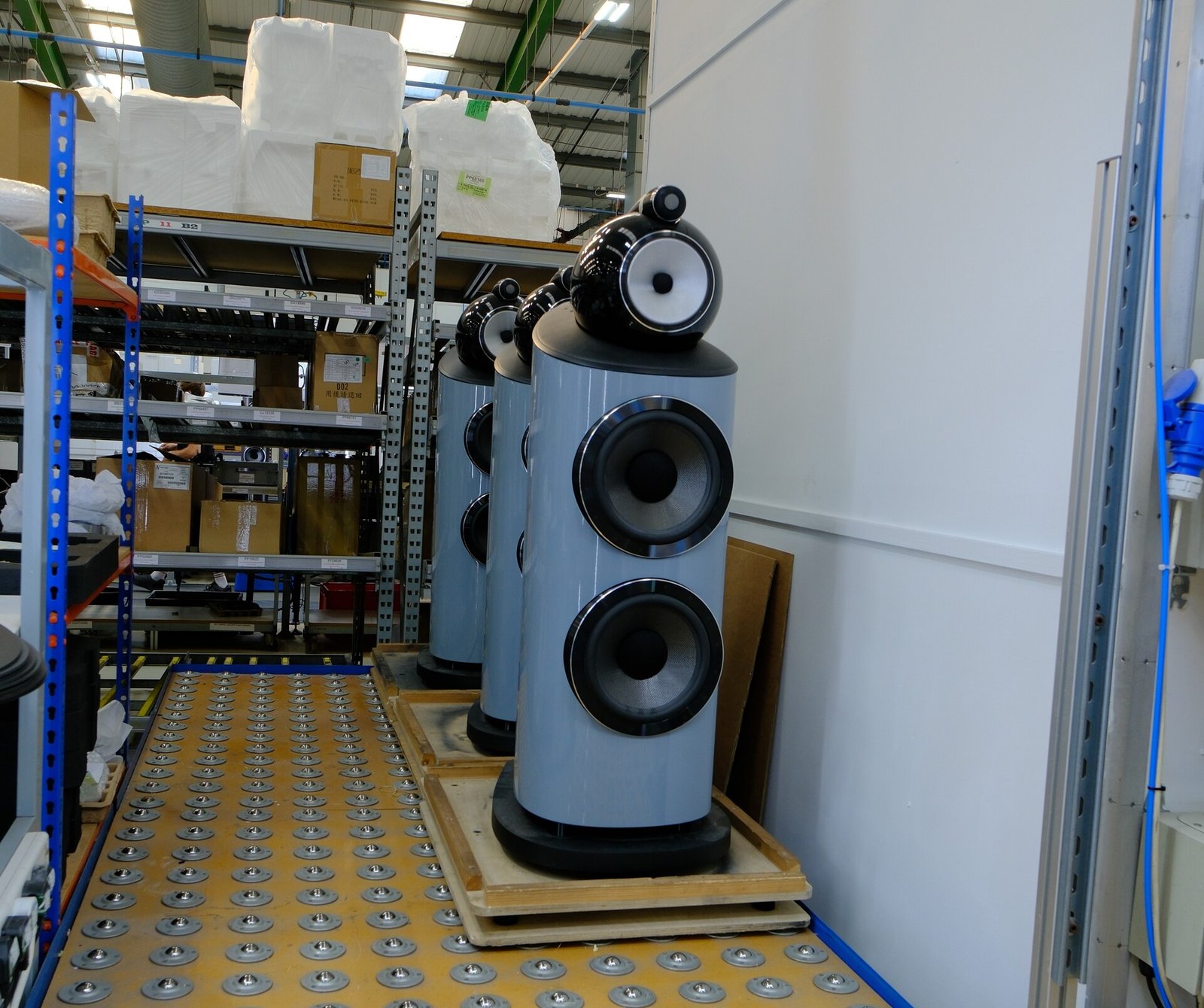
Just a small snippet of the warehouse
Nautilus
The last stop on the factory tour was the Nautilus workshop, and it was the emotional part of the day.
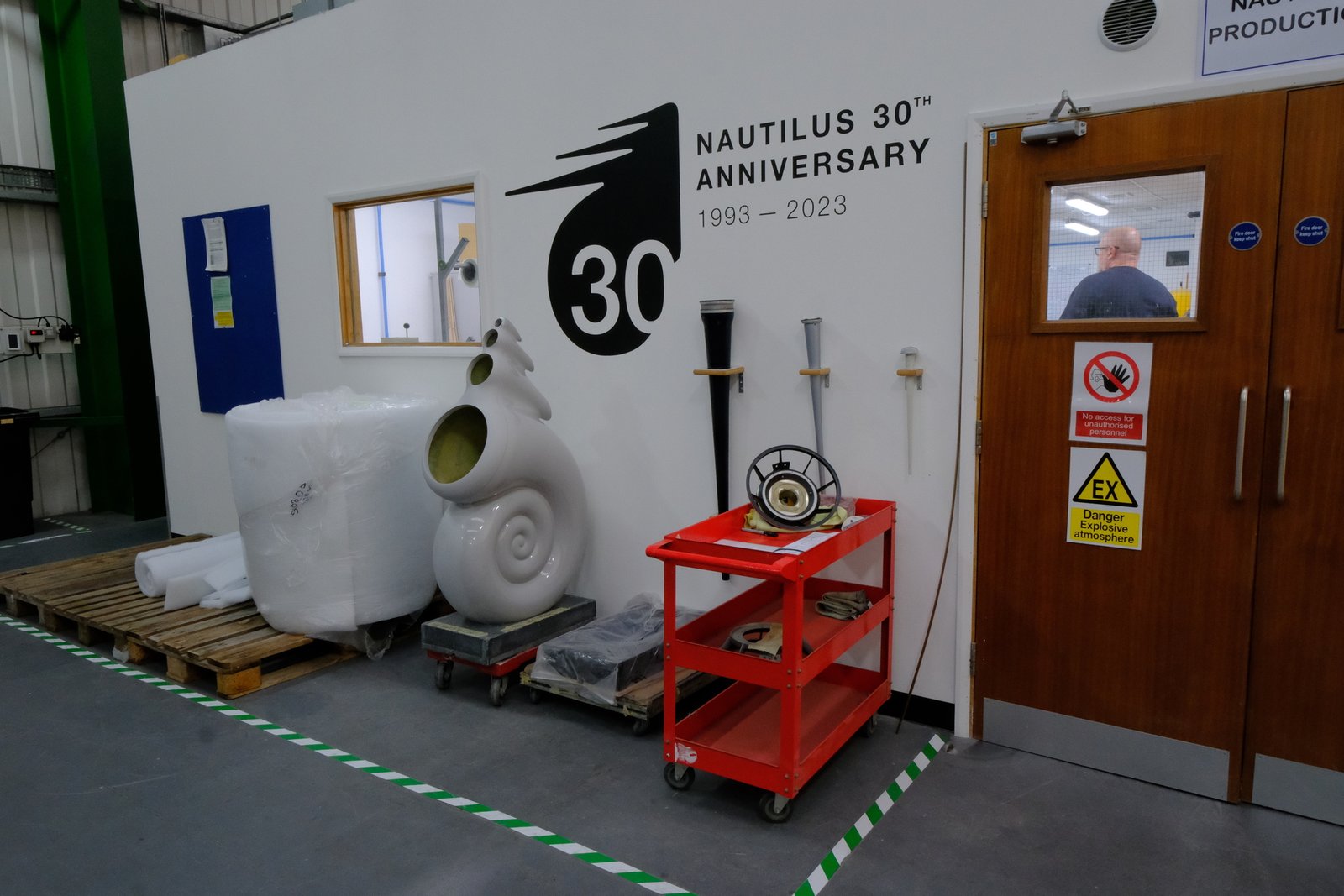
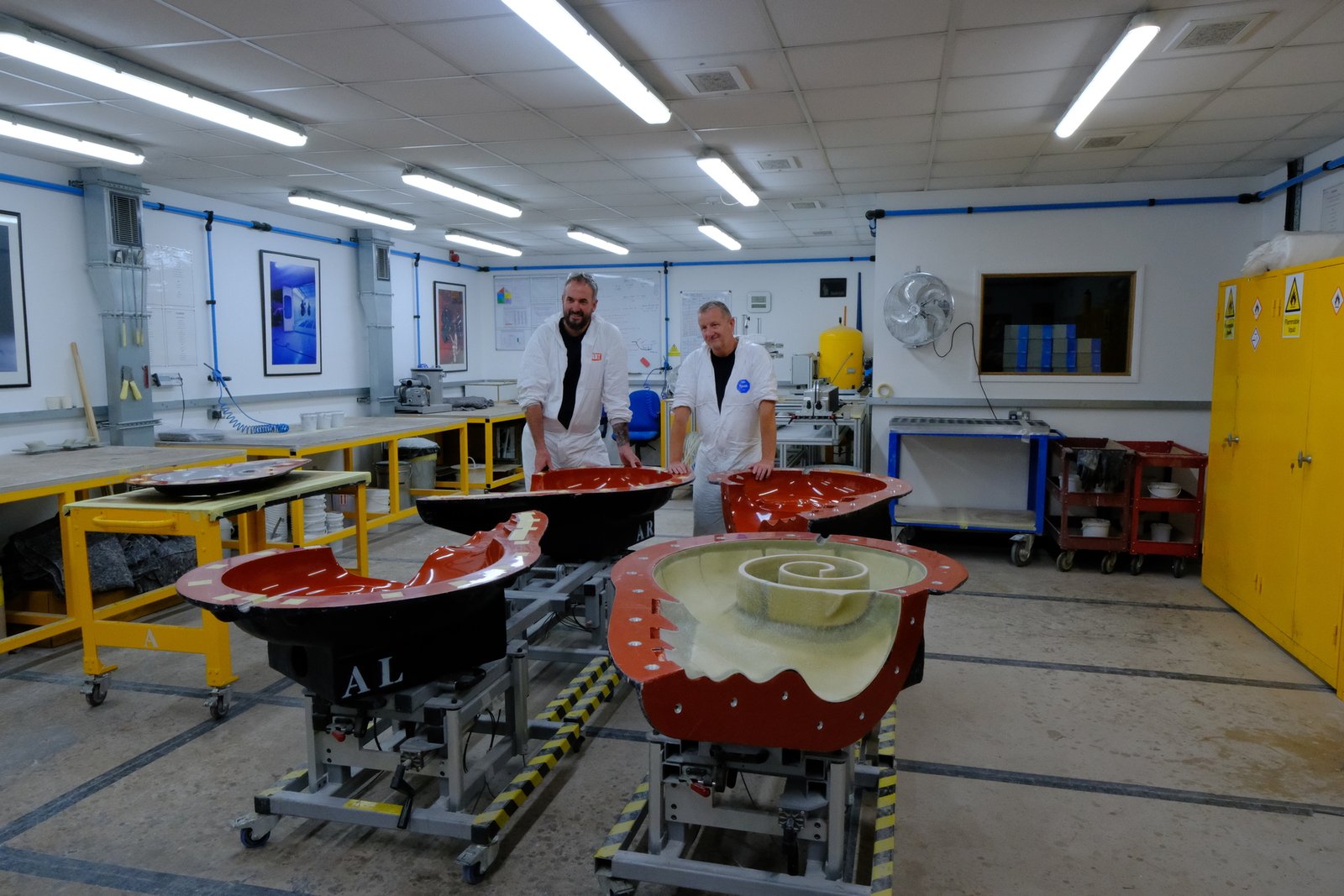
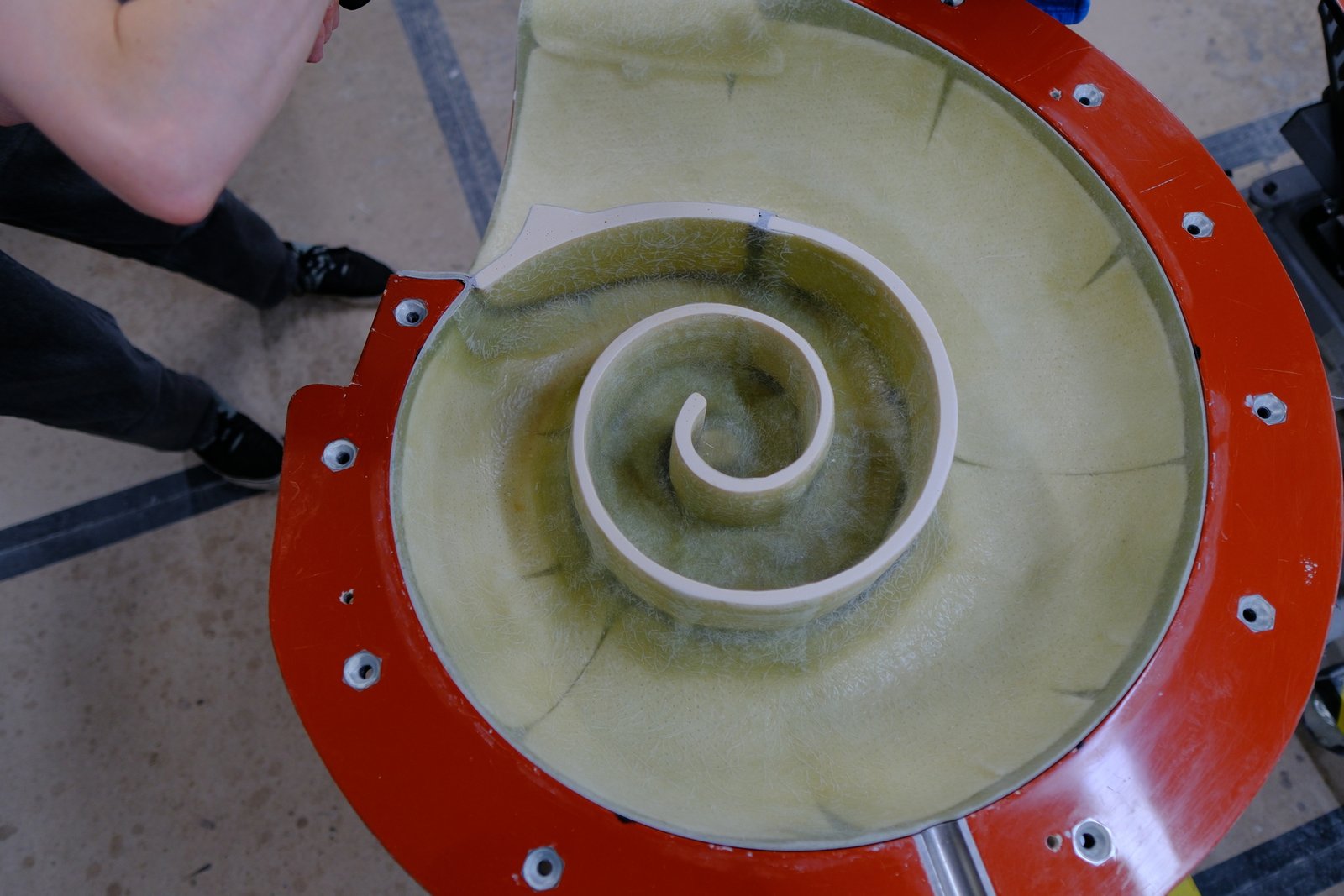
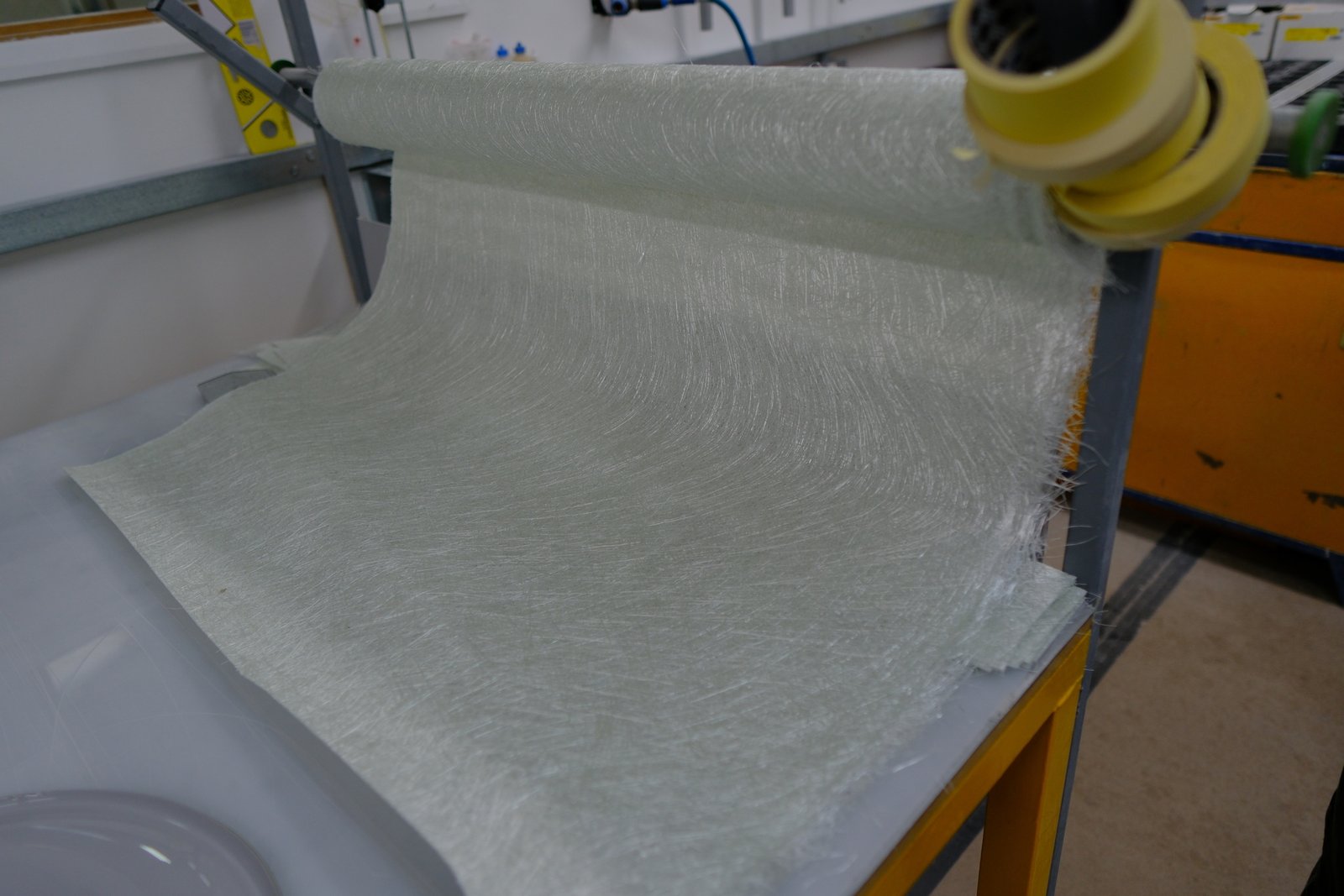
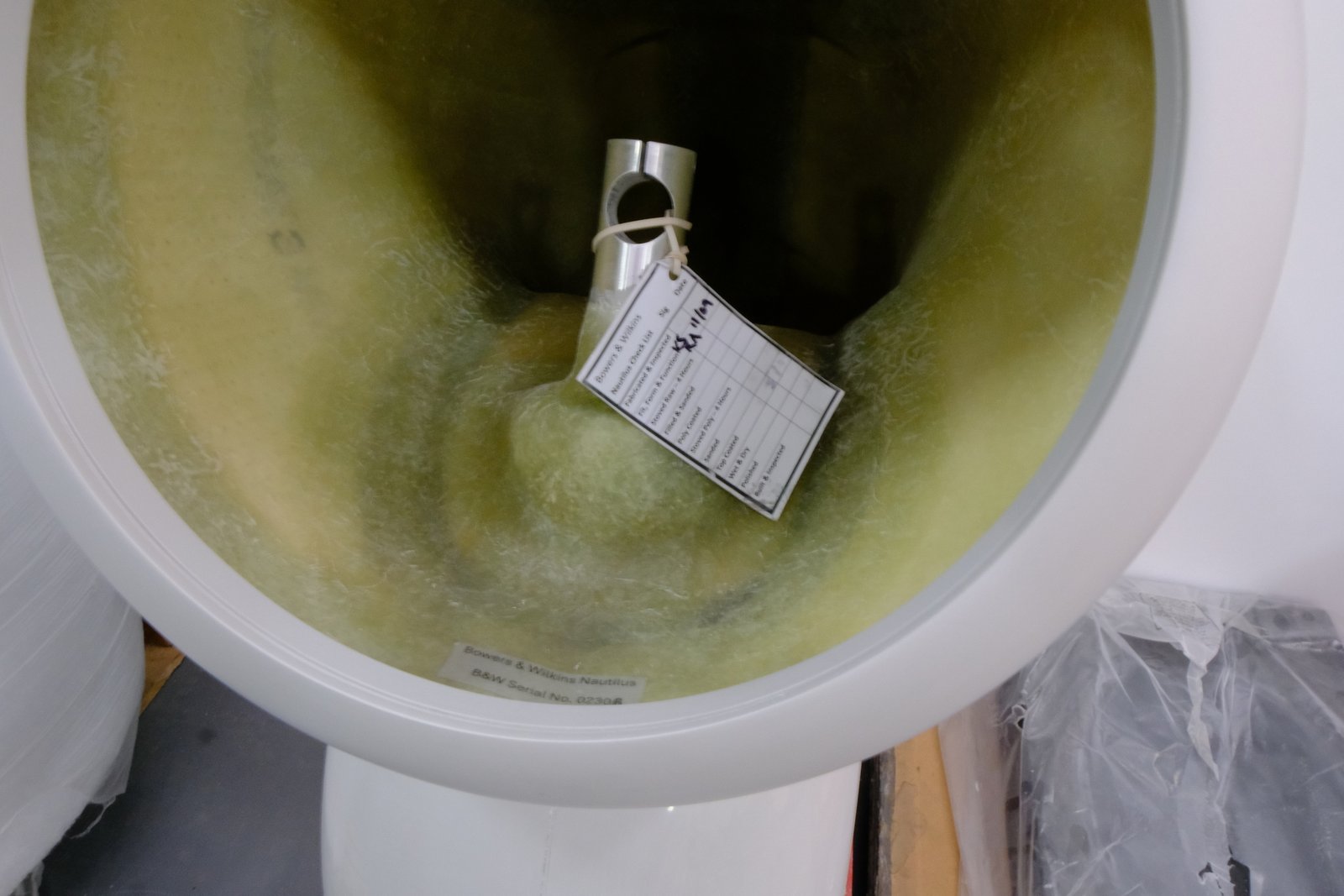
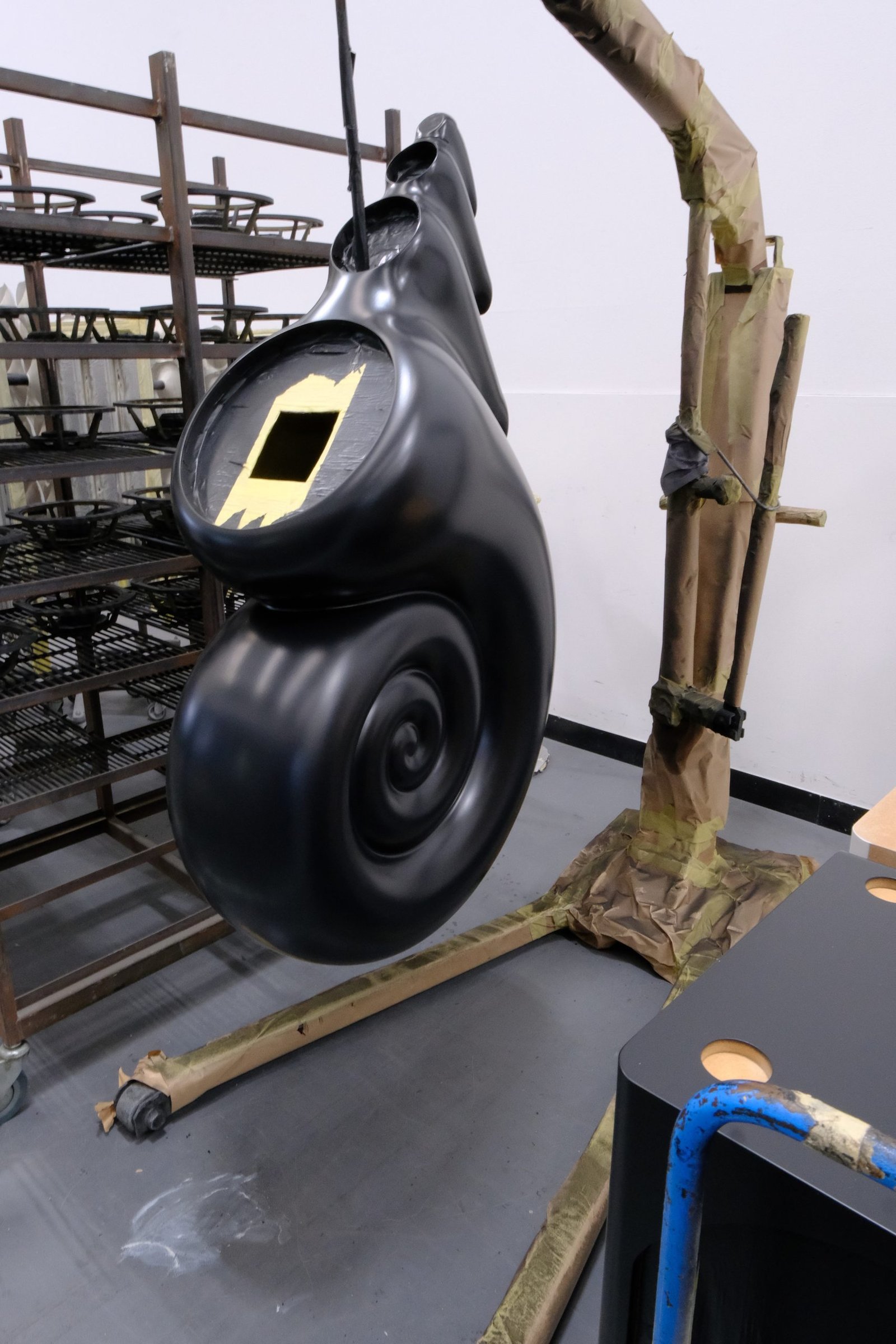
The workshop has its own wall with a large Nautilus 30th Anniversary graphic, 1993 to 2023, next to a white shell and a stack of parts wrapped in protective foam. Inside, the shells are made in heavy red moulds on wheeled stands, marked AL and AR. The spiral of the tapering tube is moulded into the floor of each mould. The layers of chopped strand mat are laid in by hand, with resin, until the shell is built up. A sheet of glass fibre mat on the bench showed us the loose fibres up close. Two of the craftsmen, in white overalls, posed for our camera next to their moulds.
Below you can see a close-up of the spiral inside a red mould during lay-up
And with that, our first day at Bowers & Wilkins came to an end. After hours of exploring the production floor, discovering the engineering behind the 800 Series Diamond, and witnessing the extraordinary attention to detail that goes into every loudspeaker, we had plenty to think about. Seeing these processes firsthand gave us a completely different appreciation for the finished products. It had been a fascinating day, packed with technical discoveries, but our factory adventure was far from over. There was still much more waiting for us on day two.
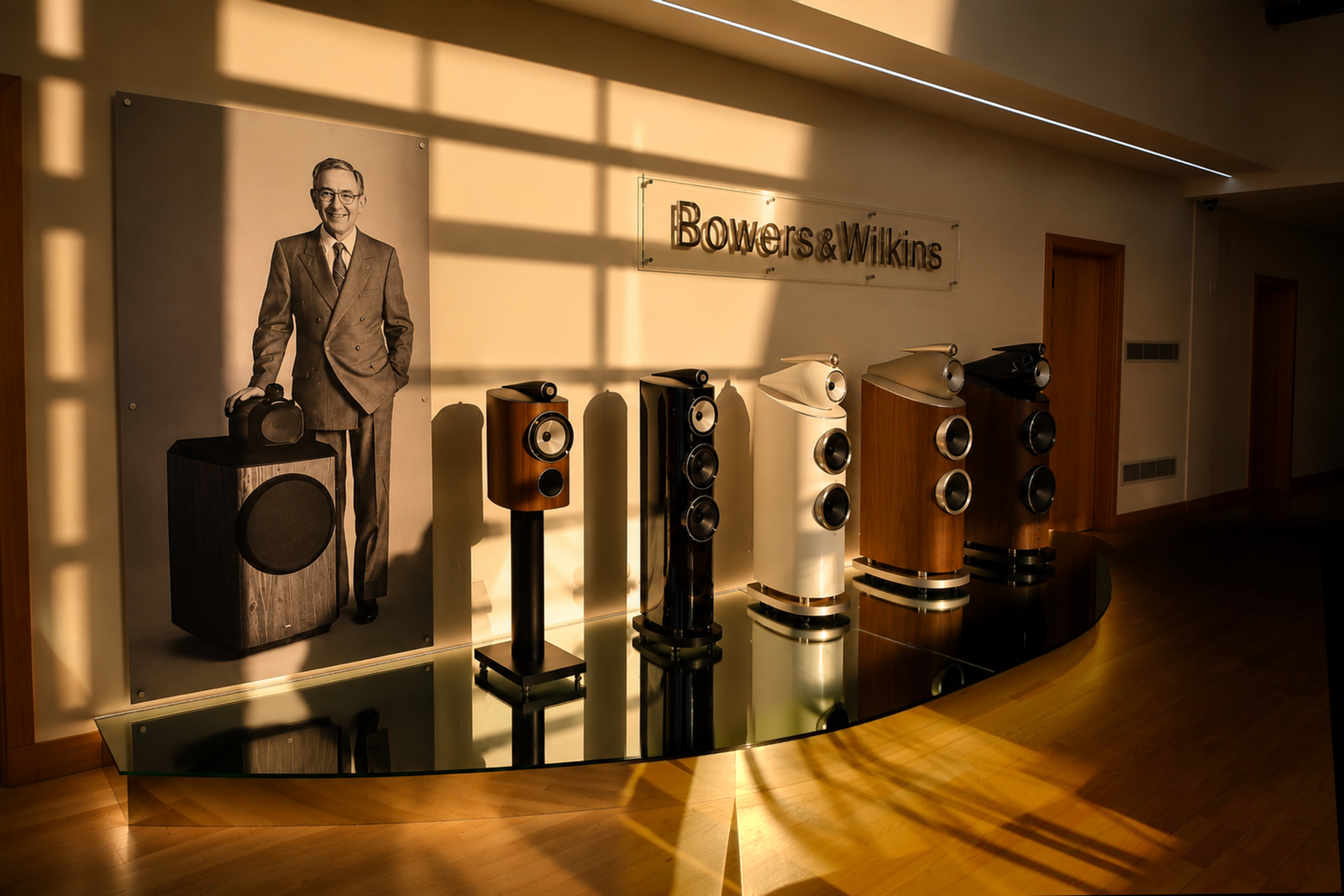
Back in the lobby before we left, low evening sun was falling across the John Bowers portrait and the D5 range. It was the right picture to end the day with.
Day 2 – Southwater research
The second morning started on the Brighton seafront, in bright sunshine, with a minibus parked by the road. The drive inland to Southwater takes about an hour.

The Brighton seafront on the morning of the second day
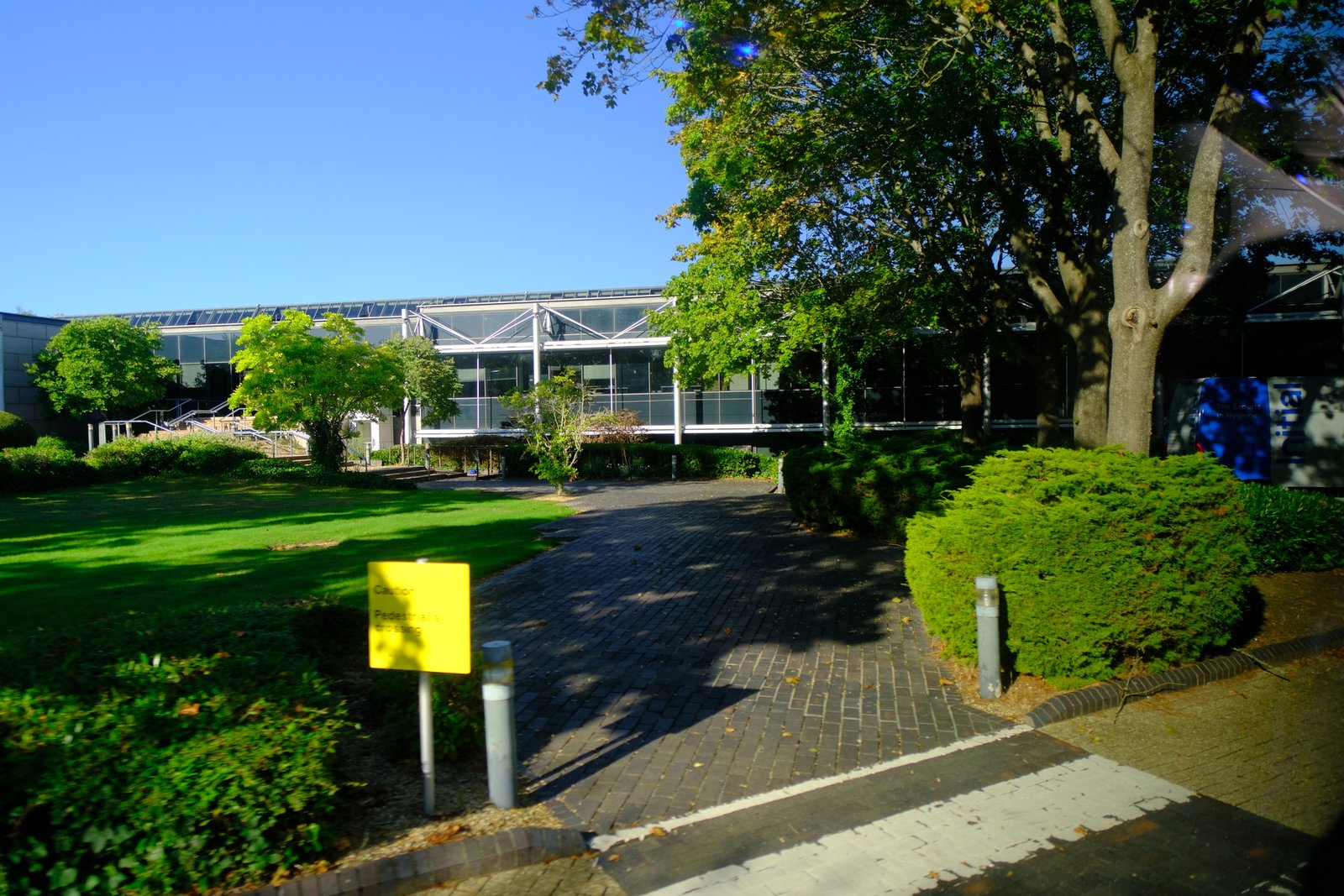
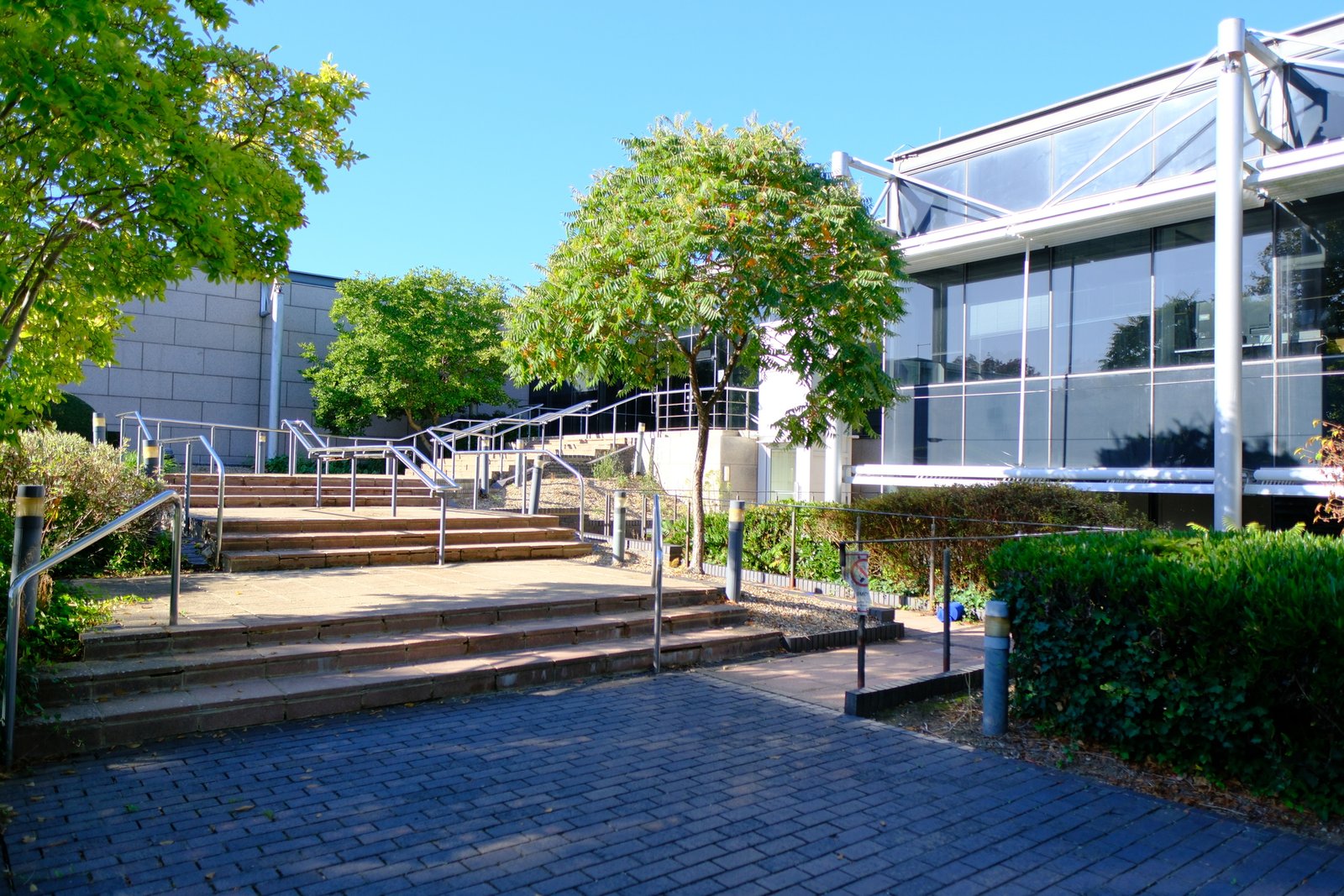
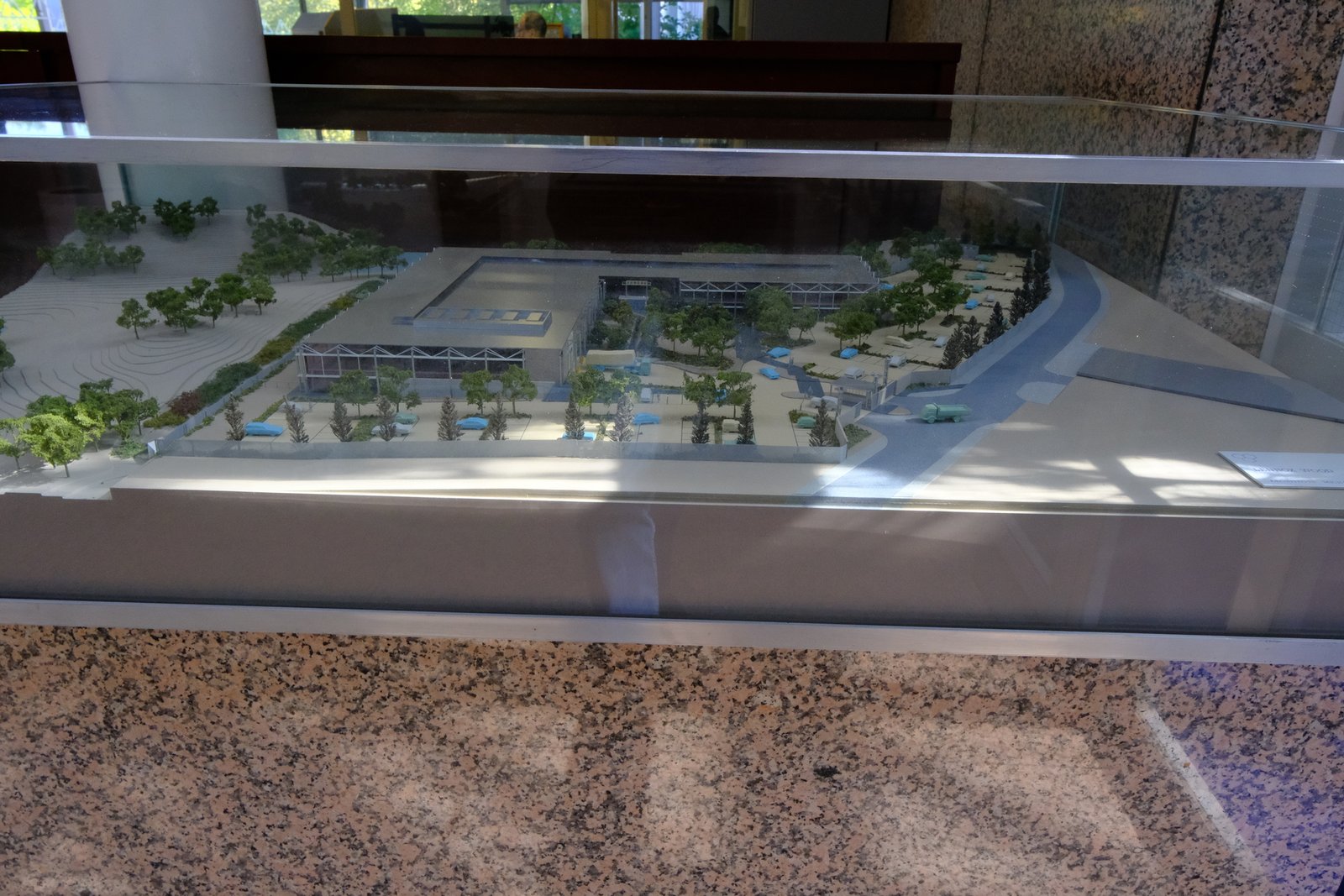
The Southwater Research Establishment is a long, low glass building in landscaped grounds, with trees, lawns and a wide flight of steps leading up to the entrance. Inside, a glass-roofed gallery runs the length of the building, with a granite floor, red and teal armchairs, and the current range of Bowers & Wilkins products lined up along a wall of frosted glass panels, from headphones to the 801 D5.
Much of the morning was photo free. We saw presentations of products Bowers & Wilkins has kept under wraps so far. We promised to keep them to ourselves, so all we can write is that they exist and that we are looking forward to the day we can talk about them.
Listening at Southwater: D4 against D5
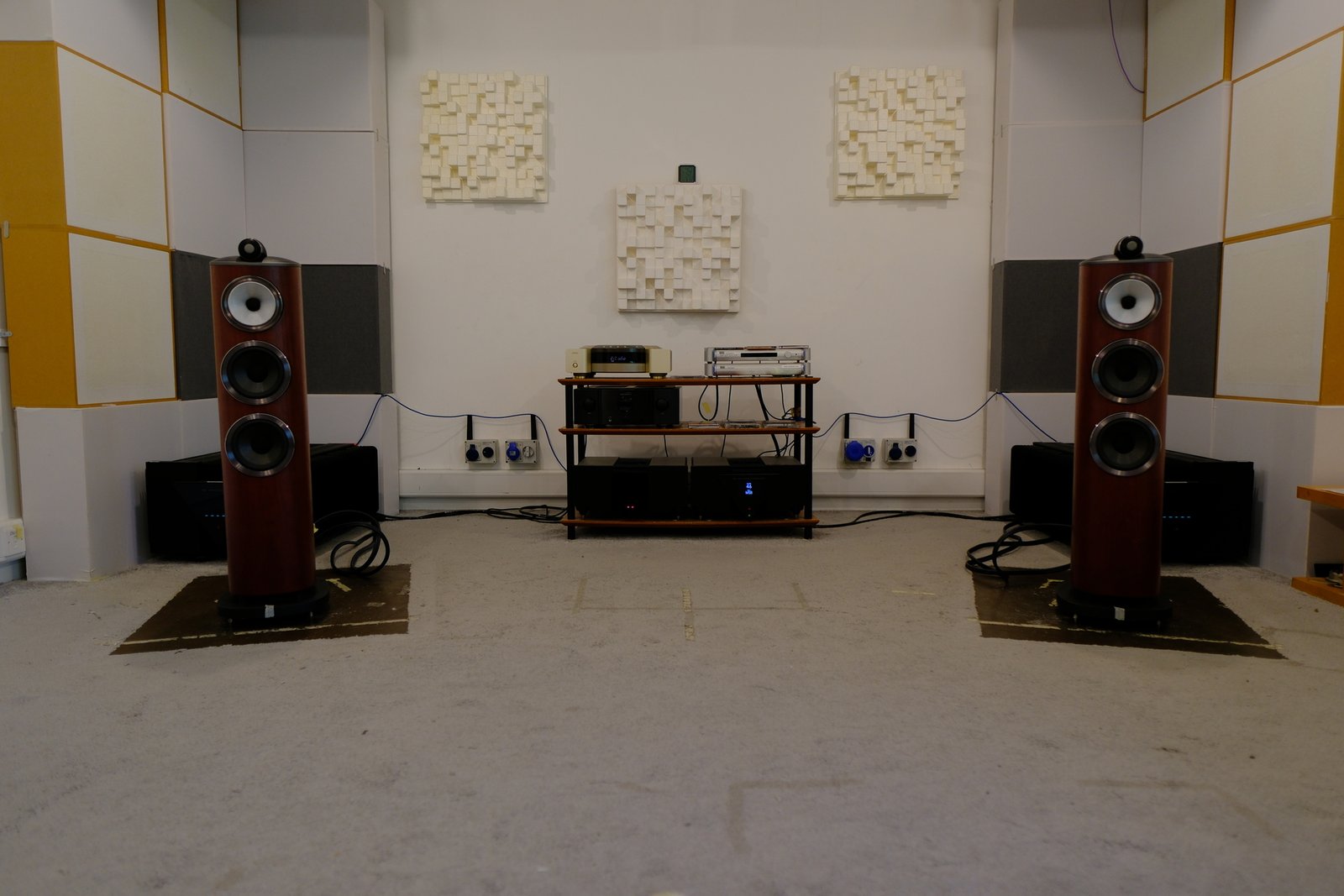
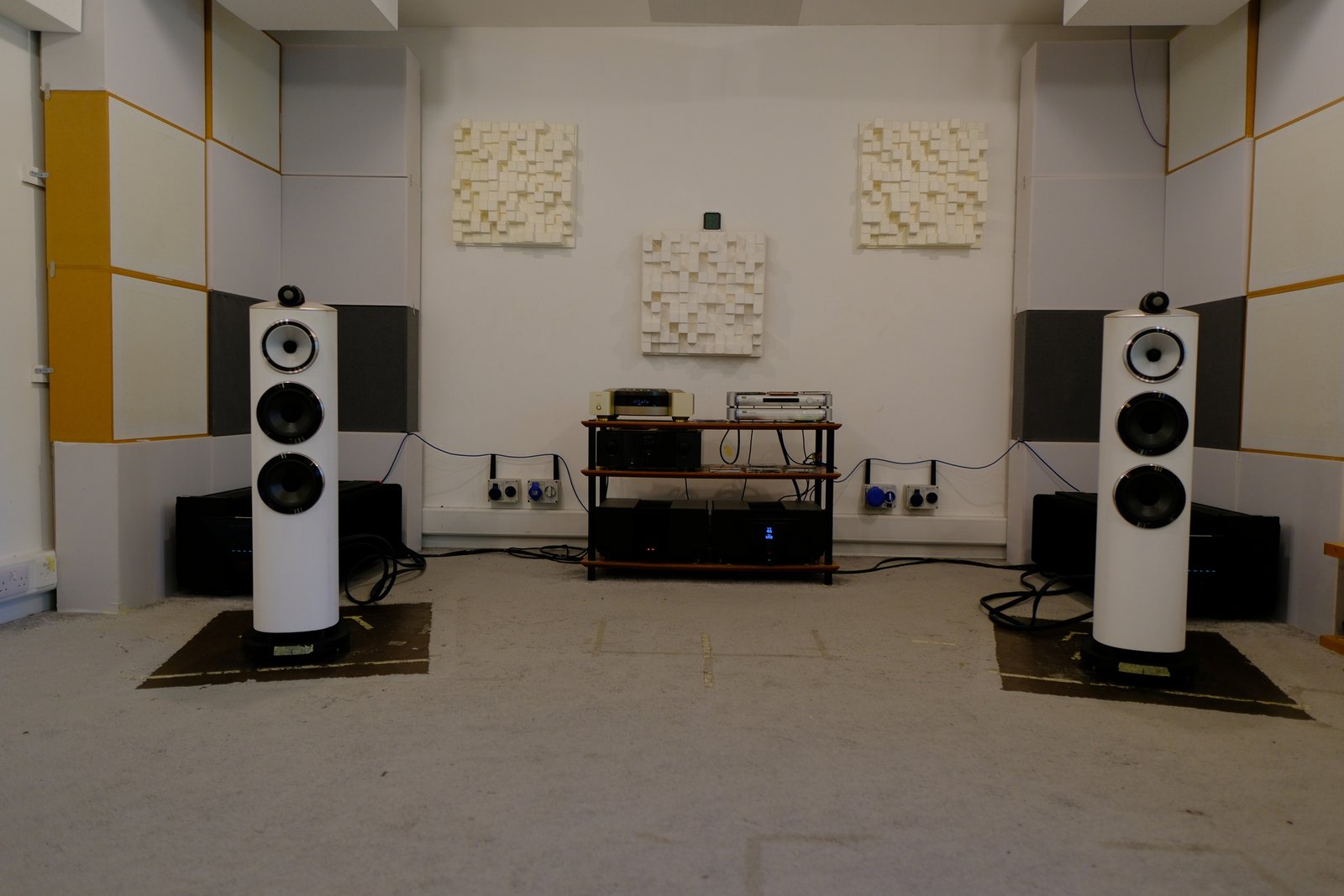
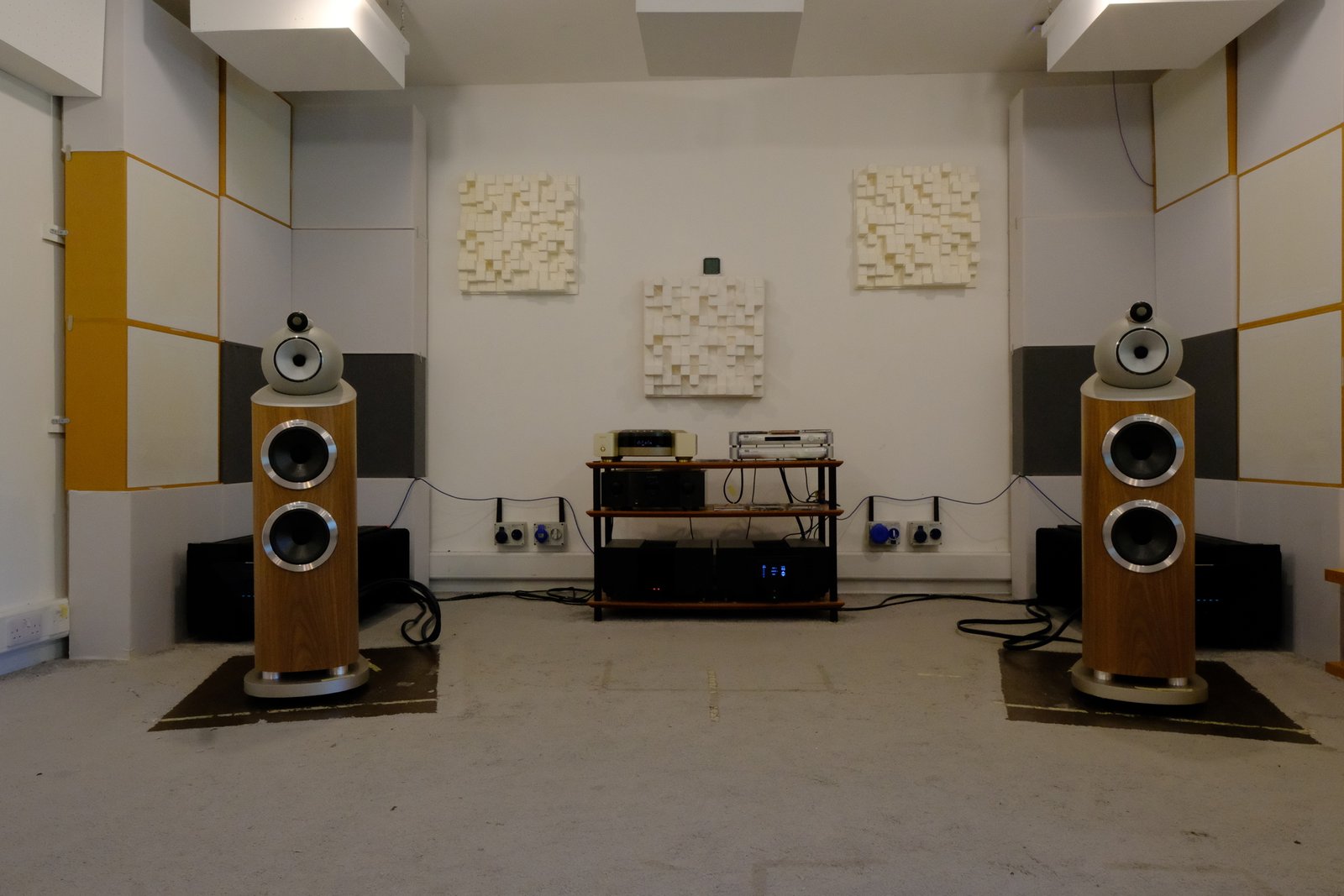
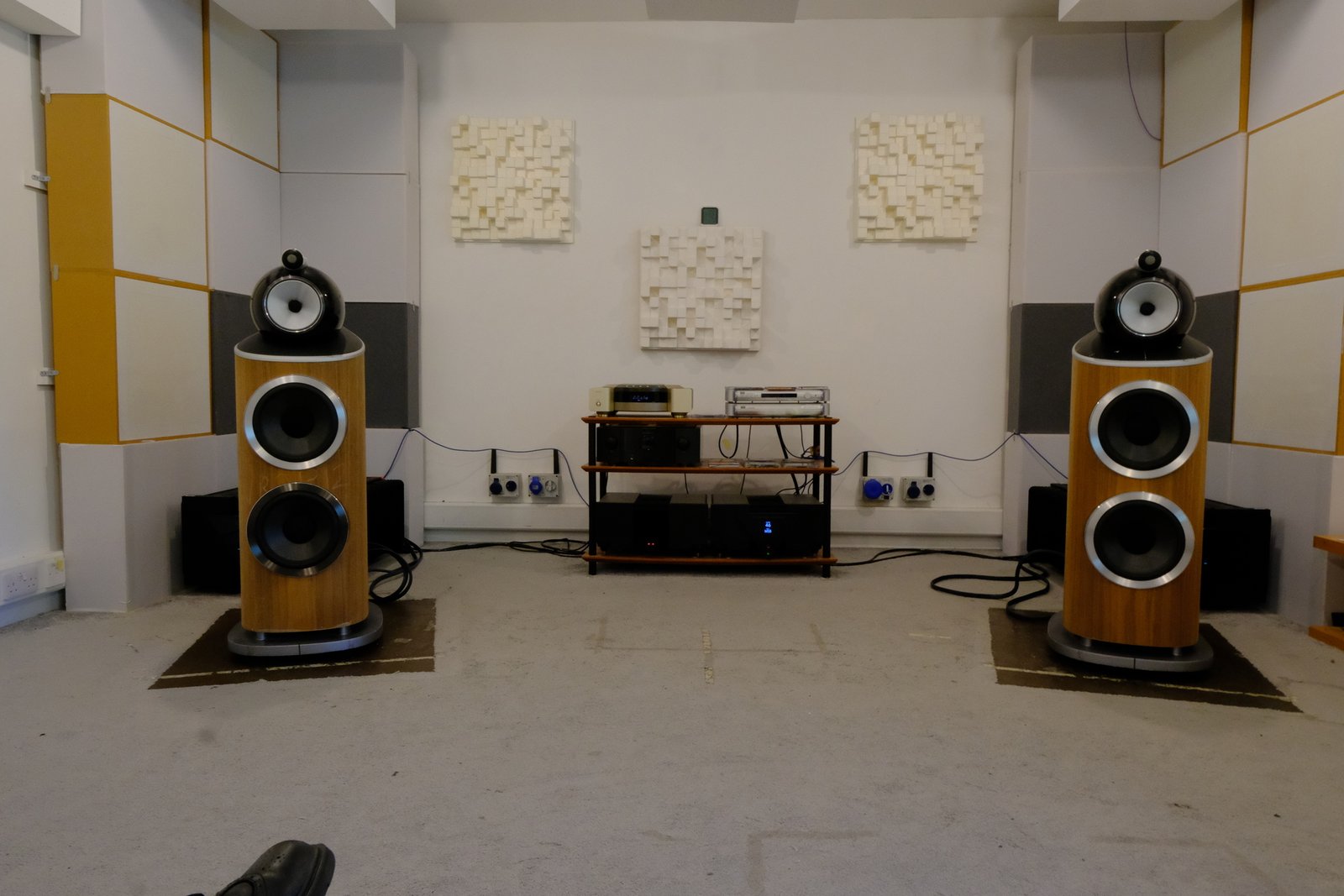
The session took place in one of the dedicated listening rooms, a quiet space with diffusers on the front wall, absorbing panels in the corners, orange and grey panels along the sides, and marks on the carpet for every loudspeaker position. Staff swapped the loudspeakers by hand between comparisons, sliding each pair onto its marked spot. Moving an 801 is heavy work, and the staff made it look easy.
The system was a Denon DP S1 CD transport, an MSB Diamond DAC with its separate power supply, a Gryphon Commander preamplifier, also in two chassis, and two Gryphon Apex monoblocks placed next to the loudspeakers. A very expensive chain, worth many times the price of the loudspeakers in front of it.
The method was simple. We climbed the range one model at a time, the 805 first, then the 804, the 803 and the 801, and for each model we heard the D4 and then the D5 on the same four tracks, one from Harry Belafonte, two from Phoebe Bridgers and one from Agnes Obel. The 802 was left out of our session. All of the music was played from CD.
Across all four pairs, the direction of the change was the same. The treble of the D5 is smoother, with less of the diamond edge we described in our earlier articles. The noise floor is lower, so small details and the air between instruments are easier to hear. The bass is tighter, a little deeper, and better controlled. The soundstage is bigger, wider, and deeper, with sources more precisely focused inside it. The character is the same.
We will talk more about the sound qualities of the 801 D5 in our review of the speakers
The 804 D5 was the surprise of the day. On this model, the improvements were easy to hear on every track, and in the midrange in particular, the step was larger than on the 803 or the 801. Voices were more focused and cleaner, and the bass had more grip. The whole presentation sounded closer to a larger model of the range. The aluminium enclosure around the midrange of the 804 D5 is one of the likely reasons. The 803 and the 801 already had their midrange drivers isolated in a Turbine Head in the D4 generation. The 804 is the model that gained that isolation with the D5.
Final Thoughts
Two days in West Sussex gave us a clear picture of how the 800 Series Diamond is made. Dale Road is a factory where almost every step is written down, measured and checked, with paperwork on the walls, on the pallets and even inside the Nautilus shells, and where people do the work that needs a trained hand, in the woodshop, in the sanding booths, on the tweeter benches and in the fibreglass moulds.
The D5 is a refinement of the D4, and an audible one, with a calmer top end and more control at both ends of the spectrum. If we had to pick one model to hear first at a dealer, it would be the 801 D5.
Build quality is one of the first things we look at when we unpack a loudspeaker in our room, and after this visit we understand a lot better how a real piece of art is made.
Sixty years after Miss Knight’s bequest, Bowers & Wilkins makes its flagship loudspeakers in the same town where John Bowers ran his radio shop. That is a good thing to see.
Thanks
Many thanks to Bowers & Wilkins for the invitation, to Andy Kerr for the presentation, and to the people at Dale Road and at Southwater who stopped their work to show us what they do.